Mark 12:16
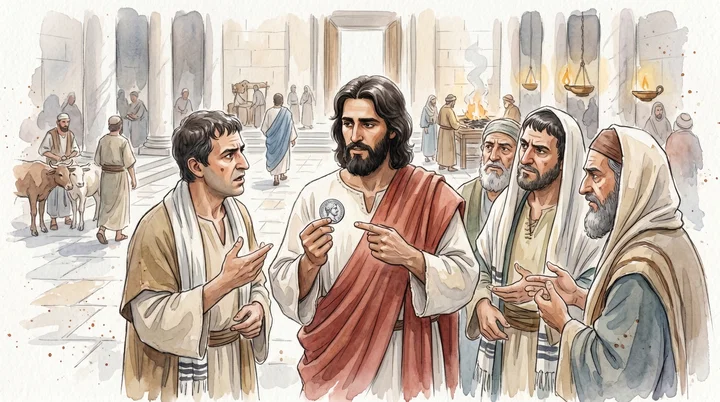
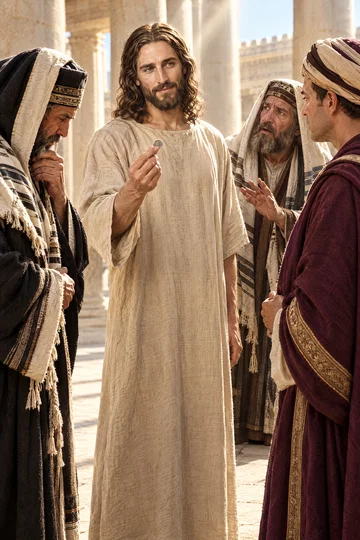
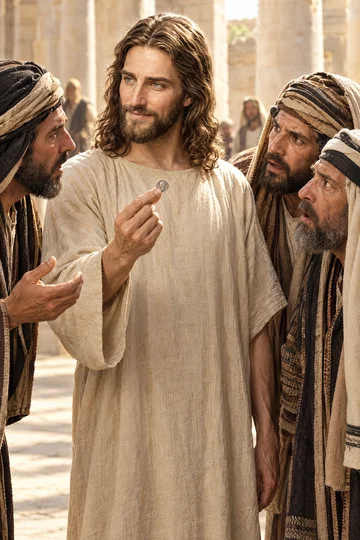
And they brought it. And he saith unto them, Whose is this image and superscription? And they said unto him, Cæsar’s.
Translations
And they brought it. And he says to them, Whose is this image and superscription? And they said to him, Caesar’s.
King James Version, American Standard Version
And they brought it. And he saith unto them, Whose is this image and superscription? And they said unto him, Cæsar’s.
And they brought it. And he saith unto them, Whose is this image and superscription? And they said unto him, Cesar’s.
And they brought it: and he saith to them, Whose is this image and superscription? And they said to him, Cesar's.
And they brought it. And he saith unto them, Whose is this image and superscription? And they said unto him, Caesar’s.
and they brought, and he saith to them, 'Whose [is] this image, and the inscription?' and they said to him, 'Caesar's;'
And they brought [ it]. And he says to them, Whose [ is] this image and superscription? And they said to him, Caesar's.
And, they, brought one. And he saith unto them—Whose, is this image, and the inscription? And, they, said unto him—Caesar’s.
Berean Standard Bible, Majority Standard Bible
So they brought it, and He asked them, “ Whose image is this? And whose inscription?”“ Caesar’s,” they answered.
They brought it.He said to them, “ Whose is this image and inscription?”They said to him, “ Caesar’s.”
And they gave him one. And he said to them, Whose is this image and name on it? And they said to him, Caesar's.
So they brought it, and he said vnto them, Whose is this image and superscription? and they said vnto him, Cesars.
Douay-Rheims (Challoner revision)
And they brought it him. And he saith to them: Whose is this image and inscription? They say to him, Caesar’s.
Pictures
Cross-references
- Matthew 22:19-21
Shew me the tribute money. And they brought unto him a penny.
The parallel account identifies Caesar’s coin and distinguishes what belongs to Caesar and God.
- Luke 20:24-25
Shew me a penny. Whose image and superscription hath it? They answered and said, Cæsar’s.
The parallel identifies Caesar’s image on the coin and records Jesus’ answer about tribute.
- 1 Peter 2:13
Submit yourselves to every ordinance of man for the Lord’s sake: whether it be to the king, as supreme;
Urges submission to human ordinances for the Lord’s sake.
Commentary
Each commentary is drawn from primary sources: the writings of Ellen G. White and Adventist pioneers and periodicals. Each commentary is separate. Its own words are not a quotation; follow the references to read the source passages.
Ellen G. White
14 sources
When asked to see the tribute money, those questioning Jesus at once produced a Roman coin bearing Caesar's image and inscription and acknowledged it as Caesar's.Ms 149, 1898, par. 6DA 601.1–602.5ST Feb 8, 1899 The question was a trap demanding a yes or no about paying tribute, so that calling it unlawful would allow them to report Him to the Romans as a rebel, and calling it lawful would allow them to accuse Him before the Jews of opposing God's law.3SP 42.2ST Jun 29, 1882 By asking whose image and inscription were on the coin He held, He showed He was not deceived by their pretensions, exposed their hypocrisy, forced the admission from them, and thereby defeated their plot.ST Apr 25, 1878ST Jun 29, 1882ST Jun 29, 1882 That admission prepared His distinction between what is due to Caesar and what is due to God.Ms 149, 1898, par. 6ST Feb 8, 18993SP 129.3–130.1 Because the people lived under the protection of the Roman power they were to render it the support it claimed, including tribute, so long as it did not conflict with duty to God, to whom first allegiance and obedience were always due, and Jesus Himself paid the tribute and taught His disciples to do so.DA 601.1–602.5ST Apr 25, 18783SP 129.3–130.15RED 49.2–50.1ST Jun 29, 1882
Setting and Entrapping Question
When asked to see the tribute money, those questioning Jesus at once brought Him a Roman coin bearing Caesar's image and inscription or name, and when He asked whose they were they identified it as Caesar's Roman money.Ms 149, 1898, par. 6DA 601.1–602.5ST Feb 8, 1899ST Apr 25, 1878ST Jun 29, 1882 The coin held in His hand was stamped with the name and image of the Roman ruler, marking it as belonging to the Roman authority.5RED 49.2–50.1ST Jun 29, 1882Ms 78, 1897, par. 17–18
The question was laid by flattering spies sent with the Herodians to entrap Him, as part of a joint plot of the Pharisees with the Herodians, whom they hated.ST Apr 25, 1878ST Jun 29, 1882Ms 4, 1883, par. 63–64 It belonged to a series of entangling questions by which the Pharisees, Herodians, and Sadducees sought to entangle Christ and turn His answers against Him.Ms 71, 1897, par. 27Ms 4, 1883, par. 63–64
The question was founded in falsehood and malice rather than honest inquiry.Ms 4, 1883, par. 63–64 It was pressed by men determined not to abandon their purpose after being again and again confounded and put to silence by the wisdom of His words.Ms 4, 1883, par. 63–64 They acted because they knew that if Jesus continued His work many would believe on Him and the scribes and Pharisees would lose their power with the people.Ms 4, 1883, par. 63–64 To rid the earth of Him they were ready to stoop to any base or contemptible measure, and eagerly listened to every rumor to find some pretext to ply Him again with opposing questions.Ms 4, 1883, par. 63–64
It was a trap expecting a direct yes or no about paying tribute.3SP 42.2ST Jun 29, 1882 If He called it unlawful to pay tribute they could report Him to the Romans as a rebel, and if He called it lawful they planned to accuse Him before the Jewish people of opposing God's law and the divine law.3SP 42.2ST Jun 29, 1882
By asking whose image and inscription were on the coin He held, Jesus showed He was not deceived by their pretensions.ST Apr 25, 1878ST Jun 29, 1882 Holding the coin He exposed their hypocrisy and motives and forced from them the admission that it was Caesar's.ST Apr 25, 1878ST Jun 29, 1882ST Jun 29, 1882 His candid and wise question and reply thereby defeated their trap and rebuked their hypocrisy and presumption.ST Apr 25, 1878ST Jun 29, 1882Ms 78, 1897, par. 17–18
Teaching on Civil Duty
The admission that the image and inscription on the coin were Caesar's prepared the distinction between what is due to Caesar and what is due to God.Ms 149, 1898, par. 6ST Feb 8, 18993SP 129.3–130.1 The coin brought to Him bore Caesar's image and inscription, identifying it as Caesar's Roman money belonging to the Roman authority.Ms 149, 1898, par. 6ST Feb 8, 18993SP 129.3–130.1 Because the people were living under the protection of the Roman power they were to render to that power the support it claimed, including tribute, so long as it did not conflict with duty to God, while at all times rendering obedience to God and answering His claims, with first allegiance to God, in peaceful subjection to the laws of the land.DA 601.1–602.5ST Apr 25, 1878ST Jun 29, 1882 He Himself paid the tribute and taught His disciples to do so, showing obedience to the ruling authority, neither forbidding the paying of taxes nor leading resistance against Roman rule.3SP 129.3–130.15RED 49.2–50.1ST Jul 4, 1878
The forced admission was also a severe rebuke, for had they answered God's claims and faithfully fulfilled their obligations to Him they would not have become a broken nation subject to a foreign power, and their present tribute was the penalty of apostasy from God that left a Roman ensign over Jerusalem, a Roman sentinel at her gates, and a Roman governor within her walls.ST Apr 25, 1878 His plain and intelligent answer brought precious light to the gathered people and sowed seeds of truth.Ms 71, 1897, par. 27Ms 78, 1897, par. 17–18 His candid and wise reply rebuked hypocrisy and presumption, clarified the principle behind the question, and settled a vexed issue in many minds.Ms 71, 1897, par. 27Ms 78, 1897, par. 17–18
The verse belongs to warnings about rejecting the Son of God that apply in every age, and unless sinners repent the doom foreshadowed by them will be theirs.DA 600.3
Sources
Pioneers and periodicals
19 sources
The coin placed in his hand was the tax money, a Roman denarius stamped with Caesar's likeness and title to mark it as his and to assert his rule.ST Feb 21, 1906ST Jan 23, 1907 He asked whose likeness and writing were on it, and brought his questioners to admit they were Caesar's, laying the ground for his ruling on payment.ST Oct 4, 1910ST Jan 23, 1907ST Oct 10, 1906 What carries Caesar's stamp belongs to Caesar and what carries God's claim belongs to God alone, so those living under Rome's protection and using its money were to pay its tax unless it clashed with duty to God.ST Apr 25, 1878ST Oct 4, 1910ST Feb 21, 1906ST Jan 30, 1907RH Mar 9, 1869 Civil power may collect taxes and order outward dealings between people, but it owns no duty owed to God and has no right to command conscience or worship, for the Sabbath carries God's stamp and belongs to him, not to Caesar.ST Oct 4, 1910ST Jan 30, 1907ST Oct 30, 1901 Whose likeness and stamp a person carries fixes whose he is forever, with those stamped with the Lamb's likeness belonging with the Lamb inside the city and those stamped with the beast's belonging with the beast outside, so each must examine whether his hope is genuine and choose which stamp to bear.RH Oct 2, 1866ST
The Coin and Trap
The coin brought to Jesus was the tribute money, a Roman denarius or penny bearing Caesar's image and inscription, even his name, which marked it as Caesar's and established whose authority it represented in the dispute over paying tribute.ST Feb 8, 1899ST Feb 21, 1906ST Jan 23, 1907ST Oct 10, 1906 Its image and superscription identified it as Roman money belonging to Caesar and connected with Caesar's rule.ST Feb 8, 1899ST Apr 25, 1878ST Feb 21, 1906ST Jan 23, 1907ST Oct 10, 1906 Jesus asked to see the tribute money and received at once such a coin, holding it in his hand while he asked whose image and superscription were upon it.ST Feb 8, 1899ST Apr 25, 1878ST Jun 29, 1882ST Jun 29, 1882 From that question he drew from his questioners the admission that they were Caesar's, and that admission supplied the basis for his answer about rendering.ST Jun 29, 1882ST Jun 29, 1882ST Oct 4, 1910ST Jan 23, 1907ST Oct 10, 1906
The asking was directed against flattering spies sent with the Herodians to entrap him, and it exposed their hypocrisy, motives and pretensions by showing he was not deceived by them.ST Apr 25, 1878ST Jun 29, 1882ST Jun 29, 1882 By so answering he confounded those who sought to trap him and answered without falling into the trap set for him.ST Jun 29, 1882ST Jan 23, 1907RH Mar 9, 1869 They had expected a direct yes or no so they could accuse him to the Roman authorities as a rebel if he forbade tribute, or to the Jewish people as opposed to the divine law if he allowed it.ST Jun 29, 1882 The encounter was a tempting instigated by Satan, yet it did not turn him from obedience to God.ST Mar 12, 1912 It stands as an example of a difficult question meant to put someone on the spot, like questions put to Christian missionaries about the Old Testament and the seventh-day Sabbath.ST Oct 4, 1910
The question whether it is lawful to pay tribute concerns the relation between religion and civil government. As a civil matter it lies outside the church's sphere of the simple Gospel and its promulgation.ST
Caesar and God
The marks on the coin establish whose it is and what power it belongs to, for the image and inscription identify it as Caesar's and link it to civil government, and that identification supplies the ground for distinguishing what belongs to Caesar from what bears God's claim and belongs to God alone.ST Oct 4, 1910ST Feb 21, 1906ST Jan 30, 1907ST Oct 30, 1901ST Oct 10, 1906 The tribute coin bore Caesar's image and inscription, even his name, and the answer that they were Caesar's fixed the distinction between civil obligations owed to earthly government and duties owed to God.ST Oct 4, 1910ST Feb 21, 1906ST Oct 30, 1901ST Oct 10, 1906ST Jan 11, 1899
Because the people lived under the protection of the Roman power and used Caesar's circulating money, that use acknowledged his authority, and they were therefore to render to that power the support it claimed, including paying tribute, so long as it did not conflict with duty to God.ST Apr 25, 1878ST Jun 29, 1882RH Mar 9, 1869 Jesus himself paid the tribute and taught his disciples to do so, teaching peaceful subjection to the laws of the land while at all times rendering obedience to God and answering His claims.ST Apr 25, 1878ST Jul 4, 1878ST Jun 29, 1882ST Sep 30, 1886
Civil government may claim taxes and regulate outward conduct between people, but it does not own a person's duty to God or conscience.ST Oct 4, 1910ST Oct 30, 1901 It has no authority to regulate worship or enforce religious duties, including Sabbath observance, and governments should not enforce religious or church doctrines.ST Oct 4, 1910ST Jan 30, 1907ST Jan 11, 1899 The Sabbath bears God's image and inscription and therefore belongs to God, not to Caesar, and is not Caesar's to control.ST Oct 4, 1910ST Jan 30, 1907ST Jan 11, 1899
The forced admission that the coin was Caesar's was also a severe rebuke, for had the people answered the claims of God and faithfully fulfilled their obligations to Him they would not have become a broken nation subject to a foreign power.ST Apr 25, 1878 There would have been no Roman ensign over Jerusalem, no Roman sentinel at her gates and no Roman governor within her walls, and their present tribute was the penalty of apostasy from God.ST Apr 25, 1878 The same spirit appears when professed people of God keep only a form of godliness, lose the power of the Gospel, and turn to the arm of law and to Herodian lawmakers to confuse Jesus in the person of His people and silence Him because He does not teach according to the traditions of the fathers.ST That spirit demands laws compelling Sunday observance as the Sabbath and putting out of the way those who do not keep Sunday, though Sunday rests only on tradition and needs the puny arm of man to sustain it, yet God's institutions will stand and His truth will prosper and triumph as men stand for truth.ST
Bearing God's Image
The mark a person carries determines ownership forever, for the image and superscription borne decide to whom one belongs and where one will finally stand.ST Those who bear the image and superscription of the Lamb belong to the Lamb and will be gathered by Him to be inside the city with Him.ST Those who bear the image and superscription of the beast belong to the beast and will be gathered by him to be outside with him.ST Each gathers his own, so every person must choose which image to bear.ST
The question of whose image is borne presses each heart to examine whether its hope is genuine or counterfeit.RH Oct 2, 1866 Counterfeit hope will not endure that testing, while genuine hope is proven by its character.RH Oct 2, 1866 Such genuine hope is joined to sharing in the blessings promised to God's people.RH Oct 2, 1866
Sources