Mark 15:33
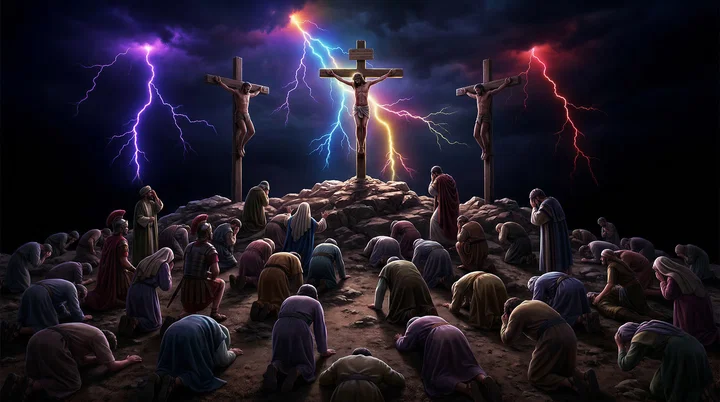
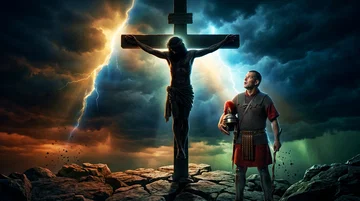
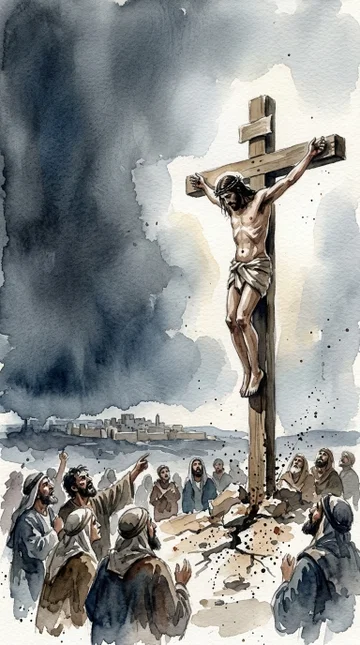
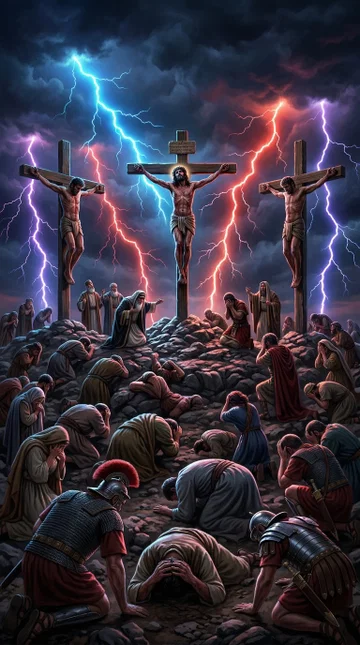
And when the sixth hour was come, there was darkness over the whole land until the ninth hour.
Translations
American King James Version, King James Version, KJV Cambridge Paragraph Bible, Revised Version, American Standard Version
And when the sixth hour was come, there was darkness over the whole land until the ninth hour.
And when the sixth hour was come, there was darkness over the whole land, until the ninth hour.
And the sixth hour having come, darkness came over the whole land till the ninth hour,
And when [ the] sixth hour was come, there came darkness over the whole land until [ the] ninth hour;
And, when it was the sixth hour, darkness, came on all the land—until the ninth hour;
Berean Standard Bible, Majority Standard Bible
From the sixth hour until the ninth hour darkness came over all the land.
When the sixth hour had come, there was darkness over the whole land until the ninth hour.
And when the sixth hour had come, it was dark over all the land till the ninth hour.
Nowe when the sixt houre was come, darkenesse arose ouer all the land vntill the ninth houre.
Douay-Rheims (Challoner revision)
And when the sixth hour was come, there was darkness over the whole earth until the ninth hour.
Pictures
Cross-references
- Luke 23:44-45
And it was about the sixth hour, and there was a darkness over all the earth until the ninth hour.
Both describe darkness from the sixth to the ninth hour during Jesus’ crucifixion.
- Matthew 27:45
Now from the sixth hour there was darkness over all the land unto the ninth hour.
Records the darkness from the sixth to the ninth hour.
- John 19:30
When Jesus therefore had received the vinegar, he said, It is finished: and he bowed his head, and gave up the ghost.
Records Jesus’ final words and his death on the cross.
- Matthew 27:51
And, behold, the veil of the temple was rent in twain from the top to the bottom; and the earth did quake, and the rocks rent;
Darkness at Jesus’ death accompanies an earthquake and split rocks.
- Psalms 22:1
My God, my God, why hast thou forsaken me? why art thou so far from helping me, and from the words of my roaring?
Jesus’ cry of abandonment from the cross echoes the psalm’s lament.
- Mark 15:25
And it was the third hour, and they crucified him.
Places Jesus’ crucifixion at the third hour.
- Joel 3:15
The sun and the moon shall be darkened, and the stars shall withdraw their shining.
Both describe darkness affecting the heavens.
- Matthew 27:46-50
And about the ninth hour Jesus cried with a loud voice, saying, Eli, Eli, lama sabachthani? that is to say, My God, my God, why hast thou forsaken me?
A parallel account of Jesus’ final hours and death.
- Matthew 27:54
Now when the centurion, and they that were with him, watching Jesus, saw the earthquake, and those things that were done, they feared greatly, saying, Truly this was the Son of God.
The soldiers recognize Jesus after the events at the cross.
- Mark 15:37
And Jesus cried with a loud voice, and gave up the ghost.
gives death at ninth hour ending darkness
- Isaiah 13:10
For the stars of heaven and the constellations thereof shall not give their light: the sun shall be darkened in his going forth, and the moon shall not cause her light to shine.
Both describe darkness associated with the sun’s darkening.
- John 19:31-42
The Jews therefore, because it was the preparation, that the bodies should not remain upon the cross on the sabbath day, ( for that sabbath day was an high day,) besought Pilate that their legs might be broken, and that they might be taken away.
Jesus’ death and burial followed the day’s events.
- Ezekiel 32:7
And when I shall put thee out, I will cover the heaven, and make the stars thereof dark; I will cover the sun with a cloud, and the moon shall not give her light.
Both texts describe darkness covering the land or heavens.
- Isaiah 50:3
I clothe the heavens with blackness, and I make sackcloth their covering.
The heavens are clothed in darkness at the cross.
- Joel 2:31
The sun shall be turned into darkness, and the moon into blood, before the great and the terrible day of the LORD come.
Both describe darkness as a sign before the great day of the Lord.
Commentary
Each commentary is drawn from primary sources: the writings of Ellen G. White and Adventist pioneers and periodicals. Each commentary is separate. Its own words are not a quotation; follow the references to read the source passages.
Ellen G. White
30 sources
From noon until three in the afternoon a darkness lay over the whole land at Christ's crucifixion at Calvary outside Jerusalem.12MR 385.1–4DA 741.3DA 741.1–2DA 7413SP 163.2–164.2
It was not from an eclipse or any natural cause, but a supernatural midnight darkness in which the sun hid its light.3SP 163.2–164.2DA 753.2–45RED 83.2–84.2
God and the angels were present in that thick darkness, with the Father close beside His Son yet concealing His glory lest it destroy the spectators and hiding Christ's last agony from prying eyes.12MR 385.1–4ST Dec 8, 1898Ms 91, 1897, par. 2–4
There Christ endured His deepest anguish bearing the world's sin, feeling the Father's sustaining presence and approving smile withdrawn under the weight of divine displeasure against sin and the penalty of death, without hope beyond the tomb.3SP 163.2–164.2ST Jan 27, 1914ST Jan 27, 1914ST Aug 21, 1879ST Feb 15, 1883
The gloom struck the mocking multitude silent with terror amid thunder, earthquake, rent rocks, opened tombs and lightning, and it lifted from the people when He died as God's testimony that the Son of God was dying.DA 753.2–45RED 86.1ST Feb 15, 1883DA 754.1COS 163.1–2
Time, Extent and Setting
The sixth hour to the ninth hour is three hours of darkness at midday, from noon until three in the afternoon.12MR 385.1–4DA 7413SP 163.2–164.25RED 83.2–84.2ST Jan 27, 1914 The darkness covered the land during the crucifixion of Jesus.12MR 385.1–4DA 741DA 753.2–4 It covered the cross and its surroundings.3SP 163.2–164.25RED 83.2–84.2ST Jan 27, 1914
The darkness was over the whole land and over the earth, not only around the cross and not only at the place where the cross stood.12MR 385.1–4ST Dec 8, 1898Ms 91, 1897, par. 2–45RED 86.1EW 148.1 Yet it enveloped the cross, and spread as a dense cloud over Jerusalem and the plains of Judah.12MR 385.1–4ST Dec 8, 1898ST Oct 7, 1886 It enveloped the cross even where the sun shone elsewhere.ST Oct 7, 1886
The verse belongs to the leading of Jesus from the judgment-hall to Calvary to be crucified.DA 741.3 News of His condemnation had spread through Jerusalem, and a vast multitude of people of all classes and ranks flocked toward the place of crucifixion.DA 741.3 Priests and rulers were bound not to molest His followers, and disciples and believers from the city and the surrounding region joined the throng that followed the Saviour.DA 741.3
The setting is Christ's crucifixion at Calvary outside Jerusalem.DA 741.1–2 There He suffers as humanity's substitute.DA 741.1–2 There He redeems people from the curse of the law.DA 741.1–2
God's Presence in Darkness
The darkness was supernatural and miraculous, with no eclipse or other natural cause.3SP 163.2–164.2DA 753.2–45RED 83.2–84.2COS 161.4ST Jan 27, 1914 It was as deep as a moonless, starless midnight, the sun hid its light from the scene and the heavens were covered.3SP 163.2–164.2DA 753.2–45RED 83.2–84.2COS 161.41T 240.2 It lasted three hours at midday and surrounded the cross during Christ's death.3SP 163.2–164.25RED 83.2–84.2COS 161.41T 240.2ST Jan 27, 1914
God and the heavenly angels were present within the thick darkness, which was God's dwelling and His hiding of His glory from human eyes.12MR 385.1–4ST Dec 8, 1898Ms 91, 1897, par. 2–4DA 753.2–4ST Jan 27, 1914 The Father with His heavenly angels was enclosed in that darkness, close beside His Son, though He did not manifest Himself to Him or to any human being.12MR 385.1–4ST Dec 8, 1898Ms 91, 1897, par. 2–4DA 753.2–4ST Jan 27, 1914 God concealed His glory in the darkness because one ray of His glory and power would have destroyed every human spectator, and even extinguished them.12MR 385.1–4ST Dec 8, 1898Ms 91, 1897, par. 2–4DA 753.2–4ST Jan 27, 1914
In that darkness God mercifully hid Christ's last human agony from prying eyes and from human sight.12MR 385.1–4ST Dec 8, 1898Ms 91, 1897, par. 2–4DA 753.2–4 He clothed nature with sackcloth and mourning as a veil over His suffering and humiliation, so she might not look upon her suffering, dying Author in His last humiliation.12MR 385.1–4ST Dec 8, 1898Ms 91, 1897, par. 2–4 Christ's countenance at His trial had revealed to all who saw Him innocence, serenity, benevolence, and the image of God, but His accusers would not heed the signet of heaven, and now that countenance was hidden by God's mantle.ST Dec 8, 1898Ms 91, 1897, par. 2–4
The darkness was an emblem of the soul-agony, terror and horror surrounding Christ as He bore sin, symbolizing the agony and horror weighing on His heart and the deeper gloom enshrouding His suffering soul.3SP 163.2–164.25RED 83.2–84.2ST Jan 27, 1914 When it lifted from the people it still surrounded Jesus, and though the sun shone again it still enveloped the cross.ST Jan 27, 1914ST Jan 27, 1914 The darkness expressed nature's sympathy and groaning for its dying Creator, with the darkened sun refusing to look upon the scene.3SP 163.2–164.25RED 83.2–84.2ST Jan 27, 1914SG1 60.1ST Feb 15, 1883 Even nature groaned in sympathy with its dying Creator under the weight of sin borne in that terrible hour.3SP 163.2–164.25RED 83.2–84.2ST Feb 15, 18832T 209.1–3
The miraculous darkness was God's testimony to confirm the faith of later generations, given as a miraculous sign from God to strengthen them.DA 753.2–4ST Jan 27, 1914 The darkened sun, together with the earthquake and torn rocks, testified that the Son of God was dying.DA 753.2–4ST Feb 15, 1883ST Jan 27, 1914
Suffering, Terror and Signs
In the darkness Christ endured His deepest anguish as He bore the sin of the world, with the Father's sustaining presence and approving smile and assurance withdrawn from Him.ST Jan 27, 1914ST Aug 21, 1879ST Feb 15, 18832T 209.1–3 He felt the full weight of sin, the Father's displeasure and wrath against sin, and its penalty which is death, and this pressed Him into despair.ST Aug 21, 1879ST Feb 15, 18832T 209.1–3 He could not see beyond the tomb to His resurrection and the Father's acceptance of His sacrifice, and was tempted to fear that His Father had forever left Him.ST Aug 21, 1879ST Feb 15, 18832T 209.1–3 He suffered alone without comfort from the Father's presence, and in that setting uttered the cry of abandonment.ST Jan 27, 1914ST Aug 21, 1879ST Feb 15, 1883
The gloom brought fear and silence upon the people at Calvary, and flashes of lightning revealed Jesus upon the cross.DA 754.1COS 163.1–2DA 684 The crowd fell silent and prostrate in terror, and grief and terror filled those below the crosses.DA 754.1COS 163.1–2DA 684 They stopped cursing and reviling, struck with terror by the darkness and by the rent rocks and convulsed earth.ST Feb 15, 1883COS 163.1–2Ms 101, 1897, par. 30–32 They feared that the time of their retribution had come, and executioners and spectators and those who had taken part in His mock trial trembled.ST Feb 15, 1883DA 754.1COS 163.1–2Ms 101, 1897, par. 30–32
The darkness was accompanied by violent upheaval, with thunder and a violent earthquake, splitting and torn and bursting rocks, opened tombs and broken sepulchres casting out the dead, and fierce lightnings.5RED 86.1ST Oct 7, 1886SG1 63.1EW 148.1 Together with the darkness and with Jesus' cry that it was finished, these signs troubled His enemies.5RED 86.1SG1 63.1EW 148.1 His murderers and the executioners and spectators trembled with terror at the darkened sun testifying that the Son of God was dying.5RED 86.1ST Feb 15, 1883SG1 63.1
The darkness over the earth passed away at the very moment Jesus died.ST Oct 7, 18865RED 93.2–3ST Aug 1, 1878 It lifted from the people so that the sun shone again, while it still surrounded Jesus and enveloped the cross, symbolizing the agony and horror weighing on His heart and the deeper gloom enshrouding His suffering soul.ST Jan 27, 1914ST Oct 7, 1886ST Jan 27, 1914 It lifted briefly when He cried in trumpet tones that His work was finished and commended His spirit to the Father, when light encircled the cross and His face shone like the sun before He bowed His head and died.ST Oct 7, 1886 Then darkness settled again over the earth, and the cloud settled over Jerusalem and the plains of Judea, where darkness and fierce lightning directed against the city signified God's wrath against the doomed city.ST Oct 7, 1886ST Jan 27, 1914
The verse shows the taking away of the Bridegroom from the disciples.ST Jul 7, 1898 With Jesus lifted up and dying as a malefactor in the hands of wicked men, in whom their hopes of eternal life were centered, the disciples had cause to mourn and fast.ST Jul 7, 1898 It was days of trial and temptation when faith was tried, and hope and courage failed.ST Jul 7, 1898 It was a time when the presence of the Comforter was not clearly discerned.ST Jul 7, 1898
Sources
Pioneers and periodicals
61 sources
When the sixth hour came there was darkness over the whole land until the ninth hour, from midday to three in the afternoon for three full hours on Friday, Passover afternoon, covering Judea and the earth about the cross at Golgotha, Jerusalem and the temple, and Jesus died when it ended at the ninth hour.ST Dec 8, 1898RH Aug 15, 1854RH Jan 14, 1909RH Apr 7, 1851ST Apr 11, 1911
The darkness was miraculous and supernatural, not an ordinary eclipse of the sun, for it came at full moon when no such eclipse was possible and lasted far longer than any eclipse can last.ST Jul 25, 1878RH May 19, 1859ST Mar 2, 1882RH Mar 12, 1872ST Mar 26, 1912
The thick darkness was God's dwelling that hid His glory from human eyes, concealing Christ's last agony from prying sight while the Father with the angels was close beside the Son, and it was the emblem of His soul-agony as He bore the world's sin under the withdrawn countenance and approving smile of the Father.ST Dec 8, 1898ST Jul 25, 1878ST Jan 27, 1914ST Aug 21, 1879RH Jan 21, 1904
In that hour His faith was tried most severely, for He could not see through the portals of the tomb or see the Father accepting the sacrifice and was tempted to fear He was forever forsaken, yet He drained the cup trusting the Father's character and prior evidence of acceptance until by faith He was victor.ST Aug 21, 1879ST Feb 27, 1907RH Jan 14, 1904
He so died for sins according to the Scriptures as the acceptable substitute, magnifying the law and proving it unabolished since sin is transgression of the law whose penalty is death, and the darkness struck terror into the crowd so many were convinced they had condemned an innocent man and later believed when the cross was explained.ST Jul 25, 1878ST Feb 15, 1883ST Jun 15, 1904ST Jan 24, 1911
Hour Extent and Setting
The sixth hour to the ninth hour is midday to three in the afternoon, a period of three full hours in the middle of the day while Jesus hung on the cross.ST Jul 25, 1878RH Aug 15, 1854RH Jan 14, 1909RH Apr 7, 1851ST Mar 2, 1882 The darkness over the whole land lasted those three full hours, from noon until three o'clock, fittingly accompanying the terrible scene.ST Jul 25, 1878RH Jan 14, 1909RH Apr 7, 1851ST Mar 20, 1901ST Mar 2, 1882 The darkness covered the whole land, Judea and the earth, and was not confined to the immediate place of the cross but covered the cross and its surroundings.ST Dec 8, 1898ST Jul 25, 1878RH Jan 14, 1909RH Apr 7, 1851ST Apr 11, 1911 It spread over Golgotha and toward Jerusalem, enveloping the city and its temple and hiding even the temple, settling over the city and holy temple and as a dense cloud over Jerusalem and the plains of Judah and Judea.ST Jul 25, 1878ST Oct 7, 1886ST Jan 24, 1911ST Jan 24, 1911ST Jan 24, 1911
The timing places the death on Friday, the sixth day of the week, since the ninth hour is about 3 p.m. when Jesus died.RH Aug 15, 1854RH Apr 7, 1851ST Mar 2, 1882RH Sep 5, 1865 It was Passover afternoon at about three o'clock, in the spring of A.D. 31, in the eighteenth year of Tiberius in the time of Pilate in the month of April.RH Aug 15, 1854RH May 19, 1859ST Mar 2, 1882RH Sep 5, 1865RH Mar 12, 1901 The midday darkening began at the sixth hour and the crucifixion is dated here to A.D. 31.RH Aug 15, 1854RH May 19, 1859ST Mar 2, 1882RH Mar 12, 1901
Jesus died at the ninth hour when the darkness ended, saying “It is finished,” bowing His head and giving up the ghost at three o'clock.ST Aug 1, 1878RH Aug 15, 1854RH Apr 7, 1851RH Mar 10, 1859ST Mar 2, 1882 He was crucified at the third hour, darkness was over the land from the sixth hour to the ninth hour, and at the ninth hour He gave up the ghost.RH Aug 15, 1854RH Jan 14, 1909RH Apr 7, 1851RH Mar 10, 1859ST Mar 2, 1882 With John 19:31-42 this timetable proves that Jesus and the two crucified with Him died that same day and were taken down and buried that day, answering the claim that they did not die that day and showing the thief to whom Jesus said this day shalt thou be with Me in paradise died that day.ST Aug 1, 1878RH Aug 15, 1854RH Apr 7, 1851RH Mar 10, 1859ST Mar 2, 1882
When the darkness lifted from the people at the ninth hour it still surrounded Jesus and enveloped the cross, with a deeper gloom enshrouding His suffering soul.ST Jan 27, 1914ST Jul 25, 1878ST Jan 27, 1914RH Jan 14, 1904ST Jan 24, 1911 The darkness over the land was swept away and the sun shone again elsewhere, though darkness still clung to Jesus and the cross remained enveloped in darkness with an outer gloom around the cross that no eye could pierce, symbolizing the agony and horror weighing on His heart.ST Jan 27, 1914ST Jul 25, 1878ST Jan 27, 1914RH Jan 14, 1904ST Jan 24, 1911 In one reckoning the sixth-hour division of the day continued until 3 p.m., so Jesus died after the ninth hour had passed and the darkness had ended, in connection with the Passover sacrifice occurring between the two evenings.RH Aug 15, 1854RH Apr 7, 1851RH Mar 10, 1859ST Jun 20, 1911RH Sep 5, 1865
Supernatural Darkness Attested
The darkness from the sixth hour to the ninth hour was noon until three in the afternoon, three full hours over Judea, and it could not have been an ordinary solar eclipse because it occurred at about full moon when the moon could not eclipse the sun.ST Mar 2, 1882ST Mar 26, 1912RH Dec 19, 1907RH Mar 12, 1901 Its three-hour duration lasted far longer than a solar eclipse can last in one place, and its timing in the month was wrong for an eclipse.ST Mar 2, 1882RH Mar 12, 1872ST Mar 26, 1912RH Mar 12, 1901 This timing places the crucifixion in the spring of A.D. 31.ST Mar 2, 1882RH Mar 12, 1901
The darkness had no eclipse or other natural cause and was miraculous and supernatural in extent, intensity and duration.ST Jul 25, 1878ST Jul 25, 1878RH Feb 11, 1862ST Mar 26, 1912RH Dec 19, 1907 It was not dependent on smoke from fires, for the Creator of the sun could darken it without human aid.ST Nov 30, 1882 It was beyond the laws and observations of the motions of the planets, beyond any darkness that ever happened and unequaled by any other darkness.RH May 19, 1859 It turned midday into dreary gloom like winter twilight, with desolation and sadness enveloping Jerusalem, dark clouds lowering over the pinnacle of the temple and the city covered as with a veil, signs so dreadful in heaven and earth as to declare either that the Author of nature was suffering or that the universe was falling apart.RH Jul 16, 1861 It was presented as a historical fact that could have been detected or contradicted.RH Feb 11, 1862
Day was turned into dark night so that the stars appeared, in the eighteenth year of Tiberius in the time of Pilate in the month of April.RH May 19, 1859 It was accompanied by a great earthquake that overthrew many houses in Bithynia and in Nice.RH May 19, 1859 The same midday disappearance of the sun while Christ suffered was recorded in heathen public tables, annals and archives and in Chinese history as an extraordinary eclipse in April, which deeply moved Emperor Quamvutius.RH May 19, 1859RH Sep 2, 1873
This crucifixion darkness was distinct from the later signs of the darkening of the sun and moon and the falling of the stars that were to precede the day of the Lord.RH Feb 27, 1872RH Feb 27, 1872 It did not fulfill the prophecies of the sun and moon being darkened and the stars falling, because those belong to distinct events associated with the period before the great day of the Lord.RH Feb 27, 1872RH Feb 27, 1872
What Darkness Concealed and Revealed
The thick darkness from the sixth hour to the ninth was God's dwelling place, hiding His glory from human eyes.ST Dec 8, 1898ST Jan 27, 1914RH Jan 21, 1904 The Father with His heavenly angels was enclosed in that darkness close beside the Son, yet not manifested to Him or to any human being.ST Dec 8, 1898ST Jan 27, 1914RH Jan 21, 1904 One ray of His glory and power would have destroyed every human spectator, so the glory was veiled.ST Dec 8, 1898ST Jan 27, 1914RH Jan 21, 1904 Though the Father was present beside the cross, Christ received no comfort from that presence and suffered alone, treading the winepress alone.ST Dec 8, 1898ST Jan 27, 1914RH Jan 21, 1904
In that darkness God hid His Son's last human agony from prying eyes.ST Dec 8, 1898 Nature was clothed with sackcloth so she might not look upon her suffering, dying Author in His last humiliation.ST Dec 8, 1898 The darkness both symbolized and concealed from human sight His atoning agony as the sin of the whole world pressed upon Him.ST Dec 8, 1898ST Feb 27, 1907 His cry of abandonment was the only evidence of the spiritual anguish hidden within it.ST Feb 27, 1907
The darkness was an emblem of the soul-agony and horror encompassing Christ as He bore sin and endured the Father's withdrawn countenance.ST Jul 25, 1878 The Father's sustaining presence and approving smile and assurance were withdrawn while Jesus bore the world's sins and their penalty of death.ST Aug 21, 1879ST Feb 15, 1883 He felt the weight of the world's sin, the Father's displeasure toward sin, and its penalty of death pressing despair upon Him.ST Aug 21, 1879ST Feb 15, 1883 It struck terror into those gathered at the cross and formed the setting for His cry of abandonment.ST Jul 25, 1878ST Feb 15, 1883
The darkness fittingly accompanied the terrible scene and signified the power of darkness at work in the deed.ST Mar 20, 1901 It illustrates that when the flesh prevails over the spirit the mind is in gross darkness.ST Mar 20, 1901 Day turned to dreary gloom like winter twilight, with desolation enveloping Jerusalem and dark clouds lowering over the temple, declaring either that the Author of nature was suffering or the universe was falling apart.RH Jul 16, 1861 His death on the skull-shaped hill occurred amid wonders and convulsions in heaven and earth, including the darkening of the sky, as the glorious triumph of the principle of eternal righteousness.ST Apr 8, 1903
The miraculous sign expressed nature's sympathy with His agony and showed nature affected in sympathy with its Creator.ST Jul 25, 1878ST Jan 27, 1914ST Feb 13, 1907 It expressed nature's sorrow that the creature's disobedience had caused the loving Creator's death and marked the awe and grief surrounding His death.ST Apr 11, 1911ST Apr 3, 1901 It testified that the Son of God was dying, that the Sun of Righteousness, the Light of the world, was withdrawing His light from Jerusalem and the world.ST Jul 25, 1878ST Feb 15, 1883 The darkened sun, together with the earthquake and torn rocks, filled the executioners and spectators with terror.ST Feb 15, 1883 The sign was given so that the faith of later generations might be confirmed.ST Jul 25, 1878ST Jan 27, 1914
Christ Suffering in Darkness
The hour of darkness was the hour when the faith of Jesus was tested most severely.RH Jan 14, 1904 Satan wrung His heart so that He could not see through the portals of the tomb, hope did not show Him coming forth a conqueror or the Father accepting the sacrifice, and He felt He could not see beyond the tomb.ST Aug 21, 1879RH Jan 14, 1904 He was tempted to fear that the Father had forever left Him and that sin was so offensive that separation from God for sin would be eternal.ST Aug 21, 1879RH Jan 14, 1904 Yet amid the awful darkness and apparent forsakenness He drained to the last dregs the cup of human woe, relying on the evidence of the Father's acceptance given before, acquainted with the Father's character and justice and mercy and great love, and resting by faith in Him whom it had ever been His joy to obey.RH Jan 14, 1904 As in submission He committed Himself to God the sense of the loss of the Father's favor was withdrawn, and by faith He was victor.RH Jan 14, 1904
His cry of abandonment was the only evidence of the spiritual anguish hidden within the darkness, which both symbolized and concealed from human sight His atoning agony as the sin of the whole world pressed upon Him.ST Feb 27, 1907 The death that redeemed all other deaths and made them blessed was thus marked not by an uninterrupted display of triumph but by suffering and darkness.RH Sep 18, 1856 Around the cross there was an outer gloom that no eye could pierce, and a dense cloud settled over Jerusalem and the plains of Judah and Judea.ST Jul 25, 1878ST Oct 7, 1886ST Jan 27, 1914RH Jan 14, 1904 Fierce lightnings appeared hurled at Him and yet were directed as the expression of God's wrath against the doomed city.ST Jul 25, 1878ST Oct 7, 1886ST Jan 27, 1914RH Jan 14, 1904 His innocent, serene countenance that had revealed the image of God at His trial was now hidden by God's mantle, and the sun hid its face in midnight gloom with no star above the Judean hills.RH Dec 15, 1859RH May 5, 1868
The gloom lifted briefly when He announced His work finished and entrusted His spirit to the Father.ST Jul 25, 1878ST Oct 7, 1886 Then light encircled the cross and His face shone like the sun before He bowed His head and died.ST Oct 7, 1886 In another telling, as darkness covered the city and holy temple, the glory of Jehovah shone around Jesus and illuminated the cross.ST Jan 24, 1911 Then darkness settled again over the earth, accompanied by thunder, a violent earthquake, bursting rocks, the torn temple veil, and opened sepulchres casting out the dead, with the darkened sun testifying that the Son of God was dying and filling executioners and spectators with terror and marking awe and grief.ST Feb 15, 1883ST Oct 7, 1886ST Apr 11, 1911
He hung there seven hours and spoke seven times. The verse marks six hours of lonely misery, the supreme hour of love and loss as the Creator hung on the cross.ST Jan 2, 1907RH Aug 15, 1871 There He bore the world's woe and burden of sin and was burdened for souls while the Father beheld Him.RH May 27, 1873RH Jan 16, 1908 His suffering was endured for humanity's sake so people might share His kingdom, revealing the exceeding evil of sin and what He endured to redeem the race and showing the depth of His love.RH May 27, 1873RH Jan 16, 1908RH Aug 15, 1871 It was the hour that closed His earthly wanderings and loosed the tie that held Him in humanity's embrace as Redeemer of the fallen race, but death had no power to hold its victim, for He broke death's chain and clothed Himself in His deity again.RH Dec 15, 1859
The verse belongs to the saddest tragedy in the world's history, the darkest day when the sun hid its face from Jesus as He died on Calvary. It itself gives no explanation of the darkness, but continues with burial and the report that He rose from the dead as He had foretold.RH Jul 16, 1861 It marks the time when death had done its work, yet the cross brought salvation, and that darkest day became the source of humanity's hope and happiness.RH Aug 21, 1860 Even then the divine truth represented by the shining star remained a light for Him and continues to shine.ST Nov 8, 1905
Doctrine Prophecy and Parallels
The crucifixion belongs to the death of Christ for sins according to the Scriptures as an acceptable substitute for sinners.ST Jun 15, 1904 His death magnified the law and made it honorable by vindicating its claims, proving the law was not abolished and could not be repealed jot or tittle.ST Jun 15, 1904 Sin is the transgression of the law and its penalty is death, and since all have sinned all must die unless a substitute dies in their stead, which Jesus did.ST Jun 15, 1904 All who accept Him by faith acknowledge the just claims of the law upon them.ST Jun 15, 1904
The crucifixion is honored as a weekly memorial of his death on the sixth day of the week. The taking away of the Bridegroom came when Jesus was lifted up on the cross and died as a malefactor, with Him in whom the disciples' hopes of eternal life were centered in the hands of wicked men.ST Jul 7, 1898 Then the disciples had cause to mourn and fast.ST Jul 7, 1898 Those were days of trial and temptation when their faith was tried and their hope and courage failed, and the presence of the Comforter was not clearly discerned.ST Jul 7, 1898
The darkness from noon until the ninth hour, from noon until three o'clock while Christ was on the cross, is the measure for the unusual midday darkness of May 19, 1780 lasting into a remarkably dark night.RH Jul 12, 1864RH Aug 5, 1873 That later darkness made the day resemble the day Christ was crucified.RH Aug 5, 1873 The crucifixion darkness was regarded as a miraculous eclipse unequaled in intensity and duration by the darkness of 1780.RH Aug 1, 1865 The New England darkness was compared with that darkness and was said to be no less divinely caused.RH Oct 7, 1873 Its resemblance led many to read the event as a sign of the Last Day and to turn to the Bible, prayer, and the Lamb of God for refuge.RH Oct 7, 1873
Witnesses Response and Application
The midday darkness over the land from the sixth hour to the ninth struck terror into those gathered at the cross.ST Jul 25, 1878ST Feb 15, 1883ST Jan 24, 1911 The darkened sun, together with earthquake and torn rocks, testified that the Son of God was dying and filled executioners and spectators with terror.ST Feb 15, 1883 The gloom covered Golgotha and spread over Jerusalem, hiding even the temple, and a flash of lightning briefly revealed the frightened faces of the chief priests as they groped away from the hill.ST Jan 24, 1911
The gloom silenced the crowd and stirred their consciences.ST Jul 25, 1878 Many recognized that they had joined in condemning and mocking an innocent man, became convinced that the priests' charges were false, and later became converts when the meaning of the cross was explained.ST Jul 25, 1878 Spectators and soldiers recognized, as far as they could, that Jesus was the Redeemer Israel had long awaited.ST Jul 25, 1878 By contrast the solemn event exposed the darkness over the minds of priests and rulers in their failure to grasp its meaning, and they remained unchanged with hatred continuing even after His death.ST Jul 25, 1878
In that darkness some onlookers said the vengeance of heaven and bolts of wrath were upon Him for claiming to be the Son of God.RH Jan 14, 1904 Many believers hearing His despair lost hope, thinking that if God had forsaken Jesus they had nothing to trust.RH Jan 14, 1904 This treats the darkness and lightning falsely as wrath against Jesus for claiming Sonship and, as alleged, being in league with Beelzebub.ST Jan 24, 1911RH Jan 14, 1904
Sources