Mark 15:34
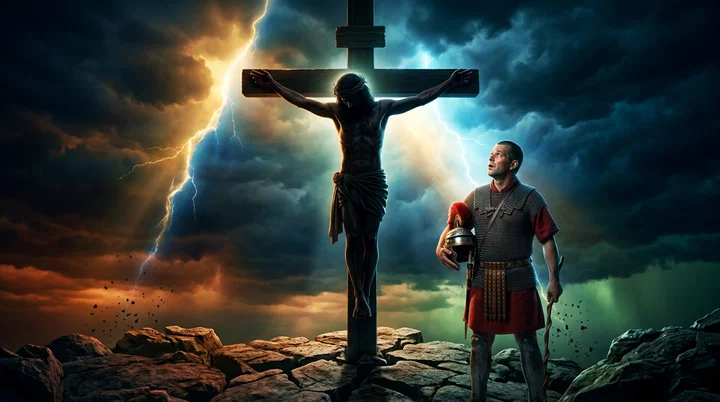
And at the ninth hour Jesus cried with a loud voice, saying, Eloi, Eloi, lama sabachthani? which is, being interpreted, My God, my God, why hast thou forsaken me?
Translations
And at the ninth hour Jesus cried with a loud voice, saying, Eloi, Eloi, lama sabachthani? which is, being interpreted, My God, my God, why have you forsaken me?
King James Version, KJV Cambridge Paragraph Bible
And at the ninth hour Jesus cried with a loud voice, saying, Eloi, Eloi, lama sabachthani? which is, being interpreted, My God, my God, why hast thou forsaken me?
And at the ninth hour Jesus cried with a loud voice, saying, Eloi, Eloi, lama, sabacthani? which is, being interpreted, My God, my God, why hast thou forsaken me?
Revised Version, American Standard Version
And at the ninth hour Jesus cried with a loud voice, Eloi, Eloi, lama sabachthani? which is, being interpreted, My God, my God, why hast thou forsaken me?
and at the ninth hour Jesus cried with a great voice, saying, 'Eloi, Eloi, lamma sabachthani?' which is, being interpreted, 'My God, my God, why didst Thou forsake me?'
and at the ninth hour, Jesus cried with a loud voice, [saying], Eloi, Eloi, lama sabachthani? which is, being interpreted, My God, my God, why hast thou forsaken me?
and, at the ninth hour, Jesus, uttered a cry, with a loud voice—Eloi! Eloi! lama sabachthanei? which is, being translated—My God! [My God!] to what end, didst thou forsake me?
At the ninth hour, Jesus cried out in a loud voice, “ Eloi, Eloi, lema sabachthani?” which means, “ My God, My God, why have You forsaken Me?”
At the ninth hour, Jesus cried out in a loud voice, “ Eloi, Eloi, lima sabachthani?” which means, “ My God, My God, why have You forsaken Me?”
At the ninth hour Jesus cried with a loud voice, saying, “ Eloi, Eloi, lama sabachthani?” which is, being interpreted, “ My God, my God, why have you forsaken me?”
And at the ninth hour, Jesus said in a loud voice, Eloi, Eloi, lama sabachthani? which is, My God, my God, why are you turned away from me?
And at the ninth houre Iesus cryed with a loude voyce, saying, Eloi, Eloi, lamma-sabachthani? which is by interpretation, My God, my God, why hast thou forsaken me?
Douay-Rheims (Challoner revision)
And at the ninth hour, Jesus cried out with a loud voice, saying: Eloi, Eloi, lamma sabacthani? Which is, being interpreted, My God, my God, why hast thou forsaken me?
Pictures
Cross-references 20 of 38
- Psalms 22:1
My God, my God, why hast thou forsaken me? why art thou so far from helping me, and from the words of my roaring?
Jesus’ cry of abandonment echoes the psalm’s opening words.
- Matthew 27:46
And about the ninth hour Jesus cried with a loud voice, saying, Eli, Eli, lama sabachthani? that is to say, My God, my God, why hast thou forsaken me?
Matthew records Jesus’ same cry of abandonment from the cross.
- John 19:30
When Jesus therefore had received the vinegar, he said, It is finished: and he bowed his head, and gave up the ghost.
Jesus’ final words declare his work finished as he dies.
- Luke 23:46
And when Jesus had cried with a loud voice, he said, Father, into thy hands I commend my spirit: and having said thus, he gave up the ghost.
After the cry of anguish, Jesus commits his spirit to the Father.
- Isaiah 53:6
All we like sheep have gone astray; we have turned every one to his own way; and the LORD hath laid on him the iniquity of us all.
The Lord lays the sins of all on the suffering servant.
- 2 Corinthians 5:21
For he hath made him to be sin for us, who knew no sin; that we might be made the righteousness of God in him.
Christ, though innocent, bears sin on the cross for sinners.
- Galatians 3:13
Christ hath redeemed us from the curse of the law, being made a curse for us: for it is written, Cursed is every one that hangeth on a tree:
Christ’s cry reflects his bearing the law’s curse to redeem sinners.
- Isaiah 53:3
He is despised and rejected of men; a man of sorrows, and acquainted with grief: and we hid as it were our faces from him; he was despised, and we esteemed him not.
Jesus is the man of sorrows, acquainted with grief.
- Matthew 26:39
And he went a little further, and fell on his face, and prayed, saying, O my Father, if it be possible, let this cup pass from me: nevertheless not as I will, but as thou wilt.
Jesus’ prayer expresses anguish before the cross and submission to the Father’s will.
- Luke 23:44
And it was about the sixth hour, and there was a darkness over all the earth until the ninth hour.
Both describe darkness at the crucifixion from the sixth to the ninth hour.
- 1 Peter 2:24
Who his own self bare our sins in his own body on the tree, that we, being dead to sins, should live unto righteousness: by whose stripes ye were healed.
Jesus’ suffering on the cross is linked to bearing human sins.
- Matthew 27:45
Now from the sixth hour there was darkness over all the land unto the ninth hour.
Darkness surrounds Jesus’ final suffering from the sixth to the ninth hour.
- Mark 15:39
And when the centurion, which stood over against him, saw that he so cried out, and gave up the ghost, he said, Truly this man was the Son of God.
The centurion confesses Jesus as God’s Son at the cross.
- Hebrews 13:5
Let your conversation be without covetousness; and be content with such things as ye have: for he hath said, I will never leave thee, nor forsake thee.
God promises never to forsake his people, contrasting with Jesus’ abandonment.
- Matthew 27:51
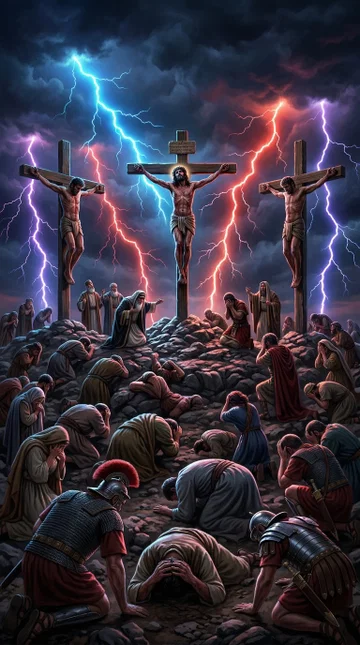
And, behold, the veil of the temple was rent in twain from the top to the bottom; and the earth did quake, and the rocks rent;
Records the veil tearing and the earth shaking at Jesus’ death.
- Mark 15:25
And it was the third hour, and they crucified him.
Contrasts the third-hour crucifixion with the ninth-hour death.
- Isaiah 59:2
But your iniquities have separated between you and your God, and your sins have hid his face from you, that he will not hear.
Sin separates people from God.
- John 12:27
Now is my soul troubled; and what shall I say? Father, save me from this hour: but for this cause came I unto this hour.
Jesus says His soul is troubled as He faces His hour.
- Matthew 27:54
Now when the centurion, and they that were with him, watching Jesus, saw the earthquake, and those things that were done, they feared greatly, saying, Truly this was the Son of God.
The centurion confessed Jesus as God’s Son after the signs at the cross.
- John 12:32-33
And I, if I be lifted up from the earth, will draw all men unto me.
Jesus’ being lifted up signifies the manner of his death.
Commentary
Each commentary is drawn from primary sources: the writings of Ellen G. White and Adventist pioneers and periodicals. Each commentary is separate. Its own words are not a quotation; follow the references to read the source passages.
Ellen G. White
48 sources
At the ninth hour, after about three hours of miraculous darkness over the land, Jesus cried aloud in anguish from the cross and then yielded up his life.Ms 41, 1887, par. 17–21Ms 91, 1897, par. 5ST Dec 8, 1898 His cry was the bitterness of feeling separated from his Father's love and favor and of draining the last dregs of the cup.Ms 235, 1902, par. 18–19ST Jan 27, 19143SP 164.3–165.1 The Father's sustaining presence and approving smile were withdrawn and his face hidden under displeasure against sin, so that Jesus could not see beyond the tomb to his resurrection and triumph and had to trust by faith what he knew of his Father's character.ST Jun 10, 18892T 209.1–3ST Aug 21, 1879 He was bearing the crushing weight of the sins of the world and the penalty of the broken law, treated as guilty though innocent and spotless, with God's wrath falling upon him as the sinner's substitute.ST Jun 10, 1889Ms 235, 1902, par. 18–19Ms 106, 1897, par. 11–122T 209.1–318MR 73.1 Bodily pain was only a small part of what ended his life so soon; it was the felt hiding of his Father's face that broke his heart with a woe beyond finite comprehension, yet God had not actually forsaken him, and as he was brought through, so no trusting soul will be forsaken.2T 209.1–3ST Aug 28, 1879ST Aug 21, 18797MR 154.2
Hour Darkness and Setting
At the ninth hour Jesus cried with a loud voice from the cross amid miraculous darkness that covered the land, after about three hours of darkness, and then yielded up His life.Ms 41, 1887, par. 17–21Ms 91, 1897, par. 5ST Dec 8, 1898SG1 63.1ST Aug 1, 1878 The cry was piercing and came as the mysterious darkness surrounding the crucifixion passed away from the people, and He died at that time, unusually soon for one crucified.Ms 41, 1887, par. 17–21ST Dec 8, 1898ST Aug 1, 1878 The cry was joined to shaking earth and sudden death, and belongs to the scene that ends with His death and the temple veil being torn.ST Dec 8, 1898SG1 60.1SG1 63.1 Amid that darkness and agony He was given vinegar and gall when He thirsted.SG1 60.1
The darkness lifted from the people but still surrounded Jesus, while the people watched in silence for the end.Ms 41, 1887, par. 17–213SP 164.3–165.15RED 84.3 Angry lightning appeared directed at Him in that oppressive gloom.Ms 41, 1887, par. 17–21 God was close beside His Son but concealed His presence and glory in the thick darkness, so neither Jesus in His final human agony nor those watching saw it manifested.Ms 41, 1887, par. 17–2112MR 385.1–4Ms 91, 1897, par. 5 His cry came amid darkness that hid His face.Ms 235, 1902, par. 18–19
That remaining darkness symbolized the agony and horror weighing on His heart and the deeper gloom that shrouded His suffering soul.ST Jan 27, 1914DA 754.2 He died outside the gate on the way from the judgment hall to Calvary followed by a vast crowd.DA 741.1–2DA 741.3 His wounded body and nailed hands and feet had served and blessed others, yet as the spotless Lamb He spoke from oppressive gloom rather than triumphant joy.3SP 165.2–3
When thirsty He was given vinegar and gall, while the sun hid its light, angels veiled their faces, the earth shook, rocks were rent, and the temple veil was torn.SG1 60.1SG1 63.1 Bystanders misunderstood His words as a call for Elias or Elijah.ST Dec 8, 1898DA 754.3ST Jan 27, 1914 They offered Him vinegar on a reed to see if Elias would take Him down and come to save Him, and the priests mocked Him and refused to relieve His suffering.ST Dec 8, 1898DA 754.3ST Jan 27, 1914
Anguish of Separation
The cry is anguish at feeling forsaken by God and separated from the Father's love and favor, the bitterness of draining the last dregs of the cup.Ms 235, 1902, par. 18–19ST Jan 27, 19143SP 164.3–165.1DA 754.2COS 161.1 The surrounding darkness symbolized the agony and horror weighing on the heart, and the deeper gloom that shrouded the suffering soul.ST Jan 27, 1914DA 754.2 The suffering came not from fear or pain of death, but from this sense of separation, which broke the heart and brought death so soon.COS 161.1 The keenest anguish was the sense of the Father's displeasure and separation, with no reassuring evidence of the Father's love or acceptance, an agony beyond human comprehension.2T 213.2 Yet the sense of being forsaken was felt, but God had not actually forsaken him.7MR 154.2
The Father's sustaining presence, approving smile, and assurance were withdrawn, and His face and favor hidden, bringing despair and darkness under the Father's displeasure and wrath against sin.ST Jun 10, 18892T 209.1–3ST Aug 21, 1879ST Jun 10, 18892T 214.1–3 Bodily suffering was not what quickly ended the life; the penalty of sin, death, was experienced while despair and darkness overwhelmed.2T 209.1–3 Bodily pain was only a small part of the agony, for the hiding of the Father's face and the felt separation from God caused by sin brought despair.ST Aug 28, 18792T 214.1–3ST Dec 21, 1888 His deepest suffering was not bodily pain alone, but the Father's hidden face and the sense of divine displeasure and separation from God that sin brings.ST Dec 21, 1888
In the darkness he could not see beyond the tomb or clearly perceive his resurrection, coming triumph, and the Father's acceptance, and was tempted to fear the Father had left him forever and could not be reconciled.ST Jun 10, 18892T 209.1–3ST Aug 21, 1879ST Jun 10, 1889ST Feb 15, 1883 He could not see beyond death or clearly perceive the coming triumph, and had no ray of light to brighten the future.ST Jun 10, 18892T 214.1–3 He could not see beyond the tomb or feel sure of the Father's acceptance, and hope and faith trembled.ST Jun 10, 1889ST Feb 15, 1883 He had to rely by faith on what he knew of his Father's character and past acceptance and trust himself to him, relying on the evidence of the Father's character and past acceptance of the work.ST Jun 10, 1889ST Jun 10, 1889
The felt separation and hiding of the Father's face brought heartbreak and a depth of woe beyond finite human comprehension and endurance.ST Aug 28, 1879COS 161.12T 213.2 In that hour he was surrounded by evil powers in fearful conflict without angelic comfort or ray of light.ST Aug 28, 18792T 214.1–3ST Feb 15, 1883 Evil powers pressed upon him and claimed that God had disowned him, and under Satan's assault with no light to brighten the future he felt the separation sin makes between God and humanity.2T 214.1–3ST Dec 21, 1888ST Feb 15, 1883 Yet he did not yield to the enemy but remained faithful.ST Aug 28, 18792T 214.1–3ST Dec 21, 1888
Sin Bearer Under Wrath
On the cross the cry came from bearing the crushing weight of the world's sins laid upon him and enduring the Father's displeasure against sin, with the Father's sustaining presence, approving smile and assurance withdrawn into deep darkness and despair.ST Jun 10, 18892T 209.1–3ST Aug 28, 1879ST Aug 21, 1879ST Feb 4, 1913 He was treated as guilty and suffered the penalty of the broken law, which is death, in the sinner's place, though himself innocent and spotless, and bodily pain was not what quickly ended his life.Ms 235, 1902, par. 18–192T 209.1–3ST Aug 28, 1879ST Aug 21, 1879 In that darkness he could not see beyond death or clearly perceive the coming triumph, resurrection and the Father's acceptance, and was tempted to fear that the Father had left him forever and could not be reconciled to him.ST Jun 10, 18892T 209.1–3ST Aug 21, 1879ST Feb 4, 1913 He had to rely by faith on what he knew of his Father's character and past acceptance and trust himself to him, and surrounded by evil powers without angelic comfort or ray of light he endured the enemy's claim that God had disowned him, yet he did not yield.ST Jun 10, 1889ST Aug 28, 1879
The wrath of God fell upon him as the Father's countenance and favor were hidden from him.Ms 106, 1897, par. 11–1218MR 73.1 Though innocent he was treated as a sinner, with the sins of the world imputed to him and counted as his, and when he no longer felt his Father's favor he had drained the last dregs of the cup of bitterness.Ms 106, 1897, par. 11–1218MR 73.1 He died so that guilty sinners might receive his righteousness counted as theirs and be treated as God's loyal, obedient children.Ms 106, 1897, par. 11–1218MR 73.1
Dying outside the gate he suffered the curse brought by transgression of God's law, bearing the guilt of the disobedient and enduring the scorn and mockery due to sin.DA 741.1–2ST Jan 6, 1881 His deepest agony was not bodily pain alone but the hiding of his Father's face and the felt separation from God that sin brings, with no ray of light to brighten the future while evil powers pressed upon him and claimed God had disowned him.2T 214.1–3ST Dec 21, 1888ST Feb 15, 1883 He nevertheless did not yield to the enemy but remained faithful under Satan's assault, enduring a depth of woe beyond finite human endurance.2T 214.1–3ST Dec 21, 1888ST Aug 14, 1879
Lifted up as Moses lifted up the serpent in the wilderness, after rejection, cruel mockings, scourgings and nailing, he gave his life so that whoever believes in him should not perish but have eternal life.ST Mar 31, 18811SP 340.1–341.1 His willingness to risk all reveals the immense value he placed on each soul, even to give his life for one sinner.COL 196.4 His suffering shows how offensive sin is and that God's mercy does not excuse transgression of his law, for our sins brought darkness into his soul and caused him to cry out in anguish in the sinner's place.ST Jan 6, 1881
His love for perishing and guilty sinners remained strong through this suffering, stronger than death and increasing through the conflict, and his arm brought salvation.ST Feb 15, 1883ST Dec 21, 1888ST Aug 28, 1879 By his death he paid the price of human redemption.ST Feb 15, 1883ST Dec 21, 1888ST Aug 28, 1879 His declaration that the work was finished marked the completion of that redemptive work.Ms 235, 1902, par. 18–19ST Dec 21, 1888ST Aug 28, 1879
Onlookers Convicted or Shaken
The loud cry at the ninth hour came in the midst of his dying, and the Roman centurion who heard it was moved by what he saw and heard to recognize the sufferer as the Son of God.Ms 25, 1898, par. 4–8 The cry was piercing, uttered after three hours of darkness over the cross as he asked why God had forsaken him, joined to shaking earth and a sudden, unexpected death.ST Dec 8, 1898 Bystanders mistook the words for a call for Elias and offered him vinegar on a reed to see whether Elias would come to take him down, after which he committed his spirit to the Father and gave up his life.ST Dec 8, 1898 Together with his final words and death, that cry planted conviction in many who had witnessed his trial of his loyalty and royal character.ST Dec 8, 189812MR 386.2–4Ms 91, 1897, par. 7–9
That conviction forced from witnesses the confession that he was a righteous man and the Son of God, a seed that ripened into harvest when the disciples boldly proclaimed the gospel after his ascension.ST Dec 8, 189812MR 386.2–4 Many priests then accepted the faith, showing that what was sown at the cross bore fruit in the later preaching.12MR 386.2–4 The account of these events, as the mysterious darkness over the earth passed away at his death, led Pilate to believe still more firmly that he was no ordinary man.5RED 93.2–3 His enemies were troubled by the signs surrounding his death and his loud cry, and his murderers trembled.SG1 63.1EW 148.1
Scoffers were filled with terror by the cry with the shaking earth and sudden death, and fled for fear that the quaking earth and rent rocks would end their lives.ST Dec 8, 1898 Yet many who had believed in him and heard the cry were terrified and lost hope.ST Jan 27, 19143SP 164.3–165.1DA 754.25RED 84.3 With darkness still surrounding him even as it lifted from the people, his cry of despair at feeling forsaken by God left them wondering what they could trust if God had abandoned Jesus.ST Jan 27, 19143SP 164.3–165.1DA 754.25RED 84.3 They feared that if he was forsaken, his followers and the doctrine they cherished had no future, and asked whether their hope and teaching could still stand.3SP 164.3–165.1DA 754.25RED 84.3
His death crushed the disciples' hopes that he would reign as a temporal prince.SG1 63.1 He in whom their hopes of eternal life were centered had been given into the hands of wicked men, with his own nation clamoring for his blood.ST Jul 7, 1898 He had been crowned with thorns, clothed in the purple robe, mocked with bowing, struck with the reed, and scourged as the worst of criminals, while the murderous Barabbas was chosen in his place though he had been expected to take his place on David's throne, then lifted up on the cross to die as a malefactor.ST Jul 7, 1898 Seeing this tries faith and makes hope and courage fail.ST Jul 7, 1898
Warning and Assurance Today
His anguish in feeling separated from His Father's favor and forsaken in His hour of need reveals the terror that will seize the sinner when, too late, God's Spirit is withdrawn.ST Aug 9, 1905 His words are also the cry of the remnant in the time of trouble as they appeal to God.Ms 1, 1852, par. 4 Their sins have gone beforehand to judgment and have been confessed at the sanctuary as they face that time.Ms 1, 1852, par. 4
The cry did not mean that God had actually forsaken Him at the hour of His death.7MR 154.2 As God did not forsake Him, He will not forsake any soul that trusts in Him, but will bring the faithful through victoriously and give the crown of life.7MR 154.2 While suffering for the sins of the world He endured the hiding of His Father's countenance until He cried out in anguish, expressing the terrible sense of being forsaken, yet His love for sinners remained strong through that suffering.ST Feb 15, 1883 His death paid the price of human redemption, and remembering Calvary should awaken gratitude, humility, obedience, and devotion to Him.ST Feb 15, 1883
Sources
Pioneers and periodicals
86 sources
At the ninth hour, three in the afternoon, after darkness had covered the land from the sixth hour, Jesus cried aloud asking why God had forsaken him, and died that same day.ST Jun 1, 1904RH Aug 15, 1854RH Apr 7, 1851RH Mar 10, 1859 He bore the sins of the whole world and their penalty of death, feeling the weight of the curse and the Father's wrath against sin, while the Father's sustaining presence and approving smile were withdrawn and his face hidden.ST Jun 10, 1889ST Aug 28, 1879ST Aug 21, 1879ST May 17, 1899 He was not in fact abandoned, for God regarded him with tender favor as his beloved Son and Father and angels remained beside him, but their glory was concealed so he received no comfort and endured alone.ST Jun 18, 1902ST Apr 30, 1894RH Jan 21, 1904 He died as man's acceptable substitute and Lamb of God, drinking the cup of wrath to destroy him who has the power of death and deliver those in bondage, and his death magnified the law and proved it unrepealed, since if it had been repealed his death would not have been necessary.ST Jun 15, 1904ST Dec 3, 1894RH Jan 21, 1904ST Nov 20, 1879 Though hope trembled and he could not see beyond the tomb to his triumph and resurrection, he did not distrust or sin but still called God his own by faith and committed himself to him, and so believers in darkness who feel forsaken may cling to God as he did, knowing his presence and love remain over them.ST Jun 10, 1889ST Jun 10, 1889ST Jun 18, 1902RH Jun 6, 1865RH Dec 5, 1907
Hour Darkness and Death
The outcry took place at the ninth hour, three o'clock in the afternoon on Friday, after a crucifixion at the third hour and darkness over the land from the sixth hour to the ninth hour.RH Aug 15, 1854RH Apr 7, 1851RH Mar 10, 1859 He died that same day, and that same-day death proves that those crucified with him also died that day.RH Aug 15, 1854RH Mar 10, 1859 His dying was unusually soon for one crucified, coming just as the mysterious darkness passed away.ST Aug 1, 1878RH Sep 5, 1865 That nearness of death to the ninth hour is used to reckon how long he remained in the tomb before resurrection, with the hour of death placed at three o'clock in the afternoon at Passover.RH Jan 9, 1872RH Sep 5, 1865
Darkness lay over the scene from about the sixth hour until the ninth hour, when he cried aloud and gave up his life.ST Dec 8, 1898ST Mar 20, 1901 The darkness lifted from the people yet still surrounded him and enveloped him, with a deeper gloom enshrouding his suffering soul.ST Jul 25, 1878ST Jan 27, 1914RH Jan 14, 1904 That darkness symbolized the agony and horror weighing on his heart, both concealing from human sight and expressing the meaning of his atoning suffering for sinners, as he hung on the cross at noon and died for them.ST Jan 27, 1914ST Feb 27, 1907 His cry expressed terrible anguish and the sense of abandonment that overwhelmed him.ST Jul 25, 1878ST Jan 27, 1914
At the ninth hour he cried with a loud voice in the words rendered as asking why God had forsaken him.ST Jun 1, 1904 That utterance is counted among the seven words he spoke during the seven hours he hung on the cross.
Bystanders misunderstood the cry as a call for Elijah and offered him vinegar on a reed to see whether Elijah would come to take him down.ST Dec 8, 1898ST Jun 1, 1904 Afterward he declared his work finished, said he was thirsty, commended his spirit to the Father, and gave up his life.ST Jul 25, 1878ST Dec 8, 1898ST Jul 25, 1878RH Apr 7, 1851 His piercing cry, joined with shaking earth and sudden death, proves he died of a broken and rent heart, shown also by the blood and water that gushed when his side was pierced.ST Dec 8, 1898ST May 17, 1899RH Feb 4, 1909ST May 13, 1903 That anguish came as he bore the sins of the whole world and faced death under the hiding of the Father's face, and he endured it so that people might have hope in the hour of death.ST May 17, 1899
Anguish of Forsakenness
The cry came because he was bearing the sins of the whole world with the iniquity of all laid upon him, made sin and wounded for transgressions, suffering the penalty of the law which is death.ST Jun 10, 1889ST Aug 28, 1879ST Aug 21, 1879ST Jun 10, 1889ST Dec 21, 1888 In that bearing he felt the full crushing weight of the curse due to transgressors and the Father's holiness, displeasure and wrath against sin.ST Jun 10, 1889ST Aug 28, 1879ST Aug 21, 1879ST Jun 10, 1889ST Feb 15, 1883 The Father's sustaining presence, approving smile and assurance were withdrawn and his face was hidden from Jesus as he stood in the condemned sinner's place.ST Jun 10, 1889ST Aug 28, 1879ST Aug 21, 1879ST Jun 10, 1889ST Dec 21, 1888 This separation that sin makes between God and humanity brought an agony beyond human understanding, deeper than bodily pain or the nails.ST Aug 28, 1879ST Aug 21, 1879ST Jun 10, 1889ST Dec 21, 1888ST Feb 15, 1883 It was accompanied by assault from evil powers with no angelic comfort and no ray of light to brighten the future.ST Aug 28, 1879ST Dec 21, 1888ST Feb 15, 1883ST Feb 11, 1913ST May 17, 1899
In the darkness he could not see beyond the tomb, through the portals of the grave, or clearly perceive his coming triumph, resurrection and the Father's acceptance of his sacrifice.ST Jun 10, 1889ST Aug 21, 1879ST Jun 10, 1889ST Feb 15, 1883ST Feb 4, 1913 He felt darkness and despair and was tempted to fear that sin was so offensive that the Father had left him forever and could not be reconciled to him.ST Jun 10, 1889ST Aug 21, 1879ST Jun 10, 1889ST Feb 15, 1883ST Feb 4, 1913 In this he drained the last dregs of the cup of human woe and paid sin's penalty to the uttermost, facing death without clear hope and with the sinner's despair pressing upon him.ST Jun 10, 1889ST Aug 21, 1879ST Feb 15, 1883ST Feb 4, 1913ST Aug 20, 1912 Yet he was not in fact abandoned, for God regarded him with tender favor as his beloved Son who bore no sin of his own.ST Jun 18, 1902ST Apr 30, 1894RH Jan 21, 1904 The Father was never nearer him than at that moment, and Father and holy angels remained beside him in the darkness, but the Father's glory and presence were concealed because their revealing would have destroyed the watchers, so he received no comfort and endured alone with no human support.ST Jun 18, 1902ST Apr 30, 1894RH Jan 21, 1904
Though hope and faith trembled and Satan wrung his heart with the claim that God had disowned him and he was in Satan's power, he did not yield, distrust God, or sin in doubt.ST Jun 10, 1889ST Aug 28, 1879ST Jun 10, 1889ST Dec 21, 1888ST Feb 11, 1913 In his humanity his limitations shut out knowledge of his triumph and raised the question whether he himself was sufficient, yet this involved no distrust of God.ST Jun 10, 1889ST Jun 10, 1889ST Sep 29, 1914RH Dec 7, 1905 He relied by faith on what he knew of his Father's character, justice, mercy, love and past acceptance, still called him My God, bowed in submission, committed himself to God's keeping power, and by faith was victor, with the sense of lost favor then withdrawn.ST Jun 10, 1889ST Jun 10, 1889RH Jan 31, 1871RH Sep 10, 1857RH Dec 7, 1905 His holding on in oneness with his Master through open attack and secret device shows how the soul is to cling to the Lord so that no powers of darkness can shake it off or separate it, conquering every foe in the strength of Jesus the Captain of salvation who already conquered the invisible host.RH Jan 31, 1871RH Sep 10, 1857
The cry shows real human weakness, suffering and loneliness under sin's heavy load, not the acting of a part.RH Oct 27, 1863ST Dec 5, 1916RH Dec 7, 1905ST Sep 23, 1913 It came with a genuine possibility of failure and loss as the second Adam free to choose, like Adam before the fall.ST Sep 29, 1914RH Dec 7, 1905 It was sorrow of heart from bearing sins for an ungrateful race, borne daily through wearisome journeys, incessant labor in preaching, healing and instructing, long nights of watching and prayer, and agony of soul over those who would not be reconciled, an agony greater than the thought of suffering on the cross.RH Oct 27, 1863ST Apr 30, 1902 Even in despairing agony he willingly carried out the Father's will in filial love on the way to victory over death, remaining on the cross rather than saving himself so that salvation for lost humanity would be possible.ST Dec 5, 1916ST Apr 30, 1902ST Sep 23, 1913
Bearing Sin Under Law
On the cross he dies for sins according to the Scriptures as man's acceptable substitute, the Lamb of God who takes away the sin of the world and the sacrifice for all human guilt.ST Jun 15, 1904ST Dec 3, 1894RH Nov 6, 1860 Crushed beneath the sins of the world and bearing the grief and sorrow of ruined souls, with the sins of the whole world laid upon him, he takes humanity's place and suffers in humanity's stead, feeling the pain of abandonment as people do in their own trials after mocking by those he came to save and forsaking by his disciples.ST Dec 3, 1894RH Jan 21, 1904ST Dec 5, 1916 He remains on the cross rather than saving himself because his death makes salvation possible for lost humanity, uttering the all-important cry with arms extended wide, with bleeding hands and bleeding side, drinking the bitter cup for others and making his sacrifice and suffering for our sake.RH Nov 6, 1860ST Dec 5, 1916 At that hour the sun withholds its light and the heavens are clothed in night, the rocks rend and the mountains quake, while he fights with demons, fights the battle and wins the victory that finishes the mighty deed.RH Nov 6, 1860
He drinks the cup of wrath and dies in the agony of despair as the last sinner will finally die, dying the sinner's death as the Father's face was turned from the cross and all hope seemed gone from his agonized heart, yet choosing to drink the cup so his death could bring Adam's children back to God.ST Dec 3, 1894ST Aug 22, 1911 That sinner's death would have been eternal for the human race if he had not lived a righteous life and risen to conquer the grave, and passing through that death he unlocks Satan's prison house, destroys him who has the power of death, and delivers those who through fear of death were all their lifetime subject to bondage.ST Dec 3, 1894ST So sinners who turn to him may know they are not forsaken by God.ST
His death magnified the law and made it honorable by vindicating its claims, proving the law was not abolished as having outlived its usefulness, for if it had been abolished his death would not have been necessary for those living afterward.ST Jun 15, 1904ST Nov 20, 1879 He died because sin is the transgression of the law, the law is so firmly established that not one jot or tittle could be repealed, the penalty of sin is death, and all have sinned so all must die unless a substitute dies in their stead.ST Jun 15, 1904 All who accept him by faith acknowledge the just claims of the law upon them, and through his suffering the law was magnified and honored so that God can be just while justifying the person who believes in Jesus.ST Jun 15, 1904ST Nov 20, 1879
The cross measures both God's hatred of sin and his love for sinners, revealing how deeply God abhors sin and providing the righteous foundation on which God pardons sins and makes people perfectly righteous in the risen and glorified Christ.ST May 13, 1886ST Nov 20, 1879RH May 27, 1873 His anguished cry is unique in eternity, unlike any other question, expressing God's holiness and wrath against sin, how offensive sin is, the terrible evil of sin and the cost of redeeming the human race, showing that mercy does not excuse transgression.ST May 13, 1886RH May 27, 1873 He voluntarily bore the curse due to transgressors of God's law while acknowledging God's law as holy, just, and good, when his Father's face was withdrawn from him and he felt its full weight.ST Jun 10, 1886ST Jun 10, 1886 His suffering reveals the terribleness of that curse, his death and suffering redeemed people from the curse of a broken law, and that curse in full falls on those who reject the salvation offered through his death, calling them to keep all God's commandments so they may be saved through him.RH Sep 19, 1854ST Jun 10, 1886
By his death he paid the price of human redemption, enduring the hiding of his Father's countenance in fearful conflict with the powers of darkness as he suffered for guilty sinners, and his final words declared the work finished.ST Feb 15, 1883ST Dec 21, 1888ST Aug 28, 1879 His death was endured so that people might live and have everlasting life, the sacrifice that gives eternal life to those who believe in him.ST Mar 31, 1881 Remembering Calvary should awaken gratitude, humility, obedience, and devotion, for his love for sinners remained strong through this suffering, stronger than death and increasing through the conflict, and his arm brings salvation.ST Feb 15, 1883ST Aug 28, 1879
His forsakenness was necessary to bring humanity to God, revealing God's love and bounty against the background of human unbelief and disloyalty, and it is a reason to remember the cost of sin when tempted.RH Nov 24, 1910 Bowed beneath sin's heavy load, the Holy One adored in heaven, God's dear Son, the Lamb of Calvary, laid his glory by and came to earth as Bethlehem's babe to die for men, and by bearing that load he makes a ruined rebel race nigh to God, revealing grace and love above every other love.ST Nov 25, 1897 On the cross where he bore the world's woe and the burden of souls while the Father beheld him, the depth of his love and anguish is revealed.RH Jan 16, 1908
Calling his Father his God proves the Father and the Son are separate beings and Jehovah is not only the Father of Jesus Christ but his God.RH Nov 17, 1859 It shows God had forsaken Jesus, and if the Godhead left him in that forsaking he was still alive after the Godhead left, so only his humanity died and his death was only a human sacrifice.RH Nov 17, 1859
Fulfillment Types and Triumph
The cry sounds at the ninth hour, and the crucifixion ends at about three o'clock in the afternoon, the hour of the evening sacrifice.RH Feb 5, 1914ST Jun 20, 1911 At that hour, while the temple lamb is being prepared for sacrifice, Jesus dies, and his death fulfills what the sacrificial lamb represented.RH Feb 5, 1914 His death follows after that hour has passed and after the darkness has ended, at the Passover time described as between the two evenings.ST Jun 20, 1911 That death, with his body afterward laid in Joseph's tomb, marks the fulfillment of the prophetic midst of the week.ST Jan 31, 1911
The cry is wrung from him because he is drinking the cup of wrath laid on him by a righteous God for the guilt of sin, not merely enduring the physical horrors of crucifixion, which are only a feeble representation of what compasses his soul.RH Dec 9, 1858 He is made sin, has the iniquity of all laid on him, is wounded for transgressions and bruised for iniquities, with the chastisement of peace upon him bringing healing by his stripes.RH Dec 9, 1858 It pleases the Lord to bruise him and make his soul an offering for sin because the work of redemption requires it.RH Dec 9, 1858 The same dread of this wrath produces his extreme anxiety and agony in Gethsemane, where he yields himself to become humanity's sacrifice.RH Dec 9, 1858ST Mar 7, 1906 The cross is not the supreme crisis, for that crisis comes in Gethsemane, where he yields himself to become the sacrifice for humanity while bearing the burden of sin with the Father's face hidden.ST Mar 7, 1906
Nature is affected in sympathy with its Creator.ST Feb 13, 1907 Midday darkness covers the cross, the temple veil is rent, and earthquake, rent rocks, and quaking mountains leave those who witness them in awe.ST Dec 8, 1898ST Apr 11, 1911 He dies on a skull-like hill outside the city after a mocked, spit-upon, thorn-crowned procession in which he bears his own cross until exhaustion causes him to sink and a strong countryman is pressed to carry it.ST Apr 8, 1903 Nailed to the cross and lifted up, he dies amid wonders and convulsions in heaven and earth in the glorious triumph of the principle of eternal righteousness, a victim to hellish hate, Jewish blindness and Roman ignorance.ST Apr 8, 1903 His piercing cry is joined to shaking earth and sudden death.ST Dec 8, 1898
After his blood is shed on the cross in his execution, Joseph of Arimathea begs Pilate on his knees for permission to bury Jesus.RH Jul 16, 1861 Pilate grants the request and orders soldiers under Manlius to superintend the burial lest it be profaned.RH Jul 16, 1861 Two wealthy countrymen beg the governor for his body, wrap it in linen with a hundred pounds of aloes, myrrh and aromatics, lay it in a rock-hewn tomb closed with a great stone and officially sealed.ST Apr 8, 1903 A few days afterward the sepulcher is found empty, for he comes forth at the call of God as the mighty Conqueror over sin and death for every person.ST Apr 8, 1903RH Jul 16, 1861 The disciples publish everywhere that he has risen from the dead as he had foretold.RH Jul 16, 1861
Witnesses and Immediate Effects
Onlookers took the darkness over the cross and the anguished cry itself as signs that divine vengeance and wrath were falling upon him for claiming to be the Son of God.ST Jul 25, 1878ST Jan 24, 1911RH Jan 14, 1904 In that misunderstanding they falsely charged that he was in league with Beelzebub.ST Jan 24, 1911 The priests mistook his words for a call to Elijah and mocked that they would wait to see whether Elijah would come to save him and take him down.ST Dec 8, 1898ST Jan 27, 1914ST Jan 24, 1911 Meanwhile the Jews shouted in triumph while he was accomplishing redemption without any happy feeling.RH Dec 13, 1864
Many who believed on him and heard the despairing cry lost hope, asking what they could trust if God had abandoned Jesus and fearing that they and their faith had no hope.ST Jul 25, 1878ST Jan 27, 1914RH Jan 14, 1904 In one telling of the scene this fear takes the form of dread that Israel's hoped-for redemption had failed.ST Jan 24, 1911 Yet even then glory from Jehovah shone around him on the cross while a cloud covered the city and temple.ST Jan 24, 1911
The piercing cry, joined with shaking earth and sudden death, convicted many who had witnessed his trial of his loyalty and royal character.ST Dec 8, 1898 It forced the confession that he was a righteous man and the Son of God.ST Dec 8, 1898 Scoffers were filled with terror and fled lest the shaking earth and rent rocks end their lives, and those who had joined in mocking became conscience-stricken, recognizing the priests' accusations as false and that he was no pretender.ST Dec 8, 1898ST Jul 25, 1878 The meaning of the cross was afterward explained to many of them, thousands became converts, and seed was planted that ripened into harvest when the disciples proclaimed the gospel after his ascension.ST Dec 8, 1898ST Jul 25, 1878
Amid the crowning sorrows of the cross he rested upon the words of the Old Testament, whose thoughts and promises comforted his sinking heart and upheld him in the deepest trial of his ministry.ST Feb 15, 1883 The inspired account belongs to the crucifixion of the Man of Galilee, the saddest of all tragedies since creation, in which he was crucified by a blood-thirsty, sin-hardened mob. One who had once mocked the anguished cry as a plea of abandonment later recalled that mockery as part of bondage to sin.ST Feb 13, 1912
Example and Comfort for Believers
Christians too will have hours of darkness, sorrow and grief in which they feel forsaken, yet they are to remember that the Father's presence and love are still over them and that bright sunshine will soon follow.ST Jun 18, 1902RH Jun 6, 1865RH Dec 5, 1907 There is a purpose and lesson in dark shadows that will work for their good and will be understood someday.ST Jun 18, 1902 He was left to feel forsaken for a brief time though the Father was never nearer Him, and He bowed in submission rather than abandoning trust.ST Jun 18, 1902RH Jun 6, 1865 Having borne the heaviest sorrows and been acquainted with grief in all its phases, He is able to help all who come to Him and is a sympathy for those whose friends fail them in deepest need.ST Jun 18, 1902RH Dec 5, 1907ST Aug 25, 1887
Even when famished in soul and surrounded by darkness under the tempter's assault, whether by open attack or secret subtle device, the follower is to stand firm in the one purpose of serving God only.RH Sep 10, 1857 He is to cling to his Lord and Master as Jesus did when still claiming God as His own God in the dark hour.RH Sep 10, 1857 He is to hold on in oneness with Him so that all the powers of darkness cannot shake off or separate the soul.RH Sep 10, 1857 He will then conquer every foe in the strength of Jesus, who as Captain of salvation has already conquered the invisible host that wars against the soul.RH Sep 10, 1857
He both lived as the example of Christian perfection and died as the sacrifice without which all are lost forever.RH Feb 10, 1859 By keeping His Father's commandments He overcame the world, the flesh and the Devil, leaving the pattern believers must follow to overcome and be presented without spot after a life that ended in deprivation, suffering, humiliation and ignominious death before a heaven-daring multitude.RH Feb 10, 1859 His death and suffering beneath the burden of human sin redeemed people from the curse of a broken law, and this calls them to keep all God's commandments so they may be saved through Him and to make strong efforts to overcome sin.RH Sep 19, 1854ST Apr 1, 1880 The suffering He endured in His mission of love as He bore the sins of the whole world is a scene to contemplate in order to strengthen faith, encourage love for God and imitation of His virtues, and turn people from sin toward holiness.RH Aug 9, 1864
Remembering Calvary should awaken gratitude, humility, obedience and devotion, for His love for sinners remained strong while He endured the hiding of His Father's countenance and paid the price of human redemption.ST Feb 15, 1883 His forsakenness was necessary to bring humanity to God and reveals God's love and bounty against human unbelief and disloyalty.RH Nov 24, 1910 Remembering the cost of sin and the climax of horror in the darkness that settled over Him turns the tempted person from sin toward holiness.RH Aug 9, 1864RH Nov 24, 1910
A believer's final weakness or distress does not determine the meaning or purpose of a life, for God sees the heart and is glorified in weakness as well as strength.RH Sep 18, 1856 This is shown at the death that redeemed all other deaths and made them blessed, when Jesus cried from the darkness asking why God had forsaken Him.RH Sep 18, 1856 A person who cries out feeling forsaken by God at death is not thereby shown condemned, for such words by themselves prove neither a hopeless nor a hopeful state.ST Nov 3, 1881
Even in that suffering from a rent heart when the heavens seemed shut to Him, before He yielded up His life, peace and forgiveness were offered to the burdened thief beside Him.ST Aug 8, 1900
The cry belongs to the taking away of the Bridegroom when mourning and fasting become fitting.ST Jul 7, 1898 It shows Him descended into the depths of humiliation, in whom the disciples' hopes of eternal life were centered, given into the hands of wicked men with His own nation clamoring for His blood.ST Jul 7, 1898 Crowned with thorns, clothed in the purple robe, mocked with bowing and struck with the reed, scourged as the worst of criminals while the murderous Barabbas was chosen in His place though He was expected to take His place on David's throne, He was then lifted up on the cross dying as a malefactor, a sight that tries faith and makes hope and courage fail.ST Jul 7, 1898
His example in the weakness, suffering and anguish of humanity calls people to keep His human life and teachings before them and follow the way He lived.RH Oct 27, 1863 For a time disciples and angels left Him and the Father also left Him, bringing a cry of despair, and those finally lost will face anguish and despair like His.RH Jan 11, 1870 Those who overcome, however, will never be forsaken as He was or suffer as He suffered, and that anguish of separation from the Father's favor reveals the terror a sinner will feel when, too late, God's Spirit has been withdrawn.ST Aug 9, 1905RH Jan 11, 1870
Sources