Mark 7:29
And he said unto her, For this saying go thy way; the devil is gone out of thy daughter.
Translations
And he said to her, For this saying go your way; the devil is gone out of your daughter.
King James Version, KJV Cambridge Paragraph Bible, Revised Version
And he said unto her, For this saying go thy way; the devil is gone out of thy daughter.
And he said to her, For this saying, depart; the demon is gone out of thy daughter.
And he said unto her, For this saying go thy way; the demon is gone out of thy daughter.
And he said to her, 'Because of this word go; the demon hath gone forth out of thy daughter;'
And he said to her, Because of this word, go thy way, the demon is gone out of thy daughter.
and he said to her—Because of this word, go thy way, the demon hath gone forth out of thy daughter;
Berean Standard Bible, Majority Standard Bible
Then Jesus told her, “ Because of this answer, you may go. The demon has left your daughter.”
He said to her, “ For this saying, go your way. The demon has gone out of your daughter.”
And he said to her, For this saying go your way; the evil spirit has gone out of your daughter.
Then he said vnto her, For this saying goe thy way: the deuil is gone out of thy daughter.
Douay-Rheims (Challoner revision)
And he said to her: For this saying go thy way, the devil is gone out of thy daughter.
Pictures


Cross-references
- Matthew 15:21-28
Then Jesus went thence, and departed into the coasts of Tyre and Sidon.
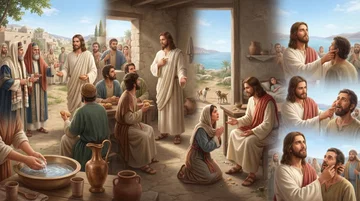
Jesus answers the Gentile woman’s plea and heals her daughter.
- Luke 4:35
And Jesus rebuked him, saying, Hold thy peace, and come out of him. And when the devil had thrown him in the midst, he came out of him, and hurt him not.
Jesus commanded an unclean spirit to leave, and it obeyed.
- Matthew 15:22
And, behold, a woman of Canaan came out of the same coasts, and cried unto him, saying, Have mercy on me, O Lord, thou Son of David; my daughter is grievously vexed with a devil.
Both recount a mother’s plea for her daughter’s deliverance.
- Mark 7:24-25
And from thence he arose, and went into the borders of Tyre and Sidon, and entered into an house, and would have no man know it: but he could not be hid.
sets the Tyre and Sidon meeting with the Greek woman
- Matthew 15:25
Then came she and worshipped him, saying, Lord, help me.
gives the plea that defines the story
- Matthew 15:23
But he answered her not a word. And his disciples came and besought him, saying, Send her away; for she crieth after us.
The disciples ask Jesus to send the woman away as she cries after them.
- Matthew 8:5-13
And when Jesus was entered into Capernaum, there came unto him a centurion, beseeching him,
Jesus honors a Gentile's faith and heals by his word.
Commentary
Each commentary is drawn from primary sources: the writings of Ellen G. White and Adventist pioneers and periodicals. Each commentary is separate. Its own words are not a quotation; follow the references to read the source passages.
Ellen G. White
26 sources
Jesus assured a despised Gentile mother that because of her humble, persistent answer her grievously afflicted daughter was freed that very hour by His word alone from a distance.Ms 36, 1898, par. 21–234SP 334.1GC88 515.2GC 515.2DA 401.1 She was a Canaanite idolater outside Israel who came in a mother's love after earthly help failed, and yielded to the test that it was not right to give the children's bread to dogs by willingly taking a dog's place to share its crumbs.Ms 36, 1898, par. 21–23DA 399.2DA 401.1 Her saying revealed perfect faith in Him as Redeemer and Saviour, free from national prejudice and pride.2SP 301.12SP 304.13RED 79.2 Her persevering prayer was answered with pity and love to teach that all who keep bringing their need to Christ in faith will receive help and find sufficiency in God.COL 175.2–3ST May 28, 1896DA 401.2 The healing was wrought on purpose as a lesson to leave Jewish exclusiveness behind, for the outcast is made a child in God's household and Christ's mercy and salvation are for all mankind without barrier of custom or nationality.2SP 304.23RED 80.12SP 302.1DA 401.2AA 19.2–20.1
Setting and Healing
After conflict with the Pharisees Jesus withdrew from Capernaum and crossed Galilee to the hill country on the borders of Phenicia overlooking Tyre and Sidon and the Mediterranean.DA 399.1 The time for messengers to carry the gospel across the sea to the centers of empire had not yet come, so His work then was to prepare His disciples.DA 399.1 He sought the retirement He had failed to secure at Bethsaida, with more than retirement in purpose.DA 399.1
Though He had withdrawn and entered a house so as not to be known, He could not be hidden.Lt 227, 1905, par. 9–10 His words and deeds of mercy revealed His divine character and power.Lt 227, 1905, par. 9–10 The woman who sought Him was a Canaanite of the old Canaanite race, described as Greek and Syrophoenician, an idolater, heathen, and despised outcast excluded from advantages enjoyed by Jews.DA 399.2 She had sought help from heathen gods without relief and was tempted to doubt what a Jewish teacher could do.DA 399.2 She heard among the Phenicians that Jesus healed all diseases for rich or poor, and inspired by a mother's love came with resolute purpose not to lose her only hope for her grievously devil-vexed daughter.DA 399.2
Falling at His feet she begged Him to cast the devil out, and He tested her by saying the children must first be filled and it was not right to take the children's bread for dogs.Ms 36, 1898, par. 21–23 She answered with humble persistence that even dogs under the table share the children's crumbs, yielding at once to divine influence, willing to take a dog's place to have a dog's privilege.Ms 36, 1898, par. 21–23DA 401.1 Because of that saying He sent her away with assurance that the devil had gone out of her daughter.Ms 36, 1898, par. 21–23DA 401.1
He freed her by His word alone, exercising authority over unclean spirits by addressing the demon as an intelligent being and commanding departure without further torment.4SP 334.1GC88 515.2GC 515.2 The deliverance was immediate and at a distance, effective from that hour.Ms 36, 1898, par. 21–232SP 304.13RED 79.2DA 401.2 When the mother reached her house she found her daughter lying upon the bed whole and untroubled, with the demon gone.Ms 36, 1898, par. 21–232SP 304.13RED 79.2DA 401.2
This was the only miracle He performed on that journey to the coast of Tyre and Sidon.2SP 304.23RED 80.1DA 402.1 It was undertaken for the very purpose of relieving this afflicted woman and showing mercy to one from a despised people.2SP 304.23RED 80.1DA 402.1
Faith and Gentile Mission
The saying for which deliverance was granted revealed perfect and implicit faith resting on recognition of Jesus as Redeemer able to do all that was asked.2SP 301.12SP 304.13RED 79.2DA 401.1 That faith yielded at once to divine influence, with no national or religious prejudice or pride, asking only for crumbs and willing to take a dog's place to have a dog's privilege.3RED 79.2DA 401.1 It was an unconditional acknowledgment of Him as Saviour.3RED 79.2DA 401.1
She persisted despite apparent indifference and seeming neglect, not taking offense or leaving but continuing to follow with supplication because she believed He would relieve her.3RED 78.12SP 302.2 One strand of the teaching stresses this persistent faith and His pity without detailing the specific saying that led to healing.2SP 302.2
His words about being sent only to the lost sheep of Israel were spoken according to Jewish prejudice yet implied a rebuke of the disciples.3RED 78.12SP 302.2 They had been annoyed by her importunity, felt no sympathy for her distress, asked Him to send her away, and assumed His indifference meant Jewish prejudice against Canaanites pleased Him.3RED 78.1 The rebuke taught that He came to save all who would accept Him, and all who seek Him ready to believe are the lost sheep He came to gather into His fold.3RED 78.12SP 302.2
Satisfied by her confidence, He turned to her with pity and love, commended her faith, and granted her request.COL 175.2–33RED 79.2ST May 28, 1896DA 401.2 He sent her away happy with her prayer answered and her daughter freed from that hour.COL 175.2–3ST May 28, 1896DA 401.2 The outcome teaches that persevering presentation of needs to Christ in faith brings help, so that even the weakest soul may find hope and sufficiency in God.COL 175.2–3ST May 28, 1896
The act was arranged as an example and lesson to the disciples to meet distress with compassion rather than coldness and prejudice, including toward those of a despised race.2SP 304.23RED 80.12SP 302.1 It was meant to lead them away from Jewish exclusiveness to be interested in working for others besides their own people, and it opened their minds more fully to the labor before them among the Gentiles.2SP 304.23RED 80.12SP 304.1 It showed that Christ's mercy and the gospel work are unrestricted by custom or nationality.2SP 304.23RED 80.12SP 304.1 This lesson with similar ones later brought a powerful influence to bear upon His representatives in directing their labors, when the Jews turned still more persistently from the disciples because they declared Jesus to be Saviour of the world, and when the partition wall between Jew and Gentile was broken down by the death of Christ.3RED 80.1 The encounter was also arranged so they could see needs outside Israel and learn to help them, teaching that Israel's blessings were meant to make the Jews a blessing to other nations in spiritual darkness, not to justify pride or neglect.
The grant means one regarded as an outcast from Israel is no longer an alien but a child in God's household with privilege to share the Father's gifts.DA 401.2 It made plain that Gentiles regarded as unworthy of salvation could hunger for truth and receive His help, teaching that salvation is for all mankind.AA 19.2–20.1 It shows Christ working directly outside Israel and recognizing Gentiles as children of God.AA 19.2–20.1ST Jun 12, 1879
The conversion and deliverance anticipate the later sustained preaching of the gospel among Gentile communities as an instance of His direct work beyond the acknowledged people of Israel.3SP 356.2–3ST Apr 23, 1885ST Jun 12, 1879 It foreshadowed the gathering of Gentiles into God's church, when whole communities would receive the gospel.ST Jun 12, 1879 Then those who had not been called God's people were shown mercy and welcomed as His people, grafted into Israel.ST Jun 12, 1879
The verse rebukes selfish neglect of the unfortunate, the blind, lame, afflicted, widow, fatherless, suffering, and discouraged.Ms 7, 1873, par. 9 It calls for greater missionary effort right at home in families and neighborhoods in caring for the afflicted, the suffering, and the discouraged.Ms 7, 1873, par. 9 It teaches that Israel's blessings were meant to make Jews a blessing to nations in spiritual darkness, not a ground for pride or neglect.
Sources
Pioneers and periodicals
45 sources
Jesus met a Greek Syrophoenician woman, also described as a Canaanite woman from the coasts of Canaan, in the region of Tyre and Sidon as she sought relief for her daughter.ST Jun 8, 1904ST Sep 22, 1881 For this saying points to her reply that even the dogs under the table eat of the children's crumbs, also expressed as the cry Lord, help me, and his sending her away with the assurance meant deliverance was accomplished at that moment though the daughter was absent, whom she found laid upon the bed delivered.ST Mar 23, 1904ST Jul 4, 1900ST Sep 19, 1900ST Jun 21, 1899ST Jun 7, 1905 He freed the daughter on account of that answer, commending it as an expression of humble, quick-witted, persistent, unwavering and believing faith that took no offense and accepted its own unworthiness.ST Jul 4, 1900ST Mar 23, 1904ST Jun 7, 1905ST Jun 15, 1904RH Aug 28, 1860 He first received her appeal with apparent silence, indifference, delay and rebuff that tested her sincerity, and the obstacles became a school that drew her nearer, made her seek more earnestly, and strengthened her faith.ST Jan 6, 1888ST Nov 21, 1911ST Jul 4, 1900 The healing shows him as a compassionate healer who made a long journey to do personal work for even one poor soul outside his faith, proving faith can cross the barrier between Jews and Gentiles and that persevering prayer is answered though help is delayed.RH Oct 30, 1860RH Nov 28, 1912ST Jun 15, 1904ST Dec 4, 1901RH May 21, 1857
Words and Setting
The encounter took place in the region of Tyre and Sidon, where Jesus met a Greek Syrophoenician woman, also described as a Canaanite woman from the coasts of Canaan, who came seeking relief for her daughter.ST Jun 8, 1904ST Sep 22, 1881 He responded personally to her request and took a long journey to bring help to her.ST Jun 8, 1904 The healing of her daughter is located in the neighborhood of Tyre and Sidon.ST Sep 22, 1881
The words for this saying point to her reply that even the dogs under the table eat of the children's crumbs.ST Mar 23, 1904ST Jun 7, 1905 That same faith was expressed in the cry Lord, help me.ST Sep 19, 1900 Her humble answer showed persistent faith, and on account of it her plea was granted and her daughter was freed from the demon.ST Mar 23, 1904ST Sep 19, 1900ST Jun 7, 1905
Go thy way was a sending with assurance that the devil had gone out of her daughter.ST Jul 4, 1900ST Jun 21, 1899ST Jul 4, 1900 The deliverance was accomplished at that moment, though the daughter was not present with Jesus and was away from Him.ST Jul 4, 1900ST Jun 21, 1899 She was delivered before the woman returned home, and the woman went away to her house and found the child laid upon the bed delivered and healed at home.ST Mar 23, 1904ST Jul 4, 1900ST Jul 4, 1900
The exchange shows that Jesus could communicate with the Syro-Phoenician woman, but it does not identify what language they spoke.ST Mar 10, 1881 Immediately after this miracle Jesus left those parts and set out northeastward through the territory of Sidon toward the country east of Jordan to reach Decapolis without passing through Galilee.ST Sep 22, 1881
Faith Tested and Rewarded
Jesus granted the request and freed the daughter from the demon on account of her saying, sending her away with assurance that the evil spirit had left the child.ST Jul 4, 1900ST Mar 23, 1904ST Jun 7, 1905ST Jun 21, 1899ST Nov 21, 1911 The deliverance was given because of her reply, which was commended as an expression of faith, and apparent refusal did not mean denial, for faith and persistence were rewarded.ST Mar 23, 1904ST Nov 21, 1911ST May 12, 1914 He traveled a great distance to do this work for even one soul, a poor woman outside His faith.ST May 12, 1914
The faith that obtained the healing was humble, quick-witted, persistent, unwavering and believing.RH Aug 28, 1860ST Jun 7, 1905ST May 23, 1911ST Jul 4, 1900RH Feb 18, 1858 It showed itself in not taking offense at the comparison of the children's food and the dogs and in not being turned away by apparent indifference or even humiliating comparison.ST Jun 15, 1904RH Aug 28, 1860 It accepted any position assigned by the Master and knew its own unworthiness, grasping from deep self-abasement the blessed mystery while recognizing corruption yet a nature made for immortality.ST Jun 15, 1904ST Jul 4, 1900RH Feb 18, 1858 It did not let racial prejudice keep her from seeking even a small share of blessing, and it proved she belonged among the children of the household.ST May 23, 1911ST Jul 4, 1900
Jesus first received her appeal in a way that tested her faith and sincerity through apparent silence, indifference, delay, rebuff and keeping her at arm's length.ST Jan 6, 1888ST Nov 21, 1911ST Mar 23, 1888RH Dec 3, 1867 The delay and obstacles became a school in which she learned deeper lessons of faith and stepping-stones to the blessing she sought.ST Jul 4, 1900 Apparent silence or denial brought the persistent one nearer to Him, led her to seek more earnestly, and strengthened her faith.ST Nov 21, 1911ST Nov 21, 1911ST Mar 23, 1888 The testing also taught compassion to those in distress rather than coldness.ST Jan 6, 1888
Her persistent, believing appeal won its victory and her daughter was delivered.ST Mar 23, 1904RH Dec 3, 1867 Faith pleases God and obtains deliverance, and persevering in presenting needs to Christ in faith brings help.ST May 28, 1896ST Mar 23, 1904 Even the weakest soul may thus find hope and sufficiency in God.ST May 28, 1896
Mercy Beyond Israel
The saying belongs to the picture of Jesus as a compassionate healer who relieves suffering and helps the burdened.RH Oct 30, 1860 In it He treats the Syrophoenician woman, an outcast, with loving compassion and without sharing the prejudices of those around Him.RH Mar 24, 1910
He made a long journey to the borders of Tyre and Sidon to do personal work for even one soul, a Greek Syrophenician woman, healing her daughter and bringing comfort and salvation to the mother.RH Nov 28, 1912 The healing was the only work He did in that region, and it illustrates His earnest personal effort to secure the salvation of a single person and gives proof of His divinity through personal ministry.RH Nov 28, 1912 The account illustrates Christ's willingness to travel a great distance to help one person, even a poor woman outside His faith, because of what she said she could go, for the demon had left her daughter.ST May 12, 1914 Leaving the crowds and going to Tyre to bring help and comfort to one Syrophoenician woman, His care reaches an individual in distress, and her daughter is delivered from the devil.ST Oct 1, 1896 Responding personally to a woman from the coasts of Canaan who came seeking relief for her daughter, He met her request and took a long journey to bring help to her.ST Jun 8, 1904
In this He puts one suffering soul above national tradition and prejudice.ST Apr 13, 1904ST Oct 29, 1896 The Jews regarded the Gentile nations as accursed and prized their traditions and rules more than the lives of fellow creatures, but Jesus utterly disregarded that corporate tradition and took a long journey to the region of Sidon that He might heal the daughter of a poor Syrophoenician woman.ST Apr 13, 1904 National traditions and prejudices are nothing compared with one poor, suffering soul, and Christ ever exalted the man above the thing, however holy the thing, proving each individual man is of eternal worth in the sight of God.ST Apr 13, 1904
Christ arranged the encounter so His disciples could see the needs of people outside Israel and learn to help them. The woman's distress gave Him an opportunity to teach that Israel's blessings were meant to make the Jews a blessing to other nations, not to justify pride or neglect of those in spiritual darkness. Granting the woman's petition and healing her daughter after first receiving her appeal in a way that tested her faith and sincerity, His response also taught the disciples to show compassion to people in distress rather than treat them with the coldness shown by the Jews.ST Jan 6, 1888 Though Jesus first appeared to turn her away, He knew her sorrow and persistent faith, He commended her faith, and the account shows that persevering in presenting needs to Christ in faith brings help, and that even the weakest soul may find hope and sufficiency in God.ST May 28, 1896 Making the healing of the daughter of a woman from a despised people an example of mercy beyond Jewish custom and national boundaries, the act prepared the disciples for their later work among the Gentiles and taught that the gospel was not restricted to one people.ST Jan 6, 1888 Sending the Canaanite woman away with her request granted so that her daughter, who was grievously afflicted by a devil, was made whole, her humble, persistent plea and her trust in Jesus led to the healing, while the disciples' impatience showed their lack of His compassion for the suffering.ST Nov 29, 1883
The saying for which He sends the woman away with her daughter healed expresses real faith that is not turned away by apparent indifference or even humiliating comparison, that accepts any position assigned by the Master and knows its own unworthiness.ST Jun 15, 1904 The verse means salvation is not limited by any national or social lines, but whosoever will may come and receive eternal life.ST Jun 15, 1904 Granting the Syrophenician woman's request after her reply demonstrated her faith, He told her to go and declared that the demon had left her daughter, the healing being accomplished before the woman returned home.ST Jul 4, 1900 The encounter shows that faith can cross the barriers between Jews and Gentiles, and that God welcomes people without distinction of nationality or religious privilege, the woman's faith showing that she belonged among God's children.ST Jul 4, 1900ST Jul 4, 1900 Her faith in His goodness and power endured despite discouragement in persistent appeal, and Jesus' response encourages prayer and gives hope that God's mercy extends to Gentiles as well as Israel.RH May 21, 1857 The delay and obstacles tested her faith and became a means of strengthening it, her faith showed that she belonged among the children of the household, and Jesus granted her petition.ST Jul 4, 1900 Responding to the Syrophoenician woman's faith and granting her request so her daughter is freed from the devil, the encounter is an example of Christ working directly among people outside Israel and recognizing Gentiles as children of God.ST Jun 12, 1879 Helping the Syrophoenician woman, a Gentile, is an instance of His direct work beyond Israel and a sign of the wider mission to the Gentiles.ST Apr 23, 1885
Prayer and Present Help
The keeping on pleading of the Syrophoenician woman for her daughter though help was delayed proves that persevering prayer is answered and gives encouragement not to faint.ST Dec 4, 1901RH May 21, 1857ST Nov 21, 1911 Delayed answers call for stronger faith and continued prayer, and apparent silence, denial or delay tests faith and leads to seeking God more earnestly.ST Dec 4, 1901ST Nov 21, 1911 The persistent are brought nearer to Christ by the trial, and persevering trust is heard, honored and sent away with comfort in the word that the devil was gone out.ST Dec 4, 1901RH May 21, 1857ST Nov 21, 1911 He hears, loves and sympathizes, and the granting of the Gentile woman's request after discouragement gives hope that mercy extends to Gentiles as well as Israel.RH May 21, 1857ST Nov 21, 1911 Her being tested by resistance before the request was granted encourages those seeking the Saviour not to give up when assurance of pardon and peace does not come at once, but to keep asking in faith until surrendering wholly to Christ.RH Feb 26, 1861
The journey made to relieve an anxious mother's heart shows compassion for a mother in distress over a daughter possessed by an evil spirit.ST Apr 4, 1911ST Dec 18, 1907ST Sep 9, 1886 There is willingness to hear a mother's prayers and to bless her children, and sympathy extends to mothers burdened for their children.ST Apr 4, 1911ST Dec 18, 1907ST Sep 9, 1886 The word that the devil had gone out still holds for demon-possessed sons and daughters today in mind and body.ST Jun 7, 1905 The demons are unrestrained pleasure binding with cords soft as silk but strong as steel, unreasoning temper and blind fitful passion, ambition dethroning calm reason and best judgment and holding back from usefulness and God, and the unclean demons of intemperance, profanity, obscenity and vice chaining myriads in bonds of perdition.ST Jun 7, 1905 Anxious mothers are therefore to pray humbly, earnestly and persistently, never minding obstacles Satan puts between them and the Master nor apparent indifference, because He hears, loves, sympathizes and will deliver.ST Jun 7, 1905
The woman's humble, persistent plea and trust led to her grievously afflicted daughter being made whole, while the disciples' impatience in contrast to that trust and to mercy rebukes lack of compassion for the suffering.ST Nov 29, 1883
Sources