Mark 7:32
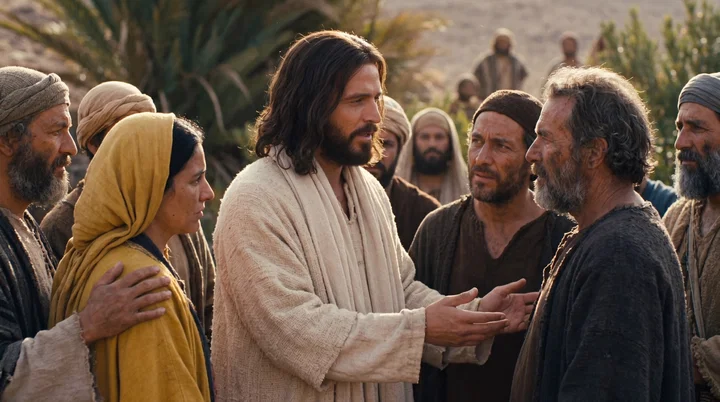
And they bring unto him one that was deaf, and had an impediment in his speech; and they beseech him to put his hand upon him.
Translations
And they bring to him one that was deaf, and had an impediment in his speech; and they beseech him to put his hand on him.
King James Version, KJV Cambridge Paragraph Bible
And they bring unto him one that was deaf, and had an impediment in his speech; and they beseech him to put his hand upon him.
And they bring to him one that was deaf, and had an impediment in his speech; and they beseech him to put his hand upon him.
Revised Version, American Standard Version
And they bring unto him one that was deaf, and had an impediment in his speech; and they beseech him to lay his hand upon him.
and they bring to him a deaf, stuttering man, and they call on him that he may put the hand on him.
And they bring to him a deaf [ man] who could not speak right, and they beseech him that he might lay his hand on him.
And they bring to him one deaf and stammering, and beseech him that he would lay upon him his hand.
Berean Standard Bible, Majority Standard Bible
Some people brought to Him a man who was deaf and hardly able to speak, and they begged Jesus to place His hand on him.
They brought to him one who was deaf and had an impediment in his speech. They begged him to lay his hand on him.
And they came to him with one who had no power of hearing and had trouble in talking; and they made a request to him to put his hands on him.
And they brought vnto him one that was deafe and stambered in his speache, and prayed him to put his hand vpon him.
Douay-Rheims (Challoner revision)
And they bring to him one deaf and dumb; and they besought him that he would lay his hand upon him.
Pictures
Cross-references
- Matthew 15:30
And great multitudes came unto him, having with them those that were lame, blind, dumb, maimed, and many others, and cast them down at Jesus’ feet; and he healed them:
Jesus heals people brought to him in the same setting.
- Isaiah 35:4-6
Say to them that are of a fearful heart, Be strong, fear not: behold, your God will come with vengeance, even God with a recompence; he will come and save you.
Connects the healings in this account with the promised signs of God’s coming salvation.
- Matthew 11:5
The blind receive their sight, and the lame walk, the lepers are cleansed, and the deaf hear, the dead are raised up, and the poor have the gospel preached to them.
Jesus’ healing of the deaf identifies His work by its signs.
- Mark 7:36
And he charged them that they should tell no man: but the more he charged them, so much the more a great deal they published it;
gives vain charge to silence and spread of report
Commentary
Each commentary is drawn from primary sources: the writings of Ellen G. White and Adventist pioneers and periodicals. Each commentary is separate. Its own words are not a quotation; follow the references to read the source passages.
Ellen G. White
7 sources
This verse stands in the Mark 7:24-36 account of barriers broken down.DA 399 It took place after the encounter with the Pharisees when Jesus withdrew from Capernaum and, crossing Galilee, came to the hill country on the borders of Phenicia overlooking Tyre and Sidon, with their heathen temples, magnificent palaces, marts of trade, and harbors filled with shipping, and beyond them the blue Mediterranean over which messengers of the gospel were to bear glad tidings to the centers of the world's great empire, though the time for that was not yet.DA 399.1 Jesus hoped there to find the retirement He had failed to secure at Bethsaida and to prepare His disciples for their mission, and He had a further purpose in the journey besides retirement.DA 399.1 In a Phoenician hillside town Jesus met foreigners, including the foreign woman who came to Him.DA 399
After being at the borders of Tyre and Sidon, Jesus came again through the midst of the coasts of Decapolis to the Sea of Galilee on His return to Decapolis.Ms 65, 1897, par. 19MH 98.4–5 In Decapolis people came to hear the message of salvation because the two men He had healed had witnessed to His power.MH 98.4–5 Others brought to Jesus one man who was deaf and had an impediment or difficulty in his speech, and begged Him to put His hand upon him.DA 404.1–405.2Ms 65, 1897, par. 19Ms 36, 1898, par. 21–23
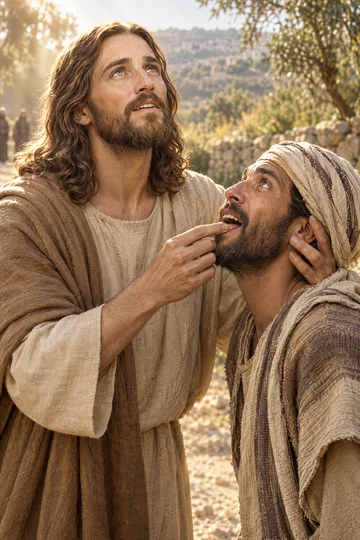
Jesus took the man aside from the crowd, touched his ears and tongue, and healed him with a word, so that his ears were opened and his tongue was released and he spoke plainly.DA 404.1–405.2Ms 36, 1898, par. 21–23 Despite Jesus' instruction to keep it quiet, the man told others about his cure.DA 404.1–405.2 The healing exemplifies Christ's work of helping those in need.Ms 36, 1898, par. 21–23 Christ's attention to the deaf man's small personal need reveals the greatness of His compassionate care.Lt 72, 1903, par. 13
Sources
Pioneers and periodicals
17 sources
On his wide circuit back from Tyre and Sidon through Sidonian territory and Decapolis to the Sea of Galilee, friends brought to Jesus a man who could not hear and could only stammer inarticulately, his faulty speech coming from his deafness, and pleaded for Jesus to lay his hand on him.ST Aug 9, 1905ST Mar 23, 1904ST Jun 28, 1899ST Sep 22, 1881 Decapolis lay east of the sea and the Jordan as a half-foreign district where multitudes now crowded for healing and teaching because the healed demoniac's home witness had prepared the way.ST Aug 4, 1914ST Sep 22, 1881ST Mar 23, 1904 Jesus took the man apart from the crowd to avoid excitement and to awaken faith in one who could hear no words, put his fingers in his ears and touched his tongue, then looked to heaven and said Ephphatha, meaning Be opened, and the ears were opened and the tongue released so he spoke plainly at once.ST Jun 28, 1899ST Sep 22, 1881ST Nov 29, 1910ST Jun 6, 1916 The touch was not in itself necessary, since God heals in different ways, but it revealed his sympathy and saving power, showing the promised Deliverer restoring what was impaired for all who reach to him in faith.RH Oct 30, 1860ST Nov 29, 1910ST Jun 6, 1916ST Feb 22, 1899 The scene also pictures spiritual deafness, where ears dulled by pleasure, greed, toil and sin hear preaching only as a human voice and speech of Christ is imperfect, until his power opens the ears to hear the Saviour and makes the speech clear in telling his love, as believing friends bring the deaf to him in prayer.ST Aug 9, 1905ST Aug 9, 1905ST Aug 9, 1905
Words and Setting
Jesus was on the way from the borders of Tyre through Sidon to the Sea of Galilee through the midst of Decapolis when a deaf man with difficulty in speech was brought to Him with the request that He lay His hand upon him.ST Mar 23, 1904 This was at the end of a wide circuit after the healing of the Canaanite woman's daughter in the neighborhood of Tyre and Sidon, for instead of returning at once to Capernaum He left sooner than purposed and set out northeastward through Sidonian territory by the caravan road over the wooded hills and spurs of Lebanon.ST Sep 22, 1881 He crossed the range at the rock-bridge over the Leontes, then turned down the valley of the Upper Jordan under the Hermon range past Caesarea Philippi toward the Sea of Galilee through Decapolis, in order to reach His old haunts without passing through Galilee.ST Sep 22, 1881
Decapolis means ten cities and lay east of the Sea of Galilee and the Jordan, including Gadara where He had cast devils out of a man into swine and then left when the people asked Him to go.ST Mar 23, 1904 It was a half-foreign district where multitudes of settled Jews crowded Him till He retreated to the hills and was still sought out for healing and teaching.ST Sep 22, 1881 On this return thousands from the surrounding country gathered and heard the message of salvation because His earlier work had prepared them, and the ready reception grew out of the faithful home witness of the healed demoniac whom He had told to return home and declare how great things God had done for him.ST Aug 4, 1914ST Mar 23, 1904 The unusual ceremony He used in healing the deaf man was on account of his deafness and the fact that he had been brought by others instead of coming himself, and his willingness to go apart alone with Jesus was a voluntary act showing personal faith, since signs were used instead of words for one who could hear no words.ST Mar 23, 1904
How long He stayed near Tyre and Sidon, how long He spent on the journey, and whether He stopped in the villages of Lebanon is unknown.ST Sep 22, 1881 The man brought to Him was deaf and had an impediment in his speech, having difficulty speaking and only stammering inarticulately.ST Mar 23, 1904ST Sep 22, 1881 His impaired speech likely resulted from his deafness, since he could not hear sounds and learn to correct his speech by comparison, and he could not hear or understand what his friends intended for him.ST Aug 9, 1905ST Aug 9, 1905 Mark alone records this miracle of healing a deaf man whose speech was impaired.RH Nov 30, 1916
He did not come by himself but was brought by his companions and friends, who besought Jesus to lay His hand upon him and heal him.ST Aug 9, 1905ST Mar 23, 1904ST Jun 28, 1899ST Sep 22, 1881 Those with him asked Jesus to act on his behalf while he himself may not have understood what they intended.ST Jun 28, 1899ST Aug 9, 1905ST Aug 9, 1905
Healing and Its Significance
Jesus healed him in the verses that follow: his ears were opened, his tongue was released, and he spoke plainly, perfectly cured as the immediate result of Jesus' command.ST Jun 28, 1899ST Sep 22, 1881ST Feb 22, 1899 The command to keep the miracle private was of no avail, and the whole country was presently filled with reports of it and of other similar wonders.ST Sep 22, 1881
Jesus took the man aside from the multitude, put His fingers into the man's ears, and touched his tongue with a finger moistened on His own lips.ST Sep 22, 1881ST Nov 29, 1910ST Jun 6, 1916 Looking up to heaven lifted the man's thoughts to the Eternal Father whose power alone could heal him, and He then spoke the single word of the popular dialect, Ephphatha, meaning Be opened.ST Sep 22, 1881 Taking him apart gave freedom and avoided too great excitement with hurtful political consequences, and the man's willingness to go apart alone with Jesus was a voluntary act showing personal faith.ST Sep 22, 1881ST Mar 23, 1904 The unusual ceremony with signs instead of words was on account of his deafness and the fact that he had been brought by others, to waken faith in one who could hear no words, since the miracle would not be wrought without the fitting spirit, and such actions could meet weak faith.ST Sep 22, 1881ST Mar 23, 1904ST Nov 29, 1910
Touching the ears was not necessary for the healing itself, for God used different methods with different people.ST Nov 29, 1910 The touch reveals Jesus' sympathy and strength to save and has power to heal.ST Nov 29, 1910ST Jun 6, 1916 The healing portrays Jesus as powerful and benevolent, showing sympathy for sufferers and readiness to help without seeking personal exaltation.RH Oct 30, 1860ST Jun 6, 1916 It is one of His mighty works showing His power to restore what was impaired, helping to show that the promised Deliverer had come, and those who reach for His help in faith are made whole.RH Oct 30, 1860ST Jun 6, 1916ST Feb 22, 1899
The man's physical affliction illustrates deeper human needs which Jesus' physical miracles also address.ST Aug 9, 1905 His giving of hearing offers comfort to people who are sick and assurance that He is willing to heal and restore.ST Jul 29, 1908 Belonging to the visit to Tyre and Sidon, the verse shows that salvation is not limited by any national or social lines but is open to whosoever will come and receive eternal life.ST Jun 15, 1904 It calls for real faith in Christ that is not turned away by apparent indifference or even humiliating comparisons, that accepts any position assigned by the Master and knows its own unworthiness.ST Jun 15, 1904
Spiritual Application for Believers
The deaf man with an impediment in his speech could not hear or understand what his friends intended for him, and his speech was affected by his deafness, since being unable to hear sounds he could not learn to correct his speech by comparison.ST Aug 9, 1905ST Aug 9, 1905 His condition pictures spiritual deafness in those who do not know the Saviour's voice, who may hear preaching only as a human voice and go on seeking to supply their needs from worldly things.ST Aug 9, 1905 Their ears are dulled by earthly pleasure and greed and toil and sin, and their speech is thereby affected and imperfect.ST Aug 9, 1905
God's power can break through that spiritual deafness caused by worldliness so that the deafened hear His voice and hear their Saviour.ST Aug 9, 1905ST Aug 9, 1905 When ears dulled in this way are opened to hear God's voice, imperfect speech is made clear and glad in telling the story of His power and love.ST Aug 9, 1905
The bringing of the man pictures Christian family and friends bringing to Jesus those who cannot hear the Saviour and asking Him to act on their behalf.ST Aug 9, 1905ST Aug 9, 1905 They bring them to Him and ask Him to lay His hand upon them, so that God's power overcomes the deafness of worldliness and enables them to hear.ST Aug 9, 1905ST Aug 9, 1905
Sources