Matthew 11:5
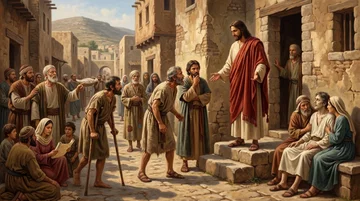
The blind receive their sight, and the lame walk, the lepers are cleansed, and the deaf hear, the dead are raised up, and the poor have the gospel preached to them.
Translations
American King James Version, King James Version
The blind receive their sight, and the lame walk, the lepers are cleansed, and the deaf hear, the dead are raised up, and the poor have the gospel preached to them.
the blind receive their sight, and the lame walk, the lepers are cleansed, and the deaf hear, the dead are raised up, and the poor have the gospel preached to them.
The blind receive their sight, and the lame walk, the lepers are cleansed, and the deaf hear, the dead are raised, and the poor have the gospel preached to them.
Revised Version, American Standard Version
the blind receive their sight, and the lame walk, the lepers are cleansed, and the deaf hear, and the dead are raised up, and the poor have good tidings preached to them.
blind receive sight, and lame walk, lepers are cleansed, and deaf hear, dead are raised, and poor have good news proclaimed,
Blind [ men] see and lame walk; lepers are cleansed, and deaf hear; and dead are raised, and poor have glad tidings preached to them:
The, blind, recover sight, and, the lame, walk, lepers, are cleansed, and, the deaf, hear,—and, the dead, are raised, and, the destitute, are told the joyful tidings;
Berean Standard Bible, Majority Standard Bible
The blind receive sight, the lame walk, the lepers are cleansed, the deaf hear, the dead are raised, and the good news is preached to the poor.
the blind receive their sight, the lame walk, the lepers are cleansed, the deaf hear, the dead are raised up, and the poor have good news preached to them.
The blind see; those who were not able to, are walking; lepers are made clean; those who were without hearing, now have their ears open; the dead come to life again, and the poor have the good news given to them.
The blinde receiue sight, and the halt doe walke: the lepers are clensed, and the deafe heare, the dead are raised vp, and the poore receiue the Gospel.
Douay-Rheims (Challoner revision)
The blind see, the lame walk, the lepers are cleansed, the deaf hear, the dead rise again, the poor have the gospel preached to them.
Pictures

Cross-references 20 of 35
- Isaiah 61:1
The Spirit of the Lord GOD is upon me; because the LORD hath anointed me to preach good tidings unto the meek; he hath sent me to bind up the brokenhearted, to proclaim liberty to the captives, and the opening of the prison to them that are bound;
The anointed one’s mission to bring good news to the poor is fulfilled in Jesus’ ministry.
- Luke 4:18
The Spirit of the Lord is upon me, because he hath anointed me to preach the gospel to the poor; he hath sent me to heal the brokenhearted, to preach deliverance to the captives, and recovering of sight to the blind, to set at liberty them that are bruised,
Jesus’ anointed mission brings good news to the poor and healing to the afflicted.
- Luke 7:22
Then Jesus answering said unto them, Go your way, and tell John what things ye have seen and heard; how that the blind see, the lame walk, the lepers are cleansed, the deaf hear, the dead are raised, to the poor the gospel is preached.
A parallel account lists Christ’s healings and good news preached to the poor.
- Isaiah 35:5-6
Then the eyes of the blind shall be opened, and the ears of the deaf shall be unstopped.
Its promised healings correspond to the signs of restoration in Jesus’ reply.
- John 11:43-44
And when he thus had spoken, he cried with a loud voice, Lazarus, come forth.
Jesus calls Lazarus from the grave and raises him from the dead.
- Acts 10:38
How God anointed Jesus of Nazareth with the Holy Ghost and with power: who went about doing good, and healing all that were oppressed of the devil; for God was with him.
Describes Jesus doing good and healing those oppressed by the devil.
- Luke 7:11-15
And it came to pass the day after, that he went into a city called Nain; and many of his disciples went with him, and much people.
Jesus raises the widow’s son at Nain, an example of the signs he recounts.
- Matthew 8:2-3
And, behold, there came a leper and worshipped him, saying, Lord, if thou wilt, thou canst make me clean.
Jesus cleanses a leper.
- Matthew 9:30
And their eyes were opened; and Jesus straitly charged them, saying, See that no man know it.
Jesus gives sight to blind men.
- Matthew 10:1
And when he had called unto him his twelve disciples, he gave them power against unclean spirits, to cast them out, and to heal all manner of sickness and all manner of disease.
Jesus empowers his disciples to heal the sick and cast out unclean spirits.
- Luke 7:21
And in that same hour he cured many of their infirmities and plagues, and of evil spirits; and unto many that were blind he gave sight.
Jesus’ healings precede his answer about his works.
- John 5:36
But I have greater witness than that of John: for the works which the Father hath given me to finish, the same works that I do, bear witness of me, that the Father hath sent me.
Jesus’ works bear witness that the Father sent him.
- Luke 8:43-55
And a woman having an issue of blood twelve years, which had spent all her living upon physicians, neither could be healed of any,
Jesus heals the woman through faith and raises Jairus’s daughter.
- Isaiah 53:4-5
Surely he hath borne our griefs, and carried our sorrows: yet we did esteem him stricken, smitten of God, and afflicted.
Christ bears human griefs and sins, bringing healing through his suffering.
- Matthew 11:11
Verily I say unto you, Among them that are born of women there hath not risen a greater than John the Baptist: notwithstanding he that is least in the kingdom of heaven is greater than he.
The passage connects Christ’s works with its comparison of Christ and John.
- Luke 14:21
So that servant came, and shewed his lord these things. Then the master of the house being angry said to his servant, Go out quickly into the streets and lanes of the city, and bring in hither the poor, and the maimed, and the halt, and the blind.
The invitation brings the poor and disabled into the house.
- John 9:6-7
When he had thus spoken, he spat on the ground, and made clay of the spittle, and he anointed the eyes of the blind man with the clay,
Christ gives sight to a blind man.
- Matthew 10:8
Heal the sick, cleanse the lepers, raise the dead, cast out devils: freely ye have received, freely give.
Jesus sends His followers to heal and freely give as they extend the kingdom.
- Matthew 21:14
And the blind and the lame came to him in the temple; and he healed them.
Jesus heals the blind and lame in the temple.
- John 5:21
For as the Father raiseth up the dead, and quickeneth them; even so the Son quickeneth whom he will.
Jesus raises the dead by his own authority.
Commentary
Each commentary is drawn from primary sources: the writings of Ellen G. White and Adventist pioneers and periodicals. Each commentary is separate. Its own words are not a quotation; follow the references to read the source passages.
Ellen G. White
72 sources
Jesus spoke these words to answer John the Baptist when, imprisoned by Herod for denouncing his unlawful marriage and perplexed that Christ had not set up an earthly kingdom or freed him, John sent two disciples to ask if He was the Coming One.Ms 96, 1897, par. 15Lt 107, 1902, par. 7–8DA 214.1ST Mar 1, 1883ST Nov 1, 1877 Instead of answering at once, Jesus let them watch Him give sight to the blind, strength to the lame and paralyzed, cleansing to lepers, hearing and speech to the deaf and mute, life and health to the dying and the dead including Lazarus, and words of eternal life to poor peasants and laborers despised by the rabbis.RH Sep 2, 1902GC 20.1–2MH 34.1–35.1COS 92.4–93.34RED 120.2 Those works were unmistakable proof that He was the divine Messiah clothed in humanity, fulfilling the prophecies of His mission and revealing the Father's mercy, goodness, and power to save fully from both disease and sin.Ms 96, 1897, par. 15Lt 107, 1902, par. 7–8RH Jul 2, 190816MR 120.2–4COS 85.3–5 Preaching the gospel to the poor was itself a chief token of His Messiahship, for as King of heaven He chose a poor life to honor poverty, bless the poor as heirs of the kingdom, and find His greatest welcome among the humble.ST Aug 7, 1893Ms 22, 1898, par. 26ST Jun 21, 1899GW92 303.32SP 174.3–175.1 That healing and preaching ministry is the pattern and highest honor for all who follow Him, and remembering it still strengthens faith that the same Saviour has power to help believers in present trial.Ms 61, 1898, par. 1–4ST Feb 17, 1914Lt 24, 1896, par. 17–1810MR 117.2–3Ms 103, 1906, par. 17
John's Question in Prison
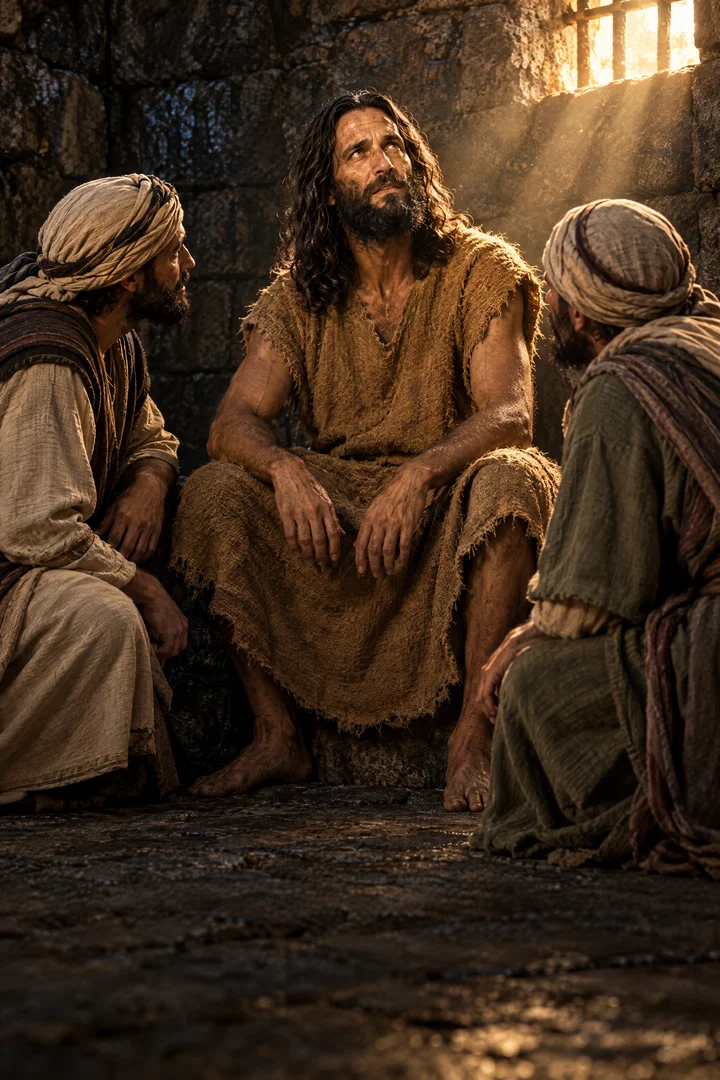
The verse belongs to the imprisonment of John the Baptist, who after heralding Christ's kingdom was confined by Herod Antipas for faithfully denouncing Herod's unlawful marriage.DA 214.1 From Herod's dungeon John watched Christ's work in disappointment and perplexity and sent two disciples to ask whether Jesus was the Coming One who should come.Ms 96, 1897, par. 15Lt 107, 1902, par. 7–8ST Mar 1, 18832SP 71.2MH 34.1–35.1 He expected the Messiah to take David's throne, establish an immediate temporal kingdom, overthrow the Roman oppressors, judge the wicked by fire, use power to free John from prison, and display arms.DA 214.2–215.2ST Mar 1, 1883ST Nov 1, 1877RH Mar 4, 1873ED 157.2–4 Jesus' work of healing the sick and teaching the poor contrasted with that expectation, but it did not mean the promised Deliverer had failed to appear.DA 214.2–215.2ST Mar 1, 1883ST Nov 1, 1877
Jesus did not answer at once but let John's two disciples spend the day seeing and hearing His work for the afflicted, then bade them go tell John what they had seen and heard.RH Sep 2, 1902ST Nov 1, 1877RH Mar 4, 1873COS 87.3–6MH 34.1–35.1 That report was enough to help John better understand Christ's mission and yield himself to God in faith whether to live or die.ST Nov 1, 1877RH Mar 4, 1873MH 34.1–35.1 With the answer Jesus added that a person is blessed if he is not offended in Him when He does not act as expected, including when He does not deliver John from prison.Ms 96, 1897, par. 15MH 34.1–35.1
John was not privileged to witness these miracles or to learn from Christ's teaching in person, nor did he live to witness later displays of Christ's wisdom and power.ST Mar 15, 18832SP 84.1–2RH Apr 8, 1873 Those who saw and heard Christ were more privileged to receive clearer light about Him, His kingdom, and the prophecies, for His words and works revealed God's wisdom and mercy and helped explain and illuminate the prophecies and the character of His kingdom.ST Mar 15, 18832SP 84.1–2RH Apr 8, 1873 These acts were part of a three-year mission of mercy, described elsewhere as three and a half years of going about doing good and bringing help to all classes, before He went to Jerusalem to be betrayed, condemned, and crucified as the Good Shepherd giving His life for the sheep.GC88 20.2COS 88.1–3
Healings and Raisings Listed
The verse lists restoring sight to the blind, enabling the lame and the paralyzed to walk, cleansing lepers, and enabling the deaf to hear and the mute to speak.GC88 20.2RH Sep 2, 1902GC 20.1–2GC88 20.1 Before John's two disciples the deaf heard His voice, fever left the afflicted at His touch, and a word and a touch opened blind eyes to behold daylight, nature, the faces of friends, and the face of the Deliverer.ST Sep 17, 1896MH 34.1–35.1 Paralyzed demoniacs obeyed His word and were left free from madness to worship Him.ST Sep 17, 1896MH 34.1–35.1
The verse lists the dead being raised up.GC88 20.2RH Sep 2, 1902GC 20.1–2GC88 20.1 His voice reached the dying and they arose in health and vigor.MH 34.1–35.1 Those awakened from the sleep of death included Lazarus, raised after his body had lain in the grave in corruption to full strength of manhood.COS 92.4–93.34RED 120.2
The verse lists the poor having the gospel preached to them.GC88 20.2RH Sep 2, 1902GC 20.1–2GC88 20.1 Poor peasants and laborers shunned by the rabbis as unclean gathered about Him while He spoke to them the words of eternal life.DA 216.6–217.2MH 34.1–35.1 These were poor people shunned as of low estate, and He gave encouragement, comfort, and help where most needed.Ms 65b, 1898, par. 1–2DA 216.6–217.2
Together these deeds show a healing, life-giving ministry of mercy that broke Satan's power over suffering people oppressed by the devil.GC88 20.2LC1 61.3 He rescued those held by Satan, freed people from suffering, and brought bodily healing, health, joy, hope, renewed strength and reason.LC1 78.2–79.12SP 370.3LC1 61.3 He comforted the weak, sorrowful, and despondent, fed the hungry, enlightened minds, and uplifted souls.LC1 78.2–79.12SP 370.3LC1 61.3 His words gave life to the ignorant, health and happiness followed His path, and the blind and deaf rejoiced in His presence.CH 543.1CH 531.1 This brought praise to God, especially benefiting those who believed in Him.LC1 61.3
Evidence of Messiahship
Jesus pointed to these works as His answer when John questioned whether He was the Coming One, telling the messengers to report what they had heard and seen, with the fruit borne in His life — restoring sight to the blind, making the lame walk, cleansing lepers, giving hearing to the deaf, raising the dead, and preaching the gospel to the poor — standing as unmistakable proof of divinity and testimony that His mission was to restore people and plant truth.RH Sep 2, 1902Lt 107, 1902, par. 7–8ST Mar 1, 18832SP 71.2ST Nov 1, 1877 The afflicted were healed, the dead were raised, and the poor received the gospel, and that report was meant to gently correct impatience and the mistaken expectation that He would at once establish an earthly temporal kingdom, overthrow Roman rule, and free John from prison.Ms 96, 1897, par. 15ST Mar 1, 1883ST Nov 1, 1877 The signs helped John better understand Christ's mission and yield himself to God in faith whether to live or die.ST Nov 1, 1877
The preaching of the gospel to the poor is itself a token and evidence of His divine mission and Messiahship.ST Aug 7, 1893GW92 303.3 The poor may have little worldly wisdom or theological learning, yet they can know and love Jesus, trust Him as personal Saviour, and serve others according to the light and ability they have.ST Aug 7, 1893 That credential supports giving people of every social class opportunity to understand present truth, so that reaching the higher classes does not mean neglecting the poor.GW92 303.3
These miracles displayed divine power, mercy, goodness, and the light and healing character of His mission, showed His true character, represented the Father's love for the human family, and proved He had clothed His divinity with humanity as the Father's representative.ST Mar 1, 1883RH Jul 2, 190816MR 120.2–4ST May 30, 1895Ms 37, 1894, par. 8–10 Disease fled at His touch, the blind saw, the deaf heard, the dead were raised, demoniacs were restored, lepers and paralytics were made whole, the dumb spoke, the diseased were given health, little children were freed from disease and suffering, and the poor received the gospel with comfort, peace, and relief.RH Jul 2, 1908ST Mar 15, 188316MR 120.2–4ST May 30, 1895Ms 37, 1894, par. 8–10 He bent over the poor, suffering, and afflicted with tender pity like a mother over a suffering child, as when those left in the temple courts cried to Him for pity because they had heard of His compassion.Ms 37, 1894, par. 8–10
Among Israel these acts expressed His care for His people and His efforts to save, heal, free, serve, and call them to Him.GC88 20.2GC 20.1–2GC88 20.1 They belonged to His three-year mission of mercy, healing people oppressed by the devil and bringing help to all classes.GC88 20.2 The bodily healings showed He had power to save fully, including power to take sin from the heart.COS 85.3–5
The disciples remembered these miracles of healing the sick, giving sight to the blind, restoring hearing to the deaf, and raising the dead as strengthening their belief that He was the Son of God, though they still expected Him to use His power to escape His enemies and reveal Himself as King of Israel.SG1 51.2 Judas also witnessed these works among the afflicted as evidence of Christ's power, and he was himself given power to heal the sick and cast out devils.DA 716.4
Prophecy Fulfilled and Rejected
The works named in the verse fulfilled the prophecies about the Messiah, including the specified signs of the Messiah and the prophecy Christ read at Nazareth, fulfilled the promises of prophecy, and helped explain and illuminate the prophecies and the character of His kingdom.RH Jul 2, 190816MR 120.2–4RH Apr 8, 1873Ms 104, 1898, par. 6–7 The sick and disabled were healed, sight and hearing were restored, demoniacs were restored to reason, lepers and paralytics were made whole, the dumb spoke, the deaf heard, the dead were raised, and the poor received the gospel, and these works showed His true character as evidence of God's power.RH Jul 2, 190816MR 120.2–4RH Apr 8, 1873 John the Baptist did not live to witness these later displays of Christ's wisdom and power, which gave clearer light about Him than John had received.2SP 84.1–2RH Apr 8, 1873
Christ's words and works in this ministry revealed God's wisdom and mercy.2SP 84.1–2 His choice to take the gospel to ordinary people, rather than seek the highest place among Jewish teachers, fulfilled this pattern of ministry to the poor as well as healing to the sick.2SP 84.1–2
Each miracle convinced some, and the merciful deeds gave people personal evidence of His healing and life-giving power leading many to believe.2SP 370.33RED 112.216MR 120.2–4 He restored sight and hearing and speech, healed the sick, fed the hungry, and comforted the weak, sorrowful, and despondent, yet these acts of care took place amid persecution and rejection.2SP 370.33RED 112.2LC1 57.2 Many witnesses still rejected Him because of pride, prejudice, hatred, and attachment to worldly honor, and even such works and His teaching could not overcome the prejudice and hatred of those who refused the light.2SP 370.33RED 112.21RED 57.2 The Jewish rulers in pride and prejudice misapplied prophecies of Christ's second coming to His first coming and rejected the evidence, the people of Nazareth rejected Him despite evidence witnessed by many, and those who rejected heaven's light resisted the evidence more determinedly.16MR 120.2–4Ms 104, 1898, par. 6–7LC1 57.21RED 57.2
Having taken human nature upon Himself, He would not use divine power to gratify curiosity, to prove before a crowd He was not an impostor, to save Himself pain and humiliation, or to procure His own release or profit.5RED 56.1 When Herod authoritatively commanded Him to heal maimed, crippled, and deformed persons in his presence, Jesus refused to do that work of remarkable cures reported in the verse.5RED 56.1
Christ's Mission to Poor
Christ was the great missionary to the poor, the sick, and the suffering, and preaching the gospel to the poor was His chief work.Ms 22, 1898, par. 26ST Jun 21, 1899Ms 103, 1906, par. 17 Though He was King of heaven who could have lived in wealth among the wealthiest, He chose poverty and consecrated Himself to a poor life.Ms 22, 1898, par. 26ST Jun 21, 1899 By making poverty His lot He honored poverty, lifted its humiliation, removed its reproach, and blessed the poor as heirs of God's kingdom.ST Jun 21, 1899 He took the words of truth to people in many places, including public spaces where ordinary people and Gentiles could hear Him.ST Jun 20, 1916 He chose to minister to the needy and the ignorant, opening before them in simplicity the blessings they might receive so as to awaken their soul's hunger for truth, the bread of life.Ms 103, 1906, par. 17
Poverty shared with Christ, sanctified and blessed, is riches of the highest value.Ms 22, 1898, par. 26ST Jun 21, 1899 He has honored poor believers by blessing them forever.Ms 22, 1898, par. 26 The poor may have little worldly wisdom or theological learning, talents, or cultivated mind, yet they can know and love Jesus, trust Him as personal Saviour, and serve others according to their light and ability.ST Aug 7, 1893Lt 8a, 1890, par. 23–24 The gospel is intelligible to those hungering for salvation, so its preaching should tell what Jesus has done for them and what He is to them, lifting up Christ crucified, His life, character, and righteousness rather than relying on dry human theories.Lt 8a, 1890, par. 23–24 He met with His greatest success among the poor and humble, who welcomed His message and found consolation in Him, despite the contempt and neglect of the poor by the rich, learned, and rabbis.Ms 65b, 1898, par. 1–22SP 174.3–175.1Ms 65b, 1898, par. 8 Preaching to the poor is the highest credential of gospel ministry and proves the gospel is not of men, for had it been of men it would have been popular with the rich and mighty, but it pours contempt upon the rich and mighty and calls all who accept it to help those destitute, despised, forsaken, and afflicted.Ms 65b, 1898, par. 8
The poor need the gospel just as much as people in good circumstances, including poor families with little of this world's goods who embrace the truth.19MR 273.2–3Lt 113, 1897, par. 3–7 Their interests must be carefully protected because of Christ's friendship with them, with sacred loving care, comfort, sympathy, encouragement, and help shown by ministers and believers where most needed.Ms 65b, 1898, par. 1–2Ms 65b, 1898, par. 8Lt 168, 1909, par. 11 Without a helping hand they will never recover themselves.Ms 65b, 1898, par. 8 The gospel is to be preached to the poor in ways suited to their circumstances, without imposing dietary restrictions they cannot adopt, including practical teaching about health and how to care properly for the body.Lt 14, 1901, par. 11RH Feb 10, 1916
Pattern for His Followers
Preaching the gospel to the poor joined with healing the sick is the work to be connected with the gospel message.Ms 61, 1898, par. 1–4 That work belongs to all who are connected with Christ, not to a few, and includes lifting up the oppressed, comforting the feeble-minded, blessing and elevating people, and restoring God's image in them.Ms 61, 1898, par. 1–4 Doing this work in the name of Jesus represents Christ and fulfills the commission to follow Him and do what He did.Ms 61, 1898, par. 1–4 It is the highest honor given to human beings.Ms 61, 1898, par. 1–4 Christ's chief work of preaching to the poor, choosing to minister to the needy and ignorant and opening before them in simplicity the blessings they might receive so as to awaken their soul's hunger for truth, the bread of life, is an example to all His followers, making it the duty of everyone who has learned the way of life to teach others what it means to believe in the Word of God.Ms 103, 1906, par. 17
This healing and preaching pattern continued through the early Christian church and the apostles after Pentecost.RH Mar 24, 1910Ms 157, 1903, par. 9–11 Endued with power from on high and constrained by the love of Christ under His last command to teach all nations, scattered believers carried the bread of life for a famishing world.RH Mar 24, 1910 Wherever they went the Lord wrought through them so that the sick were healed and the poor had the gospel preached unto them.ST Feb 17, 1914AA 105.2–106.1RH Mar 24, 1910 Giving themselves to the control of His Spirit, they proclaimed the gospel to the poor from place to place, and miracles of divine grace accompanied their work.ST Feb 17, 1914HSP 26.4AA 48.1–49.1 These signs accompanying the proclamation show that God can work mightily through people who give themselves to the control of His Spirit.ST Feb 17, 1914
The preaching of the gospel to the poor is evidence of Messiahship and supports giving people of every social class an opportunity to understand present truth.GW92 303.3 Reaching the higher classes does not mean neglecting the poor.GW92 303.3 The mention of the poor does not limit its reach, for the gospel should also be presented attractively to people of intelligence and ability, including men of means who may accept its message when approached with suitable effort.GW92 298.2 Christ took the words of truth to people in many places, including public spaces where ordinary people and Gentiles could hear.ST Jun 20, 1916
The work means calling the poor to come to Jesus and carrying the good news of God's grace to poor people, including the aged and sick, widely.CEv 32.2RH Jun 2, 1903GC88 87.1 It is the pattern for taking the glad tidings of God's grace to people in their homes and throughout the country.GC 87.1 It means giving the gospel now through field service and house-to-house labor, calling those who do not know the truth to come to Jesus, cheering the sorrowing, strengthening the weak, and comforting the mourners, a work requiring thousands more workers who realize the time in which they live and the work to be done.Ms 46, 1903, par. 26 It requires investing means to send the gospel to the poor, aiding those who by faith take their stand on eternal truth when doing so leaves them in embarrassment, with ministers prepared to relieve poverty suffered for truth's sake in cases of especial need, while not spending means carelessly and not tying money up where it cannot be used when needed.Ms 25, 1894, par. 5
The signs were displayed as living trophies around Him when He rode into Jerusalem.4RED 120.2 The blind to whom He restored sight pressed on leading the way, the dumb whose tongues He loosed shouted the loudest hosannas, the cripples He healed bounded freely and broke and waved palm branches before Him, the lepers He cleansed spread garments in His path, widows and orphans exalted Him for His mercy, and those He awakened from the sleep of death were in the throng, including Lazarus raised from corruption to full strength of manhood guiding the beast He rode.COS 92.4–93.34RED 120.2 Their joyful praise showed the effects of His loving deliverance from Satan's power.DA 572.1–2 The mention of the poor receiving the gospel is not illustrated in that triumphal scene.DA 572.1–2
That same Jesus remains Saviour today and is as willing to manifest His power for believers hedged about by adverse circumstances and seemingly insurmountable difficulties as He was for John.ST Sep 17, 1896 Recalling His mighty works before John's disciples — the deaf hearing His voice, the blind receiving sight to see nature and their compassionate Restorer, fever leaving the afflicted at His touch, and demoniacs healed to worship Him — as proof He is the Saviour with power to help in present trials strengthens faith.ST Sep 17, 1896Lt 24, 1896, par. 17–1810MR 117.2–3 Believers are not to murmur or cloud the mind with unbelief but to remember past loving-kindnesses, look to Jesus, and endure as seeing Him who is invisible.ST Sep 17, 189610MR 117.2–3
Sources
Pioneers and periodicals
192 sources
Jesus answered John's messengers from prison by doing many cures before their eyes and telling them to report what they had seen and heard, that the blind see, the lame walk, lepers are cleansed, the deaf hear, the dead are raised, and the poor hear the good news.ST Oct 10, 1911ST Sep 17, 1896RH May 6, 1909ST Jan 30, 1896 These works fulfilled what the prophets foretold and were His divine credentials that He was the promised Messiah sent from God.ST May 3, 1899ST Nov 19, 1894RH Sep 24, 1914ST Sep 13, 1905ST Dec 22, 1898 Preaching the gospel to the poor and despised is the crowning and distinguishing mark of that mission, offering salvation freely to all without regard to wealth, learning, or standing.RH Jan 24, 1871RH Aug 14, 1900ST Jun 10, 1875RH Dec 23, 1852ST Mar 4, 1889 His healing was not mere display but an integral part of the gospel, revealing God's merciful love and proving His unchanged power to forgive sin, cleanse the heart, and raise new spiritual life.RH Feb 24, 1910RH Oct 10, 1907ST Sep 13, 1910ST Nov 11, 1875 The same compassionate work of healing the sick and preaching freely to the poor is therefore the test and pattern for His followers to continue.RH Feb 19, 1914RH Sep 24, 1914RH Jan 12, 1911RH Oct 28, 1915RH Sep 25, 1913
John's Question Answered
The verse is the answer Jesus gave to the messengers John the Baptist sent from prison to ask whether He was the One to come, when John's work was cut short and his faith trembled in disappointment, depression, and uncertainty.RH May 6, 1909ST Jan 30, 1896ST Mar 24, 1887ST Jul 8, 1913 John heard the report of Christ's work while confined, yet because he expected the Messiah to establish an earthly theocracy and take David's throne, Jesus' course and his own continued imprisonment raised doubts that could bring despondency.ST Jul 8, 1913RH Jul 3, 1913 His trial at the close of his ministry was severe, and the message sent to Jesus was God's appointed help for him in spiritual depression.ST Jan 30, 1896ST Mar 24, 1887
Jesus was prepared for the messengers when they left John, and in that same hour He cured many of infirmities and plagues and evil spirits and gave sight to many who were blind before their eyes.ST Oct 10, 1911ST Sep 17, 1896 The deaf heard His voice, the blind received sight to behold daylight and nature and friends and the Deliverer, disease was rebuked and fever banished at His word or touch, demoniacs were healed, and the dying rose up and became strong.ST Oct 10, 1911ST Sep 17, 1896 He then told them to report back to John what they had heard and seen — healing, raising the dead, and preaching to the poor — as unmistakable proof of divinity and evidence of who He was, with blessing promised to whoever would not stumble over Him.ST Sep 17, 1896ST Mar 2, 1904
The answer gently reproved John's impatience and corrected his mistaken expectation that the Messiah would immediately establish a temporal earthly kingdom, overthrow Roman rule, take David's throne, and use His power to free John from prison.ST Mar 1, 1883ST Nov 1, 1877RH Mar 4, 1873ST Jun 2, 1881 These signs revealed the healing, life-giving character of Christ's mission and helped John better understand it and yield himself in faith to God's will, whether to live or die.ST Nov 1, 1877RH Mar 4, 1873ST Jun 2, 1881ST Sep 27, 1910 Even while remaining imprisoned, John could rejoice that others were being freed and helped without receiving his own release, for Jesus' voice was powerfully at work among people in need.RH Aug 12, 1915ST Sep 27, 1910
John did not live to witness these displays of wisdom and power that illuminated the prophecies and showed the character of Christ's kingdom, while disciples who saw and heard had greater light and privilege.ST Mar 15, 1883RH Apr 8, 1873ST Aug 26, 1913ST Mar 2, 1904 Though honored as Christ's forerunner, he became a fellow sufferer with Christ and the faithful martyrs who would follow, and he sealed his testimony with death after his faith was satisfied by knowing God's word was being fulfilled.ST Mar 2, 1904 Jesus later vindicated him despite his moment of perplexity in prison. Temporary depression from focusing on circumstances and feeling unappreciated is illustrated also by Moses and Elijah, who faced similar trials.
Doubting and unsettled ones are taught to take doubts directly to God for light and deliverance according to faith and need, instead of going to other unsettled souls and going into darkness.RH May 6, 1909 They are not to murmur but to remember past loving-kindnesses, look to Jesus, and endure as seeing Him who is invisible without clouding the mind with unbelief.ST Sep 17, 1896 The same Jesus remains Saviour today and is as willing to manifest His power for believers hedged about by adverse circumstances and seemingly insurmountable difficulties as He was for John.ST Sep 17, 1896 He proved He was the Coming One by the twofold witness of the written Word long recorded in Moses, the Psalms, the prophets, and John, and then the same Word written again in fulfilment through the life, character, and works the Father gave Him to finish.ST Apr 28, 1898ST May 17, 1899 He did not argue from scriptures and prophecies but continued His God-given work of healing and preaching as sufficient evidence, telling John's disciples to report what they heard and saw.RH May 6, 1909ST May 17, 1899
The works were done through Christ by His own power, not by John, and not through faith in another as the disciples healed in His name.RH Feb 28, 1854RH May 21, 1901 They were witnessed by John and Judas, who walked with Him and heard His teaching and saw the sick and lame healed, sight restored to the blind, lepers cleansed, the dead raised, and the gospel preached to the poor.RH Jul 26, 1906RH Feb 28, 1854 Yet witnessing such miracles did not itself convert Judas.RH Jul 26, 1906
Healings and Raisings Described
The blind receive sight by a word or a touch opening their eyes to daylight and nature and friends and the Deliverer, the deaf hear because the mighty Healer's voice penetrates the deaf ear, and the mute and dumb speak, restoring people to normal human wholeness.ST Oct 10, 1911RH Apr 16, 1901ST Apr 3, 1893ST Sep 26, 1895 These healings preserve and restore God's original creation rather than produce something new, and the same restorative work turns sinners back toward God and nearer to the human type created in Eden.ST Jun 6, 1916 Contact with Him brought movement to the lame, health to the sick, and life to the dead, and His word could still the storm and bring new life and hope to sin-burdened people while ordinary people delighted in His gracious teaching.ST Apr 3, 1893ST Sep 26, 1895
The lame walk, disease is rebuked and fever banished and leaves the afflicted at His touch, lepers are cleansed, the sick and palsied are made whole, and demoniacs are healed and worship Him.ST Oct 10, 1911ST Sep 17, 1896ST May 19, 1881RH Mar 2, 1905RH Dec 21, 1905 Suffering people received strength and health day after day, along the shores of the Jordan's lake and by the Sea of Galilee, where the deaf heard His voice and the blind received sight to see nature and their compassionate Restorer.ST Sep 17, 1896ST Sep 20, 1910ST May 19, 1881 He gives sight to the blind, restores the use of limbs, cleanses lepers, raises the dead, heals the sick, opens the eyes of the blind, and brings comfort and forgiveness and peace to the guilty sinner who cries for help, so the needy in sickness, disability, death, poverty, and sin can come to Him and find rest.RH Mar 2, 1905RH Dec 21, 1905ST Nov 10, 1914
The dead are raised up as genuinely dead people restored to life, including the young man of Nain and Lazarus, showing power to heal and to give life and to do good.RH Jul 30, 1861RH Dec 15, 1859ST Jun 30, 1909 Raised up does not itself specify immortality, and raising from the dead does not itself mean receiving an immortal condition.RH May 28, 1861 These restorations were genuine resurrections though those raised were restored to mortal life and not made immortal, with no distinction made between those restored to mortal life and those raised to immortality.RH Aug 6, 1872
He healed every kind of disease with a word or touch, cast out devils, stilled the storm with the elements obeying Him, fed the hungry, and raised the dead.RH Feb 24, 1910RH Apr 10, 1866ST Mar 11, 1908ST Oct 17, 1878ST Sep 26, 1895 His hands gave health to the leper and healed the sick and gave sight to the blind, while His lips spoke love and cheer that put hope in the fainting heart and courage in the hearer, and these works and words stand as proof of His innocence when Pilate asks what evil He has done.ST Jul 11, 1878 He labored for the stranger world by meeting physical and spiritual needs together in going about doing good, often ministering to temporal need as an avenue to spiritual need and in all representing God to the world, in mercy toward the needy so that persistent faith may find help even when feeling unworthy or excluded.RH Feb 24, 1910RH Jan 9, 1900RH Apr 10, 1866
This work was done from tender sympathy, love, compassion, benevolence, and a warm heart yearning for the poor and lowly, consoling and comforting the sorrowful, restoring health and reason, listening to and relieving those who came, scattering kindness more precious than gold as a royal Prince on the mountains of Judea.RH Oct 24, 1871RH Mar 12, 1872RH Aug 3, 1869RH Jan 10, 1871 It was not pumped-up charity or pharisaical benefaction but lowly, humble, meek, gentle, unostentatious doing of good to rich and poor without distinction, not done to win belief or gratitude and ready even without gratitude or belief in return.RH Apr 16, 1901RH Oct 24, 1871RH Jan 10, 1871 He remains ready to hear personal prayer and help in need, with help coming as deliverance or, when a request is not granted at once, as grace to bear the burden and strength to endure.RH Dec 12, 1912
Faith is associated with this power to heal the sick, restore sight, enable walking, and raise the dead, and prayer brings healing to the sick and afflicted.RH May 19, 1851ST Apr 29, 1913 The woman who had suffered for many years trusted after other efforts failed that touching the hem of His garment would make her well, and she was healed at once, showing sincere faith reaching to Christ even when feeling unworthy or afraid.RH Jun 17, 1915
His care reached the fever-stricken, palsied, deaf, blind, lame, leprous, and speechless, restoring and making them whole, healing without seeking payment or reward.RH Jan 23, 1900ST Oct 16, 1884 His example calls servants to Christian sympathy that comforts the brokenhearted and supports the weak.RH Jan 23, 1900 His promise that the blind receive sight as a sign of the Coming One gives hope that in the closing work blindness may be healed to God's glory.RH Feb 4, 1904
These acts reveal impartial love and care for the suffering and humble, attentive to the poor and needy, pressed on in humble daily duty despite envy and hostile scrutiny, calling for the same faithful useful service.ST Aug 27, 1885RH Jun 10, 1875 The blind, deaf, lame, and lepers show the kinds of burdens He calls followers to take up for others, adding a burden yet lightening a selfish heart and bringing rest.ST Apr 8, 1903
His healing acts were not the particular example He gave disciples when He washed their feet, for He had already served and helped people throughout His ministry by cleansing lepers, making the lame walk, giving sight to the blind, and enabling the deaf to hear.ST Aug 5, 1886 His disciples watched Him heal the sick, lame, and blind, save sinners, and comfort the distressed, and He then sent them to do as they had seen Him do, so His works were practical lessons to continue as they carried the gospel to others.RH Sep 25, 1913
Evidence of Messiahship
The works listed answer whether Jesus is the promised Messiah because they fulfill what the prophets predicted, showing His person and work exactly correspond to prophecy and identifying Him as the Anointed of God.ST Nov 19, 1894ST Sep 13, 1905ST Dec 22, 1898 They fulfilled the prophecy He read at Nazareth, displayed heaven's mercy to the poor and outcast, confirmed the prophets' words, and attested His benevolent character, with healing, raising the dead, and preaching to the poor and needy flowing from love for humanity.RH Jul 2, 1908RH Jan 22, 1867RH Oct 6, 1859 These were convincing tokens to those who saw and heard them, for healing and raising the dead were mighty works that could also be signs and wonders.ST Dec 22, 1898
The blind receiving sight, the lame walking, lepers cleansed, the deaf hearing, the dead raised, and the poor having the gospel preached are His divine credentials and commission proving He is the Coming One.RH Sep 24, 1914 They bear the stamp of divinity, confirm Him as the Son of God and teacher sent from God, display the power of God working through Him, and show His divinity by adaptability to meet suffering humanity and condescension to a low estate, with glory reflected on those who receive it.ST May 3, 1899ST Aug 4, 1914ST May 24, 1905 The preaching to the poor was the sign given to John that Jesus was the true Christ, anointed to preach to the poor, and the same healing joined with tender teaching shows the boundless love of the One who sent Him and the pattern for those commissioned to preach the kingdom and heal the sick.ST Sep 14, 1915RH Apr 28, 1863 These works reveal the nature of His life work to the suffering, oppressed, and lost, done in full sympathy with the Father to reveal that God hates oppression, longs to relieve suffering, desires to elevate the downtrodden, and saves the lost, including the socially shunned who receive words of eternal life.ST Jul 18, 1916RH Sep 24, 1914
He proved He was the One to come by pointing to fruit borne in His life and to work going forward with Heaven's blessings attending it, telling John's messengers to report what they heard and saw rather than arguing from Old Testament scriptures and prophecies.RH Sep 2, 1902RH May 6, 1909 That fruit and forward work is the blind seeing, lame walking, lepers cleansed, deaf hearing, dead raised, and gospel preached to the poor.RH May 6, 1909ST Oct 4, 1899 By healing and preaching through the Spirit and the Word He advanced His kingdom, not by securing civic laws or forming political associations, and His listed work names healing, resurrection, and preaching but no amusement or recreation.ST Oct 4, 1899ST Apr 2, 1894
The acts reveal divine love and godlike benevolence, displaying heaven's mercy to the afflicted, needy, poor, and outcast according to their needs.RH Jul 13, 1916RH Dec 8, 1859RH Oct 6, 1859 Disease fled at His touch, the blind saw, the deaf heard, and the dead were raised, testifying to divine identity, mercy, goodness, and power.ST May 30, 1895 His divine presence reaches even into death to heal the blind, deaf, lame, and lepers and raise the dead, revealing Him as a reliever of human distress rather than one driven by greed and ambition, gentle and generous in doing good.ST Nov 8, 1910ST Jan 4, 1905
Healing was not merely a temporary means to gain attention but an integral part of the gospel directed above all to the unsaved person's eternal well-being.RH Oct 10, 1907 Laboring for a stranger world, He met physical and spiritual needs together — causing the blind to see, the lame to walk, the deaf to hear and speak, healing lepers, casting out devils, raising the dead, and feeding the hungry — often ministering to temporal need as an avenue to spiritual need while representing God to the world.RH Feb 24, 1910RH Oct 10, 1907
His mighty works of healing the blind and deaf and restoring the dead witnessed that His teaching and mission came from God and confirmed Him as promised Messiah and Saviour.ST May 24, 1905 His healing on the Sabbath demonstrated God's approval of His works and exposed contrary traditions.RH Jul 18, 1854
The evidence was rejected by many, for deeds that sent John evidence did not convince those who rejected God's word, so that even after the blind saw, the lame walked, lepers were cleansed, the deaf heard, the dead were raised, and the poor heard the gospel, Pharisees and Sadducees still asked for a sign.ST Dec 30, 1880 Some rejected the evidence of God's power shown in restoration and fulfillment of the Nazareth prophecy, and people who saw His merciful healing of the lame and blind nevertheless turned against Him and demanded His death.RH Jul 2, 1908ST Oct 11, 1899
The evidence grew stronger through repetition and calls for confessing Jesus as the Christ even when that confession brings rejection, with His character as the question to be settled before rightly coming to Him.ST Aug 18, 1887
His power to heal in answer to faith remains unchanged and proves His power to save from sin, since sin is the root and foundation and physical illness is not the deepest affliction, and He who heals the sick can also forgive sins.ST Sep 13, 1910 The blind seeing, lame walking, deaf hearing, lepers cleansed, and dead raised prove He will receive burdened sinners and give rest, for His healing included forgiving sins, making the dumb speak, cheering the desponding, binding up the brokenhearted, and cleansing the leprosy of sin by faith, all moved by tender compassion and love that yielded His spotless life on Calvary.ST Nov 11, 1875ST Mar 29, 1899 The same life-giving power opens blind eyes, unstops deaf ears, and raises the dead as a living resurrection reality that renews life and character and is not merely history or doctrine, while transforming hearts by His word is also a wonderful miracle of divine grace.RH May 2, 1912
These miracles with His death and resurrection were facts the apostles proclaimed and testified to. By His spoken word He restored sight, opened ears, and brought the dead from the grave, guiding and teaching with such grace that ordinary people delighted in His words, for the gospel was preached in language ordinary people could understand.ST Apr 3, 1893ST Dec 8, 1881
The gospel announces the kingdom and gathers the little flock but does not itself now bring universal healing, raise the dead, or end suffering.ST Feb 12, 1880ST Apr 29, 1875 Healing, resurrection, and release of the earth belong to the kingdom when Christ returns, resurrects the dead, and transforms the living after the elect have been gathered.ST Feb 12, 1880ST Apr 29, 1875
The same Jesus of these mercies of healing the sick, raising the dead, making the lame walk, and preaching to the poor is the blessed King whose return to rule is welcomed, the same Jesus whose compassion remains unchanged when seen on the great white throne.ST Nov 19, 1894ST May 18, 1882 His works and message testify that they are from God.RH Jun 15, 1916
His healing ministry for the blind, lame, and leprous is the most direct palpable confirmation to dull senses of Christianity's beneficent character, persuading by something done as well as much said, and it continues in medical missions, hospitals, surgery, and nursing at home and among the heathen, with warning not to take eyes from Christ and fix them on human benefactors or benefactions.ST Jan 9, 1893 His healings, cleansing of lepers, and raising of the dead are the standard for genuine divine power, which advertised healers under discussion have not performed.ST
Gospel to the Poor
Preaching to the poor is a distinguishing and triumphal mark of the mission, its crowning glory and convincing proof of divine character, central to the Redeemer's work and shown to John's disciples among the predicted results that identified the Coming One.ST Jun 10, 1875ST Mar 4, 1889ST Sep 16, 1886RH May 3, 1860ST Jul 24, 1884
It was given despite the neglect and contempt the poor faced, and friendship with poor and neglected people showed inclusion of those others despised.ST Sep 17, 1912ST Mar 4, 1889
The good news brought to them is salvation through Jesus Christ, redemption and the everlasting inheritance, free and especially for the poor, given for the world and not dependent on worldly wisdom, wealth, or honored status.RH Jan 24, 1871RH Dec 23, 1852RH Mar 4, 1875RH May 3, 1860
Poverty and ignorance can never nullify it, and scholarship and boasting, power, wealth, fashion, false religion, evil influences, and unbelief cannot overthrow, crush, quench, or stifle it, for truth lives and holds the field when error perishes in its own corruption.RH Aug 14, 1900
Every person is privileged to approach the great source of truth and draw freely from its streams, since the Bible was intended for all.RH Mar 4, 1875
Truth was taken to ordinary people and Gentiles in public spaces where they could hear, rather than seeking the highest place among teachers, and the lost were sought where hearing was possible.ST Jun 20, 1916ST Apr 16, 1894
Teaching was simple enough for a child to understand, fulfilling the pattern of ministry that joins healing the sick with bringing the gospel to the poor.ST Apr 16, 1894
The poor who receive it are the humble and contrite and poor in spirit, not the spiritually proud who claim to be rich and need nothing.ST May 3, 1899
The gospel appeals most strongly to those who recognize need, while the self-sufficient are slower to accept it, and the needy who welcome the invitation receive the spotless robe of righteousness covering the rags of their own and making them fit for heaven.ST Oct 3, 1900
For them alone the one fountain for sin has been opened, free to all who thirst for the water of life.ST May 3, 1899
Though all wealth belonged to Him, He became poor for others' sake so the poor might receive the gospel, choosing poverty, making it His lot, and consecrating Himself to a poor life.ST Jun 21, 1899ST Aug 18, 1887
By doing so He honored poverty, lifted its humiliation, removed its reproach, and blessed the poor as heirs of the kingdom, so that poverty shared with Him becomes sanctified and blessed wealth of highest value.ST Jun 21, 1899
Material poverty does not prevent being rich in faith and heirs of an inheritance that cannot be taken, and salvation with its free good news is for all who hear, obey, and receive it.RH Mar 26, 1857
Even with little worldly wisdom or learning, the poor can know and love Jesus, trust Him as personal Saviour, and serve others according to light and ability.ST Aug 7, 1893
The promise reaches those who are materially poor but receive the gospel.RH Jan 20, 1859
The gospel is for poor and rich alike, for every class, place, and race, reaching the poor and perishing and not only the wealthy and comfortable.ST Jan 18, 1899ST Jan 6, 1888RH Nov 3, 1863ST Apr 22, 1903
Its offer of immortal blessedness extends to all, with neither race nor social condition giving greater standing or advantage, and poverty or affliction does not mean rejection by God.RH Dec 3, 1867ST Apr 22, 1903
Mercy reaching the poor and people with disabilities stands against religion centered on worldly splendor, calling for preaching to poor as well as rich.RH Mar 27, 1856
God has chosen the poor of this world rich in faith and heirs of the kingdom, and the wealthy and those in easy circumstances are saved only by the same conversion that brings the high down to the level of the poor and ignorant, following in humility through the lanes of the lowly.RH Nov 18, 1873
Aristocratic religion that bows to the rich while the poor pass unnoticed is an abomination, ministers should prefer the poor and those feeling forsaken by the upper class rather than applauding the rich and crowding God's worthy poor aside, and bearing burdens and reproach with His little ones in toil and tears is suffering with Christ, since the cross precedes the crown and none reign without first suffering.RH Nov 18, 1873
It is to be taught so poor and unlearned people can understand and benefit, welcomed in plain understandable language, with familiar simple parables making truths accessible whether learned or unlearned and teaching them to become heavenly minded.ST Jun 10, 1875ST Sep 23, 1886RH Nov 1, 1853
Teaching beyond their reach, providing different gospels for different social classes, or making the poor feel unwelcome contradicts this work.ST Jan 18, 1899ST Sep 23, 1886
His followers included people from this class, and those who trusted Him were not abandoned when acceptance brought hardship, loss of support, or social ostracism.ST May 7, 1912RH Apr 11, 1912
Wycliffe followed his Master by preaching to the poor.ST Jul 16, 1885
Practical care belongs with preaching to every class, feeding and clothing the poor and caring for the sick, for the gospel was made for those who need and hunger for it, and Jesus in His own poverty sympathizes with the poor and distressed.ST May 24, 1899ST Feb 28, 1911
The poor in Cherokee heard through preaching because they could not afford books, making the work slow and calling for patience and perseverance.ST Jan 18, 1877
At Foo-Chow the poor proved especially willing to accept Christ while wealthy and literary people often opposed, though a growing number of educated converts showed opposition weakening.ST Jan 1, 1894
Poor people in remote parts of Mexico are to hear the final message even though reaching them is difficult and they can give little financial support.RH Jun 13, 1912
In the land of the Incas the poor received the gospel and despite poverty helped sustain and spread it, while the gospel broke down caste and united every class.ST Jul 23, 1894
Its preaching meets human need with sight to the blind, hearing to the deaf, life to the dead, and strength, relief, hope, peace, forgiveness, purity, and other blessings to those who lack them.ST Aug 22, 1878
Under present truth this opened eyes and brought spiritual life, and transformation of hearts by God's word is as real and mighty as healing and raising the dead.RH Apr 7, 1874ST
The gift is greater than instruction or miracles, for He gives Himself as the divine inexhaustible source of recovery and refreshment, satisfying the soul, giving enduring life, and bringing life to a spiritually barren world.ST Jan 18, 1883
His healing and life to the sick and dying and special compassion in bringing the gospel to the poor and lowly stand in contrast with the rich and proud who rejected and opposed Him.ST Nov 1, 1877
God's custom of displaying power by restoring sight, hearing, walking, and speech is reversed by the devil in the tavern, where drink takes those powers away so the drunkard enters upright and leaves unable to walk and having lost sight, hearing, and speech, making the tavern a fountain of sin and school of the devil and the verse a temperance warning.ST Nov 18, 1913
The blessing is present reason to praise even for one feeling unworthy who can truly say she belongs to Christ.RH May 12, 1863
The gospel is to be preached to the poor in ways suited to their circumstances, without imposing dietary restrictions they cannot adopt.RH Feb 10, 1916
Missionary work should begin among the poor rather than concentrating first on educating the Brahmins in hope they will lead a movement.ST Nov 18, 1889
The poor are entitled to hear as fully as others, not treated as lesser hearers denied a place among them.ST Sep 17, 1885
The same blind, lame and halt, weak, deaf, dead, and poor crowd the mighty modern city where wealth and poverty walk side by side, the afflicted striving for life yet falling beneath ceaseless toil unwept and unsung with tale never told, the poor with scarce daily supply and wants unnoted and pushed aside, pleading hands turned away unfilled by a deaf cold world, and men dead to ambition and to all but low desire, sunk in sin, drink, and beast-like life.ST Feb 7, 1906
The good news to the poor declares absolute equality in rights to life, liberty, and pursuit of happiness, coming as life and hope to the oppressed ridden by priests and bound as spiritual slaves by superstitious rites, priestly tyranny, and heavy human traditions, who rejoiced that God recognized them and their rights and went free in gospel freedom, while proud wise men, tyrannous priests, and self-appointed masters rejected it because it broke yoke and chains.ST Jun 30, 1909
That same freedom later laid hold on hearts in civil government, broke spiritual tyranny at the Reformation in Switzerland, Germany, and especially England, freed men to speak without fear of prison, executioner, rack, or fire, and bore fruit in the American republic as the result of gospel liberty.ST Jun 30, 1909
Church's Work Today
His ministry was not aimed at gaining adherence to a creed but at seeking and saving the lost, giving His life and sharing human sorrows, afflictions and temptations to help people in their needs, and followers are to minister as they are able to the afflicted and suffering.RH Feb 19, 1914 That same character of work — revealing God's hatred of oppression, longing to relieve suffering, desire to elevate the downtrodden and to save the lost in full sympathy with the Father — describes those commissioned to preach the everlasting gospel to a dying world.RH Sep 24, 1914
Wherever true Christianity is found the poor have the gospel preached to them, for the gospel is the free good news of salvation through Jesus Christ, especially to the poor, and lack of means must never keep anyone from receiving gospel truth.RH Jan 24, 1871RH Aug 19, 1851RH Aug 7, 1856 Those with means therefore have duty to help make it available, and worthy poor believers who want the religious paper but cannot pay should not be deprived of it but have it freely sent, provided for them by others, or shared among several families.RH Jan 24, 1871RH Aug 19, 1851RH Jan 31, 1865RH Jun 24, 1852 The lack of churches in poor city neighborhoods raises the question whether the poor are being reached, since they too must have access.
Costly exclusive arrangements contradict this sign of Christ's work when they make poor people feel unable to belong or accept what others pay for, even if politely welcomed.RH Jun 25, 1867 Churches fail to show relation to Christ and leave the masses exposed to irreligion and immorality when they exclude the poor from worship because they cannot afford seats, deny them seats and even turn them away, or make access depend on ability to pay for a pew.RH Feb 14, 1856RH Jun 26, 1855RH Mar 20, 1856 Preaching mainly to the rich and empty seats, failing to invite the poor, preaching Christ without obeying His teachings, and maintaining costly buildings, fashionable assemblies, rented pews, admission fees, expectations of fine clothes and exclusive pews where rich and poor do not meet together as equals before God, do not fulfill this work.RH Oct 30, 1860RH Nov 24, 1859
Excluding or slighting the poor contradicts His example and the commission to preach the gospel to everyone, and makes preaching to the poor a duty for ministers, since holiness rather than wealth, learning, eloquence or social respectability gives true dignity.RH Jun 30, 1863 Ministry to the poor testifies to the divine character of Christ's work and claims as His answer to John's disciples, so the same rule tests His professed representatives and condemns ministry that serves the wealthy and fashionable while shutting out the poor, courting the rich while neglecting to bring the gospel to the poor.ST Jul 7, 1887RH Jun 10, 1902ST Aug 27, 1894 Churches that favor the rich and exclude, neglect or demean the poor are rebuked by this standard.ST Jul 7, 1887RH Nov 24, 1859
His work through the Holy Spirit was that of a lowly, humble, meek and gentle man going about doing good unostentatiously to rich and poor without distinction, healing, comforting and blessing, not pumped-up charity or pharisaical benefaction.RH Apr 16, 1901 Preaching that reaches and feeds the spiritually needy is distinguished by this mark from sermons that may be elegant and pleasing but do not awaken sinners or nourish believers.ST Dec 2, 1880
The works witnessed by John's messengers were given as convincing evidence that He was the Son of God sent by God, in healing the afflicted and bringing the gospel to the poor, and compassionate service to the sick likewise carries conviction when the gospel is proclaimed.RH Jan 12, 1911 That same ministry of meeting human needs is to bear witness and carry conviction wherever the third angel's message is proclaimed.RH Oct 28, 1915
After persecution scattered them, humble men and women spread the message of salvation through Christ, moved by love for Him to share the bread of life with a world in need, and the Lord worked through them so that healing for the sick accompanied the gospel preached to the poor.ST Mar 3, 1914 In the apostolic outpouring these signs accompanied proclamation and show God can work mightily through people who give themselves to the control of His Spirit.ST Feb 17, 1914 Endued with power from on high and constrained by the love of Christ under His last command to teach all nations, the scattered believers carried the bread of life for a famishing world, and wherever they went the sick were healed and the poor had the gospel preached unto them as the continuing work of Christ through the early church.RH Mar 24, 1910
Disciples watched Him heal the sick, lame and blind, save sinners and comfort the distressed, and He then sent them to do as they had seen Him do, making His works practical lessons to continue as they carried the gospel to others.RH Sep 25, 1913 A truly loving heart blind to selfish aims and reward seeks the good of all mankind by healing others' woes, standing as a wide open door where the lame, sick and poor come, healing the sick, lame and blind and calming the sad and troubled mind, living for the happiness of others and finding its only reward in growing power to love as its love flows out.RH Jul 22, 1873
Christian gospel work is accompanied by practical help for the poor, for proclaiming the good news belongs alongside practical care for people in need.ST Jan 17, 1900RH Mar 9, 1911 Mission work shows the verse's signs in practical healing joined with preaching, as the sick were healed and relieved and the poor received the gospel in Africa, and as healing ministry and gospel witness marked the Madison sanitarium.RH Jun 16, 1910RH Jun 29, 1905 When church members care for the afflicted and teach health principles, sanitariums can help heal the sick and preach the gospel to the poor, supporting the spread of the everlasting gospel.RH Dec 29, 1910
His sympathy shown in healing the blind, lame, lepers and those unable to speak calls His servants to Christian sympathy in comforting the brokenhearted and supporting the weak.RH Jan 23, 1900 His ministry reaching the poor, lame, blind, sick and suffering with special care to relieve distress and encourage the discouraged shows that caring for them is part of missionary work.RH Feb 13, 1879 Healing the sick and leading the blind are presented as part of laboring to win people for God, and followers are to imitate His compassion by offering others loving, peaceful care in which the lame and blind find comfort in His presence.RH Sep 19, 1912ST Dec 9, 1913
The poor need to hear the call to come to Jesus and are among those His workers are to reach.RH Jun 2, 1903 Preaching to the poor does not require the kind of professional education that would unfit someone for direct, sympathetic service; what the world needs is people converted to Christ and His truth.ST Jan 7, 1889
The poor have a place in Christ's church, and their place there is itself a gospel sermon to others, for the gospel is preached even to the poor.RH Aug 6, 1908 The gospel must again be preached to the poor, and the poor in the church should be helped and encouraged through practical acts of sympathy and brotherly love.RH May 13, 1915
When Christ enters the church the gifts will be fully restored, and the blind will see and the lame will walk, as the third angel's message goes forth with a loud voice, the church is perfected, and Jesus comes to take His people to Himself.RH Jan 29, 1857
His living, active faith continually relied on the Father and received power for the need at hand, so that the sick and disabled were healed, people oppressed by demons were freed, the elements obeyed Him, and the dead were raised, making people glad in His day as manifestations of the Holy Spirit accompanying the preaching of God's word.RH Aug 21, 1866 The same faith, kept and used as Jesus used it according to God's will, enables believers to do His works, and the Lord's work continues as He raises up the sick and the gift of prophecy helps purify the church.RH Aug 21, 1866
Counterfeits and Final Echoes
The same kinds of healings listed — the blind, the deaf, the lame and the sick made whole — are marks of genuine divine power, yet those same kinds are now reported week after week through Spiritualism.RH May 15, 1856 They are counterfeit miracles and signs and wonders worked by the power of the enemy, so such healings alone do not prove that God is working.RH May 15, 1856 Their spread as a counterfeit calls for genuine manifestations of the power of God and for earnest seeking of the gifts of the Holy Spirit to bring unity of the faith and to clothe the church with power.RH May 15, 1856
Healing signs such as the blind seeing, the lame walking, and the deaf hearing are set beside cures attributed to Dr. Newton, including restored walking, hearing, and sight, and such claims are portrayed as deceptive wonders rather than evidence of divine authority.RH Nov 14, 1865 Healings claimed and sometimes performed by Spiritualists are contrasted with the works that demonstrate divine power, warning that miraculous healing alone does not prove that a work comes from God.RH Jun 27, 1865 The healing miracles and raising of the dead that marked the work are likewise compared with similar miracles alleged to have been performed through Thomas a Becket’s prayers and relics.RH Feb 18, 1915
Works such as the blind seeing and the lame walking are good in themselves, yet doing them does not prove the doer is good.RH Aug 12, 1873 Satan can perform such healings through spiritualism, and doing good that evil may come gives no proof that he is a blessed good devil.RH Aug 12, 1873 It is as when a man may show months of kindness to a family to gain their confidence and then murder them for their money.RH Aug 12, 1873
Later Buddhist legends about Gautama echo the account: when he was said to descend from heaven and enter the human world, the blind received sight, the lame danced, and the sick were cured.ST Apr 17, 1884 These signs resemble the Bible’s account of the works, and they are presented as later additions to Buddhist stories, not features of early Buddhism.ST Apr 17, 1884 Their resemblance is linked to the influence of the Christian story in India.ST Apr 17, 1884
The signs are reflected in the image of Christianity gently helping the blind and lame and leading them safely home, showing compassion toward people in need.RH Jun 25, 1867 They point to power over illness and death — giving sight to the blind, cleansing lepers, and raising the dead — the power appealed to when praying for a gravely ill daughter-in-law to be restored to health.ST The compassionate work through acts of healing and restoration, including raising the dead and giving sight to the blind, brought peace and joy, and the example calls followers to do good and care for others.ST Feb 17, 1898
Preaching of the gospel to the poor belongs among the signs of the ministry, and the claim that the gospel is not preached to the poor contrasts this sign with the condition of professed Christianity in the last days.RH Jun 25, 1867 The poor named as recipients of the gospel apply the ministry of the first century as a contrast with an aristocratic church that preached to others but not to the poor, and the same failure is said to appear in the present.RH Jun 12, 1856 Including the preaching of the gospel to the poor among the signs of the work shows that the gospel is to be preached to people of modest means, not reserved for wealthy or socially prominent audiences, as seen in John Wesley preaching to the poor.ST May 27, 1880
Sources