Matthew 13:39
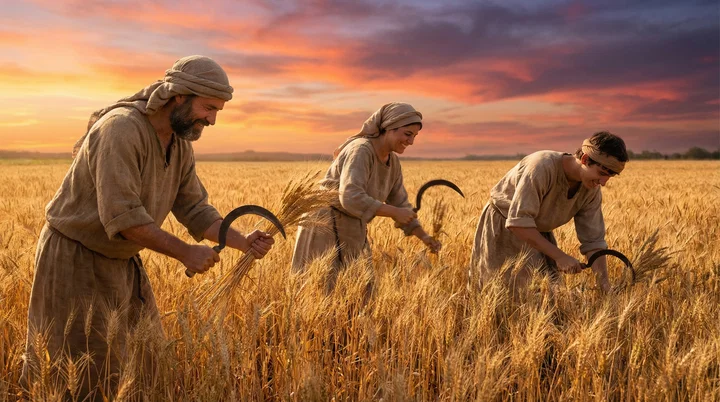
The enemy that sowed them is the devil; the harvest is the end of the world; and the reapers are the angels.
Translations
American King James Version, King James Version, Webster Bible
The enemy that sowed them is the devil; the harvest is the end of the world; and the reapers are the angels.
the enemy that sowed them is the devil; the harvest is the end of the world; and the reapers are the angels.
Revised Version, American Standard Version
and the enemy that sowed them is the devil: and the harvest is the end of the world; and the reapers are angels.
and the enemy who sowed them is the devil, and the harvest is a full end of the age, and the reapers are messengers.
and the enemy who has sowed it is the devil; and the harvest is [ the] completion of [ the] age, and the harvestmen are angels.
And, the enemy that sowed them, is the adversary, and, the harvest, is, the conclusion of an age, and, the reapers, are, messengers.
Berean Standard Bible, Majority Standard Bible
and the enemy who sows them is the devil. The harvest is the end of the age, and the harvesters are angels.
The enemy who sowed them is the devil. The harvest is the end of the age, and the reapers are angels.
And he who put them in the earth is Satan; and the getting in of the grain is the end of the world; and those who get it in are the angels.
And the enemie that soweth them, is the deuill, and the haruest is the end of the worlde, and the reapers be the Angels.
Douay-Rheims (Challoner revision)
And the enemy that sowed them, is the devil. But the harvest is the end of the world. And the reapers are the angels.
Pictures
Cross-references 20 of 50
- Matthew 13:30
Let both grow together until the harvest: and in the time of harvest I will say to the reapers, Gather ye together first the tares, and bind them in bundles to burn them: but gather the wheat into my barn.
Both describe letting the wheat and tares grow until the harvest.
- Revelation 14:14-16
And I looked, and behold a white cloud, and upon the cloud one sat like unto the Son of man, having on his head a golden crown, and in his hand a sharp sickle.
The Son of man reaps the earth’s harvest at the end.
- Matthew 24:31
And he shall send his angels with a great sound of a trumpet, and they shall gather together his elect from the four winds, from one end of heaven to the other.
Angels gather the elect at Christ’s coming, corresponding to the harvest.
- Matthew 13:43
Then shall the righteous shine forth as the sun in the kingdom of their Father. Who hath ears to hear, let him hear.
The righteous shine in the Father’s kingdom after the harvest.
- Joel 3:13
Put ye in the sickle, for the harvest is ripe: come, get you down; for the press is full, the fats overflow; for their wickedness is great.
The ripe harvest and reaping picture people ready for judgment.
- 2 Thessalonians 1:7-9
And to you who are troubled rest with us, when the Lord Jesus shall be revealed from heaven with his mighty angels,
Christ is revealed with angels to bring fiery judgment on those who reject God and the gospel.
- Matthew 25:31-33
When the Son of man shall come in his glory, and all the holy angels with him, then shall he sit upon the throne of his glory:
At Christ’s coming in glory, the angels accompany him as he separates the nations.
- Revelation 14:14
And I looked, and behold a white cloud, and upon the cloud one sat like unto the Son of man, having on his head a golden crown, and in his hand a sharp sickle.
The Son of man appears with a sickle to reap the earth’s harvest.
- Matthew 13:49-50
So shall it be at the end of the world: the angels shall come forth, and sever the wicked from among the just,
Angels separate the wicked from the just and cast them into the furnace at the end.
- Matthew 3:12
Whose fan is in his hand, and he will throughly purge his floor, and gather his wheat into the garner; but he will burn up the chaff with unquenchable fire.
wheat stored illustrates eternal gathering
- Revelation 20:12-13
And I saw the dead, small and great, stand before God; and the books were opened: and another book was opened, which is the book of life: and the dead were judged out of those things which were written in the books, according to their works.
The dead are delivered up and judged according to their works.
- Matthew 13:25
But while men slept, his enemy came and sowed tares among the wheat, and went his way.
The enemy sows tares among the wheat; verse 39 identifies him as the devil.
- Jeremiah 8:20
The harvest is past, the summer is ended, and we are not saved.
The lament describes those who find the harvest past and are not saved.
- John 5:28-29
Marvel not at this: for the hour is coming, in the which all that are in the graves shall hear his voice,
All the dead rise, some to life and others to condemnation.
- Revelation 14:18-19
And another angel came out from the altar, which had power over fire; and cried with a loud cry to him that had the sharp sickle, saying, Thrust in thy sharp sickle, and gather the clusters of the vine of the earth; for her grapes are fully ripe.
The wicked are gathered like ripe grapes and cast into God’s winepress for judgment.
- Matthew 28:20
Teaching them to observe all things whatsoever I have commanded you: and, lo, I am with you alway, even unto the end of the world. Amen.
Both use “end of the world” to mean the end of the age.
- Hebrews 2:14
Forasmuch then as the children are partakers of flesh and blood, he also himself likewise took part of the same; that through death he might destroy him that had the power of death, that is, the devil;
Christ defeats the devil, who holds the power of death.
- Matthew 13:3-8
And he spake many things unto them in parables, saying, Behold, a sower went forth to sow;
The seed’s differing soils and fruit anticipate the parable’s harvest.
- Revelation 14:16
And he that sat on the cloud thrust in his sickle on the earth; and the earth was reaped.
The earth is reaped at the Son of Man’s coming, fulfilling the end-time harvest.
- John 8:44
Ye are of your father the devil, and the lusts of your father ye will do. He was a murderer from the beginning, and abode not in the truth, because there is no truth in him. When he speaketh a lie, he speaketh of his own: for he is a liar, and the father of it.
Both identify the devil as the lying enemy.
Commentary part 1 of 2
Each commentary is drawn from primary sources: the writings of Ellen G. White and Adventist pioneers and periodicals. Each commentary is separate. Its own words are not a quotation; follow the references to read the source passages.
Ellen G. White
59 sources
The enemy who sowed the tares is the devil acting from enmity to Christ, the harvest is the end of the world and the close of probationary time, and the reapers are the angels.COL 70.3CE 84.2Ms 14, 1898, par. 14Lt 98, 1896, par. 26–29COL 71.1 The wheat and the tares are left to grow together in the world until that harvest, when the angels gather and separate them without mistake, binding the tares for burning and gathering the wheat into the kingdom.Lt 102, 1901, par. 4–6Lt 98, 1896, par. 26–29GC 321.1–323.1ST Nov 24, 1887ST May 10, 1877 That final separation has not been given to people now, because men cannot read the heart and the tares closely resemble the wheat, while judgment belongs to Christ alone.Lt 98, 1896, par. 26–29RCOC 6.2COL 71.2–3Ms 92a, 1898, par. 14–18 Out of enmity to Christ the devil secretly sows his people, his error, and his evil influences among the good seed in the church and in the heart, where they take root and remain in decided conflict with the work of God until the close of earth's history.Ms 115, 1906, par. 21–22COL 71.1ST Feb 9, 1915ST Nov 24, 1887Lt 176, 1900, par. 3 Because good and evil thus continue together until the advent, there is no conversion of the whole world into a temporal millennium before Christ comes, and every person must form a faultless character to stand acquitted in the final judgment.Lt 317a, 1905, par. 6–8GC 321.1–323.1Lt 317, 1905, par. 7–9GC88 321.1
Symbols and Setting
The enemy who sowed the tares is the devil, also called Satan, working out of enmity to Christ, and neither God nor His angels sow seed that produces tares.COL 70.3COL 71.1ST Nov 24, 1887RH Apr 1, 1902ST Feb 9, 1915 The harvest is the end of the world and the close of probationary time, and the reapers are the angels who carry out the final separation.CE 84.2Ms 14, 1898, par. 14Lt 317a, 1905, par. 6–8ST Nov 24, 1887ST May 10, 1877 The close of probation is the time when people face judgment and must stand acquitted with character without spot or stain.Lt 317a, 1905, par. 6–8 The ripened harvest is gathered when Christ comes, and the spread of the gospel and the fruit Christians bear hasten that harvest and His coming.COL 69.2
The field is the world, and the parable sets the conflict between the children of the kingdom and the children of the wicked one within that world and points to the angels' role at the end.Ms 14, 1898, par. 14Ms 113, 1899, par. 22–23 It concerns God's work of salvation in the world carried out through Christ's church, where the field signifies the church in the world and believers grow and ripen for God's harvest.COL 70.2 That sowing reveals the controversy between Christ and Satan continuing since the fall, with departure from Christ's principles keeping the warfare going and delaying the proclamation of the gospel to every nation, kindred, tongue, and people and delaying entry into the promised land, the same work of Satan appearing in the parable of the sower in catching away the seeds of truth from minds.Ms 113, 1899, par. 22–23
The tares are the children of the wicked one, the fruit and embodiment of error and false principles introduced by Satan among the good seed.COL 70.3Ms 113, 1899, par. 22–23STB 40.3ST Feb 9, 1915 He mingles error with truth and vigilantly guards his sowing, seeking to make error grow until it eclipses the truth, so Christ's truth must be clearly presented in contrast with error that people may recognize and discard it.Ms 30, 1898, par. 5–6 He actively spreads false teaching, pictured as sowing cockle and darnel among the good doctrine God's servants should sow diligently.GC88 248.3 At the end the angels gather out of Christ's kingdom all things that offend and those who do iniquity, and these are cast into the fire.STB 40.3
The good seed are the children of the kingdom, true Christians and Christ's true followers, while the wheat and tares mean true Christians and counterfeit Christians found in every church growing together until the end.Lt 98, 1896, par. 26–29Ms 113, 1899, par. 22–232SP 247.2–249.1 The tares include hypocritical and sinful people who mingle with true followers and may long closely resemble them, and Satan's method is bringing into the church people who bear Christ's name but deny His character, dishonoring God, misrepresenting salvation, and putting souls in danger.COL 71.12SP 247.2–249.1Lt 98, 1896, par. 30–32 Making the real or supposed faults of church members the habitual theme of conversation and spiritual food puts a person among those tares, whereas believers must feed on Christ as the perfect pattern and Sin-bearer and obey the truth rather than feed on defective character.Lt 98, 1896, par. 30–32 The parable thus presents two opposing working forces, God and the enemy, whose divine and satanic influences and agencies remain in decided opposition and vital conflict until the close of earth's history, when God will test and prove His people and shake everything that can be shaken so that only what cannot be shaken remains.Ms 115, 1906, par. 21–22Ms 7, 1900, par. 20–22Lt 176, 1900, par. 3 At that harvest the wheat is gathered for Christ while the tares, which can look like wheat for a long time, are rejected, marking the separation of the true from the imitation.Ms 7, 1900, par. 20–22
Harvest and Final Separation
The wheat and the tares, true Christians and counterfeit Christians found in every church, are left to grow together until the harvest at the end of the world, when the angels as reapers will gather and separate them.Lt 102, 1901, par. 4–6Lt 98, 1896, par. 26–29GC 321.1–323.1Lt 51, 1898, par. 10–14RH Apr 1, 1902 The harvest is not preceded by a thousand-year reign of righteousness and peace or a temporal millennium in which the whole world is converted, for good and evil continue together until the personal coming and advent of the Lord.GC 321.1–323.1GC88 321.1ST May 10, 1877 The gospel calls those who come out from the world together in church capacity, the kingdom must be kept free from the sinful practices of the world, and a clear perception of this is impressed by the Holy Spirit on those who desire to understand it.Lt 102, 1901, par. 4–6 The presence of bad people in the church is therefore no reason to abandon efforts to reach and save souls, nor to gather the tares prematurely lest the wheat be uprooted with them.Lt 51, 1898, par. 10–14RH Apr 1, 1902
At that harvest the angels gather out all that offends and those who do iniquity, bind the tares in bundles for burning and destruction, gather the wheat into the garner and kingdom, and the righteous shine in their Father's kingdom and trouble the righteous no more.Lt 102, 1901, par. 4–6ST Nov 24, 1887RH Apr 1, 1902COL 75.12SP 249.2–250.2 The tares remain tares and are not changed into wheat but are gathered out and destroyed, while the righteous receive eternal life.ST Nov 24, 1887ST May 10, 1877COL 75.12SP 249.2–250.2ST Nov 24, 1887 Those who merely belong to the church without belonging to Christ may long resemble true Christians and falsely claim piety so as to deceive others, but profession and church membership do not decide destiny or make them Christians.COL 74.2–32SP 247.2–249.1ST Nov 24, 1887ST Feb 9, 1915 Character shown in words and works does, the difference between righteous and wicked will be fully revealed and unmistakable at the end, and Christ decides who is worthy to dwell in heaven and judges each person by words and works.COL 74.2–3ST Nov 24, 1887ST Feb 9, 1915
The harvest is the final judgment in which God distinguishes the righteous from the wicked, presenting the Bible's clear account of the rewards of the faithful and the punishment of the guilty.CE 84.2Lt 317a, 1905, par. 6–82SP 249.2–250.2 It is a warning about judgment to be read as for life, urgent instruction to take heed to oneself and not be blinded by human sophistry and mocking of sacred things.Lt 317a, 1905, par. 6–8Lt 317, 1905, par. 7–9 Every person must prayerfully ask who will stand acquitted before the judgment seat of Christ without spot or stain of character, must form a faultless character before a pure and holy God, for at the great day every man will be judged according to deeds done in this life.Lt 317a, 1905, par. 6–8Lt 317, 1905, par. 7–9 The ripened harvest is gathered when Christ comes, and the spread of the gospel and the fruit Christians bear hasten that harvest and His coming.COL 69.2
The harvest imagery connects with the Feast of Tabernacles as the feast of harvest pointing forward to the great day of final ingathering at the end of the world, when the Lord of the harvest sends forth His reapers.WLF 12.3–7PP 541.2 That reaping takes place after the priestly work in the heavenly sanctuary ends and Christ comes in kingly glory, when the saints cry for Him to reap and God delivers them from Jacob's trouble.WLF 12.3–7 At that time all the wicked are destroyed so they become as though they had not been, and every voice in the whole universe unites in joyful praise to God.PP 541.2 The separation of wheat from tares is the fearful, solemn work of the third angel, in which the wheat is selected and sealed, or bound, for the heavenly garner and the vile are separated from the precious, a work calling for the whole mind and attention.SCEV 38.3Ms 3, 1854, par. 16–17
Faithful missionary labor illustrates the harvest, as the seed scattered through preaching produces churches and souls whose full harvest the day of God will reveal.GC 71.2 The harvest also serves as an image of what faithful labor brings in the present life, for work to enlighten and bless others makes the worker's own understanding of truth grow clearer and broader.TSSW 108.25T 120.4 In Sabbath-school and temperance work, explaining truth with love makes it plainer and opens it with renewed beauty and force.5T 120.4
No Human Separation Now
The separation of wheat and tares belongs to the end of the world and is done by angels as reapers, not by people now, and no person has the right to measure the characters of others or to undertake that separation.Lt 98, 1896, par. 26–29RCOC 6.2COL 71.2–31MR 362.2–363.11MR 303.1–2 Wheat and tares, true Christians and counterfeit Christians found in every church, must grow together until the harvest, which is the end of probationary time.Lt 98, 1896, par. 26–29COL 71.2–31MR 362.2–363.1 The church is not to be broken up before that separation, for the angels do this work at the end.1MR 362.2–363.11MR 303.1–2Lt 16, 1893, par. 21
Human beings cannot rightly separate them because the tares closely resemble the wheat, human judgment is imperfect, and men cannot read the heart or judge character, motives, and who belongs among the wise and foolish.COL 71.2–3Ms 92a, 1898, par. 14–1816MR 270.3–271.2 To attempt uprooting those considered false believers could harm people Christ is drawing to Himself.COL 71.2–3 The angels of God know people by their fruits, for fruits declare character, and commissioned to counterwork those who fight against the truth of God's word, they gather the wheat from among the tares without mistake and never make a mistake.Ms 92a, 1898, par. 14–1816MR 270.3–271.2
The work of judgment has not been committed to humans but to Christ alone, because He lived humanity and alone can understand human weakness and human striving for Christian perfection.Lt 98, 1896, par. 26–29 The present church is the church militant, mixed with wheat and tares because the devil sowed them among the good seed, not yet the church triumphant.Lt 102, 1901, par. 4–6Lt 98, 1896, par. 26–29 It contains chaff with the wheat and faults such as pride, self-sufficiency, stubborn unbelief, and refusal to yield even when evidence is piled upon evidence, yet it is loved and remains.RCOC 6.2 Its faults do not mean it will cease to exist before the separation, when angels will separate to burn the tares and gather the wheat.Lt 102, 1901, par. 4–6Lt 16, 1893, par. 21
The gospel calls those who come out from the world together in church capacity, and the kingdom must be kept free from sinful practices of the world, while the Holy Spirit impresses a clear perception of this parable on those who desire to understand it.Lt 102, 1901, par. 4–6 The presence of bad people in the church is no reason to abandon efforts to reach and save souls.Lt 51, 1898, par. 10–14 Until the harvest when angels gather and separate them, their presence does not mean the church should be broken up or disorganized or broken up into independent atoms.RCOC 6.21MR 362.2–363.11MR 303.1–2 The commandment-keeping church is not to be pronounced Babylon, there is no call to come out of it, and those who teach that false message and leaven others will be deceived, prepared for advanced delusions, and come to naught.RCOC 6.2
The parable teaches humility and distrust of self rather than judging and condemning others, and shows that not all who are in the church are genuine Christians.COL 71.2–3COL 74.1 Those persisting in open sin must be separated from the church, but the final judgment of character belongs to God.COL 71.2–3 Tares are now among the wheat, meaning hypocrites are in the churches all through the land, yet sins committed by professed Christians excuse no one and do not justify blaming Christ and His ministers.Lt 135, 1899, par. 22 Christ gave His life to save all who believe in Him, and those who really believe have no pretense and are genuine Christians, true to one another in heart and soul and action.Lt 135, 1899, par. 22 The true Watcher knows the false from the true, never makes a mistake in His estimate of the characters of men, and after a time He will separate the tares from the wheat.Lt 135, 1899, par. 22
Making the real or supposed faults of church members the habitual theme of conversation and spiritual food puts a person among the tares, for the tares are counterfeit Christians present in the church until the final separation.Lt 98, 1896, par. 30–32 Christ alone is the perfect pattern of Christianity and the Sin-bearer who takes away sin, so believers must feed on Him and obey the truth rather than feed on defective character and obey unrighteousness.Lt 98, 1896, par. 30–32
Satan's Sowing at Work
Out of enmity to Christ the devil sows evil among the good in God's kingdom, and neither God nor His angels sow the seed that produces tares.COL 71.1ST Feb 9, 1915 The tares are the fruit and embodiment of error and false principles, and he introduces them by bringing into the church those who bear Christ's name while denying His character.COL 71.1ST Feb 9, 1915 Their presence dishonors God, misrepresents salvation, and puts souls in danger.COL 71.1ST Feb 9, 1915
He has mingled error with truth and vigilantly guards his sowing, seeking to make error grow until it eclipses the truth.Ms 30, 1898, par. 5–6 His active spreading of false teaching is pictured as sowing cockle and darnel among the good doctrine, while God's servants should be diligent in sowing good doctrine.GC88 248.3GC 248.3 Christ sows truth, and truth must be clearly presented in contrast with error so people can recognize and discard error.Ms 30, 1898, par. 5–6
The enemy works upon the human mind and heart, for Christ sows good seed in the heart but Satan secretly plants evil, error, and doubt.ST Nov 24, 1887Lt 200, 1906, par. 6–9 What he plants takes root and bears harmful fruit, and it can crowd out and destroy what is good while spreading sin to others.ST Nov 24, 1887 People can become his agents by passing those suggestions on.Lt 200, 1906, par. 6–9
The untrained mind of children and youth is like an uncultivated field and uncultivated soil, where the devil sows tares unless parents keep watchful guard, and those tares will spring up to bear evil fruit.CT 136.4 Neglecting children in their early years leaves room for Satan to plant evil in their minds, so parents should instead fill their minds with what is good and pure.ST May 20, 1889 Evil learned in childhood may grow faster than good and be difficult to remove later, so parents should teach their children faithfully and protect them from harmful influences rather than assume good will eventually overcome evil.SG4 298.1 They must with unceasing care cultivate the mind and sow it with the precious seed of Bible truth, teaching children to reject trashy, exciting tales and to turn to sensible reading that leads the mind to take an interest in Bible story, history, and argument.CT 136.4 Reading that throws light upon Scripture and quickens the desire to study it is beneficial and not dangerous, and God's angels help form a child's character when parents work in harmony with God's plan.CT 136.4ST May 20, 1889
The sowing reveals the controversy between Christ and Satan continuing since the fall, with the good seed as the children of the kingdom, the tares as the children of the wicked one, and the field as the world.Ms 113, 1899, par. 22–23 Departure from Christ's principles keeps that warfare going today, and the warfare has delayed the proclamation of the gospel to every nation, kindred, tongue, and people and delayed entry into the promised land.Ms 113, 1899, par. 22–23 The same work of Satan appears in the parable of the sower in catching away the seeds of truth from men's minds.Ms 113, 1899, par. 22–23
This sowing of tares also appears in the worldly display of wealthy Sanitarium guests, which becomes a temptation and sows tares in the hearts of young helpers and nurses.STB 332.3–4 Among a group of Christian workers, unreliable people may join it and sow evil surmising, while the harvest is the end of the world when angels are the reapers.Lt 90a, 1899, par. 10–12
After humanity disobeyed God, people had to struggle against the seeds of Satan's sowing, whose sowing brings evil into the world. Toil could help make Satan's temptations ineffectual and stem evil, and Christ's life showed how to thwart the enemy's plans.
Prophecy and Daily Warning
The harvest at the end of the world, reaped by angels, leaves wheat and tares growing together until then, so good and evil continue side by side until the advent and there is no thousand-year reign of righteousness and peace on earth before Christ's personal coming.GC 321.1–323.1GC88 321.1ST May 10, 1877LS 58.4–60.2 The final separation comes only at that end, when the wicked are separated from the righteous and destroyed while the righteous receive eternal life.GC 321.1–323.1GC88 321.1ST May 10, 1877 The world is not to be wholly converted beforehand, for the harvest is not preceded by a temporal millennium of universal conversion.GC88 321.1ST May 10, 1877LS 58.4–60.2
The gospel calls those who come out from the world together in church capacity, yet the kingdom must be kept free from the sinful practices of the world.Lt 102, 1901, par. 4–6 Faithful servants ripen as wheat for the garner while worldly people ripen as tares for destruction, divided in thoughts, sympathies, purposes, and allegiance to God and the world.Lt 102, 1901, par. 4–6RH Aug 25, 1910 In the church militant the devil-sown tares grow with the wheat until the angels separate them to burn the tares and gather the wheat.Lt 102, 1901, par. 4–6
The chapter is a warning about judgment to be read as for life, calling every person to take heed to himself and to pray to stand acquitted without spot or stain of character before the judgment seat of Christ.Lt 317a, 1905, par. 6–8Lt 317, 1905, par. 7–9 Those who are saved must form faultless character before a pure and holy God, for at the great day every man will be judged according to deeds done in this life.Lt 317, 1905, par. 7–9 Christ looks forward to the future destiny of those for whom He gave His life at that angel-reaped harvest.Lt 317a, 1905, par. 6–8Lt 317, 1905, par. 7–9 The warning not to sow tares reaches conduct directly, bidding students and workers to do what is right and sow the good seed of the kingdom and work with Christ to draw people to Him rather than discourage or mislead others.FE 301.2–3 The Holy Spirit impresses a clear perception of this parable on those who desire to understand it, while the chapter warns against the enemy's deceptive wiles, human sophistry, and mocking of sacred things, and calls people to turn from ways God has not appointed.Lt 102, 1901, par. 4–6Ms 115, 1906, par. 21–22Lt 317, 1905, par. 7–9
Sources
Pioneers and periodicals
225 sources
The hostile sower is the devil, the adversary of God and humanity who secretly plants evil among the good.ST Nov 11, 1913ST Jun 22, 1882RH Jun 10, 1873ST Mar 25, 1897ST Oct 30, 1901 The harvest is the close of the present gospel age, not the annihilation of the earth itself but the termination of its probationary history.ST Dec 20, 1910ST Nov 11, 1913ST Jun 22, 1882ST Dec 3, 1912RH Mar 6, 1855 The reapers are the angels sent under Christ to do the final gathering and separation.ST Nov 11, 1913ST Jun 22, 1882RH Jun 10, 1873ST Nov 30, 1904ST Nov 29, 1899 Until that appointed time the righteous and the wicked grow together mingled in the world, with no final separation to be made by human judgment.RH Apr 1, 1902ST Jun 14, 1899ST Nov 1, 1905RH Dec 17, 1872ST Jul 24, 1884 At Christ's visible second coming the angels gather the saints to life and glory while the wicked living are destroyed by fire, ending sin and establishing the everlasting kingdom of righteousness.ST Nov 11, 1913ST Jun 22, 1882RH Jun 10, 1873ST Jun 9, 1898ST Apr 5, 1877
Terms and Parable Setting
The enemy who sowed the tares is the devil, also called Satan, the wicked one and the evil one, the enemy of God and of humanity and of Christ.ST Nov 11, 1913ST Jun 22, 1882RH Jun 10, 1873ST Jun 11, 1874RH Mar 25, 1858 The harvest is the end of the world, meaning the end or close of the age.ST Dec 20, 1910ST Nov 11, 1913ST Jun 22, 1882RH Jun 10, 1873RH Aug 20, 1872 The reapers are the angels, provided and sent by God under Christ's direction to do the final gathering and separation, so called because they join Christ in gathering at the end.ST Nov 11, 1913ST Jun 22, 1882RH Jun 10, 1873ST Jun 11, 1874RH Dec 7, 1869
The field is the world, the good seed or wheat are the righteous, the children of the kingdom, and the tares are the wicked, the children of the wicked one.RH Dec 17, 1872RH Oct 29, 1908RH Oct 30, 1856ST Aug 19, 1897ST Jun 30, 1914 They are people, not merely deeds, including workers of iniquity, and the sheaves are the children of God.ST Dec 9, 1897RH Oct 29, 1908RH Oct 30, 1856ST Aug 19, 1897ST Jun 30, 1914 Such direct statements show that symbolic language means one thing represents another, and the figures are literal facts describing separation and reward according to character.RH Dec 17, 1872RH Oct 29, 1908RH Oct 30, 1856
The word translated world means an age or course of time from the Greek aion, not the earth itself.ST Dec 3, 1912RH Mar 6, 1855RH Mar 6, 1855RH May 15, 1866ST Apr 26, 1910 It denotes limited duration for mortals and endless duration for immortals, so the end of the world is the termination of an age in earth's history when a great change takes place, not the destruction or annihilation of the globe.ST Dec 3, 1912RH Mar 6, 1855RH Jul 30, 1872RH May 15, 1866ST Apr 26, 1910 The earth continues through successive dispensations and will be purified, renewed and made the everlasting inheritance of the redeemed.ST Dec 3, 1912RH Jul 30, 1872ST Apr 26, 1910 The harvest at the close of the present age is the close of the present gospel dispensation, the age of gospel invitations and blessings, as in Matthew 24:3 and Matthew 28:20, distinct from the end of the Jewish age in Hebrews 9:26 and from the former ages in 1 Corinthians 10:11.RH Jul 30, 1872RH May 15, 1866
These words are Christ's own plain explanation of the wheat and tares given afterward to seekers, not another parable.ST Nov 9, 1882ST Mar 10, 1898ST Feb 24, 1898 They belong to eight parables of the kingdom in its aspects, seven in Matthew and one more in Mark, taught to a multitude on the shore of the Sea of Galilee near Capernaum, with parallels in Matthew 13 and Mark 4.ST Nov 26, 1894ST Jan 13, 1914 He changed to parables because opponents refused plain teaching and sought to catch Him, so truth was opened to honest seekers while others found nothing to condemn.ST Feb 24, 1898 Those not seeking truth for truth's sake did not understand the parables nor comprehend the truths in them, and could find nothing in them to condemn Him or hinder His work.ST Feb 24, 1898
Christ who sowed the good seed also comes as Reaper on a white cloud with crown and sickle with all the angels, and God is the chief Reaper.ST Nov 30, 1904ST Nov 29, 1899ST Sep 2, 1886ST Feb 8, 1905 The One like the Son of man reaping with sharp sickle is Christ coming on the cloud of His glory at the end of the world to gather His saints.ST Sep 2, 1886RH Jun 17, 1873 Men chosen for gospel work as well as angels are also called reapers because of association and participation with Him in gathering, carrying out the work under His direction and command.ST Nov 30, 1904ST Nov 29, 1899RH Jun 17, 1873
The devil existed before human sin as a liar and murderer in heart, the single adversary ruling evil spirits and demons under his control.ST Oct 9, 1879 After being driven from heaven he persecuted mankind made in God's image and by falsehood led Adam and Eve to join his rebellion.ST Jan 29, 1902ST Oct 9, 1879 The seed of the woman and seed of the serpent, the children of God and children of the kingdom and the children of the devil and children of the wicked one, with the woman as the church of God, have been in warfare through six thousand years by persecutions, bondage, deception and cunning inventions, including cruel bondage, enchantments, false prophets, and every device to deceive if possible the elect.RH Mar 2, 1852ST Jan 29, 1902 Enemy is his scriptural name alongside accuser, adversary, dragon, serpent, tempter and others, as angel of the bottomless pit, Beelzebub, Belial, evil spirit, father of lies, murderer, and prince of devils.ST Oct 9, 1879RH Mar 18, 1858
Growing Together Until Harvest
The wheat and the tares are the righteous and the wicked, the children of the kingdom and the children of the wicked one, growing together mingled side by side through this age until the harvest at the end of the world brings their final separation.ST Nov 1, 1905RH Dec 17, 1872RH Sep 2, 1862ST Jan 12, 1882RH Oct 29, 1908 Good and evil continue together in the world and in the mixed condition of the professing church, with the wicked remaining alive and rampant to the very end and no earlier removal of evil before Christ comes.ST Nov 1, 1905RH Dec 17, 1872RH Sep 2, 1862ST Jan 12, 1882RH Oct 29, 1908 Their lives are so blended and closely intertwined that only divine discernment can reliably distinguish them, and the church does not become a perfected multitude during the present age.RH Apr 1, 1902ST Jan 12, 1882RH Oct 29, 1908 Because both classes have existed together since the fall and remain together until the end of the Christian age, there can be no temporal millennium of world conversion, peace, and universal righteousness before the second advent.ST Nov 1, 1905RH Dec 17, 1872ST Jul 24, 1884RH Sep 2, 1862 At that appointed harvest the wheat is garnered in and the tares are gathered together for burning and destruction, each receiving a reward, the righteous taken to heaven and to shine in the Father's kingdom while the wicked are burned with unquenchable fire.ST Nov 1, 1905RH Sep 2, 1862RH Oct 29, 1908
The field is not the church but the world, and the church is the wheat growing in that field.ST Aug 10, 1882ST Aug 28, 1884ST Jan 11, 1883 The present is especially sowing time rather than reaping time, so the duty now is to be faithful in sowing and to leave the reaping to God to supply at His appointed time.ST Aug 10, 1882ST Nov 29, 1905ST Nov 29, 1905 The final reaping belongs to the close of the age and will be done by angels whom God Himself provides and sends, not by people or by gospel ministers whose work was to sow.ST Aug 10, 1882ST Aug 28, 1884ST Jan 11, 1883ST Nov 29, 1905ST Nov 29, 1905 No human power is to root out the tares before then, and even if the gathering had begun when the tares first appeared, angels and not people would have carried it out.ST Aug 28, 1884ST Sep 4, 1893 At the harvest God destroys the tares through the angels, and the tares never become wheat.ST Sep 4, 1893RH Aug 30, 1864
People must not presume to judge who will be saved or attempt the final separation before the harvest, for Christ alone can separate the wicked remaining among the good until He comes.ST Jun 14, 1899RH Aug 30, 1864RH Oct 19, 1916 Human efforts cannot safely remove evil from among the righteous, because with blind zeal they would uproot wheat along with tares that are hard to distinguish and share the same sun and rain.RH Apr 1, 1902RH Oct 19, 1916RH Aug 30, 1864 Worthiness is determined by Christ by character shown in words and works and revealed fully when what is now unclear is made manifest at the time true character is revealed.RH Oct 19, 1916RH Aug 30, 1864 The parable does not teach that the wicked cannot be saved, for anyone may be saved through choosing and submitting to God whose saving power makes a new creation, though persistent open sin is to be separated from the church.RH Apr 1, 1902ST Jun 14, 1899 Meanwhile Christians should work lovingly and faithfully for everyone rather than judging and condemning others, and must not try to carry out by human wisdom or power what Christ and His angels do at His coming with His angels.RH Aug 30, 1864RH Oct 19, 1916RH Aug 30, 1864
The tares are Satan's work and not God's or the angels', sown by the devil as the enemy of God, humanity, and Christ out of enmity to Christ.ST Feb 9, 1915ST Mar 25, 1897ST Oct 30, 1901 He sows lies, error, falsehood, and false principles among the good grain, embodying them in people brought into the church under Christ's name while their character denies Him, thereby dishonoring God, misrepresenting salvation, and endangering souls.ST Feb 9, 1915ST Nov 24, 1887ST Oct 30, 1901 He works in darkness while servants sleep, secretly planting evil and error on minds and hearts, often through small seemingly harmless temptations that take root unnoticed until they produce sinful habits, crowd out and destroy what is good, spread sin to others, and corrupt and divide the church.ST Feb 9, 1915ST Nov 24, 1887 He covers lies with surface truth, appeals to selfish motives, and is seen in heathen teachings, antichrists, Spiritualism as a delusion of the devil, infidel publications, and careless words sown even by parents and teachers that spring into wicked deeds.ST Mar 25, 1897ST Oct 30, 1901ST Oct 7, 1886 The good seed of the word of God taking root in the heart keeps evil from filling it, while those who will not receive light from Christ through the Bible receive Satan into the heart instead and come into spiritual darkness.ST Mar 25, 1897
Faithful servants are to cooperate with all force, zeal, and application of mind to execute divine admonition against weeds of error sown in the Lord's fields by uprooting and destroying those weeds.RH Feb 6, 1908
The first tares appeared alongside the wheat in Cain while Abel was wheat, Cain's disloyalty, envy, hatred, and murder contrasting with Abel's loyalty, righteousness, and truth.ST Aug 28, 1884 From then on the world has contained both, with tares often more numerous and at times nearly choking out the wheat.ST Aug 28, 1884 Neglecting children in their early years leaves room for Satan to plant evil in their minds, sowing stubbornness, selfishness, love of pleasure, pride, and sin when parents fail to plant truth and godly qualities.ST May 20, 1889ST Apr 30, 1894 Parents should instead fill their children's minds with what is good and pure and work in harmony with God's plan, with God's angels helping form the child's character.ST May 20, 1889ST Apr 30, 1894 Many who respond during revivals soon fall away like seed that does not endure and grain that withers.RH Mar 28, 1871
The same sun and influence ripens both classes and develops both the just and the wicked toward maturity as the end approaches.ST Apr 23, 1912RH Oct 19, 1916ST Apr 2, 1912ST Apr 19, 1905 God's truth changes those who accept and cherish it and dwell on its beauty, while those who reject it become more hardened and reveal their character, and trials failing to draw one to the Lord warn against missing perfection.RH Jun 12, 1866ST Apr 2, 1912ST Apr 19, 1905 Ripened tares are worse than green, showing evil growing more fully developed toward the end while the obedient ripen in holiness.ST Apr 23, 1912ST Apr 2, 1912 Only ripe wheat is fit for the kingdom, and what is unripe when the angels gather the world is gathered with the tares, urging daily and continual growth in readiness for the final gathering.RH Sep 11, 1860RH Oct 19, 1916 Those who oppose truth are already binding themselves together like tares being bound for destruction while the wheat is gathered into the barn.RH Sep 11, 1860
The tares include those who only appear righteous but love their sins, while the truly righteous are gathered into the Father's kingdom to shine like the sun.RH Mar 15, 1864 Believers are wheat and unbelievers are tares facing destruction at the end unless changed, warning against believers binding their lives to unbelievers as in marriage and against entering commitments that interfere with Christ's service.RH Mar 2, 1911RH Oct 19, 1916 Those who join themselves to hidden works of darkness are counted as sharing responsibility for them and are bound with the tares bound up with evil.RH Oct 19, 1916 The Sunday-sabbath doctrine, pictured as a weed, will at the end of the world be rooted up and burned while the precious wheat is gathered into the heavenly garner.ST Aug 13, 1902 People's suffering and fear come not from lack of good seed but from tares and thistles scattered by the enemy within human hearts as an obstacle to living like Christ.ST Feb 14, 1906
Sources