Matthew 13:38
The field is the world; the good seed are the children of the kingdom; but the tares are the children of the wicked one;
Translations
American King James Version, King James Version, Webster Bible
The field is the world; the good seed are the children of the kingdom; but the tares are the children of the wicked one;
the field is the world; the good seed are the children of the kingdom; but the tares are the children of the wicked one;
Revised Version, American Standard Version
and the field is the world; and the good seed, these are the sons of the kingdom; and the tares are the sons of the evil one;
and the field is the world, and the good seed, these are the sons of the reign, and the darnel are the sons of the evil one,
and the field is the world; and the good seed, these are the sons of the kingdom, but the darnel are the sons of the evil [ one];
And, the field, is the world, and, the good seed, these are the sons of the kingdom,—and, the darnel seeds, are the sons of the evil one;
Berean Standard Bible, Majority Standard Bible
The field is the world, and the good seed represents the sons of the kingdom. The weeds are the sons of the evil one,
the field is the world, the good seeds are the children of the Kingdom, and the darnel weeds are the children of the evil one.
And the field is the world; and the good seed is the sons of the kingdom; and the evil seeds are the sons of the Evil One;
And the field is the worlde, and the good seede are the children of the kingdome, and the tares are the children of that wicked one.
Douay-Rheims (Challoner revision)
And the field, is the world. And the good seed are the children of the kingdom. And the cockle, are the children of the wicked one.
Pictures
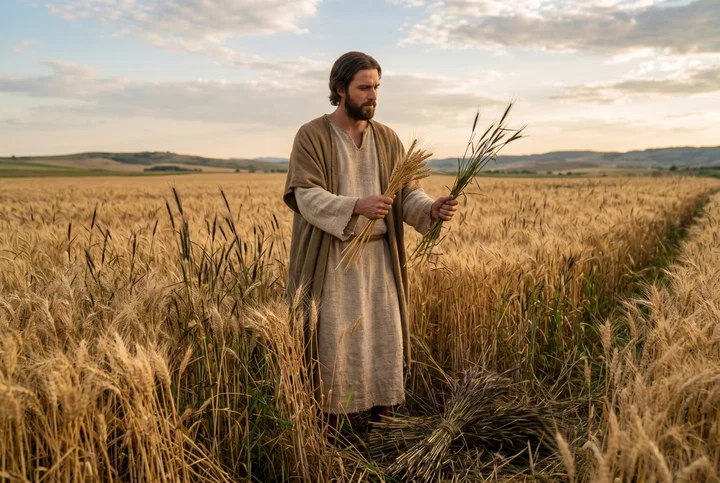
Cross-references 20 of 32
- Matthew 13:24-30
Another parable put he forth unto them, saying, The kingdom of heaven is likened unto a man which sowed good seed in his field:
The parable shows wheat and tares growing together until the harvest.
- Revelation 14:14-16
And I looked, and behold a white cloud, and upon the cloud one sat like unto the Son of man, having on his head a golden crown, and in his hand a sharp sickle.
The Son of man reaps the earth’s harvest when it is ripe.
- Matthew 3:12
Whose fan is in his hand, and he will throughly purge his floor, and gather his wheat into the garner; but he will burn up the chaff with unquenchable fire.
The righteous are gathered like wheat, while the wicked are separated and burned like chaff.
- Matthew 13:25
But while men slept, his enemy came and sowed tares among the wheat, and went his way.
The enemy sows tares among the wheat.
- Matthew 13:43
Then shall the righteous shine forth as the sun in the kingdom of their Father. Who hath ears to hear, let him hear.
The righteous shine in their Father’s kingdom after the tares are removed.
- Matthew 13:49-50
So shall it be at the end of the world: the angels shall come forth, and sever the wicked from among the just,
Both parables portray the wicked separated from the just at the end of the world.
- John 8:44
Ye are of your father the devil, and the lusts of your father ye will do. He was a murderer from the beginning, and abode not in the truth, because there is no truth in him. When he speaketh a lie, he speaketh of his own: for he is a liar, and the father of it.
Both identify those who follow wicked ways as children of the devil.
- John 4:35
Say not ye, There are yet four months, and then cometh harvest? behold, I say unto you, Lift up your eyes, and look on the fields; for they are white already to harvest.
Both describe the world as a field ready for harvest.
- Matthew 13:19
When any one heareth the word of the kingdom, and understandeth it not, then cometh the wicked one, and catcheth away that which was sown in his heart. This is he which received seed by the way side.
Both show Satan working against the word of the kingdom.
- Malachi 3:18
Then shall ye return, and discern between the righteous and the wicked, between him that serveth God and him that serveth him not.
The harvest reveals the distinction between those who serve God and the wicked.
- Luke 8:4-15
And when much people were gathered together, and were come to him out of every city, he spake by a parable:
Retells the parable of the sower and explains the seed and soils.
- Matthew 13:3-9
And he spake many things unto them in parables, saying, Behold, a sower went forth to sow;
Both parables describe the kingdom through seed and its reception.
- 1 John 3:10
In this the children of God are manifest, and the children of the devil: whosoever doeth not righteousness is not of God, neither he that loveth not his brother.
Distinguishes God’s children from the devil’s children by their conduct.
- Matthew 13:42
And shall cast them into a furnace of fire: there shall be wailing and gnashing of teeth.
Evildoers are cast into the fiery furnace, where there is anguish.
- Mark 4:26-29
And he said, So is the kingdom of God, as if a man should cast seed into the ground;
The parable describes seed growing and reaching harvest.
- 1 John 5:19
And we know that we are of God, and the whole world lieth in wickedness.
Both describe the world as belonging to wickedness.
- Matthew 24:31
And he shall send his angels with a great sound of a trumpet, and they shall gather together his elect from the four winds, from one end of heaven to the other.
Christ sends angels to gather the elect at his coming, corresponding to the harvest separation.
- Matthew 25:31-33
When the Son of man shall come in his glory, and all the holy angels with him, then shall he sit upon the throne of his glory:
Both describe the separation and judgment of two classes.
- Matthew 13:28
He said unto them, An enemy hath done this. The servants said unto him, Wilt thou then that we go and gather them up?
enemy did the sowing
- 1 John 3:12
Not as Cain, who was of that wicked one, and slew his brother. And wherefore slew he him? Because his own works were evil, and his brother’s righteous.
Cain is described as being of the wicked one.
Commentary part 1 of 2
Each commentary is drawn from primary sources: the writings of Ellen G. White and Adventist pioneers and periodicals. Each commentary is separate. Its own words are not a quotation; follow the references to read the source passages.
Ellen G. White
69 sources
The field is the whole world, the good seed are true children of the kingdom born of truth and sown by the Son of man to live Christlike lives, and the tares are children of the wicked one sown never by God but secretly by the devil who mingles error with truth in human hearts.ST Feb 9, 1915COL 70.3Lt 102, 1901, par. 4–6Ms 72, 1904, par. 11–12 The two grow together in vital conflict until the harvest at the end of the world, with counterfeit professors so closely resembling genuine Christians for a time that only fruit reveals them and only the final separation makes the difference plain.Ms 72, 1904, par. 11–12GC 321.1–323.1ST May 10, 1877COL 74.2–32SP 247.2–249.1 No human is to judge or uproot fellow men, for the work of final separation belongs to Christ and His angels who gather the wheat into God's kingdom and bind the tares for burning in fire while the righteous shine forth in eternal life.Ms 72, 1904, par. 11–12Lt 98, 1896, par. 26–29STB 40.3COL 74.2–3RCOC 6.2 Because the field is the world, the whole earth without distinction of nation, class, or place is the scope for gospel labor, means and workers to be spread equally and not confined to one center until all have heard and decided.GW 27.2Ms 96, 1901, par. 15–17Ms 25, 1897, par. 10Ms 70, 1895, par. 1–2DA 823.1 The presence of tares in church fellowship does not make the commandment-keeping church Babylon nor excuse sin, but calls for humility without condemnation, for character rather than profession decides destiny at Christ's judgment by words and works.Lt 98, 1896, par. 26–29Lt 317, 1905, par. 7–9COL 74.2–3RCOC 6.21MR 362.2–363.1
Symbols and Sowers
The field is the world, meaning the whole world as the place where the parable takes place.GW 27.2Lt 102, 1901, par. 4–6Ms 72, 1904, par. 11–12Lt 98, 1896, par. 26–29Ms 115, 1906, par. 21–22 The good seed and the tares grow together in that worldwide field until the harvest, which is the end of the world.Ms 72, 1904, par. 11–12Lt 98, 1896, par. 26–29GC 321.1–323.1 Two opposing forces are at work there, and the present state is that of a militant church rather than a triumphant one, with wheat and tares together in church fellowship gathered out from the world.Lt 102, 1901, par. 4–6Lt 98, 1896, par. 26–29 The kingdom must still be kept free from the sinful practices of the world even while both classes develop side by side.Lt 102, 1901, par. 4–6Ms 113, 1899, par. 22–23
The good seed are the children of the kingdom, people born of God's word, which is the truth.ST Feb 9, 1915COL 70.3Ms 72, 1904, par. 11–12 They are sown by the Son of man and are God's true people, genuine Christians without pretense.Ms 72, 1904, par. 11–12COL 71.1STB 40.3 Their life represents Christ in Christlike character, in contrast to those who bear His name while denying it.ST Feb 9, 1915COL 71.1
The tares are the children of the wicked one, people who embody error and false principles in opposition to God's truth.ST Feb 9, 1915COL 70.3COL 71.1GC88 248.3 They are sown by the devil, and neither God nor His angels ever sow what produces tares.ST Feb 9, 1915COL 70.3Ms 72, 1904, par. 11–12 Christ sows truth, while Satan secretly sows evil in human hearts and mingles error with the truth, even bringing false professors into the church whose presence dishonors God, misrepresents salvation, and puts souls in danger.ST Feb 9, 1915COL 71.1GC88 248.3 His work includes suppressing the Bible and the light of the gospel, making faithful sowing of sound doctrine necessary.GC88 248.3
Though called the world, the field also signifies Christ's church in the world.COL 70.2COL 70.1 The parable describes God's work of saving people through the church, where by the moving of the Holy Spirit upon hearts everywhere people grow and ripen for God's harvest.COL 70.2COL 70.1
The verse thus reveals divine and satanic agencies engaged in decided opposition and vital conflict before all the world.Ms 115, 1906, par. 21–22Ms 7, 1900, par. 20–22Lt 176, 1900, par. 3 That controversy between Christ and Satan has continued since the fall, with wheat and tares representing opposing divine and satanic work until the close of earth's history.Ms 113, 1899, par. 22–23Ms 7, 1900, par. 20–22Lt 176, 1900, par. 3 After disobedience entered, humanity must struggle against the evil that entered the world, and departure from Christ's principles explains the continuing warfare and the delay in proclaiming the gospel to every nation, kindred, tongue, and people.Ms 113, 1899, par. 22–23 The living Word produces sanctification in those who receive it, while Satan imitates the wheat to deceive those connected with the Word, and God now tests and proves His people, shaking everything that can be shaken so that what cannot be shaken may remain.Ms 7, 1900, par. 20–22Lt 176, 1900, par. 3
Growing Together Until Harvest
The good and the evil grow together in the world until the harvest, which is the end of the world.Ms 72, 1904, par. 11–12GC 321.1–323.1GC88 321.1RH Apr 1, 1902ST Nov 24, 1887 The field is the world, the good seed sown by the Son of man are the children of the kingdom, and the tares sown by the devil are the children of the wicked one.Ms 72, 1904, par. 11–12RH Apr 1, 1902ST Nov 24, 18872SP 249.2–250.2 The righteous and the wicked live together in the world until then, when their difference becomes clear and the wicked are separated from the righteous for destruction rather than changed into righteous people, while the righteous receive eternal life.ST Nov 24, 18872SP 249.2–250.2ST May 10, 1877 At that time the Son of man sends His angels as reapers to gather out of His kingdom all things that offend and those who do iniquity and cast them into a furnace of fire with wailing and gnashing of teeth, while the righteous shine forth as the sun in the kingdom of their Father.Ms 72, 1904, par. 11–12 Because evil thus continues alongside good to the very end, there will be no thousand years of righteousness and peace and conversion of the world before the personal coming of the Lord, and the kingdom of darkness continues until the advent.GC 321.1–323.1GC88 321.1
The present church is the militant church, not the triumphant church, made up of wheat and tares growing together in church fellowship.Lt 102, 1901, par. 4–6Lt 98, 1896, par. 26–29 The gospel gathers together in fellowship those who come out from the world, yet counterfeit Christians and false professors who claim piety mingle with true followers in every church, so being in the church does not prove a person is a Christian and not all who claim to be sons and daughters of God truly are.Lt 102, 1901, par. 4–6Lt 98, 1896, par. 26–29COL 74.2–3COL 74.1 The kingdom of God must be kept free from the sinful practices of the world even while inside the only church that keeps the commandments of God the children of the kingdom and the children of the wicked one grow together until the harvest.Lt 102, 1901, par. 4–6RCOC 6.2
The tares can so closely resemble the wheat for a time that people cannot reliably distinguish them and can be deceived, but the resemblance is temporary.ST May 10, 1877COL 74.2–32SP 247.2–249.1Ms 92a, 1898, par. 14–18 Sinners falsely professing piety may listen and mingle outwardly like genuine believers, holding truth in unrighteousness and appearing like the wise, so that no human can read the heart or say with authority who is wise and who is foolish.2SP 247.2–249.116MR 270.3–271.2 Their character is shown by their fruits, and the difference between good and evil becomes plain at the harvest of the world, when the wicked are gathered away from the righteous and destroyed while the righteous receive eternal life.ST Nov 24, 1887ST May 10, 18772SP 247.2–249.1Ms 92a, 1898, par. 14–1816MR 270.3–271.2
The wheat and tares must be allowed to grow together until the harvest, and no human has the right to measure the characters of fellow men or to root out the tares.Lt 98, 1896, par. 26–29COL 74.2–3RCOC 6.2 The work of judgment and final separation has not been put in human hands but belongs not to men now but to Christ, who alone understands human weakness and striving to reach Christian perfection after living in humanity, and to His angels at the harvest.Lt 98, 1896, par. 26–29RCOC 6.2Ms 92a, 1898, par. 14–18 Christ will decide who is worthy of heaven, judging people by their words and works so that character, not religious profession, determines destiny.COL 74.2–3 God's angels know how to gather the wheat from among the tares without mistake and are commissioned to counterwork those who fight against the truth, binding the tares into bundles to burn and gathering the wheat into the garner.RCOC 6.2Ms 92a, 1898, par. 14–1816MR 270.3–271.2
The presence of tares, pride, self-sufficiency, stubborn unbelief, refusal to yield even when evidence is piled upon evidence, and flawed members does not make the commandment-keeping church Babylon and does not blot out its existence.RCOC 6.21MR 362.2–363.11MR 303.1–2 The Lord loves His church, it is not to be disorganized or broken up into independent atoms or separate groups, and no messenger sent by the Lord calls it Babylon.RCOC 6.21MR 303.1–2 Those who heed a false message of separation and leaven others will be deceived and come to nothing.RCOC 6.2
The tares are not beyond hope, for many will be converted.Ms 138, 1908, par. 16–17
Final Harvest Judgment
At the harvest, which is the end of the world, the Son of man sends His angels as reapers to gather out of His kingdom all things that offend and those who do iniquity.Ms 72, 1904, par. 11–12STB 40.3 The wheat is selected from the tares, sealed, and gathered into the heavenly garner and storehouse and into God's kingdom, while the tares are bound into bundles to burn.Ms 72, 1904, par. 11–12STB 40.3SCEV 38.3RCOC 6.2Ms 3, 1854, par. 16–17 That work of separation belongs not to men now but to angels at the harvest.RCOC 6.216MR 270.3–271.2
The righteous and the wicked live together in the world until the harvest, when their difference becomes plain and the wicked are separated from the righteous.ST Nov 24, 18872SP 249.2–250.2ST May 10, 1877 The wicked are not changed into righteous people and the tares do not all become wheat, but are separated for destruction while the righteous receive eternal life.2SP 249.2–250.2ST May 10, 1877COL 75.1 They are cast into a furnace of fire with wailing and gnashing of teeth, while the righteous shine forth as the sun in the kingdom of their Father.Ms 72, 1904, par. 11–12STB 40.3 The tares include false and hypocritical professors whose outward likeness to Christ's followers can deceive people for a time, yet their resemblance to the good is temporary.ST May 10, 1877COL 74.2–3
Evil therefore continues alongside good to the very end, and the kingdom of darkness continues until the advent.GC 321.1–323.1GC88 321.1 There will be no thousand years of righteousness and peace and conversion of the world before the personal coming of the Lord.GC 321.1–323.1GC88 321.1 The world will not be wholly converted and the church will not achieve complete triumph before Christ's coming.GC 321.1–323.1GC88 321.1LS 58.4–60.2
Christ will decide who is worthy of heaven, judging people by their words and works.Lt 317, 1905, par. 7–9COL 74.2–3 Character, not religious profession, determines destiny, and at the great day every person will be judged according to deeds done in this life.Lt 317, 1905, par. 7–9COL 74.2–3 No human can read the heart and no human has authority to say who is wise and who is foolish, for those who hold the truth in unrighteousness can appear outwardly like the wise because the tares so closely resemble the wheat.COL 74.2–316MR 270.3–271.2 The angels of God know them, for their fruits declare their character, and the angels are commissioned to counterwork those who fight against the truth of God's word and will gather the wheat from among the tares without mistake.16MR 270.3–271.2
The verse is life-or-death instruction to be read and taken to heart, contemplating the future destiny of the beings for whom Christ gave His life and pressing the question who will stand before the judgment seat of Christ acquitted, without spot or stain of character.Lt 317, 1905, par. 7–9 Those who are saved must form characters without fault in the sight of a pure and holy God, each doing the work God has given him while cooperating with Christ, wearing His yoke and learning His meekness and lowliness.Lt 317, 1905, par. 7–9 Take heed to self and do not be blinded by human sophistry and mocking of sacred things.Lt 317, 1905, par. 7–9
Worldwide Gospel Mission
The field is the world, and therefore the whole world is the field for gospel labor, for proclaiming the gospel to gather a harvest for eternal life.GW 27.2Ms 96, 1901, par. 15–176T 23.4–24.2 The work is not to be confined to one locality or country or to established churches, but is to extend across the world and encircle it before the second appearing of Christ.Ms 70, 1895, par. 1–28T 135.36T 23.4–24.2 Fields once difficult to reach can become accessible, and countries formerly closed may open their doors and seek the word of God.GW 27.2 Those who know the gospel are to carry the message throughout the world and work for the salvation of people even in their own neighborhoods, trusting that providence and power work with human effort and that results will be fully seen only in eternity.GW 27.2Ms 96, 1901, par. 15–17 The worldwide field is not limited by caste or nationality but is to reach every part of the earth and every dark place, for God has an interest in every part of it.FE 208.2LSEGW 337.3–338.18T 135.3
Its scope reaches all peoples without boundary of Jew and Gentile, caste, nationality, class, or place.Ms 25, 1897, par. 10FE 208.2LSEGW 337.3–338.1RH Sep 16, 1909ST Jun 24, 1897 Every needy soul is a neighbor and brother, whether neighbor or stranger, friend or enemy, and Christ tears away walls of partition, territorial lines, and artificial distinctions.DA 823.1 People throughout the world may receive the light and through faith lay hold of immortality, and Christ's followers are called to labor everywhere for their deliverance from Satan's temptations and power.Ms 25, 1897, par. 10 Christ's field of labor is the whole world, including Jews and Gentiles and every class, for no narrower sphere fits His mission to seek and save the lost.ST Jun 24, 1897 The soil to be cultivated is in every city and every village, in the highways and byways, in places near and afar off, even to the regions beyond.RH Sep 16, 1909
Labor and means are to be spread more equally rather than centered in one place.8T 135.38T 135.2Lt 18, 1890, par. 10–11Ms 18, 1896, par. 15–16 Resources and support should not be concentrated in Battle Creek or one favored center while churches elsewhere struggle, and no one locality is to swallow up every resource to multiply its own facilities while the larger parts of the field are left destitute.8T 135.3Lt 18, 1890, par. 10–11Ms 18, 1896, par. 15–16 Prosperous churches should help poorer churches become established and thrive, money entrusted for the work is to be invested to plant truth where it has not yet taken hold, new territory is to be annexed, and gracious calls of mercy are to be given to all parts of the world including overlooked places rather than adding building to building in one place.8T 135.36T 23.4–24.2Ms 18, 1896, par. 15–16 To plan largely for one place and center there time, money, educational interests, ministerial institutes and facilities savors of selfishness and is not wise, while dividing and subdividing important interests and locating them in other communities diffuses strength so that as large a number as possible may reap the benefits, since money expended in one place would go far toward successful aggressive work elsewhere.Lt 18, 1890, par. 10–11 As the work grows in each place workers are to be trained and sent to help elsewhere, with new territories worked by men inspired by the Holy Spirit, new churches established and new congregations organized, and representatives of present truth in every city and in remote parts of the earth.8T 135.26T 23.4–24.2 God's work is not divided into separate districts belonging to different workers, so no one may tell a fellow worker not to come onto his part of the field or keep labor within selfish lines, but all are given a wide-reaching influence binding them to God and to the whole human family, to unite with fellow workers and merge interests in forwarding the work in little as well as larger matters.Ms 176, 1901, par. 7
Those who know the gospel are to work as laborers together with God, cooperating with Christ and angels on earth with earnest, untiring, self-denying effort.JIOKP 11.1ST Jan 16, 1879RH Sep 16, 1909 This includes going into home and foreign fields and preaching to every creature, supporting the work with willing offerings and faithful tithes, speaking truth without hypocrisy, showing the gospel by gracious words and helpful deeds, and growing in zeal and piety so unbelievers see communion with God and learning from Him.JIOKP 11.1STB 490.1–3 None should be content to save merely his own soul, but all who appreciate the plan of salvation and the infinite price paid for redemption will not live for themselves alone but will feel intense anxiety to save fellow men, moving forward in the pathway of duty with a firm hold on God for strength and grace, spreading the light of truth and advancing moral reform to elevate, ennoble, and bless humanity.ST Jan 16, 1879 With talents committed to each used for God's glory and seed sown in good works for those who have not had the light, those arrayed in Christ's righteousness and sanctified by truth will not be bound by selfishness but will regard all the world as the field and labor for all classes with equal care, letting light shine before men in self-denying ministry.RH Sep 16, 1909 Such labor applies the principles of Christ's sermon on the mount to every move and trusts the consequences with God, discerning duty to God, truly loving Him and keeping His commandments.JIOKP 11.1ST Jan 16, 1879
When Christians bear fruit to God's glory and sow pure seeds of truth throughout the world, the gospel seed spreads and the final harvest ripens sooner, and at His coming Christ gathers the precious grain.COL 69.2RH Jul 3, 1900 Places now a moral wilderness are to become as the garden of the Lord and the waste places cultivated to bud and blossom as the rose, and the whole earth is to be illuminated with the glory of truth as light shines to all lands and all peoples from those who have received it.6T 23.4–24.2 The world is the mission field in which truth must be planted, including cities and countries where it has not yet been heard, and sowing and cultivating that ground allows the Lord to bring an increase, with seed-sowing to win people to Christ sometimes followed quickly by conversion.Lt 55, 1897, par. 16–1911MR 5.2–7.3 If teachers had cooperated with Christ in spreading pure seeds of truth throughout the world, the world would have been converted.RH Jul 3, 1900 God's people are not to cease labors until the world is encircled with far more extensive missionary effort, for a crisis is right upon them requiring proclamation by the Holy Spirit's power of the great truths for these last days, and it will not be long before everyone will have heard the warning and made a decision, then the end will come, so no one should restrict this work or use it for self-serving ends.6T 23.4–24.2Lt 55, 1897, par. 16–19
Character and Church Conduct
The tares are false and hypocritical professors who claim piety and mingle with true followers while bearing Christ's name and denying His character.ST Feb 9, 1915ST May 10, 1877COL 71.1COL 74.2–32SP 247.2–249.1 The good seed are those born of God's word, the truth, who embody no pretense, while the tares embody error and false principles and are sown by Satan, never by God or His angels.ST Feb 9, 1915COL 71.1 Satan brings such people into the church, where their presence dishonors God, misrepresents the work of salvation, and puts souls in danger.ST Feb 9, 1915COL 71.1 Their outward likeness to Christ's followers can deceive people for a time, but the resemblance is temporary and the difference becomes plain at the harvest, when good and evil are plainly distinguished.ST May 10, 1877COL 74.2–32SP 247.2–249.1 They are not changed into wheat at the end but are separated from the righteous and destroyed while the righteous receive eternal life, for Christ will decide who is worthy of heaven by judging people according to words and works, so that character and not religious profession determines destiny.ST May 10, 1877COL 74.2–3
Such self-righteous formalists accept truth without repentance or a changed heart and may remain hidden among believers while disguising their true character.5T 226.1–2AAP 10.2 They are controlled by pride, self-sufficiency, envy, jealousy, love of praise and popularity, pettiness, evil suspicions, disobedience, and unrighteous works, and they transgress God's laws and bring disorder.RCOC 6.25T 226.1–2AAP 10.2Ms 141, 1907, par. 18–20 Because they are disguised they serve Satan more effectively than openly wicked people, listening to his counsels while claiming to follow Christ, practicing guile and falsehood, shaming Christ publicly by dishonest business dealings, spreading doubt by inventing objections to attack, complaining and sowing evil suspicions among workers.5T 226.1–2Lt 200, 1906, par. 6–9 Those who profess to be Christians but do not obey Christ's words do the wicked one's works and are in the bonds of iniquity, and must repent, confess their sins, and be converted.Ms 141, 1907, par. 18–20 Their presence gives no excuse for sin in others nor ground for blaming Christ and His ministers.ST Feb 9, 1915
The parable teaches humility and distrust of self rather than judgment and condemnation of others, for being in the church does not prove a person is a Christian since outward profession can resemble genuine faith for a time.COL 74.1 The present church is militant and not yet triumphant, made up of wheat and tares growing together with counterfeit Christians in every church, and no one has the right to measure the characters of fellow men or to root them out because judgment belongs to Christ alone who lived in humanity and alone understands human weakness and striving toward Christian perfection.Lt 98, 1896, par. 26–29 Looking at defective members and feeding on their real or supposed faults gives a false Christian experience marked by contention and disobedience to truth, and those who make defective members the theme of conversation will themselves be ranked among the tares.Lt 98, 1896, par. 30–32 Instead all are to feed on Christ the Sin-bearer, who alone takes away sins and who alone is the perfect pattern of Christianity.Lt 98, 1896, par. 30–32
The sowing also applies to the mind as a field and to children's hearts, where clean and good seed should be planted early through faithful instruction before Satan can plant evil.CT 136.4ST May 20, 1889SG4 298.1 Christ sows good seed and Bible truth in human hearts, while Satan secretly sows evil there, and unless parents and teachers keep watchful guard the enemy's tares will spring up to bear evil fruit, crowd out and destroy what is good, spread influence to others, and divert from safeguarding truth.ST Nov 24, 1887CT 136.4SG4 298.1 The soil of the mind needs unceasing care and cultivation by sowing it with precious seed, guarding children from harmful surroundings and society, since evil learned early can grow faster than good and become difficult to remove.CT 136.4SG4 298.1 Trashy exciting tales feed evil growth and must be rejected in favor of sensible reading that leads the mind to Bible story, history, and argument and throws light upon the Sacred Volume and quickens desire to study it.CT 136.4 Wrong conduct sows tares and corrupts young helpers and nurses through worldly display, while faithful conduct helps sow the good seed of the kingdom and draw people to Christ, which is Satan's work to oppose.FE 301.2–3STB 332.3–4
Satan sows evil in the world as he works to suppress the Bible and the light of the gospel, displacing Scripture with human traditions and false religious practices, while the good seed represents God's people and the tares are people who oppose God's truth.GC88 248.3GC 248.3 Christ sows truth while Satan mingles error with it, producing deceptive teachings and traits of perverted character that take root and threaten to eclipse the truth.Ms 30, 1898, par. 5–6 Truth must therefore be presented clearly against error, for cherished truth uproots errors that people have accepted as truth.Ms 30, 1898, par. 5–6 Church leaders and faithful teachers should diligently sow sound doctrine where Satan diligently sows error, and earnest toil can help thwart his plans and build up God's kingdom after disobedience brought the struggle against evil into the world.GC88 248.3GC 248.3
Sources
Pioneers and periodicals
321 sources
The field is the world, the good seed are the children of the kingdom, and the tares are the children of the wicked one.RH Jul 30, 1872RH Aug 30, 1864 The world means human society and its inhabitants everywhere, not the church or any particular people, place, period, or local congregation.ST Oct 30, 1901ST Aug 28, 1884RH May 25, 1905 The wheat and the tares grow together mingled in the world until the harvest at the end of the age, with no earlier removal, when the Son of man sends His angels as reapers to separate them.RH Mar 19, 1867RH Dec 11, 1866 At that harvest the angels gather out the wicked for utter destruction by fire and gather the righteous into the heavenly garner to shine as the sun in the Father's kingdom.ST Aug 16, 1910ST Jul 31, 1884ST Feb 27, 1879ST Jan 22, 1885 Because both classes remain together until the end, the world will not be wholly converted before Christ's second coming, and the gospel is to be carried throughout the whole world to all nations and classes.RH Mar 19, 1867RH Mar 26, 1857RH Dec 7, 1869RH Jun 9, 1868ST Aug 21, 1879
Verse Wording Explained
The field is the world, the good seed are the children of the kingdom, and the tares are the children of the wicked one, the devil.RH Jul 30, 1872RH Mar 19, 1867RH Dec 11, 1866 The field as the world means human society and its inhabitants, the sphere in which the kingdom of heaven is built up as the true church, and the good seed are the children of God's kingdom in whom truth has taken root and borne fruit, while the tares include God's enemies.RH Jul 30, 1872RH Aug 30, 1864RH Mar 19, 1867 Through them Christ establishes His kingdom in the world for a purpose reaching beyond the inward and spiritual, since redemption will also renew their bodies and the earth they inhabit, removing the curse and restoring the earth as part of the kingdom when it comes in glory.RH Aug 30, 1864 The good seed are people born of God's word, the truth, and the tares are people embodying error and false principles, sown by Satan and never by God or His angels, who brings into the church bearers of Christ's name who deny His character, dishonoring God, misrepresenting salvation, and endangering souls.ST Feb 9, 1915 Both grow together until the harvest at the end of the world, when angels separate them, because earlier removal could uproot the wheat, and then the tares are gathered and burned while the righteous shine in their Father's kingdom.RH Mar 19, 1867 The wheat and tares therefore remain together showing wickedness persists until judgment and Christ's coming, and the righteous afterward receive the earth as Christ's kingdom after enemies and offenders are removed, a gathering out of the kingdom that fits the earth and not heaven where there are no sinners.RH Dec 11, 1866
The field is the world and not the church, nor any particular people, place, period, or local church or congregation.ST Aug 28, 1884RH May 25, 1905ST Aug 28, 1884ST Nov 24, 1887 The church is the wheat, not the field, since the field exists before the seed grows into wheat, and the tares are in the world and are to remain there.RH May 25, 1905ST Aug 28, 1884 The wheat and tares are two distinct classes that grow together until the harvest at the end of the world, when tares are bound for burning and wheat gathered into God's storehouse, and the tares do not all become wheat.ST Oct 30, 1901 Their presence through Satan placing false Christians among God's people can spread distrust, accusation, division, and unbelief, calling for caution and for not judging hearts by outward appearance alone.RH Oct 19, 1916 The parable therefore teaches patience and forbids judging character and motives, yet it does not forbid the church from disciplining, rejecting, disfellowshipping, or separating unworthy members, especially when persistent open sin corrupts others, since that is separate from uprooting tares in the world.ST Oct 30, 1901RH May 25, 1905RH Oct 19, 1916ST Aug 28, 1884
World for the field renders Greek kosmos for the world or its inhabitants, the human sphere where the kingdom's children and the wicked one's children are found.RH Jul 30, 1872 This is distinct from Greek aionos, rendered world in the references to the harvest and the end, which means an age or dispensation, held by those who so distinguished it to be here the Jewish dispensation rather than the earth.RH Jul 30, 1872 The seed here means the righteous in whom the word of truth has taken root and borne fruit, different from the seed in the preceding parable of the sower, where in Luke 8:11 it means the word of God, with no contradiction because they are different parables illustrating different subjects.RH Aug 30, 1864RH Nov 3, 1868 The good seed is also described as the word of God sown by the Son of man, whose sowing produces the children of the kingdom, while the devil as the enemy sows tares producing the children of the wicked one, both remaining together until the harvest at the end of the age when angels gather and separate the wicked for punishment and the righteous shine.ST Oct 14, 1908ST Nov 29, 1899ST Sep 27, 1910 That word must be sown on prepared soil and joined to living experience to bear fruit, since in the sower's four classes of hearers only the good ground attains and maintains a truly converted fruitful state, while the other three remain fruitless through unprepared soil for which the hearers bear responsibility.RH May 11, 1869
The verse is Christ's own explanation of the parable of the wheat and tares, given afterward to those who sought it, and not itself a parable requiring another interpretation.ST Nov 9, 1882ST Mar 10, 1898ST Dec 24, 1885 It states literal facts with positive and plain testimony, connecting Christ's coming and the resurrection in agreement with the other scriptures on His coming, so that what field, good seed, and tares are carries no doubt.ST Nov 9, 1882ST Jul 27, 1882ST Dec 24, 1885 Its plain meaning may be enlarged upon but not perverted: Christ is the sower of the good seed working personally and through representatives, the good seed are the children of the kingdom as Christ's kingdom of righteousness, made so by receiving the incorruptible seed of life, the word of God which is spirit and life, in an honest good heart, keeping it and bearing fruit with patience.ST Feb 6, 1896 Parables left without such explanation are different, and the exact meaning of every detail in them should not be pressed with certainty, since many parables illustrate the kingdom of heaven and no single one covers the whole ground.ST Jul 27, 1882
The kingdom parables belong to a group of eight on the kingdom in its various aspects, seven in Matthew and one more in Mark, spoken on the shore of the Sea of Galilee near Capernaum, where Jesus began to enforce kingdom truths by parables rather than by simple declaration as in the sermon on the mount.ST Nov 26, 1894 They belong to one of Jesus' two popular discourses preserved by the seaside.ST Jun 8, 1904 The explanation was given privately to disciples who asked from honest desire to know its meaning, while parables veiled truth from those not seeking truth for truth's sake; this was because the Jews had refused plain teaching, opposed Him at every step, and sought to catch Him in words to find excuse to put Him to death, so the parable form kept them from finding anything to condemn Him or hinder His work while making truth plain to honest seekers.ST Feb 24, 1898
The world as Christ's field is also the church's field and the field of every person whose heart is filled with God's love.RH May 2, 1912
Two Peoples Contrasted
To be called children of the wicked one describes character and allegiance by choice, not origin, for responsible persons become his children when they turn from the Creator, receive error and evil into the heart, and choose his service.ST Oct 10, 1906ST Feb 6, 1896ST Oct 30, 1901 Satan did not create them but can only pervert what God created, while the heaven-born children of God receive the Word as good seed and sow to the Spirit, righteousness and life, and each person may choose which seed to receive.ST Oct 10, 1906ST Nov 29, 1899 God is Father to all in creating and providing, yet sin has turned those meant to be His children into children of disobedience, so sonship is not shared regardless of character and relationship.ST Oct 30, 1901
This opposition is the enmity between the woman's seed and the serpent's seed in Genesis, reflected when Jesus called the Pharisees children of the devil.RH Mar 2, 1852 The two classes have existed together since earliest human history since the Fall, represented by Cain and Abel, and continue together through the day of grace in this imperfect present age, not in the future kingdom of glory.ST Apr 5, 1877RH Feb 10, 1874ST Jun 25, 1874ST Jul 24, 1884 The Son of man has had loyal subjects on earth in every age in whose hearts He reigns, such as Enoch who walked with God and Noah who was just and walked with God, and the true Israel of God in the flesh among whom was the shout of a king, showing the kingdom of heaven is literal and not merely spiritual. At the end of the world the wicked are removed from the territory of Christ's future kingdom while the righteous shine in the eternal kingdom of the Father.ST Jun 25, 1874
Through all the history of sin some wheat has always lived amid the tares, so apostasy never removed every true representative of the gospel from the earth.ST Feb 13, 1907ST Mar 11, 1903 That precious grain of good is preserved by God's sharp yet loving pruning that crops luxuriant evil by plague and wars of extermination, and the gleanings gathered through the years are treasured in the storehouse of the tomb to be transplanted at last into purged soil to bloom as a new Eden in never-ending spring.ST Mar 11, 1903 The good seed are one seed in Christ, keeping individuality yet united and sharing His life, and the seed is complete only at the end of the world when all who can be led to accept Christ have done so, lest earlier separation destroy some wheat.ST Mar 8, 1899 They are believers in whom Christ's life as the true Seed takes root through His death, receiving His fullness to become God's children, and like seed bearing more seed they stand on earth in His place carrying on His work and calling others to the water of life.ST Nov 29, 1899
The good seed are the seed of the Son of God as mankind made in God's image, whom Satan after being driven from heaven for rebellion came to earth to persecute and led the first pair through falsehood to join his rebellion.ST Jan 29, 1902 They are also the spiritual seed of Abraham, the greatly increased nation seen in prophetic vision, whose gathering at the great harvest at the end of the world is the joy compared to harvest joy.ST Dec 14, 1904 The tares are people belonging to the wicked one, not evil deeds, errors or actions, so the verse gives no warrant for men to gather and burn error, for that gathering belongs to angels at harvest and the command to let them grow does not mean error must be left undisturbed to protect truth.ST May 22, 1884ST May 22, 1884 The devil behind them was already a deceiver before human sin, the enemy behind the wickedness the tares represent.ST Oct 9, 1879
The tares are sown by Satan the enemy, never by God or His angels, who brings into the church bearers of Christ's name who deny His character, dishonoring God, misrepresenting salvation and endangering souls.ST Feb 9, 1915 He sowed sin, lies, error and falsehood in darkness while servants slept, working through the disobedient and all his agents from sin's entrance until the end, sometimes using surface facts with a veneer of truth to hide lies and always appealing to base selfish motive.ST Oct 25, 1905ST Feb 6, 1896 His work of sowing will be undone when tares are bundled to burn and wheat is gathered into the garner.RH Aug 30, 1864ST Feb 28, 1884RH Jul 7, 1874 Driven from heaven for rebellion, he came to earth to persecute the good seed and led the first pair to join him, and was already a determined opponent and deceiver before human sin.ST Jan 29, 1902ST Oct 9, 1879
The tares include false and hypocritical professors whose outward likeness to Christ's followers deceives for a time, recognized at last by fruit, for good brings forth good and evil manifests evil.ST May 10, 1877ST Jan 23, 1896ST Oct 30, 1901RH Nov 1, 1853 Among them are self-righteous formalists proud of attainments but lacking Christ's Spirit and ruled by envy, jealousy, pride and love of praise, who serve Satan's cause, and outward saintliness while loving sin does not make wheat.ST May 10, 1877RH Mar 15, 1864 Dead hypocritical branches are cut off and gathered for the great burning, in contrast to good branches pruned to bear more fruit, and the tares are not changed into wheat at the end.ST May 10, 1877 Satan places such false Christians among God's people whose influence spreads distrust, accusation, division and unbelief, so members should be cautious and not judge hearts by outward appearance alone, though discipline may be needed when influence corrupts others.RH Oct 19, 1916
Particular forms named are Spiritualism sown among the Lord's wheat by the devil, Christians joining secret societies and thus counted as sharing their evil deeds and bound with tares even without personally practicing them, people enticed by church fundraising with gambling such as fairs and levees, and those who reject Bible light for human reason and Spiritualistic mediums and thereby receive Satan into the heart into spiritual darkness.ST Mar 25, 1897ST Oct 7, 1886RH Oct 19, 1916RH Apr 4, 1871 The tares as a class remain mixed without essential change until the end and are then gathered for destruction rather than given another chance to become wheat, while the righteous shine in the Father's kingdom.RH Apr 22, 1915RH Sep 23, 1862ST Mar 8, 1899ST Oct 25, 1905RH Oct 29, 1908 Yet terms of favor are long offered with power to renew corrupted minds and turn tares into fruitful kinds, so those deeply marked by sin may still be transformed, Satan's tares replaced by golden grain in a changed life, calling for patient loving labor for all while one short hour of hope remains before harvest is past.ST Apr 16, 1894RH Dec 30, 1909ST Oct 9, 1901
Becoming a child of the kingdom means fully yielding the heart in genuine conversion, a transformation from spreading strife as an outlaw into a peacemaker shown by poring over the word, praying with former enemies as brothers, and praising the gospel's power, which can require much patient labor even after partial profession.ST Nov 3, 1914 It is preparation for God's everlasting kingdom by receiving the gospel and recognizing God as above all and through all and in all, becoming heirs who when heavens pass and earth burns shall dwell with everlasting burnings and see the King in His beauty.RH Apr 10, 1900 Who belongs to good seed or tares is not manifest until harvest, yet all may be called God's children and heirs while in minority even when wandering in bondage, this probationary life giving opportunity to acknowledge God as Father indeed.ST Mar 8, 1899 The wheat and tares often cannot be discerned by human judgment, walking so closely as sons of the Church and sons of the world in the same churches and relationships that only the Master can tell them apart, so men must not presume to judge but wait patiently until harvest reveals all.ST Aug 10, 1882CO 24.7RH Dec 30, 1909ST Jun 22, 1904
The children of the kingdom are heirs awaiting promised inheritance, not yet possessors, growing during probation in the world which is not the church or the established kingdom itself.RH Mar 25, 1858 They remain Christians and the Redeemer's children even in places marked by cruelty where they suffer loss of all for faith.ST Jul 14, 1881 As children of the kingdom the saints lived through the 1260 years of Papal supremacy when Papal Rome nearly destroyed them, showing amid persecution that Christ's glorious peaceful immortal kingdom was not then established.RH Apr 17, 1879
Together Until Harvest
The wheat and the tares grow together mingled in the world until the harvest, which is the end of the world or age, with no essential change or earlier removal.RH Mar 19, 1867RH Sep 23, 1862ST May 8, 1907RH Sep 23, 1862 The good seed are the children of the kingdom and the tares are the children of the wicked one living together in the world, and wickedness will persist on earth until the judgment and Christ's coming.RH Dec 11, 1866ST Nov 11, 1913 At that harvest the Son of man sends angels as reapers to separate them, gathering out evildoers for destruction while the righteous shine in the Father's kingdom.RH Mar 19, 1867ST Nov 11, 1913
Both classes remain together with evil growing worse, the wicked doing wickedly without understanding, and power opposed to God prominent and to a certain extent dominant until Christ comes.ST Jul 29, 1913RH Sep 23, 1862ST Oct 25, 1905 As harvest approaches the tares ripen and become worse than when green, illustrating worsening evil as history nears its end and opposing powers continuing until the consummation.ST Apr 23, 1912ST Jul 30, 1912 In the last generation rain and sunshine help both grow, and powerful temptations rapidly develop and ripen good and bad characters, calling each person to choose to be wheat gathered for the Master or tares for the fire.ST Nov 7, 1895
God permits the tares to remain among the wheat sharing sun and rain until harvest, because they may be so intertwined that removing one would uproot and harm the other.RH Oct 19, 1916ST Jun 22, 1904ST Oct 30, 1901 People therefore cannot reliably judge one another in this life, and Christians should separate from evil yet leave final judgment to God rather than judge and condemn others.RH Oct 19, 1916ST Jun 22, 1904 At the fully ripe harvest true characters are revealed, probation ends, the righteous go to their eternal home and heavenly garner while the wicked receive the death they have chosen, and God's judgment will be acknowledged as just.RH Oct 19, 1916ST Jun 22, 1904ST Oct 30, 1901
God's field is the world where wheat and tares stay blended together in the church itself as long as the world stands, with tares looking like wheat, the whole world not becoming Christian before the last days, and the true church suffering persecution to the time of the end.ST Mar 3, 1881 Because righteous and wicked remain together until the end, the world is not converted into a wholly righteous community beforehand, and the church must let both grow together rather than treat world conversion as reason to abandon discipline.RH Apr 5, 1860 The field is the world and not the church, so the parable does not forbid disciplining, rejecting or disfellowshipping unworthy members, and those persisting in open corrupting sin must or may be separated even while patience forbids judging character and motives.ST Oct 30, 1901RH May 25, 1905RH Oct 19, 1916ST Aug 28, 1884
The parable does not teach that the wicked cannot be saved or that people should decide who is beyond salvation, for God alone judges and anyone may be saved by choice and submission through His creative new-creation power in Christ.ST Jun 14, 1899 The presence of tares sown after the wheat does not mean errors and evil customs should be left unchallenged, but room should be made for truth and righteousness.ST Dec 15, 1887 Likewise many inquirers with much chaff and little wheat does not cancel evidence of God's working or the call to greater effort.RH May 20, 1909
The whole world is God's own field made by Christ's hand to yield only good grain to His praise, where both wheat and tares live alike on rain, sunshine, care and blessing sent from heaven, each showing its own fruitage gradually, first the blade, then the ear, then the full corn.ST Apr 16, 1894ST Sep 5, 1911ST Jul 16, 1902 The Master watches the wheat with care while the enemy sows tares to blight and choke it, yet terms of favor are long offered to renew corrupted minds, and after disobedience human toil can help thwart Satan's plans and build God's kingdom.ST Apr 16, 1894 The field was God's planting made very good with man upright, prepared at creation with favorable circumstances, law, instruction and warning so that after testing people could remain pure and be gathered into heaven, and the parable thus shows the kingdom in original wholeness, corruption through sin, and restoration.ST Oct 25, 1905ST May 17, 1899ST Aug 28, 1884
The world is now a mingled field long sown and long waited upon, taken with tares and weeds grown from anger, hatred, greed, pleasure-seeking, intemperance, selfishness and refusal to let Christ in, yielding murder from Adam until now with shame, ruined souls, hunger and woe.ST Nov 22, 1899ST Nov 29, 1899 The gathered wheat sheaves are a scanty yield while the tares bound for burning blot the landscape far and wide, to be revealed at the threshing-floor and judgment where God's breath winnows with a searching fan and fixes to each name what is reaped.ST Nov 22, 1899ST Nov 29, 1899 Truth develops and ripens both groups at once under the sunlight of God's Word and the latter rain of the Spirit in the final preaching, hardening and revealing those who reject it while changing those who yield into true men and women, bringing the wheat to purity as keepers of the commandments of God and the faith of Jesus.ST Apr 19, 1905ST Apr 2, 1912ST Nov 7, 1895ST Nov 29, 1905 Their ripening makes the last days perilous with deception, so each must choose to be wheat or tares.RH Jun 12, 1860ST Nov 7, 1895
Sources