Translations
American King James Version, King James Version, KJV Cambridge Paragraph Bible, Webster Bible, Douay-Rheims (Challoner revision)
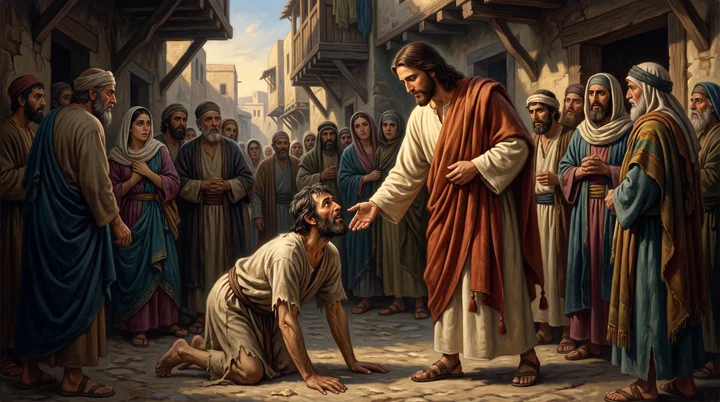
For the Son of man is come to save that which was lost.
for the Son of Man did come to save the lost.
For the Son of man has come to save that which was lost.
For the Son of Man came to save the lost.
For the Son of Man came to save that which was lost.
[]
For the Sonne of man is come to saue that which was lost.
Pictures
Cross-references 20 of 36
- Luke 19:10
For the Son of man is come to seek and to save that which was lost.
Both state that the Son of Man came to seek and save the lost.
- Luke 15:4-7
What man of you, having an hundred sheep, if he lose one of them, doth not leave the ninety and nine in the wilderness, and go after that which is lost, until he find it?
The shepherd seeks the lost sheep, and heaven rejoices when it is found.
- John 3:17
For God sent not his Son into the world to condemn the world; but that the world through him might be saved.
God sends his Son so the world may be saved.
- 1 Timothy 1:15
This is a faithful saying, and worthy of all acceptation, that Christ Jesus came into the world to save sinners; of whom I am chief.
Both say Christ came to save sinners.
- Ezekiel 34:16
I will seek that which was lost, and bring again that which was driven away, and will bind up that which was broken, and will strengthen that which was sick: but I will destroy the fat and the strong; I will feed them with judgment.
God seeks the lost and restores the weak, broken, and driven away.
- Mark 2:17
When Jesus heard it, he saith unto them, They that are whole have no need of the physician, but they that are sick: I came not to call the righteous, but sinners to repentance.
Christ came to call sinners to repentance.
- Mark 10:45
For even the Son of man came not to be ministered unto, but to minister, and to give his life a ransom for many.
The Son of Man came to serve and give his life to save others.
- Matthew 10:6
But go rather to the lost sheep of the house of Israel.
Both describe Christ’s concern for the lost.
- John 10:11
I am the good shepherd: the good shepherd giveth his life for the sheep.
Christ gives his life for the sheep he came to save.
- 2 Peter 3:9
The Lord is not slack concerning his promise, as some men count slackness; but is longsuffering to us-ward, not willing that any should perish, but that all should come to repentance.
Both express God’s desire that the lost be saved and come to repentance.
- 2 Timothy 1:9-10
Who hath saved us, and called us with an holy calling, not according to our works, but according to his own purpose and grace, which was given us in Christ Jesus before the world began,
Christ saves by grace and brings life through the gospel.
- Matthew 20:28
Even as the Son of man came not to be ministered unto, but to minister, and to give his life a ransom for many.
Christ’s saving work is described as giving His life to ransom others.
- Luke 15:24
For this my son was dead, and is alive again; he was lost, and is found. And they began to be merry.
The father rejoices when his lost son returns.
- Isaiah 53:4-6
Surely he hath borne our griefs, and carried our sorrows: yet we did esteem him stricken, smitten of God, and afflicted.
The suffering servant bears the sins of others.
- Luke 15:10
Likewise, I say unto you, there is joy in the presence of the angels of God over one sinner that repenteth.
Both connect Christ’s work for lost souls with repentance.
- John 10:15
As the Father knoweth me, even so know I the Father: and I lay down my life for the sheep.
Jesus lays down his life for the sheep.
- Hebrews 7:25
Wherefore he is able also to save them to the uttermost that come unto God by him, seeing he ever liveth to make intercession for them.
Christ is able to save completely those who come to God through him.
- Acts 4:12
Neither is there salvation in any other: for there is none other name under heaven given among men, whereby we must be saved.
Names Jesus as the one who saves.
- Acts 5:31
Him hath God exalted with his right hand to be a Prince and a Saviour, for to give repentance to Israel, and forgiveness of sins.
Connects Jesus’ exaltation with salvation.
- 1 John 4:9
In this was manifested the love of God toward us, because that God sent his only begotten Son into the world, that we might live through him.
God sends his Son to save and give life to the lost.
Commentary
Each commentary is drawn from primary sources: the writings of Ellen G. White and Adventist pioneers and periodicals. Each commentary is separate. Its own words are not a quotation; follow the references to read the source passages.
Ellen G. White
59 sources
The Son of man came to save those who were lost, as shown by the shepherd who leaves the ninety and nine to seek the one gone astray and rejoices more over finding it, for it is not the Father's will that one of these little ones should perish.STMW11 25.2–26.18T 73.1STMW9 7.16MR 209.2–4 The lost are sinners who have wandered from God and the fold, and the little ones are the weakest, inexperienced and struggling believers who are precious to Christ and in the special charge of angels whose faces behold the Father.Ms 47, 1902, par. 4–6Ms 102, 1904, par. 22–24Ms 11, 1888, par. 48–51Ms 165, 1898, par. 26–30ST Sep 19, 1900 He saves by seeking the erring tenderly instead of condemning them, having left the glory of heaven to come to a cursed world and giving His life as a ransom by bearing the world's sin so eternal life is within every person's reach.COS 84.4–6Lt 50, 1896, par. 4–5Ms 143, 1899, par. 6–7Lt 42, 1893, par. 14–19Ms 13a, 1891, par. 38–41 Every soul is precious as God's property bought by Christ's blood at infinite cost, so heaven rejoices over one sinner who repents, and to despise or cause a believing little one to stumble is a grave offense that may bring that soul to ruin.Ms 11, 1888, par. 48–51Lt 51b, 1898, par. 16–18Lt 48a, 1900, par. 5–6Ms 115, 1902, par. 21–22Ms 13a, 1891, par. 38–41 Therefore every believer without exception is to be a co-laborer with Christ in persistent, personal, tender effort to seek and restore the perishing, laying aside self-confidence, contempt, striving for supremacy, and criticism that wounds God's children.Ms 102, 1904, par. 22–24Ms 1, 1880, par. 60–61RH May 18, 1876Ms 29, 1900, par. 29–30Ms 60, 1904, par. 9–10
Meaning and Immediate Setting
The Son of man came to save that which was lost.STMW11 25.2–26.18T 73.1STMW9 7.16MR 209.2–4Lt 140, 1910, par. 3–7 He came to save sinners who had strayed, and He gave His life to rescue every person who seeks Him with the whole heart.STMW9 7.1Lt 140, 1910, par. 3–7Ms 47, 1902, par. 4–6 His saving purpose is explained by a man having a hundred sheep who leaves the ninety and nine and goes into the mountains to seek the one that has gone astray.STMW11 25.2–26.18T 73.16MR 209.2–4Lt 140, 1910, par. 3–7Ms 47, 1902, par. 4–6 If he finds it, he rejoices more over that sheep than over the ninety and nine which went not astray.STMW11 25.2–26.18T 73.16MR 209.2–4 Like that shepherd, Christ seeks each wandering person and gives special care to the weakest of His flock, interceding for them and not neglecting them.Lt 140, 1910, par. 3–7Ms 47, 1902, par. 4–6Lt 51b, 1898, par. 16–18
Even so it is not the will of the Father in heaven that one of these little ones should perish.STMW11 25.2–26.18T 73.1STMW9 7.16MR 209.2–4Lt 140, 1910, par. 3–7 God does not will that even one erring person whom Christ values should be lost, but that each should be dealt with tenderly and helped.STMW11 25.2–26.1STMW9 7.1Ms 47, 1902, par. 4–6 Their angels in heaven always behold the face of the Father, showing their value in heaven's sight.8T 73.16MR 209.2–4Ms 1, 1880, par. 60–61 A soul rescued from Satan and from Satan's triumph brings joy in heaven and joy among the heavenly angels.STMW11 25.2–26.1Lt 51b, 1898, par. 16–18Lt 51, 1898, par. 10–14
The chapter is Christ's lesson on humility and on the tenderness and care to be shown to the erring and to those who need sympathy and love.Ms 1, 1880, par. 60–61RH May 18, 1876Lt 21, 1903, par. 14 Entering heaven's kingdom requires conversion and becoming as little children, laying aside self-confidence, self-righteousness, harshness, contempt, self-sufficiency, self-esteem, self-exaltation and dignity.Ms 1, 1880, par. 60–61Lt 48a, 1900, par. 5–6Ms 26, 1889, par. 15–17 It forbids striving for supremacy and for being first, whether inward concealed strife or outward manifest strife, and teaches that in Christ's spiritual kingdom greatness is not position, outward splendor, or authority, but spiritual excellence manifested in true conversion learned from Christ in submission and obedience.Lt 64, 1900, par. 1–3Lt 48a, 1900, par. 5–6Ms 26, 1889, par. 15–17 Its instruction gives principles for all who claim to be disciples of the meek and lowly Jesus to act upon in all cases and under all circumstances, calling for humility before God, turning from self, and loving sympathy for others.Lt 64, 1900, par. 1–3RH May 18, 1876Lt 21, 1903, par. 14
The Lost and Little Ones
The lost are sinners, not saints, who have wandered from God as sheep stray from the fold, dead in sin and estranged from Him.Ms 11, 1888, par. 48–51ST Sep 19, 1900COS 84.4–6 He came to save sinners who were lost, not those already good and righteous.Ms 102, 1904, par. 22–24Ms 11, 1888, par. 48–51ST Sep 19, 1900 That includes the degraded, the fallen, and the outcast, as well as those who have sinned and strayed until they are distressed and nearly hopeless.COS 84.4–6Ms 143, 1899, par. 6–7Ms 7, 1895, par. 11–13
The little ones are the weakest believers, weak and trembling souls with many defects and objectionable traits.Ms 47, 1902, par. 4–6Ms 11, 1888, par. 48–51Ms 165, 1898, par. 26–30 They are inexperienced and may make mistakes, easily led into harm, struggling against discouraging circumstances and their own inclinations.Ms 47, 1902, par. 4–6Ms 11, 1888, par. 48–51Ms 165, 1898, par. 26–30 They are precious to Christ, for whom He intercedes, and they are the special charge of the angels of God and must not be despised, neglected, harshly treated, or abandoned.Ms 47, 1902, par. 4–6Ms 11, 1888, par. 48–51Ms 165, 1898, par. 26–30Ms 7, 1895, par. 11–1315MR 201.1–3
The little ones include people newly come to the Christian faith and little children in Christ rather than children in years.Ms 11, 1888, par. 48–51Ms 126, 1907, par. 20–2115MR 201.1–3 They may not know as much as they should and need to be taught the way of truth by instruction and by Christlike example, given opportunity to understand rather than being despised or led astray.6MR 209.2–4Ms 11, 1888, par. 48–51Ms 126, 1907, par. 20–21 Misleading their feet by word or wrong course so that they stumble in crooked paths is forbidden, and those in fault are to be helped by prayerful, kind effort.6MR 209.2–415MR 201.1–3
The little ones are also Christ's disciples changed in outlook and character, made meek, lowly, teachable, and submissive.Lt 93, 1901, par. 4–6Lt 48a, 1900, par. 5–6 God cherishes every one of His children, including the weakest and feeblest, and it is not His will that even one of them should perish.Lt 93, 1901, par. 4–6Ms 7, 1895, par. 11–13 Children themselves belong to God and are among those needing salvation, and therefore are to be cared for and sought rather than neglected or mistreated because they are not one's own.Lt 93, 1901, par. 4–6Ms 47, 1908, par. 12–13
Manner of Christ's Saving
He seeks the erring instead of condemning them, for as Chief Shepherd He diligently seeks the wandering sheep and does not rest while any means remain to bring it back.Lt 42, 1893, par. 14–19Lt 41, 1893, par. 2–4Lt 80, 1898, par. 14–15 He does not drive the erring one back with scolding or harshness, but carries the sheep tenderly and rejoices as it returns.Lt 42, 1893, par. 14–199MR 57.6–59.1 He does not abandon wounded, weak, or tempted believers to Satan, but strengthens and delivers those who trust in Him and rely on His love.Lt 50, 1896, par. 4–5Lt 41, 1893, par. 2–4 Those who have been forgiven must do this same work of seeking the one gone astray and rejoicing when he is found, rather than standing rigid toward a brother's wrong while their own record stands charged with unconfessed sins.Lt 42, 1893, par. 14–19Lt 80, 1898, par. 14–159MR 57.6–59.1
To do this He left His home in the kingdom of glory among beings that had never fallen, where He was loved and could have remained.ST Dec 3, 1885 He left the royal courts to bear the reproach of sin outside the camp, and came to a world marred and seared by the curse to save the lost sheep, gathering into His bosom all who would come to Him.Ms 143, 1899, par. 6–7ST Dec 3, 1885 He lived as a Man of sorrows acquainted with grief and trod the rugged path of self-denial to set an example.ST Dec 3, 1885 Without this work humanity would have been left to perish without hope in God, including the degraded, fallen, and outcast for whose sake He came.Ms 143, 1899, par. 6–7ST Dec 3, 1885
Though sinless He made an infinite sacrifice and gave His life as ransom, bearing the world's sin and suffering its consequences as if guilty.Ms 13a, 1891, par. 38–41Ms 16, 1892, par. 5–613MR 369.3–370.2 His suffering reveals the Father's love for a world perishing in sin, and through that sacrifice eternal life is within reach of every person.13MR 369.3–370.2 His saving mission is grounded in this giving of His life so that people may believe in Him and rely on His love.Lt 50, 1896, par. 4–5 Bringing wanderers back to the fold means returning to God and ceasing to sin so they may live without sin, and His care is not only for those already in the fold but for sinners who have wandered away from God like sheep away from the fold.COS 84.4–6
Rescue is for every person who seeks Him with the whole heart and submits to be rescued, for no straying sheep is overlooked or left without help.Lt 140, 1910, par. 3–7COS 84.10–85.2 Those who want to be rescued must be willing to be rescued in the Lord's appointed way and not in a way of their own choosing, by living faith, and the same redemption, love, light, and power is promised to all alike who seek it.Lt 280, 1906, par. 9–12ST Dec 3, 1885 The free grace of God is man's only hope, and God is in earnest with every person about this.Lt 280, 1906, par. 9–12 The verse gives each sinner reason to have courage and trust in Christ's power to save because He gave Himself at infinite cost, so that doubting the possibility of salvation doubts that saving power.COS 84.10–85.2
The aim of correcting one doing wrong is to save that person from being ruined by sin.Ms 112, 1904, par. 12–14 The whole teaching gives relief and courage and hope, for taking the case to Jesus in prayer in faith brings pardon, because He hears.Lt 159, 1905, par. 4–5 When sins are confessed with repentance and humble walk with God, forgiveness is found, for He corrects in order to purify and save.Lt 159, 1905, par. 4–5
Worth of Every Soul
Every soul discloses its true worth in the light of the cross of Calvary, for each person purchased is precious as God's property bought by Christ's blood at infinite cost.Ms 11, 1888, par. 48–51Ms 13a, 1891, par. 38–41Ms 16, 1892, par. 5–6 The lost whom He came to save are sinners, not saints — weak brethren, weak and trembling souls with many defects and objectionable traits, little children in Christ rather than children in years — and Christ identifies His interest with them so that injustice done to them is as done to Himself.Ms 11, 1888, par. 48–51Ms 13a, 1891, par. 38–41 Therefore no believer is to be despised, disrespected, treated with partiality, harshness, envy, jealousy, or unkind words and actions that push souls onto Satan's ground, but is to receive compassion, earnest labor, and persevering effort instead of selfish neglect, contempt, unforgiving and exacting judgment, condemnation, and discouragement.Ms 11, 1888, par. 48–51Ms 13a, 1891, par. 38–41Ms 16, 1892, par. 5–6 No straying sheep who submits to be rescued is overlooked or left without help, and because He gave Himself at infinite cost each sinner has reason for courage and trust in His power to save, so that to doubt the possibility of salvation is to doubt that saving power.COS 84.10–85.2DA 438.2–439.1 Turning anyone away from Christ dishonors the Saviour and may bring that soul to ruin, since every soul cost Him an infinite price.DA 438.2–439.1
One soul is very precious in God's sight, for Christ died for that soul that he might live through eternal ages, and work for the lost is not in vain even when only a few accept grace.Lt 51b, 1898, par. 16–18Lt 51, 1898, par. 10–14 God, Christ, and heaven's angels are concerned for the salvation of sinners, and as the shepherd seeks the one strayed sheep Christ seeks each person, with heaven rejoicing when one is rescued.Lt 51b, 1898, par. 16–18Lt 51, 1898, par. 10–14COS 84.10–85.2 There is greater joy over one sinner who repents than over ninety-nine who need no repentance, for it is not the Father's will that even one of these little ones should perish.Lt 51b, 1898, par. 16–18Lt 51, 1898, par. 10–14Ms 70, 1898, par. 15 Their angels always behold the face of the Father in heaven, and one soul redeemed from Satan's triumph causes joy among the heavenly angels, while heavenly beings join human disciples so that heaven's power combines with human effort to draw people to Christ.Lt 51, 1898, par. 10–14Ms 13a, 1891, par. 38–41DA 442.1–3 That saving work is carried on by workers who seek the lost and care for them with practical acts of love, feeding, cleansing, and clothing even society's outcasts through medical missionary work, so that many poor outcasts whose moral image of God was destroyed will have that image restored, will then restore it in others for whom Christ paid with His blood, and will be called the elect of God, precious, standing next to the throne.Lt 51b, 1898, par. 16–18Lt 51, 1898, par. 10–14
Because Christ values every soul His disciples must not show less regard for others than He does, and entering heaven's kingdom requires conversion to become like a child, with humility rather than pride or self-importance marking true greatness.Lt 48a, 1900, par. 5–6 Causing a believing little one to stumble or turning someone away from Christ is a grave offense and grave wrong, making the Saviour's love, humiliation, and agony vain for that person, dishonoring Him and possibly bringing that soul to ruin.Lt 48a, 1900, par. 5–6DA 438.2–439.1 The warning not to despise the little ones is serious, and those who are easily provoked must heed it or they will not be among the redeemed.Lt 48a, 1900, par. 5–6Ms 115, 1902, par. 21–22
Followers Seek the Lost
Christ came to save the lost, and that coming sets the work for all who have been saved, for the same redemption, love, light and power is promised to all alike who seek it by living faith.ST Dec 3, 1885ST Dec 3, 1885 Every believer with no exceptions, not the minister alone, is to go forth as Christ did to rescue the lost and perishing as co-laborers with Christ.Ms 29, 1900, par. 29–30Ms 60, 1904, par. 9–10ST Dec 3, 1885ST Dec 3, 1885 A heart that remembers being saved from sin proves itself by active labor for souls instead of indifference and neglect, for believers are not placed here merely to seek their own gratification when sinners to be saved are all about them.ST Dec 3, 1885ST Dec 3, 1885 Those who already have the truth and know God's requirements should keep the way of the Lord and heed the light given in the Word, so that labor is not consumed in warning and reproving them but can be given to the salvation of souls ready to perish.Lt 17, 1891, par. 23–26 Those who see the preciousness of the Saviour's love shown on the cross and understand its value will be earnest and eager to join that work of sharing truth so others may join the faith.Ms 60, 1904, par. 9–10ST Dec 3, 1885
The lost sheep will not return without special, persistent, personal effort to recover those who have strayed.Ms 102, 1904, par. 22–24Lt 43, 1895, par. 10–12Lt 42, 1893, par. 14–19 Believers are to draw near to anyone slipping away from truth and endangering the hope of eternal salvation, learn that person's needs, pray with them, share truth by instruction and example, and help them kindly, patiently, tenderly, with sympathy, meekness, mercy and love, and never give up on helping them.Ms 102, 1904, par. 22–24Lt 43, 1895, par. 10–12Ms 126, 1907, par. 20–21Lt 42, 1893, par. 14–19 The erring, weak, trembling, and even apostate are to be sought and brought back into the fold, for those who belong to the fold have a special duty to search for them, and people newly come to faith are to be treated tenderly and taught the way of truth rather than despised or led astray.Ms 126, 1907, par. 20–21LSEGW 187.2 This saving work is carried on by followers as they seek those gone astray and help bring them to repentance to win souls, and it is done with the help of Christ and the angels, so that heaven's power combines with human effort.Lt 51, 1898, par. 10–14Lt 43, 1895, par. 10–12Ms 29, 1900, par. 29–30 Neglecting this work leaves souls exposed to Satan and makes the neglectful responsible for them, for the Chief Shepherd diligently seeks the wandering sheep and does not rest while any means remain to bring it back, not driving the erring back with scolding or harshness but carrying tenderly and rejoicing at return.Lt 42, 1893, par. 14–19
That seeking is practical love that relieves suffering and teaches righteousness, rescuing souls from Satan's hand and from the depths of human woe and misery.STMW11 25.2–26.1Lt 51b, 1898, par. 16–18Lt 51, 1898, par. 10–14 It lays a burden to feed, cleanse, and clothe the lost through medical missionary work, with angels cooperating, and work for the lost is not in vain even when only a few accept grace.Lt 51b, 1898, par. 16–18Lt 51, 1898, par. 10–14 Christ's example brought Him among the afflicted, poor, distressed, needy, and despised, and His heavenly majesty, purity, and refinement did not keep Him from humbling Himself to do the work they most needed even when unpleasant, which rebukes those who consider helping the helpless beneath them.2T 467.1SA 37.3 Many poor outcasts whose moral image of God was destroyed will have that image restored, will then restore it in others for whom Christ paid with His blood, and will be called the elect of God, precious, standing next to the throne, because it is not the Father's will that one of these little ones should perish.Lt 51b, 1898, par. 16–18Lt 51, 1898, par. 10–14 One soul rescued from Satan brings joy in heaven, for one soul is very precious in God's sight and Christ died that he might live through eternal ages.STMW11 25.2–26.1Lt 51, 1898, par. 10–14Ms 116, 1904, par. 12–15
No straying sheep who submits to be rescued is overlooked or left without help, which gives each sinner reason to have courage and trust in Christ's power to save at infinite cost.Ms 116, 1904, par. 12–15COS 84.10–85.2 The same mission brings encouragement to one who has been discouraged and treated unjustly, calling others to care for and help rather than bruise or abandon a soul in need.Ms 116, 1904, par. 12–15Lt 71, 1895, par. 22 Children are included among those needing salvation and belong to God, so every church member should care for them and cooperate with Christ in seeking their salvation rather than neglecting or mistreating them because they are not their own.Ms 47, 1908, par. 12–13
Humility Unity and Care
Because the Son of man came to save what was lost, not one of the little ones is to be despised, harmed, neglected, or treated as worthless, for their angels always behold the face of the Father in heaven and it is not the Father's will that one of them should perish.8T 73.1STMW9 7.1Ms 47, 1902, par. 4–6Lt 53, 1894, par. 19–21Lt 36, 1895, par. 15–17 Like the man with a hundred sheep who leaves the ninety and nine to go into the mountains after the one gone astray and rejoices more over finding it than over those that did not stray, Christ values, intercedes for, and seeks the erring, especially the weakest believers who may not know as much and need opportunity to understand.8T 73.16MR 209.2–4Ms 47, 1902, par. 4–6 Misleading their feet by a word or a wrong course so that they stumble in crooked paths, making an erring brother's case more hopeless, or standing off to criticize those who are reaching them grieves the Holy Spirit and violates the lesson of the chapter.6MR 209.2–4Ms 1, 1880, par. 60–61 Instead the erring are to be received, pitied, and sought with tenderness, courtesy, sympathy, mercy, and love, dealt with tenderly and helped, never stood off from in self-righteousness like the Pharisee who thanks God he is not as other men.STMW9 7.1Ms 1, 1880, par. 60–61
All professed Christians must be converted in spirit and become as little children, learning Christ's meekness and lowliness rather than seeking supremacy or creating strife.ST Sep 19, 1900Ms 1, 1880, par. 60–61 That conversion lays aside self-sufficiency, self-confidence, self-righteousness, self-esteem, self-exaltation, dignity, harshness, and contempt, and turns from self to humility before God with loving sympathy for others and personal effort to help those outside Christ.Ms 1, 1880, par. 60–61RH May 18, 1876 The unsanctified element of inward concealed strife for supremacy and outward manifest strife to be first in the ranks must be cleansed from the soul temple, with no standing back on dignity when not specially requested, no satisfaction in brethren's deficiencies, and no hindering words that Satan uses instead of building up the Redeemer's kingdom.Ms 26, 1889, par. 15–17 Until this is cleansed the Saviour's Spirit is grieved, those who ought to be a blessing become a curse retarding instead of advancing the work, and the Lord cannot manifest His power and grace.Ms 26, 1889, par. 15–17
The same saving purpose forbids lack of love that hinders and represses one doing a good work, accusing brethren, seeking to remove a fellow worker, devising separation, thinking and speaking evil, dissension, self-esteem, strife to be highly esteemed, and criticism and faultfinding.Lt 31, 1903, par. 4–5Lt 107a, 1900, par. 2–3 Such accusation and evil thinking and speaking gives place to the enemy, grieves the Spirit of the Lord, and must be refused, met, and condemned, with the Word given in strong portions to mischief makers who know not what they do, and the verse itself read to any who begin criticism to trace out the cause of disaffection and its evil consequences.Lt 31, 1903, par. 4–5Lt 107a, 1900, par. 2–3 For criticism and faultfinding is expressly the devil's work begun in the heavenly courts, when he claimed he could do wonders if not hampered by God's law, suggested change in God's government for the advantage of the heavenly family, put his own thoughts into angels' minds and then repeated them as their disaffection, covered his tracks while spreading suspicion and distrust of God and of one another, until strife grew into rebellion and God expelled him and the disloyal for the good of the loyal and true.Lt 107a, 1900, par. 2–3
Its lesson for saving the lost must be learned with full purpose of heart to heal dissension and alienation, by turning to the Lord, repenting of self-glorying, perversion of righteousness in words and acts, and weakening ministers' hands, and by receiving reproof instead of building up a wrong course and being converted in speech and action.Lt 360, 1905, par. 15–16 Christ looks with sorrow upon the wayward course of those given precious encouragement, yet for His cause and His name's glory He bears long with them when they are an offense, encourages them, and sends helpful messages of kindness and love lest enemies of truth triumph.Lt 360, 1905, par. 15–16 Taking the case to Jesus in prayer in faith brings pardon, for He hears, and when sins are confessed with repentance and humble walk with God forgiveness is found, because He corrects in order to purify and save; but refusal of reproof brings judgment and being cast aside to share the fate of transgressors of the law, breakers of the covenant, and despisers of warnings.Lt 159, 1905, par. 4–5Lt 360, 1905, par. 15–16 The instruction of the chapter gives principles for all who claim to be disciples of the meek and lowly Jesus to act upon in all cases and under all circumstances, teaching that in His spiritual kingdom greatness is not position, outward splendor, or authority but spiritual excellence in true conversion, submission, and obedience.Lt 64, 1900, par. 1–3 Those who handle sacred things must therefore be transformed in spirit so they represent Jesus rather than wound and bruise God's children.Lt 58, 1901, par. 18–19
Sources
Pioneers and periodicals
42 sources
The Son of man became truly human while remaining the Son of God, and he came from heaven for the purpose of saving the fallen human race wandering in spiritual darkness, lost in sin and facing death, like a shepherd who seeks one strayed sheep and rejoices when he finds it.ST Jul 12, 1899RH Nov 19, 1908ST Feb 11, 1897ST Feb 27, 1893ST Oct 10, 1900 He left his home in the kingdom of glory to come to a world marred by the curse, suffering and dying as a ransom on behalf of lost sinners, so that all that was lost in the Fall, including man and his dominion the earth, might be restored.ST Dec 3, 1885ST Jul 28, 1914ST Mar 31, 1914ST Jul 14, 1898ST Mar 31, 1887 This seeking flows from the Father's will that not even one of the little ones should perish, for God values every soul and does not will the death of any sinner but wants all to come to repentance.ST Sep 21, 1904ST May 3, 1899ST Jul 12, 1899 In the church that same purpose requires every step toward an erring member to aim at bringing him to recognize and correct the wrong and gaining the brother, to reform and not merely to punish or abandon.ST Apr 16, 1885RH Mar 5, 1901ST Apr 16, 1885 His coming to save the lost then sets the work for all who have been saved, putting duty on every believer with no exceptions to become co-workers seeking the lost with love, patience and practical care.ST Dec 3, 1885ST Dec 3, 1885ST Jul 2, 1885
Words and Immediate Setting
The title Son of man means one born of a woman and become truly human while remaining the Son of God, made like his human brothers in all things so that he could be a merciful and faithful high priest.ST Feb 11, 1897 That which was lost means the fallen human race, people wandering in spiritual darkness, lost in sin and facing death.RH Nov 19, 1908ST May 21, 1896RH May 29, 1900 Saving them was the purpose of his mission to the world, sent as a missionary by a God who loved them even though the earth and its nations are only a small part of his vast creation.RH Nov 19, 1908RH May 29, 1900
The verse is given in brief form as the parable of the lost sheep and is identified with it.ST Oct 10, 1900ST Jan 20, 1909 The following picture explains this care: like a shepherd who seeks one sheep that has strayed and rejoices when he finds it, the Lord goes after even one of his little ones, because the Father does not will that any should perish.ST Jul 26, 1910ST Jul 12, 1899 He seeks the straying and rejoices when that one is found, showing God's care for each one.ST Jul 26, 1910
Its setting presents God's children as precious to him, bought at a price greater than the value of countless worlds, with deep care for even the humblest and weakest of them.RH May 19, 1863 In this Matthew 18 teaches God's marvelous mercy in contrast to man's inhumanity.ST Aug 27, 1912 The teaching in Matthew 18 applies to church matters in the Christian age, and its being spoken before Pentecost does not make it inapplicable after the kingdom was set up.ST Jun 4, 1885
The chapter refers to forgiveness or pardon in a limited sense, which does not contradict that blood makes atonement for the soul and that remission requires the shedding of blood.ST Oct 18, 1883 The verse is to be read as a solemn warning requiring accountability for light received, calling for prayer for grace to set a good example to the young and not be a cause of stumbling to them.RH Jul 16, 1901
Christ's Saving Mission
The Son of man came from heaven and from God the Father, and his coming was for the purpose of saving those who were lost.ST Feb 27, 1893ST Mar 31, 1887 He left his home in the kingdom of glory among beings that had never fallen, where he was loved and could have remained, and left the royal courts to bear reproach outside the camp, coming to a world marred and seared by the curse to save the lost sheep and gather into his bosom all who would come to him.ST Dec 3, 1885 He lived as a Man of sorrows acquainted with grief and trod the rugged path of self-denial to set an example, and without this work humanity would have been left to perish without hope in God.ST Dec 3, 1885 His saving work involved suffering and dying on behalf of lost sinners, giving his life as a ransom and making salvation possible through his atoning death.ST Mar 31, 1887
His saving work is a work of restoration, pictured by a shepherd seeking one sheep that has strayed, since the Father does not will that even one of the little ones should perish.ST May 3, 1899 He came as a missionary to a fallen race whom God loved and gave his Son to save, though the earth and its nations are only a small part of his vast creation.RH May 29, 1900
While he hated sin he was the sinner's friend, seeking the society of sinners not for the sake of their society but that he might do them good.ST Dec 3, 1885 He chose company with those he could benefit rather than those who would benefit him, never standing off in self-righteousness like the Pharisee who thanks God he is not as other men are, congratulating self on freedom from others' faults while despising and condemning brethren.ST Apr 1, 1889 His example means not despising and shunning sinners nor being uncivil to anybody, but showing all meekness unto all men and seeking sinners in order to help them, since the lost cannot be expected to be faultless and help belongs to those who need forbearance and grace.ST Apr 1, 1889ST Dec 3, 1885
His saving mission is connected with his baptism and presents him as the pattern for believers who are baptized.RH Jul 1, 1873 He came to save sinners who were lost, and his mission is the pattern for believers to learn his meekness and lowliness, not to seek supremacy or create strife.ST Sep 19, 1900
Scope of Restoration
All that was lost in the Fall is to be restored through the plan of salvation, for the gospel remedies sin and all its consequences.ST Mar 31, 1914ST Mar 17, 1914 When man was taken captive his dominion passed into the hands of his captor, so man was lost and his dominion, the earth, was also lost, and Jesus came to save both man and his dominion.ST Jul 28, 1914 God made the earth as humanity's home, but humanity forfeited its possessions through sin, so the gospel includes the complete redemption of people and their lost inheritance, restoring the world to a holy and happy state.ST Jul 14, 1898 This restoration begins when a person surrenders to the Lord and is completed at Christ's coming, when the human body is changed to be like His glorious body.ST Mar 31, 1914
His saving grace recovers what heathenism wastes — love, power, honor and human dignity, with manhood and womanhood and human gifts and capacities — and gathers people and their gifts through service and sacrifice to enrich God's kingdom.ST Dec 23, 1913 That gathering is carried on through reconciliation and practical care, by strengthening the weak, healing the sick, binding up the broken, bringing back those driven away, and saving the lost. The lost sheep that is found represents the redeemed.ST Sep 18, 1901 Its recovery will bring far greater rejoicing than over the ninety-nine who were never lost, and that rejoicing will be seen in the restored earth.ST Sep 18, 1901
Care for the Lost
The Father does not will that even one of the little ones should perish, and this explains the care to seek the one who has strayed and to prevent perishing.ST Sep 21, 1904ST May 3, 1899ST Jul 12, 1899ST Jul 12, 1899 Like a shepherd who seeks one sheep that has strayed and rejoices when he finds it, the Lord goes after even one of his little ones, and his saving work is a work of restoration.ST Sep 21, 1904ST May 3, 1899ST Jul 12, 1899 Christ values every soul, so his disciples must not show less regard for others than he does, and turning someone away from Christ is a grave wrong that makes his love, humiliation, and agony vain for that person. Regarding someone as lost does not justify ending efforts to reclaim that person, for people cannot ordinarily know that another is utterly lost before the Judgment decides destiny, and Christ's followers and co-workers must seek and save the erring.ST Jul 2, 1885
Its message gives courage to people discouraged by their sins, assuring them of God's love for the erring and his desire for them to return.ST Apr 8, 1875 Recognizing oneself as lost is no reason to despair, because Christ's mission is to save the lost, and trusting in Jesus brings peace.ST Apr 8, 1875 God does not will the death of any sinner but wants all to come to repentance, and his mercies are without number.ST Sep 21, 1904 Having given the ransom of his life he will not leave ransomed souls to become the sport of Satan's temptations, but all heaven is given to those who believe in Jesus Christ as personal Saviour, so professed believers dishonor God when they go in mourning and sorrow like orphans instead of trusting his pardoning love.ST Sep 21, 1904
The joy when the straying person returns is over repentance and renewed loyalty and obedience, not over sin, though those who persistently abuse grace will be punished.ST Jul 2, 1885 God himself cares for the little ones of his flock when human workers can no longer reach them, as with shut-in believers who trust Jesus in heart but cannot stand openly and are taken away from Christian influence, who must be left by prayer to God's care.RH Mar 12, 1914
Restoring Erring Members
The discipline taught in the chapter applies the coming to save what was lost to the handling of erring members, so that each step is ordered to lead the offender to see the wrong and set it right, and when he hears, the brother is gained.ST Apr 16, 1885 Even the last step of separation comes only after repeated appeals have been rejected and the authority of the church has been refused.ST Apr 16, 1885 For the same reason discipline is for reform and not for mere punishment or abandonment, demanding every possible effort to correct a member walking disorderly and to save him if it can be done.ST Apr 16, 1885
Toward those inside the fold the work is to save and not to destroy, which means straying ones are to be brought back by those who are spiritual.RH Mar 5, 1901 The effort must be immediate, correcting every evil at once before the enemy effects their destruction, by following the steps plainly marked out in Matthew 18.RH Mar 5, 1901 Even when fellowship is withdrawn after faithful labor to restore has failed, labor for restoration is still to go on, and the church is to keep its larger mission of saving the lost in view.RH Jun 16, 1903
Those who follow one who came to rescue the lost must not despise the little ones, nor make an erring brother's case more hopeless, nor drive the straying sheep farther from the fold, but must labor to bring him back.ST Apr 1, 1889 The lost are not to be expected to be faultless, and help with forbearance and grace belongs to those who need it.ST Apr 1, 1889 To stand apart in self-righteousness like the Pharisee who thanks God he is not as other men are, congratulating self on freedom from the faults of others while despising and condemning brethren, is contrary to true religion, which chooses company with those it can benefit rather than with those who will benefit it.ST Apr 1, 1889 In this setting the coming to save the lost calls for humility before God, for turning away from self, and for loving sympathy shown in personal effort to help those outside of Christ.RH May 18, 1876
Believers Share the Work
The coming to save lost sinners sets the work for all who have been saved, laying duty on every believer with no exceptions to become co-workers in seeking the lost and perishing.ST Dec 3, 1885ST Dec 3, 1885ST Jul 2, 1885 The same redemption, love, light and power is promised to all alike who seek it by living faith, so that every believer and not the minister alone may be a blessing to the lost and go forth as Christ did to rescue them.ST Dec 3, 1885 Regarding someone as lost does not justify ending efforts to reclaim that person, for people cannot ordinarily know that another is utterly lost before the Judgment decides destiny.ST Jul 2, 1885 Followers as co-workers must therefore seek and save the erring, illustrated by the lost sheep and the joy when the straying one returns, which is joy over repentance and renewed loyalty and obedience and not over sin.ST Jul 2, 1885
Those who see the preciousness of the Saviour's love shown on the cross and understand its value will be earnest and eager to join that work.ST Dec 3, 1885 Believers are not placed here merely to seek their own gratification, because sinners to be saved are all about them.ST Dec 3, 1885 A heart throbbing with love at the remembrance of being saved from sin proves itself by active labor for souls instead of indifference and neglect, and doing this work as co-laborers would make works very different from what they are.ST Dec 3, 1885
Servants share in this saving work through reconciliation and practical care, strengthening the weak, healing the sick, binding up the broken, bringing back those driven away, and saving the lost. That mission calls for seeking to save people wherever they are, with love, patience, and forbearance.RH Feb 3, 1916 It includes taking a deeper interest in the salvation of children.RH Jul 1, 1915 Providing or encouraging intoxicating drink conflicts with the purpose to save those who are lost, so the claim that intoxicating wine was supplied at Cana or at the Lord's Supper is contrary to that purpose, and abandoning that claim is necessary to banish drunkenness, including from the church.ST Feb 7, 1878
Sources