Isaiah 53:4
Surely he hath borne our griefs, and carried our sorrows: yet we did esteem him stricken, smitten of God, and afflicted.
Translations
Surely he has borne our griefs, and carried our sorrows: yet we did esteem him stricken, smitten of God, and afflicted.
King James Version, Revised Version
Surely he hath borne our griefs, and carried our sorrows: yet we did esteem him stricken, smitten of God, and afflicted.
Surely he hath borne our griefs,
And carried our sorrows:
Yet we did esteem him stricken,
Smitten of God, and afflicted.Surely he hath borne our griefs, and carried our sorrows: yet we did esteem him stricken, smitten by God, and afflicted.
Surely he hath borne our griefs, and carried our sorrows; yet we did esteem him stricken, smitten of God, and afflicted.
Surely our sicknesses he hath borne, And our pains — he hath carried them, And we — we have esteemed him plagued, Smitten of God, and afflicted.
Surely he hath borne our griefs and carried our sorrows; and we, we did regard him stricken, smitten of God, and afflicted.
Yet surely, our sicknesses, he, carried, And, as for our pains, he bare the burden of them,—But, we, accounted him stricken. Smitten of God and humbled,
Surely He took on our infirmities
and carried our sorrows;
yet we considered Him stricken by God,
struck down and afflicted.Surely He took up our infirmities and carried our sorrows; yet we considered Him stricken, struck down by God, and afflicted.
Surely he has borne our sickness
and carried our suffering;
yet we considered him plagued,
struck by God, and afflicted.But it was our pain he took, and our diseases were put on him: while to us he seemed as one diseased, on whom God's punishment had come.
Surely hee hath borne our infirmities, and caried our sorowes: yet wee did iudge him, as plagued, and smitten of God, and humbled.
Douay-Rheims (Challoner revision)
Surely he hath borne our infirmities and carried our sorrows: and we have thought him as it were a leper, and as one struck by God and afflicted.
Pictures
Cross-references 20 of 155
- 1 Peter 2:24
Who his own self bare our sins in his own body on the tree, that we, being dead to sins, should live unto righteousness: by whose stripes ye were healed.
Christ bears our sins in his body, and his wounds bring healing.
- Matthew 8:17
That it might be fulfilled which was spoken by Esaias the prophet, saying, Himself took our infirmities, and bare our sicknesses.
Jesus’ healings fulfill Isaiah’s words about bearing human infirmities and sorrows.
- Hebrews 4:15
For we have not an high priest which can not be touched with the feeling of our infirmities; but was in all points tempted like as we are, yet without sin.
Christ is touched by human infirmities and shares human trial.
- 2 Corinthians 5:21
For he hath made him to be sin for us, who knew no sin; that we might be made the righteousness of God in him.
Christ bears sin for others so they may become righteous in him.
- John 1:29
The next day John seeth Jesus coming unto him, and saith, Behold the Lamb of God, which taketh away the sin of the world.
Jesus is the Lamb who takes away the world’s sin.
- Isaiah 53:12
Therefore will I divide him a portion with the great, and he shall divide the spoil with the strong; because he hath poured out his soul unto death: and he was numbered with the transgressors; and he bare the sin of many, and made intercession for the transgressors.
He bears the sin of many and intercedes for transgressors.
- Matthew 26:38-39
Then saith he unto them, My soul is exceeding sorrowful, even unto death: tarry ye here, and watch with me.
Jesus’ sorrow and prayer over the cup show him bearing humanity’s burden.
- John 3:16
For God so loved the world, that he gave his only begotten Son, that whosoever believeth in him should not perish, but have everlasting life.
God’s love for the world led to the Son’s suffering to save believers.
- Matthew 11:28
Come unto me, all ye that labour and are heavy laden, and I will give you rest.
Christ invites the weary and burdened to come to him for rest.
- Matthew 27:46
And about the ninth hour Jesus cried with a loud voice, saying, Eli, Eli, lama sabachthani? that is to say, My God, my God, why hast thou forsaken me?
Jesus’ cry of forsakenness expresses his anguish while bearing suffering for others.
- Luke 22:44
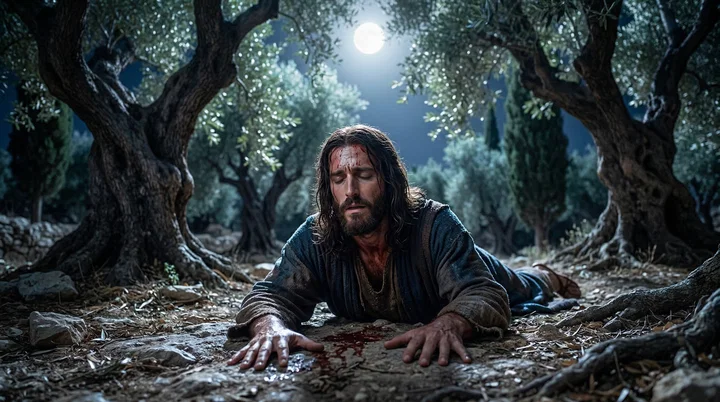
And being in an agony he prayed more earnestly: and his sweat was as it were great drops of blood falling down to the ground.
Jesus’ agony in Gethsemane is shown by his sweat like drops of blood.
- Hebrews 2:17-18
Wherefore in all things it behoved him to be made like unto his brethren, that he might be a merciful and faithful high priest in things pertaining to God, to make reconciliation for the sins of the people.
Christ shared human suffering and can succor those who suffer.
- Hebrews 12:2
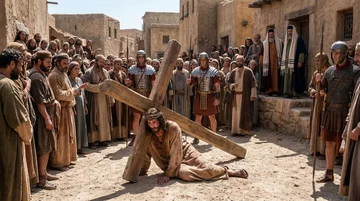
Looking unto Jesus the author and finisher of our faith; who for the joy that was set before him endured the cross, despising the shame, and is set down at the right hand of the throne of God.
Jesus endured the cross and its shame, looking to the joy set before him.
- Isaiah 53:10-11
Yet it pleased the LORD to bruise him; he hath put him to grief: when thou shalt make his soul an offering for sin, he shall see his seed, he shall prolong his days, and the pleasure of the LORD shall prosper in his hand.
The servant’s suffering becomes an offering for sin, bearing iniquities and justifying many.
- Psalms 22
My God, my God, why hast thou forsaken me? why art thou so far from helping me, and from the words of my roaring?
Read alongside Isaiah 53 in connection with Jesus’ betrayal, condemnation, and crucifixion.
- Daniel 9:26
And after threescore and two weeks shall Messiah be cut off, but not for himself: and the people of the prince that shall come shall destroy the city and the sanctuary; and the end thereof shall be with a flood, and unto the end of the war desolations are determined.
The Messiah is cut off, not for himself, suffering and dying for others.
- Romans 5:8
But God commendeth his love toward us, in that, while we were yet sinners, Christ died for us.
Christ suffers and dies for sinners while they are still sinners.
- Galatians 3:13
Christ hath redeemed us from the curse of the law, being made a curse for us: for it is written, Cursed is every one that hangeth on a tree:
Christ bears the law’s curse in the sinner’s place.
- Galatians 6:2
Bear ye one another’s burdens, and so fulfil the law of Christ.
Christ’s bearing of human burdens grounds the call to bear one another’s burdens.
- Isaiah 53:8
He was taken from prison and from judgment: and who shall declare his generation? for he was cut off out of the land of the living: for the transgression of my people was he stricken.
He is stricken and cut off for the people’s transgression.
Commentary part 1 of 2
Each commentary is drawn from primary sources: the writings of Ellen G. White and Adventist pioneers and periodicals. Each commentary is separate. Its own words are not a quotation; follow the references to read the source passages.
Ellen G. White
137 sources
Surely He took human griefs and carried human sorrows upon Himself, making them His own as Substitute and Surety, yet people wrongly regarded His suffering as punishment sent by God upon Him.AA 225.2–226.2Ms 75, 1886, par. 15Ms 112, 1897, par. 20–21 It is a plain prophecy that Christ must suffer as a humble, lowly Messiah rather than come as a conquering temporal ruler, and every detail of His rejection, humiliation and death was revealed beforehand and fulfilled exactly.AA 225.2–226.2PK 689.2Ms 140, 1908, par. 45–47Ms 64, 1895, par. 8SLP 103.2–104.1 He stands as humanity's Sin-bearer and ransom, with the iniquity of every descendant of Adam laid upon Him though innocent, counted a transgressor and bearing the stroke of divine justice in the sinner's place so the guilty may be pronounced guiltless.Ms 19, 1899, par. 16–17Ms 165, 1899, par. 7–9Ms 25, 1887, par. 10–12ST Feb 3, 1898Ms 84a, 1897, par. 2 His deepest agony was not dread of death or bodily pain but the sense of sin's offense to God, the pressure of divine displeasure and the hiding of the Father's countenance, which broke His heart with a sense of separation.ST Jul 25, 1878SG1 23.1ST Jan 30, 1879 Having thus entered into every human burden with divine and human compassion, He now pleads His wounds for fallen people as priest and intercessor, heals soul and body as the great Physician, and calls sinners to look to Him by faith for pardon and healing and to follow Him in self-denying love by bearing one another's burdens.PP 411.3Lt 149, 1897, par. 24Ms 43, 1902, par. 11–12Lt 149a, 1897, par. 20–21Lt 150, 1909, par. 3–7
Meaning of the Words
Surely the prophecy means He took human griefs upon Himself and carried human sorrows as His own on the cross, and this bearing shows the measure of divine love at Calvary.AA 225.2–226.2Ms 112, 1897, par. 20–21Ms 29, 1900, par. 2–4PK 689.2 He did this as the Substitute and Surety of the human race, feeling every pang of anguish that man can ever feel while suffering temptation.Ms 29, 1900, par. 2–4PK 689.2Ms 19, 1899, par. 16–17 In His human nature He felt need of the ministration of heavenly angels and need of His Father's help, placing Himself in His Father's hands, and under the most trying circumstances His faith did not fail.Ms 19, 1899, par. 16–17 Every insult shown by men made Him more conscious of their need of His divine sympathy and made Him understand better man's great need, while as a powerful warrior He was winning a victory in behalf of the world He had created.Ms 19, 1899, par. 16–17 His suffering was part of the divine purpose He fulfilled as humanity's substitute, ordained for the transgressions and iniquities of others.Ms 112, 1897, par. 20–21Ms 29, 1900, par. 2–4PK 689.2
Yet the closing words mean onlookers misjudged Him, failing to recognize what He was doing and wrongly esteeming Him struck, punished and afflicted by God for His own sake.AA 225.2–226.2Ms 112, 1897, par. 20–21Ms 29, 1900, par. 2–4PK 689.2 He was despised and not esteemed, and the world would not receive and acknowledge Him as Prince Immanuel and Redeemer though He was bearing human griefs and carrying human sorrows.AA 225.2–226.2Ms 75, 1886, par. 15 The blindness of the impenitent in so judging Him is because Satan has controlling power over them and they choose his service before the service of Christ.Ms 75, 1886, par. 15
The griefs and sorrows He bore include human pain, trouble, infirmities, suffering, sicknesses, weaknesses, woes and degeneracy, which He carried as humanity's representative and not for any grief or sin of His own.Ms 29, 1900, par. 2–44T 86.1LC1 199.3ST Aug 14, 1879Lt 22, 1900, par. 14–15 Though He knew no sin, He clothed divinity with humanity to carry human infirmities and bear human temptations, griefs and sorrows, laying off His royal robe, laying aside His kingly crown, stepping down from high command over all heaven, and leaving the admiration of angels for the insults and execrations of a mob.ST Aug 14, 1879Lt 22, 1900, par. 14–15ST Sep 30, 1889 He experienced childhood weaknesses and temptations, and was tempted in every way yet remained without sin, so He can help people overcome, with testing and temptation greater than those people are called to endure.4T 86.1ST Aug 14, 1879ST Sep 30, 1889 This bearing of humanity's burden was all that God and Christ could do as a ransom to save sinners placed in jeopardy under the death sentence by transgression, and His enduring marks of earthly humiliation show Him slain as a sin-atoning Saviour.LC1 199.3Lt 22, 1900, par. 14–15 In life in the world He is thus the poor man's Friend, the Great Physician and mighty Healer of every disease, and a source of goodness, blessing and power for those who devote themselves to His work, enabling reliance on His merits to overcome in His name.4T 86.1ST Jun 21, 1899
His bearing of grief and sorrow was for the transgressions and iniquities of others, for He was wounded for human transgressions and bruised for human sin, with the sins of every person charged to Him as though they were His own.Ms 112, 1897, par. 20–21Ms 29, 1900, par. 2–4ST Feb 3, 1898Ms 1, 1869, par. 3–5Ms 43, 1894, par. 14–16 He is the innocent sufferer in the sinner's place, treated as a transgressor and bearing the burden of human iniquity, joining Himself to humanity in sympathy to bridge the gulf opened by sin.ST Feb 3, 1898ST Aug 14, 1879 His wounds, chastisement and stripes bring peace and healing, for through His suffering He brings peace and healing as the great Physician and Redeemer acquainted with the suffering of those He helps.Ms 43, 1902, par. 11–12ST Feb 3, 1898Ms 1, 1869, par. 3–5 His suffering paid sin's debt, and through His sacrifice the wounded are healed, sinners are drawn to Him, pardoned, reconciled to God and elevated to glory.Ms 1, 1869, par. 3–5Ms 43, 1894, par. 14–16 His saving work is complete, not partial, for He saves fully all who come to Him, and this same suffering Saviour is exalted in glory whose train fills the temple, the source of strength and help for people living amid sin and sorrow.Ms 43, 1902, par. 11–12Ms 1, 1869, par. 3–5
Rejection at First Advent
He bore human griefs and carried human sorrows as Prince Immanuel and Redeemer in a life of self-denial, poverty, weariness, hunger and suffering for others, yet the world would not receive and acknowledge Him but despised Him, esteemed Him not, hid faces from Him and counted Him stricken, smitten of God and afflicted.Ms 75, 1886, par. 15ST Jul 22, 1897Ms 49, 1897, par. 1–4Lt 416, 1907, par. 21–23Lt 150, 1909, par. 3–7 His own nation did not realize His mission but misunderstood and misinterpreted Him, disregarded His example, met His love with unrequited love that filled Him with sorrow, and left His divine glory and union with the Father hidden from the world.ST Jul 22, 1897Lt 416, 1907, par. 21–23PK 686.1 The blindness of the impenitent came because Satan held controlling power over them and they chose his service before the service of Christ.Ms 75, 1886, par. 15 His suffering was endured for others and lays a claim upon them, so that considering how much He suffered rebukes independence toward His claims and all love of supremacy and self-exaltation in His servants.Lt 416, 1907, par. 21–23 The salvation secured by His being wounded for transgressions and bruised for iniquities, so that peace and healing come through His chastisement and stripes, is for the perishing world and for inhabitants of unworked cities who have not heard the message and must be reached without delay as time rapidly passes into eternity.Lt 150, 1909, par. 3–7
Isaiah 53 sets forth His rejection and sufferings and belongs alongside the prophecies of His work, delineating His first advent in humiliation as the Man of Sorrows acquainted with grief who took grief and sorrow upon Himself and was bruised and wounded for transgression and iniquity to bring healing.DA 458.2–47MR 200.1–202.1ST Aug 22, 1900ST Sep 26, 1911 He came not as a temporal prince who would defeat Israel's enemies and free them from Roman rule, but as the Messiah who would be rejected, condemned, suffer and die, fulfilling every specification of Scripture with no outward beauty or display and no visible conquering armies.7MR 200.1–202.1ST Sep 26, 1911GC88 358.2–359.1 The Jews saw no form or comeliness in Him and rejected Him because He did not match their expectation of an illustrious conquering King who would exalt the nation, misapplying prophecies of His glorious second coming in the clouds of heaven with power and glory as King and Deliverer to His first coming after the scepter was taken from Judah.Lt 65, 1894, par. 4–6ST Sep 26, 1911GC88 358.2–359.1 Their teachers interpreted prophecy to fit their own opinions and traditions and misused other prophetic descriptions, and the people trusted priests and rulers instead of searching and comparing Scripture for themselves.DA 458.2–4ST Sep 26, 1911 The verse plainly set forth this suffering mission as a humble, suffering Messiah whose wounds and affliction are for human sin rather than a temporal ruler who conquers nations, but Jewish leaders rejected Christ because He did not match their imagined Messiah.ST Aug 22, 1900
When Jesus was twelve years old on His first visit to the temple at Jerusalem at the Passover after the custom of the feast, the veil over His mission and work was lifted by what He saw and heard there, and He knew He was the fulfillment of Isaiah 53 as the great Sacrifice for sin and the Lamb of God who takes away the sins of the world and makes known the plan of salvation.Ms 183, 1903, par. 1–2 He set this prophecy bringing to view the humiliation, suffering and death of the Son of God before the rabbis and teachers against their view that the appearing of Messiah would bring wonderful elevation to the Jewish nation. He asked the meaning of these scriptures and interpreted them to their darkened minds, and while taking the attitude of a learner and hearer asking questions, imparted light in every word that shone as clear shining light in a dark place.
The foretold misjudgment that He was stricken, smitten of God and afflicted took place in His shameful humiliation on the cross at Calvary while bearing the heavy guilt incurred by transgression of the law.Lt 8, 1907, par. 5–6Ms 153, 1898, par. 20–24 Priests and rulers, chief priests and elders and scribes, mockers and passersby and even the thieves crucified with Him scoffed and mocked Him as He hung there, challenging Him to come down and save Himself, treating Him as a deceiver and a criminal suffering public shame.Lt 8, 1907, par. 5–6ST Dec 4, 1893ST Jul 8, 1897Ms 153, 1898, par. 20–24 Deity suffered and sank under the agonies of Calvary, the Majesty of heaven suffering at the hands of religious zealots, and there mercy and truth met together and righteousness and peace embraced each other.Ms 153, 1898, par. 20–24 As He suffered and died He felt love and sympathy for His mother and made sure John would care for her.Ms 21, 1902, par. 2–4 As He faced death He anticipated being abandoned and appearing abandoned even by God, publicly treated as one stricken, smitten by God and afflicted, and His anguish arose as He anticipated this ordeal, though in submitting to it as the Sin-bearer bearing the burden of human sin and suffering He accepted it to redeem humanity, glorify the Father, and bring life and immortality to light.DA 624.2–3ST Jul 8, 1897
Even His disciples struggled to accept His rejection, suffering and death because they expected victory over their enemies and looked for a temporal ruler rather than a spiritual king, though His lowly life and ministry fulfilled prophecy as declared.Lt 65, 1894, par. 4–6 Even those near Him misunderstood His mission and could not understand the burden He bore for humanity, and caused Him pain.DA 326.4
Prophecy of Suffering Messiah
Isaiah 53:4 is an unmistakably plain prophecy that Christ must suffer and die, bearing human griefs and carrying human sorrows upon Himself as humanity's substitute while men failed to recognize His work and esteemed Him stricken, smitten of God, and afflicted.AA 225.2–226.2PK 689.2Ms 140, 1908, par. 45–47 It belongs to the prophecy of a humble, suffering Messiah, a man of sorrows whose wounds and affliction are for human sin, rather than a temporal ruler who conquers nations and exalts Israel.ST Aug 22, 19008RED 45.1–46.1 It plainly set forth this suffering mission, yet Jewish leaders rejected Christ because He did not match their imagined Messiah.ST Aug 22, 1900 Its prophecies about Christ's work are to help and bless His people, and His suffering makes it possible to receive life that measures with the life of God by following in His footsteps.Ms 140, 1908, par. 45–47Lt 21, 1905, par. 10–11
Every step of His lowly, self-denying life was revealed beforehand, and history fulfilled that prophetic picture through His revelation in humanity.Ms 64, 1895, par. 8SLP 103.2–104.1 The rejection, humiliation, suffering and death He bore in His own person were ordained in the councils between the Father and the Son and written beforehand by prophets and men inspired by the Holy Spirit with remarkable vividness.Ms 138, 1897, par. 15–16 Every specification was fulfilled exactly in what He passed through, which He opened from the Scriptures step by step to show His kingdom is spiritual and not a temporal kingdom on David's throne.Ms 138, 1897, par. 15–16ST May 2, 1878 The prophecy describes His treatment and was fulfilled in His life, ministry and death as the world's Redeemer, though people rejected Him despite the prophetic evidence that the Messiah would come in poverty and humiliation and be rejected and crucified.SLP 103.2–104.1ST May 2, 1878 His bearing of griefs and sorrows secures the salvation of the human race.Ms 138, 1897, par. 15–16
Its perfect fulfillment in Jesus of Nazareth convinced Wolff, even as a child, that Jesus is the Son of God and true Messiah.GC 357.2–358.1GC88 357.1–2 It points to Jesus in His first advent in humiliation as a man of sorrows and acquainted with grief, with hands and feet pierced and like a lamb brought to the slaughter as a sacrifice for the sins of men after the scepter was taken from Judah.GC88 358.2–359.1 This first advent in humiliation is distinct from but with equal clearness prophesied with His second advent in the clouds of heaven with power and glory as King and Deliverer over all the earth.GC88 358.2–359.1
Christ spoke through the prophets and patriarchs who gave this prophecy, and He is the key that unlocks the Old Testament and gives access to its riches, so that without accepting Him the religious services and ceremonies that represented Him are valueless.8RED 45.1–46.1 Its agreement with the life, suffering, death and resurrection of Jesus proves Jesus is the Messiah, foretelling a Saviour to come in humility and poverty to be rejected, despised and slain, contrary to expectation of a glorious conquering Messiah.8RED 45.1–46.1 Its meaning holds deep truths long obscured yet vital to the salvation of souls, setting forth suffering and death rather than only wonderful elevation for the Jewish nation at the Messiah's coming.DA 78.3–5 Its Old Testament truth about His suffering is to be sacredly cherished and searched diligently to see its fulfillment.Ms 138, 1897, par. 15–16
The meaning of His suffering sacrifice as a suffering sacrifice for humanity was obscured so people would be prepared to reject Him when He came despised and rejected and regarded as smitten and afflicted by God.PK 686.1 The chapter also reveals Him as Israel's invisible leader, whom the people had offended and sinned against, bearing their iniquities and suffering more intensely than Moses, whom their sin had led to his own disobedience.Ms 69, 1912, par. 24–2910MR 151.3 The sacrificial offerings pointed forward to His crucifixion, and He was the one who suffered most deeply for their sin.Ms 69, 1912, par. 24–2910MR 151.3
Substitution and Atonement
He stands as humanity's Substitute, Surety, Sin-bearer and ransom, bearing the guilt, condemnation, curse and penalty due to sinners though Himself innocent and undeserving, so that the guilty may be pronounced guiltless.Ms 19, 1899, par. 16–17Ms 165, 1899, par. 7–9Ms 25, 1887, par. 10–12RH Oct 2, 1900ST Jul 25, 1878 In bearing human griefs and carrying human sorrows He felt every pang of anguish that man can feel while suffering being tempted, and under insult and trial He placed Himself in His Father's hands with faith that did not fail, feeling need of His Father's help and of the ministration of heavenly angels, and every insult only made Him more conscious of man's need of His divine sympathy.Ms 19, 1899, par. 16–17RH Oct 2, 1900 After Adam's sin plunged the race into hopeless misery He did not cut Himself loose or treat sinners as they deserved, but by real identity as bone of bone and flesh of flesh drew men close to God, clothing His divine nature with humanity to demonstrate before the heavenly universe, the unfallen worlds and the fallen world how much God loves the human race, being made sin while knowing no sin so they might be made righteousness, for only One who was Himself perfection could be at once Sin-bearer and Sin-pardoner, remaining pure and spotless from Bethlehem through humiliation and suffering to Calvary.Ms 165, 1899, par. 7–9 He passed over the ground where Adam failed to redeem Adam's disgraceful failure and fall, and through His perfect obedience gives man opportunity to return to allegiance to God and gives moral power with strength to gain victory over sin, for without His imputed righteousness man could not give God perfect obedience, and by taking hold of His merits man is elevated.Ms 25, 1887, par. 10–12 Though innocent He was made sin for the guilty and carried the iniquity laid on Him, so that those who trust Him as personal Redeemer may receive salvation.Ms 84a, 1897, par. 2
The guilt, griefs, sorrows and iniquity of every descendant of Adam in every age were laid and heaped upon Him till He groaned beneath the weight.ST Jul 25, 1878 He was counted a transgressor and became sin itself for man, with the sins of every person charged to Him as though they were His own, wounded and bruised for human sin in the sinner's place, and His stripes bring healing while revealing His sympathy and love in joining Himself to humanity.ST Feb 3, 1898ST Jul 25, 1878 He bore the stroke of divine justice and the Father's wrath against sin in the sinner's place, standing to die in their place and redeem them from death as a ransom, so that atonement is possible and through His merits and intercession people may be received again into God's favor and restored to holiness if they accept the atonement and obey God's law.SG3 46.3ST Jul 25, 1878 Though treated as one of the unholy He bore the curse due to sin in the sinner's place, and His perfect obedience in human nature shows that people may obey God.ST Apr 24, 1893 The wrath against sin fell upon Him though innocent, and He took suffering in place of the guilty so they could receive blessing.Ms 84a, 1897, par. 2ST Dec 2, 1897
His deepest agony was not dread of death or bodily anguish, which martyrs have endured with joy, but the sense of the malignity, enormity and deep-rootedness of sin and its offense to God, the pressure of the Father's wrath against sin as man's substitute, the terrible manifestation of divine displeasure because of iniquity, and the hiding and withdrawal of the Father's countenance, which broke His heart and filled His soul with horror, despair, consternation and sorrow and a sense of separation.ST Jul 25, 1878ST Jan 27, 1914ST Jan 6, 1881 He stood between the Father's wrath and guilty man to bear iniquity, scorn, grief and sorrow, having left all His glory in heaven to appear as man and become acquainted by His own experience with the temptations besetting man so He could know how to succor those tempted.SG1 23.1ST Jan 30, 1879EW 120.2 After His mission as teacher He was delivered into the hands of men to endure almost every cruelty and suffering Satan and his angels could inspire wicked men to inflict, dying the cruelest death hung between heaven and earth as a guilty sinner, with suffering not bodily agony only but mental agony beyond comparison under the weight of the sins of the whole world, in dreadful hours when angels could not look but veiled their faces, and He died and rose the third day and ascended to His Father to intercede for wayward, guilty man.SG1 23.1EW 120.2 The bitterness came from feeling sin's offense to God and the wrath it brings, experiencing the sinner's anguish under the prospect of being separated from God, and our sins brought Him intense agony and the sense of being forsaken, showing both the cost of sin and the sacrifice made to save sinners.ST Jan 30, 1879ST Jan 27, 1914ST Jan 6, 1881
His sacrifice satisfies justice, vindicates the honor, dignity and unchanging authority of God's law, exposes the heinous character of sin as transgression of the law, and upholds the meaning of the atonement.STE 227.1ST Aug 14, 1879ST Apr 14, 1898Lt 60, 1895, par. 6–7 On the cross He bore human griefs and carried human sorrows as the measure of God's love, yet men regarded Him as struck and punished by God, and His death was caused by sin; when the sinner realizes Christ died for him in order to impute His righteousness to him, he magnifies God's love in providing the plan of salvation. He bore the griefs and sins of others, not any grief or sin of His own, and as humanity's representative He was treated as a transgressor and bore the burden of human iniquity, joining Himself to humanity in sympathy and offering Himself to bridge the gulf opened by sin, which is tied to the claims of God's law and the meaning of the atonement.ST Aug 14, 1879 Though innocent He was treated as a sinner and scorned by those who claimed to await the Messiah, bearing the world's sins so sinners could receive His righteousness and be treated as God's loyal children, thereby revealing God's love and character, upholding the dignity of His law, and making salvation available to those who have an interest in the crucified Christ.ST Apr 14, 1898 Though one with God, the Son took humanity and interposed Himself as humanity's ransom, bearing the punishment so sinners could have another trial and be brought into favor with the Father, and His suffering was the suffering of God's dear Son under God's wrath for human transgression, taking the punishment sinners deserved though undeserving.Ms 99, 1897, par. 2Lt 60, 1895, par. 6–7
Through His perfect obedience and imputed righteousness sinners are pardoned, cleansed, reconciled to God, restored to allegiance and harmony, given moral power to obey, elevated to glory and given life that measures with the life of God.Ms 25, 1887, par. 10–12Ms 84a, 1897, par. 2STE 227.1ST Feb 27, 1893 As undeserving substitute and surety He took the punishment so sinners may be pardoned and return to allegiance to God through faith in Him, and through the crucified and risen Saviour people may be reconciled to God.STE 227.1 Though treated with reproach and humiliation He accepted the penalty due to sinners so He could cleanse the guilty, give them His righteousness, and restore them to God.ST Apr 24, 1893ST Feb 27, 1893 Those who trust Him as personal Redeemer receive salvation, return to allegiance, and gain strength to gain victory over sin.Ms 25, 1887, par. 10–12Ms 84a, 1897, par. 2ST Apr 24, 1893
He alone bears the sins of the world, and no person can bear even their own sins or another's sins, take the burden of others' mistakes, or renew another's conscience and heart.Lt 29, 1902, par. 6–76MR 222.4–223.1Lt 23, 1901, par. 1–2Lt 26, 1895, par. 5–7 He came to take away sin, but He cannot take away the sins of those who refuse to put away their wrong spirit, words and actions.Lt 29, 1902, par. 6–7 Therefore no church member is another person's sin-bearer, and human beings are not sin-bearers who can renew conscience or heart, but sinners must be left with Christ who bears their sins while God deals with each person according to his work.Lt 23, 1901, par. 1–2 Because Jesus bore the sins of every person on the cross, since no human being could bear that weight, His followers are not to take the burden of other people's sins upon themselves.Lt 48, 1893, par. 18–21 People cannot save themselves or bear their own sins, but must look to Christ rather than trust in their own merits.Lt 26, 1895, par. 5–7
How He Bore Humanity
Though He was the Majesty of heaven, He laid aside His royal robes and kingly crown, stepped down from His high command over all heaven and left its purity, peace, joy, glory and the admiration of angels to clothe His divinity with humanity and draw near as bone of bone and flesh of flesh.Ms 165, 1899, par. 7–9Lt 22, 1900, par. 14–15Ms 82, 1898, par. 12–13Lt 20, 1867, par. 8 He did not cut Himself loose from fallen men after Adam's sin plunged the race into hopeless misery nor treat sinners as they deserved, but by that human relationship drew them close to God to demonstrate before the heavenly universe, the unfallen worlds and the fallen world how much God loves the human race.Ms 165, 1899, par. 7–9SG1 23.1 He left the royal courts as Commander of all the angels so that humanity might touch humanity and divinity might lay hold of divine power in behalf of the fallen race, giving up reputation, majesty, splendor, glory and riches and accepting insults and execrations of a mob as the ransom that alone could save sinners under sentence of death.Lt 22, 1900, par. 14–15Ms 82, 1898, par. 12–13Lt 20, 1867, par. 8 He stood between the wrath of the Father and guilty man to bear iniquity, scorn, grief and sorrow, becoming acquainted by His own experience with the temptations besetting man so He could know how to succor those tempted.SG1 23.1Lt 22, 1900, par. 14–15 Few received Him as the Son of God while nearly all hated and rejected Him, and after His mission as teacher He was delivered into men's hands to endure almost every cruelty Satan and his angels could inspire wicked men to inflict, dying the cruelest death hung between heaven and earth as a guilty sinner.SG1 23.1Ms 87, 1886, par. 2–3 His suffering was not bodily agony only but mental agony beyond comparison under the weight of the sins of the whole world, in dreadful hours angels could not look upon but veiled their faces, and having died He rose the third day and ascended to His Father to intercede for wayward, guilty man.Ms 165, 1899, par. 7–9SG1 23.1
He became poor so that through His poverty the fallen might be made rich, living a life of continual self-denial and self-sacrifice, poverty, weariness, hunger and suffering for others rather than living for ease, pleasure, self-exaltation or self-pleasing.ST Jul 22, 1897Ms 87, 1886, par. 2–3Ms 82, 1898, par. 12–13Lt 20, 1867, par. 8 He humbled Himself to reach the very depths of human woe and misery in order to lift up fallen man, enduring torturing agony of soul because of human sins and dying the ignominious death of the cross so man would not miserably perish.ST Jul 22, 1897Ms 87, 1886, par. 2–3 He was unappreciated, unacknowledged, despised and rejected, His own nation not realizing His mission but misunderstanding and misinterpreting Him, meeting His love with unrequited love that filled Him with sorrow over their indifference, vanity, self-pleasing and strife for supremacy.ST Jul 22, 1897Ms 87, 1886, par. 2–3 They did not accept and acknowledge Him but scorned both the priceless gift of eternal life and the Giver, fulfilling all that prophets and holy men proclaimed about His mission yet leaving human hearts hard as adamant.ST Jul 22, 1897Ms 87, 1886, par. 2–3
He took human nature and willingly bore its burdens, griefs, illnesses, afflictions, weaknesses, sins, sorrows and woes without complaint, never using divine power to relieve His own suffering or save Himself.LC1 46.21RED 46.2LC1 145.2ST Dec 3, 1885 He came to save others and to bring blessing, hope, peace and life to the afflicted, oppressed, poor, neglected, suffering and sorrowing, healing the sick, easing the aged, caring for children and burdened mothers, delivering those afflicted by Satan and rescuing humanity from destruction to offer redemption.LC1 46.21RED 46.2ST Aug 19, 1886Ms 87, 1886, par. 2–3 His work of helping the needy and distressed was itself His bearing of human suffering as a servant and man of sorrows acquainted with grief, and when men tried to kill Him angels preserved His life.LC1 46.2ST Aug 19, 1886 His path of humiliation in loving work to lift people from sin and bring them back to God led to the cross, where He gave Himself as an example and joined earth to heaven.ST Dec 3, 1885Ms 87, 1886, par. 2–3
He bore those burdens in the wilderness temptation in physical and mental distress under hunger and Satan's assault without yielding, thereby making salvation possible.Ms 75, 1886, par. 19ST Oct 24, 1878 His suffering reached its greatest intensity in Gethsemane, where He bore the sins of the whole world alone with no human comfort from His sleeping disciples, facing the anguish of the world's guilt and humanity's helplessness to save itself yet choosing to suffer and die so the guilty could be rescued to everlasting life.Ms 134, 1905, par. 3ST Aug 14, 1879 From the manger to Calvary and especially on the cross He carried human sorrow and was put to grief for human sins, our transgression gathering a veil of darkness about His divine soul and drawing from Him the cry as of one smitten and forsaken of God.4T 374.15RED 81.2–82.1 There mercy and truth met as He consented to humiliation, scorn, mockery, abuse, insult, scourging, piercing, the crown of thorns and shameful death to shield us from everlasting disgrace, making Himself an offering for sin so we might be justified.4T 374.1Ms 75, 1886, par. 19 His deepest agony came from sin's evil and the Father's withdrawn presence and wrath against sin laid upon Him as substitute with the iniquity and guilt of the people, not simply from physical pain or fear of death.4T 374.15RED 81.2–82.1
Sinless and pure from Bethlehem to Calvary He remained spotless, tempted in all points including childhood weaknesses and the point of appetite yet without sin, so He can help people overcome and show that in human nature they may obey.Ms 165, 1899, par. 7–9ST Apr 24, 1893ST Sep 30, 1889 He passed over the ground where Adam fell and redeemed Adam's disgraceful fall by bearing the test where Adam failed on appetite and all temptation, overcoming in behalf of the race where Adam had failed.Ms 75, 1886, par. 21–22Ms 177, 1897, par. 89–91ST Feb 18, 1913 As man's Substitute and Surety the law exacted its fullest claims upon Him in a battle fought here on earth against Satan's tyranny and oppressive power, where Satan bruised His heel by afflicting His humanity with suffering through cruel agents but could not touch His head by defiling Him with one evil thought or action.Ms 75, 1886, par. 19Ms 75, 1886, par. 21–22 In redeeming man He bruised Satan's head and brought Satan's rule to an end, paying the vast debt man owed to God which man could never pay to redeem himself from bondage, His divine bosom receiving human anguish, agony and pain.Ms 75, 1886, par. 19Ms 75, 1886, par. 21–22 Only One who was Himself perfection could be at once Sin-bearer and Sin-pardoner, made sin while knowing no sin so the redeemed might be made righteousness, and though treated as one of the unholy and as a sinner bearing condemnation and curse in the sinner's place, those who receive Him stand justified with His imputed righteousness although unworthy, gaining victory over perverted appetite and intemperance.Ms 165, 1899, par. 7–9ST Apr 24, 1893Ms 177, 1897, par. 89–91
In His human nature He felt need of the ministration of heavenly angels and need of His Father's help, placing Himself in His Father's hands and willingly submitting His will to God's will.Ms 19, 1899, par. 16–17Ms 134, 1905, par. 3 As Substitute and Surety He bore human griefs and carried human sorrows, feeling every pang of anguish man can ever feel while suffering being tempted, and under insult, trial, betrayal, wounding, bruising, chastisement and stripes His faith did not fail but He entrusted Himself to His Father.Ms 19, 1899, par. 16–17RH Oct 2, 1900Ms 134, 1903, par. 9–14 Every insult shown by men made Him more conscious of their need of His divine sympathy and made Him understand better man's great need, while as a powerful warrior He was winning a victory in behalf of the world He had created.Ms 19, 1899, par. 16–17RH Oct 2, 1900 He was sustained by seeing the travail of His soul and being satisfied, catching a view of the expanse of eternity, the happiness of the pardoned, the shout of the redeemed and the ransomed singing the song of Moses and the Lamb, choosing to endure the cross without complaint or resistance for the joy of restoring the world to loyalty and giving eternal life.Ms 134, 1903, par. 9–14DA 410.2RH May 6, 1902 Contemplating His teachings, sufferings and infinite sacrifice point by point strengthens faith, quickens love, imparts the spirit that sustained Him, teaches penitence and faith at the foot of the cross, and draws out everything noble and generous in man.4T 374.1DA 410.2
Sympathy and Present Help
He was appointed by God to bear human griefs and carry human sorrows, and to supply human needs.MH 153.311MR 356.3 He bears them by entering into them and making them His own, drawing near in trial with love and sympathy that is divine as well as human, close beside those who struggle and ready to help them as their sin-bearer and Saviour.Lt 149, 1897, par. 24Lt 149a, 1897, par. 20–21 He shares in affliction and identifies His interests with suffering humanity, having known suffering through being tempted and tried, and He invites people to lay their burdens on Him by faith and to look beyond human beings and rely on Him with steadfast, persevering faith.11MR 356.3Lt 5a, 1891, par. 1 He Himself has weighed every human burden because He has borne all griefs and carried all sorrows, and no one knows their weight as He does.Lt 46, 1898, par. 14–16 His knowledge of His flock, especially the weak, the suffering and the lame, is far more intimate than Jacob's knowledge of his sheep, and bearing human grief and sorrow is what made Him a man of sorrows and acquainted with grief.Lt 46, 1898, par. 14–16
Because He has borne all griefs and carried all sorrows, He gives the deepest, richest, most refreshing sympathy to those who think they have no sympathy from any human heart.Lt 46, 1898, par. 14–16 He pities suffering and carries sorrows with a love that is deep and unchangeable, knowing troubles and proving a Helper who can be trusted.21MR 430.4Lt 18e, 1890, par. 7 He knew grief and carried sorrows and bore sins in His own body, and His suffering makes Him the meek and holy Saviour to whom the burdened may come for rest.20MR 94.2–4 He bears grief and sorrow and sympathizes with those who mourn, sharing the sorrows of the bereaved as when He wept at the grave of Lazarus.Lt 65a, 1894, par. 11 He was a man of sorrow and acquainted with grief, of tenderest sympathies, susceptible to the needs of all who needed His help and to the griefs and sorrows of men.Lt 318, 1907, par. 9–10 That susceptibility is to be dwelt upon in presenting the Word, especially before those who have spoiled their lives by self-indulgence and are impatient and fretful, holding up the beauty of His life from the manger to the cross as the pattern for every human soul, so that those who become acquainted with His teachings learn right feelings and manifest His Spirit in dealing with souls, treating the suffering with kindness and tenderness and the gentleness of Christ.Lt 318, 1907, par. 9–10
The One who suffered for fallen people now sits with the Father as their priest and intercessor.GC 415.2–416.4RH Nov 8, 1915 His suffering and wounded body, His suffering and spotless and sinless life, plead for fallen people whose redemption was purchased at infinite cost.GC 415.2–416.4RH Nov 8, 1915GC88 416.3 As the great High Priest in God's presence He presents repentance and prayers to the Father and claims pardon through the merits of His righteousness, and His wounds secure divine gifts for His church, while His wounded hands remain a memorial of His humiliation and anguish in taking human nature and experiencing temptation.6RED 99.1 He is the smitten rock, smitten of God, from whom the stream of salvation flows for a lost race as life-giving waters flowed from the smitten rock, and presenting the wounds of Jesus in penitential prayer in the name of Jesus causes the life-giving blood to flow forth afresh as living water for Israel.PP 411.3 His pardon of the dying thief was evidence that He bore human sins in His body on the cross, and through His death He promised the thief a home with Him in Paradise.Ms 94, 1897, par. 36–37
As the great Physician and Redeemer He brings peace and healing through suffering for transgressions and iniquities, and His saving work is complete, not partial, for He saves fully all who come to Him, being acquainted with the suffering of those He helps.Ms 43, 1902, par. 11–12 He bore infirmities and carried sorrows during His life in the world as the poor man's Friend, the great Physician and mighty Healer of every disease, a source of goodness, blessing and power for those who devote themselves to His work.ST Jun 21, 1899 He was bruised so that healing could flow from Him to cure humanity's diseases, restoring people not only in body but also in soul and bringing them back to God.15MR 31.1 He is the Healer who combats disease, including disease brought on by imprudent and sinful conduct, and the only One able to overcome it successfully.7MR 376.2 He came to remove disease, wretchedness and sin, bringing complete restoration and making people whole in body, mind and soul.GW 41.1–2 He is presented as a man of sorrows, acquainted with grief and wounded for human transgressions, by whose suffering the wounded are healed, and with His exalted glory whose train fills the temple He is the source of strength and help for people living amid sin and sorrow.Ms 1, 1869, par. 3–5
He has borne the griefs and sorrows of His people and knows their suffering and comforts them in conflict, assuring them that He has fought the battle on their behalf and that they can conquer in His name.4SP 449.2 He suffered in behalf of those who suffer reproach or persecution for their faith and bore their sorrows and afflictions, so they are not forsaken by God even when tempted to think themselves forsaken, when in the eyes of men they are in the minority, and when to all appearance their enemies triumph over them, and they must not violate conscience.COL 172.3ST Mar 30, 1915 Every thorn that wounds His people's feet has wounded Him, and every cross they bear He has borne before them.GC88 632.2–633.1 Because He has fought the battle in their behalf they do not war against untried enemies, and He consecrates the way to heaven by His footprints, permits conflicts to prepare the soul for peace, and sends help just when needed, so that in His name His weary soldiers are more than conquerors.GC88 632.2–633.1 He assures them that He knows their suffering because He has endured it and fought the battle for them, so they can stand fast without fear and trust that help is coming.GC 632.2–3
Call to Faith and Following
Because He has borne griefs and carried sorrows as Substitute for the guilty, sinners are to look to Him instead of relying on themselves, bringing the burden of sin to Him for pardon through His death and receiving Him by faith as personal Saviour and Redeemer.Ms 84a, 1897, par. 2Ms 70, 1897, par. 1ST Sep 30, 1889ST Feb 27, 1893ST Dec 5, 1892 Confession is to be made before the torn and bruised Lamb, whose wounds, shame and suffering paid sin's debt, that the guilty may be cleansed, given His righteousness, healed by His stripes, reconciled to God, drawn to Him, elevated to glory and given everlasting life.Ms 84a, 1897, par. 2Ms 43, 1894, par. 14–16Ms 70, 1897, par. 1ST Feb 27, 1893ST Dec 5, 1892 His bearing of sin and sorrow was for transgression and iniquity though He was innocent and without sin, enduring reproach, humiliation and the pressure of the world's sins upon His spirit that people might be restored to God.Ms 43, 1894, par. 14–16ST Feb 27, 1893ST Dec 5, 1892 He was tempted in every way as a man yet remained without sin even from childhood weakness and temptation, and therefore is able to help people overcome when they bring their burden to Him.ST Sep 30, 1889
Those who come to Him as Substitute must put away sins and wrong practices, wrong spirit, words and actions, for He bears grief and sorrow caused by sin not only as sympathizing friend but as sin-bearer who came to take away sin.Ms 56, 1900, par. 7Lt 29, 1902, par. 6–7 No person can bear even his own sins or another's, and Christ cannot take away the sins of those who refuse to put them away.Lt 29, 1902, par. 6–7 His death delivers from the consequences of disobedience by saving from sins, not in sins, requiring turning from wrongdoing and following His example of self-denial and obedience to God.ST Nov 17, 1881 Salvation comes only by forming a character like Christ's, God covering the repenting sinner with forgiveness and clothing him with perfect righteousness, and the more fully one is transformed to the image of God the greater will be hatred for sin and work to save the sinner.2MR 12.1–4 Reading of His humiliation for the transgressions and iniquities of others therefore calls for denying self, making covenant with Him, walking in His footsteps, and willingly sharing His humiliation and sufferings rather than shunning the cross or siding through timidity and fear of reproach with breakers of God's law.Ms 29, 1900, par. 2–4
His life of humiliation in behalf of people, despised and misjudged as stricken, smitten of God and afflicted while bearing griefs and carrying sorrows for others, lays a claim upon those for whom He suffered.Ms 29, 1900, par. 2–4Ms 140, 1908, par. 45–47Lt 416, 1907, par. 21–23 Considering how much He suffered rebukes independence toward His claims and all love of supremacy and self-exaltation in His servants, calling them to press close to His side, become as little children, learn His meekness, take up God-given responsibilities in His Spirit, and be partakers with Him in self-sacrifice in order to be partakers with Him in glory when the Deliverer comes.Lt 416, 1907, par. 21–23 He suffered as a meek, slain lamb, wounded, bruised, smitten and afflicted, and that suffering is the pattern for His followers to die to self, follow His footsteps and endure hardship for His sake.EW 92.2–93.1 His lowly suffering in His first coming stands opposite His second coming with power and great glory accompanied by the whole heavenly host, with glory crowning the brow once crowned with thorns to wake the dead, calling believers to imitate His pure faultless life and character and to suffer with Him on earth in order to reign with Him in heaven and be prepared to meet Him as Saviour.Ms 17, 1887, par. 10 His self-denial and suffering make it possible for fallen humanity to receive divine power and life that measures with the life of God, if they follow in His footsteps and surrender themselves to God in fellowship with His sufferings.Ms 140, 1908, par. 45–47ST Oct 13, 1898
Contemplating His teachings, sufferings and infinite sacrifice point by point, from the manger to Calvary and especially on the cross where He carried human sorrow and was put to grief for human sins, strengthens faith, quickens love, imparts the spirit that sustained Him, and draws out everything noble and generous in man.4T 374.1 Our transgression gathered a veil of darkness about His divine soul and drew from Him the cry as of one smitten and forsaken of God, yet He consented to humiliation, scorn, mockery and abuse to shield us and save us from everlasting disgrace, making Himself an offering for sin that we might be justified through Him.4T 374.1 Meditating on Him with penitence and humble trust at the foot of the cross teaches penitence and faith, teaches believers to follow His example, and changes beholders into His likeness so that they claim no righteousness of their own but exalt Jesus and depend on His merits.4T 374.1BS 8.1ST Sep 21, 1882 His suffering under the burden of sin and sorrow as meek and lowly, led like a lamb to slaughter and silent before His shearers, teaches people to endure, forbear and forgive.ED 257.4–5 When Jesus is looked upon in the light of the cross as author and finisher of faith, all blessings are estimated aright, cause for gratitude and praise is seen, and thoughts and desires are brought into submission to His will.STPW91 29.3–30.14T 461.2–462.1
His example of sharing human grief and sorrow, coming among people as one of them and sharing their poverty and griefs, calls His people to make earnest self-sacrificing efforts for others, bringing hope to the downcast, peace to the distressed and comfort to the sorrowful.7T 221.2 As He bore griefs and sorrows, His followers are to share the sorrows of others and bear one another's burdens with compassion, trusting by faith that He works with them.GW 37.3–38.2RH Aug 4, 1903 Helping others carry their burdens turns attention away from magnifying personal griefs and makes those griefs seem small.STMW11 30.1 He laid aside royal robes and crown of honor and clothed divinity with humanity, becoming poor that the fallen might be made rich, wounded for transgressions and bruised for iniquities with the chastisement of peace upon Him to bring healing, and this self-sacrifice calls all who make unreserved surrender to follow Him, to deny self in labor and cut off needless spending so means may be used to save souls who are without Christ and without hope, and to have fellowship with Him in His sufferings.Ms 82, 1898, par. 12–13 The salvation secured by His being despised and rejected, bearing griefs and carrying sorrows while counted stricken, smitten of God and afflicted, and wounded for transgressions and bruised for iniquities so that peace and healing come through His chastisement and stripes, is for inhabitants of unworked cities who have not heard present truth and must be carried to them without delay as time rapidly passes into eternity.Lt 150, 1909, par. 3–7
Because He bore human sin and carried human sorrow with love without parallel, dying that people may have everlasting life, He must not be grieved.Lt 89, 1894, par. 11–12Ms 28, 1886, par. 7–8Ms 158, 1904, par. 8–1020MR 77.3 He is not far off and unable to hear when cried to, but is close, acquainted with human weakness and needs, and understands the true condition, and strength for everlasting life must be received from Him as Source of all strength.Ms 28, 1886, par. 7–83MR 105.3 His life must be studied more closely to gain deeper knowledge of Him and of what He has done.Ms 28, 1886, par. 7–8 Those who are His representatives must seek to be like Him with hearts imbued with His love, serving God with meekness and lowliness, revealing His sweetness and overcoming grace through the mind of Christ, obeying and reaching out to help others and draw them to Him rather than misrepresenting His character.Lt 89, 1894, par. 11–12Ms 28, 1886, par. 7–8Ms 158, 1904, par. 8–1020MR 77.3
Sources
Pioneers and periodicals
389 sources
Isaiah's words foretell the life, sufferings, death and burial of Christ as the promised Saviour, written hundreds of years before in past tense as if already fulfilled.ST Feb 20, 1879ST Mar 2, 1915RH Feb 16, 1860ST May 6, 1880ST Apr 8, 1886 He took humanity's griefs, sorrows, sicknesses, sins and penalty upon himself as the sinless substitute, suffering what sinners deserved so they are forgiven, healed and reconciled to God.GSAM 53.2–3RH Jul 6, 1916ST Dec 3, 1885ST Mar 21, 1906 Onlookers misjudged his disgrace as God's punishment for his own sins, while he remained the beloved Son bearing the curse and wrath due to transgression.ST Dec 17, 1896ST Apr 30, 1894ST Feb 22, 1899RH Sep 13, 1906RH Oct 31, 1912 His bearing was willing from boundless divine love, complete through his whole life unto the cross, and sufficient for every person but effective only for those who accept him and cease to sin.ST Aug 14, 1879ST Apr 23, 1912ST Feb 1, 1899ST Jan 13, 1898ST Mar 26, 1912 Having suffered in real human flesh yet without sin, he understands every trial and still bears the burdens of the weary, giving comfort, healing and example.ST Nov 5, 1896ST Jun 10, 1886ST Jun 16, 1898
Wording and Prophetic Setting
Isaiah's prophecy points forward to Christ and had not already been fulfilled when spoken, foretelling the life, sufferings, death, treatment, self-offering, rejection, burial and resurrection of Jesus of Nazareth with the leading particulars of his career in the world, identifying him as the Messiah who would come as a man and suffer for the sins of the world, revealing Christ in the Old Testament as the Saviour of the world whose atoning work and suffering are central to the gospel and whose glory of reign follows.ST Dec 3, 1885ST Mar 2, 1915RH Feb 16, 1860RH Feb 3, 1910
Though written more than five hundred and more than seven hundred years before Jesus appeared, the verse speaks in the past tense of vicarious sufferings as though already happened, like an eyewitness record of Calvary and like historical facts already past.ST Feb 20, 1879ST May 6, 1880RH Jun 16, 1874RH Mar 20, 1856ST Nov 18, 1889 This past tense for the future is common in clear and specific prophecy, where God calls certain future things as though done and things that be not as though they were, presenting the prediction with the clarity of one who had witnessed the death centuries beforehand, a usage shared by Old and New Testament writers.ST Feb 20, 1879ST May 6, 1880ST Apr 8, 1886RH Jun 16, 1874RH Mar 20, 1856 The past wording does not mean the Messiah had already been despised and smitten before Jesus, any more than unto us a child is born means he was already born.RH Jun 22, 1869 To read such past-tense prophecy as already fulfilled in history would deny its future fulfillment and make Jesus not the Messiah, just as to read the destruction of the wicked as already past would deny their future resurrection and final destruction after judgment.RH Jun 22, 1869
The verse belongs to Isaiah 53:1-12 foretelling Christ's first advent, including his death for sin and his resurrection after his soul is made an offering and poured out unto death, when he lives to see his seed and receive the promised portion.ST Oct 11, 1905RH Jan 18, 1912ST Feb 7, 1911 The prophecy was foretold by the Spirit of Christ through the prophets and belongs with prophecies of the time and place of his birth, while God foretells beforehand all the great disasters and important events in human history.ST Oct 11, 1905ST Feb 7, 1911ST Mar 11, 1889 The chapter and those that follow set forth through the prophets the sufferings and glory of Christ and the triumphs of the gospel, with faithful promises through him and invitation to the thirsty and to nations who do not know God to come to him, extending from the first promise of the woman's seed through the calling of the Gentiles, the invitation to nations, the New Jerusalem, apostasy, Sabbath reform, priesthood, judgment and new heavens and earth, noting events in Isaiah's day and the glorious triumph at the end.RH Jan 18, 1912RH Nov 15, 1853ST Apr 8, 1903 The chapter is to be read to note each point wherein Jesus fulfilled the prediction of himself as suffering Messiah, beginning with what he announced in the middle of the third year of his ministry in the summer of A.D. 29, that he must go to Jerusalem and suffer many things of the elders and chief priests and scribes and be killed and be raised the third day.RH Jun 3, 1862ST Mar 24, 1898 When read with kindness and prayer and without human reproach, its beautiful words take proud passionate sinners by surprise, silence anger and resistance, break down the heart, bring weeping conviction and confession of sin, lead to taking part in the ordinances, and produce conversion, devotedness to Jesus, changed life even in one wild, reckless and changeable, and victory through the blood of the Lamb even in death, yielding also practical lessons for Christian living.RH Apr 14, 1910RH Jun 3, 1862RH Dec 23, 1909 Reading the chapter has led skeptics to repent of unbelief and embrace the Christian faith, as with the Earl of Rochester, and understanding it beforehand might have saved the Jews from crucifying him.RH Jan 8, 1857RH Feb 12, 1861
The passage was what the Ethiopian official was reading without understanding from the standpoint of rabbinical teaching, needing explanation.ST Mar 5, 1902 Preaching Jesus from it, including the humiliation and death in Isaiah 53:3-9 where the eunuch was reading, means teaching baptism as necessary, so that hearing Jesus from this prophecy led the eunuch to request and speak of baptism, and the account of Christ's sufferings still moves hearers to surrender to him and follow him in baptism.ST Jun 7, 1883ST Mar 5, 1902ST Feb 7, 1878RH May 21, 1908 At twelve years of age at the Passover in the Jerusalem temple, Jesus set this prophecy of the Lamb's humiliation, suffering and death revealing salvation and taking away the sins of the world before the rabbis and teachers against their view that the appearing of Messiah would bring wonderful elevation to the Jewish nation. While taking the attitude of a learner and hearer asking questions, he asked the meaning of these scriptures and interpreted them to darkened minds, imparting light in every word that shone as clear shining light in a dark place, though it could not be understood until after his resurrection.
Foretelling and Fulfillment
The verse appoints the Messiah a path of sorrow and suffering service, including rejection, betrayal, condemnation, crucifixion, a crown of thorns and a shameful death, which he accepted in submission to the Father's will and to the previously written word rather than seeking an easier way.ST Nov 16, 1882ST Feb 6, 1907ST Jun 25, 1912ST Sep 5, 1911 It foretells the very work and words of the Sufferer, and its words were fulfilled in Jesus' experience and in his suffering on the cross.ST Dec 10, 1912ST Jun 25, 1912ST Sep 5, 1911 It shows the Messiah cut off and slain at the crucifixion, in agreement with his being denied a fair trial amid suffering and rejection by the Jews.ST Mar 26, 1912 It was literally fulfilled in his life, trial, death and burial.ST Nov 16, 1882ST Dec 10, 1912
Its exact literal fulfillment from the manger in Bethlehem to the cross on Golgotha, compared with the account of Jesus' life in the closing acts recorded in the Gospels, reads like a history of his suffering written beforehand.RH Jan 15, 1875RH Nov 18, 1862RH Jun 8, 1911 That fulfillment, dictated by the Spirit of Christ, is evidence of the divinity of its Author and the unfailing character of his word, and leads to belief that Jesus Christ is the Son of God.ST Jan 9, 1912RH Jun 8, 1911 It distinctly foretells his death on Calvary's cross, with every sacrifice from Abel's altar until the last Passover of passion week pointing to that cross and with myriad lines of prophecy converging in him as a burning focal point that seals him as from God.ST Jan 9, 1912 The foretelling is so clear and powerful as proof of the divine origin of Scripture that opponents to evade its force must invent the impossible theory that Jesus brought on his own crucifixion by pre-concerted measures to create a seeming fulfillment.ST Jan 9, 1912 One claiming to be the Christ who did not suffer as predicted could not be the Messiah Israel awaited, and understanding the chapter beforehand might have saved the Jews from crucifying him.ST Jul 1, 1897RH May 7, 1872 What God said about coming glory will likewise be literally fulfilled and must not be allegorized.RH Jun 8, 1911
It foretells a lowly, humble suffering Saviour in humiliation on earth, the Man of Sorrows bearing human griefs and sorrows, bruised and wounded for transgression and iniquity to bring healing, with no outward beauty or display and no visible conquering armies.ST Aug 22, 1900ST Sep 26, 1911ST Mar 19, 1894 He fulfilled every specification of Scripture for the Messiah, yet the Jewish people and their leaders rejected him because they wanted a Messiah bringing earthly power and victory over enemies, an illustrious conquering King and temporal ruler who conquers nations and exalts Israel.ST Aug 22, 1900ST Sep 26, 1911ST Mar 19, 1894 Their teachers interpreted prophecy to fit opinions and traditions, and the people trusted priests and rulers instead of searching and comparing Scripture for themselves, refusing evidence despite what the prophecy gave about his humiliation, rejection and death by those who should have recognized him.ST Sep 26, 1911ST Apr 21, 1914RH Jun 9, 1868 He remains the predicted Messiah who will shine gloriously before his ancients and reign from sea to sea and from the river to the ends of the earth.ST Sep 26, 1911
It depicts a just, inspired teacher poor and void of all qualifications but those of virtue alone, whose instructions and reproofs a wicked world would not bear.ST Oct 7, 1875 Within three or four years after he began to preach he would be persecuted, imprisoned, scourged and at last put to death.ST Oct 7, 1875 Even pagans asserted the necessity of such a revelation and anticipated such a suffering teacher, showing divine sagacity and seeds of truth scattered amid pagan corruption and darkness.ST Oct 7, 1875
He must first come as Man of Sorrows acquainted with grief, bearing griefs and carrying sorrows while despised and rejected and esteemed stricken, smitten of God and afflicted, with faces hidden from him.ST May 31, 1910RH Nov 11, 1862ST Aug 21, 1884 This suffering coming in weakness as a helpless babe sharing the frailties of the human frame, as a lamb bearing the burdens of a weak and degenerate race, corrects the expectation that he comes only at first in splendor to free the nation and crush the wicked and heathen.ST May 31, 1910ST Jul 25, 1911 It belongs to his first advent to be despised, rejected and slain, distinct from his second advent to judge, triumph and reign, and it is the opposite of his second coming in transcendent glory as King to overturn empires, and of his future state crowned with diadems and worshiped in glory.RH Nov 11, 1862ST Jul 25, 1911ST Aug 21, 1884 The promised Prince first endured humiliation and suffering fulfilled on the cross before the glory of his crown and everlasting throne, the necessary way to promised glory, with glory filling the earth when he reigns forever on David's throne.ST May 31, 1910ST May 15, 1884RH Mar 28, 1871 Belief in what he did in bearing transgressions and love for him as Author and Finisher of faith make his speedy coming the desire of those who know him, to right a creation gone wrong and restore lost glory.ST Aug 21, 1884
He came not only as king but as priest to give himself as sacrifice for sins, making his soul an offering for sin and intercession for transgressors, suffering in the place of people doomed to die, his unmerited death providing eternal life to those who partake of his works by faith.RH Oct 1, 1914ST Nov 19, 1894 Even the thief on the cross could recognize in Jesus the Suffering One as the world's Redeemer and Prince of Life.ST Apr 16, 1896 This gospel promise was given more than a hundred years before the conditional promise that Jerusalem would remain forever if Israel kept the Sabbath, and it was certain, so he would still have come even if Israel had obeyed, proving his coming does not abolish the commandments. It belongs to restoring the supremacy of God's law under a promise made four thousand years before Calvary and kept through patriarchs, kings and prophets until Daniel's seventy weeks were accomplished, when at the appointed time on the hill outside Jerusalem he bore the cross, took sickness for health, ignominy for honor and death for life with blood shed for remission, enduring holy fire and darkness to satisfy justice so mercy could save, nailing the bond to his cross and finishing the work to open salvation with peace and good will.RH Oct 1, 1914RH Oct 29, 1861
Sources