Mark 10:45
For even the Son of man came not to be ministered unto, but to minister, and to give his life a ransom for many.
Translations
For even the Son of man came not to be ministered to, but to minister, and to give his life a ransom for many.
King James Version, KJV Cambridge Paragraph Bible
For even the Son of man came not to be ministered unto, but to minister, and to give his life a ransom for many.
For even the son of man came not to be ministered to, but to minister, and to give his life a ransom for many.
For verily the Son of man came not to be ministered unto, but to minister, and to give his life a ransom for many.
For the Son of man also came not to be ministered unto, but to minister, and to give his life a ransom for many.
for even the Son of Man came not to be ministered to, but to minister, and to give his life a ransom for many.'
For also the Son of man did not come to be ministered to, but to minister, and give his life a ransom for many.
For, even the Son of Man, came not to be ministered unto, but minister,—and to give his life, a ransom instead of many.
Berean Standard Bible, Majority Standard Bible
For even the Son of Man did not come to be served, but to serve, and to give His life as a ransom for many.”
For the Son of Man also came not to be served but to serve, and to give his life as a ransom for many.”
For truly the Son of man did not come to have servants, but to be a servant, and to give his life for the salvation of men.
For euen the Sonne of man came not to be serued, but to serue, and to giue his life for the raunsome of many.
Douay-Rheims (Challoner revision)
For the Son of man also is not come to be ministered unto, but to minister, and to give his life a redemption for many.
Pictures

Cross-references 20 of 89
- Matthew 20:28
Even as the Son of man came not to be ministered unto, but to minister, and to give his life a ransom for many.
Jesus serves rather than being served and gives his life as a ransom for many.
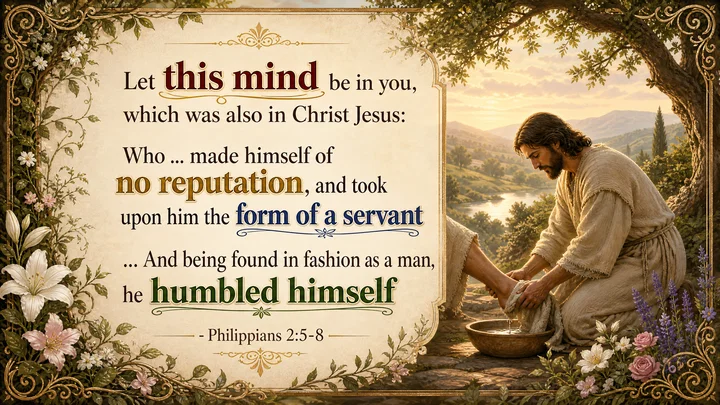
- Philippians 2:7-8
But made himself of no reputation, and took upon him the form of a servant, and was made in the likeness of men:
Christ took the form of a servant and humbled himself in obedience unto death.
- 1 Timothy 2:6
Who gave himself a ransom for all, to be testified in due time.
Christ gives himself as a ransom for many.
- John 3:16
For God so loved the world, that he gave his only begotten Son, that whosoever believeth in him should not perish, but have everlasting life.
God’s love is shown in giving his Son to save people and grant believers everlasting life.
- Luke 22:26-27
But ye shall not be so: but he that is greatest among you, let him be as the younger; and he that is chief, as he that doth serve.
Jesus contrasts worldly authority with serving and presents himself as one who serves.
- 1 Corinthians 6:20
For ye are bought with a price: therefore glorify God in your body, and in your spirit, which are God’s.
Christ’s life is the price that buys believers for God.
- John 13:14-15
If I then, your Lord and Master, have washed your feet; ye also ought to wash one another’s feet.
Jesus humbly serves his disciples and gives them an example to follow.
- 1 Peter 1:18-19
Forasmuch as ye know that ye were not redeemed with corruptible things, as silver and gold, from your vain conversation received by tradition from your fathers;
Christ redeems people through the costly gift of his life and precious blood.
- Hebrews 2:14-15
Forasmuch then as the children are partakers of flesh and blood, he also himself likewise took part of the same; that through death he might destroy him that had the power of death, that is, the devil;
Christ’s death defeats the Devil’s power over death and frees people from bondage.
- John 1:29
The next day John seeth Jesus coming unto him, and saith, Behold the Lamb of God, which taketh away the sin of the world.
Jesus gives his life to take away the world’s sin as the Lamb of God.
- Isaiah 53:5-6
But he was wounded for our transgressions, he was bruised for our iniquities: the chastisement of our peace was upon him; and with his stripes we are healed.
The servant bears human sin and suffers in others’ place.
- John 10:17-18
Therefore doth my Father love me, because I lay down my life, that I might take it again.
Christ voluntarily lays down his life and has power to take it up again.
- Luke 19:10
For the Son of man is come to seek and to save that which was lost.
Both describe the Son of man’s coming to save the lost.
- 2 Corinthians 8:9
For ye know the grace of our Lord Jesus Christ, that, though he was rich, yet for your sakes he became poor, that ye through his poverty might be rich.
Christ became poor for others’ sake, giving himself in service to make them rich.
- Luke 18:31-34
Then he took unto him the twelve, and said unto them, Behold, we go up to Jerusalem, and all things that are written by the prophets concerning the Son of man shall be accomplished.
Jesus foretells his suffering, death, and resurrection, which the disciples did not understand.
- Romans 3:24-25
Being justified freely by his grace through the redemption that is in Christ Jesus:
Christ gives his life as a ransom, providing redemption through his sacrificial death.
- Philippians 2:8
And being found in fashion as a man, he humbled himself, and became obedient unto death, even the death of the cross.
Jesus humbled himself and accepted death on the cross.
- Leviticus 17:11
For the life of the flesh is in the blood: and I have given it to you upon the altar to make an atonement for your souls: for it is the blood that maketh an atonement for the soul.
The blood given for atonement represents life, which Christ gives as a ransom.
- Isaiah 53:3
He is despised and rejected of men; a man of sorrows, and acquainted with grief: and we hid as it were our faces from him; he was despised, and we esteemed him not.
The despised, sorrowful servant’s life accords with Christ’s ministry and ransom.
- Hebrews 10:7
Then said I, Lo, I come ( in the volume of the book it is written of me,) to do thy will, O God.
Christ comes to do God’s will, offering himself in obedience.
Commentary part 1 of 2
Each commentary is drawn from primary sources: the writings of Ellen G. White and Adventist pioneers and periodicals. Each commentary is separate. Its own words are not a quotation; follow the references to read the source passages.
Ellen G. White
118 sources
Though He was the Majesty of heaven and equal with God, the Son of man came to earth not as a king demanding homage and service but as a servant to minister to others and to give His own life as the ransom price for those ready to perish.ST Mar 9, 1888GC 173.1ST Oct 21, 1897Ms 25, 1911, par. 10Lt 50, 1908, par. 27–29 He spoke these words to correct James and John when through their mother they asked for the highest places of honor without knowing that sharing His glory means drinking His cup and being baptized with His baptism of suffering.BS 48.2–49.1 In contrast to the rule of the Gentiles who exercise authority, greatness in His kingdom is to become servant of all and seek the greatest good of others in humble self-sacrificing service.BS 48.2–49.1ST Mar 9, 1888MH 478CE 179.2–3COS 109.1–3 His life alone could pay the debt that no angel, animal sacrifice, or sinful human offering could meet, and He laid it down voluntarily as substitute and surety, bearing the guilt and penalty of the world's sins to uphold God's law while securing eternal life for those who repent and believe.EW 121.1SG1 24.12SP 2.1–10.25RED 81.2–82.1Ms 131, 1897, par. 3–4 The price He paid reveals the infinite value of each soul and claims complete consecration in return, calling all who are ransomed to follow His pattern by living, thinking, and praying for others rather than seeking ease, honor, or to be served.ST Mar 9, 1888ST Mar 16, 1882RH Aug 11, 19109MR 381.2STPW91 16.1
Setting and Occasion
The saying was given to correct a request for the highest places of honor made through their mother by James and John, who did not know what they were asking.BS 48.2–49.1 It sets the rule of the Gentiles over against greatness in Christ's kingdom, where greatness is serving others rather than exercising authority over them.BS 48.2–49.1Ms 54, 1897, par. 22–24CE 179.2–3 The glory Christ sought was not rank or privilege but the joy set before Him of seeing souls saved by His humiliation, agony, and shedding of blood, a glory purchased at infinite sacrifice.BS 48.2–49.1ST Nov 2, 1882
To share that glory means drinking His cup and being baptized with His baptism of suffering, and the two disciples would indeed share in that cup and baptism, though places at His right and left are given only to those for whom they are prepared.BS 48.2–49.1 Its setting is Jesus explaining that the prophets' words about the Son of Man would be fulfilled through betrayal, suffering, death, and resurrection, while the disciples did not understand these predictions and still expected the kingdom to be established soon.DA 547.2–3 His journey toward Jerusalem was a journey to the place of sacrifice, and His earthly mission was nearly finished when He died as man's substitute.DA 547.15RED 81.2–82.1
The foot-washing ordinance was given to keep this lesson of humility and ministry continually in mind, teaching that greatness among His followers means humble service rather than seeking rank or serving self.Ms 43, 1897, par. 10–12
Christ's Lowly Service
Though He was the Majesty of Heaven, the King of glory, and equal with God, He came to earth not as a king demanding homage but as a servant whose work was to serve others and give His life to redeem many.ST Mar 9, 1888ST Oct 21, 1897Lt 1, 1873, par. 44–45 His constant care was not how to obtain service from men but how to aid and bless humanity from compassion for a fallen world, and His life was marked by disinterested benevolence that calls for setting aside self-importance and learning meekness in willing service.ST Mar 9, 1888Lt 1, 1873, par. 44–45 He left the heavenly courts and the royal courts where He commanded the heavenly hosts and held the highest place, laid aside kingly status and the visible glory of divinity, clothed divinity with humanity, took the form of a servant, and became obedient to death on the cross.ST Mar 9, 1888Ms 109, 1906, par. 5–7Ms 11, 1899, par. 25–26 He came thus as a divine-human Saviour so that sinners could meet Him without being destroyed, be cleansed from sin, and share His eternal glory, standing at humanity's head to pay the ransom through infinite sacrifice by which Satan's power over humanity was to be broken.ST Mar 9, 1888Ms 109, 1906, par. 5–7Ms 11, 1899, par. 25–26
He did not come to gain popularity, to secure worldly advantage, to have all temporal wants abundantly supplied, to be honored by the titled and wealthy of earth, to wear the gorgeous robes of the high priest, to possess the riches of the Gentiles, or to choose wealth and honor and pleasant associations.ST Mar 4, 1889CT 34.1 He spent His life among humble peasants ministering to the wants of the needy and afflicted, not shrinking from contact with the most degraded and sinful, preaching pardon and peace to all who accept on heaven's gracious terms.ST Mar 4, 1889CT 34.1 Though by divine power He could supply the needs of a hungry multitude, He suffered the inconveniences of poverty that He might discern the needs of the poor.CT 34.1 He did not please Himself, made Himself of no reputation, and did not spend His days on earth in ease and plenty and personal enjoyment for Himself, but spent His life doing good and saving others from suffering.3T 54.1–2TCBMP 71.2–72.2CT 34.1SBAWP 8.2–9.1
His humility was not thinking little of His own character or abilities, but willingly adapting Himself to fallen humanity in order to raise people to a higher life.ST Oct 21, 1897Ms 5, 1875, par. 17 From earliest years to manhood He lived this out as a perfect pattern of humility, industry, obedience, thoughtfulness and consideration for others, and self-denial, bearing the signature of heaven.Ms 108, 1903, par. 25 He worked as a carpenter, helped sustain His family from an early age, and willingly carried His share of its burdens, and thus ennobled labor and set an example of industry.MYP 211.2 His whole life was one of untiring service for others, for He lived and thought and prayed for others, receiving from the Father to share heaven's light in words suited to the weary and oppressed, and His meat and drink was to bring hope and strength to all He met.RH Aug 11, 1910AA 364.2–365.1ST Nov 25, 1903Ms 157, 1904, par. 4–7 He found His highest joy in such service, giving the law of service as the link binding man to God and to fellow men.ST Nov 25, 1903
That service meant teaching in the temple, by the sea, on the mountainside, and in the great thoroughfares, and going from house to house and to the bedside of the sick to heal the sick, comfort mourners, help the helpless, soothe the afflicted, speak peace and hope to the disconsolate, take little children in His arms and bless them, and speak hope and comfort to weary mothers, meeting every form of human woe and affliction with unfailing tenderness and gentleness.MH 478AA 364.2–365.1ST Nov 25, 1903 From childhood He cared about human suffering and brought relief in every case of woe as minister, missionary, and physician of body and soul, whose kind words soothed those in need, going about doing good, healing the wounds that sin had made, preaching the Gospel to the poor, healing the brokenhearted, proclaiming deliverance to captives and sight to the blind, and setting free the bruised, even stooping to wash feet as the pattern for help in daily living.MH 478ST Nov 25, 1903Ms 24, 1898, par. 30 He joined healing and teaching closely together, going from city to city and village to village teaching the gospel of the kingdom and healing the sick, spending more time in healing than in teaching, and the two are not to be separated.PMMEP 21.3–22.1STB 582.1–2STB 428.3–429.1 His teaching was earnest and unlike the traditions and dogmas of the rabbis, sending truth home with convicting power so that hope sprang up in listeners, making Him the model teacher.AA 364.2–365.1Ms 45, 1898, par. 17
As the Prince of heaven come in human nature He lived a perfect life free from self-seeking and wholly given to the service of others, ending in His death for them.Ms 158, 1902, par. 30 He cared for His disciples by sharing their poverty, practicing self-denial for them, and going before them through difficulties to complete His work on earth by laying down His life.DA 550.2–4
Ransom Given for Many
He came to give His life as a ransom for many, the sinner's only ransom, paying the ransom price with His own precious blood to save those ready to perish.GC 173.1Ms 25, 1911, par. 10Lt 50, 1908, par. 27–29Ms 121, 1906, par. 6 Only His life could pay the debt and be accepted by the Father, for the life of an angel could not pay it.EW 121.1SG1 24.1 Animal sacrifices and sinful human offerings could only represent the true sacrifice, serving as figures of His offering.2SP 2.1–10.2RH Dec 17, 1872
His life alone was sufficient because His divine perfection and worth exceeded that of every created being.2SP 2.1–10.2 His sinless character and divine status made His life a sacrifice of greater value than any human or animal offering, able through perfect character to atone for human sin, rescue humanity from its fallen condition, and restore it to its first estate.2SP 2.1–10.2RH Dec 17, 1872 His death was voluntary and not required by any obligation laid upon Him, for He had power to lay down His life and take it up again.2SP 2.1–10.2RH Dec 17, 1872 Though the sight was hard for angels to endure, He held back divine power and refused rescue when He could have asked His Father and angels would have instantly released Him, when even the feeblest angel could have struck the multitude powerless and delivered Him.SG1 50.2
He takes people's guilt and punishment upon Himself and dies in their place, paying the ransom to redeem them from death.SG3 46.3 As substitute and surety He died under the Father's wrath because of sin, and as the Good Shepherd He laid down His life for the sheep, bearing the guilt of the world's sins and the penalty due to transgressors.5RED 81.2–82.1Ms 131, 1897, par. 3–4 The bitterness of the cup He drank and the breaking of His heart came from the sense of sin laid upon Him, not from dread of death or bodily pain.5RED 81.2–82.1 Death is the consequence of sin, not an angel of mercy, and nature recoils from dissolution; His inexpressible agony was not fear of dying, for to say so would place Him beneath the martyrs who have joyfully endured torture and death for faith.5RED 81.2–82.1 He was the prince of sufferers, and His horror and despair came from the sense of the malignity of sin and the knowledge that sin had become so familiar to man that man did not realize its enormity and that it was so deeply rooted in the human heart as to be difficult to eradicate.5RED 81.2–82.1
His sacrifice provides escape without changing God's unchanging law, for His offering fully met the claims of the law and could rescue humanity from sin.SG3 46.32SP 2.1–10.2 His death upheld the law as holy, just, and good, exposed sin's full evil, and upheld God's authority and holiness, justice, and truth, exalting and honoring the law while securing eternal life for humanity and making everlasting life possible.Ms 131, 1897, par. 3–4ST May 14, 1902 Through the merits of His blood and obedience to God's law and through His merits and intercession, God promises to receive people into His favor, to give pardon and restore holiness to those willing to accept the atonement and obey, and to bring them back to eat from the tree of life.EW 120.1SG3 46.3 Through His merits repentant sinners receive forgiveness and His imputed righteousness, and may be made complete in Him, for His ransom reveals God's love and provides redemption sufficient for the whole world.MYP 137.1–2
Giving His life as a ransom was pledged in the councils of heaven before creation when it was planned that man should people the earth.Ms 80, 1903, par. 9–10 When the question arose what if man should sin as Satan had sinned, the infinite Son pledged Himself to give Himself for the fallen race, taking humanity's transgression upon Himself, with the Innocent bearing the sins of the guilty and standing before God to make intercession for the transgressor.Ms 80, 1903, par. 9–10 After Adam fell and the race appeared hopeless under Satan's control, God did not abandon human beings but laid help on One mighty to redeem the lost race.Ms 80, 1903, par. 9–10Ms 197, 1903, par. 1 The Son became man's substitute and surety, fulfilling that pledge to pay the price to free human beings from the destroyer, to defeat the cruel foe, and to restore them to original purity.Ms 80, 1903, par. 9–10Ms 197, 1903, par. 1
According to His own law the forfeited inheritance is ransomed by the nearest of kin, so He laid off His royal robe and kingly crown and clothed divinity with humanity.10MR 173.1Ms 70, 1903, par. 7–10 He was born without taint of sin yet came in like manner as the human family, taking real human nature and participating in human life in flesh and blood, not a mere semblance of a body.10MR 173.1 He could not die as God, but coming as man He could die, and by dying in humanity and by death He overcame death, bore to death him who had the power of death, and opened the gates of the tomb for all who receive Him as personal Saviour.10MR 173.1 Though sinless He took humanity upon Himself with its infirmities and temptations, setting aside royal glory and heavenly position and accepting poverty, grief, insults, and suffering for the sake of sinners under death sentence.Lt 22, 1900, par. 14–15 His voluntary incarnation made it possible for Him to suffer in human nature sustained by divinity, enduring anguish and death while relying by faith on His Father; because He was sinless He could bear the punishment and triumph on humanity's behalf, in a conflict between Christ and Satan watched by heaven and the unfallen worlds that demonstrated God's justice.Ms 125, 1901, par. 68–71Ms 131, 1897, par. 3–4
By paying that full ransom and rising from the dead He overcame Satan and enabled people to overcome Satan through Him.ST Aug 15, 1878 His death was the infinite sacrifice made when the appointed time came, through which Satan's power over humanity was to be broken by Christ the great Life-giver come as divine-human Saviour.Ms 109, 1906, par. 5–7 His death was the sacrifice that expiates sin, and the innocent offerings taught people to see sin's result and the cost of redemption in His death on their behalf, so that salvation rests on the merit of the Lamb who takes away sin.ST May 23, 1911 Redemption was bought with a costly ransom, the tears and blood of the Son of God shed on this earth, and only the greatness of that ransom measures the greatness of its results, to appear on this same earth as the precious fruits of Paradise, with the truths of God's word revealing their glory and excellence in the lives of God's people so that He manifests His character and the principles of His kingdom through them.COL 296.3
The ransom is fully paid and sufficient for all, purchasing the whole world, so no one needs to remain enslaved by Satan.STE 26.1Ms 109, 1906, par. 5–7Ms 76, 1903, par. 31 Its benefit is received only by those who become new creatures in Christ and remain loyal to God's kingdom, who repent and are converted and believe in Him as personal Saviour, for Christ is the propitiation for the sins of those who repent and believe and His redeeming power alone can conquer satanic agencies.STE 26.1Lt 98, 1906, par. 8Ms 64, 1899, par. 1 His suffering does not exempt an unrepentant, disloyal sinner from punishment, and His redeeming love may be made of no avail to those who continue to misuse their abilities and lead others astray, seeking through self-denial, humiliation, shame, and reproach to free them from sin's bondage and the control of a master who uses them to ruin others.STE 26.1MYP 43.1–44.1 He gave up honor, riches, and heavenly home, lived in hardship, bore the guilt of the world's sins though He Himself knew no sin, and finally died because He loved humanity to prepare the way for redemption, with God giving people opportunities to know the truth.Ms 63, 1886, par. 10–11STSE 46.1–47.1 His love is so infinite and incomprehensible that He would have given His life even if only the little company listening, or even one person, could have been saved.Ms 70, 1903, par. 7–10
Greatness Through Humble Service
In His kingdom first place belongs to the servant of all, and whoever would be chief must become servant of all, for those who most humbly serve and seek the greatest good hold the highest place.ST Mar 9, 1888MH 478COS 109.1–3Ms 54, 1897, par. 25–26 Power, position, talent and education do not confer privilege but bring a greater duty to serve others as shepherds of the flock, because love is the plan and ground of salvation.DA 550.2–4 His self-sacrificing service puts to shame selfish desires, strife for position, jealousy and seeking honor from men, and rebukes selfish ambition, desire for place above others and competing for status.BS 48.2–49.1ST Mar 9, 1888ST Mar 4, 1889Lt 61, 1887, par. 1–9
Meekness, humility, lowliness in one's own eyes and brotherly love that prefers one another are essential to growth in grace and fitness for work.ST Mar 4, 1889 Cherished selfish ambition can lead to eternal loss, and those who seek mastery over others are not prepared for the rule of the Prince of peace.Ms 43, 1897, par. 10–12Ms 51, 1906, par. 10 His example condemns harsh rule and human control of one person over another, so those who labor with Him do their appointed work instead of exalting themselves or making others subject to their minds.Lt 208a, 1902, par. 40–41Ms 129, 1906, par. 1–4
His life of service exalted service itself, and the same standard applies to Master and servants, for His humiliation and self-abasement led to His being honored.Ms 54, 1897, par. 25–26Ms 61, 1897, par. 21 Those who would share His joy over redeemed souls must follow His unselfish service and self-denial, and because souls are blood-bought there must be no contention over who is greatest but clinging to Him in faith, courage and obedience to Scripture.Ms 54, 1897, par. 25–26Lt 50, 1908, par. 27–29 The disciples' desire for worldly distinction went against His example of poverty and humility without worldly rule or temporal dominion and should not be followed, for those who represent Him should serve and teach as He did.GC88 91.1–92.1 His way of service and self-giving stands against the temptation to seek greatness, honor and worldly advancement by making the cross less prominent.RH Aug 4, 1910
Serving Jesus is an honor, not a humiliation, and useful humble service is honorable and not shameful even for those with wealth or high standing, so believers are to humble themselves at His feet rather than exalt themselves.Lt 81, 1898, par. 11–12Ms 157, 1904, par. 4–7Lt 61, 1887, par. 1–9 His servants must serve rather than seek exaltation above fellow believers, with humility and a kind, courteous spirit, rejecting selfish ambition in order to bring help, hope and healing.SCEV 21.1Lt 150, 1899, par. 10
Worth and Response
The price paid discloses what a human being is worth, for the Son of God gave His life to ransom men and women from hopeless loss and despair, and that act makes every soul precious, infinitely valuable, and worthy of the greatest care and gratitude.ST Mar 9, 18889MR 381.2STPW91 16.1PP 143.3–144.1CE 220.1–222.1 Because that ransom has been paid, human life belongs to God twice over, by creation and by redemption, so every physical and mental power and every part of the body is to be valued, preserved, and used to honor and glorify Him.ST Sep 30, 1908Lt 103, 1897, par. 10 Young people in particular have been purchased by blood, and their time, strength, and abilities are His to be developed, trained, and spent in service.ST Sep 30, 1908 Such a gift calls for complete consecration that withholds nothing — not time, property, abilities, service, homage, or best efforts — and even then the deepest devotion is still too little in return for what the King of glory has done.ST Mar 16, 1882
Those saved by the ransom are called to return faithful service, using entrusted talents to bless others and honor God, encouraging others and drawing out their best powers to carry out His plan for the perishing.Lt 79, 1897, par. 16–18Ms 121, 1906, par. 6 The salvation thus won is offered through God's gift in His only begotten Son and is grasped by faith, so that even the very wickedest may be saved, and like the thief on the cross every poor trembling sinner, however weak and sinful, may lay hold of it and receive everlasting life in the kingdom of glory, which is cause for constant rejoicing, prayer, belief, and trust.Ms 153, 1907, par. 10 His death in the sinner's place makes salvation possible for all who repent, are converted, and believe in Him as personal Saviour, for He is the propitiation for the sins of the world and His redeeming power alone conquers satanic agencies, and God gives men opportunities to know the truth.Ms 63, 1886, par. 10–11Lt 98, 1906, par. 8Ms 11, 1899, par. 25–26
No one can save himself and no human being can pay that ransom, yet having made the infinite sacrifice He does not regard men with indifference but stands ready to help all who feel their need and come to Him penitent and believing.Lt 33, 1896, par. 17Lt 9a, 1891, par. 8 As He works inwardly in the heart men must cooperate with that work, working out what He works in to their own salvation and daily working out their destiny for weal or woe, with a crown of eternal life to win and a hell to shun.Lt 9a, 1891, par. 8 His loving gift therefore calls for response rather than indifference, and none should reject God or choose Satan's side after such a life has been given for him.Lt 33, 1896, par. 17 His life and death paid for redemption, and the cross teaches salvation's great lesson by showing the value of souls.Ms 58, 1900, par. 47–48 Because every soul is bought with that ransom money, human minds must be handled with care, and no one is to take the judge's place by measuring guilt and repentance, humiliating, denouncing, or driving the erring away, but is to pity the sinner, cover sin rather than broadcast it, show forth Christ's mercy, and if erring at all err on the side of mercy rather than severity.Ms 102, 1894, par. 8–11
Those ransomed are bought with a price too great to compute, which measures the goodness and mercy of redeeming love, so that no one need remain enslaved by Satan, and He who paid the price stands as divine example and all-powerful Helper to those He has bought.Ms 76, 1903, par. 31 That ransom delivers all from slavery to sin to make them free men and women in Him, and keeping the first four commandments with the whole soul gives supreme love to God and makes a person one with Christ as co-worker with God in pure religion toward fellow men.9MR 381.2Ms 87, 1894, par. 8–10 Those who so obey the first four will also keep the last six, loving neighbors as themselves and refusing to oppress them.Ms 87, 1894, par. 8–10 He gave His precious life to save each person individually, and His life is of immeasurably greater value than earthly wealth, so those who accept His righteousness belong to Him and respond with cheerful service.12MR 38.3Lt 77, 1899, par. 8–9 To neglect prayer and worship despite such a gift shows little appreciation of His goodness.CE 220.1–222.1
Following His Example
The goal of medical study is to fit for serving others rather than for seeking to be served, and the pattern for all help in daily living is humble service instead of seeking first place, shown in caring for crowds of men, women and children and in stooping to wash feet.CT 465MH 478 When love reigns in the heart, followers follow that example of ministering rather than being ministered unto, looking after the happiness of others and seeking to do them good.SC 120.2–43MR 175.7–176.3Lt 28, 1868, par. 4Ms 19, 1892, par. 41 That serving work means humility in place of pomp and show, with self-reliant yet teachable individual responsibility expressed in self-denying labor for others, walking and working as He did in daily seeking their good, and those who labor to imitate Him in this cannot but be happy.3MR 175.7–176.3Lt 28, 1868, par. 4Ms 19, 1892, par. 41
A minister's true honor lies not in the number of sermons preached or writings produced but in faithfully serving people's needs, and neglecting that service disqualifies him from the name of minister.4T 416.1–2 Following the example means watching over people, warning, correcting, advising, pleading with and encouraging them, seeking through the Spirit to help each become mature in Christ.4T 416.1–2 Service in God's work is not a way to be served but a call to serve, and this includes working to help save people in danger of sin by praying earnestly for them and pleading with God to save them.GW 65.16T 412.3
Ministers are to learn His method of laboring, for He lived as servant of all, laboring not for Himself but for others, with meat and drink to bring hope and strength to everyone met.AA 364.2–365.1 That method meant going from house to house healing the sick, comforting mourners, soothing the afflicted, speaking peace to the disconsolate, taking little children in arms and blessing them, and speaking hope and comfort to weary mothers, meeting every form of human woe with unfailing tenderness and gentleness.AA 364.2–365.1 His teaching was earnest and different from the traditions and dogmas of the rabbis, sending truth home with convicting power so that hope sprang up in listeners, and by the same Spirit that dwelt in Him ministers are to bring from the storehouse of His word what supplies spiritual needs and carry on His work in the world.AA 364.2–365.1 The Vaudois pastors followed this humble service by caring for their people through preaching, visiting the sick, teaching children, correcting those who erred or went astray, helping settle disputes, and fostering harmony and brotherly love.GC 68.1GC88 68.1
Workers who with pleasant words, faithful attendance and desire to relieve suffering win a way to sufferers are to turn minds to Him as the never-failing source of healing who died to pay the ransom price for lost and ruined men.Ms 126, 1907, par. 41 Young people and children are to be educated for usefulness, to help and minister to others instead of expecting others to wait on them.2T 459.3CH 659.2SA 55.3 His example and claims rebuke selfishness and every form of oppression, calling for compassionate unselfish service, and though King of Glory He served fallen humanity in disinterested benevolence, calling followers to set aside self-importance and self-importance, learn from Him in meekness, and be willing to do for others the work He did on earth.Ms 61, 1900, par. 3–5Lt 1, 1873, par. 44–45Lt 4, 1903, par. 10–11
Followers are not to seek their own ease, pleasure, honor or glory, but to serve and help save others, including watching faithfully for those for whom He gave His life as a ransom for many.Lt 65, 1893, par. 7–8 Living as He lived, serving rather than being served and living for others, points others to the Man of Calvary, and teaching joined with example leads them in the way of righteousness.Ms 11, 1885, par. 13 Those who profess to have found Him are to minister for the benefit of people as He did, living, thinking and praying for others, receiving from the Father so as to share heaven's light and speak words suited to the weary and oppressed.RH Aug 11, 1910MYP 403.3
Following the lowly Jesus means living a life marked by a spirit of service under the converting power of the Holy Spirit, with brotherly kindness shown in words and actions, sitting at the feet of the sinless one and then laboring with Him to uplift fellow men.RH Apr 16, 1908 It means appreciating the privilege of being good and doing good, having no fellowship with the unfruitful works of darkness, recognizing every man's right to share the blessings of the gospel and his personal and social claims on sympathy and love.RH Apr 16, 1908 It means helping the needy and oppressed to the utmost of ability, carrying a burden for the weak and poor with proof of sympathy, and encouraging those laboring in hard portions of the vineyard, since souls are blood-bought and valued apart from circumstance and rank.RH Apr 16, 1908 Talented members crowded together and hindered from growing should leave comfortable and familiar places, take up responsibilities and burdens where help is really needed, and by helping others gain spiritual strength and be a blessing, for He did not please Himself or spend His days in ease and plenty enjoying life for Himself, but made Himself of no reputation, took the form of a servant, and spent His life doing good and saving others from suffering.3T 54.1–2
God gives each person work and ability to meet the needs of others, and faithfully using what is entrusted increases that ability, while relying on Him brings strength when needed.ST Jan 23, 1893 In serving others people give God room to teach and lead them and to make them channels of light to those in darkness, and such service brings close fellowship with God and reflects His Spirit.ST Jan 23, 1893 His appointed work was not to glorify Himself but to serve others, with priestly office given by the Lord, calling Christians to serve suffering people especially those most in need, and work to save souls gives greater character to the church than imposing buildings.Ms 6, 1897, par. 20–22
A self-denying serving life rather than an idle self-indulgent one sets a right example before easy-going idlers who come for treatment, letting patients see the contrast with the life they have lived, working to restore, to correct wrongs, and to show how to avoid the self-indulgence that brings disease and death.Ms 89, 1908, par. 27 The life exemplified self-denial and self-sacrifice that all workers must cherish, and for canvassers it means remembering they are in God's service doing the very work desired of them, with painstaking effort, with instruction given, and with the importance of the work kept before them.MC 17.2–3 Those who join God's work must come to serve instead of to be served, forbidding coming for personal advantage and putting personal interest first, and requiring utmost effort to increase facilities for the work.Ms 40, 1896, par. 7–8 At Cooranbong this meant not studying selfish interests, not turning against fellow workmen from feeling not specially favored, not adding unconsecration to the load others must carry, not desiring to ride while others pull, and not discouraging those giving money and anxious care and working on every side with bitter murmurings and complaints, for those who come to be served do not belong there.Ms 40, 1896, par. 7–8
It means not laying one's whole weight on others, not calling forth sympathy without giving in return, and not expecting to be waited upon by those no more able to bear the extra task.2T 567.1–2 For a minister's wife it requires being helpful enough to offset the burden she is to her husband and those around her, doing what she can to lighten the burdens she makes, engaging cheerfully in physical labor and domestic duties and in educating her daughter at home, rather than seeking a special work of traveling without the physical and mental strength to minister to others.2T 567.1–2 His self-giving service, giving His life in service and redeeming people by His own life, is the model for all who work for Him.12MR 46.1
Sources