Matthew 20:31
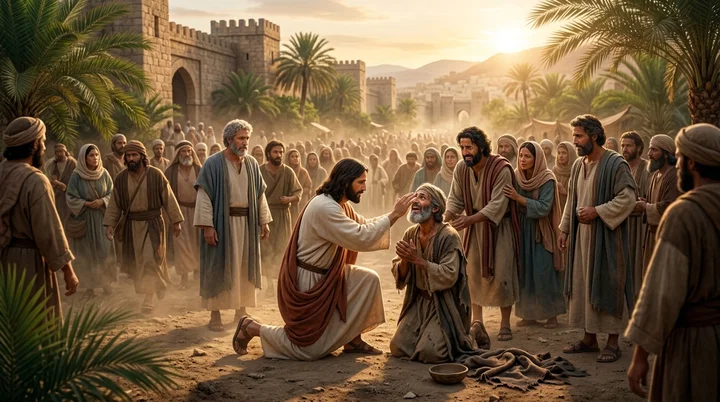
And the multitude rebuked them, because they should hold their peace: but they cried the more, saying, Have mercy on us, O Lord, thou Son of David.
Translations
And the multitude rebuked them, because they should hold their peace: but they cried the more, saying, Have mercy on us, O Lord, you son of David.
King James Version, KJV Cambridge Paragraph Bible
And the multitude rebuked them, because they should hold their peace: but they cried the more, saying, Have mercy on us, O Lord, thou Son of David.
And the multitude rebuked them, that they should hold their peace: but they cried the more, saying, Have mercy on us, O Lord, thou son of David.
Revised Version, American Standard Version
And the multitude rebuked them, that they should hold their peace: but they cried out the more, saying, Lord, have mercy on us, thou son of David.
And the multitude charged them that they might be silent, and they cried out the more, saying, 'Deal kindly with us sir — Son of David.'
But the crowd rebuked them, that they might be silent. But they cried out the more, saying, Have mercy on us, Lord, Son of David.
But the multitude rebuked them, that they might hold their peace. But, they, the more, cried aloud, saying—Lord, have mercy on us! Son of David!
The crowd admonished them to be silent, but they cried out all the louder, “ Lord, Son of David, have mercy on us!”
The crowd admonished them to be silent, but they cried out all the louder, “ Have mercy on us, Lord, Son of David!”
The multitude rebuked them, telling them that they should be quiet, but they cried out even more, “ Lord, have mercy on us, you son of David!”
And the people gave them orders to be quiet; but they went on crying even louder, Lord, Son of David, have mercy on us.
And the multitude rebuked them, because they should holde their peace: but they cried the more, saying, O Lord, the Sonne of Dauid, haue mercie on vs.
Douay-Rheims (Challoner revision)
And the multitude rebuked them that they should hold their peace. But they cried out the more, saying: O Lord, thou son of David, have mercy on us.
Pictures
Cross-references
- Luke 18:39
And they which went before rebuked him, that he should hold his peace: but he cried so much the more, Thou Son of David, have mercy on me.
The crowd rebukes the blind man, who cries out all the more for mercy.
- Mark 10:48
And many charged him that he should hold his peace: but he cried the more a great deal, Thou Son of David, have mercy on me.
The crowd tells Bartimaeus to be quiet, but he cries louder for mercy.
- Matthew 9:27-31
And when Jesus departed thence, two blind men followed him, crying, and saying, Thou Son of David, have mercy on us.
Jesus heals two blind men who call him the Son of David.
- Matthew 12:22-23
Then was brought unto him one possessed with a devil, blind, and dumb: and he healed him, insomuch that the blind and dumb both spake and saw.
Both texts recount Jesus healing blind people and identify him as the Son of David.
- Mark 8:22-26
And he cometh to Bethsaida; and they bring a blind man unto him, and besought him to touch him.
Cited as another account of Jesus restoring sight.
- Isaiah 35:5
Then the eyes of the blind shall be opened, and the ears of the deaf shall be unstopped.
The blind receive sight.
- John 9:1-7
And as Jesus passed by, he saw a man which was blind from his birth.
Both accounts describe Jesus healing a blind man.
Commentary
Each commentary is drawn from primary sources: the writings of Ellen G. White and Adventist pioneers and periodicals. Each commentary is separate. Its own words are not a quotation; follow the references to read the source passages.
Ellen G. White
3 sources
The verse presents blind Bartimaeus crying out to Jesus as the Son of David for mercy.RH Jan 10, 1856SG2 202.1–2 Though the multitude rebuked him and told him to hold his peace, he cried the more.RH Jan 10, 1856SG2 202.1–2 His cry for mercy is an appeal to Jesus for help and healing.SG2 202.1–2 As Jesus passes by, calling upon him as the Son of David brings sight.7T 190.1 Those who urgently seek the mercy of Jesus should not allow others to silence them.7T 190.1
The sight received by God's grace is more valuable than gold, silver, or precious stones.7T 190.1 The same cry applies to bringing a sick person to Jesus in faith as the great Physician.RH Jan 10, 1856SG2 202.1–2 It is a seeking of mercy from him, finding comfort and healing.RH Jan 10, 1856SG2 202.1–2 It is a trusting and relying on him for complete restoration and an experiencing of God's healing power.RH Jan 10, 1856SG2 202.1–2
Sources
Pioneers and periodicals
20 sources
As Jesus left Jericho on his way to Jerusalem with a great multitude following, two blind beggars beside the road cried out to him for mercy as Lord and Son of David.ST Aug 29, 1911ST Mar 18, 1889ST Jul 15, 1908ST Mar 8, 1905 When the crowd rebuked them and tried to silence them, they persisted and cried out all the more urgently from their misery and helplessness.ST Mar 18, 1889ST Jul 15, 1908ST Aug 29, 1911ST Jan 3, 1911 Jesus heard with compassion, restored their sight and brought light to their lives, and they followed him.ST Nov 21, 1900ST Aug 30, 1905ST Nov 20, 1901 Their blindness and poverty picture the spiritual blindness and need of every person, which wealth, worth and self-righteousness cannot supply but which is found in Christ, who gives sight, life, spiritual wealth and robes of righteousness.ST Aug 30, 1905ST Jul 29, 1897ST Nov 20, 1901ST Nov 20, 1901 Because Jesus was passing by and the opportunity would soon be gone, their persistence teaches urgency in seeking mercy while it remains, letting no discouragement or outward opposition stop prayer, for Jesus hears even the cry of the heart.ST Aug 29, 1911ST Aug 29, 1911
Setting and Plea
Jesus was leaving Jericho on his way to Jerusalem with a great multitude following him when two blind men called on him for mercy, one of several healings of blind people specially recorded in the Gospels.ST Aug 29, 1911ST Mar 8, 1905 In the parallel account of Bartimaeus's healing on the final journey to Jerusalem, the blind beggar was rebuked and told to be quiet but cried out all the more to Jesus as the Son of David for mercy, and Jesus answered, restored his sight, and he followed him.ST Nov 21, 1900 The encounter is placed after Jesus leaves the city, and he may first have been called to as he entered Jericho, then been called to again as he left, with the blind man waiting at the opposite gate.ST Mar 18, 1889
The two blind beggars persisted in calling for mercy even when the crowd rebuked them and tried to silence them, with Bartimaeus especially persistent and likely speaking for himself and his companion.ST Mar 18, 1889ST Jul 15, 1908 They were two poor, destitute, blind beggars beside the road whose urgent need is worthy of compassion rather than contempt, scorn, or grudging charity.ST Nov 20, 1901ST Aug 30, 1905
When the crowd tried to silence them they cried out even more urgently as Lord and Son of David.ST Aug 29, 1911ST Jan 3, 1911 Their persistence came from misery and helplessness while the crowd showed little concern for their suffering.ST Jan 3, 1911 Their affliction and desire to reach Jesus led them to seek him, and affliction that turns the heart to God and leads to seeking Jesus is a blessing.ST Aug 29, 1911
Spiritual Meaning and Application
Their plea was for the sight they lacked, and Jesus heard with compassion, healed their blindness and brought light to their lives.ST Aug 30, 1905ST Nov 20, 1901 That need pictures every person's spiritual poverty and blindness, for what is lacking is found in Christ, who gives life and love, clothes the soul in righteousness and brings light to the soul.ST Aug 30, 1905ST Nov 20, 1901 The cry reflects the need for healing from both physical blindness and the blindness of sin, and the desire for Jesus' healing touch so as to see, draw near to Jesus and follow him.ST Jul 29, 1897 Their need pictures the spiritual poverty of all people, which human worth, wealth, reputation and self-righteousness cannot supply, while in Christ the needy find rest, sight, spiritual wealth and health, and robes of righteousness.ST Nov 20, 1901
They cried the more because Jesus was passing by and the opportunity would soon be gone, and one who feels need and believes there is mercy in Christ will not let discouragement stop prayer, so the verse teaches urgency in seeking mercy while opportunity remains.ST Aug 29, 1911 Outward opposition could not prevent their prayer from being heard, for prayer need not be spoken aloud, since Jesus hears and attends to the cry of the heart even amid a crowd or other outward difficulty.ST Aug 29, 1911 Their continued cry expressed their need for healing but did not depend on understanding how Christ could help, as shown by the healed blind man's simple testimony that he had been blind and now saw, proving a person can receive Christ's help without being able to explain how it was done.RH Jul 2, 1861 The cry applies to bringing a sick person to Jesus in faith as the great Physician for comfort, healing and trust for complete restoration, holding the hope that Jesus the tender Savior can heal blindness and restore sight, as when a blind woman and her husband prayed for her eyes to be healed.RH Jan 10, 1856RH Jan 25, 1906 Their example prompts those who encounter blind people calling for help to stop and respond with compassion, as Jesus did.RH Feb 2, 1905
Sources