Matthew 21:20
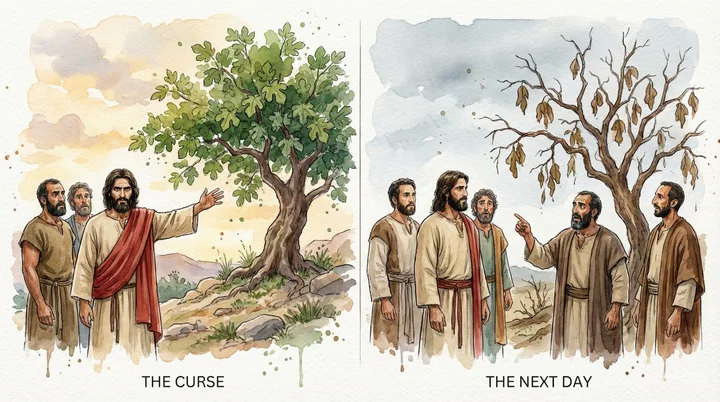
And when the disciples saw it, they marvelled, saying, How soon is the fig tree withered away!
Translations
And when the disciples saw it, they marveled, saying, How soon is the fig tree withered away!
King James Version, KJV Cambridge Paragraph Bible
And when the disciples saw it, they marvelled, saying, How soon is the fig tree withered away!
And when the disciples saw it, they marveled, saying, How soon is the fig-tree withered!
And when the disciples saw it, they marveled, saying, How did the fig tree immediately wither away?
And when the disciples saw it, they marvelled, saying, How did the fig tree immediately wither away?
And the disciples having seen, did wonder, saying, 'How did the fig-tree forthwith wither?'
And when the disciples saw [ it], they wondered, saying, How immediately is the fig-tree dried up!
And the disciples, seeing it, marvelled, saying—How instantly, did the fig-tree wither away.
Berean Standard Bible, Majority Standard Bible
When the disciples saw this, they marveled and asked, “ How did the fig tree wither so quickly?”
When the disciples saw it, they marveled, saying, “ How did the fig tree immediately wither away?”
And when the disciples saw it they were surprised, saying, How did the fig-tree become dry in so short a time?
And when his disciples saw it, they marueiled, saying, How soone is the figge tree withered!
Douay-Rheims (Challoner revision)
And the disciples seeing it wondered, saying: How is it presently withered away?
Pictures
Cross-references
- Mark 11:20-21
And in the morning, as they passed by, they saw the fig tree dried up from the roots.
The disciples find the fig tree withered and marvel at what happened.
- Luke 13:6-9
He spake also this parable; A certain man had a fig tree planted in his vineyard; and he came and sought fruit thereon, and found none.
The barren fig tree warns of judgment on fruitlessness while being given time to bear fruit.
- Mark 11:12-14
And on the morrow, when they were come from Bethany, he was hungry:
Jesus finds the leafy fig tree barren and speaks against it.
- Matthew 7:19
Every tree that bringeth not forth good fruit is hewn down, and cast into the fire.
The fruitless tree is condemned, paralleling the fig tree’s withering.
- Mark 11:22-24
And Jesus answering saith unto them, Have faith in God.
Jesus answers their wonder by teaching faith and confidence in prayer.
- Luke 17:5-6
And the apostles said unto the Lord, Increase our faith.
given together as teaching on increased faith
Commentary
Each commentary is drawn from primary sources: the writings of Ellen G. White and Adventist pioneers and periodicals. Each commentary is separate. Its own words are not a quotation; follow the references to read the source passages.
Ellen G. White
25 sources
The disciples were astonished at how quickly the fig tree dried up after Jesus spoke its doom.Ms 88, 1899, par. 5–7RH Feb 13, 1900DA 582.3–583.2 Leafy yet fruitless, the tree pictured unrepentant Israel making a show of devotion while lacking humility, love and mercy to others.Ms 88, 1899, par. 5–7RH Feb 13, 1900DA 582.3–583.2Lt 35, 1895, par. 8–9Ms 126, 1899, par. 6–8 Its sudden withering was a living sentence declaring the certainty of the nation's ruin when grace was withdrawn because it refused to bless and serve the world.DA 582.3–583.2ST Feb 21, 18783SP 20.1Lt 35, 1895, par. 8–9Ms 126, 1899, par. 6–8 The same withered tree stands as a lasting warning to churches and professed believers in every age that profession without fruitful living is worthless.Ms 88, 1899, par. 5–7Lt 82, 1907, par. 9RH Feb 13, 1900STMW10 20.14T 614.1 Christ looks for the fruit of true godliness in goodness, sympathy, self-sacrifice and unselfish service, and a fruitless profession that hides sin is more guilty before God than open sin and will likewise be exposed in judgment.ST Feb 21, 18783SP 19.24T 614.1ST Feb 21, 1878ST Feb 15, 1899
Sudden Withering and Israel
The disciples marveled at how soon the fig tree withered away, astonished that it dried up almost immediately after Jesus pronounced judgment upon it.Ms 88, 1899, par. 5–7RH Feb 13, 1900DA 582.3–583.2ST Feb 21, 18783SP 19.2 Their amazement marked how quickly the sentence took effect after Christ declared it would bear no fruit.Ms 88, 1899, par. 5–7RH Feb 13, 1900DA 582.3–583.2ST Feb 21, 1878STMW10 20.1
The tree stood covered with promising, pretentious leaves yet bore no fruit, and it represented impenitent Israel.Ms 88, 1899, par. 5–7RH Feb 13, 1900DA 582.3–583.2Lt 35, 1895, par. 8–9 Its leafy appearance without fruit showed the nation's outward profession of devotion while lacking humility, love, and benevolence.Ms 88, 1899, par. 5–7RH Feb 13, 1900DA 582.3–583.2
Its sudden withering was an acted parable and sentence showing the certainty of Israel's doom and the downfall of the Jewish nation and of Jerusalem.DA 582.3–583.2ST Feb 21, 18783SP 20.1ST Feb 21, 1878 That ruin came when God's grace was removed because the people refused to share their blessings and serve others.DA 582.3–583.2 The blighting of the tree pointed to Jerusalem's doom.3SP 20.1
The speedy withering was Christ's judgment on the Jewish nation in the generation that rejected Him while He was in their midst.Lt 35, 1895, par. 8–9 It came after warning, reproof, blessing given and withdrawn, forbearance and patience upon that nation as a moral, thinking, living agent cursed of God for fruitlessness.Lt 35, 1895, par. 8–9 Though the Jews lived on for forty years after the curse, they were already dead.Lt 35, 1895, par. 8–9 The nation, once chosen, had failed to carry out God's plans and bore little fruit, continually less, until the barren tree under Christ's curse represented its condition.Lt 35, 1895, par. 8–9Ms 126, 1899, par. 6–8 By contrast the uncovered, leafless trees representing the Gentiles made no pretension to the knowledge of God, and their time of fruit-bearing was not yet.Lt 35, 1895, par. 8–9
The account belongs with Christ riding into Jerusalem and with His weeping over Jerusalem.ST Nov 14, 1878Ms 5, 1882, par. 11 It shows the Son of God came to this world to draw all men unto Him, yet He came not to send peace but a sword.Ms 5, 1882, par. 11 His followers must walk in the light of His glorious example without questioning the cost in labor and trial and suffering, for each one has a work to maintain the truth in its purity and to push the triumphs of His cross and extend His kingdom.Ms 5, 1882, par. 11
Warning Against Fruitless Profession
The withering came almost immediately after judgment was pronounced, to the astonishment of the disciples who asked how soon it had withered away.Ms 88, 1899, par. 5–7RH Feb 13, 1900 That sudden ruin stands as a warning to people in every age against professing faith without practicing it.Ms 88, 1899, par. 5–7RH Feb 13, 1900 It serves as a lasting warning to Christian churches, for profession without fruitful living is worthless in Christ's sight.Lt 82, 1907, par. 9ST Feb 15, 1899Ms 62, 1896, par. 41–44
The barren tree with its pretentious branches and leaves but no fruit represents a professing church without living godliness.STMW10 20.14T 614.1 It represents professed Christians who appear godly but bear no fruit, especially those who have great light, opportunities, and privileges yet remain fruitless and fall under the same curse.STMW10 20.14T 614.1 It warns those who claim to be Christians but remain in unbelief and reject light, whose impressive religious appearance cannot hide spiritual barrenness from the God who searches for good fruit.Lt 45, 1891, par. 9–11 It also means churches that are fast becoming like the world, fruitless despite their show.6MR 321.3 Churches that bear no fruit resemble the Jews in Christ's day, for trampling on God's law makes their covenant with Him void and brings self-destruction.ST Feb 15, 1899
The leaves picture outward religious show set against sincere faith that bears fruit in good works and unselfish deeds.ST Feb 21, 1878 They mean outward display such as beautiful music and splendid decorations, and formal worship without repentance and faith.3SP 19.26MR 321.3 Such hollow pretense and hypocrisy are hateful to Christ.3SP 19.2 Outward claims of godliness without good works, and without goodness, sympathy, and love showing that Christ is formed within, cannot conceal lives marked by sin or escape judgment.7MR 171.1–216MR 330.1
With personal application, leaves of profession without fruit describe people who claim great spiritual light and display a form of godliness yet have no inward victory over sin and no fruit of Christlike character.Lt 16, 1888, par. 44–45 Like leaves concealing barrenness, their profession masks pride and selfishness and an unchanged, sinful character that cannot stand God's test.21MR 167.4–168.1Lt 16, 1888, par. 44–45 In some this is seen in pride, selfishness, irritability, discontent, unkindness, and criticism under a profession that conceals the unchanged heart and brings the same doom as the tree.21MR 167.4–168.1
People were created and redeemed to bear good works for God's glory and the good of others, and their time of probation is the opportunity to do so with what God gives them.Ms 88, 1899, par. 5–7RH Feb 13, 1900 God is not pleased when His human agencies utterly fail to fulfill the purposes for which they were created.Lt 195, 1899, par. 2–3 Christ looks for that fruit of a life shaped by Him, so believers should examine their lives and make matters right before God.Ms 62, 1896, par. 41–44
The fruit He seeks is true godliness shown in unselfish mercy, benevolence, love, and works of righteousness.ST Feb 21, 1878ST Feb 21, 1878 It is piety, self-denial, self-sacrifice, compassion, zeal for God, and a deep desire to save others from unbelief and ruin.ST Feb 15, 1899 It is goodness, sympathy, and love rather than religious display.16MR 330.1 Genuine service to God means living Christ's merciful, unselfish life and helping others, with worship joined to repentance and faith and claims to obey joined to obedience.ST Jul 21, 1909
One who professes to serve God but bears no fruit to His glory is in a worse and more guilty condition before God than an open sinner.3SP 19.2ST Feb 21, 1878ST Jul 21, 1909 Professing truth without its power in the life brings God's curse, and without thorough work in individuals and the church the same judgment will fall.4T 614.1 As the Lord caused the fig tree to wither and exposed it, so He will expose and judge pretentious hypocrites.6MR 321.3
Sources
Pioneers and periodicals
23 sources
The disciples marvelled because the leafy fig tree withered so quickly after Jesus spoke against it, standing the next morning dried up from the roots as a striking sign of the power of his word.ST Oct 4, 1899RH Jan 29, 1914ST Mar 18, 1897 Its sudden ruin pictures the sentence and downfall of impenitent Israel, the Jewish nation without fruit.RH Feb 13, 1900ST Feb 21, 1878ST Feb 21, 1878 Like that tree covered with leaves but bearing nothing, it pictures priests, scribes, Pharisees and Sadducees who made an outward show of religion while lacking a real life of faith, for hollow profession and worship without repentance cannot escape judgment.ST Feb 21, 1878ST Feb 21, 1878ST Jul 21, 1909RH Jan 17, 1871RH Jan 17, 1871 The withered tree was set before them as an object lesson on the power of faith like a grain of mustard seed, and in its withering when God's sustaining power was withdrawn it shows that no life or character grows by its own strength but by continual divine life.ST Apr 16, 1896ST Jul 30, 1912 The fruit Christ seeks for God's glory and the good of others is true godliness shown in good works and unselfish deeds of piety, compassion, mercy, love and zeal to save others from ruin.RH Feb 13, 1900ST Feb 21, 1878ST Feb 21, 1878
The Withering Event
The disciples marvelled at how soon the fig tree withered away after Jesus spoke against it, struck by the swiftness of the judgment pronounced upon it.RH Feb 13, 1900ST Feb 21, 1878ST Oct 4, 1899ST Mar 18, 1897RH Jan 17, 1871 They saw it the next morning, returning the next day and remembering what He had done, and drew His attention to it, finding it dried up from the roots.ST Oct 4, 1899RH Jan 29, 1914RH Jan 17, 1871 That sudden withering from the roots was a striking sign of the power of His word.ST Oct 4, 1899 Its rapid withering made the act a solemn lesson.RH Jan 17, 1871
The amazement came on the morning after He cursed it, on Tuesday, the day He returned to Jerusalem to teach in the temple, answer questions, and denounce hypocrisy.RH Jan 29, 1914 This stands within the larger setting of His entry into Jerusalem amid hallelujah cries, His weeping over the city, and His foresight of its temple ruined and its people destroyed after turning to cry Crucify.ST The same account is also found in Mark 11 and John 12, with the fullest account in Luke 19, and the account of Christ and the barren fig tree is to be considered together with Christ weeping over Jerusalem.ST Nov 14, 1878ST
The tree was unusually early in leaf, and Jesus looked for early-ripening winter figs but found only leaves.RH Jan 17, 1871 Its destruction was an acted parable, not a judgment of the tree as a moral being.RH Jan 17, 1871 In its context in Matthew 21 the passage shows Christ longing for fruit from His own people, and it is included in the assigned reading of Matthew 21 which teaches that longing.ST Jul 15, 1908ST Jul 15, 1908 The event teaches that a tree may remain attached to its stock yet be fruitless, so that mere outward connection does not produce fruit.ST Mar 18, 1897
Symbol of Judgment
The sudden and complete ruin of the pretentious tree, full of leaves yet without fruit, is the sentence and downfall of impenitent Israel, the Jewish nation.RH Feb 13, 1900ST Feb 21, 1878ST Feb 21, 1878 Its barrenness shows the sure result of failing to bear good works, for people were created to bear fruit for God's glory and the good of others and are given what they need to do so, and it warns people in every age against professing faith without practicing it.RH Feb 13, 1900ST Feb 21, 1878 The same doom applies to professed Christians who appear godly but bear no fruit, exposing the difference between outward religious show and sincere faith that bears fruit in good works and unselfish deeds, since outward claims of godliness without good works cannot escape judgment.ST Feb 21, 1878ST Feb 21, 1878
Like a tree covered with leaves but bearing no fruit, the tree pictured the religious leaders, the priests, scribes, Pharisees and Sadducees, who had the outward signs of religion and appeared devout but lacked the fruit of a real, conscientious and genuine religious life.RH Jan 17, 1871RH Jan 17, 1871 Its withering just before the passion, when it withered at once after being cursed under final sentence, symbolically declared that the year of respite had ended and the tree's doom was fixed.RH Apr 2, 1908 The tree represents God's people, whose period of special care had come to its close.RH Apr 2, 1908 Its withering illustrates the swift, blighting effect of God's curse, set beside Lot's wife being fixed as a monument of judgment.ST Jun 23, 1887
The withered tree stands as a lasting warning to Christian churches, for churches that bear no such fruit resemble the Jews in Christ's day.ST Feb 21, 1878ST Feb 15, 1899 What is looked for is piety, self-denial, self-sacrifice, compassion, zeal for God, and a deep desire to save others from unbelief and ruin.ST Feb 15, 1899 Trampling on God's law makes the covenant with Him void and brings self-destruction.ST Feb 15, 1899 Its destruction shows how hateful hypocrisy and hollow profession are to Christ, for outward religious show, worship without repentance or faith, and claims to obey God's law without obedience cannot escape judgment.ST Feb 21, 1878ST Feb 21, 1878ST Jul 21, 1909 A professed Christian who bears no fruit to His glory is in a worse condition before God and more guilty than an open sinner, while genuine service means living Christ's merciful, unselfish life of mercy, benevolence, love and works of righteousness and helping others.ST Feb 21, 1878ST Jul 21, 1909
Faith and Fruitfulness
The withered fig tree was set before the disciples as an object lesson to demonstrate the power of faith.ST Apr 16, 1896ST Jul 30, 1912 It belongs to the answer to the prayer for increased faith, showing that faith like a grain of mustard seed can command a tree to be plucked up and planted in the sea.ST Apr 16, 1896ST Jul 30, 1912
The tree withered when God's sustaining power was withdrawn, for it did not live or grow by strength of its own but depended on God's moment-by-moment power. In the same way a person's Christian life and character do not stand by acquired strength but depend continually on divine life.
The fruit that God created people to bear for His glory and the good of others, supplying what they need to do so, is true godliness shown in good works and unselfish deeds.RH Feb 13, 1900ST Feb 21, 1878ST Jul 21, 1909 That fruit is piety, self-denial, self-sacrifice, compassion, mercy, benevolence, love, works of righteousness, and zeal with a deep desire to save others from unbelief and ruin.RH Feb 13, 1900ST Feb 21, 1878ST Feb 21, 1878ST Feb 15, 1899ST Jul 21, 1909 Its absence exposes the difference between outward religious show and sincere faith, and worship without repentance or faith, with claims to obey God's law without obedience, stands condemned by the sudden withering.RH Feb 13, 1900ST Feb 21, 1878ST Jul 21, 1909
A leafy appearance without fruit represents a profession not fulfilled in life and is worthless under judgment.RH Sep 26, 1912ST Feb 19, 1902 Those baptized into the Holy Spirit's name profess dedication to service but must bear the Spirit's fruit and serve others, for true faith produces works.RH Sep 26, 1912ST Feb 19, 1902 A life with no such fruit faces the condemnation shown by the withered tree.RH Sep 26, 1912ST Feb 19, 1902
Following Jesus means bearing much fruit by helping make others Christians through missionary work suited to age and place.RH Nov 12, 1914 This includes naming specific people beyond relatives to bring to Jesus, uniting in prayer for them, and becoming better workers for Him, in contrast to a barren tree become dry, withered branches instead of being loaded with fruit.RH Nov 12, 1914 Merely avoiding wrongdoing is not enough, for Christ's miracle condemns religious barrenness.RH Nov 12, 1914
The barren tree is also an example of the failure of a divided life.RH Aug 12, 1915 One who tries to serve both God and worldly interests cannot truly serve either and has no lasting success or joy.RH Aug 12, 1915
Sources