Translations
American King James Version, King James Version, KJV Cambridge Paragraph Bible
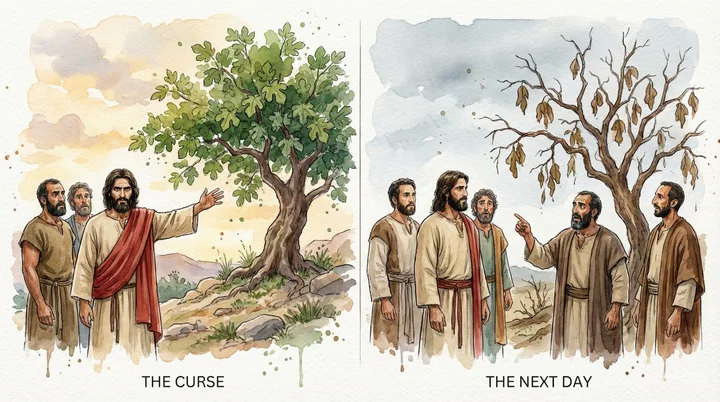
And on the morrow, when they were come from Bethany, he was hungry:
And on the morrow, when they had come from Bethany, he was hungry,
Revised Version, American Standard Version
And on the morrow, when they were come out from Bethany, he hungered.
And on the morrow, they having come forth from Bethany, he hungered,
And on the morrow, when they were gone out of Bethany, he hungered.
And, on the morrow, when they came forth from Bethany, he hungered;
Berean Standard Bible, Majority Standard Bible
The next day, when they had left Bethany, Jesus was hungry.
The next day, when they had come out from Bethany, he was hungry.
And on the day after, when they had come out from Bethany, he was in need of food.
And on the morowe when they were come out from Bethania, he was hungry.
Douay-Rheims (Challoner revision)
And the next day when they came out from Bethania, he was hungry.
Pictures
Cross-references
- Matthew 21:18-19
Now in the morning as he returned into the city, he hungered.
Records the parallel cursing of the fruitless fig tree.
- Mark 11:20-21
And in the morning, as they passed by, they saw the fig tree dried up from the roots.
The disciples see the cursed fig tree withered the next morning.
- Luke 13:6-9
He spake also this parable; A certain man had a fig tree planted in his vineyard; and he came and sought fruit thereon, and found none.
The barren fig tree illustrates Israel’s failure to bear fruit despite receiving care.
- Mark 11:21
And Peter calling to remembrance saith unto him, Master, behold, the fig tree which thou cursedst is withered away.
The fig tree’s withering is the result of the curse the next morning.
- Matthew 21:20-46
And when the disciples saw it, they marvelled, saying, How soon is the fig tree withered away!
Covers the fig tree and Jesus’ temple teaching in the events around this day.
- Mark 14:3-9
And being in Bethany in the house of Simon the leper, as he sat at meat, there came a woman having an alabaster box of ointment of spikenard very precious; and she brake the box, and poured it on his head.
Jesus is in Bethany before his burial, continuing the sequence begun there.
- Mark 11:19
And when even was come, he went out of the city.
places evening departure from city same day
Commentary
Each commentary is drawn from primary sources: the writings of Ellen G. White and Adventist pioneers and periodicals. Each commentary is separate. Its own words are not a quotation; follow the references to read the source passages.
Ellen G. White
35 sources
On the morning after the triumphal entry, Jesus was coming with His disciples from Bethany toward Jerusalem after a night spent in prayer, and He was truly hungry.DA 580.2–581.2DA 580Ms 32, 1898, par. 1–3Ms 7a, 1886, par. 12–13DA 580.1 Seeing afar off a tree already covered with leaves, which would normally promise well-developed figs even early in the season, He approached it expecting to find food and searched it thoroughly from top to bottom but found nothing but leaves.Ms 32, 1898, par. 1–3Ms 7a, 1886, par. 12–13Ms 21, 1902, par. 29–30 His hunger pictures His longing to find the fruits of righteousness in Israel, upon whom He had lavished gifts and privileges that they might bless the world with sympathy, self-sacrifice, compassion, and yearning for others' salvation.DA 582.3–583.2Ms 109, 1909, par. 55Ms 65, 1912, par. 12 The leafy but barren tree stands for the Jewish nation, whose showy profession, ceremonies, and outward religious life concealed selfishness, pride, hypocrisy, and formalism while yielding no goodness, love, or service to others.Ms 32, 1898, par. 1–3Ms 7a, 1886, par. 12–13ST Feb 21, 1878 Begun as a parable-miracle to be ever remembered, the cursing and withering of the tree displays God's righteous anger at fruitlessness and stands as a living warning to Jerusalem in its final doom and to all Christian churches to the close of history that leaves without fruit are hateful to Him.DA 580.1ST Feb 15, 1899Ms 21, 1902, par. 31–32Ms 32, 1898, par. 11–12DA 584.1
Setting and Hungry Search
It was the morning after the triumphal entry into Jerusalem.DA 580.2–581.2DA 580DA 580.1 On the previous evening He had passed unnoticed into the temple, found it quiet because the crowds had gone toward Olivet, looked upon it briefly with sorrowful eyes, and then withdrew with His disciples to Bethany, out of reach of those who wanted to make Him a temporal king.DA 580.2–581.2 The disciples still did not understand the true condition of Israel, the meaning of Jewish hatred, or the retribution coming upon Jerusalem, which He was about to illustrate to them by an object lesson.DA 580.2–581.2 In this setting He foresaw the city's ruin and wept over it, a temporal destruction pointing to the final destruction of those who reject and kill the Son of God.DA 580.1
Hungry, He came with His disciples from Bethany toward Jerusalem in the morning, after a night spent in prayer.DA 580Ms 32, 1898, par. 1–3Ms 7a, 1886, par. 12–13ST Feb 15, 1899ST Feb 21, 1878 His hunger sets the scene for the fig tree episode that follows.DA 580Ms 32, 1898, par. 1–3ST Jul 21, 1909 Those who held the other account place the journey as traveling with His disciples on the way from Jerusalem to Bethany when He became hungry.Ms 21, 1902, par. 29–30 In either reckoning His hunger led Him to a fig tree seen afar off.Ms 32, 1898, par. 1–3Ms 7a, 1886, par. 12–13Ms 21, 1902, par. 29–30
A fig tree normally produces figs before its leaves open, so a tree already covered with leaves would be expected to have well-developed figs.Ms 32, 1898, par. 1–3Ms 7a, 1886, par. 12–13ST Feb 15, 1899ST Feb 21, 1878 This held even though it was early in the season and even on the elevated Mount of Olives, where figs might not yet have been expected.ST Feb 15, 1899ST Feb 21, 1878 Jesus approached the leafy tree expecting to find fruit because its foliage made fruit seem likely.Ms 32, 1898, par. 1–3Ms 7a, 1886, par. 12–13ST Feb 15, 1899 He searched it thoroughly from the topmost branch to the lowest boughs and found nothing but leaves.Ms 21, 1902, par. 29–30ST Feb 21, 1878Ms 58, 1895, par. 7–11 His hunger was real physical hunger seeking food from the tree.DA 582.3–583.2ST Jul 21, 1909Lt 190, 1903, par. 3
Israel's Fruitlessness and Doom
His hunger was His hungering to find the fruits of righteousness in Israel and in His followers.DA 582.3–583.2Ms 109, 1909, par. 55ST Jul 21, 1909 He had lavished upon Israel gifts and every opportunity and privilege that they might bear fruit to bless the world, and He sought in return their sympathy and cooperation in His work of grace, the same unselfish work He did of self-sacrifice and compassion, zeal for God, love to God and man, and deep yearning for the salvation of others.DA 582.3–583.2Ms 58, 1895, par. 7–11ST Jul 21, 1909 Leaves do not satisfy Him; it is fruit He hungers for and must have, including the fruit of faithful labor in His vineyard and the spiritual fruit His people should have supplied to those He pledged His life to save.Ms 109, 1909, par. 55Ms 65, 1912, par. 12Lt 190, 1903, par. 3 By refusing to minister to others and give to the world the treasures of truth committed to them, they brought ruin on themselves and showed what they would be when the grace of God was removed from them.DA 582.3–583.2ST Jul 21, 1909
The barren tree with its abundant green leaves and showy foliage was the Jewish nation and kingdom of Israel.Ms 32, 1898, par. 1–3Ms 7a, 1886, par. 12–13ST Feb 21, 1878ST Feb 15, 189912MR 406.2–3 Its foliage represented religious profession and privilege, ceremonies and traditions and outward signs of religious life, with claims to superior piety and righteousness, yet it produced no goodness, truth, love, devotion, Christlike character, or service to others.Ms 7a, 1886, par. 12–13ST Feb 21, 1878Ms 58, 1895, par. 7–11 Beneath that profession lay pride and vanity, selfishness and self-sufficiency, love of the world and of gain, worldly greed, hypocrisy and cruelty, formalism and ignorance of God's requirements.DA 582.3–583.2ST Feb 21, 1878ST Jul 21, 1909 Favored with truth to share and every spiritual advantage, it refused to minister and give those treasures to the world.Ms 7a, 1886, par. 12–13DA 582.3–583.2Ms 58, 1895, par. 7–11ST Jul 21, 1909 Its outward appearance of fruitfulness with no fruit made its religion vain, for greater light brings greater responsibility, and profession and privileges and religious appearance unmatched by living according to the light God has given bear nothing to His glory.Ms 7a, 1886, par. 12–13Ms 58, 1895, par. 7–11
God by mighty power had brought this people from Egypt to become trees of righteousness, His planting for His glory.Ms 21, 1902, par. 31–32 For more than a thousand years they abused His mercy, failed to profit by their blessings, invited His judgments, and determined their own destruction.Ms 21, 1902, par. 31–32
The encounter was at once a parable and a miracle to be ever remembered, in which the dumb, unconscious tree was treated as a responsible agent and for the time invested with moral qualities and made the expositor of truth, to show the terrible result of fruitlessness.Ms 21, 1902, par. 31–3212MR 406.2–3 His hunger led Him to search the pretentious tree thoroughly from topmost bough to lowest branches, and its rich foliage promising abundant fruit yielded nothing but leaves.Ms 21, 1902, par. 31–3212MR 406.2–3 His curse withered it by the next morning under the curse of an offended God, displaying God's righteous anger.ST Feb 15, 189912MR 406.2–3 That withering points to Jerusalem's final doom and destruction and agrees with His words that the things belonging to its peace were hidden from its eyes because it knew not its day.ST Feb 15, 1899Ms 21, 1902, par. 31–32 Joined with the second cleansing of the temple and driving out of buyers and sellers, the blighting prefigures the future punishment of the nation and shows that the priests as representative men corrupting the people by false principles will wither as the tree withered.12MR 406.2–3 The judgment fell on the generation that rejected Jesus; though the Jews continued forty years after the event, they were spiritually dead, and the doom of the nation is as sudden and certain as that of the tree.12MR 406.2–3Lt 35, 1895, par. 8–9STMW7 59.2–3 Jerusalem's temporal destruction pointed to the final destruction of those guilty of rejecting and killing the Son of God.DA 580.1
In contrast, the other leafless trees that made no claim to religious piety represent the Gentiles, who made no claim to know God and whose time to bear fruit had not yet come, but were waiting for light.Ms 58, 1895, par. 7–11Lt 35, 1895, par. 8–9STMW7 59.2–3
Warning to Churches Today
The condemning and destroying of the barren tree, begun by His own creative power that had made it, was a strange act that stands as a living warning appeal to all Christian churches and to all Christians in every age to the close of earth's history.Ms 32, 1898, par. 11–12DA 584.1ST Feb 15, 1899 God looks for piety, self-denial, self-sacrifice, compassion for man, zeal for God, obedience to His law through merciful unselfish service, and a deep yearning of soul to save fellow men from unbelief and ruin, and those who keep His commandments are like a flourishing, fruitful fig tree.Ms 32, 1898, par. 11–12Ms 65, 1912, par. 2–3ST Feb 15, 1899ST Jul 21, 1909 Leaves without fruit are worship, profession, knowledge, and religious forms without inward repentance and faith, without obedience and a changed life.3SP 19.2DA 584.121MR 167.3Lt 16, 1888, par. 43ST Jul 21, 1909 This vain pretense is hateful in His eyes, and the open sinner is in a more favorable condition before God and less guilty than he who professes to serve God and in profession honors His law but says and does not, bearing no fruit to His glory.3SP 19.2DA 584.1ST Jul 21, 1909 No one can live the law of God without ministering to others, for God created people to live in a world where unselfish service must be performed and designed them to help their fellow men in every possible way.DA 584.1
Many who think themselves excellent Christians do not understand what constitutes service for God, but plan and study to please themselves, act only in reference to self, count time as valuable only as they can gather for themselves, minister not for others but for themselves, are so large with self that they cannot see anything else and are not in touch with humanity, and those who thus live for self are like the fruitless tree which made every pretension but was fruitless.DA 584.1 This fruitlessness tramples upon the law of Jehovah and makes void His covenant with His commandment-keeping people, making God's memorial, the sign between Him and His people, a despised nothing while exalting the rival spurious sabbath.Ms 32, 1898, par. 11–12ST Feb 15, 1899 That exaltation repeats the ceremony, formalism, vainglory and oppression of Nebuchadnezzar's great golden image in the plain of Dura, as men claiming to be Christians call the world to worship the image they have made through the mystery of iniquity carried into effect by the man of sin, with oppressive laws against all who will not observe the spurious sabbath, a manifestation continuing in this day to the end, bringing His verdict, Thou hast destroyed thyself.Ms 32, 1898, par. 11–12ST Feb 15, 1899 The flourishing tree flaunting its branches in the very face of justice stands for families that spend much time dressing for display, clothing their children in fashionable worldly attire so they cannot be distinguished from worldlings instead of clothing them neatly with cleanliness, tidiness, and simplicity.Ms 109, 1909, par. 55Ms 67, 1903, par. 25–26 When Christ comes to look for fruit He searches thoroughly from the topmost twig to the lowest bough, and where there is only profession and display He finds nothing but leaves, for leaves do not satisfy Him and it is fruit He hungers for and fruit He must have.Ms 109, 1909, par. 55Ms 67, 1903, par. 25–26
That same barren condition comes when commercial enterprises for gain of means are brought into sanitarium work, working counter to the purpose for which the institutions were established, bringing spiritual loss and detracting from the influence desired to attend the work.Lt 120, 1907, par. 1–2 Christ still searches in His institutions for fruit, which is virtue revealed in the lives of His workers that tells in the saving of the soul unto eternal life.Lt 120, 1907, par. 1–2 The leafy tree with no fruit also pictures churches that are being converted to the world with beautiful music and splendid decorations yet are fruitless, and as Christ unmasked the fig tree that bore nothing but leaves, He will unmask these pretentious hypocrites.6MR 321.3 The lesson applies personally as a call to heed Christ's daily invitations and be converted, to reform while there is still time, and to walk in the light while having the light, for Jesus pronounces words of doom over the pretentious fruitless tree with mournful reluctance and under the curse of an offended God it withers and dies.21MR 167.3Lt 80, 1901, par. 13 Outward profession and religious form, even with great religious knowledge and impressive prosperous appearance, cannot take the place of God's inward work and inward victory over sin or hide an unholy character and barrenness, and fruitless pretense will be exposed by His close and critical search.21MR 167.3Lt 16, 1888, par. 43Lt 45, 1891, par. 9–1121MR 167.4–168.1
Christ seeks fruits of righteousness from His people, not merely an outward appearance of spiritual life, for like the tree with leaves but no fruit, people may pray and teach Bible truth yet lack the love and spiritual life that make their service acceptable.18MR 199.4–200.2 He also hungers for the fruit of faithful labor in His vineyard, so evangelistic work should be carried out in a way that bears fruit.Lt 190, 1903, par. 3 God is an inexhaustible fountain of wisdom and strength who from age to age raises up human helpers and resources for His people by His appointed means.Ms 65, 1912, par. 11 These God-given agencies will not prove fraudulent if they themselves do not defraud the Lord, but some have defrauded Him and they are represented by the barren fig tree.Ms 65, 1912, par. 11
Sources
Pioneers and periodicals
30 sources
On the morning after the triumphal entry into Jerusalem Jesus left Bethany for the city hungry and went to a leafy fig tree to look for fruit.ST Oct 4, 1899ST Oct 4, 1899RH Jan 17, 1871 That morning was Monday of Passion Week, a common workday only a few days before the Passover, on which He cursed the barren tree and then cleansed the temple.RH Jan 29, 1914RH Jan 29, 1914 Though He was the Son of God He felt real bodily hunger, and because a fig tree in leaf would normally be expected to have fruit even this early in the season He had reason to seek figs upon it.ST Feb 15, 1899ST Feb 21, 1878 His act was an acted parable and not the condemnation of a tree as a moral being, with its showy leaves without fruit picturing the Jewish nation making outward profession of holiness while bearing none and rejecting Christ.ST Feb 21, 1878ST Sep 9, 1875RH Feb 16, 1905RH Jan 17, 1871 It stands as a living warning to Christian churches in every age that God looks for piety, self-sacrifice, compassion and obedient service, and that profession without fruit is empty pretense bringing guilt.ST Feb 15, 1899ST Jul 21, 1909
Time Place and Hunger
On the morrow after the triumphal entry into Jerusalem, Jesus and His disciples left Bethany for Jerusalem in the morning, and He was hungry, which led Him to go to a fig tree in leaf to look for fruit.ST Oct 4, 1899ST Oct 4, 1899RH Jan 17, 1871 The journey lay from Bethany toward Jerusalem over the Mount of Olives, and the tree's promise of fruit in its leaves set the scene for what followed.ST Oct 4, 1899ST Oct 4, 1899RH Jan 17, 1871 The evening before He had ridden into Jerusalem, entered the temple and looked round about, then returned to Bethany for the night; on this morning He left Bethany hungry on the way back, cursed the barren fig tree by the way, then cleansed the temple that same day, taught there until evening, and left the city again.ST Oct 5, 1882
That morning was Monday of Passion Week, reckoned as the fourth day before the Passover and also as the third day before the Passover.RH Jan 29, 1914RH Jan 29, 1914 On that Monday He cursed the fig tree, cleansed the temple, taught, and healed the sick.RH Jan 29, 1914 The buying and selling in the temple show it was a common workday, not the Sabbath. He went again in the morning from Bethany to Jerusalem the day after the triumphal entry by the foot-path over the summit of the Mount of Olives rather than by the easier Jericho road around its southern slopes.ST Nov 17, 1898 Bethany lies a short distance east of and lower than the summit on Mount Olivet itself, about two miles and forty minutes' walk from Jerusalem, and on this journey the deceptive tree withered at His word.ST Nov 17, 1898
His hunger came in the morning after a night in prayer as He returned from Bethany with His disciples toward Jerusalem.ST Feb 15, 1899ST Feb 21, 1878 Because a fig tree normally produces fruit before its leaves, a tree already covered with leaves would be expected to have well-developed figs.ST Feb 15, 1899ST Feb 21, 1878 It was early in the season and not the season for ripe figs, and the elevated Mount of Olives might not yet have had figs, yet the leafy appearance raised expectation of fruit.ST Feb 15, 1899ST Feb 21, 1878 Because it was unusually early in the season, He could have expected to find winter figs that had ripened in early spring and hoped to gather some, and His hunger explains why He went to the tree in full leaf.RH Jan 17, 1871
The verse belongs to the temple cleansing just before the crucifixion, describing the same event as Matthew's account and not the earlier cleansing in John. It belongs to the chapter of the triumphal entry when Jesus wept over Jerusalem, told most fully in Luke 19 and also in Matthew 21, Mark 11, and John 12.ST It belongs to Christ's final approach before His crucifixion in the setting of Jerusalem viewed from the Mount of Olives and His visit to the temple where He drove out the money changers and merchants, warning that people can neglect privileges and warnings while probation runs out.ST Feb 14, 1878 The journey from Bethany toward Jerusalem is placed on the day before He cursed the fig tree, with His hunger setting the scene for the lesson.ST Mar 3, 1909
Though the Son of God and heir of all things, Jesus experienced real bodily hunger and would have welcomed something to eat. His need was real, and lack of food does not mean God has withdrawn love or marked a person for hatred. Mark 11 is to be read with Ecclesiastes 12 as part of Mark 6 to 13 and compared with the parallel stories in the other gospels.ST Jul 29, 1908 Its lessons of Christ's life are to be taken home showing He is as willing to forgive the sinful as those who came directly to Him, as willing to heal and restore the sick as when He gave health to the leper and hearing to the deaf, and He is the great Comforter in trouble, the recorded miracles being only a small part of those wrought but recorded to give comfort to every class, since though written by Hebrews the Bible is not for Hebrews alone but for all outside the Hebrew tribes, and God is God of all who seek Him.ST Jul 29, 1908
Barren Tree and Israel
Jesus’ dealing with the fig tree was an acted parable, a dramatic picture staged to convey a moral lesson and not a judicial sentence against the tree as if it were a moral being under condemnation.RH Jan 17, 1871 On the road in early spring his hunger brought him to a tree already full in leaf, and that full leafage yet utter lack of fruit became the parable: outward signs of religious life without its spiritual fruit are empty.RH Jan 17, 1871 Such a leafy show in early spring raised expectation of fruit, since figs normally begin to grow before the leaves open, even though it was not the season for ripe figs and on the elevated Mount of Olives figs might not yet have appeared.ST Feb 21, 1878
The tree’s showy foliage without fruit represents the Jewish nation, whose outward appearance promised fruit but produced none.RH Feb 16, 1905 The leafless trees around represent the Gentiles, who also lacked godliness but had not professed to serve God and whose time of fruit had not yet come, so that Israel, entrusted with greater blessings, was accountable for abusing them and its very privileges increased its guilt.RH Feb 16, 1905 As an image of religious profession without spiritual fruit, the tree sets forth a people who appeared holy and fruitful by forms and claims yet were barren and rejected Christ who had come to save them.ST Feb 21, 1878ST Sep 9, 1875 Though favored by God and professing superior piety, they were corrupted by worldly greed, hypocrisy, cruelty, and ignorance of God’s requirements, and the call is to receive the truth belonging to one’s own time and bear good fruit rather than have leaves alone.ST Feb 21, 1878ST Sep 9, 1875
That outwardly flourishing show symbolized a nation separated from God through pride and apostasy and unable to recognize its Redeemer.ST Feb 15, 1899 Christ used it as a sign to teach His disciples about Jerusalem’s final doom, and its withering and blighting displayed God’s righteous anger in Jerusalem’s destruction.ST Feb 15, 1899ST Jan 10, 1878 The cursing symbolically declared that the year of respite for God’s people had ended and their doom was fixed, for three years of special care had already passed with one more year of respite granted, and the cursing just before Christ’s passion marked the end of that respite.RH Apr 2, 1908 In this the tree illustrated the fruitlessness of the religious leaders around Him and warned the disciples against outward appearance without genuine spiritual life.RH Jan 17, 1871
His hunger represents His desire to find in Israel the fruits of righteousness: love for God and people, self-sacrifice, compassion, zeal for God, and concern for others’ salvation.ST Jul 21, 1909 God had given Israel privileges so that they could bless the world, but pride and self-sufficiency kept them from serving others and sharing the truth entrusted to them.ST Jul 21, 1909
Warning and Call to Fruitfulness
The hunger on the way from Bethany that ends in the cursing of the fig tree is a living warning appeal to all Christian churches, repeating its lesson in every age to the close of earth's history.ST Feb 15, 1899 It shows God looking for piety, self-denial, self-sacrifice, compassion for man, zeal for God, and a deep yearning of soul to save fellow men from unbelief and ruin.ST Feb 15, 1899 Fruitlessness is trampling upon the law of Jehovah and making void His covenant with His commandment-keeping people, and the condition in present churches is similar to the condition of the Jews in Christ's day, bringing the verdict, Thou hast destroyed thyself.ST Feb 15, 1899
The hunger and the tree's lack of fruit frame the warning that professing to serve God while bearing no fruit is empty pretense.ST Jul 21, 1909 The warning applies to churches and Christians, who are to obey God's law through merciful, unselfish service to others.ST Jul 21, 1909 One who claims to honor God but does not obey or serve is more guilty than an open sinner.ST Jul 21, 1909 Finding no fruit and pronouncing a curse, after which the tree withers, illustrates the fearful result of failing to give God what is due, applied to withholding the tithe.ST Feb 23, 1915
The tree was later found dried up because it had nothing but leaves, and the lesson is to trust God when He disciplines or withers what is fruitless.ST May 31, 1910 The story teaches receiving the truth belonging to one's time and bearing good fruit rather than having leaves alone.ST Sep 9, 1875 That same bearing of fruit is becoming better workers for Jesus.ST Sep 9, 1875RH Nov 12, 1914
The tree's apparent promise of fruit and its barrenness teach failing to fulfill one's God-given purpose.ST Oct 4, 1899 Every living thing in God's universe has a definite place and a work to perform, and the fig tree failed the productive purpose built into plant life to grow and bear.ST Oct 4, 1899ST Jun 3, 1908 The fruitless, leafy tree is therefore a symbol of the hypocrite, who makes large pretensions but bears no fruit.ST Aug 6, 1896 It is an image of professed religious service without fruit, in which workers appear among the leaves but produce nothing.ST Apr 13, 1904
Sources