Isaiah 53:3
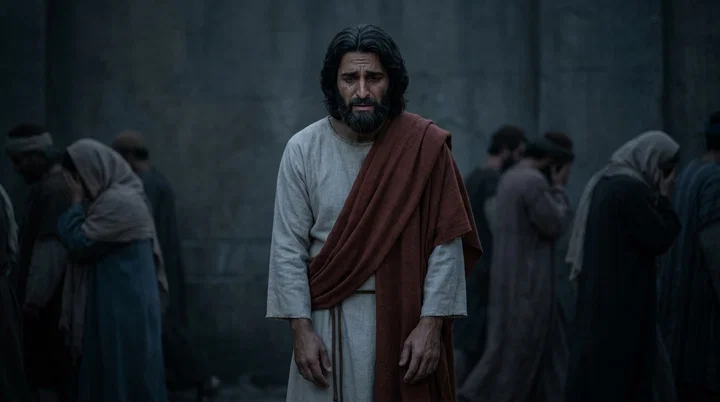
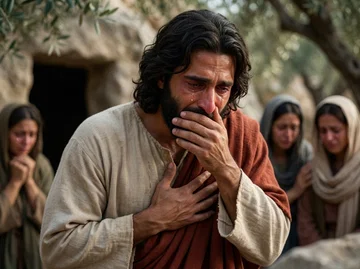
He is despised and rejected of men; a man of sorrows, and acquainted with grief: and we hid as it were our faces from him; he was despised, and we esteemed him not.
Translations
American King James Version, King James Version
He is despised and rejected of men; a man of sorrows, and acquainted with grief: and we hid as it were our faces from him; he was despised, and we esteemed him not.
He is despised and rejected of men;
A man of sorrows, and acquainted with grief:
And we hid as it were our faces from him;
He was despised, and we esteemed him not.He is despised and rejected by men; a man of sorrows, and acquainted with grief: and we hid as it were our faces from him; he was despised, and we esteemed him not.
He was despised, and rejected of men; a man of sorrows, and acquainted with grief: and as one from whom men hide their face he was despised, and we esteemed him not.
He was despised, and rejected of men; a man of sorrows, and acquainted with grief: and as one from whom men hide their face he was despised; and we esteemed him not.
He is despised, and left of men, A man of pains, and acquainted with sickness, And as one hiding the face from us, He is despised, and we esteemed him not.
He is despised and left alone of men; a man of sorrows, and acquainted with grief, and like one from whom [ men] hide their faces; — despised, and we esteemed him not.
Despised was he, and forsaken of men, Man of pains and familiar with sickness,—Yea, like one from whom the face is hidden, Despised, and we esteemed him not.
Berean Standard Bible, Majority Standard Bible
He was despised and rejected by men,
a man of sorrows, acquainted with grief.
Like one from whom men hide their faces,
He was despised, and we esteemed Him not.He was despised
and rejected by men,
a man of suffering
and acquainted with disease.
He was despised as one from whom men hide their face;
and we didn’t respect him.Men made sport of him, turning away from him; he was a man of sorrows, marked by disease; and like one from whom men's faces are turned away, he was looked down on, and we put no value on him.
He is despised and reiected of men: he is a man full of sorowes and hath experience of infirmities: we hidde as it were our faces from him: he was despised and we esteemed him not.
Douay-Rheims (Challoner revision)
Despised, and the most abject of men, a man of sorrows, and acquainted with infirmity: and his look was as it were hidden and despised, whereupon we esteemed him not.
Pictures

Cross-references 20 of 193
- Hebrews 4:15
For we have not an high priest which can not be touched with the feeling of our infirmities; but was in all points tempted like as we are, yet without sin.
Christ shares human sorrow and infirmity, having experienced human weakness and temptation.
- John 1:11
He came unto his own, and his own received him not.
Christ came to his own, but they did not receive him.
- Philippians 2:7-8
But made himself of no reputation, and took upon him the form of a servant, and was made in the likeness of men:
Christ took human form, humbled himself, and endured suffering and death.
- Matthew 27:29
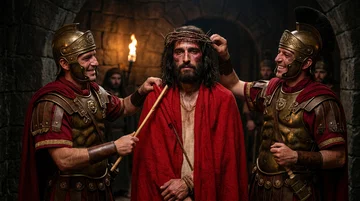
And when they had platted a crown of thorns, they put it upon his head, and a reed in his right hand: and they bowed the knee before him, and mocked him, saying, Hail, King of the Jews!
Jesus is mocked and humiliated with a crown of thorns.
- 2 Corinthians 8:9
For ye know the grace of our Lord Jesus Christ, that, though he was rich, yet for your sakes he became poor, that ye through his poverty might be rich.
Christ became poor for others’ sake so they might become spiritually rich.
- Isaiah 53:7
He was oppressed, and he was afflicted, yet he opened not his mouth: he is brought as a lamb to the slaughter, and as a sheep before her shearers is dumb, so he openeth not his mouth.
The oppressed Messiah is silent and led like a lamb to slaughter.
- Matthew 26:38-39
Then saith he unto them, My soul is exceeding sorrowful, even unto death: tarry ye here, and watch with me.
Jesus expresses profound sorrow and anguish in Gethsemane.
- 1 Peter 2:24
Who his own self bare our sins in his own body on the tree, that we, being dead to sins, should live unto righteousness: by whose stripes ye were healed.
Christ bore our sins in his body through suffering.
- Luke 22:44
And being in an agony he prayed more earnestly: and his sweat was as it were great drops of blood falling down to the ground.
Jesus’ agony in prayer is shown by sweat like drops of blood.
- John 1:29
The next day John seeth Jesus coming unto him, and saith, Behold the Lamb of God, which taketh away the sin of the world.
Jesus is identified as the Lamb of God who takes away the world’s sin.
- Hebrews 12:2-3
Looking unto Jesus the author and finisher of our faith; who for the joy that was set before him endured the cross, despising the shame, and is set down at the right hand of the throne of God.
Jesus endured the shame of the cross and sinners’ hostility, answering his rejection and suffering.
- Isaiah 53:12
Therefore will I divide him a portion with the great, and he shall divide the spoil with the strong; because he hath poured out his soul unto death: and he was numbered with the transgressors; and he bare the sin of many, and made intercession for the transgressors.
The suffering servant pours out his life in death, bears sin, and intercedes for transgressors.
- Matthew 27:46
And about the ninth hour Jesus cried with a loud voice, saying, Eli, Eli, lama sabachthani? that is to say, My God, my God, why hast thou forsaken me?
Jesus’ anguished cry of abandonment expresses his suffering on the cross.
- Hebrews 2:10
For it became him, for whom are all things, and by whom are all things, in bringing many sons unto glory, to make the captain of their salvation perfect through sufferings.
Christ suffered to bring many sons to glory.
- 2 Corinthians 5:21
For he hath made him to be sin for us, who knew no sin; that we might be made the righteousness of God in him.
The sinless Christ was made sin for us so we might receive God’s righteousness.
- 1 Peter 2:21-23
For even hereunto were ye called: because Christ also suffered for us, leaving us an example, that ye should follow his steps:
Christ endured rejection and suffering without retaliation, leaving an example for believers to follow.
- Romans 8:17
And if children, then heirs; heirs of God, and joint-heirs with Christ; if so be that we suffer with him, that we may be also glorified together.
Those who suffer with Christ will also share his glory.
- Matthew 8:20
And Jesus saith unto him, The foxes have holes, and the birds of the air have nests; but the Son of man hath not where to lay his head.
His homelessness illustrates the sorrows and rejection described.
- Psalms 22
My God, my God, why hast thou forsaken me? why art thou so far from helping me, and from the words of my roaring?
paired prophecy fulfilled in Gospels
- Isaiah 52:14
As many were astonied at thee; his visage was so marred more than any man, and his form more than the sons of men:
His marred appearance explains the rejection and sorrow described.
Commentary part 1 of 4
Each commentary is drawn from primary sources: the writings of Ellen G. White and Adventist pioneers and periodicals. Each commentary is separate. Its own words are not a quotation; follow the references to read the source passages.
Ellen G. White
161 sources
Isaiah 53:3 portrays the Messiah coming without outward splendor, riches, or display to compel admiration, His divinity and glory hidden beneath lowly humanity.AA 225.2–226.2Ms 29, 1900, par. 2–4Ms 31, 1889, par. 5–6GW92 392.2RH Aug 3, 1911 To be despised and rejected means men turned away, refused Him as Redeemer, and counted Him as nothing, while as a man of sorrows He personally felt human infirmity, temptation, and grief, yet without gloom but with serene and holy joy.Ms 75, 1886, par. 15PK 689.2Ms 19, 1899, par. 16–17ST Jul 22, 1897RH Apr 10, 1900 He was rejected by His own nation, rulers, and followers because they looked for a conquering king with worldly power and majesty, and because His holy, self-denying life rebuked their sin, pride, and love of honor.Ms 31, 1889, par. 5–6ST Feb 3, 1898Lt 133, 1905, par. 6–7Lt 53, 1894, par. 14–18Lt 65, 1894, par. 4–6 His sorrows spanned His whole course from poverty and homelessness to Gethsemane and Calvary, where as Substitute He bore the weight of the world's sin and separation from the Father without complaint or self-defense.Ms 19, 1899, par. 16–17Lt 39, 1887, par. 20–212SP 285.3–286.1SG2 251.3–252.2SG1 23.1 The chapter is plain prophecy fulfilled in Jesus of Nazareth at His first advent in humiliation to suffer and die for transgression, in contrast to His second advent in power and glory, and it calls His followers to share His suffering, deny self, and take the cross to reign with Him.AA 225.2–226.2GC 357.2–358.1DA 458.2–4DA 600.1–2GC88 358.2–359.1
Meaning of Words
The verse pictures Him rising lowly as a tender plant and root out of dry ground, with no form or beauty, no comeliness, no outward glory, and no earthly riches to make men desire Him or draw mere admiration.AA 225.2–226.2Ms 29, 1900, par. 2–4RH Aug 3, 1911ST Sep 26, 1911 He came in humility rather than worldly display, in poverty, lowliness and obscurity with no conquering armies visible to mortal eyes and no outward show of a conqueror, so that people saw no outward glory or attractiveness in Him and failed to recognize the Son of God beneath His humble appearance.RH Aug 3, 1911ST Sep 26, 1911ST Jul 23, 1896Lt 97, 1895, par. 13–15 By turning from Him for that lowliness they fulfilled the very prophecy that He would be despised and rejected.ST Jul 23, 1896Lt 97, 1895, par. 13–15
Having no beauty to desire does not mean He was physically unattractive, for His human form could be attractive and His character pure, holy and lovely.Ms 31, 1889, par. 5–6Ms 16, 1893, par. 7 What was hidden from view beneath humility was His divinity, His glory, His union with the Father, and the excellence of His divine character, without outward display, worldly wisdom, riches or splendor.GW92 392.2GW 49.2ST Dec 17, 1896RH Jun 25, 1861 Though He was the Son of God, heaven's Majesty, heir of all things to whom the kingdoms of the world were promised, the world did not recognize His divine character and union with the Father, saw no beauty in Him to desire, and regarded Him as smitten and afflicted by God.ST Dec 17, 1896RH Jun 25, 1861 The Jews saw no beauty in Him because they expected a Messiah arriving with outward display and worldly glory to perform great deeds for their nation and exalt it above others, and because His grace and virtue stood directly against their human attractions and did not appeal to them.Ms 31, 1889, par. 5–6Ms 16, 1893, par. 7
To be despised and rejected, to have men hide as it were their faces from Him, and to be esteemed not, means the world would refuse to receive and acknowledge Him as Redeemer, turning away from Him, counting Him as nothing, and failing to value Him.Ms 75, 1886, par. 15PK 689.2Lt 30, 1893, par. 9–11Ms 49, 1897, par. 1–4 It is how the impenitent world sees Him, unable to discern His worth or recognize Him as its hope, while the penitent see more deeply the saving purpose of His suffering.Lt 200, 1907, par. 12Lt 30, 1893, par. 9–11 He lived self-denied, poor and suffering, often weary and hungry, unappreciated and rejected by the people He came to save and sorrowful because His love was not returned, His invitation refused as men followed their own way and will and disregarded His example as unworthy of regard.ST Jul 22, 1897Ms 49, 1897, par. 1–4 Seeing this sacrifice brings conviction, for the sinner recognizes being under condemnation and sees the meaning of the Word through the Spirit's light.Lt 200, 1907, par. 12
To be a man of sorrows and acquainted with grief means He was touched with the feeling of human infirmities, learning by personal experience every pang of anguish man can feel, the various temptations besetting man, and affliction and pain under insult and cruelty.Ms 19, 1899, par. 16–17RH Apr 10, 1900SG1 23.1EW 120.2 As Substitute and Surety of the human race He suffered Himself while being tempted, felt the need for the ministration of heavenly angels and for His Father's help as no other human being ever has, prayed with faith that did not fail under the most trying circumstances, and thereby gained better understanding of man's great need and how to help those who are tempted.Ms 19, 1899, par. 16–17SG1 23.1Ms 38, 1889, par. 5–6 His human life was one long travail in behalf of the inheritance He was to purchase at infinite cost, deliberately agreed to beforehand when He consented to leave all His glory in heaven, appear on earth as a man, bear scorn and iniquity, be delivered into the hands of men, endure almost every cruelty Satan and his angels could inspire wicked men to inflict, and suffer dreadful bodily agony and far greater mental agony under the weight of the sins of the whole world.RH Apr 10, 1900SG1 23.1 Yet though His life was marked by self-denial, pain and care, He was not gloomy or crushed but showed peaceful serenity, opened His heart to the suffering of others, carried their sorrows and griefs, and brought rest, peace, holy joy and gladness as a wellspring of joy that refreshed those around Him.SC 120.2–4
Though despised by many, He was esteemed by some, and those who esteemed Him were the lame and sick and suffering.Ms 126, 1909, par. 6–8 They looked for Him wherever they could, followed the Saviour as He walked and taught as He walked, and gathered as His hearers by the thousands, four or five thousand at a time.Ms 126, 1909, par. 6–8 This way of the afflicted seeking and following Him shows the way of the Lord set before people.Ms 126, 1909, par. 6–8
Rejection and Treatment
He was despised and rejected by the world He had made, by His own nation and people and by the Jews He came to bless and save, by religious leaders and rulers, by neighbors and brothers and family, by His disciples, and by Samaritans who barred Him from entering.ST Feb 3, 1898Lt 53, 1894, par. 14–1812MR 234.4Lt 232, 1908, par. 10–14Ms 99, 1894, par. 2–3 Those He came to bless failed to value, acknowledge and receive Him, hid their faces from Him, counted Him as nothing, misunderstood and misinterpreted His mission, betrayed and denied Him, opposed at infinite cost the salvation He brought, and repaid His love with hatred, insult, abuse, shame, mockery and derision.ST Feb 3, 1898Lt 133, 1905, par. 6–7Lt 53, 1894, par. 14–1812MR 234.4Lt 232, 1908, par. 10–14 He bore all this sorrow and grief without complaint or blame toward His persecutors, giving His life to redeem humanity and to ransom every sinner who takes hold of Him by living faith, and His humiliation calls for humility and respect toward others rather than contempt or indifference.Lt 133, 1905, par. 6–7Lt 53, 1894, par. 14–18Lt 232, 1908, par. 10–14
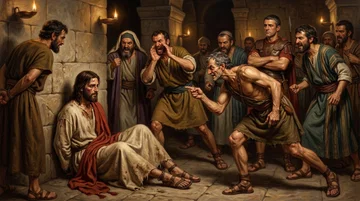
His rejection took the form of false accusation that He was unfit to live because He claimed to be the Son of God, accusations stirred by Satan, treatment as a deceiver and criminal, abandonment by friends and brethren, betrayal and denial, cruelty, insults, mockery, derision, beating and crucifixion.Lt 8, 1907, par. 5–6Ms 140, 1908, par. 45–47Ms 56, 1894, par. 8–96RED 100.2ST Dec 4, 1893 On the cross with nails in His hands and feet He was scoffed at by priests and rulers who said He saved others but Himself He could not save, challenging Him as King of Israel to come down and claiming that God did not deliver Him though He trusted in God and said He was the Son of God.Lt 8, 1907, par. 5–6Ms 140, 1908, par. 45–47 He who gave His life to redeem men wore a crown of thorns piercing His brow, endured spitting, scourging, a mock kingly robe, and hanging between thieves as a guilty sinner, suffering to cancel the debt of every sinner who relies on His merits and to make possible by His stripes a life that measures with the life of God for those who follow in His footsteps.SG4 179.1Ms 140, 1908, par. 45–47Ms 56, 1894, par. 8–96RED 100.2ST Dec 4, 1893
He lived in poverty, lowliness, obscurity and want, often weary and hungry and sorrowful because His love was unreturned, homeless with no place of His own and nowhere to lay His head and no bed at night, sharing the privations of the poor.ST Jul 22, 1897Lt 232, 1908, par. 10–14STB 24.23T 457.2RH Sep 26, 1907 Unappreciated, unhonored and unrecognized, He moved among those for whom He had done so much and whom He had created, while healing the sick, relieving the oppressed and binding up the brokenhearted, and His whole earthly course bore rejection, coldness and contempt from those He came to bless and persecution, betrayal and crucifixion from those He humbled Himself to save, with the whole flood tide of human woe beating upon His soul even to Gethsemane where His disciples could not watch with Him one hour.ST Jul 22, 1897Lt 39, 1887, par. 20–21STB 24.2 As King of glory and Son of the everlasting Father He had clothed divinity with humanity and become poor that men might become truly rich, carrying a burden for their salvation and enduring unequaled trials to redeem fallen man and bring many sons and daughters to glory, so that His followers must not seek an easier way than sacrifice and the cross.Lt 39, 1887, par. 20–213T 457.2RH Sep 26, 1907
His affliction and rejection opened the conflict with Satan, who stirred hostility through wicked men and angels throughout His ministry until the demand for His crucifixion, inspiring His own nation to cry for His blood and invent cruelty and scorn.Ms 11, 1886, par. 8SG1 23.1Ms 75, 1886, par. 19SG1 39.1Ms 62, 1886, par. 65–67 Satan bruised Him by stirring denial by friends, forsaking and betrayal, temptation, deep anguish, cruel scourging, pierced hands and thorn-crowned head, hoping He would resent such treatment and abandon humility and meekness, and at last inspired and controlled wicked minds to crucify Him.Ms 75, 1886, par. 19SG1 39.1Ms 62, 1886, par. 65–67 In doing so Satan demolished his own throne, for his cunning and hatred could not break the plan of salvation, and Jesus did not answer reviling with reviling.Ms 11, 1886, par. 8Ms 75, 1886, par. 19SG1 39.1 So terrible were His dreadful hours of bodily agony and far greater mental agony under the weight of the sins of the whole world that even angels could not look but veiled and hid their faces from His dying agony, before He died, rose the third day and ascended to intercede for wayward, guilty man.Ms 11, 1886, par. 8SG1 23.1
Reasons for Rejection
The rejection came because people looked for a Messiah who would arrive with outward display and worldly glory, with conquering armies and visible majesty and power to break Rome, exalt the nation above others, and compel obedience, and they could not reconcile that picture with prophecy of humiliation, poverty, and suffering, so they turned from a lowly servant.Ms 31, 1889, par. 5–6Lt 65, 1894, par. 4–6ST Aug 22, 1900ST Sep 26, 1911ST Apr 8, 1886 He was seen as having no beauty worth desiring, not because His human form was unattractive, but because He came humbly and unobtrusively, poor, with divinity hidden by humanity, and the holiness and purity of His character, His grace and virtue, did not appeal to those wanting national elevation and great deeds.Ms 31, 1889, par. 5–6Ms 16, 1893, par. 7ST Sep 26, 1911 At His first coming He was therefore despised, rejected, and not valued, contrary to expectation of a temporal ruler and earthly prince who would defeat Rome and reign, and those who trusted their teachers' false claims rather than God's word would not receive Him.Lt 65, 1894, par. 4–67MR 200.1–202.1ST Aug 22, 1900 He did not come surrounded by heaven's host, which mortal eyes could not have borne, and He met in life and works and character every specification of Scripture for the Messiah, yet being without form or comeliness to them and with no conquering armies or outward show, unbelieving Jews decided He could not be the illustrious King expected, though He is the predicted Messiah who will shine gloriously and reign from sea to sea and from the river to the ends of the earth, His appointed lot then being to be a man of sorrows acquainted with grief rather than to receive honor and glory as King.ST Aug 22, 1900ST Sep 26, 1911ST Apr 8, 1886
That misjudgment was hardened by teachers who interpreted Scripture to suit preconceived opinions so it would harmonize with human traditions and commandments, and by a people who trusted what priests and rulers taught instead of searching the Scriptures for themselves and comparing scripture with scripture with the reason and judgment given them, putting priests and rulers where God should be and rejecting God's truth to keep tradition, a mistake not to be repeated.7MR 200.1–202.1ST Sep 26, 1911 Their proud, prejudiced, jealous hearts found a suffering Saviour too humbling to believe, and because He did not meet the expectation of a great conquering Messiah to break the Roman yoke and reign in glory, they turned faces from Him, despised Him, resisted His words, and worked to counteract His influence, fulfilling the very prophecy that He would be despised and rejected.ST Sep 26, 1911ST Jul 23, 1896 Their rejection was not from lack of light and evidence, but from pride, prejudice, jealousy, spiritual blindness, love of worldly honor, and wanting temporal food and power, rejecting Him for His lowliness; in pride the nation refused the one who came to give them life, the worldly-wise failing to see His beauty or desire Him, blinded to the things that would bring peace and not recognizing that their sins placed the burden of grief upon Him.ST Jul 23, 18962T 142.1LC1 67.1–2 The Jews had the prophecy foretelling just how He should come, not as a mighty prince and ruler upon a throne of divinity but as a lowly suffering man, yet with hearts lifted up they did not read prophecy aright and would not accept Him, and the same test meets the professed followers today who acknowledge a Christ in glory and a Christ crucified yet would likewise fail to receive Him if He came as He came to Jerusalem, repeating His sorrow when spiritual blindness and failure to heed His message disappoint Him.2T 142.1Ms 21, 1888, par. 2–6Ms 7a, 1886, par. 14–15 The verse thus warns against turning away from God's help when it comes in unexpected humble form, calling instead to humility and to value inward moral character over outward appearance.2T 142.1
His rejection came chiefly from hatred of His purity and sinless devotion, not merely from lack of wealth or grandeur, since He possessed power beyond those outward advantages.Ms 16, 1893, par. 7GC 506.3 His purity stood directly against human attractions, and His righteous, self-denying life was a rebuke to sin, exposing corrupt profession, worldly status-seeking, and pleasure-loving, so the ungodly hated Him, falsely witnessed against Him, and sought to silence Him.Ms 16, 1893, par. 7PP 239.2–4GC 506.3 His meek, lowly, self-denying life and plain appearance and plain truth exposed and condemned those who valued worldly status and pleasure, so that even those professing religion would be ashamed of Him, wish Him removed and out of the way, and join in calling for His crucifixion.RH Jun 10, 1852EW 88.2–3SCEV 26.5–27.3 Though guilty of no wrong He was condemned upon false witnesses and endured the malice and abuse of wicked men without complaint, and as Joseph falsely accused and thrust into prison because of virtue showed patience and meekness under injustice with ready forgiveness and noble benevolence toward unnatural brothers, so Christ showed uncomplaining endurance and forgiveness not only toward murderers but toward all who confess and seek pardon.PP 239.2–4
Many also misread His suffering as proof that God had struck Him for great personal sin and regarded Him as smitten and afflicted by God, and this false belief helped them reject Him.DA 470.1–471.3 In truth His affliction did not prove personal guilt, for suffering comes from sin and its author Satan, and God can overrule it for mercy.DA 470.1–471.3 His deepest grief was unrequited love, felt more keenly because His nature was higher and holier: His kindness and compassion unappreciated, His love unreturned, His mercy slighted, His salvation rejected, and His mission misunderstood and misinterpreted by a cold, thankless nation departed from God and blinded by worldly concerns to His worth.ST Jul 22, 1897Ms 20, 1897, par. 12–13ST May 27, 18892SP 285.3–286.1 He lived self-denial, poverty, privation, and suffering, often weary and hungry and sorrowful because His love was not returned, pure and holy yet carrying human iniquity, giving relief to the afflicted while enduring grief and grievous bodily pain, healing the sick with a touch, casting out demons and delivering the tempted while Himself assailed by unmatched temptations, raising the dead while suffering a terrible death, patiently submitting as Majesty of heaven to scorn and insult and as Maker of the world becoming a servant to smooth the rough path, so that God's right to human service is measured by this infinite sacrifice and no patience, self-denial, or sacrifice in serving God is too great or grounds for complaint.ST Jul 22, 1897ST Jan 21, 1897 He took upon Himself every phase of sorrow, treading the winepress alone with none with Him in sorrows others cannot follow, and His greatest sorrow was that those for whom He made so infinite a sacrifice did not appreciate the value He places upon every soul.Lt 103, 1898, par. 4Ms 20, 1897, par. 12–13 That grief broke out when followers murmured at open rebuke of unbelief and turned backs with displeasure and disdain, rejecting counsel to wound Him and gratify enemies, choosing darkness rather than light instead of receiving correction and accepting a humble life for salvation, sad repayment for One who by beautiful doctrine, mercy, benevolence, patience with the rude and ignorant, generosity to the poor and suffering, self-denial and sacrifice had called thousands and relieved suffering until whole cities and villages were freed from disease.ST May 27, 18892SP 285.3–286.1
Sorrow and Suffering
His sorrows spanned His whole earthly course, from the physical distress of resisting temptation in the wilderness to going from city to city doing good while unrecognized.Lt 39, 1887, par. 20–21ST Oct 24, 18782RED 62.2–63.1 When His followers murmured at open rebuke of their unbelief and turned back with displeasure and disdain, His inexpressible grief came from knowing His kindness and compassion were unappreciated, His love unreturned, His mercy slighted and His salvation rejected.Lt 39, 1887, par. 20–212SP 285.3–286.14RED 98.3 He grieved over Jerusalem's refusal to be gathered to Him, wept over its rejection, and bore the coldness, contempt and persecution of those He came to bless.Lt 39, 1887, par. 20–21Ms 44, 1886, par. 3–52SP 285.3–286.1 In Gethsemane He was prostrate on the cold earth with sweat as great drops of blood forced from His pores, enduring the platted crown of thorns piercing His brow and the cruel nails through His hands and feet.Lt 39, 1887, par. 20–21SG2 251.3–252.2 At Calvary His mental agony was so intense that physical pain was hardly felt by comparison, while the whole flood tide of human woe beat upon His soul to redeem fallen man and bring many sons and daughters to glory.Lt 39, 1887, par. 20–21SG2 251.3–252.2
He took upon Himself every phase of sorrow, treading the winepress alone with none of the people with Him in sorrows others cannot follow Him in.Lt 103, 1898, par. 42SP 270.3–271.23RED 64.1–3 He bore humanity's unbelief and the burden of the world's iniquity and curse, facing shame and the cross rather than worldly honor, yet praying for His disciples and seeking to strengthen them for coming persecution and trials.2SP 270.3–271.23RED 64.1–3 From the manger to Calvary His thirty years of life were shadowed by grief and sorrow, His heart wrung with inconceivable anguish and heartache no human language can portray, so that truly no sorrow was like His sorrow.ST Jul 22, 1913ST Jun 27, 1911 His greatest sorrow was that those for whom He paid so infinite a price did not appreciate the value He places upon every soul.Lt 103, 1898, par. 4ST Jun 27, 1911
Though innocent and hating sin, He bore the sins of the world as Substitute and Surety and sin-bearer, acquainted by His own experience with the various temptations besetting man so that He might know how to help the tempted.Ms 19, 1899, par. 16–17SG1 23.1Lt 116, 1894, par. 7–8 As the afflicted Son in human nature, scorned and cast off and familiar with sorrow and pain, each insult made Him more conscious of men's need of His divine sympathy, and He felt every pang of anguish man can feel under temptation while suffering Himself being tempted.Ms 19, 1899, par. 16–17SG1 23.1 He endured dreadful hours of bodily agony and far greater mental agony under the weight of the sins of the whole world, hung between heaven and earth as a guilty sinner to die the cruelest death, so terrible that even angels could not look but veiled their faces.SG1 23.1Lt 116, 1894, par. 7–8 In Gethsemane He faced the suffering of separation from the Father under the world's sin to reconcile men to the Father, feeling need for the ministration of angels and His Father's help as no other ever has, and was strengthened by an angel to accept it.Ms 19, 1899, par. 16–17Ms 81, 1909, par. 23–24 Placing Himself in His Father's hands with faith that did not fail under the most trying circumstances, He won as a powerful warrior a victory on behalf of the world He had created, then died and rose the third day to intercede for wayward, guilty man.Ms 19, 1899, par. 16–17SG1 23.1
He endured poverty, suffering, temptation, shame and the cross without complaint or blame toward His persecutors, and did not return reviling for reviling.Lt 232, 1908, par. 10–14Lt 99, 1886, par. 6–8 Though the light and Creator of the world, mocked and reviled and opposed even to the demand for His crucifixion, He bore human scorn and indignity without speaking in self-defense though He could have called on legions of angels.Ms 11, 1886, par. 8RH Jul 25, 1854 He denied Himself and did God's will rather than seeking comfort or pleasure, remaining steadfast amid sorrow and familiar grief while relieving the afflicted and healing the sick though Himself suffering bodily pain.ST Nov 28, 1911 At His dying agony the angels hid their faces from the sight.Ms 11, 1886, par. 8
In deep distress in a cold, thankless, sinful world He unburdened His heart to His Father in prayer, seeking support and comfort and finding comfort and joy in communion with Him.ST Feb 10, 18872T 201.2–202.1ST Aug 7, 1879 He prayed with strong crying and tears, His sinless soul recoiling from evil as He sought divine strength to meet His trials and carried crushing sorrows to His Father without becoming sinful.2T 201.2–202.1Lt 146, 1897, par. 18ST Aug 7, 1879 On the lonely mountainside, apart from Peter, James and John and compassed with humanity and wearied in body, He poured out supplications with strong crying and tears, praying for strength to endure the test in behalf of humanity.2T 201.2–202.1DA 419.1–4 There He gained a fresh hold on Omnipotence so He could contemplate the future, and pleaded for His disciples that their faith might not fail in the hour of the power of darkness.DA 419.1–4
Bearing Human Sin
He was wounded for transgressions, bruised for iniquities, oppressed and chastised, and by His stripes healing and peace come to those who receive Him by faith as personal Saviour.10MR 149.1–3Ms 1, 1869, par. 3–5Ms 140, 1908, par. 45–47Ms 43, 1894, par. 14–1613MR 369.3–370.2 Seeing this sacrifice brings conviction to the sinner, who recognizes being under condemnation and sees the meaning of the Word opened by the Spirit's light.10MR 149.1–3Lt 200, 1907, par. 12 Though now exalted, His glory is withheld from view when iniquities separate men from God and they do not seek righteousness.Ms 1, 1869, par. 3–5 On the cross with nails in hands and feet while opposers mocked, He suffered to make possible a life that measures with the life of God for those who follow in His footsteps.Ms 140, 1908, par. 45–47 His trials in bearing sin's penalty and paying the debt of transgression both heal and draw sinners to Him to bring them to glory, and give humanity a place of advantage with God.Ms 43, 1894, par. 14–16 Though sinless He bore the world's sin and suffered as though guilty, regarded by those He came to save as struck and afflicted by God, and human sin continues to bring Him suffering.13MR 369.3–370.2
As Lamb, ransom, and sin-atoning Saviour now exalted as Mediator, Prince, and Healer, He gave Himself for fallen sinful humanity to become humanity's only hope and to enable men to become sons and daughters of God.Ms 19, 1899, par. 16–17Lt 180, 1902, par. 33–35Ms 43, 1894, par. 14–16 He deliberately agreed beforehand to leave heaven, take the transgressions and just penalty of the fallen race upon Himself, die the cruelest death as though guilty, and pay sin's debt to open a way of escape, secure salvation, and bring many sons and daughters to glory.Lt 39, 1887, par. 20–21Ms 41, 1892, par. 13–16Ms 43, 1894, par. 14–16 Scorned and cast off, familiar with sorrow and pain, He as Substitute and Surety felt every pang of anguish man can feel under temptation, suffering Himself while being tempted.Ms 19, 1899, par. 16–17 Each insult made Him more conscious of man's need of divine sympathy and gave better understanding of man's great need, while He felt need of angels' ministration and the Father's help as no other ever has, placing Himself in the Father's hands with unfailing faith as a powerful warrior winning victory for the world He created.Ms 19, 1899, par. 16–17 His suffering was part of His work to redeem and change men into God's image that they might share everlasting joy.Ms 41, 1892, par. 13–16 His shame and suffering, misjudged as unfit to live for claiming to be the Son of God through accusations stirred by Satan, serve to cancel the debt of every sinner who relies on His merits and virtue, and His prophecy belongs to His work to help and bless His people.Lt 21, 1905, par. 10–11Ms 56, 1894, par. 8–9
Though King of glory, Son of the everlasting Father, Commander of angels, equal in dignity with God with the fullness of the Godhead, He left His royal throne and laid aside royal glory, crown, robes, majesty and riches.Lt 39, 1887, par. 20–21Ms 70, 1903, par. 7–10RH Jan 7, 19043T 407.2Lt 22, 1900, par. 14–15 He clothed divinity with humanity to touch humanity, lived among men as head of the human race, and became poor to make men rich.Lt 39, 1887, par. 20–21Ms 70, 1903, par. 7–10RH Jan 7, 19043T 407.23T 457.2 He stepped down from high command over all heaven, leaving the admiration of angels for the insults and execrations of a mob lashed to madness by priests and rulers, to live in sorrow and grief, carry all human infirmities and bear all human temptations.Lt 22, 1900, par. 14–15 His whole earthly course of rejection, coldness, contempt from those He came to bless, and persecution, betrayal and crucifixion from those He humbled Himself to save, with the whole flood tide of human woe beating upon His soul even to Gethsemane where disciples failed to watch one hour, was endured to redeem fallen man in trials no other man could equal.Lt 39, 1887, par. 20–21 He did not live to please Himself or consult His own convenience, having no place of His own and nowhere to lay His head, enduring shame, agony, condemnation and death while bearing the weight of the world's sins.3T 407.23T 457.2 By living as example He proved man can keep God's law, removing Satan's excuse.Lt 39, 1887, par. 20–21Ms 70, 1903, par. 7–10
Because He weighed every burden, carried all griefs and infirmities, and met human woe with divine pity for the poor, sick, aged, children and mothers, He sympathizes with the afflicted, understands temptation, and helps the burdened.Ms 19, 1899, par. 16–17Ms 38, 1889, par. 5–616MR 116.2Lt 32, 1898, par. 4–7 His real suffering gives assurance that He understands those pressed with temptation, having made human wants, trials, grief and suffering His own and endured suffering because of sin to save from eternal ruin.Ms 38, 1889, par. 5–616MR 116.2 As divine missionary teacher come to seek and save the lost, enduring hunger, thirst and weariness from manger to cross, He fully takes in the bereavement, wants, trials, suffering and loneliness of His representatives suffering deprivation in mission fields, and as helper and Restorer comforts, blesses and strengthens all who suffer in doing His work.Lt 32, 1898, par. 4–7 His tender sympathy is to be presented especially to the impatient and self-indulgent as pattern and comfort, exposing pride, vanity and self-sufficiency.16MR 116.2 Those who share in His sufferings and are afflicted in human suffering are drawn into sympathy and fellowship with Him and will also share the glory to be revealed.Lt 16, 1896, par. 1212MR 305.1
His humiliation and suffering reveal the great value God places on every soul bought by His blood, showing the Father's love in giving His Son as ransom price and picturing lost sheep made savable by self-sacrificing life and death.Lt 53, 1894, par. 14–18RH Apr 10, 1900ST Nov 20, 1893 Being a man of sorrows and acquainted with grief means He was touched with the feeling of human infirmities, adopted as His children those He purchased at infinite cost, made them objects of tender care, and committed them to His church to supply temporal and spiritual necessities with the watchword that service to the least of His brethren is done to Him.RH Apr 10, 1900 His treatment calls men to humility and respect rather than contempt or indifference toward those for whom He gave His life, and calls them to show one another the same tender compassion He showed in sharing affliction.Lt 53, 1894, par. 14–18RH Sep 13, 1906 So greatly did He value men that He left heaven and accepted poverty, shame, reproach, weariness and suffering to raise them to immortal life, setting the pattern for ministers to share His concern and serve with meekness and wisdom to lead from sin to higher life.Ms 58, 1900, par. 7–8 Together with the next verse the prophecy also presents Him as afflicted and smitten by God while promising He will judge for the poor, save the needy, and break the oppressor.PK 686.1
Prophecy Fulfilled in Jesus
Isaiah 53 is unmistakably plain prophecy proving the Messiah had to suffer and die, and its lowly, self-denying picture is borne out act by act and step by step in the life, ministry and death of Jesus of Nazareth.AA 225.2–226.2DA 458.2–4 It foretold He would rise as a tender plant and root out of dry ground, with no form, comeliness or beauty to make men desire Him, and would live despised and rejected as a man of sorrows acquainted with grief, from whom men hid their faces and whom they esteemed as nothing.AA 225.2–226.2GC 357.2–358.1 That specification was fulfilled when the Jewish tribunal condemned Him to death for claiming to be the Messiah and Son of God, and His own people rejected and crucified Him as they had slain the prophets of old.GC 357.2–358.1GC88 357.1–2 It contradicted the prevailing expectation of a conquering deliverer, for it showed the Messiah must come in humility and poverty, be rejected and despised, be slain, and give Himself as a sacrifice for human sin before coming again in power and glory.8RED 45.1–46.1GC 359.1–360.1
As a child Jesus Himself read this chapter that speaks of the Saviour's death and asked what it meant.COS 33.1–4 At twelve years old, on His first Passover visit to Jerusalem for the feast, He stood in the temple courts, saw what was done there, presented this prophecy of the appearing of Messiah to the rabbis and asked its meaning.Ms 183, 1903, par. 1–2 There the veil was lifted on His mission and work, and He knew He was to give Himself for sin and to proclaim as Prophet of the Most High the acceptable year of the Lord.Ms 183, 1903, par. 1–2 By that questioning He showed Messiah comes as the Lamb of God who takes away the sins of the world, revealing the plan of salvation rather than only bringing wonderful national elevation to the Jews.
The prophecy marks His first advent in humiliation, poverty and obscurity, when His divine glory did not appear and His time to be honored and glorified as King had not yet come.ST Apr 19, 19052SP 101.2–102.2 He lived a pure and faultless life full of sorrow with few sympathizers, despised, neglected, abused and left alone, following the path God had marked out, then offered Himself to fulfill every requirement of the broken law, met the sacrificial types with their antitype, ascended triumphant and victorious still bearing humanity, and carried the blood of atonement into the holiest of all to sprinkle it on the mercy-seat.GC88 358.2–359.1Ms 17, 1887, par. 10ST Apr 19, 1905 That lowly coming, marked by pierced hands and feet and by being led like a lamb to slaughter after the scepter departed from Judah, stands with equal clearness against His second advent with power and great glory.GC88 358.2–359.1Ms 17, 1887, par. 10 Then He comes as King and Deliverer in clouds with trumpet, angels and the whole heavenly host, crowned within a crown on the brow once crowned with thorns and with shining countenance, to stand on the Mount of Olives, wake and raise the dead, receive Adam's forfeited dominion, bring universal peace, declare there is no more sacrifice for sin, end sorrow and suffering, and judge the living and the dead as victor, no longer as man of sorrows.GC88 358.2–359.1Ms 17, 1887, par. 10ST Apr 19, 1905 Though rejected and crucified like a stone the builders discarded, He would be glorified through resurrection and revealed as Lord at that coming, which His followers must imitate His character to be prepared to meet, since to reign with Him requires suffering with Him.DA 600.1–2Ms 17, 1887, par. 10
Because He came as a lowly man of sorrows with no outward show of a conqueror, the rulers and people who expected a great Messiah to break the Roman yoke and reign in glory turned their faces from Him in proud, prejudiced and jealous hearts that found a suffering Saviour too humbling to believe.ST Jul 23, 1896Lt 97, 1895, par. 13–15 They resisted His words, worked to counteract His influence, and did to Him what Scripture had foretold, yet were so blind they did not recognize the time of visitation.ST Jul 23, 1896Lt 97, 1895, par. 13–15Ms 41a, 1896, par. 33 Their rejection was not from lack of light and evidence but from pride, and by rejecting Him for His lowliness they fulfilled the very prophecy that He would be despised and rejected.ST Jul 23, 1896Lt 97, 1895, par. 13–15 The rabbis themselves applied this prophecy to the Messiah, and its direct fulfillment in Jesus requires accepting Him as Christ, a conclusion proven by conclusive argument opponents cannot refute, yet rejection persists with hardened opposition and malice calling Him deceiver.SLP 277.2 Every specification of humiliation and death ordained in the councils between the Father and the Son and foretold by prophets and men inspired by the Holy Ghost was fulfilled in what Christ suffered in His own person, and after His resurrection He opened the Scriptures to His disciples step by step to prove that His rejection, humiliation, death and rising on the third day had been verified.Ms 138, 1897, par. 15–16
That rejection proves His kingdom was not meant to be a temporal kingdom in this world nor a reign as temporal king on David's throne to deliver the nation from earthly oppressors, but a spiritual kingdom as a man among men living poverty and humility and offering Himself as sacrifice for the fallen race.AA 227.4Ms 138, 1897, par. 15–16 In Him the sacrificial types meet their antitype, and His death on the cross lends significance to the entire Jewish economy.AA 227.4 The Old Testament representations of His sufferings are remarkably vivid pictures of what the disciples witnessed, given so that salvation might be secured, and for that reason their truths are to be sacredly cherished and the Scriptures searched more diligently, rather than refused through pride, worldly hopes, tradition and ceremonialism that look for a political prince to bring nations under Israel's rule.Ms 138, 1897, par. 15–16
The prophecy points to the Messiah's suffering and death as the Lamb of God and great sacrifice for sin, foretelling a Redeemer rejected and slain by the people who should first have recognized Him as the Promised One.Ms 183, 1903, par. 1–2DA 78.3–5WAJP 2.1–2 It shows He would be despised and rejected by nearly all, suffer scorn and cruelty, become human to experience temptation and sorrow, endure dreadful bodily agony and far greater mental agony under the sins of the world, and die as though guilty though His death is the ransom that saves many sons and daughters to glory.1SP 45.2–46.1
Example for Followers
He is the true pattern to study, exalt, and imitate in self-sacrifice, meekness, and sorrow, growing without outward form or beauty to attract desire, rejected, full of sorrows and familiar with grief, shunned and counted as nothing.Ms 29, 1900, par. 2–4ST Jan 22, 1894GW92 69.2 His truth shames all who avoid the cross and will run no risk for Him, calling for covenant by self-denial, surrender to walk in His footsteps, and willingness to share His suffering and humiliation.Ms 29, 1900, par. 2–4Lt 416, 1907, par. 21–23Ms 41, 1892, par. 13–16 To reign with Him requires suffering with Him, denying self, taking the cross, following His footsteps on the narrow thorny way, and accepting sacrifice rather than demanding ease or keeping for self what God entrusted, with no complaint even over tobacco, dress, or hardship.Ms 29, 1900, par. 2–4ST Jan 22, 1894Lt 31, 1889, par. 13–16GW92 69.2 His suffering was part of His work to redeem and change humanity into God's image so they might share everlasting joy, including ignominy, Gethsemane agony, poverty accepted for others, rejection and condemnation by wicked men, death as a malefactor, and bearing the weight of the world's sins.Lt 416, 1907, par. 21–23Ms 41, 1892, par. 13–16GW92 69.2 Those who share His self-sacrifice now, sustained by His consolation, sonship, peace, and full joy, will share His glory when the Deliverer comes.Lt 416, 1907, par. 21–23Ms 41, 1892, par. 13–16
Those who work for God must take Him as pattern, needing daily conversion, self-abasement, and entire transformation from jealousy, envy, hatred, and unbelief.ST Jan 22, 18942T 516.23T 325.3 They must not expect an easy and honored life, ease, honor, greatness, exaltation or favor, must not shun the cross, and must not let zeal and fervor rise and fall with circumstances and surroundings.ST Jan 22, 1894ST Mar 9, 18882T 516.2 Though He was Heaven's majesty He came to serve rather than demand honor, giving His life to redeem humanity, doing good and blessing others, and His rejection and humble service show followers should learn His meek and lowly spirit.ST Mar 9, 1888RH Sep 2, 19092T 337.1 Ministers especially must share His concern and spirit, serve with meekness and wisdom, press close to the suffering Saviour for powerful words, show His sympathy from manger to cross, and preach Christ crucified despite opposition, slights, and difficulties without pondering trials.2T 516.2RH Sep 2, 19092T 337.1 Comfort, pleasure, convenience, and satisfaction with position have no place in the Christian life, and those who follow Him must endure hardness as good soldiers, watch constantly with humble, prayerful dependence on God rather than proud self-reliance, seek divine grace to endure, and keep childlike trust in God's promises lest Satan deceive and corrupt the mind and lead into inconsistency and darkness.3T 325.3
Remembering how much He suffered comforts God's servants when tried, tempted, and disappointed in obtaining human sympathy, teaching them not to be amazed if made partakers of His sufferings.Lt 39, 1887, par. 20–21Lt 186, 1897, par. 154SP 449.2 The King of glory and Son of the everlasting Father left His royal throne, clothed divinity with humanity, and endured trials and sacrifices no other man could equal, including Gethsemane agony when disciples failed to watch one hour, rejection, coldness, contempt from those He came to bless, and persecution, betrayal, and crucifixion from those He humbled Himself to save, with the whole flood tide of human woe beating upon His soul to redeem fallen man and bring many sons and daughters to glory.Lt 39, 1887, par. 20–21Lt 16, 1896, par. 1212MR 305.1 Afflicted in human suffering, He bore the griefs of sufferers and is with His weary followers, having fought the battle before them, so they can face trials without fear and be conquerors through Him.Lt 16, 1896, par. 1212MR 305.14SP 449.2 Sharing His sufferings refines believers and draws closer fellowship and sympathy with Him, teaches guarded kind thoughts and brotherly love, and leads to sharing His consolation and glory, so hardship, disappointment, and loss are to be met with courage, dignity, and no discouragement and, when borne well, without complaint.Lt 16, 1896, par. 1212MR 305.1Lt 186, 1897, par. 15SLP 115.1
His poverty, shame, Gethsemane agony, and crown of thorns rebuke pride, vanity, self-sufficiency, self-conceit, self-exaltation, and love of supremacy and greatness among people.Lt 416, 1907, par. 21–23RH Jan 13, 186320MR 94.2–4 The King of glory who gave His life to redeem sinners wore a crown of thorns on His sacred head instead of rich decoration, living holy, self-denying and humble as Pattern for those washed by His spilt blood, and His example condemns pride in professed followers who dress up and decorate poor mortal bodies with ribbons and laces for bonnets, collars and other needless articles for show and fashion.RH Jan 13, 18631T 135.2–136.1 His example shows frivolity is opposed to accomplishing good, for a life of sorrow is joined to earnest, continual labor, and God's children as long as they live are given work to do and will be held responsible for neglecting it, teaching the young that now is the time to work and that a frivolous-minded person will never accomplish good.STSE 57.2–33T 378.2 With sorrowful countenance and sad and tearful eyes marred with sorrows more than the sons of men because of hidden sins, neglected duty, and amusements that put God out of mind, He finds no welcome in places of feasting, church socials, festivals, and gatherings for pleasure where Christians and the world unite in gaiety, luxury, fashion, and sensual amusement, for His presence there would be painful and a restraint upon mirth and gaiety because it reminds of neglected duty and hidden sin.RH Oct 13, 1874 Those too proud to work are too proud to sit with Him, and conformity in dress, houses, eating, and church festivals and amusements calls parents and children to tear pride out of families, rebuke it in deed and word, let dress be modest and different from the world, and be peculiar, separate, and pure in heart.RH Jan 13, 1863
As divine missionary Teacher who came to seek and save the lost, great Medical Missionary, friend of sinners, and chief Shepherd who knows each burden, He lived with sorrow and grief and endured hunger, thirst, weariness, slighting, scorn, derision, and being driven city to city, reaching its height in Gethsemane and on the cross.Lt 32, 1898, par. 4–7Ms 189, 1907, par. 15–18DA 439.3 He came in humanity to save sinners, taking human life and suffering so He could obtain life for humanity and show what human character could be and should be, and His experience of sorrow, grief, trial, and disappointment prepared Him to teach people to become like God.Ms 189, 1907, par. 15–18Lt 244, 1908, par. 9Lt 242, 1908, par. 7 He fully takes in and understands bereavement, wants, trials, suffering, and loneliness of those who as His representatives suffer deprivation and sadness with Him in foreign mission fields, and as helper and Restorer He comforts, blesses, strengthens, uplifts the fallen, restores God's moral image, and increases physical, mental, and spiritual efficiency.Lt 32, 1898, par. 4–7 Beholding His sorrow and sacrifice turns self-seeking toward willing service and readiness to bear trial, shame, and persecution for His sake, leaving no place for discontent and self-pity and calling for guarded thoughts, kindness, courtesy, and brotherly love toward fellow workers.RH Sep 2, 1909DA 439.3Lt 242, 1908, par. 7
He is to be longed for, received with humble heart and the living power of grace, welcomed into the home, and held up and told of before neighbors.Ms 29, 1900, par. 2–4Ms 4, 1888, par. 20 He is to be seen as the soul's helper and Redeemer, not displaced by anyone who comes between the believer and Him, recognized as healer and personal Saviour who gave His life and is able to meet need.Lt 54, 1894, par. 22Lt 77, 1895, par. 12–14 Though despised and rejected, He is infinitely deserving of highest admiration, overflowing love, and generous affection and regard.Lt 54, 1894, par. 22Lt 45, 1898, par. 8 Refusing fellowship with Him through timidity and fear of human reproach takes the side of breakers of God's law and imperils the soul.Ms 29, 1900, par. 2–4
Those who reject Him are called to give up exalted opinions of self, seek the Lord as little children, and break hearts before God in repentance and confession.Lt 416, 1907, par. 21–23ST Sep 26, 1911Ms 43, 1909, par. 9 Considering how much He suffered for others should make the heart sore over independence from His claims, rebuking self-exaltation and love of supremacy and calling servants to press close to His side, learn His way, and take up God-given work in self-sacrifice.Lt 416, 1907, par. 21–23 They must not put priests and rulers where God should be and reject God's truth to keep tradition, but search the Scriptures for themselves and compare scripture with scripture with the reason and judgment God gave, lest they repeat the mistake of those who interpreted the Word to suit preconceived opinions and human traditions and so rejected Him.ST Sep 26, 1911Ms 43, 1909, par. 9
Echoes in Scripture
Joseph, falsely accused and thrust into prison because of his virtue, illustrates the one despised and rejected whose righteous, self-denying life rebuked sin and exposed corrupt profession concealing corrupt lives.PP 239.2–41SP 157.2–158.2 Though guilty of no wrong, He was hated for faithfully reproving sin and was condemned upon the testimony of false witnesses unto suffering and death, enduring the malice and abuse of wicked men without complaint.PP 239.2–41SP 157.2–158.2 Joseph's patience and meekness under injustice and oppression, with ready forgiveness and noble benevolence toward his unnatural brothers, represent that uncomplaining endurance and a forgiveness extended not only to murderers but to all who come confessing sins and seeking pardon.PP 239.2–4
The same description of one despised and rejected of men applies to Jeremiah, who was hated and rejected for speaking truth and righteousness and who shared in the sorrow and woe that followed Jerusalem's destruction.PK 408.1 Like the stone the builders discarded, He was rejected, neglected, and abused during His earthly mission while bearing sorrow and grief without being valued, and though crucified He would be glorified through resurrection and revealed as Lord at His second coming.DA 600.1–2 Peter denied Him during His humiliation, then remembered his own failure and the agony in Gethsemane, and repentance humbled and converted him.GW92 401.13T 416.2 Thus humbled, he was made able to pity the tempted, sympathize with the weak and erring, warn the presumptuous, and strengthen his brethren and fellow believers.GW92 401.13T 416.2
Mary hoped He would no longer be despised and rejected or forced to flee for His life, but would be honored as king, and she rejoiced at the thought of His relief even though He faced rejection and death.4RED 107.1–108.1ST Jul 22, 1886 The Father Himself provided the ransom, even the sacrifice, in His own dear Son, who submitted to His Father's requirements and came into this sinful world as a man of sorrow and acquainted with grief, yet men would not receive the provision made.Ms 8, 1874, par. 3 Even while despised and rejected He went about doing good, speaking in tenderness and in the deepest, most fervent, sweetest accents to invite all who labor and are heavy laden to come for rest, to take His yoke and learn of Him because He is meek and lowly in heart, with assurance of rest to their souls.Ms 8, 1874, par. 3
That the Creator of the world, the Majesty of heaven, who loved men enough to lay down His life for them, should be treated with such contempt through the work of Satan by the hands of those gathered under his banner is a marvel to the angels of heaven and shows a condescension without parallel.3MR 94.1–2 After prophets were sent whose message was not heeded, the Son was sent as a last resort to reach hearts and turn them to God, but the people killed Him, and His sorrow was not on His own account but for the people's sins from realizing their condition, as when He wept over Jerusalem because they would not be gathered.3MR 94.1–2 This rejection by humanity astonished the heavenly host, standing in contrast to the rejoicing in heaven when the plan for redemption was devised, and it makes it a marvel that people are so unconcerned about their spiritual interest, using their powers to meet a worldly standard instead of the Bible standard.Ms 46, 1886, par. 2
Because He was touched with the feeling of human infirmities through a human life that was one long travail in behalf of the inheritance to be purchased at infinite cost, He places great value upon those bought by His blood, adopts them as children, and makes them objects of tender care.RH Apr 10, 1900 He is identified with people in need rather than appearing in the glory of Deity as many expected, so He must be recognized in those encountered, and to supply their temporal and spiritual necessities He commits them to His church with the watchword that service done to one of the least of His brethren is done to Him.RH Apr 10, 1900Ms 64, 1890, par. 2–4 Faithfulness in this work brings the benediction of entering the joy of the Lord, though His human appearance fulfilled prophecy while people rejected and failed to recognize Him.RH Apr 10, 1900Ms 64, 1890, par. 2–4 In return for His love as Redeemer and substitute to regain what was lost by Adam, He left His happy position in heaven, laid off royal robes, crown and dignity, and for human sake became poor, associating not with the great in splendor but with the poor to lift them from their low estate, and for all this love men despised and rejected Him.5MR 257.3–4
Though He is the Way, the Truth, and the Life, He was rejected by the people who would not believe in or acknowledge Him, and why they refused and opposed Him will be answered only in the judgment.Lt 126, 1897, par. 16–17 He came to bring salvation yet was hated and rejected and was disappointed in men, being pure and undefiled with no crookedness of character, for crookedness belongs to Satan, while as Lord He knows all things and reads the hearts of all.Lt 62, 1887, par. 5 When disappointed in men of crooked character, believers should look and consider how Christ, who reads all hearts, was disappointed yet without crookedness.Lt 62, 1887, par. 5
Sources