Matthew 22:10
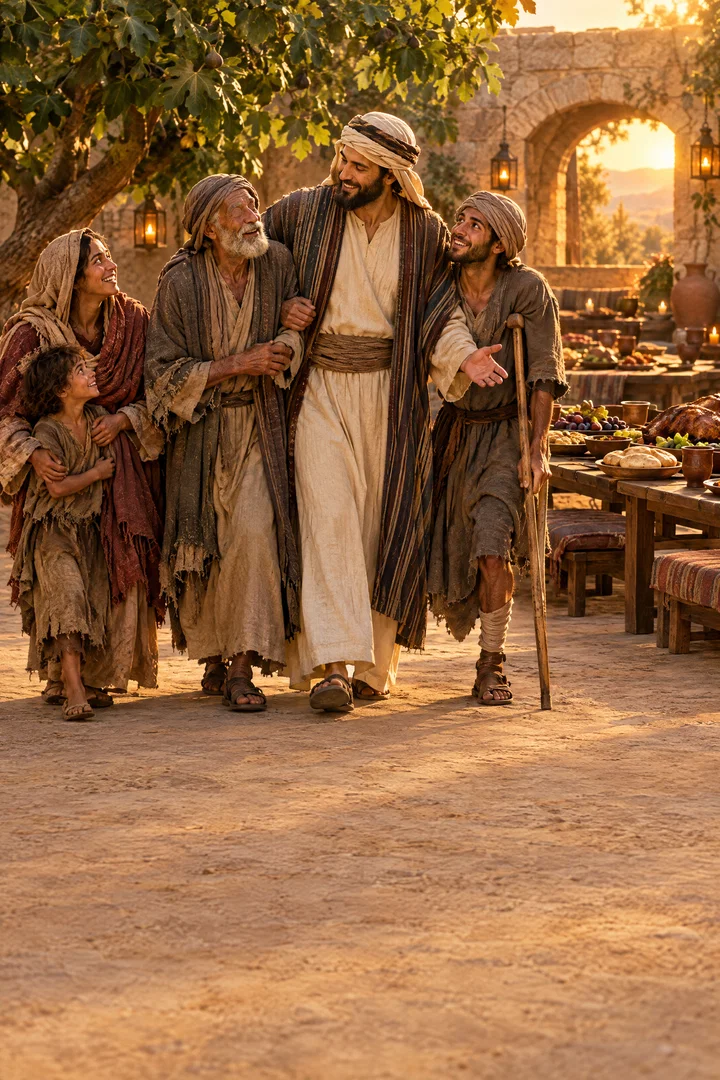
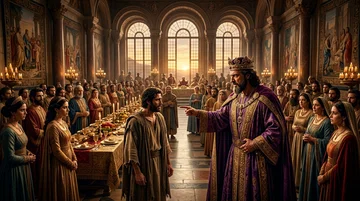
So those servants went out into the highways, and gathered together all as many as they found, both bad and good: and the wedding was furnished with guests.
Translations
American King James Version, King James Version, KJV Cambridge Paragraph Bible
So those servants went out into the highways, and gathered together all as many as they found, both bad and good: and the wedding was furnished with guests.
So those servants went out into the highways, and collected all as many as they found, both bad and good: and the wedding was furnished with guests.
Revised Version, American Standard Version
And those servants went out into the highways, and gathered together all as many as they found, both bad and good: and the wedding was filled with guests.
'And those servants, having gone forth to the ways, did gather all, as many as they found, both bad and good, and the marriage-feast apartment was filled with those reclining.
And those bondmen went out into the highways, and brought together all as many as they found, both evil and good; and the wedding feast was furnished with guests.
And those servants, going forth, into the roads, gathered together all whom they found, both bad and good,—and filled was the bride-chamber with guests.
Berean Standard Bible, Majority Standard Bible
So the servants went out into the streets and gathered everyone they could find, both evil and good, and the wedding hall was filled with guests.
Those servants went out into the highways and gathered together as many as they found, both bad and good. The wedding was filled with guests.
And those servants went out into the streets, and got together all those whom they came across, bad and good: and the feast was full of guests.
So those seruantes went out into the hie wayes, and gathered together all that euer they found, both good and bad: so the wedding was furnished with ghestes.
Douay-Rheims (Challoner revision)
And his servants going forth into the ways, gathered together all that they found, both bad and good: and the marriage was filled with guests.
Pictures
Cross-references
- Luke 14:21-23
So that servant came, and shewed his lord these things. Then the master of the house being angry said to his servant, Go out quickly into the streets and lanes of the city, and bring in hither the poor, and the maimed, and the halt, and the blind.
Servants gather guests from the roads after the first invitees refuse.
- Revelation 19:9
And he saith unto me, Write, Blessed are they which are called unto the marriage supper of the Lamb. And he saith unto me, These are the true sayings of God.
The wedding feast is the Lamb’s marriage supper, whose guests are blessed.
- Luke 14:17
And sent his servant at supper time to say to them that were bidden, Come; for all things are now ready.
Both give the invitation to come because the feast is ready.
- Revelation 19:8
And to her was granted that she should be arrayed in fine linen, clean and white: for the fine linen is the righteousness of saints.
The wedding garment is identified with the saints’ righteousness.
- Matthew 13:47-48
Again, the kingdom of heaven is like unto a net, that was cast into the sea, and gathered of every kind:
Both parables picture a wide gathering that includes good and bad, followed by sorting.
- Revelation 19:7
Let us be glad and rejoice, and give honour to him: for the marriage of the Lamb is come, and his wife hath made herself ready.
Names the marriage represented by the king’s son’s wedding.
- Luke 14:21
So that servant came, and shewed his lord these things. Then the master of the house being angry said to his servant, Go out quickly into the streets and lanes of the city, and bring in hither the poor, and the maimed, and the halt, and the blind.
Both command servants to go out and gather people to the feast.
- Luke 14:24
For I say unto you, That none of those men which were bidden shall taste of my supper.
Those who refuse the invitation are excluded from the feast.
- Revelation 22:17
And the Spirit and the bride say, Come. And let him that heareth say, Come. And let him that is athirst come. And whosoever will, let him take the water of life freely.
Both texts extend an open invitation to come and receive freely.
- Matthew 22:5
But they made light of it, and went their ways, one to his farm, another to his merchandise:
Guests neglect the feast invitation for their business pursuits.
- Luke 14:18-19
And they all with one consent began to make excuse. The first said unto him, I have bought a piece of ground, and I must needs go and see it: I pray thee have me excused.
same excuse refusing the feast
- Luke 14:15
And when one of them that sat at meat with him heard these things, he said unto him, Blessed is he that shall eat bread in the kingdom of God.
Both describe a feast associated with the kingdom of God.
- Matthew 20:16
So the last shall be first, and the first last: for many be called, but few chosen.
Both parables teach that many are called, but few are chosen.
- Matthew 21:43
Therefore say I unto you, The kingdom of God shall be taken from you, and given to a nation bringing forth the fruits thereof.
The kingdom is taken from Israel and given to a nation bearing its fruit.
- Acts 10:34-43
Then Peter opened his mouth, and said, Of a truth I perceive that God is no respecter of persons:
Peter proclaims the gospel to all nations, gathering hearers beyond Israel.
- Isaiah 55:1-3
Ho, every one that thirsteth, come ye to the waters, and he that hath no money; come ye, buy, and eat; yea, come, buy wine and milk without money and without price.
Both extend an invitation to come and receive freely.
Commentary
Each commentary is drawn from primary sources: the writings of Ellen G. White and Adventist pioneers and periodicals. Each commentary is separate. Its own words are not a quotation; follow the references to read the source passages.
Ellen G. White
79 sources
After those first invited refused the final call that all things were ready, the servants went out in obedience into the highways and personally invited as many as they could find until the wedding was furnished with guests.Ms 46, 1896, par. 1–2Ms 143, 1898, par. 1–3RH May 8, 1900 That sending is the second call of the gospel to the Gentiles and the Gentile world after the Jewish people proved unworthy.COL 307.2–308.1ST Jun 15, 1915COL 309.1–2 The invitation is unlimited to every living soul without regard to nation, rank, or caste, and those gathered are both bad and good in a mixed company of true believers and those who only appear to believe.Ms 185, 1903, par. 1–3ST Jun 15, 1915COL 309.1–27T 222.1Ms 59, 1895, par. 34–39 The servants must invite and admit all who come and must not do the work of separation, yet being gathered does not itself make anyone fit to remain.COL 307.2–308.1ST Jun 15, 1915Ms 79, 1908, par. 4–7RH May 8, 1900Ms 18, 1899, par. 14 Every guest is freely given the wedding garment, the robe of Christ's righteousness and justification by faith, and before the marriage the king comes in to examine the guests, which is the investigative judgment deciding the cases of professed followers before probation closes.Ms 143, 1898, par. 1–3GC 428.1–2RH Feb 26, 1901Lt 49, 1887, par. 5Lt 61, 1893, par. 2–3
Parable Setting and Sequence
The final call declaring that all things are now ready was refused by those first bidden who thought themselves worthy, and after that refusal the king sent his servants into the highways to bid as many as they could find.Ms 46, 1896, par. 1–2Ms 143, 1898, par. 1–3 In obedience to the command the servants went out to invite men personally and to assure them that all things are ready, gathering together all they found, both bad and good, until the wedding was furnished with guests.Ms 46, 1896, par. 1–2RH May 8, 1900Ms 23, 1909, par. 3 This gathering belongs to the setting for the reckoning with the man found without a wedding garment, as the servants carry Christ's invitation beyond the first guests to fill the feast.Lt 90, 1898, par. 3Ms 23, 1909, par. 3Lt 86, 1898, par. 17
Those first bidden were the chosen people and the higher classes, wholly intent on worldly gain and unwilling to come.Ms 18, 1899, par. 1–4Ms 46, 1896, par. 11–13 They were absorbed in buying and selling, planting and building, in farms and merchandise and social attractions, leaving eternity out of the reckoning.Ms 18, 1899, par. 1–4Ms 46, 1896, par. 11–13RH May 8, 1900 They thought they could not afford to sacrifice worldly advantage to attend the king's banquet, holding this present world as their god and choosing earthly consideration above eternal life.COL 309.1–2Ms 46, 1896, par. 14–16 Great and worldly-wise men thus refuse the heavenly benefits and will not take the marriage contract and partake of the supper, though by being a Sin-bearer a way was opened whereby all who desire eternal life above every other earthly consideration may come.Ms 46, 1896, par. 14–16
This refusal was the second parable of the invitation, a king's invitation coming from one vested with power to command and involving much.Ms 149, 1898, par. 3 Refusal of this command carries deeper guilt and more dreadful punishment than the householder's invitation, meeting no more favorable response.Ms 149, 1898, par. 3 Those bidden made light of the gracious invitation, pleading circumstances and supposed duties, despising reproving truth.Ms 149, 1898, par. 3Ms 46, 1896, par. 11–13 They treated the king's messengers with scorn, despitefully using them and slaying them.Ms 149, 1898, par. 3Ms 46, 1896, par. 11–13
In wrath at that insult the king sent forth his armies, destroyed those murderers, and burned up their cities, a punishment that is more than exclusion from his presence and table.Ms 143, 1898, par. 1–3Ms 149, 1898, par. 3 That fate was a warning of what befell Jerusalem, carried out by the Romans.Ms 46, 1896, par. 11–13 Though the wedding remained ready, those first bidden were counted unworthy and none of them would taste the supper.Ms 46, 1896, par. 11–13 Then the call passed to the poor, maimed, halt and blind and to all in the highways and hedges who would be compelled to come in, gathered from those less absorbed in buying and selling, planting and building than those first called.Ms 18, 1899, par. 1–4Ms 46, 1896, par. 11–13RH May 8, 1900
The sending to the highways is the second or third call of the gospel, the giving of the gospel invitation and call of mercy to the Gentiles and to the Gentile world after the Jewish people proved unworthy by rejecting it.COL 307.2–308.1ST Jun 15, 1915COL 309.1–2 It extends the wedding invitation beyond those first invited to reach people active in the world's work, including leaders, teachers, and those with influence, talents, and knowledge.RH May 8, 1900
Scope and Mixed Gathering
The invitation is unlimited, gathering all as many as are found until the wedding is filled, with no walls built to keep any living soul from salvation.Ms 185, 1903, par. 1–36MR 388.2 It is to be carried to everyone the servants can reach, to all nations, without regard to national, denominational, sectarian, rank, or caste distinctions.Ms 185, 1903, par. 1–3Ms 59, 1895, par. 34–39 It continues throughout life and reaches into eternity.Ms 6, 1897, par. 1–4 The call for men and women of all classes to be invited reflects this broad gospel feast, gathering people without distinction.7T 222.1RH Oct 27, 1904
Those gathered from the highways are both bad and good without distinction, forming a mixed company.ST Jun 15, 1915COL 309.1–2RH May 8, 1900 Some are true believers, while others appear to believe but have never put on Christ and His righteousness.RH May 8, 1900Ms 18, 1899, par. 14 Some accept only to benefit themselves from the provisions of the feast, with no desire to honor the king and no more real regard for the giver than the rejecters had.ST Jun 15, 1915COL 309.1–2 Being gathered therefore does not itself show true discipleship, and the guests bring no worthiness of their own to give them honor.ST Jun 15, 19158MR 309.1–310.1
The servants must invite and admit all who come and must not refuse admittance to any nor do the work of separation.RH May 8, 1900Ms 18, 1899, par. 14 Separating the guests is not a human task.RH May 8, 1900 The church must still follow the Bible rule concerning disorderly members.RH May 8, 1900Ms 18, 1899, par. 14
The gathering reaches beyond great and gifted men to all classes, especially the poor and lowly in the byways and hedges and those in gross darkness.Ms 18, 1899, par. 14 It includes people sunk in degrading, sinful habits who cannot restore themselves, yet who are not to be excluded as unworthy but may be gathered through patient, loving effort.6T 279.4–280.2 It reaches people from ordinary walks of life and across every rank, rich and poor, including some regarded as uneducated whom God calls to serve whose simple work of reading and explaining Scripture can succeed.Lt 123, 1905, par. 3 It goes out along the highways to gather everyone willing to come, particularly to reach people who have not yet heard the message and invite them to the marriage supper of the Lamb.Lt 4, 1899, par. 17–18
The gathering also reaches people active in the world's work and of every standing, including leaders, teachers, and those with influence, talents, and knowledge who have too often been neglected.RH May 8, 1900 Teachers, ministers, and people in high positions are not to be passed by but are to be approached personally and earnestly, and if they refuse the messengers have done their duty.RH May 8, 1900 Many people of high standing will accept the truth, support the work with means and influence, and help reach others whom ordinary ministers may not reach.Ms 185, 1903, par. 19–20 The invitation is to be given broadly, including to influential and wealthy people who need spiritual food, giving them a fair chance to hear, weigh, and consider the truth.Lt 34, 1900, par. 28–3116MR 163.2–164.2 This image supports laboring beyond familiar routes and reaching people of every class, including the wealthy.Ms 59, 1908, par. 14–15
The people found in the highways are understood as the higher classes in the highways of life, difficult to reach because few can obtain association with them.Ms 74, 1900, par. 11 Reaching them is a special work given by the Lord to be carried forward under divine supervision with the hearty cooperation of brethren, not left as an overwhelming burden on one worker.Ms 86, 1901, par. 3 The gospel invitation is first to be given to those in the higher walks of life, to shepherds of the flock and divinely appointed teachers, and to men of higher rank, men in business life, in positions of trust, men with large inventive faculties and scientific insight, men of genius, men entrusted with many talents and with God-given powers of organization.Ms 18, 1899, par. 9–10 They are to be sought out with tender affection and brotherly regard and to hear the truth in a manner different from the past, because this class has been too much neglected and because their ability is needed to carry forward the work for the last days as managers of institutions where industrial work is carried on, as leaders, captains, and educators, as men who look ahead and discern what needs to be done, as faithful financiers and presidents who will stand as solid as a rock to principle in the present crisis and in future perils.Ms 18, 1899, par. 9–10
Need for Wedding Garment
Being gathered from the highways until the wedding is filled does not itself make anyone ready to remain, for all who attend must make the required preparation and be counted fit guests or be found unready and cast out.COL 307.2–308.1Ms 79, 1908, par. 4–7RH Sep 24, 1908Ms 13, 1899, par. 1–2COL 312.1–3 The feast is filled with a mixed company, including some who seek only to benefit from its provisions with no desire to honor the king, and being present does not show true discipleship or ensure acceptance at the final test and entry into God's city.ST Jun 15, 1915Ms 79, 1908, par. 4–7RH Sep 24, 1908 Fitness to remain is having on the wedding garment, which is the standard of character for the union of humanity with divinity, and in the gospel feast all are examined and only those clothed in Christ's righteousness are received.Ms 13, 1899, par. 1–2COL 312.1–3 Many are lost through presumption, measuring character by their own ideas instead of agreeing with God's standard, not through any failure of God to fulfill every specification of His promise.Ms 13, 1899, par. 1–2
Each gathered guest is given a wedding garment as a gift from the king, purchased for him and prepared by the Lord Jesus Christ, and wearing it shows respect to Him who made every provision for the feast.Ms 143, 1898, par. 1–3Lt 49, 1887, par. 5Lt 61, 1893, par. 2–3 It is freely offered to all, spotless as the pure white lily, proffered as the richest gift that can be bestowed on mortal man, and each must give whole attention to securing it and individually accept it.Ms 109, 1901, par. 98MR 309.1–310.1Ms 70, 1901, par. 6–8 No one may come to the repast clothed in the citizen's dress of the carnal spirit of the world, but must put off the old citizen life lived in ignorance and accept the dress prepared for them.Lt 61, 1893, par. 2–3Ms 70, 1901, par. 6–8Ms 143, 1898, par. 6–8 It is offered even to the lowliest who believes in Him as a personal Saviour, and it alone gives worthiness to sit down at the marriage feast.8MR 309.1–310.1
The garment is the robe of Christ's righteousness, His imputed righteousness and justification by faith, woven in the loom of heaven, the white linen of a clean pure character.Lt 61, 1893, par. 2–38MR 309.1–310.1Ms 143, 1898, par. 6–8 It is the truth as it is in Jesus, a life shaped by the truth and the work of the Holy Spirit, which purifies the life, and a mere profession of belief without this transformation is unacceptable.RH Feb 26, 1901Lt 94, 1898, par. 10–15Ms 143, 1898, par. 6–8 Only those born of the Spirit can rightly appreciate and enjoy these high exalted truths of the banquet of God's Word and distinguish between good and evil.Ms 70, 1901, par. 6–8 Those who partake of the gospel feast thereby say they have accepted Christ as personal Saviour, and true accepting means wearing His distinguishing dress.Ms 143, 1898, par. 6–8
Wearing it means receiving Christ personally, taking a firm stand for Him, surrendering to God what is already His, and not continuing in sin.RH Feb 26, 1901Ms 13, 1899, par. 1–2Ms 143, 1898, par. 6–8 It means putting off the common citizen's dress, becoming Christlike and like Jesus, obedient to God's commandments, purified in life, with speech changed and conversation in altogether another line so that faith stands not in the wisdom of men but in the power of God.COL 315.1Ms 143, 1898, par. 5Ms 143, 1898, par. 6–8 It requires cleansing from impurity and holiness of life, repenting and confessing wrongs that grieved Christ, and belonging to His church as His bride married to Christ.Ms 143, 1898, par. 5 No one is fit while leaning on others instead of making God the dependence, while setting self in stubborn self-will, or while cherishing traits of character that unfit for seeing and understanding the working of the Spirit and lead to be led by another spirit.Lt 24, 1892, par. 5–7
No garment of one's own gives a position of honor at the marriage supper of the Lamb, for one's own righteousness is defiled garments and will not do.Lt 49, 1887, par. 58MR 309.1–310.1 If any are saved it is not because of superior intellect or refinement of ideas but through the grace of God.8MR 309.1–310.1 Contemplating Christ's unsurpassed purity and excellence shows each person lost and hopeless, clad in garments of self-righteousness like every other sinner.8MR 309.1–310.1
To come in one's own garments does the greatest dishonor to the One who made every provision, insults the Lord and abuses His benevolence, and God is just to separate that wrongdoer from His presence and cast him out.Lt 49, 1887, par. 5Lt 24, 1892, par. 5–7 Those without the garment include professed believers who know and speak the truth but do not practise it, who remain unsanctified and do not represent Christ, who have a form of godliness without the inward working of the Spirit.RH Feb 26, 1901Lt 94, 1898, par. 10–15 They include those who misuse privileges and talents without faithful service, for accepting Bible truth in name while refusing to practise it is not enough and brings accountability to God.STMW10 4.2–5.1Lt 5, 1897, par. 7–106T 295.2 Such are joined with the foolish virgins who have no oil in their vessels with their lamps, and need thorough heart-searching, eyes anointed to discern, and humble nearness to God with vital connection to the great Leader instead of following one's own way.Lt 24, 1892, par. 5–7
Judgment and Final Readiness
Before the marriage the king comes in to examine the guests to determine who has the wedding garment.GC 428.1–2 That examination is the investigative judgment, in which the cases of professed followers of Christ are decided before probation closes and the door of mercy shuts.GC 428.1–2 The furnished wedding is a warning that all must be prepared for the Son of man's coming, for merely being present at the feast is not enough when one may be found there without the garment and therefore unready.COL 319.2–3 The time now is short and everyone needs to be ready for the marriage supper of the Lord by accepting the robe of Christ's righteousness and the peace of Christ, and by resisting the devil so that he will flee even when Satan works in great power with the children of disobedience as agents to destroy the soul.Lt 86, 1889, par. 4 The filling of the wedding hall after the gathering of both bad and good is a solemn call to heed God's invitation and make ready to enter, so that His house may be filled.Ms 8, 1874, par. 18
The invitation must be accepted during probation, for the message of warning, pardon and salvation goes into highways and byways without regard to national, denominational, sectarian, rank or caste distinctions, yet those who receive the warning and refuse it will have no second call or later opportunity to come to the heavenly feast.Ms 59, 1895, par. 34–39 The heavenly feast is prepared for those invited, but the opportunity to enter does not remain open indefinitely, and when the door is shut those who were unready seek admission too late.Lt 7, 1869, par. 6–7 People hear the gracious call to the heavenly feast but may refuse to accept it and act on it, turning away for lesser interests and rejecting the invitation.14MR 19.1–3Lt 7, 1869, par. 6–7 Such neglect does not end with themselves, for it can also influence others to remain unready.Lt 7, 1869, par. 6–7
Coming to the marriage feast in citizen's garments instead of the spotless robe prepared by the One who invites does the greatest dishonor to Him.Lt 24, 1892, par. 5–7 No one is fit to enter while leaning on others instead of making God the dependence, while setting self in stubborn self-will, and while cherishing traits of character that unfit for seeing and understanding the working of the Spirit of God and lead to being led by another spirit.Lt 24, 1892, par. 5–7 All such fail to obtain the experience essential to be clothed in the righteousness of Christ, and are joined with the foolish virgins who have no oil in their vessels with their lamps and with the man who came to the festal supper not having on the wedding garment.Lt 24, 1892, par. 5–7 The parable is therefore of deepest interest in this day, calling for eyes anointed with eyesalve to discern all things, for the trumpet to give a certain sound of warning so that none fail to prepare for the conflict before us, and for vital connection with the great Leader of armies instead of following one's own way and will.Lt 24, 1892, par. 5–7
Doctrinal Meaning of Feast
The marriage signifies the union of humanity with divinity, and fitness to remain as a guest means possessing the character represented by the wedding garment, a standard all must reach to be counted fit, a lesson of the highest consequence.COL 307.1Ms 13, 1899, par. 1–2 That fitness is having on the garment by accepting the righteousness of Christ as defined in John 6, taking a firm stand for Christ, surrendering to God what is already His, and not continuing in sin.Ms 13, 1899, par. 1–2 Many are lost through presumption, measuring character by their own ideas instead of agreeing with God's standard, not through any failure of God to fulfill every specification of His promise.Ms 13, 1899, par. 1–2 In the parable Christ is the Bridegroom and the church is the bride.Ms 185, 1903, par. 1–3 To accept the invitation is to put off the common citizen's dress and put on the robe of Christ's righteousness, thereby showing belonging to His church as married to Christ.Ms 143, 1898, par. 5
The wedding feast is the gospel feast, the banquet of God's Word and rich repast of truth and redemption, full of marrow and fatness to satisfy every want.Ms 139, 1898, par. 83Lt 153a, 1897, par. 16–18Ms 124, 1898, par. 40–41ST Mar 17, 189821MR 370.5 God prepared the heavenly banquet by sending His Son into the world to die on behalf of sinners, so that through faith in Him they become one with God, and the feast was prepared by Christ's atoning death.Ms 139, 1898, par. 836MR 388.2Ms 124, 1898, par. 40–41 Those who follow Christ gather others both by the message they bear and the life they live, testifying to that atoning death, showing they have on the robe of Christ's righteousness, not living to please self or absorbing means to flatter vanity but working as Christ worked in self-denying service and conveying the invitation to the marriage supper of the Lamb.Ms 139, 1898, par. 83Ms 124, 1898, par. 40–41 The invitation reaches many who may respond to His love, pictured as Christ's call to the people of Battle Creek, and the decision to accept rests wholly with those invited and requires personal decision and effort, beginning in every family, to seek God with all the heart, which brings an outpouring of His Spirit as on the Day of Pentecost.Lt 153a, 1897, par. 16–18ST Mar 17, 189821MR 370.5
Coming to the supper means understanding the true state of the church and fully receiving justification by faith and the imputed righteousness of Christ, the richest blessings from heaven spread before all in the treasures of His Word.Lt 61, 1893, par. 2–3Ms 70, 1901, par. 6–8 No one may come to the repast clothed in citizen's dress of the carnal spirit of the world, but every guest must have on the white robe prepared for all, and only those born of the Spirit can rightly appreciate and enjoy these high, exalted truths and distinguish between good and evil.Lt 61, 1893, par. 2–3Ms 70, 1901, par. 6–8 The predestination in the parable includes all who accept Christ as personal Saviour and return to loyalty and perfect obedience to all God's commandments; all who are willing to be saved by Christ are the elect, and it is the obedient who are predestinated from the foundation of the world to the praise of His grace, power, and wisdom in the effectual salvation of a peculiar people chosen from among men.6MR 388.2 The invitation is not made to a few but to all who will come, both bad and good, with no walls built to keep any living soul from salvation and wonderful possibilities for everyone who has faith, continuing throughout life and reaching into eternity, yet the gathered guests are not all thereby chosen, for only those who truly receive Christ and yield themselves to God, obeying His commandments and following Christ's example, wear the wedding garment.6MR 388.2Ms 6, 1897, par. 1–4 The parable uses a wedding feast to illustrate truth because marriage is a divine institution, and the marriage covenant deserves respect.3RED 13.3–14.1
Mission to Carry Invitation
The invitation to the wedding reaches all found in the highways, both bad and good, until the wedding is filled with guests, and it is to be carried to everyone the servants can reach, to all nations. Church members are to give earnest personal invitations and assure people that all things are ready.Ms 185, 1903, par. 1–3Ms 7, 1900, par. 12–13 Those who know the truth are to work and pray for souls to accept it, seeking to draw them to Christ, for faith works through love for other souls, while upholding the high standard of God's law rather than lowering it to gain converts.Ms 7, 1900, par. 12–13Lt 86, 1895, par. 6
The feast represents the gospel invitation, and its call to the marriage supper of the Lamb must still be proclaimed as Christ's coming draws near, reaching places that have not yet heard by those who have not yet given the message.6T 412.2GW 64.3Lt 4, 1899, par. 17–18 The call goes out along the highways to gather everyone willing to come, good or bad, wherever they are found, and it is to be carried into nearby towns and rural places where people may respond, pressing forward without ceasing.Lt 4, 1899, par. 17–18Lt 59, 1899, par. 6Lt 29, 1905, par. 6–9 It applies to working throughout life's byways and highways to save fellow human beings, reaching people wherever they are, by people prepared to serve wherever needed.Lt 29, 1905, par. 6–9Ms 27, 1892, par. 6
Missionary work is not to be limited to church members or to those who already appear receptive to truth, but God's people are to take the invitation beyond their usual work and usual circles.Ms 7, 1898, par. 10–12Ms 31, 1900, par. 12 They are to labor beyond familiar routes and reach people of every class, including the wealthy, carrying the gospel to people in their homes through personal outreach, teaching, prayer, and practical care.Ms 59, 1908, par. 14–15Ms 7, 1898, par. 10–12Ms 31, 1900, par. 12 Those active in the world's work, including leaders, teachers, and those with influence, talents, and knowledge, have too often been neglected, and the call is not to pass by teachers, ministers, or people in high positions.RH May 8, 1900RH May 8, 1900 They should be approached personally and earnestly and given a fair chance to hear, weigh and consider the truth, and if they refuse the invitation the messengers have done their duty.RH May 8, 190016MR 163.2–164.2Lt 11, 1895, par. 18–21
The message of Christ's soon coming and salvation through Christ is to be given to those in the highways and byways, with the light of truth carried there so that God's salvation may be revealed remarkably through the Spirit of God.1MR 227.5FE 532.1 God calls men burdened with eternal interests to rally under Christ's bloodstained banner and unfurl the standard of truth before a world perishing in error by giving the Bible to the people, multiplying camp meetings in different localities, warning the cities, and sending the warning far and near.Ms 4, 1899, par. 52–53 Small sanitariums established in many places fulfill this commission as one very successful means of bringing that message to a large class who can be reached in no other way, including those from the higher walks of life who come for treatment and then induce others to come by telling of the benefits received.1MR 227.5
All who follow Christ work as He worked to gather all they find by conveying to others the invitation to the marriage supper of the Lamb, which is the rich repast of truth and redemption prepared by His atoning death.Ms 139, 1898, par. 83Ms 124, 1898, par. 40–41 They gather others both by the message they bear and the life they live, proclaiming the knowledge of redemption and testifying to that atoning death both in word and in the wedding garment they wear, which is the robe of Christ's righteousness.Ms 139, 1898, par. 83Ms 124, 1898, par. 40–41 Wearing it means not living to please self or absorbing means to flatter vanity, but working as Christ worked in self-denying service.Ms 139, 1898, par. 83Ms 124, 1898, par. 40–41 Satan's pleasure gatherings can keep people from accepting that call and receiving the white robe of character, which is the righteousness of Christ.14MR 122.2–123.1 The decision to accept rests wholly with those invited and requires personal decision and effort, beginning in every family, to seek God with all the heart, and such wholehearted response brings an outpouring of His Spirit as on the Day of Pentecost, for Christ sets before souls a banquet in His Word, full of marrow and fatness, that will satisfy every want.14MR 122.2–123.121MR 370.5
The gathering of guests underscores the call to seek and save the lost, including people living in sin, and people entrusted with truth are accountable to God for using their abilities and privileges and talents faithfully in that work.STMW10 4.2–5.16T 295.2 Merely being gathered is not enough and accepting Bible truth in name while refusing to practise it is not enough, for guests must wear Christ's righteousness.STMW10 4.2–5.16T 295.2 The invitation reaches across every rank of life, rich and poor, and people from ordinary walks of life who hear it may accept it, with some regarded as uneducated called to serve whose simple work of reading and explaining Scripture can succeed.STMW10 4.2–5.1Lt 123, 1905, par. 3
Sources
Pioneers and periodicals
90 sources
Those servants went to the partings of the highways after those first bidden would not come, and gathered all as many as they found without distinction until the wedding was filled with guests.RH May 8, 1900ST Oct 18, 1899ST Apr 21, 1898ST Nov 22, 1910 Those first invited were Israel, who rejected the general bidding and the announcement that dinner was ready, and after their unworthiness and the destruction of their city the invitation turned to another people, the Gentiles, reaching even the most wicked parts of society and the whole world.ST Oct 18, 1899RH Jan 23, 1855ST Nov 22, 1910ST Jun 29, 1882 The gathering brings in both bad and good of every kind, including professing Christians who seek only their own benefit and have not put on Christ, so that being gathered does not itself secure acceptance or a place in the kingdom of life.ST Jun 15, 1915RH Sep 24, 1908RH Oct 27, 1904ST Apr 19, 1883RH Sep 9, 1858 The furnishing of the wedding leads to the king coming in to see the guests, which is Christ's pre-Advent investigative judgment and cleansing of the sanctuary begun in 1844, deciding who is robed in the wedding garment of righteousness expressed in obedience and keeping God's commandments.ST Jun 3, 1897RH Apr 2, 1861RH Apr 2, 1861ST Nov 15, 1899RH Mar 30, 1869 The guests are distinct from the bride, for the bride is the holy city, the New Jerusalem, while the marriage is the Lamb's reception and inauguration of the everlasting kingdom in heaven just before His return, and the supper is the future feast when the redeemed of all ages eat and drink with Christ in God's kingdom.ST Jun 3, 1897RH Mar 23, 1852RH Apr 15, 1858ST Aug 19, 1880RH Jun 9, 1853 Therefore every Christian is to go out quickly into the streets, lanes, highways, hedges and distant lands to bid the hungry and perishing to come in and prepare, because the supper is almost ready.RH May 12, 1903ST Feb 18, 1886RH Oct 5, 1905RH Aug 10, 1905
Story and Historical Setting
After those first bidden would not come, the servants obeyed the king's order to go out to the partings of the highways, and they went out into the highways and gathered together all as many as they found, both bad and good without distinction, until the wedding was filled and furnished with guests.RH May 8, 1900ST Apr 21, 1898 The parable to which this gathering belongs was spoken by Jesus in the temple on Tuesday during the last week of his work on earth, on a busy day of his final public teaching there.RH Jan 29, 1914ST Apr 21, 1898 That day was also when he denounced hypocrisy.RH Jan 29, 1914
The parable covers the whole period of gospel invitation and preparation, beginning with Christ's first advent and extending through earth's closing scenes and the judgment.ST Oct 18, 1899ST Jul 27, 1882ST Jul 7, 1890 It is not only about the wedding supper itself, for it includes the calling of guests who had been invited and the way gospel privileges prepare people for the supper.ST Jul 27, 1882 The wedding invitation represented the blessings offered to Israel if they had accepted Jesus as the Messiah, and the story traces the treatment he received from the Jews, the destruction of Jerusalem, and the turning of the gospel invitation to the Gentiles, with the gathering from the highways representing the Gentiles being brought into the plan of salvation.ST Oct 18, 1899ST Jul 7, 1890 The filling of the wedding hall with guests both bad and good is followed by an examination in which a guest without a wedding garment is cast out, so the wedding illustrates preparatory scenes before Christ's return and a test of readiness before the king's son's wedding is complete, rather than portraying Christ taking unprepared people to himself at the Second Advent.RH Jun 9, 1851
The feast parable is similar to Luke 14:15-24, about a feast and the response to its invitation.ST Mar 26, 1896 Matthew states the gathering of everyone found until the hall was filled in a single word, while Luke records that Gentile gathering in minute detail.ST Jun 29, 1882ST Mar 26, 1896 The parable is given to illustrate spiritual truth, and its account of a wedding feast does not endorse the practice of holding such a feast or every action of the king in the story.RH Mar 24, 1863
Rejection and Turn to Gentiles
Those first bidden were Israel at the first advent, called by a general bidding beforehand and then by the special announcement that dinner is ready, and after they rejected the call by crucifying the Messiah the murderers were destroyed, their city burned, the kingdom taken from them and the people scattered in A.D. 70.ST Oct 18, 1899ST Jun 29, 1882ST Jul 7, 1890 Some Jews accepted and were called out, so the wedding was furnished with guests even while the great body rejected the offer. Matthew states this Gentile gathering briefly in a single word while Luke records it in minute detail.ST Jun 29, 1882 The gathering from the highways embraces all the special gospel invitations that prepare a people for the marriage of the Lamb at the present day, understood as the great supper with three invitations at supper-time, the three angels' messages, two already given and the third now winning its way through the highways and hedges.
The wedding was ready even though those invited proved unworthy.ST Jan 22, 1894 They were unready and distracted by their affairs and festivities, by buying and selling, planting and building, and were judged unworthy for not accepting.RH May 8, 1900ST Jan 22, 1894 Those afterward gathered were people less absorbed in buying and selling, planting and building than those first called.RH May 8, 1900
After the earlier invitees proved unworthy the king turned to another people, the Gentiles.RH Jan 23, 1855ST Jun 29, 1882RH Jan 23, 1855 The gospel invitation went out generally to them and will be followed at supper time, in immediate connection with the Second Advent, by a special call to the marriage supper.RH Jan 23, 1855ST Jun 29, 1882RH Jan 23, 1855 That call reaches beyond the Jewish nation to the Gentile world and to the whole world, gathering people from even the most wicked parts of society, including people active in the world's work, leaders, teachers, and those with influence, talents, and knowledge.RH May 8, 1900ST Apr 21, 1898 Those who accept receive Christ's righteousness and are prepared for inspection at His coming, displaying grace and victory over evil.ST Apr 21, 1898
The first invitation went through the prophets and John the Baptist and was ignored, and God then sent other servants with the same invitation to the same people, leaving them without excuse.ST Apr 21, 1898 That second gathering was the call given by Christ and His disciples to the Jews.ST Apr 21, 1898 The work was delayed while the servants gathered those willing to accept the invitation.ST Nov 22, 1910
Both Bad and Good
The servants gathered everyone they found until the wedding hall was furnished with guests, both bad and good without distinction, so the invitation is not limited to the Jews, to a favored class, or to the outwardly good, but reaches people of every kind, though not everyone accepts it.RH Oct 27, 1904ST Apr 19, 1883RH Sep 9, 1858 The call to the feast goes out to all classes alike, filling the house with all who are found in the highways.RH Oct 27, 1904RH Sep 9, 1858
Those gathered form a mixed company that includes professing Christians, with some guests true believers while others only appear to believe because they have not put on Christ, the robe of His righteousness.ST Jun 15, 1915RH Sep 24, 1908RH May 8, 1900 Some who accept the invitation seek only their own benefit and have no desire to honor the king, so being gathered to the feast does not itself show true discipleship.ST Jun 15, 1915RH May 8, 1900 Being present at the supper does not ensure acceptance, for the guests must have Christ's righteousness rather than trust in their own and must reveal Christ's likeness in their lives.RH Sep 24, 1908RH May 8, 1900 Separating the guests is not a human task, though the church must follow the Bible's rule concerning disorderly members, and the wedding garment needed for readiness is provided by Christ.RH May 8, 1900
The gathering represents the work of inviting and bringing people to accept the call, but entry among the guests does not itself secure acceptance, choice, or a place in the kingdom of life.ST Nov 12, 1912ST Apr 30, 1912RH Oct 11, 1915 The king's later examination and inspection is a distinct work of selecting from among those who accepted the call, in which each case is decided before Christ comes, the ungarmented guest is removed, only those clothed with Christ's righteousness remain, and those not found to have overcome are cut off from God's people with their names blotted from the book of life.ST Nov 12, 1912ST Apr 30, 1912RH Oct 11, 1915 Many are called but few are chosen, not because some cannot be saved if they want salvation, but because those not chosen are those who themselves do not choose to accept the terms of salvation.ST Feb 20, 1901 All are called by free grace but the call avails nothing without acceptance, and election means choice: whoever chooses salvation elects to be saved and is one of the elect, while the non-elect are lost by their own choice because they hated knowledge, did not choose the fear of the Lord, refused counsel, put the word of God from them and judged themselves unworthy of everlasting life, so having chosen the gift each person must make calling and election sure by patient continuance in well-doing through keeping the faith.ST Feb 20, 1901
After the first invited guests refused and made excuses, the servants went through the lanes and byways to invite people to the supper without cost, gathering people less absorbed in buying and selling, planting and building than those first called.RH May 8, 1900ST Mar 8, 1899ST Aug 2, 1899 The gathering reaches the poor and needy and those who accept the invitation to the marriage supper of the Lamb, including the poor, needy, weary, lonely and lost, for whom the feast is ready.ST Mar 8, 1899ST Aug 2, 1899 The guests God bids to His banquet hall are the Lord's jewels, slighted, despised and unknown on earth, on whom heaven's high honors fall at last: the upright in heart, meek and mild in spirit, harmless and undefiled, who wrestle with doubt and sin and never basely yield to the tempter, heroes in the stern strife within on the heart's unseen battlefield, seeking mercy, goodness, truth and love rather than mortal fame, scorning earth's praise and blame and making their record right above.RH Sep 12, 1871 When the angels come they bear these honored and loved ones in triumph from land and sea to their Saviour's side, where glory is at last their home.RH Sep 12, 1871
Examination and Wedding Garment
The filling of the wedding with guests gathered from the highways leads directly to the king coming in to see the guests, which is an examination before the marriage supper in which mere profession of religion will not pass as possession.ST Jun 3, 1897RH Apr 2, 1861ST Nov 15, 1899ST Nov 12, 1912RH Nov 12, 1857 Presence in the hall does not ensure worthiness to remain, for the guests are inspected to see whether they have the wedding garment, which is Christ's righteousness, and the one found without it is speechless, without excuse, and cast out into outer darkness.RH Sep 24, 1908RH Apr 2, 1861ST Nov 15, 1899ST Nov 12, 1912RH Nov 12, 1857 The gathering therefore does not mean every guest is accepted or chosen, but represents the work of inviting and bringing people to accept the call, followed by a distinct work of selecting from among those who accepted it, so that only those clothed remain.RH Sep 24, 1908ST Nov 15, 1899ST Nov 12, 1912
That coming in of the King is Christ's pre-Advent investigation of character in the heavenly sanctuary and its cleansing, which began in 1844 at the end of the 2300 days and determines who is prepared for translation and the first resurrection.RH Apr 2, 1861ST Nov 15, 1899RH Mar 30, 1869RH Jun 29, 1916 It includes both the dead and the living, and when the king examines the guests judgment begins with the living saints.ST Nov 15, 1899RH Mar 30, 1869 In it the repentant have their sins blotted out and their names retained in the book of life, while the unrepentant remain under condemnation and names found without the provided robe are removed, with those wearing it accepted and counted worthy of a share in Christ's kingdom and those without it facing destruction.RH Apr 2, 1861RH Mar 30, 1869RH Jun 29, 1916
The judgment decides who is robed in the righteousness of Christ according to the law of the kingdom proclaimed from Sinai and placed in the ark of the covenant, and when it is past those not so robed are cast into outer darkness while those remaining are the waiting church keeping the commandments of God and the faith of Jesus.ST Aug 4, 1914 The garment is righteousness expressed in obedience, holy character, keeping God's commandments, and spotless purity without spot or wrinkle, freely offered and supplied by the Master so that sinners may exchange the rags of self-righteousness for Christ's righteousness and wear it in this life as white robes washed clean in the Lamb's blood.RH Apr 2, 1861STRH Apr 20, 1876 God's law is the mirror and moral looking-glass that reveals defects of character and shows what must be put right, exposing sin without cleansing it, while the gospel supplies the grace by which defects are removed.RH Apr 20, 1876 Relying on an outward sign while lacking that righteousness leaves one without the garment, so Sabbath observance must not become a substitute for it, and knowingly leaving just debts unpaid violates the commandment against stealing and puts reception at the marriage supper in question.RH Oct 7, 1915RH Jul 2, 1901
The man without the garment is the professing believer unchanged in habit and practice because Christ has not been received personally nor His righteousness accepted to purify the life, so profession of belief without transformation is unacceptable to God.RH Feb 26, 1901RH Apr 2, 1861 Guests are urged to obtain the garment before the King comes to inspect them, for those who come unprepared will be speechless and without excuse.RH Apr 2, 1861 The whole going in of the guests and their examination takes place in mortal probationary life before the Lord comes and before the marriage itself and the marriage supper, and it precedes the giving of immortality, the first resurrection, and translation, so God will never change a person to immortality who will afterward be found unfit, and no one enters the company of the immortal saints without the garment nor is mistakenly raised, changed, taken to meet the Lord in the air, admitted to the redeemed, and then cast back.RH Jan 8, 1857RH Jan 19, 1869RH Apr 9, 1872 The gathered guests represent the church, not the world, and the Laodicean warning explains why both kinds are present, that those without Christ's white raiment must obtain it or be cast out, just as the net gathers bad and good that are afterward sorted with the bad thrown away, proving the kingdom is not of this present world but will be established in the future world when Christ judges the quick and the dead at His appearing.RH Jan 8, 1857RH Apr 9, 1872 The garment is preparation, consecration, and acceptance with God, yet those waiting for Christ may lose it through impatience, spiritual sleep, loss of faith, or backsliding, while those wearing Christ's spotless righteousness need not fear the Lord's coming and those found without it have reason to tremble.RH Jan 19, 1869ST Jun 2, 1898ST The servants gather everyone found, both bad and good, into a mixed company in which some are true believers and others appear to believe but have not put on Christ; separating the guests is not a human task, though the church must follow the Bible's rule concerning disorderly members.RH May 8, 1900
Bride Guests and Marriage
The guests gathered from the highways are distinct from the bride, for believers are gathered as children and guests, both bad and good, invited to the marriage rather than constituting the bride themselves.ST Jun 3, 1897RH Mar 23, 1852RH Jun 9, 1853RH Apr 2, 1861 The church is among those invited guests, not the bride, while Christ is the bridegroom and the union of Christ with his church through the faith of each believer is not itself the marriage.ST Jun 3, 1897RH Apr 2, 1861 The wedding is therefore furnished with guests by gathering the people of God to attend, leaving the bride to be understood separately from those inhabitants who come in.RH Mar 23, 1852RH Jun 9, 1853
The bride and mother is the holy city, the New Jerusalem, standing for the entire kingdom with the city as its metropolis.ST Jun 3, 1897RH Mar 23, 1852RH Jun 9, 1853RH Apr 2, 1861 The marriage represents Christ's union with his kingdom when he receives the holy city, not a marriage to the invited company itself.ST Jun 3, 1897RH Apr 2, 1861 The distinction between city and inhabitants is thus upheld by the presence of guests who are gathered to it.RH Mar 23, 1852RH Jun 9, 1853
The king's son is the Son of God, none other than the Lord Jesus as Bridegroom and Everlasting Father, and his marriage is the marriage of the Lamb as a definite event in the chain of prophecy.ST Jun 3, 1897RH Apr 15, 1858ST Aug 19, 1880ST Aug 7, 1901 That marriage is his reception and inauguration of the kingdom in heaven while absent from earth after his ascension, just previous to his second-coming return, so that receiving the kingdom to be given to the Son and the marriage of the Lamb are identical.RH Apr 15, 1858RH Apr 2, 1861 It includes his induction into the everlasting kingdom and coronation, after rejection by the chief rulers caused the kingdom to be taken from them and given to those bringing forth its fruits.ST Nov 22, 1899RH Apr 9, 1872 The gathering from the highways traces God's work through Christ for the salvation of sinners and leads to judgment of those not prepared to stand before the Lord, and the marriage does not take place until all the guests have accepted the invitation.ST Aug 7, 1901RH Apr 9, 1872 The guests are candidates for eternal life who must be suitably prepared, examined before they are called to the marriage supper just as a net gathering bad and good is afterward sorted, proving the kingdom is not of this present world but will be established in the future world when Christ judges the living and the dead at his appearing.ST Nov 22, 1899RH Apr 9, 1872
The marriage supper is a future feast in God's kingdom picturing the final union of Christ and his people and the reception he will give when he returns and takes the redeemed to the New Jerusalem.RH Dec 23, 1862ST Jun 9, 1898ST Oct 18, 1899 It is the joy and reward of accepting the invitation during the day of probation, when the just are recompensed at the resurrection and those who accept and get ready will attend.RH Dec 23, 1862RH Mar 9, 1905ST Oct 18, 1899 Then the good of all ages gather for the prepared celebration when the last trumpet wakes the righteous dead, and the redeemed eat bread and drink the fruit of the vine with Christ and sit at his table while he serves them, together with the patriarchs, the apostles, and the martyrs of Jesus.RH Dec 23, 1862RH Mar 9, 1905RH Jun 10, 1862 The invitation to this feast goes out to everyone found in the highways, both bad and good, until the feast is filled, belonging to the last phase of the gospel work.ST Jun 9, 1898RH Mar 9, 1905ST Oct 18, 1899
The invitation reaching all kinds is applied as the call to join Christ's bride, the Lamb's wife, which each person may answer, and to enter the king's banquet wearing the royal garment and share heaven's joy as chosen guests.ST Mar 28, 1878RH Dec 8, 1910ST May 11, 1915 The presence of guests, including the man found without a wedding garment distinguished from the guests generally, raises the question of who the guests are if the church is called the bride or the Lamb's wife.ST Mar 14, 1878RH Jan 31, 1871 That question does not mean anyone will be mistakenly taken to heaven and then cast back to earth.RH Jan 31, 1871
Prophetic Calls and Final Work
The gathering from the highways is the third call after two rejected calls, belonging to three special calls to be given at the close of the dispensation, with provision made for each one.ST Feb 12, 1902 By this third bidding those found at the partings of the highways are brought in until the wedding is finally furnished with guests.ST Feb 12, 1902
The highway gathering embraces all the special gospel invitations that prepare a people for the marriage of the Lamb at the present day, following a first invitation to the king's dinner given to the Jews as the seventy weeks were closing, rejected when they crucified the Messiah, and followed by destruction of those murderers and burning of their city. That work is the great supper with three invitations at supper-time, which are the three angels' messages, two already given and the third now winning its way through the highways and hedges. The Master now pleads for every child to go out quickly into the streets and lanes of the city and into the highways and hedges to bid the hungry and perishing to the marriage feast, because multitudes are in the valley of decision and the time has fully come.RH Oct 5, 1905RH Aug 10, 1905ST Aug 16, 1905 This going out is a never-ceasing, ever-enlarging missionary campaign to strengthen, deepen, and enlarge the promulgation of the third angel's message.RH Oct 5, 1905RH Aug 10, 1905ST Aug 16, 1905
The gathering shows the Third Message bringing both bad and good from the highways before the king comes to inspect the guests.RH Jan 8, 1857RH Mar 26, 1857RH Mar 30, 1869 The guests so assembled represent the church, not the world, brought together through the preaching of the Third Angel's Message, and the Laodicean warning explains why both kinds are present: those without Christ's white raiment must obtain it or be cast out.RH Jan 8, 1857RH Mar 26, 1857 The gathering represents the completion of the third angel's message and the sealing of God's people, when the king examines the guests and judgment begins with the living saints.RH Mar 30, 1869 Some are then found without the robe provided by the king, their names are removed from the book of life, and they face destruction, pointing to a final assembly followed by judgment and separation between those prepared to stand before the Son of Man and those who are not.RH Mar 30, 1869 This fulfillment takes place in mortal life before the Lord comes, so no one enters the company of the immortal saints without the wedding garment.RH Jan 8, 1857
The invitation to the marriage feast going out to everyone found in the highways, both bad and good, until the feast is filled belongs to the last phase of the gospel work and represents the final union of Christ and his people.ST Jun 9, 1898 It is Christ's final worldwide call, with the latter rain accompanying the heavenly invitation proclaimed openly among every nation and language, and those who receive it are prepared by the advent and Sabbath reform messages and gathered as guests for Christ's kingdom.ST Jun 28, 1905 The wedding supper so filled is the final call of mercy to sinners, proclaimed to the world as warning and invitation before the day of the Lord, an offer of salvation extended before probation closes.ST Sep 16, 1875RH Oct 8, 1903
The servants' highway invitation is also a future message distinct from earlier calls.RH Sep 2, 1851RH Sep 2, 1851 By it God's servants gather the scattered few and fill God's house for the still-future marriage supper.RH Sep 2, 1851RH Sep 2, 1851
Universal Invitation and Mission
The invitation reaches beyond those first bidden to the Gentile world and to people of every kind without distinction, both bad and good, gathered from the highways and from beyond established places, from the byways as well as the highways.RH May 8, 1900RH May 8, 1900RH Oct 27, 1904 It reaches across all classes to people active in the world's work, including leaders and teachers and those with influence, talents and knowledge, who have too often been neglected and must not be passed by.RH May 8, 1900RH May 8, 1900 Teachers, ministers and people in high positions are to be given opportunity to receive and weigh the truth, approached personally and earnestly, and if they refuse the messengers have done their duty.RH May 8, 1900
The work of gathering belongs not to preachers only but to every Christian each in his own sphere, seeking the lost rather than waiting for them to ask, inviting people to the Saviour and offering them the gospel.RH Aug 11, 1863 All are to go out quickly into the streets and lanes and highways and hedges and byways and into distant lands to bid the hungry and perishing without cost, to bring wanderers into the Saviour's grace and love and fold so that God's house may be filled.RH May 12, 1903RH Oct 5, 1905RH Aug 10, 1905 They must not only be told that the feast is ready but urged to come in, and urged to prepare because the supper is almost ready.ST Feb 18, 1886RH Feb 17, 1916 This worldwide carrying of Christ's invitation to the marriage feast to gather a people for Him has reached even such distant peoples as the Arawaks, Caribs and Bush Negroes.RH Oct 6, 1904
That going out is the great missionary campaign to promulgate the third angel's message, a never-ceasing, ever-enlarging campaign to strengthen, deepen and enlarge its promulgation.RH Oct 5, 1905RH Aug 10, 1905ST Aug 16, 1905 The Master now pleads with every child of His to go into the highways and invite the hungry and perishing to the marriage feast, because multitudes are in the valley of decision and the time has fully come.RH Oct 5, 1905RH Aug 10, 1905
The feast illustrates heaven and what Christ offers to satisfy every need, and each person is invited to be a guest of the King.ST Mar 17, 1898ST Feb 18, 1886ST Jul 28, 1898 Those invited must be willing to receive Him and seek God wholeheartedly, and access to heaven's riches and entry into the King's wedding is linked with prayer.ST Mar 17, 1898RH Mar 7, 1912
The right response is to listen at once when God calls people to follow Jesus, whether they have long been near the kingdom or are hearing for the first time. Just as a guest should make effort to be present at an earthly prince's banquet, Christians should not let avoidable hindrances keep them from meeting to hear about Jesus.RH Apr 4, 1865 True watchmen on Zion's walls are to shout aloud and sing that the Bridegroom Immanuel the King soon comes in His chariot car lighting the reddening east to save, for the invitation to the coming marriage feast is now heard.ST Oct 27, 1909 Yet the gospel invitation as a feast for which guests are gathered may be withdrawn from those who are perishing.RH Oct 16, 1913
Sources