Matthew 22:5
But they made light of it, and went their ways, one to his farm, another to his merchandise:
Translations
American King James Version, King James Version, KJV Cambridge Paragraph Bible
But they made light of it, and went their ways, one to his farm, another to his merchandise:
But they made light of it, and went, one to his farm, another to his merchandise.
But they made light of it, and went their ways, one to his own farm, another to his merchandise:
American Standard Version, World English Bible
But they made light of it, and went their ways, one to his own farm, another to his merchandise;
and they, having disregarded [it], went away, the one to his own field, and the other to his merchandise;
But they made light of it, and went, one to his own land, and another to his commerce.
And, they, slighting it, went off, one, indeed, into his own field, and, another, unto his merchandise,—
Berean Standard Bible, Majority Standard Bible
But they paid no attention and went away, one to his field, another to his business.
But they gave no attention, and went about their business, one to his farm, another to his trade:
But they made light of it, and went their wayes, one to his farme, and another about his marchandise.
Douay-Rheims (Challoner revision)
But they neglected, and went their own ways, one to his farm, and another to his merchandise.
Pictures
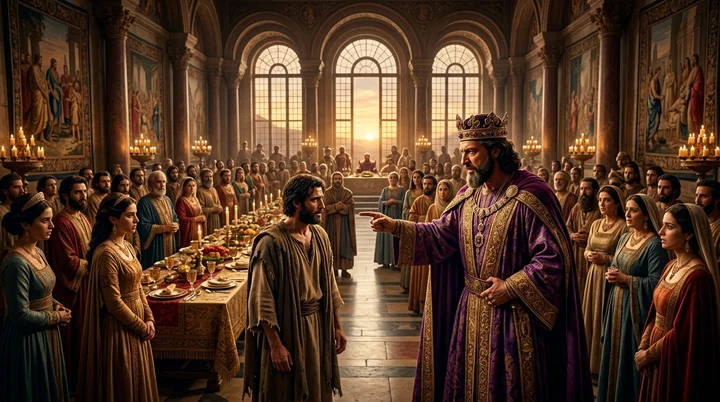
Cross-references
- Luke 14:16-20
Then said he unto him, A certain man made a great supper, and bade many:
Invited guests make excuses and turn to their affairs instead of attending the feast.
- Revelation 19:9
And he saith unto me, Write, Blessed are they which are called unto the marriage supper of the Lamb. And he saith unto me, These are the true sayings of God.
Names the Lamb’s marriage supper represented by the king’s wedding feast.
- Matthew 22:11-14
And when the king came in to see the guests, he saw there a man which had not on a wedding garment:
The king examines the guests and excludes the garmentless, showing the need for Christ’s righteousness.
- Luke 14:23
And the lord said unto the servant, Go out into the highways and hedges, and compel them to come in, that my house may be filled.
The supper parable contrasts rejected invitations with the command to bring in other guests.
- Luke 14:17
And sent his servant at supper time to say to them that were bidden, Come; for all things are now ready.
The ready invitation to the feast is refused with excuses.
- Matthew 21:33-41
Hear another parable: There was a certain householder, which planted a vineyard, and hedged it round about, and digged a winepress in it, and built a tower, and let it out to husbandmen, and went into a far country:
Both parables portray hearers rejecting God’s invitation and facing judgment.
- Matthew 22:9-10
Go ye therefore into the highways, and as many as ye shall find, bid to the marriage.
After the first guests reject the invitation, the servants gather others for the feast.
- Luke 14:24
For I say unto you, That none of those men which were bidden shall taste of my supper.
Those who refused the invitation will not taste the feast.
- Luke 14:21
So that servant came, and shewed his lord these things. Then the master of the house being angry said to his servant, Go out quickly into the streets and lanes of the city, and bring in hither the poor, and the maimed, and the halt, and the blind.
Both command servants to go out and extend the invitation.
- Matthew 22:13
Then said the king to the servants, Bind him hand and foot, and take him away, and cast him into outer darkness; there shall be weeping and gnashing of teeth.
It gives the fate of the guest who lacks the wedding garment.
- Revelation 19:8
And to her was granted that she should be arrayed in fine linen, clean and white: for the fine linen is the righteousness of saints.
Fine linen represents the righteousness required of the wedding guests.
- Matthew 21:43
Therefore say I unto you, The kingdom of God shall be taken from you, and given to a nation bringing forth the fruits thereof.
The rejected call leads to the kingdom being given to another people.
- Matthew 20:4
And said unto them; Go ye also into the vineyard, and whatsoever is right I will give you. And they went their way.
The vineyard workers’ call is applied to laboring for God.
- Matthew 22:14
For many are called, but few are chosen.
The saying about many being called and few chosen is explained as people refusing the invitation.
- Revelation 19:7
Let us be glad and rejoice, and give honour to him: for the marriage of the Lamb is come, and his wife hath made herself ready.
Names the marriage represented by the king’s son’s wedding.
Commentary
Each commentary is drawn from primary sources: the writings of Ellen G. White and Adventist pioneers and periodicals. Each commentary is separate. Its own words are not a quotation; follow the references to read the source passages.
Ellen G. White
68 sources
The verse tells of invited guests treating a king's invitation to his son's marriage as unimportant and turning away to ordinary work, one to farming and another to trading.COL 307.2–308.1Ms 143, 1898, par. 1–3Ms 185, 1903, par. 1–3Ms 29, 1898, par. 5–7RH May 8, 1900 Those first bidden were God's chosen people, who had long received the call through prophets yet turned wholly to worldly gain and refused to seek Him.COL 307.2–308.1Ms 18, 1899, par. 1–4Ms 8, 1874, par. 4–5RH May 8, 1900RH May 8, 1900 Such slighting insults the king and abuses his kindness, bringing exclusion from the feast and, beyond mere exclusion, judgment upon the rejecters.COL 307.2–308.1Ms 149, 1898, par. 3Lt 49, 1887, par. 5 The parable therefore requires all who would remain as guests to possess the wedding garment, which is Christ's righteousness and a character meeting God's standard.COL 307.1Ms 13, 1899, par. 1–2Lt 49, 1887, par. 5Ms 143, 1898, par. 6–88MR 309.1–310.1 After that refusal the invitation goes out to all who will come, and the present warning is not to let farms, business, pleasure or ease keep the heart from answering while probation still lingers.COL 307.2–308.1Ms 29, 1898, par. 5–76T 412.2COL 319.2–36MR 388.2
Parable Words and Setting
The verse belongs to a king's invitation to a marriage made for his son, proceeding from One vested with power to command and conferring high honor.COL 307.2–308.1Ms 149, 1898, par. 3 It is the second parable of invitation, involving much, so that refusal is a deeper insult with deeper guilt than refusal of a householder's supper.COL 307.2–308.1Ms 149, 1898, par. 3 The honor is unappreciated and the king's authority despised when the call is made light of.COL 307.2–308.1 The king first sends servants to call them that were bidden to the wedding.Ms 143, 1898, par. 1–3Ms 46, 1896, par. 1–2 Then comes a second announcement that dinner is ready, with oxen and fatlings killed, and a final call that all things are now ready.Ms 143, 1898, par. 1–3Ms 46, 1896, par. 1–2 Even then servants are sent to invite personally and to assure the bidden guests, who still refuse the general invitation.Ms 143, 1898, par. 1–3Ms 46, 1896, par. 1–2
One going to his farm means turning to field work, and another to his merchandise means turning to trading and business.Ms 143, 1898, par. 1–3Ms 185, 1903, par. 1–3 Going to the farm is field work with two oxen yoked together to a plow in an open field.Ms 143, 1898, par. 1–3COL 307 Going to merchandise is going to business pursuits instead of the feast.Ms 143, 1898, par. 1–3Ms 185, 1903, par. 1–3 The marriage in the parable represents the union of humanity with divinity.COL 307.1 Marriage itself is a divine institution, innocent joy at a wedding is pleasing, and marriage serves to illustrate important truths.COL 307.13RED 13.3–14.1
The invitation to the King's marriage feast had been sent for many centuries, yet the world paid little heed to it.Ms 8, 1874, par. 4–5 Those invited made light of it and went about their worldly pursuits and pleasures instead.Ms 8, 1874, par. 4–5
First Guests Invited
Those first bidden to the marriage are the Jewish people, God's chosen people, the princes of the land and the higher classes.COL 307.2–308.1Ms 18, 1899, par. 1–4RH May 8, 1900 The king's first call goes to them, yet the honor is unappreciated and the invitation is made light of and refused.COL 307.2–308.1Ms 18, 1899, par. 1–4 God had repeatedly sent prophets to them with the invitation and its privileges, but they did not heed them and rejected Christ and the righteousness He offered.RH May 8, 1900Ms 149, 1898, par. 7–8 Had they accepted the call they could have joined the messengers in inviting others, and the truth continued to be presented so they would have another opportunity to respond.RH May 8, 1900
The first gospel call comes to those in the higher walks of life, to the shepherds of the flock and divinely appointed teachers as a word to be heeded.Ms 18, 1899, par. 1–4Ms 18, 1899, par. 9–10 It comes to men in business life, in positions of trust, men with large inventive faculties and scientific insight, men of genius, men of organization, and men to whom many talents have been entrusted, to be brought to them in a manner different from the way they have heard it in the past.Ms 18, 1899, par. 9–10 Those belonging to the higher ranks of society are to be sought out with tender affection and brotherly regard, for this class has been too much neglected.Ms 18, 1899, par. 9–10 Those in the highways of the parable are the higher classes in the highways of life, and reaching them with the invitation is difficult because few believers can obtain association with them.Ms 74, 1900, par. 11
They refused because they were wholly intent on securing worldly gain, absorbed in buying and selling, planting and building, making business transactions of such importance that eternity was left out of the reckoning.Ms 18, 1899, par. 1–4RH May 8, 1900 They turned back from the Lord and did not seek nor inquire for Him, showing lack of respect for the master of the feast.Ms 18, 1899, par. 1–4RH May 8, 1900 They thought their own wisdom sufficient and spoke as though they were oracles of wisdom.Ms 18, 1899, par. 1–4 Few great and worldly-wise men believe because this present world is their god, though Christ as Sin-bearer opened the way to eternal life for all who desire it above every earthly consideration and sent the invitation at the cost of His own precious blood.Ms 46, 1896, par. 14–16 They listened to the wily foe and framed foolish excuses to avoid the obligation, refusing Him who could give real value to character, restore allegiance to God and His commandments, imprint His own image, make them truly great, and turn crosses into crowns, and they would not take the marriage contract nor believe the promise to make man more precious than fine gold, while God allows everyone to choose his own Lord.Ms 46, 1896, par. 14–16
Manner of Refusal
Those bidden treated the king's gracious call to his son's wedding feast as unimportant, refused it, and went their own ways to ordinary concerns, one to farm work and another to business.Ms 185, 1903, par. 1–3Ms 29, 1898, par. 5–7RH May 8, 19006T 412.2Ms 70, 1901, par. 6–8 Temporal matters took priority over eternal things, worldly interests kept them from accepting, and they failed to recognize the blessing offered in the invitation.Ms 29, 1898, par. 5–7RH May 8, 19006T 412.2 Some give priority to farms, trade, or other work and turn away, yet the call must be answered, even to leave occupations to warn the world.6T 412.2SBAWP 16.1 The banquet is the treasures of God's Word and the garment is Christ's righteousness, which a carnal spirit cannot appreciate or enjoy.Ms 70, 1901, par. 6–8 With all with one consent beginning to make excuse, this refusal of the general invitation continued even when servants were sent to invite personally and assure that all things are now ready, with no more favorable response than the first guests, pleading circumstances and supposed duties.Ms 46, 1896, par. 1–2Ms 149, 1898, par. 3
They were wholly intent on securing worldly gain, absorbed in buying and selling, planting and building, making business transactions of such importance that eternity was left out of the reckoning.Ms 18, 1899, par. 1–4RH May 8, 1900 That refusal showed lack of respect for the master of the feast, turning back from the Lord without seeking nor inquiring for Him, thinking their own wisdom sufficient and speaking as oracles of wisdom.Ms 18, 1899, par. 1–4RH May 8, 1900 They pride themselves that they will buy and sell and get gain and think they cannot afford to lose any worldly advantage for the heavenly feast.Ms 143, 1898, par. 5Ms 8, 1874, par. 11 Their excuses reflect false confidence that there is no urgency and that worldly interests must be protected, while they neglect preparation for the marriage supper; those who trust God's care and persevere in doing His will are promised righteousness, glory, and entrance into His kingdom.Ms 143, 1898, par. 5Ms 8, 1874, par. 11
Pleasure, social influence, and daily pursuits can keep those invited to the marriage supper from accepting the call and receiving righteousness.14MR 122.2–123.1STMW10 4.2–5.1Lt 5, 1897, par. 7–10 Through love of ease and selfish indulgence, those who have received opportunities and Bible truth fail to serve others and to live it faithfully, leaving talents unused and accountable for neglect.14MR 122.2–123.1STMW10 4.2–5.1Lt 5, 1897, par. 7–10 The same refusal is seen when people assent to truth but do not obey because a spouse or the approval of others holds them back; accepting requires personal faith in God as Saviour and Father, trust in His promises, and obedience to His will.Lt 49, 1887, par. 514MR 19.1–3 It is also seen when despisers of God are joined in indulging appetite for beer and wine and stronger drink, or when one comes in defiled garments as good enough, which insults the Lord and abuses His benevolence.Lt 49, 1887, par. 514MR 19.1–3
Becoming so engaged in business that preparation is neglected means leaning on others instead of making God the dependence, holding stubborn self-will, and finding Christ's humility and meekness unattractive, thus failing to obtain the experience needed to be clothed in His righteousness.Lt 24, 1892, par. 5–7Ms 139, 1898, par. 83 That choice is living to please self and absorbing means to flatter vanity instead of working as Christ worked, while those who do not make light show the wedding garment and convey the invitation to the marriage supper of the Lamb.Lt 24, 1892, par. 5–7Ms 139, 1898, par. 83 Making light is presumption in matters where eternal interests are involved, measuring character by human ideas rather than God's standard and continuing in sin, which hinders His promise and results in loss of the soul.Ms 13, 1899, par. 1–2Ms 6, 1897, par. 1–4 People can even be so occupied with familiar religious efforts and interests that they neglect the call while hungry souls who have not heard remain unreached.Ms 13, 1899, par. 1–2Ms 6, 1897, par. 1–4
Consequence of Rejection
To make light of the wedding invitation is to despise a king's command from One vested with power to command, conferring high honor that goes unappreciated, and to insult the Lord and abuse His gracious benevolence.COL 307.2–308.1Ms 149, 1898, par. 3Lt 49, 1887, par. 5 The robe for the feast has been purchased and provided as the robe of Christ's righteousness, yet to despise the call, to join despisers in indulging appetite for beer and wine and stronger drink, or to come in one's own defiled garments as good enough, is contempt for the king's authority.COL 307.2–308.1Lt 49, 1887, par. 5 This turning to farm and merchandise belongs with scornful treatment and even slaying of the king's servants, pleading circumstances and supposed duties with no more favorable response than the first guests, and it is a deeper insult with deeper guilt than slighting a householder's supper.COL 307.2–308.1Ms 149, 1898, par. 3 While slighting the householder's invitation in the great supper brings exclusion from tasting the supper, this more dreadful rejection brings more than exclusion from presence and table, even the sending of armies to destroy the murderers and burn up their city.COL 307.2–308.1
Refusal leaves the bidden shut out, for the feast was prepared for their benefit and they rejected warning and the offer of pardon and salvation for lesser personal interests and their own pursuits.Ms 59, 1895, par. 34–39Lt 7, 1869, par. 6–7 To seek admission after the door is closed comes too late, and when probation closes there will be no second invitation.Ms 59, 1895, par. 34–39Lt 7, 1869, par. 6–7 Such neglect of preparation for eternal life turns from light and truth and can influence others to remain unready.Ms 59, 1895, par. 34–39Lt 7, 1869, par. 6–7 To turn aside to land and trade, to indulgence and the cares of this life, overcharges the heart and leaves a person unready, so that the close of probation and the coming of the Son of man in an hour not expected comes unawares.COL 319.2–3 To make light of the call in this way is to risk being found at the King's feast without a wedding garment, unwatched, naked and shamed, when watchfulness and keeping garments ready are required because probation is fast closing and the end is near.COL 319.2–3
Making light is presumption in matters where eternal interests are involved, measuring character by human ideas rather than agreeing with the standard God has given for the marriage of humanity with divinity.Ms 13, 1899, par. 1–2 Continuing in sin hinders God's promise and results in loss of the soul, and escape requires a firm stand for Christ, surrendering to God what is already His own, and accepting the righteousness of Christ in order to have on the wedding garment.Ms 13, 1899, par. 1–2 God's dealing with such wrongdoers in separating them from His presence and casting them out is just and not arbitrary, but exactly what His Word imposes.Ms 13, 1899, par. 1–2Lt 49, 1887, par. 5 Power to conquer appetite and every unholy passion has been brought by Christ's long emaciating fast in the wilderness of temptation on the point of appetite and His treading the winepress alone, which broke the power of Satan and brought divine strength.Lt 49, 1887, par. 5
Wedding Garment Required
The parable teaches a lesson of the highest consequence, that all who shall be counted fit guests for the wedding must possess the wedding garment, which is the character that meets God's standard for the marriage of humanity with divinity.COL 307.1Ms 13, 1899, par. 1–2 Making light of the invitation and going one's own way instead of preparing to meet that standard is presumption in matters where eternal interests are involved, measuring character by human ideas rather than agreeing with the standard God has given.Ms 13, 1899, par. 1–2 Continuing in sin hinders God's promise and results in loss of the soul, and escape requires a firm stand for Christ, surrendering to God what is already His own, and accepting the righteousness of Christ in order to have on the wedding garment.Ms 13, 1899, par. 1–2
The garment is Christ's righteousness, the robe purchased and provided, woven in the loom of heaven, imputed righteousness, the white linen of a clean pure character, spotless as the pure white lily, truth as it is in Jesus.Lt 49, 1887, par. 5Ms 143, 1898, par. 6–88MR 309.1–310.1Ms 109, 1901, par. 9 It is the richest gift that can be bestowed on mortal man, provided by Christ who longs to bestow peace and happiness and joy, and men caught in the din and confusion of this earth must give their whole attention to securing it.Ms 109, 1901, par. 9 No one has a garment of his own that gives a position of honor at the marriage supper of the Lamb, for worthiness to sit down at that feast comes only from Christ's robe alone.8MR 309.1–310.1 That robe is offered even to the lowliest, and being saved for the feast is not because of superior intellect or refinement of ideas but through the grace of God, and only this righteousness makes the sons and daughters of Adam members of the family in heaven.8MR 309.1–310.1
Having a place in God's heavenly kingdom, the King's feast, requires perfection.COL 315.1 God's law is a transcript of His own character and the standard of all character, showing the kind of people God will have to compose His kingdom, and Christ's life on earth was a perfect expression of that law.COL 315.1 Those who claim to be God's children must become Christlike in character and obedient to God's commandments, and then God can trust them to be of the number who shall compose the family of heaven.COL 315.1 Clothed in the glorious apparel of Christ's righteousness, they have a place at the King's feast and a right to join the blood-washed throng.COL 315.1
To partake of the feast is to say that one has accepted Christ as personal Saviour and to wear His distinguishing dress, no longer living the old citizen life lived in ignorance, with changed speech and conversation where faith stands not in the wisdom of men but in the power of God.RH Feb 26, 1901Ms 143, 1898, par. 6–8 Belief about Christ is not the same as receiving Him as a personal Saviour and bringing Him into daily life, and those who hear and assent to the truth but remain unchanged in habit and practice are represented by the guest without the garment.RH Feb 26, 1901 Profession without transformation dishonors Christ and is not acceptable to God.RH Feb 26, 1901 Professing to believe and speaking God's Word are not enough if Christ's character is absent and the Word is not obeyed.Lt 94, 1898, par. 10–15 Accepting the truth in name but failing to practice it, neglecting service and failing to seek and save the lost, reveals that the truth has not entered the heart, and such are accountable for opportunities and abilities they have not faithfully used.6T 295.2
Making light of the supper and going their own ways pictures the church refusing the richest blessings from heaven proffered to bring them to understand their true state and to come to the supper prepared for them in the message of justification by faith and the imputed righteousness of Christ.Lt 61, 1893, par. 2–3 Instead of drinking fully from the cup held to them and coming in, they hold aloof and harmonize only in part, clinging to their old citizen's dress rather than accepting the dress prepared for them.Lt 61, 1893, par. 2–3 To come into Christ's presence in one's own defiled or citizen's garments as good enough insults the Lord and abuses His benevolence, and does the greatest dishonor to Him who invites and provides the robe.Lt 49, 1887, par. 5Lt 24, 1892, par. 5–7 They refuse because they pride themselves that they will buy and sell and get gain and think they cannot afford to lose any worldly advantage for the sake of enjoying the heavenly feast, and because they know that coming means putting off their common citizen's dress and wearing the robe of Christ's righteousness, thus showing that they are His church, married to Christ as His bride.Lt 24, 1892, par. 5–7Ms 143, 1898, par. 5 Becoming so engaged in business that preparation is neglected, they lean on others instead of making God their dependence, hold stubborn self-will, find the humility and meekness of Christ unattractive, and fail to obtain the experience needed to be clothed in His righteousness.Lt 24, 1892, par. 5–7
Many profess to have accepted the invitation to the marriage supper yet have not put on the wedding garment, and remaining unrepentant in neglect of the invitation leaves one to come to the supper without the garment required to share in it.Lt 90, 1898, par. 3Lt 29, 1899, par. 8–10Ms 111, 1906, par. 1–3 They have a form of godliness but do not show the inward working of the Holy Spirit in life and practice, though they seem active in service and are ready to give counsel about how the work should go forward, but their counsel is not always from above.Ms 111, 1906, par. 1–3 Such need to search their own hearts thoroughly and to arouse themselves into humble, sacred nearness to God.Ms 111, 1906, par. 1–3 Time is short and everyone must be prepared for the marriage supper, and preparation means accepting the robe of Christ's righteousness so as not to be found without it, and having the peace of Christ.Lt 86, 1889, par. 4 Satan works and will work in great power with the children of disobedience as agents to destroy the soul, so the devil must be resisted that he may flee.Lt 86, 1889, par. 4 The invitation of the supper is a final call that must be answered by receiving the white robe of Christ's righteousness, and its message is a repast of truth to be heard with earnest interest.Lt 115, 1899, par. 4–5Lt 86, 1898, par. 17
Invitation to Others
After the Jewish people rejected the call of mercy, it went to the Gentiles, for the heavenly banquet was prepared by God sending His Son into the world to die for men that through faith in Him they should become one with God.COL 307.2–308.16MR 388.2 The invitation and its promises are not made to a few but to all who will come, with no walls built to keep any living soul from salvation and wonderful possibilities provided for everyone who has faith in Christ.6MR 388.2 Coming means accepting Christ as a personal Saviour, returning to loyalty and to perfect obedience to all God's commandments.6MR 388.2 All who are willing to be saved by Christ are God's elect, and it is the obedient who are predestinated from the foundation of the world to effectual salvation as a peculiar people chosen from among men to the praise and glory of His grace, power, and wisdom.6MR 388.2
The banquet represents the treasures of God's Word, the gospel feast and marriage supper of the Lamb, offered in the invitation Come, for all things are now ready.Ms 143, 1898, par. 6–8Ms 70, 1901, par. 6–8 In His Word God sets before souls a banquet of marrow and fatness that will satisfy every want, while He waits for their response.ST Mar 17, 189821MR 370.5 Every heart may and can respond to His offered grace and bestowed love if it will, but not every heart responds, and God cannot work for the soul that does not respond.ST Mar 17, 1898 The invitation calls for a willing response to His love, which a carnal spirit cannot appreciate or enjoy.Ms 70, 1901, par. 6–8Lt 153a, 1897, par. 16–18
The call is a persuasive gospel invitation to be carried to people of every class met in the highways, including those of worldly reputation whose acceptance of the truth can help the work and open access to others.Ms 185, 1903, par. 19–20 The final call to the marriage supper is still to be given to those who have not heard it, and those willing to come are to be gathered in.GW 64.3Lt 4, 1899, par. 17–18 That carrying of the invitation reaches people in Cooranbong and nearby places where souls are expected to respond, and people in the Southern field who should have been called.7T 222.1Lt 59, 1899, par. 6 It reaches the freed people of the South who were not called despite light and opportunity, and people in high places and in Battle Creek who are to be graciously invited and given a fair chance to hear and weigh the truth rather than be neglected.16MR 163.2–164.2Lt 11, 1895, par. 18–21RH Oct 27, 190421MR 370.5
Earnest personal efforts are needed to call people, including influential and wealthy people, asking whether they are ready for immortal life.Lt 34, 1900, par. 28–31 Men of the world with God-given powers of organization are needed to carry forward the work for the last days, not all as preachers but to take management of institutions, to act as leaders, captains, educators, faithful financiers, and presidents, discerning what needs to be done and standing solid as a rock to principle in the present crisis and in future perils.Ms 18, 1899, par. 9–10 They must not be passed by as hopeless but be urged, taken hold of, and brought in, for Christ has prepared the banquet for them and longs to bestow peace and happiness and joy upon them.Ms 109, 1901, par. 9 Those who do not make light show they have on the wedding garment, the robe of Christ's righteousness, and convey to others the invitation to the marriage supper of the Lamb, proclaiming in message and life the rich repast of truth and the redemption offered through His atoning death which prepared the feast.Ms 139, 1898, par. 83 The work of inviting requires prayer, faith, and determined unselfish labor through love for others to bring people to the feast.Ms 7, 1900, par. 12–13Lt 86, 1895, par. 6 The invitation must not be lowered to win converts but people called up to God's standard, and it must not be neglected while people live to please themselves or absorb means to flatter vanity.Ms 7, 1900, par. 12–13Ms 124, 1898, par. 40–41
Present Call to Respond
In the setting of the last gospel invitation the verse warns that people may hear God's message yet treat the gracious call to the marriage feast as unimportant and turn instead to their own affairs, one to farm work and another to business and merchandise.Ms 29, 1898, par. 5–76T 412.2ST Oct 8, 1885RH Dec 7, 1916 Their excuses show temporal matters taking priority over eternal things, ordinary work and business absorbing them so that earthly concerns are valued above eternal things and eternity is left out of the reckoning.Ms 29, 1898, par. 5–7ST Oct 8, 1885RH Dec 7, 1916 They fail to recognize the blessing offered in the invitation and regard eternal things as secondary.Ms 29, 1898, par. 5–7ST Oct 8, 1885
Time is short and everyone must be prepared for the marriage supper of the Lord, for probation is fast closing and the end is near.Lt 86, 1889, par. 4COL 319.2–3 Preparation means accepting the robe of Christ's righteousness which is the wedding garment, so as not to be found without it, and having the peace of Christ, with watchfulness and keeping garments ready.Lt 86, 1889, par. 4COL 319.2–3 To make light by turning aside to land, trade, indulgence and the cares of this life overcharges the heart and leaves a person unready, so that the close of probation and the coming of the Son of man in an hour not expected comes unawares, risking being found at the feast unwatched, naked and shamed.COL 319.2–3 Satan works and will work in great power with the children of disobedience as agents to destroy the soul, so the devil must be resisted that he may flee.Lt 86, 1889, par. 4
The verse warns against letting care for earthly things keep people from accepting God's call, when invited guests dismiss the wedding invitation and put ordinary worldly concerns first in false confidence that there is no urgency and that worldly interests must be protected.Ms 8, 1874, par. 18Ms 8, 1874, par. 11 Those who heed the invitation and make ready to enter the wedding and respond faithfully may share the promised reward.Ms 8, 1874, par. 18 Those who trust God's care and persevere in doing His will are promised righteousness and glory and entrance into His kingdom.Ms 8, 1874, par. 11
Accepting requires personal faith in God as Saviour and Father, trust in His promises, and obedience to His will.Ms 13, 1899, par. 1–214MR 19.1–3 The parable presents the marriage of humanity with divinity and the standard of character each must reach to be counted a fit guest, and making light is presumption in matters where eternal interests are involved, measuring character by human ideas rather than agreeing with the standard God has given, and continuing in sin which hinders God's promise and results in loss of the soul.Ms 13, 1899, par. 1–2 Escape requires a firm stand for Christ and surrendering to God what is already His own in order to have on the wedding garment.Ms 13, 1899, par. 1–2 The same refusal is seen when people assent to truth but do not obey because a spouse or the approval of others holds them back.14MR 19.1–3 Christ has prepared a banquet and longs to bestow peace and happiness and joy, providing the wedding garment, the robe of His righteousness spotless as the pure white lily, the richest gift that can be bestowed on mortal man, which they must give their whole attention to securing, and they must not be passed by as hopeless but be urged, taken hold of, and brought in.Ms 109, 1901, par. 9
Making light by going to farm or merchandise means becoming so engaged in business that preparation is neglected, leaning on others instead of making God the dependence, holding stubborn self-will, and finding the humility and meekness of Christ unattractive, thus failing to obtain the experience needed to be clothed in the righteousness of Christ.Lt 24, 1892, par. 5–7 Coming in citizen's garments instead of putting on the spotless robe prepared for guests does the greatest dishonor to Him who invites and provides the robe.Lt 24, 1892, par. 5–7 Unless there is a decided change they will cherish traits that unfit them for seeing and understanding the working of the Spirit of God, be led by another spirit, and stand with the foolish virgins who have no oil in their vessels with their lamps and with the man who came to the feast without a wedding garment.Lt 24, 1892, par. 5–7
Sources
Pioneers and periodicals
103 sources
The verse pictures invited guests dismissing a king's announcement that his son's wedding dinner is ready and turning back to their own farm work and trading instead.ST Oct 18, 1899ST Aug 4, 1914ST Jan 22, 1894 It portrays Israel at the first advent scorning heaven's call through John the Baptist and then Christ and his disciples, rejecting the Messiah and losing the kingdom that was then given to another people bringing forth its fruits.ST Oct 18, 1899GSAM 134.3–4ST Nov 22, 1910ST Jun 29, 1882ST Jul 7, 1890 The dinner call is the gospel invitation to all, declaring all things ready and urging every soul to follow Jesus and enter the kingdom now rather than turn away to other affairs.GSAM 134.3–4ST Mar 28, 1878ST Feb 20, 1901ST Apr 19, 1883 Neglecting that counsel leaves souls unprepared when the King comes to examine the guests in judgment before Christ returns, when only those clothed in Christ's righteousness will remain.RH Apr 2, 1861RH Jan 8, 1857RH Apr 2, 1861RH Oct 11, 1915RH Oct 7, 1915 It therefore warns the last days against letting ordinary pursuits, gain, and business crowd out readiness for Christ's coming and the marriage supper, for there is no time to delay.ST Jun 2, 1898RH Mar 7, 1912ST Oct 18, 1899ST Jul 31, 1879RH Mar 10, 1874
Parable Setting and Terms
The invited guests treated the king's call to his son's wedding feast as unimportant and went back to their own work and business, one to his farm and another to his merchandise, turning aside to worldly concerns instead of accepting because the celebration was ready and they had been invited.RH May 8, 1900ST Oct 18, 1899ST Aug 4, 1914ST Jan 22, 1894 Their everyday pursuits took priority over the invitation, and their indifference in returning to their own concerns was rejection of the gospel invitation, belonging to the parable in which the king later examines the guests and rejects those without wedding garments.RH Nov 12, 1857 The general bidding of the guests had already gone before, and the verse portrays the special dinner calls as the announcement to those already bidden that dinner is ready and all things are prepared.ST Jun 29, 1882ST Jun 9, 1898 Their preoccupation with other interests showed they did not believe the feast was ready, and their attention to their own affairs illustrates the failure of that call at the first advent despite having already been invited.RH Jan 23, 1855ST Jun 9, 1898
The first invitation given by the prophets and by John the Baptist had been ignored, and the second invitation in the verse is the same invitation now given by Christ and his disciples to the Jews, a work in which God has set his hand to furnish the wedding with guests and leave those bidden without excuse.ST Jun 29, 1882ST Apr 21, 1898 Making light of the invitation by going to farm and merchandise proved them unworthy and the call of no effect, followed by destruction of the city and people, meaning the destruction of Jerusalem and rejection of the Jews and the turning of the king to another people bringing forth fruit.ST Jun 29, 1882 Making light of it and slighting the king's invitation by going their own ways, one to his farm and another to his merchandise, is distinct from laying hold on the messengers and killing them, though both belong to the two calls and their rejection.ST Feb 12, 1902 Those two calls and their rejection had a special and solemn meaning for those who first heard the parable, and the lesson still applies to the church today.ST Feb 12, 1902
The word for farm means a field, as in the prodigal son account in Luke 15:15.RH Jun 7, 1906 The parable is similar and parallel to the great supper with excuses in Luke 14:15-24, in which invited guests make excuses instead of accepting the supper invitation.RH Sep 2, 1851ST Mar 26, 1896 In that parallel the excuse about purchased land is linked to the claim that the Lord could not yet come because much of the earth remained uninhabited.RH Sep 2, 1851 The verse belongs to Jesus' teaching in the temple on Tuesday, his last day teaching there, when he also answered questions and denounced hypocrisy.RH Jan 29, 1914 It was spoken during the last week on one of the busiest days of his earthly ministry, the last day of his public ministry as done in the temple, within Matthew 21:23 to 23:39, and the events that followed took place on the same day and occasion.ST Mar 23, 1888ST Apr 21, 1898
The chapter also recites the two great commandments with the declaration that the doers shall live, which repeals none of the provisions of the moral code as originally enacted and voids not a single duty enjoined in it, for Jesus came not to destroy the law but to fulfill it.ST Jun 7, 1877 At the cross the holy statute was gloriously honored by him who gave his life in its vindication, and God gave his Son to that death to preserve his unchangeable statute, so that sinful men saved from the penalty could be given another opportunity to secure eternal life by keeping the commandments of God and the faith of Jesus.ST Jun 7, 1877 A parable is used to illustrate truth without endorsing every action or circumstance in the story, so the story does not establish that making such a feast is right nor justify the king's severe treatment of the man without a wedding garment, though it can illustrate a righteous administration.RH Mar 24, 1863
The kingdom of heaven is likened to a certain king who made a marriage for his son and sent his servants to call the bidden, where some excuse themselves because their own business is more pressing, and the narrative traces the work of God through Christ for the salvation of sinners and the judgment of those not prepared to stand before the Lord.RH Apr 15, 1858ST Aug 7, 1901 The king's son is the Son of God and his marriage is the marriage of the Lamb, whose Bridegroom is the Lord Jesus.RH Apr 15, 1858ST Aug 7, 1901 The marriage and the reception of the kingdom to be given to the Son of God are identical, meaning his coronation and the reception and inauguration of the kingdom and his induction into his everlasting kingdom.RH Apr 15, 1858ST Nov 22, 1899RH Apr 9, 1872 It is a definite event located at a particular time in prophetic fulfillment, taking place in heaven while Christ is absent from earth after his ascension to sit at the right hand of the throne, when he receives his kingdom, and just before he returns at the second coming from the wedding.RH Apr 15, 1858 The marriage does not take place until all the guests have accepted the invitation, so Christ's kingdom is not of this present world but will be established in the future world, and the guests are examined before they are called to the marriage supper of the Lamb.RH Apr 9, 1872
The parable shows the reception of his kingdom by the Lord, not the union of Christ with his church that comes through faith on the part of each believer.ST Jun 3, 1897 In that reception Christ is the Bridegroom and Everlasting Father, the city of the New Jerusalem standing for the entire kingdom is the bride and mother, and the people of God are the children and guests.ST Jun 3, 1897 The church is made up of guests invited to the marriage and is distinct from the bride, while Christ is the bridegroom and the New Jerusalem is the bride, and the wedding parable distinguishes the invited guests representing the church from the bride as the holy city Jerusalem.RH Mar 23, 1852RH Apr 2, 1861 The banquet is presented as a feast to which chosen guests are invited, and the invitation to the wedding supper extended to all represents the church sitting with him at his coming.RH Dec 8, 1910ST May 11, 1915 It refers to the marriage supper of the Lamb, the future time when the redeemed share the feast in God's kingdom.RH Dec 23, 1862 The king coming in to see the guests pictures the judgment, where mere profession of religion will not pass for possession, and all who are not clothed with his righteousness will be cast out, so those found ready have received Christ's wedding garment.ST Jun 3, 1897ST Nov 22, 1899
The verse belongs to Christ's teaching about preparation for the marriage supper, which illustrates his work of inviting and gathering guests.ST Nov 12, 1912ST Sep 12, 1878 The parable also includes a later examination of the guests, representing the choosing of those worthy of eternal life.ST Nov 12, 1912
Israel's Rejection and Aftermath
The professedly loyal subjects who scorned the call and turned to their own affairs depict the Jews scorning the Saviour at the first advent, putting the message away, scoffing at it, rejecting and crucifying the Messiah and killing Him and His apostles, with the consequent loss of their city.ST Oct 18, 1899GSAM 134.3–4RH Sep 9, 1858 The general bidding had already gone before through the prophets and through John the Baptist and had been ignored, and the dinner call in the verse is the same invitation now given as a special announcement that dinner is ready, given by Christ and His disciples to the Jews.ST Jun 29, 1882ST Apr 21, 1898 In that reckoning the first call came through John the Baptist and the second through Christ.
As a nation the Jews made light of heaven's distinctive invitation through John the Baptist to prepare for the gospel and welcome the Messiah, pursuing ordinary concerns instead despite signs that their time of visitation had come.ST Aug 13, 1912 Their making light of the invitation and returning to farm and merchandise is their proving unworthy, and the call proving ineffective and of no effect.ST Jun 29, 1882RH Jan 23, 1855 Rejecting both calls cost them the blessing of the former rain at Pentecost and kept them from following Christ into the heavenly sanctuary, though they professed the law while rejecting Christ. The apostles still offered mercy and some accepted the call, but most were scattered in A.D. 70.
Their rejection of the calls associated with John the Baptist, then Christ and His followers, led to their rejection as a nation and the announced desolation of their house, followed by destruction of Jerusalem and the people by armies in national destruction and dispersion.ST Jun 29, 1882ST Jul 7, 1890ST Jul 27, 1882ST Aug 13, 1912 Those who recognized John's message and accepted the invitation were saved and will share in the first resurrection and the marriage supper of the Lamb.ST Aug 13, 1912 Because Israel rejected Christ as king, the kingdom was taken from them and given to a nation bringing forth its fruits, so the invitation went to the Gentiles and to another people.ST Jun 29, 1882ST Jul 7, 1890RH Aug 20, 1872RH Jan 23, 1855RH Apr 9, 1872 Their unwillingness delayed the wedding feast, and from that time preaching that the kingdom of heaven is at hand ceased.ST Nov 22, 1910RH Apr 9, 1872
The people first invited represent God's chosen people, to whom prophets were repeatedly sent but who did not heed them.RH May 8, 1900 Had they accepted they could have joined the messengers in inviting others, yet truth continued to be presented to give them another opportunity.RH May 8, 1900 The invitation also represents the blessings offered to Israel had they accepted Jesus as Messiah.ST Jul 7, 1890
Gospel Call and Judgment
The dinner call is the gospel of Christ, and the wedding call is that gospel invitation extended to everyone and open to all, declaring that all is ready.GSAM 134.3–4ST Mar 28, 1878ST Jul 28, 1898 It is a call to follow Jesus and enter the kingdom, to gather into the fold of grace and the Saviour's love where there is still room, and it must be received now and responded to rather than turned from.ST Mar 28, 1878RH May 12, 1903ST Jul 28, 1898 The message must tell not only that everything is ready but how to enter, urging people to come in.ST Feb 18, 1886
God sets before souls in His word a banquet full of marrow and fatness that will satisfy every want, and waits for their response.ST Mar 17, 1898 Every heart may and can respond to offered grace and bestowed love if it will, but not every heart responds, and God cannot work for the soul that does not respond.ST Mar 17, 1898
That gospel feast invitation is being heard now and souls are urged to accept it before it is withdrawn.ST Feb 18, 1886RH Oct 16, 1913 The refusal belongs to the wider period of gospel invitation and preparation for the supper that began when the plan of salvation was first made known, when invited guests treated the call as unimportant and turned to ordinary affairs.ST Jul 27, 1882
People refuse salvation by their own choice in turning to their own affairs, not because they were unable to be saved.ST Feb 20, 1901 The call is offered freely, and those not chosen decline its terms, so not everyone who is called will be saved.ST Feb 20, 1901ST Apr 19, 1883 Their absence from the feast is no fault in God, for earthly affairs occupied their attention and claimed their hearts.RH Feb 5, 1857 God has set His hand to furnish the wedding with guests, and this message given by others to the same people who ignored the first invitation by the prophets and by John the Baptist leaves them without excuse, yet it must still be proclaimed urgently as the last call of mercy to sinners.ST Apr 21, 1898ST Sep 16, 1875
Making light of the king's invitation by turning to work and business illustrates the folly of making excuses during probationary time and the awful results for those who refuse.RH Mar 9, 1905 It represents sinners rejecting God's offer of mercy and deriding His messengers, who will ultimately face judgment if they remain rebellious.
The gathering of both bad and good occurs before the king comes to inspect them, on the eve of fulfillment while people are still mortal.RH Jan 8, 1857 The wedding is a picture of the solemn judgment in which each case is decided before the Lord comes, and those not found to have overcome are cut off.RH Oct 11, 1915 Before the marriage the king examines the guests to determine who is prepared and who has overcome, casting out those without the garment while those accepted share the kingdom.RH Jun 29, 1916
Treating the invitation lightly by going to farm and business illustrates rejection and warns of the final decision upon the unworthy.RH Apr 2, 1861ST Dec 17, 1885 Those who neglect or reject Christ's counsel to be ready for the judgment and marriage supper will be unprepared when the King examines the guests and will be excluded.RH Apr 2, 1861
Mere profession of religion will not pass for possession at that inspection, and all not clothed with His righteousness will be cast out.ST Jun 3, 1897 Those who hear and assent to truth but remain unchanged in habit and practice are represented by the guest without the garment, for belief about Christ is not receiving Him as personal Saviour into daily life, and profession without transformation dishonors Christ and is not acceptable.RH Feb 26, 1901 Rejecting messages calling for preparation by turning back to farm or business reveals true allegiance and distinguishes those preparing for salvation from mere professors.RH Jan 5, 1860
The garment is righteousness freely offered by Christ and must be obtained in time, and neglecting it leaves a person unprepared, speechless, without excuse, and excluded.RH Apr 2, 1861 It represents Christ's righteousness, which sinners may exchange for sin and self-righteousness to wear in this life, while saints will wear white robes washed in the Lamb's blood in heaven.ST Relying on an outward religious sign while lacking that righteousness brings rejection when the King examines the guests.RH Oct 7, 1915
The invited guest must be clothed in spotless purity for the King's Son's wedding.RH Apr 20, 1876 God's law like a mirror reveals defects of character and what needs correction, while the gospel provides cleansing.RH Apr 20, 1876 Continued self-examination in light of the law reveals every defect, and the gospel removes the sins exposed.RH Apr 20, 1876
The wedding-garment parable is explained by the cleansing of the sanctuary: the gospel invitation is made light of when men turn to farm and merchandise instead of accepting Christ's mediation in the heavenly sanctuary.RH Aug 7, 1900 Accepting that mediation on the conditions offered makes all well and rejecting it loses all, because the court is now in session with no appeal.RH Aug 7, 1900 It decides character before the Lord appears whether each is holy or filthy, saved or lost, so sentence can be executed in a moment at the last trump when He rewards every man according to his works.RH Aug 7, 1900
The banquet hall is heaven's endless bliss and glory as home where heaven's high honors fall on the guests.RH Sep 12, 1871 The guests are the Lord's jewels, the elect whom angels gather in triumph from land and sea to bear to the Saviour's side.RH Sep 12, 1871 They are not the great, mighty on thrones, warriors, millionaires, devotees of pride, praised, famous, or honored in name, whose distinctions are fading earthly baubles of no value in God's sight, but the upright in heart, the meek and mild, the harmless and undefiled, who wrestle with doubt and sin without basely yielding, who are heroes in the stern strife within on the heart's unseen battlefield, seeking mercy, goodness, truth and love, scorning earth's praise and blame, making their record right above though slighted, despised and unknown on earth.RH Sep 12, 1871
Last-Day Message and Readiness
The parable reaches to the end yet begins with the first advent, portraying the treatment of Christ by the Jews, the destruction of Jerusalem, and the turning of the invitation to the Gentiles, with blessings that would have belonged to Israel had Jesus been accepted as Messiah.ST Jul 7, 1890 It illustrates the same subject as the ten virgins and has a broader application, for its examination of the wedding guests applies to the preparatory events before Christ's coming.RH Jun 9, 1851ST Jul 7, 1890
The refusal belongs with three special calls given at the close of the dispensation, and with the third call and the preaching of the Third Angel's Message.RH Mar 26, 1857 After the calls have gone out the king comes to inspect the guests, and that inspection is connected with the condition of Laodicea when it has become lukewarm.RH Mar 26, 1857 The main refusal of the first message by the churches is met by later calls directed to people outside the churches and to those weary of corruption within them, and the third is a compelling call whose clear and forceful appeals lead honest hearts to obey.
The heavenly call to the great marriage feast is a message that can be received or rejected.ST Jun 28, 1905 Those who accept it are prepared by the advent and Sabbath reform messages, while those who turn away from the call reject the offered blessing.ST Jun 28, 1905 The invitation is now given with urgency because multitudes are in the valley of decision and the time has fully come.RH Oct 5, 1905RH Aug 10, 1905 The Master pleads with every child of His to go out quickly into the streets and lanes of the city and into the highways and hedges to bid the hungry and perishing to the feast, in a never-ceasing, ever-enlarging missionary campaign.RH Oct 5, 1905RH Aug 10, 1905ST Aug 16, 1905 That bidding means strengthening, deepening, and enlarging the promulgation of the third angel's message through literature, tracts, periodicals, Bible readings, cottage meetings, and organized service, which is Christ's commission to bring the latest message to the world.RH Aug 10, 1905RH Oct 6, 1904
The marriage feast remains a gracious invitation still to be carried to men in high places, requiring travail of soul for the unenlightened and uninformed, bringing the truth before them and giving them a fair chance to receive and weigh the evidence. The invitation of the parable is the last call of mercy to sinners and the final gospel call and offer of salvation given to the world in the last days before the coming of the Son of man and the close of probation, and it must still be proclaimed urgently while men neglect it for their own concerns.ST Sep 16, 1875RH Oct 8, 1903 Absorption in worldly business and possessions, with farm and merchandise taking priority over thoughts of death, judgment, heaven, and readiness for Christ's coming, marks the time before the Son of man appears in judgment and glory.RH Mar 10, 1874
As the generation of Noah despised his prophecy of the flood and refused to believe and enter the ark to be saved from the deluge that would sweep and depopulate the earth, so in the last days many thousands hearing the prophecy of an awful baptism not of flood but of fire and the invitation to escape not by an ark of temporal deliverance but by Christ the great Deliverer will despise the prophecy, deride the prophet, make light of the invitation, and turn aside to everyday farm and business and care for none of these things.RH Jun 25, 1861 The invitation is to the coming marriage feast of Immanuel the King, the Bridegroom who comes soon in His chariot lighting the east to save those who wait for Him and whom the true watchmen on Zion's walls proclaim.ST Oct 27, 1909
Earthly Business Over Eternity
The farm and the merchandise stand for ordinary pursuits, worldly concerns, gain and vanities that are put first when the call comes, even while thoughts of death, judgment, heaven and readiness for Christ's coming are pushed aside.ST Jan 22, 1894ST Mar 8, 1899ST Aug 2, 1899RH Mar 10, 1874RH Sep 24, 1857 Farms, trade and buying and selling distracted the guests from a celebration that was already ready, and houses, land, possessions and cattle kept them from a feast offered without cost because those things seemed more useful than attending.ST Jan 22, 1894ST Mar 8, 1899ST Aug 2, 1899 To turn to them is to treat the invitation lightly and to value them above service to God, and such absorption in worldly business and possessions marks the time before the Son of man appears in judgment and glory.ST Jul 8, 1880RH Mar 10, 1874RH Sep 24, 1857 The farm and merchandise mean the debt and credit of worldly employments, the din of traffic and trade, and all earth's vanities that soil the wings and end soaring.RH Jun 10, 1862 God's word read aright separates the soul from those earthly things and points upward to heaven, lifting the reader above them into a purer and holier atmosphere where he does not grovel for nourishment.RH Jun 10, 1862 Instead he looks forward to the prepared feast when the last trumpet sounds and wakes the righteous dead and the good of all ages are assembled together.RH Jun 10, 1862
Worldly interests kept the guests from accepting though the celebration was ready, for being intent on worldly gain they did not respect the master enough to accept his invitation.RH May 8, 1900RH May 8, 1900 They represent those who turn away from the Lord and do not seek or inquire after him.RH May 8, 1900 People who hear God's message may treat it as unimportant by turning to farms, business and other concerns of this life, thereby showing that they regard eternal things as secondary and value earthly concerns above them.ST Oct 8, 1885RH Dec 7, 1916 The verse warns against valuing earthly concerns over readiness for the heavenly marriage feast, against letting ordinary pursuits such as farming or trade distract from accepting God's call and getting ready for Christ's return and the marriage supper of the Lamb, and against valuing them above service to God.ST Jun 2, 1898RH Mar 7, 1912ST Oct 18, 1899ST Jul 8, 1880 The invitation is to become one of the King's guests clothed in Christ's righteousness, and the Lord's coming brings joy to those who are ready but should cause fear to those who are not.ST Jun 2, 1898
Although God has provided salvation from sin and death through the gift of Jesus, the provision is in vain unless actually accepted, and because of the terrible deceitfulness of sin many refuse the offer, making light of it and turning away to earthly pursuits.RH Jun 10, 1902 This refusal is treading the Son of God underfoot and doing despite to the Spirit of grace.RH Jun 10, 1902 In wondrous love God renews the offer even after it has long been refused, calling again and again for the wicked to turn from evil ways and live, for He has no pleasure in the death of the wicked and has appointed men to obtain salvation by Jesus Christ, and there is no escape if so great salvation is neglected.RH Jun 10, 1902 Those invited to the wedding feast who make light of it and turn to their own affairs represent people waiting for Christ who become absorbed in other things, grow impatient or spiritually sleepy, and lose faith, consecration and the wedding garment.RH Jan 19, 1869 The verse applies to dismissing the message of Christ's coming and returning to farming, business or pleasure, treating the doctrine as a cleverly devised fable even when its apparent harmony is recognized, and to making light of messages calling for preparation for His coming by turning back to farm or business, a response that distinguishes those preparing for salvation from those who merely profess to serve God.RH Oct 25, 1864RH Jan 5, 1860
In the time of Christ's coming there is no time to delay or attend only to earthly affairs, and ordinary work must not distract from responding to God's call.ST Jul 31, 1879 Applied to attending a Christian meeting, the warning against neglecting God's invitation for lesser concerns calls for setting aside avoidable hindrances and arriving on time, while illness, age, service or unforeseen circumstances may prevent this.RH Apr 4, 1865 The same neglect appears in those who stay away from meetings on grounds of farm or business and in those so caught up in worldly cares that they neglect eternal things.RH Dec 8, 1868 The verse is applied to God's chosen people who leave their assigned work and become absorbed in farming, building homes and accumulating property rather than using means to spread the truth, and their choices reveal where their hearts are.RH Apr 26, 1906 Those who put farm and business pursued merely for worldly gain ahead of loving God more than earthly things and carrying His light to every nation and kindred and tongue and people are excused from service now, and they will be excused when those who operate farms and conduct business in the interests of the Lord's work enter upon their reward in the kingdom of God, for half-hearted service is not acceptable.RH May 2, 1912
The turning to one's own pursuits illustrates parents absorbed in other concerns who fail to notice their children's lack of training and the lasting power of habit.RH May 7, 1861 Hopeful guests who live in violation of God's commandments may not be received at Christ's coming, with unpaid debts specifically raised as such a violation.RH Jul 2, 1901 Yet farms and trade may be set aside to proclaim God's message, for during the First Angel's Message farmers left farms and others left trades to spread it, and the image points to a greater movement of workers as the final message of mercy is proclaimed.ST Aug 30, 1883 The gospel feast was carried to the Arawaks, Caribs and Bush Negroes by missionaries who entered the wilderness for souls rather than material gain, rebuking neglect of the invitation for ordinary affairs.RH Aug 20, 1903 Neglect of the invitation while attending to ordinary affairs applies to failure to bring the gospel invitation to all classes, including the freed people of the South, despite available light and opportunities.RH Oct 27, 1904 Still, those who seem to put farms and merchandise first may in fact be deeply interested and determined to know and obey the truth, in contrast with mere neglect, and in general people may disregard the invitation to salvation and turn instead to their own work and business.RH Aug 11, 1863RH Jun 9, 1863
Sources