Matthew 22:3
And sent forth his servants to call them that were bidden to the wedding: and they would not come.
Translations
American King James Version, King James Version
And sent forth his servants to call them that were bidden to the wedding: and they would not come.
and sent forth his servants to call them that were bidden to the wedding: and they would not come.
And sent his servants to call them that were invited to the wedding: and they would not come.
Revised Version, American Standard Version
and sent forth his servants to call them that were bidden to the marriage feast: and they would not come.
and he sent forth his servants to call those having been called to the marriage-feasts, and they were not willing to come.
and sent his bondmen to call the persons invited to the wedding feast, and they would not come.
And sent his servants, to call the invited into the marriage-feast,—and they would not come.
Berean Standard Bible, Majority Standard Bible
He sent his servants to call those he had invited to the banquet, but they refused to come.
and sent out his servants to call those who were invited to the wedding feast, but they would not come.
And sent out his servants to get in the guests to the feast: and they would not come.
And sent foorth his seruants, to call them that were bidde to the wedding, but they woulde not come.
Douay-Rheims (Challoner revision)
And he sent his servants, to call them that were invited to the marriage; and they would not come.
Pictures
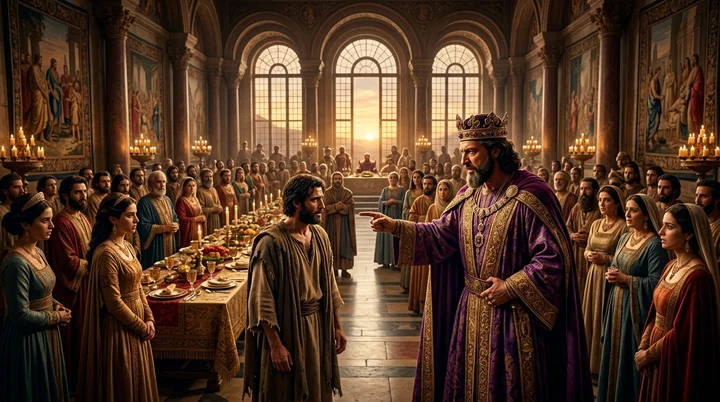
Cross-references 20 of 26
- Luke 14:16-24
Then said he unto him, A certain man made a great supper, and bade many:
Invited guests refuse the supper, so others are called to fill the feast.
- Revelation 19:9
And he saith unto me, Write, Blessed are they which are called unto the marriage supper of the Lamb. And he saith unto me, These are the true sayings of God.
Both refer to the marriage supper to which people are invited.
- Matthew 22:11-12
And when the king came in to see the guests, he saw there a man which had not on a wedding garment:
The king examines the guests and removes the one without the wedding garment.
- Revelation 19:7-8
Let us be glad and rejoice, and give honour to him: for the marriage of the Lamb is come, and his wife hath made herself ready.
Identifies the wedding with the Lamb’s marriage and its garment with the saints’ righteousness.
- Luke 14:17
And sent his servant at supper time to say to them that were bidden, Come; for all things are now ready.
The ready feast invitation echoes the call to come.
- Matthew 25:10
And while they went to buy, the bridegroom came; and they that were ready went in with him to the marriage: and the door was shut.
The ready enter the marriage, while the unready are shut out.
- Luke 14:21
So that servant came, and shewed his lord these things. Then the master of the house being angry said to his servant, Go out quickly into the streets and lanes of the city, and bring in hither the poor, and the maimed, and the halt, and the blind.
Both describe a call to invite people to the feast.
- Matthew 22:7
But when the king heard thereof, he was wroth: and he sent forth his armies, and destroyed those murderers, and burned up their city.
The rejected invitation is followed by Jerusalem’s destruction as judgment.
- Matthew 21:33-46
Hear another parable: There was a certain householder, which planted a vineyard, and hedged it round about, and digged a winepress in it, and built a tower, and let it out to husbandmen, and went into a far country:
Both parables warn of judgment for rejecting God’s messengers and son.
- Luke 14:18-20
And they all with one consent began to make excuse. The first said unto him, I have bought a piece of ground, and I must needs go and see it: I pray thee have me excused.
Invited guests refuse the feast and give excuses.
- Luke 14:24
For I say unto you, That none of those men which were bidden shall taste of my supper.
Those who refuse the invitation are excluded from the feast.
- Matthew 22:9
Go ye therefore into the highways, and as many as ye shall find, bid to the marriage.
Gives the second call after the first guests refuse.
- Revelation 19:8
And to her was granted that she should be arrayed in fine linen, clean and white: for the fine linen is the righteousness of saints.
The Lamb’s bride is clothed in the saints’ righteousness as her wedding garment.
- Matthew 22:12
And he saith unto him, Friend, how camest thou in hither not having a wedding garment? And he was speechless.
The king questions the guest who lacks a wedding garment.
- John 5:40
And ye will not come to me, that ye might have life.
People refuse to come to Christ for life.
- Matthew 22:13
Then said the king to the servants, Bind him hand and foot, and take him away, and cast him into outer darkness; there shall be weeping and gnashing of teeth.
The sentence follows the invitation in the parable.
- Luke 14:14
And thou shalt be blessed; for they cannot recompense thee: for thou shalt be recompensed at the resurrection of the just.
The feast points to reward at the resurrection of the just.
- Matthew 21:28-32
But what think ye? A certain man had two sons; and he came to the first, and said, Son, go work to day in my vineyard.
same solemn meaning for hearers
- Luke 13:25
When once the master of the house is risen up, and hath shut to the door, and ye begin to stand without, and to knock at the door, saying, Lord, Lord, open unto us; and he shall answer and say unto you, I know you not whence ye are:
The unprepared are shut out when the door closes.
- Jeremiah 7:25-26
Since the day that your fathers came forth out of the land of Egypt unto this day I have even sent unto you all my servants the prophets, daily rising up early and sending them:
God repeatedly sent messengers, but the people refused to heed them.
Commentary
Each commentary is drawn from primary sources: the writings of Ellen G. White and Adventist pioneers and periodicals. Each commentary is separate. Its own words are not a quotation; follow the references to read the source passages.
Ellen G. White
62 sources
The king making a marriage for his son is God, and those already bidden are His chosen people, first called long before and then summoned by His servants when all things are now ready for the gospel feast.Ms 18, 1899, par. 1–4Ms 46, 1896, par. 1–2Ms 29, 1898, par. 1–3Ms 185, 1903, par. 1–3RH May 8, 1900
They would not come when they rejected the promised Messiah and despised the authority of the One whose invitation confers high honor and power to command.COL 307.2–308.1Ms 8, 1874, par. 1Ms 149, 1898, par. 3COL 307.1
Their refusal came from being wholly intent on worldly gain and lesser interests, making light of the call and even mistreating the messengers, which brings wrath and destruction rather than mere exclusion.COL 307.2–308.1Ms 18, 1899, par. 1–4Ms 149, 1898, par. 3RH May 8, 1900Ms 143, 1898, par. 5
Only those who put on the wedding garment of Christ's righteousness, wrought by the Holy Spirit in a reformed heart and life, are accepted and found fit when the king examines the guests before the marriage.GC 428.1–2RH Feb 26, 1901Lt 94, 1898, par. 10–15COL 315.1Lt 86, 1889, par. 4
The invitation still goes to all in every station, and all who follow Christ are sent again and again into the highways and hedges to compel them to come in before probation closes.STMW10 4.2–5.1Lt 5, 1897, par. 7–10COL 319.2–3Ms 59, 1895, par. 34–396MR 388.2
Parable Setting Explained
The king who makes a marriage for his son is God, and those bidden are His chosen people who deemed themselves worthy to be invited.Ms 18, 1899, par. 1–4Ms 46, 1896, par. 1–2RH May 8, 1900RH May 8, 1900 The first sending is to the higher classes, the ones called His chosen people.Ms 18, 1899, par. 1–4Ms 46, 1896, par. 1–2 Even after refusal the blessing of truth was still set before them so that they could respond, and had they heeded they could have joined in extending the call to others.RH May 8, 1900 Their turning away is not seeking nor inquiring of the Lord, and with their rejection stands the warning that the day of judgment is near.RH May 8, 1900
The servants are sent to summon those already invited when the feast is ready, for the invitation had been given long before.Ms 46, 1896, par. 1–2Ms 29, 1898, par. 1–3Ms 185, 1903, par. 1–3 That earlier general invitation is followed by a final personal call to make sure the guests understand it and know that all things are now ready.Ms 46, 1896, par. 1–2 Some did not value the long-given invitation and excused themselves from the royal banquet.Ms 29, 1898, par. 1–3 The call is one that may be rejected, and their refusal to come is refusal of the gospel invitation.Ms 46, 1896, par. 1–2Ms 185, 1903, par. 1–3 Such conduct is brought into account when judgment takes place.Ms 29, 1898, par. 1–3
The invitation proceeds from one vested with power to command and confers high honor, involving much more than a householder's invitation.COL 307.2–308.1Ms 149, 1898, par. 3 Making light of the king's command, pleading circumstances and supposed duties for failure to comply, is therefore a deeper insult and deeper guilt than indifference to a householder's call.COL 307.2–308.1Ms 149, 1898, par. 3 That guilt extends to treating his messengers with scorn, using them despitefully and slaying them.COL 307.2–308.1Ms 149, 1898, par. 3 The punishment is more dreadful than mere exclusion from tasting the supper or from his presence and table, for it brings the king's wrath in sending forth armies to destroy those murderers and burn up their cities.COL 307.2–308.1Ms 149, 1898, par. 3
The wedding to which they are called is the gospel feast, the marriage supper of the Lamb.Lt 94, 1898, par. 10–15Ms 143, 1898, par. 6–8Ms 109, 1901, par. 9 It is the wedding banquet of God's Word and the treasures of God's Word, where the richest blessings await those who appreciate them.Lt 94, 1898, par. 10–15Ms 70, 1901, par. 6–8 Partaking of the feast means saying by that act that Christ has been accepted as personal Saviour.Ms 143, 1898, par. 6–8 Every provision is made to seat the guests at the feast, including the wedding garment which is the robe of His righteousness, spotless as the pure white lily and proffered by Christ Himself, and those bidden must give their whole attention to securing this richest gift rather than remain governed by the carnal spirit of the world.Ms 109, 1901, par. 9Ms 70, 1901, par. 6–8
First Call Refused
Those bidden who would not come are the Jewish people, already invited, who when the feast was ready refused the call and would not receive the promised Messiah, the Son of God.COL 307.2–308.1Ms 8, 1874, par. 1COL 307.1 Their refusal was rejection of the gospel itself and contempt for the king's authority, after which the call of mercy went to the Gentiles.COL 307.2–308.1COL 307.1 The first call had gone to the higher classes, to those called His chosen people.Ms 18, 1899, par. 1–4
They refused because they were wholly intent on securing worldly gain and felt too little respect for the master of the feast to answer him.Ms 18, 1899, par. 1–4RH May 8, 1900 They prided themselves in buying and selling to get gain and judged they could not afford any worldly loss for the sake of the heavenly feast.Ms 143, 1898, par. 5 Their refusal was knowing and deliberate, for they understood that accepting meant laying aside their common citizen's dress and putting on the robe of Christ's righteousness as His church, married to Christ as His bride.Ms 143, 1898, par. 5
God had repeatedly sent prophets to His chosen people, and had they heeded they might have joined the messengers in carrying the call further.RH May 8, 1900 Even after refusal the blessing of truth was still set before them that they might yet respond.RH May 8, 1900 They had consented to come and had every privilege and opportunity to enjoy the richest banquet ever set before man, yet by their course they were deciding their own destiny and had divorced themselves from God.Ms 149, 1898, par. 7–8
Their refusal repeats the indifference shown to the householder's invitation in the parable of the great supper, but against a king it is a deeper insult carrying deeper guilt.COL 307.2–308.1Ms 149, 1898, par. 3 It ranged from making light of the command and pleading circumstances and supposed duties for noncompliance, to treating his messengers with scorn, using them despitefully, and slaying them.COL 307.2–308.1Ms 149, 1898, par. 3 Where the householder's invitation met with indifference, this kingly invitation met with scornful mistreatment and murder of his servants.COL 307.2–308.1
The punishment therefore is more dreadful than mere exclusion from tasting the supper.COL 307.2–308.1Ms 149, 1898, par. 3 It brings the king's wrath, sending forth armies to destroy those murderers and burn up their cities, punishing by more than exclusion from his presence and table.COL 307.2–308.1Ms 149, 1898, par. 3 Their turning away from the Lord, not seeking or inquiring of Him, stands joined to the warning that the Lord's day of judgment is near.RH May 8, 1900
By rejecting the only begotten Son of God they refused the garment of Christ's righteousness and forever separated themselves from God.Ms 149, 1898, par. 7–8 The same implicit obedience and high-principled service required of those first called is required of the newly invited guests gathered from the highways and hedges.Ms 149, 1898, par. 7–8 The parable applies with special force to the Christian world today who claim to believe in Christ, so that there must be no mistake about those called to the heavenly banquet.Ms 149, 1898, par. 7–8
Judgment Before Wedding
The marriage parable is the investigative judgment taking place before the marriage, when the king examines the guests to determine fitness for God's kingdom.GC 428.1–2 That examination is the closing work of judgment in heaven, in which professed followers of Christ are examined to see whether they are prepared, with those wearing the wedding garment accepted and those without it rejected.GC 428.1–2 When the feast was ready servants were sent to summon those already invited long before, but some did not value the invitation and excused themselves from the royal banquet, and that refusal is part of the conduct brought into account when judgment takes place.Ms 29, 1898, par. 1–3
Being invited to the King's feast does not ensure readiness to enter it, for the wedding garment is the readiness needed when Christ comes.COL 319.2–3 The invitation is the proclamation of pardon and salvation, and those who receive its warning and then reject light and truth will have no second call after probation closes and no later opportunity to come to the heavenly feast.Ms 59, 1895, par. 34–39 The invitation was prepared for the guests' benefit, yet they turned away for lesser interests, and the refusal brought loss, with the shut door leaving them seeking admission too late.Lt 7, 1869, par. 6–7 Their unreadiness could also keep others from becoming ready, and the closing days of probation leave no time to delay preparation.COL 319.2–3Lt 7, 1869, par. 6–7
The call to the marriage supper is to be presented together with the reckoning with the one found there without the wedding garment.Lt 86, 1898, par. 17
Wedding Garment Required
Only those who put on the wedding garment, the robe of Christ's righteousness, are received and accepted, while professing faith yet refusing it leaves a person unfit for the feast.RH Feb 26, 1901COL 315.1Lt 115, 1899, par. 4–5 A place at the King's feast belongs to those clothed in that righteousness, whose characters are transformed to reflect Christ and whose lives are obedient to God's commandments.COL 315.1 Answering the call means accepting that robe and having the peace of Christ, so as not to be found without it, for the time is short and answering requires a pure life clothed in the white robe.Lt 86, 1889, par. 4Lt 115, 1899, par. 4–5 Satan works in great power through the children of disobedience to destroy the soul, so those called must resist the devil that he may flee.Lt 86, 1889, par. 4
Righteousness is right-doing, and all will be judged by deeds, for character is revealed by what is done and works show whether faith is genuine.COL 312.1–3 It is not enough to believe that Jesus is not an impostor, that the Bible is true, that His name alone saves, to believe the theory of truth, to profess faith, or to have a name on the church roll.COL 312.1–3 Faith must make Him a personal Saviour, and keeping His commandments and dwelling in Him is the genuine evidence of conversion, for whatever the profession it amounts to nothing unless Christ is revealed in works of righteousness.COL 312.1–3 Right coming requires reformation of heart and putting on the white garment of character through the Holy Spirit in the heart working by love and purifying the soul.Lt 94, 1898, par. 10–15 Those who cherish hereditary and cultivated traits that misrepresent Christ, who are hearers but not doers and to whom the Spirit's work is strange, build on sand and come unsanctified, having a form of godliness without its inward working.Lt 94, 1898, par. 10–15Ms 111, 1906, par. 1–3
No one has a garment of his own that gives honor at the feast, for worthiness comes only from Christ's robe woven in the loom of heaven.8MR 309.1–310.1 That garment is the truth as it is in Jesus, the white linen of a clean pure character no longer living the old life, and it is offered to the lowliest who believes in Him as personal Saviour.8MR 309.1–310.1Ms 143, 1898, par. 6–8 If any are saved it is not by superior intellect or refinement but by grace through His imputed righteousness alone, apart from which all are lost in garments of self-righteousness.8MR 309.1–310.1 Partaking truly means saying by that act that Christ is accepted as personal Saviour and wearing His distinguishing dress, while those who try to benefit from the provisions without it remain unchanged in speech and conduct instead of standing in God's power.Ms 143, 1898, par. 6–8 Coming into His presence in one's own defiled common citizen's dress, thinking it good enough, insults the Lord and abuses His benevolence, and human righteousness will not do.Lt 49, 1887, par. 5 God's dealing with such refusal is severe separation from His presence, for the refusal is knowing and deliberate clinging to the old dress instead of showing by the robe that one is His church married to Christ.Lt 49, 1887, par. 5Ms 143, 1898, par. 5
Accepting the spotless robe requires the humility, meekness and lowliness of Christ, dependence on God rather than leaning on others, laying aside stubborn self-will, and vital connection with Him.Lt 24, 1892, par. 5–7 Those who cherish self-will to the last remain unfit to see and understand the Spirit's working and are led by another spirit, yet they venture in wearing their own garments and do the greatest dishonor to the host who provided the robe.Lt 24, 1892, par. 5–7 Eyes anointed with eyesalve are needed to discern clearly, to give the trumpet a certain sound, and to prepare for the conflict.Lt 24, 1892, par. 5–7 Many are in danger of presumption in matters of eternal interest ending in loss of the soul, because they measure character by their own ideas instead of agreeing with God's standard of fitness for the wedding.Ms 13, 1899, par. 1–2 The danger is not that God will fail His promise but that continuing in sin hinders its fulfillment, so all who decide for Christ must take a firm stand and surrender to God what is already His, for hearing and assenting to truth is not enough without accepting and obeying, lest they remain separated from spiritual life and strength.Ms 13, 1899, par. 1–214MR 19.1–3
A person cannot share the feast without the garment unless wrongs that grieve Christ are repented of and confessed so that He may forgive and cleanse.Lt 29, 1899, par. 8–10 Satan's pleasures and worldly influence distract people from accepting the call and receiving that righteousness.14MR 122.2–123.1 Every provision is made to seat guests at the feast, including the wedding garment spotless as the pure white lily proffered by Christ Himself, and those bidden must give whole attention to securing this richest gift bestowed on mortal man.Ms 109, 1901, par. 9 Guests must receive that white robe of Christ's righteousness rather than remain governed by the carnal spirit of the world, for the banquet holds the treasures of God's Word with repose, peace, happiness and joy.Ms 109, 1901, par. 9Ms 70, 1901, par. 6–8 The supper was prepared for the church in the message of justification by faith and imputed righteousness shining forth since the Minneapolis meeting, with servants sent under God such as Jones and Waggoner to bring the church to understand its true state and come.Lt 61, 1893, par. 2–3 Those who would not come, including leaders like Butler and Smith who hold aloof and harmonize only in part and do not walk in the light, cling to the old dress, fail to drink fully of the wine of truth, and give the trumpet an uncertain sound.Lt 61, 1893, par. 2–3
Invitation Open to All
God's wedding invitation goes to all, not to a few, with no walls built to keep any living soul from salvation.6MR 388.2 The banquet is what God prepared by sending His Son into this world to die in behalf of sinners, that through faith in Him they should become one with God.6MR 388.2 Coming to the banquet means accepting Christ as a personal Saviour and returning to loyalty and to perfect obedience to all God's commandments, and all who are willing to be saved by Christ are His elect, predestinated from the foundation of the world.6MR 388.2 The invitation was extended even to great and worldly-wise people and was not closed to them, for as Sin-bearer He opened the way for all who desire eternal life above earthly considerations, while they refused by choosing earthly interests over eternal life.Ms 46, 1896, par. 14–16 Accepting means entering a binding relationship with Him and sharing the marriage supper and letting Him restore allegiance to God and His commandments and transform them into loyal children bearing His image, and God allows each person to choose whom he will serve.Ms 46, 1896, par. 14–16
Christ bids souls to the marriage feast from a love without parallel, setting before them in His Word a banquet full of marrow and fatness that will satisfy every want with abundant life.ST Mar 17, 189821MR 370.5 The bid waits for a response, for God cannot work for a soul that does not respond to His grace offered and love bestowed, and the issue rests wholly with each person who may freely respond or refuse.ST Mar 17, 189821MR 370.5 A large number will respond to that love, and every heart may and can respond if it will, with a yearning heart recognizing His voice.ST Mar 17, 1898 Those who decide and make effort to seek Him with all their heart will find Him, and when families so respond God will pour out His Spirit as on the Day of Pentecost, as offered in the call to Battle Creek of a feast satisfying every need.Lt 153a, 1897, par. 16–1821MR 370.5 But not every heart responds, and those who love not the light refuse to come.ST Mar 17, 1898
The invitation was prepared for the guests' benefit, yet they turned away for lesser interests.Lt 7, 1869, par. 6–7 Their refusal brought loss, and the shut door left them seeking admission too late.Lt 7, 1869, par. 6–7 Their unreadiness could also keep others from becoming ready.Lt 7, 1869, par. 6–7
Carrying the Call Today
All who follow Christ are themselves the servants sent to call those bidden to the wedding, having been invited to the gospel feast and given the opportunity to work by inviting others to come with them.STMW10 4.2–5.1Lt 5, 1897, par. 7–10Ms 139, 1898, par. 83 Again and again opportunity is given to go out into the highways and hedges and compel those there to come in, that God's house may be full.STMW10 4.2–5.1Lt 5, 1897, par. 7–10 The feast signifies a lifelong invitation extending into eternity, and the gospel call is to be carried broadly to people who have not yet heard it.Lt 4, 1899, par. 17–18Ms 6, 1897, par. 1–4 Refusing that carried invitation is rejecting the offer of salvation in the marriage supper of the Lamb.Lt 4, 1899, par. 17–18
That call to the marriage supper of the Lamb is the last gospel call to be carried to the world before Christ's soon coming, telling the world that He is soon coming.6T 412.2GW 64.3 Many places have not yet heard it and must be reached, and many are still to proclaim it.6T 412.2GW 64.3 Young people are called to help proclaim this invitation.GW 64.3
The invitation is to be carried to people of every class in every station, to hearers in the highways and to people in high places.Ms 185, 1903, par. 19–207T 222.1Lt 11, 1895, par. 18–21 That includes men of wealth and influence and influential and wealthy people who are spiritually hungry and need what they lack, who are not beyond God's power to convert and who will come if they are invited.Ms 185, 1903, par. 19–20CEv 32.1Lt 34, 1900, par. 28–31 Those who accept the truth can use their influence and resources to help carry the message to others.Ms 185, 1903, par. 19–20 The call to share the blessings of the gospel applies to all classes, including the people of the Southern States and the Southern field who needed to hear it.7T 222.1RH Oct 27, 1904
The wedding invitation is first to be given to those in the higher walks of life, meaning the shepherds of the flock and the divinely appointed teachers and those belonging to the higher ranks of society.Ms 18, 1899, par. 9–10 This class includes men in business life, men in positions of trust, men with large inventive faculties and scientific insight, men of genius, and men to whom God has entrusted many talents.Ms 18, 1899, par. 9–10 They have been too much neglected and are to be sought out with tender affection and brotherly regard and to hear the truth in a manner different from the way they have heard it in the past.Ms 18, 1899, par. 9–10 Men of the world with God-given powers of organization are needed in carrying forward the work for the last days as managers of institutions where industrial work is carried on and as leaders, captains, educators, faithful financiers, and presidents of conferences who can look ahead, discern what needs to be done, and stand as solid as a rock to principle in the present crisis and future perils.Ms 18, 1899, par. 9–10 Reaching those higher classes is difficult because few believers can obtain association with those in the highways of life, those in the highways representing the higher classes.Ms 74, 1900, par. 11 They are to be given a fair chance to hear and consider the truth, approached wisely and graciously, including Gentiles in high places, and their gifts for God's work may be received.Lt 11, 1895, par. 18–2116MR 163.2–164.2
That work includes organizing workers to bring truth before thousands now in vice and iniquity, that they may be redeemed from a life of dissipation and sin, in which all God's people should be interested.STMW10 4.2–5.1 It is done by those with Christ in the heart going forth as canvassers into the highways and byways of life to speak the truth in love to perishing souls.CEv 32.1 Some who are invited will refuse, but not all will refuse.CEv 32.1 Servants proclaim the rich repast of truth and the redemption Christ offers to the world in the message they bear and in the wedding garment they wear, which is the robe of Christ's righteousness testifying to His atoning death that prepared the marriage feast.Ms 139, 1898, par. 83Ms 124, 1898, par. 40–41 Workers are to urge people to come to accept the gospel and join the marriage supper of the Lamb without lowering the standard of God's law, in a work of love for souls that fits and prepares the servants for service and trial instead of living to please themselves.Ms 139, 1898, par. 83Ms 7, 1900, par. 12–13Lt 86, 1895, par. 6
Neglecting the work of seeking and saving the lost through love of ease and selfish indulgence, though having had every privilege of knowing Bible truth, is failure to respond faithfully to God's call and leaves people unready for the wedding supper.STMW10 4.2–5.16T 295.2 Such are held accountable for misused talents entrusted to them for honest, faithful service.STMW10 4.2–5.1 The invitation represents Christ's call to definite fields: He offers Battle Creek a feast that satisfies every need, to be freely responded to or refused, with the promise that those who seek God with all their hearts will find Him and that when families make that wholehearted response God will pour out His Spirit as at Pentecost.Lt 153a, 1897, par. 16–18 People in Cooranbong and nearby places are expected to accept the marriage-supper invitation to respond to the gospel.Lt 59, 1899, par. 6 Heeding the solemn warning to prepare to enter the wedding so that His house may be filled requires preparation now because time is short.Lt 86, 1889, par. 4Ms 8, 1874, par. 18 Answering the last call to the supper requires a pure life clothed in the white robe of Christ's righteousness and having the peace of Christ, resisting the devil that he may flee, for Satan is working and will work in great power with the children of disobedience as agents to destroy the soul.Lt 86, 1889, par. 4Lt 115, 1899, par. 4–5
Sources
Pioneers and periodicals
91 sources
The verse is not the first invitation but the special dinner-call to those already bidden through the prophets, announcing that all is ready according to Eastern custom.ST Jul 27, 1882ST Jun 29, 1882ST Feb 12, 1902 It was the call to God's chosen people, the Jews, at the First Advent that the wedding dinner of full salvation had come.RH Jan 23, 1855ST Oct 18, 1899 Its servants were John the Baptist, then Christ with the twelve and the seventy, then the apostles as the seventy weeks drew to a close.ST Jun 15, 1915 Those bidden would not come, scorning the offer for farm and merchandise and earthly gain, rejecting and mistreating the messengers, and the kingdom was taken from them to be given to another people bringing forth its fruits, with their city destroyed.ST Aug 4, 1914ST Jan 22, 1894GSAM 134.3–4ST Jun 29, 1882 Their exclusion was not from any fault in God or because they could not be saved, for the call is sincerely and freely offered to all, but because they freely chose to refuse its terms.ST Mar 17, 1898ST Feb 20, 1901ST Apr 19, 1883RH Feb 5, 1857RH Dec 8, 1910
Parable Setting and Wording
The verse stands in the parable of the marriage of the king's son spoken in the temple on Tuesday after the fig tree had withered, on Christ's last day of teaching in the temple in the last week of His earthly work and last day of His public ministry, one of His busiest days and one of His busiest days of earthly ministry.RH Jan 29, 1914RH Apr 9, 1872ST Apr 21, 1898 It belongs to the block of teaching recorded in Matthew 21:23 to 23, given after rejection by the chief rulers.RH Apr 9, 1872ST Apr 21, 1898 That setting places the marriage as the coronation of the king and the reception and inauguration of the kingdom, with the calling of those already bidden who would not come answering to Christ coming to His own Jews who received Him not, so that the kingdom was taken from them to be given to those bringing forth its fruits and preaching that the kingdom of heaven was at hand then ceased.RH Apr 9, 1872 The marriage itself does not take place until all the guests have accepted the invitation, and the guests are examined before they are called to the marriage supper of the Lamb.RH Apr 9, 1872
According to Eastern custom an invitation is given beforehand and a servant is sent at the proper time to tell the guests all things are ready.ST Apr 21, 1898 The verse is therefore not the general work of bidding but a special dinner call and special announcement to those already bidden, to God's chosen people and the Jewish people who professed to serve Him, that the wedding dinner was ready.ST Jul 27, 1882ST Jun 29, 1882ST Apr 21, 1898RH Jan 23, 1855 It begins a sequence that includes the bidding, the preparation of the supper, and the calls to those already invited, and it covers not only the supper itself but also the privileges of the gospel that prepare people for it.ST Jul 27, 1882 It has a parallel in the supper story where the first invitees likewise refuse the invitation and make excuses.ST Oct 3, 1900
The refusal is the first of two calls to the marriage that were rejected.ST Feb 12, 1902 The prior invitation had come through God's word given by the prophets, while this call came through the preaching of John the Baptist and the apostles inviting people to the gospel feast. Those sent in this first call are the prophets and John the Baptist, with John the Baptist and others doing the work at the first advent, and those bidden refuse to come and ignore the call.ST Jun 29, 1882ST Apr 21, 1898RH Jan 23, 1855 Because that call proved of no effect the kingdom was taken from them and given to another people, with the destruction of the city and people in the parable meaning the destruction of Jerusalem and the rejection of the Jews.ST Jun 29, 1882
The parable illustrates the same truth as the parable of the ten virgins and has a broader application.RH Jun 9, 1851 It applies to the preparatory scenes before Christ's coming, not to a marriage beginning at or after the Second Advent, and the marriage includes a time of examination before the Son of man comes in which the wedding garment represents readiness and the unprepared guest is cast out.RH Jun 9, 1851 Its story details do not endorse every action depicted: making such a feast is not thereby proved right, nor is the king's severe treatment of the man without a wedding garment thereby justified, for he was guilty only of an impropriety, yet Christ uses the event to illustrate righteous administration.RH Mar 24, 1863
The verse raises the question who is represented by the guests and by the man without a wedding garment.ST Mar 14, 1878 By itself it does not explain the refusal, giving no specific explanation of why the invited guests would not come.RH Jan 8, 1857RH Apr 2, 1861ST It belongs to a parable that moves toward the gathering of guests good and bad from the highways and the king's inspection to decide who stays, whose fulfillment takes place before the Lord's coming while people are still mortal and warns of the final decision between eternal life and death.RH Jan 8, 1857RH Apr 2, 1861 That later gathering and inspection connects with the church's need to obtain the wedding garment before that fulfillment is complete, a garment furnished by the Master as Christ's righteousness received in place of sin and self-righteousness to be worn in this life, with saints wearing robes made white in the Lamb's blood in heaven.RH Jan 8, 1857ST
Bridegroom Bride and Guests
The King in the parable is God the Father, and the King's Son is the Son of God, the Lord Jesus, Bridegroom and Everlasting Father, who sends forth His servants to call those bidden to the wedding.ST Jun 3, 1897RH Apr 15, 1858ST Aug 19, 1880ST Aug 7, 1901 The Son's marriage is the marriage of the Lamb, a definite event located at a particular time in the fulfillment of a chain of prophecy.RH Apr 15, 1858ST Aug 19, 1880 The refusal of those called and the later providing of guests trace the work of God through Christ for the salvation of sinners and the judgment of those not prepared to stand before the Lord.ST Aug 7, 1901
The bride is distinct from the guests and is the holy city, the New Jerusalem, standing for the entire kingdom with the city as its metropolis and mother.ST Jun 3, 1897RH Mar 23, 1852RH Apr 2, 1861 The guests who are bidden and called are the people of God as children and the church, placed among the invited to the marriage and not among the parties to it.ST Jun 3, 1897RH Mar 23, 1852RH Apr 2, 1861 Christ is the bridegroom and the New Jerusalem is the bride.RH Apr 2, 1861
The marriage is Christ's reception, induction, coronation and inauguration into His government and the throne of the everlasting kingdom.RH Apr 2, 1861ST Jun 3, 1897ST Nov 15, 1899ST Nov 22, 1899RH Jun 29, 1916 It is the same essential event as the nobleman going into a far country to receive a kingdom, taking place while Christ is absent in heaven receiving the kingdom just before His return.RH Apr 15, 1858 His second coming is therefore His return from the wedding, not His union with the church, which comes through faith on the part of each believer.ST Jun 3, 1897RH Apr 15, 1858 The reception of the kingdom to be given to the Son of God and the marriage of the Lamb are identical.RH Apr 15, 1858
The parable moves toward the king coming in to see the guests, which is an examination before the wedding to see whether they wear the wedding garment.ST Aug 4, 1914ST Jun 3, 1897ST Nov 15, 1899RH Jun 29, 1916RH Apr 9, 1872 The garment is Christ's righteousness, spotless character made clean through the blood of the Lamb, and those found ready are accepted into the kingdom for translation or the first resurrection.RH Apr 2, 1861ST Nov 15, 1899RH Jun 29, 1916 Mere profession of religion will not pass as possession, and the Lord will cast out all who are not clothed with His righteousness, deciding by the wedding garment who stays.ST Aug 4, 1914ST Jun 3, 1897 The marriage itself does not take place until all the guests have accepted the invitation and have been examined before they are called to the marriage supper of the Lamb.RH Apr 9, 1872
First Call to Israel
The sending of servants to summon those already invited is the first call in the wedding-feast parable, a special dinner call announcing that all is ready, not the general work of bidding guests beforehand.RH Jan 23, 1855ST Jun 29, 1882 At the First Advent this call went to God's chosen people, the Jews who professed to serve Him, announcing that the wedding dinner was ready and that God's offer of full salvation had come.ST Oct 18, 1899ST Oct 18, 1899ST Jan 22, 1894ST Apr 21, 1898 Though the wedding was ready, they refused to come and ignored the call, and that refusal kept them from the feast.RH Jan 23, 1855ST Jan 22, 1894ST Apr 21, 1898
The earlier invitation had been given through God's word by the prophets.ST Jul 27, 1882 The servants in this first call were John the Baptist and others, then Christ with the twelve and the seventy, then the apostles, giving a special message to the Jews as the seventy weeks drew to a close, at midday through Christ and His apostles.ST Jun 15, 1915ST Apr 21, 1898ST Jul 27, 1882 It was the last call to the Jews, given first through John the Baptist, then through Jesus, and finally through the apostles.RH Mar 15, 1860 Those who received it were led step by step until they were ready for the baptism of the Holy Spirit at Pentecost, the early rain, and though the apostles still offered mercy and some accepted, most rejected it.RH Mar 15, 1860
The invited guests scorned the Saviour and rejected the calls, mistreating the messengers, rejecting Christ and killing Him and His apostles.ST Oct 18, 1899ST Oct 18, 1899GSAM 134.3–4ST Jul 27, 1882 Their house was left desolate, they as a nation were rejected with no peculiar blessings reserved for them, they lost the blessing of the former rain at Pentecost, the kingdom was taken from them to be given to another people bringing forth its fruits, and from that point preaching that the kingdom of heaven was at hand ceased.ST Jun 29, 1882RH Mar 15, 1860RH Sep 9, 1858ST Jul 27, 1882 The judgment that followed in the parable was the destruction of the city and people, fulfilled in the destruction of Jerusalem and the scattering of the Jews in A.D. 70 with loss of their city.ST Oct 18, 1899GSAM 134.3–4ST Jun 29, 1882 The parable's scope thus includes Christ's first advent, the destruction of Jerusalem, and the turning of the gospel invitation to the Gentiles, for although all was ready Israel's unwillingness delayed the work until servants were sent to invite people from among the Gentiles, the Jews having been first invited and having declined.ST Nov 22, 1910RH Aug 20, 1872
Why They Would Not Come
Though the wedding was ready, worldly concerns and activities distracted those already bidden from the call, so they would not come.ST Aug 4, 1914ST Jan 22, 1894ST Aug 7, 1901 Their own business seemed more pressing than the King's invitation, for farm and merchandise drew them away to what they counted urgent gain.ST Aug 4, 1914ST Jan 22, 1894ST Aug 7, 1901 Houses, lands and cattle seemed more important than the feast, and they made excuses while valuing earthly concerns above the freely offered heavenly invitation.ST Aug 7, 1901ST Mar 8, 1899ST Aug 2, 1899 Earthly concerns thus engrossed their attention and hearts, though all were invited, and their refusal left them unworthy of the wedding.ST Jan 22, 1894ST Mar 8, 1899RH Feb 5, 1857
Their refusal showed they did not respect the host enough to accept, turning away from the Lord and not seeking or inquiring of Him.RH May 8, 1900ST Jun 9, 1898 Those who had professed to accept the invitation turned their attention elsewhere when the final union of Christ and His people was ready, because they did not believe the feast was ready.ST Jun 9, 1898ST Feb 12, 1902 This refusal was the first of two rejected calls to the marriage, made to those who had already professed to accept.ST Jun 9, 1898ST Feb 12, 1902 The warning joined to such rejection is that the Lord's day of judgment is near.RH May 8, 1900
To refuse fellowship with the Lord and eternal life while pursuing earthly things is folly and ingratitude, bringing awful results to the excused soul.RH Mar 9, 1905RH Jan 6, 1859 To accept brings infinite joy and reward, but to refuse or make excuse brings regret when the time of grace is past.RH Nov 10, 1910RH Mar 9, 1905 Repeatedly rejecting God's warnings and invitation leaves the sinner without shelter when mercy ends and judgment comes.RH Nov 10, 1910RH Jan 6, 1859 The final invitations are now being given through God's last message to the world during the day of probation, in the great breakfast, dinner and supper calls.RH Nov 10, 1910RH Mar 9, 1905
Their exclusion was not because they could not be saved and not from any fault in God, which explains why the call does not result in everyone being chosen.ST Feb 20, 1901RH Feb 5, 1857RH Feb 5, 1857 God's call is sincere and freely offered to all and extended to all, yet it is not accepted by everyone.ST Feb 20, 1901ST Apr 19, 1883RH Feb 5, 1857 Condemnation is a matter of choice, not necessity, for they freely chose not to accept the invitation and its terms.ST Feb 20, 1901RH Feb 5, 1857 Those who accept are among the chosen, and those who refuse make themselves non-elect.ST Feb 20, 1901RH Feb 5, 1857
Christ bids souls to the feast from a love without parallel, setting before them in His word a banquet full of marrow and fatness that will satisfy every want with abundant life.ST Mar 17, 1898RH Dec 8, 1910 The bid waits for a response, for God cannot work for a soul that does not respond to grace offered and love bestowed.ST Mar 17, 1898 Those who love not the light refuse to come, yet a large number will respond to that love.ST Mar 17, 1898RH Dec 8, 1910 Every heart may and can respond if it will, and those who seek Him with all their heart will find Him, the yearning heart recognizing His voice.ST Mar 17, 1898
Examination Judgment and Garment
The coming of the king to look upon the guests is the judgment, the heavenly investigation of character that takes place before probation closes and before Christ returns, made plain by the doctrine of the sanctuary and its cleansing.RH Apr 2, 1861RH Oct 11, 1915ST Dec 17, 1885RH Aug 7, 1900RH Jun 29, 1916 After the 2300 days ended on October 22, 1844, there is an indefinite time of patient waiting with no further prophetic time movement, in which the court is now in session.RH Aug 7, 1900 In that session the decision is made that fixes every person's destiny as holy or filthy, saved or lost, before the Lord appears, so that the sentence can be carried out in a moment, in the twinkling of an eye, at the last trump.RH Aug 7, 1900
In that examination the sins of the repentant are blotted out, while those not found to have overcome are cut off from God's people and their names are blotted from the book of life.RH Apr 2, 1861RH Oct 11, 1915 There is no appeal from the decisions of that court.RH Aug 7, 1900 Christ is the only advocate to plead the cause in the sanctuary, so that to accept His mediation on the conditions offered means all is well, while to reject it means all is lost.RH Aug 7, 1900
The wedding garment is furnished by the Master and is freely offered to be obtained now while salvation is still offered.RH Apr 2, 1861ST It is Christ's righteousness, spotless purity of character made clean through the blood of the Lamb, received in place of sin and self-righteousness and to be worn in this life.STRH Jun 29, 1916RH Apr 20, 1876 Those found ready in that garment are accepted into the kingdom for translation or the first resurrection.RH Apr 2, 1861RH Jun 29, 1916
Hearing and assenting to the truth without being changed by it is not enough.RH Feb 26, 1901 Outward Sabbath observance is not enough, any more than reliance on circumcision, for human righteousness is only filthy rags, and only being clothed with Christ's righteousness will meet the examination for the marriage supper.RH Oct 7, 1915 The royal law acts as a mirror that reveals defects and exposes sin but cannot cleanse it, while the gospel provides the cleansing that removes what the law reveals.RH Apr 20, 1876 The guests are examined during probationary time, and some who once had the needed preparation may lose faith and consecration while waiting and be found without the garment.RH Jan 19, 1869
Those not robed in the righteousness of Christ according to the law of the kingdom in the ark of the covenant will be speechless when examined and will be cast into outer darkness.ST Aug 4, 1914RH Apr 2, 1861 The invitation by itself does not ensure acceptance, so the time to examine oneself is now while salvation is still offered.RH Nov 12, 1857RH Apr 2, 1861 Those without the spotless garment have reason to tremble when they stand before Him, while those clothed in Christ's righteousness can enter as the King's guests and need not fear.ST Jun 2, 1898
When the judgment is past, the waiting church that keeps the commandments of God and the faith of Jesus stands robed for the marriage supper in victory over death with tears wiped away, glad and rejoicing in salvation.ST Aug 4, 1914 The supper takes place in God's kingdom when the just are rewarded at the resurrection.RH Dec 23, 1862 It is the prepared feast where the good of all ages are assembled when the last trumpet wakes the righteous dead, sitting down with Christ and with patriarchs, apostles, and martyrs.RH Mar 9, 1905RH Jun 10, 1862
Gospel Call to All Nations
The parable covers not only the supper itself but the privileges of the gospel that prepare people for it, including the bidding, the preparation of the supper, and the calls to those already invited.ST Jul 27, 1882ST Nov 12, 1912 The invitation is Christ's offer of full salvation to all, now going out into all the earth, with all invited to be guests of the King.ST Nov 12, 1912ST Mar 28, 1878ST Jul 28, 1898ST May 11, 1915 The wedding feast represents the marriage supper of the Lamb, and the invitation is to receive the freely offered heavenly feast and to accept the salvation now offered.ST Nov 12, 1912ST Mar 28, 1878ST Mar 8, 1899 That the invited guests were called and refused to come shows that not all who are called accept it, for they made excuses and valued earthly concerns more than the invitation.ST Jul 27, 1882ST Nov 12, 1912ST Mar 8, 1899
After the Jews, first invited to the king's son's wedding, declined, the invitation was extended to the Gentiles.ST Jan 22, 1894RH Aug 20, 1872ST Jul 7, 1890 The further invitation was slighted for farm and merchandise and the servants mistreated, the unworthy bidden were destroyed, and others good and bad were gathered from the highways.ST Aug 4, 1914ST Jan 22, 1894ST Aug 2, 1899 The master then sends his servants to invite the poor and needy, offering the feast without cost, because houses, lands and cattle had seemed more important to those first called.ST Aug 2, 1899RH Oct 6, 1904 Those who respond are gathered into one people as the church's commission is carried to the world, while refusal for worldly distraction leaves the refusers unworthy of the wedding.ST Jan 22, 1894ST Jul 7, 1890RH Oct 6, 1904
The wedding-feast invitation does not by itself ensure acceptance, for guests must be prepared with the wedding garment identified with righteousness.RH Apr 2, 1861ST Oct 18, 1899 The garment is freely offered and must be obtained now while salvation is offered, and those who neglect it will be speechless when the King examines the guests and will be excluded.RH Apr 2, 1861RH Jul 2, 1901 All are invited to the marriage supper of the Lamb when the Prince of Peace returns, and those who accept the invitation and get ready will join the redeemed in the New Jerusalem.ST Oct 18, 1899ST May 11, 1915 Hopeful guests must be ready to be received, and living in violation of God's commandments, including failing to pay just debts, raises the question whether they will be admitted to the coming of the King.ST Oct 18, 1899RH Jul 2, 1901
The first call represents the proclamation of the Lord's coming in or about 1843.RH Sep 2, 1851 The parable is supplemented by three special calls given at the close of the dispensation, corresponding to the gathering of the church through the third angel's message before the Laodicean address applies to the church in its lukewarm state.RH Mar 26, 1857 The first message is chiefly addressed to the churches, the second to people outside them and to those weary of corruption within them, and the third is a compelling call whose clear, forceful appeals lead the honest in heart to obey.RH Mar 26, 1857 After that third call has gone out, the king comes to see the guests.RH Mar 26, 1857
The latter rain's worldwide proclamation is the heavenly call to Christ's marriage feast, the final invitation for people everywhere to accept the gospel and prepare for Christ's kingdom.ST Jun 28, 1905RH Oct 8, 1903 The call will be heard openly among all nations and languages, giving all an opportunity to accept or reject it.ST Jun 28, 1905 Those who heed the preparatory message of truth receive the Spirit and are made ready for the harvest.ST Jun 28, 1905RH Oct 8, 1903 A special message is to go to the world in the last days before Christ's coming as the last call to the gospel feast and the final offer of salvation before probation closes.ST Jun 28, 1905RH Oct 8, 1903
The invitation to the coming marriage feast is sounding now, for the feast is the coming of Christ.ST May 11, 1915ST Oct 27, 1909 Immanuel the King is coming soon in glory with His chariot lighting the east to save His people and end the conflict and strife of sin, and faithful watchmen on Zion's walls must shout aloud that He for whom they wait has come.ST Oct 27, 1909 The supper is associated with Christ's appearing, when the church sits with Him.ST May 11, 1915ST Oct 27, 1909
Present Duty and Warning
The time has fully come for the Master's invitation to the marriage feast to be given, for multitudes are in the valley of decision.RH Oct 5, 1905RH Aug 10, 1905RH Jun 8, 1905 The Master pleads with every child of His to go out quickly into the streets and lanes of the city and into the highways and hedges to bid the hungry and perishing to come to the feast.RH Oct 5, 1905RH Aug 10, 1905RH Jun 8, 1905 Bidding them means carrying on the promulgation of the third angel's message as a never-ceasing, ever-enlarging, strengthened and deepened missionary campaign, a mighty movement to give the message speedily.RH Oct 5, 1905RH Aug 10, 1905RH Jun 8, 1905 It is the final invitation now being given through God's last message to the world, and to refuse it or make excuses brings regret when the time of grace is past.RH Nov 10, 1910
The servants' task was not merely to announce that the feast was ready but to urge people to enter and to explain how to get there.ST Feb 18, 1886 The church's work is therefore to offer and urge salvation rather than waiting for people to seek it themselves.RH Aug 11, 1863ST Aug 16, 1905 The call to the marriage supper is the last message of mercy Jesus gives to sinners and a warning to a world facing doom, to be carried to those who hunger and thirst for truth with active, earnest labor before the time to work ends.ST Sep 16, 1875ST Aug 16, 1905 Canvassing workers are the King's messengers carrying that call to come and prepare because the supper is almost ready.RH Feb 17, 1916
Bringing the gospel to people in high places gives them a fair chance to receive and consider the truth. The call to bring people to the feast applies to all classes, including the people of the Southern States who needed to hear the gospel, and the gospel invitation to the Arawaks, Caribs and Bush Negroes is bringing them to that feast.RH Oct 27, 1904RH Aug 20, 1903 The sending of servants to call those bidden pictures God calling people to follow Jesus through servants who explain the invitation, whether after a long time of being near the kingdom or in one day.
Those who are called are to listen right off when God calls and come. The servants' call declares that mansions are prepared and the marriage feast is spread, and rich and poor, whosoever will, are to come and partake of the loving Lord's gracious bounties.RH Dec 10, 1872 The way there is strait, too strait for fashion and her train, too steep to ascend loaded with sin and folly, too low for high heads that never bow in humble adoration.RH Dec 10, 1872 Those bidden must exchange flimsy trappings for garments of humility and praise, and the spirit's deep unrest for peace and joy, while prayer opens the treasure needed to be ushered into the heavenly blessing.RH Dec 10, 1872RH Mar 7, 1912
Answering the invitation means making effort to be present, as in attending meeting with Jesus by setting aside avoidable hindrances such as idleness, sleep or lack of planning.RH Apr 4, 1865 Genuine domestic difficulties, including age, illness, service and unforeseen events, are not grounds for blame.RH Apr 4, 1865 Those hearing the gospel invitation must respond before the invitation is withdrawn.RH Oct 16, 1913
God's sending to call those bidden is also the sending of angels with a trumpet to gather and bear His banquet guests, His jewels, the elect, honored and loved to their Saviour's side from land and sea.RH Sep 12, 1871 They are not the great ones, the mighty on thrones of power, warriors who wade through blood, the decked millionaire, the blind devotee of pride, or those with honored name, crowd praise and fame, for those are baubles of fading earth with no value in God's pure sight.RH Sep 12, 1871 They are the upright in heart, the meek and mild spirit set apart for endless bliss, the harmless and undefiled, slighted, despised and unknown on earth, who wrestle with doubt and sin and never basely yield, seeking mercy and goodness, truth and love rather than mortal fame and scorning earth's praise and blame to make their record right above.RH Sep 12, 1871
The verse belongs to a discourse on preparation for the marriage supper, now applied to Christ's coming and to bringing people to that feast.ST Sep 12, 1878 It is part of the great breakfast, dinner and supper calls given to this world during the day of probation.RH Mar 9, 1905 To accept the message brings infinite joy and reward, sitting down with Christ, patriarchs, apostles and martyrs at the marriage supper of the Lamb, while to refuse the call and make an excuse is folly bringing awful results to the excused soul.RH Mar 9, 1905
Sources