Translations
American King James Version, King James Version, KJV Cambridge Paragraph Bible, Webster Bible, World English Bible
This is the first and great commandment.
Revised Version, American Standard Version
This is the great and first commandment.
this is a first and great command;
This is [ the] great and first commandment.
This, is the great and first commandment.
Berean Standard Bible, Majority Standard Bible
This is the first and greatest commandment.
This is the first and greatest rule.
This is the first and the great commandement.
Douay-Rheims (Challoner revision)
This is the greatest and the first commandment.
Pictures

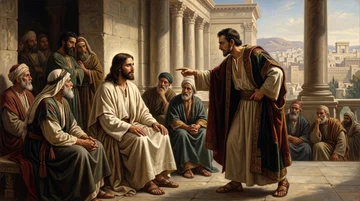

Cross-references 20 of 78
- Deuteronomy 6:5
And thou shalt love the LORD thy God with all thine heart, and with all thy soul, and with all thy might.
Commands wholehearted love for God.
- Leviticus 19:18
Thou shalt not avenge, nor bear any grudge against the children of thy people, but thou shalt love thy neighbour as thyself: I am the LORD.
Commands love for one’s neighbor as oneself, the companion to love for God.
- Exodus 20:1-17
And God spake all these words, saying,
The Decalogue applies love for God and neighbor to the commandments.
- Romans 13:10
Love worketh no ill to his neighbour: therefore love is the fulfilling of the law.
Love does no harm to a neighbor and fulfills the law.
- 1 John 5:3
For this is the love of God, that we keep his commandments: and his commandments are not grievous.
Love for God is shown by keeping his commandments.
- Luke 10:27-28
And he answering said, Thou shalt love the Lord thy God with all thy heart, and with all thy soul, and with all thy strength, and with all thy mind; and thy neighbour as thyself.
Wholehearted love of God and neighbor is affirmed as the way to live.
- Mark 12:30-31
And thou shalt love the Lord thy God with all thy heart, and with all thy soul, and with all thy mind, and with all thy strength: this is the first commandment.
These verses give the parallel account of the two great commandments.
- James 2:8
If ye fulfil the royal law according to the scripture, Thou shalt love thy neighbour as thyself, ye do well:
James calls love of neighbor the royal law, connecting it with the great commandment.
- 1 John 4:8
He that loveth not knoweth not God; for God is love.
God is love, the source and foundation of the great commandment.
- Ecclesiastes 12:13
Let us hear the conclusion of the whole matter: Fear God, and keep his commandments: for this is the whole duty of man.
Fearing God and keeping his commandments are called humanity’s whole duty.
- 1 John 4:20-21
If a man say, I love God, and hateth his brother, he is a liar: for he that loveth not his brother whom he hath seen, how can he love God whom he hath not seen?
Love for God is inseparable from loving one’s brother.
- John 13:34
A new commandment I give unto you, That ye love one another; as I have loved you, that ye also love one another.
Jesus commands mutual love patterned on his own love, fulfilling the commandment.
- Matthew 19:17
And he said unto him, Why callest thou me good? there is none good but one, that is, God: but if thou wilt enter into life, keep the commandments.
Jesus connects entering life with keeping the commandments.
- Matthew 7:12
Therefore all things whatsoever ye would that men should do to you, do ye even so to them: for this is the law and the prophets.
The Golden Rule expresses loving one’s neighbor and fulfills the law and the prophets.
- John 15:10
If ye keep my commandments, ye shall abide in my love; even as I have kept my Father’s commandments, and abide in his love.
Jesus says he kept his Father’s commandments and connects obedience with abiding in love.
- Romans 13:9
For this, Thou shalt not commit adultery, Thou shalt not kill, Thou shalt not steal, Thou shalt not bear false witness, Thou shalt not covet; and if there be any other commandment, it is briefly comprehended in this saying, namely, Thou shalt love thy neighbour as thyself.
Love of neighbor summarizes the commandments concerning duties toward other people.
- 1 John 4:7
Beloved, let us love one another: for love is of God; and every one that loveth is born of God, and knoweth God.
Love is the first commandment and marks those born of God who know him.
- Deuteronomy 10:12
And now, Israel, what doth the LORD thy God require of thee, but to fear the LORD thy God, to walk in all his ways, and to love him, and to serve the LORD thy God with all thy heart and with all thy soul,
Calls Israel to love and serve God wholeheartedly, the first commandment.
- Galatians 5:14
For all the law is fulfilled in one word, even in this; Thou shalt love thy neighbour as thyself.
Love of neighbor fulfills the law.
- Galatians 5:6
For in Jesus Christ neither circumcision availeth any thing, nor uncircumcision; but faith which worketh by love.
Faith works through love.
Commentary part 1 of 4
Each commentary is drawn from primary sources: the writings of Ellen G. White and Adventist pioneers and periodicals. Each commentary is separate. Its own words are not a quotation; follow the references to read the source passages.
Ellen G. White
246 sources
This is the first and greatest commandment, requiring supreme wholehearted love to God with all the heart, soul, mind, strength and powers of body and mind, with no divided heart or mixed motive.SG4 235.3–4RH Apr 1, 1915CT 329.2 It sums the first four precepts of the Decalogue defining duty to God, joined inseparably with love for neighbor as oneself, together expressing the whole of human duty on which hang all the law and the prophets.SG4 235.3–4RH Apr 1, 1915CT 329.21T 289.1TBC1868 4.2–7.1 True love is not mere acknowledgment, feeling or outward worship, but a living principle that gives God supreme place and is shown in willing obedience to all His requirements.ST Apr 25, 18783SP 52.13SP 51.4 It cannot be produced by natural temperament or human effort, but only by divine grace through faith in Christ, purification by the Spirit, prayer and renewal.GC 263.1GC88 263.1Ms 62, 1886, par. 27–29 Doing this gives life and eternal life, bringing light, joy, peace and a symmetrical character fitted for heaven.ST Oct 2, 1901Ms 13, 1897, par. 15Ms 14, 1888, par. 26–2821MR 279.1Lt 28, 1888, par. 36
Supreme Love Commanded
This is the first and great, greatest commandment: supreme, wholehearted love to God with all the heart and soul and mind, with all strength and with all the powers of body and mind, the highest duty and first principle.SG4 235.3–4RH Apr 1, 1915CT 329.2ST Mar 11, 18971T 289.1 It belongs with the first four precepts of the Decalogue which define duty to God, and with love to neighbor as self which sums the last six, together comprising human duty and hanging all the law and the prophets.SG4 235.3–4RH Apr 1, 1915ST Mar 11, 18971T 289.1TBC1868 4.2–7.1 It exposes pride and selfishness, rejects formal religion that forgets mercy, and calls for a transformed mind with powers brought into submission, shown in kindness, gentleness, patience and care for others' interests in word and action.RH Apr 1, 1915ST Mar 11, 1897TBC1868 4.2–7.1ST Jan 16, 1912
It requires the whole person at all times and in every place, with no divided heart, no mixed and uncertain motive, and entire conformity to the will of God.RP 19.3–20.1CT 345.1Ms 73, 1896, par. 13–15STB 850.4–851.11T 710.1 God wants all there is of a person and will accept nothing less, because He made all there is of man and gave a complete sacrifice to redeem body and soul.RP 19.3–20.1CT 345.1Ms 73, 1896, par. 13–15STB 850.4–851.1STE 86.2 This total love is to be given as time, service, affection, property and the whole self as a free-will offering, making calling and election sure and producing sanctification through the truth with perfect trust and confidence in God, blessing others by godly example, cheerfulness, fortitude, courage, faith, hopefulness and joy.1T 710.1 Gatherings for mere amusement that confuse faith, entangling ties and binding engagements that cripple usefulness and make life unsatisfying and unhappy, break it by dividing the heart.RP 19.3–20.1CT 345.1Ms 73, 1896, par. 13–15STB 850.4–851.1
It allows no separation of the affections from God and allows nothing to divide or share supreme delight in Him.CT 329.21T 289.1MYP 377.3STB 841.4 Whatever divides the affections and takes away supreme love assumes the form of an idol, separates the soul from God, and must be sacrificed and put away in order to advance in Christian experience, though the carnal heart would cling to idols and carry them along.SG4 235.3–4CT 329.21T 289.1MYP 377.3 Keeping it draws to God and separates from the elements of the world, from its pleasures and friendship, for there is no concord between Christ and Belial; His people chosen out of the world must be separate, trust in Him alone, and press on without fear in obedience.SG4 235.3–41T 289.1
It is a positive command, not an optional duty to be obeyed only when convenient.TBC1868 4.2–7.1 It calls for examination of conduct by God's law and for seeking power to live it, with purity and a life transformed by truth rather than mere assent or theory, and it is to be developed through the grace of Christ during probation with the light of His word and mental faculties capable of highest cultivation, proved by faithfulness even in the least temporal matters rather than walking in one's own way and following impulse of one's own heart.TBC1868 4.2–7.1ST Jan 16, 1912TEPD 69.1ST2 25.1Lt 8, 1889, par. 5–7
This is the standard God gave mankind by which to form character, spoken with an audible voice in awful grandeur and majesty from Mount Sinai amid thunder and lightning, distinctly stating what must be done to render acceptable obedience and what must not be done to remain loyal, leaving nothing obscure or indefinite about salvation.Ms 48, 1893, par. 13–14ST Mar 4, 1897 It is God's moral code engraved with His own finger on two tables of stone, whose first table of four commandments defines duty to God and second table of six defines duty to fellow humans, every other scriptural command being only specification or amplification of what is contained in the ten.ST Mar 4, 1897Ms 79, 1896, par. 9ST Jun 5, 1901 Determined in the councils of heaven to give a living exemplification of this law in the great sacrifice made for man, it is given in love to elevate and ennoble humanity, requiring perfection of character and unswerving obedience which sinful man of himself is unable to render, and mingling human wisdom with the divine, confusing minds about right methods in business, and unjustly acquiring means at another's expense breaks it and calls for cleansing of the soul temple.Ms 48, 1893, par. 13–14ST Mar 4, 1897Ms 26, 1899, par. 29–30 Its principle shown in character and life is the only secure foundation and sure guide.
It repeats the counsel earlier given to Israel through Moses before entering the promised land, and through the prophets, to fear the Lord, to walk in all His ways, to love Him and serve Him with all heart and soul, to keep His commandments and statutes for good, to do justly and to love mercy and to walk humbly with God.PK 326.1–2 It is God's voice to every person calling for practical godliness rather than formalism, including mercy, tender care and courtesy toward the burdened and oppressed, and offering courage and hope through sympathy and love.PK 327.1–2PK 326.1–2 It is to be cherished in the heart and taught diligently from one generation to the next through God's Word, not human rules, especially to children and youth as they are prepared to serve Christ, and its neglect with disregard for the commandments contributes to widespread sin and crime.RH Nov 23, 1916Lt 117, 1898, par. 6–7Lt 174, 1899, par. 12
Twofold Law Unified
The first and great commandment sums the first four precepts of the Decalogue which define duty to God, while love for neighbor as self sums the last six which define duty to fellow human beings.SG4 235.3–4CT 329.2ST Apr 25, 1878DA 606.3–5 The fourth commandment stands in the center of the Decalogue and links the two divisions, so wholehearted love to God is impossible while breaking it, and keeping the Sabbath belongs to keeping the first commandment.Ms 39, 1886, par. 43MR 66.2–67.2 Obeying this commandment permits no rival affection and allows no separation of the affections from God, for whatever divides supreme delight in Him becomes an idol that separates the soul from Him and must be sacrificed and put away to advance in Christian experience.SG4 235.3–4CT 329.21T 289.1MYP 377.3 Those who keep it are drawn to God and separated from the world, its elements, pleasures and friendship, trusting in Him alone and pressing on without fear in obedience as obedient children with filial rather than slavish fear, with reward to the obedient and punishment to the disobedient.1T 289.1Ms 39, 1886, par. 4
Joined inseparably with love for neighbor as oneself, the two are the great principles on which hang all the law and the prophets, together comprising whole human duty and fulfilling the law.TBC1868 4.2–7.1Ms 39, 1886, par. 4Ms 128a, 1903, par. 19–213MR 66.2–67.2Ms 79, 1896, par. 10–12 Together they express God's character and will, with perfect human character shown by supreme love to God and unselfish love to others.RH Apr 1, 1915Ms 128a, 1903, par. 19–21 It is a positive command and not optional or for convenience, exposing pride and selfishness and calling for transformed mind and powers brought into submission to God, its claims requiring action and not belief alone.TBC1868 4.2–7.1Ms 79, 1896, par. 10–12
The law is a divine unity in which the same love runs through every precept, so that breaking any violates one or both of its two great principles.3SP 52.1DA 606.3–5DA 607.1–2 The first cannot be kept while the second is broken, nor the second while the first is broken, for giving God His rightful place in the heart leads to faithful obedience to the commandments governing duties to others and makes impartial love for others possible.DA 606.3–5DA 607.1–23SP 52.2 Keeping one commandment while breaking another is not obedience to the whole law, no commandment is minor or may be broken without violating love, and a person's standing before God and destiny are according to obedience to the whole law in practice.DA 606.3–5DA 607.1–2ST Jul 16, 1894 Love for God is a living principle giving Him supreme place in mind and heart, shown in willing obedience to all His requirements, and keeping the first four faithfully leads to keeping the other six.ST Apr 25, 1878DA 607.1–2
Its universal claim rests on love to God and to men as the broad foundation on which the ten holy precepts rest, with obedience to those precepts comprising the whole duty of man.RH Jul 5, 1906SLP 323.2–324.1 Together the two loves express the requirements of God's law, which reveals His loving character and will, remains binding in every detail on heaven and earth, holy, everlasting and immutable, and is not replaced by external ceremonies, human traditions, religious symbols or outward displays of devotion.ST Oct 24, 1895ST Mar 1, 1883GC88 466.4 It is the complete reliable single standard testing every character alike, still the believer's rule of life and the sinner's condemnation to the close of time without abating one jot, extending beyond outward acts to thoughts and intents of the heart and leading those who obey it to live soberly, righteously and godly.ST Oct 24, 1895SLP 323.2–324.1 Love fulfills it, and obedience to every requirement depends on faith enabling a person to live by those principles.GC88 466.4ST Feb 26, 1894
The law expresses God's character and sets the standard of righteousness with power to convert the soul, serving as a moral mirror, and calling attention to its righteousness barricades against Satan, who works to nullify it especially the linking fourth commandment through unbelief and preaching against it.ST Feb 26, 1894ST Oct 29, 1896ST Dec 12, 1911 The commandments are the foundation of His kingdom and a reflection of the divine character, holy, just and good, and Christ's life of keeping His Father's commandments is the constant expression and example of this commandment, teaching its underlying principles and making the law honorable.ST Oct 29, 1896ST Dec 12, 1911 Wholehearted love to God enshrined in the heart and revealed in character, words and actions requires the very principles of the law planted in the heart, with love to God joined to love to man in wholehearted service, which is faith working by love manifesting Christ's Spirit and cooperating with Him to prepare souls for heaven in a righteousness higher than that of the scribes and Pharisees.ST Oct 29, 1896
Obedience depends on faith and living by truth as it is in Jesus from the heart, for professing knowledge of truth without living by these principles does not fulfill the law.Ms 116, 1898, par. 3–4ST Feb 26, 1894RH Feb 26, 1901 Mere profession of faith, knowledge, outward observance, outward conformity to the letter, human rules, assent or theory without living leaves a person selfish, unchanged and without true holiness, while genuine faith brings Christ into daily life and transforms conduct.Ms 116, 1898, par. 3–4RH Feb 26, 1901ST2 25.1Ms 77, 1899, par. 1–3 This love must be practiced and not merely spoken of, for a life that does not obey God's law in love to God and neighbor is separated from God and bears no real results, and its principles call for purity and a life transformed by truth.ST2 25.1Ms 27, 1888, par. 5 Hereditary and cultivated partialities, selfishness and lust block this love so it cannot be done by natural temperament, sentiment or human effort, but requires spiritual enlightenment, purification through the Spirit, faith, earnest prayer and escaping worldly corruption to become partakers of the divine nature in character pure, peaceable, gentle, merciful, fruitful, impartial and without hypocrisy.Ms 63, 1900, par. 3–7
Nature and Source of Love
True love to God is more than acknowledging His power, believing that He exists, feeling emotion, or offering outward worship while the heart serves idols.ST Apr 25, 18783SP 52.13SP 51.4 It is a living principle that gives God supreme place in mind and heart, shown in willing obedience to all His requirements with reverence and desire to do His will.ST Apr 25, 18783SP 51.43SP 51.3 Self-love, love of the world, or undue affection for created things cannot take His place, and whatever does becomes idolatry that turns the heart from Him, for He requires the best and holiest affections.ST Apr 25, 18783SP 52.1 This love sums the first four commandments defining duty to the Creator, and keeping them faithfully leads to keeping the other six defining duty to others, the two duties belonging together so that love for God includes love for people made in His image.ST Apr 25, 1878DA 606.3–5 When God has His rightful place in the heart the neighbor receives his right place, and only supreme love for God makes impartial love for others possible, no commandment being minor and breaking any violating the underlying principles of love to God and to man.DA 606.3–5DA 607.1–23SP 51.3
This love is pure, patient, kind, sympathetic, and holy affection.MH 358.420MR 247.1 It is a principle and not a feeling, a precious gift received from Jesus and taught by the Holy Spirit, and those led by it are neither unreasonable nor blind.MH 358.4MYP 435.1–2ST Nov 10, 1914 It is cultivated by remembering His love in giving His Son and by meditating on Christ's sacrifice, which softens the heart and leads to gratitude, complete devotion, and willingness to sacrifice for truth.ST Jan 13, 1888 Without it even the highest profession is hypocrisy, while obeying the law strengthens mind and discernment to understand more of God's purposes and plans.ST Jan 10, 1911 Human love draws its closest bonds from divine love, so deep, true, unselfish affection exists only where Christ reigns.ST Nov 10, 1914
By natural temperament, sentiment, or human effort no one can produce this love.Ms 63, 1900, par. 3–7 Hereditary and cultivated partialities, selfishness, lust for forbidden things, and lack of meekness, humility, and holiness block it, and man cannot fulfill its requirements by his own strength.GC 263.1GC88 263.1Ms 63, 1900, par. 3–7 Only divine grace can fulfill it, through faith in Christ, coming to Him, spiritual enlightenment, purification of mind and heart by the Spirit, earnest prayer, renewal, and escaping worldly corruption to become partakers of the divine nature.GC 263.1GC88 263.1Ms 63, 1900, par. 3–7 God puts His law into the least of acts and dealings so that by learning and living it the heart and affections are elevated, ennobled, and sanctified, and faithfulness in the least prepares for living and ruling among the greatest in the divine cause and building character after the divine model.Ms 62, 1886, par. 27–29 Meeting this love in obedience to His moral standard of righteousness during probationary time is the test deciding destiny, for which the wonderful human structure was designed for companionship with Himself.Lt 115, 1896, par. 12–15 Genuine sanctification gives a sensitive conscience and turns men from selfishness and covetousness that harms others, producing a character born of God that is pure, peaceable, gentle, merciful, fruitful, impartial, without hypocrisy, with unfeigned fervent love.Ms 63, 1900, par. 3–7Ms 94, 1899, par. 5–7
It must revolutionize the life as the first governing principle of the moral nature.Ms 37, 1886, par. 42–43 It is not empty-word acknowledgment of God's claims but an inward, deep, vital principle that transforms character to the character of Christ.Ms 37, 1886, par. 42–43 It is a power bringing every faculty of mind and body into subjection to the service of Christ, as ministers waiting the bidding of a heart fully imbued with the love of Jesus, coming only where transforming grace is welcomed with constraining power.Ms 37, 1886, par. 42–43 It gives a new holy affection that takes the place of the old and expels it from the soul temple, so that only those who have it seek God's pleasure instead of their own.Ms 37, 1886, par. 42–43 Purity and love mark those born of God and knowing Him, who learn meekness and humility from Christ, and understanding responsibility to God and man depends on true connection with the Lamb with continual growth in intellectual and moral powers fulfilling the Creator's purpose.Lt 104, 1899, par. 3CH 258.2
It must be brought into the sanctuary of the soul and enshrined in the heart, not left as a dead letter, for where it is disobeyed truth has not entered the heart.1MR 215.2–216.1ST Oct 29, 1896 Enshrined there it is revealed in character, words, and actions as faith working by love, manifesting Christ's Spirit and grace and cooperating with Him in preparing souls for His heavenly kingdom in a righteousness higher than that of the scribes and Pharisees.ST Oct 29, 1896 Mere assent to the law or teaching it in theory is not enough; its principles must be obeyed from the heart with purity and a life transformed by truth and shown in daily life.ST2 25.1ST Dec 12, 1911 Breaking it misrepresents Christ's character, betrays His cause, puts Him to open shame, and lies against the truth, requiring remembering from where one is fallen, repentance, and doing the first works.1MR 215.2–216.1 Keeping it means not benefiting self at another's disadvantage, not exalting self and despising others, esteeming others better than self, doing to others as one would have them do, and refusing to join any ring or party conniving at evil even when the transgression seems trivial.1MR 215.2–216.1
It is loyalty proved by faithfulness in stewardship during probation, to be developed through the grace of Christ with the light of His word and mental faculties capable of highest cultivation.TEPD 69.1Lt 8, 1889, par. 5–7 Supreme love is proved by faithfulness even in the least temporal matters rather than disregarding plain directions to walk in one's own way and follow the impulse of one's own heart, for one unfaithful and unfit to hold the smallest interests here cannot be trusted with eternal interests.TEPD 69.1Lt 8, 1889, par. 5–7 Keeping it conscientiously requires using all powers God has given and retaining health, since failure to use mind and body in proportion undermines health and the ability to keep His commandments and keep a clear conscience.Lt 145, 1897, par. 22–2311MR 174.1–4 Pure thoughts and actions depend on the way studies are conducted and conscientious actions depend on conscientious thinking, so proportionate taxation of mind and body, exercise in agricultural pursuits and various branches of labor, and faithful work keeping God's glory in view safeguard against undue brain taxation, impure thoughts and actions, and loss of health.11MR 174.1–4
Christ's Life and Teaching
Christ's own character and life display the standard as the only secure foundation, perfectly exemplifying benevolence and unselfish love toward God and people as the very life of His soul in infinite love and purity.COL 340.2SC 28.1–2Lt 54, 1894, par. 27 As that light falls upon people it exposes the sinfulness and selfishness of their hearts and moves all who long for something better to ask God for repentance.SC 28.1–2 Following His example is how the two principles are practiced, so that every act shows supreme love for God together with love for neighbor as self in daily life.COL 340.2MYP 418.3 His life represented both loves to be reflected in warm, abiding interest and sincere respect for others, while evil thoughts, harmful speech, and tearing down another's reputation violate that love.Ms 19, 1894, par. 14 Giving mind, soul, heart, and strength to God as He did in uncomplaining submission prepares people to love God supremely and neighbor as self.ST Jun 16, 1898
He affirmed that the lawyer had answered rightly and taught that doing this brings life, answering what must be done to inherit eternal life.ST Oct 2, 1901Lt 32, 1906, par. 8–9 Obedience to supreme love for God joined with unselfish love for neighbor is presented as the only hope and condition of eternal life, with an eternal reward to those who so love.Ms 13, 1897, par. 15ST Jun 25, 1894Lt 303, 1903, par. 3–4 Choosing this way brings clearer, higher, and holier conceptions of God, eternity, and obedience, making God one's strength and portion forever.Ms 13, 1897, par. 15 This love must shape heart and character at all times and in every place with undivided devotion of heart, mind, and strength, rather than coexisting with greater concern for selfish interests, gold, display, extravagance, luxuries, and ornaments.Ms 14, 1888, par. 26–28ST Jun 25, 1894 Drawn without controversy from the questioner himself and confirmed by Christ, these two principles when obeyed and practiced overcome the temptations of satanic agencies and contain the wisdom and power of God, giving believers who receive Christ power to become sons of God and forming a character acceptable and fit for heaven through sanctifying truth.Lt 32, 1906, par. 8–9
He honored the law, obeyed it in perfect example, came to magnify it and make it honorable, and showed that its reach includes thoughts and intentions, not outward actions only.AA 505.1–506.2SLP 323.2–324.1 In the sermon on the mount He showed its requirements extend beyond outward acts to take cognizance of the thoughts and intents of the heart.SLP 323.2–324.1 Not one jot of its claims has abated through all generations to the close of time; it remains the believer's rule of life and the sinner's condemnation, leading when obeyed to deny ungodliness and worldly lusts and to live soberly, righteously, and godly.SLP 323.2–324.1 The commandments form a perfect, enduring rule comprising the whole duty of man, resting on love to God and love to others, necessary to bind people to Him, so that when love for God is cherished in the heart, love for those purchased by His blood will also be seen.AA 505.1–506.2Ms 150, 1899, par. 49 Those who sincerely love God and neighbor as self show it by esteeming and upholding His commandments even when others treat them with contempt, and that keeping comes only by continual, determined resistance and earnest contending inch by inch for the faith once delivered until the heart is brought into conformity to God's will, against an enemy fighting every inch to cut human agents off from living connection with the source of power and opposing every decision to keep the way of the Lord to do justice and judgment.Ms 69, 1896, par. 7–8Lt 9, 1896, par. 6–8
As the light of heaven and highest Teacher He instructed Israel what true holiness is under God's moral government, joining love for God with love for neighbor as self.Ms 149, 1898, par. 11 Israel was favored with this instruction yet refused to obey, rejecting God as Ruler and Governor, teaching for doctrine the commandments of men and longing to adopt the customs of other nations.Ms 149, 1898, par. 11 The Jewish people had received great light but failed to put these principles into practice.14MR 59.1–3 The Christian's love for God is revealed in love for other people, especially neighbors and fellow believers as self, not as compromise with sin or pursuit of selfish advantage but as Christlike love leading to self-denial, kindness, and care.Ms 41, 1890, par. 20–24
Joined to neighbor love, supreme love is His command to love one another as He has loved, requiring self-control to fulfill as a practical lesson God desires learned.Lt 37, 1900, par. 5Ms 17, 1899, par. 2 Keeping it is abiding in His love even as He kept His Father's commandments, giving the joy of obedience which He alone can give, lived as cheerful performance of daily duties in perfect obedience while cooperating with Him in the great work of redemption.Ms 50, 1893, par. 13–14 That love was shown when He laid down His life for His friends on the cross to draw all to Him, and His friends are those who do whatever He commands.Ms 50, 1893, par. 13–14 Obeying these principles gains eternal life as the best gift God bestows, to be earnestly sought and revealed by restoring fallen brethren, showing interest in the needy, speaking and acting kindly toward them, being the Lord's helping hand, and not passing by on the other side to favor those who do not love God, thus becoming true lights manifesting His loving, compassionate spirit to every person through care, meeting needs, relieving the oppressed, and encouraging them.Lt 53, 1905, par. 14Ms 17, 1899, par. 2Ms 101, 1901, par. 42–46
The surrounding teaching warns that rejecting the Son brings judgment, a warning applying to people in every age, so that those who refuse Him must repent or face the doom foreshadowed by the examples given.DA 600.3 Love is the heart of the great commandment and the light revealing the gospel, unselfish in character and ruling out deceitful actions or seeking personal advantage by bringing others into hardship, received and revealed by disciples in conduct.RH Jun 30, 1910
Obedience in Daily Conduct
Wholehearted love to God is impossible while breaking the fourth commandment, which stands in the center of the Decalogue, so keeping the Sabbath belongs to keeping the first and great commandment to love God with all the heart joined with love to neighbor as self, on which hang all the law and the prophets, and obedience fits for eternal life.Ms 39, 1886, par. 43MR 66.2–67.2 True love is shown by obedience as obedient children with filial rather than slavish fear, walking in the light when duty is pointed out, and to claim love without obedience shows the love of God is not perfected, while to decree His law unworthy to be kept makes one His enemy.Ms 39, 1886, par. 43MR 66.2–67.2 Probation is given to test willingness to see duty and walk in harmony with His requirements, for God will not compel obedience, with reward promised to the obedient and punishment to the disobedient.Ms 39, 1886, par. 43MR 66.2–67.2
As the first ruling principle supreme love to the Creator joined with love to neighbor as self makes care of the body a personal duty and obligation to preserve the best condition of health so all powers of being may be dedicated to His service to glorify His name and be fit to serve God and people.ST Feb 17, 1888 Indifference to and ignorance of the laws of being is sin against this command, and to injure the constitution unnecessarily through wrong habits or knowingly following harmful habits that weaken body and mind dishonors God by transgressing the laws of being and makes acceptable service impossible while diseased physically and mentally.ST Feb 17, 1888 When excessive wearing work wears people down until they disregard this law requiring supreme love to God and unselfish love for neighbor they sin, and any pursuit that takes the devotion belonging to God becomes an idol, especially when it receives freshest hours, closest thought and greatest effort.ST Jul 3, 1884
This love means giving God the whole heart and highest place so His honor comes before self-gratification, earthly interests and other claims, shown in service, loyalty and willingness to deny self including putting the needs of His house before personal enjoyment.6T 103.3–4 It requires putting love for God and neighbor ahead of financial interests and not letting business crowd out love, rejecting the world's standards and avoiding arrangements that interfere with God's work or fail to respect neighbors, keeping present duties in proper relation to eternity with faithful obedience today resisting temptation in readiness for Christ's coming.Lt 21, 1886, par. 12Lt 22, 1894, par. 10–11 A profession of obedience is not enough if the first four commandments requiring supreme love to God and the last six teaching love for neighbor are not kept, for concealed injustice or wrongdoing leaves the soul spiritually dry and fruitless.ST Apr 21, 1881 It gives the underlying principle for the life of the heart, the home and the church, a practical lesson God desires learned requiring self-control to fulfill, making believers true lights manifesting the loving compassionate spirit of Christ to every person.Ms 17, 1899, par. 2Lt 77, 1897, par. 17–19
It must shape business conduct, for together with love to neighbor as self it is the holy standard of character and holy law explained in the pure gospel given upon the mount, a complete and safe standard of right conduct directing fair and honest dealings.Ms 26, 1899, par. 29–30Lt 15, 1895, par. 17–20 Selfish ambition and excessive charges violate God's law, and mingling human wisdom with the divine, confusing minds about right and holy methods in business, and unjustly acquiring means at another's expense breaks this commandment and proves the law has not been learned, calling for cleansing and purging of the soul temple.Ms 70, 1899, par. 13Ms 26, 1899, par. 29–30 Such selfishness, unfair dealing and using the Lord's money for personal indulgence instead of advancing His work cannot be reconciled with Christ's principles and makes a person unfit for Christ's kingdom.Ms 70, 1899, par. 13Lt 21, 1901, par. 38 Keeping that law is shown in upright conduct, moral integrity and love of honesty for its own sake amid daily temptation, with divine aid needed to maintain a clear conscience and God's approval.ST Feb 7, 1884 It makes a man do faithfully the work assigned without asking whether it brings much or little, willing to render small humble services and improve little opportunities, to do the work that offers and accept the wages offered and not refuse a job because pay is less than expected, for the Lord judges character by principles acted on with fellow men so defective principles in common dealings are woven into the whole religious life and service for God.Ms 20, 1896, par. 2–3
It governs unselfish stewardship, for however large any income, possessions, profit, pay, time, talents or opportunities, they are held only as stewards in trust of the Lord's money to be accounted for to Him who gives all.RH Apr 18, 1912 It is fulfilled when money placed in stewards' hands is used unselfishly to advance His work in all parts of the world rather than selfish plans helping only self and one's own place, requiring study how to invest means so plants producing abiding fruit are set out in different places and binding about selfish plans, so institutions are a spectacle to world, angels and men.Ms 23a, 1887, par. 10Ms 23, 1887, par. 10 It is shown in practical manner by giving entrusted means to sustain God's work, putting money held in banks into circulation to establish institutions in destitute fields ripe for harvest, and by giving resources to support His work and meet human need which expresses love for God and neighbor.STB 417.27T 56.2 How every penny is spent shows whether a person loves God supremely and neighbor as self.MYP 310.1–2 Those workers whose work is free from selfishness and pride as the Lord constantly proves them give themselves to proclaiming the last message of mercy to prepare a people to stand in the day of God, unfurling truth before a perishing world, rallying under Christ's banner, giving the Bible to the people, multiplying camp-meetings, warning cities and sending the warning far and near, and they will have the richest reward.RH Apr 18, 1912
Laying plans to be rich, hoarding for self, withholding help from the needy, loving riches, display, luxuries or ornaments better than God breaks it as robbery toward God bringing judgment, as shown by the rich young man and the rich man storing goods and withholding the tenth.2T 227.2–228.1 Love of money and selfish pursuit of gain violate the command to love God with all heart, soul, mind, might and strength by turning the heart toward the world, while loving God requires using possessions faithfully to do good, help the needy and advance His cause, serving others rather than living for self with influence and means entrusted according to capacity to bring light and help in salvation of souls.2T 227.2–228.1ST Nov 7, 1878 Taking advantage of others for personal gain violates love to God joined with love to neighbor as self, and every act of injustice will be judged.3T 246.1 Giving resources to support God's work shows in practical action supreme love to God, and helping others through that work expresses love for neighbor.CH 525.2 This love involving the whole person cannot be lived without self-denial, ruling the spirit, resisting fault-finding, exercising patience, faithfully carrying responsibilities and doing good even without recognition.4T 521.1–2
It is a practical daily test calling for the whole person — might, mind and strength — with self-denial necessary to live it out, restoring the divine image by constant manifestation of beneficence which God honors wherever seen.STB 176.5–177.1ST Jun 17, 1886 Obedience makes visible that God's law is a law of love to God and man, for faith working through love purifies the soul from selfishness, and lives of obedience give convincing evidence that His commandments are love.7T 146.2STB 176.5–177.1 It requires moral cooperation by doing appointed work according to ability instead of being hearers only or studying own pleasure and gratifying likes and dislikes, taking up duties directly in the pathway even when commonplace, cheap, distasteful and uninviting, because God designed those little duties to test fidelity.ST Sep 17, 1894 It keeps the soul in God's love by seeking friends, devising plans to reach hearts, having an eye single to His glory, seizing opportunities within reach, being instant in season and out of season and doing good on every occasion to those needing help, so even the weakest works much good by humble service, while Satan seeks to blind understanding so responsibilities are not taken up.ST Sep 17, 1894 Doing every duty faithfully as service to the Lord joins duty to God with duty to people and makes even humble work part of a life shaped by reverence for God.ST Nov 3, 1881
It calls for humble continual prayer and reliance on God alone for sufficiency, with all worldly business and every amusement judged by whether it honors God in practical daily devotion of all one has and is.ST Sep 24, 1894 Those who keep it have the inner life hid with Christ in God, pray as Christ prayed and search the Scriptures for themselves more earnestly as they see the day approaching, giving the whole self as a free-will offering including all possessions, dispensing means as the Lord's goods and producing fruit in good works, since none can give self without reserve while withholding what they have.Ms 52, 1896, par. 31 Joined to love for neighbor as self it rules out making self or opinions supreme and calls for practiced humility, learning meekness and humility from Christ, with purity and love marking those born of God and knowing Him.Ms 41, 1894, par. 8–9Lt 104, 1899, par. 3 It is shown in doing good to all especially fellow believers and in kind words, courteous acts and lives matching profession, for failing to treat others with love and respect dishonors Christ, while receiving admonitions and turning from what opposes His will brings heavenly light to understand truth and love God and neighbors.8T 248.2–249.1ST Oct 8, 1912 This love removes selfishness and forms the only character of value in God's sight, holy and blameless and free from every taint of selfishness, developed under scrutiny of the heavenly host by improving every opportunity to do good, while self-gratification brings neither true happiness nor hope of immortal life and patient continuance in well-doing leads to His gift of eternal life.ST Oct 8, 1912ST Sep 24, 1894
Unity and Holy Character
Supreme love to God is the first and great commandment, and together with love to neighbor as self it covers the whole duty of the law and the prophets and is the church's perpetual life.ST Sep 11, 18798T 139.2SPBC 153.1 Obeyed fully it removes discord in church and family, binding believers closely united in heart and purpose and in oneness with Christ in God as the fulfillment of His prayer that they might be one.13MR 143.2ST Sep 11, 1879Lt 20, 1901, par. 24–26 This unity comes as a natural result without labored effort, for the law is fulfilled only when God is loved with heart, mind, soul and strength, bringing glory to God and peace and goodwill on earth.8T 139.2Lt 48, 1902, par. 25–27Lt 18, 1890, par. 18–20 It governs conduct so that no one acts by worldly standards or pursues self-interest through arrangements that weaken usefulness, harm influence, or undermine another's confidence in God's work.ST Sep 11, 18795T 479.3 Where it is kept, ears are closed to injurious reports, reproach is stopped, and the separating spirit and judging are put away, bearing the divine credentials that God sent His Son.13MR 143.2ST Sep 11, 1879Lt 20, 1901, par. 24–26
The Holy Spirit imparts this love and enables obedience by teaching self-denial and faithful service, binding the obedient to God through perfect obedience.8T 139.2Lt 48, 1902, par. 25–27Lt 18, 1890, par. 18–20 It is the living principle of brotherhood implanted in human hearts from age to age, leaving no nook or corner of the soul as a hiding place for selfishness.8T 139.214MR 84.3–85.1Lt 18, 1890, par. 18–20 As malice, hatred, jealousy, envy and selfishness are removed, kindness, patience, benevolence and love take their place, and people learn to delight in the law and obey it sincerely with its righteousness fulfilled in them.14MR 84.3–85.1Lt 18, 1890, par. 18–20Lt 11a, 1894, par. 21–24 So it brings heaven's order, plan, divine harmony, wisdom and mercy into every family, church and institution.14MR 84.3–85.1Lt 18, 1890, par. 18–20 Failure to love neighbor as self, as in the Pharisee whose self-love left no room for genuine gratitude to God, proves the boast of goodness false, yet removing hatred and revenge does not weaken the duty to oppose error and rebuke sin, but is lived by defending truth without retaliation.ST Feb 19, 1885ST Jan 13, 1888
This love is a tender plant that must be cultivated and cherished, with all roots of bitterness plucked up to give it room to circulate and bring mind and heart under its influence.Ms 50, 1894, par. 7–8 It is kept by only about one in a thousand, and is broken nearly every day by showing little love for one another through suspicion, distrust, and thinking the worst of believing brethren.Ms 50, 1894, par. 7–8 Keeping it means loving as brethren, being pitiful and courteous, and those who educate themselves in this obedience receive the richest blessings of God.Ms 50, 1894, par. 7–8
It calls for affections devoted to Jesus in pure love, in contrast to sickly, sentimental, impure love.2T 326.1ST Nov 10, 1914 Human love draws its closest bonds from divine love, so deep, true, unselfish affection exists only where Christ reigns, and a marriage alliance can be safely formed only in Christ as the foundation of companionship that can bring blessing in the future world.ST Nov 10, 1914Ms 184, 1898, par. 44 The paired command to love neighbor as self tests whether the spirit is controlled by love and bears on fitness for heaven and ability to make a spouse happy.Lt 25, 1885, par. 8–9Lt 16, 1885, par. 8 Loving God supremely and others as self is to shape conduct, including kindness, faithfulness and forbearance within marriage, for obedience to the law never excuses harshness.Lt 25, 1885, par. 8–9Lt 16, 1888, par. 48–51 With greatest love to God ordering the best affections, there is holy love for others, self-love set aside in mutual respect between spouses, and resources devoted to God rather than selfish indulgence or living for personal pleasure while disregarding others' present and future happiness.ST Nov 10, 1914Lt 16, 1888, par. 48–51Lt 16, 1885, par. 8
Supreme love to God with love to neighbor is the first and great duty and the real essence of education, called Higher Education.Ms 54, 1896, par. 4–58MR 251.1 It is gained through hard study that lays the foundation for real knowledge, learning to read the Bible intelligently and obtaining knowledge from the Word of the living God of how to keep it, and any education that supersedes or dismisses it is not of God.Ms 54, 1896, par. 4–58MR 251.1 In education, living out this Christlike love brings transformation of character and excludes envy, rivalry and selfishness.Ms 54, 1896, par. 4–5Ms 22, 1902, par. 6–7 It sets the highest standard of Christian character — loving God with heart, mind and soul and loving neighbor — expressed in a sanctified life with elevated tastes, controlled appetites, deep sympathy, noble feelings and pure purposes, saving from sin rather than giving license to break God's law.ST2 27.2STBk 83.1 It must be wrought in God and taught to youth together with valuing themselves because they are bought with a price, and when lived out by teachers with cheerfulness, hope and happiness that pleases without indulging, it impresses even children who manifest opposition, stubborn unbelief and a sullen will.Ms 22, 1902, par. 6–711MR 40.3–41.2
Workers prove this love when their work is free from selfishness and pride, for God constantly tests them to see that no thread of selfishness is woven into His work.RH Apr 18, 1912Ms 4, 1899, par. 54 However large any income, possessions, profit, pay, time, talents or opportunities, they hold them only as stewards in trust of the Lord's money to be accounted for to Him who gives them all.RH Apr 18, 1912Ms 4, 1899, par. 54 Those who not only know and teach but practice this love prove true under test and trial and will be called to come up higher as citizens of heaven acceptable for the courts of glory, receiving the richest reward.RH Apr 18, 1912Ms 25, 1892, par. 32–35 This practiced love is the required character of a physician and every worker, shown in esteeming others better than self, living soberly, righteously and godly, refusing fraud, deceit and covered iniquity, living for a better heavenly country, and laying hold of Christ's strength to subject thoughts and passions to Him so affections are purified and love sanctified.Ms 25, 1892, par. 32–35Lt 330, 1907, par. 4 It builds up every part of God's work rather than robbing one part to strengthen another, gives itself to proclaiming the last message of mercy, unfurls truth before a world perishing in error, rallies under Christ's banner, gives the Bible to the people, multiplies camp-meetings, warns the cities and sends the warning far and near, and work done under the Holy Spirit out of love for God and humanity bears the divine signature.RH Apr 18, 1912Lt 58, 1901, par. 22–239T 170.1
This love belongs with love for neighbor and is shown in conversation, words, courteous acts and lives that match Christian profession, for failing to treat others with love and respect dishonors Christ.8T 248.2–249.13T 52.2–3TCBMP 69.2–70.1 Self-examination asks whether these loves shape conduct, since stirring up strife and accusing or condemning others conflicts with that duty and can destroy usefulness.Lt 86, 1895, par. 28–29Lt 11, 1905, par. 21 Love and purity are especially valued by God, and tender sympathy and pity are not weakness but strength derived from Christ.Lt 86, 1895, par. 28–29DA 516.1 Love for God and for one another should be encouraged from childhood, for tender affection is not weakness, and generous, loving impulses help children develop the tender spirit of Jesus and sympathy for others, with divine love melting selfishness and hardness of heart.Lt 86, 1895, par. 28–29DA 516.1 Receiving God's admonitions and turning from what opposes His will brings heavenly light that enables understanding of truth, respecting rights with warmth and using kindly words with deeds to win hearts.8T 248.2–249.1Lt 11, 1905, par. 21
God's law rejects selfishness and requires kindness, gentleness, patience, forbearance and care for others' interests, engaging heart, soul, strength and mind to shape people into a reflection of Christ's character while they retain individuality.ST Mar 11, 1897RCOC 103.5–6ST Jan 16, 1912 Failing to show love through kind words and actions violates the final six commandments and cannot be called acceptable service to God, nor can one who neglects these duties truthfully claim to serve acceptably.ST Mar 11, 1897ST Jan 16, 1912 Criticism, fault-finding, condemnation of others, cherishing envy, jealousy, suspicion, complaint, hatred, dwelling on differences, exalting self as privileged and despising others as worthless, speaking with contempt, benefiting self at another's disadvantage, and joining any ring or party that connives at evil even when the transgression seems trivial all break it and spoil experience.ST Mar 11, 18971MR 215.2–216.1RCOC 103.5–6 Where it is disobeyed the truth has not entered the heart as more than a dead letter, misrepresenting Christ's character, betraying His cause and lying against the truth.1MR 215.2–216.1ST Sep 11, 1879 Keeping it means not exalting self but esteeming others better than self, doing to others as one would have them do, guarding others' interests, rooting out dissension and acting fairly toward differing views, examining conduct by God's law and seeking power to live it; living it out by treating others as one wishes to be treated puts a person where God can reveal Himself, brings divine approval, makes love complete, and passes on received grace, light and salvation in fruit-bearing work and prayer leading to holiness and everlasting life.1MR 215.2–216.12T 550.3ST Jan 16, 1912
Sources