Matthew 19:17
And he said unto him, Why callest thou me good? there is none good but one, that is, God: but if thou wilt enter into life, keep the commandments.
Translations
And he said to him, Why call you me good? there is none good but one, that is, God: but if you will enter into life, keep the commandments.
King James Version, KJV Cambridge Paragraph Bible
And he said unto him, Why callest thou me good? there is none good but one, that is, God: but if thou wilt enter into life, keep the commandments.
And he said to him, Why callest thou me good? there is none good but one, that is, God: but if thou wilt enter into life, keep the commandments.
Revised Version, American Standard Version
And he said unto him, Why askest thou me concerning that which is good? One there is who is good: but if thou wouldest enter into life, keep the commandments.
And he said to him, 'Why me dost thou call good? no one [is] good except One — God; but if thou dost will to enter into the life, keep the commands.'
And he said to him, What askest thou me concerning goodness? one is good. But if thou wouldest enter into life, keep the commandments.
And, he, said unto him—Why dost thou question me concerning that which is good? There is, One, that is good! But, if thou desirest, into life, to enter, be keeping the commandments.
“ Why do you ask Me about what is good?” Jesus replied. “ There is only One who is good. If you want to enter life, keep the commandments.”
“ Why do you call Me good?” Jesus replied. “ There is no one who is good but God. If you want to enter life, keep the commandments.”
He said to him, “ Why do you call me good? No one is good but one, that is, God. But if you want to enter into life, keep the commandments.”
And he said to him, Why are you questioning me about what is good? One there is who is good: but if you have a desire to go into life, keep the rules of the law.
And he said vnto him, Why callest thou me good? there is none good but one, eue God: but if thou wilt enter into life, keepe ye commandemets.
Douay-Rheims (Challoner revision)
Who said to him: Why asketh thou me concerning good? One is good, God. But if thou wilt enter into life, keep the commandments.
Pictures
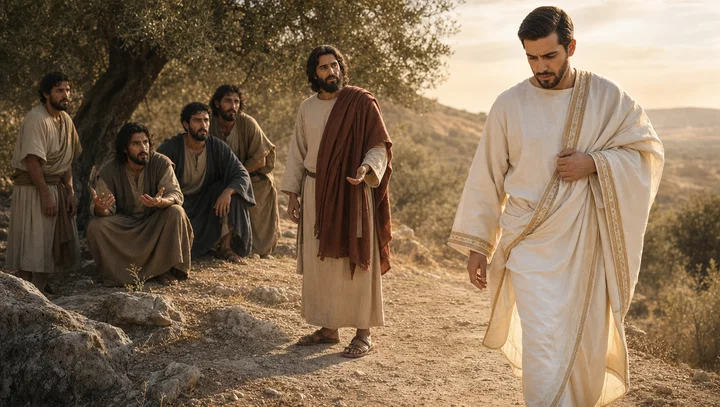
Cross-references 20 of 166
- Revelation 22:14
Blessed are they that do his commandments, that they may have right to the tree of life, and may enter in through the gates into the city.
Doing God’s commandments is linked with access to the tree of life and entry into the city.
- Exodus 20:1-17
And God spake all these words, saying,
Gives the commandments Jesus pointed the young man to keep.
- Matthew 5:17-19
Think not that I am come to destroy the law, or the prophets: I am not come to destroy, but to fulfil.
Both affirm the law’s authority and the importance of keeping its commandments.
- Matthew 19:21-22
Jesus said unto him, If thou wilt be perfect, go and sell that thou hast, and give to the poor, and thou shalt have treasure in heaven: and come and follow me.
Jesus calls the young man to give to the poor and follow him, but he leaves sorrowful.
- Mark 10:17-19
And when he was gone forth into the way, there came one running, and kneeled to him, and asked him, Good Master, what shall I do that I may inherit eternal life?
Jesus answers the ruler’s question about eternal life and names the commandments.
- Luke 18:18-23
And a certain ruler asked him, saying, Good Master, what shall I do to inherit eternal life?
Jesus questions the ruler about goodness and commandments, exposing his attachment to wealth.
- Revelation 14:12
Here is the patience of the saints: here are they that keep the commandments of God, and the faith of Jesus.
Both describe those who keep God’s commandments and connect obedience with faith in Jesus.
- James 2:10
For whosoever shall keep the whole law, and yet offend in one point, he is guilty of all.
Breaking even one point of the law makes a person guilty of all.
- Ecclesiastes 12:13
Let us hear the conclusion of the whole matter: Fear God, and keep his commandments: for this is the whole duty of man.
Both teach keeping God’s commandments as humanity’s duty.
- 1 John 5:3
For this is the love of God, that we keep his commandments: and his commandments are not grievous.
Keeping God’s commandments is defined as love for God.
- John 15:10
If ye keep my commandments, ye shall abide in my love; even as I have kept my Father’s commandments, and abide in his love.
Jesus kept his Father’s commandments, linking obedience with abiding in love.
- Romans 7:12
Wherefore the law is holy, and the commandment holy, and just, and good.
The law and commandment are holy, just, and good.
- Matthew 22:37-40
Jesus said unto him, Thou shalt love the Lord thy God with all thy heart, and with all thy soul, and with all thy mind.
Love for God and neighbor summarizes the law’s requirements.
- Matthew 5:19
Whosoever therefore shall break one of these least commandments, and shall teach men so, he shall be called the least in the kingdom of heaven: but whosoever shall do and teach them, the same shall be called great in the kingdom of heaven.
Doing and teaching the commandments brings honor in heaven’s kingdom.
- 1 John 3:4
Whosoever committeth sin transgresseth also the law: for sin is the transgression of the law.
Defines sin as transgression of the law Christ commands the young man to keep.
- Romans 3:31
Do we then make void the law through faith? God forbid: yea, we establish the law.
Faith establishes rather than nullifies the law.
- Psalms 40:8
I delight to do thy will, O my God: yea, thy law is within my heart.
Christ delights to do God’s will, with His law in His heart.
- Leviticus 19:18
Thou shalt not avenge, nor bear any grudge against the children of thy people, but thou shalt love thy neighbour as thyself: I am the LORD.
Jesus includes loving one’s neighbor as oneself among the commandments to keep.
- Luke 10:27-28
And he answering said, Thou shalt love the Lord thy God with all thy heart, and with all thy soul, and with all thy strength, and with all thy mind; and thy neighbour as thyself.
Jesus connects doing God’s commandments through love for God and neighbor with life.
- Exodus 20:12-17
Honour thy father and thy mother: that thy days may be long upon the land which the LORD thy God giveth thee.
Jesus names commandments from the Decalogue as commands to keep.
Commentary part 1 of 2
Each commentary is drawn from primary sources: the writings of Ellen G. White and Adventist pioneers and periodicals. Each commentary is separate. Its own words are not a quotation; follow the references to read the source passages.
Ellen G. White
95 sources
Jesus met a sincere rich young ruler who knelt and asked what good to do to inherit eternal life, and answered directly that to enter into life he must keep the commandments.DA 518.1–3RH Sep 11, 1900SG2 239.1–240.1Lt 195, 1903, par. 8–10Ms 123, 1908, par. 35–42
By declaring that there is none good but God, He set forth God alone as the source of goodness and tested whether the ruler recognized Him as God's Son, yet this did not deny His own divinity, sinless perfection and spotless purity.RH Sep 11, 1900Lt 354, 1907, par. 13–15COL 390.2–391.1Ms 141, 1901, par. 5Ms 16, 1890, par. 85–87
The commandments He meant are the binding moral law of ten precepts given at Sinai, naming duties to others such as not killing, committing adultery, stealing, lying, honoring parents and loving neighbor, while duties to God in the first four are implied and summed up in loving God wholly and neighbor as self.RH Sep 11, 19001T 170.4–171.3Ms 23, 1885, par. 25–272T 42.2–43.1Lt 8, 1895, par. 22–25
Entering eternal life is conditioned on such keeping, which is man's whole duty and standard of character, requiring not outward compliance but whole-hearted obedience in spirit and truth that slays selfishness and brings life, peace and health, while willful disobedience leads to ruin and wrath.3MR 66.2–67.2Ms 23, 1885, par. 25–27Ms 39, 1886, par. 1–3Ms 56, 1902, par. 44Ms 141, 1906, par. 42
The ruler claimed to have kept them from youth, but his sorrowful refusal to sell, give to the poor and follow Christ exposed covetousness and supreme love of riches, proving he had kept neither the first four nor the last six and chose the world over eternal life.1T 170.4–171.33MR 66.2–67.2Ms 150, 1899, par. 22–27RH May 20, 1862Lt 118, 1897, par. 21–25
Such obedience is not earned by works nor produced by human merit, but becomes possible and acceptable through faith in Christ, whose sacrifice bears sin's penalty and whose divine power enables the obedient to overcome, love God wholly and use all means for others.Ms 1, 1889, par. 35–40COL 390.1ST Jun 18, 1894EW 163.2Ms 94, 1899, par. 24
Encounter and Question
The meeting belongs to a ruler of great possessions and responsibility who ran to Jesus, knelt before Him, and sincerely asked what he must do to inherit eternal life.DA 518.1–3RH Sep 11, 1900 His tastes and desires were not offensive but favorable to spiritual growth, and having seen Jesus blessing little children and been moved by His tenderness, he was convinced Jesus was a good man with whom he could live in perfect harmony.DA 518.1–3RH Sep 11, 1900 He fully desired to be as Christ was, realized the importance of gaining future eternal life and a place in the abodes of bliss to live eternally with God, and wanted to become His disciple.DA 518.1–3RH Sep 11, 1900Ms 123, 1908, par. 35–42
His question about what good thing to do to have eternal life concerns how to enter into life and involves his whole present and future.SG2 239.1–240.1Lt 195, 1903, par. 8–10Lt 3, 1897, par. 2–3 Jesus gave a direct, positive, kind, tender, plain, distinct and definite answer calling for obedience to God, declaring that only God is good and that to enter into life he must keep the commandments.SG2 239.1–240.1Lt 195, 1903, par. 8–10Lt 3, 1897, par. 2–3Ms 84, 1886, par. 24Ms 123, 1908, par. 35–42 When a man asks what he must do to gain eternal life, Christ answers plainly that entering into life requires keeping the commandments and removing whatever stands in the way of obedience.Lt 160, 1899, par. 2–3STB 573.3–574.1
The Lord in this encounter makes duty clear and invites obedience but does not compel, leaving each to choose whether to obey or refuse.Lt 160, 1899, par. 2–3 The ruler stands for a large class who want eternal life yet draw back when obedience requires lifting the cross, with earthly treasures holding them so that few obey God.3MR 69.1–3 It shows how difficult it was for the young man with great possessions to turn his love from earthly treasure even when eternal life was promised to him, and that a person may choose the world rather than accept Christ as leader.2T 689.1–690.23MR 69.1–3DA 523.1
None Good but God
Goodness belongs ultimately to God alone as its source, and when the ruler called Jesus good, Jesus challenged that use of the word by declaring there is none good but God.RH Sep 11, 1900Lt 354, 1907, par. 13–15Ms 40, 1905, par. 3–5Ms 150, 1899, par. 22–27Lt 44, 1893, par. 8–9 Entering into life is made dependent on keeping the commandments, which are then specified as doing no murder, not committing adultery, not stealing, not bearing false witness, honoring father and mother, and loving one's neighbor as oneself.RH Sep 11, 1900Lt 354, 1907, par. 13–15Ms 40, 1905, par. 3–5Ms 150, 1899, par. 22–27RH Jan 12, 1905 The ruler's claim to have kept these from his youth did not settle what he still lacked, for his outward integrity did not meet God's standard in heart and life.Lt 354, 1907, par. 13–15Ms 40, 1905, par. 3–5Ms 150, 1899, par. 22–27Lt 345, 1904, par. 2–6 His attachment to possessions showed lack of love for God and others, and Jesus therefore called him to give up possessions, give to the poor, have treasure in heaven, and follow Him, showing that the call to enter life includes concrete obedience and surrender.Lt 354, 1907, par. 13–15Ms 40, 1905, par. 3–5Ms 150, 1899, par. 22–27Lt 44, 1893, par. 8–9Lt 345, 1904, par. 2–6
By asking why He is called good, Jesus tested whether the ruler understood that He is truly good, recognized Him as the Son of God, and would receive Him as God's Son and representative.COL 390.2–391.1DA 518.5DA 518.4RH Jan 12, 1905 If the ruler calls Jesus good, he must recognize and receive Him as God's Son and representative, because God's character is expressed in His law and its principles must guide every action.COL 390.2–391.1RH Jan 12, 1905 The question thus revealed the ruler's true view of Him, exposing that though he thought highly of his own righteousness he still felt he lacked something.DA 518.5DA 518.4RH Jan 12, 1905
The statement that none is good but God does not deny Christ's divinity or righteousness.Ms 141, 1901, par. 5Ms 16, 1890, par. 85–87 He speaks of Himself as God and also of the Father as God, and claims perfect righteousness.Ms 141, 1901, par. 5Ms 16, 1890, par. 85–87 He was free from sin and error, with no trace of imperfection in life or character, and maintained spotless purity under the most trying circumstances.Ms 141, 1901, par. 5Ms 16, 1890, par. 85–87
Commandments Jesus Means
The commandments to be kept in order to enter into life are the moral law, the ten holy precepts of Jehovah given at Sinai, which remain binding.Ms 23, 1885, par. 25–27Lt 8, 1895, par. 22–25COL 391.2–313MR 21.1–3ST Feb 24, 1898 When asked which commandments, Christ means that law, not a ceremonial precept, and it is the same answer He gave to the lawyer who asked how to inherit eternal life and the same principles He had spoken to Moses from the pillar of cloud.COL 391.2–313MR 21.1–3 He Himself kept them and taught others their duty to keep them, and He does not lessen the law's claims.Ms 23, 1885, par. 25–27COL 391.2–3 The requirement is declared without reservation in both the Old and New Testaments, and the young ruler's claim to have kept them did not show that he fulfilled their demands.Lt 8, 1895, par. 22–25ST Feb 24, 1898 Keeping the commandments is personal work that no one can do for another, demanding earnest faith, earnest work, and faithful improvement of every God-given ability.ST Feb 24, 1898
Jesus specifies duties toward other people: to do no murder, not commit adultery, not steal, not bear false witness, honor father and mother, and love one's neighbor as oneself.RH Sep 11, 1900Lt 354, 1907, par. 13–15Ms 40, 1905, par. 3–5Lt 195, 1903, par. 8–10Lt 3, 1897, par. 2–3 He cited commandments that teach a person's duty to other people, naming prohibitions against murder, adultery, stealing, and false witness, with commands honoring father and mother and loving one's neighbor as oneself.Lt 195, 1903, par. 8–10Lt 3, 1897, par. 2–3DA 518.6 The young man's question about what he still lacked leads Jesus to show that obedience also requires surrendering what stands in the way of following Him.Lt 354, 1907, par. 13–15Ms 40, 1905, par. 3–5 Being perfect further requires selling possessions, giving to the poor, having treasure in heaven, and following Christ.Lt 195, 1903, par. 8–10
He does not name the first four commandments containing duty to God, but they are implied.1T 170.4–171.3 The whole law is summed up as loving God with all heart, soul, strength, and mind and loving one's neighbor as oneself, with the first four expressing duty to God and the last six duty to people.2T 42.2–43.1Ms 38, 1886, par. 9–125MR 260.1Ms 56, 1902, par. 41Ms 62, 1894, par. 11–12 Obedience to the command to love God prepares the heart to obey the command to love one's neighbor.2T 42.2–43.1 The commandments express the whole duty of loving God with all one's being and loving one's neighbor as oneself, the law is the rule of life and the standard by which character is measured, and keeping them prepares a person for whole-person, undivided service to God.Ms 38, 1886, par. 9–125MR 260.1Ms 56, 1902, par. 41 Genuine love for God therefore includes unselfish care for others, especially those in danger or need, not leaving them unwarned or uncared for, forbidding taking advantage of or wronging anyone for personal gain, but treating every person, believer or unbeliever, as one would wish to be treated.2T 42.2–43.1Ms 62, 1894, par. 11–12
The obedience required is far more than outward blamelessness or merely legal compliance; it is living the spirit and life of all the commandments in true love for God and for others with no selfishness.COL 392.1DA 523.2 A lover of self is a breaker of the law even while claiming to obey, because making self and worldly gain an idol in the heart leaves a person without the principle that gives the commandments life, which is lack of everything that fits a person for the kingdom of heaven.COL 392.1 Acceptable obedience is whole-souled, like Christ's obedience to the Father, and true faith leads away from selfishness and self-sufficiency.RH Aug 2, 1906 The required obedience is the same perfect obedience and unblemished righteousness required of Adam before the fall, remaining under the covenant of grace as full harmony with God's holy, just, and good law, with God's law written in mind and heart, shaping life and character, appearing in habits simple, honest, pure, and free from all iniquity.Ms 56, 1902, par. 44DA 523.2COL 391.2–3 Nothing less than such obedience that cuts away whatever would corrupt the whole person is acceptable for disciples, even for people with great possessions or positions of trust.DA 523.4
Entering Life by Obedience
To enter into life, to inherit eternal life, is conditioned on keeping God's commandments, and strict obedience to the letter brings that precious gift.3MR 66.2–67.2Ms 23, 1885, par. 25–27Ms 39, 1886, par. 1–3Lt 8, 1895, par. 22–25Lt 44, 1893, par. 8–9 This condition is laid plainly before the rich young ruler and before all who expect eternal life, for the commandments meant are the moral law of Ten Commandments that remain binding, which Jesus Himself kept and taught others to keep.Ms 23, 1885, par. 25–27Lt 8, 1895, par. 22–25Ms 38, 1886, par. 9–125MR 260.1Ms 56, 1902, par. 41 It applies to husband, wife, and children together, who are to obey God's Word together.Lt 317a, 1904, par. 14–17 The call to enter life includes concrete obedience and surrender, as shown when Jesus further told the seeker after perfection to sell possessions, give to the poor, and follow Him.3MR 66.2–67.2Ms 39, 1886, par. 1–3Lt 44, 1893, par. 8–9
Keeping the commandments is the whole duty of man for all who expect eternal life, the rule of conduct and rule of life, the standard by which character is measured.Ms 38, 1886, par. 9–125MR 260.1Ms 56, 1902, par. 41 It is summed up as loving God with all heart, soul, strength, and mind and loving one's neighbor as oneself, and doing this is the way to live.Ms 38, 1886, par. 9–125MR 260.1Ms 56, 1902, par. 41 Such obedience regains what was lost through Adam's disobedience, while Christ's sacrifice and help make salvation possible.Ms 38, 1886, par. 9–125MR 260.1 Commandment-keeping so understood prepares a person for whole-person, undivided service to God and to Christ.Ms 56, 1902, par. 41
The obedience required must reach the heart and shape life and character, for it is more than outward or merely legal compliance or appearing blameless by a human standard.Ms 150, 1899, par. 22–27DA 523.2DA 520.2DA 523.4 God's standard must be recognized and followed in heart and life, developing a complete Christian character, which was the ruler's only hope of salvation.Ms 150, 1899, par. 22–27DA 520.2 Rightly understood in spirit and truth, with God's law written in mind and heart, it exposes the sinful nature and brings conviction of exceeding sinfulness, requiring death to self and crucifixion of self before spiritual holiness can be known.RH Sep 11, 1900Ms 94, 1899, par. 24 For disciples nothing less than such obedience is acceptable, and whatever would corrupt the whole person must be cut away, even when position and possessions threaten to displace God in the affections and weaken moral strength and usefulness.DA 523.2DA 520.2DA 523.4 One who refuses to obey under test and to deny self, take up the cross, and follow Christ shows an unregenerate heart whatever the outward propriety or professed belief, and remains unprepared for the Lord's coming.RH Sep 11, 1900
Keeping the commandments brings harmony, peace, and love, and obedience lived out with precious care, as the apple of the eye, brings life and health to flesh and to the whole body.Ms 141, 1906, par. 42Lt 388, 1907, par. 6–7ST Dec 9, 1908 Disregarding them leads the world toward ruin, and the warning stands to obey God and avoid His wrath.Ms 141, 1906, par. 42 Those who obey the law are promised eternal life, while those who disobey will not see life but remain under God's wrath.ST Oct 22, 1894 A willful transgressor will not enter into life, so those who know the claims of God's law are responsible to honor it and represent its truth.GW92 434.1 Jesus holds out none of His precious promises as reward for disobedience, for disobedience is sin with terrible consequences faithfully portrayed in the Word in both Old and New Testaments without reservation.ST Feb 24, 1898 Keeping them is personal work no one can do for another, requiring earnest faith, earnest work, and faithful improvement of every God-given ability, for idleness is sin, while Christ as Mediator presents His atoning sacrifice and believers work in His vineyard.ST Feb 24, 1898
The way to life carries promises beyond this life, for being perfect further requires selling possessions, giving to the poor, having treasure in heaven, and following Christ.Lt 195, 1903, par. 8–10 Those who have forsaken houses, family, and lands for Christ's name receive a hundredfold and inherit everlasting life, sitting on thrones judging the twelve tribes of Israel in the regeneration, where many that are first shall be last and the last first, though a rich man shall hardly enter the kingdom, impossible with men but possible with God.Lt 195, 1903, par. 8–10 To enter into life is to receive the immortal inheritance, to enter the palaces of heaven and associate freely and on equal terms with Christ and heavenly angels and with the princes of God, with blessing both in this life and in the life to come.SCE 4.1 Those who do God's commandments are granted the right to the tree of life and entry into the holy city, through acceptable obedience of the kind Christ offered in doing the Father's will, hearing the word so as to do it, believing in God's only begotten Son as personal Saviour, and being fitted by obedience for the heavenly courts.SCE 4.1Ms 166, 1905, par. 4
Ruler Proved Disobedient
The ruler answered that he had kept the named commandments from his youth, and in his own eyes he was honestly blameless by a merely human measure of outward integrity.Ms 150, 1899, par. 22–27ST Oct 28, 1908ST Oct 29, 1912 That claim was false, for he was self-deceived and did not understand the depth and significance of what the law demands in heart and life.Ms 1, 1889, par. 35–40ST Oct 28, 1908ST Oct 29, 1912 Outward keeping had not removed what stood between him and life, and God's standard requires the law to be recognized and followed in the heart and not only in appearance.Ms 150, 1899, par. 22–27Lt 118, 1897, par. 21–25Lt 345, 1904, par. 2–6
Jesus laid bare the plague spot and fatal lack by calling him to be perfect: to sell his possessions, give to the poor, lay up treasure in heaven, and follow Him.1T 170.4–171.33MR 66.2–67.2Lt 44, 1893, par. 8–9 The touch upon his great possessions exposed his weakness, for his deepest affection rested on wealth and his unwillingness to deny self showed supreme selfishness, covetousness, and attachment.1T 170.4–171.33MR 66.2–67.2Ms 39, 1886, par. 1–3Lt 1a, 1872, par. 13–14 His sorrow and refusal therefore proved that he was not a true lover of God and had not truly kept the commandments he professed to keep.3MR 66.2–67.2Ms 39, 1886, par. 1–3Lt 1a, 1872, par. 13–14Ms 1, 1889, par. 35–40 The call also set before him Christ's own example of giving up riches for others, which he would not imitate.Lt 1a, 1872, par. 13–14SG4 265.5
That supreme love of riches had become an idol, making it impossible to love God with all heart, soul, and mind, so he failed the first four commandments containing duty to God.1T 170.4–171.3Lt 8, 1895, par. 22–25SG2 240.2–241.1 With his heart fixed on treasure and blind to the wants of fellow men, he did not love his neighbor as himself, so he failed the last six commandments as well.1T 170.4–171.3Lt 1a, 1872, par. 13–14ST Jan 27, 1876 His lack of love for God and others showed that outward integrity did not meet God's requirement, which calls for love to God above all earthly treasure expressed in faithful stewardship and service.Ms 150, 1899, par. 22–27Lt 8, 1895, par. 22–25Lt 118, 1897, par. 21–25 Riches are instead to be used to relieve the poor, help those Christ purchased, and advance God's work.1T 170.4–171.3Lt 1a, 1872, par. 13–14ST Jan 27, 1876
He went away sorrowful because he loved his possessions, standing among men, power, and seen temporal advantages more than heavenly treasure and fellowship with Christ.RH May 20, 1862SG4 265.5ST Oct 28, 1908 He wanted both worlds at once, desiring eternal life yet unwilling to make the sacrifice, and he counted it too great a risk to give up the seen treasure for the unseen by selling, giving, and following.Ms 123, 1908, par. 35–42STB 573.3–574.1 Unwilling to deny self, take up the cross, and part with his riches, he refused the offer of eternal life and renounced immortal life.Ms 123, 1908, par. 35–42STB 573.3–574.1CET 164.3 Loving God's gifts more than the Giver, he chose the world and gave his worship to it ever after.ST Oct 28, 1908STB 573.3–574.1
In this he pictures the condition of many Sabbath-keepers and professed seekers who come to Jesus to learn what to do to inherit eternal life.SG2 239.1–240.13MR 66.2–67.2 The same test meets many today when Sabbath duty or other pointed truth requires lifting the cross, and like him they draw back sorrowful and unwilling.3MR 66.2–67.23MR 69.1–3RH Sep 11, 1900 Willingness to keep the commandments without surrender still leaves the one thing lacking, for earthly treasure holds the heart.SG4 267.1Lt 118, 1897, par. 37–403MR 69.1–3 Worldly cares, riches, and other desires can then choke the word until people will no longer seek or understand truth and its light is lost.SG4 267.1Lt 118, 1897, par. 37–40RH Sep 11, 1900
Obedience Through Christ by Faith
Outward keeping of the commandments does not by itself supply the heart devotion and Christian goodness that was lacking, for what is needed is a humble and contrite heart that gives supreme love to God and relies on the perfection of Christ.ST Jul 21, 1898ST Oct 28, 1908DA 519.2 The claim to have kept them from youth did not reveal the deeper lack, since love of possessions and self-love stood in the way of wholehearted devotion.ST Jul 21, 1898ST Oct 28, 1908 What was exposed by the call to sell, give to the poor, and follow is that commandment-keeping cannot be separated from receiving Christ and letting God's love rule the heart, with surrender of self and yielding of the will to God.ST Jul 21, 1898ST Oct 28, 1908
The encounter corrects the idea that God's favor and the reward of the righteous can be earned by works, opening the way to teach the right principles of reward and grace.Ms 1, 1889, par. 35–40COL 390.1 The verse teaches neither that obedience earns salvation nor that Christ's righteousness permits disobedience.Ms 1, 1889, par. 35–40 No one can obey acceptably by personal merit or produce righteousness of his own when separated from Him, but joined to His divine power human beings can obey, for faith in Christ enables a person to keep God's commandments.Ms 1, 1889, par. 35–40ST Jun 18, 1894
Through Christ's righteousness obedience becomes acceptable, and through faith in Him people keep the commandments by sharing in the divine nature.Ms 1, 1889, par. 35–40ST Jun 18, 1894 Christ took human nature and endured temptation to show that with divine help humanity can obey God's law and receive divine power to overcome temptation, and obedience so wrought preserves the soul unto eternal life.ST Jun 18, 1894Ms 94, 1899, par. 24 His sacrifice bears sin's penalty and provides the only ground for a sinner's title to eternal life, and that great sacrifice should produce appreciation and gratitude for the gift of God's Son and awaken earnest desire to bring life into conformity with God's will, since gaining eternal life comes only through obedience together with faith in the Saviour.ST Jun 18, 18945MR 250.2 Those who persistently reject light about God's law choose sin and disloyalty and cannot enter life while continuing in transgression.ST Jun 18, 1894
Christ made it possible for the ruler and for all to keep the commandments by giving up heaven and submitting to a shameful death, becoming poor for humanity's sake.Lt 1a, 1872, par. 13–14Lt 118, 1897, par. 26–33ST Jan 27, 1876RH Sep 11, 1900 His instruction to give to the poor and follow Him exposed the defect of selfish attachment to wealth and failure to love neighbor as self, and called the ruler to follow His own example of giving up riches for others.Lt 1a, 1872, par. 13–14ST Jan 27, 1876 The commandments require the whole person, love for God above earthly possessions and love expressed by using entrusted wealth to bless others, help those He purchased, relieve the poor, and advance God's kingdom rather than living for self or seeking honor.Lt 118, 1897, par. 26–33RH Sep 11, 1900 Obedience therefore means treating time, talents, and means as God's sacred trusts.Lt 118, 1897, par. 26–33
A heart ruled by wealth will give up truth rather than part with it, and human effort cannot free a person from this attachment.SG2 242.1–31T 172.1–3 A rich person cannot enter God's kingdom while loving possessions more than God, other people, or truth, for love of wealth keeps him from fulfilling the commandments, especially loving God above all and loving neighbor as self.SG2 242.1–31T 172.1–3 But God can make this impossible possible: His Spirit can displace love of riches with love for God and love for Jesus, leading a person to give generously, serve others, and faithfully manage possessions as God's steward.SG2 242.1–31T 172.1–3 Then even a rich person can keep the commandments by loving God wholly and loving neighbor as self.1T 172.1–3
The law is not presented apart from the Saviour, for those who look to Jesus as their only hope are to walk in the way opened by His sacrifice and keep God's law.EW 163.2SCE 4.1 Because the ransom has been paid it is possible for all to come to God and through a life of obedience to attain everlasting life.SCE 4.1 Entering life comes through believing in His only begotten Son as personal Saviour and through the obedience that fits for the heavenly courts above, which is to receive the immortal inheritance, to enter the palaces of heaven and associate freely with Christ and angels and the princes of God, with blessing both in this life and in the life to come.EW 163.2SCE 4.1
Living the Commandments Today
Keeping the commandments includes the laws that govern the body, for transgression of the laws of nature is transgression of the laws of God, and obedience is life-giving to flesh, bringing life and health.CH 208.36T 224.3–225.120MR 249.3–4Lt 205, 1899, par. 3–5 Entering into life requires keeping the commandments in physical as well as spiritual lines, living out God's law as the apple of the eye with the care given to something precious.Lt 388, 1907, par. 6–720MR 249.3–4Lt 218, 1908, par. 19–21 This calls for instruction in the needs of the physical organism and healthful living as taught in Scripture, regulation of appetites and passions, relieving suffering by the natural agencies God provided, and preventing sickness.Lt 218, 1908, par. 19–21 Such obedience fits the bodies God created to be presented to Him as a living sacrifice for acceptable service and prepares a people for the Lord's second coming, with sanitariums serving as educating centers of healing, restoring, and teaching health-preserving principles.20MR 249.3–4Lt 218, 1908, par. 19–21
Obedience includes observing the Sabbath of creation as God's sign, and those who accept the truth are to be reformed, baptized, and brought into the church to know that this obedience means eternal life.8T 195.6–196.1STB 4.6–5.1 Those once dead in sin are thus brought into fellowship with the saints and made to sit with Christ in heavenly places.STB 4.6–5.1 The same test meets many today when keeping the Sabbath is pointed out as duty, and going away sorrowful and unwilling to lift the cross proves failure to love God with all the heart.3MR 66.2–67.2
For those entrusted with riches, keeping the commandments means using wealth to help those Christ purchased, relieve the poor, support God's cause in carrying truth to others, and become rich in good works rather than living for self or honor.STBk 105.1ST2 46.1STM2 30.1CET 106.1–2ExVEGW 29.3–30.1 Withholding means when God's work needs it follows the young man's example, who went away sorrowful when called to give up his possessions and would not give them up.STBk 105.1ST2 46.1STM2 30.1STA 104.4–106.1 Earthly possessions will soon be swept away by the coming scourge, so giving them up for God's work must not be postponed, lest it become too late to sacrifice them and lay up treasure in heaven.STBk 105.1ST2 46.1STM2 30.1CET 106.1–2ExVEGW 29.3–30.1
Commandment-keeping prepares a person for service to God that involves the whole person and calls for undivided service to Christ as a co-worker in His work.Ms 56, 1902, par. 41DA 523.2RH Jun 23, 1903 Keeping them means loving God with the whole heart, soul, strength, and mind, and loving one's neighbor as oneself, which is the way to live.Ms 56, 1902, par. 41RH Jun 23, 1903 Genuine love for God therefore includes unselfish, practical care for others, especially those in danger or need, not leaving them unwarned or uncared for, not treating the erring with coldness and criticism, not taking advantage of anyone, but treating every person as one would wish to be treated.Ms 62, 1894, par. 11–12Ms 58, 1896, par. 20 The command to sell possessions, give to the poor, and follow Jesus presents love and self-sacrifice as the test of character, and accepting and obeying Christ's terms develops complete Christian character, while holding back anything from God weakens moral strength and usefulness because cherished earthly things absorb the heart.Ms 58, 1896, par. 20DA 523.2DA 520.2
Wealth and influence do not exempt anyone from the condition of discipleship, which may require taking up a cross.Lt 160, 1899, par. 2–3DA 719.3 Jesus made duty clear to the ruler who asked how to have eternal life by directing him to keep the commandments and then naming attachment to wealth as the obstacle, calling him to sell possessions, give to the poor, and follow Him, inviting obedience without compelling it so each must choose whether to obey or refuse.Lt 160, 1899, par. 2–3 The ruler was invited to place himself under Christ's guidance and work with Him, and united with Christ could have reflected God's likeness and become a power for good, but he did not make that choice.DA 519.3 Judas came in the same self-righteous, selfish, covetous spirit, and though numbered among the disciples and appearing righteous, he was selfish, covetous, and a thief who failed to practice Christ's words and resisted truth and obedience.Lt 63a, 1893, par. 18–21Lt 63, 1893, par. 22–25DA 719.3
Sources
Pioneers and periodicals
364 sources
Jesus met the rich young ruler who asked what good he must do for eternal life, and answered that only God is good and that entering life requires keeping the commandments.RH Sep 11, 1900ST Sep 26, 1906ST Feb 10, 1898ST Apr 23, 1896
God alone is absolutely and essentially good in himself, the source and standard of all goodness and righteousness from whom every good gift comes.ST Nov 14, 1900ST Jun 19, 1884ST Nov 18, 1897ST Sep 6, 1899
His question about being called good was no denial of his own goodness, but declares that to call him good is to acknowledge him as God sharing the Father's nature.ST Apr 1, 1889ST Jun 19, 1884ST Aug 29, 1911ST Nov 20, 1884ST Feb 10, 1898
The commandments to be kept are the whole moral law of the Ten Commandments, including the seventh-day Sabbath, which remain binding under the gospel and were not abolished at the cross.RH Aug 15, 1854RH Dec 1850ST Nov 14, 1900RH Aug 19, 1852ST May 30, 1878
Keeping them is the condition and way for entering eternal life, not as outward works earning salvation by human strength, but as obedience made possible only through faith in Christ and grace that forgives, writes the law on the heart, and fulfills its righteousness in the believer.ST Nov 24, 1881ST Nov 14, 1900ST Nov 14, 1900ST Apr 22, 1903
Story and Wording
The saying belongs to the meeting with the rich young ruler who was concerned about salvation and earnestly asked what good thing he must do to have eternal life.ST Sep 26, 1906ST Feb 10, 1898RH Sep 4, 1866ST Aug 22, 1916ST Jan 29, 1885 He came openly, running to Jesus and kneeling before him, convinced after seeing Jesus bless the little children that he must be a good man with whom he could live in perfect harmony.RH Sep 11, 1900ST Sep 26, 1906ST Feb 10, 1898 Jesus answered about goodness by pointing to God alone as good and made entering into life depend on keeping the commandments, then specified them as doing no murder, not committing adultery, not stealing, not bearing false witness, honoring father and mother, and loving neighbor as self.RH Sep 11, 1900ST Feb 10, 1898RH Sep 4, 1866 That call to perfection opened the further listing and the occasion for the parable of the laborers in the vineyard, and its word is eternal truth with practical lessons for every age, especially days of peril, since the ruler represents the respectable wealth-loving of every age and land, while its requirement cannot be divided to exclude the Sabbath any more than to exclude any other commandment, and shows that obedience may require sacrifice with personal inconvenience or worldly loss.ST Feb 10, 1898RH Sep 4, 1866ST Aug 22, 1916ST Jan 29, 1885
At first Jesus referred him to the law of God as the great rule that governs both the moral and the religious man, declaring that entering into life requires keeping the commandments without at first telling him the point in which he failed.ST Oct 19, 1888RH Dec 1850RH Jul 22, 1852 That reserve drew the question which commandments he had violated and led Jesus to specify several precepts of the Decalogue including love to neighbor as himself, teaching individual duty and bringing to light the commandment transgressed.ST Oct 19, 1888 The passage in Matthew 19:13-20 belongs together with Mark 10:13-31 and Luke 18:9-17 on the Pharisee and the publican and receiving the kingdom of God as a little child, and stands alongside the lawyer's parallel question about inheriting eternal life and obedience to God's commandments.ST Apr 23, 1896RH Dec 1850 It was spoken while Jesus was on his way to Jerusalem for the last time, and the commandments of God and the commandments of Jesus stand together inseparable under the law to Christ.ST Apr 23, 1896RH Jul 22, 1852
The saying is rendered as a change from why the man calls Jesus good to why he asks about what is good, stating that there is one who is good, while still connecting entering into life with keeping the commandments.ST Mar 3, 1881 Jesus answered from the Old Testament during the last six months before his crucifixion as he entered the shadow of the cross.ST Feb 15, 1883 That answer proves his teaching about the Old Testament came from his heart and deepest convictions and shows his absolute reliance on its words, with its thoughts as his thoughts, its principles as his principles, and its prophecies as the motive and support and promise of his life, his heart resting on its prophecies and promises and finding in it the vital air of his soul.ST Feb 15, 1883
The instruction was given before the crucifixion while the law of Moses was still leading in harmony with the gospel of the kingdom at hand, which Jesus himself kept, as schoolmaster to bring people to Christ, that is to the faith of the gospel.RH May 27, 1852 It is distinct from the call to improve society through political action, belonging to Jesus' instruction to the young man about entering life and keeping God's commandments.RH May 27, 1852RH Jul 29, 1909 The gospel of faith, remission of sins through the blood of Christ, resurrection from the dead, and the new and living way, was not opened and made binding until sealed by the blood of Christ at the crucifixion.RH May 27, 1852
Those who held that the old covenant order ended at the cross teach that the verse belongs to the time of the old covenant, when Christ kept the Sabbath and taught the young man to keep the commandments, and that the old covenant with the Sabbath was abolished at the cross and was not commanded over by Christ and the apostles, so it is not now binding.RH Apr 9, 1872
God Alone Good
There is none good but God alone, absolutely, essentially, inherently and supremely good and perfect, goodness itself whose life is goodness.ST Nov 14, 1900ST Jun 19, 1884ST Aug 29, 1911ST Nov 14, 1900 He is the source, author, embodiment and standard of all goodness, righteousness and life, from whom every good gift comes.ST Aug 29, 1911ST Nov 14, 1900ST Nov 25, 1930ST Nov 18, 1897ST Oct 19, 1915 Absolute perfection belongs to him alone.ST Aug 29, 1911ST Oct 19, 1915
God is the embodiment of all goodness and continually seeks to impart his goodness to his creatures.ST Nov 18, 1897ST Sep 6, 1899ST Nov 17, 1898 Goodness belongs to his nature, and the law is called good because it reflects his character as a revelation of God.ST Mar 24, 1898ST Mar 12, 1896 God and his law are one in nature and character, for the law is good in the same way God is good.ST Mar 24, 1898ST Mar 12, 1896 Righteousness is simply God's way, so righteousness is life, not merely an idea of what is right but the active right thing itself, and righteousness and life are inseparable just as sin and death are inseparable.ST Mar 12, 1896
No person is good of himself, for all have sinned and fall short of the glory of God and none does good.ST Aug 13, 1894ST Feb 10, 1898 Any goodness or righteousness a person has, before or after conversion, must come from God rather than from self, only as borrowed goodness from God when Christ lives in the person through faith and God's life is manifested in him.ST Aug 13, 1894ST Feb 10, 1898 Claiming goodness as one's own amounts to making oneself equal with God, and a person cannot produce a different life by relying on the same sinful, weak nature.ST Aug 13, 1894
People must be united with God so that his goodness flows into them by his Spirit and through them to the world.ST Nov 14, 1900ST Nov 14, 1900ST Sep 6, 1899ST Nov 17, 1898 Those who live in connection with him will be good and will harm no one.ST Sep 6, 1899ST Nov 17, 1898 Thanking God because he is good acknowledges him as God.ST Nov 14, 1900ST Jun 19, 1884ST Aug 29, 1911ST Nov 14, 1900 The goodness seen in Jesus in his human life came from God dwelling within him and being with him, not from human effort or achievement.ST Nov 25, 1930ST Nov 17, 1898
Since God alone is good, no person has basis for claiming moral preeminence or judging another person.RH Jul 30, 1914 By this standard a pope who claims to be Christ's vicar and to be infallible cannot be good.RH Oct 29, 1903
Those who held a distinguishing view taught that the Father alone is good absolutely and supremely, while Christ and angels are good and perfect in a relative sense, each within their sphere.RH Nov 14, 1854 On that same understanding the Father alone is self-existent and immortal in the absolute sense, so every other being depends on him for existence and life.RH Nov 14, 1854
Just means rendering to every man his due with strict integrity, innocence and exact payment of every demand, while good means magnanimous, benevolent and engaged in extensive philanthropy toward the needy and suffering.ST Mar 22, 1883ST Nov 25, 1886 The young man was just but not good, keeping justice in strict integrity yet lacking disinterested benevolence.ST Mar 22, 1883ST Nov 25, 1886 He felt no responsibility for those he had not wronged.ST Mar 22, 1883
Christ Revealed as God
The question about calling him good was no rebuke and no denial that he was good.ST Apr 1, 1889ST Jun 19, 1884ST Aug 29, 1911RH Jan 7, 1902 He was absolutely good as Son of God, sharing the divine attributes, having life in himself, being Creator, and never a candidate for life on probation, and by saying that none is good but God he identified himself as God and not a mere man, rabbi, prophet, or divinely commissioned teacher.ST Apr 1, 1889ST Jun 19, 1884ST Aug 29, 1911RH Jan 7, 1902 He spoke to one who called him Good Master while asking what good thing to do for eternal life, teaching him to look more deeply into his own words and impressing a lesson about himself, acknowledging the character ascribed without objecting to the title.ST Aug 29, 1911RH Jan 7, 1902ST Jun 19, 1884 He tested whether the ruler understood why he used that title and recognized him as Son of God, exposing the ruler's failure to recognize his divine nature in regarding him as merely human, while reading his heart and pointing out his duty before God.RH Jan 12, 1905ST Aug 29, 1911ST Jun 19, 1884 To call him good therefore puts him in the same category with God and calls him God, which he is, so that since Christ is good, Christ is God, exactly the opposite of making him only a man.ST Apr 1, 1889ST Jun 19, 1884RH Jan 7, 1902
His reply asserts his right to be called God.ST Nov 20, 1884ST Feb 10, 1898 It shows the close union of thought and purpose between Father and Son, in which the will of one is the will of the other.ST Nov 20, 1884 He confronted the ruler with the import of calling him good, to make him see himself and the true source of goodness and to consider whether he really believes Jesus is God, for if Jesus is good, he is God with us.ST Feb 10, 1898
When he asked why the questioner called him good he was answering within the man's assumption that he was merely human and that human effort could merit life through good deeds sufficient to earn eternal life.ST Nov 15, 1883RH Apr 4, 1871 The words deny absolute goodness to anyone but God but neither assert nor deny his own goodness or divinity.ST Nov 15, 1883RH Apr 4, 1871 They affirm that pure goodness belongs only to God, and give added weight to his calling himself the Good Shepherd.ST Nov 15, 1883RH Apr 4, 1871
In his human life he did not claim goodness as his own, and goodness does not come from human effort or achievement.ST Nov 25, 1930ST Nov 17, 1898 The goodness seen in him came from God dwelling within him and being with him, for God alone is essentially good and the source and author of all good from whom every good gift comes.ST Nov 25, 1930ST Nov 18, 1897ST Oct 19, 1915ST Nov 17, 1898 People must therefore be united with God so that his goodness flows into them by his Spirit and through them to the world.ST Nov 17, 1898
The verse presents God as the only one who is good and teaches that entering into life requires keeping the commandments, with Jesus as the example of the only Good whom following means rejecting pride and worldly honor and living humbly.RH Jun 12, 1855 Knowing by personal experience that he was God was not made a condition for entering life, but in his answer he directed the young ruler to keep the commandments.ST Nov 23, 1915
Commandments Defined
The commandments to be kept are the entire code of the Ten Commandments, the Father's moral law and Decalogue covering both duty to God and duty to neighbor, written by God on stone, and the whole law must be kept.RH Aug 15, 1854RH Dec 1850ST Nov 14, 1900RH Aug 19, 1852 Where some are quoted they represent and identify the whole code, and in the New Testament the commandments means the ten moral commandments unless the context qualifies it as ordinances.RH May 2, 1854RH Jun 24, 1852RH Oct 10, 1854 Jesus did not issue a new law on his own authority, for each precept quoted remains grounded in its original authority.RH Oct 10, 1854RH Aug 5, 1852ST Dec 3, 1894
The Ten Commandments spoken by God himself from heaven at Sinai with fire, smoke, thunder and earthquake and written by him on two tables of stone with nothing added are distinct from the precepts, statutes and laws commanded through Moses as servant.ST Feb 22, 1883RH Feb 1851RH Jun 2, 1851 They are distinct from the law of ordinances written by Moses in a book and nailed to the cross, and from ceremonial, civil, Jewish or Mosaic law that was superseded.ST Mar 20, 1879RH Feb 1851 Unlike those, the moral commandments remain binding, holy, just and good, known and kept from creation, and were not abolished by Christ.ST Mar 20, 1879RH Feb 1851ST Sep 9, 1913RH Jun 2, 1851
Jesus answered by naming moral duties to other people from the second table and not the ceremonial law, such as doing no murder, not committing adultery, not stealing, not bearing false witness, honoring father and mother, and loving neighbor as self.RH Sep 11, 1900RH Nov 26, 1857ST Nov 24, 1881RH Feb 26, 1901 He cited the fifth to the ninth together with one of the two principles on which hang all the law and the prophets.RH Sep 11, 1900ST Nov 24, 1881RH Feb 26, 1901 They are direct quotations from the Decalogue confirming that the commandments of God kept by the saints are the Father's commandments distinct from the faith of Jesus.RH Sep 11, 1900RH Jun 24, 1852RH Oct 10, 1854
Christ's naming only some commandments does not make the others optional, unimportant, excluded or abolished.RH Aug 15, 1854RH Oct 11, 1906RH May 2, 1854RH Dec 31, 1857RH Apr 13, 1869 The commandments he did not name there, the first, second, third, fourth and tenth, including the Sabbath and the command against coveting, remain binding.RH Aug 15, 1854RH Oct 11, 1906RH May 2, 1854ST Mar 6, 1884 The same reasoning would abolish the other unnamed commandments, so the omission gives no reason to reject obligation to observe the seventh-day Sabbath or duties to God against profanity, image worship or Sabbath-breaking, for the law is immutable in every jot and tittle.RH Oct 11, 1906RH May 2, 1854RH Dec 31, 1857RH Apr 13, 1869ST Mar 6, 1884
The commandments comprehend all human duty to God and to other people, set out on two tables with the first four showing duty to God and the last six duty to neighbor.RH Aug 21, 1855ST Nov 14, 1878RH Jun 2, 1851 They are summed as loving God with the whole person and loving neighbor as self, governing outward actions and inward movements of mind.ST Oct 28, 1908RH Jun 24, 1852ST Dec 6, 1883 The ten precepts of Exodus 20 naturally grow out of those two great principles on which hang the ten and the prophets, forming the foundation of God's moral government framed to secure that love.RH Jun 24, 1852ST Feb 4, 1886ST Dec 6, 1883
The verse solemnly re-affirms all the commandments, identifies the commandments in verses 18-19 with God's commandments given in person, and makes clear by citing five precepts he meant the commandments themselves showing the Ten in full force and not abolished.RH Jun 24, 1852RH Nov 8, 1870RH Oct 10, 1854RH Aug 5, 1852ST Feb 4, 1886 Commandment and law are synonymous terms, and none of the ten can be excluded.RH Jun 24, 1852ST Dec 3, 1894 His life displayed the whole Decalogue, which he shared, obeyed in full, and confirmed as continuing with unrelaxed obligation.ST Dec 3, 1894ST Feb 4, 1886
It is important to know what the commandments are, with Exodus remaining a guide.ST Sep 6, 1910RH Apr 14, 1853 Every reader must study the ten sacred precepts in Exodus 20, examine disobedience to any, and render implicit obedience with nothing allowed to come between.ST Sep 6, 1910RH Apr 14, 1853 God does not change what he has spoken.RH Nov 1, 1853
Sabbath Remains Binding
Entering life by keeping the commandments includes keeping the fourth commandment to keep the seventh-day Sabbath holy, blessed and sanctified by God, because one of the commandments says the seventh day is the Sabbath.RH Aug 19, 1852ST May 30, 1878RH Sep 13, 1853ST Aug 26, 1897RH Aug 18, 1868 The commandments meant are the whole Ten Commandments written by God on stone, and Jesus naming five of them identifies the whole code rather than excluding the rest.RH Aug 19, 1852ST May 30, 1878RH Sep 13, 1853ST Aug 26, 1897ST Jan 11, 1883 The Sabbath so commanded remains binding without needing re-enactment, is not altered to another day or to Sunday, applies to all people and not only to Jews, and observing it does not cause falling from grace.RH Aug 19, 1852ST May 30, 1878RH Sep 13, 1853ST Aug 26, 1897ST Jan 11, 1883 Obedience brings blessedness and a part in the world to come with right to the tree of life, for the commandments are one and unchanged from Genesis to Revelation and include the weekly Sabbath given in Eden and still kept by all the redeemed and holy inhabitants of the new world.RH Aug 19, 1852ST May 30, 1878ST Jan 11, 1883 Choosing life therefore means leaving striving against self-evident truth and bearing the cross of unpopular truth here, obeying God rather than human authority and holding to the testimony of Jesus in the setting of the third angel's message.RH Aug 19, 1852ST Jan 11, 1883RH Aug 18, 1868
A heart cannot be right with God while knowingly neglecting any of his requirements, including the seventh-day Sabbath, so obedience to his revealed will is not optional.RH Aug 19, 1852ST May 30, 1878RH Sep 13, 1853ST Aug 26, 1897ST Jan 11, 1883 Sincerity, popular practice, inconvenience, mere acknowledgment without observance, or acknowledging the seventh day while refusing to keep it does not excuse disobedience.RH Aug 19, 1852ST May 30, 1878RH Sep 13, 1853ST Aug 26, 1897ST Jan 11, 1883 Seeing the commandments shows what God requires, including the Lord's Sabbath, and reveals that a person may think to be obeying God while still failing to keep his law and following man-made religion.RH Aug 19, 1852ST May 30, 1878RH Sep 13, 1853 Refusal leaves worship vain and prayer rejected and shows fallenness since it matters what day is kept, so that knowing the Sabbath is God's will yet refusing it forfeits salvation.RH Aug 19, 1852ST May 30, 1878RH Sep 13, 1853RH Aug 18, 1868
The commandment law acknowledged and enforced in the New Testament condemns Sabbath-breaking as sin, and keeping God's commandments is required for entering into life.RH Jul 8, 1875RH Apr 9, 1872ST Nov 7, 1878ST Sep 22, 1881 This stands against the claim that the law given to the Jews was abolished to annul the Sabbath requirement.RH Jul 8, 1875ST Nov 7, 1878ST May 28, 1894 Keeping all ten, including the Sabbath, is the choice that leads to life, in contrast to worshiping the beast by observing a false day of rest and perishing.RH Jul 8, 1875ST May 28, 1894
No divine law makes the first day sacred or transfers the seventh-day Sabbath to it, so legitimate secular work on Sunday is not disobedience to God's law.RH Apr 9, 1872ST Mar 11, 1889RH Feb 26, 1901ST Nov 7, 1878 The seventh-day Sabbath is part of God's law distinct from the ceremonial law of commandments in ordinances taken out of the way at the cross, so keeping God's law is not a curse or a return to weak and beggarly elements.RH Apr 9, 1872ST Mar 11, 1889ST Sep 22, 1881 Christ upheld the Ten Commandments and taught that keeping them is connected with entering into eternal life, with the Sabbath commandment part of that law by which he judges people.RH Apr 9, 1872ST Mar 11, 1889ST Nov 7, 1878ST Sep 22, 1881 There is no divine authority for Sunday-keeping, and rejecting the Sabbath for human tradition such as Sunday-keeping for which there is no Scripture makes worship vain.RH Apr 9, 1872ST Mar 11, 1889RH Feb 26, 1901ST Nov 7, 1878
The command to keep the commandments applied to the fourth commandment means keeping the Sabbath may require giving up work, trusting that the Lord will provide.RH May 15, 1855RH Jul 28, 1868RH Mar 3, 1853RH Jan 10, 1907 Acknowledging the seventh day as the Sabbath while refusing to keep it does not excuse disobedience, and those who keep the commandments are to suffer and overcome with their fellow believers, with entry into life and a reward held out to them.RH May 15, 1855RH Jul 28, 1868RH Mar 3, 1853 Mention of only some commandments does not mean the others, including the fourth, had been abolished.RH May 15, 1855RH Mar 3, 1853ST Feb 27, 1912 The Sabbath remains part of God's law and serves as a memorial of creation, keeping people mindful of God as their Creator and of his creative power, made for humanity and identifying the Lord as Creator and a sign that he sanctifies his people, with harmonious Bible testimony promising entry into the city and a share in the inheritance of God's people to those who obey.RH May 15, 1855RH Jul 28, 1868RH Mar 3, 1853ST Feb 27, 1912
Obedience Leads to Life
Keeping the commandments is the condition, requirement, way, rule, test and standard Jesus names for entering into life and eternal life, with no other way, and breaking them forfeits life.ST Nov 14, 1900ST Jun 19, 1884RH May 16, 1871RH May 3, 1860 Entering life is conditional, marked by if as a real contingency that may be gained or lost according to the course chosen, and the commandments cannot be evaded while hoping for life.ST Nov 24, 1881RH May 16, 1871 Jesus tests duty to neighbor by pointing to commandments grounded in love for neighbor, and one who has more than needed while the needy lack necessities does not have the spirit of the law.ST Nov 24, 1881
The design and promise of the law is that it should be kept and produce righteous characters, for it was ordained and designed for life as the unchanging expression of God's holy character and the law of life for intelligent beings and the channel through which life continues.RH Apr 26, 1870RH Aug 3, 1876RH Sep 13, 1853ST Apr 8, 1886 Keeping is entering that way and entering life, not a deed earning life as a later reward; its righteousness consists in obedience, and only those who do them shall live by them.RH Aug 3, 1876ST Apr 8, 1886ST Jul 1, 1886 The commandments are holy, just, good, spiritual, righteous and truth, loved and kept in the heart not as burden or yoke of bondage but as the way to the heavenly city and unending life, expressing God's will and the rule for righteous holy character in the whole perfect moral law.RH Apr 26, 1870RH Aug 3, 1876ST Jul 27, 1904 Obedience is presented as the condition for having the name enrolled in the book of life, and every work including secret things comes into judgment, with obedience mattering more than offerings or sacrifices.ST Nov 25, 1897ST Jul 27, 1904
Life and death depend on obedience or disobedience to God's moral law, with obedience the way to live and disobedience bringing death as its inevitable consequence, not vengeance, as with Adam and Eve where death was in disobedience itself.RH Apr 26, 1870RH Aug 3, 1876ST Feb 10, 1898 Violation of the moral law brings death, while obedience through Christ's blood leads to eternal life, and transgression is sin whose finished work brings death including the second death.RH Sep 13, 1853ST Feb 10, 1898 The law brings failures into view and points to seeking the Lord's way, showing one may think to obey God while failing to keep His law and following man-made religion.RH Sep 13, 1853
Doing what is right according to the Ten Commandments brings life, for righteousness and life go hand in hand and cannot be separated, as they are in God.ST Jul 1, 1886ST Jun 25, 1896 Whoever does no wrong but only what is right is not only righteous but has life and begins living an eternal life at once.ST Jun 25, 1896 This carries out God's design in creating man upright and righteous with right to eat of the tree of life and live forever while continuing in harmony with the law of life, a capacity lost when man sinned and spoiled the righteous nature given him.ST Jun 25, 1896 In the way of righteousness is life and the way of God's commandments is the way of life repeatedly set before Israel; God's life is given through His law, and both are eternal and harmonious, the law of continued existence which was in Jesus Christ, so the young man's own admission that he did not have eternal life showed he was a transgressor of God's eternal law.ST Feb 10, 1898
Obedience brings blessedness and a part in the world to come with right to the tree of life, recovering the lost right through Christ meeting the law's claims in the sinner's place.RH Apr 26, 1870RH Aug 3, 1876ST Jan 11, 1883 Those who keep them have right to the tree of life and may enter the gates of the holy city, and by God's assisting grace obedience opens that way.RH Apr 26, 1870ST Nov 25, 1897ST Jan 11, 1883 The commandments are one and unchanged from Genesis to Revelation and include the weekly Sabbath given in Eden and still kept by all the redeemed and holy inhabitants of the new world, so choosing life means leaving striving against self-evident truth and bearing the cross of unpopular truth here.ST Jan 11, 1883
Willful violation of even one commandment, even the least, is incompatible with a place in God's kingdom.RH Aug 15, 1854RH Jun 10, 1852RH Apr 8, 1873 Keeping means doing all God requires and doing the Father's will, making one fit for the kingdom; the life must be in harmony with the whole law, kept fully with love for God and neighbor.RH Aug 15, 1854RH Mar 27, 1866ST Jan 16, 1912 Christ teaches by precept and example implicit obedience to the Father's law in every jot and tittle, while disregarding even one command is rebellion against the life-sealing law leaving no sure hope, but the one who does what the law requires will live.RH Apr 8, 1873ST Apr 8, 1886ST Jul 1, 1886 Christ cites commandments about duties to others to expose deficiency in that area, and the ones He names are not an exhaustive list; the fourth commandment is no more excluded by omission than the first, second, third or tenth.RH Aug 15, 1854 No one can willingly or knowingly reject even the least, including that the seventh day is the Sabbath of the Lord in which no work is to be done, and still maintain justification through Christ, because Christ died to justify from past sins when ways are thoroughly amended, not to justify continuing in sin.RH Jun 10, 1852
Keep means to keep strictly the whole law expressed in the Ten Commandments, not merely some or selected precepts, as a published code already known through the prophets and handed down to disciples and a mark of the redeemed.RH Nov 22, 1853RH Jun 19, 1866ST Nov 14, 1900RH May 2, 1854 Knowingly breaking even one breaks the whole law, and one cherished sin, covetousness, or violation can keep a person out of the kingdom.RH Nov 22, 1853ST Aug 27, 1912RH Feb 7, 1854 They can be kept only through faith in Christ, who forgives sin and writes the law on the heart, and their keeping remains essential and unchanged.ST Nov 14, 1900
The life in view is eternal life, the saints' reward, inheritance and kingdom of the world to come, not something bestowed in this present life but belonging beyond the judgment.RH Nov 14, 1871RH Nov 7, 1871ST Jul 8, 1875 It is in the Son and bestowed when Christ comes to receive His people by raising the dead or translating the living, sought in this life but put on at the resurrection of the just where forever means during the eternal ages.RH Nov 14, 1871RH Nov 7, 1871ST Sep 18, 1884 Redemption is not complete until then and until the earth is delivered from the curse.RH Nov 7, 1871
Eternal life is not already possessed but must be sought from Christ by the means God appointed, including keeping the commandments.RH Sep 4, 1855RH Nov 1, 1853RH Sep 4, 1855 Life means life itself, not merely happiness which those receiving life enjoy; since sin is transgression of the law and its wage is death, the sinner must come to Christ for pardon and obey God, so the verse does not teach universal immortality of the soul.RH Sep 4, 1855 Immortality is not natural or indestructible in human beings but is obtained through the gospel by patient continuance in well-doing, received at the judgment and resurrection when the mortal are changed, remaining a promise for which Christians hope and patiently wait.RH Nov 1, 1853RH Sep 4, 1855 Desire for life points to human mortality and danger, meant to encourage protecting life and seeking eternal life by turning from the world's corruption and cleaving to God and His word.RH Sep 4, 1855
Entering into life means receiving unending life free from all pain and unhappiness, the greatest bargain any person can make and the utmost Christ has power to give, offered only on condition of obedience to His requirements and commandments.ST Dec 24, 1885 No fortune, property or position gained by refusing to walk in those commandments is of real benefit beside that life, for gaining the whole world while losing the soul leaves nothing.ST Dec 24, 1885 Counting any sacrifice too great to secure this happy unending life proves a person unworthy of it, and Christ who made great sacrifice to place the prize within reach will never grant it to such, for entering into life which is everlasting life requires keeping the commandments and long life is gained by being a Christian.ST Nov 20, 1884ST Dec 24, 1885
The verse shows the importance God attaches to His commandments by making eternal life depend on keeping them, as length of days in this life was promised to Solomon on the same condition.ST Oct 2, 1884 The promise proves obedience is possible with the assistance of the Spirit received by coming boldly to the throne of grace; to say they cannot be kept charges God with tempting with promises on impossible conditions and requiring what is beyond power, denying His love and the integrity of His promises.ST Oct 2, 1884 The commandments are to be lived out with careful regard as the apple of the eye, and obedience brings life to those who find them and health to the whole body, with faith resting on God's word and promises rather than feelings.ST Dec 9, 1908 They are truth connected with sanctification and the law of truth forbidding theft and adultery, so keeping them is well-doing and obeying the truth while disobeying is unrighteousness, agreeing with patient continuance in well-doing seeking glory, honor and immortality bringing eternal life.RH Feb 28, 1907ST Apr 10, 1884RH Dec 25, 1856 The law reveals what people must be to inherit eternal life and searches and purifies the heart like a refining fire.RH Sep 13, 1853
Sources