Matthew 3:15
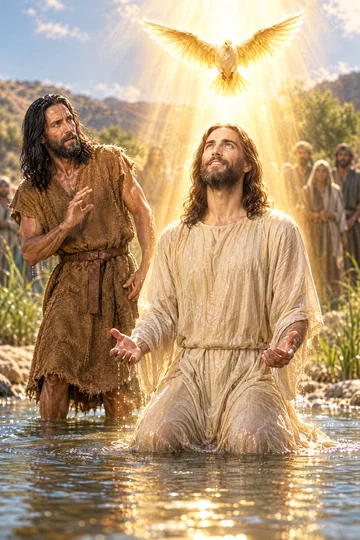
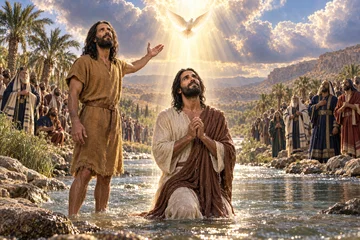
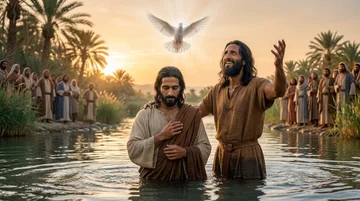
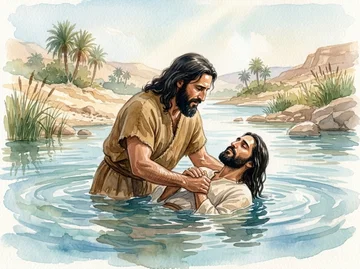
And Jesus answering said unto him, Suffer it to be so now: for thus it becometh us to fulfil all righteousness. Then he suffered him.
Translations
And Jesus answering said to him, Suffer it to be so now: for thus it becomes us to fulfill all righteousness. Then he suffered him.
King James Version, KJV Cambridge Paragraph Bible
And Jesus answering said unto him, Suffer it to be so now: for thus it becometh us to fulfil all righteousness. Then he suffered him.
And Jesus answering said to him, Suffer it to be so now: for thus it becometh us to fulfill all righteousness. Then he suffered him.
But Jesus answering said unto him, Suffer it now: for thus it becometh us to fulfill all righteousness. Then he suffereth him.
But Jesus answering said unto him, Suffer it now: for thus it becometh us to fulfil all righteousness. Then he suffereth him.
But Jesus answering said to him, 'Suffer now, for thus it is becoming to us to fulfil all righteousness,' then he doth suffer him.
But Jesus answering said to him, Suffer [ it] now; for thus it becometh us to fulfil all righteousness. Then he suffers him.
But Jesus answering, said unto him, Suffer [me] even now,—for, thus, it becometh us, to fulfil, all righteousness; then, he suffered him.
Berean Standard Bible, Majority Standard Bible
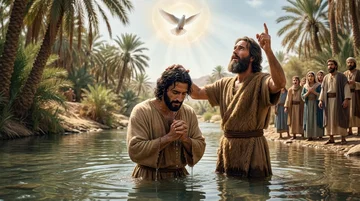
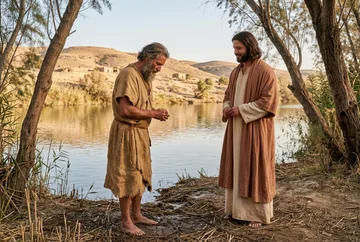
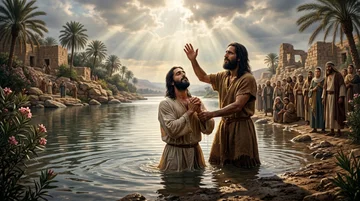
“ Let it be so now,” Jesus replied. “ It is fitting for us to fulfill all righteousness in this way.” Then John permitted Him.
But Jesus, answering, said to him, “Allow it now, for this is the fitting way for us to fulfill all righteousness.” Then he allowed him.
But Jesus made answer, saying to him, Let it be so now: because so it is right for us to make righteousness complete. Then he gave him baptism.
Then Iesus answering, saide to him, Let be nowe: for thus it becommeth vs to fulfill all righteousnes. So he suffered him.
Douay-Rheims (Challoner revision)
And Jesus answering, said to him: Suffer it to be so now. For so it becometh us to fulfill all justice. Then he suffered him.
Pictures
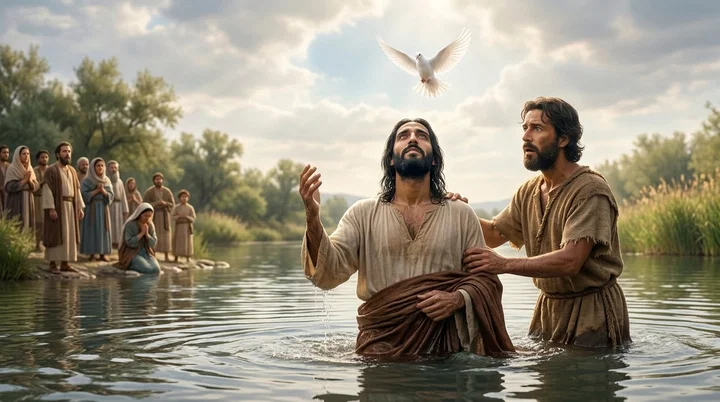
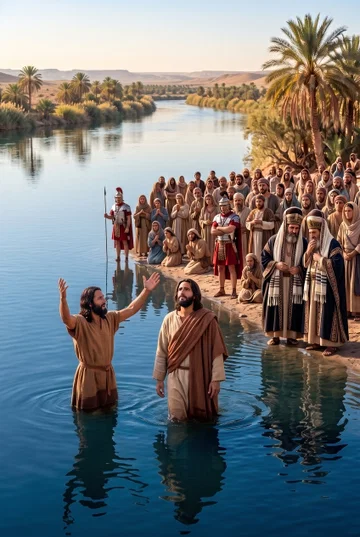
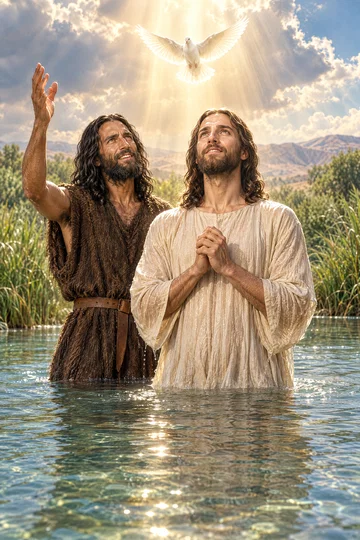
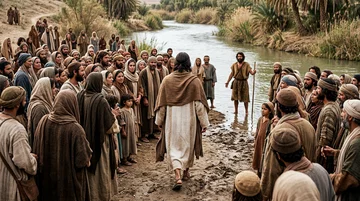
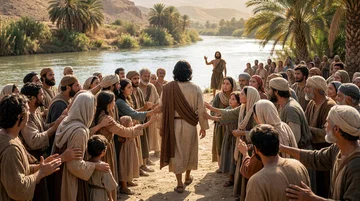
Cross-references 20 of 47
- Romans 6:3-4
Know ye not, that so many of us as were baptized into Jesus Christ were baptized into his death?
Baptism portrays burial with Christ and rising to new life.
- Matthew 5:17
Think not that I am come to destroy the law, or the prophets: I am not come to destroy, but to fulfil.
Jesus’ fulfillment of the law is compared with his fulfilling righteousness at baptism.
- Mark 1:9-11
And it came to pass in those days, that Jesus came from Nazareth of Galilee, and was baptized of John in Jordan.
Records Jesus’ baptism, the Spirit’s descent, and the Father’s confirmation.
- Luke 3:21-22
Now when all the people were baptized, it came to pass, that Jesus also being baptized, and praying, the heaven was opened,
Describes Jesus’ baptism, the Spirit’s descent, and the voice from heaven.
- Matthew 28:19
Go ye therefore, and teach all nations, baptizing them in the name of the Father, and of the Son, and of the Holy Ghost:
Jesus’ baptism is paired with his command to baptize all nations.
- John 1:32-34
And John bare record, saying, I saw the Spirit descending from heaven like a dove, and it abode upon him.
John describes the Spirit descending on Jesus as the sign identifying him as the Son of God.
- Romans 8:3-4
For what the law could not do, in that it was weak through the flesh, God sending his own Son in the likeness of sinful flesh, and for sin, condemned sin in the flesh:
Christ fulfilled the law’s righteous requirement in human nature, making its righteousness fulfilled in believers.
- Isaiah 42:21
The LORD is well pleased for his righteousness’ sake; he will magnify the law, and make it honourable.
Christ’s obedience fulfills and magnifies the law, making it honorable.
- Galatians 6:2
Bear ye one another’s burdens, and so fulfil the law of Christ.
Both use “fulfil” to mean keeping or doing what the law requires.
- Acts 2:38
Then Peter said unto them, Repent, and be baptized every one of you in the name of Jesus Christ for the remission of sins, and ye shall receive the gift of the Holy Ghost.
Peter calls for repentance and baptism for remission of sins.
- Isaiah 40:3
The voice of him that crieth in the wilderness, Prepare ye the way of the LORD, make straight in the desert a highway for our God.
John’s wilderness ministry prepares the way of the Lord.
- Acts 8:38-39
And he commanded the chariot to stand still: and they went down both into the water, both Philip and the eunuch; and he baptized him.
The eunuch is baptized in water and comes up rejoicing.
- Matthew 4:1-11
Then was Jesus led up of the Spirit into the wilderness to be tempted of the devil.
Jesus’ wilderness temptation follows his baptism and precedes his public mission.
- Colossians 2:12
Buried with him in baptism, where in also ye are risen with him through the faith of the operation of God, who hath raised him from the dead.
Baptism signifies burial with Christ and rising with him.
- Mark 1:4
John did baptize in the wilderness, and preach the baptism of repentance for the remission of sins.
John’s baptism is a baptism of repentance for remission of sins.
- Galatians 3:27
For as many of you as have been baptized into Christ have put on Christ.
Baptism is described as putting on Christ.
- Hebrews 10:7
Then said I, Lo, I come ( in the volume of the book it is written of me,) to do thy will, O God.
Christ’s words express his coming to do God’s will.
- Psalms 40:8
I delight to do thy will, O my God: yea, thy law is within my heart.
Christ’s words about fulfilling righteousness reflect his delight in doing God’s will.
- Luke 3:3
And he came into all the country about Jordan, preaching the baptism of repentance for the remission of sins;
John preaches repentance and administers baptism for remission of sins.
- Acts 19:3-5
And he said unto them, Unto what then were ye baptized? And they said, Unto John’s baptism.
John’s baptism is followed by baptism in the name of the Lord Jesus.
Commentary
Each commentary is drawn from primary sources: the writings of Ellen G. White and Adventist pioneers and periodicals. Each commentary is separate. Its own words are not a quotation; follow the references to read the source passages.
Ellen G. White
46 sources
At about thirty years of age Jesus came to John at the Jordan to be baptized as the anointing and beginning of His public ministry, and though John drew back feeling his own need to be baptized by Him, Jesus with firm and gentle authority bade him allow it now.ST Jul 7, 1887Ms 95, 1908, par. 1–3Lt 174, 1909, par. 1–4Ms 141, 1909, par. 1–2DA 108.2 He had never sinned and needed no cleansing or repentance for personal guilt, but He submitted to number Himself with transgressors and take their sins upon Himself in their place, taking in human nature the steps the sinner must take as humanity's Head, representative, substitute and surety.2SP 58.2–59.1Ms 144, 1901, par. 16–18Ms 57, 1900, par. 22Ms 31, 1901, par. 9–13ST Oct 25, 1877 To fulfil all righteousness means to fill up the full measure of the law's requirements by perfect conformity to God's will, giving an example of entire obedience, not bringing the law to an end but magnifying it and making it honorable as still binding.10MR 292.1–421MR 196.2–3Ms 145, 1897, par. 17–19 Upon this obedience the heavens were opened in streaming glory, the Spirit descended like a dove upon Him, and the Father's voice declared Him His beloved Son in whom He is well pleased, pledging that all who believe and obey are accepted in the Beloved just as He was.Ms 147, 1906, par. 21–22Ms 112, 1901, par. 14–15Ms 31, 1901, par. 9–13COS 45.4–5COS 45.3 His submission set the pattern all must follow, placing repentance, conversion, faith and baptism among the requisite steps in conversion, by which believers enter covenant with God, die to the world, and rise to new life pledged to keep the law.10MR 292.1–42SP 58.2–59.1Ms 144, 1901, par. 16–18Ms 31, 1901, par. 9–137MR 125.1–2
Words and Historical Setting
Jesus came to John at the Jordan to be baptized at about thirty years of age, and that baptism was His anointing and inauguration and the beginning of His public ministry.ST Jul 7, 1887Ms 141, 1909, par. 1–2DA 108.2COS 44.1Ms 52, 1890, par. 3–5 John was preparing the way for that ministry by baptizing Him, and John's calling to perform this work was greatness in God's sight even if it did not look great by human standards.DA 108.2Ms 170, 1897, par. 5–7Ms 52, 1890, par. 3–5 His dedication was not brought about by human agency, for the baptism was followed by His prayer, the Spirit's descent, and the Father's public recognition of Him, marking His divine commission and the beginning of His work as God's representative.Ms 141, 1909, par. 1–2Ms 52, 1890, par. 3–5 John had been directing people's faith toward Jesus as the One to come, the promised Lamb who takes away the sin of the world.ST Jul 7, 1887DA 108.2
John had not personally known Jesus during His secluded years at Nazareth and was still awaiting the distinct sign by which God would identify Him as the Messiah.ST Jul 7, 1887DA 109.1–3COS 44.3–4 He had been told that the Messiah would seek baptism at his hands and that a sign of divine character would then be given, enabling him to present Him to the people.DA 109.1–3COS 44.3–4 Yet when Jesus came asking for baptism in fulfillment of what God had already told him, John recognized holy life in Him, saw heavenly light upon His face like that Simeon had beheld, and felt his own need to be baptized by Jesus.ST Jul 7, 1887COS 44.3–4
John therefore drew back and refused at first, feeling the rite implied pollution needing washing away, which sinless Jesus with no guilt to confess did not need.Ms 95, 1908, par. 1–3Lt 174, 1909, par. 1–4Ms 57, 1902, par. 27RH Jan 21, 1873ST Jul 7, 1887 But Jesus with firm and gentle authority insisted that John allow it now, saying it was fitting for them to fulfil all righteousness and to complete what God requires.Ms 95, 1908, par. 1–3Lt 174, 1909, par. 1–4Ms 57, 1902, par. 27Ms 115, 1909, par. 12–14RH Jan 21, 1873 John then consented and baptized Him.Ms 95, 1908, par. 1–3Ms 57, 1902, par. 27Ms 115, 1909, par. 12–14 The command to allow it for the present is the same language later used to Peter about washing his feet, meaning Peter did not understand the act then but would understand it afterward.Ms 19, 1897, par. 58 To fulfil means to keep, perform and carry out, not to abolish or alter, and Jesus fulfilled every requirement of God's law because the law remains unchanged as it reflects God's character.COS 75.1–4Ms 9, 1893, par. 22–24
Why the Sinless Was Baptized
Jesus had never sinned and was wholly sinless, so His baptism was not confession or washing away of any sins of His own, not repentance for personal guilt, and He needed no cleansing or repentance Himself.2SP 58.2–59.1Ms 31, 1901, par. 9–13Ms 155, 1902, par. 33–36Ms 229, 1902, par. 44–46COS 45.2 He submitted in order to identify Himself with sinners and with the people He came to save, numbering Himself with transgressors as their substitute and representative, having their guilt imputed to Him and taking their sins upon Himself in their place.2SP 58.2–59.1ST Oct 25, 1877RH Jan 21, 1873ST Oct 25, 18774T 40.2–4 Bearing the sins of the whole world, His baptism embraced the whole sinful world that would by repentance and faith be pardoned.2SP 58.2–59.1Ms 57, 1900, par. 22 His baptism showed faith in the atonement and identified Him with His followers at the opening of His public mission.ST Oct 25, 18774T 40.2–4
As humanity's Head, representative, substitute and surety, He in human nature took the steps the sinner must take and did the work the sinner must do.2SP 58.2–59.1Ms 57, 1900, par. 22Ms 229, 1902, par. 44–46RH Jan 21, 1873ST Oct 25, 1877 That meant meeting every requirement of God's broken law through perfect obedience and doing God's will, fulfilling all the requirements for the redemption of the sinful race.2SP 58.2–59.1Ms 57, 1900, par. 2221MR 196.2–3Ms 145, 1897, par. 17–19RH Jan 21, 1873 Fulfilling all righteousness in this way meant taking the necessary steps of repentance, conversion, faith and baptism as the pattern for every son and daughter of Adam who will believe in Him as a personal Saviour.Ms 144, 1901, par. 16–18Ms 57, 1900, par. 2221MR 196.2–3Ms 145, 1897, par. 17–19Ms 229, 1902, par. 44–46 By submitting He honored the ordinance of baptism.2SP 58.2–59.1RH Jan 21, 1873ST Oct 25, 1877 By humbling Himself to stand at the head of humanity to demonstrate to the universe that man with eyes fixed on God can be an overcomer, He fulfilled the promise that the seed of the woman should bruise the serpent's head.Ms 31, 1901, par. 9–13
Meaning of Fulfilling Righteousness
To fulfil all righteousness was to fill up the full measure of the law's requirements by perfect conformity to God's will, giving an example of entire obedience.21MR 196.2–3Ms 145, 1897, par. 17–19RH Jan 21, 1873 In being baptized He met all the requirements of God in repentance, faith, and baptism, the steps in grace in genuine conversion, taking in His humanity as the head of humanity, its substitute and surety, the steps the sinner must take and doing the work the sinner must do.21MR 196.2–3Ms 145, 1897, par. 17–19RH Jan 21, 1873 His mission was to meet every requirement of God's broken law through perfect obedience and doing God's will, fulfilling Scripture and the law in perfect and entire obedience.21MR 196.2–3Ms 145, 1897, par. 17–19RH Jan 21, 1873 To fulfil means to keep, perform and carry out, not to abolish or alter.Ms 9, 1893, par. 22–24
Such fulfilling did not bring righteousness or the law to an end.10MR 292.1–421MR 196.2–3Ms 145, 1897, par. 17–19 The law remains unchanged because it reflects God's character, and He magnified it and made it honorable, revealing its spiritual nature, far-reaching principles and lasting obligation without lessening anyone's duty to obey.21MR 196.2–3Ms 145, 1897, par. 17–19Ms 9, 1893, par. 22–24 His fulfillment honored its enduring authority, showing that obeying it fully is what fulfil means.Ms 145, 1897, par. 17–19
His life revealed to heavenly beings, to unfallen worlds, and to a disobedient, unthankful, unholy world that He fulfilled the far-reaching principles of the law.21MR 196.2–3 It shows God's law contains no command people cannot obey, and that humanity allied by living faith to divinity and uniting weakness to His divine nature can keep all God's commandments and partake of His character.10MR 292.1–421MR 196.2–3Ms 145, 1897, par. 17–19 His sinless life in human nature showed that people can fulfill righteousness, and His victory over every temptation makes Him their conqueror.Ms 155, 1902, par. 33–36Lt 22, 1901, par. 11–12Lt 119, 1897, par. 12–13 Through the treasures of His grace no one need miss heaven, for keeping God's commandments is the path to fulfilling righteousness and honoring the law.10MR 292.1–4Lt 119, 1897, par. 12–13
Heaven's Response and Mission
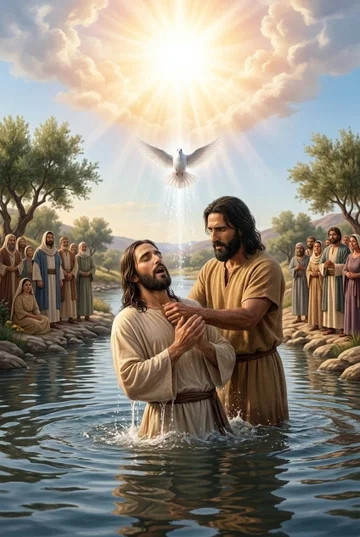
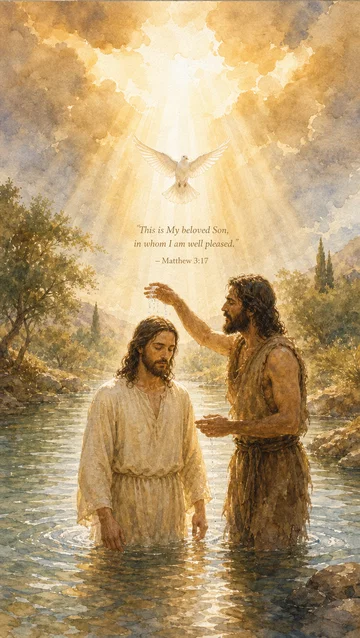
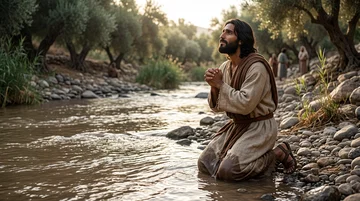
As soon as Jesus had obeyed in baptism He came up out of the water and kneeled on the river bank in prayer.COS 45.4–5COS 45.37MR 125.1–2 Then the heavens were opened and beams of glory streamed forth upon Him.COS 45.4–5COS 45.3Ms 49, 1894, par. 9–12 His face and form glowed with divine light under the brightness of the Father's glory resting upon Him to mark Him out in the crowd.COS 45.3ST Feb 25, 1913 The Spirit of God descended like a dove and lit upon Him.Ms 112, 1901, par. 14–15COS 45.37MR 125.1–2 The Father's majestic voice declared Him His beloved Son in whom He is well pleased, resounding through heaven and echoing through earth like peals of thunder with lightnings flashing from cloudless heavens.Ms 112, 1901, par. 14–15COS 45.4–5ST Feb 25, 1913
That open heaven and open declaration of acceptance of the Son is heaven's pledge that all who intelligently receive His Word and believe and obey are accepted in the Beloved just as He was.Ms 147, 1906, par. 21–22Ms 112, 1901, par. 14–15Ms 31, 1901, par. 9–13 The glory that rested upon Him proves God will hear prayer as He heard Christ's, so that even the most needy, sinful and despised may find access to the Father, and when they come in Jesus' name the approval spoken to Jesus is spoken to them.COS 45.6Ms 49, 1894, par. 9–12 Christ's prayer on the banks of the Jordan was offered in behalf of humanity and cleaved the way for the prayers of fallen people.Ms 31, 1901, par. 9–13Ms 49, 1894, par. 9–12 The opening of heaven with the voice of God to His Son showed heaven made more directly accessible to man, restoring the connecting link between heaven and earth and defeating the hope that God's abhorrence of sin would forever separate Him from man.ST Feb 25, 1913 It proved God would unite man more fully to Himself and give power to overcome Satan's devices, fixing with certainty that Satan's power would thenceforth be limited unless Christ could be overcome.ST Feb 25, 1913
His baptism with its prayer, the Spirit's descent and the Father's public recognition marked His divine commission and dedication to His appointed work as God's representative.ST Oct 25, 1877Ms 52, 1890, par. 3–5 That dedication was not brought about by human agency.Ms 52, 1890, par. 3–5 At about thirty years of age His baptism marked His inauguration and opening of His public mission, when He was publicly declared by God to be the Son of God and the long-looked-for Deliverer.ST Oct 25, 1877Ms 63, 1910, par. 7
From the Jordan He was led by the Spirit into the wilderness, after a time separated from His mother described as about two months.ST Apr 8, 1886 The Spirit fitted His sinless humanity for fierce temptation in a desolate setting, including forty days without food.ST Oct 25, 1877Ms 55, 1893, par. 5–6 There His sinless humanity prayed to the Father for strength and support in face of the trials, suffering and death before Him, continuing the obedient work He came to do.ST Oct 25, 1877ST Oct 25, 1877 His suffering and patient endurance afterward left converted sinners an example of what to endure for transgression and for facing trials that test faith.DA 110.1–111.2RH Jan 21, 1873ST Oct 25, 1877 His coming, baptism and victory over temptation make it possible through His merits for people to overcome temptation and gain moral power, including victory over appetite and enslaving habits.Ms 55, 1893, par. 5–6
Pattern for Believers Today
Jesus bowed to baptism to give a pattern of humility and obedience that every believer must follow, placing baptism among the requisite steps in conversion and showing faith in the atonement.10MR 292.1–42SP 58.2–59.1Lt 174, 1909, par. 1–4 To fulfil all righteousness means for His followers to take the steps of repentance, conversion, faith, and baptism, and He Himself, though sinless, took those steps as the Head of humanity in place of sinners to meet every requirement for the redemption of the race.Ms 144, 1901, par. 16–18Ms 57, 1900, par. 2221MR 196.2–3 His doing so did not bring righteousness or the law to an end, but filled up the full measure of the law's requirements in perfect and entire obedience as substitute and surety, demonstrating that humanity allied by living faith to divinity can keep all God's commandments and partake of His character.10MR 292.1–421MR 196.2–3 That pattern stands for every son and daughter of Adam who believes in Him as a personal Saviour, for His baptism embraced the whole sinful world that by repentance and faith would be pardoned.Ms 144, 1901, par. 16–18Ms 57, 1900, par. 22
In baptism believers enter into covenant relation with God, going down into the water to be buried in the likeness of Christ's death and raised in the likeness of His resurrection.Ms 31, 1901, par. 9–137MR 125.1–2Lt 58a, 1898, par. 2 The burial with Christ as an emblem of His death and the rising from the water as an emblem of His resurrection mark them as newborn souls, dead to the world with life hid with Christ in God.Ms 144, 1901, par. 16–18Lt 58a, 1898, par. 2 In that act they pledge to worship the true and living God, to come out from the world and be separate, to seek the things above, and to keep the law of Jehovah.Ms 144, 1901, par. 16–18Ms 31, 1901, par. 9–13
His prayer on the banks of the Jordan embraced every believer who takes those same steps, cleaving a way through Satan's darkness to the throne of God.Ms 144, 1901, par. 16–18Ms 144, 1901, par. 20 When they cooperate, Father, Son, and Holy Ghost are unitedly pledged to work in their behalf, those three great powers standing pledged to all who are baptized in the name of the Father, the Son, and the Holy Ghost.Ms 144, 1901, par. 16–18Ms 31, 1901, par. 9–13 Christ has pledged Himself to keep all who look to Him and trust in Him with abiding faith, so each one may commit the keeping of the soul to Him as unto a faithful Creator and may expect large things.Ms 144, 1901, par. 16–18Ms 144, 1901, par. 20
This gives encouragement to every believer, because in Christ is the only hope of salvation, and all who believe in Him and obey His commandments are accepted in the Beloved just as He was when the Spirit descended and the Father declared pleasure in His beloved Son.Ms 112, 1901, par. 14–15Lt 22, 1901, par. 11–12 His sinless life in human nature showed that righteousness can be fulfilled, and His victory over every temptation makes Him their conqueror.ST Oct 25, 1877Lt 22, 1901, par. 11–12 His example at the opening of His public mission, when His sinless humanity prayed to the Father for strength and support before trial, suffering, and death, shows believers their need to seek help from God.Ms 112, 1901, par. 14–15ST Oct 25, 1877
Sources
Pioneers and periodicals
107 sources
Though he had no sin to confess, Jesus asked John to immerse him then because it was fitting for them together to carry out every righteous requirement.ST Jan 6, 1904ST Dec 16, 1897ST Jan 25, 1899ST Dec 16, 1897ST Jan 25, 1899
In doing so he stood in the place of sinners as their representative and substitute, numbering himself with transgressors and taking the steps sinners must take.ST Oct 25, 1877RH Feb 8, 1915ST Sep 1, 1898ST Dec 28, 1888
To fulfill all righteousness meant to do the Father's will by keeping the law and every binding duty, to accomplish and honor it rather than to abolish it.ST Jul 11, 1916RH May 16, 1854RH Jul 14, 1874ST Apr 25, 1906RH Mar 15, 1870
His going down into the Jordan and coming up out of it set the pattern for baptism by immersion as burial and rising to new life, to be followed by all who repent and believe.RH May 23, 1854ST Dec 11, 1879ST Jan 3, 1884RH Jun 25, 1872ST Mar 7, 1878
That baptism was his anointing with the Holy Spirit without measure as Messiah the Prince, occurring in the autumn of A.D. 27 at the end of the sixty-nine weeks and opening his public ministry.ST Jun 26, 1907ST Sep 16, 1886ST Mar 3, 1909RH Oct 27, 1904ST May 6, 1880
Setting of Jesus' Baptism
The saying belongs to the baptism of Jesus, when he came to John at the Jordan in the wilderness of Judea near the Jordan.ST Oct 22, 1912ST Mar 17, 1914ST Dec 21, 1915ST Jun 26, 1907 It was spoken after John had preached repentance, warned Pharisees and others to flee from the wrath to come, called people back to God and his law, directed them to faith in the coming Christ and his work and the baptism of the Holy Spirit, and baptized in the Jordan those who confessed their sins in hope of the promised Messiah.ST Oct 22, 1912ST Mar 10, 1898ST Aug 28, 1901ST Mar 17, 1914 John's preaching in that setting prepared Israel for the Son of God and prepared the way for his first coming and the beginning of his work.ST Aug 28, 1901ST Mar 17, 1914 This was while John was still preaching before his imprisonment by Herod, before he was cast into prison.ST Jun 26, 1907
John had not personally known Jesus during his secluded years at Nazareth.ST Jul 7, 1887 He still awaited the distinct sign by which God would identify him as the Messiah, the promised Lamb who takes away the sin of the world.ST Jul 7, 1887
When Jesus asked for baptism, John objected that he himself needed to be baptized by Jesus instead.ST Jan 25, 1899ST Sep 1, 1898ST Jan 17, 1906 He felt unfit to grant the request and would have hindered him.ST Jan 25, 1899ST Jan 17, 1906 Jesus answered with firm and gentle authority that John should baptize him then, since it was fitting for them to fulfill all righteousness.ST Jan 6, 1904ST Jan 25, 1899RH Nov 25, 1909ST Jan 17, 1906 John was persuaded and changed his mind, then meekly submitted without hesitation and consented and baptized him.ST Jan 25, 1899ST Jan 25, 1899ST Sep 1, 1898ST Jan 17, 1906
Jesus was about thirty years old when baptized, in A.D. 27, after thirty years of preparation.ST Sep 16, 1886 He had journeyed from Nazareth to the Jordan after a period described as about two months separated from his mother.ST Apr 8, 1886 His public teaching and three and one-half years of ministry began immediately after his baptism, and his real human life among people entered that phase with the Father publicly acknowledging him as Son and the Spirit showing approval.ST Sep 16, 1886ST Dec 21, 1915 His baptism came before his temptation in the wilderness.ST Apr 8, 1886
Meaning of Fulfilling Righteousness
To allow it then was to permit the baptism at that time, to become was what is proper and fitting and comely, and the us who would fulfill all righteousness in that act were Jesus and John together.ST Dec 16, 1897ST Jan 25, 1899ST Dec 16, 1897ST Jun 14, 1905ST Jul 23, 1894 Jesus regarded submission to John's baptism as necessary and fitting, asked John to baptize him so they could do what is right, and John consented and baptized him before Jesus entered his ministry.ST Dec 16, 1897ST Jan 25, 1899ST Dec 16, 1897ST Jun 14, 1905ST Jul 23, 1894 His acceptance of a baptism of repentance was proper for him as humanity's representative, not as repentance for sins of his own, since he was sinless, but as standing in the place of sinners, taking their sins upon himself and acknowledging that sin was wrong and God was right, an identification with human sin and suffering and need for redemption that began in his human life and continued to the cross and grave.ST Feb 21, 1906
All righteousness in this saying means a righteous institution or appointment, not all the law, and adding the law is a forced interpretation.RH Apr 28, 1853RH Apr 28, 1853 Although Jesus had no sin, it was proper for John to set him apart as he began his work, for Jesus to show his connection with John, to accept John's work, and to approve what John had done, and the saying does not teach that Jesus needed through this act to fulfill the whole law.RH Apr 28, 1853RH Apr 28, 1853
All righteousness also means doing the Father's will and performing every duty by keeping God's law and commandments.RH May 16, 1854ST Apr 25, 1906RH Mar 15, 1870RH Jul 22, 1862ST Aug 13, 1874 Righteousness is God's character expressed in his law, and Christ fulfilled it by strict obedience, honoring the law and exalting and establishing it in his living and suffering and dying and rising.RH May 16, 1854ST Apr 25, 1906RH Mar 15, 1870RH Jul 22, 1862ST Aug 13, 1874 To fulfill righteousness means to do everything that is right and to carry out what is required, to perform and accomplish it, and Jesus' baptism was an act of such obedience.ST Apr 25, 1906RH Mar 15, 1870RH Jul 22, 1862ST Aug 13, 1874ST Aug 17, 1876 Fulfilling is to be practiced by keeping moral precepts, not by abolishing them.RH May 16, 1854ST Apr 25, 1906RH Mar 15, 1870ST Aug 17, 1876
To fulfil means to accomplish and carry out and perform and keep, not to abolish or destroy or do away or bring to an end.ST Jul 11, 1916RH Jul 14, 1874RH Apr 20, 1869RH Mar 15, 1870ST Aug 17, 1876 If fulfil meant do away, the saying would mean Jesus came to abolish all righteousness and that all righteousness is abolished.RH Apr 20, 1869RH Mar 15, 1870RH Dec 11, 1866 By the same reasoning, his fulfilling righteousness through baptism would have ended baptism and all moral duty and caused what was fulfilled to cease to be binding.ST Jul 11, 1916RH Jul 14, 1874RH Apr 20, 1869RH Mar 15, 1870RH Aug 15, 1854 His fulfillment of righteousness at his baptism did not abolish or weaken or remove righteousness or the obligation to fulfill it, and its use there stands directly opposite to the claim that the law came to an end at his first advent.ST Jul 11, 1916RH Jul 14, 1874RH Dec 11, 1866RH Aug 15, 1854
Fulfilling all righteousness included being born under the law and living without sin and honoring requirements binding in his time.ST Aug 26, 1897RH Jun 24, 1873RH Dec 10, 1857ST Jan 30, 1879 It included keeping the Passover at its appointed time and observing the prescribed season for slaying the paschal lamb.RH Jun 24, 1873 It included keeping the Sabbath as an example for his followers, remembering the Sabbath to keep it holy, fulfilling the command not to steal by refusing to steal, and doing lawful relief of suffering on the Sabbath without refusing necessary help or letting people suffer.ST Aug 26, 1897ST Jan 30, 1879ST Apr 10, 1893ST May 6, 1886 Even a ceremonial law binding in his time was not to be treated with contempt, for disregarding it would have made him an impostor, and obedience was fitting even in practices people might regard as unnecessary.RH Jun 24, 1873RH Dec 10, 1857ST Jan 30, 1879
Obeying a positive commandment growing out of the work of redemption counts as duty and as a measure of fulfilling righteousness, and non-compliance is sinful disobedience needing expiation or atonement if forgiven, alongside fruits of righteousness that are not by the law but by Jesus Christ.RH Feb 4, 1873 Yet the fact that keeping the Sabbath was duty and righteousness and had atonement made over it does not by itself prove the Sabbath is primary law or moral or perpetual.RH Feb 4, 1873
Sinless Substitute for Sinners
Jesus was altogether without sin, having no sins of his own to confess and needing no repentance, cleansing, or washing, and his baptism was not for the same purpose as that of sinners nor for remission as theirs is.RH Jan 21, 1873RH Feb 8, 1915ST Sep 1, 1898ST Dec 28, 1888ST Jun 3, 1880 Though sinless, he counted himself a sinner for the sake of those he came to save and underwent what was necessary to become their Savior, with baptism among those things as the marriage ceremony connecting people with the Lord.RH Jan 21, 1873ST Jun 3, 1880 His submission displayed humble obedience, which the Father approved from heaven.RH Feb 8, 1915ST Sep 1, 1898
As representative, substitute, surety, and head of sinners he identified himself with humanity, took their place under the law, entered their condition, and numbered himself with transgressors.ST Oct 25, 1877RH Jan 21, 1873ST Dec 28, 1888ST Jun 3, 1880ST Oct 22, 1912 Guilt was imputed to him, he took their sins upon himself and bore the sins laid upon him, entering the condition of those he came to redeem.RH Jan 21, 1873ST Dec 28, 1888ST Jun 3, 1880 For them he repented, acknowledging sin as wrong and God as right, taking the steps the sinner must take and doing the work the sinner must do.RH Jan 21, 1873ST Jun 3, 1880 Since John's baptism was for repentance and remission of sins, his receiving it as sinful people did was fitting to his work of suffering and dying for them, and his baptism at the Jordan represented the death to sin and rising to new life to be enacted in every believer.ST Jun 3, 1880ST Oct 22, 1912
His baptism showed beforehand in figure the chief acts of his earthly work, his death, burial, and resurrection, which he would then carry out in fact to fulfill righteousness, save people from sins, and justify them before the claims of God's law in heaven as their high priest.ST Dec 11, 1879ST Dec 28, 1888ST Apr 29, 1897ST Apr 29, 1897 Its waters reflect Calvary and point to resurrection power, as he would through dying and being raised fulfill righteousness.ST Dec 28, 1888RH Feb 2, 1905 Those united with him die to sin and become alive to righteousness, a change their own baptism signifies, with believers buried in baptism and raised to walk in newness of life as Christ was buried and rose.ST Dec 11, 1879ST Dec 28, 1888
He fulfilled all righteousness not for himself, since he knew no sin and never lived to the world, but as Substitute as well as Example for mankind and for a dying world.ST Feb 11, 1903ST May 13, 1903ST Jul 17, 1901 In the sinner's stead he fulfilled all righteousness, bore sins and was made sin, and his perfect righteousness with his baptism stands imputed to all who believe for remission of past sins, whether alive or dead, if they have not rejected the light given them.ST May 13, 1903ST Jul 17, 1901 His going down into the water and coming up is just as essential as every other act of obedience he fulfills in or for the believer, and his own baptism stands for all who are saved yet cannot possibly be baptized, so the thief converted on the cross will enter heaven as a baptized believer.ST Feb 11, 1903ST Jul 17, 1901 It covers no one who cherishes the least rebellion against baptism or any other ordinance of the Lord, for baptism is necessary when a person knows the command and has opportunity to obey, and refusing it knowingly is refusing obedience to God.ST Feb 11, 1903ST Oct 6, 1887 No work of own righteousness, even baptism, counts toward justification, which is by faith in his mercy, and a man's baptism without faith and obedience is not essential to righteousness but only an empty form.ST Feb 11, 1903ST Jul 17, 1901ST Oct 6, 1887 To those who reject the light, his baptism stands as testimony to his divinity and to the resurrection of the dead, both just and unjust.ST May 13, 1903ST Jul 17, 1901
The verse does not mean that he fulfilled every moral duty in the place of believers so that they are excused from those duties.ST Jul 14, 1881 He gives them grace to fulfill the moral law themselves, for God's glory, their neighbor's good, and their own eternal benefit.ST Jul 14, 1881
His baptism marks the opening of his public mission and the humble, obedient beginning of his work as a man to defeat the works of the devil.ST Oct 25, 1877ST Dec 13, 1905ST Oct 4, 1899 Afterward his sinless humanity prayed to the Father for strength and support as he faced the trials, suffering, and death before him, showing believers their need to seek help from God.ST Oct 25, 1877RH Jan 21, 1873 From that baptism, entered upon single-handed before he called a single follower, he went to meet and personally overcome Satan, his greatest adversary, first overcoming attempts to lead him into sin and then preaching and practicing righteousness so Satan's works could be overcome in people.ST Dec 13, 1905ST Oct 4, 1899 Thereby he established his right to the dominion and his ability to maintain it with no other aid than the power of the Spirit through the Word.ST Oct 4, 1899 He left his suffering and patient endurance after baptism as an example to converted sinners of what to endure for their transgressions.RH Jan 21, 1873
Anointing and Prophetic Timing
The baptism was the anointing with the Holy Spirit without measure as Messiah the Prince, Messiah meaning the Anointed One, consecrating him with authority and divine attributes to reveal the Father to the world.ST Jun 9, 1890ST Jun 26, 1907ST Mar 3, 1909RH Oct 27, 1904RH Aug 21, 1913 It was his second miraculous manifestation, thirty years after his birth, beginning his work as a prophet and pointing to his later work as Priest after his ascension and King at the second advent.ST Sep 20, 1910 In that act he fulfilled the prophecy that the Lord's Spirit would be upon the anointed to bring good news and help the afflicted.RH Aug 21, 1913 His baptism marked the manifestation of the Messiah, when the Holy Spirit descended on him and anointed him.ST Jun 26, 1907
It occurred in the autumn of A.D. 27 at the end of the sixty-nine prophetic weeks, or 483 full years counted from the decree to restore and build Jerusalem going forth in the latter part of 457 B.C., when the Holy Spirit descended and the Father spoke.ST Jun 26, 1907ST Mar 3, 1909RH Oct 27, 1904ST May 6, 1880 He was thirty years old when baptized, and his public teaching began immediately after his baptism.ST Sep 16, 1886 The sixty-nine weeks ended with his anointing and manifestation to Israel.RH Feb 13, 1872
That autumn date was seven years before the end of the seventy weeks in autumn A.D. 34 and three and one-half years before the cutting off of the Messiah in crucifixion in spring A.D. 31.ST Mar 3, 1909 From that point Jesus began preaching that the appointed time was fulfilled.ST May 6, 1880 It was the start of his public work after thirty years of preparation for three and one-half years of ministry.ST Mar 10, 1898
In this act he set in motion the removal of former shepherd prophets, priests and kings, and entered single-handed upon his mission before calling a follower.ST Sep 20, 1910ST Oct 4, 1899 It is this public appearance as Messiah rather than his birth that fulfills the prophecy's timing.RH Apr 9, 1908 He who was baptized by John in the Jordan and began his public ministry after that baptism is the same personal Saviour who will return.ST Oct 19, 1888 His baptism in the Jordan was the beginning of his work for the church.ST Oct 23, 1901
At the baptism heavenly light and glory descended upon Jesus in the form of a dove, presenting him as the promised Messiah and Saviour.ST Dec 30, 1880ST Sep 27, 1910RH Sep 11, 1860 The brightness of the Father's glory overshadowed the form of Jesus to point him out in the crowd as the Son acknowledged by God with unmistakable assurance.ST Feb 25, 1913 A majestic voice resounded through heaven and echoed through earth like peals of thunder, with lightnings flashing from cloudless heavens, declaring This is My beloved Son, in whom I am well pleased.ST Feb 25, 1913 The heavens opened, the Spirit descended on him like a dove, and the Father declared him his beloved Son.ST Jun 9, 1890 The opening heavens together with the voice of God addressing his Son signified that heaven was now more directly accessible to man, defeating the hope that God's abhorrence of sin would forever separate him from man and break the connecting link between heaven and earth.ST Feb 25, 1913
The scene proved that God would unite man more fully to himself and give power to overcome Satan's devices, and for this purpose Christ had come from the royal courts to earth.ST Feb 25, 1913 It fixed with certainty that unless Christ could be overcome, Satan's power would thenceforth be limited.ST Feb 25, 1913 He entered the water, and the Father publicly acknowledged him as his Son while the Holy Spirit showed approval, as part of his real human life among people.ST Dec 21, 1915 The baptism is also presented as a memorable, eventful day of anointing and manifestation to Israel whose date cannot be identified.RH Feb 13, 1872
Baptism Ordinance and Example
By submitting to baptism Jesus attested the excellence of John's baptism and confirmed that it was gospel baptism, calling people to repentance and to faith in Christ about to be revealed, with forgiveness of sins through him.ST Dec 11, 1879ST Jul 3, 1884ST Dec 11, 1879 His words about fulfilling all righteousness are rendered as establishing every ordinance, so his own submission establishes baptism as a new religious ordinance for the gospel age and honors it as an ordinance appointed by God.RH Jan 8, 1867ST Apr 20, 1915ST Jul 29, 1880 John's baptism and the baptism administered by Jesus' disciples under his direction were the same in nature and character, so those baptized by John were not required to be baptized again.ST Dec 11, 1879 His acceptance was also a fitting act of obedience representing dying to transgression and being buried with him.ST Jul 29, 1880
His baptism is the fitting pattern, model and example of the Great Head, which makes baptism a serious divine ordinance rather than an optional preference.RH Jan 8, 1867ST Mar 3, 1881ST Sep 9, 1913 Following him in it is duty and the pathway of obedience for all who repent, believe, renounce the world and obey God's commandments.RH May 23, 1854ST Dec 4, 1901 Jesus regarded baptism as necessary to fulfil all righteousness, and though he bore the sins of the world he accepted it as an example his followers should not neglect.ST May 8, 1901ST Sep 9, 1913 His submission was a voluntary and literal observance of the ordinance, presenting the original method of immersion as a symbol of his death, burial and resurrection and of the believer's burial and resurrection with him.ST Jan 3, 1884ST Mar 3, 1881ST Sep 9, 1913 After fulfilling it he received all power and the Spirit's power for service, as the pattern for right relation to the law.RH Jan 8, 1867
The baptism commanded in the gospel commission is the water baptism humans can perform, while baptism with the Holy Spirit is given by God alone.ST May 28, 1896 Baptism administered by humans is the outward marriage ceremony of the union formed by the Spirit of God, connecting people with the Lord.ST May 28, 1896 In it believers make public confession of faith in the efficacy of Christ's atonement, as a public witness belonging to the keeping of the commandments of God and the faith of Jesus.ST Jan 17, 1900ST Dec 4, 1901 Though sinless, he counted himself a sinner for the sake of those he came to save and underwent what was necessary to become their Savior. The act itself expresses faith but does not save without faith.ST May 20, 1908
Baptism requires belief, with holy exactness in observing institutions that rest merely on divine command, and what Christ has commanded must be done at peril.ST Jan 8, 1885ST Oct 6, 1887 It follows belief, so the Scriptures do not teach the baptism of children or of adults before they believed, and Jesus was baptized when grown up, not as a child.ST Oct 6, 1887RH Aug 20, 1908 His going down into the water and coming up is as essential as every other act of obedience, and the going down and coming up of a man of faith is Christ's baptism in the man, while a man's baptism without faith is empty form and counts nothing essential to righteousness.ST Feb 11, 1903ST Oct 6, 1887 Christ's own baptism stands for all who are saved yet cannot possibly be baptized, so the thief converted on the cross will enter heaven as a baptized believer, but it covers no one who cherishes rebellion against baptism or any other ordinance.ST Feb 11, 1903 Baptism was an immersion picturing one death and burial, not trine immersion, and feet washing follows for those already washed as part of fulfilling all righteousness.ST May 13, 1875ST Sep 20, 1899 Those baptized under John could be baptized again with new light.RH Jan 8, 1867
Christ's baptism did not serve the same purpose as the baptism John administered to others and is not presented as a baptism for remission of sins.RH Sep 30, 1862 By that reckoning it does not establish the design of Christian baptism, whose origin is dated no earlier than Pentecost.RH Sep 30, 1862
Being baptized on a particular day did not make that day holy, for a physical act by Christ does not make a day sacred without a divine decree.ST Oct 18, 1905 Jesus was baptized by John but was not made a member of a church John had founded, for John as forerunner baptized those who accepted his message and did not organize a church, while Jesus was the founder of the Christian church.ST Mar 16, 1915 As children sang Hosanna in the temple courts, so in the last days children's voices will be raised to give the last message of warning when men's way is hedged up and older workers can no longer present the truth.RH Nov 19, 1908 The time of Jesus' baptism is named as one of the conflicting occasions on which some claimed the Sabbath was abolished.ST Dec 4, 1879
Form Symbolism and Practice
Jesus went down into the Jordan and was buried beneath its open water and came up out of it, and this shows that baptism is immersion one by one and not sprinkling.RH Jun 25, 1872ST Mar 7, 1878RH Jan 28, 1858ST May 20, 1908ST Sep 16, 1913 His submitting in that water teaches the proper mode in a public celebration of a literal ordinance enjoined by the Lord, and his willingness to make the long journey without letting inconvenience prevent it makes his divine act the example for others.ST Jan 3, 1884RH Jun 25, 1872ST Mar 7, 1878ST May 20, 1908ST Sep 16, 1913 The act itself expresses faith but does not save apart from faith.ST May 20, 1908
That immersion portrays burial and resurrection with Christ, going under the water as dying to transgression and to sin and to the world and being planted in the likeness of his death in the watery grave, then rising to walk in newness of life and resurrection life by the Spirit.RH May 23, 1854ST Dec 11, 1879ST Sep 14, 1882ST Dec 28, 1888ST Sep 9, 1913 As he would be buried and rise, so believers are to be buried in baptism and raised to live for God, which is the beginning of a wholly consecrated life and the lesson of being born again.RH May 23, 1854ST Dec 11, 1879ST Dec 28, 1888 His own baptism in figure pictured beforehand the chief acts of his earthly work, his death, burial and resurrection, through which dying and being raised he would in fact fulfill righteousness, and those united with him die to sin and become alive to righteousness.ST Jan 3, 1884ST Sep 14, 1882ST Dec 28, 1888ST Sep 9, 1913ST Sep 16, 1913 This ordinance therefore commemorates his burial and resurrection, while sprinkling does not enact that burial and rising.ST Sep 14, 1882
The Father expressed approval from heaven upon this humble obedient submission, and the Holy Spirit descended and rested after Jesus was immersed and raised from the water and came up, not while he was still asking.ST Sep 1, 1898ST Apr 29, 1897ST Sep 16, 1913ST Jan 17, 1878 That timing marks baptism as an act of obedience that may be followed by God's blessing witnessing to the baptismal vow, and it would have reassured John earlier yet came afterward to confirm the completed obedience.ST Jan 17, 1878 The Father's approval shows the harmony of Father and Son in the work of redemption and confirms that baptism is important and serious and significant rather than indifferent, optional, or a matter of personal preference.ST Apr 29, 1897RH Mar 26, 1914ST Sep 16, 1913RH Mar 26, 1914 By that privilege the baptism of the Spirit is brought to pass through trials with joy.ST Apr 29, 1897
He was baptized grown up and not as a child, before entering his ministry, and his baptismal anointing at Jordan is the beginning of his work for the church and the starting account of his faithful life of service and obedience.ST Jun 14, 1905RH Oct 1, 1903ST Oct 23, 1901 Baptism therefore stands as a binding duty that convicts the conscience once it is seen, standing with the seventh-day Sabbath among truths that must be obeyed and that make a person want to be taught further.ST Oct 2, 1901
Sources