Matthew 8:25
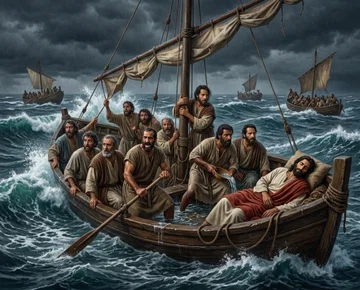
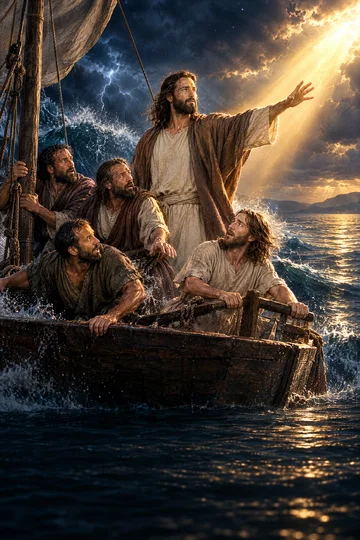
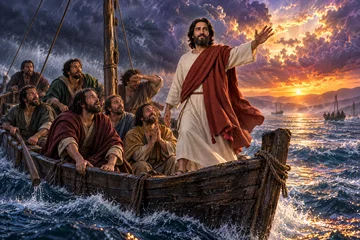
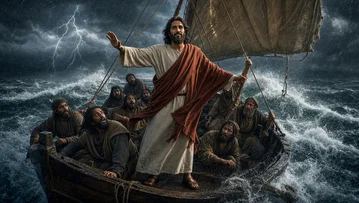
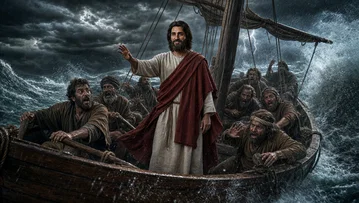
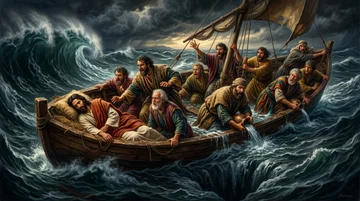
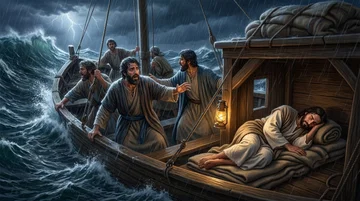
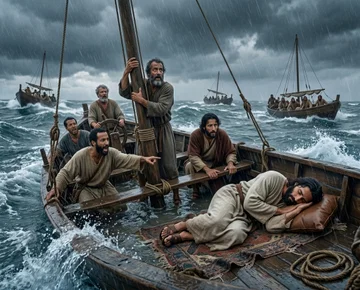
And his disciples came to him, and awoke him, saying, Lord, save us: we perish.
Translations
American King James Version, King James Version, KJV Cambridge Paragraph Bible, Webster Bible
And his disciples came to him, and awoke him, saying, Lord, save us: we perish.
Revised Version, American Standard Version
And they came to him, and awoke him, saying, Save, Lord; we perish.
and his disciples having come to him, awoke him, saying, 'Sir, save us; we are perishing.'
And the disciples came and awoke him, saying, Lord save: we perish.
And, coming near, they aroused him, saying, Master! save, we perish!
The disciples went and woke Him, saying, “ Lord, save us! We are perishing!”
Then the disciples went and woke Him, saying, “ Lord, save us! We are perishing!”
The disciples came to him and woke him up, saying, “ Save us, Lord! We are dying!”
And they came to him, and, awaking him, said, Help, Lord; destruction is near.
Then his disciples came, and awoke him, saying, Master, saue vs: we perish.
Douay-Rheims (Challoner revision)
And they came to him, and awaked him, saying: Lord, save us, we perish.
Pictures



Cross-references
- Mark 4:38-40
And he was in the hinder part of the ship, asleep on a pillow: and they awake him, and say unto him, Master, carest thou not that we perish?
The disciples wake Jesus in the storm, and he rebukes their fear and lack of faith.
- Luke 8:24
And they came to him, and awoke him, saying, Master, master, we perish. Then he arose, and rebuked the wind and the raging of the water: and they ceased, and there was a calm.
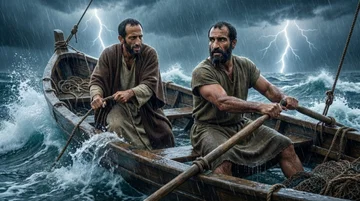
The disciples cry out to Jesus for rescue during the storm.
- Psalms 107:29-30
He maketh the storm a calm, so that the waves thereof are still.
God stills a storm and brings those in danger to safety.
- Matthew 14:25
And in the fourth watch of the night Jesus went unto them, walking on the sea.
Jesus comes to the disciples in a storm, recalling his rescue on the water.
- Mark 4:39
And he arose, and rebuked the wind, and said unto the sea, Peace, be still. And the wind ceased, and there was a great calm.
Jesus answers the cry by stilling the sea.
- Matthew 14:30
But when he saw the wind boisterous, he was afraid; and beginning to sink, he cried, saying, Lord, save me.
Both are cries to Jesus for rescue from peril at sea.
- Luke 8:23
But as they sailed he fell asleep: and there came down a storm of wind on the lake; and they were filled with water, and were in jeopardy.
Parallel account of the storm as the disciples awaken Jesus.
- Mark 4:37
And there arose a great storm of wind, and the waves beat into the ship, so that it was now full.
The storm and waves put the disciples in jeopardy.
- Jonah 1:4-6
But the LORD sent out a great wind into the sea, and there was a mighty tempest in the sea, so that the ship was like to be broken.
Both texts describe a tempest at sea threatening the ship and its passengers.
- Isaiah 59:1
Behold, the LORD’s hand is not shortened, that it cannot save; neither his ear heavy, that it cannot hear:
God’s ear can hear, and his hand can save.
- Luke 23:42
And he said unto Jesus, Lord, remember me when thou comest into thy kingdom.
The thief trusts Jesus to remember him, contrasting with the disciples’ fearful plea for rescue.
- Exodus 14:21-22
And Moses stretched out his hand over the sea; and the LORD caused the sea to go back by a strong east wind all that night, and made the sea dry land, and the waters were divided.
God’s power over the sea saves people in danger.
- Luke 8:26
And they arrived at the country of the Gadarenes, which is over against Galilee.
Names the destination across the lake.
- Matthew 8:32
And he said unto them, Go. And when they were come out, they went into the herd of swine: and, behold, the whole herd of swine ran violently down a steep place into the sea, and perished in the waters.
The swine perish in the water, illustrating perish as death.
- Hebrews 7:25
Wherefore he is able also to save them to the uttermost that come unto God by him, seeing he ever liveth to make intercession for them.
Christ intercedes for those who come to God through faith.
Commentary
Each commentary is drawn from primary sources: the writings of Ellen G. White and Adventist pioneers and periodicals. Each commentary is separate. Its own words are not a quotation; follow the references to read the source passages.
Ellen G. White
45 sources
On a night crossing of Galilee after a day of teaching and healing, hardy fishermen disciples were overtaken by a furious tempest that filled their boat despite all their skill, until in utter despair they woke the wearied sleeping Jesus crying for Him to save them from perishing.ST Jul 14, 18813RED 82.2ST Jan 18, 18772SP 307.1–308.1 Their agonized cry reached Him at once, and rising in divine majesty He commanded wind and wave to cease and brought them safely through, showing absolute control over nature and unfailing care for His own in peril.Ms 130, 1903, par. 15–172SP 310.12SP 316.2HSFM 221.2–33RED 91.1–2 Yet their panic manifested unbelief and self-confidence, for they had forgotten He was on board and battled alone until hope failed, when they should have called on Him at the first sign of danger and rested in peace.ST Jul 14, 18813RED 85.13RED 82.22SP 309.2 Though He sorrowfully reproves such unbelief, He never fails to hear the earnest cry for rescue and gives the help needed, so the call of faith always meets with response on sea or land.3RED 85.12SP 309.2ST Jan 18, 1877DA 336.13RED 85.3 That same brief plea, Lord save me or I perish, is the model prayer for every helpless sinner crushed by sin and every soul in temptation or danger, bringing through grace pardon, peace, quiet within, and rest where eternal life begins here.Ms 78, 1900, par. 43–45DA 331.3Ms 29, 1896, par. 10CET 18.4–19.2RH Oct 15, 1908
Time Place and Storm
The cry comes in the evening after a full day beside the Sea of Galilee spent in teaching and healing, when utter weariness from ministering with scarcely food or rest under constant criticism had left Jesus seeking retirement.DA 333.3–334.1DA 333.1–2 It was the close of the eventful day on which He spoke His first parables explaining the nature of His kingdom and the manner of its establishment.DA 333.1–2 He had likened His own work to that of the sower, the development of His kingdom to the growth of the mustard seed and the effect of leaven in the measure of meal, the great final separation of the righteous and the wicked to the wheat and tares and the fishing-net, the exceeding preciousness of the truths He taught to the hidden treasure and the pearl of great price, while in the householder He taught the disciples how they were to labor as His representatives.DA 333.1–2
He sought retirement across the lake to the more desolate and heathen eastern shore of Gennesaret in the country of the Gadarenes, which was desert compared with the shore left behind, to find rest from fatigue away from the dwellings of men.DA 333.3–334.1ST Jan 18, 1877ST Feb 4, 1889 The disciples took Him just as He was into the fisherman's boat, and other fishing boats followed with them.DA 333.3–334.1ST Jan 18, 1877 Wearied from long labor, He lay asleep on the hard plank undisturbed amid noise and confusion.ST Jul 14, 1881ST Jan 18, 18772SP 307.1–308.1 Weather that had been calm and pleasant changed after sunset, with clouds gathering darkly and black night settling on the water into a furious tempest of the kind that frequently visited those parts.ST Jul 14, 1881ST Jan 18, 18772SP 307.1–308.1
Angry waves dashed against the ship threatening to engulf it, tossing it on mountain billows then plunging it into the trough, with spray dashing over the little boat buffeting high running waves up and down.ST Jan 18, 18772SP 307.1–308.17MR 280.4–281.2 The ship sprang a leak and fast filled with water amid hurry and confusion and roaring waves until it stood sinking.ST Jul 14, 1881ST Jan 18, 18772SP 307.1–308.1 The peril happened on the night crossing before landing on the shore of the demoniacs, and ended safely on shore when Jesus stilled the tempest.3RED 91.1–2ST Aug 4, 19142SP 311.1–312.23RED 86.1–88.2 Those who had crossed the lake with Him told the Gadarenes about that danger and the miracle by which He stilled it.3RED 91.1–2
That stilling by the lifting of His finger and beckoning of His hand was a visible display of supremacy over Satan meant to convince the people He was the Son of God, showing One who can control the very elements and by word or touch cast out demons and heal the diseased.3RED 91.1–23RED 86.1–88.2 But their eyes blinded by worldliness saw only their loss of property, feared additional loss, refused to consider the advantage of having Him among them, and begged Him to depart.3RED 91.1–2
Helplessness and Desperate Cry
The men who cried out were no novices on the water but strong, courageous, hardy fishermen who had spent their lives on the lake, knew how to handle their craft, and had guided it through many storms, yet in this gale their strength and skill and courage availed nothing.ST Jul 14, 1881ST Jan 18, 1877DA 334.2–5 As the angry waves tossed the leaking vessel and filled it with water until it threatened to engulf them, their hearts filled with utter despair, hope failed, and they saw themselves sinking with nothing more they could do.ST Jul 14, 18813RED 82.2ST Jan 18, 18772SP 307.1–308.1DA 334.2–5
Absorbed in their own efforts to save themselves they had for a time forgotten that Jesus was on board asleep on the hard plank from weariness, undisturbed amid noise and confusion.ST Jul 14, 18812SP 307.1–308.1DA 334.2–5 Only when labor was vain, death was before them, and their own skill and courage had failed did they remember that He had commanded the crossing, that He had once saved them in like peril, and that He had walked upon the water to rescue them from death.ST Jul 14, 18812SP 307.1–308.1DA 334.2–5 Thus in agony of fear, thinking themselves lost and able to do no more, they turned to Him as their only hope.Lt 208, 1902, par. 42–443RED 82.22SP 307.1–308.1DA 334.2–5
They came and awoke Him crying Master, Master, Lord, save us, we perish, a plea that in its simplest form is Save, Lord, or I perish.ST Jul 14, 1881DA 334.2–51T 17.1–18.1Lt 4, 1885, par. 16–17Lt 53, 1886, par. 5 At first their voices were drowned by the roaring tempest in dense black darkness that hid Him, with no reply, and even a second call seemed met only by the shrieking blast while the boat stood a moment from being swallowed.ST Jul 14, 18812SP 307.1–308.1DA 334.2–5 Then rushing to His prostrate form they reproachfully cried that they perished and He cared not, in despair lest He had deserted them and left them to destruction, doubting whether He who had conquered disease and demons and even death was now powerless to help.ST Jul 14, 18812SP 307.1–308.1DA 334.2–5
A flash of lightning revealed Him asleep undisturbed by the tumult, with the peace of heaven in His face and self-forgetful tender love in His glance.DA 334.6–335.2 As they grasped their oars for a last effort they rudely woke Him from refreshing sleep born of weariness, and He rose to stand in divine majesty in their midst while the tempest still raged and the waves broke over them.ST Jul 14, 1881DA 334.6–335.2
Christ's Presence and Power
Their agonized cry of helplessness in the sinking boat reached His heart and rose to meet Him at once, and such a cry never goes unheeded.Ms 130, 1903, par. 15–172SP 310.13RED 85.2DA 334.6–335.2 Those who put their trust in Him in peril may call to Him, for He hears their cry and never forsakes them.2SP 310.13RED 85.2 The weary voyager tossed on raging billows should remember this deliverance when waves break over a sinking bark and destruction threatens.3RED 85.2
Jesus has absolute control over winds and waves, so the disciples could call on Him in the storm.2SP 316.2HSFM 221.2–3Lt 32, 1903, par. 10–13 By voice and word, by the lifting of a finger or the beckoning of a hand, He commands the terrible storm to cease and the angry elements obey.2SP 310.13RED 85.23RED 91.1–2 He is present with His people in the storm to speak calm and steadiness, to protect His followers and calm their fears, and to bring them safely to shore.HSFM 221.2–3Lt 12, 1892, par. 1ST Aug 4, 1914 Trusting Him is therefore safety through every gale on sea or land.Lt 12, 1892, par. 1
He had no fear for Himself but was anxious for them, remaining calm in danger and fearless before the demonic powers met afterward.3RED 85.1ST Jan 18, 1877ST Feb 4, 1889 He understands personal trials and responds with pity and tenderness.CET 18.4–19.2 The same hand that saved in the storm stands calm before the two demon-possessed men and holds them back, showing authority over nature, victory over Satan, and power unchanged on land.ST Feb 4, 18893RED 86.1–88.2
The stilling became one of the miracles remembered as evidence He was the Son of God, though they could not yet believe He would die and hoped He would free Himself from enemies.EW 139.3 On earth He was exercising God's rule over nations and over nature, holding back the impatient winds, controlling the tempests, and calming the angry sea.15MR 220.2–221.1 It is the same power that piled walls of water to make a path to deliver more than a million from Egypt and then released them upon Pharaoh, that still gives the sea its decree and walks on the wings of the wind and on the sea.DA 809.315MR 220.2–221.1 God holds the winds in His hand and beholds heaven and sea at once, sending mighty angels to guard the little boat and hold back winds and waves to bring the ship to harbor, for which gratitude is due.7MR 280.4–281.215MR 220.2–221.1
Unbelief Reproved Faith Answered
Their terror and panic in the sinking boat exposed distrust, unbelief, self-confidence, and lack of faith.ST Jul 14, 18813RED 85.12SP 309.22SP 308.2–309.1DA 336.1 If they had trusted in Him they would have been kept in peace.DA 336.1 They should have called upon Him at the first appearance and sign of danger, and He would have relieved their anxiety.3RED 85.12SP 309.2ST Jan 18, 18772SP 308.2–309.1
The same course belongs to all in the trying scenes of life, amid perplexity, danger, and tempests of temptation.3RED 85.1ST Jan 18, 1877DA 336.1 People battle the storms of adversity alone, trusting their own strength and skill.3RED 85.12SP 309.2ST Jan 18, 1877DA 336.1 They struggle on until baffled, discouraged, and wearied by vain efforts, with hope lost and themselves ready to perish, and then they humbly remember Jesus.3RED 85.12SP 309.2ST Jan 18, 1877DA 336.1
Though He sorrowfully reproves their unbelief and self-confidence and rebukes them for not seeking Him at the very beginning of trial, He never fails to hear the earnest, agonizing cry of faith to save and gives the help needed.3RED 85.12SP 309.2ST Jan 18, 18772SP 308.2–309.1DA 336.1 He accepts humble petitions even when petitioners are wearied by their own efforts to save themselves.ST Jan 18, 1877 When the Saviour is in the heart on land or sea, sleeping or waking, there is no need of fear.ST Jan 18, 1877DA 336.13RED 85.3 The disciples' cry is the call of faith, and the call of faith will always meet with a response.ST Jan 18, 18773RED 85.3 Living faith in the Redeemer smooths the sea of life and delivers from danger in the way He knows to be best.ST Jan 18, 1877DA 336.13RED 85.3
Present Spiritual Application
The words Help, Jesus, save me, or I perish make the disciples' appeal the pattern for brief, sincere prayer in helplessness and danger.Ms 78, 1900, par. 43–45Ms 29, 1896, par. 101T 17.1–18.1LSEGW 23.3–24.2 The sinner sorrowful for sin, feeling weak, unworthy and close to perishing, cries to Jesus for rescue, salvation and forgiveness because without Christ there is no hope.Ms 29, 1896, par. 10CET 18.4–19.2Lt 52, 1886, par. 171T 17.1–18.1LSEGW 23.3–24.2 That plea looks to Jesus in faith and does not cry in vain, trusting Him rather than seeking wisdom and help from people or letting anything distract from confession.Ms 78, 1900, par. 43–45Ms 29, 1896, par. 10CET 18.4–19.2 He understands personal trials and answers with pity and tenderness, removing the crushing burden of sin and giving pardon, peace, strength and wisdom.Ms 29, 1896, par. 10CET 18.4–19.21T 17.1–18.1
The same desperate cry belongs to the soul in danger and to severe physical distress and fear of death.Lt 14a, 1891, par. 11Lt 54a, 1894, par. 8–11 When destruction threatens and life seems in danger, the lesson is to turn from mortal concerns and cry to God for salvation and deliverance.Lt 14a, 1891, par. 11Lt 54a, 1894, par. 8–11
As the disciples were helpless before the raging storm, so people cannot by human power control or quiet the storm of sinful passions and uncontrolled passion.RH Oct 15, 1908ST Dec 27, 1905 Those who turn to Jesus for deliverance and help find peace through His grace, which reconciles them to God and quiets the struggle within the heart.RH Oct 15, 1908ST Dec 27, 1905
The cry in the storm is the common experience of believers now when tempests of temptation gather with flashing lightning and sweeping waves.Ms 130, 1903, par. 19 They battle alone while forgetting the One who can help, trusting their own strength and skill until baffled, discouraged, wearied by vain efforts, hope is lost and perishing feels near, then they humbly remember Jesus.Ms 130, 1903, par. 19 Calling upon Him to save never cries in vain, for though He sorrowfully reproves unbelief and self-confidence He never fails to give the help needed.Ms 130, 1903, par. 19 Whether on land or on sea, having the Saviour in the heart removes need for fear, and living faith in the Redeemer smooths the sea of life and delivers from danger in the way He knows to be best, since the miracle was wrought for believers now as well as then.Ms 130, 1903, par. 19
Coming to Jesus for rescue brings entry into rest where heaven begins here.DA 331.3 Responding to His invitation to come and learn of Him begins eternal life as a ceaseless approaching to God through Christ with ever-opening glory, ever-growing knowledge of God and happiness.DA 331.3 It is walking with Jesus filled with His love and satisfied with His presence, receiving all human nature can now bear, which is small beside the hereafter before the throne of God serving day and night in His temple with God dwelling among them, hungering no more nor thirsting nor struck by sun or heat, fed and led by the Lamb to living fountains of waters with every tear wiped away.DA 331.3
Sources
Pioneers and periodicals
93 sources
On the Sea of Galilee a calm evening turned after sunset into a sudden violent tempest that filled the disciples' boat with water and threatened to sink it with them in it, and waking the wearied Jesus asleep aboard they appealed to him in brief urgent helplessness to rescue them from drowning.ST Jul 14, 1881ST Jan 18, 1877ST May 17, 1899ST Apr 20, 1904ST Jan 18, 1877 Their appeal asked for bodily deliverance from present peril rather than eternal salvation from sin, joining confidence in his power to save with fear and little faith that forgot he was with them.RH Dec 9, 1858ST Nov 22, 1910ST Mar 13, 1884RH Nov 13, 1860 Awakened, he rose and by his word rebuked the wind and waves into sudden calm, showing divine authority over nature and power to save amid dangers beyond human control.ST Jul 14, 1881ST Feb 1, 1899ST Feb 11, 1886RH Mar 17, 1910RH Jun 4, 1867 That cry remains the model of true prayer, simple, sincere and urgent outreaching of the helpless soul to God rather than forms or lofty language, heard even when faith is weak.ST Jan 18, 1877RH Aug 21, 1860RH Mar 11, 1862ST Apr 7, 1909RH Feb 17, 1863 The storm pictures life's troubles, temptation and inner struggle, which human strength cannot quiet but Jesus can calm to bring peace, deliverance and safe guidance to shore.RH Oct 15, 1908ST Feb 6, 1896ST Sep 20, 1899ST Jun 26, 1893ST Aug 5, 1886
Storm Setting and Background
The cry belongs to a night tempest on the Sea of Galilee near Capernaum.ST Jun 2, 1898RH Aug 29, 1871 That lake is subject to sudden, swift, violent storms that sweep down from the upper hills and throw the water into commotion in an instant, and travelers driven across toward the coast of the Gadarenes have felt the same kind of tempest.RH May 27, 1858RH May 14, 1872 The weather had been calm and pleasant, then changed after sunset as clouds gathered darkly and black night settled on the water.ST Jul 14, 1881ST Jan 18, 1877 Angry waves dashed against the ship threatening to engulf it, tossing it on mountain billows then plunging it into the trough.ST Jul 14, 1881ST Jan 18, 1877
The boat sprang a leak and fast filled with water amid hurry and confusion and roaring waves.ST Jul 14, 1881ST Jan 18, 1877 It was threatened with being overwhelmed, wrecked, and sunk.ST May 17, 1899RH Feb 16, 1860ST Jan 18, 1877 Jesus and his disciples had sailed across the lake to the other side, which was desert compared with the shore they left, away from dwellings of men to find rest from fatigue.ST Jan 18, 1877ST Dec 3, 1894 Other boats followed, and Jesus, wearied from long labor, lay asleep on the hard plank of the fisherman's boat.ST Jan 18, 1877
The disciples were strong, courageous fishermen skilled in managing their craft and experienced with the moods of the sea.ST Jul 14, 1881ST Jan 18, 1877 Battling the storm they knew not what to do, forgot Jesus was on board, and tried to save themselves first.ST Jul 14, 1881ST Jan 18, 1877ST Mar 22, 1899 In despair they remembered he had commanded the crossing and had once saved them in like peril before, and turned to him in agony of fear.ST Jul 14, 1881ST Mar 22, 1899ST Mar 13, 1879 The event occurred after sailing across the lake and before landing in the country of the Gadarenes, and after Jesus stilled the storm they came safely to shore.ST Feb 4, 1889ST Aug 4, 1914ST Dec 3, 1894
Meaning of the Plea
The disciples awoke Jesus with a brief, direct, urgent and alarmed plea for rescue that expressed immediate need, helplessness and dependence on him to save them as they feared perishing.ST Apr 20, 1904ST Jan 23, 1893ST Jul 17, 1879 Perish here means literal death by drowning in the sea, not being eternally tormented, and the plea asks for temporal rescue from bodily peril in this life, not the higher salvation from sin and death that gives eternal life.RH Dec 9, 1858
Matthew's wording emphasizes earnest appeal and plea for rescue, unlike Mark's impatient, reproachful wording and Luke's near-despair.ST Jan 23, 1893 One Master, Master cry was drowned by the tempest with no reply, followed by rushing to his prostrate form with a fearful, reproachful cry that they were perishing and he cared not.ST Jul 14, 1881ST Jul 19, 1905 Their appeal followed that earlier cry of fear and reproach, and their fear rose again when he did not act immediately, until they despaired that all was lost.ST Jul 14, 1881ST Jul 19, 1905
The appeal joins faith in his power with fear of perishing and shows dependence on Jesus in danger.ST Nov 22, 1910ST Mar 13, 1884 It showed great confidence that he could deliver from the tempest because they had seen him cast out diseases and demons, although he had not yet shown power over wind and waves.ST Mar 13, 1884RH Nov 13, 1860
Fear and Little Faith
Their terror and panic and utter despair in the storm was unbelief and self-confidence and want of faith.ST Jan 18, 1877RH Jan 1, 1861 They tried to save themselves first and forgot he was on board, trusting their own strength and skill until baffled and discouraged, and only then remembered him and humbly called upon him to save them.ST Jan 18, 1877 They should have called upon him at the first appearance of danger, and he would have relieved their anxiety.ST Jan 18, 1877 Their fear came from failing to trust in God's care and protection even though he was with them.RH May 30, 1912
Their cry nevertheless showed faith that trusted him to deliver them from the tempest.RH Nov 13, 1860ST Feb 12, 1885 That faith was weak and little and absent and quickly shaken in crisis.RH Feb 16, 1860RH Nov 13, 1860 It reveals how difficult it was for them to trust him when danger overwhelmed human strength, and how faith that feels easy in calm conditions is tested by danger.RH Jan 1, 1861RH Apr 15, 1909RH May 25, 1876
In contrast he had spent the day serving others and had exhausted human strength, then rested and slept calmly in a frail boat amid the tempest.RH Nov 13, 1860 His sleep shows childlike, perfect faith, trusting himself to his heavenly Father's constant care.RH May 30, 1912RH Nov 13, 1860 He knew he was the Father's beloved Son and would not be forgotten or neglected, so he had no fear for himself and his anxiety was only for his disciples.ST Jan 18, 1877RH May 30, 1912RH Nov 13, 1860
The presence of tempests and storms does not mean he is absent from the ship, and contrary circumstances and the appearance of danger do not mean the Lord is absent.ST Jul 25, 1911RH Nov 6, 1860 Though sleeping he had power to calm the raging elements and command the winds, so the vessel with him in it could not be lost.ST Mar 19, 1885RH Jul 2, 1901 In that sense there was no real danger, because his word stilled the waves.ST Jan 23, 1893
He rebuked their fear and doubt as little faith and want of faith.RH Feb 16, 1860ST Jun 26, 1879RH Nov 13, 1860 He sorrowfully reproved their unbelief and rebuked them for not seeking him at the very beginning of trial.ST Jan 18, 1877 Yet he never fails to hear the earnest, agonizing cry of faith and give the help needed, accepting humble petitions even when wearied by efforts to save themselves.ST Jan 18, 1877 Faith does not neglect work that can be done, but rests in God when human power and skill are insufficient.RH Nov 13, 1860 Whether on land or sea, sleeping or waking, if the Saviour is in the heart there is no need of fear, for the call of faith will always meet with response, and living faith will smooth the sea of life and deliver from danger in the way he knows to be best.ST Jan 18, 1877
He held true and satisfying peace in the tossing boat while his companions were racked with fears. They had not yet apprehended the peace which passes understanding, thinking peace could come only by removal of the things that seemed against them. His peace does not depend on environment or circumstances, and when learned it lets believers expect peace in any condition and permit what seems against them to do its office work in shaping character, burning away dross and polishing the jewel.
His people can trust him amid threatening circumstances even when those circumstances are part of the path he is leading them on.RH Dec 9, 1902 Their peril was like Israel's danger while crossing the Jordan, where God was holding back the waters yet they were still in danger.RH Dec 9, 1902 Present dangers can therefore be viewed as already past in the assurance of his protection.RH Dec 9, 1902
Christ's Power to Save
Awakened from refreshing sleep, he rose in divine majesty and by his word rebuked the winds and waves, and they immediately subsided into a sudden calm.ST Jul 14, 1881ST Feb 1, 1899ST Feb 11, 1886ST May 18, 1904ST Jul 24, 1907 The urgent waking cry in fear of perishing was answered when he commanded wind and waves to be still, and his simple bringing of deliverance shows that circumstances beyond human control remain under his power.ST May 18, 1904ST Jul 24, 1907RH Mar 17, 1910 His calming of the tempest shows his authority over nature and over the raging sea and his divine power as one of his miracles, with power to save amid danger and over forces that bring devastation, and power to bring peace amid danger and distress.ST Jul 14, 1881RH Mar 17, 1910RH Jun 4, 1867RH Jul 2, 1901 Though sleeping he had power so that the vessel with him could not be lost, and his presence in the storm-tossed ship gives assurance of power to impart peace amid distress.RH Jul 2, 1901
The same word that stilled the tempest carries creative power that speaks of things that are not as though they were and causes them to be, for he is the incarnate Word of life by which all life was given and by which all life is sustained.ST Sep 26, 1895 That word has power to command the forces of nature, and that same creative power is at work in redemption to cleanse from sin and recreate fallen people.ST Sep 18, 1893 Christ rules the raging sea and can still the tumult of peoples, and when the wicked truly call on God he can speak peace to them.
He remained calm in the face of danger on the night crossing before landing in the country of the Gadarenes, showing his authority over the waves and his fearlessness before the demonic powers encountered afterward.ST Feb 4, 1889 Those who crossed the lake with him told the region of the peril and the miracle, which showed he could control the elements, and the storm remained a remembered sign of the Lord's power in Galilee.ST Jul 14, 1898 The disciples had witnessed this stilling of the waves with a word and other wonders, which makes remarkable the faith of the dying thief that endured when Jesus was betrayed, deserted, derided, cursed, and dying.ST Sep 5, 1911 The apostles in their little ship being sprinkled and covered with the waves is one thing and being baptized in obedience to religious duty is another, so their experience in the storm did not serve as their baptism.ST Jan 13, 1881
Model for True Prayer
The cry is true worship, the outreaching of the soul to God and feeling after Him, the motion of hidden fire, simple sincere prayer of the heart rather than forms and rounds of service and oft-repeated sentences and lofty language and set prayers repeated parrot-like.RH Mar 11, 1862ST Apr 7, 1909RH Feb 17, 1863 In it one crying for rescue from perishing feels his own peril and helplessness and dependence, and at the same time recognizes God's position and power and majesty and character and claims and love and goodness and mercy and grace, appealing to God for mercy to the one able to save.RH Mar 11, 1862ST Apr 7, 1909RH Feb 17, 1863 There Spirit meets spirit and the divine touches the human, the strong bears the infirmity of the weak and the debased is uplifted and ennobled, and the Spirit-filled soul is enlightened to pray with the spirit and with the understanding also.ST Apr 7, 1909
A brief urgent appeal asking Him to save when life is in danger is fitting prayer, and such short prayers can rise from the heart during ordinary daily activities as part of praying without ceasing.RH Aug 21, 1860ST May 4, 1882 Seeming that the Master is asleep while in peril pictures feeling abandoned and in danger in life's tempests, and awaking Him means earnest prayer, and when He is awakened He rebukes the wind and there is a great calm.RH Aug 21, 1860ST May 4, 1882 Though He sorrowfully reproves unbelief and rebukes not seeking Him at the very beginning of trial, He never fails to hear the earnest agonizing cry of faith and give the help needed.ST Jan 18, 1877RH Nov 24, 1874ST Jul 17, 1879 He hears those who put trust in Him and will never forsake them, but accepts humble petitions even when wearied by their own efforts to save themselves, for those who cling to Him through storms and temptations that threaten to overwhelm them are saved.ST Jan 18, 1877RH Nov 24, 1874 Whether on land or sea, sleeping or waking, if the Saviour is in the heart there is no need of fear, for the call of faith will always meet with response, and living faith will smooth the sea of life and deliver from danger in the way He knows to be best, which calls for trusting Him completely rather than asking for help while relying on one's own means of safety.ST Jan 18, 1877ST Jul 17, 1879
Lord, save me, I perish is a model for praying not only for one's own rescue in danger but for pleading with Christ to save others who are perishing without Him.ST Mar 25, 1880RH Jul 8, 1873 The same helpless plea gives words for the sinner's cry under conviction, for pardon and entire surrender and rescue from perishing and from destructive habits and from the power of evil habits that human strength cannot break.LS 142.3–145.1ST Mar 16, 1904RH Jun 6, 1907ST Jan 27, 1876RH Jul 9, 1872 It means feeling a needy helpless condition as never before and recognizing without His help one will perish, coming to Him in simple faith without first attaining perfection or experiencing spiritual ecstasy, and crying from the heart without ceasing till heard and forgiven.ST Dec 30, 1903LS 142.3–145.1ST Jan 27, 1876 Jesus draws very near to such prayer, receiving griefs and misfortunes and trials with sure understanding of peculiar trials and with sympathy and pitying tenderness toward one unworthy of His notice, removing the burden of sin so the heart becomes light.LS 142.3–145.1ST Jan 27, 1876 The answer gives peace and a light and joyous heart and a new knowledge of His divine character as a forgiving Savior and present help in every time of need, with strength and wisdom to the weak and unworthy and hope of rescue from sin.ST Dec 30, 1903LS 142.3–145.1ST Mar 16, 1904RH Jun 6, 1907
Save, Lord, I perish expresses the prayer of faith when human efforts cannot bring salvation, appealing to God for mercy from felt peril and helplessness to the one able to save, and the Lord is mighty to save.RH Mar 11, 1862
Help in Life Trials
The storm on Galilee pictures life's troubles, with its fierce winds standing for the storms of life and its peril standing for sorrow, grief, care and the tempter's power.ST Jun 26, 1893ST Aug 5, 1886RH May 29, 1866 The one who calmed that sea can calm a distressed soul and bring peace amid grief and pain, and the thought that the Master is near gives strength through hardship and distress.ST Jun 26, 1893ST Aug 5, 1886 That stilling of the storm teaches faith to troubled souls, and with him as friend and guide the endangered person who calls on the Lord for help and guidance can take courage to press on through the storm to the haven of heaven and the port of life.ST Feb 6, 1896RH May 29, 1866
Like a roaring sea, trouble may surround a person, but looking to Jesus brings rest and quiets fear.RH Feb 10, 1874 Their cry in fear of perishing was answered when he rose and commanded wind and waves to be still, showing authority over the sea and power to bring calm in danger, and that care assures people he can care for them in storms today so they need not be afraid.ST Jul 24, 1907ST Jun 3, 1880 Troubled hearts can listen for his calming assurance even when hope seems lost, for the account assures fearful people that he is present and able to calm the storm with his word.ST Jul 24, 1907RH Jul 1, 1862
When waves and darkness fill with terror, fixing attention on temptation until fear and weakness draw one in is dangerous, and fixing on fear until nearly overcome shows the same peril.ST Nov 24, 1887ST Nov 11, 1886 Even when danger is nearly overwhelming, one can still call on Jesus, who rides upon the storm, for help.ST Nov 24, 1887 The same plea rescues the soul overwhelmed by despair and remorse after yielding to temptation, for remembering mercy and praying brings rescue that holds fast against further assaults and restores hope and new opportunity.ST Jun 28, 1899
The cry expresses utter helplessness and dependence, to be made with contrite heart by the soul seeking Jesus in temptation or trial, trusting him to forgive every transgression and cleanse from sin.RH Nov 27, 1860 It is the cry to make when strong temptations come between God and believers and yielding has brought darkness and anguish of spirit, and it belongs to God's people facing severe trouble, temptation, danger and Satan's attacks as they ask God to save from destruction and protect his remnant until eternal life.RH Jan 29, 1861RH Oct 10, 1871 Crying to the Lord for rescue when perishing brings quick help, for his hand is reached down at once for aid and his loving-kindness never changes, and his all-powerful arm reached down from heaven is mightier far than Satan and all his host combined, so no harm befalls without his permission and no danger need be feared.RH Oct 10, 1871 Those who cling fast with both hands and trust in the God of the universe dwell safe under the shadow of the Almighty, and he protects and keeps them and brings them safely over rough seas and through fires until they reach the home above.RH Oct 10, 1871
People cannot quiet storms of sin and uncontrolled passion by human power, but those helpless before them who turn to Jesus find deliverance, for his grace reconciles to God, quiets the inner struggle, and brings peace to the heart.RH Oct 15, 1908ST Dec 27, 1905 With Christ beside them his followers need not fear that the storms will defeat them, and his power to save reaches beyond present danger, for he has conquered the grave and will raise the dead.RH Feb 13, 1866
The storm-tossed boat whose Lord is aboard illustrates Christ present to guide and steady his people through danger, holding the traveler steady through the waves and bringing the journey safely to land.RH Nov 24, 1863RH Feb 4, 1915 He is the Pilot of Galilee who brings boat and passengers safely to land and his people safely through danger, and remembering him with them in the storm gives calm and happiness in personal danger because he is with them.ST Sep 20, 1899RH Feb 11, 1904ST Mar 20, 1893 His presence in the ship comforts workers facing danger and opposition and his power gives courage to continue the Lord's work, and his care is an assurance for messengers who travel to carry his message.RH Mar 21, 1912ST Mar 20, 1893
The cry is the universal heart-cry for God in every mortal in utter helplessness, whether it comes unexpectedly or as the growth of years, when all enjoyed and gathered and labored for looks like rubbish and wasted and of no avail and help must come from outside oneself.ST May 6, 1913 The heathen turns to his gods and the worldly man to his club and associates, but the Christian turns to God and Saviour, and Jesus answers every sincere childlike seeker, because without him there is only human strength, and human ministry and sympathy and faithfulness and loyalty may comfort and assuage grief in trial yet leave the heart unsatisfied.ST May 6, 1913
After human strength and confidence fail, the helpless in extremity turn to God's power for deliverance.ST Jan 11, 1905 When sinking, the endangered believer may cry to God for help as confidence in his care, not as guarantee of surviving every danger, for the believer is safe in God's plan even if death comes, with hope of living again.ST Sep 15, 1898 The weak and unworthy may come to Christ recognizing that without his help they will perish, and receive strength and wisdom from him.ST Dec 30, 1903
The urgent cry for rescue from perishing is to be prayed with full earnestness in this solemn final time. It means waking now from lukewarm slumber that offends Jesus, because slumber left unbroken will be fatal, and in the last days lukewarmness and spiritual stupor make that plea especially pressing.RH Oct 18, 1870 The short day will soon pass as chaff and leave no time to prepare for the kingdom, so the door must be opened to Jesus quickly while he still knocks, before his last knock leaves people to themselves.
The church in trouble is a ship oppressed by waves of persecution, with believers at risk of being overwhelmed by fear and discouragement, and that spirit of fear among his followers in the storm was also seen in later times.ST Nov 14, 1906RH Nov 13, 1856 The ancient plea may be repeated when enemies of righteousness threaten ruin, as people in distress cry to God for help and ask him to shield them from harm, and it is echoed as prayer for rescue in times of danger, weakness and distress.RH Jul 20, 1911RH Mar 14, 1871 It expresses the desperate plea to save or else perish, applied to the need for God to save a believer facing trial and death and for deliverance and eternal life when Jesus comes.RH Nov 14, 1854
Sources