Nehemiah 8:6
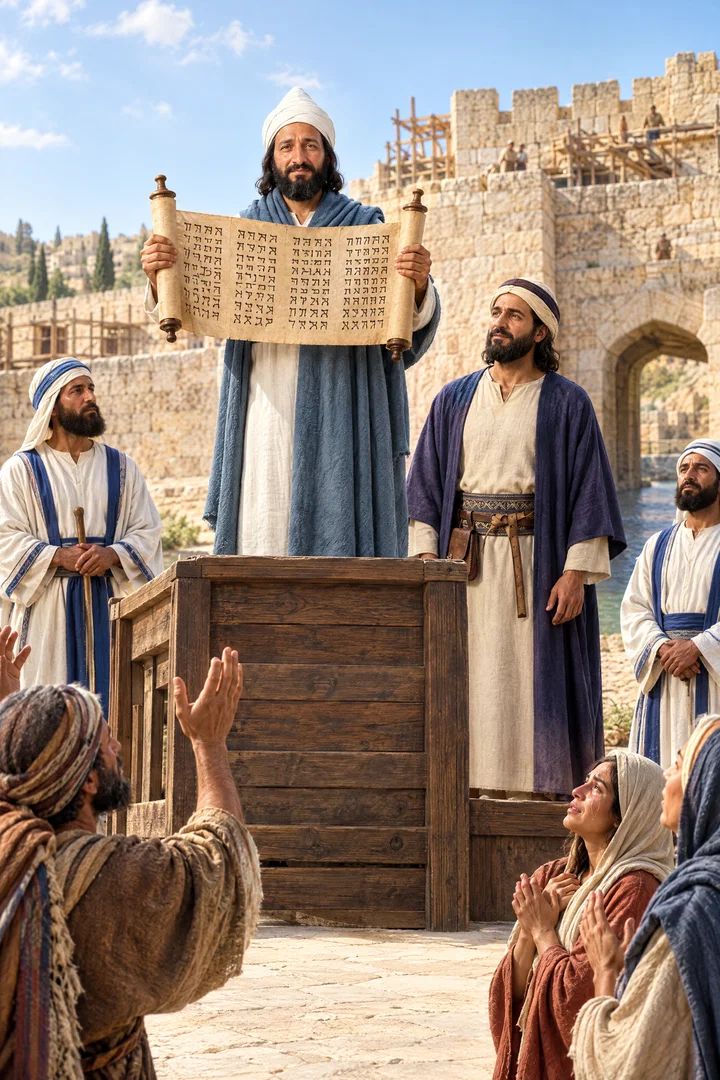
And Ezra blessed the LORD, the great God. And all the people answered, Amen, Amen, with lifting up their hands: and they bowed their heads, and worshipped the LORD with their faces to the ground.
Translations
American King James Version, King James Version
And Ezra blessed the LORD, the great God. And all the people answered, Amen, Amen, with lifting up their hands: and they bowed their heads, and worshipped the LORD with their faces to the ground.
and Ezra blessed the Lord, the great God. And all the people answered, Amen, Amen, with lifting up their hands: and they bowed their heads, and worshipped the Lord with their faces to the ground.
And Ezra blessed the LORD, the great God. And all the people answered, Amen, Amen, with lifting their hands: and they bowed their heads, and worshiped the LORD with their faces to the ground.
and Ezra blessed the LORD, the great God. And all the people answered, Amen, Amen, with the lifting up of their hands: and they bowed their heads, and worshipped the LORD with their faces to the ground.
And Ezra blessed Jehovah, the great God; and all the people answered, Amen, Amen, with the lifting up of their hands: and they bowed their heads, and worshipped Jehovah with their faces to the ground.
and Ezra blesseth Jehovah, the great God, and all the people answer, 'Amen, Amen,' with lifting up of their hands, and they bow and do obeisance to Jehovah — faces to the earth.
And Ezra blessed Jehovah, the great God; and all the people answered, Amen, Amen! with lifting up of their hands; and they bowed their heads, and worshipped Jehovah with their faces to the ground.
And Ezra blessed Yahweh the great God,—and all the people responded, Amen! Amen! with the lifting up of their hands,—and they bent their heads and bowed themselves down unto Yahweh, with their faces to the ground.
Berean Standard Bible, Majority Standard Bible
Then Ezra blessed the LORD, the great God, and with their hands uplifted, all the people said, “Amen, Amen!” Then they bowed down and worshiped the LORD with their faces to the ground.
Then Ezra blessed the LORD, the great God.All the people answered, “Amen, Amen,” with the lifting up of their hands. They bowed their heads, and worshiped the LORD with their faces to the ground.
And Ezra gave praise to the Lord, the great God. And all the people in answer said, So be it, so be it; lifting up their hands; and with bent heads they gave worship to the Lord, going down on their faces to the earth.
And Ezra praysed the Lord the great God, and all the people answered, Amen, Amen, with lifting vp their handes: and they bowed themselues, and worshipped the Lord with their faces toward the grounde.
Douay-Rheims (Challoner revision)
And Esdras blessed the Lord the great God: and all the people answered, Amen, amen: lifting up their hands: and they bowed down, and adored God with their faces to the ground.
Pictures
Cross-references
- Nehemiah 9:1-3
Now in the twenty and fourth day of this month the children of Israel were assembled with fasting, and with sackclothes, and earth upon them.
After hearing the law, the people confess their sins and worship the Lord.
- Ezra 7:10
For Ezra had prepared his heart to seek the law of the LORD, and to do it, and to teach in Israel statutes and judgments.
Ezra prepared to seek, practice, and teach the Lord’s law.
- 1 Timothy 2:8
I will therefore that men pray every where, lifting up holy hands, without wrath and doubting.
Calls for prayer with lifted hands.
- Psalms 134:2
Lift up your hands in the sanctuary, and bless the LORD.
Calls worshippers to lift their hands in the sanctuary and bless the LORD.
- 1 Corinthians 14:16
Else when thou shalt bless with the spirit, how shall he that occupieth the room of the unlearned say Amen at thy giving of thanks, seeing he understandeth not what thou sayest?
The people answer Amen after understanding a blessing or prayer.
- Deuteronomy 31:11-12
When all Israel is come to appear before the LORD thy God in the place which he shall choose, thou shalt read this law before all Israel in their hearing.
Commands public reading of the law as the people gather before the LORD.
- Ezra 7:6
This Ezra went up from Babylon; and he was a ready scribe in the law of Moses, which the LORD God of Israel had given: and the king granted him all his request, according to the hand of the LORD his God upon him.
Ezra is described as a ready scribe in the law of Moses.
- Leviticus 23:34-43
Speak unto the children of Israel, saying, The fifteenth day of this seventh month shall be the feast of tabernacles for seven days unto the LORD.
Ordinance and observance of the feast
Commentary
Each commentary is drawn from primary sources: the writings of Ellen G. White and Adventist pioneers and periodicals. Each commentary is separate. Its own words are not a quotation; follow the references to read the source passages.
Ellen G. White
8 sources
The scene belongs after the return from captivity, when the wall of Jerusalem had been rebuilt and the gates set up, at the time of the Feast of Trumpets.PK 661.1–2 The children of the covenant had assembled at Jerusalem in a vast multitude from the surrounding country, and they asked to have the Scriptures read.PK 661.1–2ST Apr 28, 1898 Much of the city still lay in ruins around them.PK 661.1–2
Ezra, then an aged man, stood on a raised platform of wood erected in one of the broadest streets amid sad reminders of departed glory.PK 661.1–2 He held open the Book of the Law of Moses, which is the Ten Commandments, before a large assembly, with his brother Levites and other leaders gathered at his right and left and behind him on the platform.PK 661.1–2PK 661 He read from morning until midday, while certain priests and Levites joined him in explaining the principles of the law with great care in the language of the people so that all might understand.PK 661.3ST Apr 28, 1898 Such care was needed because through intermarriage with other nations the Hebrew language had become corrupted, so that even in that gathering there was evidence of Israel's sin.PK 661.3
When Ezra blessed the Lord the great God, all the people gave united and solemn assent with Amen, Amen and uplifted hands.PK 661.1–2Ms 156, 1902, par. 17–20 They bowed with heads and with faces to the ground in worship of the Lord, expressing agreement, reverence and attentive worship as they heard God's law read.PK 661.1–2Ms 156, 1902, par. 17–20PK 661.3DA 215.3–216.1PK 661 The public reading was a privilege and was meant to be a joyful occasion.Ms 41, 1900, par. 37–39 Yet hearing God's requirements brought their condition and their departure from God into view, and as they remembered their sins and the blessings lost through disobedience they were brought to grief and confession.Ms 121, 1898, par. 7–8Ms 41, 1900, par. 37–39 The occasion was expected to bring deep repentance and a return to the Lord, preparing the way for the account of their sins and God's dealings with them in the next chapter, after which they were encouraged to rejoice and praise God for His mercy.Ms 121, 1898, par. 7–8DA 215.3–216.1Ms 41, 1900, par. 37–39
Sources
Pioneers and periodicals
21 sources
When the book of the law was opened for instruction, Ezra prayed in blessing to the Lord as the great God, and the whole congregation answered with a doubled amen while lifting their hands, then bowed low with faces to the ground in worship.ST Nov 1, 1899ST May 21, 1885ST Feb 25, 1886 Their united answer and posture showed agreement with the prayer and reverent, humble, joyful praise before God, with the entire assembly attentively and actively sharing in worship around His word.ST Nov 1, 1899ST May 21, 1885ST Feb 25, 1886ST Feb 13, 1893RH Apr 7, 1904 This took place after the remnant returned from Babylonian captivity to Jerusalem, when the people gathered to hear Ezra read the law distinctly from morning till midday with its meaning explained, and the plain application awakened them to sin so that they wept and then confessed and put sin away.RH Apr 22, 1902ST Feb 12, 1885ST Aug 23, 1910RH Sep 21, 1916ST Aug 19, 1897 The revival led to lasting obedience as the people entered a solemn covenant to keep the law of Moses, establishing the Pentateuch as the authoritative book, a work done not by might nor by army but by the power of the Spirit in the Word.ST Feb 12, 1885ST Aug 19, 1897RH Jul 9, 1908ST Sep 26, 1895 That good resolve for strict observance, born from remembering that neglect of the law had caused the exile, was later pushed to extremes until the law was burdened with fanciful meanings and oppressive restrictions.ST
Return and Public Reading
Nehemiah 8:6 belongs to the revival that followed the return of a remnant of God's people from Babylonian captivity to Jerusalem, when God's blessing was sought as the Bible was brought out for public worship.ST Feb 12, 1885 It stands in Nehemiah 8-10, covering part of the last reform about 446-408 on Nehemiah's return to Jerusalem, when he worked always with the highest good of Jerusalem in mind.ST Aug 23, 1910 It belongs to the record of what took place at Jerusalem in the time of the restoration after the return from Babylonian captivity, when affliction and misfortune had turned minds to the Lord and His word.RH Oct 16, 1900 It shows Ezra, a descendant of Aaron the high priest who had prepared his heart to seek the law of the Lord and to do it and to teach in Israel statutes and judgments, carrying out that purpose.RH Oct 16, 1900
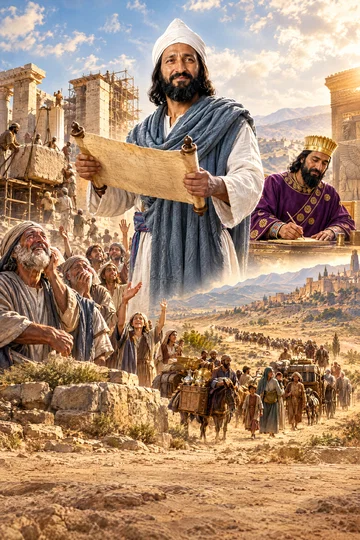
The people asked for the Scriptures and gathered together at the water gate around Ezra to hear God's law.ST Jun 12, 1879 He read from a platform, a temporary wooden pulpit, from morning till midday, and his preaching of God's Word from such a pulpit was mighty in restoring Jerusalem and the temple and transforming the people.ST Aug 19, 1897ST May 24, 1899 The Word was read distinctly with the sense given, as Ezra read and the Levites explained its meaning so the people understood the reading.ST Aug 19, 1897ST Jun 12, 1879 The people stood for prayer and remained standing from dawn until midday to hear the reading and explanation, listening attentively.RH Sep 21, 1916ST Jun 12, 1879 In Ezra's time copies of Scripture were rare, so hearing it read and explained publicly was a rare privilege that brought them overwhelming joy.ST Aug 12, 1897
The public reading and its application awakened consciences, bringing the people to recognize their sin and danger. The reading and explanation moved them to weeping under intense feeling, which Ezra calmed. It was a religious revival in which the people listened to the law and its teaching, then confessed, put away sin when sins were revealed, and worshiped God.RH Apr 22, 1902ST Aug 19, 1897
Reverent Congregational Worship
As the law was opened for instruction, Ezra blessed the Lord, the great God, in prayer before the people.ST May 21, 1885ST Feb 13, 1893RH Apr 7, 1904 All the people answered his blessing with Amen, Amen, lifting up their hands, then bowing their heads and worshipping the Lord with their faces to the ground.ST Nov 1, 1899ST May 21, 1885ST Feb 25, 1886ST Feb 13, 1893RH Jan 1851 Their taking such an active part shows attentive, shared participation by the whole congregation as fitting in worship.ST May 21, 1885ST Feb 25, 1886RH Apr 7, 1904
The doubled Amen expresses agreement with and affirmation of the prayer offered.ST Nov 1, 1899ST Feb 25, 1886ST Feb 13, 1893ST Feb 25, 1886ST May 28, 1902 Together with raised hands, bowed heads, and faces turned to the ground, it expresses reverence and humble worship before God.ST Nov 1, 1899ST Feb 13, 1893ST Feb 25, 1886ST May 28, 1902 It is also joyful praise and reverent worship in response to the reading and opening of God's word.ST Nov 1, 1899ST May 21, 1885RH Apr 2, 1908
The scene presents reverent, shared worship as part of the public reading and explanation of God's word, with reverence for God as the people assembled around His word.ST May 21, 1885ST Feb 12, 1885RH Sep 21, 1916 Lifted hands belong to the posture of prayer and worship, joined here to bowing and prostration.ST Feb 25, 1886RH Apr 7, 1904RH Jan 1851
Lasting Reform and Warning
The worship at the reading led to obedience, for when the people found a command in the law they kept it even though their fathers had not practiced it.ST Feb 12, 1885ST Sep 26, 1895 They entered into a solemn covenant to keep the law of Moses which Ezra had brought home with him, returning to the practice of the laws and forms of worship enjoined by the writings of Moses.ST Sep 26, 1895 That covenant established the Pentateuch as the canonical and authoritative book, about which there never has been any question.ST Sep 26, 1895 The good meetings held after study of the Word also helped them recognize their duty to support the worship of God's house.RH Jul 9, 1908
That lasting reformation was wrought through the Word of God, read from morning till midday to an attentive people, read distinctly with the sense given so they understood the reading.ST Aug 19, 1897 When sins were revealed they were put away, and that enduring work through reproof and instruction from the Word shows that the power in the Word is the power of the Spirit.ST Aug 19, 1897 The work was done not by might nor by army but by the Spirit of God.ST Aug 19, 1897
Remembering that neglect of God's law had caused the exile, Israel determined on rigid observance of that law.ST That good resolve became the starting point for fanatical over-observance, as strictness was pushed to extremes and the law was loaded with fanciful meanings and oppressive ceremonial restrictions.ST So when Jesus came as the embodiment of the true Sabbath idea He was persecuted and not known.ST
The answering twice with Amen, the lifting of hands, the bowing of heads, and the worshipping of the Lord with faces to the ground describes joyful praise and reverent worship still followed today, as seen when the Tamil Sabbath-keepers followed this pattern in thanking God.RH Apr 2, 1908 Preaching of God's Word, though delivered from temporary wooden pulpits, was mighty in restoring Jerusalem and the temple and transforming the people.ST May 24, 1899
Sources