Nehemiah 8:7
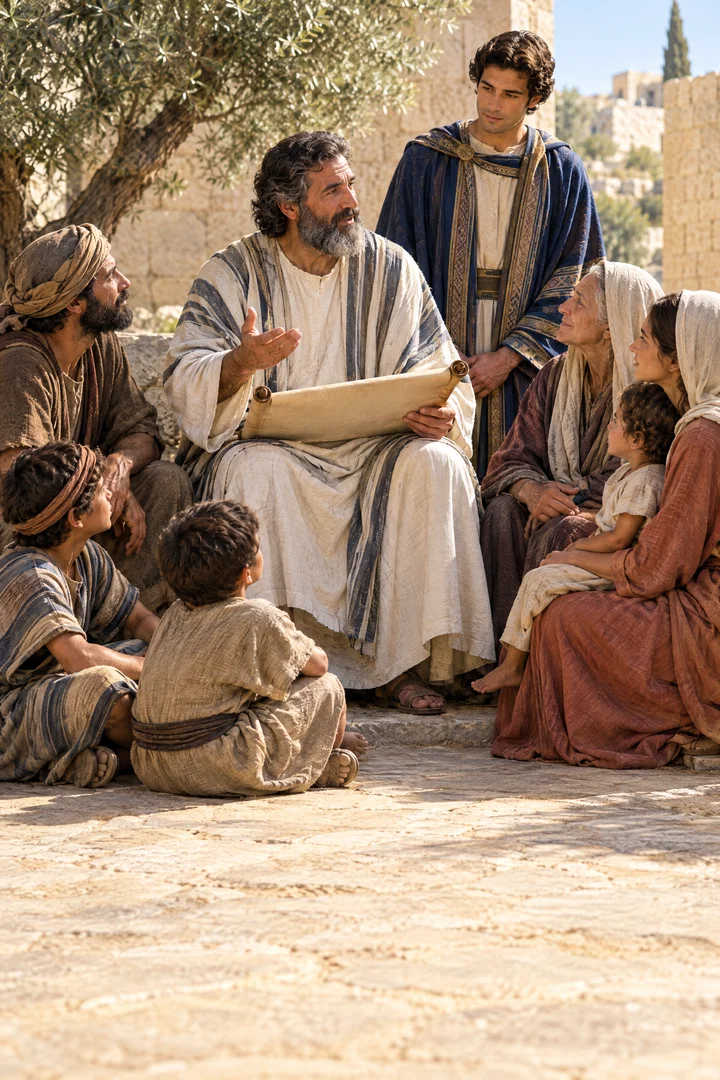
Also Jeshua, and Bani, and Sherebiah, Jamin, Akkub, Shabbethai, Hodijah, Maaseiah, Kelita, Azariah, Jozabad, Hanan, Pelaiah, and the Levites, caused the people to understand the law: and the people stood in their place.
Translations
American King James Version, King James Version, KJV Cambridge Paragraph Bible, Webster Bible
Also Jeshua, and Bani, and Sherebiah, Jamin, Akkub, Shabbethai, Hodijah, Maaseiah, Kelita, Azariah, Jozabad, Hanan, Pelaiah, and the Levites, caused the people to understand the law: and the people stood in their place.
Revised Version, American Standard Version
Also Jeshua, and Bani, and Sherebiah, Jamin, Akkub, Shabbethai, Hodiah, Maaseiah, Kelita, Azariah, Jozabad, Hanan, Pelaiah, and the Levites, caused the people to understand the law: and the people stood in their place.
And Jeshua, and Bani, and Sherebiah, Jamin, Akkub, Shabbethai, Hodijah, Maaseiah, Kelita, Azariah, Jozabad, Hanan, Pelaiah, and the Levites, giving the people understanding in the law, and the people, [are] on their station,
And Jeshua, and Bani, and Sherebiah, Jamin, Akkub, Shabbethai, Hodijah, Maaseiah, Kelita, Azariah, Jozabad, Hanan, Pelaiah, and the Levites, caused the people to understand the law; and the people [stood] in their place.
And, Jeshua and Bani and Sherebiah, Jamin, Akkub, Shabbethai, Hodiah, Maaseiah, Kelita, Azariah, Jozabad, Hanan, Pelaiah, and the Levites, did cause the people to understand the law, the people, remaining in their places.
Berean Standard Bible, Majority Standard Bible
The Levites— Jeshua, Bani, Sherebiah, Jamin, Akkub, Shabbethai, Hodiah, Maaseiah, Kelita, Azariah, Jozabad, Hanan, and Pelaiah—instructed the people in the Law as they stood in their places.
Also Jeshua, Bani, Sherebiah, Jamin, Akkub, Shabbethai, Hodiah, Maaseiah, Kelita, Azariah, Jozabad, Hanan, Pelaiah, and the Levites, caused the people to understand the law; and the people stayed in their place.
And Jeshua and Bani and Sherebiah and Jamin, Akkub, Shabbethai, Hodiah, Maaseiah, Kelita, Azariah, Jozabad, Hanan, Pelaiah, and the Levites made the law clear to the people: and the people kept in their places.
Also Ieshua, and Bani, and Sherebiah, Iamin, Akkub, Shabbethai, Hodiiah, Maaseiah, Kelita, Azariah, Iozabad, Hanan, Pelaiah, and the Leuites caused the people to vnderstand the lawe, and the people stood in their place.
Douay-Rheims (Challoner revision)
Now Josue, and Bani, and Serebia, Jamin, Accub, Sephtai, Odia, Maasia, Celtia, Azarias, Jozabed, Hanan, Phalaia, the Levites, made silence among the people to hear the law: and the people stood in their place.
Pictures
Cross-references
- Nehemiah 9:1-3
Now in the twenty and fourth day of this month the children of Israel were assembled with fasting, and with sackclothes, and earth upon them.
After hearing the law, the people confessed their sins and worshiped God.
- Nehemiah 8:3
And he read therein before the street that was before the water gate from the morning until midday, before the men and the women, and those that could understand; and the ears of all the people were attentive unto the book of the law.
The people listened attentively as Ezra read the law aloud.
- Ezra 7:10
For Ezra had prepared his heart to seek the law of the LORD, and to do it, and to teach in Israel statutes and judgments.
Ezra prepared to teach Israel the law, a purpose carried out in Nehemiah 8.
- Deuteronomy 31:11-12
When all Israel is come to appear before the LORD thy God in the place which he shall choose, thou shalt read this law before all Israel in their hearing.
Commands public reading of the law so all may hear and learn it.
- Leviticus 23:42-43
Ye shall dwell in booths seven days; all that are Israelites born shall dwell in booths:
Commands dwelling in booths to remember Israel’s wilderness journey.
- Nehemiah 8:11
So the Levites stilled all the people, saying, Hold your peace, for the day is holy; neither be ye grieved.
The Levites quiet the people and remind them the day is holy.
- Nehemiah 8:13-17
And on the second day were gathered together the chief of the fathers of all the people, the priests, and the Levites, unto Ezra the scribe, even to understand the words of the law.
The people act on the law they have learned.
- 2 Chronicles 34:30-32
And the king went up into the house of the LORD, and all the men of Judah, and the inhabitants of Jerusalem, and the priests, and the Levites, and all the people, great and small: and he read in their ears all the words of the book of the covenant that was found in the house of the LORD.
Hearing the law led the people to renew their commitment to God.
- Nehemiah 10:29
They clave to their brethren, their nobles, and entered into a curse, and into an oath, to walk in God’s law, which was given by Moses the servant of God, and to observe and do all the commandments of the LORD our Lord, and his judgments and his statutes;
The people pledge to obey the law.
Commentary
Each commentary is drawn from primary sources: the writings of Ellen G. White and Adventist pioneers and periodicals. Each commentary is separate. Its own words are not a quotation; follow the references to read the source passages.
Ellen G. White
7 sources
The verse belongs to a public gathering in Jerusalem after the return from captivity, where Ezra and the Levites stood before the assembled people and the people worshiped the Lord.PK 661.1–2ST Apr 28, 1898 The people themselves had asked to hear the Scriptures, and Ezra read to them from a platform from morning until midday.ST Apr 28, 1898 This public reading followed a command for the Scriptures to be read at the appointed time, a practice that had not been observed during the captivity.ST Apr 28, 1898
As the law was read, the Levites and priests helped the people understand it by explaining it in their own language and making its meaning clear, so the people could follow the meaning, grasp its requirements, and remain in their places.Ms 53, 1910, par. 21–23PK 661.3Ms 121, 1898, par. 7–8ST Apr 28, 1898 The work included helping those who were ignorant, for intermarriage with other nations had corrupted the Hebrew language, so not all could understand the reading without help.PK 661.3Ms 41, 1900, par. 37–39 Explaining Scripture to the people in this way is part of the public reading of God's law.Ms 53, 1910, par. 21–23
The instruction set forth God's requirements, the blessings of obedience and the consequences of disobedience, bringing to mind the national sins and the scattering into captivity.Ms 41, 1900, par. 37–39 Understanding the law as read was expected to lead to sorrow for sin, deep repentance, and a return to the Lord, as in Ezra's and Josiah's days, and the sorrowing people were then encouraged to rejoice in God's mercy.DA 215.3–216.1Ms 41, 1900, par. 37–39
Sources
Pioneers and periodicals
19 sources
After the return from captivity the people gathered attentively to hear the law read publicly from morning till midday, with Ezra reading and chosen Levite helpers joining him to cause understanding while the people stood and remained in their places.ST Nov 1, 1899ST Dec 20, 1899ST Aug 19, 1897ST Aug 12, 1897RH Oct 16, 1900 The helpers explained its sense clearly and distinctly so it would be understood and not merely heard, which was necessary because many no longer understood the Hebrew in which it was read even though its wording is brief and plain and its requirements comprehensive.RH Apr 22, 1902ST May 28, 1902RH Apr 7, 1904 To explain the law so the people fully understand what God requires is the duty of religious teachers, and parents, youth and children benefit when they come together punctually and in unity to hear it.ST Dec 20, 1899RH Apr 7, 1904 That understanding convicted the people as they saw how far their lives differed from the law and how they had transgressed, awakening conscience and bringing weeping that was calmed with the call to rejoice because the joy of the Lord was their strength, and bringing new light that led them to put sins away, pledge obedience, keep the Feast of Tabernacles as written, and support the worship of God's house.ST May 21, 1896ST Feb 12, 1885ST Aug 19, 1897ST May 28, 1902 It was a genuine and lasting work of the Spirit of God through the Word of God and not by human might, mighty to restore and transform with spiritual uplift and great joy, establishing the law brought back to Jerusalem as the authoritative covenant after neglect had caused the exile, though that resolve for strictness was later pushed by some into fanatical over-observance, and the rejoicing of the feast points forward to the final gathering of God's people into His kingdom.ST Aug 19, 1897RH Jan 14, 1862ST Aug 12, 1897ST Sep 26, 1895ST May 24, 1899
Reading and Explaining the Law
The verse describes the public reading after the return from Babylonian captivity, when affliction had turned the people's minds back to the Lord and His word after a time of little regard for it.ST Apr 28, 1898RH Oct 16, 1900 The people themselves asked to hear the Scriptures and gathered attentively to hear them read and explained.ST Apr 28, 1898ST Aug 19, 1897ST Aug 12, 1897 Ezra read from a platform at the water gate from morning till midday.ST Apr 28, 1898ST Aug 19, 1897 That public reading was at the appointed time commanded for the Scriptures to be read, a practice not observed during the captivity.ST Apr 28, 1898 In that time copies of the sacred books were rare, so gathering to hear Scripture read and explained was a privilege that brought great joy.ST Aug 12, 1897
Ezra did not teach alone, for the Levites and other chosen helpers joined him in causing the gathered people to understand the law as it was read.ST Nov 1, 1899RH Apr 22, 1902RH Apr 7, 1904ST Feb 13, 1893ST May 28, 1902 They explained its sense and real meaning clearly and distinctly so it would be understood and not merely heard.ST Dec 20, 1899RH Apr 7, 1904 Their instruction enabled the congregation to grasp the words of Scripture and to understand fully what God required of them.ST Dec 20, 1899RH Apr 7, 1904 While receiving this instruction the people stood and remained in their places.ST Nov 1, 1899RH Apr 22, 1902ST May 28, 1902
Explanation was needed even though the law's wording is brief and plain, because its requirements are comprehensive. Many no longer understood the Hebrew in which it was read, so distinct explanation in its plain sense was necessary before the people could recognize how far their way of life differed from it.ST May 28, 1902 The teaching aimed to make the reading clear while leaving it to God to give the meaning.RH Apr 7, 1904
To explain the law so the people can fully understand what God requires is the duty of religious teachers then and still.ST Dec 20, 1899 In this gathering parents, youth, and children benefited as they came together punctually and in unity.RH Apr 7, 1904
Response and Lasting Significance
Hearing the law explained convicted the hearers of sin, warned them of danger, and awakened their consciences.ST May 21, 1896ST May 28, 1902 Once its sense was made plain they recognized how far their way of life differed from it and how they had transgressed, and they wept.ST May 21, 1896ST May 28, 1902 Their intense but unhelpful grief was calmed as they were urged to rejoice, because the joy of the Lord was their strength.ST May 21, 1896
That understanding brought new light in reproof and instruction, exposed sins, and led the people to put those sins away.ST Aug 19, 1897 It led them to pledge obedience, to celebrate the Feast of Tabernacles or Booths with rejoicing and dwelling in booths to remember the wilderness journey, and to recognize their duty to support the worship of God's house.ST May 21, 1896RH Jan 14, 1862RH Jul 9, 1908 They promptly obeyed what they found written about the feast even though it had not been kept in that way for generations, showing that duty is guided by what God's word commands rather than by what earlier generations did.ST Feb 12, 1885
The reformation was a genuine and lasting work of the Spirit of God through the Word of God and not by human might or army.ST Aug 19, 1897 The preaching and explanation of the Word was mighty in restoring Jerusalem and the temple and in transforming the people.ST May 24, 1899 Their spiritual uplift came through that Bible teaching, and the privilege of hearing Scripture read and explained brought them great joy.ST Aug 12, 1897ST Dec 30, 1913
The reading belongs to Ezra's success in leading the people back to the laws and forms of worship commanded in the writings of Moses after he brought the law from Babylon to Jerusalem where it had fallen into disuse.ST Sep 26, 1895RH Oct 16, 1900 Affliction and misfortune had turned their minds back to the Lord and His word, they remembered that neglect of the law had caused the exile, and they resolved to keep it rigidly.STRH Oct 16, 1900 They then entered into a solemn covenant to keep the law of Moses, and that covenant established the Pentateuch as the canonical and authoritative book ever since, with never any question about this portion.ST Sep 26, 1895 That resolve for strictness was later pushed into fanatical over-observance, with the Sabbath loaded with fanciful meanings and oppressive ceremonial restrictions, so that when Jesus came as the embodiment of the true Sabbath idea He was persecuted.ST The feast they kept probably pointed forward to the rejoicing when God's people are finally gathered into His kingdom.RH Jan 14, 1862
Sources