Numbers 11:33
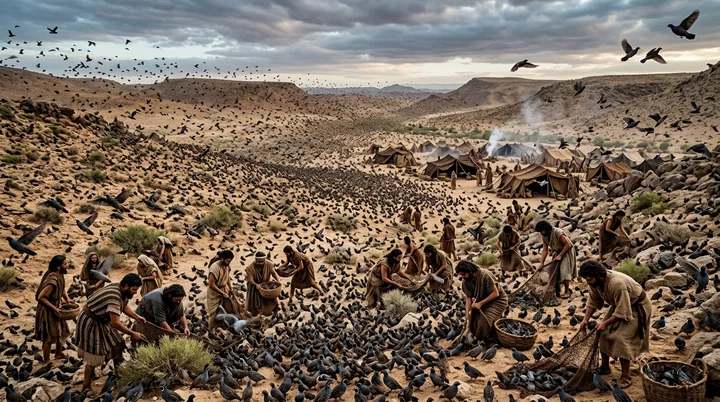
And while the flesh was yet between their teeth, ere it was chewed, the wrath of the LORD was kindled against the people, and the LORD smote the people with a very great plague.
Translations
And while the flesh was yet between their teeth, before it was chewed, the wrath of the LORD was kindled against the people, and the LORD smote the people with a very great plague.
King James Version, Webster Bible
And while the flesh was yet between their teeth, ere it was chewed, the wrath of the LORD was kindled against the people, and the LORD smote the people with a very great plague.
And while the flesh was yet between their teeth, ere it was chewed, the wrath of the Lord was kindled against the people, and the Lord smote the people with a very great plague.
While the flesh was yet between their teeth, ere it was chewed, the anger of the LORD was kindled against the people, and the LORD smote the people with a very great plague.
While the flesh was yet between their teeth, ere it was chewed, the anger of Jehovah was kindled against the people, and Jehovah smote the people with a very great plague.
The flesh is yet between their teeth — it is not yet cut off — and the anger of Jehovah hath burned among the people, and Jehovah smiteth among the people — a very great smiting;
The flesh was yet between their teeth, before it was chewed, when the wrath of Jehovah was kindled against the people, and Jehovah smote the people with a very great plague.
The flesh, was yet between their teeth, not yet chewed,—when the anger of Yahweh, had kindled upon the people, and Yahweh smote the people, with an exceeding great plague.
Berean Standard Bible, Majority Standard Bible
But while the meat was still between their teeth, before it was chewed, the anger of the LORD burned against the people, and the LORD struck them with a severe plague.
While the meat was still between their teeth, before it was chewed, the LORD’s anger burned against the people, and the LORD struck the people with a very great plague.
But while the meat was still between their teeth, before it was tasted, the wrath of the Lord was moved against the people and he sent a great outburst of disease on them.
While the flesh was yet betweene their teeth, before it was chewed, euen the wrath of the Lord was kindled against the people, and the Lord smote the people with an exceeding great plague.
Douay-Rheims (Challoner revision)
As yet the flesh was between their teeth, neither had that kind of meat failed: when behold the wrath of the Lord being provoked against the people, struck them with an exceeding great plague.
Pictures
Cross-references 20 of 22
- Numbers 11:4-6
And the mixt multitude that was among them fell a lusting: and the children of Israel also wept again, and said, Who shall give us flesh to eat?
Israel craves meat, complains about manna, and sets in motion the events leading to the plague.
- Psalms 78:29-31
So they did eat, and were well filled: for he gave them their own desire;
Israel’s craving for meat is granted, then God’s wrath strikes while the food is still in their mouths.
- 1 Corinthians 10:6
Now these things were our examples, to the intent we should not lust after evil things, as they also lusted.
Paul presents Israel’s lusting as an example against desiring evil things.
- Psalms 106:14-15
But lusted exceedingly in the wilderness, and tempted God in the desert.
Israel’s craving for flesh was granted, but brought leanness and judgment.
- Exodus 16:3
And the children of Israel said unto them, Would to God we had died by the hand of the LORD in the land of Egypt, when we sat by the flesh pots, and when we did eat bread to the full; for ye have brought us forth into this wilderness, to kill this whole assembly with hunger.
Israel recalls Egypt’s food while complaining about hunger in the wilderness.
- Numbers 11:18-20
And say thou unto the people, Sanctify yourselves against to morrow, and ye shall eat flesh: for ye have wept in the ears of the LORD, saying, Who shall give us flesh to eat? for it was well with us in Egypt: therefore the LORD will give you flesh, and ye shall eat.
God promises meat in response to Israel’s demand and warns of its consequences.
- 1 Corinthians 10:11
Now all these things happened unto them for ensamples: and they are written for our admonition, upon whom the ends of the world are come.
Israel’s judgment for murmuring was recorded as a warning for later believers.
- Exodus 16:4
Then said the LORD unto Moses, Behold, I will rain bread from heaven for you; and the people shall go out and gather a certain rate every day, that I may prove them, whether they will walk in my law, or no.
God provided manna as food in the wilderness, which the Israelites rejected for flesh.
- Psalms 78:25
Man did eat angels’ food: he sent them meat to the full.
Israel craved flesh while God’s manna was still in their mouths.
- Psalms 78:18-21
And they tempted God in their heart by asking meat for their lust.
Israel’s demand for meat tested God and provoked his anger.
- Numbers 11:1
And when the people complained, it displeased the LORD: and the LORD heard it; and his anger was kindled; and the fire of the LORD burnt among them, and consumed them that were in the uttermost parts of the camp.
Complaining kindles the Lord’s anger and brings consuming judgment.
- Numbers 11:13
Whence should I have flesh to give unto all this people? for they weep unto me, saying, Give us flesh, that we may eat.
Moses asks how he can provide flesh for the people.
- Psalms 78:27-29
He rained flesh also upon them as dust, and feathered fowls like as the sand of the sea:
God provides abundant quail in response to Israel’s demand for flesh, before judgment.
- Hebrews 3:17-19
But with whom was he grieved forty years? was it not with them that had sinned, whose carcases fell in the wilderness?
Israel’s wilderness rebellion and unbelief brought judgment and barred them from rest.
- Psalms 78:32
For all this they sinned still, and believed not for his wondrous works.
They continued in unbelief despite God’s works and the plague.
- Exodus 16:12-13
I have heard the murmurings of the children of Israel: speak unto them, saying, At even ye shall eat flesh, and in the morning ye shall be filled with bread; and ye shall know that I am the LORD your God.
The first quail provision contrasts with the later plague after Israel craved flesh.
- Numbers 11:18
And say thou unto the people, Sanctify yourselves against to morrow, and ye shall eat flesh: for ye have wept in the ears of the LORD, saying, Who shall give us flesh to eat? for it was well with us in Egypt: therefore the LORD will give you flesh, and ye shall eat.
gives the permission to eat flesh
- Hebrews 3:8-11
Harden not your hearts, as in the provocation, in the day of temptation in the wilderness:
Israel’s rebellion in the wilderness brings God’s anger and judgment.
- Exodus 16:8
And Moses said, This shall be, when the LORD shall give you in the evening flesh to eat, and in the morning bread to the full; for that the LORD heareth your murmurings which ye murmur against him: and what are we? your murmurings are not against us, but against the LORD.
murmuring is against the Lord
- Numbers 11:22
Shall the flocks and the herds be slain for them, to suffice them? or shall all the fish of the sea be gathered together for them, to suffice them?
shows flesh had been understood as forbidden
Commentary
Each commentary is drawn from primary sources: the writings of Ellen G. White and Adventist pioneers and periodicals. Each commentary is separate. Its own words are not a quotation; follow the references to read the source passages.
Ellen G. White
25 sources
While the meat from the vast flocks of quails God rained around the camp was still in their mouths and before they finished eating, His wrath was kindled and He struck them with a very great plague.ST Aug 12, 1880SG4 17.2Lt 258, 1907, par. 17–21 He had delivered Israel from Egypt and fed them with manna from heaven and water from the rock to give health and strength, but they despised that food, remembered Egypt, and wept and murmured for flesh as if they would die without it.Lt 83, 1901, par. 3–4Ms 38, 1898, par. 20–21Lt 258, 1907, par. 17–21 He granted their persistent demand in anger and displeasure, though He knew flesh was not for their highest good and would prove a curse, letting cause produce effect without working a miracle to preserve them.ST Aug 12, 1880SG4 17.2Lt 103, 1896, par. 29–39 Their murmuring after great light was rebellion in which depraved appetite controlled reason, and appetite was Satan's chosen point to gain power over them as he had with Adam and his descendants to the Flood and as he then tempted Christ.2RED 38.1–3LC1 136.22RED 32.2 The slaughter of thousands, even the fattest and chosen men, with burning fevers stands as a warning against murmuring, choosing one's own course, and letting gluttonous excess bring disease and death, calling for temperance and obedience instead of unbelief.ST Aug 12, 1880SG4 17.2Lt 103, 1896, par. 29–39CH 111.1–2SG4 121.3–122.1
Israel's Demand and Punishment
God had delivered Israel from oppressive bondage in Egypt and Himself led and fed them to prove and try them.Lt 83, 1901, par. 3–4Lt 258, 1907, par. 17–21HLT1 52.3–53.1 He withheld flesh meat in great measure and gave instead the most healthful food, bread rained from heaven, manna, angels' food that would give health and strength, with purest water from the rock.Ms 38, 1898, par. 20–21Lt 258, 1907, par. 17–21HLT1 52.3–53.1Lt 26, 1908, par. 7HL 282.1–2 This was to educate them in the wilderness, while He promised to take them to Himself as His peculiar treasure and to preserve them from disease if they would obey His voice and keep His commandments in all things.HLT1 52.3–53.1HL 282.1–2 He did not give them flesh until they mourned and wept for it, for their demand was not essential to health.Lt 83, 1901, par. 3–4Ms 38, 1898, par. 20–21HL 282.1–2
They did not trust Him to give the food that would best preserve health, but despised the heaven-appointed food given from heaven.Ms 38, 1898, par. 20–21HLT1 52.3–53.1Lt 26, 1908, par. 7 They remembered the food of Egypt and longed for the flesh-pots of bondage, wishing themselves back where they could sit by them.Lt 83, 1901, par. 3–4Lt 258, 1907, par. 17–21HLT1 52.3–53.1 They murmured, mourned, wept, cried for meat and demanded flesh, saying they would die without meat.Lt 83, 1901, par. 3–4Ms 38, 1898, par. 20–21Lt 258, 1907, par. 17–21CH 141.1–2Lt 26, 1908, par. 7 They were not satisfied, preferred slavery and even death rather than be deprived of meat.HLT1 52.3–53.1
By His power He brought an east wind and a south wind that rained flesh upon them as dust and feathered fowl like the sand of the sea.Ms 38, 1898, par. 20–21 He sent quails from heaven and let vast abundance fall in the midst of their camp round about their habitations.Lt 83, 1901, par. 3–4Ms 38, 1898, par. 20–21Lt 224, 1908, par. 6–7 They ate and were filled and were not estranged from their lust, feasting without restraint to excess.Lt 103, 1896, par. 29–39Ms 38, 1898, par. 20–21PP 382.1–2
While the flesh was yet between their teeth, ere it was chewed, while the meat was still in their mouths and before they finished eating, the wrath of the Lord was kindled against the people.ST Aug 12, 1880Ms 38, 1898, par. 20–21Lt 258, 1907, par. 17–21CH 111.1–23T 171.2–172.1 He smote the people with a very great and severe plague, and punishment came speedily.Ms 38, 1898, par. 20–21Lt 258, 1907, par. 17–21Lt 26, 1908, par. 7HL 282.1–2Lt 224, 1908, par. 6–7 In anger He gave them flesh to gratify their lustful appetites, and great numbers died while eating the meat for which they had lusted.CH 111.1–2HLT1 52.3–53.1SG4 121.3–122.1
The plague cut down very large numbers and thousands with burning fevers.ST Aug 12, 1880SG4 17.2Lt 103, 1896, par. 29–391SP 284.1–2SG4 18.1 It slew the fattest of them and smote down the chosen men of Israel.Ms 38, 1898, par. 20–21 Those most guilty in murmuring were smitten as soon as they tasted the food for which they had lusted.ST Aug 12, 1880SG4 17.2Lt 103, 1896, par. 29–39Ms 38, 1898, par. 20–211SP 284.1–2
Rebellion Through Uncontrolled Appetite
The murmuring for flesh came after great light at Horeb and after covenanting to obey Jehovah, so it was rebellion incurring greater guilt and requiring prompt punishment.Lt 103, 1896, par. 29–39 Eating to excess in that demand was rebellion and transgression, and punishment came speedily with many dying before they finished eating.Lt 26, 1908, par. 7Lt 224, 1908, par. 6–7 When judgment came no miracle was worked to preserve life, but while the flesh was still between the teeth plague struck and destroyed thousands.Lt 224, 1908, par. 6–7
They would not submit to receive from the Lord only what would prove for their good, and would not be thankful and satisfied with food they could eat freely without injury.HLT1 52.3–53.11SP 284.1–2SG4 18.1 Instead they gave themselves to seditious murmuring against Moses and against the Lord because they did not receive what would injure them.HLT1 52.3–53.11SP 284.1–2 Their depraved appetites controlled them and they suffered appetite to control reason.1SP 284.1–2SG4 121.3–122.12RED 38.1–3 Through that indulgence they were led to commit grievous sins which awakened the wrath of God against them, so that they fell in the wilderness.2RED 38.1–3 This judgment teaches that God is displeased when appetite rules His people.SG4 121.3–122.1
God granted their persistent desire for flesh in anger and displeasure, although He knew it was not for their highest good and was not essential for health.ST Aug 12, 1880SG4 17.2Lt 103, 1896, par. 29–39Lt 258, 1907, par. 17–21HLT1 52.3–53.1 He knew the craved food would prove a curse instead of the blessing they thought, yet because they persisted and would not be satisfied with food that would benefit them their rebellious desire was gratified.Lt 103, 1896, par. 29–39Lt 258, 1907, par. 17–21HLT1 52.3–53.1 They were then left to suffer the result, for cause must produce effect.Lt 103, 1896, par. 29–39 They feasted without restraint and their excess was speedily punished when wrath was kindled while the flesh was still between their teeth and the people were smitten with a very great plague.Lt 103, 1896, par. 29–39Lt 83, 1901, par. 3–4Lt 258, 1907, par. 17–21
Giving flesh was itself a punishment, one of the means used to inflict death and shorten human life after the curse was pronounced upon the race.Lt 83, 1901, par. 3–4 Flesh had been permitted to earlier generations even though it was known it would shorten human life.Lt 26, 1908, par. 7
Appetite was Satan's chosen point of attack and the means by which he gained power over the people and hindered their journey toward Canaan.2RED 38.1–3LC1 136.2 It was the same point on which he had overcome Adam and controlled his descendants until indulgence led them to provoke God by iniquity until their crimes brought destruction by the Flood, and the same temptation he then brought against Christ.2RED 38.1–3 Appeal to appetite overcomes fallen man, as shown together by Adam and Eve in Eden, the old world, and Israel's indulgence bringing God's wrath and a very great plague upon the people in the wilderness.2RED 32.2ST Jun 25, 1874 Satan used this overthrow through gratification of appetite and the death of nearly all who left Egypt in the wilderness to boast that even the Son of God who was with Moses and Joshua could not resist his power and lead God's chosen people to Canaan.2RED 32.2
Warning for Present Obedience
The stroke that fell while the flesh was still between the teeth stands as an example and lesson to keep God's people from repeating Israel's mistakes that spoiled their record.Lt 258, 1907, par. 17–21CH 141.1–2HRP 16.2–19.1HL 282.1–2 It warns against murmuring at God's requirements, choosing one's own course, following the sight of one's own eyes, departing from God, and determined resistance to His direction.CH 141.1–2HRP 16.2–19.1HL 282.1–2 It teaches humility and obedience instead of murmuring, unbelief and rebellion, which keep God from doing great things for His people because of hardness of heart and sinful unbelief.CH 141.1–2 The demand was not essential to health, for God had withheld flesh in great measure while educating Israel in the wilderness and had provided food from heaven, yet their insistence brought wrath and a severe plague while the meat was still in their mouths.HRP 16.2–19.1HL 282.1–2
The judgment shows the danger of yielding to appetite, for granting the demand for meat did not make the craving harmless.CH 111.1–2SG4 121.3–122.1 While they were still eating the quail given to satisfy craving, anger fell and a great and severe plague struck, and gluttonous eating to excess brought disease and death to thousands.CH 111.1–2SG4 121.3–122.1MH 311.2CTBH 43.1–44.2 It proves God is displeased when appetite rules His people and that the flesh diet granted because of discontent and murmuring brought disease and death.SG4 121.3–122.1MH 311.2 Intemperate craving for meat brings death, for their eating was transgression and when judgment came no miracle was worked to preserve life, but plague destroyed thousands while the flesh was still between their teeth.MH 311.2CTBH 43.1–44.2Lt 224, 1908, par. 6–7
Disregard of the light God gave about restricting appetite brings sickness and death, for blessings can become curses and mercies become judgments when people knowingly reject light.3T 171.2–172.1CH 141.1–2HRP 16.2–19.1 God gave the demanded meat despite rebellion, yet His curse was with it, and rebellion and unbelief bring judgment rather than blessing.3T 171.2–172.1CH 141.1–2HRP 16.2–19.1 Murmuring and choosing appetite over obedience, after saying they would die without meat, turned what was given into a curse instead of blessing.3T 171.2–172.1CH 141.1–2
The death while eating calls present believers to learn from Israel's experience by temperance in eating and drinking and health reform to keep the mind clear to discern what affects the salvation of the soul.Lt 224, 1908, par. 6–7 God's purpose was to lead Israel toward food better suited to them and toward the original diet of fruits and other produce from the earth, and the provision of meat that answered craving became a curse illustrating the consequence of resisting His dietary restrictions.CTBH 118.1–119.1 Flesh had been permitted to earlier generations even though God knew it would shorten human life, but eating to excess was rebellion speedily punished with many dying before they finished eating, teaching the danger of demanding and indulging in meat.CTBH 118.1–119.1Lt 26, 1908, par. 7Lt 224, 1908, par. 6–7
For all this they sinned still and believed not for His wondrous works, so their days were consumed in vanity and their years in trouble.Ms 38, 1898, par. 20–21 When He slew them they sought Him and returned and enquired early after God and remembered that God was their Rock and the high God their Redeemer.Ms 38, 1898, par. 20–21 Yet they flattered Him with their mouth and lied unto Him with their tongues, because their heart was not right with Him neither were they steadfast in His covenant.Ms 38, 1898, par. 20–21 But He being full of compassion forgave their iniquity and destroyed them not, many a time turning His anger away and not stirring up all His wrath, even after wrath came upon them while the meat was yet in their mouths and smote the people with a very great plague, slaying the fattest of them and smiting down the chosen men of Israel who ate and were filled and were not estranged from their lust.Ms 38, 1898, par. 20–21
Sources
Pioneers and periodicals
55 sources
While the quail meat was still in their mouths before it was chewed, the Lord in anger struck the people with a very great plague that sickened and killed many, even thousands.ST Aug 12, 1880ST Apr 21, 1914RH Jan 11, 1915RH Jul 25, 1907RH Aug 15, 1912
They had lusted greedily for flesh and gorged themselves, murmuring against the Lord and ungratefully despising the manna he had given for their good.ST Aug 12, 1880ST Feb 17, 1904RH Feb 28, 1907ST Apr 22, 1889
God gave them what they insisted on, yet the gift was not his approval or best will but a judgment that brought leanness of soul and loss of health and strength.RH Jul 10, 1916RH Oct 6, 1904RH May 14, 1867ST Aug 31, 1915
While they lived on the simple wholesome food he prescribed there was not a feeble person among them, but intemperate flesh eating from discontent brought disease and death.ST Jun 13, 1916ST Mar 3, 1914RH Dec 21, 1905RH Feb 4, 1915
The graves of lust remain a warning to those journeying toward the promised land not to keep their hearts in Egypt, for God’s justice does not clear willful murmuring and unbelief.ST Apr 22, 1889RH Jun 26, 1860RH Feb 28, 1907RH Aug 15, 1912RH Feb 28, 1907
Wording and Historical Setting
While the flesh of the quail was still between the people's teeth, before it was chewed, the wrath of the Lord was kindled against them and He smote them with a very great plague.ST Apr 21, 1914RH Jan 11, 1915RH Jul 25, 1907RH Sep 14, 1916 They were greedily eating the meat they had lusted after when His anger fell, and many were slain before they had even finished chewing.RH Jul 25, 1907RH Oct 28, 1858RH Oct 28, 1858RH Sep 14, 1916 The birds were brought to about three feet above the ground where the people could gather them, not piled solidly three feet deep across a vast area.RH Jan 11, 1915 This was the second giving of quails, about a year after the first giving in the Wilderness of Sin when quails came at evening before manna fell in the morning.ST Apr 22, 1889ST Aug 31, 1888
The second giving came after the mixed multitude of Egyptian and Israelite blood who left Egypt through fear grew weary of manna and fell a lusting.ST Apr 22, 1889 They lusted for fish, cucumbers, melons, leeks, onions, and garlic.ST Apr 22, 1889 Those were strong pungent plants used in licentious idolatrous feasts to stimulate appetite and overindulgence and to excite the baser passions.ST Apr 22, 1889
The place where they were buried was called Kibroth-hattaavah, meaning graves of lust, and its name kept their sin before them and was meant to lead them to humility.ST May 6, 1913 The account of murmuring for flesh comes after the directions about blowing the trumpets and marching the hosts of Israel, as an extremely sad but important lesson.ST Feb 20, 1912 Though the people had flocks and herds filling the country around them after months of abstinence from flesh, they wept for flesh and would not slay their cattle until told they might eat flesh, showing they understood eating flesh was not allowed.RH Feb 19, 1901
Sin That Provoked Wrath
The sin was lust for flesh, a greedy craving that led to greedy gathering and then to gorging and glutting in self-gratifying, intemperate appetite.ST Feb 17, 1904ST Apr 22, 1889RH Jul 18, 1907 While the meat was still between the teeth, before it was chewed, wrath was kindled and a very great plague fell because of that lust, and the eating ended in sickness and death for many, even thousands.ST Feb 17, 1904ST Apr 22, 1889RH Oct 28, 1858 The craving bore its awful fruit in judgment, for the people pursued selfish greed despite provision and warning in wilful disobedience.ST Apr 22, 1889RH Oct 28, 1858RH Jul 18, 1907
That craving was murmuring and complaining against the Lord himself, not merely against men, and it revealed a peevish, fretful, complaining spirit with unbelief, greed and distrust.RH Feb 28, 1907ST Apr 22, 1889RH Jun 26, 1860ST Apr 22, 1889ST Oct 2, 1879 They despised the Lord and complained against Him despite His provision, treating the food He gave as inadequate and fearing future lack as though He could not be trusted to provide.RH Feb 28, 1907ST Apr 22, 1889RH Jun 26, 1860ST Oct 2, 1879RH Oct 13, 1859 Their complaint was failure to trust His power and willingness to supply present need, and it was judged while the demanded meat was still in their mouths.ST Apr 22, 1889RH Jun 26, 1860ST Apr 22, 1889ST Oct 2, 1879RH Oct 13, 1859
They insisted on flesh rather than gratefully accepting the manna God had provided for their good, and in so doing they rejected His wisdom about their food.ST Aug 12, 1880STRH Sep 22, 1904RH Mar 12, 1867RH Jul 10, 1916 Their demand for flesh despite manna brought judgment while they were still eating the quail, for the craving itself was sinful and showed refusal to accept God's provision.ST Aug 12, 1880STRH Sep 22, 1904RH Mar 12, 1867RH Jul 10, 1916 They were not content with the simple but wholesome and nourishing diet of manna, but complained at God's dealings and longed for the food of Egypt.ST Aug 12, 1880STRH Sep 22, 1904RH Mar 12, 1867RH Jul 10, 1916
They acted in unbelief and hardness of heart, with greed and distrust, doubting God's promises of the land and doubting His power to supply present food.ST Apr 22, 1889ST Apr 22, 1889RH Feb 28, 1907ST Oct 2, 1879RH Oct 13, 1859 They gathered the quail greedily and distrustfully, tempted God by unbelief when they saw difficulties, talked discouragement until they concluded they could not do what God required, and turned against Caleb and Joshua for saying they could.ST Apr 22, 1889RH Feb 28, 1907ST Oct 2, 1879RH Oct 13, 1859 The stroke did not cure unbelief, for the rest still sinned and did not believe for His wondrous works.ST Apr 22, 1889RH Feb 28, 1907
They continually looked back desiring Egypt and complained that they could not live like the surrounding nations, letting fancied hardships and lusts eclipse the promised land of milk and honey.RH Apr 17, 1879ST Apr 22, 1889ST Feb 14, 1911RH Aug 15, 1912RH Oct 6, 1904 The lust began with the mixed multitude of Egyptian and Israelite blood who left Egypt through fear, grew weary of manna, and fell a lusting for fish, cucumbers, melons, leeks, onions, and garlic, strong pungent plants used in licentious idolatrous feasts to stimulate appetite and overindulgence and excite the baser passions.RH Apr 17, 1879ST Apr 22, 1889ST Feb 14, 1911 They lived to eat rather than ate to live, and the craving for Egypt's food, strengthened by habit, proved more enticing than the corn of heaven.ST Apr 22, 1889ST Feb 14, 1911RH Aug 15, 1912RH Oct 6, 1904 He who starts for the promised land while the heart remains in Egypt shows a divided, double-minded, unstable heart, lacking faith and consecration, prizing earth above heaven and the temporal above the eternal.RH Apr 17, 1879ST Apr 22, 1889RH Aug 15, 1912 Their continued murmuring was followed by the withdrawal of God's protecting care, so that the generation that left Egypt, apart from Caleb and Joshua and the children, perished in the wilderness without entering the promised land.RH Apr 17, 1879ST Apr 22, 1889RH Aug 15, 1912
Their demand was presumptuous and wilfully disobedient, persisting despite God's provision and warning and demanding what He had not provided.RH Feb 28, 1907STRH Sep 22, 1904RH Jul 18, 1907ST Mar 18, 1903 Though the flesh was granted, it brought a great plague that killed many, demonstrating the danger of presumptuously demanding what God had not provided.ST Apr 22, 1889RH Oct 28, 1858RH Jul 18, 1907ST Mar 18, 1903
Plague and Its Toll
The Lord struck the people with a severe, very great plague that brought sickness while they were still eating the quail they had demanded, and many, even thousands, died.ST Aug 12, 1880ST Jun 13, 1916RH Aug 15, 1912RH Oct 6, 1904RH Dec 21, 1905 The judgment fell while the meat was still in their mouths, showing that receiving what they craved was not approval of their appetite but displeasure at their murmuring demand for meat.RH Oct 6, 1904RH Dec 21, 1905RH May 14, 1867 Burning fevers killed many, and those most guilty died as soon as they tasted the meat.ST Aug 12, 1880 Grateful acceptance of the food God had chosen for their good would have spared them these terrible consequences.ST Aug 12, 1880
The resulting sickness is called cholera in the Septuagint, linking the plague's origin in this instance to self-indulgent flesh eating.ST Jan 23, 1896 While they ate, the quail soured in their stomachs, causing flatulence and an odor from their noses, because their bodies, accustomed to simple manna, were not prepared to return to flesh food.RH Apr 9, 1867 Their deaths at Kibroth-hattaavah show the consequence of lusting after evil things and the awful fruit of lust.RH Feb 28, 1907 The quail they received became a curse, showing how apparent prosperity can end in destruction under God's judgment.RH May 28, 1857
The punishment did not cure unbelief, for the rest still sinned and did not believe for His wondrous works.ST Apr 22, 1889 The generation that left Egypt, apart from Caleb and Joshua and the children, perished in the wilderness without entering the promised land, with only two adults who left Egypt entering it.RH Apr 17, 1879ST Apr 22, 1889RH Mar 19, 1867 The punishment for their greed was later misrepresented as a failure to warn them and as evidence of an arbitrary desire to destroy them.RH Jul 25, 1907
Granted Request, Not Approval
Animal food in the desert was given only because of repining and murmuring, not as part of God's original and eternal plan, which remained to feed them with bread from heaven on the way to Canaan.RH Jun 25, 1914 Flesh was not man's natural food, formed no part of the original diet given to the human race, and formed no part of the food God provided when He called His people out of Egypt into the wilderness, but was allowed only because they murmured and complained.RH Dec 21, 1911 Meat-eating was allowed to Israel yet could incur divine displeasure, and permission did not make it God's original design, His highest will, or the best arrangement.RH May 14, 1867RH Dec 21, 1905 Receiving what they wanted was not approval of their appetite, for the Lord gave them the quail they craved and then, while they were still eating it, struck them with a very great plague so that many died.RH Oct 6, 1904
God gave them their request but sent leanness of soul, taking away the health and freedom from sickness and feebleness He had promised and given.RH Jul 10, 1916 Though allowed to eat the flesh they demanded, doing so was not profitable but brought disease, death to many, and spiritual leanness.ST Aug 31, 1915 Earthly prosperity gained in some other way than by seeking first the kingdom of God and His righteousness always results in leanness of soul.ST Apr 22, 1889 God answered their insistent desire by giving what they wanted, yet the answer came as judgment while the meat was still in their mouths, with wrath kindled and many dying in a severe plague.RH Nov 4, 1858 Receiving what one asks is therefore no proof of God's approval or of sincere faith, for God may answer prayer in wrath when people persist in desires governed by lusts.RH Nov 4, 1858
An answered prayer does not mean a course is God's best, for Israel prayed for quails and God answered with permission and not His highest will, bringing leanness into their souls and judgment with it. God sometimes can only teach people by letting them have what they ask for, so that the answer itself brings both the lesson and the judgment. Insisting on a desire God has denied can bring disaster, for after the people persisted in demanding meat God let them have it and then struck them with a severe plague while they were eating.RH Jan 29, 1914 The quail were given to test them and to show that God was right to provide manna and the people were wrong to crave other food.RH Apr 9, 1867RH Mar 19, 1867
That provision was a chastening lesson teaching the murmurers that God knew best how to provide and lead them.RH Apr 3, 1879RH Jun 20, 1871 While they ate, the flesh brought corruption and illness, souring in stomachs accustomed to simple manna and unprepared to return to flesh food, and God's anger fell in a great plague upon craving and rejection of manna.RH Apr 9, 1867RH Mar 19, 1867 When people will not learn through God's loving guidance and prosperity, He may teach submission through painful judgments, and the lesson remains a warning against murmuring and resisting those who reprove wrongdoing.RH Jun 20, 1871
Health and Diet Lesson
God kept Israel in health and strength for forty years on simple food in the wilderness, and while they lived on the wholesome diet he prescribed there was not a feeble person among that vast multitude.RH Feb 4, 1915 Disease, weakness, and death came only when they fell a lusting for variety, murmured and demanded flesh, and were smitten with plague so that thousands died.RH Feb 4, 1915 That disobedience in diet bringing disease and death proves the same freedom from disease belongs to present Israel if they hearken diligently to God's instruction on healthful living and obey the laws of nature.RH Feb 4, 1915
The verse gives no sanction for complex, varied meals, and condemns gratifying appetite by preparing many kinds at one meal. Flesh was withheld for their good, and rejecting God's wiser provision brought suffering, for they would have been better off without the flesh.ST Nov 29, 1883ST Mar 3, 1914 Although they were allowed to eat it, doing so was not profitable but brought spiritual leanness.ST Aug 31, 1915 The flesh diet was granted because of discontent and murmuring, and its intemperate use brought disease and death to thousands while the flesh was still in their mouths and being eaten.ST Jun 13, 1916ST Mar 3, 1914RH Dec 21, 1905 The indiscriminate use of flesh foods brings danger of disease and infection.RH Dec 21, 1911
Yielding to lust for food against God's provision brought disease and spiritual harm.RH Dec 21, 1905 Flesh eating can hinder spiritual growth, and resistance to God's dietary instruction leads to an unmanageable, rebellious spirit.RH Dec 21, 1905RH Nov 2, 1905 Had they trained their appetites to accept plain food and practiced self-denial rather than gratifying a perverted appetite, they would have enjoyed God's favor instead of sin and sorrow. The striking down with a very great plague while eating the quail stands as a warning against eating flesh, in contrast to Daniel's abstinence, with God's blessing more evident in Daniel's experience.RH Jan 14, 1873RH Oct 28, 1873 God still desires people to learn about food and choose what is good, for lasting reform should grow from conviction and education, not be forced.RH Dec 21, 1905
Spiritual Warning for Today
The graves of lust stand as a warning that travelers toward the promised land whose hearts remain in Egypt cannot enter it until rebellious desire is put away, for craving and murmuring ended in death in the wilderness while the demanded meat was still being eaten.RH Aug 15, 1912 Whoever begins the Christian life and keeps looking back with longing for things left behind repeats what Israel did in looking back to Egypt, showing a divided, double-minded, unstable heart that prizes earth above heaven and the temporal above the eternal and lacks faith and consecration.ST Apr 22, 1889 The record of ancient Israel tempting God by unbelief and hardness of heart, doubting at difficulties, speaking discouragement until obedience seemed impossible, and turning against those who said the work could be done, was caused to be written for admonition upon those on whom the ends of the world are come.RH Feb 28, 1907 It calls for good courage and faith that God is in His work and that it is sure to triumph, instead of saying it cannot be done.RH Feb 28, 1907
God's dealing at Kibroth-hattaavah reveals principles that never change and still operate today, displaying through long-suffering mercy the eternal justice of the Almighty who by no means clears the guilty.RH Feb 28, 1907 False conceptions of God that miss that justice leave a person an easy prey to the enemy of souls, and judgment will be laid to the line and righteousness to the plummet to sweep away the refuge of lies.RH Feb 28, 1907 When people will not learn through loving guidance and prosperity, He may teach submission through painful judgments, and the lesson remains a warning against murmuring and resisting those who reprove wrongdoing.RH Jun 20, 1871 Murmuring is sin against the Lord and not merely against people, and when it is cherished and continued until forbearance reaches its limit, quick punishment and destruction follow.ST Apr 22, 1889 The verse therefore stands as an object lesson against a complaining, fault-finding spirit, revealing how seriously God regards a peevish, fretful temper shown under trial.RH Jun 26, 1860ST Apr 22, 1889
The same cutting off and penalty of folly comes upon those among God's present people who yield to lusts of the flesh by indulging a perverted appetite in unnatural, unnecessary, and injurious foods and drinks.RH May 13, 1915 By contrast, those who fully trust God and live a life of self-denial for His glory rather than selfish advantage will be tenderly provided for, and those faithful in health reform will prove faithful through the seven last plagues.RH May 13, 1915 Appetite for the food God supplied had become so hardened that even the weekly witness of the manna to the Sabbath made little impression.RH Jan 7, 1862 Turning the Sabbath, a day for sacred rest and worship, into a time of feasting and indulgence through gluttony and disregard for God's commands brings His displeasure, as did greedily eating the demanded meat before it was even chewed.RH Oct 28, 1858
Sources