Numbers 11:34
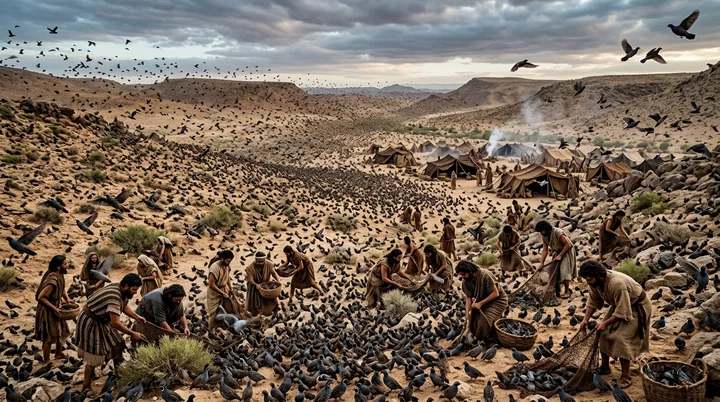
And he called the name of that place Kibroth-hattaavah: because there they buried the people that lusted.
Translations
And he called the name of that place Kibrothhattaavah: because there they buried the people that lusted.
King James Version, KJV Cambridge Paragraph Bible, Webster Bible
And he called the name of that place Kibroth-hattaavah: because there they buried the people that lusted.
And the name of that place was called Kibroth-hattaavah: because there they buried the people that lusted.
And the name of that place was called Kibroth-hattaavah, because there they buried the people that lusted.
and [one] calleth the name of that place Kibroth-Hattaavah, for there they have buried the people who lust.
And they called the name of that place Kibroth-hattaavah; because there they buried the people who lusted.
And the name of that place was called Kibroth-hattaavah—because there, they buried the people who had lusted,
Berean Standard Bible, Majority Standard Bible
So they called that place Kibroth-hattaavah, because there they buried the people who had craved other food.
The name of that place was called Kibroth Hattaavah, because there they buried the people who lusted.
So that place was named Kibroth-hattaavah; because there they put in the earth the bodies of the people who had given way to their desires.
So the name of the place was called, Kibroth-hattaauah: for there they buried the people that fell a lusting.
Pictures
Cross-references
- Psalms 106:14-15
But lusted exceedingly in the wilderness, and tempted God in the desert.
Israel’s wilderness craving brings God’s response and its harmful consequences.
- 1 Corinthians 10:6
Now these things were our examples, to the intent we should not lust after evil things, as they also lusted.
Israel’s wilderness craving is an example warning against lusting after evil things.
- Psalms 78:29-31
So they did eat, and were well filled: for he gave them their own desire;
Israel receives the meat it craves, then faces judgment.
- Exodus 16:3
And the children of Israel said unto them, Would to God we had died by the hand of the LORD in the land of Egypt, when we sat by the flesh pots, and when we did eat bread to the full; for ye have brought us forth into this wilderness, to kill this whole assembly with hunger.
Israel recalls Egypt’s food and longs for it in the wilderness.
- Numbers 11:4-6
And the mixt multitude that was among them fell a lusting: and the children of Israel also wept again, and said, Who shall give us flesh to eat?
Israel craved meat and rejected manna, leading to deaths in the wilderness.
- 1 Corinthians 10:11
Now all these things happened unto them for ensamples: and they are written for our admonition, upon whom the ends of the world are come.
Israel’s recorded wilderness history serves as a warning for later believers.
- Exodus 16:4
Then said the LORD unto Moses, Behold, I will rain bread from heaven for you; and the people shall go out and gather a certain rate every day, that I may prove them, whether they will walk in my law, or no.
God provided manna from heaven, a wholesome food Israel later rejected while lusting for flesh.
- Numbers 11:18-20
And say thou unto the people, Sanctify yourselves against to morrow, and ye shall eat flesh: for ye have wept in the ears of the LORD, saying, Who shall give us flesh to eat? for it was well with us in Egypt: therefore the LORD will give you flesh, and ye shall eat.
God granted their demand for meat, warning that their craving would bring judgment.
- Psalms 78:18
And they tempted God in their heart by asking meat for their lust.
Israel craves meat, provoking God’s anger.
- Numbers 11:19-20
Ye shall not eat one day, nor two days, nor five days, neither ten days, nor twenty days;
Israel’s demanded flesh brought loathing and judgment upon them.
- Psalms 78:27-28
He rained flesh also upon them as dust, and feathered fowls like as the sand of the sea:
God sent flesh into the camp in response to the people’s demand.
- Hebrews 3:17-19
But with whom was he grieved forty years? was it not with them that had sinned, whose carcases fell in the wilderness?
Israel’s wilderness disobedience and unbelief kept them from entering God’s rest.
- Psalms 105:40
The people asked, and he brought quails, and satisfied them with the bread of heaven.
identifies the first giving of quails
- Exodus 16:13
And it came to pass, that at even the quails came up, and covered the camp: and in the morning the dew lay round about the host.
The first quail provision contrasts with the later quails linked to lust.
- Numbers 11:22
Shall the flocks and the herds be slain for them, to suffice them? or shall all the fish of the sea be gathered together for them, to suffice them?
Moses turns to flocks and herds, proving prior prohibition
- Psalms 95:8-11
Harden not your heart, as in the provocation, and as in the day of temptation in the wilderness:
It recalls Israel’s rebellion and exclusion from the land.
- Deuteronomy 12:20
When the LORD thy God shall enlarge thy border, as he hath promised thee, and thou shalt say, I will eat flesh, because thy soul longeth to eat flesh; thou mayest eat flesh, whatsoever thy soul lusteth after.
Later permission to eat meat according to desire contrasts with the earlier episode.
- Psalms 78:24-25
And had rained down manna upon them to eat, and had given them of the corn of heaven.
God provided Israel with manna, food from heaven.
Commentary
Each commentary is drawn from primary sources: the writings of Ellen G. White and Adventist pioneers and periodicals. Each commentary is separate. Its own words are not a quotation; follow the references to read the source passages.
Ellen G. White
16 sources
Kibroth-hattaavah means the graves of craving, for there those who lusted were buried.CH 141.1–2MH 311.2CTBH 43.1–44.2 After bringing Israel out of Egypt God withheld flesh in great measure and fed them with the most healthful food, bread from heaven and water from the rock, to prove them and lead them in a healthy way.CH 111.1–2HLT1 52.3–53.1UTFF 5.1 They were not satisfied but despised the heaven-given food and lusted with murmuring for the flesh of Egypt, so in anger He granted abundant quails to gratify them until a plague struck great numbers dead while the meat was still between their teeth.CH 111.1–2HLT1 52.3–53.1SG4 18.1CH 141.1–2 Indulged appetite overthrew reason and brought disease and death, leading them into corrupt passions and grievous sins that provoked His wrath.CH 111.1–2SG4 18.1MH 311.2CTBH 43.1–44.22RED 38.1–3 Satan overthrew them at this same point of appetite on which Adam fell and Christ was tempted, and their burial place stands as a warning to deny and restrain appetite in obedience to God and live temperately.CH 141.1–2HRP 16.2–19.1LC1 136.22RED 38.1–32RED 32.2
Name and History
The place was called Kibroth-hattaavah, meaning the graves of craving, because there the people who lusted were buried.CH 141.1–2MH 311.2CTBH 43.1–44.2ST Jun 13, 1916LC1 136.2 The name marks the burial ground of those who lusted for flesh, whose craving showed they valued earthly food above spiritual things and kept them from attaining God's purpose for them.CTBH 118.1–119.1ST Jun 13, 1916LC1 136.2
God had led Israel out of Egypt in victory into the wilderness to prove and try them and to educate and train them in His way.CH 111.1–2HLT1 52.3–53.1UTFF 5.1 He withheld flesh in great measure, though He did not forbid it, and gave instead the most healthful food, bread and manna rained from heaven, angels' food, with the purest water from the rock.CH 111.1–2HLT1 52.3–53.1Lt 224, 1908, par. 6–7 He covenanted to take them as His peculiar treasure and preserve them from disease if they would obey His voice and keep His commandments in all things, and He was leading them toward a healthy way of life.HLT1 52.3–53.1Lt 3, 1884, par. 3 The diet He gave was sufficient, for the flesh they demanded was not essential for health.UTFF 5.1
Yet the people were not satisfied but despised and loathed the heaven-given food.CH 111.1–2HLT1 52.3–53.1 With mourning and murmuring they lusted for the fleshpots of Egypt and the flesh they had eaten there, discontent with the manna God had provided.MH 311.2CTBH 43.1–44.2Lt 224, 1908, par. 6–7 They preferred slavery and even death to being deprived of meat, rejecting God's restrictions and what was for their good.CH 111.1–2HLT1 52.3–53.1SG4 18.1 In this they rejected what was for their good and valued earthly food above spiritual things.SG4 18.1CTBH 118.1–119.1ST Jun 13, 1916
In anger at their insistence God granted their demand and gave quails in abundance and animal food to gratify their lustful appetites.HLT1 52.3–53.1CH 141.1–2Lt 224, 1908, par. 6–7 The grant was only a brief concession, given even though flesh was not essential for health.MH 311.2UTFF 5.1 He left them to eat till gluttony, and the flesh thus granted became a curse, with His curse accompanying it.CH 111.1–2CH 141.1–2CTBH 118.1–119.1 When the people reaped the result of their transgression He did not work a miracle to preserve life.Lt 224, 1908, par. 6–7
A plague struck from their gluttony, and great numbers, thousands, died and were buried there.CH 111.1–2CH 141.1–2MH 311.2CTBH 43.1–44.2 They died while the meat they had lusted for and desired was still between their teeth, the most guilty being struck down when they tasted it.HLT1 52.3–53.1SG4 18.1CH 141.1–2 Their use of the granted food brought disease and death to thousands, and their indulgence brought judgment upon them.MH 311.2CTBH 43.1–44.2UTFF 5.1 So nearly all who left Egypt died in the wilderness and did not enter Canaan.LC1 136.2
Lesson and Warning
Indulged appetite overthrows reason and brings disease and death, for the place was called graves of craving because those who lusted after flesh were buried there.CH 111.1–2MH 311.2CTBH 43.1–44.22RED 38.1–3 Discontent with manna led to demand for Egypt's food, and the animal food granted in brief concession was eaten till gluttony produced plague, so thousands died with the meat still between their teeth, the most guilty when they tasted it.CH 111.1–2SG4 18.1MH 311.2CTBH 43.1–44.2Lt 224, 1908, par. 6–7 God did not work a miracle to preserve life from the result of transgression, but left them to reap what gratifying appetite and rebelling brought.CH 111.1–2SG4 18.1Lt 224, 1908, par. 6–7 The same point overcame Adam and destroyed the flood generation and was the point on which Christ was tempted.2RED 38.1–3
Through indulgence of appetite under Satan's direct temptation the people were led to commit grievous sins that provoked God by iniquity and awakened His wrath and judgment against them.2RED 38.1–32RED 32.2ST Jun 25, 1874 Their craving became lustful appetite and corrupt passions, leading them to reject what was for their good.SG4 18.12RED 38.1–32RED 32.2 Those who lusted died in the wilderness and were buried at Kibroth-hattaavah.SG4 18.12RED 32.2ST Jun 25, 1874
Satan overthrew Israel in the wilderness by appealing to appetite until appetite controlled them.LC1 136.22RED 38.1–32RED 32.2 Nearly all who left Egypt died in the wilderness and did not enter Canaan, even though the Son of God Himself was with Moses and Joshua to lead His chosen people there.LC1 136.22RED 32.2 Satan boasted of that failure as proof his power could resist and defeat the Son of God.2RED 32.2
The burial place stands as a warning against disregarding God's light, refusing to deny and restrain appetite in obedience to God, murmuring against His requirements, and choosing one's own way in unbelief and rebellion.CH 141.1–2HRP 16.2–19.1CTBH 118.1–119.1 Refusing to deny appetite forfeits intended blessings and brings harm, for the flesh granted became a curse, and craving earthly food above spiritual things kept them from attaining God's purpose for them.CH 141.1–2CTBH 118.1–119.1ST Jun 13, 1916 Their fate teaches temperance in eating and drinking and obedience to health reform, which gives clearer minds to discern what affects the salvation of the soul.Lt 224, 1908, par. 6–7
Sources
Pioneers and periodicals
42 sources
Kibroth-hattaavah means the graves of lust or craving, named because those who lusted for flesh were buried there.ST May 6, 1889RH Feb 28, 1907ST May 6, 1913 At the second giving of quails the mixed multitude and Israel grew weary of manna and craved the flesh and foods of Egypt, preferring a stimulating, feverish diet to the simple, wholesome food God provided.ST Apr 22, 1889RH Mar 12, 1867ST Nov 29, 1883 God let the quails fall a day's journey on each side of the camp flying about three feet high within reach, and the people ate greedily until a great plague struck down thousands with disease and leanness of soul.ST Feb 17, 1904RH Jan 11, 1915RH Feb 28, 1907ST Mar 2, 1915ST Jan 23, 1896 His plan was a vegetable dietary suited to their needs, and flesh was granted only as a concession to murmuring that brought disease and death and kept them from the physical, mental, and spiritual strength He intended.ST Jun 13, 1916RH Jun 25, 1914ST Mar 3, 1914RH Oct 6, 1904 The unpleasant name remains as a lasting warning not to lust after evil things, indulge perverted appetite, or look back to Egypt, lest longing for earth above heaven bring the same sorrow and loss.ST May 6, 1889ST Apr 22, 1889ST May 6, 1913ST Mar 2, 1915RH Mar 12, 1867
Name and Historical Setting
The place received the name Kibroth-hattaavah because those who lusted were buried there, the name meaning the graves of lust or the graves of craving.ST May 6, 1889RH Feb 28, 1907ST May 6, 1913ST Jan 23, 1896RH Jan 29, 1914 The unpleasant name was to preserve the memory of the sin and its deadly result and ever to remind Israel of it unto humility.ST May 6, 1889ST May 6, 1913 Those buried there were so wedded to their unholy lusts that they yielded everything to them and were destroyed, every faculty corrupted by unlawful lust until fitted only for destruction, after persistent demand was granted but ended in disaster under a great plague and terrible mortality.ST May 6, 1889RH Feb 28, 1907RH Mar 12, 1867ST Jan 23, 1896RH Jan 29, 1914
The verse belongs to the time when Moses complained of his excessive burdens and was relieved by gathering seventy elders of Israel to the tabernacle, where the Lord came down and took of the Spirit upon Moses to endow the whole company.RH Mar 22, 1870 That endowment testifies to the gifts and graces possessed by Moses, yet it left him with great loss of that divine help.RH Mar 22, 1870 It shows that when God calls to great labors He gives great grace, and that it is wiser cheerfully to bear heavy burdens than to meet such loss.RH Mar 22, 1870
The burial was at the second giving of quails, a year after the first giving in the Wilderness of Sin where quails came in the evening before manna fell in the morning.ST Apr 22, 1889 The second giving came after the mixed multitude, an amalgamation of Egyptian and Israelite blood who had left Egypt through fear, grew weary of manna and fell a lusting for fish, cucumbers, melons, leeks, onions, and garlic.ST Apr 22, 1889 Those were strong pungent plants regarded as sacred and used in licentious idolatrous feasts to stimulate appetite and overindulgence and to excite the baser passions.ST Apr 22, 1889 Their lust meant continually looking back and desiring Egypt, letting fancied hardships eclipse the promised land of milk and honey, doubting both God's promises of the land and His power to supply present food, so God gave their request but sent leanness of soul.ST Apr 22, 1889
The Lord brought the quails from the sea to eat for a full month and let them fall by the camp a day's journey on each side, over a territory about forty miles across.RH Jan 11, 1915 The words two cubits high mean the birds flew about three feet high upon or above the face of the earth, within reach where anyone could take as many as he chose, not packed solid three feet deep on the ground over the whole country.RH Jan 11, 1915 The people ate the quail greedily and were buried with the flesh they clamored for still unchewed, leaving unuttered the prayers that would have brought blessing.ST Feb 17, 1904RH Jul 25, 1907RH Aug 15, 1912 Both Israelites by blood and the mixed multitude lie there in the desert way; they talked of the promised land but lived for the present day, dragging reluctant feet while their hearts stayed behind in Egypt.RH Aug 15, 1912
This came after several months of abstinence from flesh, though they had very much cattle around them, when they wept for flesh because God had prohibited its use, having planned for them a life with no associations of death.RH Feb 19, 1901 When God finally said He would give them flesh they turned at once to their flocks and herds, and God gave them their choice to die in the wilderness, so that in gratifying their lust they died and were buried there under ensuing plague as judgment for lusting.ST Feb 17, 1904RH Feb 19, 1901 The account belongs to the wanderings and murmurings of the children of Israel, showing the strict order God kept among His people so that in carrying it out they would form systematic character.ST Mar 4, 1913
Sin of Lusting
Their lust was a wicked craving for flesh and meat and quail beyond the manna God had given, and murmuring for flesh is the sad lesson of the account.RH Mar 12, 1867ST Nov 29, 1883ST Feb 20, 1912RH Apr 3, 1879RH Jun 20, 1871 That desire for flesh was sinful, and indulgence of appetite led to grievous sin that brought wrath, so those who lusted died and were buried there as a warning to later generations against the same desire.ST Jun 25, 1874RH Mar 12, 1867ST Nov 29, 1883RH Jun 20, 1871 Receiving what they demanded did not benefit them, for they would have been better off with the simple diet provided, and the painful outcome was meant as a lasting warning against murmuring and distrust of divine guidance.ST Nov 29, 1883RH Jun 20, 1871
They lusted for the food of Egypt — fish, cucumbers, melons, leeks, onions, and garlic.ST Apr 22, 1889 Those were strong pungent plants regarded as sacred and used in licentious idolatrous feasts to stimulate appetite and overindulgence and to excite the baser passions.ST Apr 22, 1889 Their appetite for Egypt's food was stronger than reason, so that they preferred it to the food God provided.RH Apr 17, 1879ST Feb 14, 1911 They complained that they could not live like the world, and longed for the food of Egypt instead of being content with the simple but wholesome and nourishing diet given them.RH Apr 17, 1879RH Jul 10, 1916 They murmured against God and treated the manna, which testified to the Sabbath, as an ordinary event.RH Jan 7, 1862
Their lust meant continually looking back and desiring Egypt.ST Apr 22, 1889 They let fancied hardships and lusts eclipse the promised land of milk and honey.ST Apr 22, 1889 In this they doubted God's promises of the land and doubted His power to supply present food, failing to trust that He knew best how to provide.ST Apr 22, 1889RH Jun 20, 1871
The craving is called lust.RH Apr 3, 1879 With peevishness, fretfulness, and murmuring under trial it is viewed gravely by God.RH Jun 26, 1860 It showed forgetfulness of God and rebellion despite deliverance from Egypt, and their graves illustrate humanity's deep unwillingness to obey.RH Jan 20, 1863
Judgment That Followed
Their persistent demand was granted but ended in disaster, for after they ate the quail greedily a great plague followed as judgment for lusting after flesh.ST Feb 17, 1904RH Feb 28, 1907ST Mar 2, 1915ST Aug 31, 1915ST Mar 18, 1903 The place was named Kibroth-hattaavah, meaning the graves of craving, because the people who lusted for flesh and meat were buried there after the Lord struck them down.ST Feb 17, 1904RH Feb 28, 1907ST Mar 2, 1915ST Aug 31, 1915ST Mar 18, 1903 Thousands who lusted were killed and buried there, many dying in the plague, and their deaths marked the judgment that followed their craving for meat and their distrust of God's care.ST Feb 17, 1904RH Feb 28, 1907ST Mar 2, 1915ST Aug 31, 1915ST Mar 18, 1903 Their fate shows the awful consequence of lust and of perverted appetite, making their craving an example of lusting after evil things.ST Feb 17, 1904ST Mar 2, 1915ST Aug 31, 1915 Their demand was granted, but eating the flesh brought leanness of soul.RH Jul 10, 1916RH Dec 21, 1905ST Aug 31, 1915
Eating it brought corruption and illness to bodies accustomed to manna, for the quail was given to show that their desire for other food beyond manna was wrong.ST Jan 23, 1896RH Dec 21, 1905RH Apr 9, 1867 Their craving was granted but it brought disease, and God gave them their desires but sent leanness into their soul.RH Jul 10, 1916RH Dec 21, 1905ST Aug 31, 1915 The mortality that buried them at Kibroth-hattaavah, meaning the graves of lust, followed their continued indulgence in flesh eating, with the flesh described as bringing cholera.ST Jan 23, 1896RH Dec 21, 1905RH Apr 9, 1867 They had complained at God's dealings and longed for the food of Egypt instead of being content with the simple but wholesome and nourishing diet He gave them.RH Jul 10, 1916RH Apr 9, 1867RH Mar 19, 1867
Their continued murmuring was followed by the withdrawal of God's protecting care, and they died in the wilderness without entering the promised land.RH Apr 17, 1879RH Mar 19, 1867 After rejecting manna and lusting for the flesh they had eaten in Egypt, the people received quail, became sick, and suffered judgment, which teaches that the manna was better for them.RH Apr 17, 1879RH Mar 19, 1867 Of the many adults who left Egypt only two entered the promised land, for only Caleb and Joshua with the children survived.RH Apr 17, 1879RH Mar 19, 1867 The plague and resulting deaths after greedily eating the quails were wrongly viewed by the people as Moses's fault for failing to warn them of the outcome.RH Jul 25, 1907
God's Design in Diet
God's original and eternal plan was a vegetable dietary, and in leading Israel out of Egypt toward Canaan He rained bread from heaven for them.RH Jun 25, 1914ST Mar 3, 1914 Animal food in the desert was permitted only as a result of repining and murmuring, a concession to complaint and insistence, not God's plan, and granting what they wanted did not mean His desire for them had changed.RH Jun 25, 1914ST Mar 3, 1914RH Dec 21, 1905 His evident intention after they left Egypt was to remove flesh from their diet, withholding it for their good though He could have given flesh as easily as manna.ST Mar 3, 1914 He did so to supply food better suited to their wants than the feverish diet of Egypt, to bring perverted appetite into a healthy state to enjoy the fruits of the earth first provided for man in Eden, and to show that manna was better for them, so that they would have been better off with the simple diet He had provided.ST Nov 29, 1883ST Mar 3, 1914RH Mar 19, 1867 The quail was given to show that their desire for other food beyond manna was wrong, and eating it brought corruption, sickness, and judgment to bodies accustomed to manna, with loss so great that of the many adults who left Egypt only two entered the promised land.RH Apr 9, 1867RH Mar 19, 1867
While they lived on the wholesome diet prescribed there was not a diseased, feeble, or infirm one among that vast multitude, which proved the diet suited their needs.ST Mar 3, 1914RH Feb 4, 1915 Willingness to deny appetite in obedience kept feebleness and disease unknown among them, for obedience to the laws of nature and of healthful living keeps the body free from pain and disease, while disobedience brings disease and death.ST Mar 3, 1914RH Feb 4, 1915 When they murmured and demanded flesh thousands died and were buried, suffering the results of intemperance because they would not be satisfied with what was most beneficial and insisted on what was not for their greatest good.ST Mar 3, 1914RH Feb 4, 1915 After several months of abstinence from flesh, though they had very much cattle around them, they wept for flesh because God had prohibited its use, having planned for them a life with no associations of death.RH Feb 19, 1901 When He finally said He would give them flesh they turned at once to their flocks and herds, and He gave them their choice to die in the wilderness, so that in gratifying their lust they died and were buried there.RH Feb 19, 1901
Their demand for flesh was granted only briefly, but its use brought disease and death to thousands as they gorged themselves until they died, and persistent longing for the flesh pots ended in death.ST Jun 13, 1916RH Oct 6, 1904 Their craving showed that they valued earthly food above spiritual things and kept them from attaining God's purpose for them.ST Jun 13, 1916 Craving for animal food was part of the rebellion they were urged to abandon, for flesh eating hindered spiritual advancement and worked against the physical, mental, and moral strength God intended for His people.RH Nov 2, 1905
Warning for Today
The name itself was left unpleasant on purpose, graves of lust for the burial place of those who lusted for flesh, so that its deadly result would ever remind Israel of the sin and lead to humility.ST May 6, 1889ST May 6, 1913 Those buried there had become so wedded to unholy lusts that they yielded everything to them and were destroyed.ST May 6, 1889 Unlawful lust had debased and corrupted every faculty and power of their being until the man himself became evil and fitted only for destruction.ST May 6, 1889 Their deaths therefore make the episode a standing warning to take heed in time and not lust after evil things as they lusted.ST May 6, 1889ST Mar 2, 1915RH Mar 12, 1867RH Dec 21, 1905ST Aug 31, 1915
Their craving was granted but brought disease and leanness of soul, and a great plague killed thousands who lusted for meat.ST Mar 2, 1915RH Dec 21, 1905ST Aug 31, 1915 Their desire for flesh was sinful, and their burial at Kibroth-hattaavah warns later generations against the same desire.RH Mar 12, 1867 The account warns not to crave evil things and not to presume that standing safely guards against falling.RH Jun 26, 1860RH Feb 28, 1907 Peevishness, fretfulness, and murmuring under trial in the wilderness trials are sins viewed gravely by God.RH Jun 26, 1860
God gave the craving people what they wanted, and they gorged themselves until they died, so that persistent longing for the flesh pots ended in death.RH Oct 6, 1904 The murmuring people yielded to the lusts of the flesh by indulging a perverted appetite in unnatural, unnecessary, and injurious foods and drinks, and were cut off to suffer the penalty of their own folly.RH May 13, 1915 Gratifying a perverted appetite rather than practicing self-denial brings sorrow and death and forfeits favor. The same applies to present Israel who indulge appetite in the same way.RH May 13, 1915
Those who fully trust in God and live a life of self-denial seeking the glory of God rather than personal or selfish advantage will be tenderly provided for.RH May 13, 1915 Those faithful in health reform will be faithful through the seven last plagues.RH May 13, 1915 The quail episode taught that God knew best how to provide, and its painful outcome was meant as a lasting warning against murmuring and distrust of His guidance.RH Jun 20, 1871 The craving and indulgence of the lusters stand in contrast to Daniel's abstemiousness, which was more plainly blessed.RH Jan 14, 1873
The place stands as a reminder that God's dealings with the forefathers show the same principles He uses today.RH Feb 28, 1907 His long-suffering mercy does not cancel His justice, and He does not clear the guilty.RH Feb 28, 1907 While Israel lived on the wholesome diet prescribed there was not one feeble person in that vast multitude, but when they murmured and demanded flesh thousands died and were buried.RH Feb 4, 1915 Disobedience to the laws of nature and of healthful living brings disease and death, while obedience keeps the body free from pain and disease.RH Feb 4, 1915 The same promise is held out to present Israel that He will allow no disease to come upon them if they hearken diligently to the instruction given on healthful living, so that there need be no sick or feeble person today.RH Feb 4, 1915
One who starts the Christian life and continually looks back with longing for things left behind repeats Israel's looking back to Egypt.ST Apr 22, 1889 Such looking back shows a divided, double-minded, unstable heart lacking faith and consecration, prizing earth above heaven and temporal things above eternal.ST Apr 22, 1889 Seeking earthly prosperity in another way will always bring leanness of soul instead of eternal life.ST Apr 22, 1889 Both Israelites by blood and the mixed multitude lie in the desert way at the graves of lust, buried with the flesh they clamored for still unchewed, leaving unuttered the prayers that would have brought blessing; they talked of the promised land but lived for the present day, dragging reluctant feet while their hearts stayed behind in Egypt.RH Aug 15, 1912 The same frenzied, blind shouting continues today among those whose hearts remain in Egypt, and the land of promise will not draw near until the cries of the proud are stilled and the graves of lust are filled.RH Aug 15, 1912
Sources