Numbers 15:39
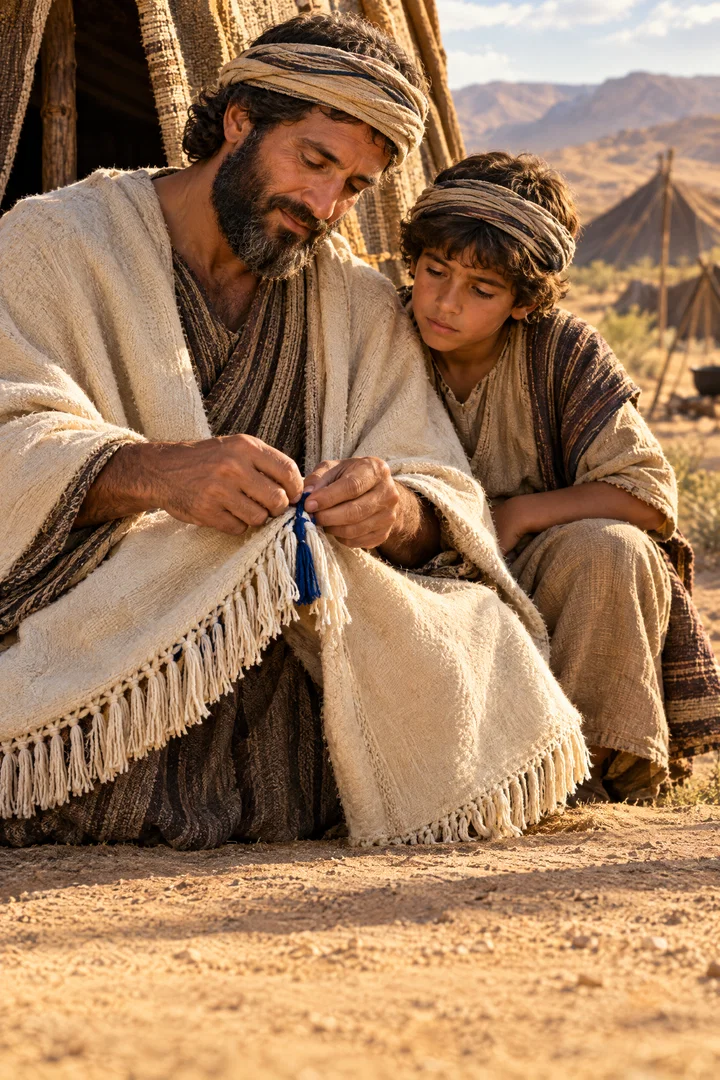
And it shall be unto you for a fringe, that ye may look upon it, and remember all the commandments of the LORD, and do them; and that ye seek not after your own heart and your own eyes, after which ye use to go a whoring:
Translations
And it shall be to you for a fringe, that you may look on it, and remember all the commandments of the LORD, and do them; and that you seek not after your own heart and your own eyes, after which you use to go a whoring:
And it shall be unto you for a fringe, that ye may look upon it, and remember all the commandments of the LORD, and do them; and that ye seek not after your own heart and your own eyes, after which ye use to go a whoring:
and it shall be unto you for a fringe, that ye may look upon it, and remember all the commandments of the Lord, and do them; and that ye seek not after your own heart and your own eyes, after which ye use to go a whoring:
And it shall be to you for a fringe, that ye may look upon it, and remember all the commandments of the LORD, and do them; and that ye seek not after your own heart and your own eyes, after which ye use to go astray:
and it shall be unto you for a fringe, that ye may look upon it, and remember all the commandments of the LORD, and do them; and that ye go not about after your own heart and your own eyes, after which ye use to go a whoring:
and it shall be unto you for a fringe, that ye may look upon it, and remember all the commandments of Jehovah, and do them; and that ye follow not after your own heart and your own eyes, after which ye use to play the harlot;
and it hath been to you for a fringe, and ye have seen it, and have remembered all the commands of Jehovah, and have done them, and ye search not after your heart, and after your eyes, after which ye are going a-whoring;
and it shall be unto you for a tassel, that ye may look upon it, and remember all the commandments of Jehovah, and do them; and that ye seek not after [ the lusts of] your own heart and your own eyes, after which ye go a whoring;
so shall they serve you as fringes, and when ye see then, then shall ye call to mind all the commandments of Yahweh, and shall do them,—and shall not spy out, after your own hearts, and after your own eyes for things, after which, ye, are ready to go unchastely away:
Berean Standard Bible, Majority Standard Bible
These will serve as tassels for you to look at, so that you may remember all the commandments of the LORD, that you may obey them and not prostitute yourselves by following your own heart and your own eyes.
It shall be to you for a fringe, that you may see it, and remember all the LORD’s commandments, and do them; and that you don’t follow your own heart and your own eyes, after which you used to play the prostitute;
So that, looking on these ornaments, you may keep in mind the orders of the Lord and do them; and not be guided by the desires of your hearts and eyes, through which you have been untrue to me:
And ye shall haue the fringes, that when ye looke vpon them, ye may remember all the commandemets of the Lord, and do them: and that ye seeke not after your own heart, nor after your owne eyes, after the which ye go a whoring;
Douay-Rheims (Challoner revision)
That when they shall see them, they may remember all the commandments of the Lord, and not follow their own thoughts and eyes going astray after divers things,
Pictures
Cross-references
- Matthew 23:5
But all their works they do for to be seen of men: they make broad their phylacteries, and enlarge the borders of their garments,
Enlarged garment borders turn God’s command into conspicuous display for honor.
- Deuteronomy 22:12
Thou shalt make thee fringes upon the four quarters of thy vesture, wherewith thou coverest thyself.
Both texts command fringes on garments.
- Deuteronomy 6:8
And thou shalt bind them for a sign upon thine hand, and they shall be as frontlets between thine eyes.
Both describe binding the law on the hand and between the eyes as a reminder.
Commentary
Each commentary is drawn from primary sources: the writings of Ellen G. White and Adventist pioneers and periodicals. Each commentary is separate. Its own words are not a quotation; follow the references to read the source passages.
Ellen G. White
15 sources
God required a simple fringe with a ribbon of blue on the border of the garments, that looking upon it Israel would remember and do all His commandments and not follow their own heart and eyes into unfaithfulness, and that they would be distinguished and separated as His peculiar, holy people from the idolatrous nations around them.1T 524.1–2HTL6 58.2TBC1872 60.1 It kept continually before them in brief the ten commandments, their duty to love God supremely and their neighbor as themselves, and that He had miraculously delivered them from Egypt to serve Him in obedience to His holy law.1T 524.1–2TBC1872 60.12SP 74.1ST Mar 1, 1883RH Mar 4, 1873 The command was perverted when they departed from primitive purity and simplicity and made broad their phylacteries and enlarged the borders and added to the words specified, using outward display of devotion while heart and life were contrary to the law.2SP 74.1ST Mar 1, 1883RH Mar 4, 1873ST Nov 1, 1877 The literal blue mark is not now required on garments, but the same requirement still calls God's people to come out from the world and forsake idolatrous practices, with simple, modest, healthful, distinctive dress that glorifies God and answers the same purpose of separating His commandment-keeping people as the ribbon of blue did.1T 524.1–2HTL6 58.2TBC1872 60.1RH Jan 23, 1900 Not walking after one's own eyes and heart means turning from living to please self to honoring God and following the Redeemer, refusing to be led by sight and feeling into selfish gratification and worldly mingling, for the unsanctified heart and unguarded eyes lead away from God whether in indulgence, in business speculation, or in despising correction.1T 524.1–2Lt 47a, 1874, par. 10Ms 1, 1853, par. 18Lt 32, 1888, par. 10Lt 5, 1879, par. 15
Fringe's Form and Purpose
God ordered a very simple arrangement of dress, a fringe with a ribbon of blue set in the border of the garments.1T 524.1–2HTL6 58.2TBC1872 60.1RH Jan 23, 1900 The fringe bore a brief reminder of the law, with words embroidered on it expressing in short the ten commandments.2SP 74.1ST Mar 1, 1883RH Mar 4, 1873 Looking upon it was to bring to mind all the commandments of the LORD and to do them in obedience to the principles of His holy law.1T 524.1–2TBC1872 60.12SP 74.1RH Jan 23, 1900Lt 32, 1888, par. 10 It was to recall that they were God's commandment-keeping people who keep the law of ten commandments, that He had wrought in a miraculous manner to bring them from Egyptian bondage to serve Him and to be a holy people unto Him for He is the Lord their God, and that they were to be holy unto God.1T 524.1–2TBC1872 60.1HRP 16.2–19.1
It was meant to keep continually before them their duty to love God supremely and their neighbor as themselves.2SP 74.1ST Mar 1, 1883RH Mar 4, 1873ST Nov 1, 1877 They were not to seek after or serve their own heart and their own eyes, after which they used to go a whoring, for their hearts are unsanctified and their eyes lead them to depart from God and unite with the world to follow their own desires and sight.1T 524.1–2TBC1872 60.1RH Jan 23, 1900HRP 16.2–19.1 In this they were not to imitate the idolatrous nations, mingle with them, unite in their drunken feasts, or eat swine's flesh and luxurious food detrimental to health.1T 524.1–2
It was to distinguish and separate them from the idolatrous nations around them and to signify that they were God's peculiar people who acknowledged the Creator as their God and obeyed His ordinances and commandments, so as to preserve their peculiarity.1T 524.1–2HTL6 58.2TBC1872 60.1RH Jan 23, 19003T 170.3–171.1 An Israelite was known as such as soon as seen, for God through simple means distinguished him as His, so that all who looked upon them might say these are they whom God brought out of the land of Egypt.1T 524.1–2 The command shows that the great God, the Maker of heaven and earth, condescended to the particulars of dress and specified the style Israel should wear, proving that dress comes under God's notice.HTL6 58.2TBC1872 60.1 The ribbon of blue itself had no direct influence on health, only as God would bless them by obedience, but it kept in memory the high claims of Jehovah.1T 524.1–2
Corrupted Into Outward Show
The blue ribbon was given as a simple reminder to obey, to keep continually before the mind the duty to love God supremely and the neighbor as oneself, not as a badge to display personal holiness.2SP 74.1ST Nov 1, 1877 To make its outward signs larger while living against the law contradicted its very purpose.2SP 74.1ST Nov 1, 1877 Enlarging the border or adding words while the life was contrary to God's law turned what was meant for remembrance into mere outward show.2SP 74.1ST Nov 1, 1877
The command was perverted when the people departed from primitive purity and simplicity until their works became directly contrary to the law of God.2SP 74.1ST Mar 1, 1883RH Mar 4, 1873 The farther they departed, the more particular they became to make broad their phylacteries and enlarge the borders of their garments.ST Mar 1, 1883RH Mar 4, 1873ST Nov 1, 1877 They added to the words God had specified for the ribbon of blue, which had expressed in short the ten commandments.ST Mar 1, 1883RH Mar 4, 1873 By outward appearance they sought to express exalted devotion and sanctity, while their hearts and lives and works stood in the widest contrast and did not conform to the will and word of God.2SP 74.1ST Mar 1, 1883RH Mar 4, 1873
Distinct Obedience Still Required
The literal blue mark itself is no longer required upon garments, though dress still comes under divine notice.HTL6 58.2RH Jan 23, 1900 The same command still calls God's people to come out from the world and forsake idolatrous practices and not to follow their own hearts or eyes, because they have to a great extent lost their peculiarity and have gradually patterned after the world and mingled with them until in many respects they have become like them, which is displeasing to God.1T 524.1–2 They were not to imitate idolatrous nations, mingle with them, unite in drunken feasts, or eat swine's flesh and luxurious food detrimental to health, but to remain distinct as commandment-keeping people brought in a miraculous manner from Egyptian bondage to serve Him and be holy unto Him.1T 524.1–2 Their dress in this age must still be distinct from that of the world, must glorify and honor God, and by a simple, modest, convenient and healthful style must be an example that rebukes the pride, vanity and extravagance of worldly, pleasure-loving professors and sets them apart from it.HTL6 58.2TBC1872 60.1RH Jan 23, 1900 The simple, modest, convenient and healthful style advocated answers the same purpose now as the ribbon of blue did for Israel, preserving peculiarity and distinguishing a people who acknowledge the Creator as their God and obey His ordinances and commandments.TBC1872 60.1
Reform in dress now answers the same purpose of distinguishing and separating God's commandment-keeping people from the world, and is essential to physical and mental health as well as to distinguish them as His peculiar people and peculiar treasure.1T 524.1–23T 170.3–171.1HRP 16.2–19.1 It carries a cross that is needed as a test, so those who love the sacred truth that separates them from the world show separation by accepting it, while the proud and those who have no love for it show it by treating it with indifference or contempt.3T 170.3–171.1 Indifference to God's light and choosing one's own course repeats Israel's disobedience, which remembered and obeyed God's commandments rather than following one's own desires and sight.HRP 16.2–19.1 Israel could have pleaded excuses against wearing the required ribbon of blue even more valid than excuses against wearing plain, healthful, distinctive dress now.TBC1872 64.2–65.2 The real reason for refusing such a God-required dress is that it is inconvenient and mortifies pride, and all excuses against it vanish when the style becomes fashionable.TBC1872 64.2–65.2
Not walking after one's own eyes and heart means refusing to follow the sight of the eyes and the inclination of feelings into selfish gratification, turning square about from living to please self to honoring God and following the Redeemer instead.Lt 47a, 1874, par. 10 Jesus is an unfailing source of strength to overcome defects of character at once with no moment to lose, because delay risks losing heaven.Lt 47a, 1874, par. 10 To follow what the eyes desire is disobedience to God that only nominally acknowledges His instruction while resisting its conclusion and effect, and doing the will of God means remembering all the commandments of the LORD and doing them in obedience to the principles of His holy law.Ms 1, 1853, par. 18Lt 32, 1888, par. 10 Counseling the erring that they may follow their own desire and human counsel and still be doing God's will concedes what God has forbidden and opposes His law.Lt 32, 1888, par. 10 Unwise sympathy from relatives and friends that indulges feeling against God's law turns a soul in the wrong direction, stands directly in the way of God's purposes, leads the reproved to treat sin as a light matter and to despise correction, and withholds the reproof and correction that, if heeded, would lead to hearty confession, true humiliation and reformation, and forgiveness.Lt 32, 1888, par. 10 The sight of the eyes can lead astray and must be guarded against continually, for being led by the eyes in business means seeing hoped-for incomes without seeing outgoes, thinking more conveniences are needed than the business will warrant, and making investments that eat up capital.Lt 5, 1879, par. 15
Sources
Pioneers and periodicals
22 sources
The fringe was a ribbon of blue set in the border of the garment, bearing the words of the law in brief, the duty to love God supremely and one's neighbor as oneself.ST Mar 1, 1883RH Mar 4, 1873ST Nov 1, 1877 Looking upon it was to make the wearer remember all the Lord's commandments and do them, instead of following his own heart and eyes after his own desires, what attracts the sight, and heathen ways.ST Jul 1, 1897RH Feb 17, 1916RH May 30, 1912 It was God's appointed badge to keep Israel holy to Him and distinct and separate from the surrounding nations and from the world.RH Jan 23, 1900ST Jul 1, 1897RH Oct 13, 1904RH Nov 3, 1868ST Jul 1, 1897 The command was perverted when the borders were enlarged and words added to make a show of devotion and virtue, while heart and life did not conform to God's will.ST Mar 1, 1883RH Mar 4, 1873ST Nov 1, 1877ST Jul 1, 1897 The same separating work is now done by Christian dress reform, which calls for a visible difference from worldly pride, vanity, extravagance, and fashion, to be held from principle and not laid aside for convenience.RH Jan 23, 1900RH May 30, 1912RH Mar 5, 1872RH Nov 19, 1872RH Apr 16, 1872
Fringe Meaning and History
God directed Israel to wear a ribbon of blue in the border of the garment, with words of the law embroidered upon it expressing in short the Ten Commandments, the duty to love God supremely and to love one's neighbor as oneself.ST Mar 1, 1883RH Mar 4, 1873ST Nov 1, 1877 Looking upon it was to remind the wearer continually to remember all the Lord's commandments and do them.ST Jul 1, 1897RH Feb 17, 1916ST Jul 1, 1897 It guarded against seeking after one's own heart and one's own eyes, against following one's own desires and impulses and what the eyes find attractive into unfaithfulness, and against adopting heathen customs.ST Jul 1, 1897RH Feb 17, 1916RH May 30, 1912ST Sep 17, 1885ST Jul 1, 1897
The instruction stands in Numbers 15 after Israel murmured for flesh, spoke against Moses, and searched the land with the reports of the spies, and before Korah's rebellion and God's choice of the house of Aaron.ST Feb 20, 1912 In that record Sabbath-breaking is exposed as abhorrent to God, to be listed and reviewed with slander from Numbers 12 and unbelief from Numbers 13-14.RH Feb 24, 1916 The regulation belonged to temporary sanitary or police regulations adapted to Israel in that time and wilderness environment, illustrated by the stoning of the man who in defiance gathered sticks on the Sabbath, and is distinct from the eternal constitution of God's government in the Decalogue.ST Feb 1, 1905
The ordinance applied equally to the stranger who sojourned among Israel as to Israel itself, so that as Israel was so the stranger was before the Lord.RH Oct 1, 1861 Foreign servants bought with money, when circumcised under the Abrahamic covenant, became part of the household during their service, naturalized citizens of the state and members of the congregation, partakers of all its rites and privileges.RH Oct 1, 1861 The stranger dwelling among Israel was to be as one born among them and loved as oneself, alike amenable to the laws and protected by them with Hebrew servants.RH Oct 1, 1861
The command was perverted when the people departed from primitive purity and simplicity and their works became contrary to the law, for the more they departed the more particular they were to make broad their phylacteries, enlarge the borders, and add to the words God had specified.ST Mar 1, 1883RH Mar 4, 1873ST Nov 1, 1877 They used outward appearance to express exalted devotion and sanctity while heart, life, and works did not conform to God's will and word and were in the widest contrast to it, turning the ribbon from a reminder to obey into outward show.ST Mar 1, 1883RH Mar 4, 1873ST Nov 1, 1877 The fault was not simply wearing the commanded garment, for wearing it was commanded by God, but enlarging its borders to display supposed virtue and making human tradition seem like God's command, thereby turning attention from God to people.ST Jul 1, 1897
The garment also pointed to the Messiah, teaching that only through him could Israel receive holiness and righteousness and that his righteousness enabled obedience to God's commandments.ST Jul 1, 1897ST Jul 1, 1897 Wearing the fringe is connected with hope for the soul to be clothed with beauty in the world to come, with deliverance for body, soul, and spirit, and with protection from opponents.ST Jul 1, 1897
Holiness and Dress Today
The fringe was given to be looked upon to remember all the Lord's commandments and to do them, not following one's own heart and eyes into whoring after desire and impulse, that the wearer might be holy to God.ST Jul 1, 1897ST Jul 1, 1897 It belongs among the cleansing truths given to ancient Israel, and the cleansing work it illustrates is not to be abandoned, but calls for resisting evil desires and living in obedience.RH Nov 3, 1868 Only through the Messiah to whom the garment pointed could holiness and righteousness be received, and his righteousness enables obedience to the commandments.ST Jul 1, 1897
The ribband of blue was God's appointed means to distinguish and separate Israel from the surrounding nations and from the world, a badge and visible reminder to keep His commandments rather than follow their own desires.RH Jan 23, 1900RH Oct 13, 1904RH Mar 5, 1872RH Nov 19, 1872RH Apr 16, 1872 Ancient Israel in this is a type of the remnant people, who before translation will again be as distinct and peculiar a people as ancient Israel was.RH Oct 13, 1904 For that generation the fringe was present truth and light to keep the righteous distinct and to guide them in the way to Heaven, and while Israel heeded this light prosperity attended them, while disobedience to the precepts of Jehovah brought disaster and defeat as their portion.RH Oct 13, 1904RH Jan 14, 1873
Departure from the Lord's directions in dress brought speedy judgments that left carcasses in the wilderness or brought Israel back to obedience, and since Israel's experience was recorded for instruction and learning, a matter is not small when God notices or directs concerning it but becomes of almost infinite importance.RH Nov 19, 1872 The same distinguishing and separating work from the world and its fashionable follies is now done by dress reform, and the reform dress for sisters answers to the ribband of blue as its present counterpart for distinguishing believing women from the world, which raises the question why brethren are not also required to wear the ribband of blue or something else to distinguish them.RH Mar 5, 1872RH Apr 16, 1872 Applied to Christian dress, the verse calls for a visible difference that honors God and sets His people apart from worldly pride, vanity, and extravagance, though no special garment mark is required now.RH Jan 23, 1900RH May 30, 1912 Following worldly fashions spreads pride and vanity, weakens other believers, and misrepresents the Lord, while the way of dressing as it affects physical condition bears on glorifying God in the body and on perfection of Christian character.RH Jan 23, 1900RH May 30, 1912RH Nov 19, 1872
The reformed dress must be worn from principle and, once adopted, must not be laid aside or changed for the long dress for convenience, pride, traveling, or other purposes.RH Mar 5, 1872 Yielding its principles stifles convictions of duty, becomes a fruitful source of backsliding, and leads to yielding other principles held near and dear as followers of the Lord Jesus Christ.RH Mar 5, 1872
Sources