Deuteronomy 6:8
And thou shalt bind them for a sign upon thine hand, and they shall be as frontlets between thine eyes.
Translations
And you shall bind them for a sign on your hand, and they shall be as frontlets between your eyes.
King James Version, KJV Cambridge Paragraph Bible
And thou shalt bind them for a sign upon thine hand, and they shall be as frontlets between thine eyes.
And thou shalt bind them for a sign upon thy hand, and they shall be as frontlets between thy eyes.
And thou shalt bind them for a sign upon thine hand, and they shall be for frontlets between thine eyes.
And thou shalt bind them for a sign upon thy hand, and they shall be for frontlets between thine eyes.
and hast bound them for a sign upon thy hand, and they have been for frontlets between thine eyes,
And thou shalt bind them for a sign on thy hand, and they shall be for frontlets between thine eyes.
and thou shalt bind them for a sign upon thy hand,—and they shall serve for bands between thine eyes;
Berean Standard Bible, Majority Standard Bible
Tie them as reminders on your hands and bind them on your foreheads.
You shall bind them for a sign on your hand, and they shall be for frontlets between your eyes.
Let them be fixed as a sign on your hand, and marked on your brow;
And thou shalt binde them for a signe vpon thine hand, and they shalbe as frontlets betweene thine eyes.
Douay-Rheims (Challoner revision)
And thou shalt bind them as a sign on thy hand, and they shall be and shall move between thy eyes.
Pictures
Cross-references
- Matthew 23:5
But all their works they do for to be seen of men: they make broad their phylacteries, and enlarge the borders of their garments,
Jesus condemns making phylacteries conspicuous for show.
- Deuteronomy 11:18
Therefore shall ye lay up these my words in your heart and in your soul, and bind them for a sign upon your hand, that they may be as frontlets between your eyes.
It repeats the instruction to bind God’s words on the hand and between the eyes.
- Exodus 13:9
And it shall be for a sign unto thee upon thine hand, and for a memorial between thine eyes, that the LORD’s law may be in thy mouth: for with a strong hand hath the LORD brought thee out of Egypt.
Both describe a hand sign and a memorial between the eyes recalling the LORD’s deliverance.
- Exodus 13:16
And it shall be for a token upon thine hand, and for frontlets between thine eyes: for by strength of hand the LORD brought us forth out of Egypt.
Both describe a sign on the hand and frontlets between the eyes as a memorial.
- Exodus 20:3-17
Thou shalt have no other gods before me.
gives the words to be taught
- Numbers 15:39
And it shall be unto you for a fringe, that ye may look upon it, and remember all the commandments of the LORD, and do them; and that ye seek not after your own heart and your own eyes, after which ye use to go a whoring:
The blue garment ribbon was a visible reminder to remember and obey God’s commandments.
- Deuteronomy 5:22
These words the LORD spake unto all your assembly in the mount out of the midst of the fire, of the cloud, and of the thick darkness, with a great voice: and he added no more. And he wrote them in two tables of stone, and delivered them unto me.
The commandments are repeated before the instruction to teach them.
- Matthew 22:37-38
Jesus said unto him, Thou shalt love the Lord thy God with all thy heart, and with all thy soul, and with all thy mind.
Christ states the commandment that Deuteronomy teaches to keep in remembrance.
- Deuteronomy 11:19-20
And ye shall teach them your children, speaking of them when thou sittest in thine house, and when thou walkest by the way, when thou liest down, and when thou risest up.
Repeats the instructions to teach, bind, and write God’s words.
- Revelation 14:9
And the third angel followed them, saying with a loud voice, If any man worship the beast and his image, and receive his mark in his forehead, or in his hand,
Both texts describe a sign or mark on the hand and forehead.
- Luke 10:27
And he answering said, Thou shalt love the Lord thy God with all thy heart, and with all thy soul, and with all thy strength, and with all thy mind; and thy neighbour as thyself.
Gives the same commandment and its scriptural basis.
- Deuteronomy 6:1-2
Now these are the commandments, the statutes, and the judgments, which the LORD your God commanded to teach you, that ye might do them in the land whither ye go to possess it:
The command to bind God’s words serves obedience to his statutes.
- Deuteronomy 5:6-21
I am the LORD thy God, which brought thee out of the land of Egypt, from the house of bondage.
recited as the words to be bound
- Deuteronomy 6:20-25
And when thy son asketh thee in time to come, saying, What mean the testimonies, and the statutes, and the judgments, which the LORD our God hath commanded you?
Parents explain God’s commands by recalling Israel’s deliverance from Egypt.
- Isaiah 8:16
Bind up the testimony, seal the law among my disciples.
Both command God’s words to be bound as a sign among his people.
- Revelation 13:16
And he causeth all, both small and great, rich and poor, free and bond, to receive a mark in their right hand, or in their foreheads:
Both place a sign on the hand and forehead that reveals character.
- Revelation 7:3
Saying, Hurt not the earth, neither the sea, nor the trees, till we have sealed the servants of our God in their foreheads.
God’s servants are sealed in their foreheads before judgment.
- Proverbs 3:3
Let not mercy and truth forsake thee: bind them about thy neck; write them upon the table of thine heart:
same binding on neck and heart language
- Deuteronomy 4:13
And he declared unto you his covenant, which he commanded you to perform, even ten commandments; and he wrote them upon two tables of stone.
The covenant commandments are to be remembered and obeyed.
- Exodus 25:16
And thou shalt put into the ark the testimony which I shall give thee.
The testimony placed in the ark is identified with the commandments.
Commentary
Each commentary is drawn from primary sources: the writings of Ellen G. White and Adventist pioneers and periodicals. Each commentary is separate. Its own words are not a quotation; follow the references to read the source passages.
Ellen G. White
58 sources
The binding on the hand stands for what people do and the frontlets between the eyes stand for what people think, calling for God's words to dwell continually in mind and heart until they are inwrought in character and woven into daily life.Lt 267, 1903, par. 1–3DA 612.1–2Lt 178, 1903, par. 6–11 It was not a command merely to wear Scripture on the body.DA 612.1–2ST May 2, 18783SP 58.3–59.1 It commands that His commandments, statutes and judgments be kept constantly before His people to shape thought and action and guide conduct.RH Oct 5, 1911MH 283.1–3COL 23.2 It lays on parents the sacred duty to teach those words diligently to their children by example and in everyday home life, talking of them continually when sitting and walking and lying down and rising up.RH Oct 5, 1911Ms 133, 1899, par. 11–12Ms 36, 1900, par. 9–10COL 23.2Lt 31, 1898, par. 37–40 The Jews turned it outward by binding portions of the law on forehead and wrist and broadening their phylacteries as conspicuous badges of piety, while having God's words truly bound as a sign means obeying all He commands, especially by observing the Sabbath of the fourth commandment as the stamped sign of His government.5MR 89.2–3ST May 2, 1878Ms 99, 1908, par. 3–815MR 35.2–4ST Mar 1, 1883
Language and Historical Setting
The hand stands for what people do and the frontlets between the eyes stand for what people think, so the command is figurative for keeping God's words continually dwelling in the mind and heart as the constant guide of thought and action.Lt 267, 1903, par. 1–3Lt 178, 1903, par. 6–11ST Aug 2, 1899 The words revealing His will are to be kept in the heart, inwrought in mind and character and woven into life and character.Lt 267, 1903, par. 1–3Ms 75, 1898, par. 3–5ST Aug 2, 1899 As the word is meditated on and practiced, the hands display its principles in honest, righteous, merciful and compassionate deeds, and the eyes stay clear and directed toward a noble purpose in testimony to a blameless character that loves and honors the word.DA 612.1–2
It was not a command merely to wear Scripture on the body.DA 612.1–2 Treating it as direction to wear written precepts on cloth or parchment bound about the head and wrists turned inward religion into outward exhibition, and that outward display did not cause the law to take hold of mind and heart, purify life, or prompt righteous deeds, kindness and mercy as intended.DA 612.1–2ST May 2, 1878Ms 75, 1898, par. 3–53SP 58.3–59.1
The instruction was given by Christ through Moses before His incarnation, spoken by Jesus to Moses for more than a million people who had come out of Egypt, and through them to their children and children's children.Ms 36, 1900, par. 9–10Ms 29, 1900, par. 32–35PP 468.1–2 He was the invisible Leader enshrouded in the pillar of cloud and fire, the same voice that afterward spoke again clothed in humanity on earth.Ms 26, 1894, par. 4–6RH Nov 23, 1916 It laid on parents the duty to teach the commandments diligently, talking of them at home and on the way and at night and in the morning, so that truth from God's Word is transmitted from one generation to another.Ms 36, 1900, par. 9–10PP 468.1–2RH Nov 23, 1916Lt 20, 1893, par. 4–6
The verse continues the definite commandments given in Deuteronomy 5, including the Sabbath day, with keeping the words in the heart, teaching them diligently to children when sitting in the house and walking by the way and lying down and rising up, and writing them on the posts of the house and on the gates.Ms 133, 1899, par. 11–12Ms 29, 1900, par. 32–35 It belongs to Deuteronomy 4-8 showing what God required that Israel might be a holy people unto Himself in the land promised to them, instruction given to observe and do there that it might be well and bring increase.Ms 133, 1899, par. 11–12Lt 112, 1909, par. 22–24 The same requirements given at Sinai remain in force in the gospel and are stated in the terms of eternal life.Ms 146, 1897, par. 13
Continual Remembrance and Obedience
God's words, commandments, statutes and judgments are to remain constantly before His people, bound as a sign upon the hand and as frontlets between the eyes, kept continually in mind and made part of daily life.RH Oct 5, 1911MH 283.1–3COL 23.2Lt 31, 1898, par. 37–40Ms 151, 1901, par. 37–41 They are to shape what is done and what is kept in mind, guiding conduct and experience through diligent teaching in daily life, speaking of them when sitting in the house and walking by the way and lying down and rising up, keeping them in the heart, and writing them on the house and gate.RH Oct 5, 1911MH 283.1–3Lt 31, 1898, par. 37–40Ms 151, 1901, par. 37–415T 328.1–329.1 In the family this means parents faithfully teach God's instruction to children so children learn to love and obey God and receive His care and blessing, with the principles becoming part of their experience.RH Oct 5, 19115T 328.1–329.1 In Israel's education this instruction belonged with presenting God's laws and principles in ways that showed their beauty and worth, often through lessons drawn from nature.COL 23.2
So kept, they take the whole person into covenant relation with God, with the commandments ever present in deed and thought.DA 612.1–2Ms 29, 1900, par. 32–35 As God's word is meditated on and practiced, the hands show its principles through honest, righteous, merciful and compassionate actions, and the eyes remain clear and directed toward a noble purpose, testifying to a blameless character that loves and honors God's word.DA 612.1–2Ms 29, 1900, par. 32–35PP 504.3 Studied and obeyed, every chapter and every verse as God's communication leads His people just as the pillar of cloud by day and the pillar of fire by night led Israel.PP 504.3
These instructions concern principles essential to both physical and moral health.MH 283.1–3 Keeping God's commandments close by diligently studying and practicing them distinguishes truth from error and keeps people from every false way.Ms 43, 1907, par. 12–14Ms 93, 1908, par. 50–53 Binding them as frontlets means keeping God's word and will expressed in Scripture constantly before the mind and following its precepts in daily life, which leads to safe conduct and safety.Ms 93, 1908, par. 50–534T 449.1GW92 140.2 Humble, earnest study impresses its teachings on the soul and leaves skepticism powerless.4T 449.1
The lesson of the chapter's special directions is to obey all the Lord commands and not neglect or set aside anything important in His Word.Lt 42, 1910, par. 6Lt 55, 1897, par. 9–1121MR 409.4–5 The call is to walk in the light God has given rather than neglecting it for personal preference, with His commands kept continually before the people to shape their conduct.Lt 42, 1910, par. 6Lt 55, 1897, par. 9–1121MR 409.4–5
Teaching Children at Home
The verse lays on parents the sacred duty to teach God's words, statutes and commandments diligently to their children, through example and everyday home life, with religion woven into every part of home life.RH Oct 5, 1911Ms 36, 1900, par. 9–105T 328.1–329.1Ms 131, 1907, par. 36–40TSSW 37.1 It was Christ's direction given through Moses to Israel before He became human, commanding that God's words remain constantly before His people to shape what they do and what they keep in mind, kept continually present in action and thought and daily life so children learn to love and obey God and receive His care and blessing.RH Oct 5, 1911Ms 36, 1900, par. 9–10COL 23.2RH Jul 15, 1902Ms 170, 1907, par. 8–12 In Israel's education this keeping belonged with diligent teaching in daily life, and Christ fulfilled its purpose by presenting God's laws and principles in ways that showed their beauty and worth, often through lessons drawn from nature.COL 23.25T 328.1–329.1Ms 170, 1907, par. 8–12
The teaching is to be done with the words kept in the heart in love to the Lord with all heart, soul and might, talked of continually when sitting in the house and walking by the way and lying down and rising up, written on the posts of the house and on the gates, repeated daily in every home, set to music and chanted by young and old, taught with reminders of God's acts of deliverance and power, and transmitted from one generation to another.Ms 133, 1899, par. 11–12Lt 31, 1898, par. 37–40RH Jul 15, 1902Ms 163a, 1898, par. 3–4PK 464.2–465.2 This instruction given to Israel to observe and do in the land promised to them is important for all to follow now, that it may be well and bring increase, with diligent keeping of the commandments, testimonies and statutes in the fear of God for continual good and preservation of life bringing the richest blessings as righteousness when all is observed as commanded.Ms 133, 1899, par. 11–12Ms 69, 1897, par. 26–29ST Apr 7, 1898 It expresses supreme love to God, one of the two great principles of the law with love to neighbor as self, upon which hang all the law and the prophets, so that those who keep the first four commandments in supreme love to God will not transgress the other six.Ms 163a, 1898, par. 3–4
The training is to begin from very infancy and the earliest years, line upon line and precept upon precept, patiently, carefully, mercifully and diligently, with physical, mental and moral training, keeping the claims of God ever before children and never neglecting religious training, so that children learn what it means to honor father and mother in obedience to the commandment.Ms 96, 1902, par. 24Ms 128, 1901, par. 55–587MR 14.3Ms 201, 1903, par. 5–9 Parents are to control themselves for Christ's sake as Creator and Redeemer and first consecrate their own souls, cleansing the soul-temple, trimming the inner lamp, and revealing piety, virtue and godliness at home, taking every precaution to prevent objectionable traits from growing up in order to form characters that will meet God's approval.Ms 128, 1901, par. 55–587MR 14.3 For God will not accept the most splendid service unless the one who offers it is first consecrated by entire surrender of soul, and unless the root be holy there can be no acceptable fruit, and the same responsibility to keep God's precepts central in daily life rests on parents in this time.Ms 96, 1902, par. 247MR 14.3
Israel repeated this instruction as a song while journeying through the wilderness, with angels impressing it on parents' and children's minds out of God's abundant provision in the wandering to keep the words of His law in remembrance.Ms 170, 1907, par. 8–12PK 464.2–465.2 After settlement in Canaan the divine precepts were to be repeated daily in every home, written plainly upon doorposts and gates and spread upon memorial tablets, set to music and chanted by young and old, taught by priests in public assemblies and made the daily study of the rulers of the land.PK 464.2–465.2 This constant keeping and teaching is the preparation parents and children must receive before they can be admitted into the heavenly family and the city of God, for the present and the future life.RH Jul 15, 1902Ms 131, 1907, par. 36–407MR 14.3 Parents are to obey and respect God's Word and teach its commandments throughout daily life so their children remain distinct from the world and do not imitate those who break God's law, and this fruit of following His way stands against pride, self-esteem, boldness, and displaying the ability and proficiency of children.Ms 100, 1902, par. 26–27TSSW 37.1
Neglecting this duty allows false teaching to pass from one generation to the next, educating children in the home and peoples by ministers as transgressors, with children and children's children coming up confirmed in transgression until contempt for God's law is almost worldwide.Ms 110, 1893, par. 8RH Nov 23, 1916Lt 20, 1893, par. 4–6 Had fathers and mothers followed the direction to transmit Christ's instruction from parents to children from generation to generation, training and educating them to respect and honor every holy and just and good precept and not passing it by indifferently, the sins and crimes now committed by adults and by youth and children would not be read and heard of.RH Nov 23, 1916 The evil condition of society becoming like the days of Noah and Lot exists because parents have disregarded this instruction and religious teachers have ceased to respect every precept and have erected their own standard dishonoring the law of Jehovah, a wicked apostasy like the transgression of Adam and Eve bringing deterioration of character, departure to Satan's side, strengthening of the synagogue of Satan, and less and less of God's blessing and power.RH Nov 23, 1916Lt 20, 1893, par. 4–6
Jewish Outward Misuse
The words were taken as a literal direction to bind portions of the law on the forehead and wrist and to carry the words of the law in the ribbon of blue in the border of the garment, embroidered in short as the Ten Commandments, as visible reminders of duty to love God supremely and to love neighbor as self.ST May 2, 1878ST Mar 1, 18832SP 74.1RH Mar 4, 1873ST Nov 1, 1877 The parchment strips were bound on head and wrists and the scriptural precepts were worn on cloth, on heads and wrists, as signs meant to keep duty continually before the mind.DA 612.1–2ST May 2, 18783SP 58.3–59.1RH Mar 4, 1873ST Nov 1, 1877
Instead of serving that purpose they made broad their phylacteries, enlarged the outward sign, and added to the words God had specified for the ribbon of blue, going beyond what was commanded.ST Mar 1, 18832SP 74.1RH Mar 4, 1873ST Nov 1, 1877 The farther they departed from purity and simplicity the more particular they became about this outward enlargement.ST Mar 1, 1883
The strips became conspicuous badges of piety worn to attract notice and gain reverence, expressing exalted devotion and sanctity in appearance.DA 612.1–2ST May 2, 1878ST Mar 1, 18832SP 74.13SP 58.3–59.1 Having lost sight of genuine religion and disregarded the principles of the law, especially love to God and neighbor, the lack was covered with pretentious piety and strictness for the law while transgressing it, with works directly contrary to the law.Ms 75, 1898, par. 3–5ST Mar 1, 18832SP 74.1RH Mar 4, 1873 This outward display did not make the law take hold of mind and heart, did not secure it in the heart, and did not purify life or prompt righteous deeds, kindness and mercy as intended.DA 612.1–2ST May 2, 1878Ms 75, 1898, par. 3–5ST Mar 1, 18833SP 58.3–59.1
Sabbath Loyalty and Judgment
To have God's words in the heart and to bind them for a sign upon the hand and as frontlets between the eyes is to obey all that He commands, and above all to observe the Sabbath of the fourth commandment instead of repudiating His Word and accepting a day He has not sanctified and set apart for observance.5MR 89.2–3Ms 99, 1908, par. 3–8 The bound words hold up His commandments as a sign to be kept continually before the people, with the Sabbath borne as the stamped sign of His government and the King's mark showing that a person has been chosen and set apart to honor God.15MR 35.2–4Ms 63, 1899, par. 20–22 Closely examining the Word reveals whether one bears that mark, for it is seen in obedient, compassionate Sabbathkeeping and must not be dishonored by any dishonest transaction.15MR 35.2–4Ms 63, 1899, par. 20–22
The figurative language teaches that minds are to dwell continually on God's words which reveal His will, with those words kept in the heart and taught diligently to children.Lt 267, 1903, par. 1–3 Obedience to His law in this keeping includes refraining from unnecessary labor on the Lord's holy day, and every member of the family is to know the law's requirements and restrictions.Lt 267, 1903, par. 1–3 Diligent remembrance shapes actions and thoughts and lays on parents the duty to guide children in obedience, so that parents who send children to school for ordinary study or to work on the Sabbath act contrary to the command to teach His statutes faithfully.Lt 267, 1903, par. 1–3Ms 34, 1897, par. 25–28 Faithful Sabbathkeeping kept constantly in view in this way is a public sign of loyalty to God and a testimony to the truth of the Sabbath.Ms 34, 1897, par. 25–28
The verse is God's great test and sign of loyalty, and in the day when every case is decided these charges of His Word will be brought forth and men will be judged by them.5MR 89.2–3Ms 99, 1908, par. 3–8 Those who did not search the Scriptures to know what God commanded, and who observed a day He has not blessed, will not be excused for ignorance.5MR 89.2–3Ms 99, 1908, par. 3–8 Belonging with this instruction given at the deliverance from Egypt, and still timely now, is the charge not to make the working of miracles the test of faith, with God's words instead in the heart, taught diligently when sitting in the house and walking by the way and lying down and rising up, and written on the posts of the house and on the gates.7MR 357.2 Satan by deception can perform wonders that appear to be genuine miracles, and he sought to make miracle-working a test question for Israel then as now.7MR 357.2
Blessings Warnings and Connections
Deuteronomy 4 through 8 set out what was required that the people might be holy to God, and reading those chapters brings profit now because the world is nearing God's great final review when all must stand before the Judge of all the earth to answer for deeds.7MR 309.1–3Lt 112, 1909, par. 22–24 The present is the time of investigation when every character will have been investigated and every case decided for eternity.7MR 309.1–3Lt 112, 1909, par. 22–24
Binding the commandments, statutes and judgments as a sign upon the hand and as frontlets between the eyes means keeping them in the heart, loving the Lord with all heart and soul and might, teaching them diligently to children when sitting in the house and walking by the way and lying down and rising up, and writing them on the posts of the house and on the gates.Ms 133, 1899, par. 11–12ST Apr 7, 1898 That instruction given to Israel to observe and do in the promised land is to be followed now, that it may be well and bring increase.Ms 133, 1899, par. 11–12 Diligently keeping the commandments and testimonies and statutes in the fear of God brings continual good and preservation of life, and obedience to all the commandments as commanded is righteousness and brings the richest blessings.ST Apr 7, 1898
God's design was that if the people heeded His word He would establish them in Canaan as a pure, happy and healthful people with not one feeble one in all their tribes, kept in His favor and love and built up in righteousness and truth so He could safely bless them.Lt 20, 1893, par. 4–6Ms 119, 1898, par. 3–4 Keeping these directions maintains right relation to God and brings promised blessing when rising up and sitting down and when going out and coming in, with preservation from sickness, sure bread and water, enemies not prevailing, and prosperity through obedience because obedience works in harmony with God in a course of action of the same character as the mind of God so His purposes are carried out.Lt 20, 1893, par. 4–6 To the obedient belong promises and blessings, but to the disobedient belong no promises and no blessings, only the threatenings of the Lord, and God cannot take the disobedient to His kingdom and the City of God.Ms 26, 1894, par. 4–6 Keeping the commandments spoken from Sinai is a life-or-death question, with obedience meaning life and disobedience meaning death, to be decided by a plain Thus saith the Lord rather than by ministers who say the commandments are not obligatory.Ms 33, 1900, par. 31–36
Departing from loyalty and transgressing the laws of His kingdom makes one's own course of unrighteousness react upon oneself in lawlessness, discord, hatred, strife and violence.Lt 20, 1893, par. 4–6Ms 119, 1898, par. 3–4 Neglect is wicked apostasy from the law of God of the same character as the transgression of Adam and Eve, bringing deterioration of character from continual transgression, throwing influence on Satan's side and strengthening the synagogue of Satan, with less and less of God's blessing and power.Lt 20, 1893, par. 4–6 The verse expresses supreme love to God, one of the two great principles of the law with love to neighbor as self, upon which hang all the law and the prophets, so that those who keep the first four commandments in supreme love to God will not transgress the other six.Ms 163a, 1898, par. 3–4ST Mar 1, 18832SP 74.1 The same instruction Christ gave about inheriting eternal life was given through Moses to Israel, with the outward portions bound on forehead and wrist and carried in the ribbon of blue in the border of the garment, embroidered in short as the Ten Commandments, meant to mark that inward duty of supreme love to God and love to neighbor as self.Ms 33, 1900, par. 31–36ST Mar 1, 18832SP 74.1
Every chapter and every verse of the Bible is God's communication to people and its precepts are to be kept constantly in action and thought.PP 504.34T 449.1GW92 140.2 Studied and obeyed, those precepts lead God's people just as the pillar of cloud by day and the pillar of fire by night led Israel.PP 504.3 Keeping God's word and will expressed in Scripture constantly before the mind and walking according to its precepts leads to safe conduct.4T 449.1GW92 140.2 Humble earnest study impresses its teachings on the soul and leaves skepticism powerless.4T 449.1 The command to bind His words with loving the Lord with all heart and soul and might, keeping them in the heart, teaching them diligently and talking of them continually means all are to hear the words of truth even in spite of opposition faced in voicing the message of the third angel.Lt 74, 1900, par. 32–34
Sources
Pioneers and periodicals
61 sources
The verse is figurative, not a command to literally write Scripture on the body or to wear phylacteries, but to keep God's words by studying, reading, meditating on and hiding them in the heart until they are constantly in the mind and before the eyes to guide and keep from sin.ST Aug 30, 1877 The hand stands for acts and conduct that the word is to control, and the forehead or frontlets between the eyes stand for the mind where its truths are stored, so that having the law in head and heart makes thoughts and acts grow out of it.ST Oct 10, 1900 It belongs to the command to have God's words in the heart and teach them diligently to children, talking of them continually when sitting in the house, walking by the way, lying down and rising up, and writing them on house posts and gates.RH Jul 15, 1902RH Mar 30, 1916RH Sep 2, 1852 The commandments, statutes and judgments must be received into the heart as life and experience, not merely written, memorized or talked of, for God's law is spiritual and requires love, and taken into the mind it renews the mind and transforms acts and life.RH Jul 7, 1903ST Sep 13, 1910RH Jul 7, 1903 The Jews treated the words as a command to wear written precepts on heads and wrists to remind of loving God and neighbor, but perverted the outward sign into display by making phylacteries large and conspicuous while works were contrary to the law, so outward display did not secure the law in the heart.ST May 2, 1878ST Mar 1, 1883RH Mar 4, 1873
Figurative Language Explained
The language is figurative, not a command to literally write Scripture on the body or to bind copies of the law on hand or forehead or to wear phylacteries.ST Aug 30, 1877ST Dec 6, 1883 It is kept by carefully studying the sacred truths until they are constantly in the mind and before the eyes, influencing the thoughts of the head and the actions of the hand.ST Aug 30, 1877ST Dec 6, 1883 This keeping comes through frequent reading and meditation on Scripture and hiding the word in the heart until it is learned by heart, fixed there so it can guide a person wherever they are and whatever they are doing and be meditated on even in the night, and its purpose is to keep from sin.ST Aug 30, 1877ST Dec 6, 1883 The hand represents the acts that the word is to control and impress, every act bearing its impress and carrying out the purpose of the mind and so revealing character in loving deeds, and the forehead or frontlets between the eyes represents the mind where its truths are to be stored and kept before the eyes.ST Oct 10, 1900ST Dec 6, 1883 When the Word is so received, meditated upon and appropriated into the religious life, it renews the mind and transforms acts and life, and even the countenance that also shows the inner life bears witness to the change that has taken place.ST Oct 10, 1900 Having the law in this way in head and heart means thoughts and acts naturally grow out of it, and this is not simply thinking about the words of the Ten Commandments, for God's law is spiritual with more than appears on the surface and is rightly done only by one whose eyes are opened to behold wondrous things in it and who has hidden it in the heart with the sole thought of how to live to God's glory, always asking if a thing is right and pleasing to God and looking to God's law in all its breadth as exhibited in the life of Christ for the answer.ST Mar 18, 1889
God's words are thus to remain continually present before the people, as writing on the hands or objects around would remain before the eyes, shaping what they do and what they keep in mind.RH Oct 5, 1911ST Aug 30, 1877RH Feb 18, 1904 They were to be kept continually before them as a sign on the hand and as frontlets between the eyes, alongside teaching them to children and speaking of them throughout daily life at home and by the way, and writing them on house posts and gates.RH Sep 2, 1852RH Apr 23, 1857ST Jan 23, 1912 These constant reminders were meant to help the commandments dwell permanently in the heart and be impressed on the mind, to guide conduct and keep them in the attention of everyone in the household.ST Jan 23, 1912ST Apr 19, 1877 In the family this means faithfully teaching God's instruction and letting it guide daily life, so children learn to love and obey God and receive His care and blessing, and the verse applies to the duty to observe all the commandments rather than merely to display or sing them.RH Oct 5, 1911ST Apr 19, 1877
Sign means a token or memorial of something past, and is real in that sense.ST Oct 30, 1884 The seventh-day Sabbath is God's token and proof of creation, commemorating His work of creating heaven and earth in six days and resting on the seventh.ST Oct 30, 1884 Frontlets are pictured as coverings worn over the eyes, like the frontlets worn over the eyes of oxen that draw heavy burdens.
Setting and Jewish Practice
Moses repeated the law to the children of Israel while recounting God's wonderful deliverances by the way, calling attention to laws already written and sometimes giving additional reasons for keeping them.ST Feb 27, 1912 This rehearsal took place before crossing the Jordan into the promised land as a solemn effort to impress the sacred importance of the law and the need to keep it.ST Mar 1, 1910 The great moral principles set forth there remain applicable in the present day.ST Feb 27, 1912
The words were spoken to Israel from the pillar of cloud and fire and spoken again by the same voice when clothed in humanity on earth.RH Nov 23, 1916 The passage about the hand was written on parchment and placed in a small leather case strapped to the arm, while the corresponding head case held the same passages in four separate compartments and was strapped to the forehead.ST Jul 8, 1897 These were treated as instructions for wearing phylacteries, with one leather object worn on the hand and another on the head in keeping with the literal wording.ST Jul 8, 1897ST Jul 8, 1897 The arm case is placed on the biceps angled toward the heart, its position signifying dedication of the heart's desires and thoughts and of human strength to God's service.ST Jul 8, 1897 It also serves as a reminder of God's outstretched arm.ST Jul 8, 1897
These objects were called tephillin or prayer-fillets and were treated as substitutes for offerings, altogether so after the time of Christ.ST Jul 8, 1897 They probably served as reminders of the law and were generally worn at times of prayer.RH Apr 2, 1872 Some still follow the practice of tying texts of Scripture on parchment on forehead and arms to keep the word always before them to keep from trouble and sin.RH Jul 28, 1868
The words were understood as directing the wearing of written precepts on heads and wrists and the carrying of words of the law in the ribbon of blue in the border of the garment, embroidered in short as the Ten Commandments.ST Mar 1, 1883 That ribbon and those bindings were to remind of the duty to love God supremely and neighbor as self.ST Mar 1, 1883 The outward display did not secure the law in the heart as intended, for the commandments were meant to purify life and prompt righteous deeds, kindness, and mercy, not to serve as badges of piety to attract notice and veneration.ST May 2, 1878 The sign was perverted into display by making forehead boxes unusually large and conspicuous and broadening phylacteries.RH Mar 4, 1873RH Apr 2, 1872 Words were added to what had been specified for the ribbon of blue, and exalted devotion and sanctity were expressed in appearance while works were directly contrary to the law.ST Mar 1, 1883RH Mar 4, 1873 The farther the departure from purity and simplicity, the more particular the attention became to outward enlargement, exposing the contrast between displayed piety and conduct opposed to God's law.ST Mar 1, 1883ST Nov 1, 1877 Such broadening did not show that hearts and conduct followed God's will.RH Mar 4, 1873
The phylactery tied to the forehead was presented as signifying that knowledge is necessary for righteousness and that God's commands are to be kept continually in remembrance.ST Jul 8, 1897 Together with the other symbolic features, this remembrance was presented as part of what makes a person righteous, holy, and perfect.ST Jul 8, 1897
Teaching Children at Home
The verse is part of the Bible's plain and only sure guidance on what religious teaching really is and how it is to be carried on, given for teaching children religion amid controversy over religious teaching in schools.ST Oct 10, 1895 It belongs to the command to have God's words in the heart and to teach them diligently to children, talking of them continually when sitting in the house and walking by the way, when lying down and rising up, when going out and coming in, and writing them on house posts and gates.RH Jul 15, 1902RH Sep 2, 1852RH Apr 23, 1857ST Dec 6, 1883RH Dec 26, 1907 This includes opening the Bible morning, noon, and evening in private and at the family altar and making the law a subject of daily conversation and social conversation in the family circle.RH Jul 15, 1902RH Mar 30, 1916ST Dec 6, 1883RH Oct 12, 1869 Every traveler toward the celestial city may thus know for himself what the Bible requires, where he is on the journey, and what dangers and difficulties to avoid, since it was written not for a few but for all.ST Dec 6, 1883
Moral and religious training is a binding duty laid by God on all parents from infancy, as a precious charge and sweet responsibility not to be left to others or delegated to the state.ST Apr 12, 1905ST Sep 7, 1904ST May 7, 1894RH Feb 23, 1905 It belongs in the home and church, not the public schools, carried on through parents' diligent instruction and example.ST Apr 12, 1905ST May 7, 1894 Even young children are to know Bible truth for themselves, to be able to give chapter and verse for their faith, to be able to teach others, and to learn the whole binding moral law early, such as keeping the seventh day because God commands it.ST Sep 7, 1904RH Feb 23, 1905 Parents should begin carrying out this command through the Scriptures in Sabbath-school lessons and through early grounding in God's Word, seeking to teach faithfully for their children's salvation and their own.RH Mar 30, 1916RH Apr 18, 1912ST Sep 7, 1904 The law is to be kept continually before the family and made a subject of daily conversation until its principles become strong in the minds of parents and children and they learn to do what is right, shaping thought and conduct.RH Mar 30, 1916RH Apr 18, 1912RH Jan 18, 1912
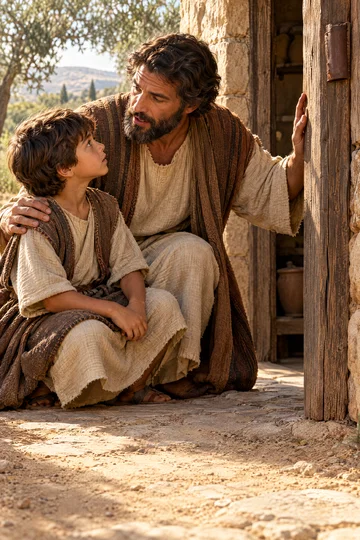
Faithfully taught and kept constantly before eye and mind in daily plans, duties, and schools, with sons and daughters pointed to thus saith the Lord when they err in thought, word, or deed, this instruction rears the tender thought and fixes right principles.RH Oct 5, 1911RH Oct 12, 1869 It leads children to love and obey God, to become wise unto salvation, to hide God's word in the heart to resist sin when tempted, to receive His care and blessing, to be led toward salvation, and to be prepared for admission into the heavenly family.RH Oct 5, 1911RH Jul 15, 1902RH Apr 18, 1912RH Oct 12, 1869ST Dec 3, 1894 Had fathers and mothers followed this direction, the sins and crimes of adults and of youth and children would not be read and heard of, nor would the evil condition of society becoming like the days of Noah and Lot exist.RH Nov 23, 1916 The commandments are to fill the home as a sacred legacy from a father and mother who love God, with every room and every corner dedicated to God and the commandments set as if written on its doorposts, so that in play and work and prayer God is revered and the memory of the home stays hallowed.RH Oct 22, 1914 The household instruction, with its familiar religious practices and written sign at the doorway, shows how the Jewish home made the faith and its teachings part of a child's daily experience.RH Jan 18, 1906
Heart Obedience to Law
The commandments, statutes and judgments of God in their fullness and breadth are to be bound for a sign on the hand and as frontlets between the eyes by being received into the heart as life and experience, not merely written down and committed to memory, talked of, taught to children, and kept before eye and mind to dominate the whole life.RH Jul 7, 1903RH Jul 7, 1903 God's law is spiritual with more than appears on the surface, and it requires love and not mere obedience to its outward letter or avoidance of wrong, so keeping its letter without the love it requires does not make a person righteous.ST Sep 13, 1910ST Mar 18, 1889 Binding the law on hand and forehead means having it in head and heart so that thoughts and acts naturally grow out of it, with the sole thought of how to live to God's glory, always asking if a thing is right and pleasing to God and looking to God's law in all its breadth as exhibited in the life of Christ for the answer, which only the one whose eyes are opened to behold wondrous things in it and who has hidden it in the heart does rightly.ST Mar 18, 1889 Truly keeping the command means having words of Scripture written on the heart, which with God's blessing truly preserves from sin and danger and keeps from trouble and sin.RH Jul 28, 1868
When God's Word is taken into the mind it renews the mind and transforms acts and life, so the hand, meaning the acts that carry out the purpose of the mind and reveal character, reveals the thought in loving deeds, and the sign between the eyes, meaning the countenance that also shows the inner life, bears witness to the change that has taken place.RH Jul 7, 1903ST Oct 10, 1900 Kept in this inward way the law is a hedge protecting from evil and a power unto righteousness, the gospel revealed in humanity through faith in God's provision, the full revelation of God's presence, power, glory and law as He interprets it written on the heart to save in the hour of trial.RH Jul 7, 1903RH Jul 7, 1903
The words to be so bound are the Ten Commandments spoken by God Himself from Mount Sinai with a great voice and written by Him on two tables of stone with nothing added, distinct from the laws given through Moses and from the book of the law read by priests alone to the people only once in seven years, for the precepts of the moral law were for all the people themselves to teach diligently to children and to talk of and keep constantly in speech and conduct at home and by the way and night and morning as a continual sign in deed and thought.ST Jun 19, 1884RH Oct 7, 1851 Having them in the heart and on the hand and before the eyes belongs with teaching them diligently, speaking of them when sitting in the house and walking by the way and lying down and rising up, inscribing them on house posts and gates, and diligently keeping the commandments and testimonies and statutes in the fear of God for continual good and preservation of life, and obedience brings the richest blessings, for observing to do all these commandments before the Lord is righteousness and the condition of eternal life.ST Apr 7, 1898ST Jun 19, 1884 God's precepts can be bound as a sign without being newly instituted or restricted to one people, for their essence and principles are ancient and apply wherever human relations and responsibilities exist.RH Dec 4, 1856 The call to teach God's words and keep them constantly before the mind rests on the two great commandments, love for God and love for neighbor, which sum up the law and the prophets, the first expressed in detail in the first table of the Decalogue and the second in its six remaining precepts.ST Apr 20, 1904
The binding expresses thorough remembrance and practice of the Lord's precepts, kept in the heart and diligently observed, remaining continually before the people, impressed on minds and guiding conduct throughout daily life.ST Apr 19, 1877ST Dec 27, 1905 It supports giving them publicity rather than keeping them shut in the ark, and observing all the commandments rather than merely displaying or singing them.ST Apr 19, 1877RH Jul 8, 1852 Applied to the Ten Commandments, this sign on the hand and as frontlets between the eyes is a mark in the hand and forehead connected with the sealing of God's people, and the law is their protection in the time of judgment, like the Passover sign that caused the destroyer to pass over Israelite homes.RH Aug 15, 1854 The instruction of Christ must not be passed by indifferently but transmitted from parents to children from one generation to another, training and educating children to respect and honor every holy and just and good precept, and the evil condition of society becoming like the days of Noah and Lot, with sins and crimes of adults and youth heard of, exists because parents have disregarded this instruction and religious teachers have ceased to respect every precept and have erected their own standard dishonoring the law.RH Nov 23, 1916 Studying and obeying the Bible's teachings guides God's people as the cloud and fire guided Israel, requiring not only reading and writing God's Word but also social conversation about these inspired topics especially in the family circle, and Bible study is a blessed and profitable employment, and happy is the home where this is practiced.ST Apr 27, 1904ST Jan 29, 1894
Wider Uses and Connections
The binding for a sign upon the hand and as frontlets between the eyes keeps the message that the Lord is coming continually before the people and in their speech through ordinary activities.RH May 9, 1854 The promise of Christ's return, and the angels' promise that this same Jesus taken up into heaven shall come again in like manner as He was seen going into heaven, is to be treasured in letters of gold, bound as a sign upon the hand, worn between the eyes, written upon doorposts, kept constantly in sight and in mind, deeply enshrined in the heart and in every Christian heart, and set upon every doorpost.RH May 9, 1854ST Jul 25, 1878RH Jan 8, 1861 The word of free justification is to be bound about the neck, written upon the table of the heart, worn as a bracelet upon the arm and as frontlets between the eyes.RH Oct 30, 1860 That means keeping continually before the mind the truth, I am justified freely by grace through redemption in Christ, having not my own righteousness but the righteousness of God by faith in Christ, accepted in the Beloved and saved by grace through faith.RH Oct 30, 1860 Held fast in this way against the assault that God is holy and the soul is unholy and distant from holiness, both the sense of present sinfulness and the expectation of coming holiness establish peace and make it flow as a river.RH Oct 30, 1860
What God requires is to be kept continually before vision as a reminder of duty in the same way.RH Aug 13, 1872 The rule of doing to others as we would have them do to us is to be held so, because every transgression of the last six commandments and every least injustice toward those with whom we have to do violates that rule, and that duty to fellow men is much neglected.RH Aug 13, 1872 God's loving-kindness is to be kept continually close, guiding thought like frontlets between the eyes and held fast through each day.RH Apr 21, 1903 The verse also teaches continual praise to the Lord in a spirit that leads immediate families and the world to honor and obey Him, thanking and praising Him for blessings in advance because His promises are sure.ST Sep 12, 1895
God's words bound as a frontlet between the eyes are an openly worn badge of ownership and service.ST Dec 16, 1886 Paul wore the confession whose I am, whom I serve in that way, marking himself continually as belonging to God and devoted to serving Him.ST Dec 16, 1886 That servanthood made him like Christ, who came not to be served but to serve and to do the Father's will in heaven, moved always by love and never limiting devotion, preaching, or soul-saving to special seasons, and never avoiding hard fields or difficult cases.ST Dec 16, 1886 The parental duty of teaching God's requirements in Deuteronomy 6:5-9, to which this binding belongs, supports the child's duty to obey parents when their commands accord with God's word.ST Oct 2, 1893
Sources