Numbers 16:29
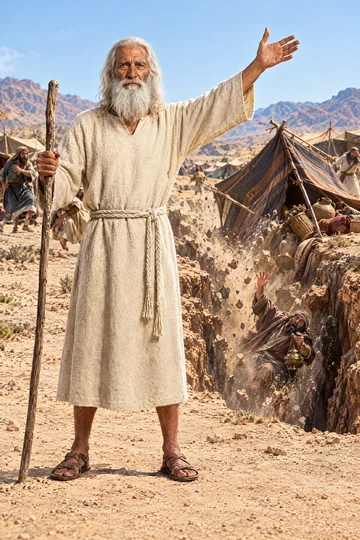
If these men die the common death of all men, or if they be visited after the visitation of all men; then the LORD hath not sent me.
Translations
If these men die the common death of all men, or if they be visited after the visitation of all men; then the LORD has not sent me.
King James Version, Revised Version
If these men die the common death of all men, or if they be visited after the visitation of all men; then the LORD hath not sent me.
If these men die the common death of all men, or if they be visited after the visitation of all men; then the Lord hath not sent me.
If these men shall die the common death of all men, or if they be visited after the visitation of all men; then the LORD hath not sent me.
If these men die the common death of all men, or if they be visited after the visitation of all men; then Jehovah hath not sent me.
if according to the death of all men these die — or the charge of all men is charged upon them — Jehovah hath not sent me;
if these men die as all men die, and are visited with the visitation of all men, Jehovah has not sent me;
If, as all human beings die, these do die, and the visitation of all human beings, be visited upon them, Yahweh, hath not sent me.
Berean Standard Bible, Majority Standard Bible
If these men die a natural death, or if they suffer the fate of all men, then the LORD has not sent me.
If these men die the common death of all men, or if they experience what all men experience, then the LORD hasn’t sent me.
If these men have the common death of men, or if the natural fate of all men overtakes them, then the Lord has not sent me.
If these men die the common death of all men, or if they be visited after the visitation of all men, the Lord hath not sent me.
Douay-Rheims (Challoner revision)
If these men die the common death of men, and if they be visited with a plague, wherewith others also are wont to be visited, the Lord did not send me.
Pictures

Cross-references
- Numbers 16:1-3
Now Korah, the son of Izhar, the son of Kohath, the son of Levi, and Dathan and Abiram, the sons of Eliab, and On, the son of Peleth, sons of Reuben, took men:
Korah and his company challenge Moses and Aaron’s authority.
- Numbers 16:41
But on the morrow all the congregation of the children of Israel murmured against Moses and against Aaron, saying, Ye have killed the people of the LORD.
The congregation accuses Moses after the rebels’ destruction, showing continued rebellion.
- Jude 1:11
Woe unto them! for they have gone in the way of Cain, and ran greedily after the error of Balaam for reward, and perished in the gainsaying of Core.
Korah’s rebellion exemplifies defiance and its judgment.
- Numbers 16:35
And there came out a fire from the LORD, and consumed the two hundred and fifty men that offered incense.
Fire from the LORD consumed the rebels, confirming Moses was sent.
- Numbers 17:8
And it came to pass, that on the morrow Moses went into the tabernacle of witness; and, behold, the rod of Aaron for the house of Levi was budded, and brought forth buds, and bloomed blossoms, and yielded almonds.
Aaron’s rod blossoms, further proving God’s choice after the rebellion.
- Numbers 16:46-48
And Moses said unto Aaron, Take a censer, and put fire therein from off the altar, and put on incense, and go quickly unto the congregation, and make an atonement for them: for there is wrath gone out from the LORD; the plague is begun.
Aaron’s incense-bearing intercession stops the plague following the rebellion’s judgment.
- Numbers 16:33
They, and all that appertained to them, went down alive into the pit, and the earth closed upon them: and they perished from among the congregation.
The rebels went down alive into the pit.
- Numbers 26:11
Notwithstanding the children of Korah died not.
Korah’s family did not all perish.
- Numbers 16:21-22
Separate yourselves from among this congregation, that I may consume them in a moment.
Moses and Aaron plead for the congregation before the test.
- Numbers 16:10
And he hath brought thee near to him, and all thy brethren the sons of Levi with thee: and seek ye the priesthood also?
Moses exposes Korah’s rebellion in seeking the priesthood.
- Numbers 26:65
For the LORD had said of them, They shall surely die in the wilderness. And there was not left a man of them, save Caleb the son of Jephunneh, and Joshua the son of Nun.
all died except Caleb and Joshua
- Numbers 16:2
And they rose up before Moses, with certain of the children of Israel, two hundred and fifty princes of the assembly, famous in the congregation, men of renown:
identifies the 250 princes who joined
- Numbers 16:38
The censers of these sinners against their own souls, let them make them broad plates for a covering of the altar: for they offered them before the LORD, therefore they are hallowed: and they shall be a sign unto the children of Israel.
The censers became hallowed as a sign after the rebellion’s test.
- Numbers 16:13
Is it a small thing that thou hast brought us up out of a land that floweth with milk and honey, to kill us in the wilderness, except thou make thyself altogether a prince over us?
Korah accuses Moses of princely usurpation.
- Numbers 16:49
Now they that died in the plague were fourteen thousand and seven hundred, beside them that died about the matter of Korah.
plague after Korah judgments
- Leviticus 10:1-3
And Nadab and Abihu, the sons of Aaron, took either of them his censer, and put fire therein, and put incense thereon, and offered strange fire before the LORD, which he commanded them not.
Both deaths punish irreverence for sacred things.
- Numbers 12:2-10
And they said, Hath the LORD indeed spoken only by Moses? hath he not spoken also by us? And the LORD heard it.
Miriam and Aaron’s challenge to Moses parallels Korah’s later challenge.
- Numbers 17:10
And the LORD said unto Moses, Bring Aaron’s rod again before the testimony, to be kept for a token against the rebels; and thou shalt quite take away their murmurings from me, that they die not.
Aaron’s rod is kept as a token against rebels.
Commentary
Each commentary is drawn from primary sources: the writings of Ellen G. White and Adventist pioneers and periodicals. Each commentary is separate. Its own words are not a quotation; follow the references to read the source passages.
Ellen G. White
52 sources
Moses set the proof of his divine commission on the manner of the rebels' death, that if Korah and his company died only an ordinary death shared by all men then he had not been sent by God and had acted from his own mind.Ms 110, 1899, par. 16–21Ms 33, 1885, par. 11–14Lt 120, 1900, par. 24–25 The proof was fulfilled at once when the earth opened and swallowed them alive with all belonging to them, which was not the common death but the just wrath of God vindicating Moses and Aaron.Ms 33, 1885, par. 11–14SG4 30.2–31.21SP 300.3 What seemed opposition to only a human leader was rebellion against God Himself, repeating on a narrower stage the pride, ambition and envy of Satan's rebellion in heaven.Ms 110, 1899, par. 16–21SG4 30.2–31.21SP 300.31SP 306.2PP 403.3 Even at the edge of judgment forgiveness still lingered and the doom could have been stayed by repentance, and though the sympathizing congregation shared the guilt God in mercy distinguished the leaders from those they had led to leave time to repent.3T 355.1–356.2PP 401.3PP 401.2 The history was preserved as a warning example especially for those living near the close of time, that challenging God's appointed leadership and rejecting His messages risks a special judgment rather than the common death, calling for a clear stand for the Lord instead of sympathizing with rebellion.Lt 156, 1897, par. 3–6Lt 39, 1899, par. 235T 290.34T 511.3–512.1RCNBP 11.1
Setting and Wording
The verse stands in the rebellion of Korah, Dathan, and Abiram against Moses, and against Aaron and Jehovah.Lt 156, 1897, par. 3–6Lt 39, 1899, par. 23PP 635.2RCNBP 11.1 Their opposition that seemed to be against only a human leader was against God's chosen instrument, and their tempting and murmuring brought destruction.PP 635.23T 353.1 The whole history was faithfully chronicled and preserved as a warning example that people must not follow, calling for careful prayerful study and genuine repentance.Lt 156, 1897, par. 3–6Lt 39, 1899, par. 235T 290.33T 353.1RCNBP 11.1 It stands especially as a warning against challenging God's appointed leadership, rejecting the messages given to His people, and accusing and condemning those entrusted with the work.5T 290.3RCNBP 11.1
The rebellion involved more than its two leading men, for it included two hundred and fifty princes of the congregation, men of renown, with many sympathizers and a vast number drawn through them.3T 349.3–4Lt 1, 1897, par. 5–7Ms 185, 1897, par. 4Ms 9, 1879, par. 3Lt 59, 1890, par. 2–5 Moses told the congregation to get away from the tents of Korah, Dathan, and Abiram and to touch nothing belonging to them lest they be consumed in their sins.3T 349.3–4 Dathan and Abiram then stood at their tent doors with their wives, sons, and little children.3T 349.3–4 Their course was first to gain the sympathy and confidence of the people and then to turn that influence against appointed leadership, telling deceptive stories that they had been abused when the abuse was on their own side, setting things in a perverted light with false representations, and sowing seeds of doubt toward those in whom the people should have confidence until the people honestly thought the rebels were right and Moses and Aaron were wrong.Ms 9, 1879, par. 3Lt 59, 1890, par. 2–5
The common death means an ordinary death shared by all men.Ms 110, 1899, par. 16–21Ms 33, 1885, par. 11–14Lt 2a, 1892, par. 13–14 Being visited means being visited only as all men are visited.Ms 110, 1899, par. 16–21 If these men died only that ordinary death shared by all people, the divine commission failed.Ms 110, 1899, par. 16–21Ms 33, 1885, par. 11–143T 349.3–4Lt 2a, 1892, par. 13–14
Those who joined the rebels were destroyed by plague before the Lord.SG4 38.1–2 Nearly forty years afterward the thirsty congregation in the wilderness murmured against Moses and Aaron and wished they had died with those brethren.SG4 38.1–2
Test and Fulfillment
Moses staked the proof that the Lord had sent him to do all his works, and that he had not acted from his own mind, on the manner in which Korah, Dathan, and Abiram died.Ms 110, 1899, par. 16–21Ms 33, 1885, par. 11–14SG4 30.2–31.21SP 300.33T 349.3–4 If these men died only the common ordinary death shared by all men, or were visited only as all men are visited, his divine commission failed.Ms 110, 1899, par. 16–21Lt 120, 1900, par. 24–25SG4 30.2–31.21SP 300.33T 349.3–4 A merely natural death was thus made the proof against Moses, leaving a miraculous new extraordinary judgment as the proof for him.Ms 33, 1885, par. 11–14Lt 120, 1900, par. 24–25SG4 30.2–31.21SP 300.33T 349.3–4 After telling the congregation to get away from the tents of Korah, Dathan, and Abiram and to touch nothing belonging to them lest they be consumed in their sins, with Dathan and Abiram standing at their tent doors with their wives, sons, and little children, he declared this test openly.3T 349.3–4 Their rebellion against the message God had given Moses was provoking the Lord, and the threatened extraordinary punishment stands as a fearful example of how the Lord will punish the rebellious.Ms 110, 1899, par. 16–21Ms 33, 1885, par. 11–14SG4 30.2–31.21SP 300.3
The test was fulfilled at once when the earth opened and swallowed them alive with all that belonged to them.Ms 33, 1885, par. 11–14SG4 30.2–31.21SP 300.33T 349.3–4PP 400.4–5 This was not the common death but an extraordinary special visitation, the just wrath of God, showing that they had provoked the Lord.Ms 33, 1885, par. 11–14SG4 30.2–31.21SP 300.3PP 400.4–5PP 401.2 The signal manifestation of God's power gave overwhelming evidence that removed all uncertainty that Moses was right and the rebels were wrong, vindicating Moses and Aaron and sustaining Aaron in the high-priestly office.SG4 30.2–31.21SP 300.3PP 400.4–5PP 401.2 Even after Moses entreated Israel to flee the coming destruction, that judgment could still have been stayed if Korah and his company had repented and sought forgiveness, but their stubborn persistence sealed their doom.PP 401.2 Although the whole congregation shared the guilt by sympathizing to a greater or less degree, God in great mercy distinguished between the leaders in rebellion and those they had led, still granting the deceived people space to repent and seek forgiveness.PP 401.2
The episode shows that work done from self will not stand while work done in God will endure.Lt 9, 1895, par. 7Lt 120, 1900, par. 24–25 God rejects unauthorized self-directed service, and the contrast between common and sacred fire shows that those serving God must be cleansed of selfishness, intemperance, lust, and conceit, and follow the principles God gives rather than trying to improve His plans through grasping or narrow judgment.Lt 9, 1895, par. 7Lt 120, 1900, par. 24–25Ms 43a, 1901, par. 22 Opposition in disaffection like that of Korah, Dathan, and Abiram cannot destroy a work that is of God, for such a work will survive rebellion, resistance, and apostasy.Lt 9, 1895, par. 7Lt 120, 1900, par. 24–25Lt 3, 1883, par. 19–20
Rebellion Against God
Opposition that looked like resistance to only a human leader was in truth rebellion against God Himself and provoking the Lord, for in rejecting His chosen instrument the rebels rejected Christ as their invisible leader and the Angel who went before the Hebrews, and insulted the Spirit of God.Ms 110, 1899, par. 16–21SG4 30.2–31.21SP 300.3PP 635.2ST Sep 14, 1882 What Moses staked on whether Korah, Dathan, and Abiram died the ordinary death shared by all men or were visited only as all men are visited was proof that he had not acted from his own mind but the Lord had sent him to do all His works, so the threatened extraordinary punishment stands as a fearful example of how the Lord will punish the rebellious.Ms 110, 1899, par. 16–21PP 400.4–5 Their being swallowed alive when the earth opened showed that the Lord had sent him and that they had provoked the Lord, vindicating his divine commission.SG4 30.2–31.21SP 300.3PP 400.4–5
That rebellion repeats on a narrower stage the rebellion of Satan in heaven, springing from pride and ambition with envy and discontent and desire for position and honor that led Lucifer to complain against the government of God and seek the overthrow of the order established in heaven.PP 403.3 Since his fall Satan seeks to infuse that same spirit into men, and he worked on the minds of Korah, Dathan, and Abiram to arouse self-exaltation and excite envy, distrust, and rebellion, and he leads others to copy them by raising insurrection among the people of God.1SP 306.2PP 403.3SG4 36.1 This is done by a wizard-like power and moral infatuation that steels hearts against the influence of the Holy Spirit, into which the deceived enter by their own consent because they place themselves in his power.ST Sep 14, 1882
The rebels were so deluded as to think themselves righteous while thinking those on whom God had laid the burden of His work were exalted above the people and their counsels and reproofs uncalled for, even regarding those who faithfully reproved their sins as actuated by Satan.1SP 306.2PP 403.3SG4 36.1 Their work was to make God's messages of none effect, being deceived and deceiving others and strengthening the hands and minds of evildoers, setting things before the people in a perverted light with false representations until the people honestly thought the rebels were right and Moses and Aaron were all wrong.Lt 59, 1890, par. 2–5 That influence drew two hundred and fifty princes, men of renown in the tribes of Israel, and through them a vast number who quoted them, to the pleasure of the enemy of righteousness, leavening minds with distrust, envy, and evil-surmising.Lt 59, 1890, par. 2–5 Their course was first to gain the sympathy and confidence of the people and then to turn that influence against God's appointed leadership, telling deceptive stories that they had been abused when the abuse was on their own side, and sowing seeds of doubt toward those in whom God would have the people have confidence, while wearing a mild, devoted, religious garb.Ms 9, 1879, par. 37MR 113.2
Their course reveals separation from God with no living connection and a heart no longer under the subduing power of the Holy Spirit, showing the attributes of Satan in sending forth an influence contrary to truth and justice and righteousness.Lt 57, 1895, par. 8 The example is selfish seeking of personal advantage without bearing burdens or responsibilities, with inward disloyalty ready to follow open rebellion when a favorable opportunity is presented, and fraudulent hidden dealing that may be concealed from brethren generally but which God marks to reward finally according to works with special divine judgment rather than the common death of all men.4T 511.3–512.1 It is seen in oppressing fellow workers and in one institution seeking to control all others, in despising revealed guidance, and in those who draw away from the body, accuse their fellow believers, and use errors in the church to promote themselves.Lt 118, 1890, par. 4–5Lt 57, 1895, par. 87MR 113.2 Men in weighty responsibilities who act thus do despite to the Holy Spirit and cast aside warnings sent from God again and again while venturing on in the same course, and a corrupt heart at war with God's appointed work draws sympathizers who cling to the rebel leader and spreads a dark influence that draws followers into darkness.Lt 57, 1895, par. 87MR 113.2
Rebellion so deceives the mind that even after marked judgment destroyed the leaders and princes, the survivors still blamed Moses and charged him with killing the Lord's people, driven by stubborn confidence that their own judgment was better and resisting clear evidence of God's judgment.TBC1882 47.35T 66.2 The destruction that fell was not the common death of all men but the just wrath of God upon sinners against the Lord, yet disaffection manifested even under judgment, with sin, exultation, and presumptuous wickedness, brings further destruction of thousands more.SG4 35.1Lt 12a, 1893, par. 22–24 Only after added evidence, as of Aaron's rod, did Israel see their past rebellion in its true light and become terrified at their fate to die in the wilderness, confessing that Moses and Aaron were right, that they themselves had sinned in rebelling against their authority, and that Korah and those who perished with him had justly suffered.SG4 35.11SP 306.1 Those who cannot see reproof in its true light should hold their peace and let the arrows of the Almighty fall where He directs, rather than complaining with rebels, influencing others to stand in rebellion, sympathizing with wrongdoers, charging faithful servants who correct the erring with unkindness, or standing between the offender and God.Lt 12a, 1893, par. 22–24
By such rebellion Korah, Dathan, and Abiram forfeited all right to claim sacred power and to be respected as the voice of God.Lt 194, 1898, par. 6 The same forfeiture applies to claiming great light while not obeying it at all, mingling the work with human devisings and selfishness and the claim of being especially exalted of God, hurting God's servants, the oil and the wine, and sustaining men God could not favor.Lt 194, 1898, par. 6 Entrenching behind the sacredness of power as president of the General Conference to demand respect as the voice of God in that condition is therefore without right, just as verily as their rebellion forfeited theirs.Lt 194, 1898, par. 6
Mercy Before Judgment
Moses staked his divine commission on whether these men would die only an ordinary death shared by all or be cut off by an extraordinary judgment, so that a merely common end would have meant he had not been sent.PP 401.3PP 401.2 In that near judgment Jesus, the Angel going before the Hebrews, was seeking to save them from destruction, with forgiveness still lingering and the nearness of judgment itself appealing to them to repent.PP 401.3 That fulfillment came as a special, irresistible interference from heaven to arrest their rebellion, and responding to that interposition of providence could still have saved them.PP 401.3 The judgment could still have been stayed even then if Korah and his company had repented and sought forgiveness, but their stubborn persistence sealed their doom.PP 401.2
Although the whole congregation shared the guilt by sympathizing with the rebels to a greater or less degree, in great mercy a distinction was made between the leaders in rebellion and those they had led.PP 401.2 The visitation of judgment displayed divine power, while sparing the congregation showed long-suffering.3T 355.1–356.2 That sparing left the deceived people time and space to repent and seek forgiveness.3T 355.1–356.2PP 401.2
Fleeing from the judgments through fear of destruction did not cure rebellion.PP 401.3 The people fled to their tents in horror when the hand was stretched forth to swallow up the wrongdoers, proving the Lord had sent Moses.PP 401.3Lt 12a, 1893, par. 22–24 Those who fled returned that night terrified but not repentant.PP 401.3 Manifesting disaffection even under judgment, with sin and exultation and presumptuous wickedness, brings further destruction of thousands more.Lt 12a, 1893, par. 22–24
Warning for Later Times
The record of Korah, Dathan, and Abiram was faithfully chronicled and preserved in history as a warning example that God's people must not follow.Lt 156, 1897, par. 3–6Lt 1, 1897, par. 5–73T 353.1 It was written especially for admonition for those living near the close of time, upon whom the ends of the world are come.1SP 306.2Lt 1, 1897, par. 5–7SG4 36.13T 353.1 It calls for careful and prayerful study and reflection, for review in present experience, and for genuine repentance.Lt 156, 1897, par. 3–6Lt 39, 1899, par. 23Lt 1, 1897, par. 5–7 Unbelief and rebellion and unwise conduct in that chapter stand as the conduct to be shunned.Lt 156, 1897, par. 3–6Lt 39, 1899, par. 23
To challenge God's appointed leadership and to reject the messages given to His people brings disastrous results.5T 290.3RCNBP 11.1 Hidden fraudulent dealing and inward disloyalty ready for open rebellion are marked by God and will finally be rewarded according to works with special divine judgment rather than the common death of all men.4T 511.3–512.1 Those who reject the light of the Lord and oppose His work risk sharing the rebels' end.Lt 59, 1890, par. 10–1114MR 108.3 If a critical, faultfinding spirit is not changed, the same kind of experience may occur again among God's people.Ms 115a, 1897, par. 24–25
The same spirit is repeated whenever His people refuse light through firm self-complacency and unwillingness to accept and acknowledge truth.3MR 191.1–2 It appears in pride that must be humbled and confessed, in prejudice and backsliding, in unsanctified independence that insults the Spirit of God, and in contempt and mockery and disgust for the word of the Lord.3MR 191.1–2 It appears in blindness of eyes and perversion of judgment, in lightness and trifling, in going on year after year in one's own mind and judgment in the face of all warnings and refusing to hear the voice of the Lord.3MR 191.1–2Lt 74, 1900, par. 7 It distorts God's messages and makes them of none effect by perverted light and false representations, until people honestly think the rebels are right and Moses and Aaron are all wrong.Lt 59, 1890, par. 2–5Ms 149, 1904, par. 10 It distrusts the men God is teaching, guiding, and leading, weakens faith in God's instrumentalities, criticizes management God is guiding, threatens to sever all connection unless dishonoring terms are accepted, pushes ambitious projects with little faith while pride is hurt by straight testimonies, and claims to discern right from wrong while opposing the Spirit.Lt 74, 1900, par. 7Lt 16g, 1892, par. 10–11Ms 1, 1895, par. 53–55 Those not in the light will not acknowledge God's messenger in his proper position nor heed the testimony, and unless every soul repents and is converted to be healed, they will lose clear light to discern the preciousness of truth, walk in darkness and in sparks of their own kindling, have the candlestick removed, and lie down in sorrow, while God remains with His faithful messenger in grace and power.3MR 191.1–2 Such influence draws the two hundred and fifty princes, men of renown, and through them a vast number who quote them, to the pleasure of the enemy of righteousness, and one who does that same work stands as firm as they stood, has it charged in the books of heaven, and will meet in the day of final accounts not only his own course but the result of his influence upon other minds.Lt 59, 1890, par. 2–5 Planting doubt in this way leavens other minds with distrust, envy, and evil-surmising, gives Satan advantage, creates lack of confidence that is hard to uproot, and brings upon the doubters an experience similar to that of Korah, Dathan, and Abiram, drawing sympathizers into darkness and war against the third angel's work.Ms 1, 1895, par. 53–55
That repetition has taken specific forms in warring against plain testimony and straight testimonies against hurtful indulgences such as tea, coffee, snuff, and tobacco.1SP 306.2SG4 36.1 There appetite is allowed to prevail until the sense of sacred things is perverted, self is refused no denial whatever the consequence, a wall of separation rises from those cleansing themselves from all filthiness of flesh and spirit and perfecting holiness in the fear of the Lord, and the disaffected rally the spiritually defective, the lame, the halt, and the blind to unfurl a banner of rebellion and scatter discord while claiming the people are all right and the reproving testimonies make the trouble.1SP 306.2SG4 36.1 It has taken form in receiving precious points of truth such as the Sabbath all prepared to hand without toil, sacrifice, privation, and trial, and then showing gratitude by rising up and reproaching those who labored to bring the truth out.SG4 316.1 It has taken form in contempt for God's word and resistance to the Spirit at Minneapolis, bringing spiritual darkness and the threat of divine judgment unless there is repentance.14MR 108.3 It has taken form when two men and their wives claimed to undeceive the whole church after more than half a century of light given through testimonies of the Spirit.Lt 1, 1897, par. 5–7 It has taken form in Battle Creek managers acting in self-importance and self-sufficiency to control other institutions, in a critical faultfinding spirit, in leaders separated from God who reject warnings, resist authority, and oppress others, and in one institution seeking to control all others.Ms 115a, 1897, par. 24–25
The required response is decisive action against evil workers, for had God's servants separated them from the Lord's work years earlier they would have been honored by God.Lt 34, 1899, par. 42–44 People must take a clear stand for the Lord and the truth rather than support rebellion or be deceived by persuasive words, since genuine rebellion of this kind is hardly curable and must be called by its right name as rebellion and apostasy.Lt 1, 1897, par. 5–7Lt 15, 1892, par. 32–34 They must sink the shaft deep into the mines of truth to distinguish precious ore from base material, heed the cautions about false prophets with heresies who would deceive even the elect, distinguish the voice of the true Shepherd from that of a stranger, and know claimants by their fruits.Lt 1, 1897, par. 5–7 Accusations against those appointed to God's work must be answered with evidence and carefully investigated rather than left unresolved, with proof required.7MR 332.1–2Lt 98a, 1897, par. 26–31 They must refuse to complain with rebels, to influence others to stand in rebellion, to sympathize with wrongdoers, to charge faithful servants who correct the erring with unkindness or with killing the Lord's people, or to stand between the offender and God; those who cannot see reproof in its true light should hold their peace and let the arrows of the Almighty fall where He directs.Lt 12a, 1893, par. 22–24 Those who persist in evil must undergo a decisive change of heart and be converted in thought and attitude to work in Christ's lines, or they will not see God.Lt 34, 1899, par. 42–44
Sources
Pioneers and periodicals
82 sources
Moses staked the proof that the Lord had sent him on the manner of the rebels' death, that if they died only the ordinary death common to all men it would show he acted of his own mind, while an extraordinary judgment would prove he acted by divine direction.ST Apr 22, 1889RH Oct 7, 1862ST May 20, 1889 The test was given openly before all Israel after the people were told to separate from the tents of the wicked men, while Korah, Dathan, Abiram and the two hundred and fifty princes stood defiant with their households and all watched in terror and expectation.RH Nov 12, 1903RH Jan 29, 1867 Their rising against Moses and Aaron was rebellion against God who had appointed them to lead and to speak His will, not merely strife with human leaders.RH Nov 12, 1903RH Mar 7, 1907 The extraordinary judgment came when the earth opened and swallowed the rebels with their families and goods while fire from the Lord consumed the men offering incense, and that immediate answer vindicated Moses as sent and chosen of God.RH Feb 19, 1901RH Jun 28, 1906ST Jul 14, 1914RH Jan 18, 1912RH Jul 4, 1907 That swallowing instead of an ordinary death stands written as an example to warn God's people in the last days, when the same rebellion will be repeated and God will again sift out rebels and murmurers while His work goes forward and cannot be subverted.RH Jul 4, 1907RH Aug 14, 1866RH Jul 2, 1857RH Jan 24, 1865RH Dec 31, 1914
Verse Wording and Setting
Moses staked his divine commission on how the rebels would die, declaring that if they died only the ordinary death common to all men or suffered only the usual visitation and fate of people, it would prove the Lord had not sent him, while an extraordinary judgment would show the Lord had sent him and that he acted by divine direction and not of his own mind.ST Apr 22, 1889RH Oct 7, 1862ST May 20, 1889RH Oct 28, 1873RH Nov 1, 1906 The extraordinary death when the earth opened and swallowed Korah, Dathan and Abiram confirmed his commission and showed the rebels had provoked the Lord, and the judgments of the chapter — the earth swallowing the rebels and fire from the Lord consuming the two hundred and fifty men offering incense — confirm the seriousness of murmuring against God's appointed leaders and seeking the priesthood without being assigned to it.ST Apr 22, 1889RH Oct 7, 1862RH Oct 28, 1873RH Feb 28, 1856 Rebellion against God's chosen leadership thus brings judgment, and the contrast is between an ordinary death and the extraordinary punishment and destruction Moses announced as proof.ST May 20, 1889RH Nov 1, 1906RH Feb 28, 1856
The test was spoken publicly before the congregation in the name of the God of Israel after the people were told to depart from the tents of the wicked men, while the chief rebels stood defiant with their families in the doors of their tents and the eyes of all Israel were fixed on Moses in terror and expectation.RH Nov 12, 1903RH Jan 29, 1867 It covered Korah, Dathan, Abiram and their company with the two hundred and fifty princes, so that their destruction by the opening earth and fire from the Lord proved Moses and Aaron innocent and divinely sent and proved the rebels had provoked the Lord.RH Nov 12, 1903RH Jan 29, 1867 The rebellion claimed all the congregation was holy while charging all blame upon Moses, and it showed itself incurable even by miracle and so contagious that even the least sympathy brings danger of destruction and demands separation to the Lord's side.RH Jan 29, 1867 This was not cured when the rebels were consumed, for those who seemed loyal accused Moses and Aaron the next morning of killing the people of the Lord, and forty years of miracles in love and wrath could not cure the spirit so that only two adults entered Canaan.RH Jan 29, 1867
The common death means the ordinary death and usual fate of all people, and the verse teaches that when God does a special work opposition to it brings special divine judgment and not ordinary visitation.ST May 20, 1889RH Jan 24, 1865RH Jul 2, 1861 The development of the remnant keeping the commandments of God and the faith of Jesus in fulfillment of the third message of Revelation 14 is such a special work, as much as the deliverance of Israel from Egyptian bondage, so those who oppose this work must fall and professed friends of truth found in rebellion must perish, even as Dathan and Abiram and all those secessionists whose carcasses fell in the wilderness.RH Jan 24, 1865 Opposing what the Lord has ordered brings judgment and confirms that Moses was sent by God, for Korah and his company did not meet an ordinary death, as Moses had said would distinguish the Lord's judgment from the usual fate of all people.RH Jul 2, 1861 Korah's rebellion against the boundaries of his calling brought severe judgment, showing that those who overreach the sphere God assigns face more than ordinary consequences.RH Dec 24, 1861
The rebels went down alive when the earth swallowed them, and this going down into the earth was a descent into Sheol, or Hades, beneath the earth.RH May 19, 1874RH May 5, 1874RH Apr 20, 1869ST Jun 23, 1881 Sheol is identical with Hades, located in the depths of the earth beneath and embracing the interior of the earth as the region of the dead and the place of every grave.RH May 5, 1874RH Apr 20, 1869
Motives of the Rebels
The uprising joined Korah, Dathan and Abiram with two hundred and fifty princes of the assembly, famous men of renown and prominence, together with their households and many others who sympathized with the apostasy.RH Jul 4, 1907RH Sep 14, 1916RH Oct 7, 1909 Leading men in high positions of trust stood in the revolt, and in spirit nearly the whole congregation was drawn into it.RH Jul 4, 1907RH Sep 20, 1906 Judgment fell according to participation, with distinct fates for Dathan and Abiram's households and for Korah's family.RH Aug 1, 1907
They claimed the whole congregation was holy and able to govern themselves without leaders and prophets, and so rebelled against the leaders God had appointed.RH Jul 4, 1907 Their envy, contempt for that responsibility, and complaint against correction was rebellion against God and not merely opposition to human leaders.RH Jan 17, 1865RH Jan 17, 1865 Though enjoying an exalted place in the Lord's work, Korah with Dathan and Abiram and certain Levites rose up against Moses and Aaron by claiming the priesthood that belonged to Aaron and his posterity, and Korah was slain for aspiring to the priest's office while Dathan and Abiram perished with him for the same cause.RH Oct 3, 1871ST Jan 12, 1882 They said all the congregation are holy and accused Moses of exalting himself to be a prince over them, but the terrible retribution proved the Lord had sent him.ST May 15, 1901
From selfishness and self-exaltation they sought to change the government and set aside Moses and Aaron as a one-man power that restricted liberty and brought bondage and disaster.RH Jul 4, 1907 They breathed out suspicion against God's chosen leaders with strong and bold accusations of partiality in administering affairs and of relegating to the rear those who did not agree with Moses, being sure God had no hand in putting him in responsibility because he was not running things to their notion.RH Jul 30, 1914 They claimed God had opened the matter and authorized the change so that a new leader would arise, professing to defend Israel and to speak for God while claiming concern for the people's welfare and zeal for God.RH Jul 4, 1907RH Aug 17, 1911RH Apr 29, 1909 They did not deny that the Lord had brought Israel out of Egypt and been with them in the wilderness or that Moses had been an instrument in bringing them out, but they claimed his personal opinions and prejudices and the influences of others had become so intermingled with the Lord's leadings that they must decide what was human and what was divine.RH Jul 25, 1907 That challenge called his whole leadership into question, struck at the organization of the church in the wilderness, refused the order and authority God had established, and was destined to bring anarchy.RH Jul 25, 1907 Moses and Aaron had assumed nothing of themselves but stood as servants of all under the Lord for the orderly conduct of His work, while the rebels rose against the manner of the Lord's leading, sought supremacy to carry out their own ideas, preached individualism and independence that ignored divine principles of fellowship and mutual relationship, organized every discordant element to strike at the divinely approved organization to secure control and divert it from God's purpose, and were determined to wreck the movement if they could not have their own way.RH Aug 3, 1916 Their misleading claims won support and helped unite discordant elements in rebellion while opposing the church.RH Apr 29, 1909
Their sin was rebellion, which is as the sin of witchcraft, with stubbornness as iniquity and idolatry, a most subtle temptation coming as a proper desire to assert one's own rights to position, influence, wealth or friendship.ST May 20, 1889 It was a repetition of the sin of Satan, presumptuous in conception and utterly blasphemous in attempted execution, an attempt to seize power belonging to God alone that if allowed to prevail would have led to greater trespasses and more arrogant assumptions.ST May 20, 1889 Satan's wizard-like power and moral infatuation worked delusion that steels hearts against the influence of the Holy Spirit, so that by their own consent they placed themselves in his power and thought they opposed only a human leader, a man like themselves, while in rejecting God's chosen instrument they rejected Christ their invisible leader and insulted the Spirit of God.ST Sep 14, 1882 Rebellion so blinds spiritual discernment that it masquerades as righteousness, leading them to think there was no rebellion in the act but only worthy claims.ST May 20, 1889 Dathan and Abiram were of the tribe of Reuben and could lay no just claim to the priesthood, which had been conferred on the Levites because that tribe refused to join the idolatrous worship of the golden calf, yet as descendants of Reuben the eldest son of Jacob they joined Korah to gain advancement.ST May 20, 1889 Their shipwreck by pride and self-will that insists on having its own way instead of asking what God requires stands set against Moses, who found his place by humility and obedience.
They focused on Moses and Aaron instead of remembering God's care and guidance.RH Jul 25, 1907 When trouble came as the result of their own sins and murmurings they blamed Moses for it, and by rejecting his counsel and direction they exposed what was in their hearts.RH Apr 21, 1868RH Sep 20, 1906 Their personal grievances and petty annoyances became so magnified that they subordinated to them every worthy purpose and future hope, looking backward to Egypt instead of forward to Canaan.RH Oct 7, 1909 They opposed every move Moses made, finding fault with all his regulations, creating distrust and stirring up rebellion among the people.RH Nov 6, 1866 This stood in contrast to Aaron and Hur who held up his fainting hands, and to Caleb and Joshua who seconded his plans, looked forward with expectant hope, endured as seeing Him who is invisible, counted personal trials insignificant beside the heaven-appointed mission, stood unmoved in loyalty to God, and encouraged the people to go up and possess the land.RH Oct 7, 1909RH Nov 6, 1866
Judgment That Followed
The extraordinary judgment came as the earth opened in a chasm and swallowed Korah and his band with their wives, children, belongings and tabernacles.RH Feb 19, 1901ST Jul 14, 1914ST Oct 26, 1904 At the same time fire from the Lord consumed the two hundred and fifty men offering incense, the same pattern of earthquake sent by the Lord followed by fire.RH Feb 19, 1901RH Jun 28, 1906 Afterward, when the congregation murmured and plague broke out, Aaron with incense and prayer stood between the living and the dead to stop it, showing that prayer alone did not save but incense offered with prayer made atonement.RH Feb 19, 1901 Their destruction illustrates that those who oppose God and persecute His worshipers place their families beyond any special claim to protection.ST Oct 26, 1904
Punishment fell according to participation, with the destruction of Dathan and Abiram's households and the distinct fate of Korah's family publicly confirming the Lord's justice.RH Aug 1, 1907 It came through successive judgments by which the unbelieving men of war dropped out at different points until wasted from the host.RH Aug 1, 1907 In contrast, at the golden calf rebellion the same swallowing judgment was withheld though He could have brought it, because He was testing the loyalty of His professed people.
The immediate answer proved the rebels had provoked the Lord and vindicated Moses as sent by God and chosen to lead.RH Jan 18, 1912RH Jul 4, 1907RH May 20, 1873 God showed His disapproval of the complainers and His approval of the existing leadership by sending judgment on them while sparing Moses and Aaron.RH Jul 4, 1907 That destruction was as much an act of God's work as His leading Israel through the Red Sea.RH Jan 18, 1912
The judgment did not cure rebellion, for even after the earth opened those who had seemed loyal the night before broke out the next morning accusing Moses of killing the people of the Lord.RH Oct 14, 1862RH Oct 28, 1873 Deliberate and determined rebellion has no remedy, and self-deception left in the mind generally ends in such rebellion.RH Oct 28, 1873 Divine authority and truth are proved by God's miraculous act and not by numbers, for men of renown and in spirit nearly the whole congregation were one with the workers of iniquity, yet large numbers on error's side prove nothing.ST Mar 12, 1894 Forty years of leading in the wilderness with blessings and judgments could not correct that spirit, so that only two adults entered Canaan.ST Mar 12, 1894RH Oct 28, 1873
Being swallowed up instead of dying the ordinary death marked their fate as a warning that those who follow the same course of rebellion will likewise face judgment in some form, and acting together will not save them.RH Jan 13, 1863
Doctrines Proved by Verse
Opposition to Moses and Aaron was rebellion against God himself, not merely against human leaders, for God had appointed them to lead Israel and to communicate his will, and the judgment that followed exposed that deeper rejection.RH Nov 12, 1903RH Mar 7, 1907 Moses made the fate of the rebels the test of his divine commission, so that an ordinary death would have shown the Lord had not sent him, while an extraordinary judgment confirmed that God had appointed him.RH Nov 12, 1903 The danger therefore lies in rejecting God by rejecting the leaders he has appointed.RH Nov 12, 1903
The verse belongs to a time when the vital present truth was that Moses was a leader appointed by God, and confessing him was the test for that generation until fulfillment of prophecy brought a different present truth in the days of Christ.ST Jul 12, 1883 Accepting Moses as divinely appointed brought salvation and rejecting him brought death by slaying.ST Jul 12, 1883 Korah, Dathan, Abiram and their followers with two hundred and fifty persons and many of the people rebelled against Moses, doubted that God had sent him, and were destroyed for refusing to recognize God's messenger and work in their own time.RH Jul 7, 1874ST Jun 4, 1874ST Jul 4, 1878 They murmured at him, threatened to kill him, and rebelled against his authority with most determined unbelief and bitter opposition even from God's chosen people.ST Nov 11, 1880 Those same men would have professed the strongest faith in Noah and his work, yet people in Moses' time were lost for rejecting God's work in their own time even though they believed God's work through Noah in the past.ST Jul 4, 1878ST Nov 11, 1880 Faith in what God did in the past does not save without faith in the present truth God is giving now, and the same unbelief meets each special message and additional truths while honoring past messengers.ST Jul 4, 1878ST Nov 11, 1880ST Feb 22, 1877
The uncommon death set as the test proves how holy God's work is and how particular he is that everything in his sanctuary and worship shall be performed exactly, showing the sacredness of his ordinances.ST Jun 17, 1889 Korah, Dathan, Abiram and the princes who rebelled against Moses and Aaron were swiftly destroyed for opposing those who obeyed the Lord and carried out his commands, demonstrating that exact obedience to the Lord's requirements is essential and that disobedience to God's command has serious consequences.ST Sep 9, 1886ST Dec 13, 1883 God is no respecter of persons, but the greatest among men and his own people will be treated even as the lowest with strict justice.ST Jun 17, 1889 No outward provocation is an excuse for sin, for the root of sin is wholly in the heart of man.ST Jun 17, 1889
God vindicates his appointed instruments by judging rebels, and their extraordinary destruction proves divine commission, for when God does a special work opposition to it brings special divine judgment and not ordinary visitation.RH Apr 13, 1911RH Jan 24, 1865 The sons of Korah perish in their rebellion and gainsaying, while the work continues even if fallible leaders fail or die.RH Jul 2, 1857RH Apr 13, 1911 A Moses or Aaron may speak unadvisedly and die short of Jordan, but then Aaron's garments are put upon Eleazar and Moses lays hands upon Joshua and the work moves on harmoniously.RH Apr 13, 1911 The same God who led Israel through the desert to Canaan is now doing a special work equal to it in the third message of Revelation fourteen, even as much as the deliverance of Israel from Egyptian bondage.RH Apr 13, 1911RH Jan 24, 1865 That work is consummating the preparing of a remnant keeping the commandments of God and the faith of Jesus for translation without guile and without fault before the throne, and because the Director is excellent in working it will be accomplished just as harmoniously.RH Apr 13, 1911RH Jan 24, 1865 God has chosen means and instruments to send the third angel's message, his operations cannot be subverted, he is not divided against himself, and he never fails and has to begin again.RH Apr 13, 1911 He will never be driven to perfect the work by means of a rebellion in the camp, taking sides with rebels and destroying the harmony of his own work, but will overrule factions for the good of his children, so those who oppose this work must fall and professed friends of truth found in rebellion must perish, even as Dathan and Abiram and all those secessionists whose carcasses fell in the wilderness.RH Apr 13, 1911RH Jan 24, 1865
The experience of Korah, Dathan and Abiram was written as an example to warn God's people in the last days and will be repeated then.RH Jul 4, 1907RH Aug 14, 1866 They murmured against those at the head of the cause whom God had chosen to deliver Israel from the false religions of Egypt, rejecting Moses and Aaron as leaders and, since Moses was the leading prophet, rejecting the spirit of prophecy also.RH Jul 4, 1907 With them were two hundred and fifty princes, famous men of renown and prominence, who felt they had not been exalted as they should have been and inferred that all were holy and able to govern themselves without leaders and prophets.RH Jul 4, 1907 Moses and Aaron were not exalting themselves but faithfully doing the work the Lord gave them, while Korah sought from selfishness and self-exaltation to change the government and set aside Moses and Aaron as a one-man power that restricted liberty and brought bondage and disaster, claiming God had opened the matter to him and authorized the change so that he himself would become leader.RH Jul 4, 1907 That self-exaltation brought ruin on him and his sympathizers.RH Jul 4, 1907 The verse marks God's sifting of Korah, Dathan and Abiram, their sympathizers, and all the murmurers in Israel, for God always sifts the church before he begins any great work requiring triumphant faith and united action, and they were sifted out before Israel was prepared to march by faith into the promised inheritance.RH Dec 31, 1914
Connections With Other Scriptures
The rebellion of Korah, Dathan and Abiram with the two hundred and fifty famous princes of the great assembly stands as one of the swift, signal punishments suffered by discontented Israel after the golden calf at Sinai.ST May 23, 1911 It is rehearsed by Moses in Deuteronomy with clear-cut language that displays great mental power, impressive judicial acumen and admirable fidelity in providing law, statute and judgment for every emergency of Israel's future national, family and tribal life.ST May 23, 1911 To have portion and inheritance with Dathan and Abiram is to share condemnation with Cain the fratricide, Ananias and Sapphira, Simon the sorcerer, Judas the traitor, and those who say to God, Depart from us, a portion that perishes in the day of judgment in everlasting fire with the devil and his angels.RH Sep 29, 1874 Korah, Dathan and Abiram are numbered among the wicked descendants of Jacob who perished in the wilderness, showing that descent from Israel did not guarantee salvation.RH Jan 16, 1872 Numbers 16 shows in what light a holy God views a peevish, fretful, murmuring spirit, and Christians who meet with little trials in their families and from other sources commit as much sin by peevishness and fretfulness and murmuring as the Israelites committed under their trials in the wilderness, so the chapter is to be read often that the soul may know God's view of that spirit and be on guard lest these sins get the victory over it.RH Jun 26, 1860
Warnings for Later Church
The revolt of Korah, Dathan and Abiram reaches into the later church whenever members resist elders, deny their authority or question their qualifications, for such insubordination breeds difficulties and can keep elders from doing their duty, so the faithful are to submit to those who lead and care for them.RH Dec 3, 1857 To be out of union with God's people and refuse to move with them while setting oneself up as judge over the work is rebellion of the same kind, and those who do so are rightly called rebels.RH Jan 6, 1863
The conflict left the people unable to discern between God's faithful people and those whom God had left to themselves, while they opposed God's appointed servants and failed to recognize the spiritual power behind their work.RH Mar 27, 1900 Grievous sin and turmoil among prominent leaders and two hundred and fifty princes could exist even while God was leading by visible manifestation of His glory, and the presence of such sin did not mean He had stopped leading Israel.RH Jun 25, 1914RH Feb 24, 1916 Moses left the dispute over his right to lead to God and went on with his work, trusting God to show whether He had sent him.ST Feb 15, 1905
Korah, Dathan and Abiram were popular noisy men whose voices were often heard in the camp, yet their noise and popularity did not save them when the Lord took matters into His own hands and commanded Israel to separate from about their tabernacle.ST Dec 2, 1913 The earth opened its mouth upon them amid cries of horror, terror and agony from the people, proving that loud display and notoriety are powerless before God.ST Dec 2, 1913
Their miraculous death in disastrous judgment proved the Lord had sent Moses, and it came upon murmuring in presumptuous irreverence and want of reverence for God and His appointments.RH Oct 9, 1900RH Jun 23, 1868 Their destruction happened as an example and was written for admonition upon those on whom the ends of the world are come.RH Oct 9, 1900 It calls God's remnant people in an age of growing indifference to everything sacred to study God's will carefully in order to do it, and instead of following and imitating prevailing evils to sigh and cry for the abominations done in the earth.RH Oct 9, 1900 Their sin was failure to hallow God's name in reverence, adoration, worship and love, teaching the need to separate the holy from the common things of life, while their boasting in their own wisdom and power without acknowledging God stands as a warning against pride.RH Jun 23, 1868ST Oct 28, 1875RH Oct 22, 1901
The same rebellion is committed by all who are stubborn in their own opinions, decide their judgment is better than that of Moses, charge him with doing great injury to Israel, and seek to turn aside the counsel of God to suit themselves.RH Jul 4, 1907RH Jun 28, 1906 It is committed by all who lessen the confidence of God's people in the testimonies He has sent them and war against the means God ordained to keep corruption out of the church.RH Jul 4, 1907RH Jun 28, 1906 The searching testimony of the Spirit of God separates such opposers, for unless the plain straight testimony lives in the church the curse of God will rest upon His people as surely as it did upon ancient Israel because of their sins, as rejection of the messenger repeats the rejection of Jeremiah and of the prophetic gift now.RH Jul 4, 1907
Wrongs, mistakes and rebellious men who are self-opinionated, egotistical, vainglorious, loving power and recognition and determined to have their own way appear in the work of God as long as poor human nature is associated with it.RH Feb 24, 1916 Such men have always been found in the church and will continue there till the fires of persecution burn out the chaff and the dross, so believers need God to keep them in perfect peace when they see in the church things that are wrong and men who do not meet their ideals.RH Feb 24, 1916 They were warned of their doom and urged to turn from rebellion, but defiantly resisted every appeal until divine judgment fell on them.ST Feb 9, 1915 Their opposition, following the opposition of Pharaoh and the Egyptians and spreading at last to almost all the children of Israel against Moses the meekest man that ever lived, shows there has been a true and a false religion, and the true has been opposed by the false.RH Mar 10, 1868
The Lord carried out the destruction of Korah, Dathan and Abiram Himself rather than through human agents.ST Mar 20, 1901 The same spirit of opposition that rejects God's declared judgment appeared when God had declared through Moses that Israel would die in the wilderness and the rebels claimed that judgment was unnecessary and that the people could go on to the promised land.RH Nov 19, 1903
Sources