Numbers 16:35
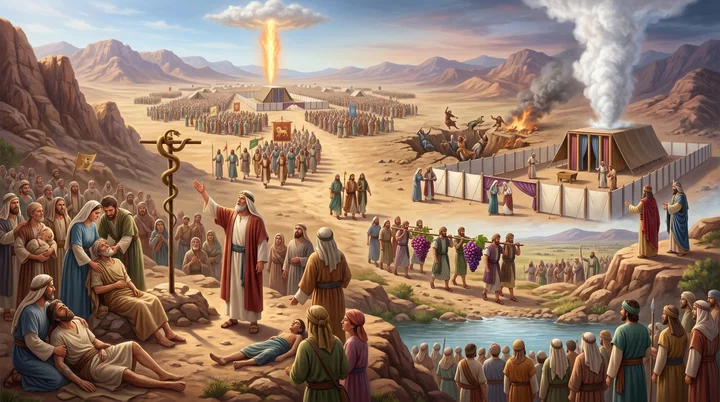
And there came out a fire from the LORD, and consumed the two hundred and fifty men that offered incense.
Translations
American King James Version, King James Version, Webster Bible
And there came out a fire from the LORD, and consumed the two hundred and fifty men that offered incense.
And there came out a fire from the Lord, and consumed the two hundred and fifty men that offered incense.
And fire came forth from the LORD, and devoured the two hundred and fifty men that offered the incense.
And fire came forth from Jehovah, and devoured the two hundred and fifty men that offered the incense.
and fire hath come out from Jehovah, and consumeth the two hundred and fifty men bringing near the perfume.
And there came out a fire from Jehovah, and consumed the two hundred and fifty men that had presented incense.
Fire also came forth, from Yahweh,—and consumed the two hundred and fifty men, who offered the incense.
Berean Standard Bible, Majority Standard Bible
And fire came forth from the LORD and consumed the 250 men who were offering the incense.
Fire came out from the LORD, and devoured the two hundred fifty men who offered the incense.
Then fire came out from the Lord, burning up the two hundred and fifty men who were offering the perfume.
But there came out a fire from the Lord, and consumed the two hundreth and fiftie men that offred the incense.
Douay-Rheims (Challoner revision)
And a fire coming out from the Lord, destroyed the two hundred and fifty men that offered the incense.
Pictures
Cross-references 20 of 23
- Numbers 16:3
And they gathered themselves together against Moses and against Aaron, and said unto them, Ye take too much upon you, seeing all the congregation are holy, every one of them, and the LORD is among them: wherefore then lift ye up yourselves above the congregation of the LORD?
Korah’s challenge to Moses and Aaron led to the judgment.
- Numbers 16:41
But on the morrow all the congregation of the children of Israel murmured against Moses and against Aaron, saying, Ye have killed the people of the LORD.
The congregation accuses Moses and Aaron the day after the judgment.
- Jude 1:11
Woe unto them! for they have gone in the way of Cain, and ran greedily after the error of Balaam for reward, and perished in the gainsaying of Core.
Korah’s rebellion is linked with the rebels’ destruction.
- 1 Corinthians 10:11
Now all these things happened unto them for ensamples: and they are written for our admonition, upon whom the ends of the world are come.
Israel’s recorded judgments serve as examples and warnings for later generations.
- Leviticus 10:1-2
And Nadab and Abihu, the sons of Aaron, took either of them his censer, and put fire therein, and put incense thereon, and offered strange fire before the LORD, which he commanded them not.
The Lord’s fire consumes those who offer unauthorized fire.
- Numbers 16:46-48
And Moses said unto Aaron, Take a censer, and put fire therein from off the altar, and put on incense, and go quickly unto the congregation, and make an atonement for them: for there is wrath gone out from the LORD; the plague is begun.
Aaron’s priestly intercession with incense stayed the plague after judgment.
- Numbers 16:2
And they rose up before Moses, with certain of the children of Israel, two hundred and fifty princes of the assembly, famous in the congregation, men of renown:
Identifies the 250 prominent leaders involved in the rebellion.
- 2 Chronicles 26:16-18
But when he was strong, his heart was lifted up to his destruction: for he transgressed against the LORD his God, and went into the temple of the LORD to burn incense upon the altar of incense.
Uzziah is punished for presumptuously offering incense as a non-priest.
- Numbers 17:8
And it came to pass, that on the morrow Moses went into the tabernacle of witness; and, behold, the rod of Aaron for the house of Levi was budded, and brought forth buds, and bloomed blossoms, and yielded almonds.
Aaron’s budding rod confirmed God’s choice of priesthood after Korah’s destruction.
- Leviticus 9:24
And there came a fire out from before the LORD, and consumed upon the altar the burnt offering and the fat: which when all the people saw, they shouted, and fell on their faces.
Fire from the LORD shows divine acceptance of Aaron’s ministry.
- Numbers 26:10-11
And the earth opened her mouth, and swallowed them up together with Korah, when that company died, what time the fire devoured two hundred and fifty men: and they became a sign.
Recalls the rebellion’s judgment and notes that Korah’s sons survived.
- Numbers 16:40
To be a memorial unto the children of Israel, that no stranger, which is not of the seed of Aaron, come near to offer incense before the LORD; that he be not as Korah, and as his company: as the LORD said to him by the hand of Moses.
Only Aaron’s descendants could offer incense.
- Numbers 16:5-7
And he spake unto Korah and unto all his company, saying, Even to morrow the LORD will shew who are his, and who is holy; and will cause him to come near unto him: even him whom he hath chosen will he cause to come near unto him.
The incense offering tests whom God chooses, and the rebels are consumed by fire.
- Numbers 16:13
Is it a small thing that thou hast brought us up out of a land that floweth with milk and honey, to kill us in the wilderness, except thou make thyself altogether a prince over us?
Korah challenges Moses’ authority over Israel.
- Numbers 16:11
For which cause both thou and all thy company are gathered together against the LORD: and what is Aaron, that ye murmur against him?
Aaron served by God’s command, while Korah’s company rebelled against the LORD.
- Hebrews 12:29
For our God is a consuming fire.
quoted to explain the fire as God consuming sinners
- Exodus 30:9
Ye shall offer no strange incense thereon, nor burnt sacrifice, nor meat offering; neither shall ye pour drink offering thereon.
God forbids offering strange incense.
- Numbers 16:49
Now they that died in the plague were fourteen thousand and seven hundred, beside them that died about the matter of Korah.
Thousands die in the judgment that follows the people’s accusation.
- 1 Corinthians 10:10
Neither murmur ye, as some of them also murmured, and were destroyed of the destroyer.
Murmuring brings destruction, as Korah’s company was consumed by fire.
- Numbers 17:10
And the LORD said unto Moses, Bring Aaron’s rod again before the testimony, to be kept for a token against the rebels; and thou shalt quite take away their murmurings from me, that they die not.
Aaron’s rod was kept as a warning against rebellion and murmuring.
Commentary
Each commentary is drawn from primary sources: the writings of Ellen G. White and Adventist pioneers and periodicals. Each commentary is separate. Its own words are not a quotation; follow the references to read the source passages.
Ellen G. White
66 sources
Fire came out from the Lord in the rebellion of Korah, Dathan and Abiram and consumed the two hundred and fifty men while they offered incense.Lt 156, 1897, par. 3–6Ms 1, 1865, par. 9–10Lt 12a, 1893, par. 22–24 Those men were princes and renowned leaders of the congregation, men of influence and good judgment who presumptuously took the priests' office with their censers.Ms 96, 1893, par. 2–53T 350.11SP 301.1SG4 33.2 Their rising against Moses and Aaron was rebellion against Jehovah Himself, the working on a narrower stage of the pride and ambition that prompted Satan's rebellion in heaven.PP 403.3PP 635.2ST Sep 14, 18821SP 306.1 Even as judgment drew near mercy still lingered, for the two hundred and fifty were not destroyed at first but lived to see the end of the chief rebels and would have been spared if they had repented and sought forgiveness.3T 350.11SP 301.1PP 401.3PP 401.2 The terrible judgment sustained Aaron in the priesthood and established that Moses and Aaron spoke by divine authority, and it is preserved as a warning for later generations not to follow that example of unbelief, rebellion and opposition to God's appointed instrumentalities.Lt 156, 1897, par. 3–6Lt 39, 1899, par. 23Lt 1, 1897, par. 5–73T 353.1PP 425.4
The Fire and Those Consumed
Fire came out from the Lord in the rebellion of Korah, Dathan, and Abiram and consumed the two hundred and fifty men as they offered incense.Lt 156, 1897, par. 3–6Ms 1, 1865, par. 9–10Lt 12a, 1893, par. 22–247MR 332.1–2 That destruction was a signal manifestation of God's power against the rebellion, yet the people remained deceived and accused Moses of killing God's people.Ms 1, 1865, par. 9–10Lt 12a, 1893, par. 22–24 Their destruction did not end the rebellion, for the next day the people falsely accused Moses and Aaron, and thousands more died under further judgment.Ms 96, 1893, par. 2–5Lt 12a, 1893, par. 22–24 Their fate warns God's people not to follow their example of unbelief and rebellion, since rebellion against those appointed to serve God is an offense to Him.Lt 156, 1897, par. 3–67MR 332.1–2
The two hundred and fifty were princes and renowned leaders of the congregation, men generally of good judgment, influence, and renown, highly esteemed and often sought for counsel in difficult matters.Ms 96, 1893, par. 2–53T 350.11SP 301.1SG4 32.1 A wrong influence made them envious, jealous, and rebellious.3T 350.11SP 301.1SG4 32.1 They did not perish at first with Korah, Dathan, and Abiram because they were not first in the rebellion; they lived to see the end of the leaders in rebellion and had time and opportunity to recognize that end and repent of their crime.3T 350.11SP 301.1SG4 32.1 Because they remained unreconciled to that destruction and sympathized with the rebels, the wrath of God came upon them and destroyed them also, a terrible warning against rebellion and accusations against those God had chosen that still did not bring the congregation to repentance.Ms 96, 1893, par. 2–53T 350.11SP 301.1SG4 32.1
Korah and his followers had publicly accused Moses and Aaron of claiming authority that belonged equally to the whole congregation.PP 398.2 With their censers the two hundred and fifty presumptuously exercised the priests' office, affronting God's authority.SG4 33.2 The people soon became so deceived by admiration for Korah and his company that they blamed Moses and Aaron for the deaths God had brought about.SG4 33.2
Later at Kadesh, when the people murmured for water, they wished they had died with those brethren rather than face thirst in the wilderness.ST Sep 30, 1880SG4 38.1–21SP 309.2–3 They are recalled as brethren destroyed before the Lord in that rebellion, including the two hundred and fifty consumed by fire for offering incense, though one recollection speaks of them as destroyed by plague.ST Sep 30, 1880SG4 38.1–21SP 309.2–3 Their wish showed impatience, forgetfulness of God's former power to give water from the rock, and distrust and complaint against Moses and Aaron.1SP 309.2–3
Mercy Before Judgment Fell
Even in the act of judgment Jesus, the Angel who went before the Hebrews, was seeking to save the people from destruction, and forgiveness still lingered for them.PP 401.3 The coming of the fire was God's judgment drawn very near as a call to repent, a special irresistible intervention from heaven to arrest the rebellion, and responding to that interposition could have brought salvation.PP 401.3 Though the congregation fled from the judgment through fear of destruction, their rebellion was not cured, and they returned to their tents that night terrified yet not repentant.PP 401.3
The fire that destroyed the two hundred and fifty men who offered incense could still have been stopped while Moses was urging Israel to flee from the coming destruction.PP 401.2 If Korah and his company had then repented and sought forgiveness, the divine judgment would have been stayed, but their stubborn persistence sealed their doom.PP 401.2 The entire congregation shared guilt because all had sympathized with the rebels to a greater or less degree, yet God in great mercy distinguished between the leaders in rebellion and those they had led.PP 401.2 The deceived people were still granted space for repentance after overwhelming evidence that they were wrong and Moses was right, and the signal manifestation of God's power had removed all uncertainty.PP 401.2
Unlike the chief conspirators, the two hundred and fifty were not destroyed at first; they lived to see the end of the leaders in rebellion and had time to recognize their end and opportunity to repent of their crime.3T 350.11SP 301.1SG4 32.1PP 401.1 Because they remained unreconciled to that destruction and sympathized with the rebels, the wrath of God came upon them and destroyed them also, so that they shared their fate.3T 350.11SP 301.1SG4 32.1PP 401.1 The judgment warned the surviving congregation and gave them opportunity to repent, yet they failed to recognize their guilt.3T 355.1–356.2 The episode thus shows both God's vengeance against rebellion and His long-suffering mercy in warning the congregation and allowing sinners time to seek forgiveness.3T 355.1–356.2
Rebellion Against God Himself
To oppose Moses and Aaron was to oppose Jehovah Himself, for in rejecting God's chosen instrument the rebels rejected Christ, their invisible leader, and insulted the Spirit of God.PP 635.2ST Sep 14, 18821SP 306.1 The 250 who offered incense were sinners against the Lord who justly suffered His wrath, and their fate confirmed that rebellion against Moses and Aaron was rebellion against God.1SP 306.1 Judgment followed close upon that sin, yet even while under it they believed they were serving God.PP 635.2ST Sep 14, 1882 They thought themselves righteous while insulting the Spirit they claimed to honor.PP 403.3PP 635.2
The uprising was the working out on a narrower stage of the same spirit that led to Satan's rebellion in heaven.PP 403.3 Pride and ambition had prompted Lucifer to complain of the government of God and to seek the overthrow of the order established in heaven, and since his fall it has been his object to infuse the same envy and discontent and the same ambition for position and honor into men.PP 403.3 He thus worked upon Korah, Dathan, and Abiram to arouse the desire for self-exaltation and to excite envy, distrust, and rebellion.PP 403.3 By rejecting Moses and Aaron as men of God's appointment they rejected God as their leader, and while in murmuring against Moses and Aaron they blasphemed God.PP 403.3 So deluded were they as to think themselves righteous and to regard those who faithfully reproved their sins as actuated by Satan.PP 403.3
Their rebellion came from a wizard-like moral infatuation from Satan that steels hearts against the influence of the Holy Spirit.ST Sep 14, 1882 Satan deluded them with the idea that they were opposing only a human leader, a man like themselves.ST Sep 14, 1882 They were deceived by Satan but by their own consent, because they placed themselves in his power.ST Sep 14, 1882
Korah, Dathan, and Abiram were wicked unsanctified men who took advantage of souls perishing for truth who will accept almost anyone who can explain the Scriptures.Ms 9, 1879, par. 3 They first gained the sympathy and confidence of the people, then insinuated against God's appointed leaders with a deceptive story that they had been abused men.Ms 9, 1879, par. 3 In this way they sowed seeds of doubt in regard to those in whom God would have the people have confidence, and they had many sympathizers.Ms 9, 1879, par. 3 To rise up with them to reproach those God had burdened with His work is an act of rebellion against God and an offense to Him, and the fire from the Lord that consumed the 250 who offered incense was God's judgment upon that offense.7MR 332.1–2SG4 316.1
Warning After Plain Evidence
The record of the fire that consumed the 250 is preserved as a warning and lesson for later generations, to be read carefully and prayerfully.Lt 39, 1899, par. 23Lt 1, 1897, par. 5–7Ms 185, 1897, par. 4 It is to be studied especially by those living near the close of time, upon whom the ends of the world are come, because the rebellion involved not only its two principal leaders but 250 prominent, renowned princes of the congregation who joined in offering incense and perished.Lt 1, 1897, par. 5–7SG4 36.1Ms 185, 1897, par. 4Lt 7, 1894, par. 23–26 With the account of the twelve spies it gives instruction appropriate for the present time, so that the whole flock will not be fed with errors that cause them to go astray.Lt 224, 1903, par. 1–2Lt 7, 1894, par. 23–26 Their fate as rebels and apostates warns God's people not to follow their example of unbelief and rebellion.Lt 156, 1897, par. 3–6Lt 1, 1897, par. 5–73T 353.1
Their destruction was plain evidence against the rebellion and a terrible warning against rebellion and accusations against those God had chosen.Ms 96, 1893, par. 2–55T 66.23T 353.2 It was a marked, signal act of God's power and judgment upon the leaders and princes of the rebellion, yet seeing it did not remove the congregation's suspicion and distrust or bring them to repentance for their abuse of Moses.5T 66.23T 353.2Ms 1, 1865, par. 9–10 The survivors remained deceived, failed to recognize their own guilt, and treated the rebels as martyrs.TBC1882 47.3Ms 1, 1865, par. 9–10 The next morning they falsely accused Moses and Aaron of killing the Lord's people, showing how stubborn rebellion can blind and deceive people even after a clear judgment.TBC1882 47.35T 66.2Ms 1, 1865, par. 9–10Lt 12a, 1893, par. 22–24
Their continued charges led to further judgment in which thousands more died, for the destruction did not end the people's rebellion.Ms 96, 1893, par. 2–5Lt 12a, 1893, par. 22–24 Only after the overnight miracle of Aaron's rod did Israel see their rebellion in its true light.SG4 35.1 Then they acknowledged that Moses and Aaron were right, confessed that those destroyed had sinned and had justly suffered as sinners against the Lord for rebelling against their authority and unjustly accusing them, and were terrified that they themselves were to die in the wilderness and not enter the promised land.SG4 35.1
Vindication of Appointed Leaders
The fire that consumed the 250 men offering incense was a terrible judgment that sustained Aaron in the sacred office of priesthood.PP 425.4 That destruction was God's just judgment for sin in rebelling against leaders, and it fully established that Moses and Aaron had spoken by divine authority, compelling the people to believe the unwelcome truth that they were to die in the wilderness until they cried out that they perished and confessed their rebellion.PP 403.2
The event stands as an example of the disastrous result of leading people to reject God's guidance by stirring distrust against those entrusted with leadership.5T 290.3 It warns against accusing and condemning those God has entrusted with the work, and against drawing away from the people and agents God is leading.RCNBP 11.1 Selfish, fraudulent people are likened to Korah, Dathan, and Abiram, whose conduct God sees and will reward according to their deeds.4T 511.3–512.1 The same rebellion warns against drawing away from the church, accusing fellow believers, and using their errors to build up self.Lt 118, 1890, par. 4–5
Leaders who entrench themselves behind the sacredness of office while disobeying given light forfeit all right to claim sacred power to be respected as the voice of God.Lt 194, 1898, par. 6 Claiming great light and giving the impression of believing and respecting it while not obeying it fully, mingling the work with men's devisings and selfishness, claiming to be especially exalted, hurting God's servants, and sustaining men God cannot favor, forfeits authority just as verily as that rebellion did.Lt 194, 1898, par. 6 Efforts to discredit God's appointed servants through unsubstantiated accusations are to be answered by requiring proof and carefully investigating every claim.Lt 98a, 1897, par. 26–31
The chapter is a warning that evil workers should be separated from the Lord's work, and that decisive action in an emergency honors God.Lt 34, 1899, par. 42–44 Siding with those who betray a sacred trust and oppose God can bring others into deception, so the history is a warning that will be repeated and God's people must take a clear stand on the Lord's side.Lt 15, 1892, par. 32–34 Disaffection of that kind represents opposition that cannot destroy a work that is of God.Lt 3, 1883, par. 19–20
Rebellion strengthens the hands and minds of evildoers, leads a vast number to quote and follow the opposer while the enemy of righteousness looks on pleased, and ends in divine vindication that testifies who was right and who was wrong.Lt 59, 1890, par. 2–5 That work of refusing, resisting, and nullifying divine testimony by opposing appointed messengers is charged in the books of heaven to be met in the day of final accounts, not only for a person's own course but for the result of influence upon other minds.Lt 59, 1890, par. 2–5 The only escape from that judgment is thorough work and confession that lets sin go beforehand to judgment so it may be blotted out when the time of refreshing comes and God sends Jesus.Lt 59, 1890, par. 2–5
Their fate warns that distrust and opposition to God's instrumentalities can lead to an experience like theirs.Ms 1, 1895, par. 53–55 Those who join rebellion against God and refuse the light He gives face destruction and darkness.Lt 59, 1890, par. 10–11 To be counted among them is a warning against opposing divine light and strengthening those who resist it.Lt 59, 1890, par. 15–17 The rebellion warns against becoming self-deceived, rejecting God's truth, and treating light as darkness.Ms 30, 1890, par. 1–3
Repeating the Rebellion Today
The fire that consumed the two hundred and fifty men who offered incense shows that service to God must burn with the holy fire He Himself provides and kindles, not with another kind that is common and self-made.Lt 9, 1895, par. 7Lt 120, 1900, par. 24–25Ms 43a, 1901, par. 22 Work done in and from self will not endure or stand, while work done in God will endure.Lt 9, 1895, par. 7Lt 120, 1900, par. 24–25 The sacred fire God kindles is to consume commonness, intemperance, selfishness, and lust.Ms 43a, 1901, par. 22
The same rebellion is repeated when Satan leads persons to imitate Korah, Dathan, and Abiram by raising insurrection among God's people and rising in opposition to plain testimony.1SP 306.2SG4 36.1 Those who do so become self-deceived, thinking that those on whom God has laid the burden of His work exalt themselves above the people and that their counsels and reproofs are uncalled for.1SP 306.2SG4 36.1 They oppose straight testimony rebuking wrongs among God's people, including hurtful indulgences such as tea, coffee, snuff, and tobacco, because it would destroy their idols.1SP 306.2SG4 36.1 Undecided between conviction and appetite, with the sense of sacred things perverted, they at last refuse to deny self and separate themselves from those cleansing themselves from all filthiness of flesh and spirit.1SP 306.2SG4 36.1 They war against the testimonies, declare the people all right and the reproofs the source of trouble, and, unfurling a banner of rebellion, gather all the disaffected and spiritually defective, the lame, the halt, and the blind around their standard to scatter and sow discord.1SP 306.2SG4 36.1
Men placed in responsible positions who pursue ambitious projects, whose pride is hurt when straight testimonies head off their plans, and who have little faith in the messages the Lord has given will come to the same point of open rebellion, and it would not take a very strong movement to create that state of things.Lt 16g, 1892, par. 10–11 The rebellion at Minneapolis repeated that pattern of resisting God's messengers and rejecting the message He sends.14MR 108.3 Criticism and resistance to God's discipline could repeat the rebellion of Korah, Dathan, and Abiram, and people will create confusion by twisting and misapplying God's words and warnings to defend ideas with no basis in truth.Ms 149, 1904, par. 10Ms 115a, 1897, par. 24–25 Those who themselves need converting repeat that experience against management the Lord was guiding when they refuse to change their thoughts and attitude in every way and instead criticize and find mistakes and make it appear there are mistakes where the Lord has been guiding, whereas working successfully in Christ's lines requires that change of thought and attitude.Ms 180, 1898, par. 22
The same spirit is indulged by men entrusted with weighty responsibilities who have no living connection with God and do despite to the Holy Spirit, seen in institutions in the relation of workers to one another and in the desire of one institution to control all others, persisting in the same course after warnings from God have come again and again and been cast aside.Lt 57, 1895, par. 8 It is repeated by people who reject repeated warnings, oppose the Holy Spirit, and oppress others while exercising authority.14MR 116.2 When God honors men with a part in His work, the desire for credit and honor leads to self-exaltation, to claiming equality with the leader God chose, and to insisting that honor must not go to one man alone.Lt 7, 1894, par. 23–26 Some Battle Creek managers acted in the manner of those who opposed God's order.Lt 64, 1896, par. 3–6 Quite a number in New York took the rebellious course of Dathan and Abiram by clinging to a corrupt leader despite his dark and deadly influence, hiding corruption and rebellion within a mild, devoted, religious garb, sowing seeds of unbelief, and setting their hearts at war with the work of the third angel and with the visions, despising them.7MR 113.2
The account identifies the spirit of pride and resistance to God's messengers and message.3MR 191.1–2 Their rebellion and resistance serve as a warning against contempt for God's word and unsanctified independence that insults the Spirit of God.Lt 2a, 1892, par. 13–14 Korah, Dathan, and Abiram thus stand as an example of the danger of persisting in a course of defiance and refusing the Lord's warnings.Lt 74, 1900, par. 7
Sources
Pioneers and periodicals
96 sources
The verse records the burning of two hundred and fifty princes of the assembly, famous men of renown and influence, who took censers to offer incense with Korah, Dathan and Abiram.RH Jul 25, 1907RH Mar 27, 1900ST Dec 13, 1883 The fire was a second and distinct judgment after the earth opened to swallow the chief conspirators, flashing from the cloud upon the men offering incense.RH Sep 14, 1916RH Jun 28, 1906ST Jul 14, 1914 Their act was aspiration to the priesthood in direct opposition to God's ordinance, offering incense without authority when only Aaron and his descendants could burn it.ST Oct 10, 1878ST Apr 22, 1889RH Feb 19, 1901 The fire publicly showed God's anger against jealousy and rebellion and His approval of Moses and Aaron, confirming that Moses was sent by God and sustaining Aaron in the high priesthood.RH Oct 7, 1862RH Oct 28, 1873RH Nov 1, 1906 Their fate stands as an example written for admonition to later generations, a pattern of sifting to be repeated before entrance to the heavenly Canaan.RH Jul 4, 1907RH Aug 14, 1866RH Feb 28, 1856RH Jul 2, 1857RH Jul 4, 1907
Setting and Details
The burning consumed two hundred and fifty men who took censers to offer incense with Korah, Dathan, and Abiram in rebellion against Moses and Aaron.RH Jul 25, 1907RH Mar 27, 1900ST Dec 13, 1883ST Oct 7, 1897RH Sep 14, 1916 They were princes of the assembly, famous in the congregation, men of renown and of good judgment and influence, who stood ready to dispute the place of the Lord's anointed and came before the Lord without fear in the supposed justice of their cause.ST Sep 9, 1880RH Jul 25, 1907RH Sep 14, 1916RH Jan 29, 1867 Their disobedience to God's command in joining that conspiracy brought the judgment of fire from the Lord upon them.RH Mar 27, 1900ST Dec 13, 1883ST Oct 7, 1897
The fire was a second and distinct judgment after the earth opened to swallow the chief conspirators and all who sympathized with them.RH Nov 12, 1903RH Sep 14, 1916RH Jul 24, 1860ST Jan 26, 1882 The earthquake judgment was followed by fire flashing from the cloud that consumed the two hundred and fifty men offering incense, distinct from those engulfed when the ground opened.RH Nov 12, 1903RH Sep 14, 1916RH Jun 28, 1906RH Jul 24, 1860ST Jan 26, 1882 A nearby jagged chasm is associated with that opening of the ground to swallow Korah and his band.ST Jul 14, 1914
The fire coming out from the Lord was a literal visible manifestation of His glory.ST Apr 22, 1875RH Jan 20, 1874 That glory is the fiery effulgence surrounded by dark clouds in which Jehovah appears, God Himself surrounded by this effulgence from which lightnings proceed, corresponding to what later Jews called the Shekinah.ST Apr 22, 1875RH Jan 20, 1874 It was shown at the building up of Zion before the millennium and as a sign of divine manifestation during the Levitical priestly ministry.RH Jul 8, 1852RH Jan 20, 1874
The men were tested by taking censers and standing before the Lord so He would show whom He chose.RH Oct 3, 1871 Because the censers had been offered before the Lord they were declared holy and consecrated.ST Sep 9, 1880RH Oct 7, 1862RH Oct 3, 1871 They were made into plates for the altar and a covering for it as a lasting sign, memorial, and warning to Israel against unauthorized incense offering.ST Sep 9, 1880RH Oct 7, 1862RH Oct 3, 1871
The destruction was the direct work of God, not a killing by Moses and Aaron.ST Oct 10, 1878RH Dec 27, 1870 To make Moses and Aaron answerable for it would imply they held power over heaven and earth to command such judgment at their bidding.ST Oct 10, 1878RH Dec 27, 1870 God sometimes judges by a manifest act of His own, as when fire consumed the two hundred and fifty, and sometimes uses human agents to punish or destroy, according to what best suits the case.ST Mar 20, 1901
The event was one separate destruction in the forty-year wasting of the generation sentenced to die in the wilderness, showing they did not all fall at one time or at one place.RH Sep 14, 1916 Moses gave a clear-cut rehearsal of it in Deuteronomy alongside the punishments after the golden calf at Sinai, at Hazeroth, in the wilderness of Paran, and at Rephidim, holding it before Israel as an example of judicial dealing with rebellion.ST May 23, 1911 Those who later died at Baal-peor had survived this crisis of Korah, Dathan, and Abiram while remaining loyal to God.RH Sep 14, 1916
In this account the earth swallowed the living into sheol beneath the earth, including the place of graves, while fire from the Lord consumed the two hundred and fifty offering incense.ST Jun 23, 1881 At Kadesh, when the people murmured for water in thirst, they wished they had died with those brethren before the Lord, whom the account describes as destroyed by plague.ST Sep 30, 1880 Unlike the disaster at Lisbon, which was not punishment for uniquely horrible crimes since other places committed equally serious sins, some are made examples when widespread moral decline makes instruction ineffective.RH Jul 1, 1915
Nature of Rebellion
The two hundred and fifty men offered incense without priestly authority in an unauthorized way contrary to command, aspiring to the priesthood in direct opposition to God's ordinance.ST Oct 10, 1878ST Apr 22, 1889RH Feb 19, 1901RH Dec 27, 1870 Only Aaron and his descendants could burn the sacred incense, whose service specially represented Christ's work, and the restriction bound even Levites and royalty, so that Korah though a Levite was slain for violating it.RH Dec 27, 1870ST Nov 26, 1912 Their deaths were God's direct act and not the work of Moses and Aaron, for to make Moses and Aaron answerable would prove they held power over heaven and earth to command such judgment at will.ST Oct 10, 1878RH Dec 27, 1870
By that offering they virtually called in question Moses' entire leadership, struck at the organization of the church in the wilderness, and refused the order and authority God had established.RH Jul 25, 1907RH Aug 3, 1916RH Jan 5, 1911 They sought to put their own authority in God's place and drive out His appointees, renouncing ordained organization so they could lead themselves and take its power.RH Aug 1, 1907RH Aug 3, 1916RH Jan 5, 1911 If they could not control and divert the movement from God's purpose they were determined to wreck it, destined to bring in anarchy, individualism, and independence that ignored fellowship and mutual relationship.RH Jul 25, 1907RH Aug 3, 1916
They did not deny that the Lord brought Israel from Egypt, was with them in the wilderness, and used Moses as His instrument.RH Jul 25, 1907 They claimed instead that Moses' personal opinions, prejudices, and the influence of others were so mixed with the Lord's leading that they must decide for themselves what was human and what was divine.RH Jul 25, 1907 They breathed suspicion against God's chosen leaders, charging Moses and Aaron with taking too much upon themselves, accusing Moses of partiality and of seizing and exalting himself, and complaining he stood in the way of their advancement when the wickedness of their own hearts kept God from using them.RH Jan 29, 1867RH Aug 17, 1911RH Jul 30, 1914
The root was pride, ambition, self-exaltation, envy, jealousy, distrust, and a presumptuous claim that all the congregation was holy and could speak for God.RH Nov 12, 1903RH Jul 4, 1907RH Jan 17, 1865RH Aug 17, 1911 Opposing groups joined together against Moses' leadership despite other differences, under professions of concern for God and the people and professions of new light, while really reaching for the priesthood.RH Aug 17, 1911ST Feb 28, 1906RH Jan 5, 1911 Their destruction made manifest who was accepted and who was condemned, vindicated the chosen leaders and the testimony given through them, exposed the claim of new light as false, and warned against claiming superior holiness and challenging God's appointees.ST Feb 28, 1906ST May 15, 1901
Rebellion is as the sin of witchcraft, subtle, deceptive, and blinding to spiritual discernment.ST Oct 10, 1878RH Dec 27, 1870ST May 20, 1889 It perverts the faculties so that everything is distorted, wrong is made to appear right, plain reasons and facts are unseen, and a daring rebellion masquerades as a just assertion of rights to position, influence, wealth, or friendship.ST Oct 10, 1878RH Dec 27, 1870ST May 20, 1889 The two hundred and fifty princes of the assembly, famous in the congregation, men of renown, stood ready to dispute the place of the Lord's anointed and came before the Lord to burn incense without fear in the supposed justice of their cause, secure while in awful danger and hardly able to break free.RH Jul 25, 1907RH Dec 27, 1870 Their act repeated the presumptuous and blasphemous sin of Satan in arrogantly assuming power belonging to God alone, which if allowed to prevail would have been followed by greater trespasses.RH Nov 12, 1903ST May 20, 1889
Pride and ambition prompted Lucifer to complain of the government of God and seek the overthrow of the order established in heaven, and since his fall Satan has worked to infuse the same envy, discontent, and ambition for position and honor into men, thus working on Korah, Dathan, and Abiram to arouse desire for self-exaltation and excite envy, distrust, and rebellion.ST Sep 16, 1880RH Nov 12, 1903 By sinful indulgence men give him access and go from one stage of wickedness to another, until rejection of light darkens the mind, hardens the heart, fixes habits of wrongdoing, and makes sin cease to appear sinful.RH Nov 12, 1903 Deluded to think themselves righteous and to be opposing only a human leader, a man like themselves, they regarded those who faithfully reproved their sins as actuated by Satan.RH Nov 12, 1903ST Sep 14, 1882 Unwilling to endure the pain and sacrifice necessary to reform, they denounced reproofs as uncalled for and severe, declared the people not at fault but the reprover the cause of trouble, perverted truth, falsified and misrepresented the Lord's servants, charged them with the base motives inspiring their own hearts, and by persistently reiterating falsehood against all evidence at last came to believe it truth while believing they did God service in destroying confidence in God's appointees.RH Nov 12, 1903
Murmuring against Moses and Aaron was without cause and was ultimately sin against God, for murmuring against those called to lead is murmuring against Him.ST Apr 22, 1889RH Mar 7, 1907RH Jan 17, 1865 Aaron had not seized the high priesthood but was appointed by the Lord through Moses and did only what the Lord commanded through His prophet, with acceptance shown by glory appearing upon the tabernacle and fire burning the dedication sacrifices.RH Jul 25, 1907 In rejecting God's chosen instrument the rebels rejected Christ their invisible leader and insulted the Spirit of God, deceived by Satan but by their own consent through placing themselves in his power.ST Sep 14, 1882 Their irreverence stirred Moses to fall on his face before God, conscious of God's holiness, greatness, and justice.RH Mar 15, 1870
Judgment and Vindication
The fire that consumed the two hundred and fifty men who offered incense publicly displayed God's anger against jealousy, rebellion, and contempt for those He had called to lead, and His approval of Moses and Aaron whom He had chosen.ST Sep 9, 1880RH Oct 7, 1862RH Oct 28, 1873 It confirmed that Moses had been sent by God and had not acted on his own authority, sustained Aaron in the sacred office of high priest, and vindicated the leaders the Lord had chosen and the testimony He had given through them against false claims of new light and superior holiness.ST Sep 9, 1880RH Nov 1, 1906ST Feb 28, 1906 The Lord thereby vindicated His truth and His servants, saved His people, answered opposition that sought supremacy and wreck of the movement, and left the dispute with Himself in defense of His servant, since Moses and Aaron had assumed nothing of themselves.RH Oct 7, 1862RH Oct 28, 1873RH Aug 3, 1916
The sudden destruction manifests God's unbending justice, hatred of sin, and holiness, standing alongside His long forbearance and mercy.ST Jun 17, 1889ST Feb 9, 1915RH Oct 23, 1860 He is no respecter of persons, but treats the greatest among men and His own people even as the lowest with strict impartial justice, for no outward provocation is an excuse for sin whose root is wholly in the heart.ST Jun 17, 1889RH Oct 23, 1860 The judgment fell on the guilty who defiantly persisted in rebellion after warnings and appeals to accept mercy, so it was not cruelty and not an act against the innocent.ST Jun 17, 1889ST Feb 9, 1915RH Oct 23, 1860
The two hundred and fifty were respected princes of good judgment and influence, yet wrong influence led them into envy, jealousy, and rebellion, and they were not the first in rebellion and were not destroyed with Korah and his company.ST Sep 9, 1880RH Nov 12, 1903ST Sep 16, 1880 They were permitted to see the end of the chief conspirators to give opportunity for repentance, with forgiveness still lingering and judgment appealing to them to repent.ST Sep 16, 1880ST Sep 9, 1880RH Nov 12, 1903 Their sympathies remained with the rebels and their stubborn persistence sealed their doom and they shared the rebels' fate, while those who had been deceived and led by them were distinguished from the leaders and spared with time to seek forgiveness.ST Sep 16, 1880RH Nov 12, 1903ST Sep 16, 1880
Even while Moses entreated Israel to flee the coming destruction the judgment might still have been stayed if they had repented and sought forgiveness.RH Nov 12, 1903 Deliberate and determined rebellion after such appeal has no remedy, for self-deception leads to rebellion that persists against evidence.RH Nov 12, 1903RH Oct 28, 1873 God used blessings and judgments during forty years in the wilderness to remove the unclean spirit of rebellion from Israel after deliverance from Egypt, but they would not be corrected.RH Oct 28, 1873
The judgment did not cure rebellion, for the destruction was the direct act of divine judgment and not an act of Moses or Aaron, yet the congregation blamed them for it the next day.RH Oct 14, 1862RH Jan 29, 1867 Those who seemed loyal and appeared loyal the night before broke out the next morning in bitter and insane rebellion, charging Moses and Aaron with killing the people of the Lord and showing how firmly rebellion held them.ST Mar 12, 1894RH Oct 14, 1862RH Oct 28, 1873RH Jan 29, 1867 A large majority does not make error right, and even miraculous warning with earth opening and fire consuming may fail to convince those who resist the truth, and the spirit of rebellion still clung to the rest and continued forty years until only two adults entered Canaan.ST Mar 12, 1894RH Oct 28, 1873RH Jan 29, 1867
Holiness and Divine Order
God is a God of order who embraced all Israel in organization and appointed every man to his work, and getting out of that order meant death.RH May 30, 1907 The two hundred and fifty men of renown died for coveting the priesthood and rejecting appointed counsel by choosing their own plans, punished for rebellion against the bounds of their calling.RH Apr 21, 1868RH May 30, 1907RH Dec 24, 1861 Their trouble was seeing only the human agencies God used instead of the arrangement God had made with Himself behind and over it all, and interfering with His appointed agencies brought death because the controversy is not with fallible men who often mistake but with Him who orders the battle.RH May 30, 1907
The punishment proves how particular God is that everything connected with the sanctuary and His worship be performed exactly, and that His rules were not meaningless.ST Sep 9, 1886ST Jun 17, 1889 It came from want of reverence for God and His appointments and from presumptuous irreverence, showing the holiness of His work and the sacredness of His ordinances.ST Jun 17, 1889RH Oct 9, 1900RH Jun 23, 1868 He is no respecter of persons but treats the greatest among men and His own people even as the lowest with strict impartial justice, with no outward provocation excusing sin whose root is wholly in the heart.ST Jun 17, 1889 In an age of growing indifference to everything sacred, when sentence against an evil work is not executed speedily, exact obedience is required and His will must be carefully studied and done rather than imitating prevailing evils.ST Sep 9, 1886RH Oct 9, 1900
The sin was failure to recognize the authority of the Creator and to make proper distinction between what He had sanctified and set apart for a sacred work and what He had not set apart.ST Mar 24, 1898 The same decision and judgment by fire, though delayed for a time, will surely fall on those who refuse to distinguish the sacred and the common, the Sabbath of the Lord from the six working days, and who live in open violation of and rebellion against His authority clearly expressed in His law.ST Mar 24, 1898 Our God is a consuming fire not to the righteous but to the sinner, and sin is transgression of the law.ST Mar 24, 1898 The judgment proves the offering was truly made before the Lord in the test by censers to show whom He would choose, and therefore was consecrated, illustrating that what is once voluntarily offered to His service becomes His and cannot be withdrawn at the offerers' option even had they lived.RH Oct 3, 1871
The sacred incense could be burned only by the priests, whose service specially represented Christ's work, and the Levites were not permitted to burn it.ST Nov 26, 1912 The two hundred and fifty who without priestly authority defied the Lord's arrangement and took upon themselves the responsibility of offering incense were consumed by fire from the Lord, as Nadab and Abihu had been when they offered strange fire.ST Nov 26, 1912RH Aug 1, 1907 Descent from Jacob did not guarantee salvation or entitlement to God's promises, for Korah and his fellow rebels perished.RH Jan 16, 1872 God continued to lead Israel despite grievous sin and turmoil, and revolt did not mean He had ceased to lead, for His judgment of the rebels and His leading through the Red Sea were both acts of God.RH Jan 18, 1912RH Jun 25, 1914 Opposition first by Pharaoh and the Egyptians, then by Korah, Dathan and Abiram, then by almost all Israel proves there has been a true and a false religion with the true opposed by the false.RH Mar 10, 1868
Fire consuming the two hundred and fifty, with the swallowing of Dathan and Abiram, stands as a recorded example and warning of divine judgment against schism.RH Jan 24, 1865 To secede from the church guided by God's word and Spirit, the commandments and the testimony, is rebellion against God deserving destruction for factious meddling with His work.RH Jan 24, 1865 Judgment against such an evil work is not always speedily executed now, with no more immediate swallowings by earthquake before the mighty earthquake when God utters His voice and the great day of wrath, but a day of just retribution will certainly come.RH Jan 24, 1865 Then the sons of iniquity under malediction will have the name blotted out from the book of the living and not written with the righteous, to perish in the day of judgment and be devoured by everlasting fire with the devil and his angels.RH Sep 29, 1874
Warning and Prophetic Pattern
The burning of the two hundred and fifty is set forth as an ensample made for later generations and written for admonition upon those on whom the ends of the world are come.RH Aug 14, 1866RH Feb 28, 1856RH Jul 2, 1857 Their judgment by fire made them an example of what falls on those who resist God's appointed work.RH Feb 28, 1856RH Jul 2, 1857 Their fate warns against following the rebellious or giving them sympathy.RH Aug 14, 1866RH Jul 3, 1860 It warns against stubbornness joined to rebellion and against opposing what the Lord has ordered.RH Jul 24, 1860RH Jul 2, 1861
Korah's experience is a pattern to be repeated in the last days, growing from self-exaltation and opposition to chosen leaders and bringing ruin on him and his sympathizers.RH Jul 4, 1907RH Jul 4, 1907 Israel's sifting before entering Canaan applies to a final testing of God's people before the heavenly Canaan.RH Jul 4, 1907RH Jul 4, 1907 God sifts the church before any great work requiring triumphant faith and united action, sifting out Korah, Dathan, and Abiram with their sympathizers and all the murmurers, and with Achan clinging to his wedge of gold and Babylonish garment their removal prepared Israel to march by faith into the inheritance.RH Jul 4, 1907RH Dec 31, 1914 His wrath against the dissatisfied and complaining is joined to approval of the existing leadership in sparing Moses and Aaron, showing rebellion against His work and leaders brings judgment.RH Jul 4, 1907RH Jul 4, 1907
The searching, plain, straight testimony is what separates such rebels from Israel.RH Jul 4, 1907RH Feb 17, 1863 They are stubborn in their own opinions, decide their judgment better than Moses, accuse Moses of doing great injury to Israel, war against the means ordained to keep corruption out of the church, turn counsel to suit themselves, lessen confidence in the Testimonies sent to God's people, and oppose those giving pointed testimony.RH Jul 4, 1907RH Feb 17, 1863 Unless that testimony lives in the church the curse of God resting for such sins will rest on His people as surely as on ancient Israel.RH Jul 4, 1907
Belief that God worked through Noah in the past did not excuse rejecting the work He was doing through Moses in their own time.RH Jul 7, 1874ST Jul 4, 1878ST Jun 4, 1874 The two hundred and fifty with Korah, Dathan, and Abiram were destroyed for rebelling against Moses though they believed Noah's work was of God and would have called the antediluvians foolish for rejecting the flood warning.RH Jul 7, 1874ST Jul 4, 1878 They were lost not for denying the past but for having no faith in the present work, murmuring at Moses, threatening to kill him, and rebelling against his authority while professing strongest faith in Noah's past message.ST Jul 4, 1878ST Nov 11, 1880 Merely believing what God has done in the past is not enough to save, for faith in past truth does not save when the special additional truths and duties of present truth for one's own day are rejected.ST Jul 4, 1878ST Jun 4, 1874ST Nov 11, 1880
In Moses' time present truth was to confess Moses as a leader appointed by God, with those who rejected him slain and those who accepted him saved.ST Jul 12, 1883ST Feb 22, 1877 That test belonged to its own time and was replaced by another when prophecy was fulfilled in Christ's day.ST Jul 12, 1883 Moses brought God's special message and additional truth for his own time and met determined unbelief and bitter opposition even from God's chosen people.ST Jul 12, 1883ST Feb 22, 1877 Only a living faith that accepts present truth, obeys it, and gives life and means and influence for it will save and gain reward in the kingdom.ST Feb 22, 1877
Those who rebel against the means and instruments God has chosen perish in gainsaying, for God never sides with rebels or perfects His work through rebellion.RH Apr 13, 1911 The final work of the third angel's message is as great as leading Israel through the desert to Canaan, a harmonious work directed to prepare a faultless remnant without guile for translation.RH Apr 13, 1911 When faithful leaders err or die He carries the work forward harmoniously through appointed successors as Eleazar succeeded Aaron and Joshua Moses, not destroying harmony by working through rebellion in the camp, though He overrules such factions for good.RH Apr 13, 1911 Two classes then seen continue today, Aaron and Hur holding up fainting hands with Caleb and Joshua encouraging possession of the land against Korah's party opposing every move, finding fault with regulations, creating distrust and stirring rebellion, and God marked both classes and rewarded each accordingly so that fault-finding rebellion still brings judgment.RH Apr 13, 1911RH Nov 6, 1866
Lessons for Church Life
The verse demands submission to elders, to those who have the rule over souls and must give account to God, instead of a wild democracy that says to elders, Stand back, you take too much upon yourselves, since all the congregation is holy as well as you.RH Dec 3, 1857 That insubordinate spirit refuses submission and calls in question the right and qualifications of elders to judge in cases of discipline, and it causes half the difficulties in the churches.RH Dec 3, 1857 It destroys the confidence of elders to act in their office, so that even well-qualified elders become as useless as Egyptian mummies and the eldership is called inefficient.RH Dec 3, 1857 What is required instead is charity that thinketh no evil, brotherly love that esteems others better than self, and the putting away of self-love that publishes the weakness of brethren in ungodly newspapers to justify self and show self righteous.RH Dec 3, 1857 If this Korah, Dathan and Abiramism is not subdued, it will yet make the church tremble under judgment.RH Dec 3, 1857
The record stands as an admonition not to fail through unbelief as they did, for the trouble and destruction that came upon Korah and those connected with him, the two hundred and fifty men of renown famous in the congregation, was the result of their own sins, murmurings and unbelief.RH Sep 20, 1906 Moses especially, and Aaron, were the very instrumentality God was using to communicate His will and instruction to Israel, yet they were blamed for the trouble, with leading men in high positions of trust joining the common people in opposition to God's chosen instrument.RH Sep 20, 1906 The same opposition to the gift God uses to help and bless continues now.RH Sep 20, 1906 Their fate warns against questioning Moses and rebelling against God's chosen leadership and appointed order, for rebellion against God's work brings judgment.RH May 20, 1873RH Apr 15, 1909
The fate of the two hundred and fifty who joined Korah, Dathan and Abiram warns against letting complaints and murmuring against God and fellow believers lead into rebellion. Their deaths by fire from the Lord were God's judgment, not a killing by Moses and Aaron, which warns against blaming God's judgments on those who obey and teach His commandments and teaches respect for the instruments God uses in His work. Since Korah's rebellion against Moses and Aaron was rebellion against God's authority and appointment, answered when the earth swallowed the rebellious company and fire consumed the two hundred and fifty who offered incense, the account warns against undermining those appointed to carry forward God's work.ST Jan 26, 1882 Even the least sympathy with rebellion brought danger of sure destruction, for after a called separation in which those who would not remain with Korah stood by Moses, divine judgment fell on the two hundred and fifty princes famous in the congregation who had charged Moses and Aaron with taking too much upon themselves and claimed all the congregation was holy.RH Jan 29, 1867 Acting together in an organized group did not protect the two hundred and fifty who offered incense, and their fate warns that those who follow a similar rebellious course will likewise face judgment.RH Jan 13, 1863
How a holy God views a peevish, fretful, murmuring spirit is shown in the death of the two hundred and fifty, for Christians who meet little trials in families and from other sources commit as much sin by peevishness, fretfulness and murmuring as Israel committed under trials in the wilderness.RH Jun 26, 1860 Their fate as consumed by fire from the Lord is God's punishment for the sin of evil-speaking, revealing how God regards that sin, demonstrating His disapproval of it, and teaching the necessity of guarding against it.RH Jan 17, 1865 Reading the chapter often teaches what this spirit looks like to God and guards the soul lest these sins get the victory over it.RH Jun 26, 1860 The destruction of Korah, Dathan, Abiram and the two hundred and fifty princes of the congregation with many others came because of murmurings against God's providence and what appeared to them the mistakes of their fellow men.RH Oct 7, 1909 Their personal grievances and petty annoyances became so magnified that they subordinated every worthy purpose and future hope to them, so that instead of looking forward to Canaan they looked backward and made Egypt instead of Canaan their goal, marking the journey from Egypt to Canaan with their graves.RH Oct 7, 1909 This stands in contrast to Moses, Caleb and Joshua, who looked forward with expectant hope and endured as seeing Him who is invisible, with the greatness of their heaven-appointed mission causing personal trials and inconveniences to sink into insignificance and enabling them to stand unmoved before criticizing, rebellious, stubborn hearts in loyalty and devotion to God.RH Oct 7, 1909
The rebels breathed out suspicion against God's chosen leaders, accusing Moses of partiality and of standing in the way of their advancement when the wickedness of their own hearts prevented God from using them in responsibility, and became wrathful and determined to get rid of Moses, convinced that God had no hand in putting him in responsibility because he did not run things to their notion.RH Jul 30, 1914 Instead of destroying Moses they destroyed themselves, leaving their carcasses in the wilderness instead of entering Canaan.RH Jul 30, 1914 Their pride in rejecting the leadership of Moses, whom God had chosen and qualified as Israel's visible leader, while claiming that the whole congregation was holy, brings terrible retribution and teaches humility and submission to God's will.ST May 15, 1901 They were not in union with God's people, for if they had been they would have moved with them, but they set themselves up as judges and stood apart, and those who divide God's people in the same way are rebels and it is right to call them rebels.RH Jan 6, 1863 People may fail to discern God's faithful servants from those who oppose them and whom God has left to themselves, while proud claimants of wisdom, power and might without acknowledging God illustrate the fate of the two hundred and fifty princes who joined Korah, Dathan and Abiram.RH Mar 27, 1900RH Oct 22, 1901
The verse belongs to an awful and sad record of sin in which God gives object-lessons to teach the true way. The fire was a divine intervention that stopped the rebellion in which people sought to put their own authority in the place of God's and drive out those He had appointed to lead Israel.RH Aug 1, 1907 The Lord vindicated His truth and His servants and saved His people when Korah, Dathan and Abiram led rebellion against the way He led His people forward.RH Aug 3, 1916 Moses and Aaron had assumed nothing of themselves but were servants of all under the Lord as His arrangement for the orderly conduct of His work, while the rebels sought supremacy to carry out their own ideas, complained against order, preached an individualism and independence that ignored the divine principles of fellowship and mutual relationships in the church of God, organized every discordant element to strike at the divinely approved organization that stood in the way of their securing control and diverting the movement from God's purpose, and were determined to wreck the movement if they could not have their own way.RH Aug 3, 1916 The Lord answered that opposition by destroying many who perished in apostasy.RH Aug 3, 1916
Sources