Numbers 16:33
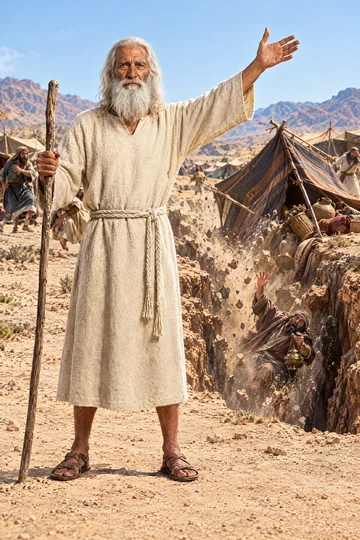
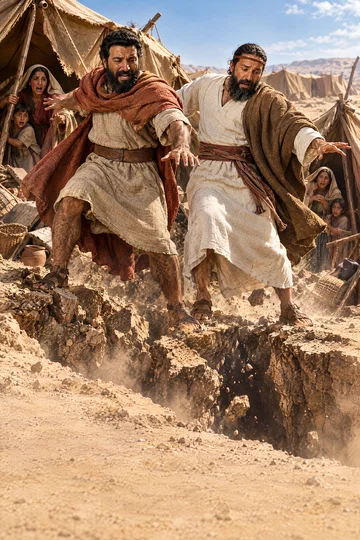
They, and all that appertained to them, went down alive into the pit, and the earth closed upon them: and they perished from among the congregation.
Translations
They, and all that appertained to them, went down alive into the pit, and the earth closed on them: and they perished from among the congregation.
King James Version, KJV Cambridge Paragraph Bible
They, and all that appertained to them, went down alive into the pit, and the earth closed upon them: and they perished from among the congregation.
They, and all that appertained to them went down alive into the pit, and the earth closed upon them: and they perished from among the congregation.
So they, and all that appertained to them, went down alive into the pit: and the earth closed upon them, and they perished from among the assembly.
So they, and all that appertained to them, went down alive into Sheol: and the earth closed upon them, and they perished from among the assembly.
and they go down, they, and all that they have, alive to Sheol, and the earth closeth over them, and they perish from the midst of the assembly;
And they went down, they and all that they had, alive into Sheol, and the earth covered them; and they perished from among the congregation.
so, they, and all that pertained unto them, went down, alive unto hades,—and the earth, closed upon them, and they perished out of the midst of the convocation.
Berean Standard Bible, Majority Standard Bible
They went down alive into Sheol with all they owned. The earth closed over them, and they vanished from the assembly.
So they, and all that belonged to them went down alive into Sheol. The earth closed on them, and they perished from among the assembly.
So they and all theirs went down living into the underworld, and the earth was shut over them, and they were cut off from among the meeting of the people.
So they and all that they had, went down aliue into the pit, and the earth couered them: so they perished from among the Congregation.
Douay-Rheims (Challoner revision)
And they went down alive into hell the ground closing upon them, and they perished from among the people.
Pictures


Cross-references 20 of 36
- Numbers 16:1-3
Now Korah, the son of Izhar, the son of Kohath, the son of Levi, and Dathan and Abiram, the sons of Eliab, and On, the son of Peleth, sons of Reuben, took men:
Korah and his followers challenge Moses and Aaron’s authority, beginning the rebellion.
- Numbers 16:41
But on the morrow all the congregation of the children of Israel murmured against Moses and against Aaron, saying, Ye have killed the people of the LORD.
The congregation accuses Moses and Aaron the day after the rebels’ deaths.
- 1 Corinthians 10:11
Now all these things happened unto them for ensamples: and they are written for our admonition, upon whom the ends of the world are come.
Korah’s judgment is presented as a warning for later generations.
- Jude 1:11
Woe unto them! for they have gone in the way of Cain, and ran greedily after the error of Balaam for reward, and perished in the gainsaying of Core.
Korah’s rebellion is an example of defiance ending in judgment.
- Ezekiel 32:18-32
Son of man, wail for the multitude of Egypt, and cast them down, even her, and the daughters of the famous nations, unto the nether parts of the earth, with them that go down into the pit.
Both locate Sheol beneath the earth, where the dead descend.
- Genesis 37:35
And all his sons and all his daughters rose up to comfort him; but he refused to be comforted; and he said, For I will go down into the grave unto my son mourning. Thus his father wept for him.
Both describe going down to Sheol in death.
- Isaiah 14:9
Hell from beneath is moved for thee to meet thee at thy coming: it stirreth up the dead for thee, even all the chief ones of the earth; it hath raised up from their thrones all the kings of the nations.
Both locate Sheol beneath the earth, where the dead are gathered.
- Numbers 16:26
And he spake unto the congregation, saying, Depart, I pray you, from the tents of these wicked men, and touch nothing of theirs, lest ye be consumed in all their sins.
Moses warns the people to leave the rebels’ tents before destruction.
- Job 17:16
They shall go down to the bars of the pit, when our rest together is in the dust.
Both texts describe going down to the pit, associated with Sheol.
- Ezekiel 31:15-18
Thus saith the Lord GOD; In the day when he went down to the grave I caused a mourning: I covered the deep for him, and I restrained the floods thereof, and the great waters were stayed: and I caused Lebanon to mourn for him, and all the trees of the field fainted for him.
Both place the dead in the earth’s depths.
- Numbers 16:49
Now they that died in the plague were fourteen thousand and seven hundred, beside them that died about the matter of Korah.
A further plague killed 14,700 after the people accused Moses and Aaron.
- Psalms 9:17
The wicked shall be turned into hell, and all the nations that forget God.
Both describe the wicked going down to Sheol.
- Deuteronomy 32:22
For a fire is kindled in mine anger, and shall burn unto the lowest hell, and shall consume the earth with her increase, and set on fire the foundations of the mountains.
Both describe Sheol as beneath the earth, in its lowest depths.
- Numbers 16:2
And they rose up before Moses, with certain of the children of Israel, two hundred and fifty princes of the assembly, famous in the congregation, men of renown:
Prominent leaders rose against Moses and Aaron in rebellion.
- Isaiah 5:14
Therefore hell hath enlarged herself, and opened her mouth without measure: and their glory, and their multitude, and their pomp, and he that rejoiceth, shall descend into it.
Sheol opens beneath to receive the dead.
- Jonah 2:2
And said, I cried by reason of mine affliction unto the LORD, and he heard me; out of the belly of hell cried I, and thou heardest my voice.
Both describe going down alive into Sheol.
- Deuteronomy 11:6
And what he did unto Dathan and Abiram, the sons of Eliab, the son of Reuben: how the earth opened her mouth, and swallowed them up, and their households, and their tents, and all the substance that was in their possession, in the midst of all Israel:
The earth opens and swallows Dathan and Abiram and their households.
- Psalms 106:17
The earth opened and swallowed up Dathan, and covered the company of Abiram.
The earth swallowed Dathan and covered Abiram’s company in judgment.
- Numbers 16:13
Is it a small thing that thou hast brought us up out of a land that floweth with milk and honey, to kill us in the wilderness, except thou make thyself altogether a prince over us?
Dathan and Abiram’s defiant accusation against Moses precedes their destruction.
- Numbers 26:10
And the earth opened her mouth, and swallowed them up together with Korah, when that company died, what time the fire devoured two hundred and fifty men: and they became a sign.
Recalls the earth swallowing Korah and his followers.
Commentary
Each commentary is drawn from primary sources: the writings of Ellen G. White and Adventist pioneers and periodicals. Each commentary is separate. Its own words are not a quotation; follow the references to read the source passages.
Ellen G. White
68 sources
They and all that belonged to them went down alive beneath the closing earth and perished from among the congregation when God made the ground open and swallow the tents and households of the leading rebels.Ms 110, 1899, par. 16–21Lt 20, 1896, par. 2–41SP 300.3SG4 30.2–31.23T 349.3–4 This unprecedented swallowing was the sign that the Lord had sent Moses and that the rebels had provoked the Lord by accusing His appointed leaders.Ms 110, 1899, par. 16–211SP 300.3SG4 30.2–31.23T 349.3–4PP 400.4–5 Their murmuring against Moses and Aaron was rejection of God and Christ as leader and insult to the Spirit of God.PP 635.2ST Sep 14, 1882 Their end works out on a narrower stage the same pride and ambition that caused Satan's rebellion in heaven, infused into them by him after his fall.PP 403.3 Their destruction stands recorded as a warning to God's people to the close of time against rebellion, unbelief and refusal of God's warnings.Lt 156, 1897, par. 3–6Lt 39, 1899, par. 231SP 306.2SG4 36.13T 353.1
Rebellion and Its Setting
The verse belongs to the rebellion of Korah, Dathan and Abiram against Moses, and to the example of unbelief that warns against following rebellion.Lt 156, 1897, par. 3–6PP 398.2 In that rebellion Korah and his associates publicly accused Moses and Aaron of taking authority that they themselves claimed to share.PP 398.2
The chief rebels were rulers in Israel honored and placed in positions of trust in the service of the tabernacle, but they became dissatisfied, wanted to be commanders, and sought the priesthood also.Ms 110, 1899, par. 16–21 They forgot that God and not Moses had placed them where they were, yet they charged Moses with taking too much upon himself.Ms 110, 1899, par. 16–21 In this they drew two hundred and fifty princes of the assembly to their side.Ms 110, 1899, par. 16–21 They were wicked, unsanctified men who take advantage of souls perishing for truth who will accept almost anyone who can explain the Scriptures.Ms 9, 1879, par. 3 First gaining the sympathy and confidence of the people in a new field, they then insinuated against God's appointed leaders with a deceptive story that they had been abused men, when the abuse and imposition was on their own side.Ms 9, 1879, par. 3 By this they sowed seeds of doubt against those in whom God would have the people have confidence, and gathered many sympathizers.Ms 9, 1879, par. 3
Nearly forty years later Israel was brought again into the wilderness to Kadesh, to the very place where they had been proved after leaving Egypt, and the living stream from the rock ceased and they found no water.1SP 309.2–3SG4 38.1–2 The thirsting multitude forgot the power of God that had supplied them with water from the rock for many years, nearly forty years before.ST Sep 30, 1880SG4 38.1–2 Instead of trusting their Almighty Leader and God, they became impatient and rebellious against Moses and Aaron.ST Sep 30, 18801SP 309.2–3SG4 38.1–2 They complained that Moses and Aaron had brought the congregation and their cattle out of Egypt into that evil place with no seed or figs or vines or pomegranates and no water to drink.SG4 38.1–2 In that complaint they said they wished they had died when their brethren died before the Lord, meaning they wished they had been among those destroyed in the rebellion of Korah, Dathan and Abiram.ST Sep 30, 18801SP 309.2–3SG4 38.1–2
Earth Swallows the Rebels
The congregation was told to get up from around their dwellings and to separate from the tents of these wicked men and to touch nothing belonging to them, lest they be consumed in their sins, while Dathan and Abiram stood in the door of their tents with their wives and sons and little children.3T 349.3–4 Moses set forth the sign by which the matter would be decided, that if these men died the common death of all men then the Lord had not sent him to do all these works, but if the Lord made a new and unprecedented thing and the earth opened her mouth and swallowed them alive with all that belonged to them, it would prove the Lord had sent him and that these men had provoked the Lord.Ms 110, 1899, par. 16–213T 349.3–4
As soon as Moses ceased speaking the earth opened, their tents and all that pertained to them were swallowed up, and they and all that appertained to them went down alive beneath the closed earth when the earth closed upon them.Lt 20, 1896, par. 2–41SP 300.3SG4 30.2–31.23T 349.3–4PP 400.4–5 They went down alive into the pit and perished from among the congregation, removed from Israel and cut off by sudden divine judgment for rebellion against God.Lt 20, 1896, par. 2–41SP 300.3SG4 30.2–31.2PP 400.4–5Lt 1, 1897, par. 5–7 They went down crying out as they perished, and the cry was heard by the children of Israel, who fled a great distance because they knew they were in a measure guilty for receiving the accusations against Moses and Aaron and were afraid they would also perish with them.PP 400.4–53T 350.1
This going down alive with all that belonged to them as the earth closed over them was a first judgment of God that was not yet finished.3T 350.1 It was distinct from the fire from the cloud of glory that afterward consumed the two hundred and fifty princes who offered incense.3T 350.1 Those princes did not perish with the first rebels because they were not first in rebellion but were given opportunity to see the end of the leaders and repent before wrath destroyed them for remaining unreconciled to the destruction of those wicked men.3T 350.1
God in a miraculous manner caused the earth to open and take them alive beneath with all that belonged to them.ST Mar 13, 1879SG3 80.1–21SP 82.2 This shows that He controls the fire and water under the surface of the earth and calls them into action as His instruments to do His will.SG3 80.1–2 These fiery forces beneath have been and will be His agents to blot out very wicked cities from the earth in the same way, when the heated elements cannot vent and the earth is convulsed and trembles and heaves, so that villages, cities and burning mountains are carried down together alive.ST Mar 13, 1879SG3 80.1–21SP 82.2 Such swallowings are evidences of His power that strike terror and awe.SG3 80.1–2
Vindication Mercy and Aftermath
The sudden swallowing alive and perishing from among the congregation proved that the rebels had provoked the Lord and that Moses had done all his works by the Lord's authority and not on his own.1SP 300.3SG4 30.2–31.2PP 400.4–5 It was God's just wrath upon the sin of rebelling against Moses and Aaron and unjustly accusing them.SG4 35.11SP 306.1 The sight of that judgment should have ended all suspicion and distrust toward Moses and led to repentance for abusing him.3T 353.2
The destruction confirmed and sustained Aaron in the sacred office of high priest.PP 425.4 Even so, the judgment did not at first convince rebellious Israel that they were wrong and Moses and Aaron were right, for the people still insisted Moses and Aaron were wrong and had killed the people of the Lord.SG4 37.11SP 308.1 The rebellion was not cured until fourteen thousand and seven hundred who had joined it were slain, after which God in mercy performed the remarkable miracle upon Aaron's rod to settle forever the question of the priesthood and settle minds forever in regard to it.SG4 37.11SP 308.1 After that miracle Israel was convinced of its own wrong, saw the rebellion in its true light, was terrified at dying in the wilderness, and confessed that Korah and those who perished with him had justly suffered God's wrath.SG4 35.1
This display of God's vengeance arrested the congregation's rebellion and gave the people opportunity to repent, showing both the seriousness of their sin and God's long-suffering mercy in not destroying the whole congregation.3T 355.1–356.2 Though the entire congregation shared guilt because all had sympathized to a greater or less degree, God in great mercy made a distinction between the leaders in rebellion and those whom they had led.PP 401.2 After overwhelming evidence had removed all uncertainty that they were wrong and Moses was right, He still granted space for repentance to the people who had permitted themselves to be deceived, with the signal manifestation of His power confirming the truth.PP 401.2
Jesus, the Angel who went before the Hebrews, was seeking to save Korah and his company when forgiveness was still lingering and judgment came very near.PP 401.3 The special irresistible interference from heaven while Moses entreated Israel to flee was an appeal for them to repent, and the judgment could even then have been stayed if they had responded to the interposition of providence and sought forgiveness.PP 401.3PP 401.2 Their flight was only fear of destruction, their rebellion was not cured, and they returned to their tents that night terrified but not repentant, so stubborn persistence sealed their doom.PP 401.3PP 401.2
Even after witnessing this marked judgment the survivors remained so deceived by pious pretensions that they blamed Moses for the deaths and accused him of killing the people of the Lord.TBC1882 47.3Ms 1, 1865, par. 9–10 They regarded the rebels as martyrs in effect, because their judgment had been shaped to sympathize with rebellion, their stubborn confidence in their own judgment leading to blindness and presumption against clear evidence of God's power.5T 66.2Ms 1, 1865, par. 9–10 The sight that should have ended suspicion and distrust and led to repentance for abuse of Moses did not cure the rebellion until fourteen thousand and seven hundred who had joined it were slain the next morning for presumptuous rebellion.SG4 37.13T 353.21SP 308.1
Doctrinal and Prophetic Meaning
Murmuring against Moses and Aaron was rejection of God as leader and blasphemy against God.PP 403.3ST Sep 14, 1882 Though the rebels believed they were serving God, in rejecting God's chosen instrument and leader they rejected Christ, their invisible leader, and insulted the Spirit of God.PP 635.2ST Sep 14, 1882 Their hearts were steeled against the Holy Spirit by moral infatuation because they did not implicitly trust and obey.ST Sep 14, 1882 Satan deluded them with the idea that they were opposing only a human leader, a man like themselves, and they were deceived by Satan by their own consent because they placed themselves in his power.ST Sep 14, 1882
The end of those swallowed alive shows the end of the same pride and ambition that caused Satan's rebellion in heaven, worked out on a narrower stage.PP 403.3 As Lucifer complained against the government of God and sought to overthrow the order established in heaven, after his fall he infused that same envy and discontent and ambition for position and honor into Korah, Dathan and Abiram, arousing self-exaltation, envy, distrust and rebellion.PP 403.3 Yet they were so deluded that they thought themselves righteous and regarded those who faithfully reproved their sins as actuated by Satan.PP 403.3 The judgment illustrates that work done in self will not stand while work done in God will endure, and that opposing God's appointed work brings destruction.Lt 9, 1895, par. 7Lt 120, 1900, par. 24–25
Their destruction stands recorded for a warning to God's people, especially those living near the close of time and at the end of the world, for their instruction.1SP 306.2SG4 36.13T 353.1 By claiming great light while not obeying it all, mingling men's devisings and selfishness with God's work, exalting self as especially favored of God, hurting God's servants and sustaining men whom God could not favor, they forfeited all right to claim sacred power and authority.Lt 194, 1898, par. 6 The same forfeiture falls on church leaders who entrench themselves as president and associates behind the sacredness of General Conference power as the voice of God to be respected while following that same course.Lt 194, 1898, par. 6
Warning for Later Generations
The history is to be read carefully and prayerfully as a recorded example of unbelief and apostasy that admonishes later readers against rebellion and foolish conduct and calls for genuine repentance.Lt 156, 1897, par. 3–6Lt 39, 1899, par. 23Lt 1, 1897, par. 5–7 It shows the deadly end of rebellion against God's appointed leadership, and warns that refusing the Lord's warnings and persisting in one's own judgment can lead to a similar end.3T 353.1Ms 185, 1897, par. 4Lt 74, 1900, par. 7 It gives instruction needed at the present time to keep the whole flock from being fed errors that cause them to go astray.Lt 156, 1897, par. 3–6Lt 39, 1899, par. 23 God calls for decisive action against evil workers in order to protect His work, for those who resist His correction and persist in sin and undermine faith face judgment and ruin.Lt 34, 1899, par. 42–44Lt 59, 1890, par. 15–17 Their work ended in disastrous judgment as a warning that those influenced to join a similar rebellion will also suffer disastrous consequences and share in its judgment.5T 290.314MR 108.3Ms 115a, 1897, par. 24–25 Resisting God's appointed messengers and rejecting the word He sends brings divine judgment, persisting in a rebellious, critical spirit risks repeating that experience, and their rebellion serves as a comparison for people taking a rebellious course.14MR 108.3Ms 115a, 1897, par. 24–257MR 113.2
Satan leads persons to imitate their example by raising insurrection among God's people in opposition to plain testimony, thinking those on whom God laid the burden of His work exalt themselves and that their counsels and reproofs are uncalled for.1SP 306.2SG4 36.1 Irritated by straight testimonies against hurtful indulgences such as tea, coffee, snuff and tobacco because those testimonies would destroy their idols, they stand undecided between conviction of truth and self-indulgence until appetite prevails and the sense of sacred things is perverted by slow poisons.1SP 306.2SG4 36.1 Then they decide at any consequence not to deny self, raise a wall of separation from those cleansing themselves from all filthiness of flesh and spirit and perfecting holiness in fear of the Lord, war against the testimonies saying the people are all right and the reproving testimonies make the trouble, and when rebellion unfurls its banner all the disaffected and the spiritually defective, the lame, the halt and the blind rally around it to scatter and sow discord.1SP 306.2SG4 36.1 Their end is the punishment for refusing God's testimonies and laboring to make them of no effect, being deceived and deceiving others.Lt 59, 1890, par. 2–5 Their own course and the result of their influence upon other minds is charged against them in the books of heaven to be met in the day of final accounts, their evil spreads by strengthening the hands and minds of others who quote them while the enemy of righteousness looks on pleased.Lt 59, 1890, par. 2–5
The same kind of disaffection that unites to make God's testimonies of none effect and tear faith from hearts is the work of the devil and a satanic dragon-spirit that does not make people more zealous or circumspect and does not prevail, for if the work is of God it will live and survive all such disaffections.Lt 3, 1883, par. 19–20 Their fate is preserved as a warning against accusing and condemning those God has entrusted with the work, for accusing and undermining God's appointed servants is conduct that offends God, brings grave consequences, and must be answered by demanding proof and carefully investigating every charge.RCNBP 11.17MR 332.1–2Lt 98a, 1897, par. 26–31 Their rebellion warns against separating from the body while claiming one's own ideas and methods will produce a purer church, and against accusing fellow believers and using their faults for self-advancement.Lt 118, 1890, par. 4–5 It means rebellion against God's appointed workers is ingratitude toward God ending in destruction from among the congregation, and it applies to those who have not toiled to bring out precious points of truth but receive the Sabbath all prepared at no cost while it cost others much toil and sacrifice, then rise up like them to reproach the workers God is using.SG4 316.1
Their end was God's punishment for selfishness and fraud, for seeking advantage without bearing burdens or responsibilities and being no religious strength to God's cause, with a fraudulent course concealed from brethren but marked by God so that they perished according to their works.4T 511.3–512.1 The same heart remains in those who seek benefits without responsibility and would follow the same example and receive the same reward if given opportunity.4T 511.3–512.1 Seeking credit and honor for a part in God's work and thinking oneself equal to God's chosen leader and an essential part that must be recognized leads to destruction, so the lesson is to put entire confidence in God, learn human weakness from the revelation of God's character, and let all self-exaltation go.Lt 7, 1894, par. 23–26 Those who yield to hasty, unadvised speech, self-esteem, false witness against brethren and distrust toward God's instrumentalities, who think they have been misused and then leaven others' minds with distrust, weaken faith in the men God is teaching and leading, and plant seeds of questioning and doubt, will bring upon themselves an experience similar to perishing from among the congregation.Ms 1, 1895, par. 53–55 Their example warns against self-deception that treats truth as error and error as truth and against resisting those who seek to do God's will.Ms 30, 1890, par. 1–3
Their rebellion and its consequences will be repeated in people who distort Scripture and God's warnings to support their own theories.Ms 149, 1904, par. 10 That repetition appears in rebelling against management the Lord is guiding by criticizing and finding mistakes and talking to make it appear there are mistakes where God is leading because the way is contrary to all previous experience, which requires converting and changing thoughts and attitude to work successfully in Christ's lines.Ms 180, 1898, par. 22 It appears also in men in responsible positions who pursue ambitious projects, have little faith in God's messages, and have pride hurt by straight testimonies that head off their plans, so that only a small further movement would bring them to open revolt.Lt 16g, 1892, par. 10–11 The spirit of Korah comes as soon as a man separates from God so his heart is not under the subduing power of the Holy Spirit, revealing Satan's attributes in oppressing fellow men with influence contrary to truth, justice and righteousness, manifested in one institution desiring to control all others and in men entrusted with weighty responsibilities who have no living connection with God doing despite to the Holy Spirit and casting aside warnings again and again.Lt 57, 1895, par. 814MR 116.2
Their rebellion was firm self-complacency and unwillingness to accept light from heaven, pride needing humbling, prejudice, backsliding, minds not actuated by God's Spirit, unsanctified independence insulting God's Spirit, contempt for God's word, despising His messengers and message, eyes blinded and judgment perverted by Satan, mockery and disgust at God's word, and daily lightness, trifling, jesting and joking instead of seeking God, acted over at Minneapolis by those who would not hearken or have God manifest His Spirit and power, so that unless every soul repents and is converted to be healed they will walk in darkness, have the candlestick removed, walk in sparks of their own kindling, and lie down in sorrow.3MR 191.1–2 Rebellion against God's order brought judgment warning that self-exalting, selfish plans in God's service cannot replace what God appoints.Ms 43a, 1901, par. 22 Leaders' rebellion and self-importance warns against presuming to take control of other institutions and carry every struggling organization, and rebellion against God's appointed leadership warns against following those who betray a sacred trust, with the same kind of rebellion and deception recurring until the close of time.Lt 15, 1892, par. 32–34Lt 64, 1896, par. 3–6 Those who have light and evidence but will not see or acknowledge it, who oppose the testimony of God's Spirit and lead others in a path where God is not leading, will be left to perish from among the congregation going down alive into the pit, and both such leaders and all who join them and walk not in the Lord's light will fall together into the ditch and lie down in darkness.Lt 59, 1890, par. 10–11
Sources
Pioneers and periodicals
131 sources
They with all that belonged to them went down alive into the pit when the earth opened under them, the earth closed over them, and they perished from among the congregation.RH Nov 12, 1903RH Oct 7, 1862RH Jul 25, 1907 The manner of death fulfilled Moses' test of a new thing, proving they had provoked the Lord and that God had sent him, so the destruction was known as God's judgment and not Moses killing the people.RH Nov 12, 1903ST Sep 9, 1880ST Oct 12, 1876 Their conspiracy against Moses and Aaron as God's appointed leaders was rebellion against the Lord himself, driven by envy, pride and ambition for position after the pattern of Satan's rebellion in heaven.RH Nov 12, 1903ST Apr 22, 1889RH Oct 7, 1862RH Jul 4, 1907ST May 20, 1889 The pit into which they went down bodily alive with houses and goods is sheol, the grave and common state of death for righteous and wicked alike until the resurrection, a place of corruption and unconsciousness with no remembrance or work, not conscious torment.RH Jun 26, 1900RH Aug 27, 1872RH Oct 31, 1854RH Mar 28, 1865RH Apr 18, 1871 Their sifting out of Israel before the promised inheritance warns that rejecting God's present message and divinely appointed order in the last days, by murmuring, schism, or self-assumed ministry, brings the same disapproval and fate.RH Jul 4, 1907RH Jul 7, 1874RH Aug 14, 1866ST Jul 12, 1883RH Jul 4, 1907
Event and Wording
They, and all that belonged to them, went down alive into the pit when the earth opened under them, and the earth closed over them, and they perished from among the congregation.RH Nov 12, 1903RH Oct 7, 1862RH Jul 25, 1907RH Oct 28, 1873ST May 20, 1889 The judgment fell on Korah, Dathan, Abiram and their households for rebellion against the Lord, publicly showing they had provoked Him and that Moses had been sent and chosen by God.RH Nov 12, 1903RH Oct 7, 1862RH Oct 28, 1873ST May 20, 1889RH Nov 1, 1906 As Moses ceased speaking with the eyes of all Israel fixed on him in terror and expectation, the solid ground split beneath them and shut over them so they were cut off living into the grave.RH Nov 12, 1903ST Sep 9, 1880RH Jul 25, 1907RH Nov 1, 1906ST Oct 12, 1876
The manner of death fulfilled Moses' test of a new thing: if they died a common death God had not sent him, but if the Lord made the earth open and swallow them alive their provoking of the Lord and his divine sending would be understood.RH Nov 12, 1903ST Sep 9, 1880ST Oct 12, 1876 This proved the destruction was God's judgment and not Moses killing the people.RH Nov 12, 1903ST Sep 9, 1880ST Oct 12, 1876 Dathan and Abiram with their wives, children, houses and goods kept a defiant attitude to the last, refusing to come up, accusing Moses of blinding minds and confusing the issue and laying an unbearable yoke upon them while claiming honesty, manliness and independence, and stood boldly in the doors of their tents mocking and scorning the threatened punishment and perished together.RH Nov 12, 1903RH Jul 25, 1907RH Aug 1, 1907 Korah's family did not fully share his spirit but left their tents when told to leave, so Korah alone perished.RH Aug 1, 1907
Fire from heaven consumed the two hundred and fifty men who took censers to offer incense, distinct from the earth swallowing the households.ST Mar 12, 1894ST Oct 14, 1880RH Oct 3, 1871RH Jan 5, 1911 Moses had proposed the censer test to ascertain the Lord's will and show whom He would choose, and after God sent down fire upon those offering incense their voluntarily offered censers were hallowed and claimed by the Lord as His to be made broad plates for a covering of the altar, teaching that what is once consecrated to His service cannot be withdrawn at will.RH Oct 3, 1871RH Jan 5, 1911 Other passages present the two hundred and fifty famous princes of renown, men famous in the congregation, as swallowed by the opening earth with the rebels and their sympathizers and many others besides.ST Jul 4, 1878RH Sep 14, 1916RH Jan 29, 1867RH Oct 7, 1909RH May 30, 1907 On that reckoning they perished with Korah, Dathan and Abiram because they rebelled against God's work in their own time through Moses, declaring all the congregation holy and charging Moses and Aaron with taking too much upon themselves.ST Jul 4, 1878RH Sep 14, 1916RH Jan 29, 1867RH Oct 7, 1909
The opening and closing of the ground was a supernatural earthquake and direct act of God's power as judgment for sin, remembered vividly in Hebrew memory as one of His great acts.ST Mar 13, 1879RH Nov 9, 1869ST Jul 14, 1914 It displayed His power through the earth's fiery forces and the laws of nature to vindicate the right and uphold His work and promises, by which villages, cities and burning mountains can be carried down into the earth, with flames bursting out at the swallowing of Korah and all that belonged to him.ST Mar 13, 1879ST Jun 30, 1881ST Jun 18, 1885 A jagged chasm in the desert is described as a possible remnant of that event.ST Jul 14, 1914 Strange nighttime sounds near Sinai, explained by Bedouin as the tormented spirits of those men, are presented as possibly caused by avalanches or falling rocks.ST Nov 18, 1886
The word translated pit is the Hebrew sheol, the word generally rendered hell in the Old Testament, occurring 63 times and translated hell 31 times, grave 30 times and pit 3 times.RH Jun 12, 1860ST Aug 18, 1881ST Mar 15, 1877 This verse is one of the three places where sheol is rendered pit, and sheol is rendered hades in the New Testament.RH Jun 12, 1860ST Aug 18, 1881ST Mar 15, 1877 It means grave, sepulchre, pit, underworld or state of the dead.RH Jun 12, 1860 The verse belongs to the account of Korah, Dathan and Abiram's uprising rooted in dissatisfaction with Israel's leadership and organization, in which they lost sight of God's care and focused accusations on Moses and Aaron.RH Jul 25, 1907
Rebellion Against God
To rise against Moses and Aaron as the leaders God had appointed was to rise against the Lord himself, rejecting his work, his gift and his direction through them, and because Moses stood as the leading prophet it was also rejection of the spirit of prophecy.ST Apr 22, 1889RH Oct 7, 1862RH Jul 4, 1907RH Mar 7, 1907RH Jan 17, 1865 The judgment that swallowed the murmurers who sought the priesthood contrary to the place assigned them and removed them from the congregation publicly proved Moses had been sent and chosen by God and made plain who was accepted and who was condemned.ST Apr 22, 1889RH Oct 7, 1862RH Mar 7, 1907RH Jan 17, 1865 Such opposition is ultimately directed against God, and its fearful end warns against envying those called to lead, despising their position, murmuring against them, and presumptuously claiming superior holiness to set oneself forward as leader.RH Oct 7, 1862RH Mar 7, 1907RH Jan 17, 1865
The rebels declared the whole congregation holy and able to govern itself without leaders and prophets, charged Moses and Aaron with taking too much upon them and lifting themselves above the congregation, and accused Moses of making himself a prince over them to restrict their liberties and bring them into bondage.RH Jul 4, 1907RH Dec 24, 1867RH Aug 17, 1911RH Jan 29, 1867ST May 15, 1901 They said authority had been taken without divine appointment, claimed revelation was not limited to a few chosen leaders, professed to be loyal reformers defending the people's rights, and united different grievances against Moses and his leadership.RH Aug 17, 1911RH Jan 29, 1867RH Jul 25, 1907RH Jul 30, 1914 They questioned his entire leadership by alleging his personal opinions and prejudices and the influence of relatives were mixed with God's leading, so men must decide what was human and what was divine; they alleged partiality in administration, relegation of dissenters to the rear, blindness of minds, confusion of the issue, and hindrance of their advancement, growing wrathful and determined to be rid of Moses as one with no divine hand in his position because he did not run things to their notion.RH Aug 17, 1911RH Jul 25, 1907RH Jul 30, 1914
Korah from selfish ambition sought to set aside present leaders and change the government to become leader himself and exalt himself, even claiming God had opened the matter and authorized the change, and that self-exaltation brought his ruin and that of his sympathizers.RH Jul 4, 1907RH Dec 24, 1867ST May 20, 1889 Korah and certain Levites, though exalted in the Lord's work, were unsatisfied and coveted the priesthood belonging to Aaron and his posterity, while Dathan and Abiram of Reuben, laying no just claim to priesthood, were ready to cooperate in any plan furnishing advancement; together they sought to put human authority in God's place, preached an individualism and independence denying divine principles of fellowship and mutual relationship, gathered every discordant element to strike at the divinely approved organization and church in the wilderness, and were determined to seize control or wreck the movement.ST May 20, 1889RH Oct 3, 1871RH Aug 1, 1907RH Aug 3, 1916RH May 30, 1907 Had God allowed the course to prevail it would have brought anarchy and greater trespasses and more arrogant assumptions of power belonging to God alone, for the controversy was not with men but with him who orders the battle, and to get out of the order God established means death.ST May 20, 1889RH Aug 3, 1916RH May 30, 1907
The rebellion was driven by envy and jealousy toward Moses and Aaron, pride and ambition for position and honor, murmuring against providence, disobedience, stubborn self-will, irreverence failing to separate holy from common, restlessness under restraint, unwillingness to submit to the Lord's directions and restrictions and to receive reproof.RH Nov 12, 1903RH Oct 7, 1862ST Sep 9, 1886ST Dec 13, 1883RH Jan 17, 1865 Envy led to the charge that leaders took too much upon them, deceived Korah into seeing only that all were holy and Moses was wrong, made him dissatisfied with his position and desirous of the priesthood, and persuaded him Israel would be more successful under his lead; peevish, fretful murmuring under little trials was as much sin as the wilderness murmuring, and lack of submission brought swift destruction showing exact obedience to God's requirements is essential.ST Sep 9, 1886ST Dec 13, 1883RH Jun 26, 1860RH Apr 21, 1868RH Dec 24, 1867 The sin was on a narrower stage a repetition of Satan's rebellion in heaven, where pride prompted complaint against God's government and seeking to overthrow heaven's established order; since his fall Satan infuses the same envy, discontent, distrust and ambition, blinds discernment, masquerades in the garb of righteousness and proper desire for rights and influence, stirs hatred of humility and exaltation of self, and leads men to think there is no rebellion in claiming what justly belongs to them.RH Nov 12, 1903ST Sep 14, 1882ST May 20, 1889ST May 15, 1901
So deluded, they thought they opposed only men, a human leader like themselves, while in rejecting God's chosen instrument they rejected God as leader, rejected Christ their invisible leader, and insulted the Spirit of God; they blasphemed yet deemed themselves righteous, regarded faithful reprovers as actuated by Satan, perverted truth, falsified and misrepresented the Lord's servants with charges of base selfish motives, reiterated falsehood until they believed it truth while supposing they did God service.RH Nov 12, 1903ST Sep 14, 1882ST May 20, 1889 By sinful indulgence giving Satan access they went from stage to stage of wickedness, rejection of light darkening the mind and hardening the heart until wrongdoing became fixed and sin no longer appeared sinful, meeting every advance of God's called leaders with suspicion and misrepresentation as in the time of Luther, the Wesleys and other reformers.RH Nov 12, 1903ST Sep 14, 1882ST May 15, 1901 The rebels were self-deceived and incurably determined: the deceived multitude abandoned the tents yet the leaders persisted, sympathizers fled self-condemned, and the next morning others accused Moses and Aaron of killing the Lord's people, calling wicked rebels martyrs and the holy murderers, proving rebellion wickedly blames the most innocent, cannot be cured, and holds fast despite forty years of blessings and judgments, with even miraculous swallowing and fire leaving Israel in unbelief and stubborn resistance.ST Mar 12, 1894RH Oct 14, 1862RH Oct 28, 1873RH Jan 29, 1867RH Dec 18, 1913 Opposition by Korah, Dathan and Abiram to Moses, the meekest man that had ever lived, coming after opposition by Pharaoh and the Egyptians and before opposition by almost all Israel, exemplifies false religion opposing true religion.RH Mar 10, 1868
Judgment Vindicates Leadership
They and all that belonged to them went down alive when the earth opened under them and then closed over them, and they perished from among the congregation.ST Sep 9, 1880RH Oct 7, 1862RH Oct 28, 1873ST Feb 28, 1906 Their extraordinary, irresistible death publicly showed that they had rebelled against and provoked the Lord and that Moses had been sent and chosen by God and had acted under His direction.ST Sep 9, 1880RH Oct 7, 1862RH Oct 28, 1873 The sudden judgment ended the rebellion and vindicated Moses and Aaron as leaders chosen by the Lord.ST Sep 9, 1880ST Feb 28, 1906 Moses and Aaron had taken nothing upon themselves but stood as servants of all under the Lord in His arrangement for the orderly conduct of His work, while the rebels sought supremacy to carry out their own ideas, complained against order, preached individualism and independence, gathered every discordant element to strike at the divinely approved organization, and were determined to wreck it if they could not control it.RH Aug 3, 1916 No prominence, popularity, or loud influence could save such opponents, proving that opposition to the Lord's work and truth comes to nothing whoever the opponents are.RH Aug 3, 1916ST Dec 2, 1913
God distinguished the instigating leaders from the congregation they had deceived.ST Sep 16, 1880RH Nov 12, 1903 Moses entreated Israel to flee the tents of the doomed men, and all Israel fled at their cry, saying lest the earth swallow them also.ST Sep 16, 1880RH Nov 12, 1903 Forgiveness still lingered while Jesus, the Angel who went before the Hebrews, sought to save even Korah and his company and appealed to them to repent, so that the judgment could still have been stayed if they had repented and sought forgiveness.RH Nov 12, 1903 God in mercy spared the people for a time and gave them, though sharing guilt by sympathy, space and opportunity to seek pardon and repent.ST Sep 16, 1880ST Sep 16, 1880RH Nov 12, 1903 Yet they fled through fear of destruction without cure of rebellion and returned to their tents that night terrified but not repentant, while the final doom fell on the defiant guilty who resisted every appeal and stubbornly persisted until sealed, not on the innocent.RH Nov 12, 1903ST Feb 9, 1915
The sudden and severe judgment manifests God's unbending justice and hatred of sin alongside His long forbearance and mercy.RH Oct 23, 1860 It proves the sacredness of God's ordinances and holiness of His work, that He requires everything in His sanctuary and worship to be performed exactly and is no respecter of persons, treating the greatest among men and His own people with the same strict justice as the lowest.ST Jun 17, 1889 No outward provocation is an excuse for sin, since its root is wholly in the heart of man, and destruction falls on the defiant and guilty, not on the innocent.ST Jun 17, 1889ST Feb 9, 1915 The judgment came directly from God rather than through human agents, for when rebellion made the case seem hopeless Moses lay prostrate in the dust in intercession, Jehovah appeared in glory at the door of the sanctuary, and the earth opened and the rebels disappeared forever.RH Nov 23, 1905ST Mar 20, 1901 Earnest prayer thus brings deliverance from God in impossible crises, giving the pattern for petitioning the great God who is able to deliver when a crucial point is reached in conflicts in the church till the end of time.RH Nov 23, 1905
Pit Means Sheol
Sheol, identical with hades, is down in the earth beneath, a material hollow place embracing the interior and nether parts of the earth as the region of the dead and the place of every grave, always spoken of as beneath, not an immaterial spirit land.ST Mar 13, 1879ST Mar 6, 1879RH May 5, 1874RH Mar 28, 1865RH Apr 20, 1869 When the earth opened its mouth and then closed over them, Korah and his company went down alive into sheol, meaning the ground swallowed them up while yet alive.ST Mar 13, 1879ST Mar 6, 1879RH May 5, 1874RH Mar 28, 1865ST Mar 20, 1879 They went there with houses, clothing, bodies, goods and everything pertaining to them, Korah, Dathan and Abiram with all that belonged to them going down bodily and alive into sheol beneath when the ground closed over them.ST Mar 13, 1879RH Aug 27, 1872RH Mar 28, 1865ST Mar 15, 1877RH Jun 26, 1900 This proves that sheol receives the whole man bodily at death, and that the whole person goes there.RH Aug 27, 1872ST Mar 20, 1879RH Mar 28, 1865ST Mar 15, 1877RH Mar 28, 1865
Sheol is the Hebrew name for the place of the dead, called hades in Greek, and dying is going to sheol or hades.RH Aug 27, 1872RH Mar 28, 1865ST Mar 15, 1877ST Jun 5, 1879RH Jun 16, 1874 It is the common destination and receptacle of all the dead, righteous and wicked alike, where all alike go and where those who enter remain till their resurrection.RH Jun 26, 1900RH Aug 27, 1872RH Mar 28, 1865ST Mar 15, 1877RH Jun 16, 1874 Those who went down there must remain there until their resurrection, having perished from among the congregation.RH Aug 27, 1872RH Dec 22, 1868RH Jun 26, 1900RH Jun 16, 1874RH Mar 28, 1865 In English sheol is sometimes translated grave and sometimes hell.ST Jun 5, 1879RH Jun 16, 1874
Here sheol means the grave, sepulchre, pit, underworld or state of death, described as the grave or pit and a place of corruption and worms.RH Jun 26, 1900RH Oct 31, 1854RH Apr 18, 1871RH Jun 26, 1900 The verse describes death and complete destruction, not conscious torment nor a place divided into separate apartments of misery and comfort.RH Jun 26, 1900RH Oct 31, 1854 That place is unconscious, with no remembrance, thanks, work, device, knowledge or wisdom, and the dead have no consciousness until the resurrection.RH Jun 26, 1900RH Apr 18, 1871 The Hebrew word sheol is used here, translated pit, one of three places in the Old Testament where sheol is rendered pit, while hades is the New Testament term for this same Old Testament sheol.ST Mar 15, 1877 The divinely inspired teaching given by Moses here concerning sheol is in divine harmony with the teachings of Christ and the apostles concerning hades.ST Mar 15, 1877
The swallowing alive when the earth opened and perished them from Israel's congregation is an example of sinners whose sins bring special divine judgment in this life by sudden destruction.RH Jan 11, 1915ST Nov 8, 1883ST Mar 24, 1881RH Aug 1, 1865 They went down deep and did not return, going so deep that they had not returned.RH Jan 11, 1915ST Nov 8, 1883 Such sudden destruction is treated as a representation of the final fate of impenitent enemies of God.ST Mar 24, 1881
Present Truth and Sifting
Recognizing Moses as God's appointed leader was the vital present-truth test for that generation, and those who rejected him were slain while those who accepted him were saved.RH Jul 7, 1874ST Jul 12, 1883ST Jun 4, 1874 Salvation depended on receiving the present truth God gave for one's own time with its special duties, not merely on believing what God had done before.RH Jul 7, 1874ST Jun 4, 1874ST Jul 4, 1878 The rebels professed the strongest faith in Noah and his past finished work, which required no sacrifice, no risk and no faith, yet they murmured at Moses, threatened to kill him, and rebelled against his authority as bearer of God's special additional message and truths for their time.ST Jun 4, 1874ST Jul 4, 1878ST Nov 11, 1880ST Feb 22, 1877 Their being put down after that determined unbelief and bitter opposition proved Moses' message was of God, and their acknowledgment that God had worked through Noah did not save them when they disbelieved and opposed the message God gave them then.RH Jul 7, 1874ST Jul 12, 1883ST Nov 11, 1880 That test belonged to its time, so that after prophecy brought a new present truth, insisting on Moses as the divinely appointed leader and teacher became a reason for rejection.ST Jul 12, 1883
God sifted Korah, Dathan and Abiram with their sympathizers and all the murmurers out of Israel before Israel was prepared to march by faith into the promised inheritance, proving He always sifts the church before He begins any great work requiring triumphant faith and united action.RH Jul 4, 1907RH Dec 31, 1914 That sifting of dissatisfied rebels will be repeated among God's people in the last generation before they enter the heavenly Canaan, and those who rebel will share the rebels' fate.RH Jul 4, 1907RH Jul 4, 1907RH Jul 4, 1907 Their rejection of Moses and Aaron as leaders chosen to deliver Israel from the false religions of Egypt was rebellion against God, and because Moses was the leading prophet it was also rejection of the spirit of prophecy and of the prophet and the priesthood.RH Jul 4, 1907RH Jul 4, 1907RH Jul 4, 1907 Though including two hundred and fifty famous men of renown and prominence, they claimed all the people were holy and able to govern themselves without leaders and prophets, accused Moses and Aaron of exalting themselves above the people, and accused Moses of making himself a prince over them to restrict their liberties and bring them into bondage.RH Jul 4, 1907 Korah sought to set aside the present leaders and change the government from selfish ambition to become leader himself and exalt himself, even claiming God had opened the matter to him and authorized the change, and that self-exaltation with its stubbornness brought his ruin and that of his sympathizers as a warning against rejecting God's instruction when it confronts personal sin.RH Jul 4, 1907RH Aug 14, 1866RH Jul 4, 1907
As the sons of Korah perished in their gainsaying against Moses and Aaron, so the same fall and perishing in some form will come on factions, murmurers, schismatics and secessionists who rise in rebellion against the men, means and instruments God has chosen to give the third angel's message of Revelation 14.RH Jul 2, 1857RH Apr 13, 1911RH Jan 13, 1863RH Jan 24, 1865RH Feb 18, 1873 The Lord is now doing a special work equal to leading Israel through the desert, even leading Israel from Egypt to Canaan to prepare a faultless remnant people for translation and for the second advent of the Saviour, and that purpose and work will move on harmoniously because excellent in working and cannot be thwarted by men.RH Jul 2, 1857RH Apr 13, 1911RH Feb 18, 1873 Fallible instruments like Moses or Aaron may fail and die short of the end, and God will put their mantles on successors as Eleazar succeeded Aaron and Joshua succeeded Moses, but He never perfects His work by means of rebellion in the camp nor takes sides with rebels.RH Jul 2, 1857RH Apr 13, 1911 He overrules their course for the good of His children while the rebels themselves are cut off and left behind if they do not suddenly perish, including professed friends of truth found in rebellion against His present special work of delivering and developing the remnant church, and their destruction happened for ensamples and was written for the admonition of those upon whom the ends of the world are come.RH Apr 13, 1911RH Jan 24, 1865RH Feb 18, 1873
Grievous sin existed among Israel even while God was leading His people, and the presence of systematic concerted opposition from within did not mean He had ceased to lead them.RH Mar 27, 1900RH Jun 25, 1914 Their moving together systematically in concert and harmony did not save them from going down alive together when swallowed up.RH Jan 13, 1863 A like fate in some form or other will overtake all who pursue a similar course of rebellion.RH Jan 13, 1863 Their rebellion, in which the people could not discern those God had left to themselves from those who served Him, illustrates how conflict within the church can be driven by the dragon against God's commandment-keeping people.RH Mar 27, 1900
The judgment proves that the confederacy of evil being outwardly the largest gives it no importance and sanctity in the eyes of heaven.ST Mar 12, 1894 Great numbers accepting the false sabbath and ignoring the Sabbath of the Lord their God do not lessen the dishonor to God or strengthen the cause of iniquity.ST Mar 12, 1894 Prominent people among God's people, including men of renown famous in the congregation, are not exempt from judgment when they reject God's authority and fail to distinguish what He has set apart as sacred from what is common, including treating the Lord's Sabbath as no different from the six working days and open rebellion against God's law.ST Mar 12, 1894ST Mar 24, 1898 Judgment may be delayed, but it will surely come.ST Mar 24, 1898 Even this miraculous work of God to convince of the truth, when the earth opened and then closed over them so they perished from among Israel and fire from the Lord consumed two hundred and fifty princes of Israel, did not convince Israel, for in spirit and principle the whole congregation was one with the workers of iniquity and the people remained full of unbelief and rebellion and persisted in stubborn resistance of light.ST Mar 12, 1894ST Mar 24, 1898
Men who take a decided stand against the truth of God imperil also their families.ST Oct 26, 1904 Korah and his two hundred and fifty fellow rebels were destroyed when the opening earth swallowed them with their wives and children and all their belongings.ST Oct 26, 1904 The families of those who worship other gods and persecute the worshipers of the true God have no assurance of or special claim to the protection of the God whom they ignore or defy, because the angel of the Lord could not abide in such company and hence there was no protection for them.ST Oct 26, 1904
Warning to Church
The swallowing alive stands as a warning against murmuring as sin against God that brings death, showing how seriously a holy God regards a peevish, fretful, grumbling spirit in families and amid little trials.ST Apr 22, 1889RH Jun 26, 1860 Korah, Dathan, Abiram, two hundred fifty princes and many others perished because they murmured against providence and against apparent mistakes of fellow men, leaving graves that marked the journey from Egypt to Canaan.RH Oct 7, 1909 Their looking backward to Egypt instead of forward to Canaan, and magnifying personal grievances and petty annoyances above worthy purpose and future hope, contrasts with Moses, Caleb and Joshua looking forward with expectant hope and enduring as seeing the Invisible, with personal trials sinking into insignificance before a heaven-appointed mission.RH Oct 7, 1909 The same example warns against complaint and dwelling on perceived faults in leaders and organization until faith and faithful purpose are weakened. God thus marks and rewards two classes, for Korah, Dathan and Abiram opposed every move, found fault with regulations, created distrust and stirred rebellion and perished under judgment, while Aaron and Hur held up fainting hands and Caleb and Joshua seconded plans and encouraged going up to possess the land and were known and rewarded, a division continuing among professed believers where the faithful move with every advance and murmurers oppose each step.RH Nov 6, 1866
The end of Korah, Dathan and Abiramism is wild democracy in the churches and insubordination against elders, saying stand back, you take too much upon yourselves, since all the congregation is holy, refusing submission and questioning their right and qualifications to judge.RH Dec 3, 1857 That spirit causes half of church difficulties, destroys the confidence of elders to act officially, and makes even well-qualified elders as inefficient and useless as mummies, with the remedy in obeying those who rule and watch for souls as those who must give account, in charity that thinks no evil, brotherly love esteeming others better than self, and less self-love that publishes brethren's weakness to justify self and show righteousness, lest unsubdued it make the church tremble.RH Dec 3, 1857 Moses and Aaron had taken nothing upon themselves but stood as servants of all under the Lord in His arrangement for orderly conduct of the work, while the rebels sought supremacy to carry out their own ideas, complained against order, preached individualism and independence denying divine principles of fellowship and mutual relationship, gathered every discordant element to strike at divinely approved organization standing in the way of seizing control and turning the movement from God's purpose, determined to wreck it if they could not have their own way, and perished in apostasy under God's judgment vindicating His truth and servants and saving His people.RH Aug 3, 1916 God is a God of order, and to get out of the order He established means death, for all Israel was embraced in His organization with every man appointed to his work as most perfectly effected in the year building the sanctuary, and the two hundred fifty men of renown were swallowed because they coveted the priesthood while thousands died for neglecting instruction.RH May 30, 1907 The trouble was seeing only the agencies God used instead of the arrangement God made with God back of it and over it all, for men are fallible and God sometimes uses even wicked men as Cyrus without lessening the force of the established order, so the controversy is not with men but with Him who orders the battle, whose work planned in Christ before creation will be accomplished though thousands are slain by interfering with appointed agencies.RH May 30, 1907 The rebels with all belonging to them swallowed and perishing from Israel was God's judgment on rebellion against established order, warning that opposing church order and fostering division brings fatal consequences even when downfall does not come by the earth opening, and warning against resisting God's direction in favor of staying united with the people He leads.RH Jul 2, 1861
The judgment on Korah, Dathan, Abiram and those joined to them, removed alive from the congregation, stands as a warning against rebellion and against being led into sin by its instigators.ST Sep 16, 1880 The followers who went down when the earth opened and closed over them warn against sympathizing with the rebellious and wicked, for those who join them may share their downfall, so the lesson is to remain firm like a rock grounded in Christ.RH Jul 3, 1860 Those who joined or sympathized were also guilty before God and suffered as incorrigible sinners under divine vengeance.RH May 3, 1870
Korah, Dathan and Abiram with sympathizers were rebels against God's people and work because they refused to stay in union and move with them and set themselves up as judges over it, so those doing the same are rightly called rebels.RH Jan 6, 1863 Murmurers, schismatics and factionists rebelling against God's special work face sudden perishing as public examples with all appertaining to them, for as God led Israel from Egypt to Canaan so He prepares a people for the second advent and His purpose moves harmoniously and cannot be thwarted, and such rebels will be left behind if they do not suddenly perish, their destruction happening for ensamples written for admonition upon those on whom the ends of the world are come.RH Feb 18, 1873 Their going down alive into the depths with the earth closing over them exemplifies the judgment that would befall every imitator if God executed sentence against every evil work immediately.ST Mar 24, 1887 Their going down alive into the pit when the earth closed over them was judgment for schism, secession from the church guided by God's word and Spirit, which is rebellion against God, standing on record as example and warning that opposers and meddlers with God's work will perish, with judgment not always executed speedily now and perhaps no more swallowed by earthquakes before the mighty earthquake when God utters His voice, yet the day of just retribution surely coming.RH Jan 24, 1865
God summarily rejects those who take up ministry by themselves apart from His orderly provision for calling and ordination, destroying them by opening the earth to swallow them, for independent self-assumed ministration is rebellion against divine order opposite to divinely endowed authority such as Aaron received, and is the fate of pretenders claiming spiritual prerogatives and offices without obedience, humility and unmistakable credentials from God.ST Nov 25, 1889 Korah and his followers perished as consequence of want of reverence for God and His appointments.RH Jun 23, 1868 Their murmuring ending in the earth opening and swallowing them was disastrous result of presumptuous irreverence toward God, happening as ensample written for admonition upon those on whom the ends of the world are come, warning against growing indifference to everything sacred and delay emboldening evil, and calling God's remnant to study and do His will and sigh and cry over abominations rather than follow prevailing evils.RH Oct 9, 1900 As Korah did, one who oversteps the bounds of his calling faces severe judgment in being swallowed alive and dying among the congregation.RH Dec 24, 1861 Their perishing after challenging restriction of priestly service to Aaron's descendants illustrates the penalty for aspiring to an office the law reserved for Aaron and his sons.ST Jan 12, 1882 Their end was the sin against God's holy name in irreverence failing to separate holy from common things of life, while Hallowed be thy name teaches the opposite spirit of reverence, adoration, worship and love as caution against repeating their sin.ST Oct 28, 1875
Korah and those connected with him were leading men in high trust, men of renown and famous in the congregation, who with the common people blamed Moses and Aaron, especially Moses as the very instrument God used to communicate will and instruction, for trouble coming through their own sins and murmurings, opposing the gift given to help and bless them, and their end warns not to fail the same way through unbelief.RH Sep 20, 1906 Rebellion raised inside the church against those God has chosen to minister before Him, after He has shown His choice by manifest power, brings the same destruction as Dathan and Abiram swallowed alive with all belonging to them when the earth closed, for in evil and perilous days God guards the church as the apple of His eye, so woe comes to followers of Dathan and Abiram in stubborn rebellion, their case standing as memorial with similar fate awaiting all persisting in that course, since rebellion is as witchcraft and stubbornness as iniquity and idolatry.RH Dec 23, 1862 Turning aside God's counsel to suit self and lessening confidence of God's people in the Testimonies He has sent is rebelling against God as certainly as they rebelled.RH Jun 28, 1906 Their going down alive into the pit with the earth closing and removing them from the congregation warns that those rebelling against God's counsel and resisting pointed testimony meet a like fate.RH Feb 17, 1863
God's judgments must not be blamed on those who obey and teach His commandments, and God's instruments in carrying out His work must be respected, as taught by God opening and closing the earth over Korah's company and all belonging to them. The swallowing alive of presumptuous Dathan and his company is recalled in comparison with later disaster, yet not to claim its victims were more wicked than people elsewhere, for calamities may serve as warnings and examples while reasons they fall on particular people remain hidden in providence.RH Jul 1, 1915
Going down alive into the pit is being hurried quick to ruin by sin while still living, picturing tens of thousands of youth, even baptized youth, sent down quick by the vice of uncleanness, with men of pleasure, deceivers and deceived hastening there with the gospel sounding in ears to the pit of destruction dragging associates' souls with them.ST Apr 29, 1875 Questioning Moses brought dreadful death after distrust and rebellion that began with fear and progressed to distrust and rebellion amid Israel's affliction.RH May 20, 1873 Those drawing others away from the track of truth may prosper for a time but end in darkness and despair as illustrated by Korah, Dathan, Abiram and those with them removed from the congregation when the earth opened and closed.RH Apr 15, 1909 They stand as prominent wrecks stranded on time's shores, sailing life boasting wisdom, power and might as their own without acknowledging Israel's God, and so perishing from the congregation.RH Oct 22, 1901 Their perishing in the wilderness shows descent from Jacob guarantees neither salvation nor share in promises.RH Jan 16, 1872 Dathan and Abiram as rebels under divine malediction stand with Cain the fratricide, Ananias and Sapphira, Simon the sorcerer, Judas the traitor and those desiring not knowledge of God's ways, whose portion the accursed are wished to share, with name blotted from the book of the living and not written with the righteous, perishing in the day of judgment and devoured by everlasting fire with the devil and angels unless there is restitution and amendment.RH Sep 29, 1874
The rebellion against the church was carried out while professing concern for the people's prosperity and zeal for God.RH Apr 29, 1909 The claim that Israel could continue toward the promised land was false, for Korah, Dathan and Abiram with those with them perished when swallowed, confirming God's warning that the people would die in the wilderness.RH Nov 19, 1903 The rebellion of Dathan and Abiram bringing judgment in which they and all belonging to them went down alive and perished warns of judgment that would have fallen for similar wrongdoing apart from the better covenant.RH Feb 26, 1857 The account belongs to powerful men and princes disputing Moses' right to lead, where Moses leaves contention with God and continues his work.ST Feb 15, 1905 It is an example of revolt against God within His people.RH Feb 24, 1916 At Kadesh when water failed the thirsting multitude forgot God's power that had supplied water from the rock for years, grew impatient and rebellious against Moses and Aaron instead of trusting the Almighty Leader, and wished they had died with those brethren destroyed before the Lord.ST Sep 30, 1880
Sources