Hebrews 12:16
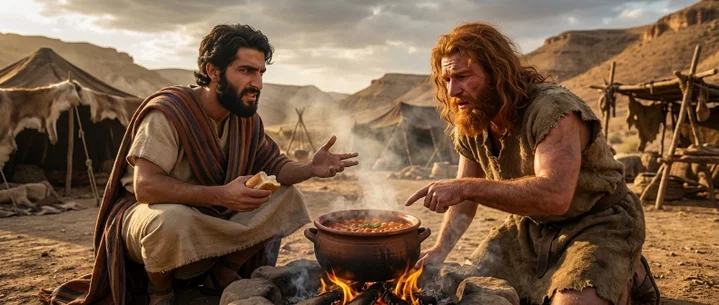
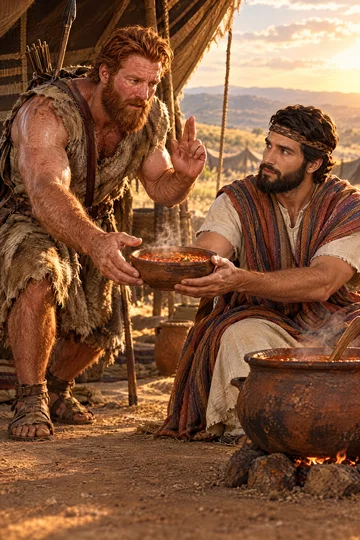
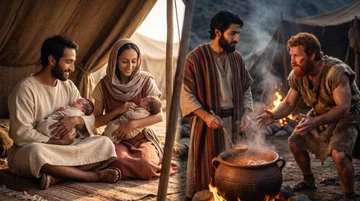
Lest there be any fornicator, or profane person, as Esau, who for one morsel of meat sold his birthright.
Translations
American King James Version, King James Version
Lest there be any fornicator, or profane person, as Esau, who for one morsel of meat sold his birthright.
lest there be any fornicator, or profane person, as Esau, who for one morsel of meat sold his birthright.
Lest there be any fornicator, or profane person, as Esau, who for one morsel of food sold his birth-right.
Revised Version, American Standard Version
lest there be any fornicator, or profane person, as Esau, who for one mess of meat sold his own birthright.
lest any one be a fornicator, or a profane person, as Esau, who in exchange for one morsel of food did sell his birthright,
lest [ there be] any fornicator, or profane person, as Esau, who for one meal sold his birthright;
Lest there be any fornicator, or profane person, like Esau,—who, for the sake of one meal, yielded up his own firstborn rights;
Berean Standard Bible, Majority Standard Bible
See to it that no one is sexually immoral, or is godless like Esau, who for a single meal sold his birthright.
lest there be any sexually immoral person or profane person, like Esau, who sold his birthright for one meal.
And that there may not be any evil liver, or any man without respect for God, like Esau, who let his birthright go for a plate of food.
Let there be no fornicator, or prophane person as Esau, which for one portion of meate solde his birthright.
Douay-Rheims (Challoner revision)
Lest there be any fornicator, or profane person, as Esau; who for one mess, sold his first birthright.
Pictures
Cross-references
- Genesis 25:29-34
And Jacob sod pottage: and Esau came from the field, and he was faint:
Esau sells his birthright for food
- Genesis 27:34-38
And when Esau heard the words of his father, he cried with a great and exceeding bitter cry, and said unto his father, Bless me, even me also, O my father.
Esau bitterly grieves and pleads for his father’s blessing after losing it.
- Genesis 27:1-29
And it came to pass, that when Isaac was old, and his eyes were dim, so that he could not see, he called Esau his eldest son, and said unto him, My son: and he said unto him, Behold, here am I.
Jacob obtains Isaac’s blessing by fraud.
- Malachi 1:2-3
I have loved you, saith the LORD. Yet ye say, Wherein hast thou loved us? Was not Esau Jacob’s brother? saith the LORD: yet I loved Jacob,
Gives the original statement about God’s treatment of Jacob and Esau.
- Romans 9:13
As it is written, Jacob have I loved, but Esau have I hated.
States God’s contrasting regard for Jacob and Esau.
- Genesis 25:23
And the LORD said unto her, Two nations are in thy womb, and two manner of people shall be separated from thy bowels; and the one people shall be stronger than the other people; and the elder shall serve the younger.
God foretold that the elder would serve the younger.
Commentary
Each commentary is drawn from primary sources: the writings of Ellen G. White and Adventist pioneers and periodicals. Each commentary is separate. Its own words are not a quotation; follow the references to read the source passages.
Ellen G. White
43 sources
The verse warns professed children of God against becoming a fornicator or a profane person like Esau, who gave up his birthright for one meal to satisfy momentary appetite.Ms 4, 1885, par. 1Lt 47, 1894, par. 41–4219MR 177.1–2 To be profane is to treat sacred things as worthless, with indifference to divine blessings and requirements and willingness to sacrifice spiritual things for appetite, pleasure and gain.Lt 97, 1896, par. 12–1519MR 177.1–2Lt 4, 1898, par. 7–8 The birthright stands for the high temporal and spiritual blessings secured at infinite cost, including fellowship with God, purity, peace, holiness and title to the eternal inheritance.Lt 21, 1867, par. 16–19Lt 4, 1898, par. 7–8CH 110.2 Esau let long-indulged appetite overpower every other concern until the birthright lost its sacredness in his sight, flattering himself that he could dispose of it at will and buy it back at pleasure, yet when he sought the blessing with tears he was rejected and could not recover it.Lt 97, 1896, par. 12–15Lt 21, 1867, par. 16–192T 37.3–38.21SP 108.1–2CH 110.2 His mourning was not godly sorrow that works repentance unto eternal life, but selfish sorrow over painful consequences with an unchanged heart.ST Apr 19, 18774RED 57.2–58.1GC88 620.1–3 So the verse calls every church member to critical self-examination, to keep the birthright by being as true as steel to principle and putting away selfish passions and entanglements, because to trade integrity, peace and holiness for immediate gratification is to risk heaven itself, and if heaven is lost everything is lost.Ms 4, 1885, par. 1Lt 47, 1894, par. 41–42Lt 21, 1867, par. 16–192T 37.3–38.2Lt 59, 1903, par. 7–11
Words and Context
The warning is addressed to professed children of God, lest any among them prove to be a fornicator or a profane person like Esau, who surrendered his birthright for a single meal to satisfy momentary gratification.Ms 4, 1885, par. 1Lt 47, 1894, par. 41–4219MR 177.1–2Lt 35, 1898, par. 20–21Lt 48, 1897, par. 12–23 It treats his exchange as the pattern to be shunned, trading lasting spiritual privilege for immediate appetite and showing contempt for that privilege by choosing the world over Christ.Lt 47, 1894, par. 41–42Lt 48, 1897, par. 12–23Lt 179c, 1905, par. 9–11 The danger is of letting selfish desire and appetite rule and thereby sacrificing integrity, peace, and the soul for selfish advantage or carnal desires.Lt 47, 1894, par. 41–42Lt 48, 1897, par. 12–23
To be profane is to treat sacred things as worthless, with indifference to divine blessings and requirements.Lt 97, 1896, par. 12–1519MR 177.1–2Lt 48, 1897, par. 12–23Lt 179c, 1905, par. 9–11PP 181.3–182.1 It is to have no respect for what is sacred and to sacrifice spiritual things for gratification of appetite and for love of selfish indulgence, pleasure, and gain.Lt 4, 1898, par. 7–8PP 181.3–182.1 Such contempt makes brief earthly desire seem more valuable than lasting spiritual good.Lt 48, 1897, par. 12–23Lt 179c, 1905, par. 9–11
The birthright stands for the high temporal and spiritual blessings brought within reach and secured for every soul born into the world at infinite cost.Lt 21, 1867, par. 16–19Lt 4, 1898, par. 7–8 It includes fellowship with God, purity, heavenly hope, peace, holiness, and title to the immortal, eternal inheritance.Lt 21, 1867, par. 16–19Lt 4, 1898, par. 7–8Lt 29, 1882, par. 9Lt 48, 1897, par. 27–30 To barter it away is to lose eternal life for a treasure that perishes in its use, slighting great privileges, opportunities, and blessings.CH 110.2Lt 29, 1882, par. 9Lt 48, 1897, par. 27–30
The warning belongs with coming very close to God in peace and holiness, continuing in the grace of God, and permitting no root of bitterness to spring up to trouble and defile many.Ms 4, 1885, par. 1Lt 97, 1896, par. 12–15Lt 35, 1898, par. 20–21Lt 179c, 1905, par. 9–11Lt 29, 1882, par. 9 It calls for critical self-examination by the only standard of righteousness, carrying the spirit and teachings of Christ into everyday life, and carefully scrutinizing motives, actions, and daily influence.Ms 4, 1885, par. 1Lt 47, 1894, par. 41–42 It calls for lifting feeble hands and knees and making straight paths for the feet, so the lame is healed rather than turned out of the way, since want of faith and intelligent knowledge of the Scriptures turns many aside.Ms 4, 1885, par. 1Lt 35, 1898, par. 20–21 The chapter containing it is to be read carefully for strength in life's conflict and for choosing faithfulness through suffering rather than the temporary pleasures of sin.Ms 4, 1885, par. 1Lt 106, 1896, par. 23
Fornication in the warning applies to persisting in lustful practices rather than giving them up.19MR 177.1–2Lt 35, 1898, par. 20–21 Such sin defiles the conscience, corrupts the heart, and makes the thoughts continually corrupt, while not being discerned as sinful by the one who continues in it.19MR 177.1–2Lt 35, 1898, par. 20–21 Satan then uses such persons as decoys to lure souls into unclean practices that defile the whole being and lead others into sin.19MR 177.1–2Lt 35, 1898, par. 20–21 The call is therefore to reject those practices rather than forfeit what is spiritually precious.19MR 177.1–2Lt 35, 1898, par. 20–21
Esau's Sale and Regret
Esau let appetite for one particular dish bear down every other consideration and control him, after long self-gratification had strengthened his desire until he dwelt on the coveted food in imagination and felt he would suffer great inconvenience and even death without it.CH 110.2CTBH 43.1–44.2 The more he reflected on it the stronger the craving grew, until his birthright lost its value and sacredness in his sight and he bartered it away.CH 110.2CTBH 43.1–44.2 That indulgence weakened his power to value eternal things and led him to sacrifice health, clear judgment, and spiritual understanding.2T 37.3–38.21SP 108.1–2SG3 116.1–117.1ST Apr 24, 1879 His sale was no trivial bargain and was not regarded by him at the time as momentous, yet with a reckless spirit it revealed his character and his true estimate of what is sacred.Lt 5, 1877, par. 16Lt 4, 1898, par. 14Lt 4, 1898, par. 9–10 He gave up a lasting spiritual privilege for a small immediate indulgence, because satisfying present want mattered more to him than serving his Master, and that choice determined the course of his life.Lt 5, 1877, par. 16Lt 5, 1877, par. 4–5
He flattered himself that he could dispose of his birthright at will and buy it back at pleasure, wrongly supposing he could regain it later even at great sacrifice.2T 37.3–38.2CH 110.2CTBH 43.1–44.2 When he would afterward have inherited the blessing he was rejected and could not recover it, though he sought it carefully with tears and with bitter regret over his rashness, folly, and madness.Lt 97, 1896, par. 12–15Lt 21, 1867, par. 16–192T 37.3–38.2CTBH 43.1–44.2Lt 4, 1898, par. 14 The Lord removed it from him forever, showing that despising a sacred blessing for immediate gratification can bring irreversible loss.1SP 108.1–2SG3 116.1–117.1CH 110.2CTBH 43.1–44.2 His tears did not restore what a moment's gratification had cost, and no seeking could undo the transfer once the blessing was lost.Lt 21, 1867, par. 16–192T 37.3–38.21SP 108.1–2SG3 116.1–117.1ST Apr 24, 1879
His mourning was not godly sorrow for sin that works repentance unto eternal life, but selfish sorrow and repining over the painful, unexpected, disagreeable consequences his evil course brought upon him.ST Apr 19, 18774RED 57.2–58.12SP 205.2–206.1 Such regret that follows discovery or punishment while the heart remains unchanged has no virtue in itself to remove a single stain of sin and is not unto repentance.ST Apr 19, 18774RED 57.2–58.12SP 205.2–206.1Lt 3, 1872, par. 5–9 His later lament over the result of his transgression showed no true contrition or hatred of evil, for he regretted the consequence and not the guilt.GC88 620.1–3GC 620.2–3 With heart unchanged he was ready to repeat the sin when tempted, and like those whose confession is forced in the final crisis by fear of punishment, he would have returned to defiance if the threat of judgment were removed.GC88 620.1–32SP 205.2–206.1GC 620.2–3
As with Esau, sinners who barter away their heavenly inheritance for selfish pleasure will find no place for repentance in the day of God even if they seek it with tears.1SP 108.1–2SG3 116.1–117.1ST Apr 24, 1879 Those who reject and oppose what God has appointed may likewise reach the point where there is no opportunity to undo the consequences, unless they repent now.1SP 108.1–2SG3 116.1–117.1ST Apr 24, 1879Lt 87, 1896, par. 15
Teaching and Solemn Warning
Esau stands as the likeness of those who have never tasted the privileges bought for them at infinite cost, who treat redemption and the inheritance of heaven as worth little and trade high temporal and spiritual blessings secured for every soul for temporary and harmful pleasures.Lt 4, 1898, par. 7–8PP 181.3–182.1SG3 116.1–117.1 That exchange is made especially for gratification of appetite and love of selfish indulgence, pleasure and gain, above all by refusing to deny unhealthy appetite and corrupt passions even when indulgence harms health, weakens mental faculties and spiritual understanding, and leads to despising God and heaven and rejecting required self-denial and holiness.Lt 4, 1898, par. 7–8PP 181.3–182.11SP 108.1–2ST Apr 24, 1879 His long indulgence weakened his power to value eternal things, yet he flattered himself that what he sold at will he could buy back at pleasure, and only after the blessing was lost did he recognize the loss when it was too late to recover it.PP 181.3–182.12T 37.3–38.21SP 108.1–2 Those who follow him knowingly sacrifice truth and duty for immediate worldly gain, and sinners who barter away their heavenly inheritance for selfish pleasure will find no place to reverse the choice in the day of God even if they seek it with tears.2T 37.3–38.21SP 108.1–2SG3 116.1–117.1ST Apr 24, 1879
To sell the birthright is to sacrifice integrity, peace, holiness, principle, fellowship with God, purity, heavenly hope, and the eternal interests of the soul for selfish advantage, carnal desires, immediate gratification, business advantage and influence, or a treasure that perishes in its use.Lt 47, 1894, par. 41–42Lt 21, 1867, par. 16–19Lt 59, 1903, par. 7–11Lt 48, 1897, par. 27–30 It is contempt for a lasting spiritual privilege and choosing the world over Christ, abandoning the Lord for some temporary benefit and risking eternal life for a single meal’s gratification that cannot afterward be recovered by tears.Lt 21, 1867, par. 16–19Lt 48, 1897, par. 12–23Lt 48, 1897, par. 27–307MR 178.3–179.1 When numerous transactions and entanglements crowd out earnest attention to eternity only a fragment of religion remains, defrauding the soul and leaving one caring little for the record for eternity.Lt 59, 1903, par. 7–11
That choice is knowing, willful disobedience for immediate worldly gain, not to be treated as reversible at will, since repentance can come too late.2T 37.3–38.2Lt 23, 1890, par. 6–7 Keeping the birthright therefore requires being as true as steel to principle, putting on Christ and putting away indulgence of selfish passions and lusts and every idol, refusing obligations and entanglements that draw away from God’s work and crowd out eternity.Lt 59, 1903, par. 7–11Lt 23, 1890, par. 6–7 A divided heart that yields its service and affections to another than God sells the birthright, becoming unfaithful to solemn trust and finally and forever something other than a faithful child of God, even while for a time passing on professing godliness and appearing to be a shepherd.Lt 23, 1890, par. 6–7
The warning is addressed to professed children of God and to every church member, including Sabbath-keeping Adventists, that no fornicator or profane person like Esau must be allowed among them.Ms 4, 1885, par. 1Lt 35, 1898, par. 20–21 Those who claim to believe truth yet continue in sin rather than give up lustful practices are liars in God’s sight, counterworking His work and leading others into sin, with defiled conscience, corrupted heart and continually corrupt thoughts, used as decoys to lure souls into unclean practices that defile the whole being.Lt 35, 1898, par. 20–21 The same reckless spirit appears when professing Christians, including Seventh-day Adventists, leave closeness to the cross where they should lead others and make political demonstrations with uninspired enthusiasm, zealously advocating a worldly policy opposite to faith and publishing political preferences in papers and in worship assemblies, which leaves an unfavorable impression on unbelievers and is watched by the heavenly universe.Lt 4, 1898, par. 9–10
Hence the verse calls for critical self-examination by comparing character with the only standard of righteousness, carrying the spirit and teachings of Christ into everyday life, and carefully scrutinizing motives, actions and daily influence instead of treating temptation lightly or trusting in one’s own strength.Ms 4, 1885, par. 1Lt 47, 1894, par. 41–42Lt 21, 1867, par. 16–19 It calls for watching carefully and guarding a brother lest he make that exchange, for lifting feeble hands and making straight paths so the lame is healed rather than turned out of the way, and for repenting now while opportunity remains.Ms 4, 1885, par. 1Lt 59, 1903, par. 7–11 The time is one of peril in which great privileges, opportunities and blessings must not be slighted lest anyone fail of grace and lose title to the immortal inheritance, for heaven itself is at stake and if heaven is lost everything is lost.Lt 29, 1882, par. 9
How the Birthright Is Sold
The birthright is sold by yielding to appetite and intemperance, when indulgence for temporary, harmful pleasure harms health, weakens mental faculties and clear judgment, and leads to despising God and heaven and rejecting the self-denial and holiness required.PP 181.3–182.11SP 108.1–2SG3 116.1–117.1ST Apr 24, 1879 Esau is called profane because he treated divine blessings and requirements with indifference and traded his inheritance of heaven, purchased at infinite cost, for momentary satisfaction of unhealthy appetite and corrupt passions, sacrificing health and spiritual understanding and forfeiting eternal life, recognizing the loss only when too late to recover it.PP 181.3–182.11SP 108.1–2SG3 116.1–117.1ST Apr 24, 1879 Worldly pleasures may appear more desirable than the eternal inheritance, but Christ's victory over temptation proves the birthright need not be surrendered to self-indulgence.ST Apr 24, 1879Lt 7, 1900, par. 13–22 It is sold also by persisting in lust and fornication rather than giving them up, which defiles conscience, corrupts heart and thoughts, and lures others into unclean practices that defile the whole being.19MR 177.1–2Lt 35, 1898, par. 20–21 Young people squander the inheritance God has given when they indulge intemperate appetites or pursue money through dishonest practices, betraying sacred interests entrusted to them for the blessing of humanity.19MR 177.1–2Lt 83, 1897, par. 17–20
It is sold for business advantage, selfish interest, enrichment, and influence, which is profaning a sacred privilege by turning from uprightness and giving up principle and the eternal interests of the soul for small immediate gain.Lt 59, 1903, par. 7–11Lt 119, 1896, par. 25–27ST Jan 21, 1897ST Nov 28, 1911 This happens when numerous business transactions and entanglements crowd out earnest attention to eternity, leaving only a fragment of religion, defrauding the soul and making one care little for the record for eternity.Lt 59, 1903, par. 7–11ST Jan 21, 1897 Even if such a course brings wealth, honor, or high position and carries one to the highest point of influence, it leaves a person unclean before God, morally degraded, and found wanting.Lt 119, 1896, par. 25–27ST Jan 21, 1897ST Nov 28, 1911 Guarding against that exchange requires being as true as steel to principle, watching carefully and guarding a brother lest he make it, and repenting now while opportunity remains.Lt 59, 1903, par. 7–11Lt 119, 1896, par. 25–27
It is sold when love of the world, pleasure, or gain overgrows love for God and truth, when worldly pleasures seem more desirable than eternal things because Satan makes cheap, unsatisfying pleasures attractive and draws toward the broad road away from the narrow road.ST Jun 20, 1900Lt 7, 1900, par. 13–22Ms 13, 1898, par. 3–6 Merely cutting such desires back is not enough, for they grow again unless uprooted, and one may profess Christianity and partly receive the truth yet lose its life-giving sanctifying influence on heart and character.ST Jun 20, 1900Ms 13, 1898, par. 3–6 It is sold by professing Christians who leave closeness to the cross where they should lead others, and with reckless spirit and uninspired enthusiasm make political demonstrations, zealously advocating a worldly policy opposite to faith.Lt 4, 1898, par. 9–10 Publishing political preferences in papers and speaking of them in the congregation assembled to hear the word of the Lord is no burden laid by the Lord, is watched by the heavenly universe, and leaves an unfavorable impression on unbelievers regarding faith and the testing proof for these last days.Lt 4, 1898, par. 9–10 It is sold when education absorbs youth until they neglect prayer, religious duties, and care for the soul, trading eternal spiritual inheritance for something of lesser worth.3T 223.1–2 Knowledge is valuable when used to serve God and help others, but defeats its purpose when it fosters self-love or excuses from responsibility.3T 223.1–2
It is sold by trading peace and holiness for a morsel of human sympathy, when grievances are manufactured and special favor demanded, and the root of bitterness is allowed to spring up.Ms 39, 1896, par. 3–6 Then words of distrust and accusation against brethren cause weak souls to become suspicious and to accuse as well, putting them on a track where they cannot be at peace with brethren, giving up the birthright to be petted and praised by poor mortals who do not know whether hearts are cleansed or defiled.Ms 39, 1896, par. 3–6 That sympathy is worthless, for God alone looks beneath the surface and measures the spirit and knows what men are.Ms 39, 1896, par. 3–6 It is sold by giving up what God gives for the friendship of the Lord's enemies, done under Satan's suggestions of doubt, complaint, and unbelief.Lt 1, 1880, par. 14 One who makes such a bargain speaks doubts whose contagious, defiling influence pollutes minds and makes the atmosphere around him like a poisonous miasma.Lt 1, 1880, par. 14
Sources
Pioneers and periodicals
80 sources
The verse warns against becoming sexually impure or profane like Esau, who is called profane because he despised sacred things and treated his birthright as worthless to satisfy immediate appetite with a single meal.ST Mar 30, 1888ST May 9, 1906ST Mar 24, 1898 The birthright he sold was leadership in the family and succession to the covenant blessings promised to Abraham and Isaac, including Canaan and the heavenly inheritance it represented, and it stands for the precious spiritual inheritance believers now hold of eternal glory and life in the kingdom of God.RH Jun 10, 1902RH Aug 16, 1870ST Mar 31, 1881ST Feb 10, 1881 He sold it for bread and lentil stew when faint and ruled by appetite, treating the matter lightly and going his way as if no great loss had occurred.ST Feb 19, 1894RH Apr 14, 1859ST Mar 31, 1881RH Aug 27, 1901 Afterward when he desired the blessing he was rejected and could find no way to undo the loss, though he sought it with tears.RH Apr 1, 1858ST Feb 23, 1915 So the verse teaches that brief gratification of appetite must never be bought at the price of eternal life, for those who surrender lasting privilege for passing pleasure may reach a point where bitter regret cannot recover what was thrown away.RH May 15, 1866RH Aug 23, 1864ST Nov 19, 1902RH Aug 16, 1870
Words and Immediate Context
The warning is to watch that no one among believers becomes sexually immoral or godless like Esau, who is called godless because he treated his birthright as worth no more than a single meal to satisfy immediate appetite or need.ST Mar 30, 1888ST May 9, 1906ST Mar 24, 1898 He despised what was valuable and treated sacred things as worthless, exchanging great future blessings and spiritual privileges he could see and taste for immediate gratification, and afterward when he wanted the blessing he was rejected.ST May 9, 1906ST Oct 21, 1886RH Jun 10, 1902 His profanity lay in violating the Lord's law so seriously that even bitter weeping could not recover what he had sold, and the same warning applies to anyone who trades hope of heavenly inheritance for temporary worldly advantage, including giving up Sabbath observance for fear of business loss.ST May 9, 1906ST Oct 21, 1886
The word for food in the warning means food in general and not only animal flesh, for the bread and lentils for which Esau sold his birthright are called a single morsel of such food.RH Jul 22, 1902 This proves that grains, fruits, and other ordinary foods are called by that term in Scripture.RH Jul 22, 1902
The birthright he sold was leadership of the family and succession to the spiritual blessings promised through Abraham.RH Jun 10, 1902 It was the covenant of Heaven's favor understood and seen by him yet despised by his unbelieving heart, namely God's covenant with Abraham and Isaac of possession of the land of Canaan to them and their posterity and of the heavenly inheritance of which Canaan was the pledge and representation.RH Jun 10, 1902ST Mar 31, 1881 That birthright now represents the precious spiritual inheritance belonging to believers: the immortal inheritance and joys of God's kingdom, the saints' blessed portion and home and hope remaining in the new heaven and new earth where righteousness dwells, with heavenly treasure, rest, reward, eternal gladness and glory, the heavenly birthright and birthright of eternity.RH Aug 16, 1870ST Feb 10, 1881ST Dec 16, 1903 It is priceless, and Esau's food stands for the enticements of a sinful world, the trifles, pomps, pleasures and pride of a departing earth that will perish in dissolving fire when the day of the Lord comes suddenly.ST Feb 10, 1881 The value of what is lost by selling it cheaply for temporary earthly pleasure may be realized only when it is too late, when each reader must ask how highly he prizes it and refuse to throw it away.RH Aug 16, 1870 Selling it means choosing self and temporary gain over union with God and eternal life, treating an enduring inheritance as worth less than a passing appetite.ST Dec 16, 1903
The immediate context commands following peace with all and holiness without which no one will see the Lord, and watching diligently lest anyone fall from the grace of God and lest any root of bitterness spring up to defile many.RH Mar 20, 1879 The warning proves that falling away is possible, and Esau shows what happens to some who apostatize: afterward when he wanted to inherit the blessing he was rejected and found no place of repentance though he sought it carefully with tears, so that those who go far back in apostasy become unable to return despite utmost efforts.RH Mar 20, 1879 The ease with which the right to eternal glory can be sold means those in the light must walk in it, hold fast, grow continually, and reject the fatal deception that there is no danger of falling away.RH Mar 20, 1879
The verse stands within the Father's loving admonition to His children, by which He chastens and corrects every son He receives so that the perverse and rough places of the heart are straightened and smoothed and the way of the Lord is prepared within. That chastening is shared by all legitimate children of God as a severe refining and purifying that holds character over the fire until dross is burned out and Christ's likeness appears, equivalent to purging or pruning fruitful branches so they bring forth more fruit.ST Apr 10, 1893
It belongs to the call to lay aside every weight and the sin which so easily besets and to run with patience the race set before believers, looking unto Jesus the author and finisher of faith.RH Aug 5, 1873 The sin that easily besets all is the same for all, the sin of unbelief, illustrated by doubting Israel who fell through unbelief and did not profit by the word preached because it was not mixed with faith.RH Aug 5, 1873 Different faults are weights that hinder progress like a millstone hung around the neck, such as a bad tongue, a bad temper, and an avaricious spirit.RH Aug 5, 1873 Faith is set against unbelief in noble examples such as Enoch, Noah, and Abraham, and the warning remains to fear lest, a promise being left of entering into rest, any should come short of it through unbelief.RH Aug 5, 1873
Esau's Bargain and Rejection
Esau sold his own birthright for one mess of meat, bread and pottage of lentils, and his profanity lay in despising it and treating the matter lightly when he ate and rose up and went his way.ST Feb 19, 1894RH Apr 14, 1859 The price was trivial, a single morsel of food, yet he surrendered what was precious for it.ST Feb 19, 1894RH Apr 14, 1859
He acted faint and weary from hunting and given over to indolence, unsatisfied sensuality and peevishness, as a slave of appetite who counted character, friends and prospects as nothing to gratify gluttony for once though it cost perdition forever.ST Mar 31, 1881 His passionate appetite overruled reason and led him to trade a lasting spiritual privilege for immediate gratification.ST Mar 31, 1881RH Aug 27, 1901
He was not driven by extreme necessity, for he could have waited a short time and suffered need if necessary and kept the birthright while still obtaining food.ST Feb 19, 1894RH Apr 14, 1859 He treated it as if he could keep it after bargaining it away, but the loss proved irreversible.ST Feb 19, 1894RH Apr 14, 1859
He judged the fat valleys, the beauty of Zion, Lebanon's cedars and the possession of Canaan itself a worthless toy beside a mess of pottage.ST Mar 31, 1881 In doing so he renounced a benignant Providence here and a heavenly paradise hereafter for an hour's gratification.RH Apr 14, 1859ST Mar 31, 1881 Realizing afterward that his own contempt and folly had cost him the birthright brought him intense sorrow and self-reproach.RH Apr 14, 1859
He prized the enjoyment of the hour more than the eternal blessings of the kingdom, choosing present need over the future good it represented.ST Feb 19, 1894RH Nov 19, 1857 His example warns against assuming the future good can be gained by some other route while refusing the sacrifices God requires.ST Feb 19, 1894RH Nov 19, 1857
Afterward when he wanted to inherit the blessing he was rejected and found no place of repentance though he sought it carefully with tears.RH Apr 1, 1858ST Feb 23, 1915ST Feb 19, 1894 He could not undo the loss or change his father's decision, showing that a person in a downward course can reach a point from which there is no turning back.RH Apr 1, 1858ST Feb 23, 1915
Trading Eternal for Temporal
Sensual appetite can make a person profane, as Esau became profane by trading his birthright for a single meal, forfeiting a precious spiritual inheritance through a choice made for immediate pleasure that later sorrow could not undo.RH May 15, 1866RH Aug 23, 1864 The birthright stands for lasting blessings and eternal life, which must not be risked for the brief satisfaction of an unsanctified appetite.RH May 15, 1866RH Aug 23, 1864 The safeguard is to flee youthful lusts and pursue holiness, and for those who have sinned the remedy is confession, forsaking of sin, and cleansing through Christ.RH May 15, 1866
Present appetite must not be put above life, for life is more than meat and the body is more than raiment.ST Feb 19, 1894 A man is not profited if he gains the whole world and forfeits his life, and he has nothing to give in exchange for his life.ST Feb 19, 1894 Esau showed his profanity by despising his birthright and treating the matter lightly when he ate bread and pottage of lentils and rose up and went his way, and afterward when he desired to inherit the blessing he was rejected and found no place of repentance though he sought it diligently with tears.ST Feb 19, 1894
The warning is against sacrificing a splendid heritage of lofty ideals and an eternal inheritance for some temporary questionable enjoyment and transient earthly pleasure.ST Nov 19, 1902RH Aug 16, 1870 Such a sale is made when a person is blinded to eternal things and drawn to what is passing, treating the immortal inheritance and the joys of God's kingdom as cheap.ST Nov 19, 1902RH Aug 16, 1870 It is a grave mistake whose result is permanent loss that bitter tears can avail nothing to undo, with the value of what was lost realized only when it is too late.ST Nov 19, 1902RH Aug 16, 1870
A moment's indulgence in food can cost what is precious and leave lasting remorse, as Esau's brief indulgence led him to sell his birthright and afterward he bitterly regretted the choice and sought with tears to undo it but could not change its settled consequence.RH May 15, 1866 A small temptation can likewise lead a child of God away from faith and the hope of heaven.RH May 15, 1866ST Apr 8, 1875
Brief gratification is no fair price for lasting life, for Esau treated his birthright as worth less than a meal.RH Nov 3, 1874 The same folly sells eternal life for even less by indulging appetites, passions, evil habits and degrading appetites that give only passing satisfaction.RH Nov 3, 1874 Those indulgences may even shorten the present life that is enjoyed while the prospect of eternal life is exchanged away.RH Nov 3, 1874
Esau's sale for food pictures people who have no faith and live in unbelief and disobedience.ST Nov 18, 1897ST Sep 1, 1909 They belong to the children of unbelief and disobedience by treating a spiritual inheritance as less valuable than an immediate, temporary, perishable meal and gain.ST Nov 18, 1897ST Sep 1, 1909
Repentance Too Late and Hope
Esau stands as proof that a downward course can pass a limit beyond which going is fatal and from which there is no turning back, so the Lord must be sought while He may be found.ST Jul 13, 1882 His despising and foolish bartering away of the blessing left him afterward unable to inherit it even when he sought it earnestly with tears.ST Jul 13, 1882 Those who reject salvation and delay repentance may find it too late, for the day of grace can close before death and leave no opportunity to escape the consequences of refusing mercy.RH Apr 1, 1858 His selling was a presumptuous surrender of precious privilege that he could not recover even though he sought it with tears.ST Nov 19, 1902ST Jan 10, 1878ST Mar 10, 1890
That loss was permanent, and bitter tears, mourning and later desire to repent could avail nothing to undo it.ST Nov 19, 1902ST Jan 10, 1878ST Mar 10, 1890 The same small immediate gain applied to youth who sacrifice future well-being for late nights and too little sleep shows something valuable may be lost that cannot be regained.ST Mar 10, 1890 His later regret was selfish sorrow over losing the blessing, not godly sorrow for despising the birthright.RH Jun 10, 1902 It arose from painful unexpected consequences and from discovery or punishment while the heart remained unchanged, and after recovering he had more than forty years to repent but let the opportunity pass.ST Apr 19, 1877RH Jun 10, 1902
One who rejects God's appeals may become so hardened that later fear and tears cannot bring repentance.ST May 7, 1894RH Sep 26, 1854ST Apr 17, 1907 Repentance is a gift from God, a spiritual condition contrary and impossible to a willingly carnal heart, so choosing appetite and uncontrolled desire can leave a person without a heart or desire for true repentance after the Spirit's influence is lost.ST May 7, 1894RH Sep 26, 1854ST Apr 17, 1907 Repentance also does not reverse the earthly result of a willful choice, for the law of cause and effect still holds.ST Women who knowingly marry men addicted to strong drink hoping to reform them meet this truth when their homes become places of want, violence and sorrow and their sons inherit an appetite for drink, which their mourning, suffering and praying afterward cannot undo.ST
The warning is not that a single grievous sin places a person beyond forgiveness.ST Sep 8, 1909 The danger is persistently shutting God out until the heart can no longer hear the Spirit or sincerely repent, for the unpardonable sin is unrepentable sin.ST Sep 8, 1909 True sorrow for having sinned against God shows there is still hope, while the hopeless person only regrets sin's effects or being exposed without a genuinely grieved heart, so the troubled soul should continue trusting God, learn from defeat and yield anew.ST Sep 8, 1909 Christ redeems the birthright that was lost through sin, as confessed in the phrase Who redeemed my birthright, too.RH Jun 23, 1910 The birthright can picture the hope of Heaven given up for an honored name and fame like exchanging it for food, leading to wandering far from God, yet the later plea for pardon in that account is answered with comfort and rest.ST Aug 26, 1889 Repentance can be sought when it is too late to find it, as applied to the wicked under the fifth plague who will have no disposition to repent and whose seeking will be too late.RH Mar 19, 1901
Perseverance Doctrine and Judgment
The warning proves that falling away is possible, commanding the following of peace and holiness without which no one will see the Lord and diligent watching lest anyone fall from the grace of God and lest bitterness defile many.RH Mar 20, 1879 Those in the light must walk in it, hold fast, grow continually, and reject the fatal deception that there is no danger of falling.RH Mar 20, 1879 Esau shows what happens to some who apostatize, for afterward when he wanted to inherit the blessing he was rejected and found no place of repentance though he sought it carefully with tears, so that those who go far back in apostasy become unable to return despite their utmost efforts.RH Mar 20, 1879 He illustrates how easily the right to eternal glory can be sold.RH Mar 20, 1879
The verse warns against treating sin lightly and presuming on mercy, since repeated tampering with sin can sear the conscience until it no longer recoils from sin.ST Jan 24, 1900 Esau's sale of his birthright for a meal illustrates despising a spiritual privilege for a passing appetite, and afterward he sought the blessing with tears but could not undo what he had done.ST Jan 24, 1900 Appetite and eating can affect spiritual choices, connecting the seventh commandment with the regulation of eating and drinking because these influence the passions.RH Jul 11, 1865 Esau's unbelief led him to treat his birthright as worthless and sell it for a single meal, and afterward though he sought the blessing with tears he could not undo the transaction.ST Jul 18, 1900
His experience illustrates the irreversible loss of those who reject the Holy Spirit's work and are left without pardon, for his selling was a presumptuous surrender of a precious privilege that he could not recover even though he sought it with tears.ST Jan 10, 1878RH Aug 27, 1901 It shows one of three ways of sinning against the Holy Spirit, a sin that will be committed by many who profess to love God at the present day.RH Aug 27, 1901 Its danger and terrible result should arouse every candidate for the kingdom to prepare to meet God and to watch with all faithfulness, lest when his case comes up in the judgment he be found unprepared.RH Aug 27, 1901 Health reform helps prepare people to remain faithful through the time of trouble rather than surrender their birthright and lasting spiritual hope for a morsel of food or immediate comfort.
Giving up the Christian struggle because of discouragement amounts to despising one's birthright as Esau did, treating the promised goal and the means provided to attain it as worthless.ST Oct 18, 1883 Since help is promised when needed, abandoning the effort also expresses disbelief in that promise or contempt for the sufficiency of the help.ST Oct 18, 1883 Like Esau, people who treat what is sacred as worthless may lose their inheritance and share his fate, and those in a lukewarm state are urged to wake up and hold fast to the truth.RH Feb 25, 1858 Esau is called profane because he had little regard for sacred things, and his selling his birthright for a meal shows this disregard.RH Jan 16, 1872 His character explains why Jacob rather than his elder brother was chosen, and illustrates that the name Israel and its promised blessings belong to those who are faithful and prevail with God, not merely to those with physical descent.RH Jan 16, 1872
Like Esau, Adam gave up his birthright by disobedience, and his choice brought himself and his descendants into bondage.ST Sep 24, 1894 Birthrights may be sold for food but cannot be redeemed on earth.RH Oct 8, 1857 Esau's sale for one morsel is the pattern of everything by which men are seduced from God.RH Jun 18, 1872 It is Satan's bargain, in which he makes men fulfill all their pledges while he fulfills none of his, and the goods he delivers prove so mean and worthless that they would be foolish to take even as a gift, much less to give a birthright for them, so it is far better to yield wholly to the Lord for time and for eternity.RH Jun 18, 1872
Modern Repeats of Bargain
A church that keeps silent and lends support to slavery surrenders its moral and spiritual inheritance for a single meal, and tears and later desire to repent cannot undo the consequences.RH Nov 24, 1859 Thousands ever since repeat despising the heavenly birthright that Jesus Christ died to bring whenever appetite is chosen over blessing, whenever a social glass contrary to principles of truth is chosen, whenever any idol set up in the heart is chosen, whenever anything bowed to day by day contrary to God's word is chosen, and whenever any lust of the flesh or desire of the eye is chosen, prizing enjoyment of the hour more than eternal blessings of the kingdom when need could have been suffered a short time and the birthright kept while food was still obtained, then returning when the craved fill is eaten to long for the blessing that cannot be found though sought diligently.ST Feb 19, 1894 Like Esau, those who count the redemption Christ purchased and the inheritance in heaven as worth little trade them for temporary pleasures and selfish gratification, especially by refusing to deny unhealthy appetite or corrupt passions even when indulgence harms health and weakens the mind, and their regret when the blessing is lost comes too late to undo it so that in the day of God no place for repentance will be found even if sought with tears.ST Apr 24, 1879
Valuing immediate worldly needs above privileges and blessings of the birthright is repeated whenever selfishness and worldliness rule the heart and material interests, popular opinion, or human authority are treated as more important than God's commands, quieting conscience instead of heeding warning.ST Feb 14, 1884 Losing sight of the value of heavenly things in fear of calamity seeming about to overwhelm unless ground is yielded trades lasting blessing for immediate relief, and in trying times before the end those built on human props and the word of man rather than the Word of God alone will give way to discouragement and despair under unexpected pressure to yield faith and abandon their stand with the peculiar people who keep the commandments.RH Apr 21, 1903 The same bargain is repeated at Vanity Fair where innumerable piping-hot messes of pottage are bought with birthrights, where happiness is sold for a whim, where conscience alone of permanent value is parted with, where gilded chains and foolish bargains are bought at any sacrifice, and where tracts of land and golden mansions in the Celestial City are exchanged for a few years lease of small dismal tenements in Vanity, throwing away permanent eternal inheritance for momentary appetite and gain.RH Jul 24, 1855 A sacred inheritance is treated as worthless for a small immediate desire by professed Christians who cling to an idol rather than deny themselves and trade their birthright for temporary satisfaction.RH Jan 12, 1864
Like Esau a person can trade a priceless birthright for immediate pleasure or gain, for the one morsel is a small passing satisfaction not worth surrendering an enduring spiritual inheritance, and eternal blessings must be valued above temporary joys and not surrendered for lust or gain.ST Aug 13, 1874RH Jan 13, 1863 Choosing temporary selfish gain over the eternal birthright yields only fleeting results and can cost eternal life, as in self-centered unions and struggles for power and wealth.RH Jul 25, 1912 A lasting spiritual inheritance is traded for immediate material gain when a living or bread is chosen over obedience to God.ST Jul 5, 1910 Knowing the truth yet refusing obedience because it requires sacrifice exchanges a heavenly birthright for earthly gain, a grave mistake.RH Jul 13, 1905 Ministers who abandon their spiritual calling for worldly schemes and pursuits treat sacred privilege as worthless for passing material gain.ST Sep 20, 1905
Like Esau, Lettie gives up a meeting she expected to bring her close to Jesus in exchange for a hat, then regrets her choice and fears she has lost a blessing, showing the danger of trading lasting spiritual good for a small passing worldly reward.ST Jul 4, 1878 Like Esau, people trade their heavenly birthright for self-indulgence when worldly pleasures seem more desirable than eternal things, for cheap unsatisfying pleasures are made attractive to draw toward the broad road away from the narrow road.ST Jun 20, 1900 The same exchange is made when salvation is refused rather than give up a cherished ambition that cannot be pursued consistently with Christian life, trading precious spiritual inheritance for worldly desire.ST Dec 9, 1880 Despising lasting spiritual privilege for immediate lesser desires is repeated in choosing habits and adornments that dishonor God over hope, fellowship, obedience and eternal life offered by God, a choice a person may be allowed to make but may later find no opportunity to undo.RH Dec 2, 1862
Giving up hope of eternal life for even less repeats Esau when hold on truths is loosened, when appetite is gratified with tobacco and whisky, when tithe of income is refused, and when a little darkness is let in until it spreads till all light goes out with loss of fellowship, so those dug from the pit must remember origin and whoever thinks he stands must take heed lest he fall.ST Feb 10, 1881 Selling the birthright still happens when youth trade it for fashions and pleasures of this life, not intending the full exchange at once but grieving the Holy Spirit and bartering conscience little by little for what the world offers until the world holds them fast, and whenever obedience and spiritual privilege are traded for wealth and honor, for spared temporal spoil, for unpopular Sabbath obedience, and for business, farms and land.RH Jul 22, 1873 Those receiving means devoted to God treat valuable privilege as cheap when by withholding a tithe they give up blessing and spiritual gain, selling that privilege for less than a single meal.ST Jul 1, 1880 Like Esau selling his birthright for food, people give up the kingdom of heaven with health, hope, peace and goodness for wine, appetite, passion, pride or money, trading enduring inheritance for small immediate pleasure.ST Dec 24, 1894
Trading precious spiritual privilege for immediate gain must not be done by making merchandise of heritage or neglecting urgent service, for the birthright is the church's calling which must not be sold.RH Oct 8, 1908 Selling the birthright means turning from duty and self-denial for the world, while a few years of humility and self-denial are slight compared with the everlasting inheritance in the earth made new.RH Jun 5, 1866 Exchanging the Christian's hope for earthly possessions, for an earthly name, or for temporal personal advantage suited to carnal desires, and holding in reserve any earthly desire or sordid purpose to the exclusion of blessing, counts that thing of more value than the Son of God, just as Judas valued Him at the common price of a slave, Peter denied Him through fear of ridicule and scoffing, and Demas exchanged Him for riches and pleasure of this world, selling with all blessings involved for one morsel to satisfy lust of appetite.RH Jan 6, 1910 Spending money on tobacco and persisting in its harmful use is an even worse bargain than surrendering a kingdom inheritance for passing appetite.RH Aug 25, 1859
Selling the birthright for selfish interest and gain makes a person profane and spiritually wanting, degrading moral character and leaving him unclean and found wanting before God even when bringing wealth, honor or high position.ST Jan 21, 1897ST Nov 28, 1911 Choosing temporary worldly gain and rejecting Christ gives up the crown and joy of eternal life for what is passing over the inheritance offered by God, for the birthright is a priceless inheritance. Drink robs children's birthright, blighting prospects and damaging lives, treating as expendable what should be kept.ST Liberty, character and souls are sold for money as the birthright was sold for a meal, valuing immediate material gain above what is precious.ST May 24, 1905 Losing honesty and its respect leaves a person condemned by conscience and unable to find happiness in wealth, luxury or fame, trading what is precious for brief satisfaction.ST May 27, 1913 Anyone who trades hope of heavenly inheritance for temporary worldly advantage follows Esau, including giving up Sabbath observance for fear of business loss, treating valuable inheritance and future possibilities as worth less than brief physical relief.ST Oct 21, 1886 The priceless birthright, the saints' blessed portion and home and hope in the new heaven and new earth where righteousness dwells with treasure, rest, reward, eternal gladness and glory, must not be sold for momentary gratification, for that food is the enticements of a sinful world, the trifles, pomps, pleasures and pride of a departing earth that will perish in dissolving fire when the day of the Lord comes suddenly, but must be resolutely spurned by watching, waiting, hoping, working, being sober and watching unto prayer as the end is at hand.ST Feb 10, 1881
Sources