Psalms 74:1
O God, why hast thou cast us off for ever? why doth thine anger smoke against the sheep of thy pasture?
Translations
O God, why have you cast us off for ever? why does your anger smoke against the sheep of your pasture?
King James Version, Revised Version
O God, why hast thou cast us off for ever? why doth thine anger smoke against the sheep of thy pasture?
KJV Cambridge Paragraph Bible, American Standard Version
O God, why hast thou cast us off for ever?
Why doth thine anger smoke against the sheep of thy pasture?Maschil of Asaph. O God, why hast thou cast us off for ever? why doth thy anger smoke against the sheep of thy pasture?
An Instruction of Asaph. Why, O God, hast Thou cast off for ever? Thine anger smoketh against the flock of Thy pasture.
Why, O God, hast thou cast off for ever? [ why] doth thine anger smoke against the sheep of thy pasture?
Wherefore, O God, hast thou cast off utterly? Shall thine anger smoke against the flock of thine own pasturing?
Why have You rejected us forever, O God?
Why does Your anger smolder
against the sheep of Your pasture?A Maskil of Asaph. Why have You rejected us forever, O God? Why does Your anger smolder against the sheep of Your pasture?
God, why have you rejected us forever?
Why does your anger smolder against the sheep of your pasture?Of God, why have you put us away from you for ever? why is the fire of your wrath smoking against the sheep who are your care?
A Psalme to give instruction, committed to Asaph. O God, why hast thou put vs away for euer? why is thy wrath kindled against the sheepe of thy pasture?
Douay-Rheims (Challoner revision)
Understanding for Asaph. O God, why hast thou cast us off unto the end: why is thy wrath enkindled against the sheep of thy pasture?
Pictures
Cross-references
- Exodus 25:8
And let them make me a sanctuary; that I may dwell among them.
identifies dwelling place destroyed in Psalm 74
- Isaiah 64:9
Be not wroth very sore, O LORD, neither remember iniquity for ever: behold, see, we beseech thee, we are all thy people.
A plea for God not to remain angry or remember iniquity forever.
Commentary
Each commentary is drawn from primary sources: the writings of Ellen G. White and Adventist pioneers and periodicals. Each commentary is separate. Its own words are not a quotation; follow the references to read the source passages.
Pioneers and periodicals
8 sources
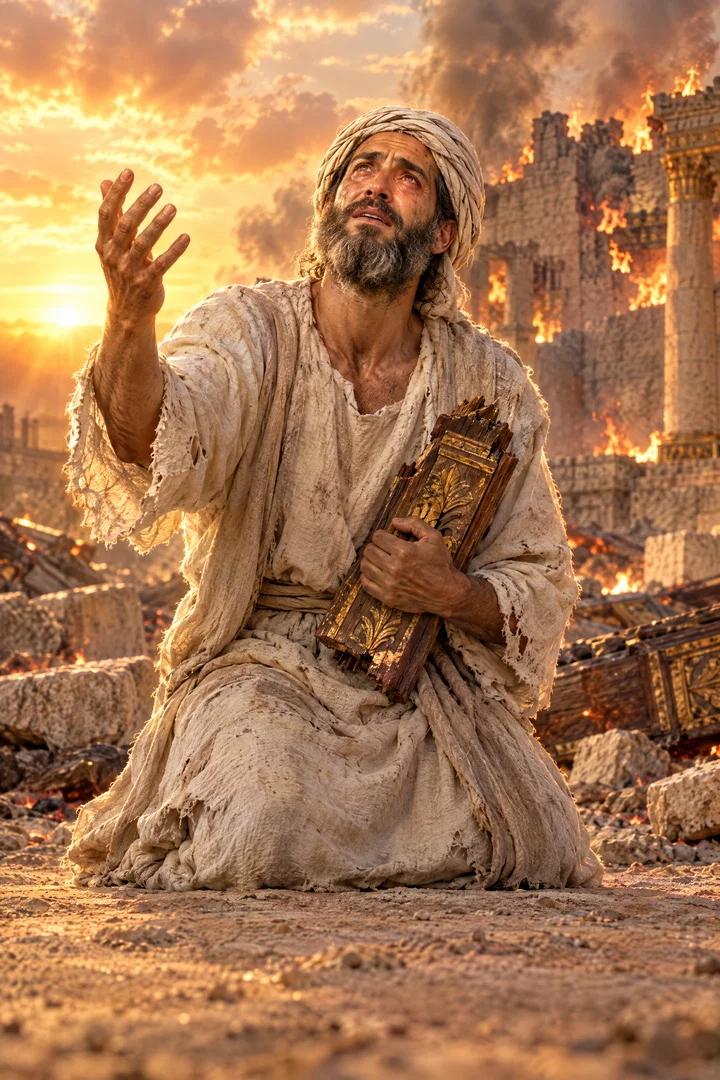
Psalm 74 is a post-Davidic psalm presumably attributed to Asaph, belonging to a group associated with the Babylonian captivity and written during or after the captivity of Israel.RH Aug 3, 1916ST Aug 4, 1909 It reflects the time when Jerusalem had been brought low and its people scattered, voicing the captives' sorrow and desolation, their longing, and their prayers for deliverance.RH Aug 3, 1916ST Aug 23, 1910
The verse assumes that God dwelt in the sanctuary built within the border of Canaan, with the land and the sanctuary distinct from each other as a lot is distinct from the house built on it.RH Apr 4, 1854 The sanctuary it concerns, first connected with the tabernacle and afterward with the temple on Mount Moriah built by Israel, was destroyed by fire and burned to the ground.ST May 1, 1879
The verse is the appeal of God's distressed people, pictured as the sheep of his pasture, asking why he has cast them off and why his anger smokes and continues against them.RH Jul 10, 1860ST Jul 23, 1912 It thus provides an example of humble, earnest prayer that argues with God and asks him to reconsider his treatment of his people.RH Jul 10, 1860
The verse was later sung as a lament by the Vaudois exiles as they entered Genoa after persecution had emptied their valleys and scattered them, expressing grief over the apparent ruin of their church and the sense of being cast off.ST Dec 19, 1878
Sources