Psalms 80:13
The boar out of the wood doth waste it, and the wild beast of the field doth devour it.
Translations
The boar out of the wood does waste it, and the wild beast of the field does devour it.
The boar out of the wood doth waste it, and the wild beast of the field doth devour it.
The boar out of the wood doth waste it,
And the wild beast of the field doth devour it.The boar from the wood doth waste it, and the wild beast of the field doth devour it.
The boar out of the wood doth ravage it, and the wild beasts of the field feed on it.
The boar out of the wood doth ravage it,
And the wild beasts of the field feed on it.A boar out of the forest doth waste it, And a wild beast of the fields consumeth it.
The boar out of the forest doth waste it, and the beast of the field doth feed off it.
The boar out of the forest, browseth upon it, And, the wild beast of the field, pastureth thereon.
Berean Standard Bible, Majority Standard Bible
The boar from the forest ravages it,
and the creatures of the field feed upon it.The boar out of the wood ravages it.
The wild animals of the field feed on it.It is uprooted by the pigs from the woods, the beasts of the field get their food from it.
The wilde bore out of the wood hath destroyed it, and the wilde beastes of the fielde haue eaten it vp.
Douay-Rheims (Challoner revision)
The boar out of the wood hath laid it waste: and a singular wild beast hath devoured it.
Pictures
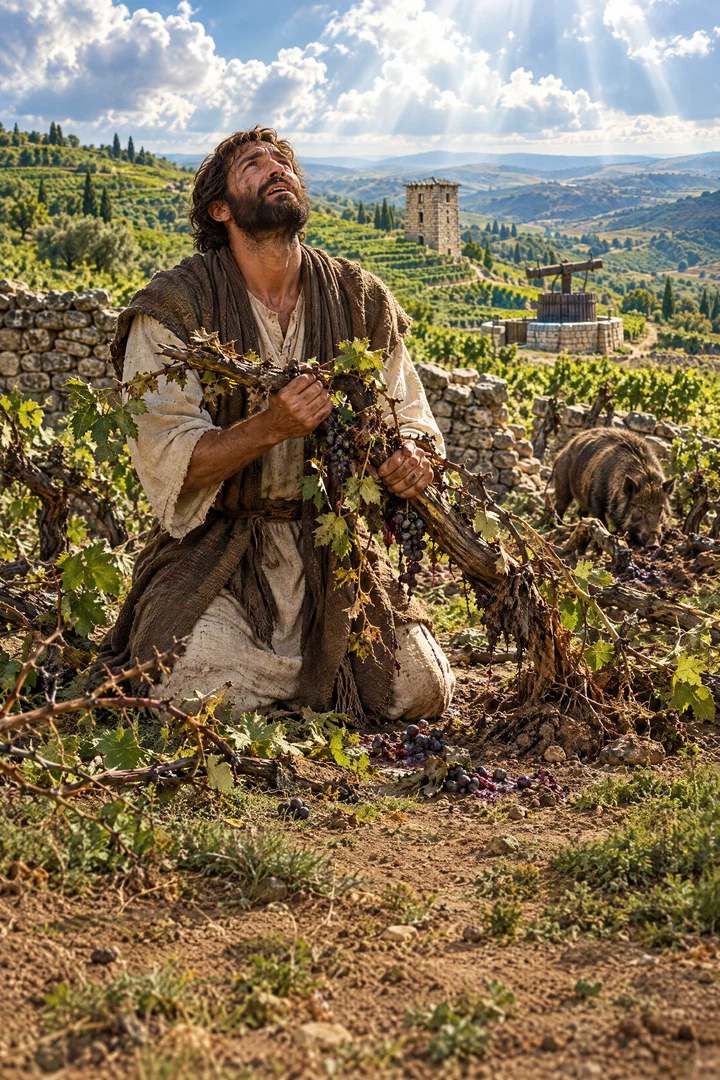
Cross-references
- Isaiah 5:5-6
And now go to; I will tell you what I will do to my vineyard: I will take away the hedge thereof, and it shall be eaten up; and break down the wall thereof, and it shall be trodden down:
God removes protection from his vineyard, leaving it to be ravaged.
- Luke 20:9-16
Then began he to speak to the people this parable; A certain man planted a vineyard, and let it forth to husbandmen, and went into a far country for a long time.
The passage connects the psalm’s vineyard imagery with Jesus’ parable.
- John 15:1
I am the true vine, and my Father is the husbandman.
Christ is the true Vine, in contrast with Israel’s ravaged vine.
- Matthew 21:41
They say unto him, He will miserably destroy those wicked men, and will let out his vineyard unto other husbandmen, which shall render him the fruits in their seasons.
The vineyard is spoiled by cruel husbandmen, and the owner will destroy them.
- Mark 12:1-12
And he began to speak unto them by parables. A certain man planted a vineyard, and set an hedge about it, and digged a place for the winefat, and built a tower, and let it out to husbandmen, and went into a far country.
The vineyard parable portrays Israel’s history as a nation.
- Jeremiah 2:21
Yet I had planted thee a noble vine, wholly a right seed: how then art thou turned into the degenerate plant of a strange vine unto me?
Both describe God’s people as a vineyard.
- Luke 13:6-9
He spake also this parable; A certain man had a fig tree planted in his vineyard; and he came and sought fruit thereon, and found none.
A cared-for planting is threatened with destruction for failing to bear fruit.
Commentary
Each commentary is drawn from primary sources: the writings of Ellen G. White and Adventist pioneers and periodicals. Each commentary is separate. Its own words are not a quotation; follow the references to read the source passages.
Ellen G. White
5 sources
The vine is Israel, brought out of Egypt and planted after the heathen were cast out, taking deep root until it filled the land from the hills to the sea and to the river, spreading through Canaan from sea to river.RH May 27, 1915PK 355.2–359.14SP 19.2–20.1ST Feb 27, 1896 God Himself transplanted, tended, cultivated and cared for this vine, seeking fruit from His people.4SP 19.2–20.1ST Feb 27, 1896 Its protective hedges were broken down, so that all who pass by pluck it.RH May 27, 1915PK 355.2–359.1
The boar out of the wood that wastes it and the wild beast of the field that devours it are ravaging enemies that waste, devour, spoil and ruin the vineyard, leaving it fruitless.RH May 27, 1915PK 355.2–359.12SP 389.1–390.1ST Feb 27, 1896 This wasting describes the wasted condition of Judah under enemy oppression, specifically the Assyrians threatening Judah and Jerusalem in the time of Hezekiah.RH May 27, 1915PK 355.2–359.1 The vine is also burned with fire and cut down, perishing under the rebuke of God's countenance.RH May 27, 1915
Israel brought this ruin on itself by forgetting God and rebelling, rejecting His care and pleadings through ingratitude, resistance to grace, and refusal of the privileges He gave.4SP 19.2–20.1ST Feb 27, 1896 Even when prosperous, as represented by the golden vine at the temple, Jerusalem rejected Jesus, the one who could save and heal her.2SP 389.1–390.1 Hence the verse drives a plea for the God of hosts, the Shepherd of Israel dwelling between the cherubim, to return, look down from heaven, take notice, and visit the vine and vineyard established by His own right hand and the branch He made strong for Himself.RH May 27, 1915PK 355.2–359.1
It pleads for God to place His hand upon the man at His right hand and to revive His people so they will not turn back from Him but will call upon His name, with the repeated cry to be turned again and to have God's face shine favorably so they will be saved.RH May 27, 1915PK 355.2–359.1 The deliverance sought would maintain Israel's cause in war and oppression, in harmony with prayer offered in the house of prayer.RH May 27, 1915 So all kingdoms of the earth may know that the Lord is God alone, that the God of the Hebrews still lives and reigns, and that He alone brings deliverance.RH May 27, 1915PK 355.2–359.1
Sources
Pioneers and periodicals
12 sources
The verse belongs to Psalm 80:8-16, in which God's people are compared to a vineyard and its destruction is depicted.ST Apr 26, 1905ST Sep 24, 1894ST Mar 18, 1897 The vine is Israel, brought out of Egypt and planted in Palestine and Canaan after casting out the heathen, rooted and cared for by God until it filled the land from the hills to the sea and river.RH May 27, 1915ST Feb 27, 1896ST Apr 26, 1905 Its protection is removed and its hedges broken down, so passersby and strangers pluck it, wild animals ravage it, and it is burned with fire, cut down, and perishing at the rebuke of God's countenance.RH May 27, 1915ST Apr 26, 1905ST Apr 8, 1889
The boar out of the wood and the wild beast of the field tearing up, wasting, and devouring the vineyard portray destructive devastation.ST Apr 8, 1889ST Feb 26, 1902 The ravaging and devouring are described in present-tense wording for what is future.RH Jan 9, 1866 The picture is the desolation of the nation before and during the Babylonian captivity, showing the wasted condition of Judah under enemy oppression and expressing the sorrows and afflictions of the Hebrew captives under their persecutors.RH May 27, 1915RH Aug 31, 1916ST Apr 8, 1889 It was written by Asaph during the latter portion of the captivity in the reign of Belshazzar when persecution and distress of the Jews were greatest.RH Aug 31, 1916
The ravaging came because Israel forgot God and rebelled, and through ingratitude, resistance to grace, and refusal of the privileges He gave, the vineyard became spoiled and fruitless.ST Feb 27, 1896 The wasted condition drives the plea for the God of hosts to return, look down from heaven, behold and visit the vine and vineyard His right hand planted and the branch He made strong, to put His hand on the man of His right hand and quicken His people so they will not go back from Him but call on His name, with the repeated cry to be turned again and have God's face shine so they shall be saved.RH May 27, 1915 It is set among exhortations, encouragements, and assurance of divine help and final deliverance, in harmony with prayer in the house of prayer for deliverance in war and oppression that maintains Israel's cause so all kingdoms of the earth may know that the Lord is God alone.RH May 27, 1915RH Aug 31, 1916
The passage about the vineyard and its destruction is connected with Jesus' parable of the vineyard in Luke 20.ST Sep 24, 1894 The image is linked to the word made havoc in Acts 8:3, describing Saul's violent ravaging of the church through persecution.ST Feb 26, 1902 The boar and wild beast represent false religious teachers who waste God's heritage and despoil His flock.ST Jun 2, 1909 Like a wild boar from the forest devastating the Lord's garden, meaning the church, the verse is applied to public vice, crime, immorality, and licentiousness as forces that destroy the church.ST Nov 11, 1889ST Apr 10, 1884
Sources