Translations
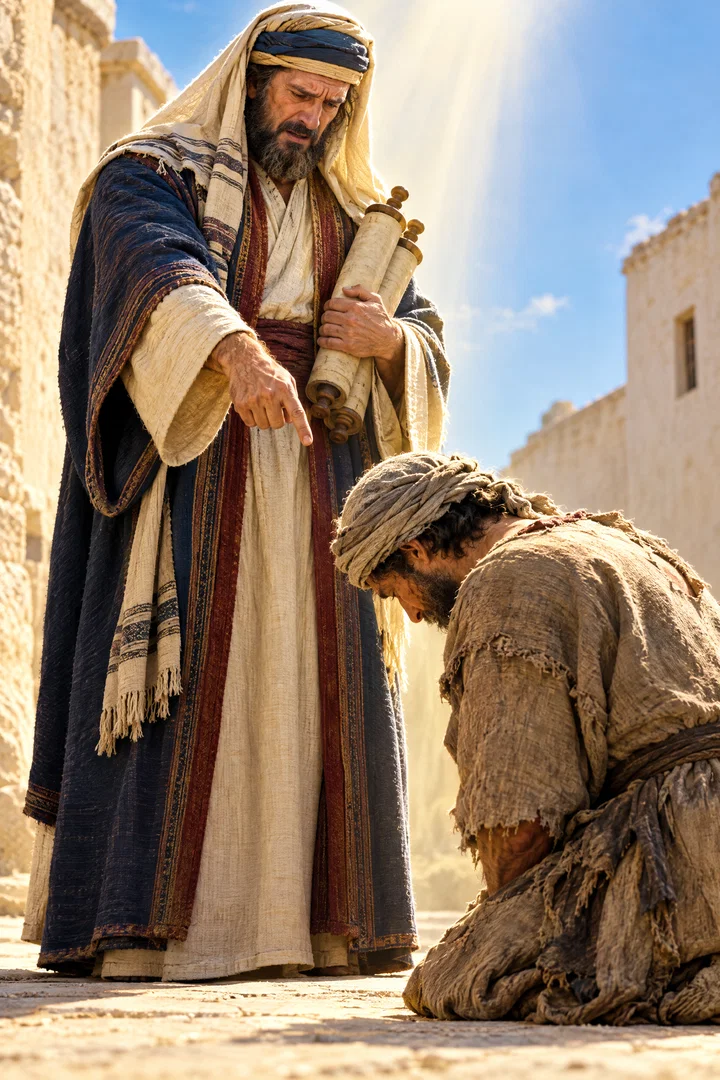
Judge not, that you be not judged.
King James Version, KJV Cambridge Paragraph Bible, Webster Bible, Revised Version, American Standard Version
Judge not, that ye be not judged.
'Judge not, that ye may not be judged,
Judge not, that ye may not be judged;
Judge not, that ye be not judged;—
Berean Standard Bible, Majority Standard Bible
“ Do not judge, or you will be judged.
“Don’t judge, so that you won’t be judged.
Be not judges of others, and you will not be judged.
Judge not, that ye be not iudged.
Douay-Rheims (Challoner revision)
Judge not, that you may not be judged,
Pictures
Cross-references 20 of 45
- Romans 2:1
Therefore thou art inexcusable, O man, whosoever thou art that judgest: for wherein thou judgest another, thou condemnest thyself; for thou that judgest doest the same things.
Judging others while doing the same things condemns the judge.
- Romans 14:4
Who art thou that judgest another man’s servant? to his own master he standeth or falleth. Yea, he shall be holden up: for God is able to make him stand.
Each believer answers to the Lord, not to another person, who has authority to judge.
- Luke 6:37
Judge not, and ye shall not be judged: condemn not, and ye shall not be condemned: forgive, and ye shall be forgiven:
Repeats the warning against judging and condemning, and calls for forgiveness.
- James 4:11-12
Speak not evil one of another, brethren. He that speaketh evil of his brother, and judgeth his brother, speaketh evil of the law, and judgeth the law: but if thou judge the law, thou art not a doer of the law, but a judge.
Warns against speaking evil of and judging others.
- Galatians 6:1
Brethren, if a man be overtaken in a fault, ye which are spiritual, restore such an one in the spirit of meekness; considering thyself, lest thou also be tempted.
Calls for gently restoring someone caught in error while considering one’s own vulnerability.
- Romans 14:10-12
But why dost thou judge thy brother? or why dost thou set at nought thy brother? for we shall all stand before the judgment seat of Christ.
Believers must not judge one another, for each will stand before Christ and answer to God.
- 1 Corinthians 4:5
Therefore judge nothing before the time, until the Lord come, who both will bring to light the hidden things of darkness, and will make manifest the counsels of the hearts: and then shall every man have praise of God.
Both warn against judging before the Lord comes and reveals the heart’s counsels.
- John 8:7
So when they continued asking him, he lifted up himself, and said unto them, He that is without sin among you, let him first cast a stone at her.
Jesus challenges accusers who condemn another to cast the first stone only if without sin.
- John 5:22
For the Father judgeth no man, but hath committed all judgment unto the Son:
The Father commits all judgment to the Son.
- Matthew 18:27-28
Then the lord of that servant was moved with compassion, and loosed him, and forgave him the debt.
The forgiven servant harshly condemns another debtor after receiving forgiveness.
- John 12:47
And if any man hear my words, and believe not, I judge him not: for I came not to judge the world, but to save the world.
Christ came to save the world, not to judge it, setting an example against judging others.
- James 2:13
For he shall have judgment without mercy, that hath shewed no mercy; and mercy rejoiceth against judgment.
Those who show no mercy face judgment without mercy.
- Luke 18:9-14
And he spake this parable unto certain which trusted in themselves that they were righteous, and despised others:
The Pharisee’s self-righteous judgment contrasts with the publican’s humility.
- 1 Corinthians 5:11-13
But now I have written unto you not to keep company, if any man that is called a brother be a fornicator, or covetous, or an idolater, or a railer, or a drunkard, or an extortioner; with such an one no not to eat.
The church is instructed to judge and remove members persisting in sin.
- Matthew 5:22
But I say unto you, That whosoever is angry with his brother without a cause shall be in danger of the judgment: and whosoever shall say to his brother, Raca, shall be in danger of the council: but whosoever shall say, Thou fool, shall be in danger of hell fire.
Anger and contemptuous words against a brother expose a person to judgment.
- 2 Corinthians 13:5
Examine yourselves, whether ye be in the faith; prove your own selves. Know ye not your own selves, how that Jesus Christ is in you, except ye be reprobates?
Calls believers to examine themselves rather than judge others.
- John 7:24
Judge not according to the appearance, but judge righteous judgment.
The passage allows careful, righteous judgments when duty requires them.
- 1 Corinthians 6:2-3
Do ye not know that the saints shall judge the world? and if the world shall be judged by you, are ye unworthy to judge the smallest matters?
Future judgment by the saints contrasts with present restraint in judging.
- 2 Corinthians 5:10
For we must all appear before the judgment seat of Christ; that every one may receive the things done in his body, according to that he hath done, whether it be good or bad.
All must answer before Christ’s judgment seat.
- Luke 6:41-42
And why beholdest thou the mote that is in thy brother’s eye, but perceivest not the beam that is in thine own eye?
The beam-and-mote teaching parallels the warning against judging others.
Commentary part 1 of 2
Each commentary is drawn from primary sources: the writings of Ellen G. White and Adventist pioneers and periodicals. Each commentary is separate. Its own words are not a quotation; follow the references to read the source passages.
Ellen G. White
109 sources
Christ's command forbids setting up one's own opinions, standards, and ideas of duty as the measure by which to test and condemn others in the heart.Ms 75a, 1900, par. 1–3RH Oct 29, 1901CH 483.1–2Ms 81a, 1901, par. 19 It forbids judging conscience, motives, and hidden worth that belong between the soul and God, for no human can read the heart, and that work of judgment belongs to God and is committed to Christ.Ms 113, 1907, par. 6Ms 75a, 1900, par. 1–3Ms 113, 1907, par. 1RH Oct 29, 1901Lt 9, 1892, par. 58–63 The measure used toward others will be measured back, with mercy withheld from the merciless and severity returned to the severe according to light and knowledge.8T 85.1–2Ms 75, 1909, par. 1Ms 3, 1871, par. 16Ms 75a, 1900, par. 1–3Lt 71, 1895, par. 7 Before helping a brother with a small fault, each must first examine and remove the greater fault in self, for quickness to see a mote is often a sign of blindness to a beam.8T 85.1–2Ms 3, 1871, par. 16Ms 34, 1901, par. 14STGC 45.2–3Ms 164, 1898, par. 16–17 This does not forbid loving reproof or the church's duty to warn, restore, and deal faithfully with sin, but requires it to be done directly, tenderly, humbly, and without harsh severity or public exposure.Lt 67, 1905, par. 16–1915MR 170.2–171.1Ms 149, 1897, par. 8–11Lt 86, 1896, par. 17–20GW 502.1–2
Sermon Setting and Audience
The command belongs to the Sermon on the Mount, spoken especially for the disciples while the gathered multitude also listened.DA 298.2–3 In that listening crowd were both disciples and multitudes, including people ignorant of the way of life and in error.DA 298.1 There Christ set out the principles governing the kingdom of divine grace rather than promising the earthly power and national restoration many expected.2SP 204.1
In that sermon He disappointed hope of worldly greatness and sought to undo false education by giving a right conception of His kingdom and of His own character.DA 299.3 The command makes no direct attack on the errors of the people and presents no vivid delineation of wretchedness caused by sin, but teaches something infinitely better.DA 299.3 It tells the conditions of entrance into the kingdom of God without combating ideas about that kingdom, leaving hearers to draw their own conclusions as to its nature.DA 299.3 The truths it teaches are foundation principles of the kingdom of God, no less important now than to the multitude that followed Him.DA 299.3
That sermon contradicted the self-righteous teachings of the scribes and Pharisees.FE 309.1 Their teaching portrayed God as a stern judge without compassion, mercy, or love, and Christ corrected that misrepresentation by revealing God's paternal love.FE 309.1 The sermon teaches the far-reaching principles and spirit of God's law, which must be in the heart because the state of the heart shapes the life and character.Lt 7, 1886, par. 34 It is part of pure gospel teaching explaining God's holy law and setting the standard for Christian character in loving God and neighbor, so that unjust gain fails its standard.Ms 26, 1899, par. 29–30 Failure to walk in the light God gives separates people from Him, and darkness comes in proportion to the light rejected.ST Mar 26, 1896
Meaning of Judge Not
Do not set yourself up as the standard for others, making personal opinions, views of duty, interpretations of Scripture, limited standards, and personal ideas of what others must be to be accepted the test by which they are measured and condemned in the heart.Ms 81a, 1901, par. 19Ms 24, 1892, par. 5 Do not make a practice of judging and criticizing, for attacking faults provokes resistance, does more harm than good, and fosters faultfinding in the one who reproves, and instead of picking at errors or treating personal opinion as a test, teach better habits by good example.CH 483.1–2 Do not fix thoughts on objectionable things or make a brother an offender over a word.Ms 24, 1892, par. 5
Do not pass judgment and sentence on one another in matters that belong between the soul and God, including conscience, hidden motives, hidden moral worth, and whom God approves or condemns, for human beings have not been given power to read hearts and have not been placed in the judgment seat.Ms 75a, 1900, par. 1–3RH Oct 29, 1901Lt 9, 1892, par. 58–63 Do not guess at motives, accept accusations as truth, scrutinize brethren instead of humbly examining Scripture, or intrude on conscience to condemn one another, but attend to one's own spiritual life and to work that builds up self and church.DA 314.1TBC1872 6.2 To criticize another is to pass sentence on oneself and to join Satan the accuser, while the proper work is to examine and judge oneself and test whether one is in the faith, which keeps one from being judged.DA 314.1 Those who criticized instead of honestly examining their own hearts injured their character in God's sight, and awareness of human ignorance should make people careful not to think or speak evil of brethren.Ms 75a, 1900, par. 1–3RH Oct 29, 1901TBC1872 6.2
Do not judge rashly, hastily, harshly, impatiently, or extremely, for the judgment and measure used will be applied back.Ms 3, 1871, par. 16Lt 55, 1891, par. 9–11Ms 81, 1907, par. 4–6 This forbids fault-finding over motes while blind to the beam in one's own eye, criticizing, censuring integrity of purpose, imagining evil, warring against and weakening one another, questioning motives from mistaken impressions or appearances, and pronouncing on a brother what one would not wish to receive.Ms 3, 1871, par. 16Lt 55, 1891, par. 9–113T 92.2–93.3TCBMP 109.1–111.1 Love in the heart excludes both flattering and glorifying others and harshness and impatience toward them, and calls for being doers of the Word, jealously guarding one's own spirit and character, guarding the interests of others, and treating them as one would wish to be treated.Lt 55, 1891, par. 9–11 It forbids carrying even right condemnation of evil too far, treating favor or goodwill toward temperance workers as a crime, cherishing hatred and bitterness, oppressing souls by forcing them onto one rigid standard that stretches the short and cuts off the long, pressing the thorn deeper when earnest effort has failed and one already distrusts himself, and unfair comparisons such as assuming American believers more capable or consecrated than Australian believers.Ms 81, 1907, par. 4–6TCBMP 109.1–111.1
Do not judge after one's own mind to condemn another in order to carry out one's own plans, for such work is not righteousness.Ms 113, 1907, par. 6 Do not use judgment to oppress, create strife, darken hearts, exercise human control, lord over God's heritage, rule brethren while not under the Holy Spirit but with self in control, deal in highhanded justice, or set up erring man to judge, dictate to fellows, and watch laborers.Ms 75, 1907, par. 9–10Lt 29, 1902, par. 10STMW7 59.1Lt 10, 1885, par. 6–7Ms 129, 1906, par. 1–4 Such man-ruling with harsh words and domination dishonors God, hinders His work, counterworks His plans, spoils His work when churches become permeated with it, damages friendship and Christian love by denunciation and bitterness, and if persisted in leaves people to their own will, while heaven beholds every word of judgment and a judgment that seems right to the speaker may not be right in God's sight, so words must be guarded.Ms 113, 1907, par. 6Lt 29, 1902, par. 10Ms 129, 1906, par. 1–4 A minister may give counsel only when under the sweet influence of Christ's Spirit and the direction of God's Spirit, otherwise he must keep silence, and the human voice and judgment are not to be the voice and judgment of God's people, who must look to God for wisdom.Ms 113, 1907, par. 6Ms 75, 1907, par. 9–10
Do not judge others by human rules and standards devised to make up for failure to keep God's law, which turn attention from God to self, weaken love for God and others, and foster narrow, selfish criticism, scrutiny, and condemnation. Do not judge from spiritual pride in one's own attainments and by a harsh self-exalting standard that assumes authority to rule others, but from humility about one's own weakness and gratitude for God's gifts.Lt 81, 1896, par. 9–11 Do not become pharisaical but be Christlike to attract rather than repel, especially in schools caring for the young, where teachers must encourage and help with kindness and cheerfulness instead of suspicion, reproof, and condemnation.6MR 93.1–2
Do not indulge a selfish, exacting, fault-finding disposition that arbitrarily censures the undeserving, makes no compassionate allowance as each case deserves, seeks its own pleasant interest without regard for the happiness, interest, and convenience of others, and mistakes peevish feelings for zeal, for this destroys influence and cripples usefulness.Lt 5a, 1864, par. 9Lt 5, 1864, par. 7 True correction belongs only when God lays the burden on, not when the burden is of one's own seeking, and severity toward a supposed wrong or toward one who does not exactly meet one's own ideas of right is false, especially when the censurer deserves censure more.Lt 5, 1864, par. 7 Do not depreciate fellow workers through prejudice, jealousy, and carnal ambition to be first, communicating suspicion by hints, plain words, looks, mean smiles, or unadvised assertions that others repeat and enlarge until strong barriers divide workmen, for all workers are equally precious and each must guard another's reputation as his own and give him the same chance to gain experience and to think, plan, and act.Lt 21, 1888, par. 11–13 Do not climb upon the judgment seat to censure, revile, and shut the heart against one supposed to have erred as though above temptation, calling evil surmising, jealousy, pride, envy, love of authority and desire for pre-eminence by the names of foresight, discernment, or zeal for truth, and do not watch for faults, misinterpret words and actions, exaggerate mistakes, pick flaws, speak evil, publicly expose faults, revisit forgiven wrongs, or judge those without light when many aloof live more faithfully than professed believers.Ms 11, 1888, par. 22–24Ms 167, 1902, par. 27–28 Instead bridle the tongue, talk less and pray more, open the heart to kindliness, encourage kindly thoughts and holy affections, cultivate speaking well of others, confess wrong frankly, lift the downcast, see with clear eyesight and unselfish heart the good accomplished, commend it, and make the church a court of holy love showing Christ's pity and self-sacrifice.Ms 11, 1888, par. 31–32Ms 167, 1902, par. 27–28
Judgment Returns in Kind
The judgment and measure used toward others will be applied and measured back to the one who judges, so judgment must not be rash, unfair, or hypocritical.8T 85.1–2Ms 75, 1909, par. 1Ms 3, 1871, par. 16Ms 34, 1901, par. 14STGC 45.2–3 Condemning another while neglecting self-examination and overlooking one's own faults is wrong, and before correcting a brother's fault a person must examine and correct his own greater fault like a beam before dealing with the small fault like a mote, so that he can then see clearly to help without hypocrisy.8T 85.1–2Ms 3, 1871, par. 16Ms 34, 1901, par. 14STGC 45.2–3Lt 144, 1906, par. 10–11 Each person's life record will come before God whose judgment is truthful, and judging another while doing the same things brings condemnation on oneself.8T 85.1–2STGC 45.2–3 This warning calls followers to pure, untainted service rather than focusing on a brother's small fault while ignoring one's own greater fault.Lt 144, 1906, par. 10–11
God will deal with people as they deal with one another, showing no mercy to the merciless and severity to the severe.Ms 75a, 1900, par. 1–3RH Oct 29, 1901Lt 71, 1895, par. 75T 246.1–2Lt 10a, 1885, par. 6–7 Those who act toward others without mercy will themselves one day feel the need of mercy, and awareness of human ignorance and inability to read hearts and of one's own weakness and need for God's mercy should make people careful not to think evil, speak evil, pass judgment and sentence, or reject sinners, but to show compassion, forbearance, and meek restoration.Ms 75a, 1900, par. 1–3RH Oct 29, 19015T 246.1–2 Even when the censured person has done wrong, selfish and loveless merciless condemnation is unjust.Lt 71, 1895, par. 7 To crush with severity one thought to have done wrong who has had less experience, less light, and fewer advantages invites the same severity from God, and if God dealt with the harsh judge as he dealt with his brother there would be no hope for his future.Lt 10a, 1885, par. 6–7 Plain truth may still be told to the erring to make them see error for reform, but always with pitying tenderness rather than harshness, remembering personal weakness and liability to temptation, and when the fault is seen and acknowledged grief must not be deepened but comfort given.GW92 93.2
Judgment is measured according to the light and knowledge each one has had, and God excuses sin in one in a high position no more than in the weakest.Lt 10a, 1885, par. 6–7 Every word is heard, judgment used is registered in the books of heaven, and continuing in devising, reporting, and speaking evil blackens the record and doubles guilt, while the Judge stands at the door.Ms 164, 1898, par. 16–17Ms 7, 1882, par. 27–28 Harsh judges will be brought over the very same ground of trial and discipline where their brother fell, tested on the very points where others failed, so they learn what indifference, contempt, and scorn feel like because when others failed they did not help, strengthen, and bless but turned away in heart.Ms 87, 1894, par. 25–26Lt 218, 1897, par. 8–9 This applies when men in responsible positions employ a worker who does his best yet decays in his work so his wife and children suffer, and they pass judgment on him for lack of success and let his cry go up against them, for no excuse for neglecting the plain Word will stand, since God values the fallen brother as much as the leader and strips off outward tinsel to see true character.Ms 87, 1894, par. 25–26 It also means evil reports must be held back rather than accepted and acted upon, lest the same judgment come back upon the judger, and instead all, especially the erring, must be treated kindly with the mercy and compassion manifested toward tempted souls.Ms 10, 1880, par. 2
Criticism reacts on the critic, so faultfinding toward others brings faultfinding in return and forbearance toward others brings forbearance in return.Lt 81, 1902, par. 9–10Ms 10, 1880, par. 7 This choice creates the atmosphere around a person, making it fragrant with love and tenderness or dark with criticism and faultfinding.Ms 10, 1880, par. 7 A condemning spirit leads people to watch brethren for faults to condemn and hurts the judger himself, showing the one calling a brother a sinner to be a sinner and setting a fierce spirit at war with one another out of harmony with Christian work.Ms 141, 1902, par. 20–21Ms 73, 1908, par. 8 The proper course is to get up out of the chair of judgment, stop thrusting at friend or brother with scathing remarks that cannot help responsible people and may keep them in turmoil, leave cases with God since each must answer to Him and none is faultless, and help with gentleness and compassion while attending to one's own soul.Lt 81, 1902, par. 9–10Ms 141, 1902, par. 20–21
Judging Belongs to God
No man has been put on the judgment seat, and the work of judging a brother has not been placed upon any man, minister, or conference president.Ms 113, 1907, par. 6Ms 113, 1907, par. 1Ms 75, 1907, par. 9–10SPBC 169.3 Judging after the desire of one's own mind to bring forward what will condemn another in order to carry out one's own plans is not righteousness, and embracing too much authority to set up erring man to judge and dictate to fellows, to watch God's laborers and exercise human judgment over them, to dissect work and character and sit in judgment, is forbidden.Ms 113, 1907, par. 6Ms 75, 1907, par. 9–10 Judgment is God's prerogative, committed to Christ the Son who took humanity and lived perfectly, not to man nor to the Father nor to angels, and the voice and judgment of man is not to be the voice and judgment of God's people, who are to look to God for wisdom and counsel.Ms 113, 1907, par. 6GW 474.1–2Ms 75, 1907, par. 9–10 A minister may give counsel to his brother only when under the sweet influence of Christ's Spirit and the direction of the Spirit of God, otherwise he must keep silence, and all correction of the erring must still be done, but in love, declaring the Master's message in the Master's spirit with the grace of humility cherished in the heart shaping words into Christlike tenderness and care.Ms 113, 1907, par. 6SPBC 169.3 Church members must not take God's place as judges, especially by condemning or discouraging one who has repented and asks forgiveness, for he who takes it upon himself to judge and criticize others lays himself open to the same degree of judgment and criticism.Ms 113, 1907, par. 6Ms 113, 1907, par. 1Lt 199, 1905, par. 4–6 Those ready to condemn brethren should examine their own works and character, and honest examination will reveal defects of character and grave blunders in work, for if the great Judge dealt with men as they deal with their fellow workers they would regard Him as unkind and unmerciful.8T 85.1–2Ms 113, 1907, par. 1Ms 75, 1907, par. 9–10
Each person's life record will come before God, whose judgment is truthful, and each must answer for himself.8T 85.1–2STGC 45.2–3Ms 32, 1902, par. 19–20Lt 81, 1902, par. 9–10 Another's wrong cannot excuse one's own, others are not the standard, and God's law and conscience guide conduct, while no one is faultless.8T 85.1–2Lt 81, 1902, par. 9–10 Judging another while doing the same things condemns the judge himself, and remembering one's own serious mistakes, which may be greater in God's sight than those condemned, should restrain sharp censure.8T 85.1–2STGC 45.2–3Ms 32, 1902, par. 19–20 Before correcting a brother's fault a person must examine and correct his own serious fault like a beam before touching the lesser fault like a mote, and only then can he see clearly to help his brother without hypocrisy.8T 85.1–2STGC 45.2–3Ms 32, 1902, par. 19–20Ms 75, 1907, par. 9–10 Criticism and scathing remarks about responsible people cannot help them and may keep them in turmoil, and criticism reacts on the critic, so the proper course is to leave others' cases with God and help them with gentleness and compassion while attending to one's own soul.GW 474.1–2MH 484.2Lt 81, 1902, par. 9–10
God permits people to hold positions of responsibility and Himself can correct or remove them when they err, so their errors give others no authority to condemn them.GW 474.1–2MH 484.2MH 484.1 Others' mistakes may be judged too quickly before their burdens and trials are understood, and experience of bearing similar burdens can replace censure with sympathy.GW 474.1–2MH 484.1 David's tender, courteous, and patient treatment of Saul, even though Saul was disobedient and sought David's life, shows that Saul's faults did not give David the right to harm or condemn him, for David left judgment to God.MH 484.2 The warning therefore calls each person to remember that his own life will be reviewed by God and that those who judge others are themselves accountable for their own wrongs.GW 474.1–2MH 484.2Lt 81, 1902, par. 9–10
First Remove Own Fault
Do not attempt to correct a brother's small fault as a mote while neglecting a greater fault as a beam in yourself, for self-examination and correction must come first and only then can you see clearly to help without hypocrisy.8T 85.1–2Ms 34, 1901, par. 14STGC 45.2–3Lt 144, 1906, par. 10–11SPBC 170.3–4 This holds especially for rulers and for those who seek authority over others, who must not condemn faults in others while ignoring their own but must first correct themselves so they can see clearly when helping another.8T 85.1–2Lt 144, 1906, par. 10–11SPBC 170.3–4 It holds also for those who condemn another while doing the same things, for such judgment condemns the judge himself and the judgment and measure used toward others will be applied and measured back to the one who judges.8T 85.1–2Ms 34, 1901, par. 14STGC 45.2–3Lt 144, 1906, par. 10–11Lt 229, 1905, par. 19–21 Each person's life record will come before God whose judgment is truthful, so unfair judgment and spreading suspicions as if they were facts bring judgment in return.8T 85.1–2STGC 45.2–3Lt 229, 1905, par. 19–21 Before correcting another each must examine and correct his own faults so as to act without hypocrisy, in pure untainted service, with a church member's errors addressed within the church and not made public property, while the reputation of ministers and members is guarded and accusations are not extended to others without clear evidence.Ms 34, 1901, par. 14Lt 144, 1906, par. 10–11Lt 229, 1905, par. 19–21
Discovering a small fault in a brother is a sign of a greater fault and blindness in oneself, for one quick to discern a mote is often blind to a beam.Ms 3, 1871, par. 16Ms 164, 1898, par. 16–17GW92 93.2TCBMP 109.1–111.1 A person quick to see a brother's errors may be more at fault and blind to his own, and those who condemn without mercy may have made mistakes far more grievous in God's sight than those they condemn.Ms 3, 1871, par. 16GW 335.3–336.112MR 97.2 Seeing another's faults is no reason to withdraw or to associate only with those thought nearly perfect, for those who struggle need love, sympathy, help, and prayer, and each must consider his own weakness and liability to temptation.GW92 93.2TCBMP 109.1–111.1GW 335.3–336.1 Those who act like Pharisees may condemn sins while committing sins greater in God's sight, so they must examine themselves rather than rashly censuring a brother and questioning his integrity of purpose as they would not wish to be suspected or censured.Ms 3, 1871, par. 16TCBMP 109.1–111.112MR 97.2
Educating the mind to look for defects removes safeguard after safeguard from the conscience, leaves the soul unguarded, unfits it for communion with God, and bars freedom and sanctification.Ms 164, 1898, par. 16–17 The very act of looking for evil in others is a leaven of evil that develops defects in those who look, and the judgment used will be measured back again and is registered in the books of heaven.Ms 164, 1898, par. 16–17Ms 62, 1899, par. 9–12 Dwelling on others' imperfections and faults instead of looking to Christ changes you for the worse, breeds harshness, pride, and self-centeredness, and a heart filled with selfishness, envy, suspicion, or malice leads to sitting in judgment over others whom God may regard as better than yourselves.Ms 62, 1899, par. 9–125T 334.15T 613.1 Spending attention on correcting others while neglecting one's own spiritual life allows precious graces to die and contributes to darkness and strife in the church, and faultfinding and talk about others' defects spread a spiritually harmful influence in the home and harm weak faith, for even when right on some points one's own views may be distorted and unable to withstand criticism.5T 334.15T 613.1Ms 60, 1890, par. 17Lt 29, 1897, par. 16–18 Suspicion can turn imagined slights into false accusations, so restraint and self-examination are required rather than a censorious spirit.Ms 62, 1899, par. 9–12
The remedy is thorough critical examination of thoughts and feelings, tempers, purposes, words and deeds in the light of God's Word, to war constantly against personal sinful corruption and to test whether you are in the faith and an example of Christian holiness.Lt 11, 1880, par. 4–5DA 314.1ST Dec 11, 1901 Being earnest about a brother's wrongs does not make your own case right, and self-love will give too good an opinion of yourself unless you search diligently, take heed to yourself, and remove the faults within your own heart by God's law before judging another.Lt 11, 1880, par. 4–5Ms 1, 1878, par. 6–9 Those who refuse that examination cannot enter the kingdom of heaven, and those who accuse their fellow believers misuse time, turn people from seeking Christ's character, and should instead humble themselves, confess their own sins, and seek God's grace.ST Dec 11, 1901STB 62.1 Criticizing another when you cannot discern motives passes sentence on yourself and makes you a participant with Satan the accuser of the brethren, while Christ pleads for tempted souls, and judging yourself keeps you from being judged.DA 314.1
Correction Without Condemning
“Judge not” does not forbid loving reproof and correction, for the erring person and the church still need to be helped to see error and reform.Lt 67, 1905, par. 16–1915MR 170.2–171.1GW92 93.2 Correction must be given in Christ’s merciful, corrective way and in His Spirit, with pitying tenderness rather than harshness, severity, coldness, accusation, or a crushing spirit, and with patience, humility, sympathy, care, and love.Lt 67, 1905, par. 16–19Lt 86, 1896, par. 17–20GW92 93.215MR 201.4–202.2SPBC 169.3 No one is put on the judgment seat, so grace of humility cherished in the heart must shape words into Christlike tenderness and care, declaring the message in the Master’s spirit and never neglecting the Master’s work of correction.Lt 86, 1896, par. 17–20SPBC 169.3 Plain truth and facts are to be told so the fault can be seen and acknowledged, with kindly benefit of better judgment and remembrance of personal weakness and liability to temptation.15MR 170.2–171.1GW92 93.2 When the fault is seen and acknowledged, grief must not be deepened but comfort given, and such loving care can soften the heart and create a gracious spirit in the church.GW92 93.215MR 201.4–202.2
Self-examination and correction of one’s own faults must come first, so one can see clearly to address another’s fault wisely rather than hypocritically, hastily, or harshly.Lt 67, 1905, par. 16–1915MR 170.2–171.1 One quick to discern a small fault like a mote in a brother’s eye is often blind to a far greater fault like a beam in his own eye, and the judgment and measure used return upon the judger.Lt 67, 1905, par. 16–19GW92 93.2 The prohibition of personal judgment does not remove the responsibility placed on the church in its organized capacity toward members who fall into sin to warn, instruct, restore, reprove, rebuke and exhort.GW 502.1–2DA 805.4–806.2 The church must deal faithfully with wrongdoing and call sin by its right name by declaring what God has said about it, addressing wrongdoing according to God’s word, and its censure is to be removed when the person confesses and repents, since remission of sins belongs to God alone.Ms 149, 1897, par. 8–11GW 502.1–2DA 805.4–806.2
Correction must go directly and openly to the person thought to be in error, rather than by secretly plotting against them on the strength of accusations, impressions, reports, or matters not carefully investigated.STMW6 12.1Ms 39, 1891, par. 20–22Ms 37, 1890, par. 33–35 Evil reports must be held back rather than accepted and acted upon as truth, accusations must not be extended to others without clear evidence, errors of a church member are not to be made public property but addressed within the church, and private matters must be kept from those they do not concern.Lt 229, 1905, par. 19–21Ms 10, 1880, par. 2 If in error, the person should be approached tenderly so restoration is possible; if not in error, the innocent should be defended and vindicated, and rebuke directed at those doing wrong.STMW6 12.1Ms 39, 1891, par. 20–22 Harsh public criticism can turn people away from truth, so those tempted to speak hastily should keep silent, and appointed workers should deal with error kindly, wisely, and discreetly under Christ’s Spirit.STMW6 12.1 In place of condemnation, the mercy and compassion Christ has manifested must be shown to all, especially the erring, remembering that Christ died to save tempted and tried souls.Ms 10, 1880, par. 2
This failure was seen in the dispute over the law in Galatians at Minneapolis, where brethren were condemned without knowledge of motives or religious standing, human opinions were treated as God’s voice, and unjust judgments and unsanctified talk harmed both personal religious experience and the conference.Ms 37, 1890, par. 33–35 Instead judgment must be suspended for prayerful Bible study and humble search for God’s guidance, without prejudice or envy and without authority to sit in judgment on neighbors and broadcast verdicts about them.STMW6 12.1Ms 37, 1890, par. 33–35 Taking a firm stand for truth does not justify condemning people, making charges against them, or personal attacks, which can promote division and imperil souls.Lt 30, 1906, par. 113MR 318.1–2 A needed message exposing wrongdoing is still permitted, but with care not to attack or condemn people who have less light and opportunity, since those knowingly neglecting great privileges may be more guilty before God than those mistaken about doctrine who sincerely seek to do good.13MR 318.1–29T 243.3–244.1 Care is required not to condemn a work of the Holy Spirit by wrongly attributing it to evil agencies, not to misjudge men God is leading, and not to leave upon other minds the impression that they are guilty when God does not pronounce them guilty, such as holding brethren accountable for the death of Sister Magan.SPBC 143.2–3Ms 58, 1904, par. 7 Hating and reproving sin remains, yet those who correct must show Christlike patience and love toward the sinner while clearly confronting error, lest excessive leniency excuse sin or undue severity and harshness condemn those who are right.9T 243.3–244.1AA 502.3–504.1
Speech and Daily Practice
The gift of speech is too precious to be wasted on criticism, faultfinding, evil thinking and speaking, denunciation and bitterness, for such words stir the worst passions, breed antagonism and retaliation, obstruct the work, damage friendship and weaken the church.Lt 29, 1902, par. 10Ms 109, 1906, par. 23–24RH Sep 20, 1906RCOC 103.3–4 A judgment may seem right to the one who utters it and yet not be right before God, every word is heard and must be accounted for, continuing evil-speaking blackens the record, and the Judge stands at the door, so words must be guarded with care and chosen to meet divine approval and strengthen the weak in faith.Lt 29, 1902, par. 10 Motives are never to be questioned, evil never to be surmised, and brethren never to be misjudged or assailed with unkind and passionate speech, but the tongue is to be bridled, talking lessened and prayer increased, the heart opened to kindliness, kindly thoughts and holy affections encouraged, and the habit of speaking well of others cultivated.Ms 11, 1888, par. 31–32 Pride and self-righteousness must not block frank confession of wrong, love for those for whom Christ died proves love for Christ, cherishing unworthy thoughts and misjudging brethren taints worship so that prayer is unheard, and approaching one believed to be in wrong must be done in meekness full of mercy and good fruits.Ms 11, 1888, par. 31–32
Each person is to attend faithfully to the work assigned and carry personal responsibility instead of dissecting the work and character of another, for no one is appointed to sit in judgment, measure others and pronounce sentence.RH Apr 26, 190611MR 261.2Ms 8, 1875, par. 39–40 The seventh chapter of Matthew is to be studied critically again and again for one's own enlightenment and not to prove supposed faults discerned in fellow members, and instead of examining one another Scripture is to be studied humbly until imagined grievances are dispelled and accusation and discord give way to love, compassion and respect.Lt 8, 1910, par. 1411MR 261.2 Absorbing the thoughts with the faults of others reveals very serious defects and, without decided conversion, makes professed lights into stumbling blocks, while taking it upon oneself to point out faults and set everyone right hinders doing one's own work nobly and well.Lt 8, 1910, par. 14STB 186.6 Those who cannot labor without sitting in judgment should decline that responsibility, and disciples must heed this lesson in the churches in days of peril and trial.Ms 8, 1875, par. 39–40Ms 177, 1905, par. 12
Mistakes of fellow workers are easily judged too quickly before their burdens and trials are understood, yet bearing similar burdens teaches sympathy and replaces censure, so cases are to be left with God and the downcast lifted by seeing the good, commending it, and helping gently with hope and courage.GW 474.1–2Lt 81, 1902, par. 9–10MH 484.1 Eagerness to replace workers who have erred and assumption that one could do better in their place are forbidden, for one may avoid some errors yet make grave blunders difficult to remedy, bringing confusion and greater harm to the work than the mistakes criticized.GW 493.1–494.27T 279.1Ms 98, 1902, par. 7 Criticism and scathing remarks about responsible people cannot help them and may keep them in turmoil, criticism reacts upon the critic, no one is faultless, each must answer to God, and God Himself can correct or remove those in responsibility when they err, so their errors give no authority to condemn.GW 474.1–2Lt 81, 1902, par. 9–10MH 484.1 Undervaluing what fellow workers have done, thinking their places should be taken, and claiming the work could be carried forward successfully without mistakes is premature reforming of what only looks faulty.Ms 98, 1902, par. 7
Harsh and extreme judging is forbidden, including carrying even right condemnation of evil too far, treating favor or goodwill toward temperance workers as a crime, cherishing hatred and bitterness toward them or toward supporters of the red-ribbon clubs, misusing religious counsel, and oppressing souls by forcing them onto one rigid standard that stretches the short and cuts off the long.Ms 81, 1907, par. 4–65T 355.1–3 Hasty judgment from appearances is forbidden, as in assuming believers in America more capable, intelligent or consecrated than believers in Australia, when those in Australia through sincere and determined service can be shaped into vessels of honor.Lt 6, 1892, par. 11 Helpers of the poor, disheartened, unemployed and homeless must not be quick to condemn them when they fail, but remember their own many errors and how painful reproof feels, teach with words of hope and courage and tangible help in hard places, and show desire for them to reach the highest standard with readiness to help them reach it.MH 196.3 Black brethren and sisters are not to be quickly condemned when objectionable things occur or in any failure, nor separated from the work for misdoing, but treated with the wisdom of Christ, exact and impartial justice, tender compassion for the suffering, sympathy for the unfortunate and generous consideration for misdemeanors, since judges cherish evils themselves they would not tolerate in others and must give no occasion for hatred, for kindness accomplishes more than censure.MH 196.3Ms 129, 1902, par. 5–6 Managers and workers who have been reproved and still need thorough sanctification of soul, body and spirit are not to be judged by harsh, overbearing, rash, impetuous, sharp and thrusting pen or word that presses brethren into hard places and hurts the judger, but won by mellowing, courtesy that gains everything and loses nothing, and kind, patient, graceful speech that represents Christ.Lt 91, 1899, par. 3
In daily relations the concern is saving souls rather than being easily wounded over feelings and reputation, so little differences need not disturb fellowship with Christ even when others think or act badly.MH 485.2 Under wrong, self is to be restrained instead of condemning another, judgment being remembered to return in kind, silence kept when irritated, and victory over uncontrolled passion and self prized above all other victory.MH 485.1Ms 109, 1906, par. 23–24 No one is placed on the judgment seat, so humility cherished in the heart must shape words into Christlike tenderness and care, with correction never neglected but given as the Master's message in the Master's spirit of love.SPBC 169.3 Followers are not appointed to sit in judgment on a suffering or fallen brother or sister but to help heavenward with words bringing peace, rest, comfort and hope, never using judgment to oppress and darken hearts, and such treatment of the needy reveals what is in the heart and whether first love remains alive.STMW7 58.2STMW7 59.1
Sources
Pioneers and periodicals
196 sources
Do not pass harsh, hasty judgments condemning the motives, words, or character of others from suspicion, appearances, or a single act.RH May 1, 1900RH May 23, 1871ST May 19, 1881ST Mar 30, 1888ST Jul 7, 1887 This does not forbid recognizing facts and calling wrong acts wrong, distinguishing good from evil, or forming careful judgments when duty requires it.ST Jun 13, 1906RH May 23, 1871RH Dec 21, 1911ST May 19, 1881RH Feb 22, 1870 The judgment and measure given to others will be measured back, so the merciless will face judgment while the merciful obtain mercy.ST Sep 12, 1900RH Jul 27, 1916 Human beings cannot judge rightly because they cannot read the heart or know motives, history, temptations, and struggles, and judgment belongs to God alone and to Christ.RH Oct 29, 1901RH Dec 2, 1873RH Dec 28, 1911RH Dec 21, 1911RH Apr 14, 1910 Therefore first correct one's own greater fault in order to see clearly, and replace criticism with mercy, kindly construction, prayer, and gentle restoration.RH Jul 16, 1914RH Aug 11, 1904ST Dec 11, 1893
Sermon Setting and Text
The command belongs to the Sermon on the Mount in Matthew 5-7, Christ's first inaugural address on entering public ministry and His fullest verbal declaration of the underlying principles of God's law.ST Aug 6, 1912ST Aug 30, 1877ST Sep 22, 1909 That teaching vindicates rather than contrasts the Ten Commandments, presenting righteousness as a life that rejects sin and positively expresses love and obedience, and laying down rules for spiritual growth.ST Aug 6, 1912RH Jul 26, 1870 With Romans 12 and 1 Corinthians 13 it gives a full-length picture of a Bible Christian, showing what to do, what to avoid, and what to claim, to be lived in strength from the Lord in order to stand acquitted when judged by the Bible.RH Jan 21, 1875
The sermon was first spoken to a cosmopolitan gathering centuries ago yet applies to all time, still freighted with spirit and life for meditation on the inner being and a believing, consecrated life rather than mere outward morality.ST May 13, 1897 It was uttered on another mount nearly fifteen centuries after Sinai by the selfsame voice that uttered the law of God at Sinai, amid thunders and lightnings, thick cloud, exceeding loud trumpet, smoke and fire, with ten thousands of saints and a fiery law from His right hand.ST Sep 22, 1909 It retracts nothing said in that previous sermon and nullifies no portion of that law, but fulfils it, for till heaven and earth pass one jot or one tittle shall in nowise pass from the law till all be fulfilled, and its words are gracious words to be read, meditated upon, and fed upon.ST Sep 22, 1909 Its counsel and encouragement benefit both saints and sinners, and Jesus taught there by simple declaration before teaching more strongly through parables.RH Jul 21, 1904ST Nov 26, 1894 Its teaching in Luke 6 was spoken on a different occasion from Matthew 5-7.ST Nov 5, 1894
The verse belongs to the closing section called Not Judging but Doing, which joins the command not to judge with the call to act.ST Mar 8, 1910ST Jun 23, 1914ST Aug 26, 1897 That section offers practical lessons for Christian life and service and applies true Christian principles to everyday life, bringing rest.ST Jun 23, 1914ST Feb 5, 1902 Its moral influence should govern public officials, so that favoring the liquor business reflects an influence opposed to its teaching.ST Jan 16, 1901
The verse describes the spiritual character of Christ's kingdom as lived alongside earthly civil governments, not a policy for civil government.ST Apr 9, 1896 It does not contradict divine justice, judgment, or the punishment of sin, since God is both a father of love and a judge, and neither aspect of His character excludes the other.RH Apr 4, 1871RH Apr 4, 1871
The full meaning of the word judge is not apparent at a glance and must be carefully pondered by comparing other biblical uses of the word.ST Mar 11, 1875 Avoiding censorious judgments is only a superficial understanding.ST Mar 11, 1875RH Jul 15, 1875
Though seeming a slight offense that rarely causes anxiety about keeping it or grief for breaking it, the command stands among the precepts concerning a holy life, showing its great importance and need for careful attention to its meaning.ST Feb 4, 1886
Prohibited and Permitted Judging
The command forbids needless, officious, rash, severe, hasty, uncharitable, false and hypocritical judgments that condemn a person's actions, words, motives or character.RH May 1, 1900RH May 23, 1871ST May 19, 1881 To judge in that forbidden sense is to look for faults, to treat circumstances as proof of bad character, to impute wrong motives, and to put the worst rather than the best construction on what others say and do.RH May 1, 1900 It forbids setting oneself up as judge from a sense of being better than others, forming and expressing opinions that sit in judgment on their conduct, and joining in accusation instead of examining whether one is oneself in the faith.RH Jun 18, 1901 Such censoriousness is unchristian and does not fulfill God's law, because attention spent scrutinizing another is taken from examining self, while those least willing to spare others are often most indulgent toward their own sins.RH May 1, 1900 An accusation that another has argued dishonestly is itself rebuked as the unchristian judging the verse warns against.RH Oct 29, 1872
Condemnation on suspicion, impressions, garbled reports, appearances, limited knowledge, or a single act is forbidden when circumstances are unknown, no defense has been heard, and no one has listened first.ST Mar 30, 1888ST Jul 7, 1887ST Mar 30, 1888ST Jul 7, 1887 No one should withhold good will and assume a neighbor is foolish or wicked, or pretend to know illness, motive or character from a hasty view of conduct, since such confident judgments can wrong the innocent and the trusting and prove premature, cruel and false.ST Mar 30, 1888ST Jul 7, 1887ST Jul 21, 1881 Threadbare clothes and reserve do not prove meanness or unsociability but may hide great self-denial for others, and hidden suffering such as silent cancer, as well as hidden motives and circumstances, can make censure deeply wounding.ST Mar 30, 1888ST Apr 23, 1885ST Mar 30, 1888 Rash suspicion must therefore be checked by facts before the worst is assumed, with charity putting the best possible construction on conduct, defending the absent, and remembering that wrongdoers are fellow sinners needing sympathy and help rather than coldness and scorn that drive toward bitterness and despair.ST Jul 21, 1881ST Jul 7, 1887
Making one's own feelings, thoughts, conduct, interests, or standard of right and wrong the measure for others is forbidden.RH Jun 18, 1901ST Feb 4, 1886ST Feb 13, 1912 Finding fault in this way makes self the standard instead of Christ, and imperfect people cannot give righteous judgment, especially when they fail to allow for others' infirmities and judge neighbor by self or self by neighbor.RH Jun 18, 1901 This self-righteous superiority that condemns while blind to its own faults is the spirit of Pharisaism, a corrupt use of religious privilege, light and knowledge and a grave obstacle to holiness and Christlike character, since the fault condemned may be small beside the judge's own pride and hypocrisy.ST Feb 4, 1886 The danger appears in boasting in Sabbath-keeping, health reform, tithe-paying and liberality while despising the openly sinful as inferior, even among those who profess most righteousness and say they are rich and increased in goods while being wretched and miserable and poor and blind and naked, praying like the Pharisee and going home unjustified while the despised sinner pleading for mercy is justified.RH Aug 11, 1904 It appears also in the habitual church critic who publicly points out failings, especially of those carrying heavy responsibilities, treating accusation as virtue and presumption as a way to make his own virtues look greater. Those who seem free from failure may simply have faced no real test, and one who condemns another's fault may have a more grievous fault in God's sight and might fail even worse under the same trial, so recognizing one's own weakness guards against uncharitable judgment.ST Mar 20, 1893
Sitting in judgment on those who take part in worship is forbidden, since the judgment given will be applied to the giver.ST Feb 5, 1885 Members of the same church must not judge one another but love one another, and new converts who have given their hearts to God must not be judged by outward dress and conduct, as when a still-worn ruffled dress is treated as proof against them.ST Dec 11, 1893 Applying God's instruction to others' lives, including details of dress, and condemning them for not following the same details, neglects one's own spiritual condition and withers the soul; each should be left to study God's Word and live by the light received, with principles taught rather than conscience censored.RH Jun 1, 1916 No right exists to sit in judgment on the characters around, on the sincerity of those who differ, or on the conscientiousness of others in religious observance by impugning their motives.ST Dec 25, 1893ST Jan 29, 1894 Firm convictions of truth and duty may still be held, true and false discerned, opposing views held to be mistaken and less acceptable before God, and light kindly and courteously spread to lead others to know it, while honestly differing persons are recognized as honest and their feelings and rights held as sacred as one's own.ST Dec 25, 1893 Nor should Christians sit in judgment on the genuineness of another's religious joy or spiritual experience, but should examine whether their own hope is reliable.ST Jan 29, 1894
The prohibition does not forbid recognizing facts or calling wrongful acts wrong, but permits naming a wrong act and seeking to turn people from it while leaving judgment of the person to God.ST Jun 13, 1906 It does not forbid deciding in the light of God's word whether a course is good or evil, distinguishing good from evil, knowing a tree by its fruits, showing fellow sinners their sins so they may reform and not die, or judging readiness for Christ's coming from words and actions in light of the commandments.RH May 23, 1871RH Feb 22, 1870ST Feb 4, 1886 Noticing or answering what was said or done from words and conduct as evidence is permitted, as is warning against error and deceptive courses without proving the person has already taken them.RH Oct 29, 1872 Rebuking sin does not make one share in it, while silently accepting wrongdoing can make one a participant; yet indifference to wrongdoing and excuse-making are not required, and a fault seen should be addressed to restore the person meekly and cautiously rather than to condemn harshly.RH Apr 28, 1910
Careful, righteous judgments of character or actions are not forbidden when duty, important trusts or sacred interests require them, nor are opinions about public character, work or traits, though such judging stands at the edge of what is forbidden.ST Feb 4, 1886 Practical opinions needed for relations to others and society remain lawful, such as judging business character or jury decisions about guilt of crimes, even though human acquaintance with character is superficial and imperfect and personal bias remains.RH Dec 21, 1911 Magistrates judging criminals, church rulers censuring or excluding members who disgrace their profession, and withdrawing from disorderly believers are duties enjoined by Scripture and not forbidden.ST May 19, 1881 Christians need not regard an infidel or profligate as a true Christian, but when one professes the fundamentals of Christianity and does not discredit that profession by inconsistent conduct, judgment should be as favorable as possible.ST May 19, 1881
Not every act of judging is prohibited, as shown when one who took the verse to forbid serving as a judge to assign discipline to boys who broke their agreement had the objection removed by reading a chapter on judging.RH May 7, 1901 Each person must still decide for himself about matters such as reported healings, determining by the law and the testimony whether a healing is from Christ or from Satan, without judging others in the forbidden sense.ST Sep 5, 1895
Fault-finding that spreads faults, speaks evil, assigns motives and guilt, and eagerly searches out faults is forbidden even when outward wrongdoing is known, since circumstances affecting the person cannot be fully known and the heart cannot be judged by God's law reaching secret thoughts and motives.RH May 1, 1900RH May 1, 1900RH Mar 12, 1867 Condemning one another without careful examination of evidence, hearing the accused, or allowing a defense is less fair than a secular court and usurps God's prerogative, to whom final judgment belongs.RH May 1, 1900 Each person's task instead is to examine and overcome his own faults rather than condemn a fellow human being by searching out his.RH Mar 12, 1867
Sources