Romans 2:1
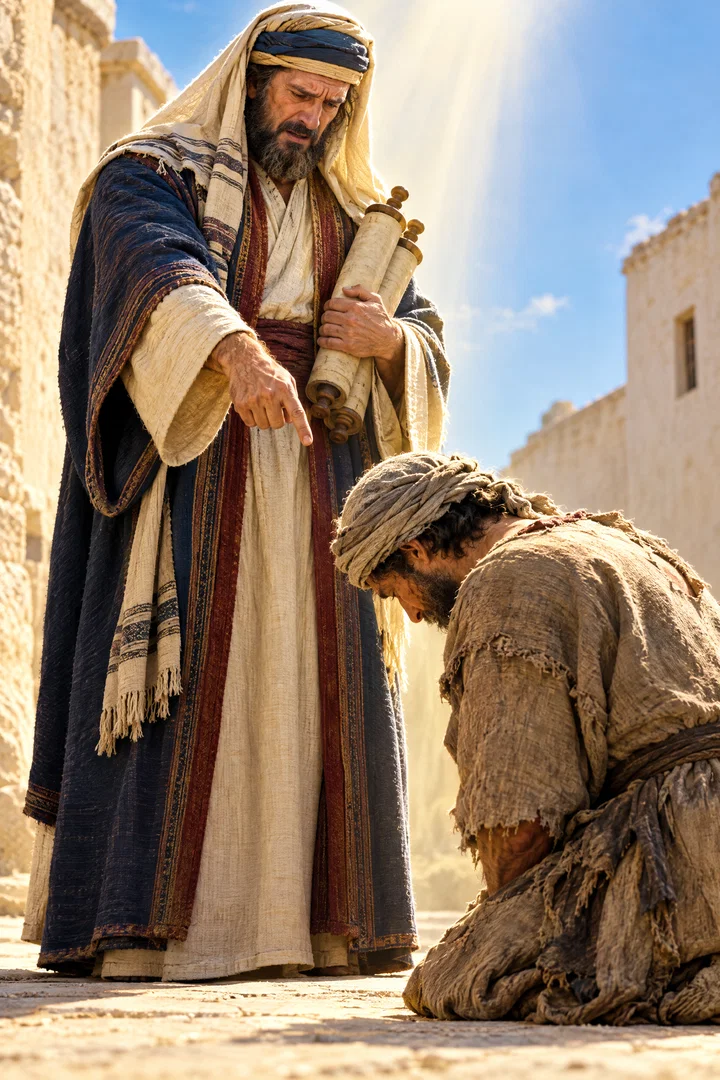
Therefore thou art inexcusable, O man, whosoever thou art that judgest: for wherein thou judgest another, thou condemnest thyself; for thou that judgest doest the same things.
Translations
Therefore you are inexcusable, O man, whoever you are that judge: for wherein you judge another, you condemn yourself; for you that judge do the same things.
King James Version, KJV Cambridge Paragraph Bible
Therefore thou art inexcusable, O man, whosoever thou art that judgest: for wherein thou judgest another, thou condemnest thyself; for thou that judgest doest the same things.
Therefore thou art inexcusable, O man, whoever thou art, that judgest: for wherein thou judgest another, thou condemnest thyself; for thou that judgest, doest the same things.
Revised Version, American Standard Version
Wherefore thou art without excuse, O man, whosoever thou art that judgest: for wherein thou judgest another, thou condemnest thyself; for thou that judgest dost practise the same things.
Therefore, thou art inexcusable, O man — every one who is judging — for in that in which thou dost judge the other, thyself thou dost condemn, for the same things thou dost practise who art judging,
Therefore thou art inexcusable, O man, every one who judgest, for in that in which thou judgest another, thou condemnest thyself; for thou that judgest doest the same things.
Wherefore, inexcusable, thou art, O man, whoever judgest; for, wherein thou judgest some one else, thyself, thou dost condemn,—for, the very things, thou dost practise, who art judging:
Berean Standard Bible, Majority Standard Bible
You, therefore, have no excuse, you who pass judgment on another. For on whatever grounds you judge the other, you are condemning yourself, because you who pass judgment do the same things.
Therefore you are without excuse, O man, whoever you are who judge. For in that which you judge another, you condemn yourself. For you who judge practice the same things.
So you have no reason, whoever you are, for judging: for in judging another you are judging yourself, for you do the same things.
Therefore thou art inexcusable, O man, whosoeuer thou art that condemnest: for in that that thou condemnest another, thou condemnest thy selfe: for thou that condemnest, doest the same things.
Douay-Rheims (Challoner revision)
Wherefore thou art inexcusable, O man, whosoever thou art that judgest. For wherein thou judgest another, thou condemnest thyself. For thou dost the same things which thou judgest.
Pictures
Cross-references 20 of 36
- Matthew 7:1-2
Judge not, that ye be not judged.
Both warn that judging another exposes the judge to the same judgment.
- Romans 3:9-20
What then? are we better than they? No, in no wise: for we have before proved both Jews and Gentiles, that they are all under sin;
Jews and Gentiles alike are under sin and guilty before God.
- Romans 1:18-32
For the wrath of God is revealed from heaven against all ungodliness and unrighteousness of men, who hold the truth in unrighteousness;
The sins condemned in chapter 1 set up the charge against the judge.
- Romans 14:4
Who art thou that judgest another man’s servant? to his own master he standeth or falleth. Yea, he shall be holden up: for God is able to make him stand.
Each person answers to God rather than judging another over matters of practice.
- Romans 14:13
Let us not therefore judge one another any more: but judge this rather, that no man put a stumblingblock or an occasion to fall in his brother’s way.
Both condemn judging others and urge care for fellow believers.
- John 12:47
And if any man hear my words, and believe not, I judge him not: for I came not to judge the world, but to save the world.
Christ came to save, not condemn, modeling restraint in judging others.
- Romans 2:27
And shall not uncircumcision which is by nature, if it fulfil the law, judge thee, who by the letter and circumcision dost transgress the law?
Gentiles who keep the law judge those who transgress it.
- Romans 2:6
Who will render to every man according to his deeds:
God renders to each person according to their deeds.
- Romans 3:19
Now we know that what things soever the law saith, it saith to them who are under the law: that every mouth may be stopped, and all the world may become guilty before God.
The law makes the whole world guilty before God.
- Romans 2:14-15
For when the Gentiles, which have not the law, do by nature the things contained in the law, these, having not the law, are a law unto themselves:
The law written in the heart and conscience gives people moral knowledge and leaves them without excuse.
- James 4:11-12
Speak not evil one of another, brethren. He that speaketh evil of his brother, and judgeth his brother, speaketh evil of the law, and judgeth the law: but if thou judge the law, thou art not a doer of the law, but a judge.
Both warn against judging another while doing the same things.
- Matthew 7:3-5
And why beholdest thou the mote that is in thy brother’s eye, but considerest not the beam that is in thine own eye?
Both texts condemn judging another while guilty of the same fault.
- Luke 6:37
Judge not, and ye shall not be judged: condemn not, and ye shall not be condemned: forgive, and ye shall be forgiven:
Both warn against judging and condemning others.
- John 8:7
So when they continued asking him, he lifted up himself, and said unto them, He that is without sin among you, let him first cast a stone at her.
Christ challenges the accusers to judge only if they are without sin.
- Romans 14:10
But why dost thou judge thy brother? or why dost thou set at nought thy brother? for we shall all stand before the judgment seat of Christ.
Both forbid condemning another and warn of appearing before Christ’s judgment seat.
- 1 Corinthians 4:5
Therefore judge nothing before the time, until the Lord come, who both will bring to light the hidden things of darkness, and will make manifest the counsels of the hearts: and then shall every man have praise of God.
Judgment is to wait until the Lord comes; condemning others condemns oneself.
- Romans 1:18-20
For the wrath of God is revealed from heaven against all ungodliness and unrighteousness of men, who hold the truth in unrighteousness;
People suppress known truth and are without excuse before God.
- Romans 2:11
For there is no respect of persons with God.
God shows no partiality between Jew and Gentile.
- Romans 3:20
Therefore by the deeds of the law there shall no flesh be justified in his sight: for by the law is the knowledge of sin.
The law reveals sin and exposes everyone’s guilt.
- Galatians 5:19-21
Now the works of the flesh are manifest, which are these; Adultery, fornication, uncleanness, lasciviousness,
Lists the sins shared by human nature.
Commentary
Each commentary is drawn from primary sources: the writings of Ellen G. White and Adventist pioneers and periodicals. Each commentary is separate. Its own words are not a quotation; follow the references to read the source passages.
Ellen G. White
20 sources
Whoever condemns another while doing the same things is without excuse and condemns himself, and God accepts the judge's own verdict as a just sentence against him.8T 85.1–2Lt 64, 1896, par. 7–8 The likeness need not be the identical act, but includes the same kinds of wrong and lack of self-control, for the judge is not faultless.GW 474.1–2MH 485.1RCOC 33.1 God's judgment is according to truth against all such doers, so the judging sinner cannot escape, and every life and its record will pass in review before Him.8T 85.1–2STGC 45.2–3Ms 75a, 1900, par. 14–15 The work of judgment has not been given to human hands but belongs to God and to Christ alone, because He lived in humanity and alone can understand human weakness and striving for perfection.GW 474.1–2MH 484.2Lt 98, 1896, par. 26–29 Instead of judging, a person must examine and set right his own heart and conduct, judge himself, weed his own garden, and test feelings and motives by the law of God as the only standard.Ms 75a, 1900, par. 14–15RH Oct 29, 190115MR 134.2–135.1
Judging Condemns the Judge
Whoever judges or condemns another while doing the same things is without excuse and condemns himself.8T 85.1–2STGC 45.2–3GW 474.1–2Ms 75a, 1900, par. 14–15 In judging another he pronounces sentence upon himself, and God accepts the judge's own verdict as a just sentence against him.8T 85.1–2STGC 45.2–3Ms 75a, 1900, par. 14–15Lt 23, 1894, par. 6–7 No one who practices what he condemns in another can escape, for the judgment of God is according to truth against such doers.8T 85.1–2STGC 45.2–3Ms 75a, 1900, par. 14–15 Each person's life and life record will be reviewed and will soon pass in review before God.8T 85.1–2STGC 45.2–3GW 474.1–2
The sameness does not require the identical act, for the judge is guilty of the same kinds of wrong and is not faultless.GW 474.1–2MH 485.1RCOC 33.1Lt 2, 1881, par. 3–5 Condemning another for mistakes condemns the judge as well, because he also has made mistakes.RCOC 33.1Lt 2, 1881, par. 3–5 Judging another while failing to control one's own conduct brings the same condemnation upon the judge.GW 474.1–2MH 485.1Lt 2, 1881, par. 3–5 Those who accuse others are accountable when they themselves do the same things.MH 485.1Lt 2, 1881, par. 3–5
The judge is often guilty not only of the same sin but of the greater sin of conceit and censoriousness.12MR 97.2 Those who act as Pharisees in condemning others must take heed lest God condemn them for Phariseeism, for even when not guilty of exactly the same sins they may be guilty of sins much greater in the sight of God, and each will be rewarded according to his work.5T 95.11MR 165.412MR 97.2 A lack of forbearance and love makes the critic magnify another's fault, misrepresent the gentle spirit of the gospel, and wound those for whom Christ died.1MR 165.4 Condemning others harshly over careless words and magnified suspicions while indulging greater faults is inconsistent, and one who stands under no less condemnation brings the rebuke of God upon himself, especially when using speech to dishearten and drive the helpless to destruction and despair rather than leaving them to the One who knows and helps the most helpless.5T 95.11MR 165.4
Readiness to judge exposes the judger himself, for keenness to see the failings of others comes from reason to distrust his own principles, from lack in his own experience, and from a condemning conscience that makes him suspicious of his brethren.Ms 75a, 1900, par. 14–1515MR 134.2–135.1 Harsh judging proves the religious life is not well built, with no underlying godliness based on Jesus Christ, so that the first gale of temptation sweeps the foundation away, and this causes all the difficulties in the church.Ms 75a, 1900, par. 14–1515MR 134.2–135.1 Instead of turning the eyes outward to watch lest the character of others should not be right while one's own course appears right in one's own eyes, the eyes must be turned inward to scan actions and test feelings and motives by the law of God as the only standard, emptying the heart of self-love, envy, evil surmising, jealousy, malice, unkindness and self-esteem.Ms 75a, 1900, par. 14–1515MR 134.2–135.1 Condemning another for faulty financial management while knowing one's own financial embarrassment is not after God's order is hypocrisy like trying to pull a mote from a brother's eye with a beam in one's own eye.Lt 64, 1896, par. 7–8
Those in positions of responsibility condemn themselves when they judge others by themselves and according to their own deviation from righteousness while themselves doing things not in harmony with their profession.Ms 181, 1905, par. 1Lt 59, 1900, par. 7 Judging others who have not seen the light condemns the one who judges, for his wisdom is foolishness.Ms 181, 1905, par. 1Lt 59, 1900, par. 7 Many standing aloof are living more in accordance with the light they have received than are many who have greater light, so those who judge them condemn themselves, and God will demonstrate this by strange things that expose the folly of judging those with less light.Lt 59, 1900, par. 7 Those who think their judgment perfect and turn aside means God moved a soul to give to a certain work for His name's glory climb onto the judgment seat Christ forbade.Lt 23, 1894, par. 6–7 The very ones who neglected souls in peril and left them to wander and drove them into snares condemn themselves by their judging, and like the elder brother they will not rejoice with Christ when He brings back the lost whom He values because He died for them.Lt 23, 1894, par. 6–7
God's Judgment Requires Self-Examination
The one who condemns another while practicing the same wrongs has no excuse and pronounces sentence upon himself, for divine judgment falls according to truth against all who do such things and the judging sinner will not escape it.8T 85.1–2STGC 45.2–3Ms 75a, 1900, par. 14–15RH Oct 29, 1901Ms 32, 1902, par. 19–20 Each person's life will be reviewed by God, and each life record will soon pass in review before Him.8T 85.1–2STGC 45.2–3GW 474.1–2Ms 32, 1902, par. 19–20MH 484.2 Readiness to judge does not provide a way of escape but exposes the judger's own guilt.Ms 75a, 1900, par. 14–15RH Oct 29, 1901 Taking God's work of judgment into human hands is therefore forbidden, and the warning is to remember the coming review rather than to find fault with others.RH Oct 29, 1901MH 484.2
The work of separating and judging has not been committed to human hands but belongs to God, who can correct or remove those in responsibility.GW 474.1–2MH 484.2Lt 98, 1896, par. 26–29 It has been given to Christ alone, because He has lived humanity and He alone can understand human weakness and human striving to attain perfection.Lt 98, 1896, par. 26–29 Even though there are counterfeit Christians in every church, no one has the right to measure the characters of fellow men and condemn them for their faults.Lt 98, 1896, par. 26–29 The church now is militant, not triumphant, composed of wheat and tares growing together until the harvest.Lt 98, 1896, par. 26–29
Instead of judging others a person must tremble and be afraid for himself, see that his own heart is right, and examine and set right his own heart and conduct.Ms 75a, 1900, par. 14–15RH Oct 29, 1901 He must judge himself and weed his own garden, until faithful work there leaves him no time to find fault with the gardens of others.Ms 75a, 1900, par. 14–15 Rather than turning the eyes outward to watch lest the character of others should not be right while his own course appears right in his own eyes, he should turn the eyes inward to scan and criticize his own actions, testing feelings and motives by the law of God as the only standard of right.Ms 75a, 1900, par. 14–1515MR 134.2–135.1 He must empty the heart of love of self, envy, evil surmising, jealousy, malice, unkindness, and self-esteem, and will not then climb upon the judgment seat to pronounce sentence upon others who in God's sight are better than he.15MR 134.2–135.1 He must seek God until the work of the Holy Spirit is felt in the heart, and make sure he is elect through sanctification of the Spirit unto obedience, purified by obeying the truth unto fervent love of others with a pure heart.Ms 75a, 1900, par. 14–15Lt 59, 1900, par. 7
Quick censure must not fall upon those who bear responsibilities when their work and difficulties are not fully understood, for later experience may replace censure with sympathy.GW 474.1–2 Lack of forbearance and love makes the critic magnify another's fault, misrepresent the gentle spirit of the gospel, and wound people for whom Christ died. The gift of speech must not be used to dishearten, discourage, and drive the one judged to destruction, perdition, and despair, for one standing under no less condemnation brings rebuke upon himself by so doing, and the helpless one should be left to the One who knows, understands, and helps the most helpless.1MR 165.4 Offense at others must not be taken, nor concern for feelings and reputation allowed to disrupt fellowship with Christ.MH 485.2
Sources
Pioneers and periodicals
89 sources
Whoever passes sentence on another for wrongdoing while practicing the same kinds of sin is without excuse, for in declaring those deeds wrong he proves he knows what is right and by his own verdict condemns himself.STST Jun 3, 1889ST Nov 21, 1895 To judge here means to condemn and render final sentence, which belongs to God alone, while human duty is to instruct, entreat and admonish from His Word without taking His place.ST Apr 20, 1904RH Mar 16, 1916ST Jun 10, 1908ST Mar 4, 1897 Doing the same things does not require committing every outward act, for God's spiritual law reaches thoughts and desires, and all share the same fallen nature so that a cherished evil in the heart is the same kind of transgression as the open deed.RH May 15, 1856ST Aug 19, 1897ST Sep 22, 1881ST Nov 13, 1901 There is one moral law for all, with Jews and Gentiles alike under sin and accountable to God, so that hearing and knowing the truth, profession, knowledge, or church standing gives no exemption and no claim to moral superiority.RH Mar 13, 1856ST Aug 12, 1875RH May 27, 1875ST Jan 17, 1878 Therefore each person must examine and set right his own heart, be merciful toward the sins of others while stern toward his own, and seek to restore the erring in Christ's spirit instead of publishing faults or deciding who is a saint.RH Oct 29, 1901ST Dec 19, 1900RH Dec 12, 1907ST Jun 15, 1904ST Oct 12, 1904
Context in Romans
Romans 2:1 draws a conclusion from the list of heathen iniquities and unnatural sins at the end of Romans 1.STST It sets forth what follows from the depths of sin and iniquity into which the heathen peoples plunged because they refused to keep God in their knowledge.ST One who condemns those crimes in others while practicing the same things is left without excuse.ST The very act of saying such things are wrong proves knowledge of right, and that knowledge condemns the judge himself in the day of judgment, for no one claims those enumerated sins are right but everyone condemns them in others and thereby condemns them in himself.ST
The verse sums up the whole second chapter, with the remaining verses only enlarging its statement.ST Jan 9, 1896 It declares that there is no exception to the wrath of God revealed from heaven against all ungodliness and unrighteousness of men, since whoever judges another condemns himself because he does the same things and so is inexcusable.ST Jan 9, 1896
It was written by Paul in A.D. 58 from Corinth and sent by Phebe from Cenchrea to the Christian church at Rome.RH Oct 19, 1916 That church was made up of Gentile converts and Jewish believers in Jesus as Messiah, including both Jews and Gentiles, with prejudices unremoved.RH Oct 19, 1916ST Jul 21, 1909ST Feb 7, 1911 It belongs to Paul's instruction to strengthen their faith and correct misapprehensions arising from the mixed membership.RH Oct 19, 1916 It shows that the rites and ceremonies of the Mosaic law are abrogated and the blessings of salvation are open equally to Jew and Gentile, rebuking both the Jewish hesitation to regard uncircumcised Gentile converts as on the same footing and the Gentile readiness to look contemptuously on the ceremonial scruples of Jewish brethren.RH Oct 19, 1916 It belongs to the argument of Romans 2-4 showing who are Israelites and heirs of God's promise and how only that promise is obtained, the same subject carried on in Romans 9-11 rather than a change of subject.ST Jul 9, 1896
Sense of Key Words
To judge in this verse is to condemn or to render a sentence, not to give a probationary trial under especially favorable conditions. No individual has any business to take that place toward another, whether the other does right or wrong, because condemning belongs to God alone as His prerogative.ST Mar 4, 1897 Individuals may instruct, entreat, or admonish others from the standpoint of God's Word, but they must never condemn, as Christ Himself showed by refusing to act as a condemning judge among men.ST Mar 4, 1897
Judging includes demanding that others see, act, talk, and work to one's own standard, and going from house to house circulating reports about a brother, whether true or imaginary.ST Dec 25, 1893 It includes pointing out error in others in a faultfinding way, which shows something radically wrong in the would-be reformer whose sight is damaged by a far greater fault in his own character, as a beam of timber compared to a splinter.ST Jan 23, 1896 It includes making a campaign of criticism over weaknesses, whereas recognizing weaknesses should help in relating rightly to others without wasting time and leaving good undone.RH Feb 26, 1914 It includes assuming one-man authority in spiritual things, which God has not given to individuals now, since He wills that all His people be represented in the conduct of His work, and one who takes sole authority makes himself the self-condemned judge the verse forbids.ST Oct 1, 1902ST Feb 27, 1896 Such judging does not make the judger better than the one judged, but cripples the other's influence, belittles the judger, and dishonors God by putting the judger in God's place, while Jesus judged no man and His true followers follow Him in this, leaving room for charity since all have imperfections the Lord will point out for correction when asked.ST Dec 25, 1893ST Jan 23, 1896
Doing the same things does not require committing every outward act listed against the heathen, but means the same kinds of sin.ST Feb 9, 1882 An evil thought cherished by one who has the light of God's word is as great a crime in God's sight as the corresponding deed committed by a heathen, and this strips professed Christians of any claim to moral superiority over open sinners. God's spiritual law reaches thoughts and desires as well as outward acts, and the sins of the flesh are present in every natural heart.ST Feb 9, 1882 All share the same sinful human nature, and the sins condemned in others are works of the flesh arising from within, present in every person though expressed to different degrees, so the capacity to recognize another's wrong makes one accountable for one's own.ST Nov 21, 1895 All are therefore transgressors in the spirit of the law even apart from outward crimes, and high profession amounts to nothing without corresponding works, with the same condemnation falling on the unregenerate possessor of the same nature and on an apostate church guilty under a form of godliness of the same sins.RH May 15, 1856ST Aug 19, 1897
Not receiving the law at Mount Sinai does not mean having no knowledge of law.RH Mar 7, 1871 Those addressed held moral principles coming by tradition from a revelation made to and for the whole human race.RH Mar 7, 1871 Even Gentiles without the written revelation have the work of the law in their hearts, with conscience and thoughts accusing or excusing one another, leaving enough moral light to recognize and judge right from wrong, so that those with some knowledge of Scripture have still less reason to claim inability to distinguish right from wrong.ST Apr 17, 1884 Gentiles who lacked revealed law could still be convicted through moral principles they discovered and expressed in civil laws, by which their conduct exposed their guilt.RH Feb 18, 1873 Their want of knowledge is wilful, for when they knew God they did not glorify Him as God and did not like to retain God in their knowledge, selfishly putting away His word and forgetting obligation, and such wilful ignorance does not impair the validity of His word nor lessen obligation to it, just as a citizen who makes no effort to learn the published laws does not destroy their force nor escape their just claim.RH Mar 7, 1871
Condemning Self by Judging
Whoever passes judgment on another while practicing the same kinds of wrong is left without excuse and by that very judgment condemns himself, with no exception made for profession, knowledge, region, or standing in the church.ST Jun 3, 1889ST Aug 12, 1889ST Nov 21, 1895 Knowledge of God's law does not make a doer of it, so those who boast of their light and despise the less informed while practicing the same wrongs stand guilty before God.ST Aug 12, 1889ST Dec 16, 1889 Those who walk in the light do not judge erring fathers or reproach earlier generations as though they would have acted better in their place, but learn from their example and by keeping God's law with faith and charity avoid repeating the deeds God has condemned.ST Jun 3, 1889ST Dec 16, 1889 The very act of declaring such things wrong proves possession of knowledge of right, and that knowledge condemns the judge himself in the day of judgment.ST No one claims the enumerated iniquities are right, but everyone condemns them in others and thereby condemns them in himself.ST
The capacity to recognize and condemn another's wrong makes a person accountable for his own misdeeds, so that the judge is guilty of the same kinds of sin.ST Nov 21, 1895ST Nov 21, 1895 The picture the judge draws of another reveals his own likeness as if reflected by the camera of God's Word, and when a person attacks another with vile names the accusation reveals the accuser's own character, which God's Word discerns in the thoughts and purposes of the heart.ST Feb 10, 1904 Examining one's own faults shows how readily faults are recognized in others because the same wrongs are practiced, and faultfinding talk makes the talker a partaker of those faults when, knowing others are erring, he does not try to correct them.RH Oct 19, 1916 The judgments people pass on others reveal the light and standard by which they themselves will be judged.ST Sep 9, 1930 Refusing to judge keeps a person from condemning himself, for he will be judged with the same judgment he uses, and putting on love, letting the peace of God rule, and following peace with all require refusing to judge.ST Sep 9, 1930ST Jun 15, 1904
In condemning the heathen for their iniquities a person passes judgment upon himself unless he repents and is cleansed from the very sins they do, showing by his own sentence against them that it would be right for God to pass sentence against him.ST Even the heathen themselves who practice these sins are not without evidence that they are doing wrong, because they condemn in each other the things being practiced and thereby join in the condemnation.ST When the condemnation of sin in Romans 1 is joined to the judging of others in Romans 2 it makes plain that God is just when He condemns the sins committed.ST God is good because He will not in any way or under any circumstances pass over wrongdoing, and His goodness is all the goodness there is in the universe.ST When God shows the evil of wrongdoing it is purposeful, for by His Spirit He impresses everyone that they must come to Him to escape the bondage of the sin they condemn in the world around them, and at the same time He imparts His own goodness.ST
Righteous indignation at the wrongdoing of others does not prove indignation at one's own wrongdoing, for the person loudest in condemning one form of evil may himself be the greatest sinner in another form just as grossly sinful.ST Nov 13, 1901 A fault may seem especially bad simply because it is not one's own way of sinning.ST Sep 22, 1881 All share universal human nature with no evil done by others absent in oneself at least as possibility and seed, with the sins of others stirring up one's own unsanctified nature, so that outside divine protection even the grossest wickedness could be paralleled openly by one's own deeds.ST Nov 13, 1901 Therefore every new crime is a warning of one's own possibilities of evil, calling for mercy in judging the sins of others and sternness in judging one's own, and for confessing the sins of the time and of the world as one's own.ST Nov 13, 1901 That the judge is also guilty does not make vice a mere misfortune or remove responsibility, for sin remains sin and right and wrong remain distinct.RH Sep 29, 1868
One Law for All
The charge laid out against human sin falls not only on those being judged but on every judge as well, for whoever condemns another while practicing the same kinds of wrong is without excuse and pronounces sentence on himself.RH Mar 13, 1856RH Nov 22, 1853RH Jan 19, 1860RH May 15, 1856 No profession, knowledge, or standing creates an exemption, since Jews and Gentiles alike are accountable to God and both are shown to be under sin.RH Nov 22, 1853RH Jan 19, 1860RH Apr 29, 1873 This proof grounds the question of what advantage the Jew holds and whether Jews are better than Gentiles, answered by declaring they are better in no way.RH Apr 29, 1873 It likewise grounds applying the Old Testament declarations that there is none righteous and none that does good to all the world, and not to the Jews only.RH Nov 22, 1853RH Apr 29, 1873
Gentiles sustain the same relation to the law that the Jews did, being under the law and condemned by it as its violators.ST Aug 12, 1875RH May 27, 1875RH Nov 22, 1853 There is one law for all rather than a separate law for Jews and Gentiles, so Gentiles are not exempt from its claim.RH May 27, 1875ST Jan 17, 1878 God's moral law, including the fourth commandment governing the Sabbath, was never given to the Jewish people exclusively.ST May 13, 1889RH Dec 13, 1853ST Jul 1, 1875 They were for a season its keepers in charge, entrusted with its law, oracles, and testimony, and through them these were handed down to all others.RH Dec 13, 1853ST Jul 1, 1875RH Dec 24, 1861
That entrusted keeping did not make the law merely Jewish, and it remains binding on Gentiles as part of Christ's law established by Christ and the apostles, not as the old do-and-live obligation joined to the Levitical priesthood.ST Jan 22, 1880RH Dec 24, 1861 The Sabbath was made for humanity, not for Jews alone.ST May 13, 1889 The letter to Rome, written to a church made up of both Jews and Gentiles, presses the lasting force and worldwide reach of God's law, its binding claim upon every soul, and the gospel as God's power to bring every longing heart into full harmony with His government.ST May 13, 1889ST Jul 21, 1909
The law was present in the hearts of Gentiles even without the written code, as the same law given to the Jews, showing moral accountability apart from Sinai and that God's law was not confined to one people.RH Apr 30, 1872RH Feb 3, 1852 It is not written on the heart in the new-covenant sense, however, until people submit to it and give their hearts to God.RH Apr 30, 1872 Hearing and knowing the truth is no substitute for practicing it, for knowledge of the law does not make a doer, and those who boast of light while despising the less informed yet practicing the same wrongs stand guilty before God.ST Aug 12, 1889ST Jan 9, 1896 High profession amounts to nothing without corresponding works, since the unregenerate, Jew or Gentile, share the same nature, do the same things charged in Romans 1:28-32, and apart from the gospel and its restraining influence remain at enmity with God's law, a condemnation falling likewise on an apostate church that keeps a form of godliness while guilty of the same sins.ST Aug 12, 1889ST Aug 19, 1897
God is no respecter of persons and favors no nation, whether called Jews, Israelites, Anglo-Saxons, Englishmen, or anything else, but will punish sin wherever it is found.ST Jan 9, 1896ST Jul 23, 1896 In every nation whoever fears Him and works righteousness is accepted with Him, including people in heathen lands who never heard His name or saw His written word yet accept what they see of Him in the works of creation.ST Jan 9, 1896 There is no difference between Jew and Greek, and the gospel call runs to whosoever believes, whosoever will, and whosoever calls upon the name of the Lord, so that claiming special divine blessing for one earthly nation denies the gospel of grace.ST Jan 9, 1896ST Jul 23, 1896 The judgment of wrongdoing rests on God's moral law, identified as the commandments and the code given to Adam for the human race, not on the gospel or on the natural evidence of creation, contrary to the claim that the law by which people are judged is the gospel or law of faith.RH Jul 12, 1870RH Jul 12, 1870
God's Just Judgment
The chapter sets forth God's just wrath and the punishment awaiting those who persist in evil and disobey the truth.ST Apr 22, 1889 His judgment is according to truth and according to deeds, so that no one who judges another while doing the same things can excuse transgression or escape condemnation, and every disobedience receives a just recompense.RH Oct 29, 1901ST Feb 14, 1906RH Jun 22, 1869 The righteous will witness that judgment of the wicked not because they delight in anguish, but so they may see God's justice.RH Jun 22, 1869
No one completely obeys the law.ST Sep 27, 1883 Those who condemn the sins listed at the end of Romans 1 are themselves guilty when they cherish the evil thoughts that could grow into those sins, for doing the same things does not require committing every outward act, and an evil thought cherished with the light of God's word is as great a crime in His sight as the corresponding deed committed by a heathen. This strips professed Christians of any claim to moral superiority over people who openly commit grave sins.
The sentence pronounced on such characters is that they are worthy of death, not unending conscious misery, and Paul does not picture unending conscious torture where he had the most fitting occasion to do so if it were true.RH Oct 6, 1859RH Jan 7, 1873 Death can be reached only on complete extinction of life, for as long as any life is about a man he is not dead.RH Oct 6, 1859 A death that never dies is a contradiction of terms, nor can a person properly be said to be always dying unless tending to a state of death he will by and by reach.RH Oct 6, 1859
Being under the Spirit's conviction as in Romans 7 rather than in Romans 1 and 2 is cause for gratitude, because conviction and condemnation can lead to conversion and comfort.ST May 30, 1906 Those who reject God are without excuse when they judge or scorn faith while their own conduct contradicts them.ST Feb 13, 1907 God has witnessed to Himself through rain, fruitful seasons, food, and gladness, and even scoffers may call on Him for mercy in calamity, so unbelief is inexcusable, and the unbelief of professed Christians is still less excusable than that of open infidels.ST Feb 13, 1907
Call to Self-Examination
No one is to take God's place by deciding who is or is not a saint, for judgment belongs to God alone who weighs every life.ST Apr 20, 1904RH Mar 16, 1916 Human beings are limited in knowledge and wisdom and may be swayed by prejudice, so they cannot judge with God's perfect justice.ST Apr 20, 1904 No individual has any business to judge another whether that person does right or wrong, because to judge means to condemn, and condemning is God's prerogative alone.ST Mar 4, 1897 Individuals may instruct, entreat, or admonish from the standpoint of God's Word, but they must never condemn, as Christ showed by refusing to take the place of a condemning judge when He lived among men.ST Mar 4, 1897 Christians as individuals are not to set themselves up as judges now, because God has not given them that work.ST Feb 27, 1896 Human beings are not entitled to condemn one another as though they were the final judges.ST Mar 19, 1894
Sabbath observance is a moral duty for which God will judge in the final judgment, but this authority has not been given to human courts.ST Jun 10, 1908 Anyone who harshly judges and condemns another condemns himself, because the judge is guilty of the same kinds of sin.ST Dec 19, 1900 No one has kept God's perfect law, so people should show others the mercy and Christlike spirit they themselves need.ST Dec 19, 1900 Anyone who judges another for wrongdoing while doing the same things condemns himself and cannot excuse himself, nor escape God's judgment which is according to truth.RH Oct 29, 1901 The remedy is to examine and set right one's own heart and conduct rather than find fault with others.RH Oct 29, 1901
Putting on love as the bond of perfection, letting the peace of God rule in the heart, and following peace with all men require refusing to judge others.ST Jun 15, 1904 A person who judges another condemns himself because he does the same things, and will be judged with the same judgment he uses.ST Jun 15, 1904 Not judging keeps a person from condemning himself and is a condition of a happy life with love, peace, and charity.ST Jun 15, 1904 Others' wrongdoing is no justification for sin, for judging another while doing the same things brings condemnation upon oneself.ST Righteous indignation at others' wrongdoing does not prove indignation at one's own, since the person loudest in condemning one form of evil may be the greatest sinner in another form just as grossly sinful.ST Nov 13, 1901
All share universal human nature with every evil as seed and possibility, so there is no evil done by others that one will not find in himself at least as possibility, with others' sins stirring his own unsanctified nature, and outside divine protection even the grossest wickedness could be paralleled openly by his own deeds.ST Nov 13, 1901 Every new crime is therefore a warning of one's own possibilities, calling for mercy toward others' sins and sternness toward one's own, and for confessing the sins of the time and world as one's own.ST Nov 13, 1901 Sincere sorrow for another's sin leads to going to him in the spirit of Christ to turn him from his course, not to publishing his faults to the world to make others think one incapable of what is condemned.RH Dec 12, 1907 The effort to make others think oneself incapable of what is condemned in others is a blind, for the one who judges and publishes faults practices the same things and condemns himself.RH Dec 12, 1907 Withdrawing from every brother that walks disorderly is not the work of individuals as such but of the church, with each case requiring self-examination and God-given wisdom to pursue a course that witnesses for God and wins the soul if possible.ST Oct 12, 1904
Church members are not to criticize or condemn one another from a position of judgment, for their calling is to serve one another in love rather than exercise worldly dominion.RH Jun 2, 1904 Judging a fellow believer is itself a wrong that can wound an honest person cruelly, so believers must avoid condemning their brother and take care not to offend in word or deed.RH Oct 3, 1854 Awareness of one's own corruption should humble and restrain accusations and evil reports, for the one who accuses most is especially guilty and does the work of the accuser of the brethren.RH Oct 23, 1913 Those most guilty of wrong are the first to see wrong in others, as when the scribes and Pharisees accused the woman taken in breaking the seventh commandment and Jesus answered that he without sin should cast the first stone, then wrote their far more aggravated sins on the ground until convicted by conscience they left one by one.RH Oct 19, 1916 No church member should therefore be a judge of brethren or a despiser of those considered defective, but must first see the heart pure before God and the name registered in the Lamb's book of life, not only written on church books.RH Oct 19, 1916
Those who walk in the light do not judge erring fathers but learn from their example, and by keeping God's law with faith and charity avoid repeating deeds God condemned.ST Jun 3, 1889 No one can rightly condemn others while committing the same kinds of acts, and such judgment leaves the judge without excuse.ST Dec 16, 1889 This warns against reproaching earlier generations as though one would have acted better in their place while repeating their sins.ST Dec 16, 1889 Reproaching Israel for unbelief without self-examination condemns the judger when the same unbelief is present, like David condemning the man in Nathan's parable and thereby condemning himself.RH Apr 1, 1873
Condemning the Jews who rejected Christ while doing the same things condemns oneself.ST Jan 29, 1908 Those Jews were made depositaries of God's law and claimed great things in keeping it, binding it about with formality and ceremonies, yet remained gross sinners and base hypocrites because they did not carefully consider the law they professed, and if they had studied closely the depth of spirituality and refinements of pure life it required they would have seen their mistake and the Gospel remedy would have set them free.ST Jan 29, 1908 What was wrong in them then is wrong now, and through the law the knowledge of sin came then and comes now, so one must look into the same law to sense guilt and reveal sins that the Gospel remedy may be applied.ST Jan 29, 1908 The church of today is inexcusable if it sits in judgment upon the church that condemned Christ while doing the same things itself, for rejecting His plain teachings, disregarding the Golden Rule, ignoring God's commandments, and substituting human tradition today is just as much rejection of Christ as His formal condemnation then, and holding that position in brighter light condemns the judger.ST Aug 17, 1904 Attention must turn from judging those responsible for Christ's crucifixion to examining one's own conduct, because judgment of others does not excuse one's own guilt.ST Jun 1, 1904
Fallible beings who have tasted the good word of God and the powers of the world to come can fall away just as the Jews did and crucify the Son afresh to themselves and put Him to open shame, so they are forbidden to condemn the men who did the cruel work of the crucifixion and those responsible, lest taking that part bring them into the same condemnation.ST Mar 20, 1901 The warning applies to whole sections as well as individuals, including critics who condemn one region's lynchings while their own region commits them.ST It applies to those who criticize Catholics for entering politics while supporting efforts to bring about church dominance of the State.ST Jan 1, 1894 It exposes ministers who condemn the Catholic Church for political influence while promoting their own church's political power as hypocritical and without excuse.ST Nov 19, 1894 It likewise exposes those who condemn secret societies while organizing a secret society for their own work.ST Mar 26, 1896
Those who condemn laws making it a crime to teach white and colored children together and to practice that God made all nations of one blood and that in Christ there is neither Greek nor Jew, bond nor free, while themselves making it a crime to practice the Sabbath commandment, condemn themselves by their own judgment, and one inconsistency cannot be set above the other.ST Oct 27, 1898 Professing to keep and teach God's law does not excuse breaking it, for those who condemn stealing while taking what is set apart for God's service condemn themselves.RH Apr 8, 1909 Those who abhor idols may still commit sacrilege by stealing holy things intended to support God's servants and service.RH Apr 8, 1909 People who judge and condemn others without knowing what they condemn are inexcusable, and those claiming to distinguish truth from error by the Bible condemn themselves when their actions violate the professed standard, including by prejudicing others against examining religious teaching.ST Sep 15, 1887
Criticizing another's diet while sharing a critical spirit makes one a hypocrite, for a critical spirit reveals that health reform has not been truly formed within.RH Aug 11, 1904 A person who judges others for misusing entrusted means is without excuse when also guilty of the same misuse to greater or lesser degree, so the proper response is not standing still and blaming managers but acknowledging one's own wrong, repenting, and doing better.RH Mar 13, 1900 A rule requiring virtue, cleanliness, good temper and good conduct in women while excusing men is false, for whatever degrades a woman also degrades a man, including filthy tobacco habits like smoking cigars or chewing tobacco while expecting a clean mouth and sweet breath from a wife, and condemning a woman for visiting a saloon and indulging appetite and revelry while practicing the same daily.ST Apr 19, 1883 Dwelling on others' wrongs and supposed blessings while overlooking one's own faults and blessings through pride stands condemned, and each person should ask whether he does anything he would condemn in others.ST Jan 10, 1900
Sources