Romans 2:21
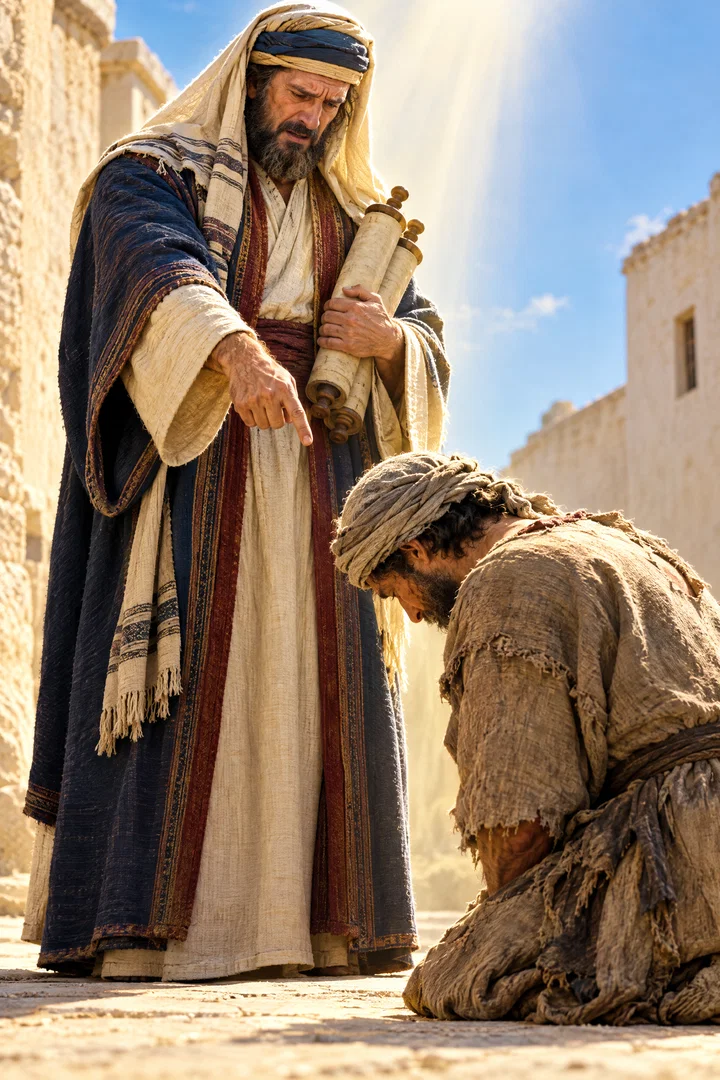
Thou therefore which teachest another, teachest thou not thyself? thou that preachest a man should not steal, dost thou steal?
Translations
You therefore which teach another, teach you not yourself? you that preach a man should not steal, do you steal?
King James Version, KJV Cambridge Paragraph Bible
Thou therefore which teachest another, teachest thou not thyself? thou that preachest a man should not steal, dost thou steal?
Thou therefore who teachest another, teachest thou not thyself? thou that preachest a man should not steal, dost thou steal?
Revised Version, American Standard Version
thou therefore that teachest another, teachest thou not thyself? thou that preachest a man should not steal, dost thou steal?
Thou, then, who art teaching another, thyself dost thou not teach?
thou then that teachest another, dost thou not teach thyself? thou that preachest not to steal, dost thou steal?
Thou, therefore, that art teaching someone else, thyself, art thou not teaching? Thou that proclaimest—Do not steal! Art thou, stealing?
you, then, who teach others, do you not teach yourself? You who preach against stealing, do you steal?
You, then, who teach others, do you not teach yourself? You who preach against stealing, do you steal?
You therefore who teach another, don’ t you teach yourself? You who preach that a man shouldn’ t steal, do you steal?
You who give teaching to others, do you give it to yourself? you who say that a man may not take what is not his, do you take what is not yours?
Thou therefore, which teachest another, teachest thou not thy selfe? thou that preachest, A man should not steale, doest thou steale?
Douay-Rheims (Challoner revision)
Thou therefore that teachest another, teachest not thyself: thou that preachest that men should not steal, stealest:
Pictures
Cross-references
- James 2:10-11
For whosoever shall keep the whole law, and yet offend in one point, he is guilty of all.
Both identify the commandments as the law and show that breaking it makes one a transgressor.
- Exodus 20:15
Thou shalt not steal.
The prohibition against stealing is one of the Ten Commandments.
- Romans 2:13
( For not the hearers of the law are just before God, but the doers of the law shall be justified.
Contrasts hearing the law with doing it.
- Matthew 5:19
Whosoever therefore shall break one of these least commandments, and shall teach men so, he shall be called the least in the kingdom of heaven: but whosoever shall do and teach them, the same shall be called great in the kingdom of heaven.
Both texts condemn teaching commandments without practicing them.
- Romans 3:19-20
Now we know that what things soever the law saith, it saith to them who are under the law: that every mouth may be stopped, and all the world may become guilty before God.
The law exposes sin, stops every mouth, and leaves all humanity guilty before God.
- Romans 2:25-27
For circumcision verily profiteth, if thou keep the law: but if thou be a breaker of the law, thy circumcision is made uncircumcision.
Lawbreaking teachers are judged by their deeds, not their outward identity.
- James 1:22
But be ye doers of the word, and not hearers only, deceiving your own selves.
Both contrast teaching or hearing the word with doing what it commands.
- Matthew 19:18
He saith unto him, Which? Jesus said, Thou shalt do no murder, Thou shalt not commit adultery, Thou shalt not steal, Thou shalt not bear false witness,
Both texts refer to the commandment against stealing.
- 1 John 2:3-4
And hereby we do know that we know him, if we keep his commandments.
Knowing God is shown by keeping his commandments; claiming otherwise while disobeying is false.
- Romans 13:8-9
Owe no man any thing, but to love one another: for he that loveth another hath fulfilled the law.
Paul cites the commandments as the law of love.
- Matthew 23:3
All therefore whatsoever they bid you observe, that observe and do; but do not ye after their works: for they say, and do not.
Jesus says the leaders teach but do not act accordingly.
- Romans 2:17
Behold, thou art called a Jew, and restest in the law, and makest thy boast of God,
The Jews rest in the law named here.
- 1 John 3:4
Whosoever committeth sin transgresseth also the law: for sin is the transgression of the law.
same law that points out sin
- Matthew 23:28
Even so ye also outwardly appear righteous unto men, but within ye are full of hypocrisy and iniquity.
Both condemn leaders who appear righteous while practicing hypocrisy and iniquity.
Commentary
Each commentary is drawn from primary sources: the writings of Ellen G. White and Adventist pioneers and periodicals. Each commentary is separate. Its own words are not a quotation; follow the references to read the source passages.
Ellen G. White
11 sources
The question is put to one who is called by God's name, who rests in the law, who boasts of God, who knows His will and approves excellent things, who is confident that he is a guide of the blind, a light in darkness, an instructor of the foolish and a teacher of babes, having the form of knowledge and truth in the law.Ms 47, 1901, par. 21–24Lt 9, 1892, par. 48–57Ms 52, 1898, par. 23–27 Such a teacher is required to teach, correct and govern himself before he teaches another.Ms 47, 1901, par. 21–24Lt 9, 1892, par. 48–57Ms 52, 1898, par. 23–27 What is demanded is fulfilling and doing the law, not merely acknowledging its authority, knowing it, or having outward profession, position and outward circumcision.Ms 47, 1901, par. 21–24Lt 9, 1892, par. 48–57Ms 52, 1898, par. 23–27 The law is the standard of righteousness and the expression of God's character, and when treasured in the heart it controls speech and life.Lt 9, 1892, par. 48–57 Outward appearance testifies to the inward working of the heart, so that true standing is inward, with circumcision of the heart in the spirit, by zeal according to knowledge as doers of the Word and not hearers only.Ms 47, 1901, par. 21–24Lt 9, 1892, par. 48–57Ms 52, 1898, par. 23–27
To preach that a man should not steal, commit adultery, abhor idols, or commit sacrilege, while stealing, committing adultery and impurity, committing sacrilege and breaking the law boasted in, is hypocrisy that stands condemned.Ms 47, 1901, par. 21–24Lt 9, 1892, par. 48–57Ms 52, 1898, par. 23–27Lt 29a, 1872, par. 45–51Lt 29, 1872, par. 44–49 It breaks the law, dishonors and degrades God and His truth, and causes the name of God to be blasphemed among the Gentiles.Ms 47, 1901, par. 21–24Lt 29a, 1872, par. 45–51Lt 29, 1872, par. 44–49RH Jan 7, 1902Lt 106a, 1896, par. 4 The Jewish teachers who most zealously advocated God's law were themselves transgressors of it, teaching others what they did not practice themselves and perverting God's law.Ms 132, 1902, par. 16 The same exposure falls on religious teachers who profess piety and instruct others in right conduct but fail to live by it, as when priests condemned Greeks and Romans as sinners yet the wise men stood higher in God's sight than these professed worshipers.DA 61.2
The warning applies to those who judge, number, or put human measurement upon others, that they must first take heed to their own conduct and life.Ms 47, 1901, par. 21–24RH Jan 7, 1902 Numbering Israel and measuring ministering brethren, judging character, oppressing them, and standing apart as holier, is forbidden, since no man can read the heart and the one found fault with may be more righteous before God.Ms 47, 1901, par. 21–24 In the perils of the last days ministers must turn from hasty temper, impatience, hasty speech and exhibition of self, take heed to themselves, and put no occasion of stumbling in a brother's way.Ms 47, 1901, par. 21–24 Ministers are required to examine their motives and lives and to practice the truths they preach rather than allowing selfishness to rule them.1T 467.1–468.2
The rebuke falls on a married minister and professed follower of Christ who teaches others yet carries on improper familiarities and gives to another professing Christian woman attentions that belong only to his wife.Lt 29a, 1872, par. 45–51Lt 29, 1872, par. 44–49Lt 73, 1886, par. 2–4 Setting thoughts and affections upon another woman while having a lawful wife, giving loose rein to thought with fevered imagination and lust of the flesh, is daily transgression of the commandments professed, sin against God and an abomination in His sight.Lt 29a, 1872, par. 45–51Lt 29, 1872, par. 44–49Lt 73, 1886, par. 2–4 It brings darkness and discouragement, deeply wounds and burdens His cause and does injury to it, so that God could not work through him or bless his preaching while his thoughts were so fixed.Lt 29a, 1872, par. 45–51Lt 29, 1872, par. 44–49 In the same way a minister cannot handle the bodies of youth in vile, lustful practice and lead young women into abominable practices that lead to lewdness and ruin and at the same time preach the Word to sinners; such sinful preaching dishonors and degrades the truth and is hated by God.Lt 106a, 1896, par. 4
Applied to God's professed people given great light and opportunity, the rebuke is against cherishing idols as Israel cherished the golden calf, especially pride and idolatry in dress and outward adornment, where pride buds and blossoms in apparel and separates from God.Ms 52, 1898, par. 23–27
Sources
Pioneers and periodicals
109 sources
To teach another while breaking the law oneself is hypocrisy that condemns the teacher, for the questions charge that the instructor does the very stealing, adultery and sacrilege he forbids.ST Apr 10, 1884RH Feb 27, 1900RH Apr 8, 1909ST Dec 12, 1895ST Dec 14, 1882 The charge is aimed at the one who rests in the law, boasts in God and is confident he guides the blind and teaches babes, yet holds only its outward form without its power in the heart.ST Oct 1, 1896ST Apr 25, 1900ST Oct 8, 1912ST Mar 20, 1907ST Dec 12, 1895 The law in view is the Ten Commandments, the moral will of God distinct from the ceremonial types, including the commands against stealing, adultery, idolatry and the Sabbath.ST Mar 24, 1887ST Dec 20, 1905ST Jan 27, 1881ST Aug 5, 1897 There is one such law for all people, so Jew and Gentile stand condemned alike as transgressors when they break it, and outward circumcision or profession profits nothing without obedience.ST Aug 12, 1875ST Oct 7, 1880RH May 27, 1875ST Feb 11, 1886RH Nov 22, 1853 Such lawbreaking while teaching dishonors God and causes His name to be blasphemed among outsiders, yet the law itself remains binding and unabolished, condemning sin though justifying no one apart from faith in Christ.ST Jul 1, 1880ST May 20, 1908ST Jun 1, 1882
Audience and Historical Setting
The charge is direct and personal, thou art the man, spoken to the one called a Jew who rests in the law, boasts of God, knows His will because instructed out of the law, and is confident he is a guide of the blind, a light to those in darkness, an instructor of the foolish and a teacher of babes.ST Dec 12, 1895ST Apr 25, 1900ST Dec 12, 1895 It confronts one who teaches another yet does not teach himself, asking whether he practices what he preaches against stealing, adultery, sacrilege and dishonoring God through breaking the law.ST Dec 12, 1895ST Oct 1, 1896ST Dec 12, 1895 Those leading questions imply he does not keep the law and are really positive charges of breaking it, showing that knowledge of God's will did not ensure obedience.ST Dec 12, 1895ST Apr 25, 1900ST Dec 12, 1895
The epistle was written by Paul in A.D. 58 from Corinth and sent by Phebe from Cenchrea to the Christian church at Rome.RH Oct 19, 1916 That church was made up of heathen who had embraced the gospel and Jews who believed in Jesus as Messiah with many prejudices unremoved.RH Oct 19, 1916 Its purpose was to instruct converts in the great truths of the gospel, to strengthen their faith, and to correct misapprehensions arising from the diversified character of the church, showing that all the rites and ceremonies of the Mosaic law are abrogated by the gospel dispensation and that the blessings of salvation are open equally to all, whether Jew or Gentile.RH Oct 19, 1916 It argues for the perpetuity and universality of God's law, its binding obligation upon every soul, and the relationship of the law to the gospel as the power of God to bring every longing soul into perfect harmony with God's government.ST Jul 21, 1909
The chapter does not speak of people with no knowledge of law but of those who did not receive the law at Mount Sinai.RH Mar 7, 1871 Heathen nations still have knowledge of moral principles by tradition reaching back to a revelation made to and for the whole human race, whose principles were known to the nations through inherited knowledge and conscience as well as given to the Jews.RH Mar 7, 1871 Their prior history is given in Romans 1: when they knew God they glorified Him not as God and did not like to retain God in their knowledge.RH Mar 7, 1871 Putting away the knowledge of God and selfishly forgetting His word and their own obligation does not impair the validity of that word nor lessen obligation.RH Mar 7, 1871 A moral government must make its requirements known to those amenable to it in order to perpetuate its existence, but wilful ignorance does not escape its just claim.RH Mar 7, 1871
The verse follows the case of the heathen in chapter one and the general case in chapter two.ST Dec 12, 1895 It stands in direct address to Jewish readers together with Gentiles to prove both Jews and Gentiles are all under sin, so that Jews are in no wise better than Gentiles.ST Dec 12, 1895RH Apr 29, 1873ST Mar 9, 1888 It leads directly into the question of what advantage the Jew has over the Gentile.RH Apr 29, 1873 Beyond that both are sinners condemned by God's law no further detail is given.ST Mar 9, 1888
What the Jews possessed in the law was the form of knowledge and of the truth but not the fact.ST Dec 12, 1895ST Oct 1, 1896ST Dec 12, 1895 They held it outwardly only without its power, possessing an outward knowledge of truth yet remaining unchanged by it, giving truth no place in the heart and no power to sanctify the life.ST Mar 20, 1907ST Oct 16, 1901ST Jul 7, 1909 It was held without faith establishing it in the heart and without the changed life it requires, having the form but not the essence, spirit and righteousness.ST Dec 12, 1895ST Oct 1, 1896ST Mar 20, 1907 The law so described includes the Sabbath precept, marking the Christians addressed as Sabbath-keepers.ST Oct 8, 1912
Law Identified as Ten Commandments
The law under discussion is the Ten Commandments, the moral law and will of God, the law the Jews claimed, rested in, boasted in, were taught from, and by which those who know it are judged.ST Mar 24, 1887ST Dec 20, 1905ST Jul 1, 1880RH Apr 21, 1851RH Aug 18, 1863 It is distinct from the ceremonial ordinances and types fulfilled by Christ's death, and the rebuke to one who teaches others not to steal yet steals himself exposes that distinction.ST Jan 27, 1881ST Jul 1, 1880RH Apr 21, 1851RH Aug 18, 1863 Teaching that stealing is wrong while stealing contradicts the truth found in the law and exposes the gap between teaching its commands and living by them.ST Dec 20, 1905ST Jan 27, 1881ST Jul 1, 1880RH Aug 18, 1863 The command against stealing quoted to identify that law is one of its commandments and part of the moral code.ST Jan 27, 1881RH Apr 21, 1851ST Dec 20, 1883
The examples of stealing, adultery and idolatry-sacrilege point to the eighth, seventh and second commandments and, together with blasphemy, identify the code as the Decalogue.ST Aug 5, 1897RH Oct 27, 1874ST Aug 13, 1885RH Jun 23, 1868 The command against stealing is the eighth commandment, and its use shows the contradiction of teaching the law while breaking it.ST Aug 13, 1885RH Jun 23, 1868 By naming idolatry, adultery and stealing as three of its commands, the rebuke proves the law held by the Jews was the Ten Commandments.ST Aug 5, 1897RH Oct 27, 1874ST Aug 26, 1897 The prohibitions against stealing and adultery point to that code as the law in which people are instructed and through which they know God's will.RH Oct 27, 1874ST Aug 26, 1897RH Jun 23, 1868
This same law expresses God's will, contains the form of knowledge and of the truth, and was held by the Jews in form without its power.ST Aug 5, 1875ST Aug 5, 1897RH Oct 27, 1874ST Feb 11, 1886 It is God's perfect moral law, spiritual, stating the whole duty of humanity, giving knowledge of truth, and serving as the standard by which people are rewarded according to works and judged.ST Dec 20, 1883RH Oct 25, 1870ST Feb 11, 1886 It reveals God's will and therefore governs all intelligent creatures, so Jesus' mission was a declaration of allegiance to it, not its abolition.ST Aug 5, 1875ST Feb 11, 1886
The same law includes the fourth commandment, the seventh-day Sabbath, and the whole includes every part.ST Oct 8, 1912ST May 14, 1902 That Sabbath precept belongs to the same law as the commandments against stealing, adultery, idolatry and blasphemy and remains binding, so breaking it while teaching others is as inconsistent as condemning stealing while stealing.RH Feb 28, 1854RH Jul 1, 1873 The discussion of circumcision requiring obedience identifies the law Abraham obeyed as including the seventh-day Sabbath.ST Oct 7, 1880 The description of those possessing the law's true form of knowledge, knowing God's will, being instructed out of the law and able to approve excellent things is therefore used to show the Christians addressed were Sabbath-keepers, while the Jewish failure lay not in the form but in lacking the spirit, righteousness and faith that establishes God's law in the heart and makes it possible to fulfill His unchangeable righteousness in life.ST Oct 8, 1912ST May 14, 1902
The moral law was never given exclusively to the Jews nor made Jewish, but they were for a season its keepers in charge and in trust.RH Aug 23, 1870RH Dec 21, 1869ST Jul 1, 1875RH Dec 24, 1861 Through them the law, oracles and testimony were handed down to others, including the children of promise, so changing who bears the covenant does not change its authority.RH Aug 23, 1870RH Dec 21, 1869ST Jul 1, 1875 It remains the law of Christ, established by Christ and His apostles as the rule for Gentile believers as well as Jews, rather than a merely obsolete obligation of the old covenant.ST Jan 22, 1880RH Dec 30, 1873
Hypocrisy of Teaching Without Obeying
One who instructs another is bound to instruct himself, and to obey in his own life what he requires of others.ST Apr 10, 1884RH Feb 27, 1900RH Apr 8, 1909RH Jan 19, 1860 To proclaim that a person must not steal while stealing oneself, or to teach against adultery and sin while committing them, is hypocrisy and a direct contradiction between instruction and conduct.ST Apr 10, 1884RH Feb 27, 1900RH Apr 8, 1909RH Jan 19, 1860ST Jan 27, 1881 The command against stealing is the eighth commandment of the moral law, and the rebuke shows that the very law taught to others must be obeyed by the teacher.RH Jan 19, 1860ST Jan 27, 1881 Obedience to that law forbidding theft and adultery is obedience to truth and well-doing, connected with receiving eternal life.ST Apr 10, 1884
Knowing God's law and possessing its knowledge and truth does not excuse breaking it.ST Sep 27, 1910RH Oct 25, 1870ST Sep 4, 1907ST Nov 8, 1910ST Oct 1, 1896 Having the law is not enough; it must guide one's own conduct and be kept in the heart, not merely held as an outward form.RH Dec 23, 1915RH Oct 25, 1870ST Sep 4, 1907ST Nov 8, 1910ST Oct 1, 1896 Teaching others to obey while disobeying oneself makes the teaching false, for truth on the lips becomes a lie when it is absent from the life, and such profession is false.RH Dec 23, 1915 The Jew who taught the law could still transgress it while rejecting Christ, in contrast with converted Gentiles who accepted Christ and became doers of the law.ST Sep 27, 1910
The questions are a direct personal charge, Thou art the man, to the one who teaches another yet does not teach himself.ST Dec 12, 1895ST Dec 14, 1882ST Dec 12, 1895 To ask whether the one who preaches against stealing steals, commits adultery, commits sacrilege, and through breaking the law dishonors God, implies he does not keep the law.ST Dec 12, 1895ST Dec 12, 1895 The leading questions are really positive charges of breaking the law, showing he has only the form of knowledge and of the truth in the law and not the fact.ST Dec 12, 1895ST Dec 12, 1895 Outward religious identity and boasting in the law cannot justify when conduct transgresses the commandments.ST Dec 14, 1882
The question is a hard one that every soul who prides himself on the correctness of his life must answer for himself, whether one who teaches another fails to teach himself and whether one who preaches against stealing steals.ST Dec 12, 1895 It exposes pride in so-called morality, especially the comfort of those who are not Christians that living moral lives leaves them as well off as Christians.ST Dec 12, 1895 There is no morality except conformity to the law of God, and everything in any respect below the standard of that law is immorality, so all such are called to see whether they have perfectly kept that law.ST Dec 12, 1895
Correct teaching loses its force when the teacher's life contradicts it, and teaching righteousness must be joined to living it.RH Apr 2, 1908ST Jun 4, 1885ST Apr 15, 1875 A teacher who condemns stealing must not steal himself nor defend and excuse others who steal, for personal morality matters wherever someone performs a duty and contradiction undermines credibility and fitness to teach.RH Apr 2, 1908ST Jun 4, 1885 Those who teach others but do not teach themselves are only half teachers, since preachers must themselves listen to and obey the word they teach, and one who instructs others must live by the truth with personal integrity.ST Apr 15, 1875 A bad personal experience contradicts and weakens even the teacher's best efforts, while teaching that comes from a truth lived in the heart gives preaching power.
Dishonoring God Before Others
To teach the law to another while breaking it oneself and boasting in it dishonors God, and through that contradiction his name is blasphemed among the Gentiles.ST Jul 1, 1880ST May 20, 1908ST Jun 27, 1900 The prohibition against stealing is the eighth commandment, and the rebuke exposes that the same law taught to others must be obeyed by the teacher himself.ST Jul 1, 1880ST May 20, 1908RH Mar 1, 1864 The law in view is God's will expressed in the Ten Commandments, not the ceremonial ordinances and types fulfilled by Christ's death, and it embraces the commands against stealing, adultery, idolatry-sacrilege and blasphemy, with the fourth commandment belonging to that same code and remaining binding.ST Jul 1, 1880RH Mar 1, 1864 Made years after the resurrection, the appeal proves faith in Jesus does not cancel the law's binding claims but calls for obedience in letter and spirit, and it stands as Paul's charge that the crimes of those who claimed to teach and uphold God's law contradicted their public profession and showed they had not kept it.ST May 20, 1908ST Jun 27, 1900RH Mar 1, 1864
To profess to represent God and urge sinners to follow him while not showing his keeping and saving power in one's own life misrepresents him and makes the teaching itself false.RH Dec 23, 1915ST Nov 25, 1908ST Jun 27, 1900 Truth on the lips becomes a lie when it is absent from the life, for having the law and teaching it is not enough unless it guides one's own conduct.RH Dec 23, 1915ST Nov 25, 1908 One who teaches others to do right must live by that teaching, and failure to do so brings dishonor on God, leads others to scoff at the invitation and to blaspheme his name, and can drive others away from Christ.ST Nov 25, 1908ST Jun 27, 1900
One Law for Jew and Gentile
There is one law for all, not a separate law for Jews and Gentiles, and both sustain the same relation to it and are condemned as violators and transgressors when they break it.RH May 27, 1875ST Feb 11, 1886ST Oct 1, 1885ST Jan 17, 1878 That one law is the Ten Commandments, binding Gentiles as well as Jews in its prohibitions of theft, murder, false witness, blasphemy, dishonoring parents and Sabbath-breaking, so that the failure of the Jerusalem letter to enjoin those commandments specifically does not release Gentiles from keeping them.ST Aug 12, 1875RH Feb 28, 1854 Teaching others not to steal while stealing is itself a breach of that same law and a contradiction between instruction and conduct, proving teacher and taught alike accountable to obey it.ST Feb 11, 1886ST Oct 1, 1885RH Feb 28, 1854
The law written on the Gentiles' hearts was the same moral law the Jews possessed, God's moral law including every commandment.RH Apr 30, 1872RH May 27, 1875 Its principles were known to the nations through inherited knowledge and conscience as well as given to the Jews, and it exposed sin and bound people who lived before it was given as a written code as well as people living later.ST Feb 24, 1887 Breaking it brings guilt and dishonors God, while Gentiles who keep it are accepted by Him.RH Mar 4, 1873
Circumcision profits only when the law is kept, for the law circumcision must accompany is the law whose doers are said to be justified, committed to the Jews among the oracles of God, revealing the will of God and containing knowledge and truth.ST Oct 7, 1880RH Nov 22, 1853RH Feb 4, 1873 When Jews break that tangible law of direct enforcement forbidding stealing with adultery and idol worship, they stand on the same level as Gentiles and are Jews outwardly only, their circumcision made uncircumcision and neutralized as a sign of righteousness, demonstrating they had not kept the law.ST Oct 7, 1880RH Nov 22, 1853ST Jul 9, 1896RH Feb 4, 1873 They did not attain to the law of righteousness because they did not accept Christ, through whom alone the righteousness of the law can be obtained.ST Jul 9, 1896
True Israel are only those of faith who honor God through righteousness, who are Jews inwardly with the law kept in the heart, and only they are Israelites indeed and heirs of God's promise.ST Jul 9, 1896ST Jun 18, 1896 Those accountable to that law as a rule of righteousness for the Gentiles and a basis of the Abrahamic covenant cannot inherit Abraham's blessing while remaining its transgressors, but the obedient Gentile becomes a Jew inwardly with covenant interest in the promises to Abraham, still applying in this dispensation.RH Feb 18, 1873RH Feb 4, 1873 Only such will be refreshed when the latter rain of the Spirit poured out upon all flesh is given, while Israel after the flesh without Christ is not Israel at all but separate from Christ, having no hope and without God in the world.ST Jul 9, 1896
God judges without regard to national distinctions and is not partial and favors no people more than others.RH Nov 22, 1853ST Jul 23, 1896 The gospel call is whosoever, with no difference between Jew and Greek, so the idea that God has special blessings for one nation of earth that He has not for others, whether that nation be called Jews, Israelites, Anglo-Saxons, Englishmen, or anything else, is a direct denial of the gospel of the grace of God.ST Jul 23, 1896 High profession without corresponding works amounts to nothing, as seen in the Jewish church which made the highest profession yet crucified Christ whose blameless life and teaching condemned its sins.ST Aug 19, 1897
No one completely obeys the law, because human weakness prevents the law from making fallen people perfect.ST Sep 27, 1883 The unregenerate Jew was guilty of the same sins charged to the Gentile world in Romans 1:28-32 because both are possessed by the same fallen nature, judged by what God requires of mankind apart from the gospel and its restraining influence.ST Aug 19, 1897 That nature has ever been at enmity with God's law and essentially the same in every age, though sin takes varied forms.ST Aug 19, 1897
Law Gospel and Continuing Obligation
The guilt of those who taught others not to steal while stealing themselves shows the law had not been abolished, for the commandments in view remain binding as the Ten Commandments, continuing as the law of Christ established by Christ and his apostles rather than an obsolete obligation of the old covenant, with the Sabbath presented as part of that continuing authority.RH Apr 16, 1861RH Jan 16, 1866ST Jan 22, 1880RH Jul 1, 1873 The appeal made years after Christ's resurrection affirms that faith in Jesus does not cancel the law's binding claims but calls for obedience in letter and spirit, exposing the contradiction of boasting in the law while breaking it and thereby dishonoring God.ST May 20, 1908RH Apr 16, 1861 Pardon under God's government does not commute justice any more than pardon under human government does, for though Christ is constituted judge, judgment is by the law, and God's justice is infinite and exacted without abatement.ST Jun 1, 1882
The law in which confidence was claimed places the command against stealing within itself, and it identifies and condemns sin but does not justify the sinner, being distinct from the gospel and the faith of Christ.RH Jul 12, 1870 The divine will is learned only in God's law and human works must conform to that law because all will be rewarded according to works, so keeping the law honors God's government and authority and prevents future sin.ST Aug 21, 1884 Keeping remains necessary even though past sin must be forgiven and the law has no power to justify, for obedience is better than sacrifice and pardon by Christ's blood does not release from allegiance and obligation to keep the law.RH Jul 12, 1870ST Aug 21, 1884
The law under discussion is the same law whose doers are said to be justified, the law committed to the Jews whose precepts were among the oracles of God, expressing His will and applying to the teacher as well as to others.RH Mar 4, 1873RH Nov 22, 1853 Obedience to this law forbidding theft and adultery and idol worship is obedience to truth and well-doing, a tangible law of direct enforcement connected with receiving eternal life, while breaking it brings guilt and dishonors God.ST Apr 10, 1884RH Mar 17, 1874RH Mar 4, 1873RH Feb 4, 1873 Circumcision profits only when the law is kept, so when the law is broken it is neutralized as a sign of righteousness, yet Gentiles who keep the law are accepted by Him and become Jews inwardly with covenant interest in the promises to Abraham, and God judges without regard to national distinctions.RH Mar 4, 1873RH Nov 22, 1853RH Feb 4, 1873
The law must be known and kept in the heart, not merely possessed as an outward form, for knowing and teaching it does not excuse failure to obey it.ST Apr 22, 1880ST Sep 4, 1907 Under the new covenant God writes it in believers' hearts so they may love and obey it, and it convicts of sin while making obedience possible.ST Apr 22, 1880 The commandments are spiritual, including the command against stealing, while people apart from God's Spirit are carnal and cannot meet their requirements, but those who are in Christ and have the Spirit can keep the commandments and live in harmony with the law.ST Dec 24, 1885 The law containing the form of knowledge and of the truth is the Ten Commandments, with the seventh-day Sabbath part of that form, by which one instructed out of the law could approve the things that are more excellent, yet the trouble was not the form but the spirit and righteousness, because faith that establishes God's law in the heart was lacking to fulfill God's unchangeable righteousness in the life, so obedience is to the whole law and the whole includes every part.ST May 14, 1902
A Jew who taught God's law to others could still transgress it himself while rejecting Christ, and teaching did not excuse breaking, standing in contrast with converted Gentiles who accepted Christ and became doers of the law.ST Sep 27, 1910 Those charged with breaking the law they taught and preached had their circumcision made uncircumcision, and they did not attain to the law of righteousness because they did not accept Christ, through whom alone the righteousness of the law can be obtained, so Israel after the flesh without Christ is not Israel at all but separate from Christ, having no hope and without God in the world.ST Jul 9, 1896
Practical Applications to Life
Applied to the Sabbath, one who tells others not to break it while breaking it himself is as inconsistent as condemning stealing while stealing, for the law gives no more liberty to break the Sabbath than to steal.RH Mar 27, 1856RH Nov 19, 1857RH Sep 27, 1853 A Sabbath advocate who condemns disregard of the Sabbath but keeps Sunday instead of the seventh day stands condemned by the commandment he urges others to obey.RH Sep 27, 1853RH May 1, 1856 Claiming the law while rejecting the seventh-day Sabbath is hypocrisy, and arguments for first-day observance have no foundation in Scripture.RH May 1, 1856 Professing respect for God's law while opposing the Sabbath conflicts with religious claims.RH Nov 19, 1857 Those who claim to uphold Scripture are especially exposed when action contradicts it, as with those who demand explicit scriptural authority for other practices yet observe Sunday without an explicit command, relying instead on tradition, inference, and supposed examples.ST Nov 4, 1880 Teaching others not to break the Sabbath while arranging for servants, clerks, agents, or partners to break it uses moral influence against the institution and loses power to promote it, and money cannot make up for an example that compromises integrity.RH Mar 28, 1854
Stealing includes sacrilege, taking holy things set apart for God's service, including what is intended to support His servants and service.RH Apr 8, 1909 The command against stealing applies to taking from God as well as from people, so withholding tithes and offerings due to God is robbery.ST Dec 12, 1895 One who teaches the duty of paying one tenth of all increase for the support of God's work must teach and keep himself.RH May 6, 1902 Boasting of the law of tithing while breaking the moral law dishonors God, and the Ten Commandments and tithing are intimately associated, so no one can deviate from Christian observance of the seventh day and be clear, nor ignore any obligation laid by the Ten Commandments without coming under condemnation.RH May 6, 1902 Outward honesty does not settle the matter, because God's law is spiritual and judges the thoughts and intents of the heart, so anyone who has not given God what is due is implicated by the question.ST Dec 12, 1895
Christ's actions were in harmony with His teachings, for He did not tell others to do what He failed to do.ST Sep 2, 1897 David's adultery stands as warning, not as example to imitate or excuse for others' sin.ST Mar 24, 1881 Preachers who rebuke others for tobacco use or wearing hoops while excusing their own levity must correct their own conduct, reform promptly, and not ask for indulgence.RH Dec 3, 1861 Temperance lecturers who condemn drinking but smoke or chew tobacco are called to humility and self-examination rather than mere exhortation of others.ST Feb 1, 1883 Preaching purity and sincerity while indulging harmful habits contradicts the lesson taught, and preaching against evil habits while remaining enslaved to one is hypocrisy like telling others not to steal while stealing oneself.ST Mar 3, 1887RH Jun 9, 1868 One who teaches others to repent, put away evil deeds, and be temperate in all things while himself remaining enslaved to tea, tobacco, wine, or liquor stands condemned as a bound slave and idolater, preaching liberty from sin without breaking free from his own tyrant appetite and evil example.RH Dec 24, 1867
Parents who teach children to keep their word while breaking promises to them undermine the lesson and encourage them to break their own word.RH May 12, 1863 Parents should not punish a child for a fault they themselves practice.ST Jun 14, 1883 Telling another to change is useless while continuing a bad example, for to help another become noble one must become noble himself.ST Mar 8, 1905 The church brings the rebuke on itself when it condemns gambling dens but supports raffles, fish ponds, and other chance-based activities that teach people to accept gambling, and such hypocrisy can bring dishonor on God among nonbelievers.ST Oct 15, 1894 Religious forms, church activity, and membership do not prove genuine faith, for life must show that self has been conquered and that God's kingdom and righteousness come first, and membership cannot assure a place in heaven when conduct serves self-interest rather than testifying to a changed life.RH Jul 22, 1902
True religion begins at home, with diligence, carefulness, punctuality, and kindness in one's own sphere.ST Jan 29, 1885 Fervent prayer for the spread of Christ's cause, teaching in mission school, joining missionary work, and feeling deeply in religious services, when joined with slovenly work at bench or trade, carelessness provoking others to anger, lateness to an employer, and unreasonable fault-finding at home, is a poor religion that disgraces and hinders Christ's cause.ST Jan 29, 1885 Guiding others while walking in darkness is not a good profession, for one who guides others should practice the teaching personally.RH Mar 18, 1909 Moralists should exemplify the ethics they demand of others, including courtesy. Counseling or preaching to others without following that counsel or enduring the trials preached about exposes inconsistency.RH Oct 22, 1872 Seeking opportunities to honor God and set others straight while overlooking one's own crookedness brings no credit to the cause professed.ST Jan 29, 1885
Those who judge or measure others must first take heed to their own conduct.RH Jan 7, 1902 Preaching against stealing while stealing is hypocrisy.RH Jan 7, 1902RH Aug 29, 1912 Those who respect and hallow one part of the holy, just, and good law while violating another part become guilty before God, and keeping the Sabbath commandment, though a token of respect for God's law, is not enough without Bible conversion in which the heart is renewed by divine grace, cleansed from sin and washed in blood, or hope of eternal life is delusive.RH Aug 10, 1876 Those who proclaim warning against false teachings must be free from those teachings themselves, otherwise they are blind guides.RH Dec 24, 1903 One who instructs others must follow that instruction personally, humbling himself before God, confessing and forsaking sin, and seeking pardon through faith in Jesus by the same path to mercy as anyone else.RH Aug 30, 1870 One who condemns others for inventing Scripture while asserting what Scripture does not make, such as that God created a separate spirit for Adam, is rebuked by the command he urges.RH May 21, 1872
Sources