Matthew 23:28
Even so ye also outwardly appear righteous unto men, but within ye are full of hypocrisy and iniquity.
Translations
Even so you also outwardly appear righteous to men, but within you are full of hypocrisy and iniquity.
King James Version, KJV Cambridge Paragraph Bible
Even so ye also outwardly appear righteous unto men, but within ye are full of hypocrisy and iniquity.
Thus ye also outwardly appear righteous to men, but within ye are full of hypocrisy and iniquity.
Revised Version, American Standard Version
Even so ye also outwardly appear righteous unto men, but inwardly ye are full of hypocrisy and iniquity.
so also ye outwardly indeed do appear to men righteous, and within ye are full of hypocrisy and lawlessness.
Thus also ye, outwardly ye appear righteous to men, but within are full of hypocrisy and lawlessness.
Thus, ye also, outside, indeed, appear to men, righteous, but, within, are full, of hypocrisy and lawlessness.
Berean Standard Bible, Majority Standard Bible
In the same way, on the outside you appear to be righteous, but on the inside you are full of hypocrisy and wickedness.
Even so you also outwardly appear righteous to men, but inwardly you are full of hypocrisy and iniquity.
Even so you seem to men to be full of righteousness, but inside you are all false and full of wrongdoing.
So are ye also: for outwarde ye appeare righteous vnto men, but within ye are full of hypocrisie and iniquitie.
Douay-Rheims (Challoner revision)
So you also outwardly indeed appear to men just; but inwardly you are full of hypocrisy and iniquity.
Pictures
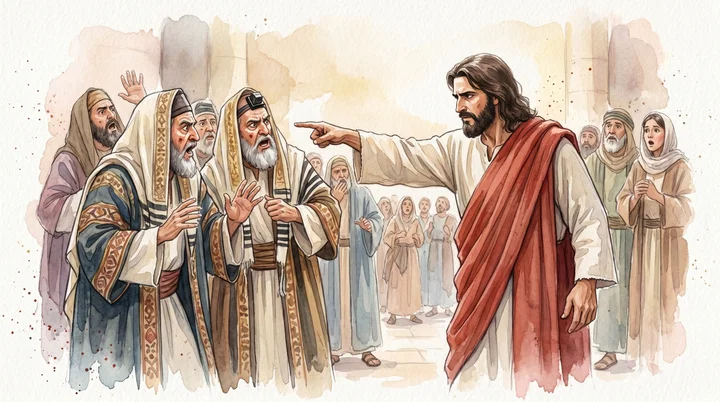
Cross-references 20 of 44
- Matthew 23:23
Woe unto you, scribes and Pharisees, hypocrites! for ye pay tithe of mint and anise and cummin, and have omitted the weightier matters of the law, judgment, mercy, and faith: these ought ye to have done, and not to leave the other undone.
Christ condemns meticulous religious observance that neglects the law’s weightier duties.
- Matthew 23:14
Woe unto you, scribes and Pharisees, hypocrites! for ye devour widows’ houses, and for a pretence make long prayer: therefore ye shall receive the greater damnation.
They make long prayers as a pretense while exploiting widows.
- Matthew 23:33
Ye serpents, ye generation of vipers, how can ye escape the damnation of hell?
The rebuke of hypocritical leaders warns them of hell’s judgment.
- 1 Samuel 16:7
But the LORD said unto Samuel, Look not on his countenance, or on the height of his stature; because I have refused him: for the Lord seeth not as man seeth; for man looketh on the outward appearance, but the LORD looketh on the heart.
People see outward appearance, but the Lord sees the heart.
- Matthew 23:5-7
But all their works they do for to be seen of men: they make broad their phylacteries, and enlarge the borders of their garments,
They display outward piety and seek public honor without practicing righteousness.
- Matthew 5:20
For I say unto you, That except your righteousness shall exceed the righteousness of the scribes and Pharisees, ye shall in no case enter into the kingdom of heaven.
True righteousness exceeds the Pharisees’ outward show.
- Psalms 51:6
Behold, thou desirest truth in the inward parts: and in the hidden part thou shalt make me to know wisdom.
Both contrast outward appearance with the truth God desires within.
- Luke 11:39-44
And the Lord said unto him, Now do ye Pharisees make clean the outside of the cup and the platter; but your inward part is full of ravening and wickedness.
Jesus condemns outward religious purity alongside inward corruption and neglected duties.
- Matthew 7:17-19
Even so every good tree bringeth forth good fruit; but a corrupt tree bringeth forth evil fruit.
Corrupt trees bear evil fruit, as false religion produces hypocrisy and iniquity.
- Matthew 3:7-9
But when he saw many of the Pharisees and Sadducees come to his baptism, he said unto them, O generation of vipers, who hath warned you to flee from the wrath to come?
John rebukes religious leaders and rejects ancestry as a guarantee of religious favor.
- Matthew 23:13
But woe unto you, scribes and Pharisees, hypocrites! for ye shut up the kingdom of heaven against men: for ye neither go in yourselves, neither suffer ye them that are entering to go in.
Christ rebukes hypocritical religious leaders who hinder others from entering the kingdom.
- Luke 20:47
Which devour widows’ houses, and for a shew make long prayers: the same shall receive greater damnation.
Both condemn religious leaders who exploit others while making a show of piety.
- Matthew 23:24
Ye blind guides, which strain at a gnat, and swallow a camel.
Both condemn the Pharisees’ outward show and distorted priorities.
- Isaiah 64:6
But we are all as an unclean thing, and all our righteousnesses are as filthy rags; and we all do fade as a leaf; and our iniquities, like the wind, have taken us away.
Human righteousness is compared to filthy rags.
- Matthew 7:3-5
And why beholdest thou the mote that is in thy brother’s eye, but considerest not the beam that is in thine own eye?
Warns against judging others while overlooking one’s own faults.
- Luke 16:15
And he said unto them, Ye are they which justify yourselves before men; but God knoweth your hearts: for that which is highly esteemed among men is abomination in the sight of God.
Both condemn outward righteousness valued by people while God sees the heart.
- Romans 2:28-29
For he is not a Jew, which is one outwardly; neither is that circumcision, which is outward in the flesh:
Distinguishes outward appearance from inward faithfulness.
- Matthew 23:3
All therefore whatsoever they bid you observe, that observe and do; but do not ye after their works: for they say, and do not.
Jesus warns against leaders who teach righteousness but do not practise it.
- Matthew 15:8
This people draweth nigh unto me with their mouth, and honoureth me with their lips; but their heart is far from me.
Both describe outward honor masking hearts far from God.
- Luke 6:45
A good man out of the good treasure of his heart bringeth forth that which is good; and an evil man out of the evil treasure of his heart bringeth forth that which is evil: for of the abundance of the heart his mouth speaketh.
What comes from within reveals the true character of the heart.
Commentary
Each commentary is drawn from primary sources: the writings of Ellen G. White and Adventist pioneers and periodicals. Each commentary is separate. Its own words are not a quotation; follow the references to read the source passages.
Ellen G. White
57 sources
Christ in His final day of teaching in the temple pronounced this woe upon the scribes and Pharisees for appearing righteous, holy and respectable to men while inwardly remaining full of hypocrisy, lawlessness and sin.DA 610.1–611.2Ms 71, 1897, par. 8–103SP 64.1–23SP 57.1Ms 175, 1897, par. 81 It is the contrast of whited tombs made beautiful and clean outwardly while within they hold dead bones, uncleanness, decay and corruption, making outward religious show a vain pretense.ST Jun 14, 1899Ms 71, 1897, par. 8–103SP 64.1–2 True righteousness is conformity of heart and life to God's revealed will through faith and a living connection with Him, beginning in a heart transformed by Christ's Spirit, while mere outward profession without inward purity, repentance, faith and obedience is hateful to Him.ST Aug 22, 18782T 87.2DA 309.4–310.1Lt 51, 1888, par. 11–12 The rebuke was recorded for every age because the same spirit continues wherever self-seeking, pride, love of money and desire for honor rule the heart, where leaders misuse authority over conscience and neglect justice, mercy and love for God and brethren.4SP 414.3GC 596.2GC88 595.3–596.13SP 9.24SP 424.1 Practicing sin under a cloak of godliness brings especially severe retribution with stronger denunciation than open sin, yet those who come in penitence with a sense of sinfulness are accepted and treated with tenderness.CH 671.2ST Aug 22, 18784T 614.45T 144.2
Words and Historical Setting
The verse is one of the woes pronounced on the scribes and Pharisees during the final day of teaching in the temple, when the character of the rulers and elders was exposed. Those rebukes were given to warn and instruct people in every age and nation. Yet they had no effect upon the impenitent leaders, who cherished an exacting and intolerant spirit, set the stumblingblock of their iniquity before their eyes, and rejected reproof.Ms 71, 1897, par. 8–103SP 57.1Ms 175, 1897, par. 81Ms 18, 1896, par. 29–30
To appear righteous outwardly unto men is to look righteous, holy, and respectable to other people while the inward character and life remain full of hypocrisy, iniquity, lawlessness, wrongdoing, and sin.DA 610.1–611.2Ms 5, 1882, par. 14–16Ms 77, 1899, par. 1–32SP 293.1Ms 81, 1893, par. 43 Claims to teach God's law did not make the teachers faithful, for they failed to live by what they taught and their apparent piety concealed their real condition.DA 610.1–611.23SP 64.1–2Ms 5, 1882, par. 14–16 Outward religious show, pomp, ceremony, and observance concealed corrupt motives and conduct, including deceit, oppression, and rejection of the law's underlying principles of love for God and fellow people, and such teaching led others astray.3SP 64.1–2Ms 5, 1882, par. 14–16Ms 77, 1899, par. 1–3
The contrast is like whited tombs or sepulchers that appear beautiful, clean, and outwardly adorned while within they are full of dead bones, dead men's bones, uncleanness, decay, and corruption.ST Jun 14, 1899Ms 71, 1897, par. 8–10DA 617.3–618.2ST May 2, 1878SG4 178.1 Public piety, including long prayers and careful tithing, religious pomp and ceremony, and claims to have God's law in the heart and on the person, were vain pretense covering that condition.ST Jun 14, 18993SP 64.1–2ST May 2, 1878 Decorating the body to win admiration while pride fills the heart is of the same kind, for outward beauty conceals corruption that God sees within.SG4 178.1
Those described were spiritually blinded and could not discern the relative importance of the matters they should understand.7MR 234.4–235.1 While scrupulous about lesser matters they neglected the weightier matters of the law — justice, mercy, and faith — harshly condemning lesser faults in others while excusing serious wrongs of their own.ST Jun 14, 1899Lt 57, 1895, par. 9–11Lt 165, 1901, par. 11–147MR 235.2–3 Their outward observance concealed rejection of love for God and fellow believers, and their teaching led others astray.Ms 77, 1899, par. 1–37MR 235.2–3
The denunciation was spoken fearlessly and with authority from power to read the human heart, laying open deceptions and refusing to allow the people to be deceived by false claims to righteousness, holiness, and sanctity.ST Apr 5, 1905Lt 257, 1904, par. 14–17 It was uttered with burning earnestness and terrible severity, with keen and searching exposure, yet without an irritated temper.Lt 257, 1904, par. 14–17ST Aug 27, 1912 The indignation was directed against gross sin, artful intrigue, and dishonesty rather than stirred by personal abuse, showing that love and mercy can coexist with righteous indignation against sin.ST Apr 5, 1905ST May 2, 1878
Pharisees Hypocrisy Exposed
Although claiming to teach God's law and to represent Him, they did not live by what they taught, and their religious pomp and ceremony and outward observance were a cloak for iniquity.ST Jun 14, 1899DA 610.1–611.23SP 64.1–2 Their public piety, including long prayers and careful tithing, did not make them righteous while they neglected justice, mercy and faith and exploited others.ST Jun 14, 1899Ms 5, 1882, par. 14–16 That outward show of righteousness concealed corrupt motives and conduct, including deceit and oppression, artful intrigue and dishonesty.Ms 5, 1882, par. 14–16ST Apr 5, 1905 Like whited tombs that look beautiful outside while holding uncleanness and corruption within, their claims to have God's law in their hearts and on their persons were vain pretense.ST Jun 14, 18993SP 64.1–2
Their hypocrisy arose from self-seeking and the desire to glorify themselves, and they resisted salvation and reform to protect ambition, wealth and status.Ms 5, 1882, par. 14–16 The Pharisaical spirit was marked by pride, a desire to rule, and human plans eclipsing sacred things and divine instruction.Lt 81, 1896, par. 6–8 Priests used their lawful authority for unlawful ends.Ms 5, 1882, par. 14–16GC 102.1 This self-seeking led them to misuse Scripture and blinded them to the purpose of Christ's mission.Ms 5, 1882, par. 14–16
While honoring dead prophets and claiming they would not have joined their ancestors in killing God's servants, they rejected the prophets' teachings and warnings and were planning to kill God's Son.DA 617.3–618.214MR 116.3–117.1 Their reverence for prophets honored after death did not make them heed what those prophets taught.DA 617.3–618.2 Thus they condemned past rejection of truth while refusing obedience when it required self-denial and humility, witnessing against themselves that they were children of those who killed the prophets.DA 617.3–618.214MR 116.3–117.1
They condemned sick and needy sufferers as sinners under God's judgment while themselves, despite appearing holy and enjoying God's favor, were more corrupt in heart and life than those they condemned.2SP 293.1ST Oct 16, 1879 Their outward show of holiness concealed that inward corruption.2SP 293.1ST Oct 16, 1879 The priests' outward religious standing likewise concealed jealousy and hostility toward Jesus, and their conduct exposed the hypocrisy of the accusations they were preparing against Him.DA 704.1–705.1
Their profession of serving God and obeying His law was fruitless, lacking repentance, faith, obedience and service to others.ST Aug 22, 1878DA 584.1 Outward religious respectability and forms can hide hypocrisy and sin within when selfishness, pride, envy and love of the world remain unremoved.ST Aug 22, 1878DA 584.1 Christ's judgment on the fruitless fig tree demonstrates how hateful to Him is empty pretense that bears no fruit for God's glory, and there was more hope for an openly sinful person than for such a pretender.ST Aug 22, 1878DA 584.1
True Versus False Righteousness
True righteousness is conformity of heart and life to God's revealed will, and sinful people become righteous through faith in God and a living connection with Him.DA 309.4–310.1 When truth is believed and loved it brings power and grace that make people sincere, kind, patient, forbearing, and heavenly minded.DA 309.4–310.1 Religion is not merely external but begins in a heart made right with God and transformed by Christ's Spirit, with true purity, holiness, and devotion shown in life and character.Lt 51, 1888, par. 11–12 True reform must begin in the heart before God rather than in efforts to appear right to others, for motives and actions cannot be concealed from heavenly inspection.2T 87.2 The life changed inwardly has selfishness, pride, envy, and love of the world removed, with faith shown by self-denying work and fruitfulness, and there is more hope for an openly sinful person than for a pretender who professes faith but bears no fruit for God.ST Aug 22, 1878
When inward purity is present, outward religious practices agree with it instead of becoming empty rites.DA 309.4–310.1 Pride, self-righteousness, self-importance, and self-exaltation are opposed to Christ's righteousness and cause true religion to die in the heart, while humility at the cross gives a clearer and more precious view of Christ.Lt 9, 1886, par. 8–9 Professing to have light far in advance of others while works do not correspond with profession is the hypocrisy condemned, and those who have spent life in sin but come to God in penitence with a sense of sinfulness are accepted and are in a more favorable position for perfecting Christian character than those who have had great light and failed to improve upon it.4T 614.4 Claiming illumination through knowledge of truth can conceal blind presumption and opposition to God's word and revealed wisdom, like a beautiful appearance from a distance hiding deformity on close examination.5T 79.1 The denunciation of hypocrisy and self-deception warns against praising God's mercy while ignoring His judgments against sin.ST Jan 6, 1881
Outward profession of godliness can hide an inward life ruled by self-confidence and lacking humility, meekness, and other Christian graces.Lt 5, 1898, par. 23–26 Those who live this way fail to distinguish light from darkness and may support evil while rejecting God's faithful messengers, spiritually walking the ground trodden by the Pharisees.Lt 5, 1898, par. 23–26
Warning to Later Church
The denunciation of the scribes and Pharisees and the warning against blind leaders were recorded for future generations, because the misuse of religious authority to rule the conscience would continue to trouble the church.4SP 414.3GC 596.2GC88 595.3–596.1 That warning stands against leaders who use human authority to rule the conscience and who claim authority over the conscience while rejecting clear evidence and opposing truth.4SP 414.3GC 596.2GC88 595.3–596.1 Outward religious respectability can conceal hypocrisy and wrongdoing within, and following such blind leadership is the danger to be avoided.4SP 414.3GC 596.2GC88 595.3–596.1
The condemnation of the self-righteous Jews applies to people of every age who reject truth and despise mercy while selfishness, love of money, and desire for worldly honor rule their hearts.3SP 9.2 Those who claim to represent Christ may appear righteous while their lives deny Him, for religious leaders can appear righteous to other people while being inwardly hypocritical and sinful.3SP 9.24SP 424.1 The same warning applies to a popular ministry when it responds to questions about its authority with anger, false teaching, and persecution of those who proclaim truth.4SP 424.1
The warning applies to a people who, like ancient Israel, depart from their holy calling, join in darkness with unbelievers, and neglect the light and opportunities granted to them.TBC1882 58.14T 614.45T 75.3 Neglect to improve granted light leaves men and women in darkness, and those who neglect the light they have received will be in a worse position than the Jews whom Christ rebuked.TBC1882 58.14T 614.45T 75.3 Professing to have light far in advance of others while works do not correspond with profession is the hypocrisy condemned, for all vain pretense is hated while the penitent are treated with tenderness even when they have been the chief of sinners.4T 614.4 Those who have spent life in sin but come in penitence with a sense of sinfulness are accepted and are in a more favorable position for perfecting Christian character than those who have had great light and have failed to improve upon it.4T 614.4
It applies to people in the last days who nourish the same spirit, claiming to be free of guilt while continuing in the spirit of those who rejected and killed God's messengers.SPBC 144.3–414MR 116.3–117.1 Saying they are delivered to do evil things, and claiming that if they had lived in the days of their fathers they would not have shared in shedding the blood of the prophets, they are witnesses against themselves that they are the children of those who killed the prophets.14MR 116.3–117.1 If they continue in the spirit shown before and after the Minneapolis meeting they will fill up to the full the deeds of the Jews in their treatment of Christ and of the prophets, wise men, scribes, and messengers whom God sent, whom they killed and crucified and scourged in synagogues and persecuted from city to city.SPBC 144.3–414MR 116.3–117.1
The charge of Pharisaism falls on men in positions of responsibility and trust who do a like work, whose established religious precision and outward scrupulousness about little matters hinder God's work.Lt 134, 1902, par. 13–14RCOC 35.3 Outward religious correctness can coexist with inward hypocrisy and iniquity, meaning spiritual blindness, an overbearing and imperious spirit, and an exacting and intolerant spirit that rejects reproof and sets the stumblingblock of iniquity before the eyes.Lt 134, 1902, par. 13–14RCOC 35.3Ms 18, 1896, par. 29–30 Such leaders claim kingly authority, misrepresent Christ's righteousness, neglect God's great and sacred work, lack right principles, deal unjustly with the Lord's heritage, tamper with conscience, and fail to reveal justice, mercy, the love of God and practical love for brethren.Lt 134, 1902, par. 13–14RCOC 35.3Ms 18, 1896, par. 29–30 They make a man an offender for a word, make imaginary distinctions between degrees of guilt by subtle reasoning, lightly pass over very serious wrongs of their own, and condemn with great severity wrongs that do not compare with their own sin in cherishing and working false principles.Lt 134, 1902, par. 13–14 Unless converted and repentant they will be denounced by the Lord and separated from the work as the Pharisees were, for appeals and warnings have had no more effect than Christ's messages had upon the Pharisees, and if they continue to walk in the same path manifesting the same spirit the same judgments will fall upon them.Lt 134, 1902, par. 13–14Ms 18, 1896, par. 29–30 The time is near when by providence it will be made manifest what principles have been cherished by men connected with the management of the work, for righteousness exalts a nation and sin brings it to ruin, and this is as true of individuals as of nations.Lt 134, 1902, par. 13–14Ms 18, 1896, par. 29–30
It condemns outward appearance of righteousness and day-by-day apparent friendship covering inward plotting as hypocrisy and iniquity, like sepulchers hidden from sight but full of corruption.STMW6 12.1 It condemns men in authority betraying sacred trusts by being reticent toward brethren in whom they should confide, working in silence and secrecy, and opening their plans to unbelievers with no sympathy for God's people.STMW6 12.1 In perfect unity with satanic agencies they seek to uproot and remove those the unbelieving element wants removed, without going to the supposed erring ones to redeem and heal them if in error or to vindicate the right and rebuke the plotters if they are not.STMW6 12.1 Working against a child of God on the strength of the enemy's testimony while concealing oneself yet suggesting, instigating, and planning with enemies is after Satan's manner, for all deception, secrecy, and guile are hated, while the work of God is open and frank.STMW6 12.1
Judgment and Accountability
Outward appearance of righteousness can hide inward hypocrisy and sin, and the same contrast applies to those who seem honest and true while their hearts remain stained with sin.5T 397.12T 87.2 Their character is recorded in heaven, and motives and actions cannot be concealed from heavenly inspection.5T 397.12T 87.2 Apparent goodness cannot make them stand if they are found wanting in God's judgment.5T 397.1 Repeated sin can make the mind callous, while truth must become part of character, and true reform must begin in the heart before God rather than in efforts to appear right to other people.5T 397.12T 87.2
Practicing sin and iniquity while cloaking it in godliness and outward religious respectability brings especially severe retribution.CH 671.25T 144.2Ms 9, 1880, par. 37–42 Hypocrites face stronger denunciation than open sinners, for whom there is more hope, because Christ strongly condemns pretended faith that bears no fruit for God.CH 671.2ST Aug 22, 18785T 144.2 Concealed wrongdoing makes pretenders more guilty and more dangerous than open sinners and brings reproach on the truth they claim to serve.DA 584.1Ms 9, 1880, par. 37–42 Outward religious forms and claims to obey God's law do not make a person righteous when repentance, faith, obedience, and service to others are absent, and as shown by judgment on the fruitless fig tree, such empty pretense is hateful.ST Aug 22, 1878DA 584.1 The verse therefore calls for a life changed inwardly, with selfishness, pride, envy, and love of the world removed, and with faith shown by self-denying work and fruitfulness, though genuine repentance is still accepted even from the guilty.CH 671.2ST Aug 22, 1878Ms 9, 1880, par. 37–42
Condemnation followed from rejecting the light Christ brought rather than from excusable ignorance.Ms 5, 1882, par. 14–16 Outward religious show concealed corrupt motives and conduct, including deceit and oppression.Ms 5, 1882, par. 14–16 Those who receive light are responsible for it, and resisting salvation and reform to protect ambition, wealth, and status brings God's rebuke.Ms 5, 1882, par. 14–16
People in sacred positions of responsibility and trust may likewise face judgment if their character fails to match their profession.Lt 134, 1902, par. 13–14Lt 71a, 1894, par. 19–21 Those who represent Christ are judged by whether their lives show His mercy, tenderness, patience, and love.Lt 71a, 1894, par. 19–21 The woes fall just as surely on such leaders when outward scrupulousness about little matters covers spiritual blindness, an overbearing and imperious spirit, misrepresentation of Christ's righteousness, neglect of God's great and sacred work, lack of right principles, unjust dealing, tampering with conscience, and failure to reveal justice, mercy, the love of God and practical love for brethren.Lt 134, 1902, par. 13–14 Such leaders make a man an offender for a word, make imaginary distinctions between degrees of guilt by subtle reasoning, lightly pass over very serious wrongs of their own, and condemn with great severity wrongs that do not compare with their own sin in cherishing false principles, and unless they repent they will be denounced as the Pharisees were, for righteousness exalts a nation and individuals while sin brings ruin.Lt 134, 1902, par. 13–14Lt 71a, 1894, par. 19–21
Call to Reform and Witness
Christ hates all vain pretense, and His denunciations fall heavily upon hypocrisy while He treats the penitent with tenderness even when they have been the chief of sinners and have spent life in sin.4T 614.4 Practicing sin while cloaking it in godliness brings especially severe retribution, and hypocrites have less hope than open sinners because of that strong condemnation, though genuine repentance even from the guilty is accepted.CH 671.2 Professing to have light far in advance of others while works do not correspond with profession is the hypocrisy condemned, and those who come to God in penitence with a sense of sinfulness are accepted and are in a more favorable position for perfecting Christian character than those who have had great light and have failed to improve upon it.4T 614.4 Neglect to improve granted light and opportunities is what leaves men and women in darkness.4T 614.4
Christ would not allow the people to be deceived by false claims to righteousness, holiness, and sanctity, and therefore denounced them forcefully with definite and plain warnings that laid open the deceptions.Lt 257, 1904, par. 14–17STB 79.5–80.1Ms 76, 1904, par. 1015MR 258.2–259.1 He used His power to read the human heart to denounce with authority the abominations He saw in the church and in the world, speaking with burning earnestness and terrible severity.Lt 257, 1904, par. 14–17Ms 76, 1904, par. 1015MR 258.2–259.1 Such plain warnings are needed because to the close of time God's people are in perpetual conflict with wicked men under the control of evil angels and face confusion from the plans of the tempter and the devices of the accuser.Lt 257, 1904, par. 14–17 His example requires those who hear wrong sentiments expressed to stand free from any binding influence that would hold them speechless, and to speak out in protest and correction rather than listening without protest.Ms 76, 1904, par. 1015MR 258.2–259.1
This applies especially to Christian missionaries and physicians, who are to stand in God-given manhood with freedom of speech and freedom of faith, refusing to harmonize with wrong plans, to be cowered into silence by a masterful spirit, or to verify statements they know are not true, but to protest and correct false statements and wrong sentiments.15MR 258.2–259.1 His rebukes against those who professed piety while violating God's law were stern and unsparing, for outward claims and appearances of righteousness hiding inward hypocrisy and wrongdoing do not excuse transgression.Ms 5, 1882, par. 12–13
Sources
Pioneers and periodicals
111 sources
It unmasks a religion that looks righteous to men while remaining full of hypocrisy and lawlessness within, lawlessness meaning transgression and disregard of the moral law.ST Mar 23, 1888ST May 19, 1914RH Apr 15, 1909RH Nov 7, 1854RH Mar 15, 1860 It is the condition of whited tombs that appear beautiful outwardly while holding uncleanness and corruption within.ST Jun 14, 1899ST Nov 1, 1899ST Jan 19, 1882 No outward form, strict observance, or impressive profession can make the heart righteous or take the place of inward cleansing.RH Jul 13, 1916ST Feb 8, 1899ST Sep 15, 1887ST Jun 1, 1904ST Apr 10, 1893 True righteousness cleanses the inside first so that the outside becomes clean also, reaching thoughts and heart and then appearing in the life.ST Nov 30, 1904ST Jan 16, 1896RH Apr 29, 1873RH Jul 23, 1914ST Apr 1, 1875 The rebuke was spoken with tender compassion yet with fearless holy indignation, exposing sin not to condemn but to move sinners to repent and seek God’s kingdom.RH May 7, 1901ST Aug 27, 1912RH Sep 26, 1865RH May 9, 1865ST Feb 10, 1898
Words and Historical Setting
The word rendered as iniquity is the Greek anomia, literally transgression of the law.RH Nov 7, 1854RH Jan 28, 1862 It means lawlessness, the breaking or disregarding of the moral law.RH Mar 15, 1860RH Sep 25, 1856 Those described as full of it within are therefore inward lawbreakers, even while they appear righteous outwardly.RH Nov 7, 1854RH Mar 15, 1860RH Sep 25, 1856
The saying belongs with the image of whited tombs and whitewashed sepulchres that appear beautiful outwardly.ST Jun 14, 1899ST May 2, 1878ST Nov 1, 1899ST Jan 19, 1882 Within they hold uncleanness, decay, corruption and wickedness.ST May 2, 1878ST Jan 19, 1882ST Oct 25, 1883RH Dec 8, 1874 So outward religious appearance can conceal a corrupt character and inner life, and polished refinement does not purify or cleanse the heart.ST Jun 14, 1899ST Nov 1, 1899RH Dec 8, 1874
It was spoken by Jesus during His teaching in the temple on Tuesday, the last day He taught there.RH Jan 29, 1914 It was addressed to the multitude in the presence of His disciples.RH Dec 20, 1870 It belongs to His warnings and admonitions to the generation living at His first advent, with reproof of sins preceding His declaration of judgment on the Jews, Jerusalem and the temple.ST Jan 14, 1875ST Oct 19, 1915RH Dec 20, 1870
It is part of the sevenfold woe pronounced upon the teachers and responsible men of the nation then living.ST Sep 3, 1912RH Apr 15, 1909RH May 13, 1909 That woe, found in Matthew 23:13-36, is the strongest and most severe expression of His warnings. Its fulfillment brought calamities, Jerusalem's destruction and the end of the Jewish nation, amid false christs and pretended prophets arising from hopes for a deliverer to restore the kingdom.RH Apr 15, 1909RH May 13, 1909
It was fearful words pronounced upon those who had rejected all light and blessing.ST Jul 15, 1908 They had persistently refused to repent, and the plain statement of their condition exposed their self-righteous hypocrisy, inward corruption, cruelty, oppression and avarice, and hostility to those who reproved them.ST Mar 23, 1888 They publicly claimed they would not have shared their ancestors' guilt in killing the prophets, yet when their hour of darkness came they rejected and killed the Messiah, put Him to death, persecuted His followers, killed many apostles and saints, and were thus revealed to be under Satan's power.RH May 19, 1851RH Apr 3, 1855
Outward Profession Exposed
The scribes and Pharisees passed themselves off as righteous and religious before men through careful outward observances, while inwardly they were full of hypocrisy and evil.ST Mar 23, 1888ST May 19, 1914RH Apr 15, 1909RH Jun 2, 1859ST Jul 7, 1887 Their outward show supported religious pride and an effort to dominate the faith and worship of others, but Jesus saw the inner thoughts beneath it and denounced the wickedness concealed there.ST Mar 23, 1888ST May 19, 1914 They honored God with the lips while the heart was far from Him, and their outward profession of keeping the commandments did not fulfill what the law requires.RH Jun 2, 1859ST Jan 21, 1886 Their outward religious standing concealed corrupt hearts filled with pride, covetousness and sin.RH Jun 2, 1859ST Jul 7, 1887ST Jan 21, 1886
Possessing and displaying the forms of true religion does not make persons righteous within nor preserve personal godliness, and outward religious activity can coexist with inner hypocrisy, wrongdoing and spiritual decline.RH Jul 13, 1916ST Sep 15, 1887ST Jun 1, 1904ST Jan 29, 1908 Strict observance, pride in the splendor of the temple, education and impressive church buildings do not make men righteous within, and mistaking such things for genuine religion and goodness repeats the Pharisees' error in the present generation.RH Sep 3, 1908ST Jan 29, 1908 Teachers may appear outwardly to represent God and speak words of life while inwardly filled with hypocrisy and iniquity, and by tradition and inconsistent lives they strip living truth of power until they have nothing life-giving to offer.ST Jun 1, 1904 Outwardly appearing righteous does not prove true belief or right living, for genuine faith is shown in a life shaped by Christ's Spirit.ST Sep 15, 1887 In apostasy this hypocrisy becomes more evident, when men boast of good works while imposing heavy ceremonial burdens, fasts and ablutions on others, turning from God's plan to human rules until outward practices cloak inward sin and conscience becomes hardened and silent.ST Nov 15, 1910
Their guilt lay not merely in sinning but in concealing sin and self-serving motives behind a religious appearance, and such hypocrisy adds to other sins and brings greater condemnation.RH Jul 8, 1902ST Nov 1, 1899RH Apr 15, 1909 Formalists use a show of religion, including prayer, to conceal their own will and self-serving motives, while the Lord looks upon the heart rather than the outward appearance.RH Jul 8, 1902 Their lives contradicted their profession and disregarded their own teaching, and that contrast of outward show with inner character formed part of the course that brought condemnation upon them.RH Apr 15, 1909 The condemnation falls not merely on outward sinful acts but on hidden corruption of heart beneath the appearance of serving God, and it is especially grievous when it leads others to ruin and away from God.ST Nov 1, 1899ST Nov 1, 1899
Hypocrite here means more than a deliberate dissembler, for it also describes a false professor who sincerely believes himself religious yet lacks true piety.RH Sep 2, 1858RH Mar 13, 1856 Such a one outwardly appears righteous as the picture of a saint and seems to be a Christian, yet within he is not one, neither being what he seems nor seeming what he is.RH Mar 13, 1856 For seeming a Christian he is hated by the world, and for not being one he is hated by God, and at last his paint will be washed off and at the Judgment he will appear in his own colors and deformity.RH Mar 13, 1856 The Pharisees judged themselves by outward appearance and saw no sin in themselves, so they felt no need of a Saviour, and they sought honor in the expected kingdom on the ground of descent from Abraham rather than cleansing from sin and fear of coming judgment.RH Sep 2, 1858ST Jul 7, 1887 Saul belonged to their sect while regarding himself as blameless in law-keeping, though charged with inward uncleanness despite religious profession.RH Sep 2, 1858
Outward claims and appearances of righteousness can conceal inward hypocrisy and sin, and this denunciation of hypocrisy and self-deception warns against praising God's mercy while ignoring His judgments against sin.ST Jan 6, 1881
Inward Hypocrisy Described
The verse exposes a self-righteous hypocrisy in which men appear righteous, clean and zealous outwardly while inwardly remaining corrupt, cruel, oppressive, avaricious and hostile to reproof.ST Mar 23, 1888RH Mar 16, 1916ST Mar 19, 1896 Strict keeping of religious rules, including careful tithing, long prayers and claims to have God's law in the heart, did not make up for neglecting judgment, mercy and faith.RH Mar 16, 1916RH Aug 3, 1869ST Mar 19, 1896 That outward conformity concealed extortion, excess and uncleanness, with harshness and oppression of the vulnerable, and it was the fruit of compelling external submission without changing the heart.ST Oct 16, 1879RH Mar 16, 1916ST Mar 19, 1896 Those who bore this show of holiness and favor even condemned sufferers as sinners under God's judgment while themselves more corrupt in heart and life than those they condemned.ST Oct 16, 1879ST Mar 23, 1888
It marks pretenders who claimed to teach God's law while failing to keep it, adding their own traditions until God's word was made void and their hearts were blinded to the light of the gospel.ST Jan 9, 1893ST Jan 21, 1886 Such daring trifling with God's high commands magnified the law in all its purity, for outwardly appearing righteous before men does not make a person righteous when the heart remains full of hypocrisy and transgression of the law.ST Jan 9, 1893ST Jan 21, 1886 They had made a public covenant with God yet violated it in letter and spirit through intolerant self-righteousness.ST Jul 15, 1908 Seeking to establish one's own righteousness is trying to make it appear that one is righteous when in reality one is not, and that effort with zeal for God without knowledge leads into hypocrisy and ignorance of God's righteousness.ST Jan 21, 1886ST Jul 15, 1908
Within they were selfish, bigoted and proud, full of Pharisaic hypocrisy beneath a claim to be the repository of God's truth.ST Aug 14, 1893ST Feb 9, 1915 Their hypocrisy arose from self-seeking and desire to glorify themselves, which led them to misuse Scripture and blinded them to the purpose of Christ's mission.ST Feb 9, 1915 Outward profession of Christianity can thus be a cloak for selfish motives, including avarice and covetousness, with lengthened prayer to be seen and heard.RH Aug 3, 1869ST Feb 9, 1915 The revival of true piety in lives of humility and obedience stood as a rebuke to that hypocrisy, and opposition to that rebuke brought persecution in a season of greatest peril when special protection and power were needed.ST Aug 14, 1893
Their strict religious rules and outward observances had displaced the spirit of religion and become separated from moral conduct, so even the most morally corrupt could be regarded as highly religious.ST Oct 7, 1930ST Jul 19, 1905ST May 19, 1881 They were condemned for inward pride, hypocrisy and respectable sin, not for criminal conduct, showing that outward respectability and standing in society do not make a person righteous before God.ST Oct 7, 1930ST Mar 3, 1890 A person can maintain an appearance of righteousness to satisfy human opinion or avoid censure while remaining wrong in inner motive, looking straight in public when observed yet acting on hidden desires when the observer is absent.ST Mar 3, 1890ST Jul 19, 1905 Sanctimonious appearance and prayers with religious gifts can mask injustice and wrongdoing, and this Phariseeism is outward righteousness toward men made of lofty moral maxims whose inward heart has been eaten out, leaving high-sounding words turned into pegs for display as seen also among learned scholars formed on the same books.ST Jul 19, 1905ST May 19, 1881ST Feb 26, 1894
True Versus False Righteousness
Human righteousness can be only an outward show, an appearance of righteousness before others while the person remains corrupt within, put on to win human approval, and righteousness that comes from self rather than God leaves the sinful nature unchanged and does not produce the fruit needed for the kingdom.ST Nov 30, 1904ST Jan 16, 1896ST Apr 23, 1896 Like a body healed only on the surface while disease remains inside, a person is not truly made well if forgiveness leaves the inward life corrupt and unchanged, for outward conduct alone does not free from inward corruption.ST Sep 2, 1889ST Apr 23, 1896 By contrast God's righteousness enters the heart and makes inward truth and obedience possible, and is then also seen outwardly in a life that reflects what is within.ST Nov 30, 1904ST Jan 16, 1896
The law reaches beyond outward acts to words, looks and thoughts, so outward profession of keeping the commandments does not fulfill what it requires, and to enter the kingdom righteousness must be inward as well as outward.ST Dec 12, 1895 Outward moral conduct and mere compliance can conceal inward hypocrisy and sin and leave a person in bondage, for a merely moral life is not enough for salvation.ST Dec 28, 1888 True righteousness is inward truth in the heart, coming as people come to Christ and obey through the Holy Spirit, with the Spirit shaping the life to conform to Christ as the perfect pattern of the law so that the fruits of the Spirit are manifest.ST Dec 28, 1888 A holy life flows from a purified heart, and changing outward conduct alone does not purify the heart, for those who live by the law written in Christ's heart are one with Him.ST Dec 28, 1888ST Jun 10, 1889
True religion deals first with the inside and works thence outward, setting great value on the spirit and very little on mechanical devices, securing the good profession by securing first the good heart, so that the outside may be clean also.RH Apr 29, 1873 The fatal lapse is to shift religious operation from the interior to the surface, seeking a work begun on the outside and not within, a profession by the lips whatever the testimony of the heart and life, even with perfect external service and devout emblems worn outwardly like slips of parchment on the forehead.RH Apr 29, 1873 Outward religious appearance does not make a person righteous when the heart remains uncleansed, and true righteousness requires clean thoughts and a pure heart, including freedom from dwelling on or speaking of others' faults, changing the whole person pure within and without.RH Jul 23, 1914ST Apr 1, 1875 Piety that excuses indulgence while keeping a religious appearance is hypocrisy, and religious laws that pressure people to display beliefs or perform actions they do not inwardly accept make them appear to be what they are not and add to hypocrisy.ST Apr 1, 1875ST May 17, 1905
Outward reformation can never be accepted by God as a substitute for inward cleansing, for human laws may restrain harmful acts but cannot change the heart or produce true obedience to God.ST Feb 8, 1899ST Apr 10, 1893 Law can compel outward religious appearances and external submission enforced by human authority without transforming the heart, concealing inward hatred and evil and producing hypocrisy.ST Oct 14, 1889ST Mar 19, 1896 Relying on such restraint as righteousness deceives people and makes them self-righteous, since true reform begins within through God's converting power.ST Feb 8, 1899ST Oct 14, 1889 Formalists can appear righteous to others while remaining inwardly sinful, replacing personal faith in Christ as Saviour from sin with mental agreement to a creed and replacing righteous character with orthodoxy, and by trying to mend their own righteousness they conceal their need to repent and accept God's salvation and righteousness.RH Jul 8, 1902RH Feb 19, 1861
Judgment and Prophecy Fulfilled
Christ's exposure of inward hypocrisy and wickedness beneath outward righteousness came before His declaration of judgment upon the Jews, Jerusalem and the temple.ST Jan 14, 1875RH Dec 20, 1870 That reproof of the scribes and Pharisees for their sins was spoken to the multitude in the presence of His disciples and pronounced their doom with that of their city and temple.RH Dec 20, 1870 After He left the temple that reproof led directly to the disciples calling His attention to the temple buildings and then to His teaching on the Mount of Olives.RH Dec 20, 1870 The rejection of the Jewish church for unfaithfulness shown in Matthew 23 was distinct from its later destruction, which was deferred for a considerable period.RH Mar 6, 1855
The verse marks the time when God left the earthly sanctuary, which was set aside with the typical system when its ministration ended and the ministration of the heavenly sanctuary was about to begin.ST Oct 22, 1874 It also describes those who have seen wondrous works of healing the sick, lifting the fallen and pardoning the sin-sick soul with power to go and sin no more, and have heard gracious words, yet treat God's Word with neglect.ST Sep 6, 1899 To leave the Bible unread or to read it hurriedly without meditation, and to refuse to talk with God in prayer and to listen when He speaks in His Word, is to take the same attitude toward the Father and the Son.ST Sep 6, 1899 Such neglect places people with the Jews, scribes and Pharisees under the woes pronounced upon them, choosing the company of those who went back and walked no more with Him.ST Sep 6, 1899
As one of the woes upon the Pharisees and hypocrites, the verse belongs to all Jesus taught concerning the past, the present and the future, telling of things in this world and the world to come.RH Apr 17, 1855 It is part of His testimony telling what is in the heart by exposing inward hypocrisy and iniquity, and telling what men shall and shall not do or say or think that they may have eternal life.RH Apr 17, 1855 That testimony is God's words given to the apostles and finished and confirmed by them, so that all doctrines and precepts of the New Testament comprehend it.RH Apr 17, 1855 It belongs to the sevenfold woe pronounced in Matthew 23:13-36 upon the generation then living, whose outward religion concealed inner corruption and lawlessness, and whose fulfillment brought calamities upon that generation, including Jerusalem's destruction and the end of the Jewish nation amid the rise of false christs and pretended prophets under hope of a deliverer who would restore the kingdom.RH May 13, 1909
Christ's Manner of Rebuke
The denunciation was spoken with sweet solemnity, in full harmony with meekness and compassion rather than in harshness contrary to them.RH May 7, 1901RH Sep 26, 1865 Though keen and searching and severe against hypocritical pretension, it was uttered without an irritated temper.RH May 7, 1901ST Aug 27, 1912 His heart remained tender and pitying toward the sinners even while He plainly condemned their sin without anger.RH May 7, 1901 His indignation was directed against gross sin itself and was not stirred by personal abuse.ST May 2, 1878
He openly denounced and censured them, exposing hypocrisy and wickedness instead of holding back the truth for fear of offending.RH May 9, 1865ST Dec 8, 1887 He was not afraid to confront them nor did He withhold what was necessary to be said.RH May 9, 1865ST Dec 8, 1887 He fearlessly exposed artful intrigue and dishonesty with authority beneath the outward show of righteousness.ST Apr 5, 1905 This required courage in confronting the religious leaders with warning against their hypocrisy.ST Apr 5, 1905RH Mar 9, 1905
The denunciation was most scathing and terrible because it was the truth, condemning hypocrisy as a contemptible sin.RH Jul 22, 1873ST Dec 25, 1893 It was aimed at the proudest and most popular religionists of that age, who outwardly appeared righteous while within the heart rebelled.RH Jul 22, 1873ST Dec 25, 1893 Outward religion without inward purity is hypocrisy and iniquity, and it must be called by its right name and denounced in righteous terms of holy indignation.RH Jul 22, 1873 He spoke knowing that hatred and bitterness toward Him would result and would bring about His own death, proving the loving Saviour was no lax, easy apologist and tolerator of sin.RH Jul 22, 1873 Genuine religion looks at sin as God does, abhors transgression of the law, and reproves and rebukes it rather than excusing or shielding it under the name of charity.RH Jul 22, 1873
His rebuke censured the supporters of false principles themselves and not only their false doctrines.ST Apr 1, 1889ST May 27, 1913 It belonged to an uninterrupted course of controversy running through His whole public work from His entrance upon His office in the synagogue at Nazareth until His death on the cross.ST May 27, 1913 His sharp rebukes addressed leaders whose spiritual knowledge and privilege had been degraded to serve personal ambition and greed.ST Jan 8, 1885 Yet it was given as the strongest and most severe expression of warning not to condemn people but to move them to seek God's kingdom and righteousness.ST Feb 10, 1898 He exposed their true condition so they could turn from it and be saved, since outward religion without genuine Christianity is only a shadow without the substance.ST Feb 10, 1898RH Mar 6, 1913
His example shows that love and mercy can coexist with righteous indignation against sin.ST May 2, 1878 Evil and those who practice it must be openly opposed rather than tolerated.ST Dec 9, 1880 Rebukes should confront sin plainly so that hearers may tremble, and should not be softened or avoided to protect a preacher's influence.RH Jul 29, 1875 Warning people against evil is a Christian duty, not political activity.ST Dec 9, 1880ST Dec 11, 1901
He who pronounced it was Himself free from the hypocrisy and sins He reproved.RH Feb 24, 1859
Warnings and Present Applications
Religious legislation is worthless for making people righteous, because it enforces only outward appearance and adds hypocrisy, judging real godliness by outward tests of dress, speech, names, amusements and religious talk and thereby producing a crowd of impostors mimicking sanctity.ST Nov 27, 1893ST May 17, 1905ST Mar 19, 1896 To pressure people by human law to display beliefs or perform actions they do not inwardly accept makes them appear to be what they are not.ST May 17, 1905ST Mar 19, 1896 Outward religious conformity compelled by human authority does not transform the heart or make people righteous, but conceals inward hatred and evil, cleaning only the outside of the cup and platter instead of cleansing first what is within so the outside may be clean also.ST Nov 27, 1893ST Mar 19, 1896
Compulsory religious observance does not make anyone better but fosters the very hypocrisy condemned, for outward observance alone does not please God when within the heart rebels.RH Aug 14, 1900ST Dec 25, 1893ST Oct 3, 1895 To enforce Sabbath observance where the heart rebels is to offer God the essence of appearing righteous outwardly while being full of hypocrisy and iniquity within.ST Dec 25, 1893 Sabbath keeping is acceptable to God only when it comes from a holy heart and life, so laws compelling Sunday or Sabbath observance produce hypocrisy rather than inward righteousness, with meticulous concern for others' conduct after the manner of the formal Pharisees.RH Aug 14, 1900ST Oct 3, 1895
A spotless outward appearance can hide sin within, and outward conduct alone does not reveal the heart.ST Sep 9, 1880ST Nov 11, 1880RH Jul 7, 1874 A devout or righteous appearance before others, even a face that seems to condemn sin, does not prove that grace rules the heart.RH Jul 7, 1874ST Aug 25, 1887 People should therefore not judge others self-righteously or assume they know the full weight of another's temptations, hearts and repentance, and no one should boast of standing firm since all are tempted and fall short.ST Sep 9, 1880ST Nov 11, 1880 The warning is against caring more about appearing righteous to other people than being honest and right before God, when the heart remains veiled by vanity and hypocrisy, and the call is for pity, mercy and help to those who need it rather than self-righteous condemnation.ST Sep 9, 1880ST Nov 11, 1880ST Aug 25, 1887
The rebuke applies to the present generation that mistakes education, impressive church buildings, temple splendor and strict observance of religious forms for genuine religion and goodness, while pride in such externals leaves persons unrighteous within.RH Sep 3, 1908 Costly churches and claims to possess the only true religion can be an outside show concealing hypocrisy and wrongdoing within, including doctrines and commitments that are antichristian.RH Jul 1, 1873 Churches filled with hypocrisy and absorbed by the world show this apostasy when they treat church fairs as a necessity, rely chiefly on flamboyant display and scientific advertising, and prove hollow when their claims are tested.ST Nov 22, 1899ST Mar 28, 1911 Sanctimonious appearance and prayers, religious standing, and charitable gifts can likewise mask injustice, oppression, corruption of truth, and the tolerating of poverty and hunger alongside wealth.ST Jul 23, 1912ST Jul 19, 1905
Appearing righteous to others does not make a person truly Christian, for a person may hide evil beneath a Christian name while remaining inwardly full of hypocrisy and sin, and true Christianity means having Christ's character within through submission to the Father's will.RH Nov 17, 1910 There was more hope for an openly sinful person than for a pretender who professes faith but bears no fruit for God, and outward religious respectability must give way to a life changed inwardly with selfishness, pride, envy and love of the world removed and faith shown by self-denying work and fruitfulness.ST Aug 22, 1878ST Jul 17, 1884 A week of selfishness is not made right by filling the Sabbath with religious exercises, for treating the Sabbath as a way to wipe away the week's sins is Pharisaic religion, not Christian life.RH Sep 10, 1872 Piety that excuses indulgence while keeping a religious appearance is hypocrisy, since true religion changes the whole person to be pure within and without, and a merely moral outward life is not enough for salvation unless the Spirit shapes the life to conform to Christ and manifests the fruits of the Spirit.ST Apr 1, 1875 Rome's adoption of imperial Christianity filled it with this Pharisaic corruption unto ruin, a danger repeated by the United States.ST Aug 22, 1878RH Nov 17, 1910ST Jul 17, 1884
Christ's method is to deal first with the inside and work thence outward, setting great value on the spirit and very little on mechanical devices, securing the good profession by securing first the good heart.RH Apr 29, 1873 The fatal lapse is shifting religious operation from the interior to the surface, seeking a work begun on the outside and not within, a profession by the lips whatever the testimony of the heart and life, like wearing slips of parchment inscribed with devout recognition upon the forehead while full of hypocrisy within.RH Apr 29, 1873 A formal acknowledgment of God, Jesus Christ and the Bible in a national charter without account of the national spirit, heart and life is the same outward religion, a phylactery worn upon the forehead of the Constitution.RH Apr 29, 1873 The scathing rebuke of the scribes and Pharisees is therefore no warrant for clergy to denounce corruption in civic affairs, because church and state have distinct spheres.ST Oct 7, 1930
Sources