Genesis 25:23
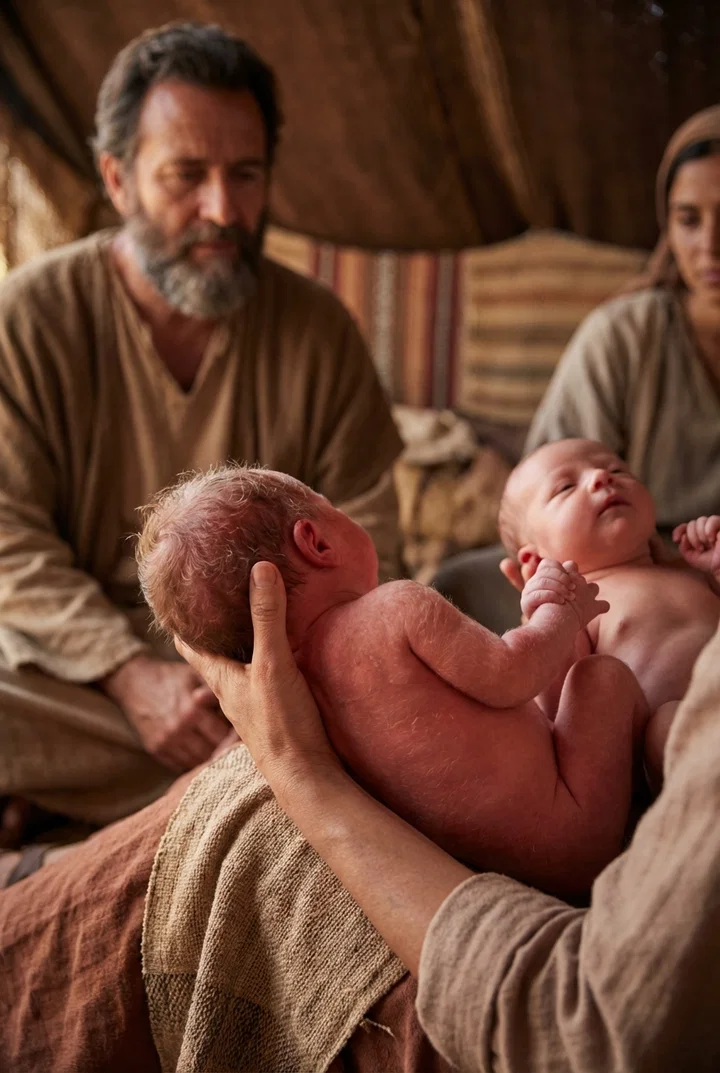
And the LORD said unto her, Two nations are in thy womb, and two manner of people shall be separated from thy bowels; and the one people shall be stronger than the other people; and the elder shall serve the younger.
Translations
And the LORD said to her, Two nations are in your womb, and two manner of people shall be separated from your bowels; and the one people shall be stronger than the other people; and the elder shall serve the younger.
And the LORD said unto her, Two nations are in thy womb, and two manner of people shall be separated from thy bowels; and the one people shall be stronger than the other people; and the elder shall serve the younger.
And the Lord said unto her,
Two nations are in thy womb,
And two manner of people shall be separated from thy bowels;
And the one people shall be stronger than the other people;
And the elder shall serve the younger.And the LORD said to her, Two nations are in thy womb, and two manner of people shall be separated from thy bowels: and the one people shall be stronger than the other people; and the elder shall serve the younger.
And the LORD said unto her, Two nations are in thy womb, And two peoples shall be separated even from thy bowels: And the one people shall be stronger than the other people; And the elder shall serve the younger.
And Jehovah said unto her,
Two nations are in thy womb,
And two peoples shall be separated from thy bowels:
And the one people shall be stronger than the other people;
And the elder shall serve the younger.And Jehovah saith to her, 'Two nations [are] in thy womb, and two peoples from thy bowels are parted; and the [one] people than the [other] people is stronger; and the elder doth serve the younger.'
And Jehovah said to her, Two nations are in thy womb, And two peoples shall be separated from thy bowels; And one people shall be stronger than the other people, And the elder shall serve the younger.
And Yahweh said to her. Two nations, are in thy womb, And two races, from thy body, shall be parted,—And, one race, shall be stronger, than the other race, And the elder, shall serve the younger.
Berean Standard Bible, Majority Standard Bible
and He declared to her:
“ Two nations are in your womb,
and two peoples from within you will be separated;
one people will be stronger than the other,
and the older will serve the younger.”The LORD said to her,
“ Two nations are in your womb.
Two peoples will be separated from your body.
The one people will be stronger than the other people.
The elder will serve the younger.”And the Lord said to her, Two nations are in your body, and two peoples will come to birth from you: the one will be stronger than the other, and the older will be the servant of the younger.
And the Lord sayd to her, Two nations are in thy wombe, and two maner of people shalbe diuided out of thy bowels, and the one people shall be mightier then the other, and the elder shall serue the yonger.
Douay-Rheims (Challoner revision)
And he answering said: Two nations are in thy womb, and two peoples shall be divided out of thy womb, and one people shall overcome the other, and the elder shall serve the younger.
Pictures
Cross-references 20 of 24
- Genesis 27:1-29
And it came to pass, that when Isaac was old, and his eyes were dim, so that he could not see, he called Esau his eldest son, and said unto him, My son: and he said unto him, Behold, here am I.
Rebekah and Jacob deceive Isaac to obtain the blessing for Jacob.
- Genesis 25:31-34
And Jacob said, Sell me this day thy birthright.
Esau sells his birthright to Jacob.
- Romans 9:12
It was said unto her, The elder shall serve the younger.
The elder serving the younger expresses God’s choice of Jacob over Esau.
- Malachi 1:2-3
I have loved you, saith the LORD. Yet ye say, Wherein hast thou loved us? Was not Esau Jacob’s brother? saith the LORD: yet I loved Jacob,
It recalls God’s choice of Jacob and judgment on Esau’s descendants.
- Genesis 32:28
And he said, Thy name shall be called no more Jacob, but Israel: for as a prince hast thou power with God and with men, and hast prevailed.
Jacob receives the name Israel after prevailing with God.
- Genesis 21:12
And God said unto Abraham, Let it not be grievous in thy sight because of the lad, and because of thy bondwoman; in all that Sarah hath said unto thee, hearken unto her voice; for in Isaac shall thy seed be called.
Isaac, rather than Ishmael, was chosen to carry on the promised line.
- Romans 9:13
As it is written, Jacob have I loved, but Esau have I hated.
God’s choice of Jacob over Esau is linked to the distinction foretold before their birth.
- Genesis 27:29
Let people serve thee, and nations bow down to thee: be lord over thy brethren, and let thy mother’s sons bow down to thee: cursed be every one that curseth thee, and blessed be he that blesseth thee.
Isaac blesses Jacob with the rule over his brother foretold by God.
- Genesis 27:41-42
And Esau hated Jacob because of the blessing wherewith his father blessed him: and Esau said in his heart, The days of mourning for my father are at hand; then will I slay my brother Jacob.
Esau’s anger over the blessing prompts his threat against Jacob.
- Genesis 27:6-10
And Rebekah spake unto Jacob her son, saying, Behold, I heard thy father speak unto Esau thy brother, saying,
Rebekah schemes to secure for Jacob the blessing foretold for the younger son.
- Romans 9:14-17
What shall we say then? Is there unrighteousness with God? God forbid.
God’s sovereign choice is defended as just and grounded in mercy.
- Genesis 48:14-20
And Israel stretched out his right hand, and laid it upon Ephraim’s head, who was the younger, and his left hand upon Manasseh’s head, guiding his hands wittingly; for Manasseh was the firstborn.
Ephraim, though younger than Manasseh, receives the firstborn blessing.
- Genesis 12:2-3
And I will make of thee a great nation, and I will bless thee, and make thy name great; and thou shalt be a blessing:
God’s promise to Abraham is inherited by Jacob.
- Romans 9:7-8
Neither, because they are the seed of Abraham, are they all children: but, In Isaac shall thy seed be called.
Both distinguish the children of promise through God’s choice of Isaac and Jacob.
- Hebrews 12:16
Lest there be any fornicator, or profane person, as Esau, who for one morsel of meat sold his birthright.
Esau’s profane choice illustrates the younger’s election over the elder.
- Amos 1:11
Thus saith the LORD; For three transgressions of Edom, and for four, I will not turn away the punishment thereof; because he did pursue his brother with the sword, and did cast off all pity, and his anger did tear perpetually, and he kept his wrath for ever:
Edom is condemned for violence and enduring anger toward Jacob.
- Romans 9:21-23
Hath not the potter power over the clay, of the same lump to make one vessel unto honour, and another unto dishonour?
Both texts show God’s sovereign right to distinguish among people.
- Genesis 27:33
And Isaac trembled very exceedingly, and said, Who? where is he that hath taken venison, and brought it me, and I have eaten of all before thou camest, and have blessed him? yea, and he shall be blessed.
Isaac confirms the blessing in keeping with the prophecy that the elder would serve the younger.
- Genesis 28:1-2
And Isaac called Jacob, and blessed him, and charged him, and said unto him, Thou shalt not take a wife of the daughters of Canaan.
Jacob, the promised son, is sent to Padan-aram to find a wife.
- 2 Samuel 8:14
And he put garrisons in Edom; throughout all Edom put he garrisons, and all they of Edom became David’s servants. And the LORD preserved David whithersoever he went.
David subdues Edom.
Commentary
Each commentary is drawn from primary sources: the writings of Ellen G. White and Adventist pioneers and periodicals. Each commentary is separate. Its own words are not a quotation; follow the references to read the source passages.
Ellen G. White
17 sources
Before his birth God answered Rebekah's troubled prayer about her pregnancy by revealing the future history of her unborn sons.ST Apr 17, 1879SG3 113.1PP 177.1 She would bear two sons who would become two separated mighty nations and two manner of peoples, with a striking contrast in character and life between them, the one people greater and stronger than the other and the elder subordinate to the younger.ST Apr 17, 1879SG3 113.11SP 105.2PP 177.1PP 195.4 Before their birth He knew from beginning to end what characters they would develop, including that Esau would have no heart to obey Him.ST Apr 17, 1879SG3 113.11SP 105.2 The promised pre-eminence was the spiritual birthright to commune with God, to offer the atoning sacrifice for the family, to be priest of the family and progenitor of the chosen people and of the promised Messiah, and to inherit the immortal possessions of the covenant.ST Apr 17, 1879PP 178.2–3 Jacob was best fitted and fit for that spiritual pre-eminence and channel of the Redeemer, while Esau had no love for devotion and regarded its obedience and service of God as a hateful yoke of bondage, so the blessing and prosperity depended on conduct toward God and the foretold outcome was already his by promise and should have been trusted to God in His own way and time rather than secured by studying to obtain Esau's renunciation or by deceiving Isaac.ST Apr 17, 1879SG3 113.21SP 107.1SG3 115.1PP 181.1
Answer to Rebekah's Prayer
In answer to Rebekah's troubled prayer about her pregnancy, the word was spoken to her before the twins were born, by the angel, opening the future history of her unborn sons.ST Apr 17, 1879SG3 113.1PP 177.1
Before their birth God knew from beginning to end what characters Jacob and Esau would develop, including that Esau would not have a heart to obey Him.ST Apr 17, 1879SG3 113.11SP 105.2
She would bear two sons who would become two nations and two separated peoples, each becoming the head of a mighty nation, with one people greater and stronger than the other and the younger having the pre-eminence.ST Apr 17, 1879SG3 113.11SP 105.2SG3 113.2PP 177.1
The prophecy foretold a striking contrast in character and life between Jacob and Esau, with the elder, Esau, serving and being subordinate to the younger, Jacob.PP 177.1PP 195.4
Meaning of the Birthright
God made known His will that the birthright blessing belonged to Jacob, calling the younger son to that place rather than Esau the elder.PP 178.2–3PP 179.4–180.2 This divine intimation was given to Rebekah and was taught by her to Jacob, so that he learned from his mother that the birthright should fall to him.PP 178.2–3 He treasured what his father told and his mother taught about it until it became the absorbing interest of his life day and night, kindling in him an unspeakable desire for its privileges and honors above all temporal blessings.PP 178.2–3
The birthright so promised was spiritual, not the possession of his father's wealth.PP 178.2–3 It meant communing with God as Abraham had done, offering the sacrifice of atonement for his family, becoming progenitor of the chosen people and of the promised Messiah and Redeemer, and inheriting the immortal possessions embraced in the blessings of the covenant.ST Apr 17, 1879PP 178.2–3 Jacob was best fitted to accomplish God's purposes, being fit for this spiritual pre-eminence as priest of the family and channel of the Redeemer.PP 181.1PP 177.3–178.1 Esau, by contrast, had no love for devotion and regarded the obedience, service of God, and law of God required by the spiritual birthright as a hateful yoke of bondage.PP 177.3–178.1
Rebekah saw the character of her sons with clearer insight than Isaac, and she repeated the words spoken to her to Isaac to show that Jacob should receive the birthright.PP 177.3–178.1 Isaac had been made acquainted with the purpose of God, yet he favored Esau and held a secret and determined purpose to bestow the firstborn blessing on the elder son.ST Apr 17, 1879PP 179.4–180.2PP 177.3–178.1 That purpose was contrary to the promise, risking God's displeasure and shutting Jacob out from what God had assigned him.ST Apr 17, 1879PP 179.4–180.2 Remembering the message afterward convinced Isaac that God had defeated his determined purpose to bless Esau in order to bring about what he had tried to prevent.PP 181.1 The benediction he had unwittingly pronounced upon Jacob had been spoken under the Spirit of inspiration, and knowing all the circumstances he ratified it despite Jacob's sin.PP 181.1
Waiting for God's Fulfillment
Jacob learned from his mother the divine intimation that the birthright should fall to him and that the elder would serve the younger, and he reasoned that the promise could not be fulfilled while Esau retained the rights and privileges of the firstborn.ST Apr 17, 1879SG3 113.21SP 106.1PP 178.2–3 That conviction became the absorbing interest of his life day and night, kindling unspeakable desire for its privileges above temporal blessings, so that he constantly studied to devise some way to secure what his brother held so lightly.ST Apr 17, 1879PP 178.2–3 When Esau came hungry he used that hunger to obtain Esau's renunciation of the birthright for pottage.ST Apr 17, 1879SG3 113.2 Rebekah likewise remembered the promise that the elder would serve the younger and knew Esau had sold his birthright to Jacob, yet when Isaac planned to bless Esau she tried to secure the promised outcome by persuading Jacob to deceive Isaac and obtain the blessing by fraud.1SP 106.2SG3 114.1
The foretold outcome was not to be brought about through deception, and the fraud was unnecessary because the birthright was already his by God's promise.1SP 107.1SG3 115.1ED 147.1–2 Rebekah and Jacob should have trusted God to fulfill His purposes in His own way and in His own time instead of trying to bring about the foretold events by an unrighteous course.1SP 107.1SG3 115.1ST Apr 17, 1879 The father's blessing and the firstborn's privileges could not guarantee prosperity, for blessing and prosperity depended on each son's conduct toward God and came from God alone.1SP 107.1SG3 115.1ST Apr 17, 1879 If Esau had received the blessing his prosperity could have come only as God accepted and blessed one who loved, feared and reverenced Him like righteous Abel, and rejected one who had no respect for God and His commandments and followed a corrupt course like wicked Cain, so Jacob would have had God's prospering hand with him if his course was righteous even without the privileges generally bestowed on the firstborn.1SP 107.1SG3 115.1ST Apr 17, 1879
Their unrighteous course produced only distrust, jealousy, revenge and separation.ST Apr 17, 1879 Jacob reaped what he sowed in Esau's hatred, twenty years of exile, hard service, being wronged and defrauded, fraud practiced against him, and the later appearance of evils in his sons.ED 147.1–2ST Apr 17, 1879 Yet God's anger is not forever, for He sees the sinner's ways, heals, leads, restores comfort and gives peace.ED 147.1–2 On his return to Canaan Jacob remembered the prophecy given before birth that the older would be subordinate to the younger and feared its memory would make Esau bitter.PP 195.4 He therefore deliberately called Esau lord and called himself servant and listed his oxen, donkeys, flocks, menservants and womenservants to show he was not returning poor to claim his father's inheritance but already had wealth and only sought favor.PP 195.4
Sources
Pioneers and periodicals
30 sources
The Lord gave the word to Rebekah in answer to her troubled prayer about her pregnancy, revealing beforehand the future history of her two unborn sons as two nations and two manner of separated peoples, with one stronger than the other and the elder serving the younger.ST Apr 17, 1879RH Jun 10, 1902ST Jan 9, 1912 The serving was not personal bondage, for Esau himself became a mighty prince, but national subjection of one people made tributary to the other.RH Oct 1, 1861 By it God chose the younger, Jacob, to carry forward the promise given to Abraham and Isaac as the holy family through whom all nations would be blessed in the Redeemer, while Esau was passed over and excluded from that special line and blessing.ST Apr 10, 1907ST Jan 14, 1913ST Feb 19, 1894 The choice was no arbitrary favoritism and no unrighteousness, but the rightful exercise of God's will according to foreknowledge of character, preferring believing faithfulness that would glorify Him over Esau's profane disregard that sold and lightly esteemed the promised inheritance.RH Jan 16, 1872ST Mar 30, 1888ST Jul 9, 1896RH May 23, 1854 The promised preeminence needed no deception to bring it about and should have been waited for in trust, for the appointment was to a place in the family blessing and headship, not a fixing of eternal destiny, with each still free and responsible for the course he took.ST Feb 24, 1887ST Apr 10, 1907RH Nov 30, 1916ST Oct 15, 1896ST Oct 4, 1905
Setting and Meaning
The Lord spoke these words in answer to Rebekah's troubled prayer over her difficult pregnancy, telling her beforehand the future history of the two unborn sons she carried.ST Apr 17, 1879 Before their birth He knew from beginning to end what characters Jacob and Esau would develop, including that Esau would not have a heart to obey Him.ST Apr 17, 1879 She would bear two children who would become two nations and two manner of separated peoples, with one greater and stronger than the other and the elder made to serve the younger.ST Apr 17, 1879RH Jun 10, 1902ST Sep 22, 1898 Rebekah taught this promise to Jacob, and his youthful reasoning that it could not be fulfilled while Esau kept the firstborn's advantages led him to seek the birthright from Esau for pottage.ST Apr 17, 1879
The word belongs to the providential dealings with Abraham's family as the chosen family line of the Seed, and to the continuing story of that family and the gradual development of faith.RH Jun 10, 1902STST Jan 6, 1909 It follows Isaac and Rebekah's long wait for children and introduces Isaac and his two sons in their defects at the start of the account that leads to Jacob's victory by which he became Israel, prevailer with God.ST Jan 6, 1909ST Feb 17, 1914 The twins are Esau and Jacob, born when Isaac was sixty, and the account of their birth and of the sale of the birthright is found in Genesis 25:21-34.RH Jun 10, 1902ST Sep 22, 1898 In that later story of birthright and blessing Rebekah favored Jacob and helped him deceive Isaac, an attempt to secure the outcome herself that was a failure of faith.ST Feb 17, 1914
It foretells that the brothers would become two distinct peoples, forecasting their characters and fortunes in a conflict and reversal in which the elder, Esau, serves the younger, Jacob.RH Jun 10, 1902ST Jan 9, 1912ST Sep 22, 1898 The line of the older was made subject to the line of the younger, speaking not of Jacob and Esau as individuals or fixing their personal eternal destiny but of their posterity as two peoples. Paul uses it in the same way, not of two men but of two manner of people, to show that all are not Israel who are of Israel and that another manner of people may become Israel by faith. It is distinct from the word about loving Jacob and hating Esau, which was not spoken before birth but more than a thousand years after Jacob and Esau were dead and concerns their descendants.
That serving was not fulfilled in personal servitude, for Esau himself became a mighty prince and no servant. It was national servitude of one people tributary to another.RH Oct 1, 1861 The Hebrew verb for serve means to labor, whether for oneself, for hire, or by compulsion as a captive or tributary nation, not chattel slavery.RH Oct 1, 1861 It denotes labor that may be voluntary, hired, or compulsory, like that of tributary nations or prisoners of war whose claim to regain freedom and rights remains, proving freedom the normal state of man and compulsory subjection abnormal and unnatural.RH Oct 1, 1861
Firstborn here means first in rank and honor rather than first in time.ST Jan 11, 1905 Though Esau was older, Jacob was appointed to take precedence and was counted as firstborn in pre-eminence.ST Jan 11, 1905 So also Isaac was regarded as Abraham's firstborn in distinction from the older Ishmael. Likewise the 144,000 are first in pre-eminence rather than the first people saved in time, and their standing shows the triumph of God's grace among a generation marked by weakness and temptation.
Chosen Line Promise
The younger son Jacob was chosen to carry forward the promise given to Abraham and Isaac, while Esau was passed over and excluded from that special chosen line, blessing and privilege.ST Apr 10, 1907ST Oct 15, 1896ST May 20, 1889RH May 23, 1854 The birthright appointed to Jacob carried the family headship and made him the holy family or church, the direct line through whom all nations would be blessed in the birth of the Redeemer and promised Messiah.ST Apr 17, 1879ST Jan 14, 1913ST Feb 19, 1894RH May 23, 1854 This choice appointed Jacob to a particular work and place, to inherit the blessing given to Abraham and Isaac and to become a prince in Israel.ST Apr 17, 1879ST Apr 10, 1907ST Jul 31, 1901 It concerned the earthly line through which the Messiah would come.ST Oct 15, 1896
The word was spoken before the children were born, and it concerns their posterity as two nations and two manner of separated peoples rather than fixing the two men's personal eternal destiny. One people was to be stronger and greater than the other, with the line of the older made subject to the line of the younger. It is distinct from the word about loving Jacob and hating Esau, which was not spoken before birth but more than a thousand years after Jacob and Esau were dead and concerns their descendants.
The choice displays the reserved prerogative to choose instruments of mercy according to will and wisdom, which there is perfect right to do and which is not unrighteousness.RH May 23, 1854 The declaration was not arbitrary favoritism, for there is no respect of persons and favors are not bestowed arbitrarily.ST Mar 30, 1888 It rested on foreknowledge of what each would do and what character each would develop, since things that are not are called as though they were.RH Jan 16, 1872ST Mar 30, 1888ST Jul 9, 1896 Believing, faithful character that would best glorify God was chosen over Esau's profane character with little regard for sacred things, proved by deliberately selling his right to the promised inheritance for pottage and lightly esteeming the promises through utter lack of faith.RH Jan 16, 1872ST Mar 30, 1888ST Jul 9, 1896ST Dec 4, 1901
The appointment did not guarantee Jacob's eternal salvation or consign Esau to destruction, for each remained free and responsible for his choice.ST Apr 10, 1907ST Oct 15, 1896ST Jul 9, 1896ST Dec 4, 1901 Esau might still have had a share if he had wanted it, and prosperity and acceptance depended on the course taken, as with righteous Abel who loved and reverenced God versus wicked Cain who had no respect for God and His commandments.ST Apr 17, 1879ST Mar 30, 1888 If Esau had received the blessing his prosperity could have come from God alone according to his course, accepted and blessed if righteous and rejected if unrighteous, and Jacob would have had the prospering hand of God with him if his course was righteous even without the privileges generally bestowed on the firstborn.ST Apr 17, 1879 The later judgment on Esau's descendants followed their own persistent wrongdoing, while Jacob believed the promises and became an heir of God.ST Jul 9, 1896
The promises belong only to those of faithful character who are the true Israel, not to birth order or fleshly descent.RH Jan 16, 1872 All are not Israel who are of Israel, and another manner of people may become Israel by faith. In this account Jacob, who loved and honored God, belonged to God's kingdom through whom the promise would be fulfilled, while Esau, like Cain, belonged to another spirit and realm.RH Jan 16, 1872ST Dec 8, 1914
Waiting Without Deception
The promise that the elder would serve the younger meant the blessing and preeminence would belong to Jacob, and it did not need deception to bring it about.RH Nov 30, 1916ST Oct 1, 1902ST Jul 31, 1901 Rebekah, Isaac, and Jacob knew it beforehand, yet from lack of faith they feared Jacob would lose it or die by Esau's vengeful hand and tried to secure it by duplicity, craft, and power.ST Feb 24, 1887ST Oct 4, 1905ST Oct 1, 1902 They should have trusted God to fulfill it in His own way and time and waited patiently for Him, for no device of man can counterwork God's plans.ST Feb 24, 1887ST Oct 4, 1905ST Oct 1, 1902ST Jul 31, 1901 The foretold precedence of the younger therefore did not justify attempting to secure its fulfillment through deception.ST Feb 24, 1887ST Feb 24, 1887
Rebekah taught the promise to Jacob, and he reasoned it could not be fulfilled while Esau retained the privileges of the firstborn.ST Apr 17, 1879ST Feb 24, 1887ST Feb 24, 1887 The birthright carried the family headship and, in Abraham's chosen family, the promise of being the line through whom all nations would be blessed.ST Feb 19, 1894 Knowing the prophecy through his mother, instead of trusting God to fulfill it he tried to secure it by his own craft and power, concluding it could not be fulfilled while Esau kept the firstborn's advantages and leading him to get Esau to sell the birthright for pottage.ST Apr 17, 1879ST Feb 24, 1887ST Feb 19, 1894
Rebekah ever kept the importance of the Seed before Jacob, that it would be manifest through him rather than Esau, but she set it before him in a material way without the fullest appreciation of the spiritual blessings.ST Jan 14, 1913 That material overreaching, joined with Isaac's overfond affection for Esau and her stronger sympathy for her neglected child, brought division to the family.ST Jan 14, 1913 She believed Jacob rather than Esau should receive the blessing, recalled the promise when Isaac planned to bless Esau, and led Jacob to deceive his father to secure the birthright blessing.ST Feb 24, 1887ST Feb 17, 1914RH Jul 8, 1915 His name means supplanter and describes his overreaching, mercenary, covetous character in taking advantage of Esau's appetite to buy his birthright and later obtaining by fraud the blessing intended for his brother, which shows the old-covenant striving of people to make themselves better and to work out God's plans and purposes by human effort and ingenuity from lack of faith in God's power.ST Feb 24, 1887ST Jan 14, 1913ST Apr 1, 1897RH Jul 8, 1915
Their carnal policy and unrighteous course in trying to bring about the foretold events by deception instead of waiting for the Lord to accomplish His own purpose did not help God but produced only distrust, jealousy, revenge, vengeance, and separation.ST Apr 17, 1879ST Oct 4, 1905 It brought years of sorrow, care, anxiety, and self-reproach, with lasting family misery.ST Oct 4, 1905RH Nov 16, 1916ST Oct 1, 1902 It forced Jacob into exile in Padan-aram to obtain a wife and never to see his mother again in this world, with Jacob's flight, hard service, and fraud practiced against him, and prolonged hostility between their descendants.ST Apr 17, 1879ST Oct 4, 1905RH Nov 16, 1916ST Oct 1, 1902
Sources