Ruth 2:3
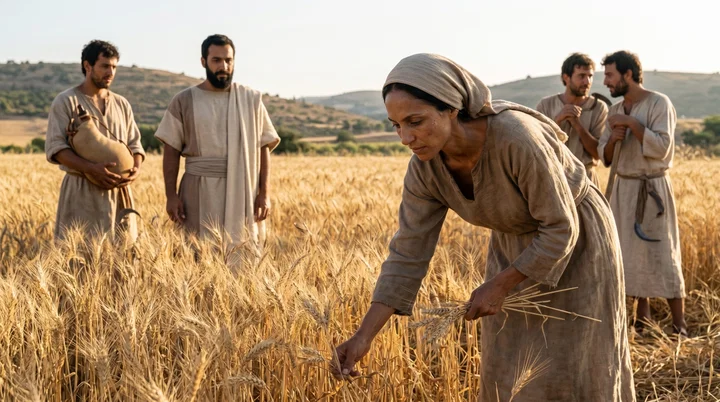
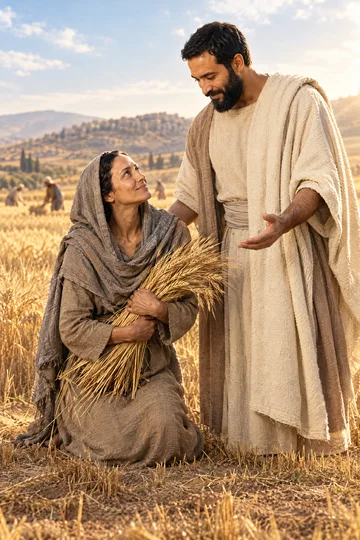
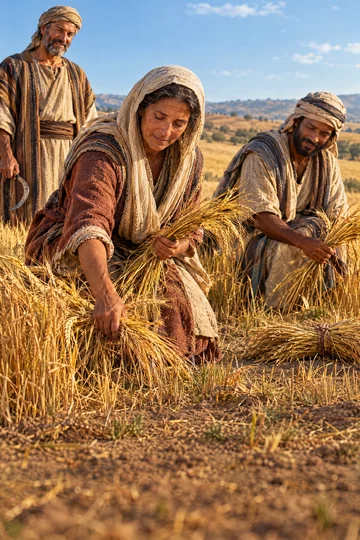
And she went, and came, and gleaned in the field after the reapers: and her hap was to light on a part of the field belonging unto Boaz, who was of the kindred of Elimelech.
Translations
And she went, and came, and gleaned in the field after the reapers: and her hap was to light on a part of the field belonging to Boaz, who was of the kindred of Elimelech.
King James Version, KJV Cambridge Paragraph Bible
And she went, and came, and gleaned in the field after the reapers: and her hap was to light on a part of the field belonging unto Boaz, who was of the kindred of Elimelech.
And she went, and came, and gleaned in the field after the reapers: and her lot was to light on a part of the field belonging to Boaz, who was of the kindred of Elimelech.
Revised Version, American Standard Version
And she went, and came and gleaned in the field after the reapers: and her hap was to light on the portion of the field belonging unto Boaz, who was of the family of Elimelech.
And she goeth and cometh and gathereth in a field after the reapers, and her chance happeneth — the portion of the field is Boaz's who [is] of the family of Elimelech.
And she went; and she came and gleaned in the fields after the reapers; and she chanced to light on an allotment of Boaz, who was of the family of Elimelech.
So she went her way, and came, and gleaned in the field, after the reapers,—and it happened to her, to light upon the portion of field-land belonging to Boaz, who was of the family of Elimelech.
Berean Standard Bible, Majority Standard Bible
So Ruth departed and went out into the field and gleaned after the harvesters. And she happened to come to the part of the field belonging to Boaz, who was from the clan of Elimelech.
She went, and came and gleaned in the field after the reapers; and she happened to come to the portion of the field belonging to Boaz, who was of the family of Elimelech.
And she went, and came and took up the heads of grain in the field after the cutters; and by chance she went into that part of the field which was the property of Boaz, who was of the family of Elimelech.
And she went, and came and gleaned in the fielde after the reapers, and it came to passe, that she met with the portion of the fielde of Boaz, who was of the familie of Elimelech.
Douay-Rheims (Challoner revision)
She went therefore and gleaned the ears of corn after the reapers. And it happened that the owner of that field was Booz, who was of the kindred of Elimelech.
Pictures
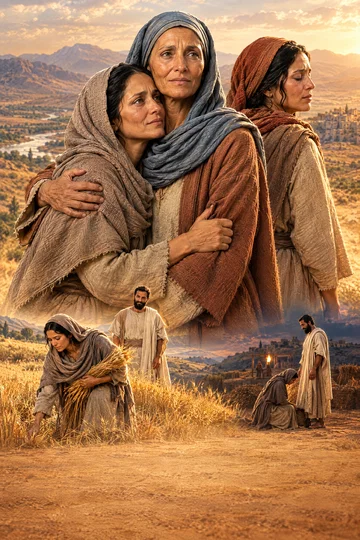
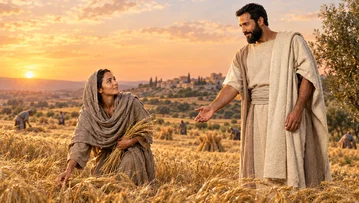
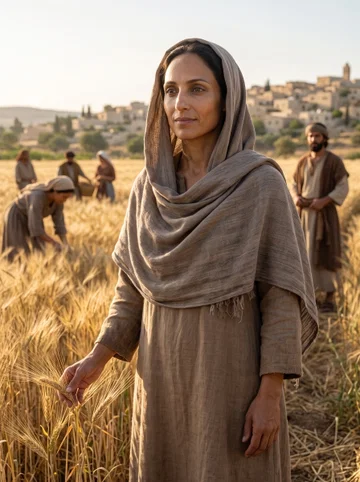
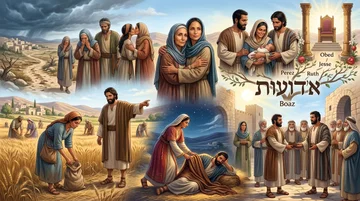
Cross-references
- Leviticus 19:9-10
And when ye reap the harvest of your land, thou shalt not wholly reap the corners of thy field, neither shalt thou gather the gleanings of thy harvest.
The law leaves gleanings for the poor, which Ruth gathered after the reapers.
- Deuteronomy 24:19
When thou cuttest down thine harvest in thy field, and hast forgot a sheaf in the field, thou shalt not go again to fetch it: it shall be for the stranger, for the fatherless, and for the widow: that the LORD thy God may bless thee in all the work of thine hands.
Both describe leaving grain for the needy to glean.
- Matthew 1:5
And Salmon begat Booz of Rachab; and Booz begat Obed of Ruth; and Obed begat Jesse;
Ruth is named among Jesus’ ancestors.
- Ruth 2:19
And her mother in law said unto her, Where hast thou gleaned to day? and where wroughtest thou? blessed be he that did take knowledge of thee. And she shewed her mother in law with whom she had wrought, and said, The man’s name with whom I wrought to day is Boaz.
Naomi asks where Ruth gleaned that day, testing her daily conduct.
- Leviticus 25:25
If thy brother be waxen poor, and hath sold away some of his possession, and if any of his kin come to redeem it, then shall he redeem that which his brother sold.
The law provides for a near kinsman to redeem lost family land.
- Deuteronomy 25:5-6
If brethren dwell together, and one of them die, and have no child, the wife of the dead shall not marry without unto a stranger: her husband’s brother shall go in unto her, and take her to him to wife, and perform the duty of an husband’s brother unto her.
Both concern a relative’s duty to preserve the family line after a man’s death.
- Ruth 4:17
And the women her neighbours gave it a name, saying, There is a son born to Naomi; and they called his name Obed: he is the father of Jesse, the father of David.
Gleaning led to Obed, Jesse, and David in Christ’s lineage.
Commentary
Each commentary is drawn from primary sources: the writings of Ellen G. White and Adventist pioneers and periodicals. Each commentary is separate. Its own words are not a quotation; follow the references to read the source passages.
Pioneers and periodicals
18 sources
Ruth went out at barley harvest to gather scattered grain left behind the reapers in order to support herself and Naomi under the provision made for the poor of Israel.RH May 15, 1900ST Oct 3, 1895ST Nov 10, 1898 What seemed to be chance led her to light upon a part of the field at Bethlehem belonging to Boaz, a near kinsman of Elimelech and a man of noble character.RH May 15, 1900ST Oct 3, 1895ST Sep 30, 1880 In that field her faithful labor won his favor and provision, and she became his wife and the mother of Obed, who begat Jesse the father of David, from whose line came Christ.ST Jul 23, 1912ST Oct 3, 1895ST Nov 10, 1898ST Mar 1, 1910 Boaz as near kinsman is a pattern of Jesus, who became humanity's kinsman and gave His life to purchase and redeem what was lost through sin.ST Apr 8, 1913ST Jul 23, 1912 The verse is a picture of gospel gleaning, calling believers to humble, personal work in the Lord's harvest-field to gather single souls missed in the great reaping, which is honorable and useful service that God blesses and rewards.RH Oct 5, 1916RH Sep 3, 1872ST Sep 30, 1880ST Sep 3, 1894RH Jun 18, 1872
Narrative Setting and Outcome
Ruth 2:3 belongs to the pastoral account of Ruth, set in the time of the judges, through whom God cared for the lineage leading to Jesus through a Moabite woman.ST Apr 8, 1913ST Mar 31, 1909 At barley harvest, in the middle of April, Ruth went to glean after the reapers to help support herself and Naomi, gathering scattered grain and handfuls missed at the corners and behind the reapers.RH May 15, 1900ST Oct 3, 1895ST Nov 10, 1898 Gleaning was one of the legal provisions for the poor of Israel, given because landholders paid no money taxes for support of the poor, and the claim was taken literally.ST Oct 3, 1895
Her hap was a fortunate leading by what appeared to be chance to a part of the field belonging to Boaz, who was of the kindred of Elimelech.RH May 15, 1900ST Oct 3, 1895ST Sep 30, 1880RH Sep 18, 1913ST Nov 10, 1898 That field was at Bethlehem, and Boaz was a near kinsman and a man of noble character.ST Oct 3, 1895RH May 7, 1861ST Mar 1, 1910 Her modest conduct and faithful labor won the respect of Boaz and of all among whom she lived, and Boaz helped her and provided for her needs.ST Oct 3, 1895ST Nov 10, 1898
In that field she later became his wife, beginning the family connection through which he redeemed the property of her deceased husband.ST Jul 23, 1912ST Oct 3, 1895 So she became the mother of Obed, who begat Jesse the father of David, from whose line came Christ, the sweet singer of Israel's descendant.ST Oct 3, 1895ST Mar 1, 1910
Boaz as Kinsman Redeemer
Ruth 2:3 belongs to the pastoral account of Ruth, through whom God cared for the lineage leading to Jesus, and Boaz's place in it as a near kinsman contributes to the story's picture of the Lord as Redeemer.ST Apr 8, 1913 Ruth's gleaning in the part of the field belonging to Boaz led to her later becoming his wife there, beginning the family connection through which he redeemed the property of her deceased husband.ST Jul 23, 1912 In this Boaz is a pattern of Jesus, who became humanity's kinsman to purchase the possession lost through sin.ST Jul 23, 1912 He gave His life to redeem people.ST Jul 23, 1912
Call to Gospel Gleaning
The verse is a picture of spiritual gleaning, for the world is the harvest field and believers are called to gather people for God from among those who tremble at his word.RH Oct 5, 1916 Gleaning means small, humble, personal work for God in the Lord's harvest-field to gather grain for the eternal garner.RH Sep 3, 1872RH Jun 18, 1872 It seeks souls missed when the barns were filled — rich people overlooked, poor people passed by, and shy people who shrank back and say no man cares for their soul — lest they be left to rain and birds.RH Sep 3, 1872 Faithful Ruths count it a privilege to gather single handfuls instead of seeking only great work like preaching at a Pentecost, speaking on Mars Hill, or driving a load of golden sheaves into the barn, yet willing Ruths are scarce.RH Sep 3, 1872RH Jun 18, 1872
The verse presents humble, unnoticed work — gathering scattered grain after the reapers rather than binding the harvest into sheaves, and receiving only what is left behind — as honorable, useful service.ST Sep 30, 1880ST Sep 3, 1894 That humble fieldwork encourages people to work faithfully rather than remain idle or doubt that even a small harvest matters. It shows that those who are not reapers can still gather grain, that patient toil waits for a reward, and that overlooked work can bring someone to a fruitful field of labor.ST Sep 30, 1880ST Jan 5, 1882RH May 7, 1861
Believers are called to work faithfully while there is time before the resurrection.RH May 15, 1900 Faithful gleaning is tested each evening by where one has gleaned that day — by what river of promise, what poor man's home, what troubled soul, what prayer offered, what good deed done, what inviting word spoken — and the God of Ruth, the God of the harvest-field, blesses and rewards it with coming again rejoicing with sheaves.RH Sep 3, 1872 Workers gathering people for God should not neglect individuals who are like stray grain, but should also work the broad, fruitful fields where many can be reached.RH Sep 18, 1913
Cutting down the grain in Boaz's harvest-field is not enough without binding the sheaves, which is the next step after cutting.RH Sep 3, 1872 Binding means gathering the loose material together in Sabbath-schools, prayer-meetings, missionary associations, and churches.RH Sep 3, 1872 It requires organization that divides the army of God into companies, regiments, battalions, sharpshooters, artillerymen, infantry, sappers and miners, leaving none idle in the reserve, so that with all troops in action the castles of sin can be taken for King Immanuel.RH Sep 3, 1872 Ruth's arrival in the field belonging to Boaz is recalled as encouragement during weary harvest work.ST Aug 6, 1912 Gleaning in the field is the joy of living in the world where God lives too, working on the Master's fields with strong heart and hands in the blessed power of giving where there is much to do, striving where men are striving and helping them up the steep, planting trees that keep thriving even while sleeping, which gives life's deepest meaning and life's sweetest song when done nobly with the love of faithful hearts, and ends at last in rest with heaven above.
Sources