The Youth’s Instructor, Vol. 65, No. 24.

Speeding Up the Store
Earlier text: THE RETURN OF JESUS

An Audience of Monkeys

THE most singular audience that I ever saw gathered to listen to preaching was an audience of monkeys.
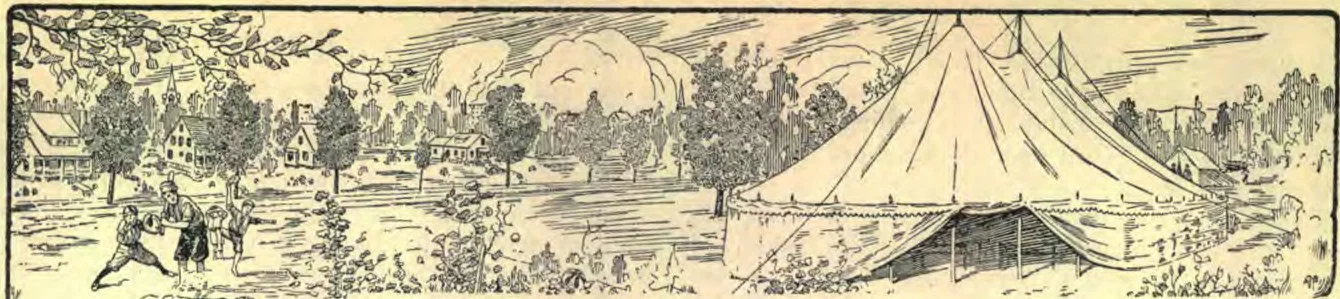
When I first began work in the region which I have now occupied for more than thirty years, I asked two fellow missionaries to join me in a preaching tour in the adjacent táluk, or county. We first went with three native assistants to the táluk town, or county seat. Our tents were pitched in a grove adjoining the town. Usually on our tours we went two and two to preach in the villages, but this being the táluk town, and the first time of our preaching the gospel in that region, we went in a body into the native city.
Walking through the cloth, spice, grain, and iron merchants’ bazaar streets, and then through the goldsmiths’ and silversmiths’ street, around through the temple street, and then through the street of Brahman residences, to advertise our presence and incite curiosity to know what we were about, we finally took our stand in the Brahman street, and all joined in singing one of the beautiful Telugu Christian lyrics, and gathered an audience of interested listeners.
We stood upon a little raised platform on one side of the street against the house walls. The houses were all of one story, joined together like a city block, with flat roofs and a low parapet along the front of the roof. One of our native assistants read a portion from the Gospels and another preached briefly; then one of my fellow missionaries followed, preaching more at length, while I watched the audience to study the countenances of the people among whom I expected to work.
I had noticed that behind the houses on the opposite side of the street there was a long row of trees growing in the back yards, the branches of which stretched out over the flat roofs.
Chancing to raise my eyes, I noticed many branches of these trees beginning to bend downward toward the roofs, and saw the faces of some old jack-monkeys peering out through the foliage. Soon some of them jumped down and came forward to see what their “big brothers” in the street were about as they stood gazing so intently at these white men standing on the platform. Springing upon the parapet, they seated themselves with their hind feet hanging over in front, and gazed with fixedness at the preacher as they saw the people in the street doing.
Other monkeys followed until there was a long row of them seated on the parapet. The latecomers I could see walking along behind the parapet, looking for a place wide enough to get a seat. Failing to find a place wide enough between two already seated monkeys, they would put up their hands, and, pushing each one sidewise, would seem to say, “Sit along a little, please, and give a fellow a seat,” until the “bench” was crowded.
The audience in the street, standing with their backs toward the row of houses, did not notice the monkeys, and so their attention was not distracted by them; the preacher went on with his sermon; the monkeys sat demurely, listening as intently as the audience below.
I noticed that many mother monkeys had brought their babies to church with them. These little baby monkeys sat upon the thigh of the mother, while her hand was placed around them in a very human fashion; but the sermon was evidently too high for these little folks to comprehend. Glancing up, I saw one of the little monkeys cautiously reach his hand around, and catching hold of another baby monkey’s tail, give it a pull. The other little monkey struck back; but each mother monkey evidently disapproved of this levity in church, and each gave its own baby a box on the ears as though saying, “Sit still! Don’t you know how to behave in church?” The little monkeys, thus reprimanded, turned the most solemn faces toward the preacher and seemed to listen intently to what he was saying.
With the exception of a monkey now and then trying to catch a flea that was biting him in some tender spot, they thus sat demurely until the preacher finished his sermon, and until he had distributed Gospels and tracts among the audience, and, bidding them a polite farewell, had started for our tents.
Our “celestial audience,” seeing our “terrestrial audience” dispersing, then, and not until then, left their seats and demurely walked back and sprang upon the branches again. There were no “monkey-capers” as they went; they were as serious as a congregation leaving a church, and sat upon the branches in a meditative mood as though thinking over what they had heard the preacher say. And thus we left our unique monkey audience.—Jacob Chamberlain, in “In the Tiger Jungle.”

“Pin Money”

Not that pin money is different from any other, or that it is intended for the purchase of pins only, do I write; but, as usual, the universal conception is either the antithesis of the cognomen, or the cognomen is a misfit. In this case, the universal conception is as far off as some meandering streams from their ancient courses. Pin money, as first originated, was pin money; it was money obtained from indulgent husbands for the purchase of pins—the large, bulky, ornamented variety. Today, the custom, altogether changed and more generally developed, has become a part of things regular; and broad thinkers call it a detriment.
The Catholic wife of Henry VIII of England instituted the custom. At that time, ornaments made of brass, ivory, silver, and gold, weighing from eight to ten ounces, were worn by the ladies in their hair. At Christmas time the gentlemen of the court gave their wives money to buy these pins. Thus “pin money” was born.
The pin-money fad, which has become a traditional custom in America, is the cloak under which hides this country’s worst enemy,—Waste,—and sad to say, he is entertained and admitted to the majority of homes. All of Europe looks askance at the extravagant American, for what is cast aside here would be gathered up and utilized over there. What a rich and powerful nation the United States would be if European economy and system were employed!
Every small lad nowadays must have certain allowances of money—pin money—to do with as he sees fit. Generally this allowance is given to him by his parents, and it is understood, of course, that he is to use it judiciously, but the fact remains, the money is not for anything definite or necessary—just pin money. The average lad wanders up one street and down another, peering into large show windows and delicatessen shops, deeply concerned as to how he shall part with his piece of silver. Candy, cakes, movies—many are the imps waiting to take his bit of change. His pals offer various suggestions to “help him spend it;” but somehow when the spending is done, his pals are not with him.
Finally he edges into some shop and reluctantly parts with his money. After the last bite has disappeared, he brushes off his mouth with the back of his hand and wanders dejectedly home,—“wish I’d spent it for somethin’ else.” He spent the money because its mere presence disturbed him. Not every youth can sit still for long when bits of silver are burning holes through his pocket. He wants to spend it; he must spend it. What shall he get? He wants the most for his money. On and on he dreams, restless under the spell overpowering him. Yes, friend, he learns how to spend money, but what is the condition of that lad’s mind after he has spent it?
Older persons carry pin money in their pockets or purses. They never know just for what it was spent, and not one thing have they “to show for their money.” The lad gets the habit; when he becomes a man, some traces of the habit abide with him. “As the twig is bent, the tree’s inclined.” He must spend some of his loose change—a dime here and a quarter there, and away it goes. Now, I am not talking about a shadow or a phantom, am I? Many persons know the value of money; hard labor taught them. Numerous persons do not carry pin money, and neither do their children. Hundreds of lads save their pennies and only spend for necessities. These are excluded from the other class.
The pin-money habit is a custom, and customs are hard to break. A journey into the psychology of the issue is not necessary; the facts are self-evident. Any custom or habit which ingrains into the make-up of men a loose, irrational, and negligent conception of something whose misuse is a parasite on durable progressiveness, should be discarded and repudiated. Money is, speaking literally, the objective of all men; its value and accumulation mark the prestige of nations, guide the satisfaction and contentedness of the citizens, cause the upheavals and wars—in fact, money is the czar of the world.
Although Christians should not make gold their god, yet the little they possess should be used carefully and to a purpose. Pin money ought to be a foreign term to them. The term “miser,” however, should not be applicable either.
One should think before one spends. The power of judging, of weighing, of future calculation, is an asset, gained only by an early start when the state of plasticity is at its best.
LOUIS G. STEVENS.

The Boyhood of Jesus

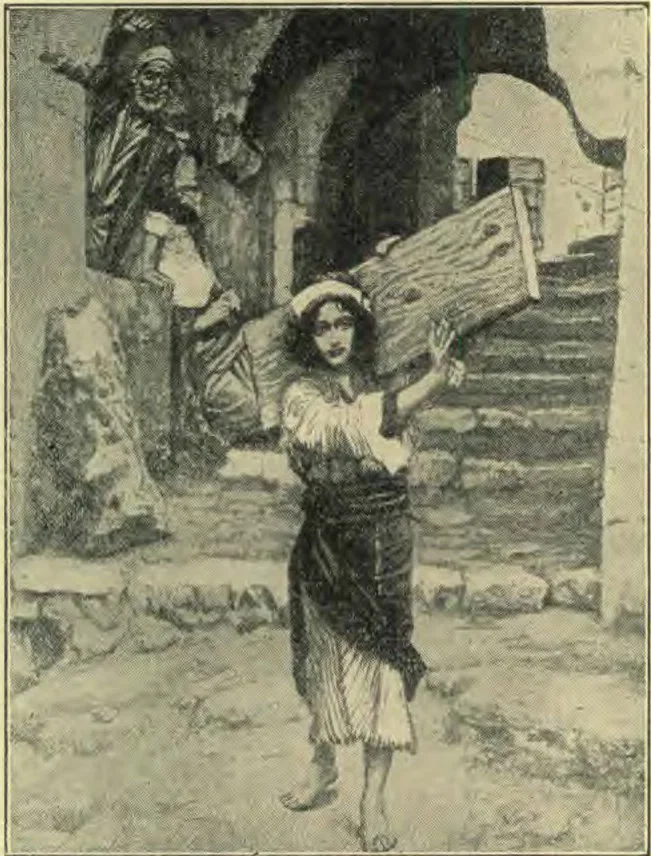
WHEN Jesus was still a very small child, perhaps about three years old, his parents returned with him from Egypt to Judea, their homeland. There, in the little town of Nazareth nestled in a valley, with hills surrounding him on all sides, Jesus lived until he was about thirty years of age.
JESUS AT WORK
JESUS AT WORK
The Bible tells us but little about the youthful days of Jesus. However, we know that his parents were poor. Joseph was a carpenter, and probably received small pay for his work. People of the working class in that day did not live in fine houses, with many rooms, doors, and windows. So very likely the house that Jesus lived in had only one room, with no floor except the bare ground, no window except a hole in the wall. There were no beds to sleep on, and no pictures hanging on the walls. The poor people of Christ’s time slept upon rolls of matting; they sat upon the ground or upon cushions, and ate from a table something like a small stool; and this is the way that Jesus lived.
Jesus was not sent to the Jewish schools, as the other children were. He lived in his humble home, and was taught by his mother. As soon as he was old enough, he began to help his father in the carpenter business. He had the same trials and temptations that all other children have, yet he never sinned. He prayed for strength to meet and overcome every temptation. Jesus did not spend his time in pleasure seeking or dreaming, but was always busy, either helping his father, doing little acts of kindness for others, or studying the Word of God.
He was always kind, patient, obedient. “In his daily life he was perfect, and he did not fail; therefore he is our perfect example.” JESSIE RUTH EVANS.

XII — Preaching the Gospel in Rome

(June 23)
LESSON SCRIPTURE: Acts 28:17-31.
MEMORY VERSE: “I have fought a good fight, I have finished my course, I have kept the faith.” 2 Tim. 4:7.

Questions

1. After reaching Rome, how long did Paul wait before he called the chief Jews together? Acts 28:17, first part. Note 1.
2. How did he address these men? What did he say of himself? Verse 17, last part. Note 2.
3. What did Paul say of his trial before Felix and Festus? Verse 18.
4. How did he explain his appeal to Cæsar? What did he say concerning his own nation? Verse 19. Note 3.
5. Why had he sent for these leading Jews? How did he explain his wearing a chain? Verse 20.
6. What reply did the Jews make to what Paul had said? What did they wish to hear? What did they say concerning the Christians? Verses 21, 22.
7. What appointment was made before they left? When they came again what did Paul teach them? How long did he continue to talk? Verse 23. Note 4.
8. What was the result of that day’s labor? What did Paul say before they left him? Repeat the scripture he quoted. Verses 24-27. Note 5.
9. To whom did he say that salvation had been sent? What would be the result? Verse 28.
10. After the Jews departed, what did Paul’s discourse cause them to do? How long did Paul remain a prisoner in Rome at this time? Where was he permitted to live? What work did he do? Verses 29-31. Note 6.
11. How did Paul afterward suffer in Rome? Note 7.

Questions for Diligent Students

1. What evidence do you find in this lesson that Paul was a man of great promptness and energy? Note 6.
2. In our study of his life what qualities have you found that you most admire?

Notes

1. Although Paul must have been very weary after his long voyage by sea and a tramp of one hundred and thirty-three miles, yet he allowed only three days to pass before he began laboring for the people.
2. Even though Paul was hunted and persecuted by the Jews, and they caused him untold suffering, yet he spoke no word of censure when he called the Jews at Rome to explain the cause of his presence there. Like his Master, he loved his own to the end.
3. “He said nothing of the abuse which he had suffered at the hands of the Jews, or of their repeated plots to assassinate him. His words were marked with caution and kindness. He was not seeking to win personal attention or sympathy, but to defend the truth and to maintain the honor of the gospel.”—“The Acts of the Apostles,” p. 450.
4. “The apostle showed that religion does not consist in rites and ceremonies, creeds and theories. If it did, the natural man could understand it by investigation, as he understands worldly things. Paul taught that religion is a practical, saving energy, a principle wholly from God, a personal experience of God’s renewing power upon the soul. “He showed how Moses had pointed Israel forward to Christ as that Prophet whom they were to hear; how all the prophets had testified of him as God’s great remedy for sin, the guiltless One who was to bear the sins of the guilty. He did not find fault with their observance of forms and ceremonies, but showed that while they maintained the ritual service with great exactness, they were rejecting Him who was the antitype of all that system.”—Id., pp. 451, 452.
5. A gross heart is one that has no sense of spiritual things. Dull ears are those that do not wish to hear what the Lord has to say. Eyes that are closed are those that are fixed on this world and its pleasures and vanities. Those having such hearts, ears, and eyes stand on dangerous ground.
6. While Paul was a prisoner in Rome, the churches he had raised up were not forgotten. While laboring for the Jews, and for the soldiers who guarded him, he added to his labors by writing letters of counsel to his absent brethren. He wrote to Philemon, to the Ephesians, the Colossians, and the Philippians during this captivity. We have these letters in the Bible. His guard was probably changed so often that there might have been six or eight different soldiers with him every twenty-four hours. No doubt he tried to win them to Christ. Through them he could reach Cæsar’s household and many prominent people. After two years he was set free, and again visited the churches; but again he was arrested, this time to be thrown into prison at Rome.
7. It was the cruel emperor Nero who finally sentenced Paul to die. As Paul was a Roman citizen, he was beheaded. His execution was private, and only a few were present. He was so courageous that the soldiers who attended him were filled with wonder. He did not think of his own sufferings, but of the churches which were left to struggle in an evil world. As he stood in the place of martyrdom he did not see the sword of the executioner, but, like Stephen, he looked upward, and saw Jesus at the right hand of God. He could then say, “I am now ready to be offered, and the time of my departure is at hand. I have fought a good fight, I have finished my course, I have kept the faith: henceforth there is laid up for me a crown of righteousness, which the Lord, the righteous Judge, shall give me at that day: and not to me only, but unto all them also that love his appearing.”

Missionary Volunteer Society Programs for Week Ending June 23

THE programs for this date, with notes, illustrations, and other helpful material, will be found in the Church Officers’ Gazette for June.

The Bible Year

Senior Assignment

June 17: Psalms 18 to 22. God the deliverer.
June 18: Psalms 23 to 30. The shepherd psalm.
June 19: Psalms 31 to 35. Confidence in the Lord.
June 20: Psalms 36 to 39. God’s goodness and mercy.
June 21: Psalms 40 to 45. The acceptable sacrifice.
June 22: Psalms 46 to 50. God our refuge.
June 23: Psalms 51 to 55. A prayer for cleansing.
For notes on this assignment, see Review for June 14.

Junior Assignment

June 17: Psalm 119: 105-176. Praise, love, and power of God’s Word.
June 18: Psalms 121, 122, 124, 125. Psalms of degrees.
June 19: Psalms 148, 149, 150. “Praise ye the Lord.”
June 20: Proverbs 1. Purpose of the Proverbs.
June 21: Proverbs 3. Benefits conferred by wisdom.
June 22: Proverbs 4. Parental instruction.
June 23: Proverbs 10. Wise precepts.

Proverbs

SOME one has said that a proverb is the “wisdom of many in the wit of one.” A truth about life which is generally recognized is stated in a short, forceful way by some wise man, and it becomes a proverb which many use to express that truth.
Solomon, we are told, spoke 3,000 proverbs. Many of these are given in the book of Proverbs. Besides, there are some which were written or collected by Hezekiah, Agur, and King Lemuel. The proverbs are in the form of poetry, and taken altogether make one of the greatest books on the practical experiences and duties of life ever written.
The Lord has given this book of wisdom to his people, and especially to young people, that they may learn how to live. Young people could avoid many mistakes if they would study these wise sayings about life.
When boys and girls are inclined to be lazy and lie in bed late in the morning, they should read the lesson which Solomon learned from the ants, and what he says happens to those who desire—
“Yet a little sleep, a little slumber, A little folding of the hands to sleep.”
M. E. K.

The Higher Law

THE young man who had been examining the row of shining instruments that lined the operating room, turned abruptly to the great surgeon:—
“Of course, you do not believe in the foolishness called prayer,” he said.
“And why not?” the surgeon asked, as he held a delicate instrument critically to the light.
“What, with your scientific training?” the younger man exclaimed, in surprise.
“And why not?” the keen-faced, elderly man repeated.
“Oh, come now, Doctor,” the young man said, smiling. “Surely you cannot believe that God would upset all the laws of nature to grant the request of some one of his creatures. You know how inexorable are the laws of nature.”
“That’s exactly why I believe so strongly in the efficacy of prayer.” The words were spoken quietly, but with evident seriousness.
“Explain the riddle, please,” the other demanded, and his manner was grave now.
“Why, that’s easy enough to do,” the surgeon said. “Prayer — or, rather, faith, which is the motive of prayer — is just as much a force of nature as gravity. The skeptics seem to think that if a prayer were answered all the laws of nature would be smashed to pieces. That is not necessarily the case. Let me illustrate: Why does this instrument that I hold in my hand not fall to the floor?”
“Why, because you are sustaining it.”
“Exactly. And yet the law of gravitation is not wrecked or denied. It is merely superseded for the moment by a higher law — the law of life.
“Now, as we ascend in nature, we find this — the basic laws of a higher plane have just this power of overruling some of the laws of a lower plane.
“Gravity is a great law in the inorganic world. It is still a law in the organic world, but the great law of the organic world — the law of life — is superior to it. The plant thrusts its stem upward in the face of gravity; man walks about in defiance of it.
“Then, why may there not be a law in the next plane of nature, the spiritual, that, just as naturally, supersedes some of the laws of the organic world? The plant reaches down into the inorganic world, and grasping the dead atoms there, endows them with life and the ability to rise superior to the force of gravity. May not the spiritual world do as much for the material world without outraging a single law of nature?”
“Why — why, I guess it could,” the young man stammered.
“It not only could — it does,” the surgeon declared, emphatically.
“Then, there is something in prayer, after all?”
“The effectual fervent prayer of a righteous man availeth much,” the doctor quoted. “I tell you, my friend, prayer changes things.”
And the young man knew, from the light on the older man’s face, that here was one man at least for whom prayer has changed things — many things.—Selected.

Lincoln a Pacifist

“I AM too busy to quarrel with you,” said Lincoln to a man who came to explain a letter of brutal criticism.
To a young officer who had been court-martialed for his belligerency, Lincoln wrote:
“No man resolved to make the most of himself can spare the time for personal contention. Yield larger things to which you can show no more than equal right; and yield lesser ones, though clearly your own. Better give your path to a dog than be bitten by him in contesting the right. Even killing the dog would not cure the bite.”
At another time, when given abundant opportunity and cause for personal resentment, he said, “It is better at this time not to be making points of etiquette and personal dignity.”

J. W. LOWE

Nevers

NEVER say, “I can't do it,” only when tempted to do wrong; then say, “I can't do it” with an emphasis that cannot be mistaken.
Never try, or even desire, to shirk your own personal duties and responsibilities and put them on somebody else; but be ready and willing to shoulder them yourself.
Never become discouraged and give up in despair when meeting obstacles and perplexities. They are usually stepping-stones to greater success. Every successful person has had to meet these.
Never complain, or think it strange, when beset with even the most fiery trials. How can you expect to perfect character if you never have anything to try you? Trials, if meekly and patiently borne, are the best and greatest means of purification.
Never put off until tomorrow what ought to be done today, and never feel satisfied with having done less than the very best of which you are capable.

J. W. LOWE

Reflections on the Horrors of War

War
I HATE war with all my heart. I am sure that I hate it with a hatred deeper than the hatred of you, reader, who never saw its actual workings and its garnered fruitage. For, you see, I saw the physical side of it; and, having seen it, I want to tell you that I have no words with which halfway adequately to describe it for you, so that you may have in your mind the pictures I have in mine. It is the most obscene, the most hideous, the most brutal, the most malignant—and sometimes the most necessary—spectacle, I veritably believe, that ever the eye of mortal man has rested on since the world began, and I do hate it. — Irvin S. Cobb, in the Saturday Evening Post.
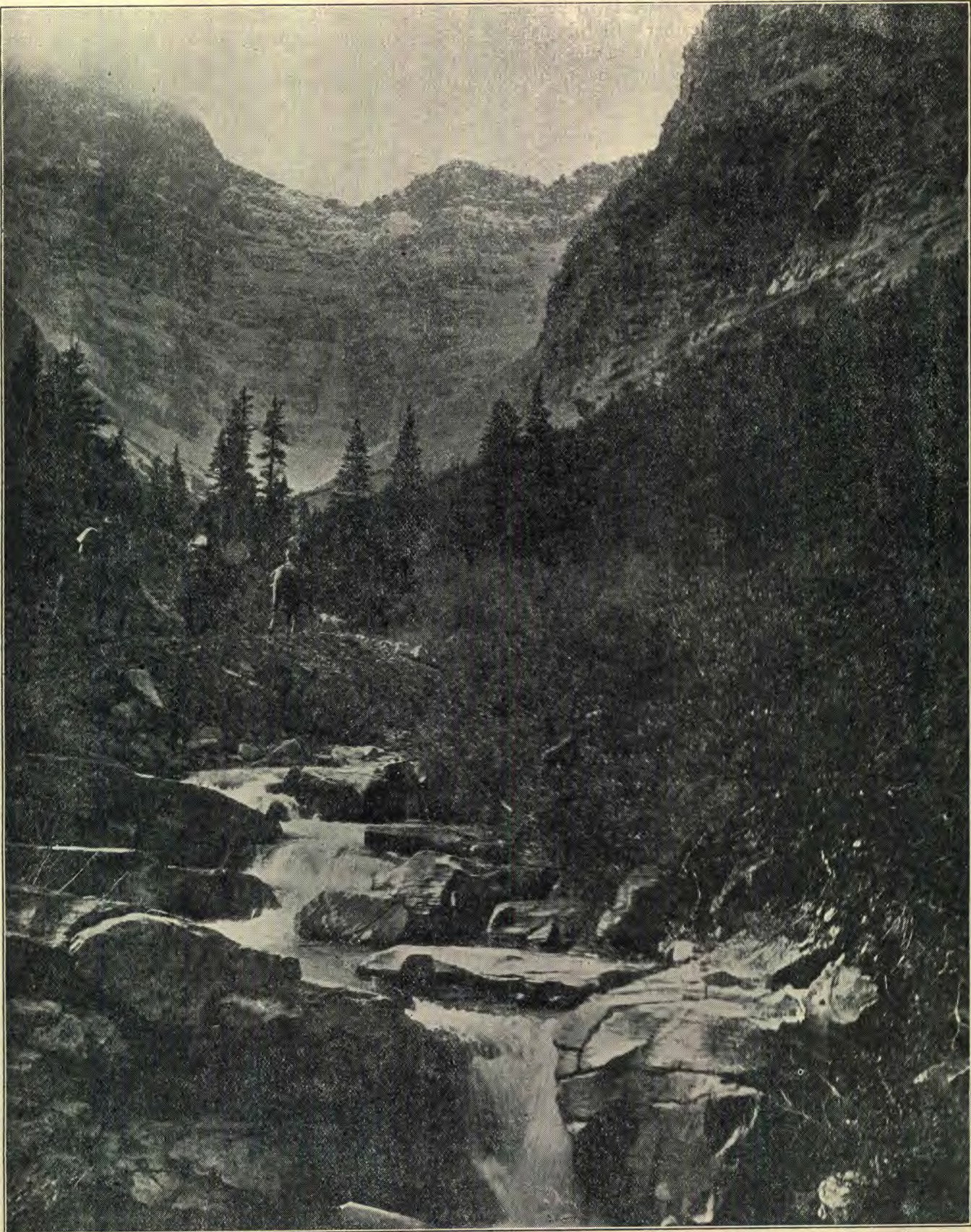
GLACIER NATIONAL PARK, MONTANA. THIS PARK HAS CLIFFS SEVERAL THOUSAND FEET HIGH, AND A HUNDRED LAKES, FED BY MORE THAN SIXTY GLACIERS. ONE LAKE FLOATS ICEBERGS ALL SUMMER.
VII. Preaching the Gospel in Rome

You have reached the end of this edition.

The Youth’s Instructor · Jun 12, 1917