The Youth’s Instructor, Vol. 65, No. 33.

Lines on Motherhood and the War's Sorrow

The Youth’s Instructor

Aug 14, 1917

Review and Herald Publishing Assn. · Takoma Park Station, Washington, D. C. · Aug 14, 1917

Lines on Motherhood and the War's Sorrow
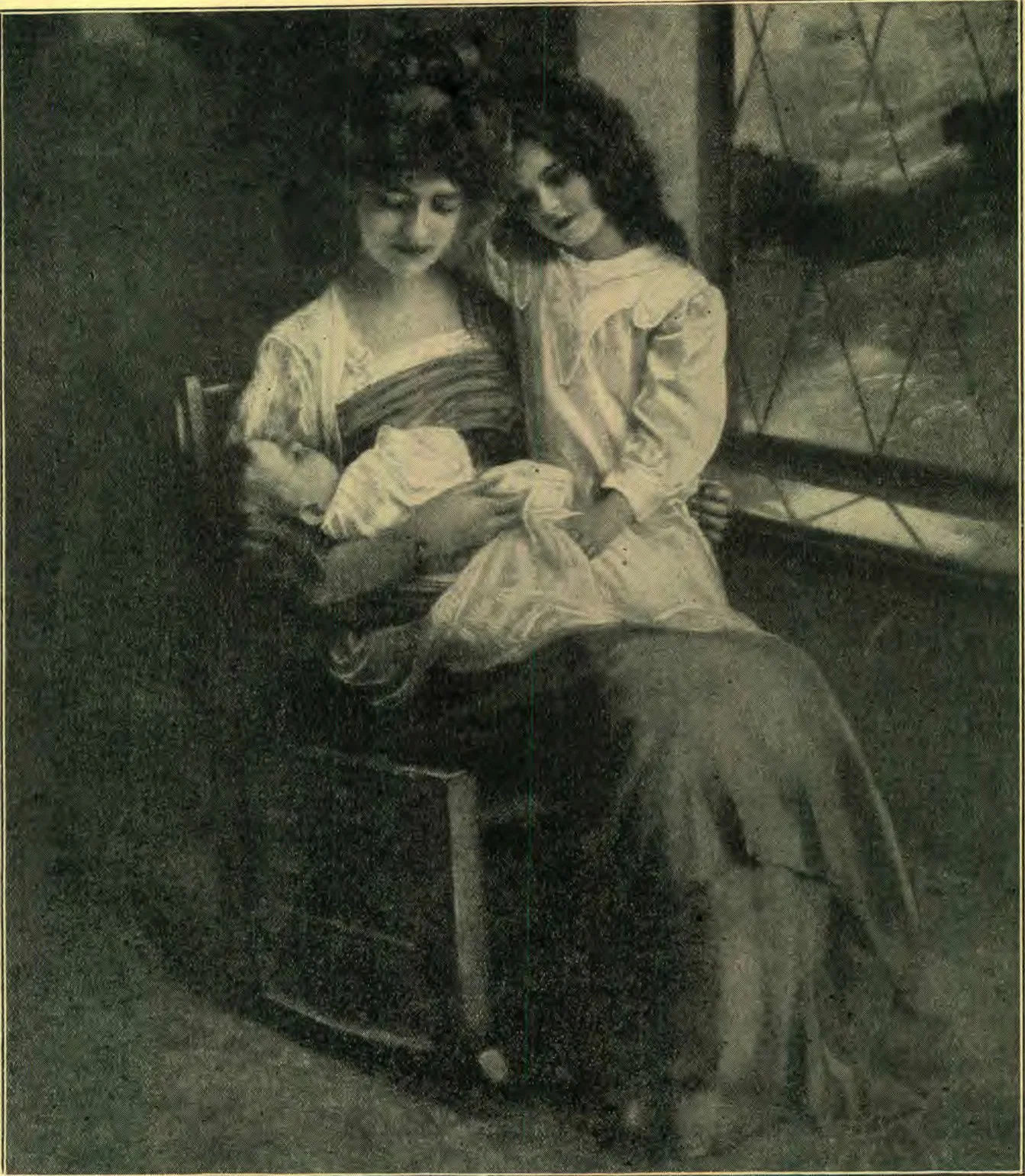
Ah, baby dear, how sweet it is to rest With you so precious, here, upon my breast! Our walls are thick, our hearth fire glowing gold, Our love is warm against the winter’s cold. They tell me over there the summer grass Was trampled down by maddened men . . . alas! They tell me all the roads are choked with mud, With slime and ooze and crimson human blood; And yet I hardly think of fields of strife, With happiness so crowded in my life.
But ah, my arms would shelter if they could All Europe’s throng of shattered motherhood!
— Jane Burr, in Christian Herald.

Wartime News Items: Aviation, Gardens, Crops and Prohibition

There are twenty-four aviation camps in this country.
John B. Gough received seventy-five cents for his first lecture.
The losses of airships by the Allies on the western front are said to be about 30,000 a year.
There are more than three times as many gardens in the United States this year, it is estimated, as there were last year.
Allotments for 10,650 of the 75,000 army trucks estimated to be needed have been made to various automobile firms.
In five of the great corn-producing States there was estimated to be on June 1 only 370,000,000 bushels of corn as compared with 467,000,000 a year ago.
The $640,000,000 appropriated by Congress for the building of airplanes and the training of aviators, will provide 22,000 machines and an aviation corps of 110,000 men.
The Department of Justice warns the American people not to purchase court plaster or salve from other sources than approved ones, lest one thereby obtain dangerous germs.
Chicago’s determination to help feed herself as her “bit” in meeting the crisis of the war has resulted in the planting of 200,000 back-yard and vacant-lot gardens within the city limits. If each garden produces $20 worth of food, the aggregate value will reach nearly $4,000,000.
On April 17 the governor of New Hampshire signed the bill passed by the legislature, abolishing saloons and breweries, which law will go into effect May 1, 1918, when six hundred saloons and four breweries will go out of business. This makes twenty-six dry States, or two more than a majority of all the States of the Union, and within ten of the three fourths necessary to ratify a national prohibition amendment, when Congress shall see fit to pass one. From 1855 to 1903 New Hampshire was under State prohibition, but in 1903 the local option law was passed, giving each town the right to vote on the question.
Harry Burreson, who has taught crippled soldiers in France and Russia to manufacture wooden legs, and who is recognized by both governments as the greatest designer of artificial limbs in the world, has returned to Chicago to serve his own country. At the age of twelve he was run over by a train while on his way to a Bible school picnic in Jackson Park. One leg was cut off just above the knee, the other just below. He worked in Chicago, St. Louis, San Francisco, and New York perfecting artificial limbs, until he is now able to walk as rapidly and easily as a normal person. He volunteered his services to France a year ago, and was accepted as the leading authority. After mutilated men had been released from hospitals, Burreson taught them to make limbs for themselves. He estimates that one hundred thousand artificial legs will be needed before the war is over. “A cripple is best suited for the work,” he said. “I came home to interest America in the work as a war measure.”
The Health Commissioner of the State of Pennsylvania calls the old-fashioned milk bottle a pernicious germ carrier and a menace to health. Progressive dairymen in many communities are adopting the paraffin-coated cardboard milk bottle, which is thrown away after it has been used once. It is not only air-tight, but it also shuts out the light, and milk keeps better in the dark; in the paper bottles it stays fresh several hours longer than it does in transparent glass bottles.
The British submarine report for the week ending Sunday, June 24, shows that 21 vessels over 1,600 tons, and seven under that tonnage, were sunk during the week. This is six less of the larger vessels and two more of the smaller. The aggregate tonnage sunk is probably around 105,000 tons.

Hose Hints

Avoid stockings that are too short for the feet; they are just as uncomfortable as short shoes.
To make sure of the proper size, have them measured around your doubled fist, as the distance around it is always the length of your foot.
An experienced salesman always looks at a man's hand to determine the size of the sock he needs.
A piece of velvet about two inches wide and five or six inches long, pasted in the heels of shoes, will prevent stockings from wearing, and will also make the shoes more comfortable.
Silk hose will last much longer if they are laundered very often. Otherwise the perspiration will destroy the fiber. A good authority says that they should be washed with cold water and pure soap, rinsed well, and wrung out in a towel, but not twisted.
Hang them up by the toe to dry, so that the water will not run into the foot of the hose and shrink it.
Press with a warm (not hot) iron.
To mend hose easily, baste a piece of net of the color of the hose over the place to be mended, and darn through the net. The hole will fill up more quickly, and the work will look much neater.—Christian Endeavor World.

Taft's Push and Pull Schoolroom Joke

A boys’ school recently had a great joke on former President Taft. Mr. Taft had come to address the school. On coming up to the hall his eye fell upon the sign “Push” on the door, and he determined to use this idea in his address.
“Boys,” he finished, “let your motto be but one word. Let that, and that only, raise you to a position of trust. And that word is there upon your door.”
As all eyes turned to the door a loud chuckle spread over the room, for the sign on the inside read, “Pull!”

The Power of Silence

MRS. M. A. LOPER
It is a great thing really to know the power of just keeping still. The learned apostle Paul, knowing the noisy tendency of the human tongue, admonishes us to “study to be quiet.” It is so easy to be noisy, and thus attract attention to that which is not worth while.
A great thinker may be a person of very few words. A great talker may be a person of very shallow thoughts. “In quietness and in confidence shall be your strength.”
One of the most important, and yet one of the most difficult lessons of life is to learn to know when “silence is golden.” “The work of righteousness shall be peace; and the effect of righteousness quietness and assurance forever.”
No more powerful argument can be brought at times, than that of silence. At one time, when Jesus was accused before Pilate, “he answered him to never a word; insomuch that the governor marveled greatly.” We are told that when before Caiaphas, “Jesus held his peace.” He spoke only when speaking was better than silence.
There is an art in knowing when to speak and when to keep silent. Many persons lessen their influence for good by making too much noise as they go through life, noise that grates on the ears of those who hear. The empty tin can is much more sonorous than the can that is well packed.
“Study to be quiet.” It requires real study to learn the lesson. No one ever knows the blessedness of silence as found in this admonition, until he really has studied to gain that experience. There is “a time to keep silence, and a time to speak.” Blessed is that person who knows by experience just what this divine declaration means.
It is unwise for one to speak out of season. A word unfitly spoken may lower one in the estimation of others, when silence would preserve his reputation. A word unfitly spoken may work harm to others when silence would leave their peace undisturbed.
When ill temper asserts itself, the true conqueror keeps still, and thus wins in the conflict.
There never was a time in the history of our world when silence had a greater mission than now. There never was a time when it was more important than now to speak “a word in season.” There is such a thing as speaking “with the tongues of men and of angels,” and yet being “as sounding brass, or a tinkling cymbal.” Rather than be of the empty-tin-can type, how much better it is to “study to be quiet.”
It is unpleasant to try to converse with one who seems never to have taken lessons in the art of listening. That individual is sadly lacking in culture who knows nothing about how to preserve an intelligent silence, who does not find pleasure and real profit in so doing. Some of the greatest lessons of life may be learned by keeping still—listening to those whose words express gems of thought well worth remembering.
There is much in the Bible concerning meditation. Most precious lessons are learned in the chamber of silence. David understood the necessity of prayer; he also understood the importance of seasons of silence when in the immediate presence of God.
A girl chum of my early years lived to become a devoted Christian college professor, and to accomplish a grand work for the students under her care. In a memorial booklet before me, I find these words: “In the classroom, as well as in her social life, she tinged her surroundings with the loveliness of the Christ whom she implicitly trusted and prayerfully obeyed.”
“Her life was a prayer. Often in her talks to us [students] she has asked us if, in praying, we ourselves ever ceased talking to God, and instead, waited in absolute silence to hear what God had to say to us.”
The “still small voice” is heard by the ear that is inclined to listen.
In these days of strife and contention, let us not forget the precious words found in the forty-sixth psalm:
“He maketh wars to cease unto the end of the earth; he breaketh the bow, and cutteth the spear in sunder; he burneth the chariot in the fire.
“Be still, and know that I am God: I will be exalted among the heathen, I will be exalted in the earth.
“The Lord of hosts is with us; the God of Jacob is our refuge.”

What did You See in Your Vision?

HAVE you had your vision? What did you see in it? Did you hastily glance upon a perfect structure, looking only long enough to see the beauty of its symmetry, and then say to yourself, “I’ll build me such a temple”? Such a glimpse of attained perfection is not a vision. It may be the inspiration that supports a vision, but fully to realize the intricacies of a vision you must dream, meditate; sometimes you will have to dream a long time. “Dreamers are the saviors of the world.” In their dreams they see more than the completed work. They see the process, though vaguely at first it may be, by which the building is erected. On the tablets in the visionary chambers of their brain they draw the plans, then they lay the foundation, erect the walls, lay on the roof, partition the rooms, decorate, and after much labor and sometimes many reverses they present to the world a beautiful temple, an awe-inspiring sanctuary.
Look for a moment on our pioneer missionaries. Livingstone had his vision when a young man. He saw that he must open Africa to Christian missionaries and to the commerce of Christian nations. He laid the foundation for his building by educating himself for the work, becoming a geographical expert and a doctor, besides being an ambassador for Christ. Then he plunged into the continent of Africa to open to the world the vast unknown. Mountains, valleys, resources, and peoples were laid before the world when he emerged from the slime of heathenism and cried to all Christendom to come and save the poor souls of Africa from Christless graves. Carey, Paton, and others had visions, and presented the world with temples that are immortalized in the minds of men.
Sometimes God gives us a vision; but we get anxious, and the process of construction seems unnecessarily long. Moses had this experience, and because he invented a spurious method to achieve the desired end, he was sent off into the wilderness behind Horeb to lead sheep. The plan said, “I—God—will use you to save my people Israel.” Moses grew anxious, the process seemed too long, and he tried to simplify it. He said, “I’ll use myself.” Yes, he tried, but just then the vessel in the hands of the Potter broke, and the clay had to be molded for forty years more before the Potter could build it into another beautiful vessel.
What did you see in your vision? Did you see trials, tribulations, persecutions, privations, and countless other apparent reverses when God showed you that you could become a living temple fashioned after Christ? There are so many Peters among us. Years of rabbinical training and three and one-half years under the Master Teacher did not teach Peter how to read the blue print of his vision. Maybe he didn’t intentionally try to use himself, he simply misunderstood and invented a version of his own, and it failed. But a day came when Peter fully understood. He was converted, his soul responded to the teaching of the Holy Spirit, all things were brought to his remembrance, and he could read clearly. He understood fully at Pentecost, and years later he wrote to the church about it. That part of Peter’s second letter known as Peter’s ladder is the Architect’s specifications for building the Christian temple, an inspiring and enrapturing sanctuary within us. It reads thus:
“Besides this, giving all diligence, add to your faith virtue; and to virtue knowledge; and to knowledge temperance; and to temperance patience; and to patience godliness; and to godliness brotherly kindness; and to brotherly kindness charity.” 2 Peter 1:5-7.
The corner stone is laid for each of us; for God has given to all men “a measure of faith.” Let us continue the building, finish the foundation, build up the walls, lay on the roof, partition the rooms, finish the porches, and present ourselves to the Saviour as lovely temples. How pitiful for Christ to look upon multitudes of corner stones laid by his own lovely hands, with no walls, no sanctuary, and an undeveloped vision.
I have now told you of the vision that is common to men, but besides this, God gives special visions with all their complements of tools and plans. So it was with Moses, Solomon, Livingstone, and others who have achieved. God lays the corner stone in the bent of our minds or the ability to accommodate ourselves to the circumstances of the process for our special building. Thus in us lies the nucleus of undeveloped talents waiting to be stirred.
“The question that most concerns us is not, How much have I received? but, What am I doing with that which I have? The development of all our powers is the first duty we owe to God and to our fellow men.”—“Christ’s Object Lessons.”
May God give us grace to build on the corner stone of faith the temple of character that will shine in his eternal kingdom, and to embellish it with special talents that he has intrusted to us. Thus beautified, purified, and sanctified, we shall see Jesus.
ROGER WARREN.

Market Day in Korea

ONE of the many interesting things in Korea, is the market day. It is a real break in the daily monotony of life, furnishing pleasure and recreation for the populace.
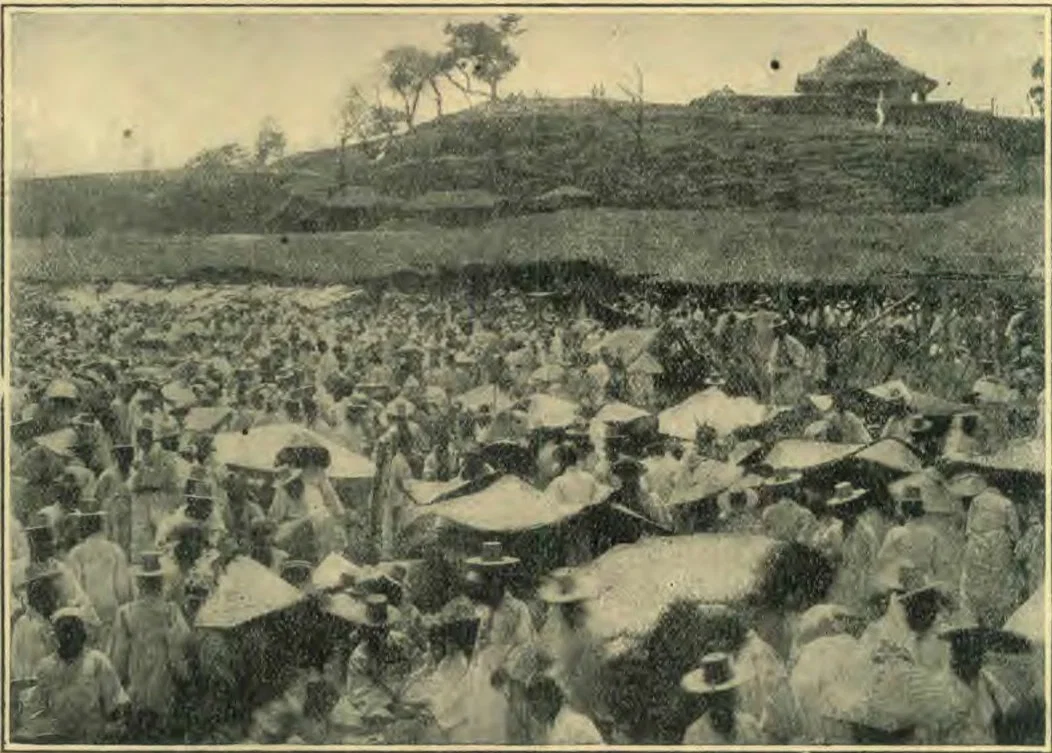
MARKET SCENE IN A LARGE INTERIOR KOREAN TOWN
The Korean market is held every fifth day in the largest village of a district. These market villages are usually separated several miles from each other, and each district holds its market on a different day from its neighbor.
On the morning of market day, if you glance out over the surrounding country, you see the bypaths in all directions lined with people: coolies with loads on their backs supported by the “jiggy,” a pack saddle that is used universally here in Korea, a novel contraption which enables the individual to carry enormously heavy loads long distances with comparatively slight fatigue; others with bullocks loaded with wares; you also observe many people in holiday dress of national white. The buyer and seller are represented, the conversationalist, the idler, and the beggar, for upon this day thousands of people gather to buy and sell, to view and interview, or to beg, the market affording each an opportunity to supply the gratification of his particular object. It is the one day that all observe, and to them it is both a necessity and a pleasure.
As to the market itself, as you proceed down the village street, with its congestion of humanity, you eventually come to the section where the wares are displayed for sale. The market building with its stalls, so familiar to the American, is lacking; the street answers as well here. The salesman spreads his wares on a mat by the roadside, sits down beside them, and is ready for business. As you press your way through the crowd, you pass the various commodities spread out in this fashion. Separate sections are reserved for different commodities. For instance, in one section they sell eggs and chickens; in another vegetables; or pipes and tobacco, fish, rice, wood, and live stock, until the street is filled for a distance of half a mile or more. The salesman furnishes no bags, paper, or anything else with which to do up parcels; the buyer takes with him whatever is necessary to carry home his purchases.
More especially, on these market days, do we realize the immensity of the task set before us, in carrying to this people the everlasting gospel. When they are at home in their various villages, we can scarcely form a true conception of the work. But when they swarm at market like bees before the hive, then especially does the task loom up in all its vastness; and oh, how inadequate seem a few hundred tracts thrown out upon this surging sea of humanity! Surely the harvest is great and the laborers are few. However, God is gathering out many from among this people even as elsewhere, and today over eight hundred and fifty persons in Korea are rejoicing in present truth, having been baptized into the third angel’s message, the fold of God. E. J. URQUHART.

A Centennial

John B. Gough
John B. Gough
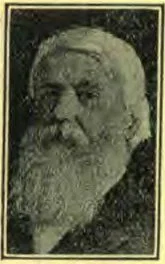
Did you ever hear grandmother or grandfather speak of John B. Gough, or tell some joke or anecdote which they remembered from his lectures? When they were young people, it was considered a great treat to hear this well-known temperance speaker, for he was a natural orator, and although he fought the liquor habit, his lectures were never “dry.” He had a wonderful life, and as the hundredth anniversary of his birth draws near, coming on the twenty-second of this month, it is interesting to read about some of the unusual experiences that crowded his sixty-nine years.
John B. Gough was born in England, but started out when he was only twelve years old to seek his fortune across the ocean in America. After the long voyage he traveled still farther, going on to western New York to stay for a time on a farm with some friends of his family. Later, he went to New York City to learn the trade of bookbinding. In 1833, when he was sixteen, his mother journeyed across the water to join him, and the two had a home together until her death, two years later.
After he was left alone, the temptations of the big city became too great for him. He began to drink, finally losing his job as the result of dissipation. For a few years he grew more and more degraded, until he was reduced to making a living by reciting and singing in low saloons. Just seven years after his mother’s death he attended a temperance lecture in Worcester, Massachusetts. His life, from that time on, was entirely changed. After one fall back into the old ways, he succeeded in shaking off his evil habits, and was soon settled in an entirely respectable manner of living.
He had learned too much of the sin and wretchedness of the world, however, to be able to forget the wretchedness of the life he had left behind him. He seemed to feel an irresistible wish to help the thousands of miserable people who were in the condition from which he had been saved. As a temperance lecture had been the means of rescuing him, he resolved to enter the same line of work. He became a public speaker, lecturing on the subject of temperance in this country and in his old home. He made three trips to England of several years each.
John B. Gough “died in the harness,” for he was stricken with apoplexy while in the midst of a lecture, and died a day or two later. In his autobiography he has left a record of many of his experiences. He also published a collection of his lectures.
Your grandparents will tell you that you cannot know much about his lectures by reading his book, because it was his manner of telling a funny story or giving a sad picture of a drunkard’s home that brought the smiles or the tears to the faces of his hearers. The same talents which drew a crowd around him when he sang to the revelers in a saloon, kept the people spellbound in the churches and lecture halls in his later life.
There are very few people who have been able to do more good in the world than John B. Gough. Drunkards were influenced by him because they knew he had been one of them and had climbed back to respectability. The highest classes of people listened to him with respect because of his wit and eloquence, and were induced to have more sympathy for the unfortunates for whom they might have felt nothing but scorn and disgust. To conquer his own weaknesses and then to use his experiences in teaching other people how to conquer theirs, certainly seems the most beautiful way to redeem the sins of a misspent youth.
MRS. MARY P. DAVIS.

A Sad Death

The attendance at the prayer meeting held at the church was getting slack, and one night Mr. Miller, the sexton, was surprised, after opening the church doors and ringing the bell, to find that no worshipers came at all. Therefore, he muffled the bell and tolled it. The people, especially the members of the church, came pouring out of their houses and ran to the church. “Who’s dead?” they asked the sexton. “The church is dead,” he replied.
As the Sabbath school is the “church at study,” the prayer meeting should be the “church at prayer.” The spiritual health of the church is often seen by the attendance at prayer meeting.
Sad to say, many neglect the privilege they have of attending the prayer meeting, and as a result, lose much of the real Christian experience that might be theirs.
“Why should the sons and daughters of God be reluctant to pray, when prayer is the key in the hand of faith to unlock heaven’s storehouse, where are treasured the boundless resources of Omnipotence?” —“Steps to Christ,” p. 99.
It is feared the following obituary might truthfully be written over some church doors:
Died of consumption, at the city of Laodicea, State of Neglect, in the fifteenth year of her age, Sister Prayer Meeting, eldest daughter of Brother and Sister Church. The health of Sister Prayer Meeting had not been very promising for more than a year, and she gradually grew weaker until life was extinct. For several weeks a few of her dearest friends, by their personal visits and efforts, kept her alive, and once or twice she seemed to revive and gave promise of health and strength. But all neglected her toward the last, and in discouragement she died.
Several church members live close by, and a large circle of professed Christians were within a radius of one mile; but not one was present at the sad death.
Had only two been present, our sister’s life might have been saved; for “where two or three are gathered in my name, there am I in the midst of them,” said Jesus; and another promise is, “If two of you shall agree on earth as touching anything that they shall ask, it shall be done for them.” Probably two thirds of her friends might have been present, if they had been so disposed, but they were not, and a blessed sister and daughter died in solitude from sheer neglect. As there were no mourners, no funeral services were held.
In closing this sad statement of facts, we can do no less than add a sincere prayer that the hearts of Brother and Sister Church may be so tendered, that they will not only mourn the loss of their daughter, but that they may be led to study the subject of the resurrection, and begin to pray that it may speedily come about that they shall once more be united with the blessings and presence of the departed one.
MORRIS LUKENS.

In Honor

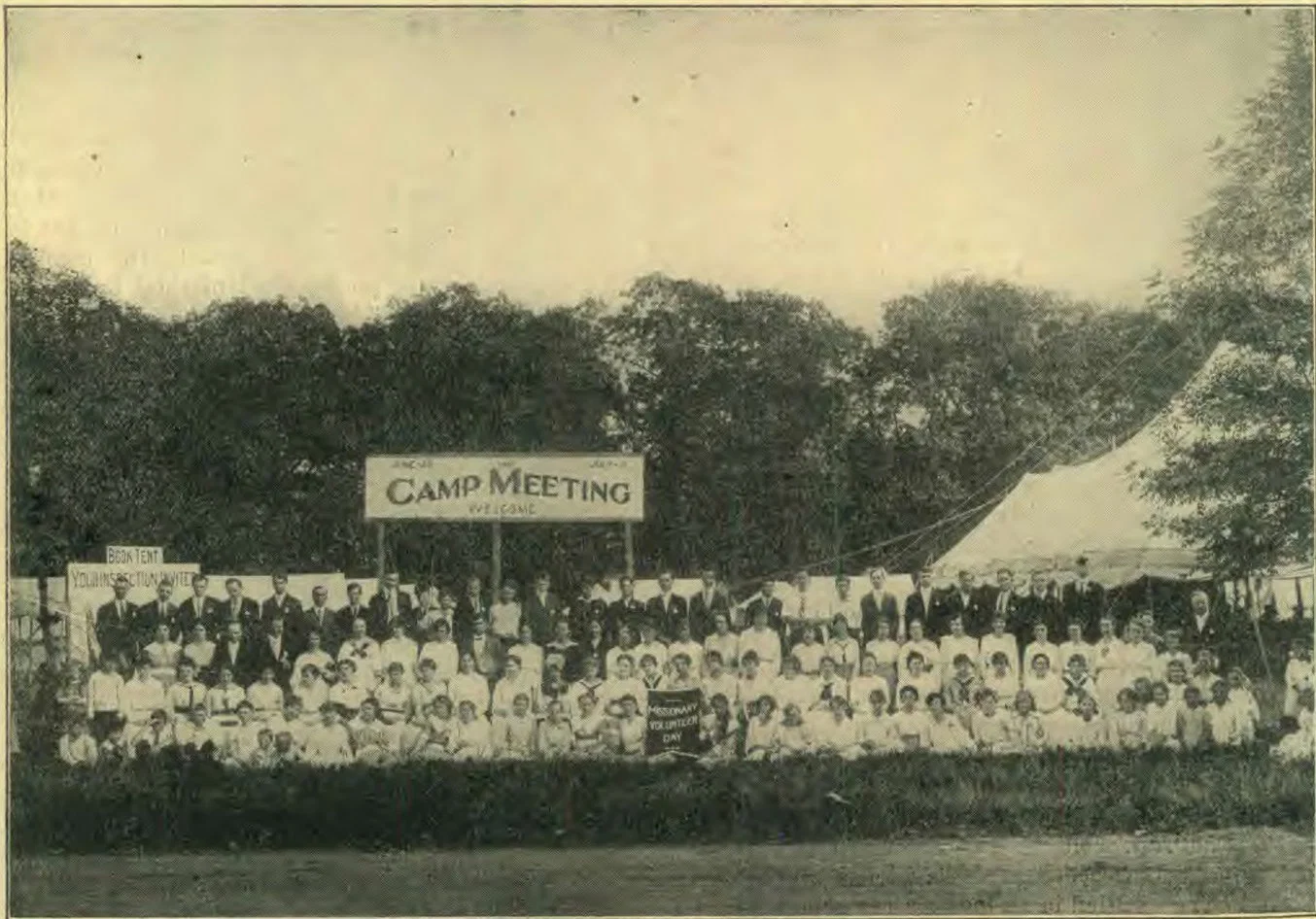
It was upon the last Thursday at camp meeting that the New Jersey young people celebrated the tenth birthday of the Missionary Volunteer Department. Birthday celebrations are always pleasant occasions, but this one was unusually so, for it was to do honor not simply to one individual, but to a grand movement that is loved and appreciated by thousands.
At the close of the early morning meeting in the Missionary Volunteer tent, all the young people were given a small, round cardboard tag to wear, upon which was printed in Old English type, “Missionary Volunteer Day.” At breakfast time and during the morning several of the young people were commissioned to distribute these little advertisers to every one they met, until great and small, from the conference president down, was “tagged.” Many and interesting were the queries which were heard during the day, called forth by the wearing of these badges.
MISSIONARY VOLUNTEER DAY AT THE NEW JERSEY CAMP MEETING
At the book tent, Reading Course books were sold at a very special price on this particular day, and all were encouraged to avail themselves of the unusual opportunity offered. And how the Reading Course is going! Every one is becoming interested in it, it seems.
The special Missionary Volunteer program was rendered in the afternoon, and it was the most largely attended afternoon meeting held during the entire encampment, which shows the keen interest manifested in the young people’s work. One interesting feature was a dialogue written by one of the young people, illustrating the missionary work that may be done by a live local society. About twelve young persons took part in it, and it was pronounced excellent.
The presentation of Reading Course certificates was a part of the celebration to which many had been looking forward with keen interest, for there were twenty-eight who had completed one or more courses, and were ready for their certificates.
By the personal testimonies of the young people on “What the Missionary Volunteer work has done for me,” it was forcibly shown that God has indeed used this movement to bless our youth, and to train them for active service.
A liberal offering to be used in the purchase of Reading Course books for the conference circulating library was given, while the young people sang with all their hearts that invitation, “Won’t you be enlisted as a Volunteer?”
At the conclusion of the program the accompanying picture was taken, and do you not say that such a band of Volunteers, if fully consecrated, can do valiant service for our King? ELLA IDEN.

Idleness Is Treason

A WAR-TIME story is recounted that has a serious lesson for Missionary Volunteers. A young man had been drafted into the trenches, and in a letter home said, “Mother, you may be sure I do not kill anybody. ” The censor allowed the letter to pass on to the mother, but she saw written across it in red ink by the official, “The writer of this was summarily shot.”
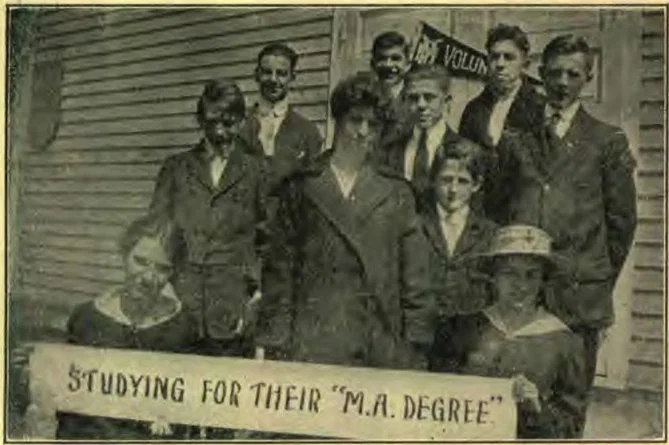
MORE NEW JERSEY MISSIONARY VOLUNTEERS
Though a young man of conscientious scruples, he was executed as a traitor for the crime of doing nothing. The government considers lack of action as treasonable as active spy work for the enemy, or as avowed hostility.
How is it in the Missionary Volunteer armies of Prince Immanuel? He surely will not hold us guiltless if we drift along in church membership but never fight the enemy, when we have at hand such abundant munitions of truth-filled literature, such invincible weapons as God’s Word and prayer. Let us not permit a single day to pass without circulating the printed message, telling some one of Jesus’ return, and praying definitely for a distinct blessing on some worker.
MARY H. MOORE.

Politeness Pays

THE polite man is at a tremendous advantage. He can win favor and fortune under circumstances where the loose mannered and slovenly spirited is left to grumble in failure. It is not altogether because of the surface politeness; it is chiefly because of the sterling character back of it, giving it force and effect.
Politeness is good capital in any business. A Cleveland street-car conductor has proved it so, and so has every other man who ever made good manners a permanent part of his equipment. This conductor gave a little better service than he was supposed to be paid for. He was careful of the safety and comfort of the children, the women, the old men, and the cripples who rode on his car. He met querulous complaints with pleasant smiles and kindly words. He collected no more fares for the company than any other conductor; he was no more efficient and faithful in other respects, perhaps, than hundreds of his fellows. But, somehow, that one advantage was sufficient to distinguish him above others. He came to be selected for special runs where courtesy was of particular importance. And now he has been made a claim adjuster, and his politeness is at a heavy premium. His kindness to others was unconscious kindness to himself.
Politeness pays. It attracts friends and good fortune. It is a wellspring of good wishes. It creates about a man an atmosphere in which “luck” likes to linger.— Selected.

Self-Pity

THE element in life that tends most to lift and buoy one up is a complete forgetfulness of self in the joy of helping, and seeing others happy and prosperous. In other words, this element is unselfishness, and selfishness is the root of self-pity.
Self-pity takes all the joy out of living. It dampens ambition and undermines the potential to do and dare. It crushes out true manhood and womanhood. It makes its victim a whimpering, whining piece of clay in the place of the man God intended him to be.
Self-pity, like a deep chasm, separates man from God. No true Christian can be self-pitying, for the faith and hope of a true Christian reaches far beyond his own poor mortal self to the very throne of God. We desire to follow Christ and to be like him; but we sometimes faint beneath trials, and remain on the self-pitying side of the chasm apart from him. Suffering and trials should bring us near to Jesus. The furnace is to consume the dross and brighten the gold. Therefore, it should be counted as all joy. Not only is this process of cleansing for man’s benefit, but it vindicates God’s dealings and relationship to man in the great controversy between Christ and Satan.
Faith, hope, and love are excellent antidotes for the terrible malady,— self-pity. Faith and hope take one beyond this present world. The trials and sufferings of this life seem but a dream when viewed in the light of that great beyond to which faith and hope pilot. Love sweetens that which comes, be it whatsoever it may. Love causes one to forget self in unselfish thought of others.— Lena Dake, in the Educational Messenger.

Half Finished

A CARPENTER tendered for a job. He failed to get it, for the owner remembered his poor and hasty finish of a dormer window done carelessly years before. A half-finished job never dies. The half-learned spellings at school crop up in our correspondence years later, and we are often judged by such correspondence. You may not think of tracing the business letter back to the half-learned spelling lesson. But the half-finish habit follows everywhere, and will always do harm.
This wretched habit is the parent of much of the shame and lack of usefulness in the world. And he who has permitted himself to acquire it, what are his chances of success in life? Who wants his services if they can help themselves? But to cure the habit is quite possible. If one will remember that conscience must be reverenced in all successful work, the days of slipshod and half-finish will, for him, pass away. The complete remedy for the half-finish habit, then, is very old, but it is the only one. It is simply this: “Keep a conscience ‘void of offense.’”—Selected.
Continue reading: The Blessing of a Sweet and Sunny Temper