The Youth’s Instructor, Vol. 65, No. 33.

Lines on Motherhood and the War's Sorrow
Earlier text: The Blessing of a Sweet and Sunny Temper

All Belongs to God

(Texts for August 19-25)
ALL this really belongs to God, I said to myself, as I gazed at the beautiful landscape around me,— these wide acres of orchard, those mountains of whose majestic peaks my eyes never weary, the cattle grazing on yonder slope, that mine over against the foothills in which are hidden some of his treasures. And so my thoughts traveled on. Just then the rising sun began to spread a new glory over the entire landscape; and as I looked at that shining orb, I remembered that it too belongs to my heavenly Father.
John D. Rockefeller is said to be worth more than $1,000,000,000; but our Father is worth everything. He owns the sea and the dry land; “the earth . . . and the fulness thereof,” “the world . . . and they that dwell therein;” and he also owns the heavens, for he made them and sustains them.
God is our heavenly Father. You and I belong to him. We are his children. This thought is sweet to me; I like to turn it over and over again in my mind. All belongs to him; all is under his control. He is abundantly able to protect us and to supply all our needs. Surely he will take care of you and me.
Yes, God is our Father, so we shall not want. But he is a wise Father; he gives to each one of us an allowance, and keeps an accurate record of just how we use it. These records will show just how you and I use the money God has permitted us to call ours; how we do the work that is assigned to us; how earnestly we seize the opportunities he sends us for doing good; how we care for our health and guard our influence. And some day you and I must face these records and give our heavenly Father an account of our stewardship.
Let us never forget that all belongs to God. He might have kept all; but he didn’t; he has passed liberal blessings on to us according to our needs and his own great mercy. All the blessings that he sends us are talents held in trust not to be used selfishly, but as becomes a child of God.
MEDITATION.—The questions that are with me most as I study the texts for this week are: How does my heavenly Father wish me to use the blessings he is sending me from day to day? The times he gives me, the money he sends me—how shall I use these blessings to his glory? How shall I do my work that I may give him pleasure? How is he planning to use me today to bless others? I do not know, but I believe that if I take time to commune with him and his Word, he will teach me how.
SPECIAL PRAYER.—Father, I am so thankful that all things belong to thee; and that all things are under thy control. This makes me feel secure, for I know that thou lovest me. I thank thee for all that thou dost send me; I pray that thou wilt teach me how to use all these blessings. Help me to please thee today in word, in thought, and in deed.
M. E.

Missionary Volunteer Society Programs for Week Ending August 25

THE program for this date, with notes, illustrations, and other helpful material, will be found in the Church Officers’ Gazette for August.

The Bible Year

Senior Assignment

August 19. Jeremiah 30 to 32: Deliverance and return promised.
August 20. Jeremiah 33 to 35: Promises and warnings.
August 21. Jeremiah 36 to 38: Jeremiah’s imprisonment; in a dungeon; release.
August 22. Jeremiah 38 to 41: Jerusalem taken; Jeremiah liberated.
August 23. Jeremiah 42 to 44: Warnings against Egypt.
August 24. Jeremiah 45 to 48: Conquest of Egypt; destruction of Philistines.
August 25. Jeremiah 49, 50: Predictions against various nations.
For notes on this assignment, see Review for August 16.

Junior Assignment

August 19. Matthew 8: Jesus heals the sick.
August 20. Matthew 9: A little girl raised to life.
August 21. Matthew 10: Jesus sends out the twelve.
August 22. Matthew 11: John’s disciples visit Jesus.
August 23. Matthew 12: True Sabbath keeping.
August 24. Matthew 13: Parables.
August 25. Matthew 14: Herod beheads John the Baptist.

Matthew

When you read an article written by some one with whom you are acquainted, don’t you enjoy it more because you know the author? I do. Of course you know that the Gospel of Matthew was named for the man who wrote it, and you will surely wish to know all you can about the writer of such a wonderful book.
“Matthew” means “Jehovah’s gift,” and was our author’s name after he became a Christian. His Jewish name was Levi, and so we sometimes hear him spoken of as Levi-Matthew. His work was to collect taxes, and he used to sit all day at his money table on the road leading from Damascus to the Mediterranean Sea. You have heard of paying toll before crossing a bridge, haven’t you? Well, Matthew’s work was a little like that, though the amount of money levied as a tax was much larger. The tax collector was expected to examine goods and then charge so much money, according to its value. You can imagine why these officers were so unpopular. Even today the customs officers who open up one’s boxes and bundles, and levy a tax upon them, are not very well liked. But it used to be real robbery in olden days.
These tax collectors would overcharge the people, and then keep the extra money for themselves. Often poor farmers and destitute widows would have to suffer for the necessities of life because of this wicked practice. I suppose that Matthew was a hard, greedy, oppressive man before he knew Jesus. And no doubt he was looked upon with bitter hatred, as were all the men who were engaged in that work.
Such marvelous stories had been circulating through the country of a wonderful miracle worker who could raise the dead, heal the lepers, and cast out demons. When Matthew heard of this mighty healer, he began to long to see him. Then one day Jesus came; he spoke to the guilty outcast tax collector. The words were like sweet music, as a gentle voice said, “The Son of man is come to seek and to save that which was lost.”
When Jesus invited Matthew to follow him and to become one of his disciples, without a moment’s hesitation he left all for Jesus, and became one of his most devoted followers. It is said that he afterward preached for fifteen years in Judea, then went to foreign countries with the blessed gospel story.
You can see as you read the book of Matthew that the one who wrote it loved Jesus dearly, and he endeavors to tell the story of the Saviour’s life so that we too shall love him.
ELLA IDEN.

Room at the Top for Good Climbers

“THERE is room at the top—for good climbers. One who is on his way to the top is not likely to be much impressed with the easy facilities for reaching it.”

A Comparison

THAT there is a rising tide of missionary activity among our young people is apparent. That this is not confined to the homeland of the third angel’s message is also very clear to those who watch the reports from all parts of the world. Indeed it seems that the young people who have been redeemed from the darkness of heathenism sometimes put us to shame by their earnestness and zeal; especially when we remember that “unto whomsoever much is given, of him shall be much required.”
Recently there came to our office the report from the Missionary Volunteers of Japan for the first quarter of 1917. This seemed so good that I thought to compare it with some conferences in the homeland with about the same number of Missionary Volunteers. Here is a comparison of some of the items with a report for the same quarter from one of our oldest conferences in the North American Division.
Japan Conference A Home
Membership 154 148
Number of Societies using lessons prepared by the Miss. Vol. Department 9 No report
Letters written 328 146
Letters received 248 78
Missionary visits 1,171 648
Bible readings or cottage meetings held 721 64
Subscriptions taken for periodicals 10 50
Papers sold 807 1,155
Papers mailed or given 1,152 4,672
Books sold 9 55
Books lent or given 104 82
Tracts sold 1,479 221
Tracts lent or given 20,670 6,739
M. E. KERN.

VIII — The Earth Made New

(August 25)
MEMORY VERSE: “Blessed are they that do his commandments, that they may have right to the tree of life, and may enter in through the gates into the city.” Rev. 22:14.

Questions

1. What assurance have we that God’s original plan for this earth will yet be carried out? Hab. 2:14. Note 1.
2. To what time is the earth in its present condition reserved? 2 Peter 3:7.
3. What will be the result of the fires of the last day? Verses 12, 10.
4. For what may we then look, according to his promise? Verse 13; Rev. 21:1. Note 2.
5. What will the inhabitants of the new earth do? Isa. 65:21-23.
6. What peaceful condition will reign throughout the earth? Isa. 11:6, 7.
7. How will the deserts of earth be changed? Isa. 35:1.
8. What will be the name of the capital city of the new earth? Rev. 21:6, 10.
9. How many foundations has this city? How are they adorned? Verses 14, 19.
10. What is the measurement of the city? Verse 16. Note 3.
11. How high is the wall? Of what material is it constructed? Verses 17, 18. Note 4.
12. How many gates are in the wall? Of what are they composed? Who are the gatekeepers? What is written on these gates? Verses 21, 12.
13. Of what does this city have no need? Verse 23; 22:5.
14. What flows through the city? What stands on either side of the river? Rev. 22:1, 2. Note 5.
15. What will God do for his people? Rev. 21:4.
16. Who will be permitted to enter the city? Rev. 22:14.

Notes

1. We are reminded daily that this world is still in the bondage of sin. Every fading flower and every withering leaf testifies to this. Pain and suffering, sickness and death, touch every son of man. But we have the assurance that God’s original plan of peopling the earth with a race of holy, happy beings will still be carried out.
2. The fire that destroys the wicked will melt the earth, and all the works of sin will be burned up. Then God will make new heavens and a new earth, far more beautiful than those that he at first created.
3. “The measure around it, as the words ‘length’ and ‘breadth’ imply, and as was the early custom of measuring cities, is 12,000 furlongs. This is equal to 1,500 miles, 375 miles on each side, making a perfect square. The area of this city is therefore 140,625 square miles, or 90,000,000 acres, or 3,920,400,000 square feet. Allowing 100 square feet to each person or a space ten feet square, the city would hold 39,204,000,000 persons, or twenty-six times the present population of the globe.”—Bible Readings, p. 780.
4. One hundred and forty-four cubits are equal to 216 feet.
5. “The tree of life which Adam lost through transgression is to be restored by Christ. Access to this is one of the promises to the overcomer. Its bearing twelve kinds of fruit, a new kind each month, suggests a reason why in the new earth ‘from one new moon to another,’ as well as ‘from one Sabbath to another,’ all flesh is to come before God to worship, as stated in Isa. 66:22, 23.”—Id., p. 781.

A Serve-Yourself Store

A GROCERY and market on the self-service plan is being successfully operated in a Kansas town. The store is called the “basket store,” and only the proprietor is present when a customer calls to make purchases. No clerks, no cashier, nor deliverymen have any place in this establishment.
A market basket is furnished each customer, and then he is allowed to roam at will through the wide aisles between the rows of shelves and tables loaded with produce. The prices of everything are marked in plain figures, and the customer can make the amount of his purchase accordingly.
An exit turnstile is at the end of the winding aisles, and the proprietor at the cash register checks the articles in the customer’s basket, collects the amount due him, and allows the patron to pass through the turnstile.
By managing his market without the aid of subordinate clerks, the proprietor is able to lower his selling cost and help the public to save. He says that he does more business under the new system than under the old. “People know from experience and advertising just what they want, and wait on themselves much more rapidly than clerks.”—Selected.

“Just a Little Late Club”

I LIKE to get to the station a few minutes early in the afternoon, and watch the commuters running for the trains.
I have been watching them now for almost two years, and I know a lot of them by sight.
There are the ladies and old men, infrequent visitors to the city, unused to business, who arrive long before train time.
There are the regular business men, who arrive one minute ahead.
And—just as the gate is about to slam—there come piling across the station, breathless, coat tails flying, the members of the Just a Little Late Club.
I used to sympathize with them at first, supposing them to be unfortunates who had missed a car or lost their watches.
But after almost two years of watching I know different.
The membership of the Just a Little Late Club does not change appreciably from day to day. Night after night it is the very same crowd of men who have to run the last few blocks for the train.
Membership in the Just a Little Late Club is not a misfortune: it is a habit. And one of the most exasperating habits in the world.
Napoleon said: “I beat the Austrians because they did not know the value of five minutes.”
He beat the Austrians, but he did not exterminate them. Thousands of their descendants and relatives still wave—still with no appreciation of the value of time, still a nuisance in the business world.
There should be some way of marking tardy people. They should be compelled to wear a button or a distinctive uniform of some sort, so that the man who makes an appointment with one of them might be protected against taking the appointment too seriously.
“Never be on time,” said Mark Twain. “You waste too much time waiting for the other fellow.”
He had in mind the enormous membership of the Just a Little Late Club.
I was lunching the other day in a hotel with a man who has much more money than I have. And a man passed us who has much more than both of us together.
He is a captain of other people’s industry, as well as of his own. He began work twenty years ago as an office boy, and today heads one of the great manufacturing concerns of his city.
“A wonderful fellow,” said my friend, pointing to him. “Last year I had a long series of negotiations with him about the formation of a new company. It was necessary for us to meet practically every day for nearly three months. In all that time he was never late but twice, and then only for a few minutes. And each time he sent word to me from his office telling me that he would be late.”
J. P. Morgan figured that every hour of his time was worth one thousand dollars, and he had no patience with men who were late for appointments, or who, when they came to see him, did not give him his money’s worth in exchange for the time they took.
“It is not necessary for me to live,” said Pompey, “but it is necessary that I be at a certain point at a certain time.”
And Lord Nelson said: “I owe all my success in life to having been a quarter of an hour before my time.”
I hold up the record of these famous men, in the faint hope that it may do some good.
And yet, the hope is very faint. The habit of unpromptness is so very tenacious, so difficult to break.
— Bruce Barton.

Missionary Volunteers, Attention!

AUGUST 25 is Missionary Volunteer Goal Dollar Day.
This paper is dated August 14.
And 14 from 25 leaves 11—eleven days before Missionary Volunteer Goal Dollar Day, and only nine of them working days. But nine days are enough for wide-awake workers to plan for it, work for it, and have a dollar or more ready for the offering which will be taken on that day, and applied on the different goals for which the Missionary Volunteers in all the Union Conferences in the North American Division Conference are raising money.
The Union Conference papers are planning to give special attention to this Goal Dollar Day, and furnish helpful matter for the local society programs. A suggestive program and a dialogue for the Juniors, written for this occasion, are printed in the August number of the Church Officers’ Gazette. If you do not have a copy of your Union Conference paper, you can secure one by writing to your Conference Missionary Volunteer secretary.
We confidently expect that all our Missionary Volunteer Societies will rally to this call, and provide a helpful, inspirational program on Goal Dollar Day, and give a splendid lift on the financial Goal. We can if we will! A. B. E.

Open Secrets

How to be happy — make others so.
How to have friends — study Prov. 18:24.
How to succeed — try, try again, persevere, never give up.
How to become wise — neglect no opportunity to learn anything good or useful.
How to be contented — read, obey, and believe Heb. 13:5.
How to get rich — work, save, give, waste no time.
“Time is money.”
How to have good neighbors — Practice Matt. 7:12.
How to be respected — respect yourself.
How to feel safe — “Do what you can, trust God for the rest.”
How to gain heaven — make heaven here. — Mrs. M. W. Baker.
A Prophecy 2300 Years Long
Second Talk on Daniel Eight
A Prophecy 2300 Years Long Second Talk on Daniel Eight
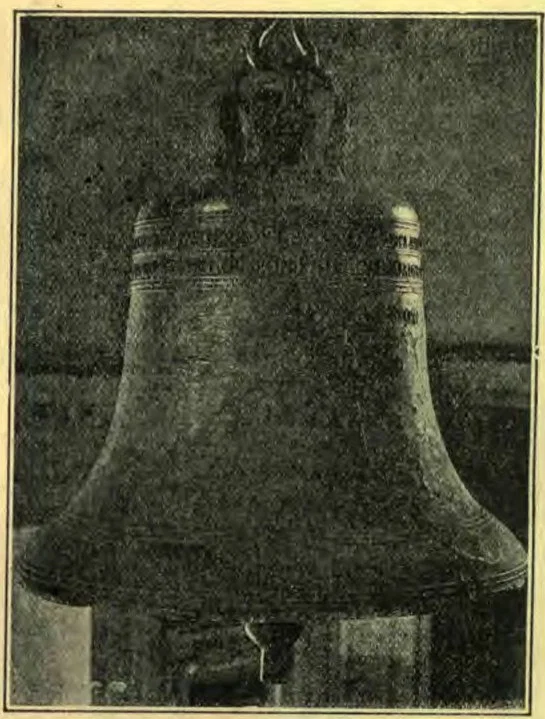
RINGING AGAIN FOR WAR
THE EARLY MORNING OFTEN FOUND JESUS IN SOME SECLUDED PLACE, MEDITATING, SEARCHING THE SCRIPTURES, OR IN PRAYER.
VIII—The Earth Made New

You have reached the end of this edition.

The Youth’s Instructor · Aug 14, 1917