Signs of the Times, Vol. 43, No. 36.

America

Signs of the Times

Sep 12, 1916

Pacific Press Publishing Association · Mountain View, California · Sep 12, 1916

America

During the Millennium

By Benjamin G. Wilkinson
“A thousand years from to-day, things will look a great deal different.”
A HUNDRED years from to-day, things will look a great deal different from what they do now. A thousand years from to-day, things will look a great deal different from what they do at present. It will be wisdom for us now so to conduct ourselves that a hundred years from the present, or a thousand years from the present, we shall look back and be glad that we thus conducted ourselves.
Time is always precious. The Spanish prince who traveled all over the world looking for the fountain in which youth might be renewed, typified the world's cry for more time. A thousand years is coming that will be very precious. We call it the millennium. A day, a week, a year, is valuable; a hundred years is a space of time given to few mortals; but the mind of man staggers in its effort to estimate the value of this thousand years.
There are in the divine Scriptures eight texts which use the expression "thousand years." Six of these are found in the first seven verses of Revelation 20. Of the other two, one is found in the Psalms, and one in the second epistle of Peter. There is this difference, however,—that whereas the mention of a thousand years in the Psalms and in Peter refers to any portion of time known as a thousand years, the thousand years of Revelation 20 is generally designated as "the" thousand years. We read as follows: "And I saw an angel come down from heaven, having the key of the bottomless pit and a great
chain in his hand. And he laid hold on the dragon, that old serpent, which is the devil, and Satan, and bound him a thousand years, and cast him into the bottomless pit, and shut him up, and set a seal upon him, that he should deceive the nations no more, till the thousand years should be fulfilled: and after that he must be loosed a little season. And I saw thrones, and they sat upon them, and judgment was given unto them: and I saw the souls of them that were beheaded for the witness of Jesus, and for the word of God, and which had not worshiped the beast, neither his image, neither had received his mark upon their foreheads, or in their hands; and they lived and reigned with Christ a thousand years. But the rest of the dead lived not again until the thousand years were finished. This is the first resurrection. Blessed and holy is he that hath part in the first resurrection: on such the second death hath no power, but they shall be priests of God and of Christ, and shall reign with Him a thousand years. And when the thousand years are expired, Satan shall be loosed out of his prison." Here, then, is a series of events, all bounded by a thousand years. It seems as if God, in His divine wisdom, had marked off and appointed for the future a definite space of time. He decreed for the Flood one hundred and twenty years, for the captivity in Babylon seventy years, and a certain number of years for the sojourn of the Israelites in Egypt. These all, however, had to do with local events. (Continued on page 12)

America During the Millennium

(Continued from page 1)
The thousand years is different; it has to do with events universal.
There is a thousand years space of time between the first verse of Revelation 20 and the last verse. When the angel comes down from heaven, in verse 1, it is the signal for a great cataclysm. It marks the second coming of the Lord Jesus Christ. For while the devil is being bound, the blessed and holy dead are being raised; and of this we read, "For the Lord Himself shall descend from heaven with a shout, with the voice of the Archangel, and with the trump of God: and the dead in Christ shall rise first." 1 Thess. 4:16.
The last part of the chapter, which deals with events a thousand years later than the first part, ushers in the new heavens and the new earth; for we read, "And I saw a new heaven and a new earth: for the first heaven and the first earth were passed away." Rev. 21:1. Now is it not clear that there is a thousand years between the resurrection of the righteous and the resurrection of the wicked? The Lord Jesus says: "Marvel not at this: for the hour is coming, in the which all that are in the graves shall hear His voice, and shall come forth; they that have done good, unto the resurrection of life; and they that have done evil, unto the resurrection of damnation." John 5:28, 29.
Now the question arises, Where shall we place the millennium? It is an unusually long stretch of time for the prophetic Word to mention any particulars. We go back to Daniel 2, and as we see the Hebrew prophet standing before the Chaldean king, interpreting to him the dream of the great statue, he says, "Thou art this head of gold." Then as he successfully explains the breast and arms of silver, the waist and thighs of brass, the legs of iron, the feet part of iron and part of clay, he tells of a great stone cut out of a mountain without hands, smashing the image on the feet, grinding it to powder; and then he says, "In the days of these kings shall the God of heaven set up a kingdom, which shall never be destroyed."
Thus the great image of Daniel 2 puts one hand on the origin of the Babylonian empire, which was immediately after the Flood, while it stretches out the other hand to put it on the second coming of Jesus Christ, or the setting up of the great "stone" kingdom, which shall never be destroyed. This, according to the prophecy, is a space of some 3,500 years.
Now does the millennium fall somewhere within this period? — No, indeed. The millennium begins where the second chapter of Daniel leaves off. Revelation 20 opens up the next chapter, the kingdom destined to stand forever, following the smashing of the image in Daniel 2. And the subjects of that kingdom being those who come up in "the resurrection of the just," the millennium begins with the second coming of Jesus Christ and the resurrection of the righteous.
But what happens to the wicked during the millennium? — "The rest of the dead lived not again until the thousand years were finished." Rev. 20:5. If the grand opening of the millennium embraces the return of our Lord, and the return from their graves of all His saints, then the close of the millennium, which is the same thing as the opening of eternity, is marked by two such great events as the resurrection of the wicked and the creation of the new heavens and the new earth. In other words, during this thousand years, while the righteous living reign with their Lord, the wicked sleep.
How marvelous this is! It is God's answer hurled back in the teeth of the infidel who says that to-day it does not make much difference whether we are Christians or unbelievers. They that hear the Word and believe it, says the Saviour, are like those who hear the Word and believe it not, in that they both are builders. There is this difference, however,—that the believers are building on a rock, while the unbelievers are building on sand. Human eyes are unable to discern the foundation; they see only the superstructure.
So, to-day, there is not a special difference, in composition of body, and in the general essentials of life, between the righteous and the wicked. Both wear the same style of collars and cuffs, and the same brand of shoes. But inside, away in the inward parts, where no eye can see and no ear can hear, there is a mighty distinction. We cannot reach down within, pulling the inside out, to place this distinction before the astonished eyes of all; but the millennium will show it.
During a thousand years, while this earth trundles on, week after week, and year after year, around its mighty orbit of more than half a billion miles, the wicked sleep on in their graves. The righteous, on the contrary, are then being introduced, by their divine Lord, to the enraptured universe. Friend, where will you spend that thousand years?
In our next number, Dr. Wilkinson will continue the discussion of this vital question. The events of that eternally important thousand years will be studied in detail. These things concern all, and each should study the subject with an open mind.

Out of His Place

"Where God abides, Satan cannot; and where Satan abides, God will not. This is always and forever true, whether it be in the heart, the home, the church, or the world."

Out of His Place

By Charles G. Bellah
IT is impossible for an individual to be in two places at the same time. We say two, for there are now only two places in all the world that men may occupy. In the beginning, there was only one place; but sin, that dreadful foe which made the serpent bite the dust and transformed the helpmeet into a tempter, came in and made another. To-day there are two places, the right and the wrong.
Each individual absolutely must occupy one place or the other, yet none can possibly occupy both. There is no neutral ground in this world or the next. There is no room in heaven for sinners, none in hell for saints.
Where God abides, Satan cannot; and where Satan abides, God will not. This is always and forever true, whether it be in the heart, the home, the church, or the world. There is but one throne. When God is enthroned, Satan is dethroned, and vice versa.
To be in place with God, is to be out of place with Satan; to be in place with the world, is to be out of place with heaven. Still there is such an experience as being in place with God, and out of place with the world, yet acceptably filling our place in the world. Then are we indeed in our place in the world, yet out of place with the world.

Out of His Pew

ONE of the most distressing experiences known to men is that of feeling entirely out of place—"out of our pew," as we often hear it expressed. Every one has had this trying experience. Observe the sinner who is compelled, by force of circumstances, to remain for some time in the presence of true children of God. How much out of place he feels! On the other hand, let the saint be thrown in company with sinners, without an opportunity of doing them good, and it is just as distressing. How good the fresh air of freedom feels as once more he gets out into the open! Life would indeed be most miserable to any one compelled constantly to feel out of place.
Yet we read of a Blessed One who sadly knew not only what it means to feel out of place for a moment, but of whom the pen of inspiration inscribes, "He shall grow up out of His place." Zech. 6:12. This is the Branch, the Blessed One, the Christ. The text says, "grow up out of His place"—not in, but out of, His place. How significant the previous phrase in that verse, "Behold the Man whose name is the Branch."
This Branch that had grown in the glory land, was transplanted out of His place in this dark and dismal world. The very fact that He became man took Him out of His place. The Father, in His infinite love, wanted to talk to His wayward children; so He dressed the Branch up in humanity, and sent Him to every lost son and daughter of Adam.

Born out of His Place

MOST of us have had the privilege of being born in a home, surrounded by the comforts and blessings of life. No expense was too great, no pains too costly, to make our first days happy ones. But there was One of whom it is written: "And she brought forth her first-born Son, and wrapped Him in swaddling clothes, and laid Him in a manger; because there was no room for them in the inn." Luke 2:7. No place to be born except among the cattle! No room in the inn, much less in a comfortable home! Oh, the mystery, the mystery of godliness! How could He do it? Why did He do it, except in His great and passionate love for lost humanity! Born out of His place!
I well remember that, as a child, when perplexing things arose in my experience, I always went straight to mother, and pillowed my head on her bosom, and never failed to get just the help I most needed. When others surmised evil, and misconstrued my motives, someway mother always understood. And later, when the call from the great undone came to me, mother had just the right counsel to give. She loved me when I was good; she loved me when I was bad.
This blessed privilege was, to a certain extent, denied to the One who grew up out of His place. His brothers could not appreciate His work, and even His own mother did not always understand His mission. He could not go to her for counsel about His future work. Often, indeed, she wavered between whether He really was the true Messiah, or just her obedient, dutiful son. This is why He so often left His home, and slipped away to the quiet hillside, to commune with His Father, who did understand.
As one has most beautifully said, "So pained was Christ by the misapprehension in His own home, that it was a great relief to go where it did not exist." Thus He was forced to grow up out of His place. Do you ever feel lonely and friendless? He knows just what it means to have that lonesome feeling which so tortures the hearts of sinful men and women.

Sought for His Birthplace

LET us go back a few years, and visit the old homestead again. How the tender memories are aroused as we view the dear old spot once more! The house is all gone save a pile of stone where the old fireplace was. Around this, with dear brothers and sisters, we have often gathered in years gone by; and listened to father read from the grand old Book. As we sit down on the pile of crumbling stone, the swallows, whirling overhead as of yore, seem to tell of happy bygone days.
A little beyond is the sparkling brook where, as children, we spent many delight-some days. Even the spot where the old barn stood, with its fragrant mow, arouses tenderest memories. Thorns have overgrown the ancient playground, grimly suggestive of later experience with sins that have too often marred our happiness.
Again I think of One many hundred years ago, coming to the city of His nativity, and visiting the place of His birth. For why should He not do this? He is "the Man whose name is the Branch," the divine-human Saviour, the Word made flesh. As no doubt His mind went back, and tried to reach His birthplace, no fond memories of a pleasant fireside met His view, but all to be recalled was a rude manger and the quiet oxen. Perhaps He wondered just what manger it was in which He had been cradled.
I imagine I can see Him later, as He goes to the spot where the old carpenter shop had been, and thought of His happy childhood days. Oh, Thou homeless Saviour of men, put Thy everlasting arms beneath us, and give us that sweet comfort we need!

No Brotherly Welcome for Him

WHEN I have been away from home and loved ones for some time, and turn homeward again, I begin to anticipate fondly the welcome that I know will surely be mine. My home and the little church are about a mile from the station. Yet often not only my own dear ones, but several of the good members of the church, come to the station to meet me, and extend a hearty welcome. How it endears them to my heart!
Perchance announcements have already been made that I will have charge of the services on the next Sabbath. As I worship in the little sanctuary on the hillside, and know that every heart is with me, how good it seems!
But when the Homeless One returned to His old home at Nazareth, went into the synagogue, and stood up and read from the sacred Scriptures, the members of His own church "were filled with wrath, and rose up, and thrust Him out of the city, and led Him unto the brow of the hill whereon their city was built, that they might cast Him down headlong." Luke 4:28, 29. While He came to bear the burdens of the heavy-laden, His own human heart often longed for human sympathy. And surely He would have appreciated, most of all, sympathy from His own little church at Nazareth. But there was no place for Him there to worship. There were no loving hands to provide for Him the comforts of life. There was no brotherly welcome to make His pilgrim life happier. Out of His place! "He came unto His own, and His own received Him not." John 1:11.

We Sit as Umpire

MY farm, my home, my room, my library — how familiar, how suggestive, are these terms! These are places to which we have access at any time, to come and go at will, with none to say nay — places where we sit as umpire, while all others are spectators; where we may turn the key, shutting ourselves in, and all others out; where we lay aside formality, care, burdens, and problems, and relax. The farm may be poor, the home humble, the room scantily furnished, the library small and well worn; but it is my farm, my home, my room, my library.
Yet the One who gave us our homes, and all else, was the Homeless One, dwelling often with Lazarus and his sisters; at other times, between mountain and multitude, as He constantly went about doing good. So often we read such expressions as: "At night He went out, and abode in the mount that is called the Mount of Olives." Luke 21:37. "And every man went unto his own house. Jesus went unto the Mount of Olives." John 7:53; 8:1.
As He retired to the mountain, not home, for prayer, seeing the little birds coming in from a day of happy song; and then, after a night of earnest supplication, He saw the fox slink in from a night's raid, He could say, "Foxes have holes, and birds of the air have nests; but the Son of man hath not where to lay His head." Luke 9:58. Yet His heart ever cried out for that home which the world never gave Him.
On the cross, He had no bank account, no farm, no home, to leave to His widowed mother, but gave her to John as a precious legacy. Penniless, footsore, or riding on a borrowed ass, and no money in the bleeding hands that were pierced for you and me! Yet He is building for us a mansion in the glory land.

Shall the Schoolboy Be Taught to Fight?

Will Compulsory Military Training Prove to Be the Long-Looked-For "Emancipator"?
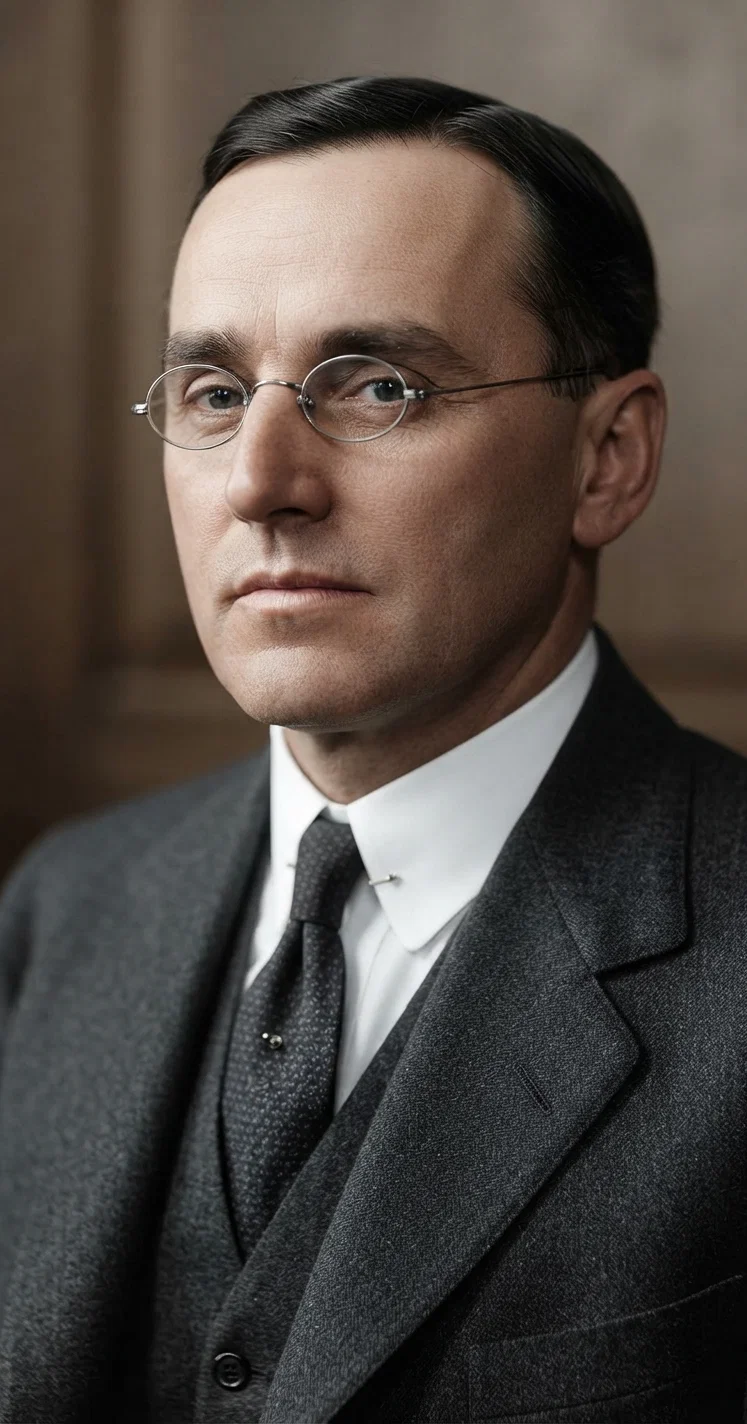
By M. Ellsworth Olsen
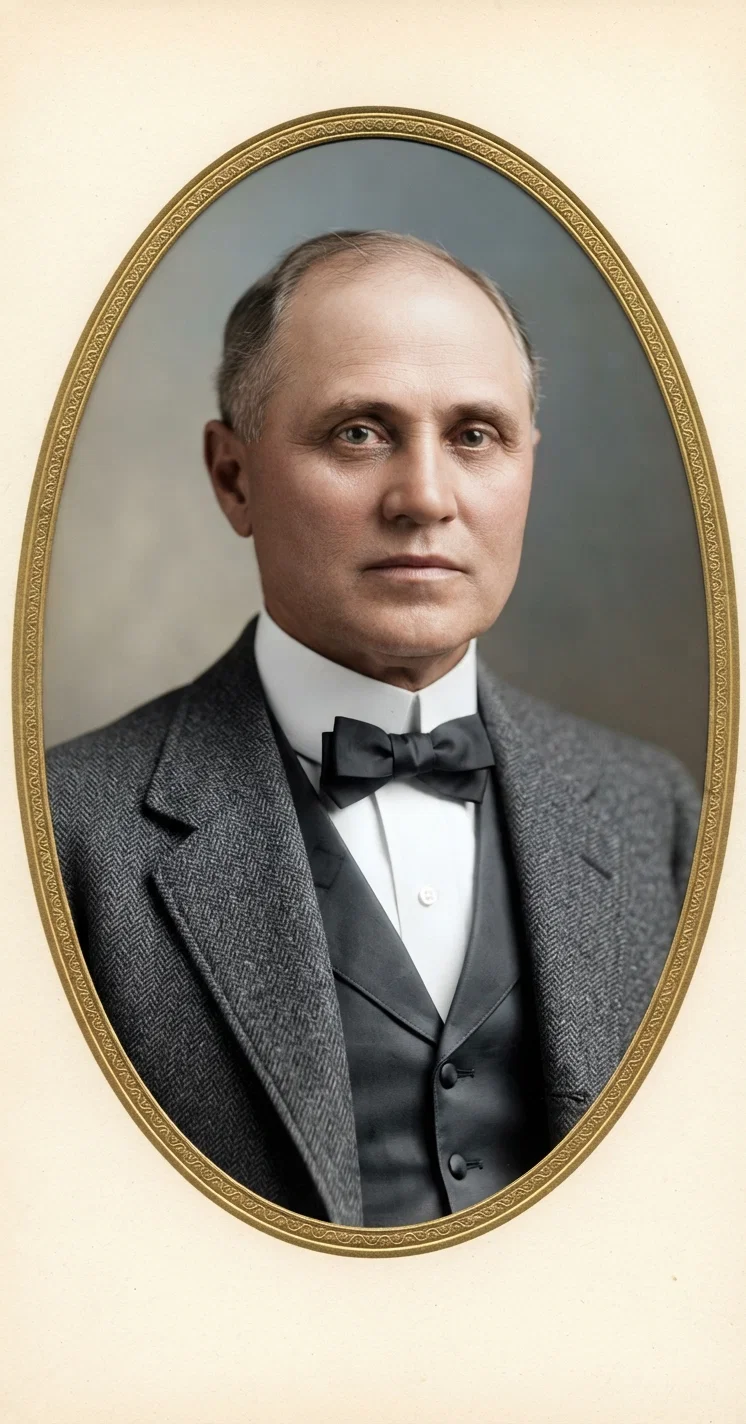
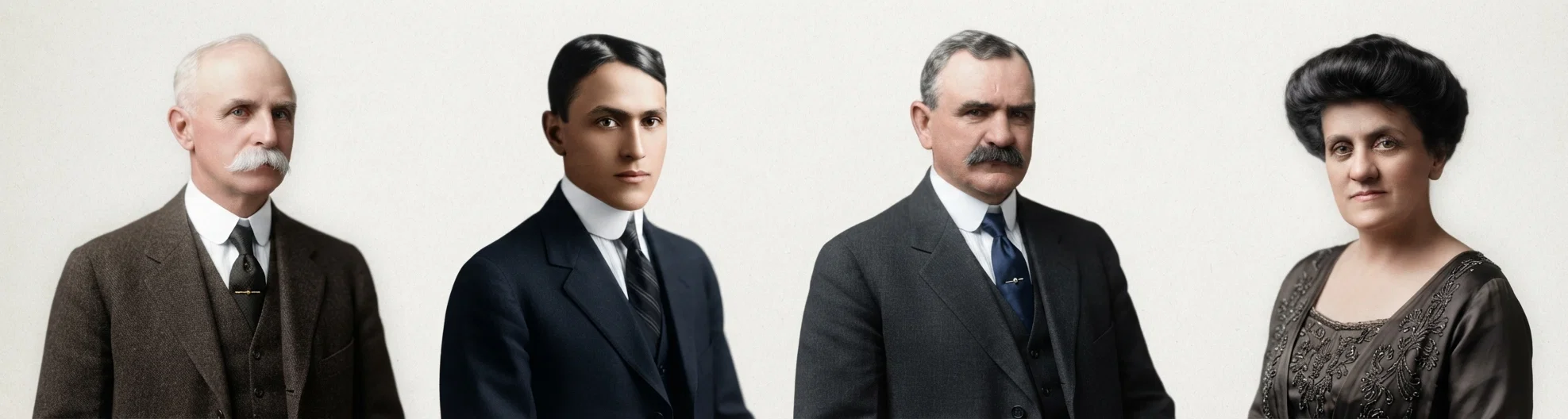
DURAND U. SPRINGER Secretary of the National Education Association
DAVID B. JOHNSON President of the National Education Association
Dr. Olsen's presentation of the preparedness spirit among the educators of the nation shows something of the military fever that possesses many of the leaders of our country. If our children are to receive compulsory military training during their tender school years, it is easy to foresee the ideals which will dominate and the sentiments which will prevail as they emerge to enter the various occupations of after life.
Whether this military instruction in the public schools is advisable or inadvisable is not the question at issue so far as this paper is concerned; but the whole spirit of the time does show that war, and not peace, has taken possession of the minds of men. Regardless of our boastful talk of a soon-coming millennium, when the nations will learn war no more, we find that warnings of the prophets are true, and that this is the age when the nations are "angry," as expressed by the seer of patmos.
SHALL the schoolboy be taught to shoulder a gun? Is compulsory military training in the schools necessary in order that this nation may be prepared to defend itself? Over this important question, the thirty thousand delegates in attendance at the annual meeting of the National Education Association, held in New York, July 4-8, were hopelessly divided.
To begin with, the anti-militarists seemed in the majority. Speeches were made by David Starr Jordan and William Jennings Bryan, pointing out the needlessness of such early training, and the danger of cultivating a military spirit.
A number of the delegates warmly indorsed the views thus presented. C. Ward Crampton, director of physical training in the New York schools, thought drilling small boys and putting them in uniform absurd from a military point of view, and worse than absurd from an educator's point of view. Mrs. Fannie Fern Andrews, secretary of the American School Peace League, thought military training in the schools "not only hostile to American traditions, but an acknowledgment of helplessness in dealing with the greatest crisis in modern history. If education is to become effective in imparting ideals which will preserve and advance the higher interests of civilization, it must lead over all other forces." P. P. Claxton, United States commissioner of education, while pleading for more flexibility in the scheme of national education, also expressed himself as opposed to school military training.

Welfare in the Name of War

BUT the idea of training our boys to fight had strong backing, numbering among its supporters Major General Leonard Wood, Mayor Mitchell, of New York, John D. Shoop, superintendent of Chicago schools, and many others. Dr. Woods Hutchinson thought such training had great possibilities for good. He said:
"Military training in the schools may prove the great emancipator for which we have been waiting to free our system of education from clerical shackles and classical absurdities of the past, and place it upon a hygienic, rational, and scientific basis. Instead of deploring conditions, we should meet them half way, and see if what we have not been able to obtain for the health and bodily welfare of the child in the frivolous name of play we can obtain in the name of war. Instead of a hard-won, barely tolerated section of school hygiene, we may make all schooling hygienic, and all education improving to the body and health of the child as well as to his mental development."
But the speech of telling importance was the one made by General Wood. He addressed the association on Thursday night, July 6, in the great hall known as Madison Square Garden. Without concerning himself much as to the kind or extent of military training that might be desirable in the schools, he strongly emphasized the need of preparing the young people now growing up in this country for the stern duties of citizenship, and he very bluntly denied the allegations of earlier speakers to the effect that military men were anxious for war, and liable needlessly, at times, to provoke hostilities.
DR. A. E. WINSHIP Editor of the Journal of Education DR. CHARLES H. JUDD Director of Education, University of Chicago DR. JOSEPH SWAIN President of Swarth-more College MARY B. FOX President of the Department of Kindergarten Education

The Charge Vigorously Denied

THERE was nothing in the least conciliatory about the speech, and it was not even preceded by the usual compliments directed to the vast body of educators gathered for their annual meeting. But it was approved, from the start; and while the speaker did not court applause, and rather deprecated it, always starting in on his next point before the applause was half over, the speech was probably the best received one of the whole meeting.
"You are preparing people for life," he began. "One of the things you should teach, and don't to the extent you ought, is that the individual has an obligation to the state, and it isn't the state alone that has an obligation to him."
The charge that soldiers stirred up war was indignantly repelled. "You are the light talkers about war, not we. We know something about it; you know nothing. Search all history, and you will find no single instance in which officers of your army or navy have brought on conflict unless acting under direct authority of the government. Our business is to get the country out of wars that you get us into. We are quite as domestic as you are, and quite as human."

More War To-Day than Ever

THE general paid his respects to certain previous speakers in the words: "We have altogether too much of the fourth of July style of oratory, all too much of the type of man who speaks of a million springing to arms between sunrise and sunset. I have been sitting up nights for three weeks to see thirty thousand spring, and it is a very heavy spring."
"History is too superficially taught in this country. It isn't enough to teach dates, the names of generals, et cetera. You should tell your pupils the truth about our country. Show them that we never yet in all our history engaged in war single-handed with a first-class power."
"We don't want war. We all believe in arbitration. There were forty peace societies in this country in 1815. Mankind has been struggling for peace all these years; but if you look over the world to-day, you will see more of war than any lot of human beings ever saw before. We are going to work for peace, but we must not be blind to the facts. A good moral life, an upright character, will not in themselves protect any one."
"The unscrupulous nation is just as remorseless as the unscrupulous highwayman. There is no security in numbers. No wolf was ever frightened by the size of a flock of sheep. He may have been puzzled for a moment to decide which was the fattest one; nothing more."

Must We Resort to Force?

"WE talk too much of our moral excellence. Wherein does it lie? Our murder rate is one hundred twenty-four per million against twelve in Switzerland, where every man undergoes military training, and fifteen to eighteen in Europe generally."
"We don't want to make swashbucklers or braggarts of our boys and young men; but they should know that they owe everything to their country, and they should be able to discharge the military side of their obligations to that country, because everything depends upon it."
"The whole question sums itself up in this: If you have in your country and institutions anything worth defending, remember that they are not defended by words. Force must sometimes be resorted to."
Such, in short, was the plain, blunt speech that won such widespread approval.
When the question was put to the vote, the majority of the teachers were found to favor a measure of military training for the boys, under certain conditions. The resolution passed provides that "the community or state may introduce such elements of military training into the schools as may seem wise and prudent, yet the association believes that such training should be strictly educational in its aim and organization, and that military ends should not be permitted to pervert the educational purposes and practices of the school."

Broadening the Field of Knowledge

ANOTHER matter that received much attention at the convention was the need of more vocational training. Secretary Redfield's address on Wednesday evening was an urgent plea for increased emphasis upon this important phase of modern education. "The trained mind is well," he said; "and because it is well, it is also well that that trained mind should guide a trained hand. If it be the spirit of academic education to preserve for future ages the riches of all the ages past, it is the high ideal of vocational education to absorb the fruit of the ages and to fertilize the field of labor so that each successive age shall produce more and more that which shall bless the age yet to come."
"The cry of children to-day is, Teach us to work, and to know why we work as we do, and how to work well and effectively. Vocational education, then, has no narrow horizon. The whole broad field of knowledge is its own."
"The apprentice in a machine shop will be none the worse, but rather the better, for a knowledge of metals and the principles of mechanics. If he builds or repairs automobile engines, something about hydrocarbons will do him no harm. The truth is that industry to-day reaches out into all the sciences so fast and far that the field for thought is large and free and fascinating, and the inspiration of intelligent effort is an incentive to larger living."

Opening Its Deeper Recesses

"VOCATIONAL education, then, is the opponent of things narrow and cramping. It looks with impatience on the boy in the machine shop who knows how to run a drill press, but to whom a planer, the shaper, and other machines are sealed books. It would take a boy and make him a mechanic knowing the why and the wherefore of mechanics, the reason why each tool does what it does, as well as understanding the way in which it does it. It would open to a boy and girl the recesses of knowledge out of which modern industry has sprung and on which it depends. It would make them reasoning workers and not automata. Its purpose is to make men and women flexible in their working powers, and to take the rigidity out of toil. It is a human force, sympathetic and virile, leading the mind to express through the hand the character and spirit of the worker."
The secretary had much more to say on this subject, and his address met the hearty approval of the teachers. It is evident that this country is waking up to the need of a practical, all-round education for its boys and girls, one that will fit them for the real duties of everyday life.
Seventh-day Adventists have been well to the front in this movement. The need of vocational training first began to be agitated in our schools some forty years ago, and it is to-day a well established part of our educational system.

Interpret in Values of Human Service

THIS large assemblage of teachers was addressed by Samuel Gompers, president of the American Federation of Labor. He came, he said, as "the representative of those who, by their physical labor, put the natural resources of the country into a shape that will make them serviceable to all, . . . those who do the actual work that makes our present civilization possible."
The toilers of the country are vitally concerned in the public schools, and also in the kind of instruction their children there receive. "The old academic education for mind culture alone was founded upon false principles. . . . There must be coordination of both the physical and the mental." The labor movement demands that education shall mean opportunity for freedom, opportunity for larger and better lives for all.
"Give to the masses of the people, those who perform mechanical work, which of its very nature is monotonous and may become also stultifying, an imaginative understanding and such a wide comprehension of the wholeness of life that no vocation need be to them a rut. Enable each to see up and beyond, with a vivifying mental grasp that shall interpret labor in values of human service, and to do the day's work with the joy of creative labor."
Other prominent speakers at the various meetings were Prof. John Dewey, head of the department of philosophy in Columbia University; Dr. John H. Finlay, state commissioner of education, Albany, New York; Dr. A. E. Winship, editor of the Journal of Education; Dr. Joseph Swain, president of Swarthmore College. The chairman of the meetings was David B. Johnson, of Rock Hill, South Carolina, who has served as president of the association for the past year. The success of the great gathering was owing in no small degree to the faithful and efficient efforts of the secretary, Durand U. Springer, of Ann Arbor, Michigan.
Continue reading: The Great Awakening in Princeton