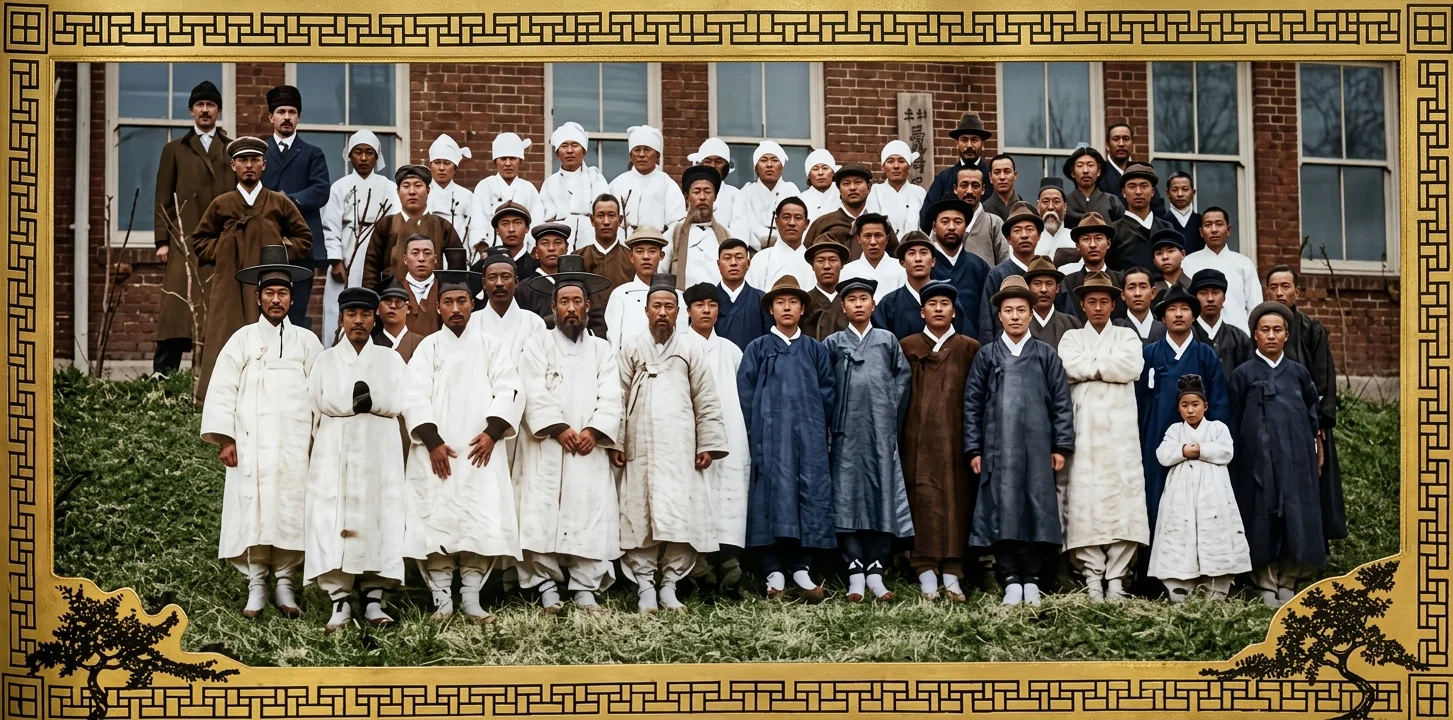
Of the nineteen graduates from our Soonan industrial school, for the years 1913 and 1914, fourteen are now employed in some line of gospel work. At present there are seventy-five students in the school. Seven will be graduated in 1915, the majority of whom will enter upon gospel work in some department.
For industrial work, we have a farm of forty acres, where not only better methods of agriculture are taught, but also horticulture and silk culture. The girls assist in the latter, and also learn to do sewing and household duties. We hope to add carpentry and weaving to our industries this year. In this way the school gives an all-round education, and those finishing the course go out useful members of society, prepared to be a blessing in this land where the principles of health, righteousness, and industry are so little known.
Seoul, Korea
A Bright, Hopeful Sign
By Vera Chilton
BY MISS VERA CHILTON
THEY are such dear, quaint, decorous mites, but their bright eyes are always watching for an opportunity for fun and laughter.
One day, two little girls were showing me their doll’s house; and very interesting it was, too, being an exact reproduction of an Indian house, on a minute scale, with everything complete, from its doll’s gorgeous garments and jewels down to the little swing for the baby and tiny earthen waterpots. I noticed one highly ornamental table, which was set quite apart from everything else. On it was a little book. The younger child quickly followed my gaze, and picking up the book, said, “Miss Sahib, it is the Koran.” But the elder child, looking up into my eyes with a bright smile, said, “No, Miss Sahib, it is the Injil”—Urdu for “Gospel.”
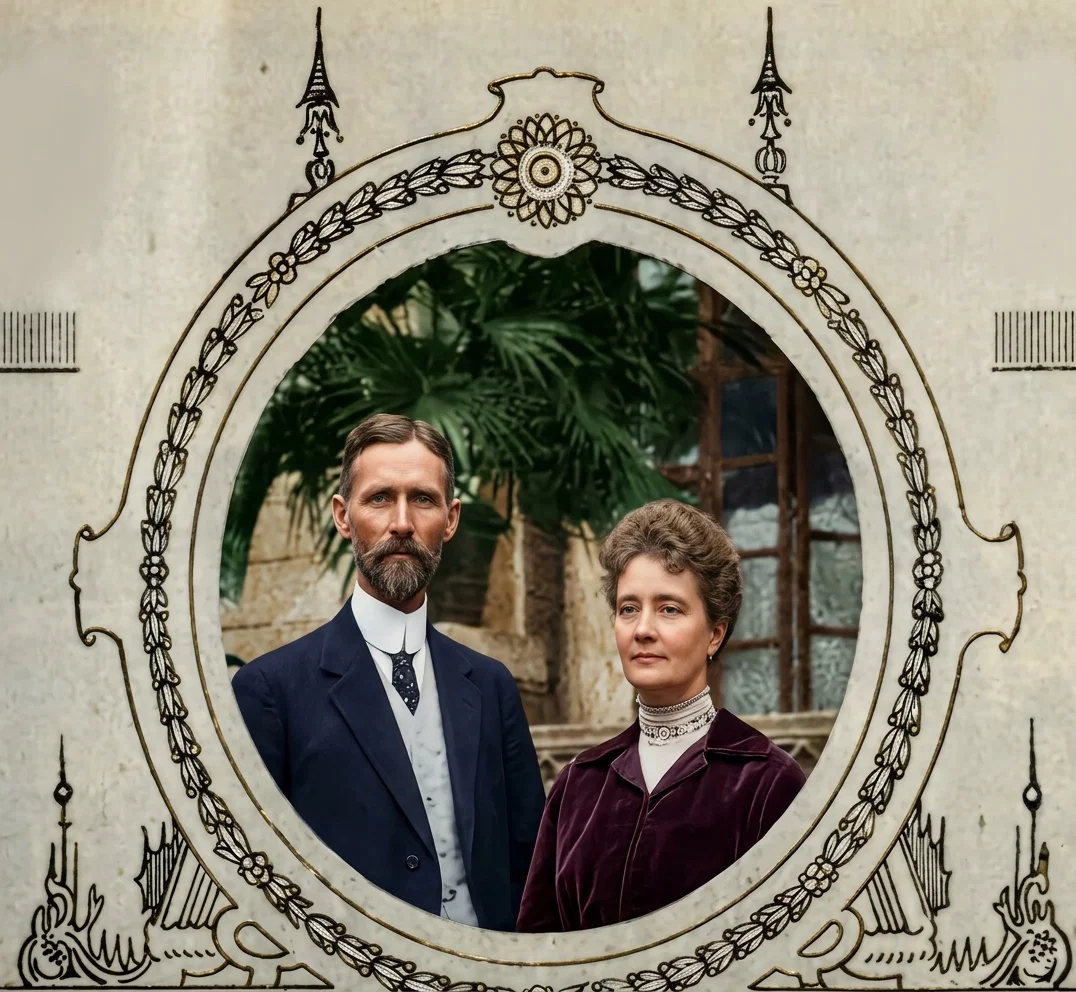
Upper: Prof. H. R. Salisbury, President India Union Mission, and His Wife
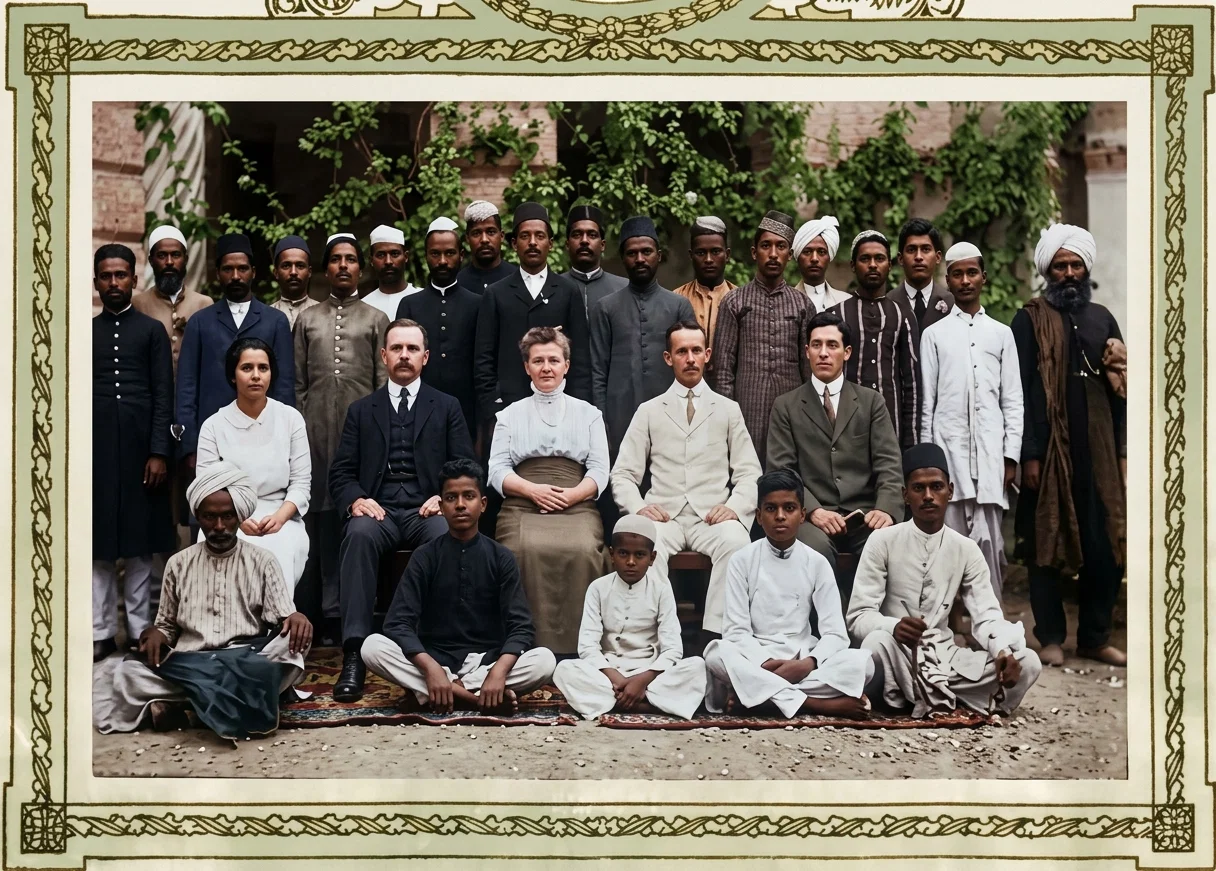
Lower: Employees of Our Publishing House at Lucknow, India
May we not take this as a bright, hopeful sign that the time is drawing near when the Gospel, with its warm, pulsating, life-giving stories of noble life and love and sacrifice, and an ever present, living, loving Saviour, will supersede in the minds of Islam’s rising generation the dark, cold, lifeless Koran?
Lucknow.
A Little Mourner Comforted
By E. D. Thomas
BY E. D. THOMAS
Not long ago, one of our evangelists died of cholera. He left a wife and three children to mourn his loss. When we returned from the funeral service, Dason, his little boy, who was but seven years of age, came running to me, and said: “Sir, my sister is crying because my father is dead and buried; but you preached to us from the Bible, a few days ago, that the dead in Christ are resting for a time, and will be resurrected when our Saviour comes. Then I can see him, and will be with him.”
And moreover, we know and preach to the people that Christ will come very soon. Then Dason said, “Won’t you comfort my sister with these words?”
“Out of the mouth of babes and sucklings hast Thou ordained strength.”
Nazareth, South India.
Baptismal Service in a Hindu Temple
By J. S. James
BY J. S. JAMES
IN Pondicherry, a French colony on the east coast of India, some believers awaited baptism. Not being able to baptize in the sea, we had to seek some other place. In the surrounding neighborhood there are many reservoirs, some of which are used for irrigation purposes in the dry weather, and others in connection with the sacred rites of the Hindu temple worship. We arranged to use one of the former.
To get to the place selected, we must pass in front of a large Hindu temple, which was walled up all around with a high stone wall. These temples, with their inclosures, sometimes covering several acres of land, are considered sacred, and none but high caste people are allowed to worship within their walls. In the gate of this temple stood the keeper; and as we passed by, he was curious to know where we were going.
“To a baptismal service in yonder reservoir,” we informed him.
“Can you not use the reservoir inside the temple here? It is a nice place, and there is plenty of water,” he replied.
“But ours is a Christian baptism,” said the speaker, thinking possibly the keeper did not fully understand the nature of the service we wished to perform.
“Very well,” replied the keeper; “you are welcome to come in here, if you wish, and use our reservoir. All is quiet, and the people cannot see from the road.”
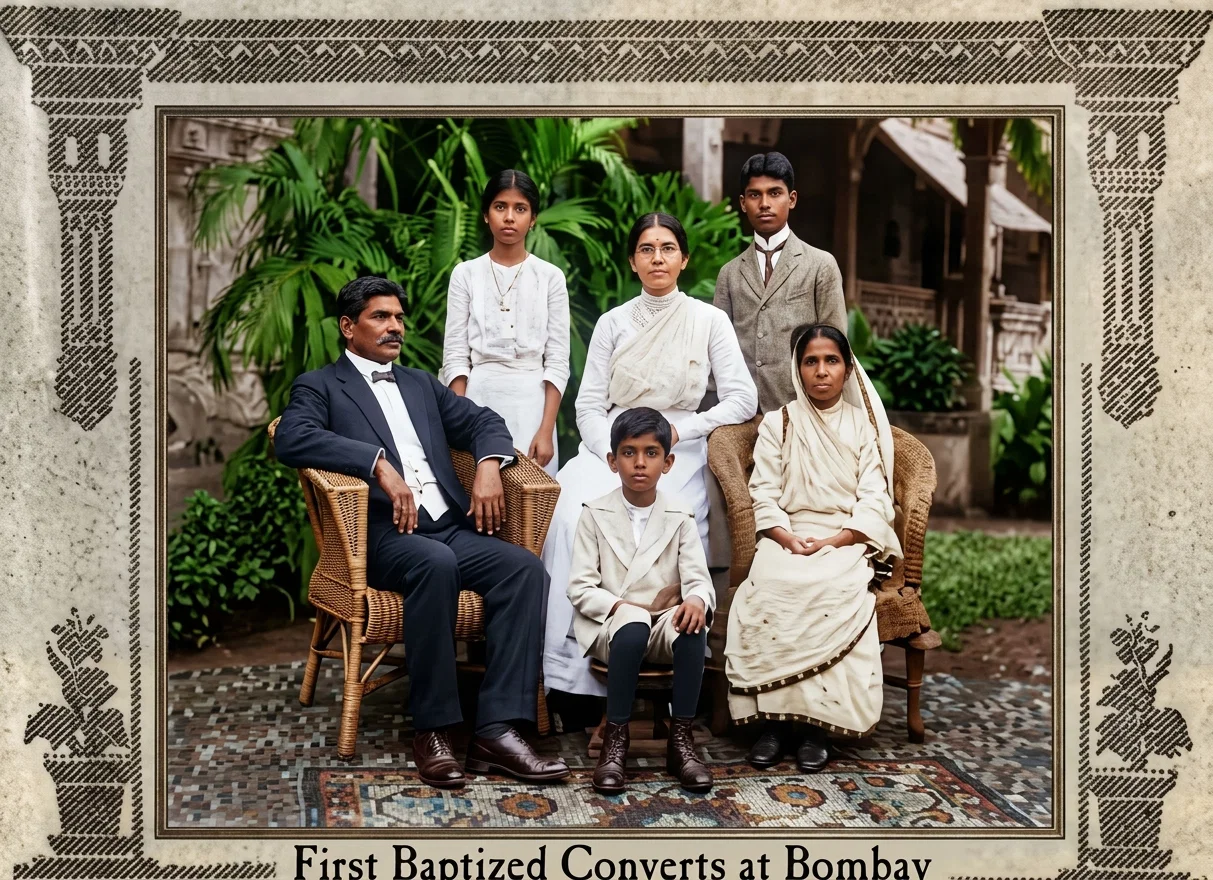
First Baptized Converts at Bombay
Is It a Trap?
I was astonished. A Christian baptism in a Hindu sacred bathing place! Such a thing would ordinarily defile the entire premises, and occasion expensive purification ceremonies, and possibly bring about a riot. What did it mean? Were we being led into a trap?
After inspecting the place, we decided to use it. The door was opened, and we all filed inside. Passing through a gate at the rear of the inclosure, we stood at the end of a large reservoir, thickly surrounded by coconut trees and shrubbery.
Here in this Hindu sacred reservoir, in full view of the dumb gods whose hideous and repulsive features stood out in bold relief on the temple tower just in front of us, while the keeper looked on in curious amazement, I buried seven dear souls in the name of Him who is the Creator, Redeemer, and Saviour of all mankind.
Truly it was an impressive spectacle; and the more I have thought of it since, the more it seems to enlarge upon my senses. God’s work is onward in this land of spiritual midnight. The light of His truth is shining in many places, and growing brighter and brighter as it increases in power. “Declare His glory among the heathen, His wonders among all people.” Ps. 96: 3.
Trichinopoli.
The Punjab, the Land of the Five Rivers
By F. H. Loasby
BY F. H. LOASBY
The year 1914 witnessed the opening of one of the large provinces of northwestern India, the Punjab. “Punjab” means,—punj, five; ab, water,—the five waters, often called “Land of the Five Rivers.” Previous to this time, our missionaries had done no work in this section. The Punjab includes forty-five native states. It is one tenth larger than the British Isles, or one tenth of the area of the Indian Empire. The population is about 26,000,000.
The house of the ordinary peasant, though not attractive, is fairly comfortable. It is built of mud, rarely decorated, and is cooler in summer and warmer in winter than a brick or stone house. The people dress simply in the plains, their clothing being made entirely of cotton cloth. Most of the people are zamindars, or cultivators. The plow used is of the simplest kind, made of wood, with an iron-pointed share, drawn by a single span of oxen.
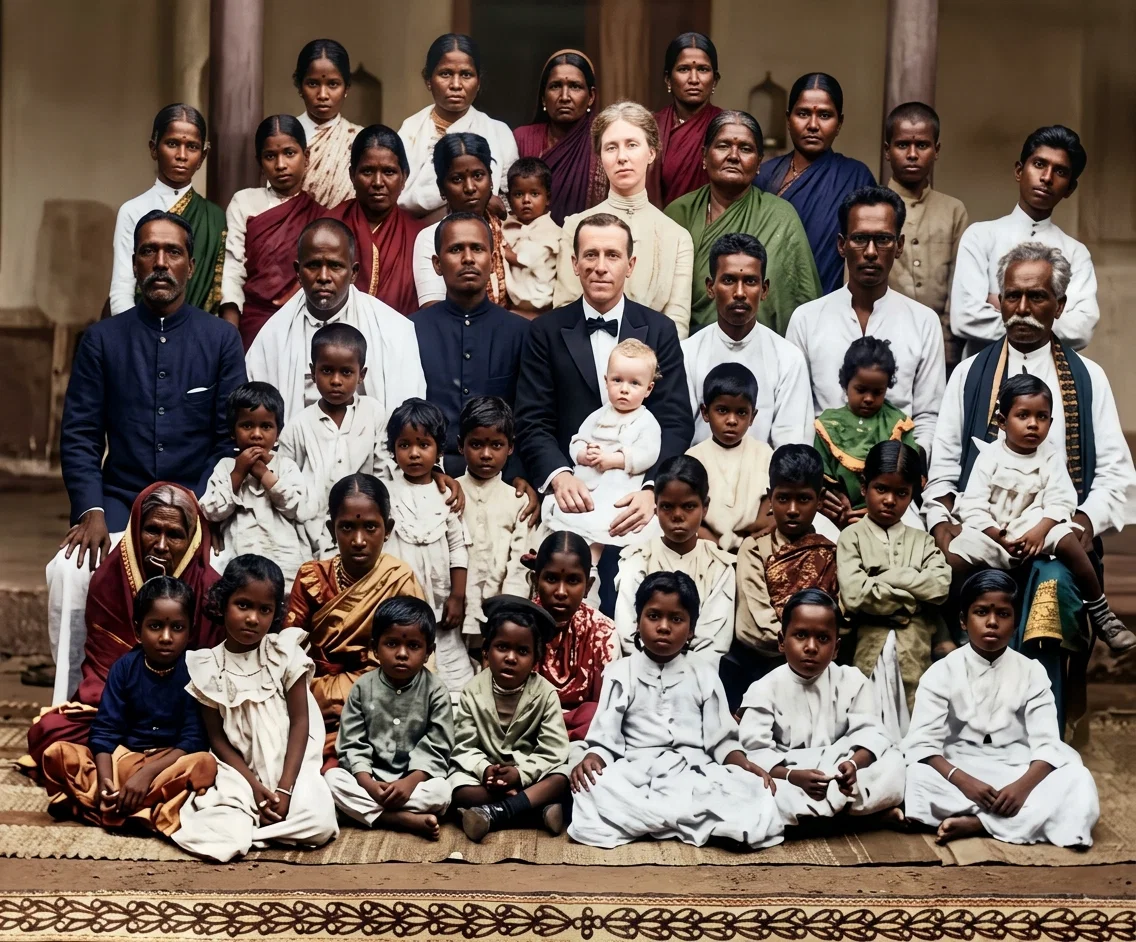
A Church Group, Bengal
Our mission villages among these simple and sturdy people are about621thirty miles from the city of Lahore, the great and historic capital of the Punjab.
Our method of labor among these people is to make tours of a week or ten days, going from village to village. We take our itinerating dispensary, tent, optical lantern outfit, beds, and many other things necessary for a trip of this kind, which we carry on our cart, drawn by two oxen.
It is not difficult to get an audience, as the people are very inquisitive, and crowd around to see what the sahib’s curious kul—machine—is. The doctor has no trouble in securing patients, and usually treats a hundred or more each day. Many come a great distance to obtain help.
At night, we hang up our sheet on the mud wall of the village. After singing and prayer, we give them a lecture on the life of Christ, or some simple Bible story, illustrated by lantern pictures. These lectures are very popular with the people, and we never fail to have an attentive audience of 250 or 300.
We are greatly handicapped because we have no mission building of any kind. We are hopeful that in the near future we may have necessary buildings for the advance of the gospel work in this great “Land of the Five Rivers.”
Lahore.
“Have Set Me to Thinking”
By L. G. Mookerjee
BY L. G. MOOKERJEE
A FEW days ago, while buying a year's supply of rice for our boys' English school, from a headman of a Hindu village, I cautiously made the most of the opportunity to open his eyes as to the fallacy of his religion. In the course of our conversation about Hinduism, I asked him the following questions:
“When did your caste system originate? Tell me, is this caste system man-made or God-made?”
“Is there a heaven for low caste men, and one for high caste men?”
“The potter makes the earthen idols, which are then taken to the Brahman, who is supposed to impart life to the same. Ought men to worship a god that is supposed to get life from sinful man? Have you satisfied yourself with evidences whether or not life truly comes to the idol? Is it possible for a man to impart life?”
“What benefit do you derive when you offer eatables to a god that is supposed to partake of your dainties, when at the same time common sense tells you that an inanimate object cannot eat?”
To these questions he replied: “Sir, you know both the Hindu and the Christian religion. How can I discuss such subjects with you? These questions never occurred to me, and they have set me to thinking.”
“How then shall they call on Him in whom they have not believed? and how shall they believe in Him of whom they have not heard? and how shall they hear without a preacher?” Rom. 10: 14.
Entrance to Shwe Dagon Pagoda, Rangoon, Burma
Page 13
Karmatar.
Thambu Learned the Lesson
By A. Asirvatham
BY A. ASIRVATHAM
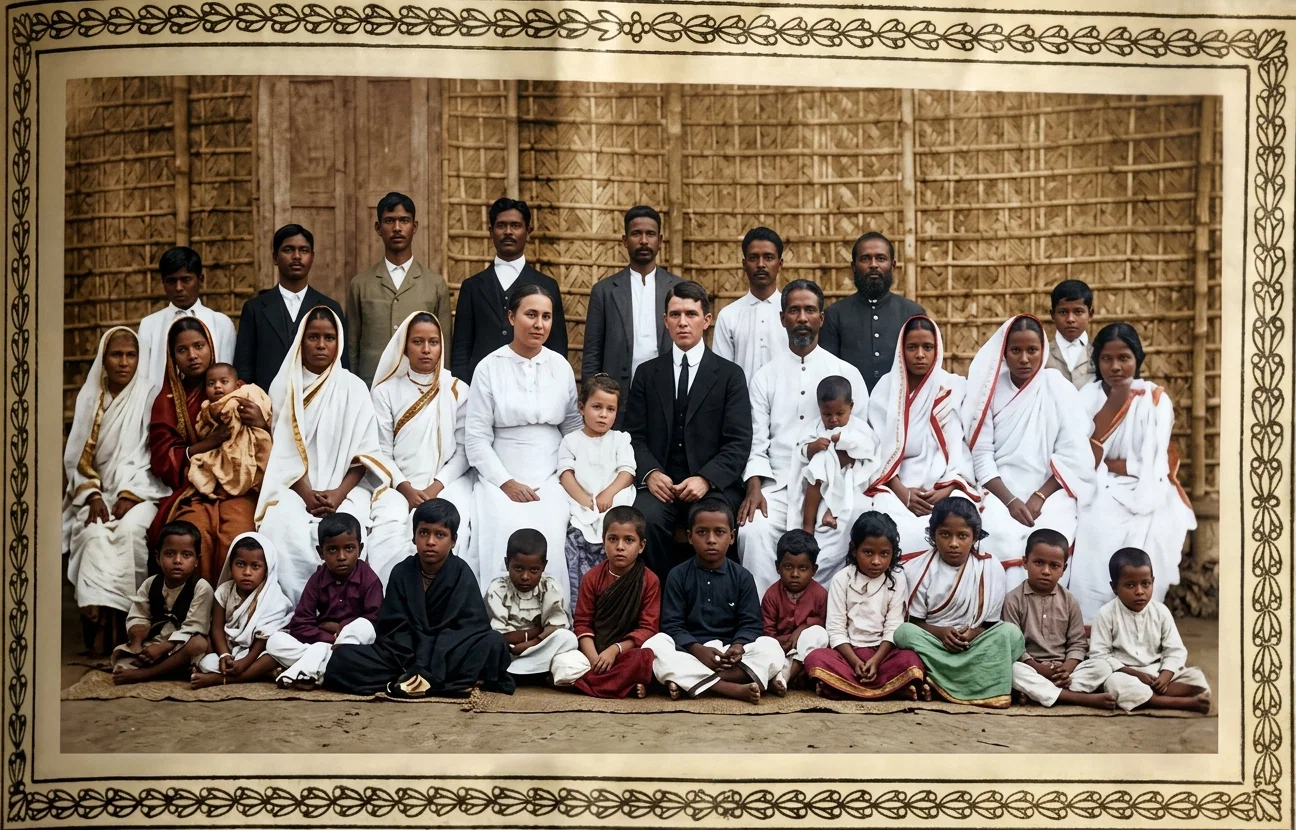
Company of Believers at Pondichery, South India
In the street of a city in South India, Thambu and some other little boys were playing marbles. In the midst of their play, they began to quarrel, and hit one another with their marbles. Thambu, who was very mischievous, abused the other boys. I noticed them at play, and came out to prevent further quarreling. To my great astonishment, I saw none of the boys except Thambu, with his head hung down.
Putting my arm over his shoulder, I began to converse with him in the following manner:
“Thambu, have you ever heard of the name of Christ?”
“Yes, a little,” he said.
“Do you love Him?”
“No; but I learned in my class, that He died for the whole world.”
“If so, Thambu, then He also died for you. Before His death, He was abused by some bad men; but He did not open His mouth to abuse them again. He is now in heaven, and wants us all to be with Him.”
On hearing these solemn words, Thambu, who was so fierce in his play, said to me, in a gentle and anxious tone, “Can I be with Jesus?” To this I answered that he could if he were free from his temper and bad words.
From that day forward, Thambu became a good boy. Two weeks after I left that place, I heard from him that he was endeavoring to follow Christ, and that he wanted to know more of Him. I believe that when all those who come out of darkness tell of their experiences, Thambu will be one of them.
Nazareth, South India.
Voices from Oceanica to Inspire Us
By A. G. Stewart
A Fijian Chief
A Fijian Belle
Indians Invading Fiji
BY A. G. STEWART
INDIANS are swarming into Fiji, so that these fair islands, but recently delivered from heathenism, are fast becoming orientalized and heathenized again. Over half the population are Indians, there being 50,000 already in the country, with an annual immigration of 3,000. They are indentured to work in the vast sugar plantations and refineries in various parts of the group. Among the recruits are young girls probably between the ages of sixteen and twenty, also young men who have run away from home influences and restraint.
One of the saddest and most depressing sights is the coolie line in Fiji. The coolie line, I may explain, is where the indentured Indians dwell on the plantation. Vice, misery, and open wickedness abound. Dirt, filth, and vile stenches greet one at every turn. Coarse, evil looking women throw their gibes at criminal faced men, or quarrel with one another in high, strident voices, and with wild, angry gestures. Little children, naked save for a piece of string, often covered with sores and flies, play cheerlessly in the squalid spaces. The beholder turns from the scene, debating whether disgust or pity is uppermost in his mind. We have established a mission for the uplifting of these benighted and needy people. Three workers are devoting their time to this work, one being a graduate nurse from our Australian sanitarium. While no pen can describe the darkness, superstition, and skepticism that one meets among this priest-ridden people, encouraging progress has been made, and we are of good courage in our labor for them, rejoicing in the hope of a rich harvest.
Suva, V.
The Australian Aborigines
By C. H. Watson
BY C. H. WATSON
SCATTERED here and there over the vast continent of Australia are perhaps two hundred thousand aboriginals. Although physically fine specimens of the human race, these people are generally considered to be inferior to other dark races in intellect. In the early days, they lived principally by hunting and fishing, and were in the habit of eating snakes and many other strange things.
Our principal mission for these people is at Monamona, in the northern part of Queensland, where a tract of agricultural and grazing land of about 4,000 acres has been granted us for mission purposes by the government.
About twelve acres have been cleared, surrounding the mission buildings, which consist of the girls’ dormitory, the mission house, and a fine large dining room; and dotted about at the back of these buildings are the huts of the aboriginals, of whom there are now about one hundred on the mission property.
These people, men, women, and children, when on their best behavior, are very pleasant and kindly disposed. But there are times when the reverse is true, and at such times they are quarrelsome and cause much trouble. The problem of dealing with them is a most difficult one, and can be solved only by the wisdom of God that comes through the gospel of our Lord and Saviour Jesus Christ.
“Can Only Face the Ocean and Sigh”
By F. A. Detamore
BY F. A. DETAMORE
Many earnest requests for Bible instruction come to us from places where we have not yet begun work. A man over in Borneo, where a young man went to sell some literature, sends a pitiful plea for help. He says, “Though many people here would like very much to study the word of God, yet they can only face the ocean and sigh, because there is no one to teach them.” This man has been obeying the Lord several months. Although not yet baptized, he is busy telling others of his new joys in what he has found in the Bible. He says forty others, young and old, are rejoicing with him.
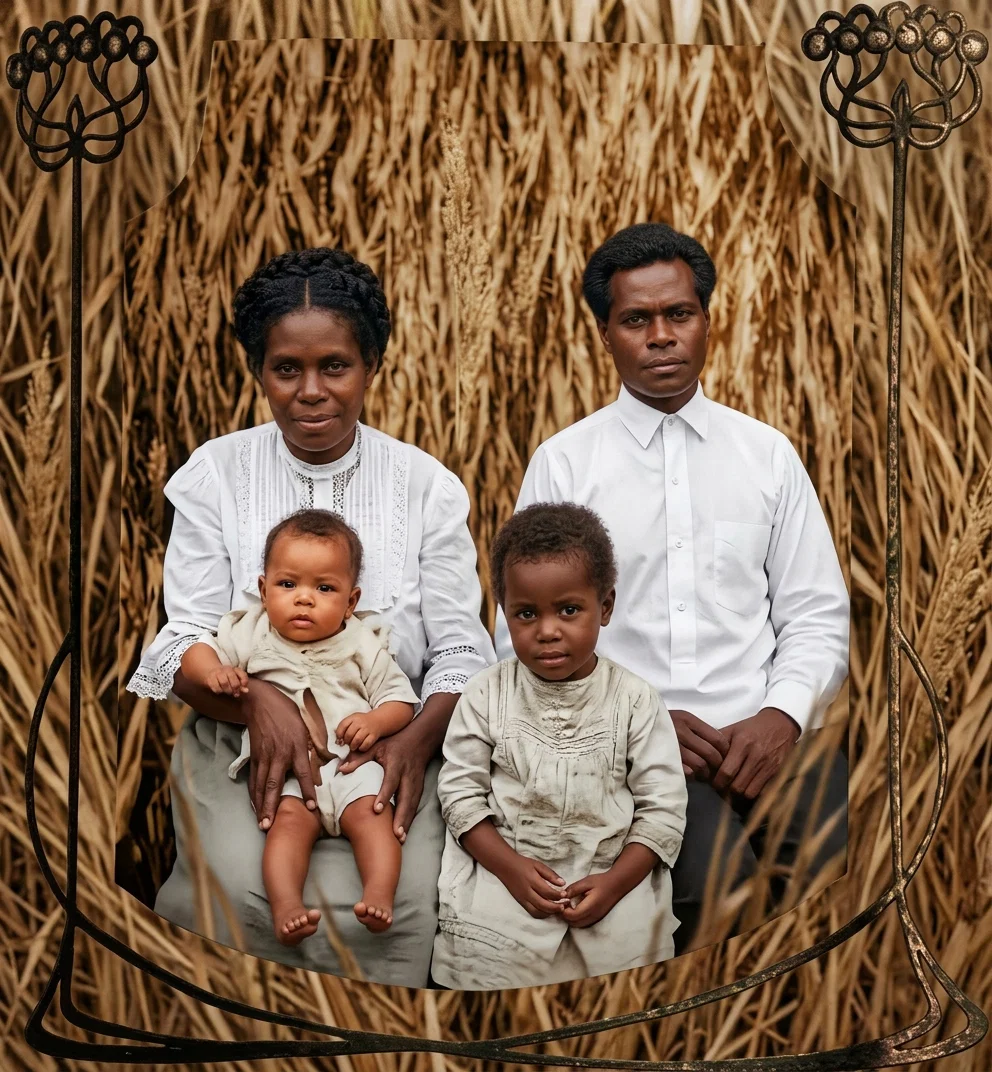
Timothy Nawara and Family, under Appointment as Missionaries to the New Hebrides Mission
But what can we do without more laborers and more means? Our hands are more than full now, while others are calling as loudly from623other quarters. I lie awake nights sometimes for hours, thinking about these dear souls, and wondering how we can make our means go the farthest, so that the good news of salvation may be hastened to starving heathen.
Singapore.
New Hebrides Natives and Prohibition
By C. H. Parker
BY C. H. PARKER
Our work is quite well established on the island of Atchin, in the New Hebrides. One pleasing experience I will mention. Recently a French trader came and spent the night on the island. He sold the natives grog, and a great number had to be either carried or helped to their homes. Many others were lying around in the woods. The night air was filled with their cries and frenzied outbursts. Mrs. Parker and I could not sleep, but spent the night in prayer for them.
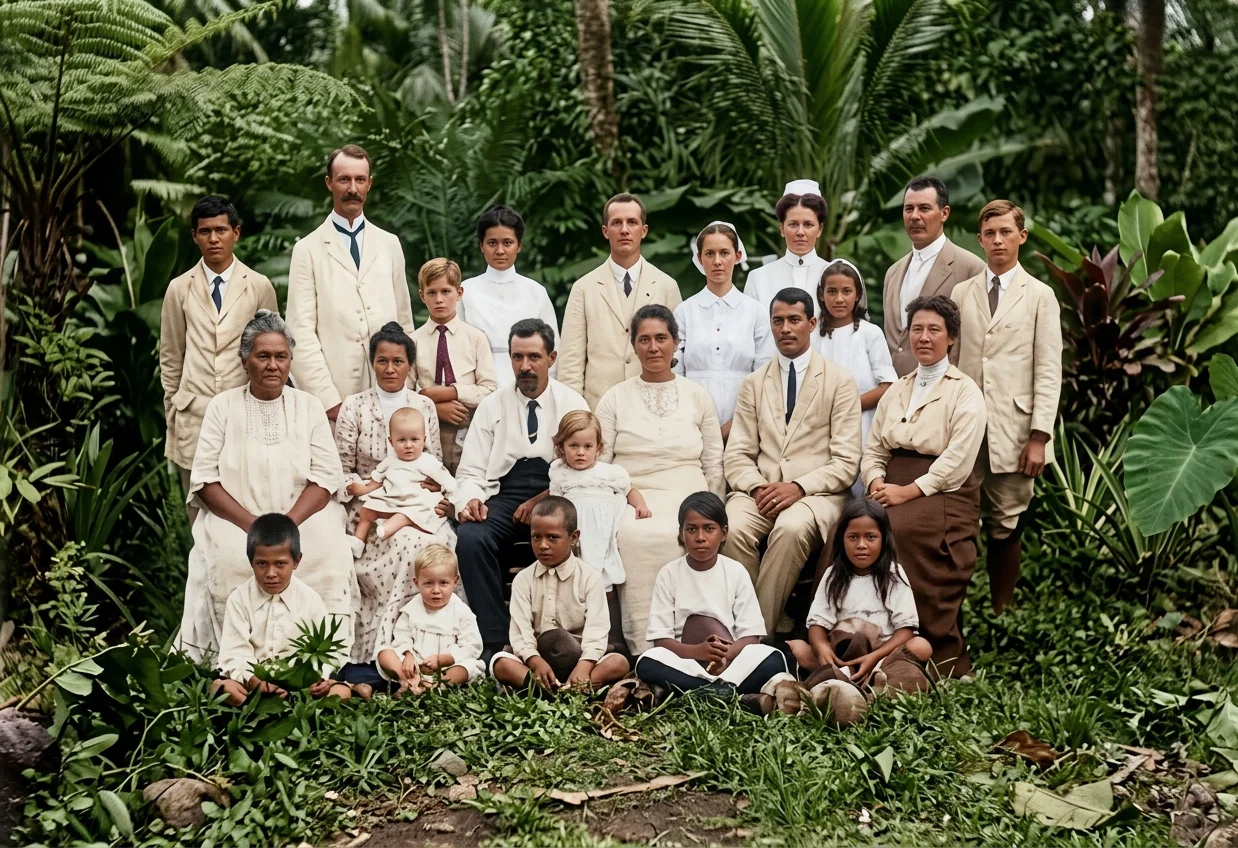
A Group of Workers and Believers in Samoa
The following morning, I called all the people together. They came, with but few exceptions, and I spoke to them on the evils of liquor drinking. Then I read to them what God says on the subject, and closed my remarks by pointing out the fact that they had power to prevent liquor coming to the island. I asked them to go away and talk the matter over among themselves. This they did. A little later, a number came back and told me they had decided not to touch grog again, and if the trader brought it ashore, they would tell him to take his things and go.
Chapel in the New Hebrides
The trader came back in a week, expecting to reap another harvest from the ignorance and darkness of these poor people. He fired off a blast of dynamite, fit representative of his destructive work. The people sold a large amount of copra to him, but not a penny did they spend for drink. He taunted them, then flattered them, but they told him that they “saved finish” the custom of grog (that is, they had become wise now about grog and were through with it), as the missionary had made plain to them its awful results. They wanted him to understand that he was not to bring his liquor on the island, and if he did so, he could take his things and go. He has come the third time, but the people have remained true to their first decision, and the “grog man” has since let them alone.
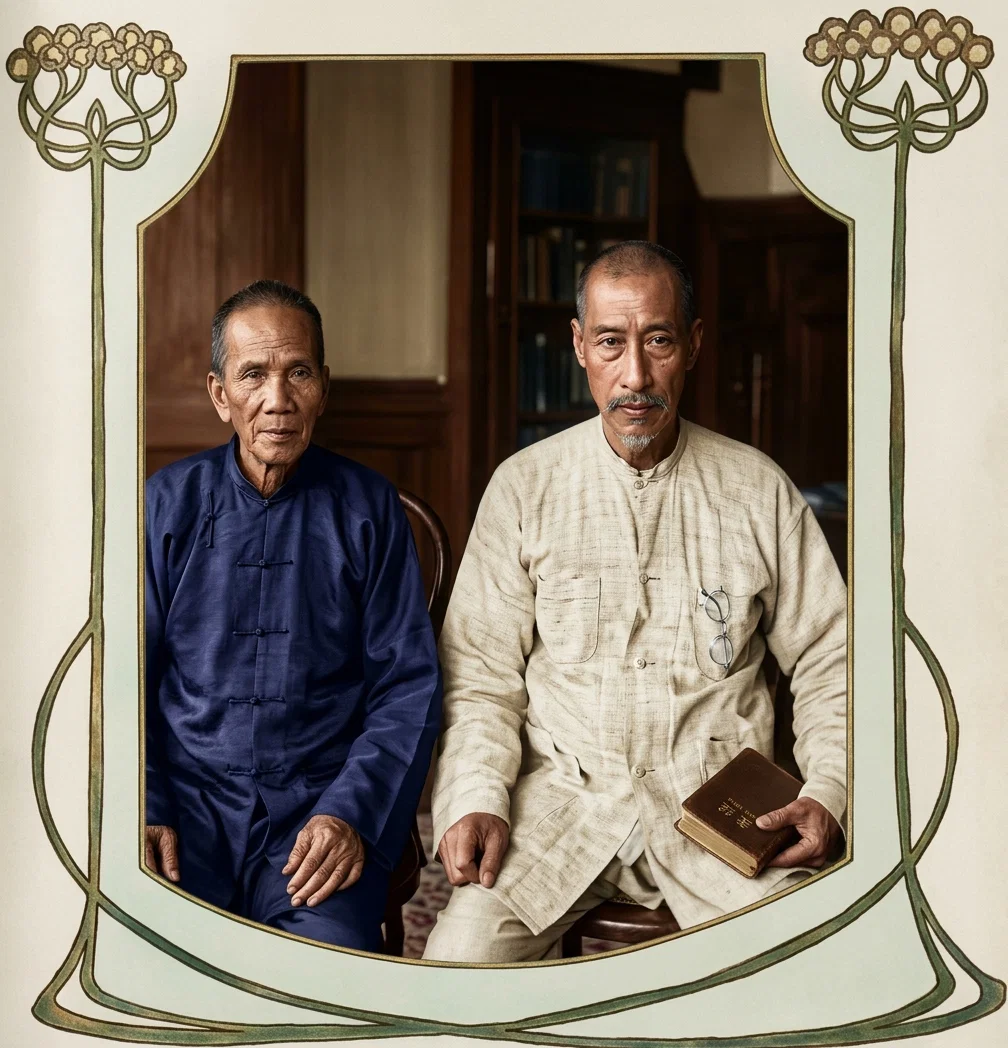
Converts of Borneo, Born in China, but Rescued from Idol Worship in Life's Evening Time
Atchin.
Among the Soldiers in Samoa
By Mrs. H. I. Howse
BY MRS. H. I. HOWSE
ENTHUSIASTIC meetings are held by Pastor J. E. Steed for the colonial troops who are stationed in Samoa. Great interest has been manifested in the timely topics presented, and the request has been made by them that the meetings be held on Wednesday as well as Sunday evenings.