“WHAT do you think of this new idea of changing religion to sort of bring it up to date, as it were, sir?” asked neighbor Tom. “Looks pretty reasonable now, don’t it?”
“Well, Tom, I reckon it does to some,” replied the old gentleman, laying aside his plane and squinting thoughtfully along the edge of the board. “From what I have heard, it does look pretty reasonable to many people these days, especially to such as never get down and figure out for themselves. Lots of folks are like that, Tom. They think they have got everything the good Lord knows out of books writ by men, and so they just take it all in on trust without a figure of their own. They are the ones that fall in with this new change.”
“But what’s religion after all, they say? I have my own idea, and I answer. It is what you might call the straight-edge of life. Some there are that would differ from me, I suppose, and say that my definition was too simple and easy like; and yet I calculate that it covers the length and breadth of the subject pretty near as well as theirs. So I call religion the straight-edge of life, not something fixed up by man, but the great perfect ruler that God made Himself, and gave to man to shape his nature by, so he would know how crooked it was. What could a fellow like me do without a rule, and a square, and a straight-edge? He could do no sort of a decent job; and what is more, he couldn’t unless his straight-edge was straight, and his steel square was square and his rule checked off even like. But look at the folks that are falling in with this new dicker! They say, Here is a straight-edge that is too straight for us; and this square is a bit too exacting; and we’ll just lengthen out a few of the inches and shorten some of them—and so it goes on. And Tom, I’d like to have you tell me what kind of a house you think they are building for their souls with such kind of measurements. And how do you think they’ll like it on the great court day when the Judge comes round with the correct square to try their joinings?”
“I must say there’s good sense in your talk,” said Tom. “I have often thought the same about the folly of it all myself, sir.” EDISON DRIVER.
Fresno, Cal.
New England CONSERVATORY OF MUSIC
has now the finest building devoted to music in the world. Founded 1853. Unsurpassed advantages in composition, vocal and instrumental music, and elocution.
George W. Chadwick, Musical Director.
Pupils received at any time. For year-book address
FRANK W. HALE, General Manager, Boston, Mass.
A CARD
By Alfred Mallett
Alfred Mallett, Nyack, N. Y.
Dear Friend: I thought I would write and let you know what success I had selling E-Z Washing Tablets last Sunday. I went out from 9 to 11 a. m. and sold $2.25 worth. Those to whom I have sold it before say it is all right, and they want more. Yours truly, Dec. 9, 1902. B. Hinergardt, Talent, Oregon.
This testimonial is from a boy. What can be done by one can be done by all.
E-Z Washing Tablet
do all they claim. That is the reason they sell. Send 2c for prices and sample. Our terms are liberal. Address ALFRED MALLETT, Nyack, N. Y.
THE NEW GOOD HEALTH BATH CABINET
ONLY $5
A portable appliance for stimulating the activity of the skin by hot vapor, causing profuse perspiration. Beneficial for “breaking up a cold,” “breaking chills,” relieving soreness of the muscles, rheumatism, inactivity of skin, diabetes and disorders of the liver, kidneys, and other chronic ailments. Full directions for use sent with each cabinet. Our cabinet is well made, and we guarantee satisfaction in every way.
THE NEW GOOD HEALTH BATH CABINET
Sold by the Good Health Publishing Company, is the only cabinet indorsed or used by the physicians of the Battle Creek Sanitarium. Order to-day.
Write for descriptive circulars with full information. Agents wanted to represent us.
GOOD HEALTH PUBLISHING CO.
Dept. A Battle Creek, Mich.
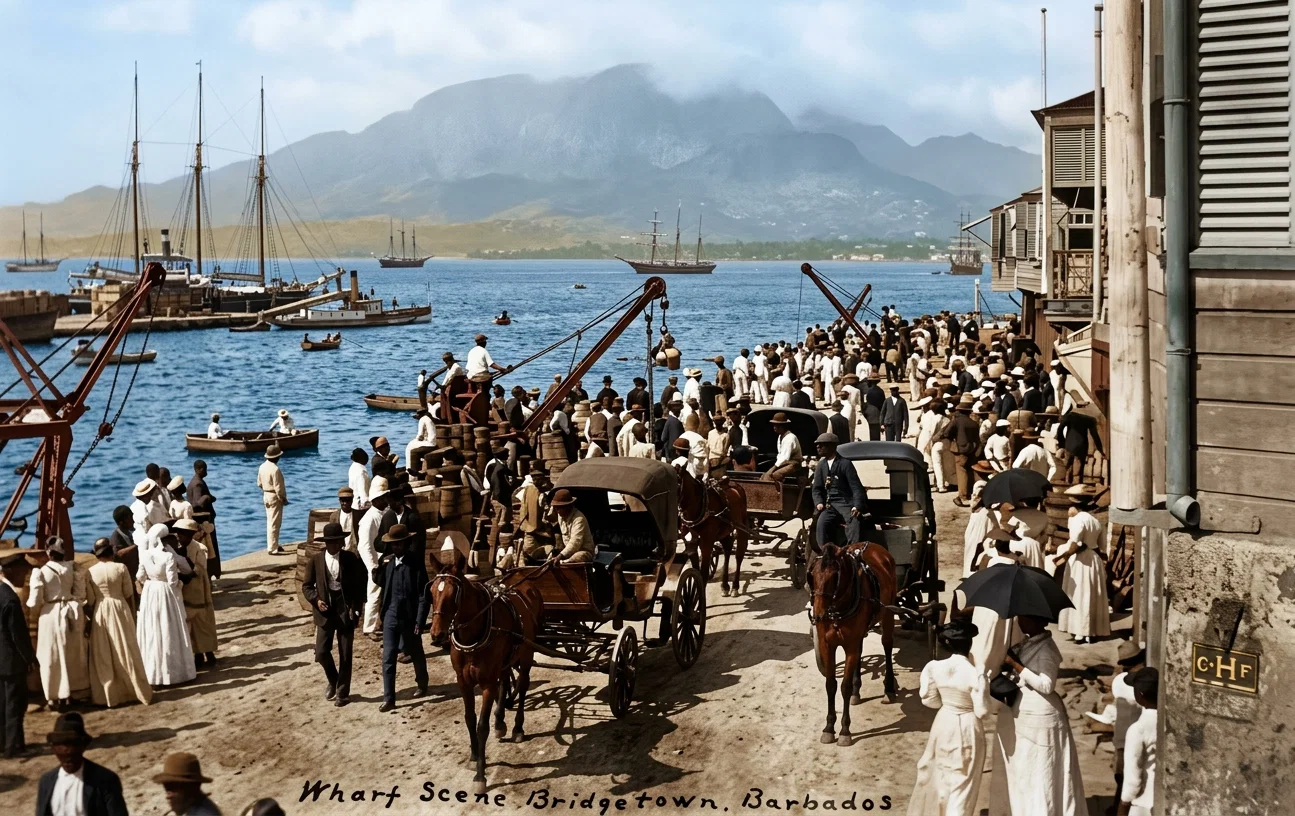
IN STRICKEN BARBADOS.
[The following personal letter from Brother Sweany we take the liberty to print, believing that all our readers will find it of interest.]
THE SIGNS OF THE TIMES of October 29, containing your kind appeal for help for poor, suffering Barbados, and the letter from the office telling us of the gift of the Little Friend for three months, from the employees of the office, were indeed happy surprises to us, and cheered our hearts more than we can tell, or you can know. I do not see how we could conduct a Sabbath-school without the Little Friend. It would at least be greatly crippled. Our dear people donate as liberally as they can, but it takes it all, (and sometimes more) to pay for the necessary supplies. However, this quarter, owing to your kindness, we shall have something for missions, in which we are all interested as much, or more, than if we were in the home land.
Well, we are thankful to be able to say that the smallpox epidemic is slowly abating. There have now been over 1,400 cases. Over 100 have died; about 1,000 have been cured and discharged, and the rest are under treatment. New cases develop at the rate of from 1 to 12 a day—and sometimes there is a day that produces no new cases. Vaccination came to a standstill when about 60,000 had been vaccinated, altho it was free at government expense. For some weeks now the government has been giving sixpence (12 cts.) to every one who will submit to vaccination. This induces many to submit to it; for with many thousands here now, the obtaining of a sixpence is an utter impossibility. A compulsory vaccination bill was proposed, but popular prejudice against it was too strong and it was shelved. A section of the Press and medical fraternity, with a large following among the masses, oppose vaccination, and much bitterness is engendered by the controversy. The public vaccinators get sixpence from the government for every person they vaccinate, and the patient also gets a sixpence. This costs the government a shilling besides the lymph for each person vaccinated.
Conditions are not improving, altho the epidemic is abating. As long as there is a case in the island, the quarantine, with all its consequent suffering, will continue, and the epidemic is certain to drag its weary length far into the future. I do not see any reason to hope for release for a year at least, and God only knows what may happen before then. The forbearance and patience of the masses is simply wonderful, and highly commendable. With the exception of individual criminals, which class of course increases in a time like this, the people are law-abiding, altho pinched with the keenest poverty and hunger. There have, it is true, been threats and mutterings of the outbreak of the mob, incendiarism, etc., but it is hoped that such experiences will not be realized.
We have a membership of over 100, but only one has had the smallpox as yet, and she had it in a very mild form, and was soon well. This case was in a family that refused vaccination, or she need not have had it. The father (not a member) was daily handling scores of patients at the hospital, and ate and slept at home. The rest of the family were afterward vaccinated, and no more cases developed.
I fully believe that God has mercifully preserved our people from the plague. Many of their relatives have had it, and some have died. We have not only trusted in God, but have tried to do all in our power to safeguard our lives and health, by carefulness in eating, drinking, dressing, and living. Our people generally are of good courage, and faithful and true to God, altho many of them are enduring the most pinching poverty. More than one has cheerfully told us, after going two or three days without food, “The Lord is good; He either gives us food, or sufficient grace and strength to bear the hunger.” Such experience will open a person’s heart and pocketbook as nothing else will. Of course, there are here many lazy, improvident persons, who take advantage of conditions to impose on the charitably inclined. The great majority of the people (including, of course, our own) are willing and anxious to work; but there is nothing for them to do. This is especially true of Sabbath-keepers.
Our work, despite all these difficulties, is making advancement. In fact, the interest is deeper now than at any time since we came here. Our services are all well attended,—especially on Sunday nights, when the house is packed and surrounded. A goodly number of new ones attend our Sabbath services, as well as the prayer and missionary meetings. About a dozen are preparing for baptism at the next quarterly meeting, if I am able to instruct them fully and administer the rite. I am just getting up from a most drastic attack of fever, that has left me very weak and emaciated, altho it lasted only two weeks. It doesn’t take this tropical fever very long to burn the vitality out of a man, and the flesh off his bones. It is only because of the blessing of God on our knowledge of simple treatment, that I am alive to-day. So we thank God for the complete Gospel that He has given us, for it is life, both physical and spiritual, to those who believe it. Several families are deeply interested in the Present Truth, as a result of cottage meetings, and two or three individuals among them are now keeping the Sabbath. We hope and pray that they, and many more, may fully accept the truth as it is in Jesus. We are hoping and expecting that the dear friends in Dodge Center, Minn., who are paying for our club of ten Signs may be enabled and disposed to continue them, for they are doing a large amount of good. I wish we could have 100 to use. However, we must keep within our means, and it seems that the hungry must be fed first. As for ourselves, we would go without anything else, rather than give up the Signs and our other good papers, all of which we always take. We realize the importance of our literature so much that we would gladly supply all our poor people here with it, if our means would permit. Only a few of our people are at all able to take any of our papers, altho they love them. We kept them supplied, till we had to begin feeding so many. I don’t know how many we have had to refuse, to-day, several since I began writing. It is heart sickening to see so much want, but O what a joy to be able to help relieve it. That the Lord may greatly bless you and all connected with the Signs office, is our earnest prayer. Yours in sincerity,
W. A. SWEANY.
[Since this was received Brother Sweany must have received the whole amount we have sent forward, $243.83. He will in due time receipt for it all.]
WHY SEND MISSIONARIES TO THE BULGARIANS?
By Charles F. Morse
[Rev. Charles F. Morse, in Missionary Herald.]
THIS question has often been asked, and with special frequency since the capture of Miss Stone and her associate by the brigands in European Turkey. It should be borne in mind that the Bulgarians in accepting Christianity under King Boris in A.D. 861, did not do so voluntarily. It was forced upon them by royal decree. The nobles rebelled, but King Boris overcame them, and with great cruelty and slaughter compelled the reception of the new religion. But the Christianity which he forced upon them was of the corrupt form prevalent in the tenth century. The gods and goddesses of the Greeks were early replaced by the saints of the church. Everything in nature and every profession and business had its patron saint to whom prayers and offerings were made. The saints were the intercessors, and more prayers were offered to them than to God. Their number was so great that nearly half the time was taken up with the observance of saints' days, which became literally feast days—days of carousing and idleness. The intercessory and atoning work of Christ was lost sight of, and in its place fasts, penances, and formal prayers were substituted. The Bible was found only in the churches and was not understood by the people. Its meaning was perverted. Baptism was made to mean regeneration, and repentance, penance.13When they read the declaration that God commandeth all men everywhere to repent, it only stimulated them to do penances with greater zeal. If they read, “The blood of Jesus Christ cleanseth from all sin,” they understood the wine in communion.
The missionaries also were necessary for the education of the Bulgarians. When the mission of the American Board was commenced in 1858, there was not a single Bulgarian school. Then a boys' school was opened at Philippopolis and a girls' school at Eski Saghra. This stimulated the Bulgarians to open schools in the principal towns. In Eski Saghra a girls' school large enough to accommodate two hundred pupils was opened, and teachers from our school were employed. Pupils came from all parts of Bulgaria and returned, to open schools in their own towns. The example of the larger towns was followed by the smaller municipalities, so that schools sprang up all over Bulgaria. Nothing like it has been known in history. The Bulgarians had no school books. The missionaries translated for their own schools our best American school books, and these were beautifully printed by a Bulgarian company in Vienna, so that in ten years the Bulgarians had as good school books as we had in America forty years ago. In many lands the missionaries have to educate readers, but not in Bulgaria, for they already existed. There may be those who, in view of the fact that no great numbers have been enrolled as Protestants or church members, will regard the work as having made but little progress. A fair number have been enrolled. But the Bulgarians are intensely patriotic, and look upon such enrolment as treachery to their own country. Yet they read everything prepared by the mission and are becoming enlightened without being aware of it, and the time may come sooner than among the Armenians when there will be revivals of real spiritual power in the Bulgarian churches.
When the first missionary went to Sophia it was not known that there was a single Protestant Bulgarian. A leading Bulgarian came to the missionary and said: “You had better go home, for should you stay here till you die, you will not make a single Bulgarian convert.” The missionary replied, “The time is coming when there will be a large evangelical church in Sophia, and more than that the time is coming when all Bulgaria will be evangelical.” For several years now there has been a large evangelical church in Sophia with a weekly audience of four or five hundred; also a Bible house, a Young Men's Christian Association building and a Protestant bookstore, exerting their influence through all that region. The same is true of other stations and out-stations, and there are now the sixteen churches with their thirteen hundred members and three times that number of Sabbath attendants, besides a hundred native helpers and colporters disseminating the truth everywhere. Probably half a million of Testaments and Bibles have already been put in circulation. The Bulgarians are not prejudiced against the Bible because it is published by the mission, but regard it as their own precious Scriptures given them by St. Cyril and Methodius. Mention should be made of two excellent training schools and the printing press. To one who can remember when there was not a single Protestant Bulgarian, the progress seems wonderful. It is a well-known fact that the Bulgarian Government has been largely influenced by the missionaries and by the education given at Robert College. Dr. N. G. Clark, years ago, said, “The Bulgarians have the most liberal constitution of any government in Europe.”
The Bulgarians are a part of the great Slavic race. Books and tracts in Bulgaria can be read by educated Russians, and these books and tracts are carried by students into the universities of the North, and it would not be strange if some great reformer should arise, exerting an influence like that witnessed in the great reformation of the sixteenth century. Can there be any question as to the propriety of sending missionaries to the Bulgarians? The work has been well begun, and the strategic points are occupied by a noble band of missionaries.
OCCUPY TILL I COME.
By J. Conley Page
[J. Conley Page, in Messiah’s Advocate.]
Occupy,
Until I come, with regal equipage,
The rightful King,
A kingdom just, to bring
To a new age.
Occupy—
Ye who are stewards, and who hold in trust
The treasured pound;
For surely in your stewardship, ye must
Faithful be found.
Occupy,
By diligence, and using well your store,
With sure increase;
Be constant, never cease
To make it more.
Occupy—
Be found at duty’s post, and patient do
Your part, tho small;
A goodly recompense to stewards true,
Awaits them all.
OUR WORK AND WORKERS.
In response to the call of the Mission Board, Brother A. W. Kuehl and wife, of Minnesota, are preparing to go to South Africa.
As a result of literature, a camp-meeting, and a series of tent-meetings, there is now at Coshocton, Ohio, a company of twenty-five and a Sabbath-school of fifty members.
Prof. C. B. Hughes, who has spent several years in school work in Australia, says that Australia occupies about the same position as a missionary center for the islands that the United States does for the world.
Brother W. A. Spicer, secretary of the Mission Board, left New York January 1 for the West Indies. The Review states that he is planning to hold a general meeting in Jamaica and also in Trinidad. This is with a view to organizing conferences in these islands. He is also to visit British Guiana, and to return to this country in time for the General Conference, which is to convene March 27.
The Review of January 6, the first after the fire, contains a striking story on the first page. The story is told in a picture with two parts. The first part shows the great publishing house (the largest and best equipped in the State of Michigan) as it was on the last day of December, in full blast; and the second part shows the ruins of the same establishment the following day. Thus is fulfilled the proverb, “Thou knowest not what a day may bring forth.” The old Review, that for more than fifty years has been heralding the Advent message, still lives. And better still, the truth of God lives and will go forward though all the institutions in the world were consumed. The editor of the Review truthfully says: “Fire can not burn up this message. Satan and all his hosts can not destroy it. It is a part of the eternal purpose of God, and it has in it the living and life-giving power of God’s own life. And the home of this message is not in buildings of brick and mortar, but in the hearts of those who receive it. The burning of a building and the destruction of machinery employed in printing the truths of this message need not retard the progress of the message in the least.” It is refreshing to hear these hopeful expressions from those who are called upon to immediately face the terrible disaster.
At a recent general meeting at Buffalo, N. Y., Brother B. E. Connerly was ordained to the Gospel ministry. He and his wife have been called to labor in Porto Rico. At the close of this service a liberal collection was taken for the work in that needy island. The Indicator says of this meeting that several persons gave their hearts to the Lord for the first time, and the ordinance of baptism was administered in a Baptist Church, which was kindly loaned for the occasion. During this meeting Brother A. O. Burrill was assisted throughout by Brother W. A. Spicer, secretary of the Mission Board.
Says the Welcome Visitor: “The young people’s society of the Cleveland church has a membership of about twenty-five earnest Christians, who meet every Sunday evening at the house of some member of the church. These meetings of the young people are very lively and interesting, so much so that some of the older members of the flock attend them. Their object is to become more familiar with the Third Angel’s Message, to become filled with the spirit of truth, that each one may be able and ready always to give an answer to every man that asketh us a reason of the hope that is in us, with meekness and fear.”
THINGS FOR WHICH I AM THANKFUL.
By M. T. Cole
I am thankful for the week of prayer.
I am thankful for the Sabbath.
I am thankful to be a co-laborer with God.
I am thankful for the hope that my name is in the Book of Life.
I am thankful for the fair miter.
I am thankful for the robe of righteousness that is promised to all who love the Lord.
I am thankful that the Lord is preparing a people to receive immortality without seeing death.
I am thankful that Jesus loves me, and will come in this generation to take His loved ones to the mansions He has already prepared.
For that glad day we must prepare
By careful living, constant prayer.
The Lord will surely help us stand,
And safely reach that heavenly land
In that glad day.
In that glad day we need not pray
For God to wipe all tears away,
Or any evil to destroy.
'Tis peace and joy without alloy
In that glad day.
In that glad day when Christ shall come
To take His faithful children home,
Shall we be ready, every one,
With faces shining as the sun,
In that glad day?
In that glad day shall we exclaim
This is the Lord, we know His name;
We've waited long, and He is kind?
A present Saviour we shall find,
In that glad day.
In that glad day, O praise the Lord,
All we who love His blessed Word,
Salvation's blessed robe shall wear,
And all His glory we shall share
In that glad day.
M. T. COLE.
PUBLICATIONS WANTED.
LATE clean copies of SIGNS, Review, Sentinel, Instructor, Little Friend, Health Journal, and tracts. Address, post-paid, Mrs. M. E. Coffin, Doyle & Overton Building, Santa Rosa, Cal.
BACK copies of SIGNS, Review, Sentinel, Life Boat, etc., to use in missionary work. Address, post-paid, Mrs. Ernest Allen, 217 West 121st Street, New York City.
LATE clean copies of the SIGNS OF THE TIMES, Instructors, Life Boats, and tracts. Address, Miss Vida Downs, Muscogee, I. T.
CLEAN copies of SIGNS, Instructors, Little Friends, Life Boat, and tracts, Address, Walter A. Erb, 828 Clark Street, Paducah, Ky.
Information
By H. E. Giddings
CONCERNING the whereabouts of Mr. Tom Pearman will be appreciated by his friends, who have lost his address by movements on the part of both. The last known of him, he and his wife were members of the church at Healdsburg, Cal. Address, H. E. GIDDINGS. Ferndale, Cal.
(22) “And Paul stood in the midst of the Areopagus, and said, ‘Ye men of Athens, in all things I perceive that ye are very religious. (23) For as I passed along, and observed the objects of your worship, I found also an altar with this inscription, TO AN UNKNOWN GOD. What therefore ye worship in ignorance, this I set forth unto you. (24) The God that made the world and all things therein, He, being Lord of heaven and earth, dwelleth not in temples made with hands; (25) neither is He served by men’s hands, as though He needed anything, seeing He Himself giveth to all life, and breath, and all things; (26) and He made of one every nation of men to dwell on all the face of the earth, having determined their appointed seasons, and the bounds of their habitation; (27) that they should seek God, if haply they might feel after Him and find Him, though He is not far from each one of us: (28) for in Him we live, and move, and have our being; as certain even of your own poets have said,
‘For we are also His offspring.’”
(29) “Being then the offspring of God, we ought not to think that the Godhead is like unto gold, or silver, or stone, graven by art and device of man. (30) The times of ignorance therefore God overlooked; but now He commandeth men that they should all everywhere repent; (31) inasmuch as He hath appointed a day in which He will judge the world in righteousness by the Man whom He hath ordained; whereof He hath given assurance unto all men, in that He hath raised Him from the dead.”
(32) “Now when they heard of the resurrection of the dead, some mocked; but others said, We will hear thee concerning this yet again. (33) Thus Paul went out from among them. (34) But certain men clave unto him, and believed; among whom also was Dionysius the Areopagite, and a woman named Damaris, and others with them.”
Golden Text.—“He preached unto them Jesus and the resurrection.”Acts 17:18.
SUGGESTIVE QUESTIONS.
(1) Where did Paul stand when delivering the address to the Athenians? How did Paul address them? What had he noticed in regard to them? Verse 22. Note . (2) What had especially arrested Paul’s attention? What was the inscription? What opportunity did this give Paul? Verse 23. Note . (3) To what Being does Paul call their attention? What position does He occupy? What is the difference between Him and the gods which the Greeks had been worshiping? Verse 24. (4) What kind of service does He not require? Note . Why does He not stand in need of such service? Verse 25. (5) In what words does Paul show the common origin of the human race? What had God determined beforehand in regard to them? Verse 26. Note . (6) What did God purpose concerning their relation to Him? What declaration does Paul make in regard to God’s nearness to us? Verse 27. (7) How does Paul show our dependence upon God? What quotation did Paul make from their own writers upon this point? Verse 28. (8) As man is the offspring of God, what natural conclusion follows in regard to the likeness of God? Verse 29. Note . (9) How had God looked upon man’s course while man was in ignorance? But now that the light has come, what must men do? Verse 30. (10) What unfailing appointment has the Lord made? In view of this fact, what has God given man? In what does that assurance consist? Verse 31. (11) How was Paul’s declaration in regard to the resurrection of the dead received? Verse 32. (12) What was the result of Paul’s discourse upon this occasion? Verse 34.
SEEDS THAT SUCCEED
BIG RETURN on a 25c Investment . . .
ENOUGH SEED TO PRODUCE
900 Heads of Cabbage . . Landreths' Early Summer
1000 Roots of Radish . . Landreths' White Lady Finger
1000 Roots of Beets . . Scarlet Tennishall
1000 Fruits of Cucumber . . Landreths' First
2000 Heads of Lettuce . . Virginia Solid Header
500 Fruits of Watermelon . . Arkansas Traveler
500 Bulbs of Onion . . Bloomsdale Pearl
500 Plants of Tomato . . Landreths' Earliest
Which Collection of Seeds for twenty-five (25) cents enclosed with the Order will be mailed post-paid. Elegantly Illustrated Catalogue for 1903, containing many new Novelties, mailed free upon application.
D. LANDRETH & SONS
JAMES VICK 1217 Market St., Philadelphia
Formerly of Rochester, N. Y. Manager Mail Order Department
THE SABBATH SCHOOL
INTERNATIONAL SERIES
LESSON 6.—FEBRUARY 7.—GOD'S POWER MANIFESTED IN DELIVERANCE.
(26) “He sent Moses His servant,
And Aaron whom He had chosen.
(27) They set among them His signs,
And wonders in the land of Ham.
(28) He sent darkness, and made it dark;
And they rebelled not against His words.
(29) He turned their waters into blood,
And slew their fish.
(30) Their land swarmed with frogs
In the chambers of their kings.
(31) He spake, and there came swarms of flies,
And lice in all their borders,
(32) He gave them hail for rain,
And flaming fire in their land.
(33) He smote their vines also and their fig trees,
And brake the trees of their borders.
(34) He spake, and the locust came,
And the grasshopper, and that without number,
(35) And did eat up every herb in their land,
And did eat up the fruit of their ground.
(36) He smote also all the first-born in their land,
The chief of all their strength.
(37) And He brought them forth with silver and gold;
And there was not one feeble person among His tribes.
(38) Egypt was glad when they departed;
For the fear of them had fallen upon them.”
QUESTIONS.
1. Whom did God send to lead out His people?
2. Who was associated with him in the work?
3. In what power did they bring their message of deliverance?
4. What was the first sign wrought by Jehovah?
5. What effect did this have?
6. What change was wrought in the water of the Nile?
7. What was thus accomplished?
8. What was then brought upon the land? Did royalty escape?
9. In what two marked ways was the power of God's word then shown?
10. What kind of storm was then brought upon the land?
11. What effect did this have upon the vegetation? To what extent?
12. What two plagues did His word then bring upon the land?
13. How completely did they consume that which grew out of the earth?
14. What was the last plague? What was thus cut off?
15. Did God's people depart empty-handed from the land of bondage?
16. What was their physical condition?
17. How did their oppressors feel about their departure?
1. Moses' preparation for service deserves more than casual study. That decree which brought sadness and gloom into the homes of the Hebrews was used by the Lord to fit the man whom He had chosen to lead His people out of Egypt when the fulness of the time should come.
2. The circumstances which would not permit Moses' parents to rear him in their own home led to his being placed where he could receive the training and education that would fit him in part only to be Israel's future leader.
3. Note Moses' fidelity to God when the crisis came in his life (Heb. 11: 23-26); read also Ps. 84: 11; and the hope which buoyed him up in these trying hours (Heb. 11: 26, 39, 40).
4. But Moses' preparation was not complete when he had served in the Egyptian court. Forty years were spent in the solitude of the mountains, where he could become acquainted with God. Read “Patriarchs and Prophets,” page 251.
5. Do not fail to observe the practical lessons in the life of Moses.
6. A study of the plagues reveals the fact that they seemed to be designed to destroy the confidence of the Egyptians in the power and protection of their idols. Note 5 in the Appendix to “Patriarchs and Prophets” will throw some light on this subject. By reference to the history itself (Exodus 7 to 13), we find that some of the Egyptians did have their faith shaken in their idols, and saw in these things the finger of God. See also “Patriarchs and Prophets,” page 279.
7. “The plagues upon Egypt were similar in character to those more terrible and extensive judgments which are to fall upon the world just before the final deliverance of God's people.” Ps. 91: 1, 10. Now, while Jesus still intercedes for us, the preparation must be made that will enable us to stand in the trying times before us.