Colorado is a great State. The writer is not a native of its zephyr breezes, its balmy air, or its mountain scenes; hence he speaks without egotism or partiality. Coming to the State two years ago, with a deep prejudice for more familiar sections of our country, and regarding the Centennial State as a part of the wild and woolly and rocky west, with meagerly developed and undeveloped resources, and with a crude and backward civilization, it can not be said that I had any natural inclinations leading to the conclusion chronicled above.
But I have been disappointed. Distance did not lend enchantment to the view, but rather obscured its beauty. A sojourn in the State of over twenty-five months reveals its advantages and great possibilities. But wherein does Colorado’s greatness consist? We answer:—
1. In its agricultural and mineral resources. Situated on the edge of the great American desert, with a porous soil and a dry atmosphere, the rainfall is totally insufficient to meet the demands of thrifty vegetable growth. To supply this lack, the mountain has been made to do tribute to the plain, by sending down a most generous and copious supply of snow water to quench the thirst of nature’s organic products. By means of irrigation, Colorado is now producing some of the finest fruits, grains, and vegetables to be found in the world. The quality is unsurpassed, and the quantity is being yearly increased. Here has the writer eaten as fine apples as ever were produced by Missouri, Michigan, or Oregon, and as fine peaches and smaller fruits as may be raised in the Golden State or the sunny south.
Colorado’s mineral wealth is too well known to need any comment. Away up in the mountain tops, among the clouds, have the lids of God’s caskets of golden gems been torn apart, and his precious jewels discovered; and away down in the deepest valleys have his hiding-places of precious metals been searched out, and their riches made to do service to the needs of man. Mines already rich are growing richer, and new discoveries daily augment the number of precious findings.
2. Colorado is great in its scenery and natural beauty. Every turn is fresh with new revelations. Nowhere else is the sky so blue, the sun so smiling, the mountains so grand, the rolling plateaus so inviting in their native freshness and beauty; and there is no monotony to the scenes. Each has its own peculiar freshness and characteristics. The artist never lacks a subject for his sketch, nor the lover of nature a theme for contemplation. Hill and dale are decked with a profusion of richest flowers. Mountain, cañon, and plain are made joyous with the sound of roaring brooks and rippling rivulets, while the balmy air is pregnant with the notes of beautiful birds and merry songsters; and over all, flooding hill and glade, mountain and plain, with a light as clear as crystal, as invigorating as life-giving elixir, and as golden as the precious metal it reveals to the eager eyes of the anxious gold hunter, streams heaven’s sunlight in all its brightness and beauty.
“Every mood of man finds here an answering mood in nature. The valleys smile with gentle contentment; the brooks laugh with jocund glee; the rivers rage with savage fury in their wild race through their rocky channels; the cañons frown with somber gloom; the mountains gaze with majesty upon the placid plains.” Joy and sorrow, disappointment and hope, peace and unrest, all find a voice and mode of expression among the hills and valleys, mountains and plains of Colorado. With such a variety of attractions, it is no wonder that the tide of tourist travel sets strongly toward the west. Easy of access from all points, with no exorbitant expenses for railroad fare or hotel accommodations, surely the Rocky Mountains outrival the Alps, and Colorado stands as the superior of Switzerland.
3. Colorado is great in its climate. In this it excels all of its other benefits. In this also it excels the world. The atmosphere is bracing and invigorating. It tones up the system better than a spring tonic; it stimulates the flagging energies better than a charge of chloral or morphine. Its effects are speedy and permanent, and it is not partial in its beneficence. All ills or evils find a help or cure. Dyspepsia, the mother of disease, and the combination and essence of them all, makes rapid recovery; and with digestion and assimilation restored, what can resist the efforts of nature to resume her sway!
Statistics show that the great white plague of the century, consumption, carries off one-seventh of the world’s population. One-third of these cases fully recover here; another third have their lives greatly prolonged; while the remaining third die only because they wait until the disease is so thoroughly established before coming here that there is no help for them. The writer has seen what would appear almost miraculous cures of this disease during his sojourn in the State. He has himself been rescued from its grim grasp, and can speak from experience of what others similarly situated may confidently expect if they visit Colorado in time.
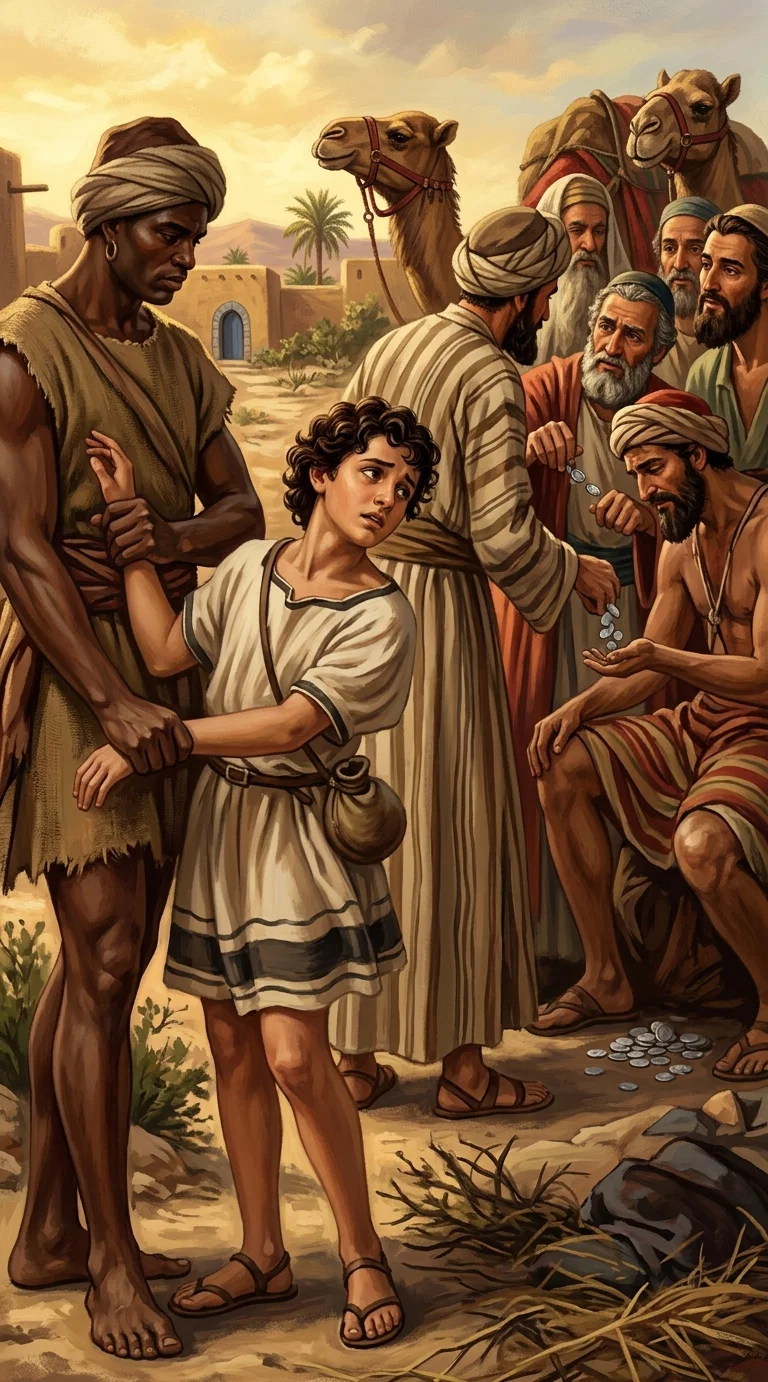
One great aid found by the writer in his search for health, he feels constrained to mention, even at the risk of being thought a party to an advertising scheme, the imputation of which purpose he emphatically protests against. His pen is his own, and his mind in his own control. Never yet has he received remuneration for a single word spoken in favor of any enterprise, and the mention made below is no exception to the rule. Hence what he may say is done wholly gratis and voluntarily.
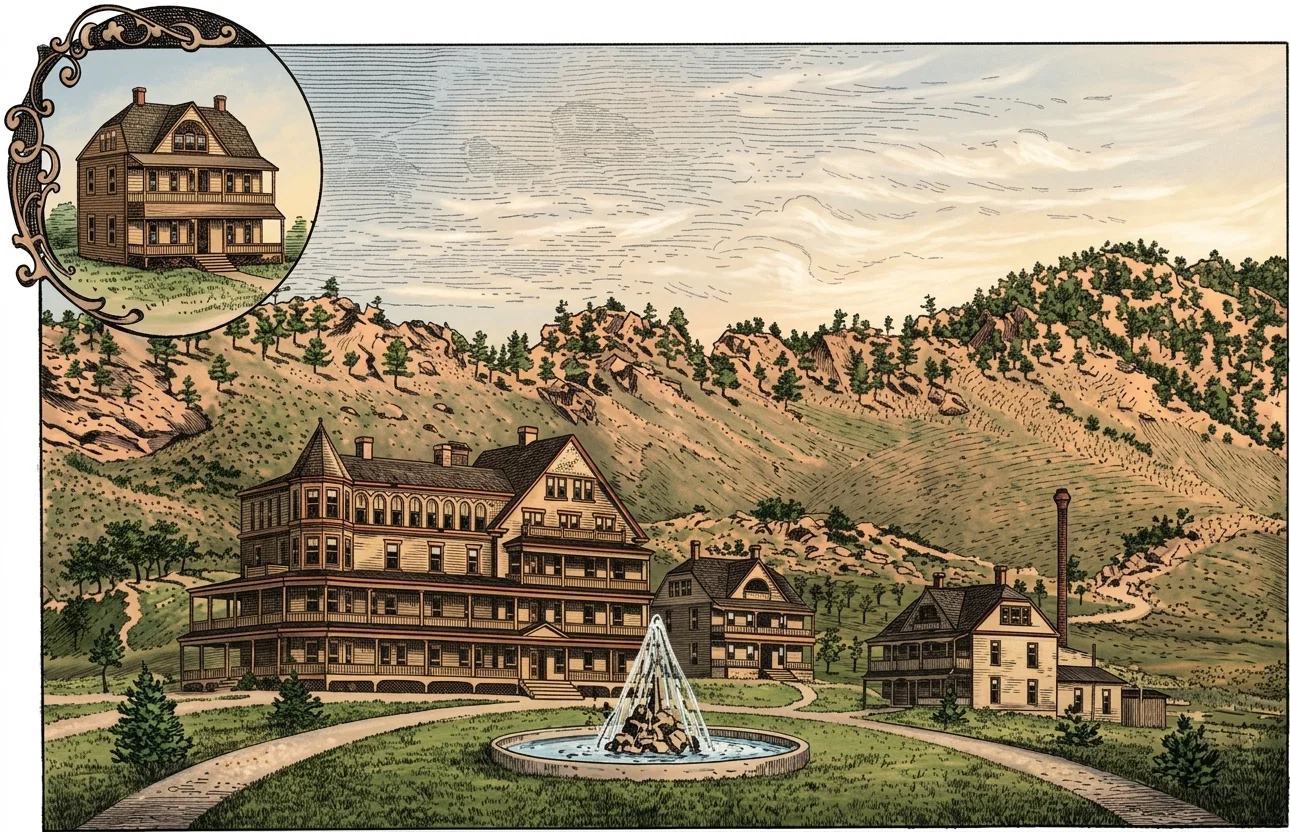
Next to the direct influence of the climate, the writer feels that he owes much to the Colorado Sanitarium. This institution is situated in the quiet town of Boulder, a city of 6,000 inhabitants, nestled at the base of the foot-hills, 20 miles from Denver, on the Union Pacific, Denver and Gulf Railroad. The enterprise was begun about the time of his advent to the State. Indeed, as a patient, he was present at its dedication.
The building is a five-story structure, 96x100 feet, lighted with electricity, heated by steam, and containing a perfect system of sewerage, with all equipments and conveniences of a modern first-class hotel. Accommodations are furnished for 100 guests, and all forms of chronic disorders are scientifically and successfully treated by experienced and up-to-date physicians, men and women who have graduated from the best regular medical schools in the country.
Dr. W. H. Riley, for years a noted specialist in nervous diseases in the east, is in charge of the work. His efforts are ably supplemented by Dr. G. W. Burleigh and Drs. D. W. and Eva Reed, likewise experienced physicians. Added to the medical staff are a score of trained nurses of both sexes, some of whom have had as valuable experience in medical ethics as the average medical man.
The accompanying cut gives a fair idea of where the writer has spent a number of pleasant weeks, as pleasant as invalidism can be made by thoughtful care and kind attention. At the present writing the building is full to overflowing. Only those can be received who make arrangements in advance.
It might be said in this connection that the institution is in no way a money-making enterprise. Its purpose is purely humanitarian, charitable, and philanthropic. No dividends are declared, and no profits arising from the concern enrich the pockets of any individual. But all receipts are used for the payment of expenses, the extension of the work, and the care of charitable cases. To those able to pay, regular rates are charged. But during the past year a large amount of work for the worthy poor has been done gratis.
Any reader desiring further information regarding this most worthy institution, can apply to the superintendent, W. H. Riley, M.D., Colorado Sanitarium, Boulder, Colo., and the same will be cheerfully furnished.
4. Colorado’s Civilization.—For this we will not claim superiority. That would be indeed egotistical, inasmuch as the writer forms a part and parcel of its population. But we do claim in this particular, equality with sister States. As good society and as good educational advantages may be found here as in the older and more thickly populated east. The State university at Boulder stands among the foremost schools of its kind in the country.
One thing that has contributed to the up-building of Colorado is the fact that many of the best people of the east, as regards social and educational advantages, have sought homes here on account of the higher and drier climate to be secured. Thus the State has been built up at the expense of its sister commonwealths.
For the seeker of riches, health, or pleasure, Colorado stands as the Mecca of his desire and ambition. The writer can most cordially commend it to his afflicted friends, and, for that matter, to all others, as the desideratum of all that is needed to constitute a healthful and desirable home.
Come to Colorado and renew your youth and prolong your days. Again I say, Come, and it will do you good.
FRANCIS McLELLAN.
Colorado Sanitarium, Boulder, Colo., August 1, 1897.
SYMPATHY WITH NATURE.
By Oliver Wendell Holmes
Is it an idle dream that nature shares
Our joys, our griefs, our pastimes, and our cares?
Is there no summons when, at morning’s call,
The sable vestments of the darkness fall?
Does not meek evening’s low-voiced Ave blend
With the soft vesper as its notes ascend?
Does not the sunshine call us to rejoice?
Is there no meaning in the storm-cloud’s voice,
No silent message when from midnight skies
Heaven looks upon us with its myriad eyes?
—Oliver Wendell Holmes.
The Memory of Happiness
By Sydney Smith
MANKIND is always happier for having been happy; if you make them happy now, you make them happy twenty years hence by the memory of it.—Sydney Smith.
OUR WORK AND WORKERS.
ON the first day of July four persons were baptized in St. Johns, N. F., by Elder S. J. Hersum.
SISTER LENA HOWE reports a good interest in Sacramento, Cal., through working with our papers.
THE executive committee of Florida Conference have decided to hold a camp-meeting at Tampa, October 1–10.
ELDER H. F. COURTER and BROTHER J. S. HARMON are conducting a series of meetings in a hall in the eastern part of this city.
AT Whittier, Cal., where Elders George A. Snyder and F. M. Burg are holding meetings, four have accepted the truths they are proclaiming.
BROTHER SWIN SWINSON, a Scandinavian laborer in Wisconsin, reports additions as follows: Green Bay, 4; Forestville, 1; Sawyer, 4; Fish Creek, 1.
ELDER M. G. HUFFMAN, whose labors for the past five years have been in the Maine Conference, has removed to Nashville, Tenn. Address 324 Cleveland Avenue.
THE tent-meetings conducted by Elder C. H. Bliss and Brother J. T. Sweatt at Worden, Ill., are producing encouraging results, and they expect to organize a church in the near future.
ON the date of this paper the local camp-meeting at Los Angeles, Cal., will be opened, to continue ten days. Elder A. J. Breed, superintendent of the Pacific Coast district, Elder W. T. Knox, president of California Conference, and the ministers located in the southern district of the State, will be in attendance.
THE Vermont camp-meeting will be held at Rutland from the 19th to the 30th of this month. Other meetings soon to commence are announced as follows: Logansport, Ind., August 24 to September 5; Council Grove, Kansas, August 25 to September 6; Forest, Ill., August 26 to September 5; Augusta, Me., August 26 to September 6.
A LETTER from Brother N. Z. Town, of Buenos Ayres, Argentina, dated June 24, says: “We are just starting the publication of our new Spanish paper. It will be a twelve-page monthly. The matter for the first number is in the hands of the printer.” He also notes that five members were added to the church at Buenos Ayres June 19; also that the workers are all well and of good courage.
AT the last quarterly meeting of the church in Barton, Fla., three persons united with the church. One of these was at the time undergoing a sentence of ten days for working on Sunday, but he was permitted by the officers to attend the church services. During all of his term of imprisonment he was allowed to go to his home at night and return to the prison in the morning. This signified that the authorities did not consider the offense very heinous, or the prisoner a very dangerous man. But all officials are not so considerate of the people’s rights in the face of unjust and intolerant laws.
WE have received the calendar of Healdsburg (Cal.) College for 1897–98. It is a very neat pamphlet, containing full information regarding that efficient institution of learning, and will be sent free on application. The next session will commence September 8. The faculty comprises the following experienced instructors: R. S. Owen (president), English Bible; G. A. Droll, Natural Sciences; Miss Fannie Ireland, Mathematics; Mrs. L. M. Droll, Ancient Languages; G. W. Rine, English Language and Literature; H. A. St. John, History. Preparatory department, Mrs. F. J. Morrison, Miss Evelyn Riley.
FOR the encouragement of laborers who are inclined to complain of the hardness of the way, we give the following bit of experience from the report of Elder O. S. Ferren and Brother C. H. Abbott in the Review. These brethren are laboring in the Wyoming field, and report as follows: “July 7 we loaded a four-horse wagon with tents, satchels, bedding, books and papers, food, grain, etc., and with two saddle ponies, two boys, and a man to help and return with the team and boys, we started for a seventy-five-mile trip over the mountains into the Big Horn Basin. I can not tell of the roughness of the roads. We had to fasten ourselves to the seat in order to remain there at all. As we passed the summit, with snow on every side, our overcoats and blankets were much appreciated. After passing the summit, eleven thousand feet above the sea, and going down the southern slope, we halted, and, taking our saws and axes, proceeded to cut and make stakes and poles for our two tents. Friday, the last day out, we made our stakes and tent-poles, traveled twenty-five miles, put up both tents, and were ready for the Sabbath. The evening after the Sabbath we borrowed rude school benches, procured a dry goods box for a pulpit, announced meeting, and had an attendance of about twenty.”
TRACTS FOR THE HOUR.
B. S. Library,No. 31. The Second Advent.—By James White. This tract shows the manner, object, and nearness of Christ’s coming. It is a clear and forcible presentation of the Bible argument on this solemn and important subject. Price, 2 cents.
B. S. Library,No. 36. The Signs of the Times.—This excellent tract has been revised up to date, so that the thrilling events of recent years are noted as evidence that the end of all things is at hand. Price, 4 cents.
B. S. Library,No. 49. Can We Know?—This shows that just before the second coming of Christ we may know that his coming is near. Price, 1 cent.
B. S. Library,No. 50. Is the End Near?—This gives evidence showing that the end of all things is at hand. Price, ½ cent.
B. S. Library,No. 136. The Millennial Age.—By J. H. Durland. The author gives an idea of the contents of this tract in the following words: “Little will be said in regard to the conversion of the world, or the return of the Hebrew people to their own land, but the space will be used rather in giving scriptures that tell us positively when the thousand years begin, the events taking place during that time, and those that mark its close.” Sixteen pages. Price, 1 cent.
B. S. Library,No. 143. Truth for the Times.—By G. C. Tenney. Shows that “the great epochs in the history of the work of God have each of them presented to the world some special message of sacred truth.” It takes up some of these special messages, and thus makes plain the fact that present truth for this time is the message of Christ’s coming. Contains sixteen well-filled pages. Price, 1 cent.
B. S. Library,No. 144. The Eastern Question; What Its Solution Means to All the World. By Alonzo T. Jones. This tract is divided into the following parts: The Seven Trumpets; The Rise of the Turkish Power in Prophecy and History; Fulfilled to the Very Day; The World’s Crisis; Daniel’s Vision; “At the Time of the End;” The King of the North and His End; When He Comes to His End; The Plagues of God’s Wrath, and Need for Watching and Praying. Sixteen pages, 1 cent.
A. G. Library,No. 26. “I Will Come Again.”—This blessed assurance given by Christ to his disciples is shown to refer to a literal return to this earth. That this coming is right at hand is also clearly proven. Four pages. Price, ¼ cent.
A. G. Library,No. 40. The Coming of Our Lord.—“We Would See Jesus,” and Why Speak of Christ’s Coming are the two sub-titles of this excellent number, and the thoughts which they suggest are treated in a profitable and interesting manner. Price, ½ cent.
PACIFIC PRESS PUBLISHING CO.,
Kansas City, Mo. Oakland, Cal. New York City, N. Y.
THE UNITED STATES IS IN PROPHECY.
We have several large works treating this subject in detail, but not until recently have we had anything sufficiently condensed for general distribution. Elder Uriah Smith, author of “United States in Prophecy,” “Thoughts on Daniel and The Revelation,” “Marvel of Nations,” and senior editor of the Review and Herald, has written a 32-page treatise on the prophecies relating to this country, and has entitled it “America’s Crisis.” That we have reached a crisis, all thinking men believe; but that this crisis and what it means to the world is foretold in Scripture, is not so generally believed.
To read this pamphlet is to become intelligent on this great question, and to awaken an interest for the details of the working out of these prophecies. Order Bible Students’ Library, No. 138. Price, 4 cents. Special price on quantities for distribution.
PACIFIC PRESS PUB. CO., Oakland, Cal. New York City, N. Y. Kansas City, Mo.
FAMILY BIBLES.
The Pacific Press Publishing Company carries full and varied lines of family Bibles. Descriptive catalog free.
Your Life Work
Is it of Men or of God? A new tract in the Apples of Gold Library. Order A. G. L. No. 20. Price, 50 cents per 100 or one cent each in small quantities. Address, PACIFIC PRESS PUBLISHING CO., Oakland, Cal.; Kansas City, Mo.; or New York City, N. Y.
LITERARY NOTICES.
There has come to our table from the publishers (Morgan & Scott, 12 Paternoster Buildings, London, E. C., England), a neatly bound and helpful book, entitled “THE EVANGELIZATION OF THE WORLD,” by B. Bramhall. Neatly bound in cloth, 258 quarto pages, illustrated with fine photogravures; price, cloth, two shillings sixpence; gilt, three shillings sixpence.
The object of the book is to show that “in the whole compass of human benevolence there is nothing so grand, so noble, so Christian, so truly godlike, as the work of evangelizing the heathen.” It contains the record of a “missionary band,” consisting of seven educated young men, two of whom had formerly been soldiers, who gave themselves to the work of God for China’s millions. It gives account of their farewell meeting, their voyage, their work, and their rich experience as expressed in their letters home. The book sets before the church God’s object in her existence, the giving of the Gospel to the world; the condition of the earth is shown by a colored diagram; letters, articles, and extracts from such faithful friends of missions as Earl Cairns, Wm. Carey, Miss C. F. Gordon Cummings, Alexander Duff, Bishop Hannington, John G. Paton, Bishop Patterson, A. T. Pierson, W. M. Punshon, Earl of Shaftesbury, C. H. Spurgeon, and more than two-score of others. It gives a list of some of the best works on missions. There are 18 illustrations, more than a dozen portraits, 3 maps on China, and 4 pieces of music. It is a good book to have in the family, and among the children, as well as a book of reference.
“BIBLE WORD PICTURES OF TRUTH” is a unique and neatly printed pamphlet, with numerous marginal notes and references, by William Lane Winner, of 96 pages, which comes to us from the Society for the Promotion of Bible Study, 1724 North Fifteenth Street, Philadelphia, Pa. It is a running summary of “Foretold Signs, Events, and Conditions of the Past, Present, and Future, with Their Location in the Broad Field of Prophecy.” It is an interesting and helpful pamphlet, and ought to stimulate Bible study on the part of its every reader. Its price is not given. It may be obtained from the publishers.
“PLAIN TRUTHS FOR PLAIN PEOPLE,” by H. L. Hastings, No. 44 of the Anti-Infidel Library. Covered, 10 cents; without cover, 5 cents. The little book presents a series of propositions proved by the Scriptures, with “confirming testimonies” from men whose words are not inspired, tho what they are intended to confirm we are in doubt. It may be the author’s proposition; but if the Scriptures prove it, what more is needed? The little pamphlet contains many blessed and plain truths concerning the hope of the church; and the “confirming testimonies” show that the doctrine is not a novel one in the Protestant church.
In McClure’s Magazine for September will be reproduced a superb life cast of the face of Henry Clay, made by John H. I. Browere in 1825, when Clay was forty-eight years old. It is probably the most real and vivid likeness of Clay in existence, and it has never been published. In the same number of McClure’s will be reproduced the only portrait ever painted of Mrs. Henry Clay. It also has never been published. Notes by Mr. Charles Henry Hart will relate the history of the portraits and the circumstances under which they were produced.
Popular Astronomy for July contains a very good account of the Yerkes Observatory, by the editor-in-chief, Prof. Wm. W. Payne, with illustrations from photographs by Prof. E. E. Barnard, beside other matter of interest, by competent writers. Price of Popular Astronomy, ten numbers a year, $2.50. Northfield, Minn.
Good Health for July is a most excellent number. It contains two illustrated articles, “The Land of the Aztecs,” and “Practical Hydrotherapy,” the latter by the editor, Dr. Kellogg. Valuable articles in various lines of health and hygiene appropriate to the season, and all seasons, are given. The price of this leading health journal of America is only $1.00. Battle Creek, Mich.
THE SQUARE WORLD, by Orlando Ferguson, Hot Springs, S. D. 92 pages; price, 25 cents. The author holds that the world is not concave or convex, but square. The little pamphlet also contains erroneous views on the Lost Tribes of Israel, and the pyramids, but the writer is evidently honest, and has a right to present his theories.
BIBLE QUESTIONS AND ANSWERS CONCERNING MAN.
By Alonzo T. Jones
By Alonzo T. Jones. Bible Students' Library, No. 76 Pacific Press Pub. Co., Oakland, Cal. 16 pp.; 2 cents.
1, 2 “And the high priest said, Are these things so? And he said, “Brethren and fathers, hearken. The God of glory appeared unto our father Abraham, when he was in Mesopotamia, before he dwelt in Haran, and said unto him, Get thee out of thy land, and from thy kindred, and come into the land which I shall show thee. Then came he out of the land of the Chaldeans, and dwelt in Haran; and from thence, when his father was dead, God removed him into this land, wherein ye now dwell; 4 and he gave him none inheritance in it, no, not so much as to set his foot on; and he promised that he would give it to him in possession, and to his seed after him, when as yet he had no child. 5 And God spake on this wise, that his seed should sojourn in a strange land, and that they should bring them into bondage, and entreat them evil, four hundred years. 6 And the nation to which they shall be in bondage will I judge, said God: and after that shall they come forth, and serve me in this place. 7 And he gave him the covenant of circumcision; and so Abraham begat Isaac, and circumcised him the eighth day; and Isaac begat Jacob, and Jacob the twelve patriarchs. 8 And the patriarchs, moved with jealousy against Joseph, sold him into Egypt; and God was with him, 9 and delivered him out of all his afflictions, and gave him favor and wisdom before Pharaoh king of Egypt; and he made him governor over Egypt and all his house. 10 Now there came a famine over all Egypt and Canaan, and great affliction; and our fathers found no sustenance. 11 But when Jacob heard that there was corn in Egypt, he sent forth our fathers the first time. 12 And at the second time Joseph was made known to his brethren; and Joseph’s race became manifest unto Pharaoh. 13 And Joseph sent, and called to him Jacob his father, and all his kindred, threescore and fifteen souls. 14 And Jacob went down into Egypt; and he died, himself, and our fathers; and they were carried over unto Shechem, and laid in the tomb that Abraham bought for a price in silver of the sons of Hamor in Shechem. 15 But as the time of the promise drew nigh, which God vouchsafed unto Abraham, the people grew and multiplied in Egypt, 16 till there arose another king over Egypt, which knew not Joseph. 17 The same dealt subtilly with our race, and evil entreated our fathers, that they should cast out their babes to the end they might not live. 18 At which season Moses was born, and was exceeding fair; and he was nourished three months in his father’s house; 19 and when he was cast out, Pharaoh’s daughter took him up, and nourished him for her own son.”
QUESTIONS.
1. Tell the substance of the sixth chapter of Acts.
2. For what were seven men set apart?
3. Describe the character and work of Stephen.
4. Tell the means by which he was brought before the council.
5. What was the charge against him?
6. What question did the high priest ask him?
7. Did Stephen deny the charge? Did he proceed to defend himself?
8. With what words did he begin? To what event did he at once direct their attention?
9. Where do we find the record of the event here referred to?
10. What did God say to Abraham when he was yet in Mesopotamia?
11. From what must Abraham be separated before he could come into the land God would give him?
12. What did Abraham do, and to what place did he at last come?
13. How much inheritance did God give Abraham in the land of Canaan? Yet what had God promised?
14. As Abraham died without receiving it, what must necessarily follow in order to have the promise fulfilled? Ans.—Abraham must have a resurrection?
15. Did Abraham understand that the promised inheritance was not to be received until after the resurrection? Gen. 15:13-16.
16. To whom besides Abraham himself was the land promised?
17. Yet what did God say of Abraham’s seed? How long were they to be in bondage?
18. When did he say they should come forth? When brought out of bondage what would they do?
19. What did God give Abraham as a pledge? Name the immediate descendants of Abraham.
20. What was done to Joseph? Who accompanied him?
21. What did God do for Joseph in Egypt?
22. What took place in Canaan at that time?
23. Tell how it came to pass that Jacob and all his family went to Egypt.
24. What happened to them there?
25. At what time was it that the people of Israel greatly increased in Egypt?
26. What then took place?
27. What did this new king do? What were the people compelled to do?
28. Who was born at this time?
29. What was done to him? For what position was he brought up?
Additional Questions and Suggestions.
What time was approaching when the Israelites were afflicted in Egypt? What was the only time mentioned to Abraham? Gen. 15:13, 16. Where do we find the record of the oath God swore to Abraham? Gen. 22:16-18. What did God swear that Abraham’s seed should possess? Gen. 22:17, last part. What is the greatest and last of all enemies? 1 Cor. 15:26. At what time is this enemy destroyed? 1 Cor. 15:51-54; Rev. 20:11-14. Then when God swore that Abraham’s seed should possess the gate of their enemies, what was he promising? And what, therefore, in the plan of God was near at the time Moses was born?
JOSEPH SOLD INTO EGYPT.
The Sunday School
International Series.
Lesson X.—Sunday, September 5, 1897.
GENTILES GIVING FOR JEWISH CHRISTIANS.
NOTE.—It is suggested that the whole of 2 Corinthians be read at one sitting if possible. “Paul had been attacked bitterly at Corinth with every weapon of fanatical hatred; his character had been slandered by Judaic teachers. Now Paul had a human heart, not an artificial one; and he did not even pretend that such calumnies did not sting and wound him. They stung him, and all the more because they came upon him at a time of great mental discouragement and physical prostration (2 Cor. 4:8–12; 12:7, 10). It was Paul’s defense of his life and conduct.”—Farrar. And yet this defense is not made from motives of a personal or selfish nature, but that the “glorious Gospel of Christ” which he preached might “shine forth” in its true light. “For we preach not ourselves, but Christ Jesus the Lord; and ourselves your servants for Jesus’ sake.” 2 Cor. 4:5. The lesson section includes the whole of 2 Corinthians, especially chapters 9 and 10. The time of this epistle is the autumn of A.D. 57, or early in A.D. 58.
1 “For as touching the ministering to the saints, it is superfluous 2 for me to write to you; for I know your readiness, of which I glory on your behalf to them of Macedonia, that Achaia hath been prepared for a year past; and your zeal hath stirred up 3 very many of them. But I have sent the brethren, that our glorying on your behalf may not be made void in this respect; 4 that, even as I said, ye may be prepared; lest by any means, if there come with me any of Macedonia, and find you unprepared, we (that we say not, ye) should be put to shame in this confidence. I thought it necessary therefore to entreat the brethren, that they would go before unto you, and make up beforehand your aforepromised bounty, that the same might be ready, as a matter of bounty, and not of extortion. 6 “But this I say, He that soweth sparingly shall reap also sparingly; and he that soweth bountifully shall reap also bountifully. 7 Let each man do according as he hath purposed in his heart; not grudgingly, or of necessity; for God loveth a cheerful giver. 8 And God is able to make all grace abound unto you; that ye, having always all sufficiency in everything, 9 may abound unto every good work: as it is written, “He hath scattered abroad, he hath given to the poor; His righteousness abideth forever.” 10 And he that supplieth seed to the sower and bread for food, shall supply and multiply your seed for sowing, and increase 11 the fruits of your righteousness; ye being enriched in everything unto all liberality, which worketh through us thanksgiving to God.”
Golden Text.—“For ye know the grace of our Lord Jesus Christ, that, though he was rich, yet for your sakes he became poor, that ye through his poverty might be rich.” 2 Cor. 8:9.
SUGGESTIVE QUESTIONS.
(1) In the performance of what Christian virtue did the Corinthian church need no urging? Verse 1. Note 1. (2) Of what quality in the Corinthians had Paul boasted to the Macedonians? Verse 2. (3) What good work had their zeal in this matter accomplished? Same verse. Note 2. (4) Lest Paul’s boasting in this matter should be groundless, what action had he taken? Verse 3. (5) What would the sending of “the brethren” to them do for them against the time of Paul’s visit? Same verse. Note 3. (6) How would the apostles feel if the Corinthians had waned in their liberality? Verse 4. Note 4. (7) What did he, therefore, think it necessary to do? Verse 5. (8) What would be their work on arriving at Corinth? Same verse. (9) How should the contributions of the church for such objects be regarded? Same verse. Note 5. (10) What proverb did Paul quote in regard to the covetous individual? Verse 6. (11) What in regard to the liberal man? Same verse. (12) What law should govern giving? Verse 7. (13) What kind of giving is not desirable? Same verse. (14) How does the Lord look upon the one who gives in the right spirit? Same verse. Note 6. (15) What is God able to do for his children? Verse 8. (16) What would such grace enable them to do? Same verse. (17) What is written of those who have blessed others with their bounty? Verse 9. (18) What would be the result of their faithfulness in supplying the wants of others? Verse 10. (19) With what promise does the verse close? Note 7. (20) What would be the condition of a church thus faithful? Verse 11. (21) What would this cause on the part of the apostles? Same verse.
NOTES.
1. Ministering to the saints.—At the great conference in Jerusalem it had been suggested that the Gentile Christians who were well to do should contribute to the poor at Jerusalem. Paul was at this time taking up a collection in Macedonia for this purpose, and intended to take the Corinthian contributions with him to Jerusalem at the same time. Paul had before taken a contribution to the church at Jerusalem from the church at Antioch.
2. Hath stirred up many.—Not to wrath, but to good works—to this very work of ministering to the poor of the church. Achaia, Greece, of which Corinth was the chief city. It is apparent that a year previous, when the matter was proposed, the Corinthian church was very zealous in this work and had promised freely.
3. That our glorying . . . may not be made void.—For this reason Paul had sent Titus and his two companions on before to remind them of their pledges. “What a slur upon them, what an evil example to others, what humiliation to himself, if their generosity should be but wind and clouds of promise without the rain of good deeds!”—Peloubet. Paul had been using their promises of liberality to influence others to be liberal.
4. We (that we say not, ye) should not be ashamed.—“Observe the delicacy of the mode in which the hint is given. Paul makes it a matter of personal anxiety, as if the shame and fault of non-payment would be his. Thereby he appealed not to their selfish but to their most unselfish feelings.”—Robertson.
5. As a matter of bounty, and not of extortion.—As a blessing freely bestowed. Paul did not wish them to feel that he was extorting the contribution from them, wringing it from covetous hearts; and yet if their zeal had waned in this matter, he would not hesitate to remind them of the opportunity and the needs, as is evidenced by his sending the brethren to them for this special purpose.
6. God loveth a cheerful giver.—The word from which “cheerful” is translated is hilaron, and might have been translated “hilarious.” “God loves a whole-hearted, ‘hilarious’ giver—one who is not ashamed of the cause for which he gives. To the sense of duty from the law of Christian service, shall we not, by God’s help, add this crowning grace and spontaneous, hearty, hilarious, Christian giving of time and money for the cause of our Master?”—Gates.
7. Increase the fruits of your righteousness.—The fruits of your right-doing. According to the reading of the Revised Version this is a promise, not a prayer for them. In multiplying their means of liberality the seed of their good deeds was multiplied, and an increased harvest of good deeds, of right-doing, of righteousness, must be the result.