Your ShelfYour Projects

The Youth’s Instructor, 1916 Temperance Annual

Thought Prickers
Earlier text: The Little Optimist

War, Whisky, and Their Contrasting Moral Effects

WAR, with all its horrors, sometimes stimulates the human mind and the human soul to a broader vision of spiritual and mental activities. It is an unspeakable curse; nevertheless, there are some phases of war which develop unselfishness and humanity. Whisky and the saloon business, on the contrary, are an unspeakable curse, without one single, solitary redeeming quality.—The Manufacturers' Record.

Little Turtle and Whisky

UNCLE SAM has dealt more kindly with his Indian wards than with his own white children. We are not sorry for what he has done for the red man; but we wish he had been as solicitous for the welfare of the white, the black, and the yellow man. Again and again Indian chiefs and friends of the Indians among the white men besought him to stop the white man from giving and selling fire water to the Indians.
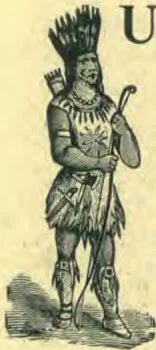
Perhaps no more earnest appeal was made than that which was made by Little Turtle, chief of the Miamis. On the front of an Indiana courthouse stands the statue of Little Turtle among those of noted white men. He lived at the time President Washington had his residence in Philadelphia, and by invitation the chief visited the President there. During this visit President Washington presented Little Turtle with a fine sword and a silver medal, which had on one side the picture of the President and on the other side the picture of a turtle. The President also employed an artist to paint the portrait of his guest and friend.
An Indian enjoying his “personal liberty,” graciously accorded him by some white friend of the liquor traffic.
Little Turtle was a gentleman, a brave soldier, a wise statesman, an orator, and a loyal friend.
Of course he resented the encroachments of the white man upon the Indians' land, and many hard battles were fought; but General Wayne, whom the Indians called “The Wind,” was too much for them in the Battle of the Fallen Timbers. After this conflict the Indians felt it was useless to further resist the white man; so they signed a treaty of peace, the “Treaty of Greenville.” Little Turtle in time became the white man's unchanging friend. He did not, however, like to have the white man teach the Indians to drink whisky. This they persisted in doing; and as the chief found the fire water was killing off his men, he was greatly distressed, and said:—
This liquor that they introduce into our country is more to be feared than the gun or the tomahawk. There are more of us dead since the Treaty of Greenville than we lost by the years of war before it, and it is all owing to the introduction of this liquor among us.
He begged the government by letter and in person to prevent the rum trader from coming to sell liquor to his people, saying that unless this is done, “your red brothers are lost forever.” He pleaded with Congress to prohibit the liquor traffic; he spoke before the legislatures of Ohio and Kentucky to the same end; and he prayed that the Great Spirit would “change the minds of his people and tell them it will be better for them to cultivate the earth than to drink whisky.”
Little Turtle's efforts were in time rewarded. The first law passed by the assembly of the Indiana Territory is said to have been one to protect the Indians from the curse of rum; and later Uncle Sam himself was compelled to grant the earnest petitions for prohibition for the red man, and this was the first law enacted by Congress looking to the curtailment of the liquor traffic.
Notwithstanding this national statute, many of the Indians have always been at the mercy of the white men who love money more than life, and who therefore persist in supplying them with liquor. For two centuries the Indian has appealed for more adequate protection from the liquor traffic. In a recent campaign to make dry certain Minnesota towns that were a serious menace to the Indians round about, the Chippewa Indians petitioned the Commissioner of Indian Affairs to make the white man keep his word as given in the treaty of 1855. They said: “The Great Father promised us he would keep fire water out of the Indian country. Now let the Great Father keep his word.” And he did. The towns in question went dry.

From Behind the Bars

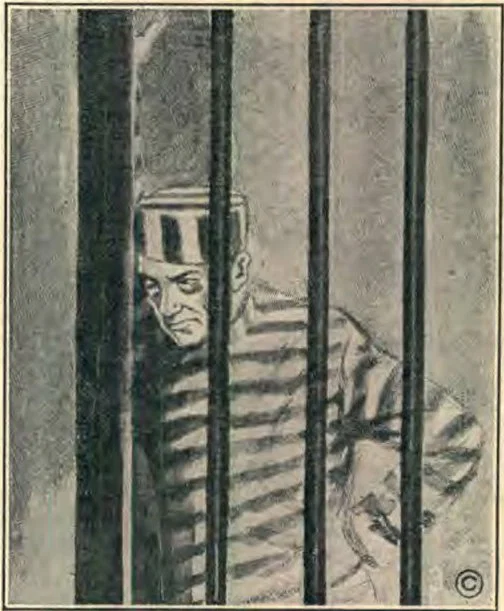
A MAN under sentence of electrocution, in an Ohio penitentiary, for murder, made an earnest effort to warn others against the saloon, the rock upon which he was wrecked. In a letter giving the story of his life he placed the blame for his unhappy condition upon liquor, as shown in the closing paragraph:—
I have requested that this letter and all matters pertaining to my case be thrown upon the screen so that parents and young men and women will realize the dangers of the saloon. In my cell is a fellow Russian, also awaiting the death penalty. He killed people while drunk. This is the personal liberty that "wets" are advocating. They allow you the personal liberty of drinking, but when drink has got you into trouble, they desert you. The only men that come to your rescue are the moral people who do believe in bettering mankind. Dear people, vote the saloon out of the country for the young men's sake. Drink only makes degenerates and brutes out of human beings.
Another man, sentenced to prison for life for the murder of his father-in-law, was drunk when the crime was committed. Before leaving the jail to start on the journey to the State penitentiary, the penitent man issued a pathetic statement, in which he gives the following advice to the public:—
You start drinking, and don't think much about it. Soon your senses are dulled, you have lost the will power to quit, and then you are regarded as worse than nothing. My advice to any who are drinking now is to stop before it gets too much of a hold on them. Let them read this and think of the fate that confronts me—all the long years ahead within the dim, gray walls of a prison, shut off from my fellow men, denied access to the world, with the knowledge, in the lonely nights spent restlessly on my cot, that the blood of a fellow being is on my hands.
While the primary object of these men and of the many who have left similar testimonies is to prevent others of their fellow men from following in the path that caused their downfall, yet these admonitions become to us strong appeals to remove from the roadway of life those things that wreck human beings.
More than a thousand men in a Pennsylvania penitentiary, unsolicited signed a petition urging the people to vote for prohibition; and the very fact that eighty-three per cent of the persons in the penitentiary at Michigan City, Indiana, and eighty per cent in an Ohio penitentiary, and about the same per cent in every other penal institution in the land, attribute their downfall directly to liquor, is the strongest kind of appeal from behind the bars for the destruction of the liquor traffic.
There also comes to us a plea for the same from those who would be free from the tyranny of drink, but are too weak themselves to break the chain that binds them. One of these is an Oregon prisoner, sixty-three years of age, who pleaded with county officials to be kept in prison until the State went dry.
Another is from a Chicago steam fitter who went to the police station and requested to be locked up until he could get rid of his drinking mania. Others besides these have sought freedom from the rum fiend by taking refuge behind prison bars.
From every State in the nation there are thousands of imprisoned, liquor-wrecked men calling to us to eliminate the hellish liquor traffic, and thus prevent a fate like their own from coming to thousands of their fellow men. Men and women, shall we not heed these importunate appeals for justice and freedom that come to us from behind the bars?

Destroy the Breeding Places

CLEVELAND, Ohio, has the distinction of being the first flyless city. It gained this reputation through the clearsightedness and executive ability of one woman, Dr. Jean Dawson, instructor of biology in one of the city's normal schools. Dr. Dawson realized that “in the antifly campaign of the last decade the slogan ‘Swat the fly’ had been overworked. Swatting the fly in practice never got farther than reducing the total number of flies by the small number killed. The fly-swatting crusades did serve a purpose, however, and that was to educate the people as to the danger of harboring the fly, and to secure their cooperation in applying the only means for its elimination—the elimination of its breeding places.”
Acting upon this assumption, Dr. Dawson enlisted 125,000 school children to unite with the normal school in a campaign to eliminate the fly’s breeding places. How well this enthusiastic and intelligent corps of sanitarians succeeded in their undertaking is shown in Mayor Baker’s pronouncement that, due to this wisely conducted campaign, Cleveland is practically a flyless city.
Cleveland is to be congratulated; but when a similar work of elimination is carried forward regarding her breeding places of drunkards, even greater good and honor will come to the city.
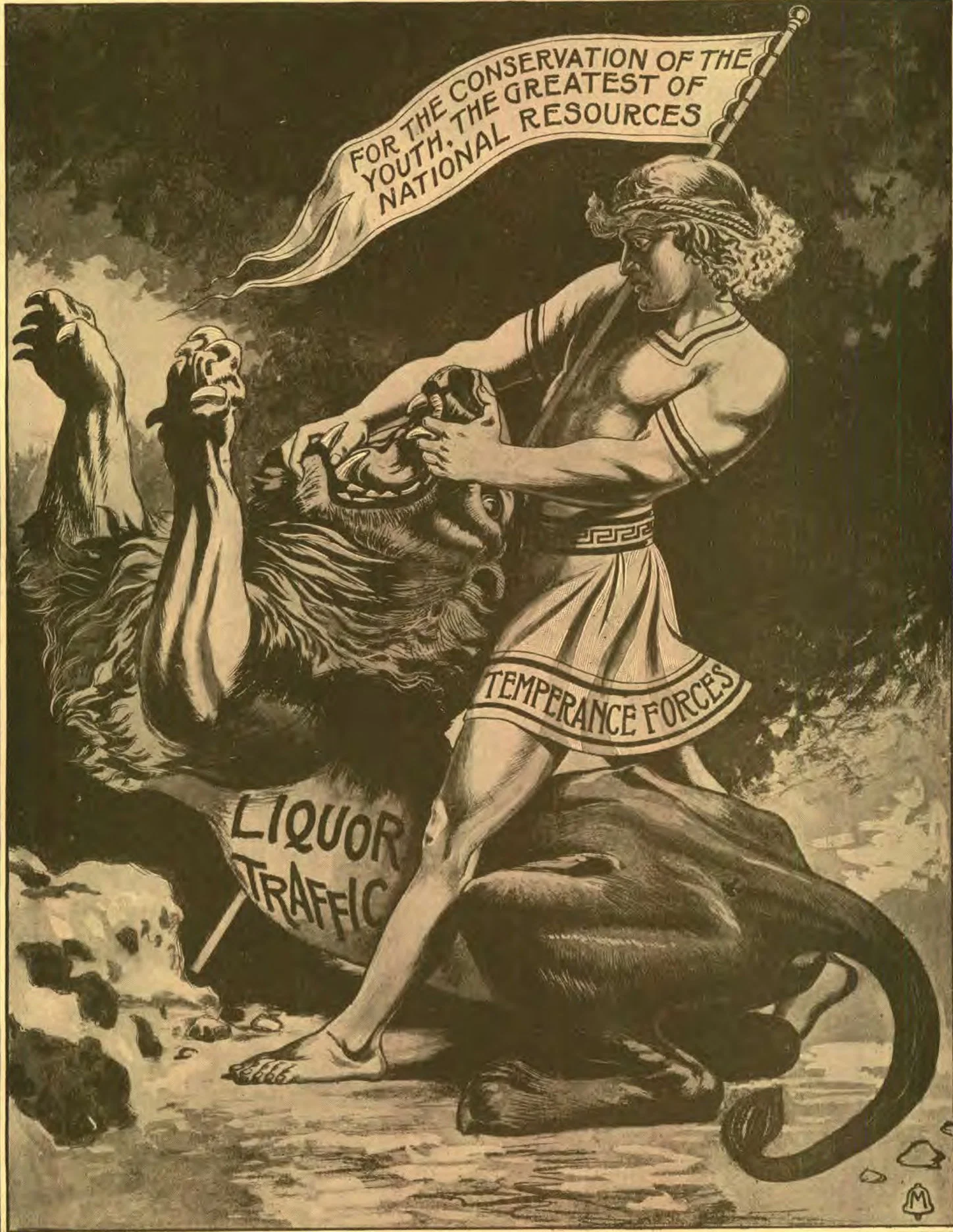
Local option and prohibitory laws, like the “Swat the fly” campaign, are good so far as they go. They destroy some of the iniquitous liquor places, and their destruction educates the people in regard to the seriousness of the liquor evil; but there is hope for a sober nation only in the elimination of all the breeding places of the saloon, and they are the breweries and the distilleries. Destroy these, and the saloon with its product must go.
Let us every one join heroically in the campaign to make America a saloonless nation, by educating the people to demand the prohibition of the manufacture and sale of alcoholic beverages.
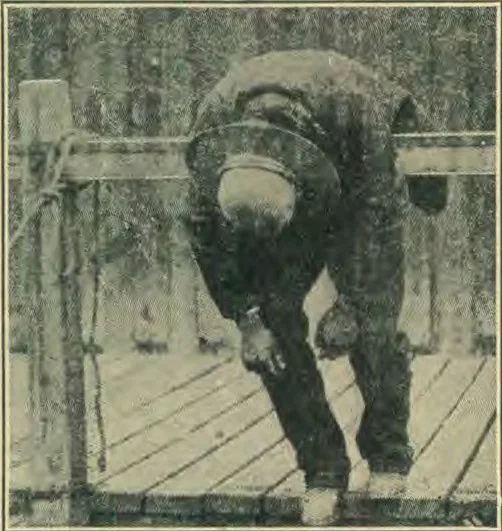
“Said this man, with an accent of pride, ‘I can drink it or cast it aside.’” He drank it—

The Saloon’s Versatility

Who would have thought of going to the saloon to secure a cook? But we are told by the treasurer of the Chicago Pastry Cooks’ Union that a certain saloon in Chicago is the headquarters for hotel and restaurant cooks and chefs. From two to four hundred professional craftsmen can be daily found in this saloon, for it is the clubhouse of the unemployed cooks; it is the exchange station for kitchen help. Many will stay there from early morning till late at night, and squander their earnings, hoping for a job. The hotel and restaurant keepers, when in need of a cook or chef, telephone, telegraph, write, or go to this place. A well-known railroad company sends to this saloon for its cooks. Orders are given to the saloon proprietor or to the bartenders. They give the jobs to those who buy the most whisky from their bar. The result is obvious.
The men do not go there from choice. The members of the cooks’ union have complained frequently to the city and State authorities, and men and organizations have interested themselves in their behalf; but all are told that this method of securing help is the most satisfactory to employers. All efforts, therefore, to abolish the system have as yet been altogether unsuccessful. Even State officials refuse to cooperate in securing relief to these outraged chefs and cooks. Men who will not from principle go to this saloon to secure jobs are placed at a disadvantage, for the patrons of the saloon get the jobs.
What is true of the cooks and chefs in Chicago must be true of such persons in New York and other great cities. All this evil comes from the saloons and the hotels being partners in the liquor business. Abolish hotel bars and the saloons will no longer be employment agencies for cooks and chefs, giving the jobs to those who buy the most whisky or beer.
The cooks and chefs are not the only workmen who get their jobs through the saloon. It is to the interest of the saloon keeper that his patrons have jobs; so he becomes a self-appointed general employment agent. According to Dr. Charles Stelzle, saloon keepers also have “a monopoly of cheap halls in large cities, and charge, usually, no rent for them. These become the meeting places of social clubs, labor unions, lodges, singing societies, and other organizations of the poorer people. Here, too, many have their christenings, weddings, dances, and other social functions. This is particularly true among foreign-speaking peoples.
“In many cases saloon customers are supplied with papers. Sometimes the use of a free gymnasium is allowed. The saloon music wins—especially when it is given in connection with a summer garden annex to which a man may take his wife and children. But one of the most important features of the saloon is the free lunch offered. The saloon daily feeds thousands of clerks and workmen.
“The saloon keeper lends the workingman money without setting up the ‘work test’ of the Charity Organization Society. This is part of the saloon keeper’s business policy.”
These are grave evils; for the saloon should be divorced from everything but its wicked business of wrecking human life. It should have everything savoring of good eliminated. Such things deceive the unwary into thinking that the saloon is a benefit to the community. It is only an evil. Therefore it should be stripped at once of everything that tends to hide its real nature and work. It should not be allowed to act as an employment bureau, nor should it be permitted to serve free lunches. The schoolhouse with its movable furniture, or some other suitable building, provided by the city, should be the social center, the meeting place of lodges, clubs, unions, and singing societies. With little effort the foreigner and the poor can be made to feel that because of their taxes the schoolhouse, or this special building provided by the city, belongs to them as well as to the most influential in the community, and can therefore be used by them for any social function. Shall not every town and city at once strip the saloons of every semblance of good, allowing nothing to hide their loathsomeness from even the most ignorant voter? This done, the people will the sooner demand the annihilation of the liquor traffic.

A Boy's Mettle Tested

FORTY years ago a boy joining the Cadets of Temperance, took the vow of total abstinence. Soon after his initiation into the society, he was apprenticed to the bricklayer's trade. The following graphic account of an experience that came to him on his first day at the brickyards is of interest:—
My employer knew his business well, was a skillful craftsman, but much given to drink, as were all his employees. At noon he bade me pour the water from the pail, go to a near-by tavern and get it filled with ale. I brought it as ordered, took my place at the end of the line, seated like the rest in the shadow of the wall, and saw the bucket with a tin cup therein coming slowly toward me. I trembled inwardly as I saw that every bricklayer, every hodcarrier, every mortar mixer, every apprentice, drank the beer. From my master down each took a share, and I realized that I, a poor weak lad, on my first day in a new crew, must offend all, censure their customs, stand their sneers, endure their scoffs, or surrender my principles.
When the booze reached me, I whispered a refusal to the one who passed it, but the gaffer, thinking I was merely timid in new company, cried out in hearty, Old Country style: "Take it, Robert; don't be shy; I pay for it. You are one of us; have your sip of it." I said, with faltering voice, while all eyes turned on me, "Excuse me, Mr. George, I never drank liquor and cannot begin now."
He laughed uproariously, as did the others, and shouted, "Ho, ho, lad, you will never be a bricklayer till you learn to drink!" I put the untouched meal in my basket, arose slowly, shaking like an aspen tree, and walking down the row of scornful workmen, I paused before the leader, and said, "Mr. George, if that is true, I will go home and tell my father I am discharged; for drink liquor I will not, now or ever; I will not!"
I think I had mysterious help that day, unseen of all. To my amazement the boss leaped up, took my hand, and said, "God bless you, boy; stand fast, and you will be a man some day!" Then to the wage earners he said, "If any man of you ever asks him to drink, you will suffer for it."
The first step is the hardest, and I had won the heaviest battle. I worked four years with him, and saw the ruin drink made. One of my early friends became through it a murderer; another, a madman; another, an outcast; another, a thief.
I have seen wives crushed, homes destroyed, children disgraced, babes diseased, families divided, mothers bereft, brothers estranged, firms bankrupted, lawyers degraded, doctors degenerated, and ministers debauched. And all who are in prisons, insane asylums, hospitals for incurables, all who rot in lazarettos, or sleep in potter's fields through this treacherous foe of God and man, began as moderate drinkers.
My words will not reach nor shake the inhuman parasites who are fattened by the gains of this awful traffic; but to the boys I cry, Swear eternal enmity to rum, and enlist for this holy war till America is forever free from it.

Courage: Colfax Declines Wine at Dinner Party

Courage
At a dinner party, where there were present distinguished foreign and American statesmen, Mr. Colfax, then Vice President of the United States, declined to take wine, whereupon a senator who had already taken too much, exclaimed, sneeringly, across the table, “Colfax dare not drink!” “You are right,” he answered; “I dare not!” The following lines were written to commemorate Mr. Colfax’s courage:—
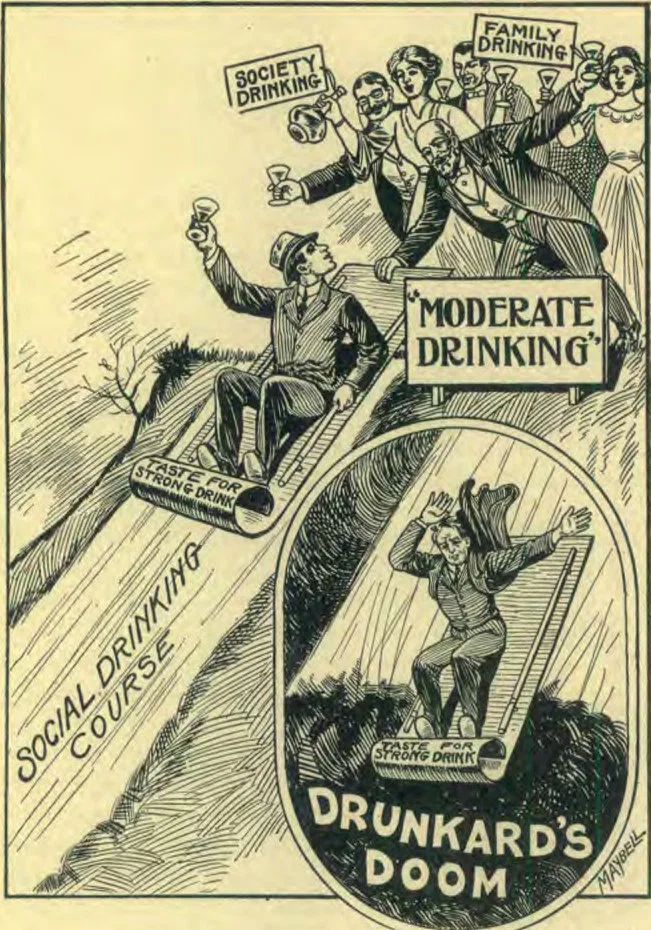
HERE THE TOBOGGAN STARTS AND ENDS
The only safe way is to have nothing to do
with the poisoned cup.
HERE THE TOBOGGAN STARTS AND ENDS The only safe way is to have nothing to do with the poisoned cup.
“I dare not!” Were those cowardly words That startled that brilliant, distinguished throng, As they fell from the lips of one single man Who dared to do right and feared to do wrong?
“I dare not!” Did he know the power Of one fatal glass to bring sorrow and tears, To rouse a thirst that had slumbered long, When the pledge had been kept, aye, even for years?
“I dare not!” I might learn the terrible truth That my act had tempted another today; We all have some influence, for good or for ill. To guide men aright or lead them astray.
“I dare not” when I hear the wail of distress Sweeping o’er my loved land like the wild, surging wave; When the terrible doom of thousands I see,— A drunkard’s home, a drunkard’s grave.
“I dare not!” O that this brave reply Might roll through the land in thunder tone strong— A noble example, teaching others to say, In temptation’s dark hour, I dare not do wrong!
’Tis he is the coward who proves false to his vows, To his manhood, his honor, for a laugh or a sneer; ’Tis he is the hero who stands firm, though alone, For the truth and the right without flinching or fear.
Then dare to do right, though the whole world deride; When tempted may this motto be your shield of might The world ever honors true courage in man, Then ne’er be afraid or ashamed to do right. — Selected.

Closing Saloons Would Create Better Jobs

MORE workmen lose their jobs because the saloons are open than would be the case were the saloons to be closed; so do not worry about the jobs lost through the closing of saloons. Better jobs will soon present themselves

What One Glass Did

“ I HAD a little vessel on the coast. She had four men besides myself. I had my wife and two children on board; the night was stormy, and my brother was to stand watch. The seamen prevailed on him to take ‘one glass,’ to help him perform his duties; but being unaccustomed to liquor, he fell asleep, and in the night I awoke to find my vessel a wreck. I took my wife and one of my little ones in my arms, and my wife took the other, and for hours we battled with the cold waves. Finally they swept my little one from my embrace; then after more hours of suffering the waves swept the other child from my wife’s arms, and our little ones were lost to us forever. After more battling with the storm and waves, behold she was cold in death. I made my way to the shore, and here I am, my wife, my children, and all my earthly possessions lost — for ‘one glass’ of rum.”

What Two Glasses Did

The world's greatest violinist was Paganini, an Italian by birth. He played before the courts of Europe. A great artist and friend of Paganini, after attending some of the violinist's remarkable performances, said: “You have played those wonderful passages, requiring the greatest fineness of touch, absolutely without fault, except on two nights this week, but on those nights you slightly blurred certain notes. Why is it?” “Ah!” replied the great violinist, “before going onto the platform on those two nights I took a glass of wine. I felt conscious myself that in the most difficult passages I had not transcribed them perfectly.”

A Paradox Difficult to Understand

Mr. and Mrs. B. A. Meeker, American missionaries living in Canton, China, while recently returning to their home from Waichow, stopped at a certain customhouse where they learned that two men were drowning in a near-by slough. But nowhere was there excitement. Instead of hastening to the rescue of the men, a few soldiers walked leisurely along the shore; but they had no means of saving the unfortunate men perchance they should rise to the surface. After some time, however, a party went out in a boat to see if the bodies could be found.
The boat of these missionaries passed on, and as it neared Canton a more exciting accident occurred. A pig got out of its bamboo cage and jumped into the water. Mrs. Meeker, in writing of the incident, says: “You should have seen the excitement on board the boat. An alarm was sounded, and after considerable calling to the launch men, the launch with the two towboats was turned about, and we went back in search of the animal. When we caught sight of it, it was struggling with the waves. We went about a mile and then circled around it, and some of the workmen drew it on board. The fact was that the company would have to pay the price.” Therefore the pig caused more excitement than the drowning men.
No other people, it is claimed, place so small a value on human life as do the Chinese, and this incident demonstrates the fact that to them animal life with a monetary value is often of far more consequence than human life. In view of this fact, it is difficult to understand why China is destroying the opium trade while our own country fosters the liquor traffic. It would seem that America would destroy quickly everything that threatens human life, while China would at least be indifferent to life-destroying agencies so long as they are lucrative.

Educational Work a Necessity

You believe the liquor traffic to be an unmitigated evil that should be immediately annihilated. You cannot perform this worthy deed yourself. No one person can. The American people must do it. But some do not yet sense the serious evil of a licensed liquor traffic. They must be made to do this. When they do, they will begin to reckon with it as did the man who consulted an attorney about bringing suit against one who had called him a rhinoceros. After talking it over, the attorney said:—
“You said this man called you a rhinoceros three years ago?”
“Yes.”
“Well, why are you bringing suit against him now? Why have you waited all this time?”
“But,” the man replied, “I never saw a rhinoceros until yesterday.”
Through the nation-wide educational campaigns of the temperance forces, the American people everywhere are getting a view of the hideousness of the liquor rhinoceros. This view is arousing them to action against the infamous evil.

A Tenfold Curse

WINE brings a tenfold curse. It brings a curse on him who makes it for another's use, on him who makes it for himself alone, on him who drinketh of the poison draft, on him who carries it from place to place, on him to whom the poisoned grape is brought, on him who serves it to the eager guest, on him who sells it to another's hurt, on him who profits by the harmful sale, on him who buys it for himself alone, on him who buys it for another's use—these ten shall be accursed.—Mohammed.

New Work for Detectives

DETECTIVES armed with cameras are taking photographs of every employee of the Baltimore and Ohio Railroad they see taking a drink of alcoholic liquor. A number of employees have been discharged upon the camera’s testimony.

Do It Now

If you regard this paper of real worth as a temperance agitator and educator, send at least one dollar for twenty-five copies to give to others. Twenty-five cents will bring you five copies.

Organized Lawbreaking

Whenever an attempt is made to secure prohibition, national, State, county, or town, the promoters of the liquor traffic immediately cry out for “regulation by law.” Let there be higher licenses, fixed hours for opening and closing the saloons, and various other statutes in the interests of “decency” and “good order;” they will subscribe to them all! But the traffic has its very roots in lawlessness; it lives by lawbreaking. Incidents in proof of this statement could be given without end. Here is a case in point, which appeared in the Washington Post of Jan. 26, 1915:—

Liquor by Aeroplane!

Ohioan Has Plan to Thwart Prohibition of Interstate Shipments
WHEELING, WEST VIRGINIA, January 25.—Liquor is to be delivered to this city from Ohio by aeroplane. This determination has been reached by Samuel Underleider, of the Accord Liquor Company, of Dillonvale, Ohio, whose company has been doing a land-office business since the Yost prohibition law went into effect in this State, by delivering intoxicants to customers in this city from the company’s warehouses in wet Dillonvale. The decision of the United States Circuit Court of Appeals at Richmond, Virginia, a few days ago, makes it illegal for consignments of intoxicants to be delivered by common carrier; and in order to get around the law, Underleider has decided on the aeroplane expedient.
It is not at all likely that this spectacular method of evading the law was resorted to; but that it was ever seriously considered shows that respect for the law is not the guiding principle of the liquor traffic. And is it not true that as “the intent of the lawmaker is the law,” so also the intent of the lawbreaker is violation of the law? A. B. E.

WHAT IS THE LICENSED LIQUOR TRAFFIC?
It is the business which the wet voters of the nation deliberately perpetuate from the mistaken idea that it advances their own personal business and decreases their taxes, though they know its existence means the sacrifice of hundreds of thousands of our noble boys, as well as an innumerable number of men and women. This is the licensed liquor traffic. It “jeopardizes every interest of the home. It cannot live without sacrificing these interests. Souls are its victims, and it snatches them from rich and poor alike. There is no satiety to its appetite, no set boundary to its field of operation, no trust too holy for it to violate, no right too sacred for it to trample upon, no child so beautiful that it would hesitate to set the hot brand of ruin upon its forehead.”
“Mary Elizabeth ate the whole; and why it didn't kill her nobody knows, but it didn't.”

You have reached the end of this edition.

The Youth’s Instructor · 1916