Your ShelfYour Projects

The Youth’s Instructor, 1916 Temperance Annual

Thought Prickers
Earlier text: True Temperance Defined and the Demand for Personal Liberty Analyzed

The Saloon Invasion of Politics

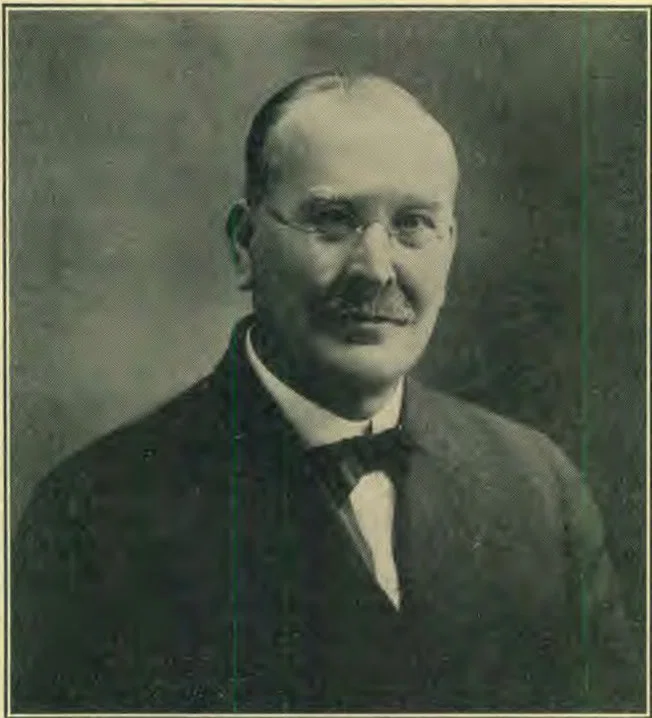
Dr. Louis Albert Banks
The saloon has invaded politics on its own account. It stuffs the ballot box, elects its tools to office by bribery, buys legislatures, and in every way tarnishes the fair name of American political life. We base the right of the political destruction of the liquor traffic on the bedrock truth that the government has a right to defend its own life.
A muscular preacher who was a sort of Peter Cartwright species of divine, used all the powers the Lord had given him — fists as well as tongue. Some of the good sisters in his church thought he was too much inclined to use his fists, so they sent him this text: “Whosoever shall smite thee on thy right cheek, turn to him the other also.” The next Sunday he took this scripture for his text, and said that the Bible was distinguished from all other books by appealing to the God man, and not to the brute man. If a man should strike you on the right cheek, he might do it through mistake, or might do it through a feeling of mischief; and if you turned around without asking any questions and struck him back, that would be acting like a brute. You should keep still, and turn the other cheek. If he strikes you on that, you know that he meant it; then go for him.
DR. LOUIS ALBERT BANKS
This may not be a good Bible interpretation; but it is a good interpretation of the law of this country, the law that is inherent in every individual — the right of self-defense. The government has a right to defend its own life. The government has a right to destroy any business that threatens its life, or that debauches the character of its citizens. The Supreme Court of the United States has decided this again and again; and finally, with reference to the liquor traffic, in these very words: “The government has the right, through its police power, to protect its own life.”
This temperance question, then, is rightfully a political question. The saloon never touches politics except to defile and corrupt. There can be no permanent municipal reform in this country so long as we tolerate the saloon. Men who know how political campaigns in municipal affairs are managed, many times will not accept a nomination because they know that by common custom it makes them the helpless prey of every beer slinger in the city. It has often befallen candidates for high judicial honors — men without a stain on their names or a vice of which they could be accused; men, even, who were running on so-called reform tickets — that they have been led about from bar to bar like a fat ox, that they might win the vote of the slums by free beer. Nothing so speaks to us the degradation of politics as this.
As long as the saloon door stands ajar at every corner of the street, the affairs of cities will probably be managed by the men who are not above purchasing the privilege from the brewers.
The New York Herald, in an editorial protesting against the rum-besotted misrule of that city, said, “We must no longer be ruled by graduates of the Tombs and nurslings of the grogshop.” But how useless it is to cry out against harvesting the crop we have deliberately planted and nourished. A city will and must be governed by the graduates of its own institutions. If it establishes and maintains two hundred grogshops to one high school, it cannot complain that more graduates from the former than the latter come into mastery.
The dirty hand of the liquor traffic grips party conventions and legislatures by the throat, and turns legislation into license instead of prohibition. East and West, North and South, earnest, God-fearing men, year after year, beg at party conventions for some adequate recognition of the evil, and some honest threat of hostility to the liquor traffic. And they are treated with insolence and contempt, while the saloon keeper is flattered and fawned upon with disgusting humility.
Modern civilization has no more pitiable sight than is revealed when brewer and Catholic priest, distiller and Protestant clergyman, saloon keeper and Sunday school superintendent, bartender and class leader, stand shoulder to shoulder, voting twin ballots, and obsequiously supporting the party policy which sustains this conspiracy of silence concerning the hideous cancer that is eating out the very heart of our institutions.
Let us compel political parties to fight the saloon or count us out. Let those taunt us who will about “voting in the air.” It is better a thousand times to “vote in the air” than to deposit your ballot in a beer barrel, and help maintain the rule of rum. Let us go on “voting in the air” until the atmosphere is charged with the electricity that presages the thunderbolt of doom to this infamous traffic.
Broderick the Brave, standing undaunted before an exultant and despotic slave power, said, “Slavery is old and decrepit and dying; but freedom is young and strong and vigorous.” So the licensed liquor traffic is old and rotten with its own corruption. It is a jailbird of innumerable crimes, whose bloated face is familiar in every rogues’ gallery on the face of the earth. Strong and arrogant as it seems, it is really staggering to its execution.
Prohibition is young. The dew of young manhood is on its brow. The sunshine of a new chivalry streams upon its path. The strength of righteousness flows in its veins. The courage of immortal hope is in its heart. There is but one issue to such a struggle: The liquor traffic shall die!

An Interesting Letter

JUST as soon as a town, county, or State goes dry, the mail-order liquor houses and other liquor firms flood the mails with letters and circulars, offering their services to the people in aiding them to evade or break the prohibitory law. One of these letters was sent unwittingly to Rev. E. M. Evans, of Des Moines, Iowa. The letter offered to tell the worthy divine how to get his “favorite brand, now that the saloons in Des Moines are closed.” Mr. Evans, in his reply to this public-spirited firm, said:—
It was very kind and thoughtful of you to inform me of a way of securing your favorite brand, Old Bob Adams whisky, since Iowa has gone crazy and butted in on our personal liberties. One would expect better things of Iowa than to interfere with the faithful service of such as Old Bob Adams. I offer myself as a witness to the untiring energy and successful accomplishment of his race.
Last January a young man stood at my door shivering with cold, and asking for bread and for a place to rest his discouraged head. He was a remnant of refinement, which led me to ask him why he could not earn the necessaries of life.
With a pathetic quiver of his lip, he admitted that a leading brand, not unlike Old Bob Adams, had selected him for a regular customer, and the business world would not stand for it, notifying him that there was no place for his services. Why can't the business world see beyond its nose and behold great breweries, elegant palaces, fine motor cars, sumptuous meals, rich clothing, and all that belongs to your gigantic business, and keep its hands off? What right has the business world to interfere with personal liberties?
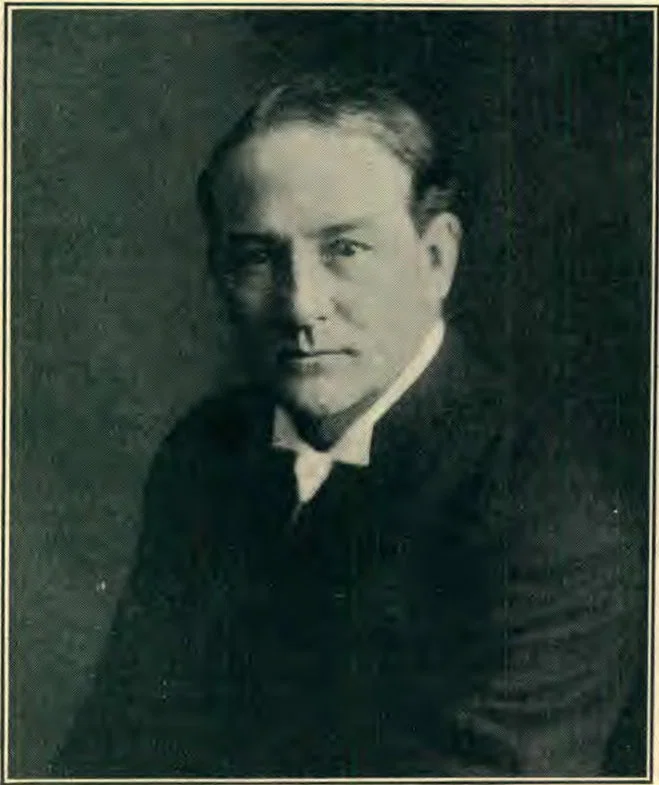
REV. E. M. EVANS
REV. E. M. EVANS
Not long ago I carried a basket containing food to a house where some side partner of Old Bob Adams had been before me. The wind whistled through broken windows as I listened to the weak and pathetic cry of hungry children and the pleadings of a heartbroken wife, with sunken eyes and pale face, for the bare necessities of life. The husband and a relative of Old Bob had long been friends. They together had bought rich food for the brewer's children, fine clothing for the brewer and his wife, and contributed generally to the upkeep of his expensive establishment.
Since reading your letter, I walked down Fifth Street of this city, passed the Neal Institute and Keeley establishment. I saw men who once had bright prospects for a successful and an independent future, but their faces today are covered with a literature of sorrow and defeat.
I note you pay the freight on returned empties. I should like to send you a full carload of empties if you will honor your agreement. I suppose the freight will be much cheaper on full carload lots? To be honest with you, the empties are not in first-class condition.
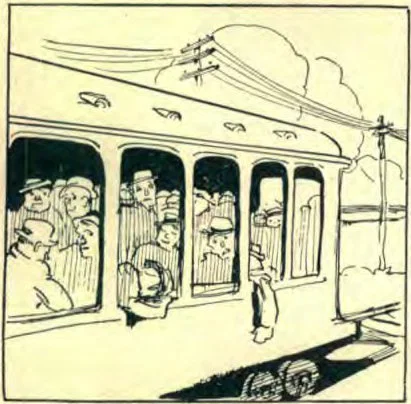
They consist of empty men,—empty of manhood, energy, ambition, prospects, self-respect, and necessaries of life; empty head, empty heart, empty soul, empty stomach; also empty women,—empty of womanhood, refinement, modesty, and hope. Will it be worth while making the return of this carload of empties? Will this carload of empties be worth the freight to you?
A Carload of Empties.
I will file your blank order sheet, and when I conclude to sell my soul, damn my manhood, debauch womanhood, sap the lifeblood of childhood, I will honor you with a large order of Old Bob Adams.

Growth of the Temperance Movement

G. H. Heald, M. D., Editor “Life and Health”
FROM an obscure beginning, a few despised but dauntless men working against the odds of prejudice and long-established custom, the temperance movement has developed into what has been described as a “temperance wave.” But a wave must recede. The temperance movement is a growth, a living thing, and can neither recede nor stand still.
The movement began as a moral reform, the first efforts being to save the individual from a destructive habit and a hopeless end, and the appeal was personal and educational. Determined men sought, through the lodge, the public platform, and the printed page, to win fallen men to sobriety and usefulness; and their work was, in a measure, successful.
But the first great strategic move was the education of the children in temperance principles; for it is out of the Bands of Hope of earlier days that our strongest temperance workers have come.
Realizing that the process of personal appeal is necessarily slow and only partially successful, some conceived the idea that the law could be invoked as a mighty weapon against the liquor traffic; so alongside of the personal appeal to live a wholesome life, there has been a steadily increasing agitation for prohibitory statutes and amendments. The result has been local prohibition in some places, county prohibition in others, and State-wide prohibition in still others; so that now the larger part of the United States is under some form of prohibitory law, and the agitation is on for national prohibition. And a strong factor in the movement is the fact that the liquor interests, paying a revenue to the federal government, are in a position to circumvent the local statutes. Nevertheless, the prohibitory laws are beginning to show results in that the per capita consumption of alcohol, as shown by the internal revenue report, is now decreasing, notwithstanding the increase in population.
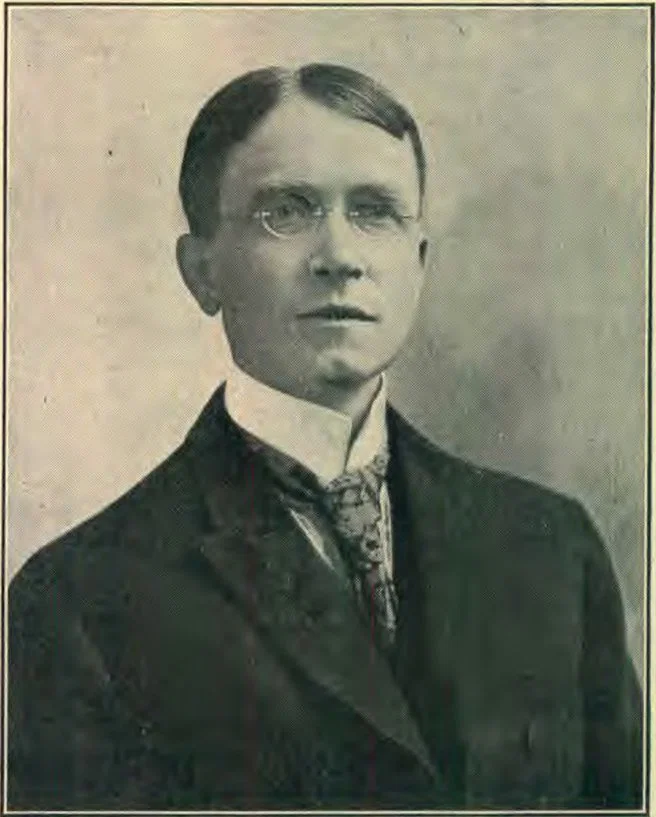
DR. WILLIAM C. WOODWARD
Health Officer of the District of Columbia
DR. WILLIAM C. WOODWARD Health Officer of the District of Columbia
Beginning as a moral reform, the temperance movement later attracted the attention of the leaders of industry and transportation and trade, who, convinced that the liquor devotee is an unreliable and expensive employee, have gradually barred him from positions of responsibility and trust; and in some establishments (the number is increasing) men who drink are not wanted in any capacity.
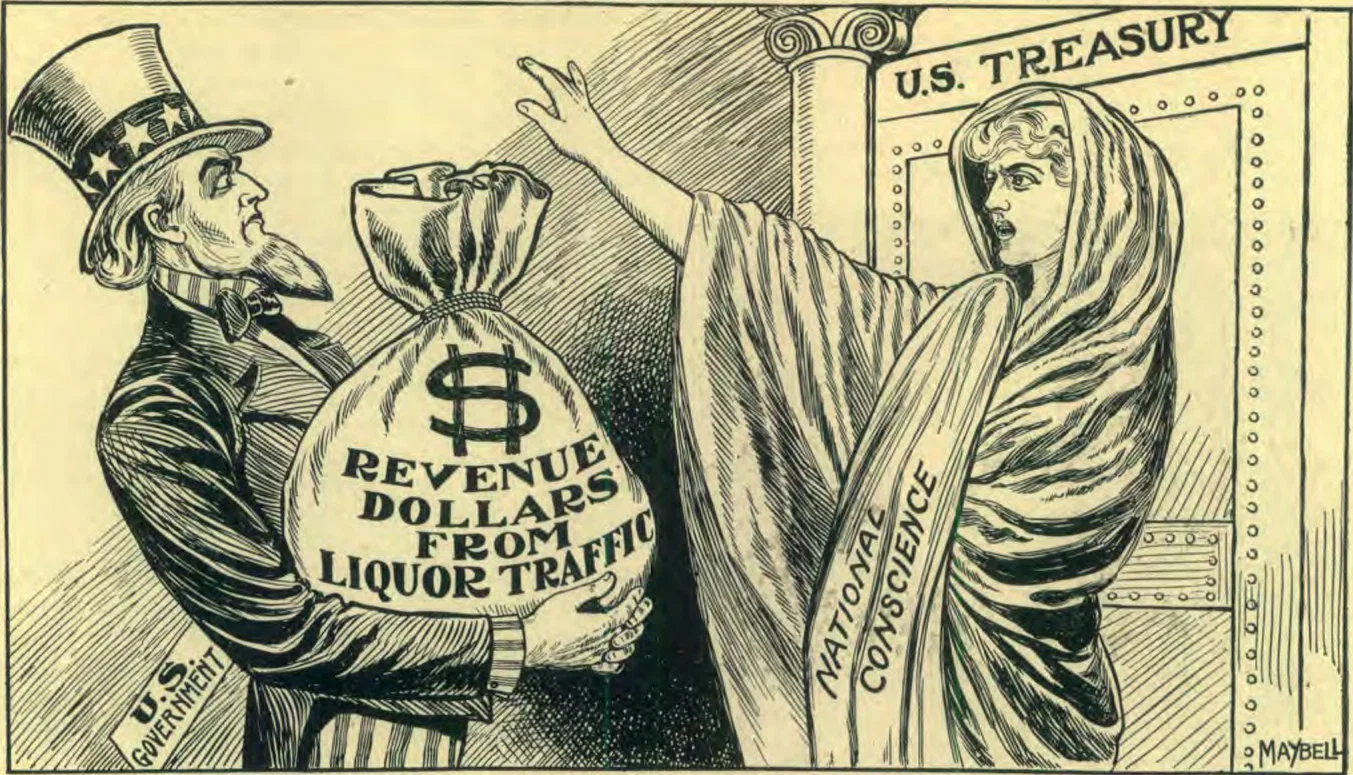
“It is not lawful for to put them into the treasury, because it is the price of blood.” Matt. 27: 6.
A great change has come over the attitude of the insurance companies. In the forties of the last century, a man who was an abstainer was considered a dangerous risk. Life insurance men did not care to issue policies to men who refused to use “stimulating” and supposedly healthful beverages. The result was that temperance men organized their own insurance company; and it later became apparent that the abstainers were actually better risks than the nonabstainers; and now a man who is a total abstainer can get better rates than even the very moderate drinker.
Finally the temperance movement became a part of the great public health movement. For a long time, physicians here and there, in gradually increasing numbers, have been convinced that alcohol is a poison more potent for harm than good, even when taken as a medicine; and physiologists have added proof to proof, through animal experiment, through the study of human groups, and in other ways, that the general effect of alcohol when taken internally is evil, and only evil. The accumulation of this information has convinced public health officers that they are not doing their entire duty when they look after flies and mosquitoes, dirt, spoiled goods, and bad housing, if they do nothing to lessen the greatest of public health menaces, the drink evil. So Dr. Goldwater, health commissioner of Greater New York, the greatest municipality but one in all the world, has begun a work of education, issuing for the people of the city of New York a series of warnings against the drink evil; and he has since been upheld in his work by health officers elsewhere, and by prominent physicians and scientists.
One indication of the changed attitude of physicians to drink is that in hospitals, during a generation, the bill for liquors has been steadily diminishing to almost nothing, and the bill for milk has been steadily increasing. The modern policy is to nourish patients rather than to drug them.
Another indication is the omission of whisky and brandy from the latest edition of the United States Pharmacopoeia (the official list of drugs and medicines, made the standard by the Food and Drugs Act), and the enactment of laws making it necessary for druggists who handle alcoholic liquors to take out liquor dealers’ licenses. This means, in fact, that alcohol is no longer classed with drugs, even with morphine and cocaine, but is considered an indulgence.
As the antislavery movement began with a few intrepid men and women who were willing to suffer martyrdom for their faith, and grew until a nation was willing to enter a death struggle in order to rid itself of the blight of slavery; so the temperance movement, from a very small and apparently insignificant beginning, is increasing in volume and momentum, and is destined to meet the “vested interests” in an encounter which, though bloodless, will result in as great a victory as was the abolition of slavery.

Catholic Call to Oppose the Liquor Traffic

REALIZING the havoc wrought by the American saloon, we call upon all Catholics to join us, and with the help of God to make this land free from the evil influence of the legalized liquor traffic.— Catholic Prohibition League of Ohio.

Circulate Literature, Rallies, and Straight Voting

“CIRCULATE literature, hold rallies, and vote straight.” These are the things that count most. The people must be educated; they must be aroused to action, and our good temperance literature and meetings will educate and inspire. A straight vote elects only the man who loves his fellow men better than he does the silver dollar. Will you do these things?

Our Opportunity

THE hosts of Right 'gainst those of Wrong Must never flag, must never flinch, But forward march with courage strong. And press the battle inch by inch.
Is there not something you can do In this great war against the wrong? Shall what is false o'ercome the true? Must Might and Right be sundered long?
Let none think he can idle be In this, the world's most stirring fight: 'Tis ours to plan, to work, to see The rays of truth pierce error's night.
Events will take a striking course Till Alcohol, so strong and bold, Shall lose what gives him fighting force— His grasp of many millions gold.
Too long have hearts and lives been wrecked. Too many homes been scattered wide, Too long his baseness gone unchecked, Too often God and man defied.
For Christian people anywhere To smile upon him, give him room; And portents thicken in the air That point his well-deserved doom.
King Alcohol, thy day has come! Thy wicked, wanton reign must cease! Thy brandy, whisky, beer, and rum Must go; thy strife give way to peace!
CORA FERRIS.

The Sure Cure

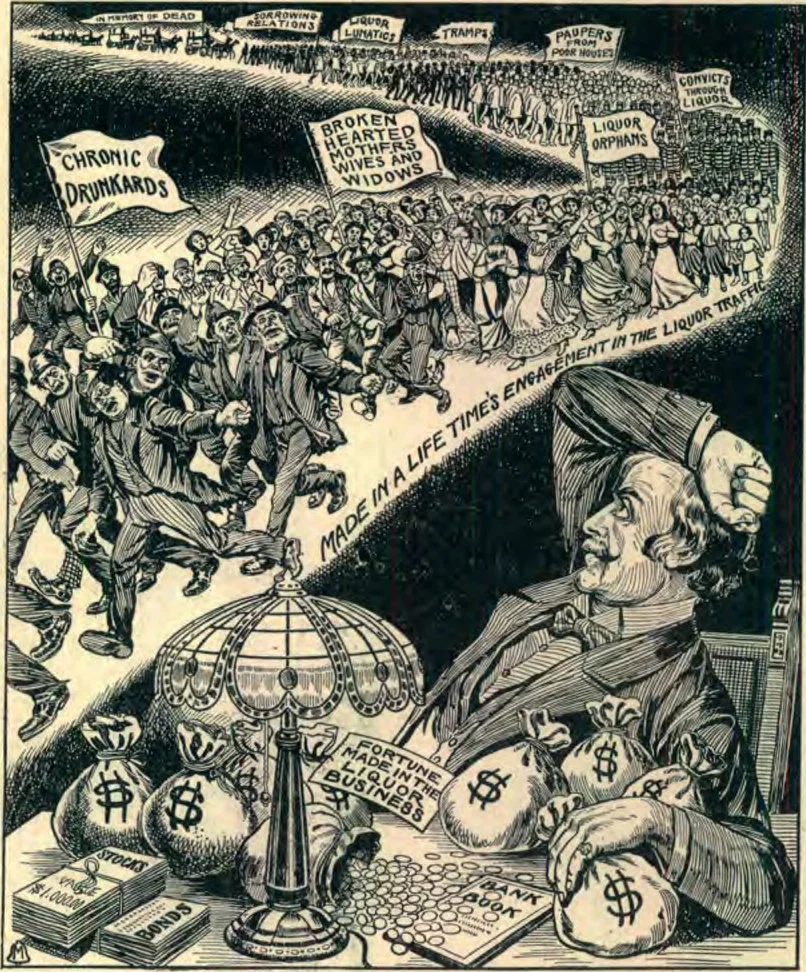
WHAT HE MADE
A day of reckoning is coming: “For we must all appear before the judgment seat of Christ; that every one may receive the things done in his body, according to that he hath done, whether it be good or bad.” 2 Cor. 5:10.
WHAT HE MADE A day of reckoning is coming: “For we must all appear before the judgment seat of Christ; that every one may receive the things done in his body, according to that he hath done, whether it be good or bad.” 2 Cor. 5:10.
A MATTER of personal business took me to Mr. Tate's private office in a tall building near the city front. We sat by a great window overlooking countless darting watercraft. Mr. Tate's hand touched lines reaching halfway round the world. Suddenly, in a discussion of my plans, Mr. Tate said to me: “Miss Fielde, during our years of pleasant association you have not become truly acquainted with me. I have never told you my history. It might give you a clue to my real aims in life.”
“I am a listening sphinx,” said I; and Mr. Tate told me what I here record:—

The True Story

“Of sturdy American stock, reared in a pious family of total abstainers, with all the advantages provided by opulence and social esteem, a happy life might well have been predicted for me; but an inherent taint was in me, an appetite for strong drink. It was first demonstrated to my family when I was six years old. On a Sunday when my parents, brothers, and sister had gone to church, leaving me alone with the servants, I took from a closet a demi-john of wine, drank it, and was found in sodden clothes, lying upon the floor, dead drunk.
“During the next ten years I occasionally visited saloons with other lads of my age, in the country town to which my parents had removed. The saloons furnished the opportunity to satisfy my desire for drink, which was constant and uncontrolled, but was unlike the craving that afflicts the old inebriate when deprived of his liquor. It was akin to the ordinary childish desire for sweets.
“There were private back rooms in the several saloons, where boys played cards and drank together, the younger ones proud to keep pace with their elders. The strict surveillance kept over me by my family failed to reach these resorts. My inclination to strong drink was there confirmed.
“When about fifteen years old, having passed the common school course, I was sent to a college town to enter the preparatory department of its college. In that town there were about three thousand male students, the majority between sixteen and seventeen years old. There were three or four times as many saloons as the town would have supported without the students. The saloons had young agents out on the street to meet the stranger boy and gain his confidence and get his history for use in making prey of him. They soon learned the amount of his remittances from home, and the time when the money might arrive. They extended a welcome that was captivating to a green, homesick, sensitive lad, anxious to appear to be beyond his years and his condition in his knowledge of the world. Although the State forbade the sale of liquor to minors, I have seen the saloons filled until midnight hours with boys under age, many of them in advanced stages of intoxication. Had there been no saloons in that college town, I might have escaped the worst disasters of my life; for it was there that I acquired the peculiar craving for liquor which is consequent upon over-indulgence.
“During a year at that school I lost all desire for education, and cared only to see the world and to be amused. My father had died, leaving me abundant means, and I went into business where I made a large income. But before I was thirty years old, I had wasted my inheritance and my income in drink and dissipation, and had ruined my health.
“My family then placed me on a ranch in a prohibition State, where I abstained from liquor for two years, but longed for it every waking minute. I recovered my health, went to an Eastern city, and there secured a position in which good fortune would have come to me had I abstained from strong drink. Great success in my business brought me high honor in the business world. But I could not withstand the lure of drink when it was close at hand. Again I went to wreck and sank low. My family knew nothing of my whereabouts for two years. I was for the most of that time a fisherman along the Atlantic coast, and was always drunk while in port.
“Then, discovered by my brother, an eminent physician, I was persuaded to take the ‘gold cure.’ Under his care and enheartening, I took the cure, and thereafter did not touch liquor for eighteen months, though I longed for it all the time. Meanwhile, members of my family made great effort to find the cause of my disposition to drink. My forbears had shown no tendency to intemperance, and no inebriate was traced among our ancestors. The only clue to my inherent appetite was given by my sister, who remembered that during my prenatal life my mother's physician had prescribed lager beer as a tonic, and that this drink had then been used for some time by mother, who was usually a teetotaler.
“After the gold cure, I went to Chicago to resume my business, but my craving for liquor was such that I could neither eat nor sleep. I became emaciated and very weak. I had had no liquor for ten months, when, sitting one day in the Palmer House, I was accosted by a business acquaintance of former years, who said to me: ‘Tate, you look as if you were going to die. You have got the grip. What you need is a few stiff doses of whisky and quinine.’ I told him he had mentioned the right remedy, and I went straight to the Palmer House bar and took the whisky, but did not bother about the quinine. It took me a year and a half to complete that particular spree, and at its end I had exhausted all my resources. I occasionally sobered up, but if I tasted or smelled liquor I took more and more of it until delirium came on.
“The only work that I could then get was that of portering in saloons. My remuneration was merely my lodging and board. To get money for drink I shoveled snow, ran errands, or did any sort of job. I was then thirty-eight years old. I was bankrupt in reputation, honor, means, and health. To get drink I had done every evil thing except murder. Then I lost my work in the saloons.
“There came a Sunday evening in February when the thermometer was twenty-six degrees below zero. I was poverty-stricken, thinly clad, and sick, and I had had but five meals in fourteen days. I was lodging in a filthy house but two blocks from a fine old church. I had ten cents hidden away in my clothes to buy the drink that I knew I must have or die; and to get that ten cents I had sold my only shirt. Starving, half-frozen, delirious, I wandered along the street and saw a sign on the old church inviting everybody into the meeting then being held. I stopped, and thought how every remedy known to medical science or to friendship had been tried upon me and had failed to save me. Here, now, was a thing that I had never tried. I made up my mind to test God. I went into the church and hid myself in a back seat. The preacher, in his sermon, said: ‘No matter how far a man has gone, if he turns about, the Lord will help him.’ He invited any one in the audience who desired to turn back to raise his hand. I tried to raise my hand, but was not able; I seemed to lack physical power to do so, and I said: ‘O God, if there be a God, help me to turn about and live a good life. I will serve thee as long as I live, and will tell my story when it is called for.’ Then up went my hand, and I got up and made my way along the center aisle of the church, in view of the many hundreds in the aristocratic audience. I took my pride and my sensitiveness to the railing in front of the pulpit, kneeled down, and turned my bloated face up toward heaven, and said: ‘God, save me!’ In an instant I knew that I was saved from the foe that had always overthrown me. That was nineteen years ago, and from that day to this I have never felt anything but abhorrence toward alcoholic drink, and the desire for it has never returned.
“I rose and went from the church to my dirty lodging place, and had the first sound sleep that I had had for many months. In the morning I went to one of the large transportation companies and made application for work. It was necessary for me to fill out a blank covering my history since childhood. For a year previously I had been unable to write even my name without having a pint of whisky to stop nervous shaking. When I made out this application, my hand was steady and my brain clear, and my physical condition was such that I could do a kind of hard work that I had never before attempted. I was set to trucking freight in a large warehouse.
“This warehouse was a block long and sixty feet wide. It was so well lighted that any small object on the floor was visible from any part of the warehouse. In passing the length of the warehouse with a load of freight on a truck along a route that a score or more of the men had just traversed, I found a dollar bill. In all the seven years afterwards that I was connected with that warehouse I never heard of any money having been found there. I took the dollar bill into the office, and stated that any one who called for it could get it from my hands. On that dollar I subsisted for eleven days, until I could begin to draw pay. I lived on one five-cent meal at twelve o'clock each night. All this time, emaciated and underfed, I did my work without sense of weakness or pain.
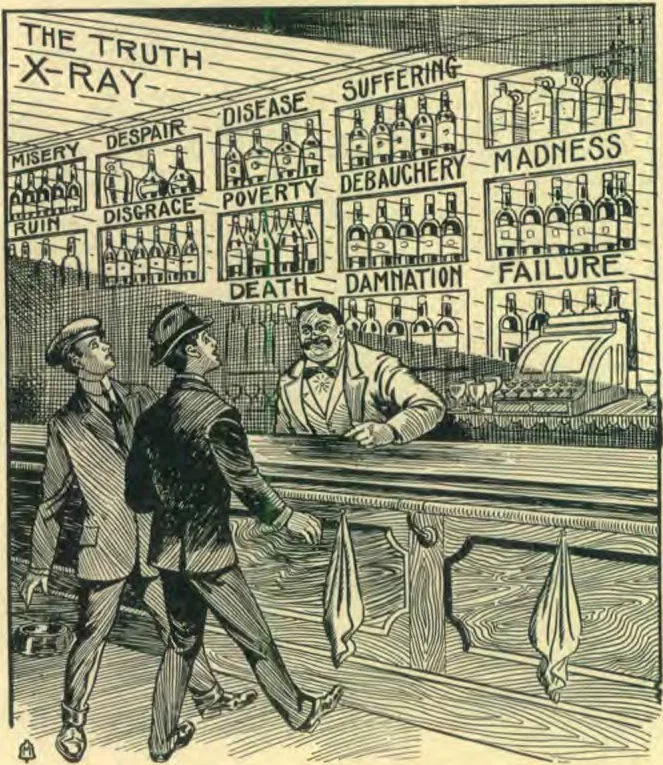
Wine is a mocker. To youth it seems the elixir of life; but the X ray of science and experience reveals it to be the "promoter of all that is evil, all that is vile, all that is abominable." "No war, no plague of humanity,—cholera, tuberculosis, or famine,—has made as many victims, has caused as much poverty, suffering, and death, as the use of alcohol."
“I remained at that same warehouse seven years, and was promoted to the charge of a department in which three hundred and fifty men and wagons were employed. I have prospered ever since.
“There are few persons in whom an appetite for strong drink cannot be created. Whether immune or naturally susceptible to its power, alcohol presents the greatest danger a man ever meets. The idea that now impels me to forgo a large salary and to set aside business opportunities of great promise is that of getting saloons out of the way. To that I shall devote the rest of my life.”
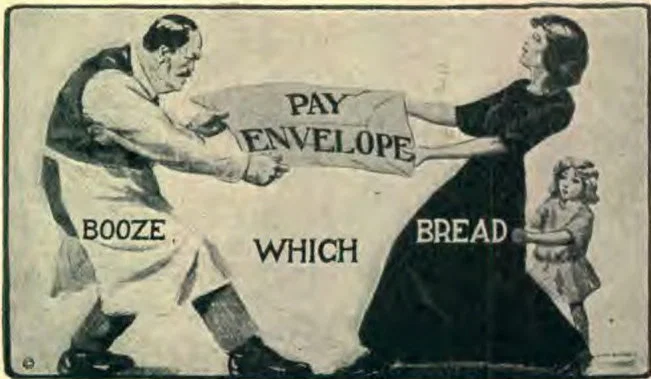
Shame on our voters who, by perpetuating the liquor traffic, force wives and mothers to this unequal warfare.
So spake James Tate. I know his true history.
Shall I put claret in the fruit punch that will be served to my guests when a Mr. Tate may be among them?
Shall I ask any man of unknown susceptibilities to go where the odor of alcohol may rouse a latent craving for it?
Shall I employ any medical man who sometimes prescribes a poison that can set a taint in the tissues of the unborn?
Shall I, by word or act, encourage a traffic that ruins men?
No; not so long as I may live.—A. M. Fielde, in the Pioneer.
Continue reading: The Four Bars