“Ernest, do you remember how we spent last Thanksgiving Day?” asked Grace at the breakfast table, a few days before Thanksgiving.
“I certainly remember,” replied the young husband. “We invited the Vandors here, and on Christmas we were entertained there. What do you propose to do this year, Grace?”
“Well, that’s the question. I wish we could do something different this year. Do help me plan something new.”
“Now, Grace, tell me honestly, are you not thinking of last Sunday’s text, and you want to inveigle me into some pious scheme? I think the text was, ‘When thou makest a feast, do not as the publicans do,’ etc.”
“O Ernest, I wonder if I ever heard you quote correctly,” and his wife smiled as she quoted, “But when thou makest a feast, call the poor, the maimed, the lame, the blind, and thou shalt be blessed.”
“All right, Grace, I’ll start out immediately to find paupers, and we’ll fill the house with them on Thanksgiving Day.”
“Now, Ernest, do be sensible. Try to discover some poor family, and we’ll give them a happy day.”
“Oh, rest assured I shall run down every pauper I see, and ask him whether he has already accepted an invitation to dinner on Thanksgiving Day; and if not, why, our house is open, etc. I don’t fancy that next year you’ll be planning for anything ‘new.’ You’ll wish Thanksgiving to be spent ‘in the same old way.’” And with a few more pleasant speeches Ernest hastened to his office.
It was the night before Thanksgiving, and as yet no guests had been invited. Ernest had been unusually busy at the office, and when off duty he encountered no one who looked as if he needed a good dinner.
But this Thanksgiving Eve he was determined to find some needy people, for Grace had laughingly told him that morning she didn’t believe he could get anybody to accept his invitation.
The streets seemed filled with people, laughing and talking and apparently happy as they hurried along. The band was playing at the square. His attention was drawn to a very small, poorly clad urchin standing near the curb, and gazing at the musicians with rapt expression.
“Ah, here’s the little chap I’m looking for, and I think I’ll investigate his case,” thought Ernest as the band started to march away. Approaching the lad familiarly, he asked, “Well, Johnny, what are you going to have for your Thanksgiving dinner?”
“My name ain’t Johnny; it’s Paul. But I don’t care what yer calls me,” replied the little boy.
“Well, what about your Thanksgiving dinner?”
“Oh, we don’t never have no Thanksgiving dinners at our house.”
“You don’t? Well, that’s too bad. Haven’t you anything to be thankful for?”
“Oh, yes, lots; but we don’t never have a good dinner just the same. But I don’t care; I’m well and strong, and when I get bigger and can earn money, we’re going to have Thanksgiving dinners every day.”
“By your size I should think it might be a long time before you would have such good dinners. How will you manage until then?”
“Same as I’ve been doin’.”
“How many in your family, Johnny?”
“There are six of us, counting father.”
“Why do you say, ‘counting father’?”
“’Cause there’s just five of us most of the time. Father doesn’t come home often, and when he does—oh, well—he comes home, that’s all.”
“I suppose you are glad to see him when he comes?”
“Well, maybe, mister.”
“You’re a queer little chap.”
“Well, I suppose I am. Do you have Thanksgiving dinner often?”
“Oh, not oftener than once a year! Thanksgiving comes only once a year, you know.”25
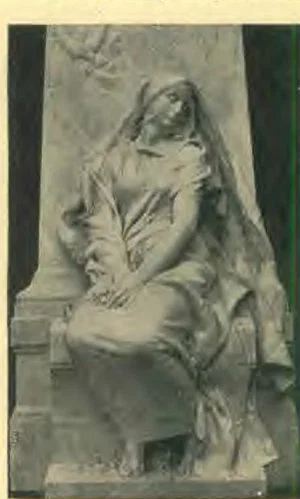
I represent the sorrow of the hundreds of thousands of liquor-made widows and orphans of our country.
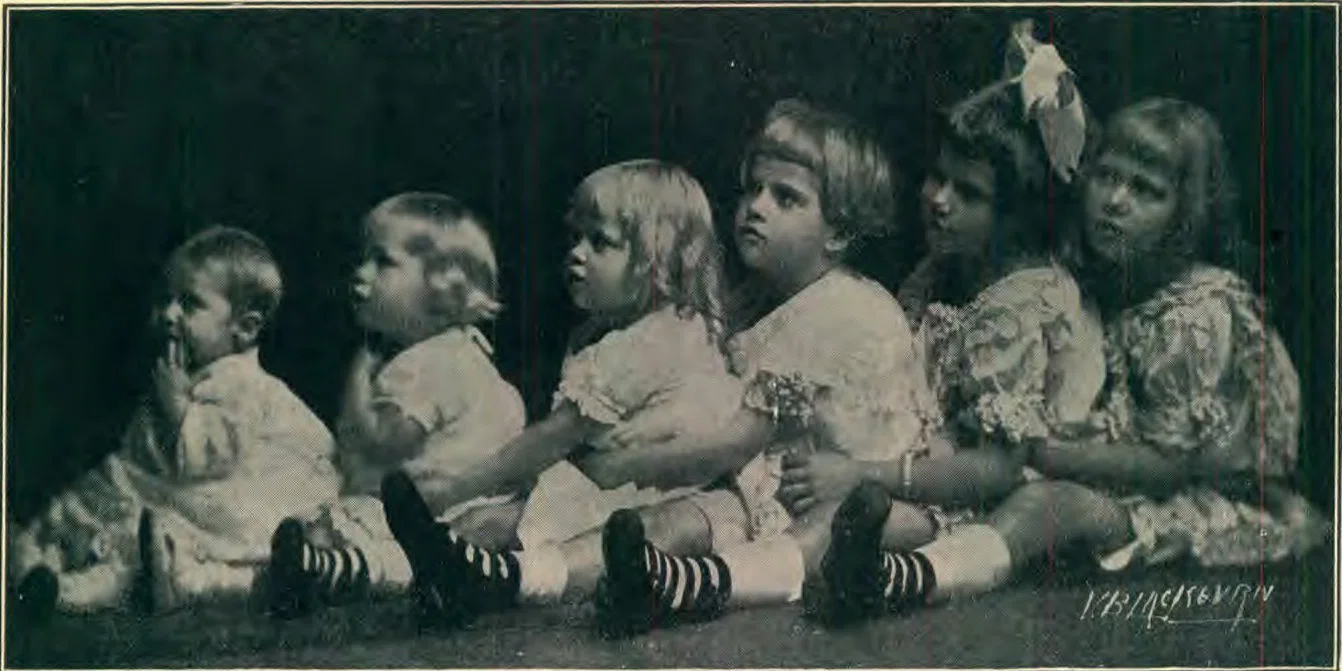
THE DALTON SEXTET, OF VALDOSTA, GEORGIA
You know at a glance that these children are not from the home of a devotee of the liquor traffic. Argument enough for prohibition! Six insistent and very tangible reasons.
“I should think one might have Thanksgiving oftener if he wanted to.”
“Well, that’s so; I suppose he might.”
“We often have Thanksgiving at our house, all exceptin’ the dinner.”
“H’m! I shouldn’t call it much of a Thanksgiving if I couldn’t have a good dinner along with it. Are you so thankful for all you have that you have a Thanksgiving Day often? I can’t imagine what you have to be thankful for. You are shivering now in those thin clothes, and you look hungry.”
“Oh, I don’t feel cold! There’s no place bare yet. It’s just chilly weather is all, but summer will soon come again. Besides, I’ve got lots more to be thankful for than the Pilgrims had.”
“Well, who would have thought it! What do you know of the Pilgrims? They had all the fruit they could eat, didn’t they, from the West India Islands, where they landed?”
The lad gave a merry laugh. “I guess you’re a little rusty, mister, about them Pilgrims. They never had no fruit, and never seen them islands. I guess you are thinking of Columbus and his crowd. We’ve got an old history at home, and mother has read to us how the Pilgrims landed up in Massachusetts, and it was awful cold, and they had a hard time building houses, and there was ice and snow and Indians, but there was no nice fruits.”
“So you think I’m rusty, Johnny? Well, you see it’s a long time since I’ve been to school. I’m glad you know about the Pilgrims; and you think you have more to be thankful for than they?”
“Oh, yes; much more! I ’most know they went hungry sometimes before they could plant things.”
“Aren’t you ever hungry, Johnny?”
“Not ever very hungry. I know where I can get samples of breakfast food when I am hard pinched. The Pilgrims didn’t have no breakfast food, did they, mister?”
“No, Johnny, I guess they didn’t. Do you like breakfast food?”
“I like everything I can get.”
“What do you do to have a good time at home?”
“I tell stories to the others, and then I pretend I’m playing the fiddle, and sometimes I can hear the band play. Oh, I just love that!”
“Do you sing at your house?”
“Oh, yes; we have the nicest times singing. Mother has taught us lots of hymns. But, mister, you ought to hear me whistle. I can just whistle any time a day. Can you whistle, mister?”
“Why, yes, sometimes when I feel like it. I don’t believe I am as thankful as you are, Johnny. There are times when I can’t whistle a note.”
“I suppose that’s when you’ve got a bad cold.”
“Oh, no; it’s when I’m downright cross. How should you like to come to my house to dinner tomorrow, Johnny?”
“My, but I’d like it! But I can’t come. Mother would miss me, and I have to mind the others. But perhaps Jimmy could go. He’s smaller’n me, and mother don’t need him so much. Ask him, mister.”
“Oh, I mean to invite you all. Can you come?”
The lad’s eyes grew very bright as he asked, “Really, mister?”
“Yes, really. Take me home with you, Johnny, and we’ll ask your mother what she thinks.”
An hour later Ernest returned home, where Grace was anxiously waiting.
“Well, Grace, we’re going to have company, sure enough, tomorrow; going to send a cab after the whole family, and they will be here at ten o’clock tomorrow. I’ve invited the drunken father, and all. That Scripture didn’t say anything about asking drunkards, did it? And yet, when I saw him come staggering into that hovel, he looked to me poor, lame, blind, and all the rest, and I thought the verse fitted him. He had a tract in his hand, entitled ‘Warning to Drunkards.’ I’ll venture that his being here to dinner will help him more than that tract.”
“What a dear you are!” exclaimed Grace, delightedly. And as they went upstairs for the night, Ernest told her all about the queer little boy.
Thanksgiving Day dawned clear and bright; the people in Factory Row wondered as they saw the big cab roll away with their neighbors. “Old Dawson, too, is inside,” said one.
It was a thankful, happy crowd that sat down at the well-laden dinner table.
In the afternoon Ernest took out his violin, and played, while Grace accompanied him. The father’s eyes beamed. He, too, could play a violin, and it brought back memories of other days. His violin had been sold for drink. Strong man as he was, he could hardly force back the tears. The soft strains of the violin brought visions of his old home, his mother, who was now dead, and of his sweetheart in the golden days. He glanced at his wife, and for the first time noticed the old, worn expression of her once fair face. He began to feel much like a villain. He longed to take the violin in his own hands.26
Ernest, remembering that the lad had spoken of his “pretending to play the fiddle,” took another violin out of its case, and said: “Now, son, see what you can do on this other fiddle. It is not a very good one, but it will do for you to learn on.”
The look on the boy’s face will never be forgotten.
“Papa, show me how,” said the lad, and he handed it to his father, who played such music as to bring tears to the eyes of the older ones. The sweet, pathetic strains spoke of other days, sorrow, and repentance, and finally it broke forth in hopeful melody.
The cab came; it was time to go. As they rolled home, Paul clinging tightly to the violin, somehow the father felt himself a man again. He determined right there that his old enemy, drink, should die, and that he would lead a new life, and live like other people. And realizing his own weakness, he lifted his heart to God for divine help.
While Paul and Jimmy were singing “Count Your Many Blessings,” which they had heard at the mission school, the Spirit of the living God came into the man’s heart, took away his old enemy, and left him a free and happy man.—Pittsburgh Advocate.
Galveston’s Password
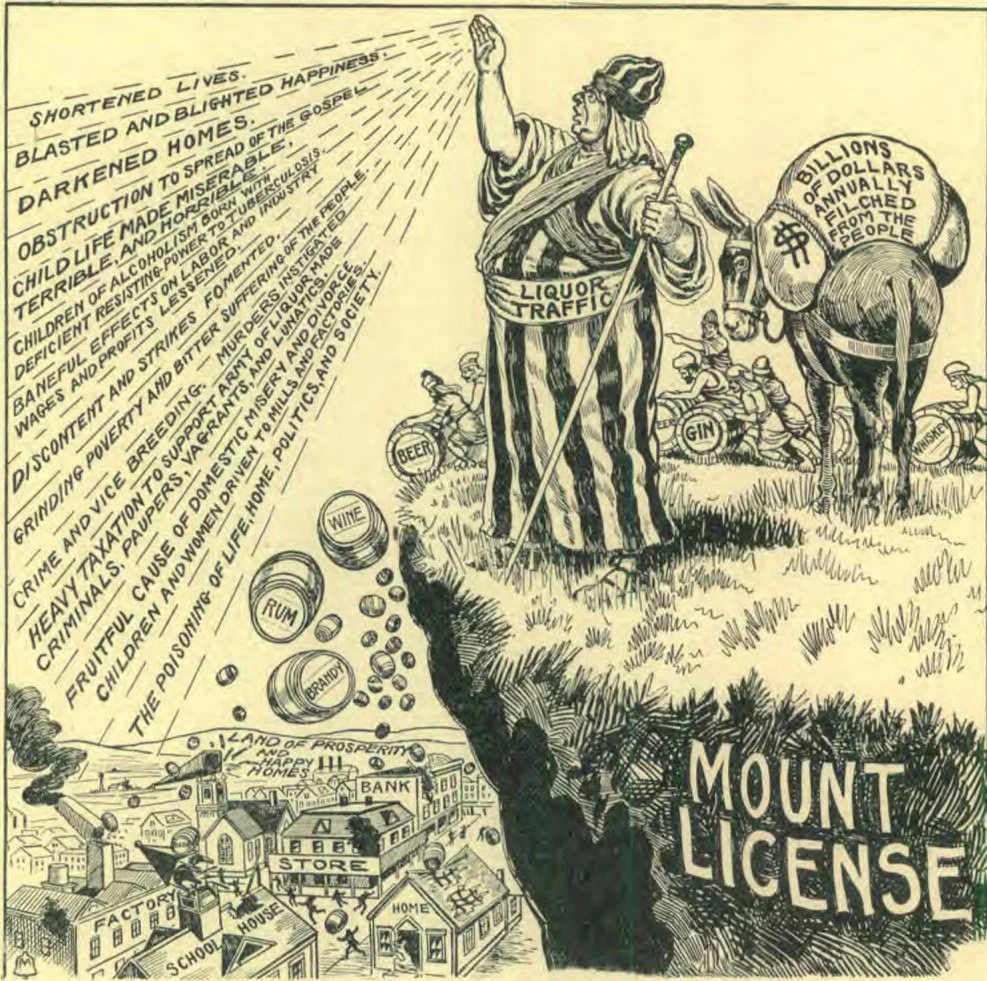
THE LIQUOR BALAAM CURSING THE LAND FOR GAIN
EVERY man in that crowd of five thousand men, women, and children huddled in the railroad station on the night the storm broke over Galveston, was asked as he presented himself for shelter if he carried whisky. If he did, he was required to relinquish it. No man with whisky upon him was admitted. In the morning, city officials closed every saloon in Galveston, and the saloons were kept closed until order was brought out of chaos. Every city stricken by calamity orders the saloons closed. Kansas City did so during the flood of 1903. San Francisco did so after her 1906 catastrophe. Colorado did so during her mining trouble. It is always so; and why? — Because “the saloon is the breeder of disorder, the friend of anarchy, the inciter of mob violence, riot, lawlessness, and unrestraint.”
What Are You Going to Do?
“A RAGGED urchin of a boy, as he would be called by the average onlooker,” says Mr. John Kempster, “saw a poor miserable old woman fall — perhaps she fell purposely — from the dock side into the water. Loafers were standing about, but no one took decided action for the rescue. The lad rushed about excitedly, eagerly beseeching the gathering crowd, and shouting, ‘What are you going to do? What are you going to do?’ Then, with impatient impulse, he off with his jacket and boots, plunged into the water, and by alternate strokes and pushes got the bundle of rags and humanity to the stone steps, where men waited without risk to land the helpless body; and the woman was saved. The boy’s rags were the badge of his environment, but he was a sound-hearted boy and a practical philanthropist, an example to all who would do something to save and uplift humanity. I would apply the words of this noble boy to the terrible evils of the drink curse, and ask every one whom my words can reach, ‘What are you going to do?’”
“The facts and statistics of the drink curse are voluminous indeed, and yet the half is not told. We count the victims by millions, the money wasted by billions. But no figures can tell the moral damage, the social suffering, the mental anguish, the eternal misery involved. The continuous stream of ‘misery, madness, and murder’ still runs on. Would that we could unite our forces one and all to stem this torrent of torment, to undo this hell upon earth of our own creating. Thrilled with the pressing need for an immediate, unflinching, determined, self-sacrificing plunge, let us ask ourselves and everybody else, ‘What are you going to do?’”
Moral Fiber and Saloon Petitions
WHAT moral fiber has a person who will petition an officer not to let saloons come into his neighborhood, but will sign applications to allow them in other neighborhoods?
The Fly-Destroying Sundew
A MAN lying upon the grass noticed a little plant of sundew; presently a tiny fly alighted upon it, and tasted one of the tempting glands which grew upon the sundew. Suddenly three crimson-tipped, finger-like hairs bent over and touched its wings with a sticky touch, which held it fast. The fly struggled in vain to get free; the more it struggled, the more hopelessly it became besmeared. It still, however, protruded its tongue, feasting as it was, being more and more firmly held by other hairs, or tentacles. When the captive was entirely at the mercy of the plant, the edges of the leaf folded inward, and looked like a closed fist. Two hours later the fly was an empty, sucked skin, and the leaf was opening for another unwary visitor.” So does the saloon deal with human beings. It does everything possible to attract young manhood to itself, then it closes its doors upon its heedless victims, and when it thrusts them forth for the last time they are sad wrecks of human life. They have been robbed of all that makes a man.
One Man’s Experience With Alcohol—Then Freedom
He was a dramatic author, a magazine writer, a newspaper editor, in a famous summer resort. He was all this, and more; and you will know how much more when I say that the saloons got $70,000 of his money, and all but put him in a drunkard’s grave. How he escaped this tragic end was told by himself recently in McClure’s Magazine. He says:—
“I arose on the morning of June 17 the year 1903, at eight o’clock, with every nerve in my body leaping with agonized tension. My hands shook so that I could not button my collar, and I shoved it in my coat pocket with the cravat that went with it. I could hardly fasten my garments, and to attempt shaving would have been to place a premium on self-mutilation. I was within one short jump of delirium tremens, and, fortunately, I knew it. Yet one thought alone possessed me: I must have a drink—two, perhaps three drinks.
“Three floors below me was a saloon, and I hurried there as quickly as I could find my way down the stairs. In the saloon I ordered whisky and absinth. I could not pour them from the bottles, so the bartender poured them for me. I tried to raise the drink to my lips, and it dropped from my shaking hands—both of them. Through experience I had found that this combination of liquids served to lull the nervous palsy that beset me in the morning, provided I repeated it three or four times within a quarter of an hour.
“When I tried to raise the glass after the bartender had refilled it, I knew I could not do it; and then I recalled a method I had seen pursued by a nervous wreck in a case similar to mine. Taking out my handkerchief, I slipped it around my neck, grasping an end in each hand. Still holding the right end in my right hand, I clutched the glass that rested upon the bar, and by pulling on the other end I raised the glass to my shaking lips. As I did this, I caught my reflection in the mirror opposite, and after draining the liquor I let the glass fall again. I saw that picture of myself a hundred times more that day.
“‘That’s you! That’s you!’ I muttered to myself, and hurried outside.
“When I left the saloon that June day, I was in the clutch of a great fear. I was accompanied by a specter that had haunted me during two weeks. I feared I should never be able to get sober again. I feared I should die in the grip of liquor, and I did not want to die. The night before, I sat rocking on the edge of my bed, crying chokingly, horribly, because I could see no hope of ever getting straight again.
“‘God! what shall I do? What shall I do?’ I cried.”
“I walked about for an hour after leaving the saloon, and in that hour I had three more drinks. I tried to eat, but the very thought of food nauseated me, and I finally went to my work to sweat it out as best I might. I felt as if a cold hand held my heart in its clutch, and I was on the verge of tears. Twelve or thirteen times that day I went to the saloon; and when I closed my desk at two in the morning, I went back again, alone. I did not want whisky then. I ordered beer, and took it to a small table in a corner where there was a red squirrel in a cage. At that hour he was in his wheel, whirling it madly, and the sight of him annoyed me. Poor devil! he was like myself.
“I turned my back on the squirrel, and looked at my glass of beer. I closed my eyes, and that picture of my sodden self dragging a glass of rum to my trembling lips with the aid of a soiled handkerchief leaped up before me. It shocked me as I had never been shocked before. It burned me like a streak of fire. I cried again, but inwardly this time, and the sobs shook me, and somehow, up through the reek of liquor, up through the diseased, disordered mentality that was the conscious I, something of manhood fought and shivered. Perspiration broke out on my body. I shook and shivered. In a moment I knew I was face to face with a decision. Something deep within me pointed an accusing finger. It told me what I was, showed me to what I was coming; it ran over the list of men I had known and worked with who had drunk themselves to a cruel death, and I shuddered. I pushed back the glass of beer, and staggered to my feet. I thrust out an arm before my eyes to shut out the horror that was before me, and I gasped. I knew the precipice lay just ahead. Then I found myself outside, with the stars overhead and the boom of the surf in the distance. I looked up and whispered, ‘I’m through! I’m through!’ And as an afterthought—for I knew what I was in for—I added, ‘If it kills me, I’m through!’
“For forty-eight hours I suffered the torture of the nethermost hell. Not easily does the rum demon let his children go. He tore at me, he battered my already weakened will, he seared my newborn determination with fire. I cried, and sobbed, and struggled through white nights and red days—and then came peace. I had won clear, and with the consciousness28of that came something I can only describe as a clean, sweet breath. The new birth of decency was mine.
“From that day to this no touch of liquor has been upon me. I will not permit it in my house; I will not offer it to a friend, nor will I pay for a friend’s drinking of it. I am narrow, bigoted, if you will; but I will not willingly, consciously, give the rum traffic one cent.”
My Earlier Experience With Alcohol
“Among the earliest of my recollections is that of seeing my father drunk, and of wondering what was the matter with him. I could not have been more than four, but the memory is clear to this day. I do not exaggerate when I say that to my father’s indulgence in liquor I can trace every sorrow and misfortune that came to my mother and me during the first sixteen years of my life. He was a failure by the time I was nine, and then I despised him, for I heard him talked about. He left us when I was ten, and I did my small best to forget him. When he returned, I knew he was an encumbrance.
“I can look back now, without prejudice, and say frankly that I can recall no moral instruction from my father. I think at first he held high standards. I am sure if he had had none, my mother would not have married him; but whisky sapped these, and he fell. The moral qualities are the first to give way to alcohol’s ravages.
“I was afraid of liquor. I have watched for my father through the gate or the fence, and if I saw that he had been drinking, I hid myself. Yet, with all that fear, by heredity I was predisposed to the use of liquor—nay, to its abuse. My father had a business partner, a retired physician, and he, too, drank to excess, swinishly. He would come to our house, and he was boisterous and rough. Of him also I was afraid. Usually I kept away from him, and he noticed this. Once he asked my mother why it was.
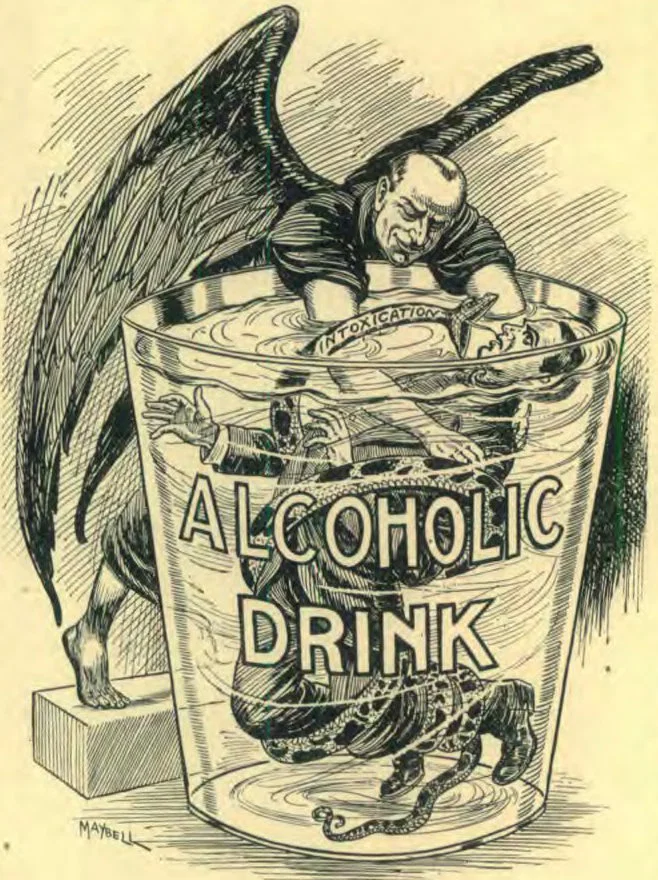
THE DEVIL'S BAPTISM
More men are drowned in the bowl than in
the sea.—German proverb.
“‘He is afraid of men who drink,’ she told him, and he laughed.
“‘He’ll get over that,’ he replied. ‘His father will see to it.’
“‘I hope he’s seen enough of the evil of it,’ my mother answered. ‘I pray God he has.’
“But I had not. I had seen other men drink. I had peered fearfully into the barrooms and watched men there; and the thing frightened, yet strangely fascinated me. I saw horrible examples by the dozen, nay, by the hundred, but they did not horrify me. I have known the evil effects of alcohol since I have known anything. I have never suffered illusions as to its nature. I have seen a farmer come to town and stagger down the main street with a bottle in his hand, and I have seen him dragged raving to the jail. I have seen women reeling drunk; I have seen them lying in gutters. I have seen the saloon vomit foul tramps; and still, when it came my turn, I drank, and did it eagerly, confident in my ability to control myself.
“When I was very small, my father beat me when he was drunk. When my mother interfered, he pushed her roughly away. I remember that, and young as I was, it burned into my consciousness. Eighteen years after that episode, again while he was drunk, he struck her, and I thrashed him so thoroughly that he kept his bed for a week. I think the horror of that affair shortened my mother’s life by years.
“My mother was my educator. Such basic knowledge as I now possess I owe to her. She spoke three languages, traveled over Europe, and possessed a wide culture, a sympathetic and broad outlook upon life, and an indomitable courage. Indeed, she was a mine of energy. When my father had ruined himself irretrievably, she raised the money for his passage West, packed his trunk, and, with her high spirit and firm courage, strove to put him on his feet. That he failed was not her fault; that he returned with less character and more alcohol four years later did not, that I could see, alter her determination to struggle on. She tried again and again, and this while working and keeping me, bringing me up in the atmosphere of her own culture, and striving to imbue me with the characteristics she knew a man should possess. Today the better things of me are hers.
My First Taste of Liquor
“And now I come to my first taste of liquor. I write this with reluctance, with positive hesitation, and yet I do not feel that in common honesty I can withhold what I have to say. The first taste of liquor, the first sensation from alcohol that I received, was at my first communion. The memory of that has never died. I think it never will. Regretfully I now state that I firmly believe that had I never tasted that heavy wine, I should never have been led to experiment with the next step.
“From the Sunday morning I took that first sip of wine into my mouth and turned it speculatively about on my palate, I thought about drink. My second taste of alcohol followed hard upon my first. I am indebted to the medical profession for it.
“By virtue of necessity I began to earn money shortly after I was sixteen. I chose electrical engineering as my profession, and I began at the bottom. I was thrown with older men, rough men, men with few ideals; and with them I cultivated a taste for malt liquors. I should never have tasted beer or ale, I am sure, had it not been for the open, inviting, mysterious saloon,—the saloon that stood at the corners wherever one might go.
“The man who bought me my first glass of beer was a man of thirty-five. I can recall vividly that saloon; I recall the acrid smell of stale beer, the haze of tobacco smoke, the chatter of men at the bar. I found the saloon always waiting for me. There was no question as to age. I was welcomed. I know now that as the old customers wear out, new ones must be found, and the younger the better. I began to go into saloons alone; I did it after the day’s work. Then I took in a companion or two of my own age. We leaned against the rail and talked large talk. The saloon let us stay. It always does. When the day comes in which civilization wipes out the saloon, and with it the public drinking, one full half of the liquor question will have been solved.”
Five years in Chicago after finding alcohol, then on to29New York, and the sequel need not be written. It is too dark. But fortunately there came an awakening. It comes to but few who have once tasted the dregs of wine cup and whisky bottle. After this dark and varied experience, this man says of the great temperance question now before the American people:—
Standard Publishing Company, Copyright
“Alcohol ruined my home, shortened my mother’s life, made my father a doddering inefficient, and all but shipwrecked me. On the side of benefits conferred by alcohol I can allow none. There is only one remedy for the liquor evil; it rests solely upon the nonexistence of alcohol itself. It is not the saloon alone; it is not the wholesale or retail dealer; it is not the dispensary, blind tiger, or private still. The evil of alcohol lies in alcohol.”
What Does North Dakota Say?
If I am suffering from a disease, and a friend is suffering from the same, and both of us have been using the same remedy, but without appreciable benefit, and then my friend changes medicine, of course I shall be interested, after due time, to learn what he thinks of the new remedy. Now North Dakota tried the license system, but changed from it to prohibition twenty-five years ago. Surely we should be interested to know the result of the change, and the people of the State should by this time be able to recommend or repudiate the prohibitory law. What do they say of it?
Ex-Gov. John Burke, now treasurer of the United States, says: “In my judgment the prohibition law is responsible, in a large degree, for our great increase and prosperity and for the enormous decrease in crime.”
William H. White, a lumber merchant owning about twenty-five lumber yards in the Red River valley, says: “Watching the workings of the law in our State, I am not only convinced that it is right in principle, but decidedly the best policy from an economic viewpoint.” Mr. White has been a resident of the State for forty years; so his testimony is of special worth.
James Kenedy, general contractor, of Fargo, says: “When the question of changing from a license system to prohibition was first proposed, in 1884, and for several years afterwards I was bitterly opposed to prohibition. But I am now glad that the change was made, and there is no man in the State of North Dakota that would fight the return of the saloon in any guise stronger than I would, were the occasion to arise; and I do not believe the people of North Dakota will ever permit the saloon to return to our State.”
P. Elliott, a Fargo hotel keeper, gives this testimony: “I know from actual experience in running a hotel that it is not necessary to keep a bar and sell intoxicating liquors. Prohibition has worked wonders for the good of our community, and our business men generally do not want the saloon brought to our borders.”
R. B. Griffith, a leading merchant of Grand Forks, says: “When prohibition went into effect in 1890, forty saloons went out of business in our city. The friends of the saloon said grass would grow in our streets. My experience has proved that they were mistaken. My business has grown from a small beginning to about $500,000 annually. It has been clearly demonstrated that the saloon is a competitor of the store and a detriment to every legitimate business. As a purely business proposition, any community is a gainer by abolishing the liquor traffic.”
Alexander Stern, a merchant, an owner of business houses for rent, and a city commissioner, says: “My rents have increased under prohibition, rather than diminished. From the viewpoint of the landlord, the prohibitory system is far superior to any other.”
Hubert Harrington, a Fargo hardware merchant: “I unhesitatingly say that while originally I was not in favor of the law, yet experience has demonstrated to me its superiority over the license system.”
S. S. Lyon, Fargo, cashier of the Merchants’ National Bank, says: “A much larger proportion of our young men are saving money and opening bank accounts under prohibition than under license. Our best business men would strongly oppose the return to the license system.”
Sound Advice
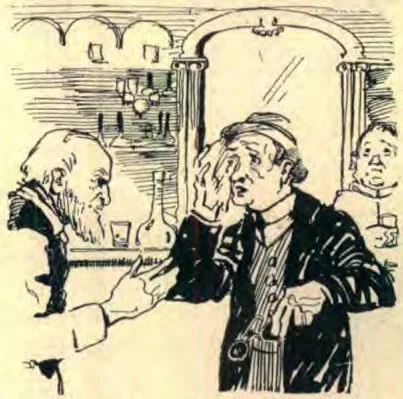
A man accustomed to indulge in drink entered a room of a hotel where a grave Quaker was sitting by the fire. Lifting up a pair of green spectacles and rubbing his inflamed eyes, the newcomer called for hot brandy and water. While waiting for it, he complained to the old Quaker that his eyes were getting weaker and weaker, and that the spectacles did not seem to do him any good. “I'll tell thee, friend,” replied the Quaker, “that if thee were to wear the spectacles over thy mouth for a few months, thy eyes would get well again.”—The Saloon Keeper's Ledger.
Out-of-Date Statements
“PROHIBITION hurts business.”
“Prohibition does not prohibit.”
“Prohibition will increase taxes.”
“Prohibition will increase the blind pigs.”
“Alcoholic liquors are necessary for medicine.”
“Prohibition interferes with personal liberty.”
The foregoing statements have been so often disproved by scientific and civil investigation and by experience that a person who uses any one of them in opposing the prohibition of the liquor traffic advertises quite unfavorably his lack of information upon the question that has attracted the attention of all civilized nations.